© Shutterstock
 Votre guide Ryo
Visiting Marseille Solo: The Complete Guide to Traveling Alone in 2026
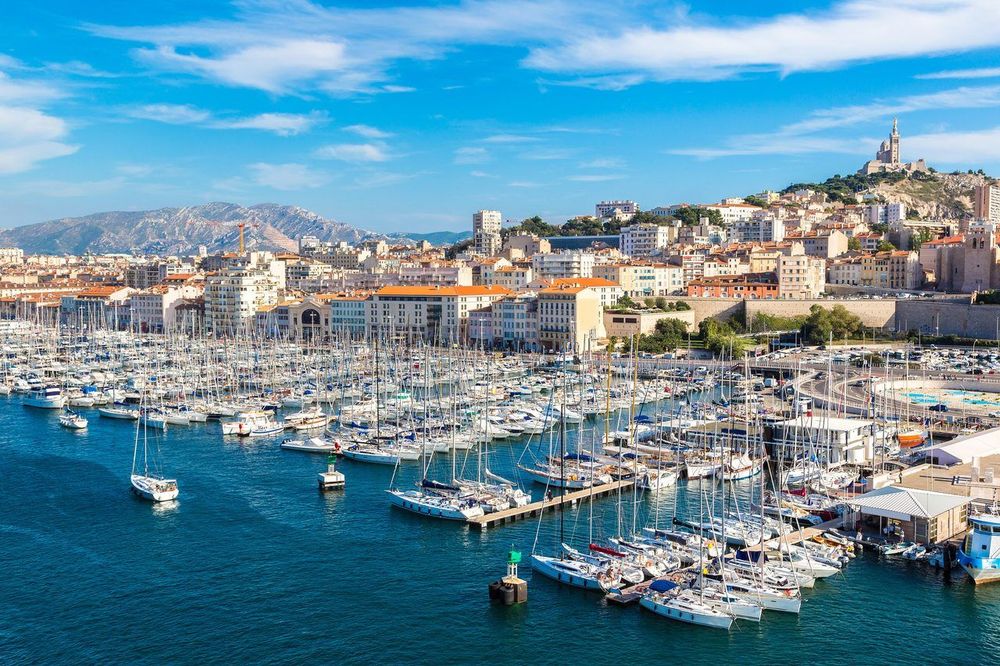
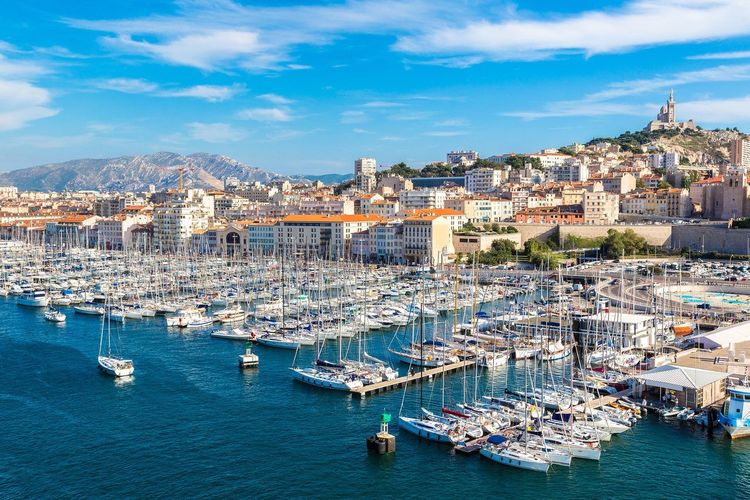
A bowl of panisses eaten standing at the counter, eyes on the Vieux-Port masts swaying in the wind: that is often what a first solo morning in Marseille looks like. Visiting Marseille solo is nothing like a risky adventure: it is a city that lets you get to know it at your own pace, with neighborhoods of sharply contrasting atmospheres and direct access to the sea. The Ryo audio-guided tour of Marseille starts right at the Vieux-Port and serves as a practical common thread for your first hours on site.
In three or four days, you can take in a fish market that opens at dawn, the fresco-covered alleys of the Panier, a climb to a basilica overlooking the whole harbor, and a boat crossing to a prison island turned monument. Add calanques reachable by bus and on foot from the center, a bohemian neighborhood where you can dine alone without anyone looking twice, and a City Pass covering transport and museums: the city has more than enough to fill a solo stay without a dull moment.
Marseille Solo: What to Know Before You Go
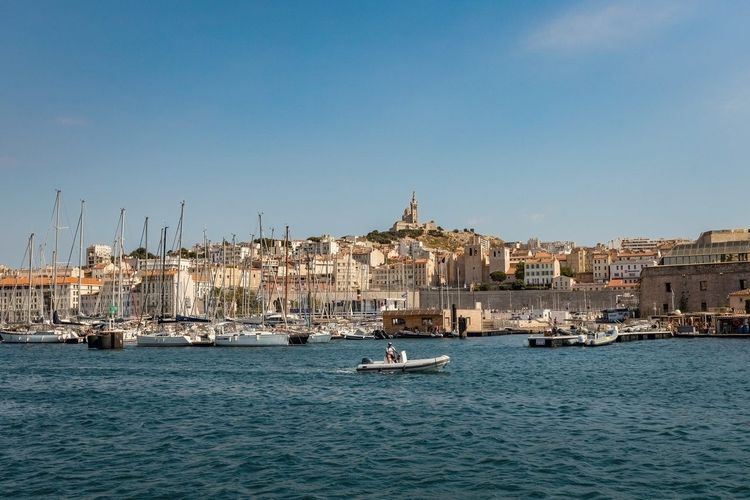
Marseille carries a reputation as a dangerous city that fits poorly with the real experience of a solo traveler who stays in busy neighborhoods. The Vieux-Port, the Panier, Notre-Dame de la Garde and the Cours Julien are lively, well lit and busy until late in the evening. Precautions remain those of any large port city: don't flash an expensive camera on out-of-the-way streets at night, keep your bag closed on crowded transport, and favor a taxi after midnight rather than a long walk through an unfamiliar neighborhood.
A second point to keep in mind before you drop your bags: Marseille is much larger than you might imagine. The second-largest city in France with about 870,000 inhabitants, it stretches over nearly 240 km² and about 57 km of coastline, with neighborhoods that have almost nothing in common. Allow 30 to 45 minutes of transport to get from the Vieux-Port to the gateways of the Calanques, and divide your stay by zones rather than trying to do everything on foot in one day.
Spring (April-June) and early autumn (September-October) offer the best window: pleasant temperatures, sea still swimmable in September, and more manageable crowds than in July-August.
The Vieux-Port and the Fish Market, the Obvious Starting Point
The Fish Market and the Quai du Port at Dawn
Arrive around 8am at the quai de la Fraternité, the former quai des Belges, at the far end of the Vieux-Port, to watch local fishermen set up their tubs of scorpionfish, red mullet and sea urchins directly on the stalls. The market ends around 1pm and changes atmosphere hour by hour: calm and professional at first, then overrun by curious onlookers photographing the fish without really buying any.
A coffee on a terrace right opposite is then enough to watch the ballet of the pointus, those small wooden boats typical of the Mediterranean, without having to make conversation with anyone. It is one of those moments where traveling alone in Marseille becomes an advantage: no one to rush you, no pace to negotiate.
MuCEM and Fort Saint-Jean, Two Museums to Visit Solo
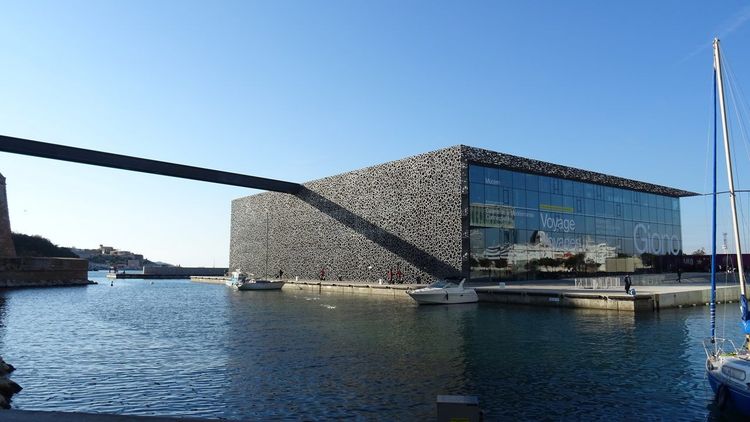
A ten-minute walk along the quay, the MuCEM occupies a contemporary building in a concrete lattice, linked by a suspended footbridge to Fort Saint-Jean (Esplanade du J4, 13002 Marseille, rated 4.7/5 on Google from 1,656 reviews), whose oldest towers date back to the Middle Ages. Allow a good two hours for the whole: the exhibitions can be visited at your own pace, and the migration garden at the top of the fort offers a quiet spot with a view of the harbor entrance.
The exhibition ticket costs €11 at full price and is free on the first Sunday of the month, while the gardens, walkways and footbridges of Fort Saint-Jean remain freely accessible. To find your way alone from the moment you arrive, without a paper map or group tour, the Ryo audio-guided tour starts from this end of the port: 24 audio tracks spread over 7.3 km, about 3h00 of listening as you walk.
The Panier, the Historic Neighborhood to Explore on Foot
Alleys, Street Art and Little Squares of the Panier
The Panier climbs in narrow stairways right behind the city hall, and that is precisely what makes it so pleasant solo: you can't stay lost for long, every alley leads back down to the port sooner or later. The ochre facades, the frescoes that change almost every season and the shaded little squares invite you to wander with no particular destination for a whole morning.
The Vieille Charité, a 17th-century almshouse turned cultural center and museums, deserves an hour's pause for its oval-domed chapel and its blond-stone courtyard, particularly photogenic in late morning.
Café Terraces for a Solo Break
The place de Lenche and the place des Pistoles gather several terraces where sitting alone never looks out of place: you'll meet as many neighborhood regulars as travelers with a notebook or a book. You'll also find a few grocery shops where you can buy a picnic to enjoy up high, facing the sea.
If you'd rather not miss any hidden passages, the Ryo audio tour winds through these alleys in a small commented loop, and our Ryo article on the Panier details the history of its frescoes and its most photogenic corners.
Notre-Dame de la Garde Basilica and Its Panorama
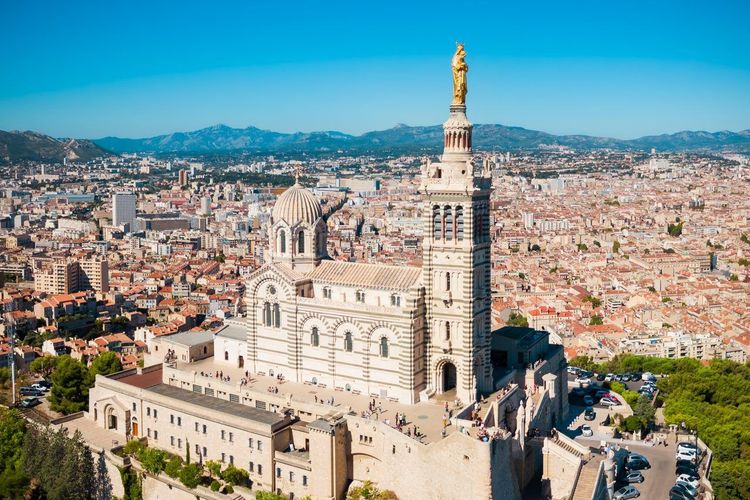
The climb to Notre-Dame de la Garde (Rue Fort du Sanctuaire, 13006 Marseille, rated 4.8/5 on Google from 52,518 reviews) takes 30 to 40 minutes on foot from the Vieux-Port, with steep slopes toward the end; the RTM 60 bus drops you almost at the foot of the sanctuary if you want to spare your calves. Built in the 19th century on the Garde hill, at an altitude of 149 meters, the basilica overlooks the harbor and offers a 360-degree panorama over the Vieux-Port, the Frioul islands and, on a clear day, the hills of L'Estaque.
Entry is free. Take about twenty minutes inside to see the mosaics in Romano-Byzantine style and the maritime ex-votos hung on the walls, ship models and naive paintings thanking the "Bonne Mère" for an avoided shipwreck. Avoid midday in high season, when coaches drop off the most visitors at once. Aim instead for late afternoon: the low light illuminates the golden statue of the Virgin and the crowd begins to head back down.
Cours Julien and Notre-Dame-du-Mont, Bohemian Marseille
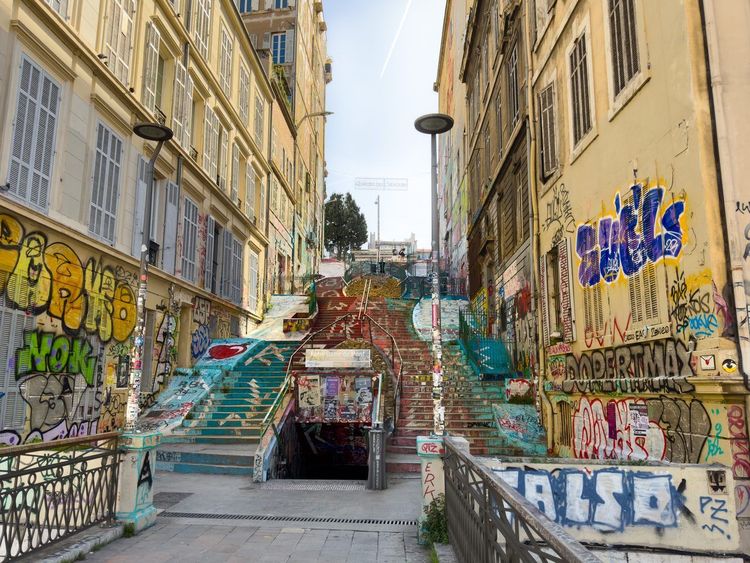
Street Art and Artists' Studios of the Cours Julien
A fifteen-minute walk from la Canebière, the Cours Julien (Place Cours Julien, 13006 Marseille, rated 4.5/5 on Google from 643 reviews) changes register radically: frescoes on almost every gable, entirely painted staircases, independent record shops, thrift stores and designers' studios you walk into out of simple curiosity. This neighborhood is best explored slowly, looking up from street to street.
Once night falls, wine bars and small concert venues take over: a good option if you're traveling alone and want to be around people in the evening without forcing yourself to socialize.
Dining Solo Without Self-Consciousness on a Terrace
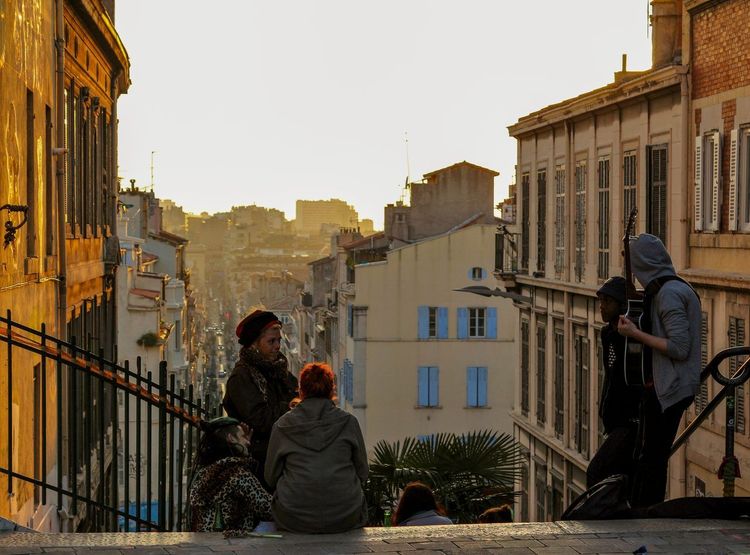
Asking for a table for one surprises no one on the Cours Julien, where terraces welcome a mixed clientele of students and locals. If the restaurant has a counter, sit there: it is often the best view of the kitchen, and a natural way to exchange a few words with the staff. Before heading up here, listening in the Ryo audio-guided tour to the story of the Canebière and the city center gives good context for understanding what this working-class neighborhood has become.
Château d'If and the Frioul Islands, a Boat Excursion
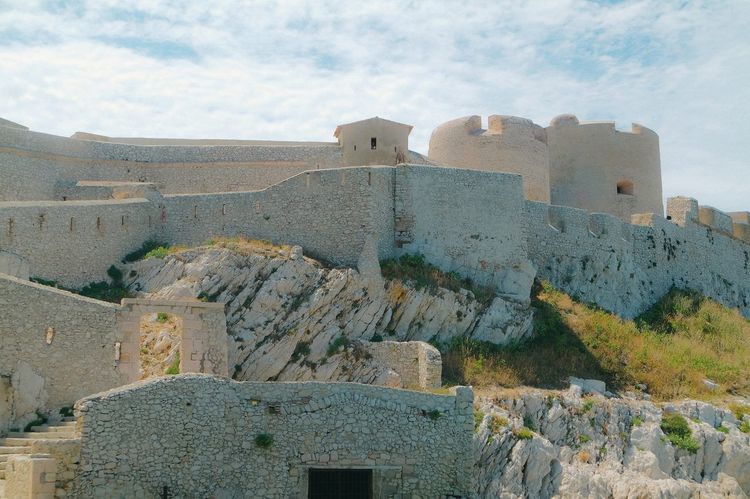
Shuttles to the Château d'If leave from the Vieux-Port, under the Ombrière on the quai de la Fraternité, for a 15 to 20-minute crossing. Expect about €17.70 round trip for one island, or €26 for the combined If-Frioul ticket, plus the castle entry fee. The 16th-century fortress, made famous by Alexandre Dumas and his Count of Monte Cristo, can be visited in an hour: dungeons, inner courtyard and a view of the coastline from the terraces.
With the combined ticket, you can continue to the Frioul Islands (Archipel du Frioul, 13007 Marseille, rated 4.7/5 on Google from 588 reviews): rocky coves, mineral shadeless trails and a few fish restaurants on the little harbor of Port-Frioul. The whole thing works very well as a half-day solo. Bring water and a hat, as the vegetation is sparse.
For seasonal schedules, our Ryo article on the Château d'If details the shuttle companies and combined options.
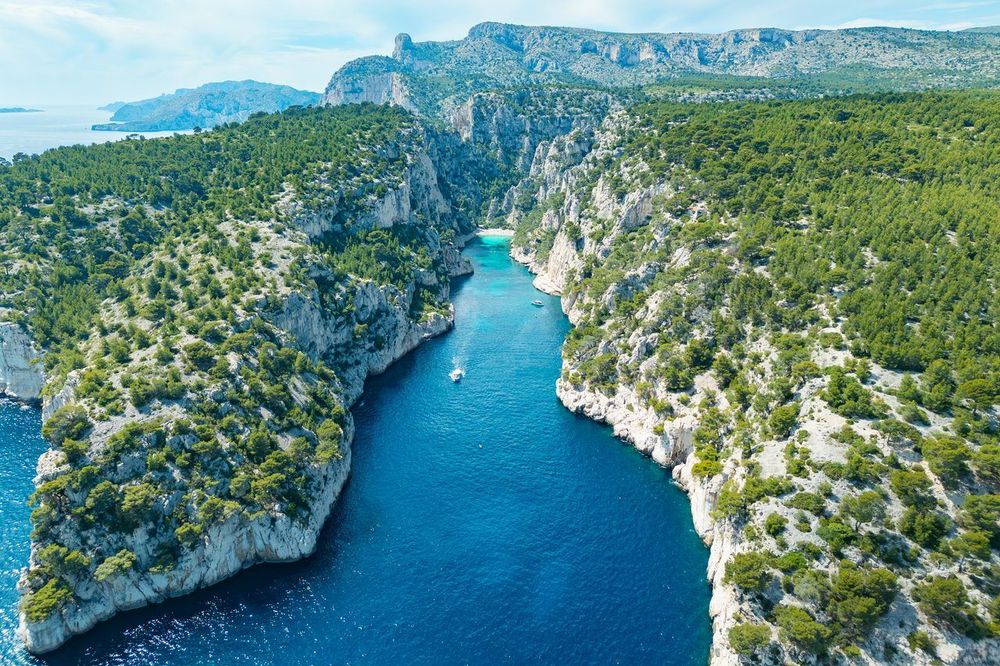
The Calanques, the Most Beautiful Excursion from Marseille
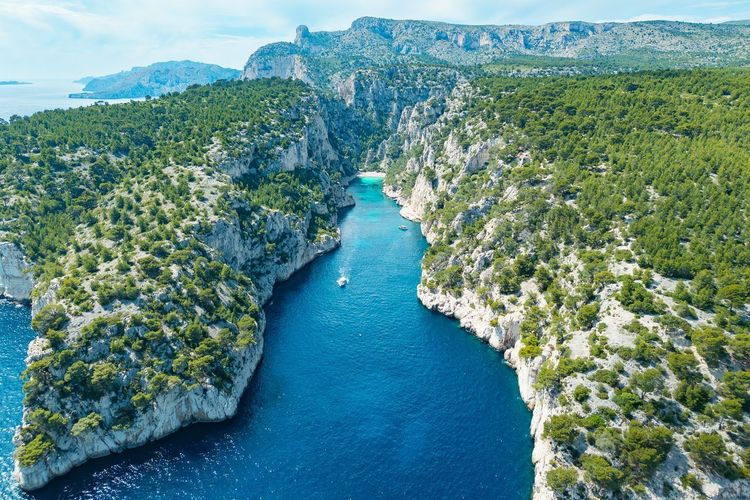
Calanques Accessible by Bus or on Foot from Marseille
For the calanque de Sormiou (Calanque de Sormiou, 13009 Marseille, rated 4.5/5 on Google from 1,041 reviews), take the RTM 23 bus to the La Cayolle stop, then allow about an hour's walk on a marked trail fully exposed to the sun. Morgiou can also be reached on foot from the southern neighborhoods. Car access is restricted in summer to protect the national park site, which often makes bus and walking the simplest solution when traveling alone without a vehicle.
Set off early, ideally before 9am in July-August. Bring at least 1.5 liters of water, good shoes, and check access to the massifs the day before: due to fire risk, the prefecture may close trails on days of strong wind or intense heat. Also tell a relative your itinerary, a useful habit when hiking alone.
Calanques by Boat from the Vieux-Port
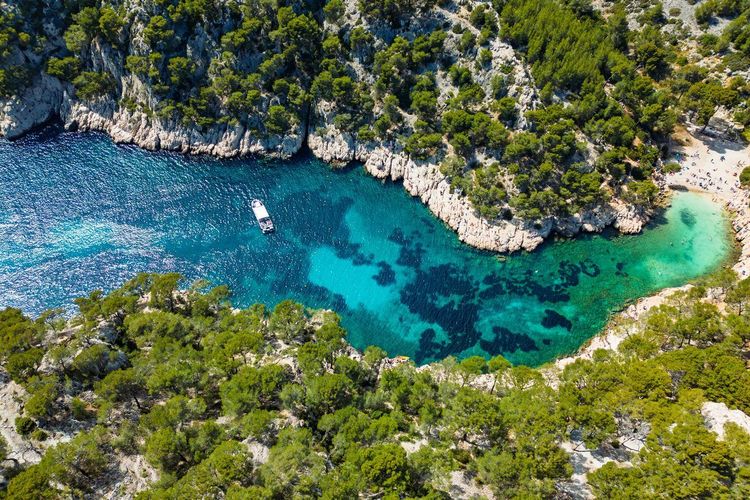
If you'd rather avoid walking, several companies offer boat trips of one to three hours from the Vieux-Port, to skirt the limestone cliffs as far as En-Vau or Port-Pin without physical effort. A comfortable option solo, showing in a single outing coves normally accessible only on foot.
Our Ryo article on the most beautiful calanques of Marseille compares access options to help you choose between hiking, bus and boat.
The Best Things to Do Alone in Marseille
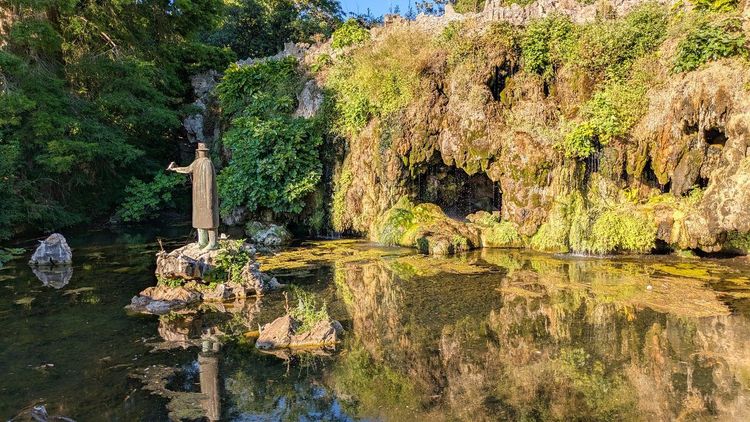
Parc Borély and Quiet Walks
The parc Borély, a stone's throw from the Prado beaches, combines a French formal garden, a botanical garden and an 18th-century château housing the Museum of Decorative Arts. Park entry is free: ideal for a reading break or a morning jog. Then continue along the corniche Kennedy to the Vallon des Auffes, a little fishing port tucked under a bridge, perfect for the end of the day.
Unusual Experiences (Ferry Boat, Street Art Walks)
The ferry boat (Quai du Port, 13002 Marseille, rated 4.3/5 on Google from 177 reviews) crosses the Vieux-Port in a few minutes between the quai du Port, by the city hall, and the place aux Huiles. In service since 1880, it costs less than one euro: an almost symbolic crossing, but a different angle on the port's facades.
For street art, you can link the Cours Julien to the alleys of the Panier via la Plaine and Belsunce, and improvise a half-day itinerary following the frescoes.
Where to Stay and How to Get Organized Solo in Marseille
Choosing Your Neighborhood to Sleep Safely Alone
Avoid staying in the immediate surroundings of Saint-Charles station and Belsunce: fine during the day, some streets are unwelcoming once night falls, especially for a first solo stay. The Vieux-Port, Notre-Dame-du-Mont and the Cours Julien area offer a better compromise between lively atmosphere, perceived safety and walking access to the main sights.
The 7th arrondissement, around the Pharo, Endoume and the Vallon des Auffes, suits you better if you want calm in the evening while staying 15-20 minutes by bus from the center. For small budgets, the hostels in the center also make it easier to meet other solo travelers.
City Pass and Transport: Bus, Metro, Airport
The Marseille City Pass, sold in 24, 48 or 72-hour versions, gives unlimited access to buses, metro and tramway, as well as several museums and tours depending on the option: a good calculation if you string together several paid sights over two or three days.
From Marseille-Provence airport, the direct shuttle reaches Saint-Charles station in about 25 minutes, for a fixed fare. In the city, the two metro lines and three tramway lines cover most useful journeys, and the central neighborhoods are all within a 20-minute walk of one another.
Sample Itinerary: Visiting Marseille Solo in 2 or 3 Days
Day 1: Vieux-Port, Panier and Notre-Dame de la Garde
Start with the fish market early in the morning, then head up to the Panier for two or three hours of wandering among alleys and the Vieille Charité. Come back down for lunch on a terrace near the port, before moving on to the MuCEM and Fort Saint-Jean in early afternoon. Finish with the climb to Notre-Dame de la Garde at the end of the day, when the light is at its most beautiful over the harbor.
This first day follows the Ryo audio-guided tour almost step by step: a loop of 24 audio tracks you listen to with headphones on, handy when you travel without a guide and prefer hearing the story of places rather than reading it on a sign.
Day 2: Calanques or Château d'If, Then Cours Julien
Devote the morning to an excursion by sea or in nature depending on your mood: the Calanques on foot or by boat, or the Château d'If and the Frioul Islands for a shorter, more cultural outing. Return to the city in early afternoon, then head to the Cours Julien for the afternoon and evening, among street art, independent shops and a solo dinner on a terrace.
If you have a third day, set it aside for parc Borély, the Vallon des Auffes, a ferry boat crossing and one or two remaining museums, depending on what your City Pass still covers.


FAQ
Is Marseille a safe city to visit solo?
Yes, as long as you stay in busy neighborhoods (Vieux-Port, Panier, Cours Julien, Notre-Dame de la Garde) and take the usual big-city precautions: keep an eye on your bag on public transport, stay alert at night on quiet streets, and take a taxi rather than walking a long way after midnight.
How many days should you plan to visit Marseille alone?
Two days are enough to cover the Vieux-Port, the Panier and Notre-Dame de la Garde. Three days leave time to add a boat excursion (Calanques or Château d'If) and the Cours Julien without rushing.
Where should you stay in Marseille when traveling solo?
The Vieux-Port, Notre-Dame-du-Mont and the Cours Julien area offer the best balance between lively atmosphere, perceived safety and proximity to the sights. Avoid the immediate surroundings of Saint-Charles station for a first solo stay.
What budget should you plan for a solo trip to Marseille?
Expect around €60 to €90 per day for simple accommodation, quick meals and transport. Boat excursions add €18 to €35 depending on the option: round-trip shuttle to an island, combined If-Frioul ticket with castle entry, or a boat trip in the Calanques.
How do you get around Marseille without a car?
The two metro lines, supplemented by buses and the tramway, cover most useful journeys. The central neighborhoods are all within a 20-minute walk of one another, and the City Pass includes all public transport.
What is the best time to visit Marseille solo?
Spring (April-June) and early autumn (September-October) offer the best compromise between pleasant weather and manageable crowds, away from the heat and the masses of July-August.
Visiting Marseille solo is ultimately less a logistical challenge than a treasure hunt between neighborhoods, where each morning can head in a different direction without having to convince anyone to follow you. Between the fish market, the alleys of the Panier, the panorama from Notre-Dame de la Garde and the crossing to the Calanques or the Château d'If, the program builds itself naturally day by day. To keep a guiding thread without spending hours planning, the Ryo audio-guided tour of Marseille remains the simplest starting point: 24 audio tracks, 3h00 and 7.3 km linking most of the stops mentioned here, to be enjoyed at your own pace.
À lire également