© Shutterstock
 Votre guide Ryo
Visit Quiberon in 3 Days: Our Complete Itinerary Along the Côte Sauvage, Villages and Islands (2026)
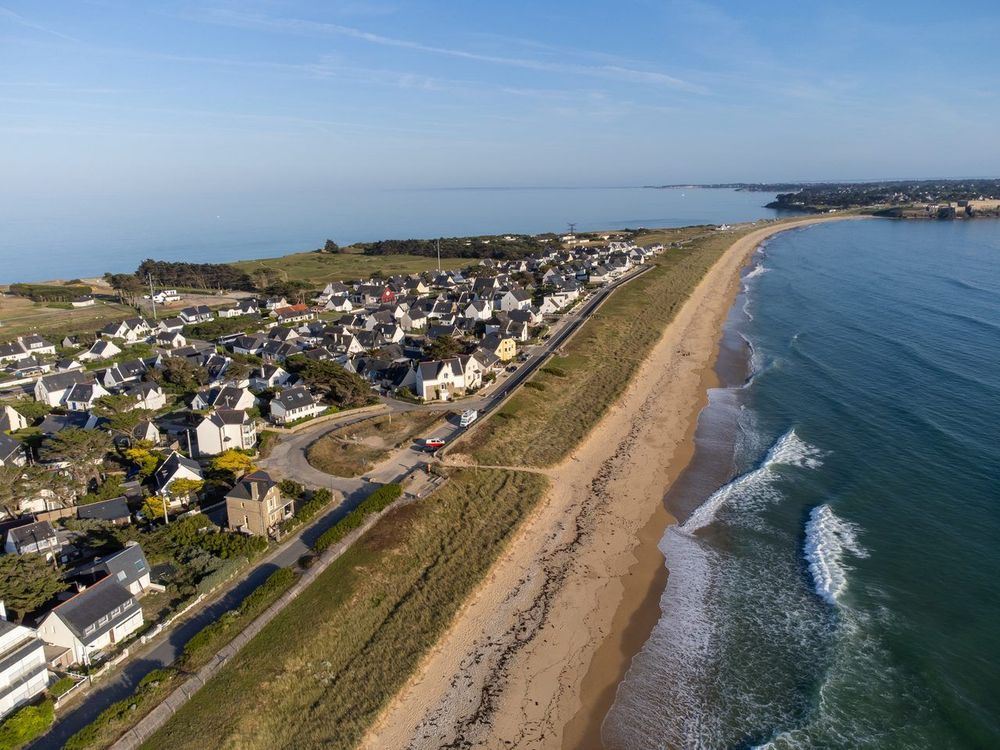
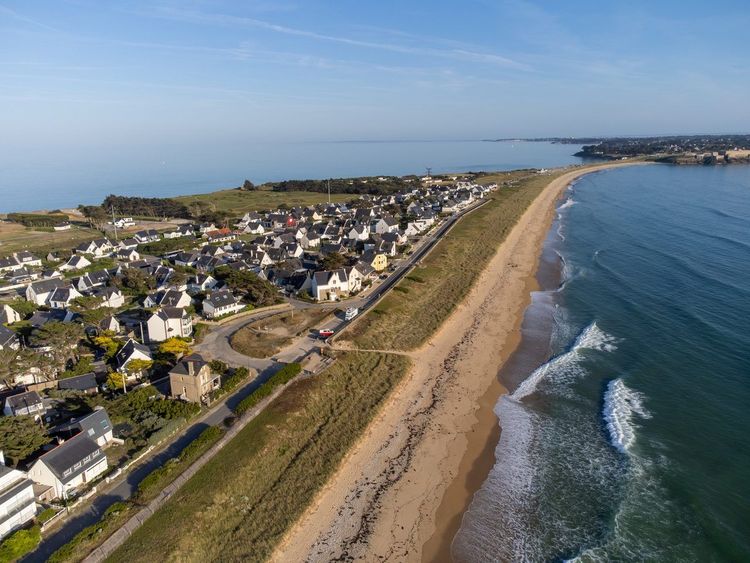
The Quiberon peninsula is barely 14 kilometres long, yet its look changes completely between its sandy northern tip and its southern end, battered by the Atlantic. To visit Quiberon in 3 days without wasting time hesitating between two beaches or two trails, it is better to follow a thread than to improvise based on whatever signposts you come across. The Ryo audio-guided tour of Quiberon starts right in the town centre and unfolds this logic, neighbourhood by neighbourhood, by ear.
In three days, you will have time to sleep in a former sardine capital turned seaside resort, walk along a coastline protected since 1936 and part of the Grand Site de France Dunes Sauvages de Gâvres à Quiberon, bite into a salted butter caramel Niniche, and take a boat to Belle-Île without ever being away from the peninsula for more than a day. Between a pioneering thalassotherapy centre launched by a cycling champion, granite villages and megaliths thousands of years old, here is how to organise these three days, day by day, with alternatives in case the weather or your mood changes along the way.
Day 1: The Seaside Resort of Quiberon, Port Haliguen and the Grande Plage
The morning is well suited to arriving and getting your bearings in the town centre. Quiberon long lived off sardine fishing and its canneries before becoming, at the end of the 19th century, one of the most popular seaside resorts in southern Brittany. The bourgeois villas that still line some streets date from that period, when the first holidaymakers came to breathe the iodised air, convinced by the hygienist theories then in vogue. The local population, around 5,000 inhabitants in winter, multiplies tenfold in the middle of August: this gap explains both the summer buzz of the seafront and the appeal of visiting the peninsula outside July and August if you prefer the quiet of its lanes.
If you arrive by car, park first thing in the morning in one of the large peripheral car parks rather than waiting until the afternoon: in high season, the spaces closest to the harbours fill up before noon. Use this first hour to stroll along the shopping street, spot a fishmonger for the evening, and soak up the rhythm of a town that still largely lives off the sea despite its status as a seaside resort.
Heading east from the centre, you reach Port Haliguen, the marina of Quiberon, one of the largest in Morbihan with about 1,300 moorings. It is a pleasant place to wander in late morning: sailboats line up along the pontoons, the quayside terraces look out over the Bay of Quiberon, and sailing schools set their dinghies afloat as soon as the first fine days arrive. The regattas held there in season give the harbour a special buzz, very different from the calm of the rest of the year. As you gaze at the bay from the terraces, keep in mind that it was the scene in 1759 of the Battle of Quiberon Bay (the Battle of the Cardinals) between the French and English fleets.
In the afternoon, head for the Grande Plage (Boulevard Chanard, 56170 Quiberon, rated 4.6/5 on Google from 731 reviews), in the very heart of the town. Facing south and sheltered from westerly winds, it has much calmer water than the Côte Sauvage on the other side of the peninsula, which makes it the family beach par excellence. Swimming is supervised in July and August, the sand is fine, and the nearby casino reminds you that you are in the most urban part of Quiberon. You can spend two or three hours there without getting bored: paddleboarding, swimming, sandcastles or simply reading against the sea wall, depending on your mood and the tide.
Before dinner, make a detour to Port Maria, the fishing and ferry port, to see the other side of Quiberon. At the beginning of the 20th century, the town had several sardine canneries, and the "sardinières" in their traditional headdresses worked to the rhythm of the catches. One brand has lasted through the century: La Belle-Iloise, founded in Quiberon in 1932, whose shop remains a must-visit to understand this working-class heritage. On the quay, watch the trawlers and potters moored between tides, the stacked pots and the nets drying: it is the same water as the sailboats of Port Haliguen, but an entirely different economy.
In the evening, Port Maria and its surroundings slowly fill with people heading out for dinner. There is no shortage of seafood restaurants around the fishing port, and it is also the ideal time to locate the thalassotherapy centre that made the place famous: it stands on the Goulvars point, a few minutes' walk from the beach. Enjoy the sunset on the sea wall before choosing your table; the Breton sky often puts on rather spectacular orange gradients in summer.
For this first day, the Ryo audio guide to Quiberon starts in the town centre and runs along Port Haliguen to the Grande Plage: a practical way to follow this itinerary without pulling out the map every ten minutes, especially if you are travelling with children who would rather listen to stories than on-the-fly explanations.
Day 2: The Côte Sauvage, Between Headlands, Coves and Fort de Penthièvre
The second day changes scenery radically: you leave the sheltered side for the west coast, fully exposed to the Atlantic. Start early at the pointe du Conguel, at the south-eastern tip of Quiberon, a tongue of heath and rocks stretching toward Houat and Hoëdic. The trail around it takes an hour to complete, and the view over the bay, often bathed in low light in the morning, is a good preparation for the day's contrast. A little tip: at low tide, rocky platforms are exposed where you can spot crabs, anemones and winkles, enough to keep children busy for quite a while.
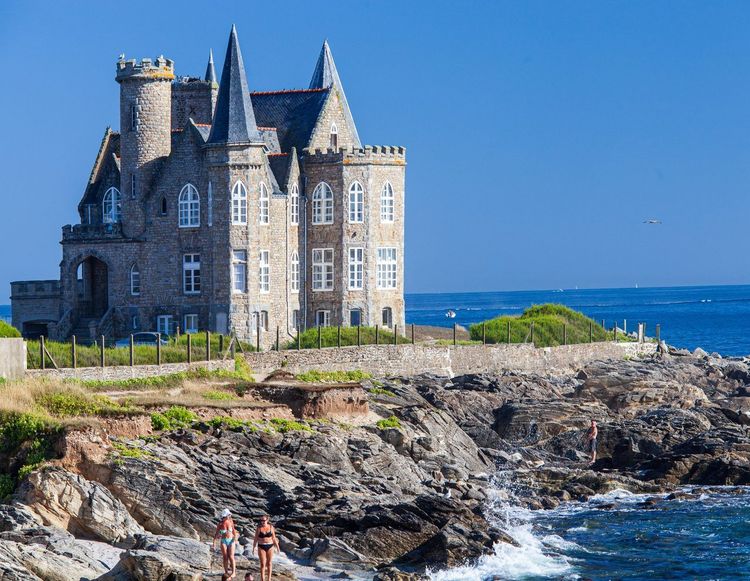
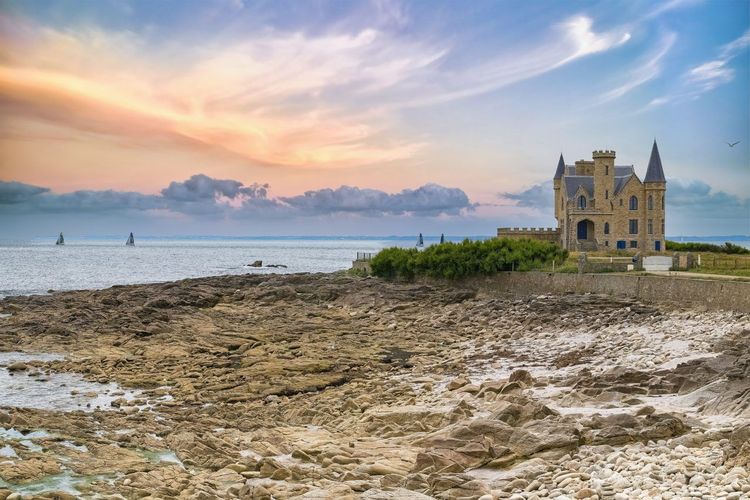
Heading back up toward the west, the Côte Sauvage opens onto a silhouette that everyone photographs: the Turpault château. Built between 1904 and 1910 for Georges Turpault, a textile industrialist from Cholet, this medieval-looking manor set on the Beg er Lann point marks the start of the coast. It was occupied by the German army during the Second World War, which left two blockhouses there, and was sold after the war. It is private property: you admire it from the trail, ideally at sunset if you pass by again in the evening.
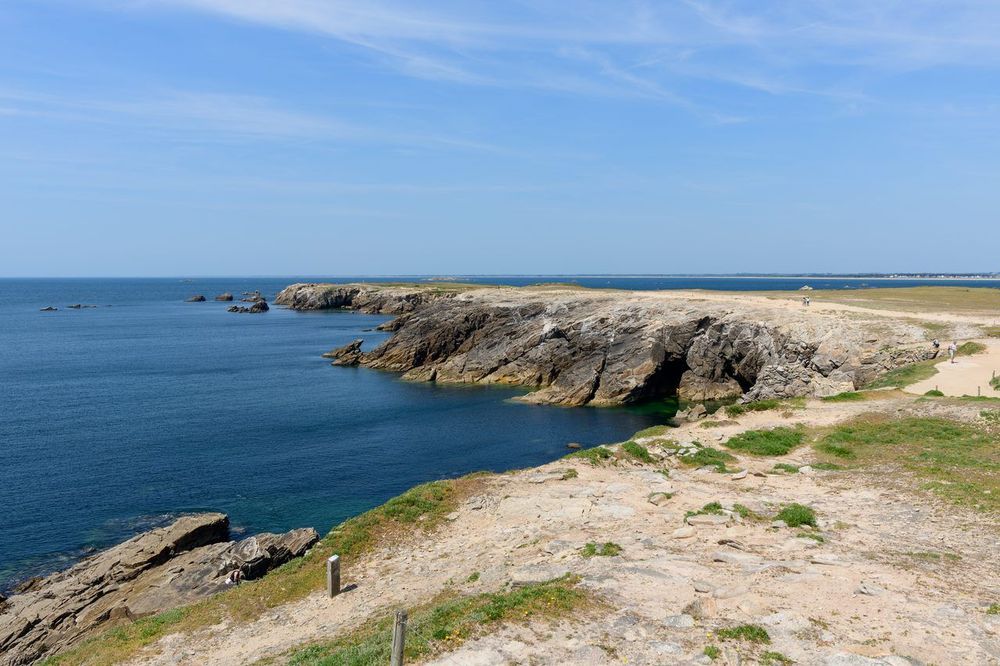
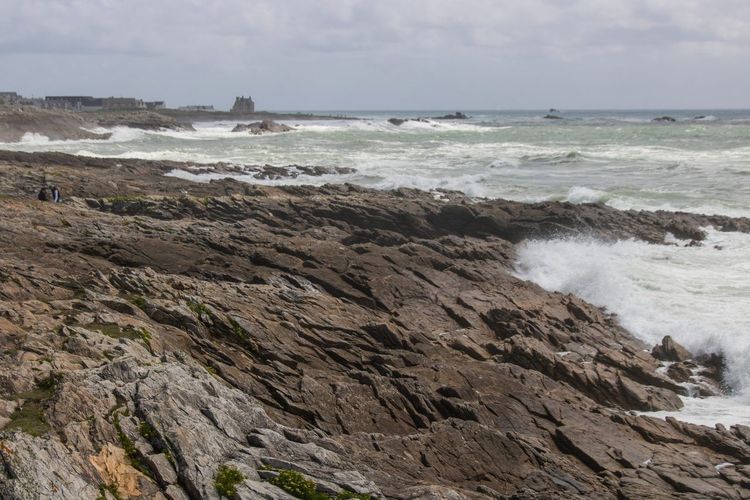
Next comes the Côte Sauvage proper, a ribbon of granite cliffs running nearly ten kilometres to Penthièvre. The waves strike with a violence that always surprises those who have only known the Grande Plage the day before, and the currents are so treacherous that swimming is prohibited in most of the coves, including at the Port Bara beach and the Port-Blanc beach and arch (Port-Blanc, 56510 Saint-Pierre-Quiberon, rated 4.6/5 on Google from 500 reviews). Port-Blanc owes its fame to its granite arch carved by the ocean, visible from the top of the beach; Port Bara, more discreet, is found in a hollow cove framed by rocks, reached by a small staircase. These are not beaches for lounging but scenery to be contemplated from the trails above them, especially in strong wind when the spray shoots up onto the paths.
Between the two, the pointe du Percho deserves a stop for its jagged rocks and its two islets detached from the coast, a good spot for a picnic sheltered behind a low wall if the wind allows. The GR 34, the customs officers' path that circles the Breton coast, runs through this whole section: allow three to four hours of leisurely walking to link the headlands on foot, rather than hopping from car park to car park. Stay on the marked paths, as cliff edges are crumbly and cycling is forbidden on the coastal trail. As for logistics, set out with water and snacks: apart from a few seasonal kiosks, shops are rare on this stretch. If you do not want to walk back, the Tire-Bouchon stops at Saint-Pierre-Quiberon in summer, so you can walk the trail one way and take the train back. Good to know: a sub-route of the Ryo audio guide follows the GR34 step by step along the Côte Sauvage, headland by headland, telling the story of coves that the road does not even let you guess.
At the end of the day, continue to the Penthièvre fort and dune, at the narrowest point of the peninsula, where the isthmus tightens to just a few dozen metres between the bay and the ocean. Built in the 18th century to lock this strategic bottleneck, then reworked in the following century, the fort was the setting in 1795 for the fighting against the royalist émigrés landed at Quiberon. Above all, it carries a more recent and heavier memory: on 13 July 1944, resistance fighters held in Vannes were executed there by German troops, and 59 bodies were found in its galleries in May 1945. A granite stele topped with a Cross of Lorraine pays tribute to them. Take a few minutes to read it before heading off to the dunes: it puts the whole day in perspective.
Before heading back, treat yourself to one last walk in the Penthièvre dune, on the other side of the road. This dune system is part of the Grand Site de France, and the chestnut fences that crisscross it protect fragile flora, marram grass, sea holly and sand everlasting, which holds the sand in place against storms. Marked paths lead from the road to the ocean beach: in a few hundred steps, you will gauge just how much the peninsula hangs on a thread of sand. At sunset, the low light on the crests is worth the detour on its own.
Day 3: Historic Villages, Megaliths and an Excursion to the Islands
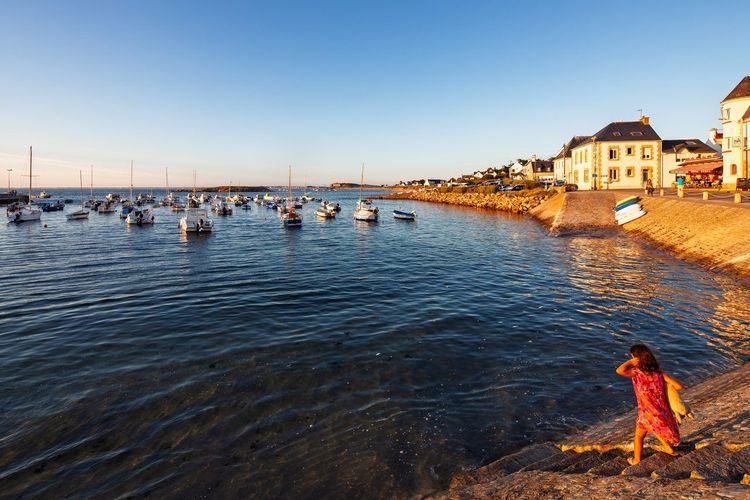
After two days facing the sea, this third day looks inland to the peninsula and its oldest past. In the morning, stroll through the historic villages such as Saint-Pierre-Quiberon or the little harbour of Portivy, where low granite houses and narrow lanes tell the story of a Brittany of fishermen that has remained largely intact despite tourist pressure. Portivy, with its sea wall, boats stranded at low tide and handful of restaurants, is one of the most photogenic spots on the peninsula early in the morning. This heritage to discover can also be read in the granite chapels scattered across the area, such as the Notre-Dame de Locmaria chapel, in the neighbourhood of the same name south of Quiberon.
Take the time to wander through the villages without a set route: it is often by stopping in front of a flowered porch, a well or a neighbourhood crêperie that you best understand how the peninsula lived before tourism, between fishing, small-scale farming and seaweed gathered on the shores. The hamlet of Kerhostin, to the north, also offers a few quiet lanes and direct access to the beach on the bay side. Travelling as a family? Plan a crêpe break in mid-morning: the places in Saint-Pierre-Quiberon are often less overrun than those in central Quiberon.
In the afternoon, head for the menhirs of Quiberon, less famous than those of Carnac about fifteen kilometres away but just as striking in their raw simplicity. The Saint-Pierre-Quiberon alignments (Kerbourgnec, 56510 Saint-Pierre-Quiberon, rated 4.4/5 on Google from 266 reviews), standing near Kerbourgnec a stone's throw from the beach, form a group of standing stones arranged in lines and a semicircle, erected in the Neolithic several thousand years ago. Their exact function continues to intrigue archaeologists: solar calendar, place of worship or territorial marker. Standing among these blocks facing the bay, in clear weather, you understand why the site still inspires so many theories.
If you would rather devote this last day to the islands instead of the land, that is entirely possible: the next section details this alternative. As for audio, several stops on the Ryo tour are devoted to the villages and their heritage, with anecdotes you listen to on the spot, in front of the stones or at the corner of a lane, far more lively than a sign stuck in the grass.
Still have energy late in the afternoon? The Carnac alignments, about twenty minutes away by car, naturally extend the day. More than 3,000 standing stones stretch there over around four kilometres, spread across the sites of Le Ménec, Kermario and Kerlescan. The Maison des Mégalithes, opposite Le Ménec, provides the keys to understanding the site and organises guided visits inside the enclosures in season, when free access is restricted to protect the vegetation. For a three-day stay centred on the peninsula, keep this option in reserve: it makes a very good replacement for a rainy afternoon on the heath.
The Tire-Bouchon and the Boat Option to the Islands
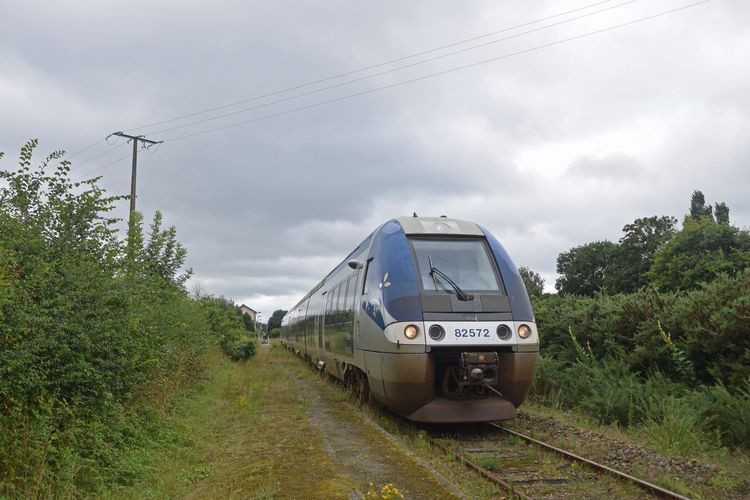
The isthmus linking Quiberon to the mainland carries only one road, the D768, quickly saturated in summer. To avoid traffic jams, the Brittany region runs the Tire-Bouchon every summer, a seasonal BreizhGo TER that links Auray to Quiberon along the peninsula's historic railway line, with stops at Plouharnel, Penthièvre and Saint-Pierre-Quiberon. In 2026, it runs on weekends in June and then daily from 29 June to 31 August, for 5 euros per trip (4 euros for under-26s). Bikes can come on board with a 1-euro reservation: ideal for finishing the day on two wheels on the peninsula's cycle paths.
For anyone who wants to vary the third-day programme, taking a boat to the islands remains the most popular option. Ferry companies link Port Maria (Port Maria, 56170 Quiberon, rated 4.5/5 on Google from 1,395 reviews), Quiberon's fishing and ferry port, to Belle-Île-en-Mer in about 45 minutes, as well as to Houat and Hoëdic, two smaller and far less visited islands, appreciated for their deserted beaches and their very insular pace of life.
A morning crossing to Belle-Île leaves plenty of time to visit the Vauban citadel in Le Palais, climb up to the colourful village of Sauzon or reach the Port-Coton needles, those rocks that Claude Monet painted several times in 1886. Once there, rent an electric bike or take a coach tour: the island is 17 kilometres long and its coasts are hilly. Allow a full day to enjoy it without rushing, and pack a windbreaker even in summer, as the open sea is often cooler than the peninsula. Houat, about forty minutes away, can be walked in a few hours and is enough for a half-day at the beach. Hoëdic, even smaller, appeals to lovers of silence: no cars, a few sandy paths, a church at the centre of the village and coves where you often find yourself alone outside of August. If you are hesitating between the three islands, remember this simple rule: Belle-Île for the diversity of landscapes and villages, Houat for the white sand beaches, Hoëdic for total escape. In any case, bring a picnic, because the few island restaurants quickly fill up at lunchtime in high season, and check the time of the last return before wandering far from the harbour.
Book your tickets in advance in July and August: morning crossings sell out several days before departure, especially on weekends. And if you choose this island option, the Ryo audio guide follows you on board too, with dedicated content to listen to during the crossing or once you have landed.
Thalassotherapy, Water Sports and Lazing on the Beaches
Quiberon owes a good part of its reputation to a thalassotherapy centre that has become a benchmark: it was here that in May 1964, the cyclist Louison Bobet, three-time Tour de France winner, opened a pioneering institute of modern thalassotherapy, at the Goulvars point. Bobet had discovered the benefits of seawater treatments while recovering from an accident. The establishment still exists, linked to a hotel, and welcomes guests who come to treat back pain, stress or simply to recharge. You can book a treatment or day access to the marine spa without staying on site, provided you do so about two weeks in advance in season.
The peninsula is also very well suited to water sports. Sailing and paddleboarding schools are numerous around Port Haliguen and the bay, sand yachting and kitesurfing find an ideal playground on the large beaches of the northern isthmus, and surfing is practised at certain Côte Sauvage spots reserved for experienced people who know the currents. Allow around fifteen euros for an hour of paddleboard rental in high season, more for a supervised lesson.
For a 100% lazy stay on the beaches of the Bay of Quiberon, favour the Grande Plage, the Penthièvre beaches on the bay side or the one at Kerhostin, three spots where the water stays calm and shallow, perfect with young children. It is the complete opposite of the Côte Sauvage: here, you come to lie down and let the afternoon slip by, not to admire the spray from a trail.
Other Must-Sees Not to Miss in Quiberon
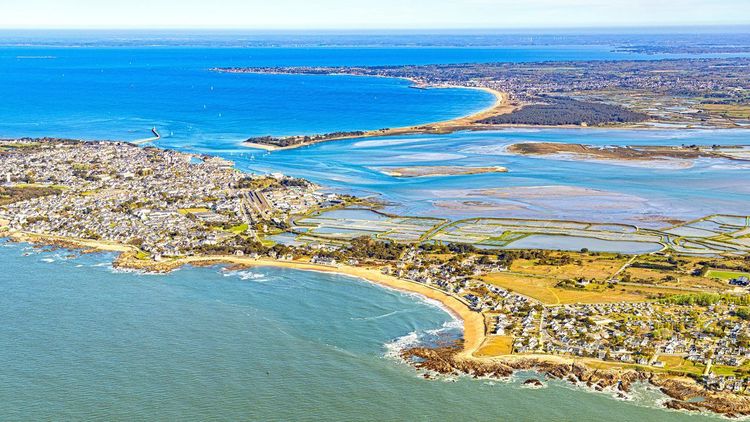
Beyond the three-day itinerary, a few places deserve a spot among your other must-sees in Quiberon. The Quiberon fish market, at Port Maria, sees the fish caught overnight arrive every morning: get up early to watch the boats return, then head to the harbour fishmongers to buy sea bass, pollack or langoustines of unbeatable freshness.
Hiking enthusiasts can also continue to the Beg er Vir point, less visited than the star sites of the Côte Sauvage, or venture onto the marked paths that cross the Penthièvre dunes, very different from the rest of the peninsula with their low vegetation and marram grass. The markets of Quiberon and Saint-Pierre-Quiberon liven up several mornings a week in season: a good chance to taste the bay's oysters or farmhouse cheese without going to a restaurant.
By bike, the peninsula reveals itself differently. A cycle path runs along a good part of the isthmus on the bay side, between Penthièvre and Saint-Pierre-Quiberon, then joins the small roads of the centre. In one morning, you can string together Kerhostin, Portivy and the Kerbourgnec alignments without ever meeting a traffic jam, then come back via the inland streets. A useful reminder: the GR34 on the Côte Sauvage side remains reserved for pedestrians, so you must follow the coastal road to travel along the ocean on two wheels. The sportiest will push on to Plouharnel, at the exit of the peninsula, for a loop of around thirty kilometres.
As for upcoming events in Quiberon, the resort punctuates the year with gatherings: night markets in summer, regattas departing from Port Haliguen, pardons in the villages, fireworks on 14 July and 15 August over the bay. Check the calendar with the Quiberon Bay tourist office before fixing your dates, as some events attract several thousand visitors in a single evening.
Niniches, Salidou and Souvenirs: The Breton Flavours of Quiberon
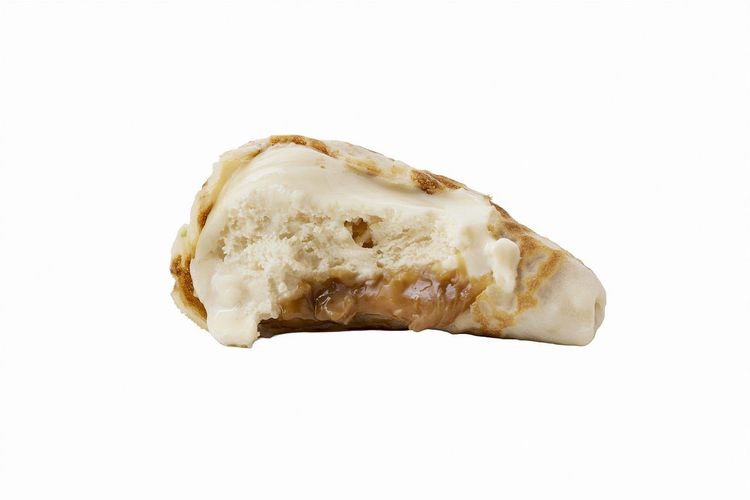
Quiberon has its own sweet speciality, and it deserves a stop. The Niniche is a long, thin salted butter caramel lollipop, created by the confectioner Raymond Audebert, who set up his sweet shop in Quiberon in 1946: this is the origin of the Maison d'Armorine, still family-run. Tasting Niniches and salidou is almost part of the visiting ritual: salidou, that salted butter caramel cream, is found on crêpes, in cakes and in jars to take home to prolong the memory once you are back.
To bring back a small souvenir that is different from fridge magnets, take a tour of the shops in the town centre: vintage sardines from the local cannery, Guérande salt in small gift boxes, pure butter Breton biscuits, or a bottle of Morbihan cider. These are small treats that weigh little in your suitcase and, once you are home, keep a little of the peninsula's salty taste on your Sunday table.
How to Get to Quiberon
How to get to Quiberon depends mostly on the season. By car, the peninsula is reached via the D768 from Auray, the only land access road, which creates predictable traffic jams on the isthmus on July and August Saturdays. Arrive in the morning or at the end of the day if you have the choice, and absolutely avoid Saturday lunchtime in high season.
Without a car, Auray station, served by TGV from Paris-Montparnasse in just over three hours, is the pivot point: from there, the BreizhGo regional coach all year round or, in summer, the Tire-Bouchon reach Quiberon in under an hour. Some travellers even leave their vehicle in Auray and finish by train, precisely to avoid the isthmus traffic jams and save precious time on a short stay.
Once there, the peninsula is very easy to get around by bike or summer shuttle: distances remain short, rarely more than 15 kilometres between north and south, which makes a car almost superfluous. Several rental companies offer standard and electric bikes by the day or week, often more cost-effective than a rental car.
Where to Stay in Quiberon
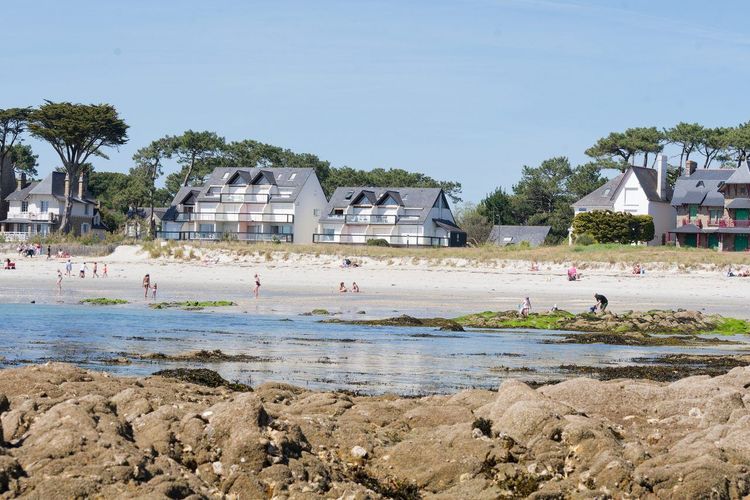
Where to stay in Quiberon boils down to a choice between three atmospheres. The town centre and its surroundings offer the greatest concentration of hotels and rentals, within walking distance of the Grande Plage, Port Maria and the restaurants: handy if you want to do everything on foot and catch the boat early in the morning. Port Haliguen offers a few quieter addresses, geared toward boating, pleasant for those who like waking up facing the sailboats.
On the Saint-Pierre-Quiberon and Côte Sauvage side, accommodation is more scattered, often in guest rooms or gîtes in granite houses, with direct access to the GR34 right from your door. Campsites, numerous on the isthmus and around Penthièvre, remain families' preferred budget option. For absolute relaxation, the hotels linked to the thalassotherapy centre on the Goulvars point combine sea-view rooms and access to treatments.
Book several months in advance for July and August: the peninsula is small and beds run out quickly, especially around 15 August, the annual peak of visitor numbers. Outside the season, prices drop noticeably and last-minute booking becomes possible.
On budget, allow, as a guide, 80 to 150 euros per night for a two- or three-star hotel in high season, noticeably more for a seafront or thalassotherapy-linked establishment, and 20 to 45 euros per night for a campsite pitch depending on comfort. Add about forty euros per person for the return boat trip to Belle-Île, about ten euros for a Tire-Bouchon return trip, and about twenty euros for a full crêpe meal. A three-day stay as a couple, excluding transport to Auray, therefore remains affordable if you avoid mid-August.
When to Go: Weather, Seasons and Tips
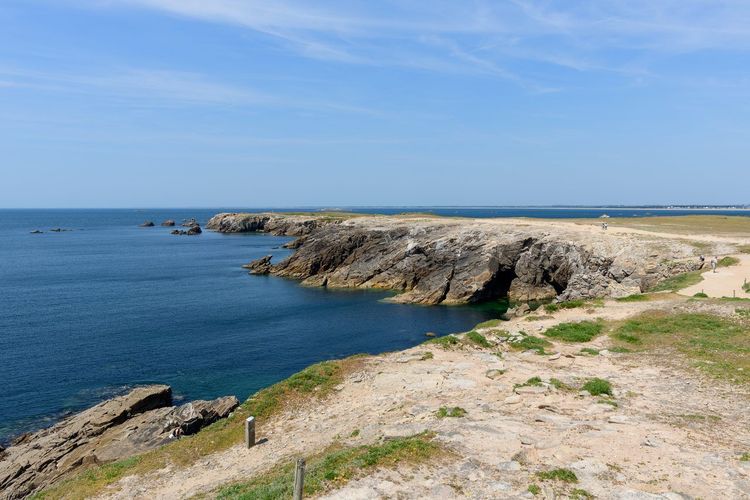
The best season to visit Quiberon is June or September, when the climate remains mild and bright without the tourist density of July and August. Rentals are cheaper outside school holidays, the beaches and the Côte Sauvage trails can be walked without crowds, and in June you can already enjoy the Tire-Bouchon on weekends. The water, however, rarely exceeds 19 to 20 degrees, even in midsummer: swimming has to be earned.
Spring, with its flowering heaths and changing skies, suits hikers perfectly. Winter, harsher and windier, mainly appeals to lovers of solitary walks facing Atlantic storms, a spectacle in itself when the big equinox tides send swells crashing onto the headlands. For the calendar of upcoming events in Quiberon, consult the tourist office before your stay, as regatta and pardon dates vary every year.
One last piece of advice, valid in any season: check the tide table before planning your days. At low tide, the rocky platforms of the pointe du Conguel and the shores of the bay lend themselves to shore fishing, in compliance with minimum sizes and the health orders posted at the town hall. At high tide and with a high tidal coefficient, the Côte Sauvage becomes spectacular, but stay well back from cliff edges: every year, walkers are caught off guard by a wave higher than the rest. Also keep a sweater and a windbreaker in your bag, even in August: the west wind makes the felt temperature drop several degrees within minutes on the heath.



FAQ
What is the most beautiful place in Quiberon?
For most visitors, the Côte Sauvage remains the most spectacular spot on the peninsula, especially around the Turpault château, the Percho point and the Port-Blanc arch when the sea is rough. For a gentler atmosphere, Port Haliguen and the bay offer an equally memorable but far more peaceful view.
What can you do and see in Quiberon in one day?
With just one day, focus on the Côte Sauvage in the morning, from the Turpault château to Port-Blanc, then the town centre, Port Maria and the Grande Plage in the afternoon. That way you will see the two most characteristic sides of the peninsula without rushing.
What are the must-do activities in Quiberon?
Hiking the GR34, a thalassotherapy session, tasting a Niniche and a crossing to Belle-Île are among the most frequently mentioned experiences, along with a visit to the megalithic alignments of Saint-Pierre-Quiberon.
What are the prettiest villages around Quiberon?
Saint-Pierre-Quiberon and the little harbour of Portivy are among the most typical, with their low granite houses. On the mainland, about twenty minutes away, Carnac and its alignments, among the largest in the world, are also worth a detour.
How do you get to Quiberon without a car?
The simplest way is to take the train to Auray, then reach Quiberon by coach all year round or by the Tire-Bouchon in summer. Once on the peninsula, a bike and the summer shuttles are more than enough.
How many days do you need to properly visit Quiberon?
Three days allow you to cover the seaside resort, the Côte Sauvage and the villages with the megaliths, while leaving some room for thalassotherapy or an excursion to the islands. With only two days, you would have to sacrifice one of these three elements.
When is the best time to visit Quiberon?
June and September offer the best compromise between pleasant weather and reasonable crowds. July and August remain the liveliest months but also the busiest on the roads and in accommodation, with much higher prices.
Three days are therefore enough to understand why this Morbihan peninsula keeps the same families coming back from one generation to the next, between ocean-battered cliffs and sheltered beaches just minutes away on foot. Once there, let the Ryo audio-guided tour of Quiberon lead the way: it links these places in a coherent order, from the town centre to the Côte Sauvage and the inland megaliths, without you taking out a map even once.