© Shutterstock
 Votre guide Ryo
Visiting Saint-Étienne for the First Time: The Complete Guide 2026
Saint-Étienne still has a reputation as a grey city inherited from coal and steel, but anyone who makes it to the Museum of Art and Industry or stops in front of the Art Deco façades of the Grand'Rue changes their mind within half a day. To visit Saint-Étienne for the first time, it helps to know where to look: the city hides its gems behind an industrial backdrop that it has itself turned into an asset. The Ryo audio-guided tour of Saint-Étienne starts precisely from this contrast, with nineteen stops on foot over an hour and a half and 3.6 km, telling how a city of miners and gunsmiths became, in 2010, the first French city admitted to the UNESCO Creative Cities Network for design.
In the pages that follow, you will come across a mine shaft whose reconstructed gallery you can visit, a stadium nicknamed "the Cauldron" since a European night in 1974, a covered market from 1872 reopened in January 2026 and wild gorges reachable in twenty minutes by car. You will also learn when to come, how many days to plan, what the museums cost and where to sleep without breaking the bank. Everything you need to build a stay unlike any other guide you'll find online.
The Historic Center and Emblematic Squares of Saint-Étienne
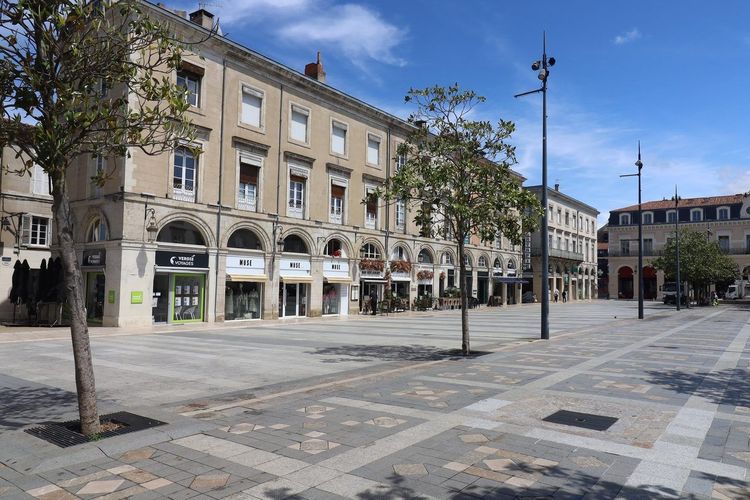
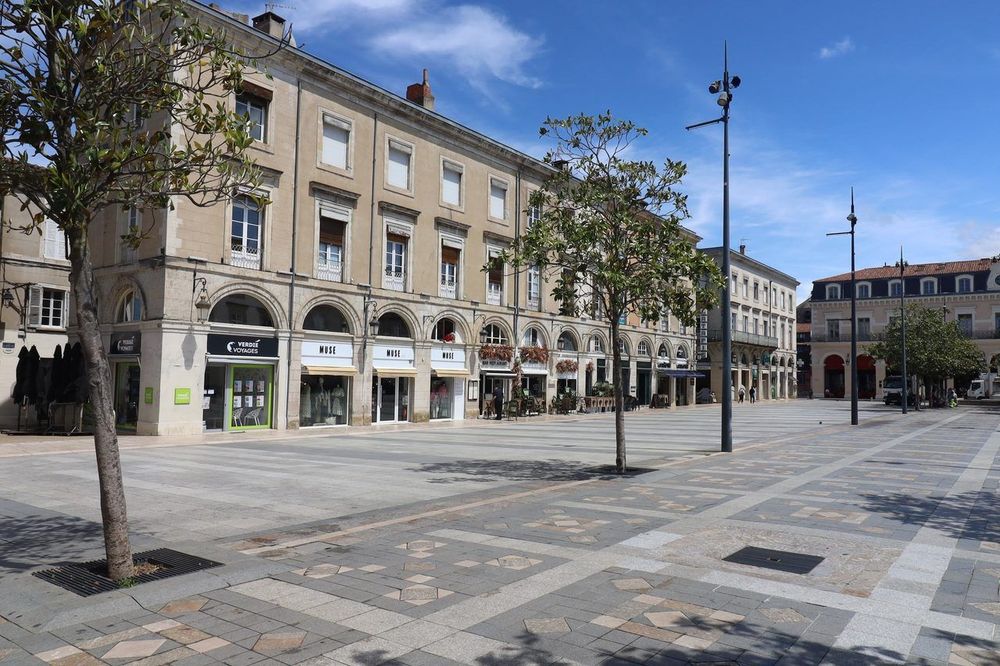
The heart of Saint-Étienne can be read in just a few streets, without really needing to pull out a map. Most visits begin, without even realizing it, on Place Jean-Jaurès (Place Jean Jaurès, 42000 Saint-Étienne, rated 4.3/5 on Google from 850 reviews), lined with cafés and plane trees, a stone's throw from the main shopping streets.
From there, the Grand'Rue runs north to south for several kilometers, followed by the tramway. It is the city's historic axis, and also the most surprising for anyone expecting a flat, featureless downtown: the façades alternate between 19th-century buildings and Art Deco constructions from the 1920s and 1930s, a period when Saint-Étienne was among the most prosperous cities in France thanks to arms, ribbon and bicycles. Look up at the level of the second floors: the ceramic and ironwork details tell this story of prosperity better than any information panel.
The Hôtel de Ville, a 19th-century neoclassical building whose façade faces a pedestrian square, marks the other landmark of the center. Further east, the Crêt-de-Roc district climbs steeply up a hill developed in the 19th century by ribbon weavers: staircases, narrow lanes, former workshops with large windows designed to light the looms, and open views over the rooftops. On the opposite side, the Jacquard district preserves the memory of the working class with its former ribbon factories converted into housing.
Want to place each façade in its history? The Ryo audio-guided tour starts in the heart of this historic center: nineteen audio stops in an hour and a half, from Place Jean-Jaurès to the Hôtel de Ville and then along the Grand'Rue. You move at your own pace, with your own earphones, without having your nose buried in a paper guidebook.
The Cité du Design, Symbol of the City's Transformation
No place sums up Saint-Étienne's trajectory better than the Cité du Design. The site occupies the buildings of the Manufacture d'armes built in the 1860s on the Plaine Achille, where the French army's rifles were produced for nearly a century and a half, until production stopped in the early 2000s. Rather than demolishing the site, the city chose to install a higher school of art and design there, then an exhibition center, inaugurated in 2009.
The most photographed building on the site is called La Platine: a long, contemporary structure set in the middle of the former arms halls, designed by architects Finn Geipel and Giulia Andi. It hosts temporary exhibitions on industrial design, everyday objects and architecture. Right next to it, the 32-meter observation tower offers a view over the entire Manufacture district.
The site comes alive above all during the International Design Biennial, the event that made Saint-Étienne known beyond the region: hundreds of thousands of visitors come to discover installations and prototypes throughout the city, not just at the Manufacture. If your stay doesn't coincide with an edition, the former industrial buildings are still worth a visit for their volumes and preserved brickwork. The sub-tour In the Footsteps of a Past That Invents the Future tells precisely how this former arms factory reinvented itself as a creative hub: fourteen audio stops over 4.5 km to understand the mechanics of this transformation.
The Puits Couriot and the Mining Museum
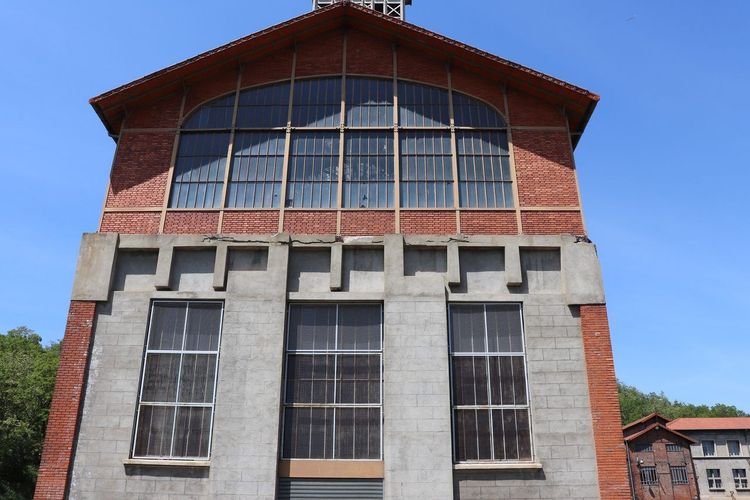
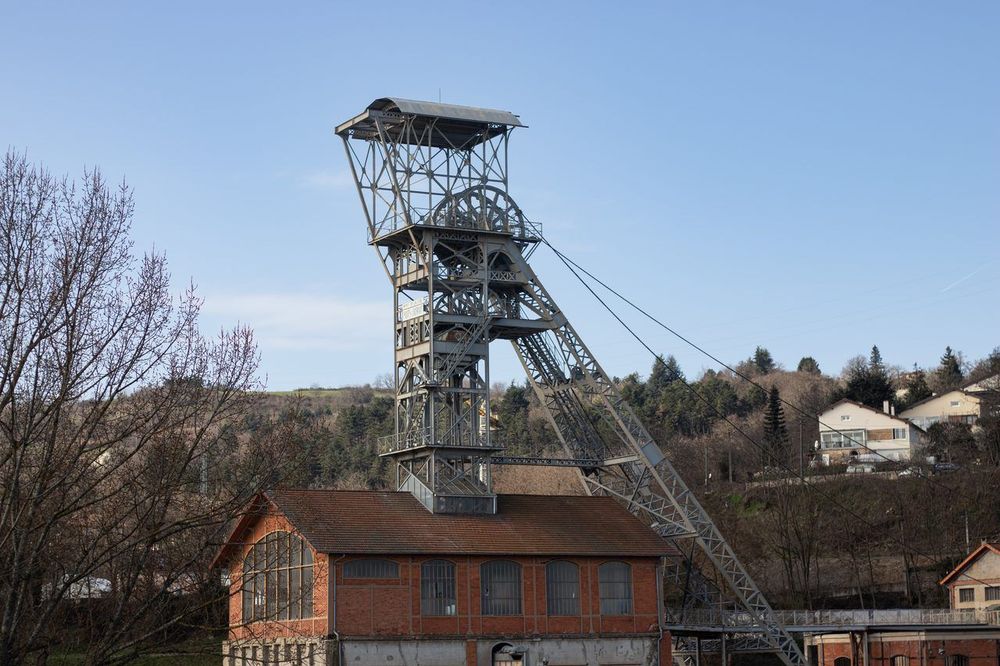
About a fifteen-minute walk from the center, the Puits Couriot keeps intact its metal headframe, its neighboring slag heaps and its extraction buildings, listed as historic monuments. The site ceased all mining activity in 1973, after more than a century of coal mining that shaped the identity and demographics of the entire city.
The Mining Museum on site offers several options. The self-guided visit gives access to the exhibition rooms (the hanging room, where miners hung their clothes from the ceiling, remains the most striking). The guided visit of the reconstructed gallery, about 1h15, plunges you into a setting of timbering, rails and cutting machines, with deliberately dim lighting. What strikes most visitors is not so much the equipment on display as the accounts of working conditions: the heat, the noise, the fear of firedamp explosions.
As for budget, plan on €8.70 for the guided gallery visit and €6.70 for the self-guided visit at full price. Admission is free for under-25s and for everyone on the first Sunday of the month, and the park surrounding the headframe remains freely accessible all year round. Book your gallery slot in advance during school holidays, as groups are limited. The Ryo audio-guided sub-tour devoted to the industrial past also mentions this headframe, symbol of the city that invented everything.
The Museum of Art and Industry
Less well known than its contemporary neighbors, the Museum of Art and Industry (2 Place Louis Comte, 42000 Saint-Étienne, rated 4.5/5 on Google from 1,090 reviews) nonetheless deserves a prime spot in a first stay. Housed in the former 19th-century Palais des Arts, a short distance from the center, it holds three reference collections that tell the other side of Saint-Étienne's history: ribbon, arms and cycles.
The ribbon-making collection often surprises visitors: Saint-Étienne was long the world capital of silk ribbon, with remarkably fine pieces woven on Jacquard looms still displayed in the galleries. The section devoted to arms traces several centuries of manufacturing, from arquebuses to hunting rifles, while the cycles gallery lines up bicycles from the 19th century to recent models, the city having been the cradle of French bicycle production.
Good to know if you're planning a stay in 2026: the museum closed from April 1 to July 31 to install a new permanent exhibition devoted to two-wheelers and to upgrade its fire safety. It reopened in early August, Tuesday to Sunday from 10am to 6pm. Adult admission ranges from €5.10 to €7.70 depending on the option, and it is free for under-25s and on the first Sunday of the month. Allow a good hour and a half to see everything.
The MAMC+, Museum of Modern and Contemporary Art
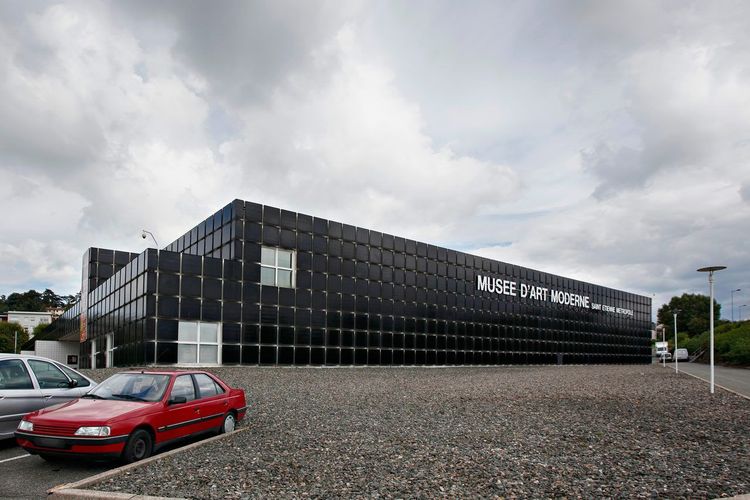
On the northern edge of the urban area, in the municipality of Saint-Priest-en-Jarez, the MAMC+ (Museum of Modern and Contemporary Art of Saint-Étienne Métropole) holds one of the most important collections of modern and contemporary art in France after that of the Centre Pompidou, with more than 20,000 inventoried works.
The building itself, opened in 1987 and clad in black ceramic tiles evoking coal, contrasts with the industrial architecture found elsewhere in the city. The collections cover 20th-century art through to the most recent pieces, with a strong emphasis on design, consistent with the city's identity.
You can get there by bus from the center in about twenty minutes, and combine it on the same day with the Planetarium, located on the same northern axis. Temporary exhibitions change several times a year and are often worth the trip as much as the permanent collection, so remember to check the program before choosing your time slot.
The Cauldron and the Verts Museum: The Soul of the Geoffroy-Guichard Stadium
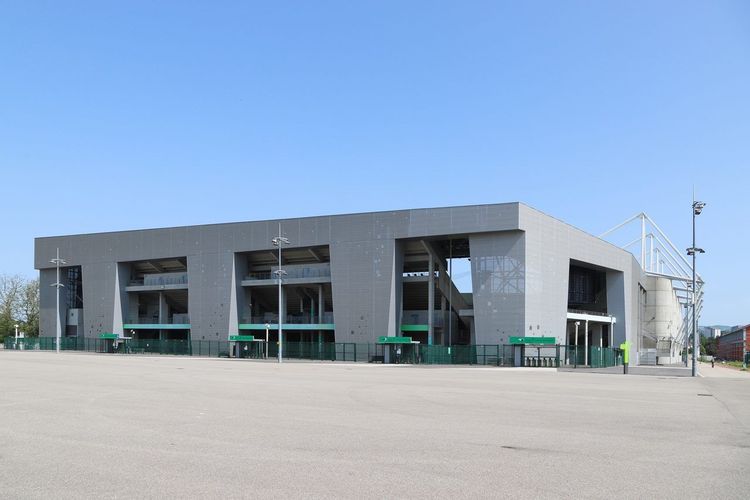
It's impossible to discover Saint-Étienne without talking about football. The Geoffroy-Guichard stadium (32 Rue Paul et Pierre Guichard, 42000 Saint-Étienne, rated 4.7/5 on Google from 9,346 reviews), built in the early 1930s on land sold for a symbolic franc by the Guichard family, founders of the Casino group, remains one of the most powerful symbols of local identity, well beyond football fans.
Its nickname of "Cauldron" dates from November 6, 1974: beaten 4-1 in the first leg of a European Cup tie, the Verts crushed Hajduk Split 5-1 in the return, carried by a crowd making as much noise as if it were twice as large. Yugoslav journalists spoke of a cauldron, L'Équipe picked up the word, and it never left the stadium. Right next to the ground, the Verts Museum retraces this epic through trophies, jerseys and video archives, up to the Glasgow final in 1976 and its famous square goalposts. Even if you don't know the club, the visit sheds light on what football meant for a working-class city in search of collective pride. Guided tours of the stadium are also offered on non-match days.
The Saint-Étienne Planetarium
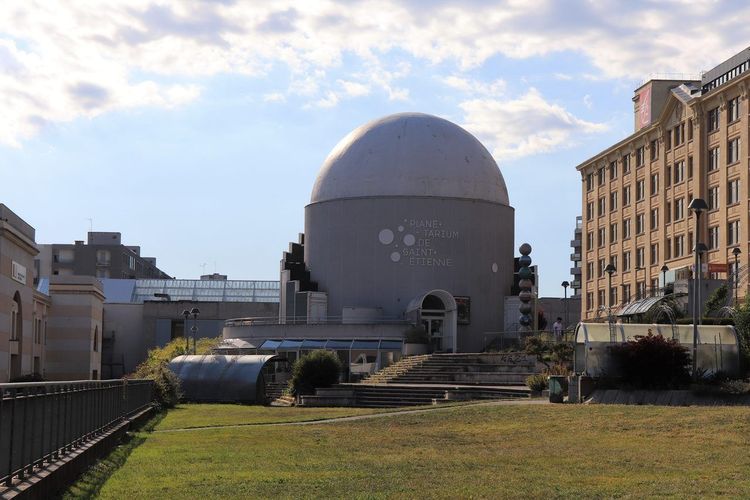
North of the center, near the Zénith, the Saint-Étienne Planetarium (28 Rue Pierre et Dominique Ponchardier, 42000 Saint-Étienne, rated 4.6/5 on Google from 233 reviews) offers dome shows suitable for families and solo curious visitors alike. The facility projects star simulations and journeys through the solar system onto an immersive dome.
Allow about one hour per show, with booking recommended on weekends. It's a pleasant break between two museums, especially on a rainy day. If you're coming with children, our guide to visiting Saint-Étienne with family details other suitable activities.
Offbeat and Festive Places: Halles Mazerat and Street Art
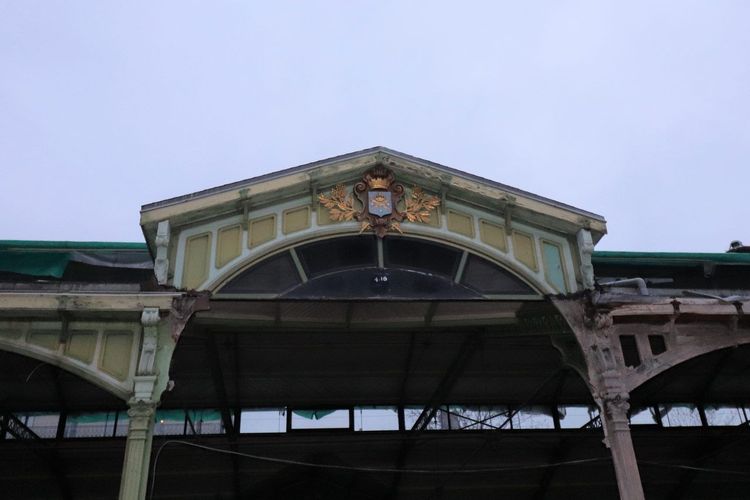
If you're looking for offbeat places to visit in Saint-Étienne, far from the institutional museums, head to the Halles Mazerat (Place Chavanelle, 42000 Saint-Étienne, rated 4.3/5 on Google from 215 reviews). This covered market, opened in March 1872 to plans by architect Louis Mazerat, suffered a fire in 1961, several renovations, then ten months of closure in 2025. It reopened on January 13, 2026 under the management of La Commune, which turned it into a food hall where young chefs run counters around shared tables.
The original metal framework, rediscovered during the 1988 renovation, gives the whole place the look of an industrial glass roof that is quite rare for a hall still in operation. Around it, several streets in the city center serve as a giant canvas for street art: multi-story murals, often created by guest artists during festivals, which turn blank gable walls into works of art in their own right. The Beaubrun-Tarentaize district concentrates a good share of these interventions.
These alternative and festive places, along with former industrial wastelands converted into concert venues, form the least expected face of Saint-Étienne for those who only know the city by its mining reputation. For a complementary overview, the article 15 Free Things to Do in Saint-Étienne lists other spots organized by neighborhood.
Some of these places only open in the evening or on weekends: check opening hours before heading out, especially if you plan to string together several spots in the same outing.
The Le Corbusier Site in Firminy, an Architectural Escape
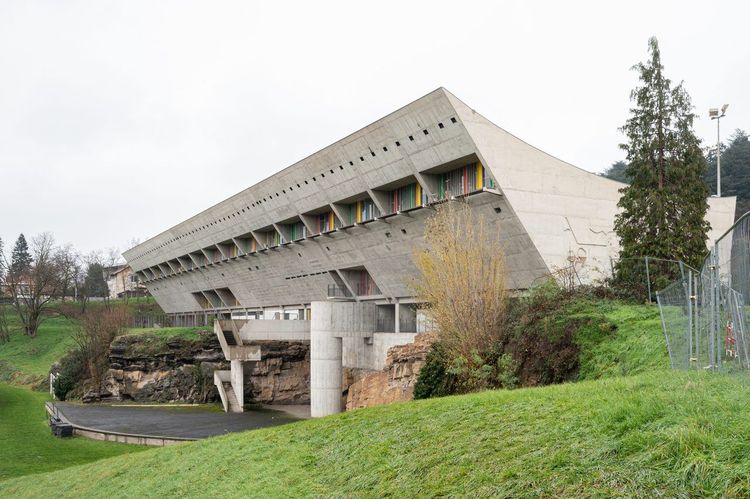
About fifteen minutes by train or car from Saint-Étienne, the town of Firminy is home to the largest ensemble designed by Le Corbusier in Europe. Its House of Culture has been inscribed on the UNESCO World Heritage List since 2016, along with sixteen other works by the architect.
The site brings together several buildings conceived as an urban whole in the 1950s and 1960s: a housing unit modeled on the one in Marseille, the House of Culture, a stadium carved into a former quarry and above all the Saint-Pierre church, completed only in 2006, long after the architect's death. Its concrete cone pierced with small openings draws a luminous constellation inside, even in broad daylight.
Allow half a day for the full trip, guided tour included if you want to grasp the details of the raw concrete and the proportions of the Modulor. It's a rare architectural counterpoint less than 20 minutes from the city center, which deserves its place in a first-visit itinerary, even though it lies outside Saint-Étienne.
Nature Escapes: Gorges de la Loire, Saint-Victor and the Pilat
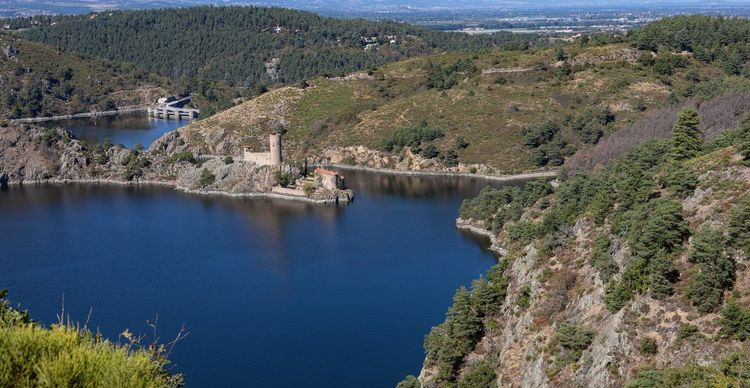
Saint-Étienne is unusual in that it borders spectacular natural areas just minutes from its last buildings. The Gorges de la Loire, carved by the river between wooded and rocky slopes, begin about twenty minutes by car from the city center and offer a landscape that contrasts radically with the urban setting you've just crossed.
In the heart of these gorges, the hilltop village of Saint-Victor-sur-Loire and its medieval castle overlook Lake Grangent, a reservoir created by the dam completed in 1957. Below, the Château de Grangent stands on an island in the middle of the water, one of the most photographed images in the département. The port of Saint-Victor has a beach with supervised swimming in summer, plus paddleboard and boat rentals, very popular with local families on weekends.
If you have one more day, push on to the Pilat massif, straddling the Loire and the Rhône. The regional natural park offers open ridges, fir forests and viewpoints that reach, on a clear day, as far as Mont Blanc. The Crêt de la Perdrix (42660 Saint-Régis-du-Coin, rated 4.8/5 on Google from 91 reviews), the highest point of the massif at 1,432 meters, is reached by a short walk from the Jasserie or Croix de Chaubouret car parks, about 45 minutes by road from Saint-Étienne. The chirats, those streams of granite blocks, are part of the scenery.
The Gorges and Saint-Victor combine easily into half a day, while the Pilat requires a full day if you add a real hike. A car remains the most practical option, as public transport serves this area poorly apart from a few lines.
How to Get to Saint-Étienne
The city is easy to reach from Lyon or Paris. By train, Saint-Étienne Châteaucreux station (Place Yves Carcélès, 42000 Saint-Étienne, rated 3.9/5 on Google from 560 reviews) receives direct TGVs from Paris Gare de Lyon in just under three hours, as well as very frequent TER trains from Lyon Part-Dieu, a journey of about fifty minutes.
By bus, several long-distance companies link Saint-Étienne to Paris, Lyon or Marseille at fares often lower than the train, at the cost of a longer journey. By plane, the most practical airport remains Lyon-Saint-Exupéry, about an hour away by road: Saint-Étienne-Bouthéon airport has had no scheduled service since 2017 and is limited to a few seasonal charter flights.
Once there, the city center can be explored entirely on foot or by tramway along the Grand'Rue. For more remote sites such as the MAMC+ or the Gorges de la Loire, the STAS bus network works well on weekdays, but a rental car makes things much simpler on weekends or for the trip to Firminy.
Where to Stay in Saint-Étienne
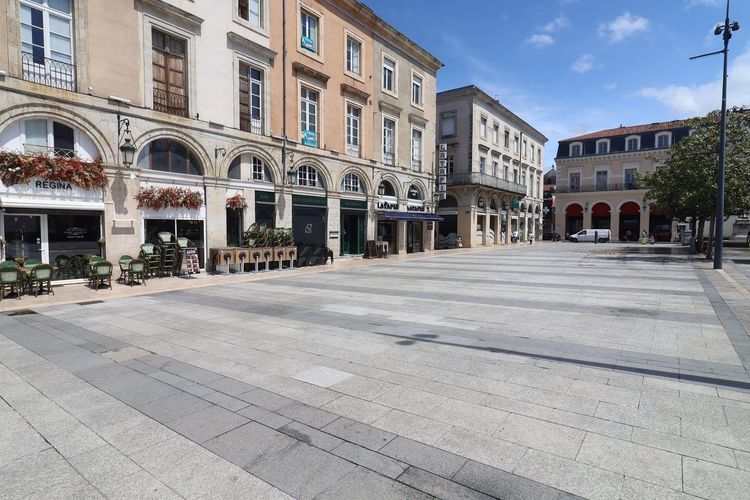
For a first visit, the area around Place Jean-Jaurès and the Grand'Rue remains the most practical choice: you're within walking distance of the historic center and the museums, and the tramway drops you at the Cité du Design or at Châteaucreux station in a few minutes. Mid-range hotels are plentiful there and generally more affordable than in Lyon for a comparable level of comfort.
If you arrive by train late in the evening, places near Châteaucreux save you an extra trip. For a nature-oriented stay, the gîtes and guesthouses of Saint-Victor-sur-Loire let you combine city and fresh air without multiplying journeys, provided you have a vehicle.
As for budget, a mid-range double room is often found between €70 and €110 per night in the center, a little less on weekdays outside Biennial periods or big matches. On nights when ASSE plays at home, hotels near the stadium and the station fill up quickly: if your stay coincides with a match, book several weeks in advance. Finally, remember to choose accommodation near a tram stop, the simplest way to reach the Cité du Design, the station or the Puits Couriot without taking the car again.
When to Go and How Long to Stay in Saint-Étienne
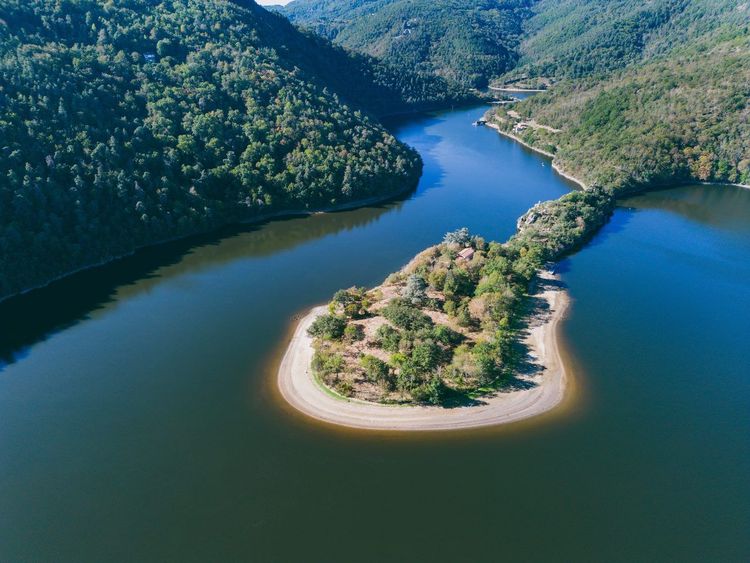
Spring and early autumn offer the most pleasant conditions for walking in the city and enjoying the Gorges de la Loire. Summer remains manageable thanks to swimming at Saint-Victor. If you're booking for November, focus on the museums, the Planetarium and a match at the Cauldron: the city is very enjoyable indoors when the Forez sky clouds over. Allow two full days to cover the essentials of the city center and two museums, three days if you add Firminy and a nature escape.



FAQ
What are the must-see sights in Saint-Étienne?
The Cité du Design, the Museum of Art and Industry, the Puits Couriot and its Mining Museum, and the historic center around Place Jean-Jaurès form the core of a first visit. The MAMC+ and the Geoffroy-Guichard stadium are worthwhile additions if time allows.
What is the most beautiful neighborhood in Saint-Étienne?
The Crêt-de-Roc, with its staircases, sloping lanes and former ribbon-weavers' workshops, offers the most photogenic charm. The historic center around the Grand'Rue appeals more for the variety of its Art Deco façades.
What are the offbeat places to visit in Saint-Étienne?
The Halles Mazerat, reopened in 2026, the street art murals of the Beaubrun-Tarentaize district, the hanging room at the Puits Couriot and the former industrial wastelands converted into cultural venues are among the city's most unexpected spots.
Is Saint-Étienne a beautiful city?
Saint-Étienne surprises more than it charms at first glance: its historic center, its converted industrial museums and the natural escapes right on its doorstep make it a richer destination than its reputation suggests.
How long should you plan for a first visit to Saint-Étienne?
Two full days are enough to cover the city center and the main museums. Three days leave time to add the trip to Firminy and an outing to the Gorges de la Loire or the Pilat.
What budget should you plan for a stay in Saint-Étienne?
Saint-Étienne is significantly more affordable than Lyon or Paris for accommodation and dining. Municipal museums cost less than €9 and are free for under-25s and on the first Sunday of the month. Plan on roughly €70 to €100 per day per person for a comfortable stay, accommodation and admissions included, excluding trips outside the city.
Saint-Étienne doesn't reveal itself at a glance from the train station, but it richly rewards those who take the time to walk up the Grand'Rue to the Cité du Design, then back down toward the Puits Couriot. Between converted industrial museums, a legendary stadium and wild gorges twenty minutes away, the city offers a concentration of industrial history rarely found in such a compact area. To explore it without missing a thing, slip in your earphones and start the Ryo audio-guided tour through Saint-Étienne: nineteen audio stories, 3.6 km on foot, straight from your phone.