© Shutterstock
 Votre guide Ryo
Things to Do in Saint-Omer in 2026: 16 Places That Defy the Clichés of Northern France
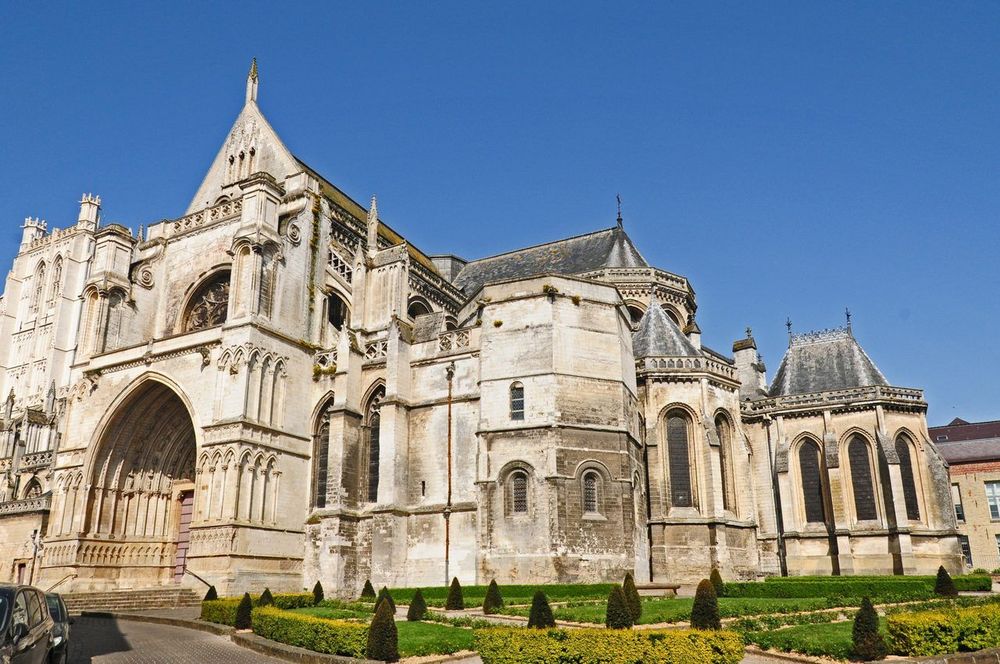
Between two branches of the Neufossé canal, the Gothic façade of the Notre-Dame cathedral dominates a city center that most visitors to the Opal Coast pass through without stopping. That is a mistake: there is easily a full weekend's worth of things to do in Saint-Omer, from the crumbling ramparts of a thousand-year-old abbey to a marsh designated a biosphere reserve and the remains of the last war buried under dozens of meters of concrete.
The town has barely 14,000 inhabitants, yet its territory concentrates experiences found nowhere else in France: a genever distillery that has been operating since 1812, a 19th-century boat lift that still raises vessels 13 meters, and a nature reserve where grey herons and kingfishers nest just ten minutes' walk from the town hall. If you have already enjoyed urban audio-guided tours elsewhere, our Ryo app covers several dozen French cities, from the Ryo audio-guided tour of Saint-Nazaire, another city where the concrete of the last war tells its own story, to the cobbled alleyways of Saint-Malo — a good habit to keep in mind for your next stops once you have finished exploring Saint-Omer. In the meantime, put on a good pair of shoes: the best way to visit is still on foot, canal by canal.
1. Notre-Dame Cathedral
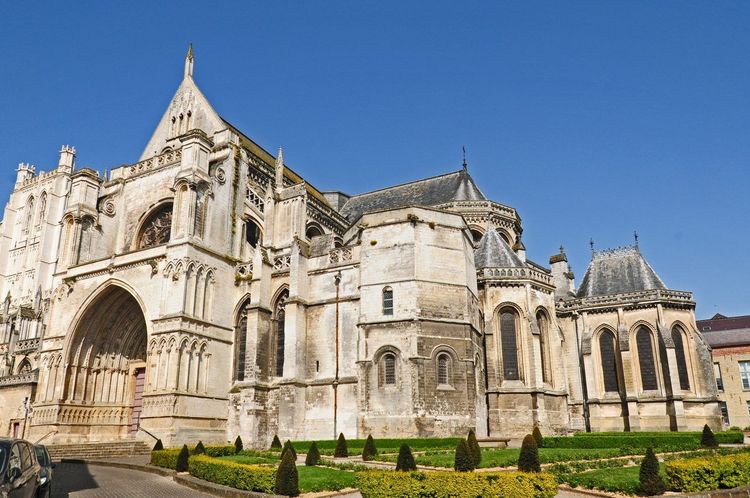
The Notre-Dame cathedral (Place du Maréchal Foch, 62500 Saint-Omer, rated 4.7/5 on Google from 1,287 reviews) has dominated the city since the 13th century and remains the largest church in the Pas-de-Calais, a status it owes to a building campaign that stretched over nearly three hundred years, from late Romanesque to Flamboyant Gothic. Its western façade, asymmetrical, still bears the marks of those successive alterations: a massive square tower on one side, a simple gable on the other, never completed due to lack of funds according to local archives.
Inside, the eye is immediately drawn to the Grand Dieu de Thérouanne, a monumental statue of Christ salvaged after the destruction of the neighboring cathedral of Thérouanne, razed on the orders of Charles V in 1553. The astronomical clock, installed in the 18th century and still functioning, displays the lunar phases and the position of the sun in the zodiac — a mechanism that only a handful of French cathedrals still maintain in working order. The treasury, rich in religious silverware and illuminated manuscripts, rounds off the visit for those who take the time to ask at the reception desk.
Allow 45 minutes for a complete visit including the treasury, which is open on certain afternoons only depending on the season. Planning your visit for a specific day? Check the opening hours before you travel: religious services regularly suspend visitor access in the late morning, especially on Sundays.
2. The Ruins of abbaye Saint-Bertin
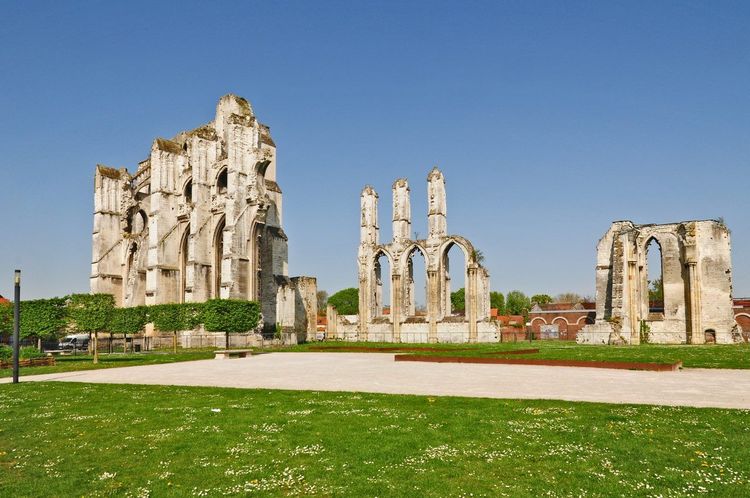
Founded in the 7th century by the monk Bertin, abbaye Saint-Bertin (Rue Saint-Bertin, 62500 Saint-Omer, rated 4.4/5 on Google from 943 reviews) was for nearly a millennium one of the great monastic centers of northern France, renowned for its scriptorium where generations of scribes produced manuscripts now preserved in the agglomeration library. Only open-air ruins remain: the Gothic choir, its pointed arches, and a few sections of the nave, the rest having been sold off as a stone quarry after the Revolution.
This very bareness is what makes the site so compelling: without a roof or stained glass to distract the eye, the silhouette of the arches stands out against the northern sky with an almost graphic clarity, particularly photogenic at the end of the day. Information panels scattered across the site trace the history of the Benedictine community and explain the function of each surviving feature, from the vanished cloister to the chapter house. Access is free and open all year round, making it an easy stop to combine with a walk along the Aa river, which borders the site.
Come in the late afternoon: the raking light brings out the texture of the stonework, and the site empties of the school groups that often occupy it in the morning.
3. The Sandelin Museum
Housed in an 18th-century townhouse, the Sandelin museum (14 Rue Carnot, 62500 Saint-Omer, rated 4.6/5 on Google from 317 reviews) brings together an eclectic collection in which local audomarois faïence sits alongside medieval silverware and a section of Flemish and Dutch painting. The local pottery tradition, active from the 18th to the 19th century, long rivaled production from Delft — a little-known chapter of the city's industrial history that the museum documents with precision.
The rooms also house pieces of religious silverware from abbaye Saint-Bertin, saved from revolutionary dispersal. One room is devoted to temporary exhibitions, renewed two or three times a year, often linked to regional heritage or contemporary artists. Allow an hour, more if a temporary exhibition holds your attention: the ticket office occasionally offers a combined reduced-price ticket with the Coupole d'Helfaut at certain times of year. Admission is reasonably priced, and activity booklets for children are available at the reception desk, turning the visit into an interactive trail for families rather than a simple procession past display cases.
4. A Boat Trip Through the marais audomarois
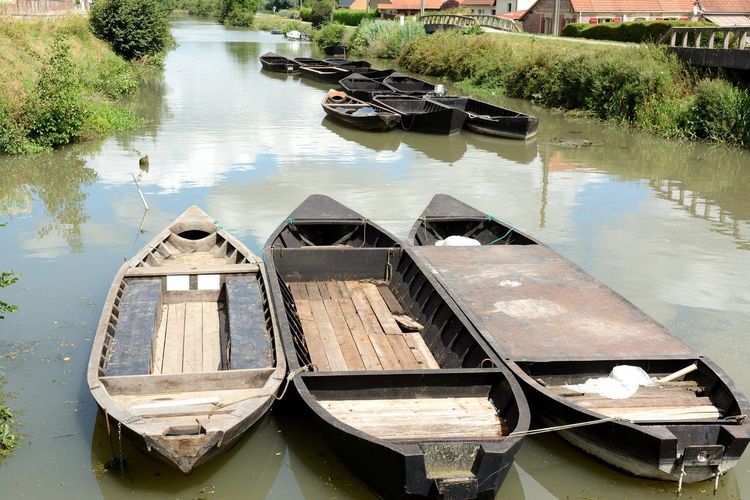
The marais audomarois stretches across roughly 3,700 hectares around Saint-Omer, a network of canals known locally as watergangs, dug by hand over generations by market gardeners to cultivate plots reclaimed from the water. Recognized as a UNESCO biosphere reserve since 2013, this landscape long supplied the city with vegetables, transported on flat-bottomed boats called bacôves, which still travel the waterways today — for visitors more than for trade.
Several landing stages, including Isnor (3 Rue du Marais, 62500 Saint-Omer, rated 4.5/5 on Google from 1,302 reviews), offer guided tours of around an hour on silent electric boats — a choice that lets you hear the lapping of the water and birdsong rather than an engine. The guide comments along the way on historical market-gardening techniques, still practiced by a handful of farms, and points out bird species visible according to the season: grey herons, coots, and sometimes a kingfisher skimming the surface.
The best period runs from April to September, when the floating gardens are in full production and the long days allow late-afternoon departures, when the raking light on the canals is at its most beautiful. In winter, some operators reduce their frequency; it is worth calling ahead before making the journey.
Travelling with children? Bacôve trips suit younger visitors — the outing is calm and the pace leisurely — but keep a life jacket within reach if your landing stage does not provide them as a matter of course.
5. The Romelaëre Nature Reserve
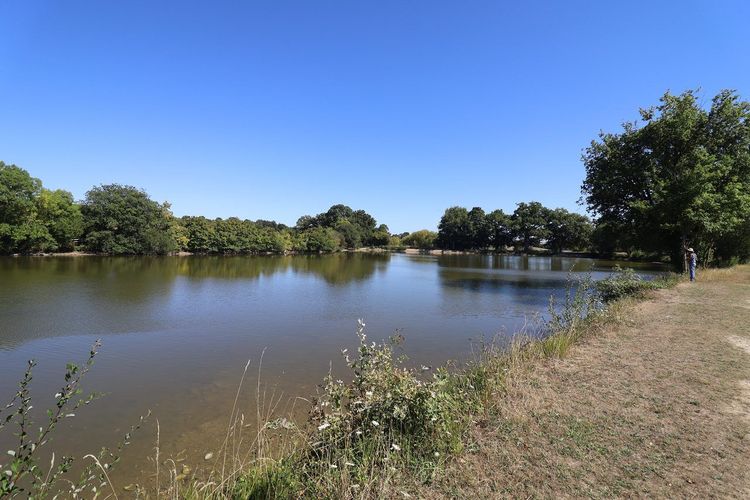
At Clairmarais, a few minutes from the center of Saint-Omer, the Romelaëre nature reserve (Chemin du Romelaëre, 62500 Clairmarais, rated 4.6/5 on Google from 348 reviews) protects more than 200 hectares of wetlands at the very heart of the marais audomarois. Wooden walkways and compacted-gravel paths allow visitors to move through the reserve without disturbing the wildlife, with several elevated hides positioned to observe water birds without startling them.
The reserve hosts a particularly rich birdlife for an area so close to a town: great crested grebes, little bitterns (a discreet and endangered species), and marsh harriers during the nesting season. Themed guided visits, organized by the managing association, cater to families and seasoned birdwatchers alike, with observation equipment sometimes available on loan.
Entry to the main paths is free, but some guided visits require advance booking, particularly in spring when demand is highest. Bring binoculars if you have them: the dense vegetation can sometimes limit direct sightlines across the water.
6. The Jesuit Chapel
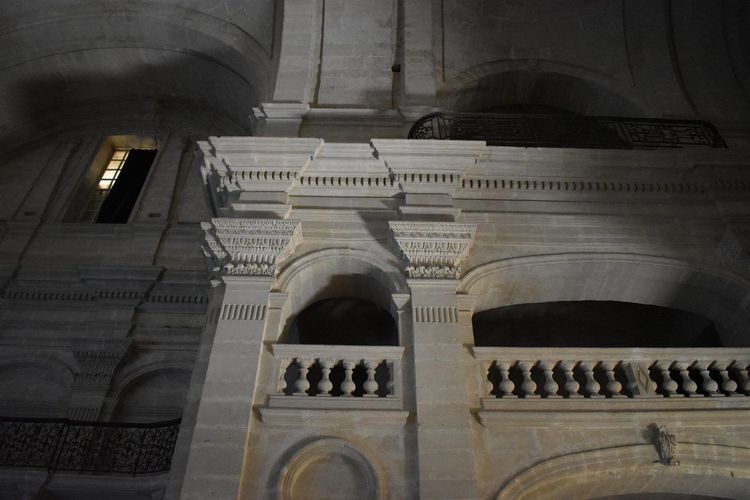
Built in the 17th century for the Jesuit college — now the Ribot secondary school — the Jesuit Chapel (1 Rue Édouard Devaux, 62500 Saint-Omer, rated 4.5/5 on Google from 268 reviews) displays a Baroque façade that is quite rare in a region more strongly marked by Flemish Gothic architecture.
Listed as a historic monument, it opens to the public only on special occasions — concerts, exhibitions, or the European Heritage Days in September. Check with the tourist office before making a specific trip: opening hours vary from season to season, and the building remains attached to an active school.
If you do find it open, do not leave without looking up: the vault and original interior decoration bear witness to the splendor that the Jesuits lavished on their colleges, a striking contrast with the sobriety of the brick churches nearby. The building also hosts concerts on certain evenings, whose acoustics beautifully showcase Baroque music — often the best opportunity to discover it from the inside.
7. The Historic Center on Foot
Saint-Omer is above all a city to discover on foot, and a map of the center is more than enough to find your way around, the historic core being so compact. The streets around Place Victor Hugo preserve a row of half-timbered houses and classical façades in Marquise stone, the local limestone that gives the buildings that grey tone so characteristic of audomarois architecture.
The public garden (Rue de Lyzel, 62500 Saint-Omer), laid out in the 19th century on former fortifications, offers a leafy pause between visits, with its ponds and century-old trees planted when the city demolished its now-redundant ramparts.
If you enjoy walking with your eyes up, spotting the details of a cornice or a carriage gate, that is exactly the spirit of an audio-guided tour: a route designed to change the way you look at a city, neighborhood by neighborhood. Saint-Omer does not yet have one of its own, but the exercise works perfectly well here independently, map in hand.
Allow half a day to stroll at leisure between the cathedral, the Sandelin museum, and the public garden, taking detours down the side streets where a few 17th-century façades survived the bombardments of the First World War.
8. The Coupole d'Helfaut
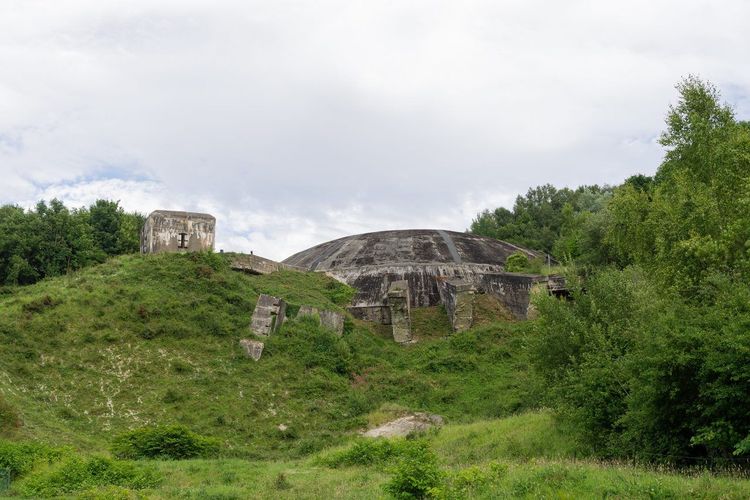
About ten minutes from Saint-Omer, the Coupole d'Helfaut (Rue Andre Clabaux, 62570 Helfaut-Wizernes, rated 4.6/5 on Google from 5,763 reviews) occupies a bunker built between 1943 and 1944 by Nazi Germany to launch V2 rockets against London. The concrete dome, one of the most massive ever built at that scale, was never operational: repeated Allied bombing raids, including the famous Operation Crossbow, delayed construction until the liberation of the region in September 1944.
The site now houses a museum covering both the Occupation in Nord-Pas-de-Calais and the history of the space race — a pairing that surprises at first but is explained by the technical lineage between the V2 rockets and the launch vehicles developed after the war. A planetarium rounds off the visit, with regular shows throughout the day.
Allow at least two hours to complete the full museum circuit, more if you add a planetarium show. The underground galleries maintain a cool temperature year-round, so bring an extra layer even in the height of summer. The site remains one of the most substantial visits in the region, regularly cited at the top of local recommendations for understanding the 20th-century history of the area.
9. The Fontinettes Boat Lift
Inaugurated in 1888 after five years of construction, the Fontinettes boat lift (Rue de l'Ascenseur, 62510 Arques, rated 4.3/5 on Google from 358 reviews) raised barges nearly 13 meters along the Neufossé canal, replacing a system of five locks deemed too slow for the growing river traffic of the era. Its hydraulic mechanism was directly inspired by the British Anderton Boat Lift, with two counterbalanced tanks that the action of water tilted against one another.
The structure operated for nearly eighty years before being replaced by a wider lock in 1967, then listed as a historic monument. An interpretation center explains the hydraulic workings of the mechanism, much of which remains visible on site. If northern industrial history interests you, Ryo has an audio-guided tour dedicated to cities that reinvent their manufacturing past, such as the Ryo tour tracing a past that invents the future in Saint-Étienne, another city where industrial heritage can be experienced in a new way.
Access to the site is free, the visit takes place outdoors and lasts around 30 minutes — a good complement to a morning spent at abbaye Saint-Bertin.
10. The Éperlecques Blockhouse
At Éperlecques, about fifteen minutes from Saint-Omer, the Blockhouse was erected in 1943 to serve as a V2 rocket launch base — a project running parallel to that of the Coupole d'Helfaut but conceived to a different design, with an enormous reinforced concrete slab intended to withstand the heaviest Allied air raids.
The 1944 bombing raids, in particular the five-ton Tallboy bombs dropped by the Royal Air Force, partly blew open the structure without ever fully destroying it — a state of frozen ruin that gives the site a rare visual power. An outdoor trail with audio commentary guides visitors around the bunker, complemented by a full-scale reconstruction of a V2 rocket displayed nearby.
The visit takes about an hour and takes place almost entirely outdoors, so dress for the weather. The site closes in winter, usually from November to March — worth checking before planning a visit at that time of year.
11. The Genever Distillery in Houlle
In Houlle, the Persyn distillery (1 Rue Notre-Dame, 62910 Houlle, rated 4.8/5 on Google from 94 reviews) claims the title of oldest grain distillery still in operation in France, founded in 1812 and run as a family business ever since. Genever — this grain spirit flavored with juniper berries, a close cousin of gin — remains a specialty of the Flanders-Artois triangle that few visitors know before their first trip to the North. The house is also one of only two distilleries to hold the PGI Genièvre Flandres-Artois designation.
Guided tours of the distillation workshop, with its copper stills dating back several decades in some cases, end with a commented tasting of the different house varieties. Some pair with local recipes, as genever traditionally features in slow-cooked dishes such as rabbit stew or hochepot.
Book your slot in advance during high season, as school and group visits often fill the morning sessions. Allow 45 minutes for the tour and tasting, longer if you plan to leave with a few bottles from the adjoining shop.
12. The Maison du Marais
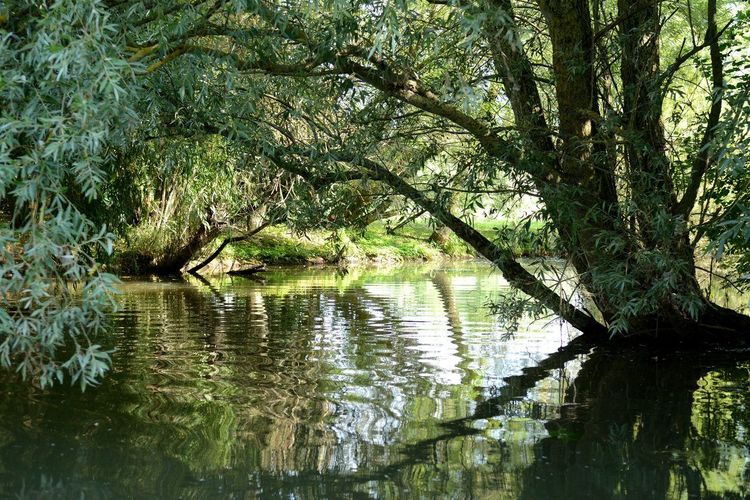
Before or after a boat trip, the Maison du Marais (Rue du Marais, 62500 Saint-Omer, rated 4.5/5 on Google from 1,937 reviews) provides a useful introduction to the history of the marais audomarois and the market-gardening techniques that have shaped this landscape over centuries.
Educational panels and a selection of old tools trace the work of the market gardeners, from the layout of the watergangs to the harvest transported by bacôve to the town markets. In just a few minutes you will understand why this plain is farmed by boat rather than by tractor, and why the Saint-Omer cauliflower has become the area's emblematic crop. The visit takes around twenty minutes — ideal for contextualizing what you will see from the water, especially if you are traveling with children who want to understand before they set off.
13. The Aa Valley Tourist Train
Departing from Arques station, the Aa valley tourist train (Place de la Gare, 62510 Arques, rated 4.4/5 on Google from 526 reviews) runs on certain weekends between April and September, hauled by a vintage locomotive along the river that gave the valley its name.
The route, maintained by an association of volunteers passionate about railway heritage, passes through a preserved rural landscape far from the bustle of the city center. It is an activity appreciated by families with young children, eager to discover a vintage locomotive in motion rather than behind a museum pane of glass.
Check the timetable before making the trip: services depend on volunteer availability and may be cancelled in cases of extreme heat or bad weather.
14. The Prison de la Motte Castrale
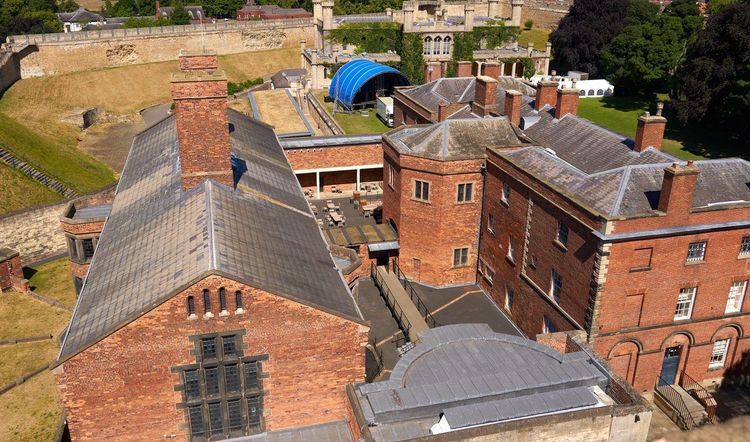
Built on a medieval motte-and-bailey mound, the Prison de la Motte Castrale (Rue de la Chartreuse, 62500 Saint-Omer, rated 4.4/5 on Google from 119 reviews) operated as a penitentiary until relatively recently before its permanent closure.
The site, currently under consideration for heritage redevelopment, is the subject of occasional visits organized by local history associations, usually during Heritage Days. At a single glance you can take in the layering of eras, from the medieval mound to the 19th-century prison galleries — a remarkable shortcut through several centuries of urban history. This is a place to keep an eye on rather than immediately tick off your itinerary: check in advance, as access depends entirely on the associations' calendar.
15. The Goudale Brewery in Arques
In Arques, about ten minutes from the center of Saint-Omer, the Goudale Brewery (365 Avenue Isaac Newton, 62510 Arques, rated 4.5/5 on Google from 657 reviews) produces the amber beer of the same name, known well beyond the region for its smooth character and relatively high alcohol content for a dining beer. The ultramodern facility is open to visits by reservation and ranks among the most popular industrial sites in the area.
Guided tours of the production facility immerse visitors in a world of cutting-edge equipment before ending with a tasting in a dedicated space. You follow the brewing process from malting to fermentation, with explanations pitched equally at enthusiasts and the simply curious. Allow around one and a half to two hours for the full experience.
Be sure to book your slot in advance: places go quickly at weekends, when the brewery receives the most visitors passing through the region. It is a ten-minute drive from Saint-Omer, or a pleasant cycle along the Neufossé canal for those who want to extend the outing to the nearby Fontinettes boat lift.
16. The Maison du Papier in Esquerdes
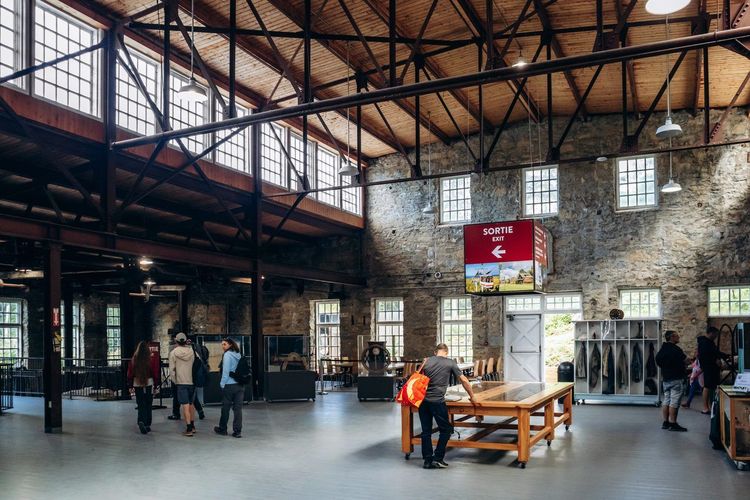
In Esquerdes, the Moulin du Val de Papier (Le Moulin, 62380 Esquerdes, rated 4.2/5 on Google from 41 reviews) carries on a local paper-making tradition stretching back several centuries, with artisanal rag paper produced using methods close to those employed before the industrialization of the trade.
Live demonstrations allow visitors to observe every stage of production, from soaking the rags to drying the sheets on wooden frames — a craft that the region long exported before competition from large mechanized paper mills. The adjoining shop sells paper made on the premises, a more original souvenir than a fridge magnet. If you come as a family, the workshop is a big hit with children, who often leave with their own freshly pressed sheet: slip it flat between the pages of a book for the journey home and it will keep perfectly.
FAQ
What can you do in Saint-Omer when it rains?
Opt for indoor attractions: the Notre-Dame cathedral, the Sandelin museum, and the Coupole d'Helfaut can all be visited entirely under cover. The Houlle distillery and the Goudale Brewery also operate in any weather, with a good portion of each tour taking place indoors.
What can you do in Saint-Omer this weekend?
A weekend allows you to combine the historic center (cathedral, abbaye Saint-Bertin, Sandelin museum) on the first day, then a boat trip through the marais audomarois and a visit to the Coupole d'Helfaut on the second day. Book the boat trip in advance if you are traveling in high season.
Where can you park in the center of Saint-Omer?
Several paid car parks surround the city center, particularly near the cathedral and the train station. Parking is generally easier here than in Lille or Arras, with moderate rates and little congestion even on Saturdays.
How much time should you allow to visit Saint-Omer?
One day is enough to cover the historic center and one nearby activity, but two full days allow you to explore the marais audomarois, the Coupole d'Helfaut, and enjoy a foodie stop at the distillery or brewery at a relaxed pace.
What can you do in Saint-Omer with children?
The electric boat trip through the marsh, the tourist train along the Aa valley, and the Romelaëre nature reserve are all well suited to families. The Coupole d'Helfaut also appeals to children curious about space and military history, from around ages 8 to 9.
Can you visit the marais audomarois in winter?
Yes, but with a reduced offering: some boat-hire points close or limit their departures between November and March. It is best to call ahead before making the trip to confirm the availability of a boat tour at that time of year.
What can you do in Saint-Omer on a Sunday?
On Sunday mornings, religious services restrict tourist access to the cathedral at the start of the day. Instead, opt for a boat trip, a stroll through the ruins of abbaye Saint-Bertin, or a visit to the Sandelin museum, which is generally open in the afternoon.
Saint-Omer delivers on its promise of a rich heritage for a city of its size, provided you are willing to venture beyond the historic center: between a classified marsh, Second World War bunkers, and a two-hundred-year-old distillery, the audomarois territory rewards several days of exploration without ever repeating the same experience twice.
After the marsh canals, another water city may tempt you for your next weekend away: the Ryo audio-guided tour of Saint-Malo explores another chapter of French maritime heritage, between ramparts and corsair history — the perfect way to continue, elsewhere, the pleasure of discovering a city canal by canal, alley by alley.