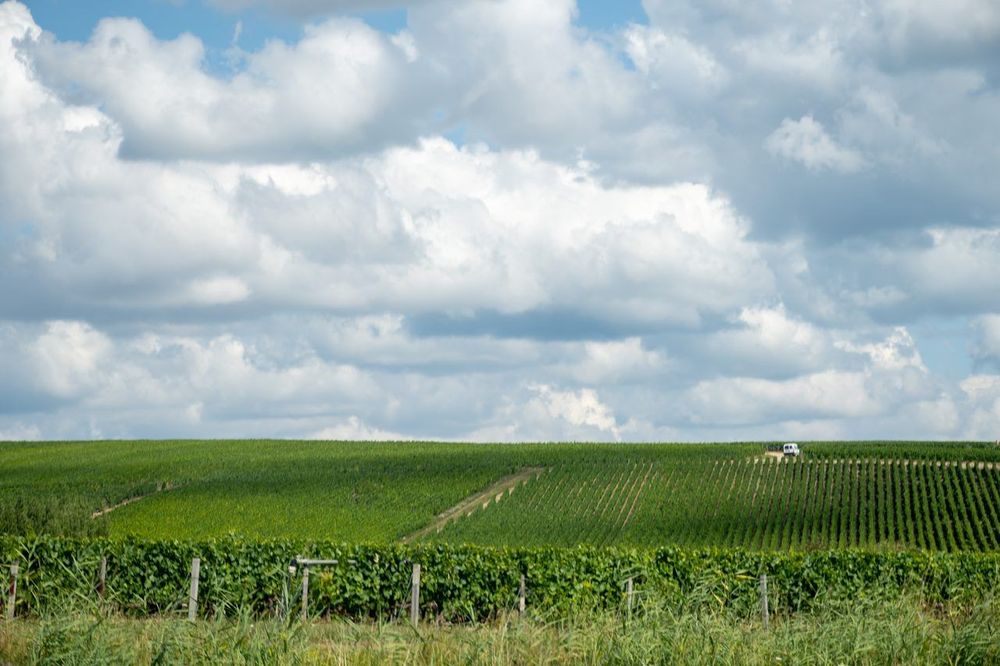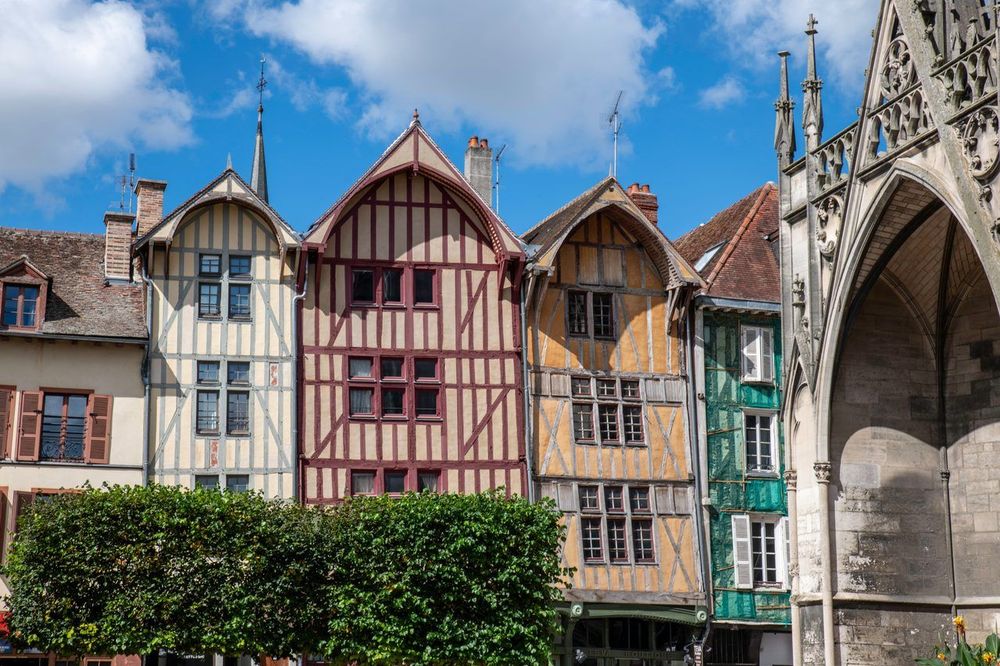
© Shutterstock
 Votre guide Ryo
Visiting Troyes in 2 Days: Complete Itinerary for 2026
Troyes is unlike any other city in France. Seen from above, its historic center traces the silhouette of a champagne cork — an urban coincidence that locals have delighted in for generations and that few visitors notice at street level. Visiting Troyes in 2 days means accepting a slower pace: here, you don't tick off a list of monuments — you deliberately lose yourself in a web of timber-framed lanes where the upper floors lean toward each other so closely they almost touch above your head. Ryo's audio-guided tour of Troyes, which takes you step by step through Vieux Troyes, captures this immersive quality perfectly across 27 audio stops and 1h40 of narrated walking.
In two days, you'll have time to admire the 16th-century stained glass of the cathédrale Saint-Pierre-Saint-Paul, slip into the ruelle des Chats — less than two meters wide in places — push open the door of at least two of the five free municipal museums, and taste an andouillette whose recipe has been protected by a quality charter since the 1990s. This guide details hour by hour what to see, where to sleep, where to eat, and how to extend your trip toward the Champagne vineyards or the lakes of the forêt d'Orient, less than thirty minutes from the city center.
Troyes at a Glance: Why Visit the City
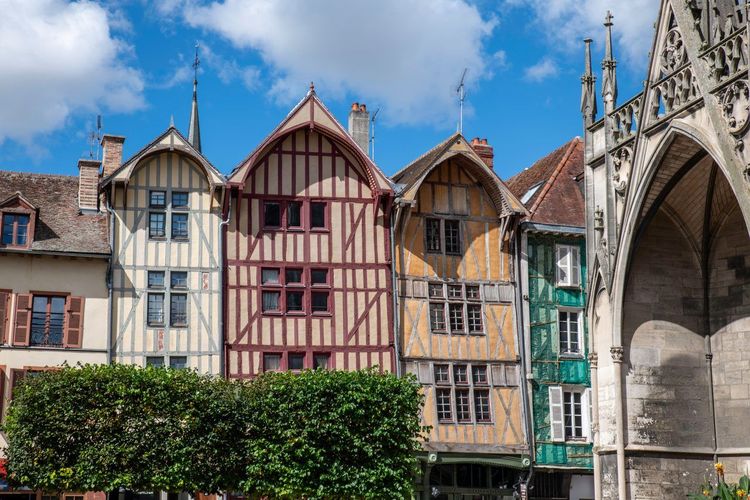
Troyes owes its prosperity to the Champagne Fairs, the great commercial gatherings that made the city one of Europe's most active economic crossroads from the 12th to the 14th century. Italian, Flemish, and German merchants would converge to trade cloth, spices, and precious metals, and this medieval wealth financed the construction of the dozens of churches and mansions that make up the historic heart of the city today. A devastating fire in 1524 destroyed much of the walled city, which explains why most of the timber-framed buildings visible today actually date from the reconstruction that followed, in the 16th and 17th centuries, rather than from the Middle Ages themselves.
It is precisely this rebuilt heritage that makes the trip worthwhile: Troyes preserves one of the densest ensembles of half-timbered houses in France, with several hundred listed or registered façades in Vieux Troyes alone. Add to that the unusual shape of the historic center — which follows the outline of a champagne cork between the two arms of the Seine — and you understand why the city long lived in the shadow of its Champenois neighbors before becoming, in recent years, a destination in its own right for a weekend trip from Paris.
The Aube has also established itself as the European capital of stained glass: the department holds one of the richest collections of ancient stained glass preserved in France, spread across some fifty buildings, several of which are in Troyes itself. To get your bearings, Vieux Troyes divides into a few compact neighborhoods, all reachable on foot from the station within about twenty minutes: the cathedral quarter to the north, the ruelle des Chats and église Sainte-Madeleine area in the center, and the Halles and quais de Seine district further south. Keep this mental map in mind — it structures the two-day itinerary that follows.
How Long Do You Need to Discover Troyes: 1, 2, or 3 Days?
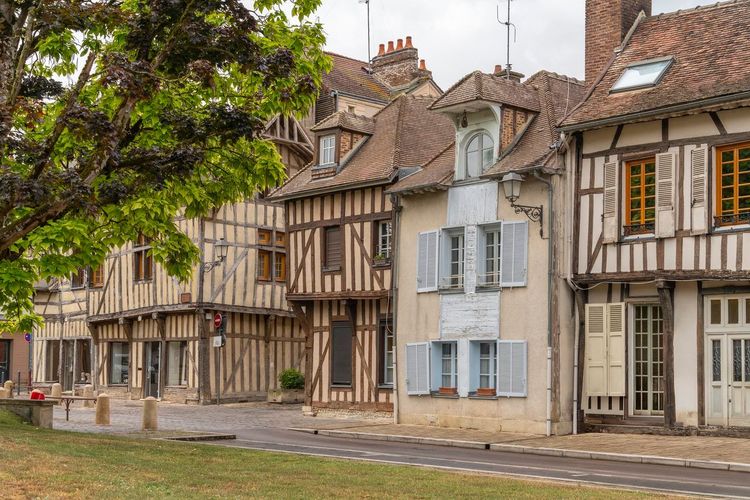
Two days are enough to see the best of Troyes without rushing: one day for Vieux Troyes and its churches, a second for the museums, the neighborhoods beyond the center, and possibly a nearby excursion. That's the format this itinerary covers, designed as a flexible framework rather than a minute-by-minute schedule.
If you only have one day, focus on the cathedral, the ruelle des Chats, and a single museum — the Cité du Vitrail or the Maison de l'Outil et de la Pensée Ouvrière, both iconic. Conversely, with three days, add a full excursion through the vineyards along the Champagne tourist route or a day by the lac d'Orient — enough to turn a city break into a proper Champenois stay. As a rule of thumb, allow half a day per museum if you genuinely want to read the labels and listen to audio commentary rather than hurrying through the rooms. The historic center itself, if you simply walk around without going inside anything, can be covered in two to three hours of easy strolling.
How to Get to Troyes and Get Around
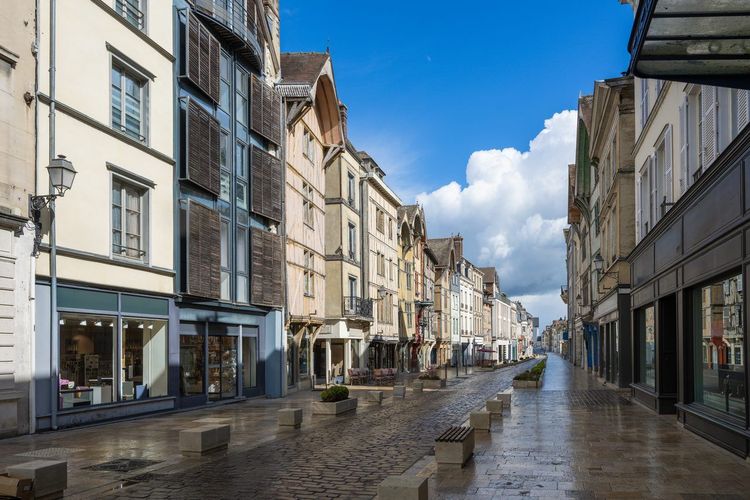
Troyes is just under two hours from Paris, making it an accessible getaway by both train and car for a two-day weekend.
By Train from Paris and by Car
By train, allow around 1h30 for a direct journey from Paris-Est station, with several daily return services and fares starting at around €15–20 when booked in advance. Troyes station is less than a 15-minute walk from the heart of Vieux Troyes, making the train a particularly comfortable option for those who'd rather not worry about parking during their stay.
By car, Troyes is connected to Paris via the A5 motorway, around 1h45 including tolls, and sits roughly halfway between the capital and Dijon. It also makes a logical staging point if you plan to continue toward the Champagne vineyards or the forêt d'Orient — two excursions far easier with a vehicle than without. If you're approaching from the south or east, note that Troyes is also less than an hour's drive from Chaource, home to the famous AOP cheese mentioned later in this guide.
Where to Park and Getting Around Without a Car
The historic center of Troyes is entirely walkable: almost all streets in Vieux Troyes are pedestrianized or have restricted traffic, and most distances between the main points of interest are no more than 10–15 minutes on foot. Can you visit Troyes without a car? Yes, with no difficulty for both days in the city center: train to the station, then everything on foot. The question only arises for excursions to the lakes or vineyards, which are more comfortable by car or by bike rented locally, particularly from rental outfits near the lac d'Orient leisure bases. The urban bus network rounds out the picture if you're staying on the outskirts or want to reach the outlet shopping zones without walking.
For parking, several covered car parks frame the pedestrian center, notably around the Halles and near the station, with day rates generally between €10 and €15. If you're staying at a hotel in Vieux Troyes, check in advance whether it has regulated vehicle access: some streets are only open to residents and delivery vehicles, which can complicate a daytime bag drop.
Day 1, Morning: The Cathedral and the Churches of Vieux Troyes
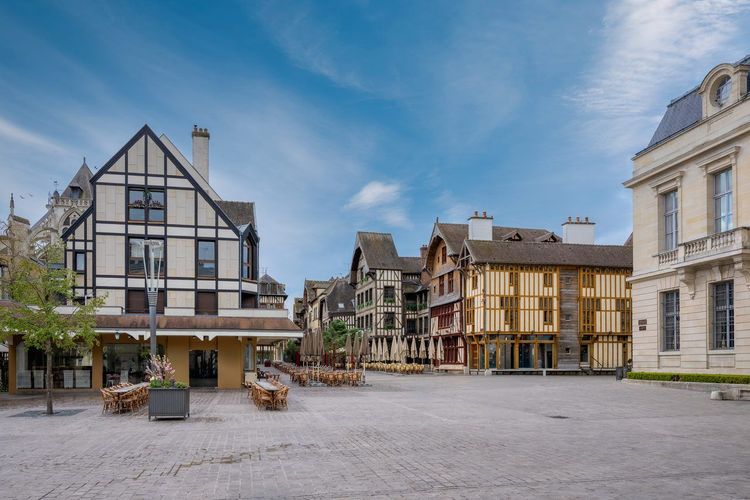
Ryo's audio-guided tour of Troyes follows a broadly similar route between the cathedral and Vieux Troyes, in the same spirit as this itinerary. Dedicate your first morning to the great religious buildings of Vieux Troyes, all clustered within a radius of less than ten minutes' walk from one another.
Cathédrale Saint-Pierre-Saint-Paul and the Cité du Vitrail
The cathédrale Saint-Pierre-Saint-Paul de Troyes first impresses with its Flamboyant Gothic façade, left unfinished on the north tower side since the 16th century — an interrupted construction project that gives the building a slightly asymmetrical silhouette, recognizable from some distance. Inside, it is above all the stained glass that commands attention: several centuries' worth of windows, from the 13th to the 19th century, including an exceptional set of Renaissance stained glass financed by the wealthy merchants of the Champagne Fairs era. Take a few minutes to sit quietly toward the end of the morning, when the light filters through the choir windows: it's one of the most photographed moments by visitors, and yet one rarely anticipated by those who hurry through.
Directly opposite, housed in the former Hôtel-Dieu-le-Comte, the Cité du Vitrail is a natural extension of the visit. This recently opened museum presents more than a hundred stained glass works and fragments from across the region, with a trail designed to explain both the craft techniques and the art history. We cover the full visit to the Cité du Vitrail later, in the section devoted to the second day's museums, but nothing stops you from including it on this first morning since it sits right next to the cathedral — particularly useful if your schedule is tighter than expected.
Basilique Saint-Urbain, Église Sainte-Madeleine, and Église Saint-Pantaléon
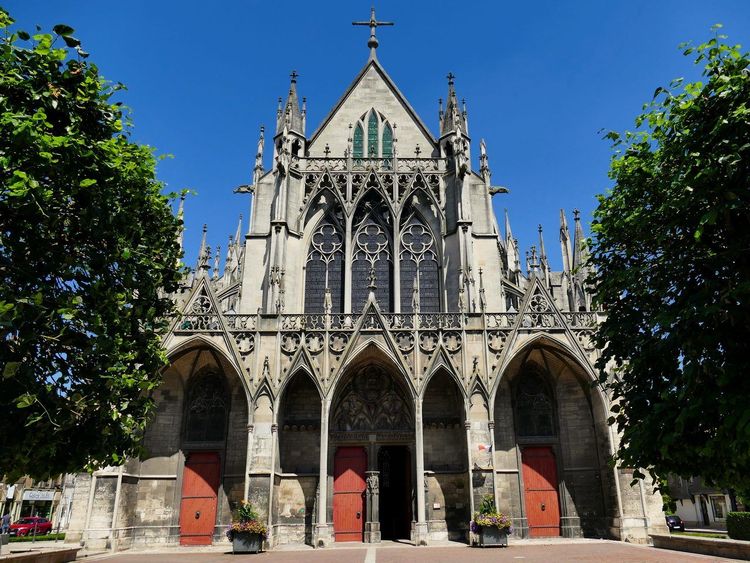
Heading back toward the center, the basilique Saint-Urbain warrants a ten-minute detour: built from 1262 on the orders of Pope Urbain IV, a native of Troyes, it is considered a manifesto of Rayonnant Gothic architecture, with walls almost entirely glazed for the period. Its Vierge au raisin, a 16th-century statue, is one of the city's most celebrated sculptures and still graces many a postcard.
The église Sainte-Madeleine, the oldest parish in Troyes, houses a 16th-century sculpted rood screen that is absolutely unique in France: it is one of the very few pierced stone partitions of this type preserved in a parish church, and its lacework of limestone is worth the visit in itself for architecture enthusiasts. The jardin des Innocents, a tiny green space tucked against the east end of the church, offers a shaded pause that most visitors walk straight past.
Round off this morning of religious architecture with the église Saint-Pantaléon (Rue Charbonnet, 10000 Troyes, rated 4.5/5 on Google with 190 reviews), adjoining the hôtel de Vauluisant: the complex houses a collection of 16th-century Troyes statuary renowned for its realism, with draped stone folds of remarkable delicacy. It's also an opportunity to glimpse the neighboring mansion, now partly occupied by the musée de Vauluisant that we explore the following morning.
Day 1, Afternoon: The Ruelle des Chats and the Historic Heart on Foot
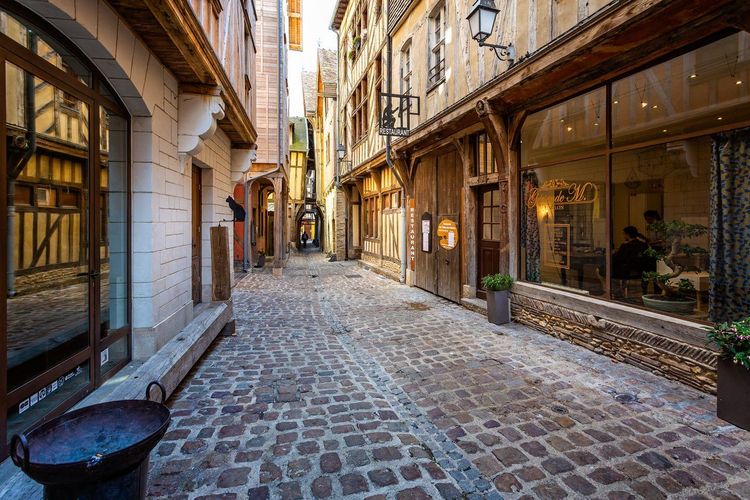
The first afternoon unfolds entirely on foot, along the most photogenic lanes of Vieux Troyes, in a loop that naturally leads back to the riverbanks by the end of the day.
The Ruelle des Chats and the Timber-Framed Houses
The ruelle des Chats is probably the most shared image of Troyes on social media — and for good reason: in places, the timber-framed façades lean toward each other leaving barely two and a half meters of width at ground level, and even less between the upper floors. The name is said to come from these rooftops being so close together that cats could leap from one to the other without touching the ground. Notice the stone bollards placed at the corners of buildings: they once protected the timber frames from cart wheels, and today serve as improvised seats for photographers waiting for the right light.
All around, the neighborhood concentrates some of the finest timber-framed houses in the city, several of which date from the reconstruction that followed the fire of 1524. Look out for the maison Rachi, a discreet tribute to the great medieval Jewish scholar Rashi of Troyes, and the mural of Lili la dame au chapeau, a colorful character painted on a façade that has become an unofficial landmark for locals arranging to meet beneath her portrait.
Place de la Libération, the Hôtel de Ville, and the Tourelle de l'Orfèvre
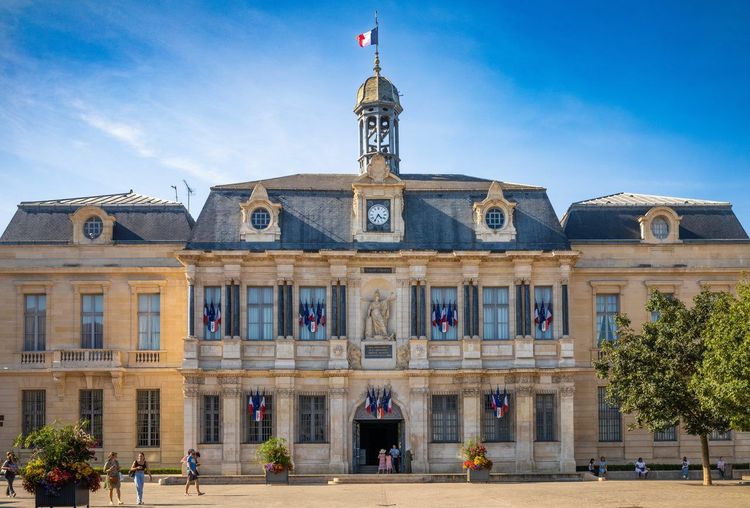
Continuing westward, the place de la Libération opens onto a much wider perspective on the Hôtel de Ville, a classical stone building constructed in the 17th century that deliberately contrasts with the timber of the surrounding lanes. Look up at its pediment: the Republican motto is there completed by the words « ou la mort » — a Revolutionary-era addition of extreme rarity in France, erased and then reinstated during a restoration. The square regularly hosts markets and events and remains a good stopping point with its café terraces.
Nearby, the tourelle de l'Orfèvre, a sculpted wooden corbel suspended at the corner of a 16th-century house, is one of the finest architectural details in Vieux Troyes. Look up: it's easily missed if you aren't actively searching for it as you walk.
The Marché des Halles and the Maison du Boulanger
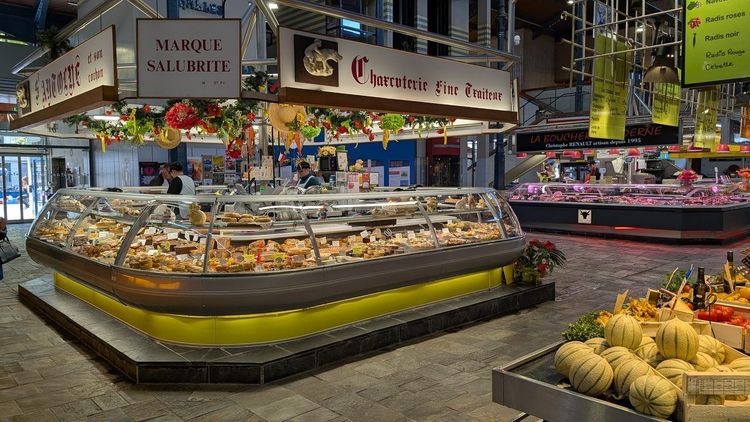
The marché des Halles, an early 20th-century iron structure, brings the afternoon walk to a gentle close: it's the best place to sample local produce before heading back, with cheese and charcuterie stalls that sometimes offer andouillette tastings from the morning.
Right next door, the maison du Boulanger boasts one of the best-preserved timber-framed façades in the city and now serves as a cultural venue: check its program on arrival — a concert or show in the evening fits easily into a two-day stay.
End the day by heading down to the quais de Seine, where the river quietly splits into several channels running through the city center. It is there, on the banks of the Seine, that you'll find the contemporary sculpture of the Cœur de Troyes, a wrought-iron installation that has also become one of the locals' favorite meeting spots for a last drink on a terrace at sunset.
Day 2, Morning: The Must-See Museums of Troyes
The second day begins with the museums, several of which are accessible with the City Pass mentioned later in the practical information section. Allow a full morning to tour the five richest institutions without feeling rushed. A useful reflex before you set out: most Troyes museums close on Mondays or Tuesdays depending on the season, so check opening days if your weekend stretches into the start of the week.
Cité du Vitrail and the Maison de l'Outil et de la Pensée Ouvrière
Return to the Cité du Vitrail if you didn't visit it the day before: allow a good hour and a half to work through the museum's levels, which alternate medieval stained glass, educational displays, and contemporary creations. The section devoted to manufacturing techniques is particularly popular with children, thanks to interactive installations that explain how glass is painted and fired before being assembled with lead came.
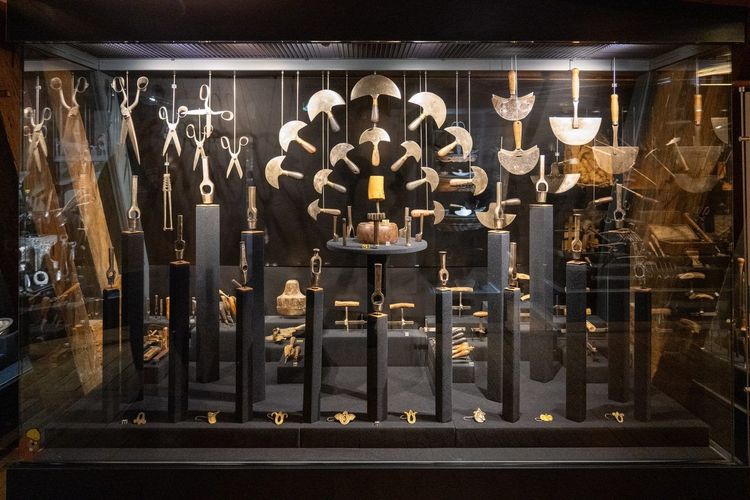
Next, head to the Maison de l'Outil et de la Pensée Ouvrière, known locally by the acronym MOPO: housed in the hôtel de Mauroy, a superb 16th-century Renaissance building with a checkerboard pattern of brick and stone, it brings together several thousand antique tools from manual trades — carpenter, cooper, clog-maker, and more. It's a museum that is at once technical and surprisingly poetic, where each tool is presented as a work of art in its own right rather than a mere industrial artifact. The inner courtyard and specialist bookshop, both freely accessible, are worth a look even if you don't enter the collections.
Musée Saint-Loup, Musée d'Art Moderne, and Musée de Vauluisant
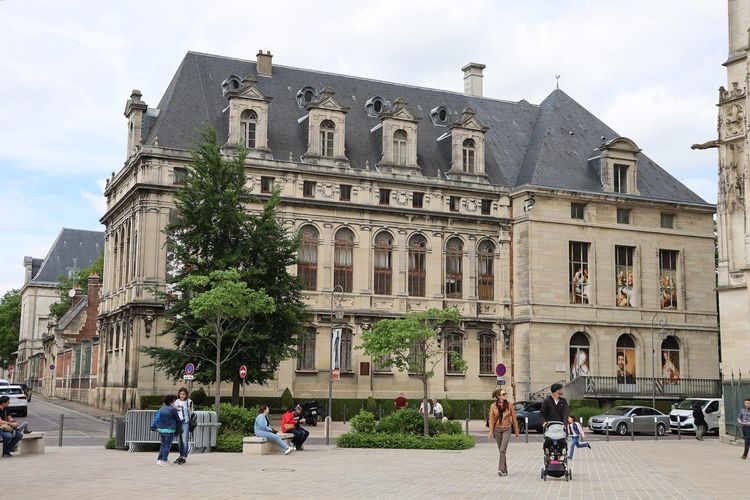
The musée Saint-Loup, housed in the former abbey of the same name, combines fine arts, natural sciences, and archaeology under one roof: prehistoric animal skeletons, Gallo-Roman collections, and 17th- and 18th-century paintings share a varied trail that works well for a family visit.
The musée d'Art moderne, housed in the former bishop's palace right next to the cathedral, holds one of the finest Fauvist collections outside Paris, originating from the donation of a Troyes industrial couple, Pierre and Denise Lévy. Allow an hour to tour it, a little more if you linger over the Derains and Vlamincks.
Finish with the musée de Vauluisant (4 Rue de Vauluisant, 10000 Troyes, rated 4.2/5 on Google with 359 reviews), more modest but a fine complement to the picture: the history of Troyes, the hosiery industry that built the city's wealth, and 16th-century Troyes statuary are brought together in a single trail. If the ArkéAube exhibition — devoted to archaeological discoveries in the department — is still on during your visit, it's worth a detour to understand how the Seine valley was settled before the Champagne Fairs.
Day 2, Afternoon: Beyond the City Center and Shopping
The second afternoon ventures a little beyond the historic center, into two very different atmospheres: little-known heritage on one side, serious shopping on the other. Both options are reachable in about twenty minutes on foot or a few minutes by car from Vieux Troyes.
Villa Viardot, the Médiathèque Jacques-Chirac, and the Église Saint-Martin-ès-Vignes
Few visitors make it to the Villa Viardot (84 Rue du Général-de-Gaulle, 10000 Troyes), a pretty early-20th-century Art Nouveau house that stands in sharp contrast to the medieval built fabric of the center: its vegetal ironwork and coloured ceramics on the façade make it an architectural curiosity too often left off classic itineraries.
Nearby, the médiathèque Jacques-Chirac, a contemporary building with striking architecture, is worth a stop even without borrowing a book: it holds an exceptional rare collection drawn from the abbeys of Clairvaux and Saint-Loup, part of which is displayed on a rotating basis for the public.
Round off with the église Saint-Martin-ès-Vignes (Avenue Robert-Schuman, 10000 Troyes, rated 4.4/5 on Google with 79 reviews), whose name recalls that this neighborhood once hosted the vineyards that supplied the city, before the Champagne wine-growing area expanded northward over the centuries. Its Renaissance stained glass and organ case make the detour worthwhile if you happen to find the door open.
The Factory Outlets: Europe's Discount Shopping Capital
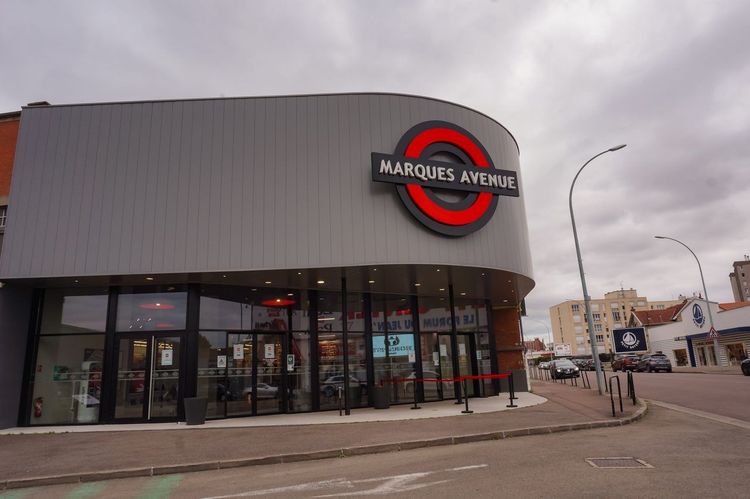
Troyes has also built a rather more commercial reputation: Europe's factory outlet capital, it concentrates several hundred discount stores spread across three major sites on the outskirts, a direct legacy of the textile and hosiery industry that sustained the city for over a century. Two of the sites are in Pont-Sainte-Marie, to the northeast; the third is in Saint-Julien-les-Villas, to the south: allow a quarter of an hour by car from the center and at least half a day if you genuinely intend to work through the racks. Expect meaningful average discounts on major French and international brands, often well above what standard sales offer in-store. If shopping isn't on your priority list, this section can safely be skipped: the historic center more than fills two days on its own, and this commercial interlude is an option rather than a must.
Around Troyes: Champagne Vineyards and the Lakes of the Forêt d'Orient
If you extend your stay by a half-day or a third day, two excursions naturally present themselves around Troyes, in opposite directions.
The Champagne Tourist Route and Its Vineyards
The Champagne tourist route runs through the Côte des Bar vineyard less than thirty minutes south of Troyes, around Bar-sur-Aube and Bar-sur-Seine. Unlike the Épernay or Reims area, better known to the general public, this Aube terroir remains largely untouched by mass tourism, which allows for far more intimate cellar visits with independent growers rather than in the large houses accustomed to coach parties. The Côte des Bar nonetheless accounts for a major share of the planted area in Champagne, predominantly in pinot noir.
We detail in the Ryo article on vineyards around Troyes several estates that open their doors for tastings, often free of charge or for a nominal fee if you then buy a few bottles at the property. Book the day before by phone: at small growers, no one is available to welcome unannounced visitors in the middle of work in the vines.
The Regional Nature Park and the Great Lakes of the Forêt d'Orient
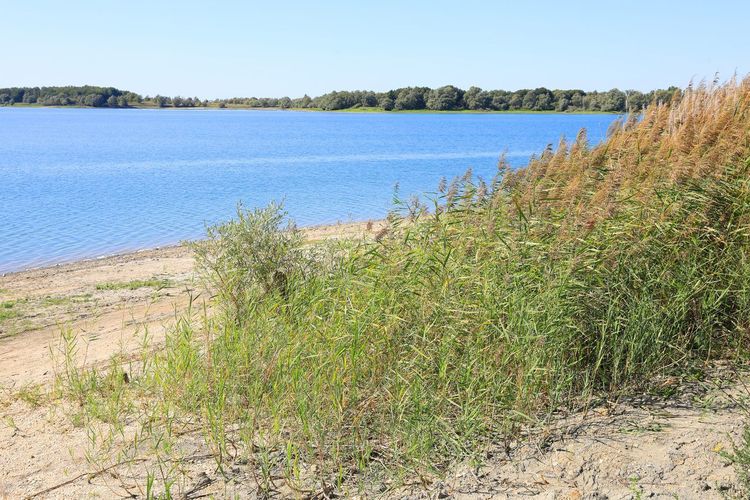
To the east of Troyes, about twenty-five minutes by road, the parc naturel régional de la forêt d'Orient surrounds three large artificial lakes created to regulate flooding on the Seine and the Aube. The largest, the lac d'Orient (Mesnil-Saint-Père, 10140, rated 4.5/5 on Google with 622 reviews), spreads across several thousand hectares and attracts thousands of migratory birds each autumn, including common cranes — a spectacle rare enough in France to be worth mentioning to even occasional birdwatchers.
Cycling the full loop around the lac d'Orient covers around 75 km with very modest elevation gain — a great option if you're travelling by campervan or car and want to decompress after two days of intensive urban walking. For a shorter format, several marked loops of 5 to 15 km allow you to follow the managed beaches without committing to the full circuit, and the neighboring lacs Amance and du Temple are shared between motorboats and a nature reserve. Our Ryo article on the surroundings of Troyes details further day-trip options if you extend your stay beyond two days.
What to Eat in Troyes: Local Specialties and Good Addresses
Troyes is also best discovered through food, with specialties that sometimes go back centuries and a local gastronomic scene in full revival.
Andouillette, Prunelle de Troyes, Chaource Cheese, and Champagne
The andouillette de Troyes is the quintessential local specialty — a charcuterie made from strips of pork chitterlings whose recipe has been governed since the 1990s by a quality charter signed by around thirty artisans and restaurateurs. Be warned: not all andouillettes are equal. Stick to certified addresses, recognizable by the official medallion displayed in the window.
The prunelle de Troyes, a local liqueur made from macerated sloe kernels, traditionally rounds off the meal as a digestif. It can be found notably at the Cellier Saint-Pierre, a distillery and regional produce shop just steps from the cathedral, housed in a building that once served as an annex to the cathedral chapter.
The Chaource cheese, an AOP cow's milk cheese produced about thirty kilometers from Troyes, is best enjoyed at the end of a meal with a glass of local champagne — as is the chocolate from Maison Caffet, a Troyes chocolatier renowned well beyond the department for creations inspired by regional specialties.
Where to Eat: Our Tried-and-Tested Addresses

For a convivial meal around an andouillette and a fine natural wine list, head to Aux Crieurs de Vin, a wine bistro on place Jean Jaurès that has become a genuine local institution over the years.
For a more gastronomic lunch or dinner, Pierre & Clément, Cuisine & Vin offers refined seasonal cooking in an intimate setting — a reliable choice for a slightly more dressed-up evening. Book for Friday and Saturday nights: tables go fast in Vieux Troyes.
In the morning or mid-afternoon, stop in at Tonton Farine, a bakery and pastry shop appreciated for its viennoiseries.
For a proper brunch and a well-roasted coffee — a rarity in the historic center — head to Chez Axelle (Rue de la République, 10000 Troyes, rated 4.6/5 on Google with 533 reviews).
To end the day on a gentle note, Chez Philippe, Bulles & Douceurs offers a selection of grower champagnes by the glass in an intimate champagne bar tucked into a quiet lane in Vieux Troyes.
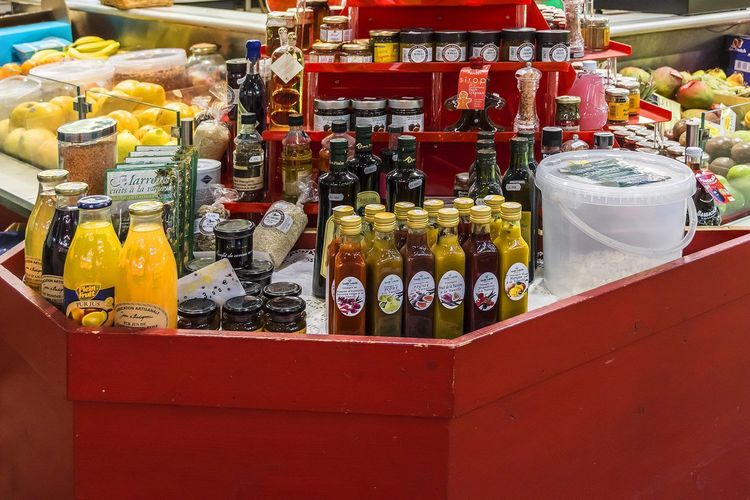
And if you want to bring something home in your suitcase, the marché des Halles is the best one-stop shop: vacuum-packed andouillette, fully ripened Chaource, prunelle, and regional biscuits are all found in a single visit, with traders who take the time to explain what they sell. Ryo's audio-guided tour of Troyes swings by the Cellier Saint-Pierre and Place Jean Jaurès too, just a few steps from this market.
Where to Stay in Troyes: Our Recommendations by Neighborhood
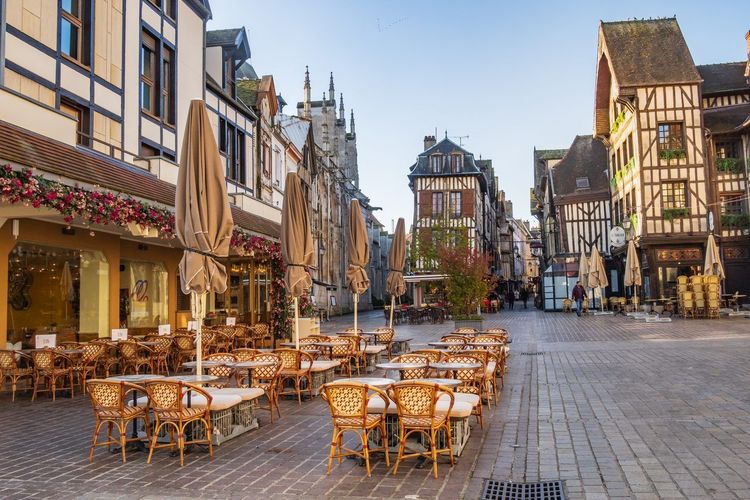
For the most immersive medieval atmosphere, opt for Vieux Troyes: several timber-framed houses have been converted into charming bed and breakfasts with direct views over the cobbled lanes. It's the most immersive option, as long as you're comfortable with rooms that can be on the small side — an inevitable constraint in 16th-century buildings not designed with modern hospitality in mind.
If you're travelling by train and prioritize convenience, the area around the station groups several chain hotels within a ten-minute walk of Vieux Troyes — a good option for a late arrival or early departure without dragging luggage over the uneven cobblestones of the center.
For a slightly more upscale stay, a handful of establishments in former private mansions offer a more refined experience, with inner courtyards and breakfast served in a preserved historic setting. Expect to pay roughly €90 to €150 per night for a well-located double room in the center during high season, and more like €60 to €90 out of season or on the immediate outskirts. To scout options neighborhood by neighborhood before booking, Ryo's audio-guided tour of Troyes also lets you visualize the points of interest closest to your accommodation.
Book as far ahead as possible for a spring or summer weekend: Troyes is a popular destination for two-day getaways from Paris, and the best addresses in Vieux Troyes are often fully booked from Friday onwards. If you're travelling with family, check the availability of connecting rooms or family suites — rarer in small timber-framed houses than in chain hotels near the station. Finally, if you extend your stay toward the forêt d'Orient, several campsites and rural gîtes around the lakes offer a pleasant alternative for ending the trip in peace, away from the bustle of the city center.
Troyes with Kids: Activities for All Ages
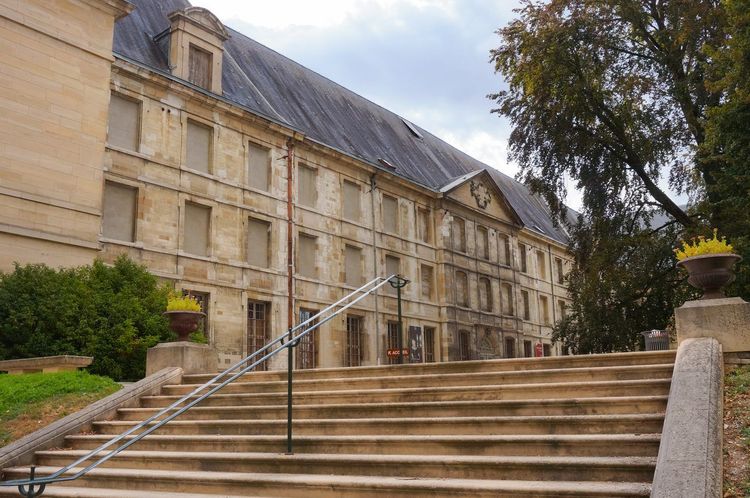
Is Troyes a family-friendly destination? Unquestionably. The pedestrian center limits traffic hazards, distances between points of interest remain short, and several museums offer trails or workshops designed for children — notably the musée Saint-Loup with its natural science collections, always a big hit with younger visitors.
The Cité du Vitrail also leans heavily into interactivity: workshops, treasure hunts, and touch-screen displays make the visit accessible from age 6 or 7, whereas a conventional stained-glass museum might have felt austere for a younger audience. Another idea that works for all ages: a scavenger hunt for sculpted details in the lanes of Vieux Troyes, where every beam hides an animal, a face, or a guild symbol to spot before everyone else.
For burning off energy, head to the quais de Seine and the parc du Rocher on the edge of the center — two green spaces where children can run freely after a morning spent walking on cobblestones. And if the weather allows, a short cycle ride around the lac d'Orient on a family-friendly loop, or a supervised swim from the managed beaches at Mesnil-Saint-Père, rounds off a family stay nicely if you stretch it to three days rather than two.
When to Visit Troyes: Seasons and the Christmas Market
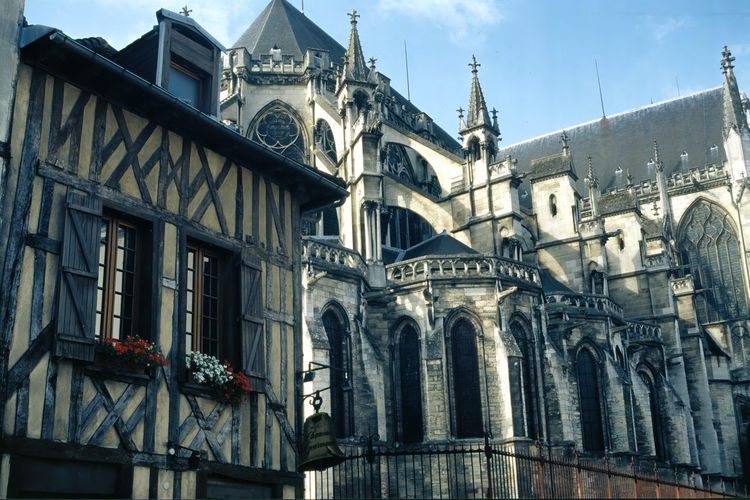
What is the best time for this two-day visit? Spring, from April to June, and early autumn, in September and October, offer the best compromise: pleasant temperatures for walking all day, more manageable crowds than in high summer, and low-angle light that brings out the relief of the timber framing at the end of the day. Summer remains a good option if you want to combine the city with swimming in the forêt d'Orient lakes, but expect more people in the narrowest lanes of Vieux Troyes — especially around the ruelle des Chats at midday.
In winter, the Troyes Christmas market, traditionally set up in the city center from late November to early January, transforms the historic heart into a storybook setting — wooden chalets, an ice rink, and illuminations that suit the medieval architecture particularly well. It's also the most crowded period on weekends: book your accommodation well in advance if you're targeting these few weeks.
Practical Information: Budget and City Pass
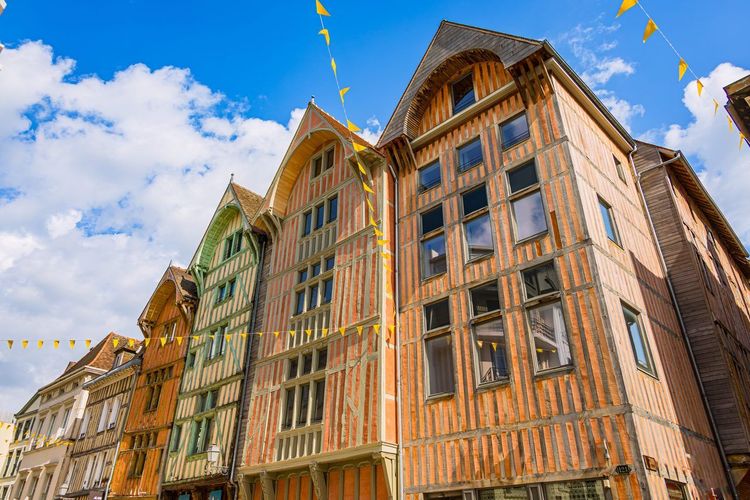
For a two-day stay in Troyes, budget an indicative €150 to €300 per person excluding upscale accommodation: accommodation, meals, and museum entry combined. Allow €25 to €45 per day for food, combining a quick lunch and a fuller dinner.
Good news on museums: the main City-run institutions — including the musée Saint-Loup, the musée de Vauluisant, and the Maison de l'Outil — apply a very generous pricing policy, with free permanent collection entry. The Cité du Vitrail, a departmental institution, charges an admission fee that remains modest given the richness of the trail.
Is the Troyes City Pass worth it? It largely depends on your program: the pass sold by the tourist office combines access to several sites, including the Cité du Vitrail, a guided tour, and discounts with partner shops and restaurants. If you're already planning to visit the Cité du Vitrail and take a guided tour, the maths generally works in your favor. If you prefer to explore freely without a guide, buying individual tickets usually works out cheaper overall.
On that note, taking a guided tour of the city with the Troyes tourist office remains an excellent option for the first day: local guides share anecdotes about the timber-framed houses that no information board mentions, and tours typically last 1h30 to 2h at an accessible per-person rate. Also remember to bring a little cash for the small stalls at the marché des Halles, not all of which accept card payments.
Troyes in the Evening and on Rainy Days: Top Tips
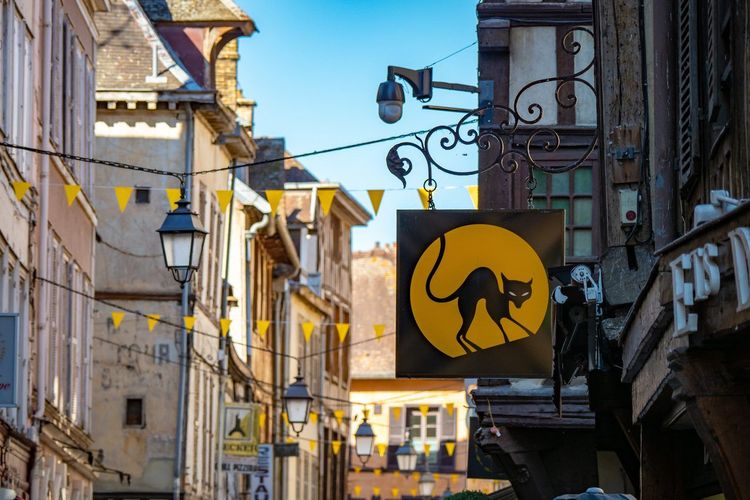
What to do in Troyes in the evening? Once the monuments close, Vieux Troyes retains its charm: the timber-framed façades lit up at night create a very different atmosphere from daytime, particularly around the ruelle des Chats and the place de la Libération. Several wine bars and champagne bars in the center stay open on weeknights until around midnight, and a little later at weekends for those who want to make a night of it. The maison du Boulanger and the city's cultural venues also program concerts and shows year-round, including on weeknights.
What to do in Troyes when it rains? The city has enough to fill an entire day under cover: the free municipal museums, the Cité du Vitrail, the médiathèque and its rare collections, plus several art galleries installed in former private mansions in the center. The outlet stores on the outskirts are also an excellent wet-weather fallback, offering several hours of sheltered browsing without ever having to step back outside.



FAQ
How Long Do You Need to Visit Troyes: 1, 2, or 3 Days?
Two days are enough to cover the essentials of Vieux Troyes, its churches, and two museums. One day suffices for a focused overview centered on the cathedral and the ruelle des Chats. Three days leave room for an excursion to the Champagne vineyards or the lakes of the forêt d'Orient.
What Is the Best Time to Visit Troyes?
Spring and early autumn offer the best balance between pleasant weather and moderate crowds. Summer works well if you want to combine the city with swimming in the nearby lakes, and winter is ideal around the Christmas market, which typically runs from late November to early January.
Can You Visit Troyes Without a Car?
Yes, with no difficulty for most of the stay: the historic center can be explored entirely on foot from the train station. A car or bicycle only becomes useful for reaching the vineyards or the lakes of the forêt d'Orient, located 20–30 minutes from the city center.
How Do You Get to Troyes from Paris?
By train, allow about 1h30 from Paris-Est station, with several direct daily services. By car, the A5 motorway connects Paris to Troyes in around 1h45. Both options leave travelers within a 15-minute walk of Vieux Troyes.
Where Can You Eat the Best Andouillette in Troyes?
Look for restaurants displaying the quality charter medallion for Troyes andouillette, signed by around thirty local artisans and restaurateurs. Aux Crieurs de Vin, a wine bistro in the historic center, is one of the most reliable spots to enjoy it in a convivial, no-fuss atmosphere.
Is the Troyes City Pass Worth It?
It is, especially if your program already includes the Cité du Vitrail, a guided tour with the tourist office, and a few partner discounts. For a free exploration without guided visits, buying individual tickets usually works out cheaper — particularly since the municipal museums are free.
Is Troyes a Family-Friendly Destination?
Yes: a pedestrian-friendly center, short distances between sites, free museums with children's workshops at the Cité du Vitrail and the musée Saint-Loup, and green spaces like the quais de Seine or the parc du Rocher to burn off energy between visits.
Two days in Troyes are enough to understand why the city deserves far more than its reputation as a stopover between Paris and Burgundy. Between exceptional stained glass, timber-framed houses that seem to defy gravity, high-quality free museums, and a confident gastronomy built around andouillette and champagne, the itinerary proposed here covers the essentials without ever feeling rushed.
If you want to prepare your walk through Vieux Troyes before you leave, or simply let yourself be guided once on-site, the Ryo audio tour of Troyes is the natural companion to this guide: 25 commented stops, at your own pace, so you miss none of the details that make Vieux Troyes so charming.