© Shutterstock
 Votre guide Ryo
Berlin for Couples: A Romantic Weekend in the German Capital (2026)
Visiting Berlin as a couple means accepting that a city reputed to be cold and concrete will surprise you at every street corner. It is almost midnight on the Spree, and a couple shares a last drink on a jetty facing the illuminated East Side Gallery: this is often how Berlin tells its story best. To get off to a good start, the Ryo audio-guided tour of Berlin already traces a first thread between the major landmarks of the center, with 30 audio stops to follow together, with no time constraints.
The program mixes stone and relaxation: a neo-Baroque cathedral at dawn, a saltwater pool where music plays underwater, open-air karaoke on a Sunday afternoon, a table on a boat moored in a canal. Between the Brandenburg Gate and the cafés of Prenzlauer Berg, between the glass dome of the Reichstag and the hot baths of the Liquidrom, the German capital unfolds a flexible program, from the very serious (the history of the Wall) to the very playful (a nightclub housed in a phone booth). Here you will find three full days, the best sunset spots, addresses for dining and sleeping, and a getaway to Potsdam to extend your stay.
Day 1: Mitte and Museum Island, the Historic Heart to Discover as a Couple
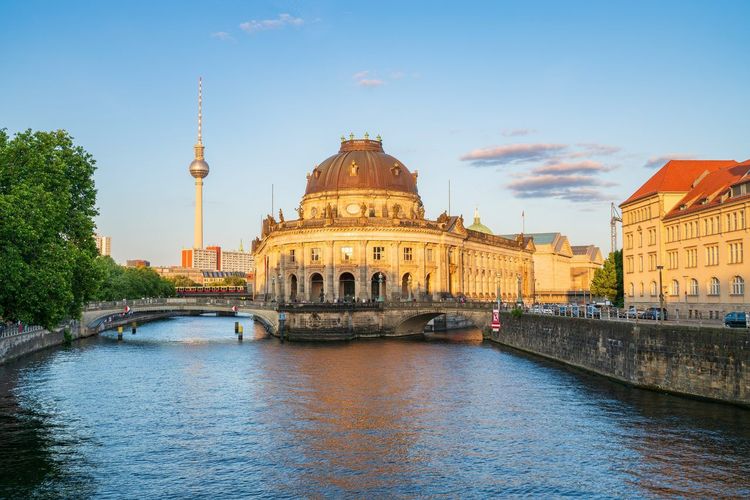
Mitte concentrates most of Berlin's spectacular sights into a few square kilometers. Good news for a weekend for two: almost everything can be visited on foot, from one landmark to the next, without taking public transport.
Brandenburg Gate, Reichstag Dome and Gendarmenmarkt
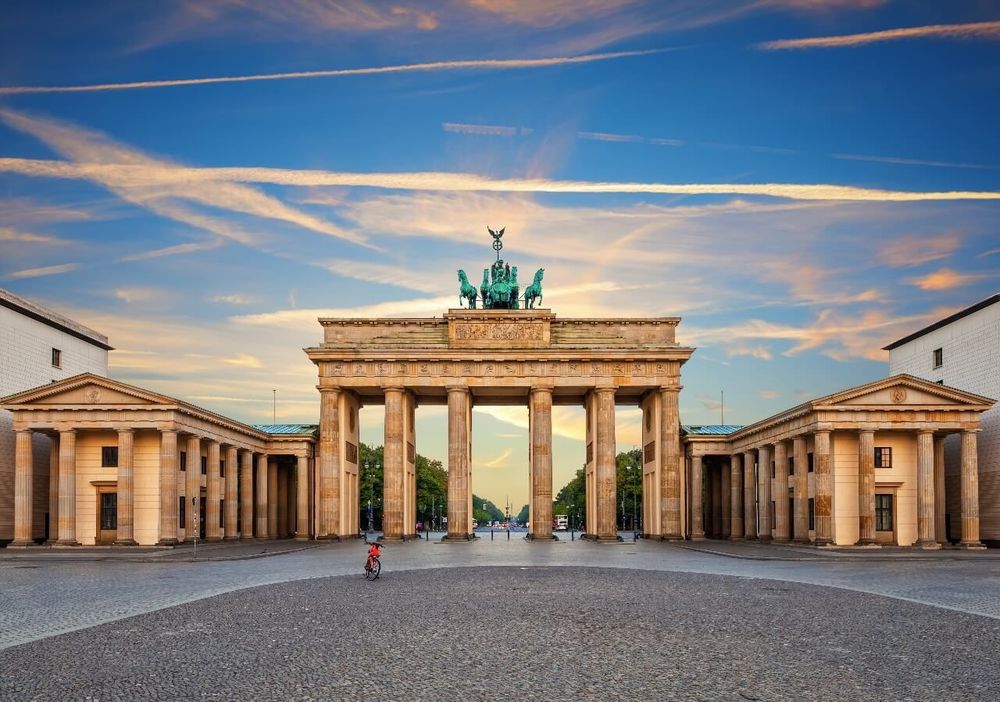
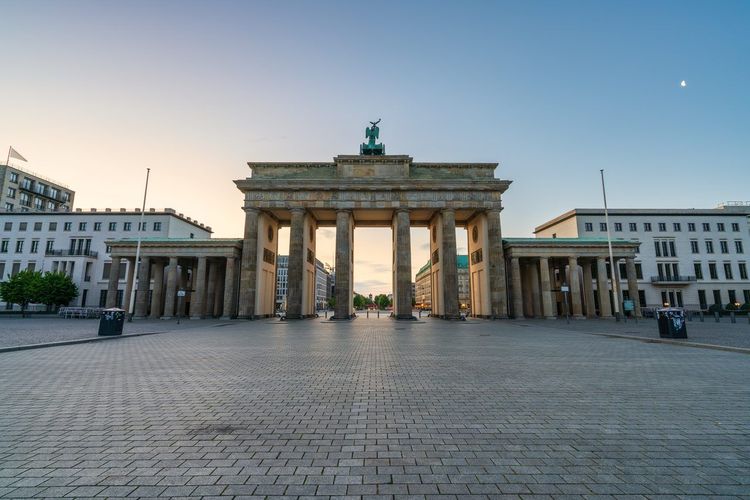
The day logically begins in front of the Brandenburg Gate, the neoclassical arch that saw Napoleonic troops pass through, then the crowds of reunification after the fall of the Wall in 1989.
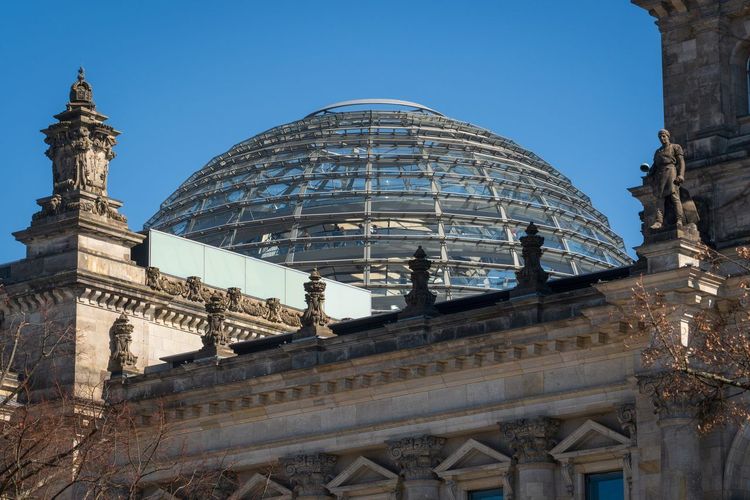
Ten minutes' walk away, the Reichstag dome offers one of the most popular views in the city: its glass cupola, accessible free of charge by reservation, features a spiral ramp overlooking the Tiergarten and a good part of the center.
Book your time slots several days in advance, especially in spring: late-day slots go quickly, and that is precisely when the low light makes the cupola most beautiful. Remember to bring your ID, as it is checked at the entrance.
A complete change of scenery awaits at Gendarmenmarkt, a Baroque square framed by two twin churches, the French and German cathedrals, and the Konzerthaus.
In December, the WeihnachtsZauber Christmas market traditionally sets up its chalets here (it was moved to the neighboring Bebelplatz during the square's renovation work); the rest of the year, the surrounding terraces are perfect for a break. This is precisely the triangle, Brandenburg, Reichstag and Gendarmenmarkt, covered by the Ryo audio-guided tour Symbolic and Dynamic Capital: 27 stops over about 5.7 km and 2h15 of walking, at your own pace, headphones on in front of each landmark.
Museum Island, the Spree and the Berliner Dom
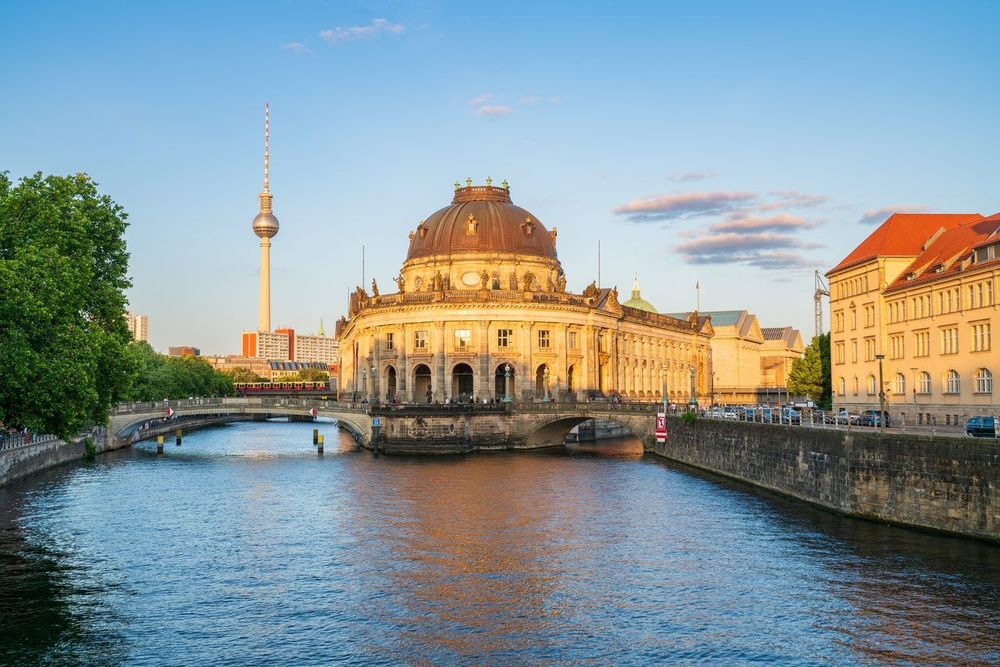
Heading back east, the Spree splits into two arms and forms Museum Island, a UNESCO World Heritage site for its ensemble of five museums built between 1830 and 1930.
Be careful if you were counting on the Pergamonmuseum: it is closed for a long-term renovation. Fall back on the Neues Museum and its bust of Nefertiti, or on the Alte Nationalgalerie and its German Romantic paintings, led by Caspar David Friedrich, ideal for a short visit for two. Book your slot online rather than queuing, and limit yourselves to one museum per day to save energy for what follows.
The walk along the banks of the Spree is worth almost as much as the collections: public benches, sightseeing boats departing from the quays, and a special light on the water in the late afternoon. The Berliner Dom, the Protestant cathedral topped with a verdigris dome, rewards those who climb its 270 steps with a 360-degree panorama over the entire island.
Nikolaiviertel and Checkpoint Charlie
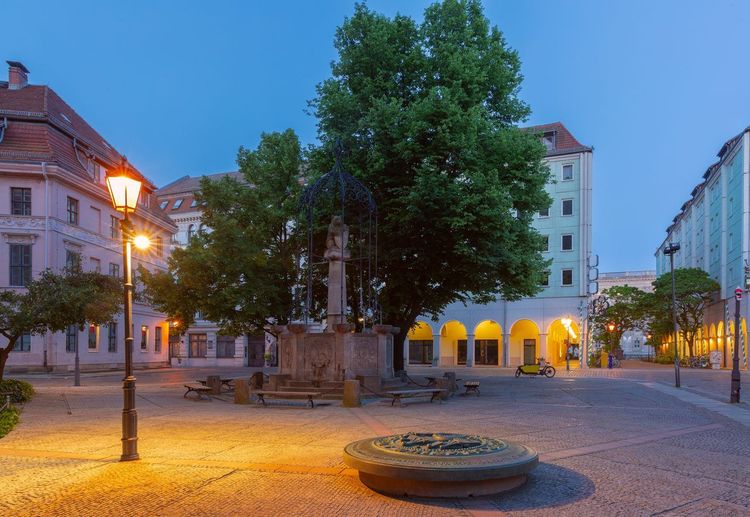
The Nikolaiviertel (St. Nicholas Quarter) recreates, cobblestones and old facades included, the medieval core of the city destroyed in 1945.
The whole area is openly a reconstruction from the East German era, but its narrow lanes and small breweries make it a pleasant stop to taste a Berliner Weisse, the slightly tart beer typical of the city.
Then allow about twenty minutes to reach Checkpoint Charlie (Friedrichstraße 43-45, 10969 Berlin, rated 4.1/5 on Google from 98,727 reviews), the former border crossing between the two Berlins, now reconstructed for photos but surrounded by panels that tell the real story of the crossing.
Many couples find the site a bit kitsch at first, before realizing, a few meters further on, the scale of what it symbolizes.
If the day still leaves you a little energy, end it on Unter den Linden, the great avenue lined with linden trees that connects the Brandenburg Gate to Museum Island. On Bebelplatz, a glass pane set into the ground reveals empty shelves: it is the memorial to the 1933 book burning, discreet and striking, which many visitors walk over without noticing. A few steps further, the State Opera and St. Hedwig's Cathedral close off the square. From there, all that remains is to choose between dinner in Mitte or a last drink by the Spree, as the facades of Museum Island light up.
Day 2: Tiergarten and Charlottenburg, Berlin's Green and Royal Setting
After a day packed with landmarks, the second day lets you breathe more. Head west, where an immense park and a Baroque palace set the tone.
Tiergarten Park, a Stroll and a Break by the Water
With its 210 hectares, the Tiergarten park (Tiergarten, 10785 Berlin, rated 4.7/5 on Google from 30K reviews) does not quite reach the size of Central Park, but it is more than enough to lose yourselves for an entire morning without encountering traffic.
A former hunting ground of the prince-electors, it was reshaped into a landscaped park in the 19th century by the gardener Peter Joseph Lenné. Its paths now wind between ponds and the Victory Column (Siegessäule), which you can climb for a clear view of the park and the city.
Renting a rowboat on the Neuer See, the largest of the park's ponds, remains the activity most mentioned by couples in spring and summer; the Café am Neuen See, on the shore, then serves beer and pizza under the trees. For a simpler picnic, settle near the Luiseninsel, a small flower garden surrounded by water, one of the most peaceful corners of the park.
Charlottenburg Palace and Its Neighborhood
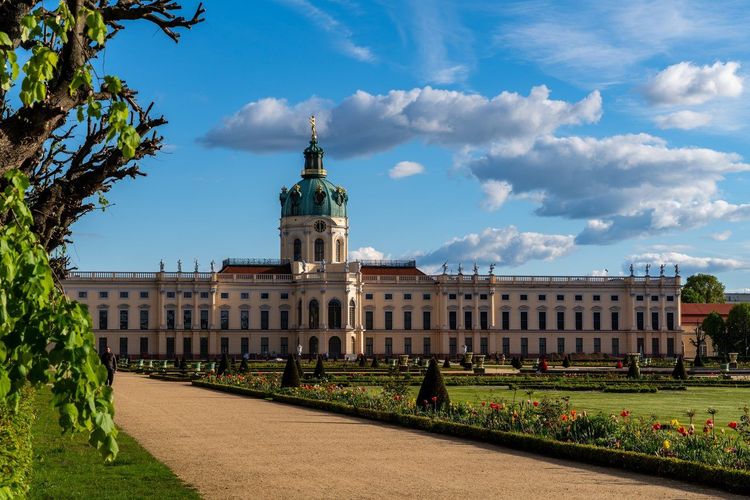
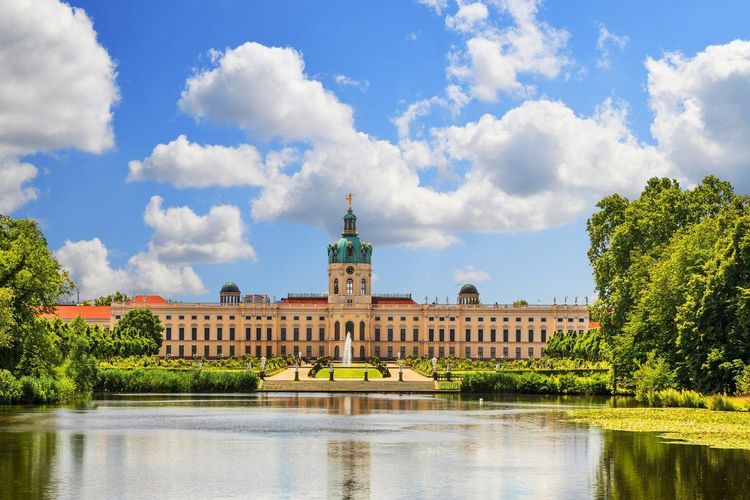
Further west, the Charlottenburg district keeps the feel of a more hushed Berlin, with its opulent late-19th-century buildings and the Kurfürstendamm, the historic shopping avenue of the West. People come mainly for Charlottenburg Palace (Spandauer Damm 10-22, 14059 Berlin), the largest surviving royal residence in the city, built for Queen Sophie-Charlotte in the late 17th century.
The gilded apartments are worth the detour, but it is above all the park at the back, with its belvedere, pavilion and mausoleum, that lends itself to a stroll for two, far from the crowd concentrated at the front facade. Allow a good hour to walk around it, longer if you stop at the Kleine Orangerie café for a Kaffee und Kuchen facing the flowerbeds.
Still have energy for the evening? This is the right time to start the Ryo audio-guided tour On the Other Side of the Wall: 30 audio stops, 2h40 and 6.5 km to understand how the city experienced its division, a story that gives full meaning to the third day in the East.
Day 3: East Side Gallery and Friedrichshain, Street-Art and Alternative Berlin
The third day shifts to the East, into neighborhoods that grew after the fall of the Wall and continue to change their face every year.
The East Side Gallery and Urban Nation, the Street-Art Museum
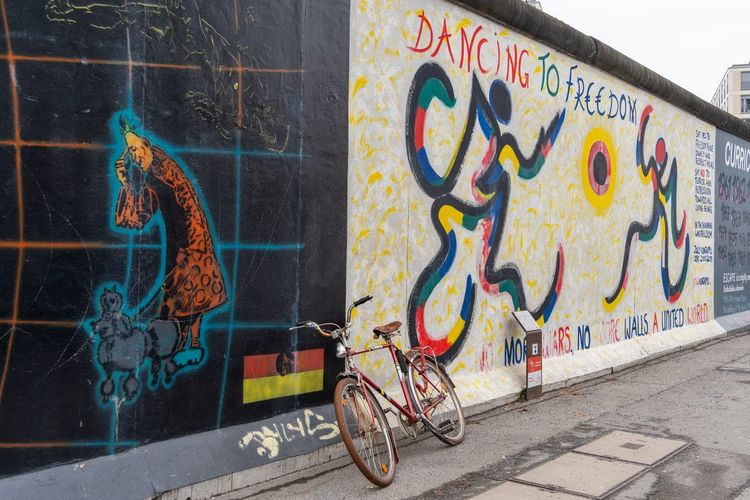
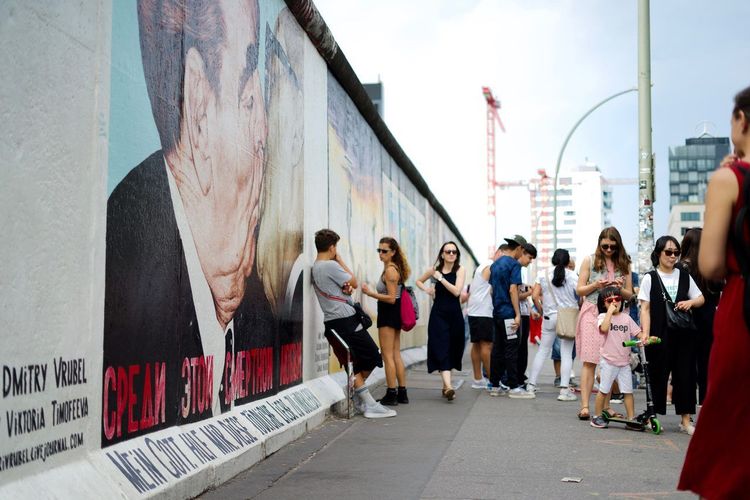
Over 1.3 kilometers, the East Side Gallery preserves the longest stretch of the Berlin Wall still standing, covered since 1990 by more than a hundred murals painted by artists from around the world.
The Fraternal Kiss by Dmitri Vrubel, which parodies the embrace between Brezhnev and Honecker, remains the most photographed work. Take the time, though, to walk all the way to the end, toward the Oberbaumbrücke: the panels farthest from Ostbahnhof station are often the least crowded, and so the most pleasant to look at together.
To extend the theme, the Urban Nation museum (Bülowstraße 7, 10783 Berlin, rated 4.7/5 on Google from 4,878 reviews), located in Schöneberg, a few U-Bahn stops away, presents the history of street art through works integrated even into the building's facade.
Admission is free (donations are welcome), the museum is closed on Mondays, and its exhibitions change regularly: a good fallback option in case of rain.
Friedrichshain, the Alternative Neighborhood to Experience as a Couple
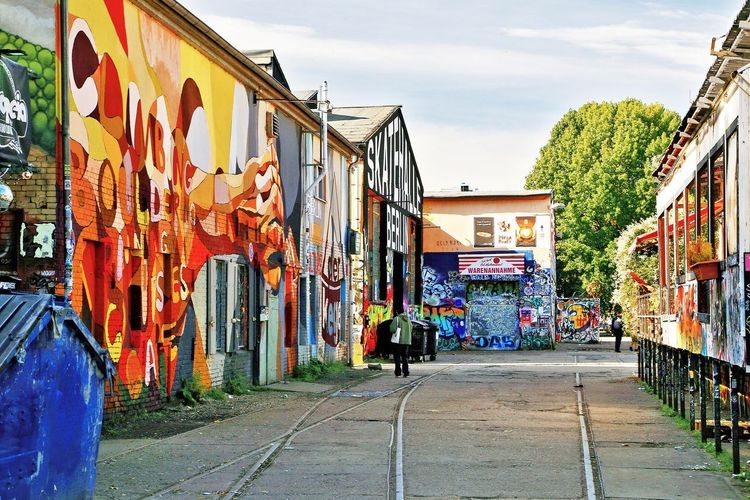
Back on the banks of the Spree. Friedrichshain remains one of Berlin's liveliest neighborhoods, driven by the former railway wasteland of the RAW-Gelände, now home to open-air bars, a skatepark and concert venues. By day, the terraces of Simon-Dach-Straße fill up at the first rays of sun; in the evening, the neighborhood takes over from the big clubs with a more intimate and often cheaper offering than in Kreuzberg.
The RAW-Gelände also houses a climbing wall built in a former bunker, a good excuse to extend the evening without changing neighborhoods. If you are short on time, the sub-tour On the Other Side of the Wall, short version of the Ryo audio guide sums up the fall of the Wall and the history of the divided city in a condensed format, handy for an end-of-day stroll with nothing to prepare.
Prenzlauer Berg and the Berlin Sunday: Strolling Away from the Crowds
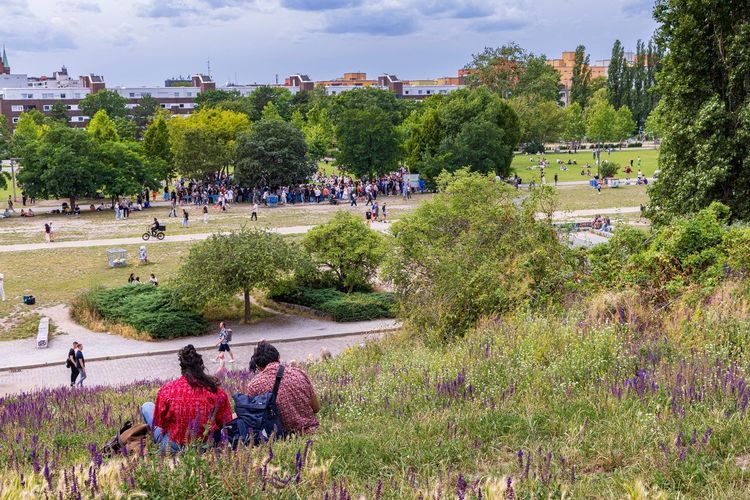
Save this neighborhood for a Sunday: it is the day it shows its best face, between late brunch and flea market.
The Cobbled Streets and Cafés of Prenzlauer Berg
Prenzlauer Berg has traded its image as a working-class East Berlin district for that of a borough prized by families and expats, but its cobbled streets around Kollwitzplatz retain a certain charm for a morning stroll.
The buildings were renovated after reunification and many show off their late-19th-century facades, which survived the bombings.
This is also where the cafés that make the neighborhood's reputation are concentrated: terrace tables, endless brunches, bakeries pulling out their bread as early as 8 a.m. The Kulturbrauerei, a former brewery converted into a cultural center, completes the walk with its Christmas market in December. Nothing essential in the tourist sense, but an atmosphere that contrasts with the density of Mitte.
One detail not to miss on the way up to the Mauerpark (Bernauer Straße 63-64, 10435 Berlin, rated 4.5/5 on Google from 25,166 reviews): the nearby Berlin Wall Memorial on Bernauer Straße preserves a portion of the border strip with its watchtower and patrol path. You can climb the observation platform of the documentation center, which is free, to understand at a glance what it meant to live on one side or the other of the street. A solemn interlude, certainly, but one that gives another depth to the carefree Sunday in the neighboring park.
Mauerpark, Karaoke and the Sunday Market
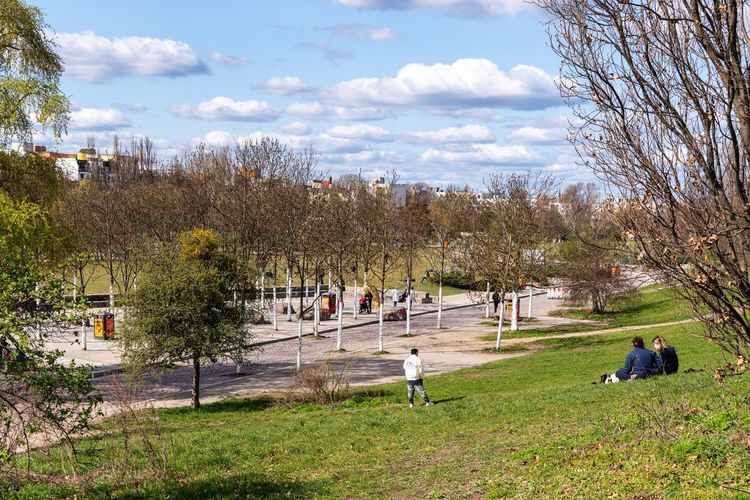
The Mauerpark, laid out on a former strip of the border zone, becomes on Sunday afternoons (in the good season) the stage for an open-air karaoke hosted by Joe Hatchiban since 2009: open mic, sloping stands, and an audience of a few dozen to several thousand people depending on the weather.
Right next door, the flea market attracts antique dealers and young designers, perfect for finding a souvenir that isn't a fridge magnet. Arrive in late morning to enjoy the market before the karaoke crowd, which generally starts in mid-afternoon.
Unusual Experiences to Enjoy Together
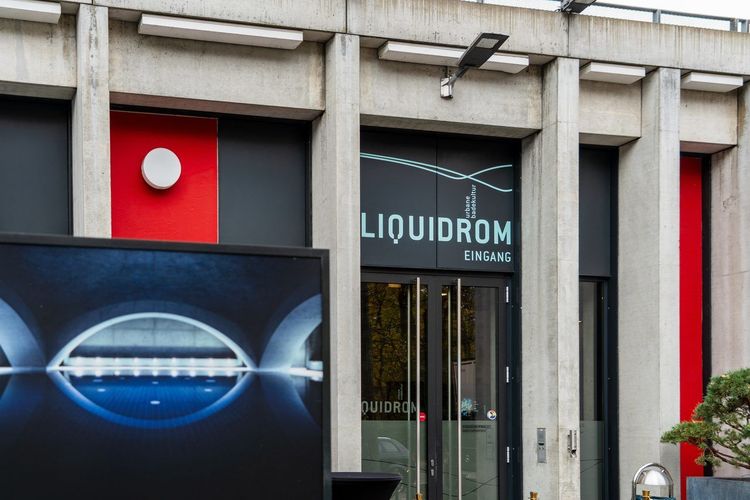
The Liquidrom, a Thermal Spa for a Cozy Evening
Part of the Tempodrom, a tent-shaped venue near Anhalter Bahnhof, the Liquidrom (Möckernstraße 10, 10963 Berlin, rated 4/5 on Google from 4,799 reviews) offers a saltwater pool heated to 36 °C, topped by a dome onto which lights and music are projected.
You float, ears immersed, while the music plays underwater: hard to find a better way to rest after two or three days of walking. Allow €24.50 per person for two hours (€22 for 90 minutes, sauna supplement of €2.50). On Tuesday, Thursday and Saturday evenings, DJs play live during the Sound Sessions; these evenings fill up fast, so book if possible.
The Teledisko and Other Unusual Berlin Experiences
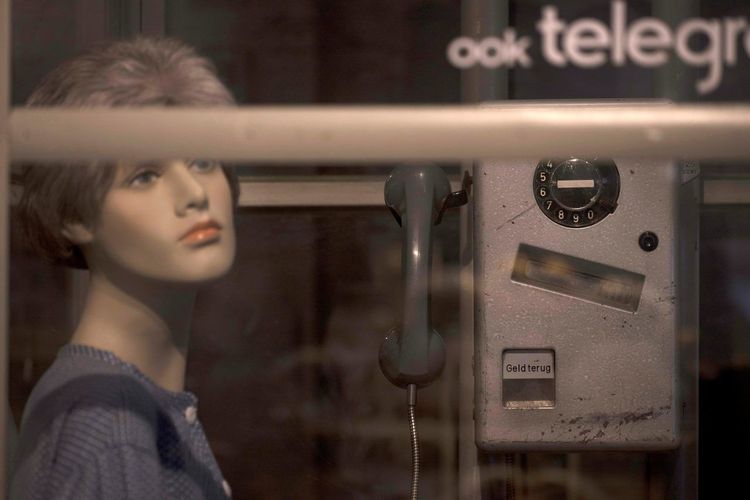
Less well known, the Teledisko turns a former phone booth into a tiny coin-operated nightclub for a few people, with disco ball, smoke and strobe lights included. Born from Berlin subculture, it sometimes changes location: check its current location before heading out.
The experience lasts the length of a song, but it sums up the local spirit well: taking the idea of having fun seriously.
Other ideas round out the list: a night cruise on the Spree under illuminated bridges, an introduction to craft beer in one of Kreuzberg's microbreweries, or a cocktail bar hidden behind an unmarked door, a type of address that Berlin cultivates more than most European capitals. And if you prefer a more relaxed outing, an evening at the Philharmonie or the Konzerthaus at Gendarmenmarkt offers an elegant alternative, with affordable tickets for the lunchtime concerts.
Where to Watch the Sunset Together
Berlin is a flat city, and that is precisely what makes its viewpoints so precious. Here are the spots worth a detour at the end of the day.
Rooftops, Towers and Bridges of the Center
The Fernsehturm, the television tower at Alexanderplatz, rises to 368 meters; its observation platform, at a little over 200 meters, and its revolving restaurant offer the most spectacular view of the city. Book a sunset slot to watch the center light up beneath your feet, as the restaurant makes a full rotation in about an hour.
More accessible, the Oberbaumbrücke, a neo-Gothic brick bridge from 1896 linking Friedrichshain to Kreuzberg, offers an open view of the Spree and the yellow elevated metro line that crosses it. At sunset, couples settle on the nearby banks, a cold beer in hand. The Reichstag dome, already mentioned, remains a free option if you booked ahead.
Rooftops and Hills of the West
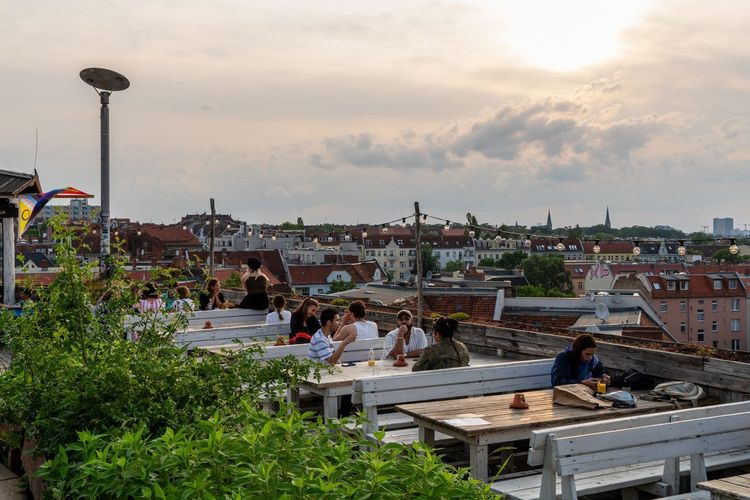
In the south, in Neukölln, the Klunkerkranich has set up a garden bar on the roof of a shopping center parking garage: potted plants, deckchairs, concerts on some evenings and an open view over the entire city. The atmosphere is relaxed, open mostly in the good season.
For a more unexpected setting, climb the Teufelsberg, an artificial hill formed from wartime rubble in the Grunewald forest, topped by the former American Cold War listening station. Its graffiti-covered domes overlook the forest, and the view at dusk is well worth the climb.
Extending Your Stay: A Day in Potsdam
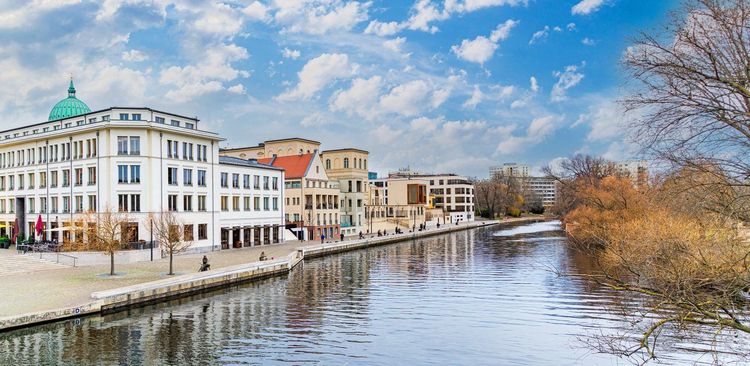
If you have a fourth day, Potsdam is the most natural excursion from Berlin: the city is reachable by S-Bahn (line S7) or regional train from the central station in half an hour to forty-five minutes, with a ticket covering zone ABC.
The Sanssouci Palace, a summer residence built between 1745 and 1747 for Frederick II, overlooks a staircase of terraces planted with vines; its parks are part of the Palaces and Parks of Potsdam and Berlin, a UNESCO World Heritage site since 1990. The park, immense and free, lends itself to a long walk hand in hand between the New Palace, the Orangery and the Chinese Tea House.
Finish with the Dutch Quarter, a group of red-brick houses built in the 18th century to welcome Dutch craftsmen, now filled with cafés and boutiques. You will return to Berlin for dinner with the feeling of having seen a completely different face of the region.
Where to Dine as a Couple in Berlin: Tables with a View and Friendly Spots
Fine Dining with a View over the City
For a dinner out of the ordinary, the Käfer Dachgarten, set on the roof of the Reichstag, combines a view of the glass cupola with reinvented German cuisine.
Reservations are mandatory, with ID checks at the building entrance; book several weeks ahead if you are aiming for a sunset table.
On the water rather than up high, the boat restaurant Van Loon, moored on the Landwehr Canal in Kreuzberg, occupies a former Dutch cargo boat; the terrace on the deck remains the most requested table from the first sunny days.
Friendly Spots and Wine Bars for a Relaxed Dinner
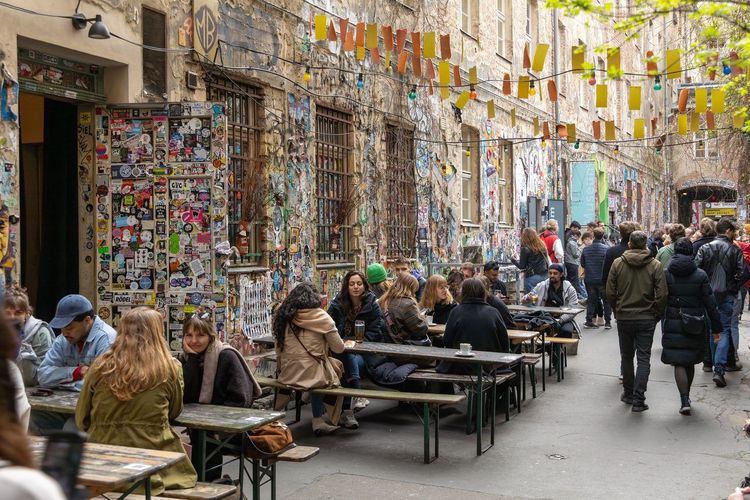
More affordable, Katz Orange (Bergstraße 22, 10115 Berlin, rated 4.5/5 on Google from 3,029 reviews) plays the card of quality produce and seasonal vegetables in a converted old brick building, with a warm decor and a fine wine list. The restaurant opens every evening from 6 p.m.
To taste local specialties without straining your wallet, the eateries of Prenzlauer Berg or Kreuzberg offer reinvented currywurst, Flammkuchen and craft beers in a wine-bar atmosphere rather than a traditional brewery. Our article on Berlin culinary specialties details the dishes not to miss, from Currywurst to Eisbein, so you can put together a different menu every evening.
Where to Sleep in Berlin as a Couple: Charming and Unusual Hotels
The choice of neighborhood matters almost as much as the choice of hotel: Mitte brings you closer to the first day's landmarks, Prenzlauer Berg offers a calmer rhythm, and Friedrichshain bets on addresses outside the standards of classic hospitality.
Charming Addresses in Mitte and Prenzlauer Berg
For a first night well connected to everything, the Hotel Amano Grand Central, a stone's throw from the central station, combines streamlined rooms, a rooftop bar and quick access to Mitte and the Reichstag district.
In Prenzlauer Berg, the options lean toward more intimate guesthouses, often set in renovated early-20th-century buildings, with breakfast served in the room on request. Allow between 90 and 150 euros per night for this type of address in high season.
Unusual Hotels and Suites with a View
More distinctive, the Michelberger Hotel, in Friedrichshain, has made salvaged materials and custom-made furniture its signature, with an inner courtyard and a restaurant that attracts locals as much as its guests.
On the banks of the Spree, the nhow Berlin (Stralauer Allee 3, 10245 Berlin, rated 4.4/5 on Google from 5,653 reviews) pushes originality further, with a decor built around music and direct river views from some rooms, a standout option for a weekend outside the classic mold.
By booking early, you can sometimes find a room with a view of the Spree at the price of a standard room.
Practical Information for a Romantic Stay in Berlin
Berlin can be visited year-round, but spring (April-June) and early autumn (September-October) offer the best compromise between mild weather and reasonable crowds at the most popular places such as the East Side Gallery or the Reichstag. Summer brings terraces, rowboats on the Neuer See and an outdoor lifestyle that suits a couple's stay well, at the price of sometimes heavy heat in July-August. Winter relies on Christmas markets and the hot baths of the Liquidrom to make up for short days.
Budget-wise, a three-day romantic weekend costs on average between 450 and 900 euros for two, excluding transport: a mid-range hotel around 90-130 euros per night, restaurant meals between 25 and 45 euros per person, and a margin for activities (Reichstag free with reservation, Liquidrom around 25 euros per person, Museum Island museums between 12 and 19 euros). Public transport remains the most reasonable expense of the trip.
To get around, the Berlin WelcomeCard gives access to the entire U-Bahn, S-Bahn, tram and bus network for 48h, 72h or more, with discounts on many museums and attractions; choose the AB version for Berlin, ABC if you are going to Potsdam. In practice, the central neighborhoods (Mitte, Prenzlauer Berg, Friedrichshain) are also very easy to explore on foot or by bike.
Three full days let you cover the essentials of this itinerary without rushing; two days force you to choose between alternative East Berlin and the more classic West, and our guide to visiting Berlin in 2 days helps you decide. German is not essential, English is enough almost everywhere, and the tip, around 5 to 10%, is announced directly to the server by rounding up the amount. Our article on visiting Berlin in 3 days details an hour-by-hour schedule if you prefer to leave with an itinerary already set.



FAQ
How many days should you plan to visit Berlin as a couple?
Three full days are enough for a first stay, covering the historic center, Tiergarten-Charlottenburg and alternative East Berlin. With one more day, you can add Prenzlauer Berg on a Sunday or a trip to Potsdam without rushing.
What is the most romantic neighborhood in Berlin?
Prenzlauer Berg often comes out ahead for its calm atmosphere, cafés and cobbled streets, but the banks of the Spree around the Oberbaumbrücke at sunset remain a classic for couples.
When is the best time to go to Berlin for a couple's trip?
Spring and early autumn offer the best balance between weather and crowds. Summer suits fans of terraces and rowboats, winter those who love Christmas markets and hot baths.
What budget should you plan for a romantic weekend in Berlin?
Allow between 450 and 900 euros for two over three days, excluding transport, including a mid-range hotel, meals and a few paid activities such as the Liquidrom or the museums on Museum Island.
Where should you stay in Berlin for a romantic trip?
Mitte and the area around the central station are ideal for staying close to the landmarks, Prenzlauer Berg for a calmer atmosphere, and Friedrichshain for a more distinctive address such as the Michelberger Hotel or the nhow Berlin, on the banks of the Spree.
What are the unusual things to do as a couple in Berlin?
The Liquidrom (saltwater pool with underwater music), the Teledisko (a phone booth turned into a nightclub), the Mauerpark karaoke on Sundays, the Teufelsberg and a night cruise on the Spree are among the experiences couples mention most.
Conclusion
Three days in Berlin as a couple are enough to feel the city shift register several times: from the gravity of the Wall and the Reichstag to the lightness of a neighborhood karaoke, from a dinner on a moored boat to the calm of a royal park. It is this variety, more than any single landmark, that gives the German capital its romantic reputation among couples who keep coming back.
To link the major sites and the more discreet detours, the Ryo audio-guided tour of Berlin remains the simplest starting point: 30 narrated stops, 6.5 km and 2h40 of walking, to follow in order or to pick from depending on your mood of the day.
À lire également