© Shutterstock
 Votre guide Ryo
Hamburg in 2 Days: Complete Itinerary for 2026
There is something odd about watching 400-meter container ships glide between half-timbered houses: it's the first image that strikes you on arriving in Hamburg. Visiting Hamburg in 2 days is enough to cover the essentials of this city of 1.9 million people, the second largest in Germany and home to Europe's third-largest port behind Rotterdam and Antwerp, as long as you don't scatter yourself across its roughly 2,500 bridges, more than Venice, Amsterdam and London combined. It has nevertheless kept cobbled alleys, willow-lined canals and a town hall that looks like a Viennese palace stranded on the North Sea. To link the neighborhoods without waiting for a guide or a group, the Ryo audio-guided tour of Hamburg remains the simplest solution: headphones on, itinerary in your pocket, and you move at your own pace.
Two days is enough for the Speicherstadt, the world's largest complex of warehouses on wooden piles and a UNESCO site, for the Elbphilharmonie whose public bill grew more than tenfold between the announcement and the inauguration, and for the neon lights of the Reeperbahn, which never really close their shutters. Add the Außenalster, a lake in the middle of the city where Hamburg locals paddle between two appointments, a museum detour for rainy days (frequent in this maritime climate), and a few addresses to eat a Fischbrötchen without making a mistake. If you have one more day, the Lüneburg Heath, less than an hour by train, completely changes the scenery, with purple heather and thatched-roof villages.
How to get to Hamburg by train or plane
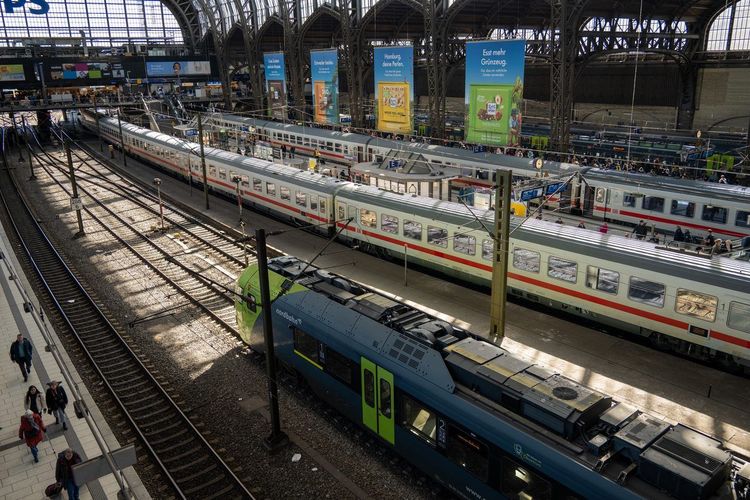
Hamburg is easy to reach from France. By train, allow about 8 hours from Paris with one change in Cologne (ICE or Thalys/Eurostar to Cologne, then a direct ICE to Hamburg Hauptbahnhof); tickets booked two to three months ahead often drop below €60 one way. From eastern France, the connection via Frankfurt is sometimes faster. Arriving at the central station drops you right next to the Kunsthalle and the old town, with no transfer needed.
By plane, direct flights from Paris, Lyon, Marseille or Nice land at Hamburg Airport (HAM), 25 minutes from the city center by S-Bahn (line S1), with a departure every ten minutes during the day. Remember to buy your HVV ticket from the machine before boarding: checks are frequent and the fine is around €60. Once there, no special formalities: Germany uses the euro, and English is widely spoken in tourist shops, although a few words of German are always appreciated.
When to go and what budget to plan
The city can be visited year-round, but April to October offers the best conditions to enjoy the Alster and the harbor terraces; in winter, museums and Christmas markets take over, with temperatures regularly dropping below zero in January-February. Pack a waterproof jacket whatever the season: the wind from the North Sea brings sudden showers even in midsummer, and Hamburg locals themselves never go out without a hood. May coincides with the Hafengeburtstag, the port's birthday, three days of naval parades and celebrations on the quays that attract more than a million visitors.
Budget-wise, plan on €90 to €150 per day per person for decent accommodation, meals and transport, more if a concert at the Elbphilharmonie or a harbor cruise is added to the program. The Hamburg Card (€12.90 for 24 hours, slightly less per day for multi-day versions) combines unlimited transport and discounts of up to 50% with more than 150 partners: it pays off as soon as you do two or three paid activities on the same day.
Many travelers hesitate between two and three days on site. Two days already cover the historic heart, the port and an alternative neighborhood; a third lets you catch your breath and add the Lüneburg Heath, Lübeck, or simply one more morning with no fixed itinerary. Would you rather improvise than follow a program fixed to the minute? The Ryo audio guide runs step by step, in whatever order suits you. Traveling solo on a small budget, also note that the hostels of Sternschanze and the street food at the port seriously reduce the bill compared with the touristy central districts.
Day 1: the Hanseatic old town, the port and Sankt Pauli
Morning: the Altstadt, the town hall and the office district
Start with the political heart of the city. The Rathaus, completed in 1897, has 647 rooms behind a neo-Renaissance façade covered with statues of Germanic emperors. Guided tours of the interior (in German or English, a few euros, no reservation needed most days) let you see the Emperors' Hall and its gilded ceilings, still the active seat of the Senate and Parliament of the city-state.
Ten minutes away on foot, the Kontorhausviertel district is worth the detour for the Chilehaus, an office building completed in 1924 whose tip evokes the bow of a ship. Listed by UNESCO in 2015 along with the Speicherstadt, it is the most photogenic example of the brick Expressionist architecture that made Hamburg's reputation in the 1920s.
Then head to the Nikolaifleet, one of the canals winding through the center, and on to the Mahnmal St. Nikolai. Only the tower remains of this neo-Gothic church, deliberately left in ruins since the 1943 bombings: the elevator that rises to 76 meters offers one of the best views of the city, including a panorama of the port and the Speicherstadt that awaits you right after.
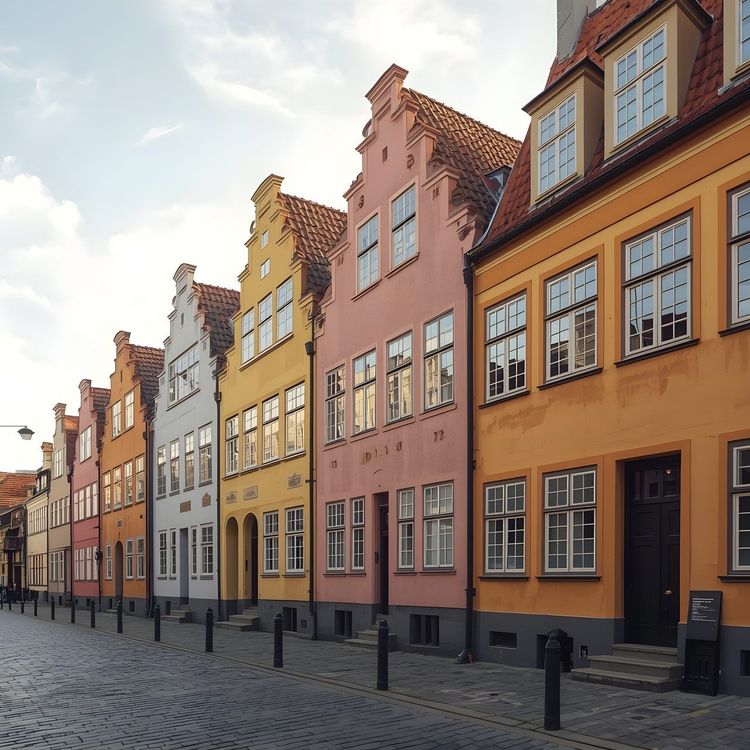
If there's time left before noon, stroll around the Deichstraße: the city's oldest merchant houses, built above the canal from the 17th century onward, give a good preview of what awaits you on a larger scale a little further on.
Afternoon: Speicherstadt, HafenCity and the Elbphilharmonie
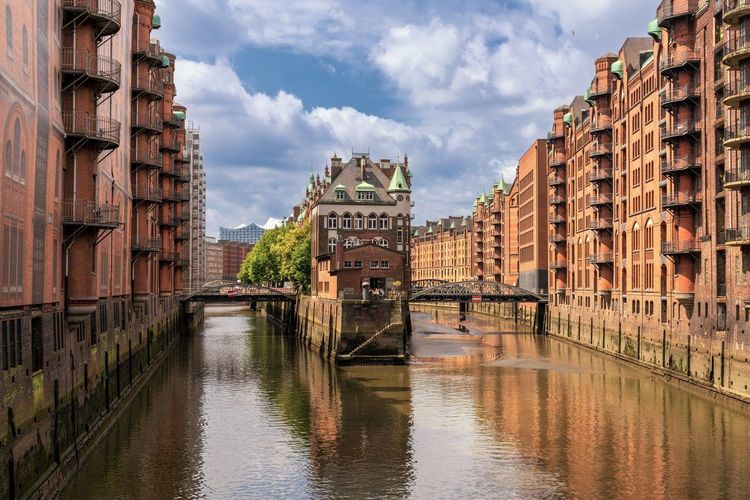
The Speicherstadt stretches over 1.5 kilometers of red bricks and metal bridges, built between 1883 and 1927 to store coffee, spices, cocoa and carpets from around the world. Walk along the quays, cross the footbridges, and let yourself be surprised by the façades reflected in the canals: it is one of the few places where a 19th-century industrial port has remained almost intact, now transformed into museums, design offices and cafés.
Inside the warehouses themselves, the Miniatur Wunderland recreates the world's largest miniature railway, with an airport where tiny planes take off and a day-night cycle every 15 minutes. Allow two hours minimum, and book your slot online: queues on site easily exceed an hour on weekends and during German school holidays.
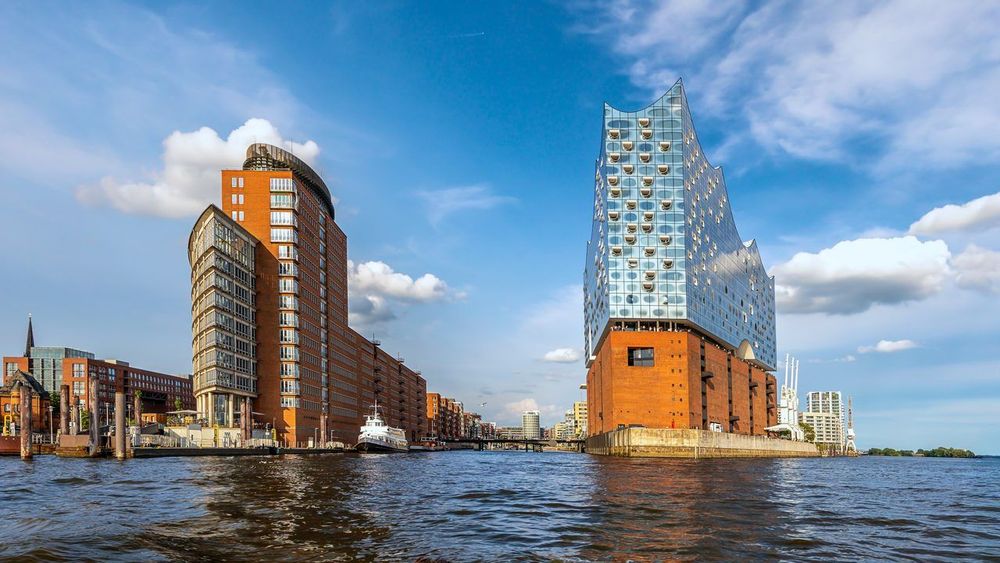
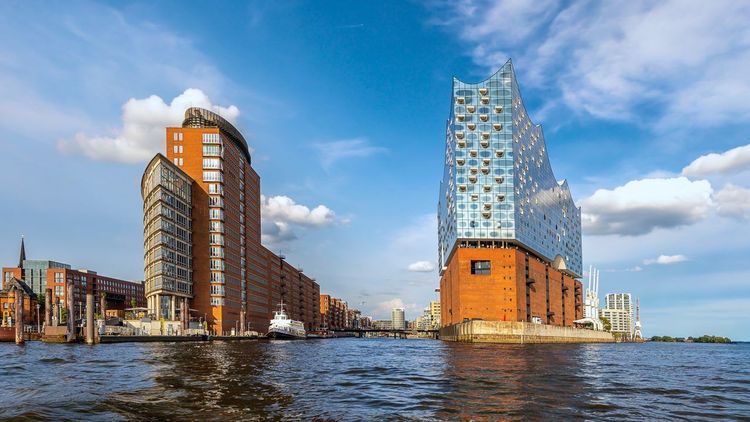
Continuing toward the water, the wavy silhouette of the Elbphilharmonie appears at the end of the HafenCity quay, the new district built on former docks since the 2000s and served since 2012 by the U4 metro line. The concert hall, set on a former cocoa warehouse and inaugurated in January 2017, cost about €866 million of public money, against the €77 million originally announced; its main hall, with acoustics by Yasuhisa Toyota, is lined with 10,000 plasterboard panels, each one different. The plaza, 37 meters high, is reached by a curved 82-meter escalator and offers a 360° view of the port and the city. Note that it is no longer free: since October 5, 2026, the ticket costs €5 (€3 reduced rate), to be booked online for a specific time slot.
On the way back to the Altstadt, take the time for a detour to the Hauptkirche Sankt Michaelis: its 132-meter Baroque tower, nicknamed "Michel" by Hamburg locals, remains the visual landmark of the whole city seen from the Elbe. It is the first thing sailors spotted when returning to port. Listen out at 10 a.m. or 9 p.m.: for three centuries, a trumpeter, the Türmer, has played a chorale there toward the four cardinal points (at noon on Sundays).
The Ryo audio-guided tour "The Gateway to the World" covers precisely this sequence: 24 audio stops over 3h10 and 8 kilometers, from the Altstadt to the Speicherstadt via the port and HafenCity. Handy for missing nothing without searching for your way between two canals, or pulling out the map at every crossroads.
Evening: Sankt Pauli, the Reeperbahn and the early-morning call
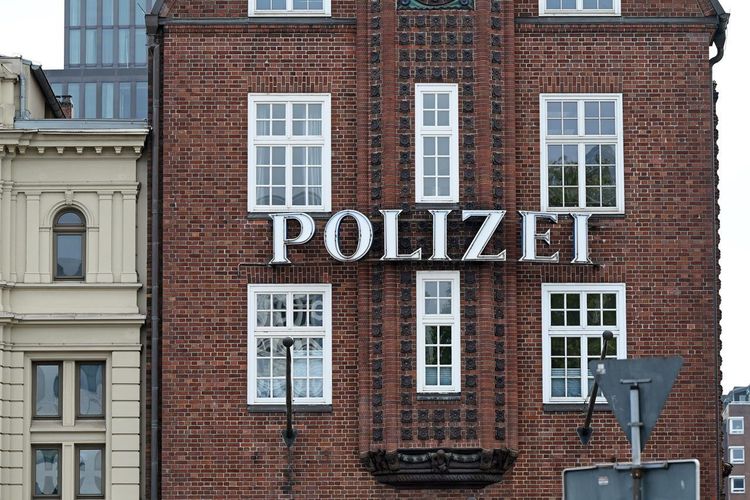
Head to the Landungsbrücken, the historic piers from which the harbor boats have departed since the 19th century. Even without boarding at this hour, the evening atmosphere is worth the trip: fishermen, tourists and locals mingle in front of the moored museum ships, the three-master Rickmer Rickmers and the cargo ship Cap San Diego.
From there, a ten-minute walk is enough to reach the Reeperbahn, the avenue that gave Sankt Pauli its steamy reputation, and whose name recalls the ropemakers (Reeper) who braided ship rigging there. Between musical theaters, wine bars and neon lights, the atmosphere remains surprisingly good-natured early in the evening before shifting, after 11 p.m., toward something more intense around the Herbertstraße, an alley off-limits to minors that you'll skip if you're traveling with family. The Beatles made their debut here in 1960, at the Indra and then the Kaiserkeller, before they were even known in England: the Beatles-Platz, at the end of the avenue, pays tribute to them.
If your night stretches to dawn on a Saturday, a local tradition is to end up at the Fischmarkt (Große Elbstraße 9, 22767 Hamburg, rated 4.4/5 on Google from 8K reviews), open only on Sunday mornings, from 5 a.m. to 9:30 a.m. from April to October and from 7 a.m. to 9:30 a.m. from November to March. Between the fish stalls, the fruit hawkers selling off their baskets and the groups still dancing in the adjoining Fischauktionshalle, it is one of the most singular scenes in the city, and a good excuse to nibble on a Fischbrötchen before going to sleep.
Day 2: the Alster, the creative districts and Altona
Morning: the Außenalster, Eppendorf and a break in the green
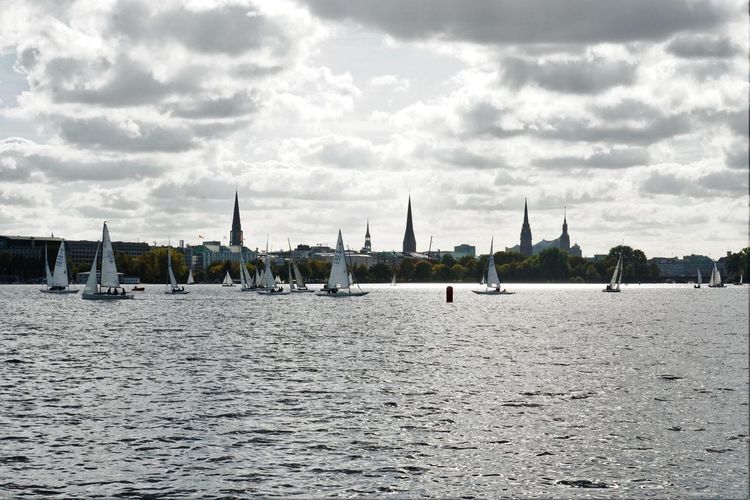
A change of pace for this second day. Set off early toward the Außenalster, the big 164-hectare lake in the city center: Hamburg locals row, paddleboard or jog along its 7.4 kilometers of shoreline before going to work. You can rent a rowboat or pedal boat for an hour (about fifteen euros), board one of the Alster boats that circle the lake in about an hour, or simply walk along the Rotherbaum shore, where 19th-century villas give an idea of bourgeois Hamburg.
On the way, the Planten un Blomen park, "plants and flowers" in Low German, offers a green respite between two dense districts: a rose garden, a large Japanese garden and, from May to September, free water and light concerts every evening around 10 p.m. The park occupies part of the city's former ramparts, hence its elongated shape. A great place to picnic quietly before setting off again.
Continue toward Eppendorf, an affluent residential district organized around the Eppendorfer Baum (Eppendorfer Baum, 20249 Hamburg), where independent shops, pastry shops and cafés replace tourist chains. We recommend it for a lunch break away from the crowds, on a shopping street that looks like what locals actually experience rather than a set for visitors. On Tuesday and Friday mornings, the covered market under the metro viaduct, the Isemarkt, a neighbor of Eppendorf, lines up nearly 200 stalls over almost a kilometer.
Afternoon: Sternschanze and Altona, the other face of Hamburg
The Sternschanze district, also called Schanzenviertel, has concentrated Hamburg's alternative energy since the squats of the 1980s: murals, vintage shops, bars set up in former industrial workshops. Around the Schulterblatt, terraces spill onto the sidewalk at the first rays of sunshine, a good option for a coffee or a quick lunch.
Right next door, the Rote Flora, a former theater occupied since 1989, remains the visual symbol of the district with its façade covered in graffiti and political banners. You can't visit the inside, but the façade itself tells part of the city's recent social history, between gentrification and resistance.
Continuing west, the district of Altona keeps its identity as a former independent city, long Danish and then Prussian, attached to Hamburg only in 1937. The former fish auction hall (Fischauktionshalle), converted into an event venue, is a good symbol of it. The Altonaer Balkon (Neumühlen 11, 22763 Hamburg, rated 4.3/5 on Google from 186 reviews), a raised terrace above the Elbe, offers an unobstructed view of the river and the port cranes, without the crowds of the Landungsbrücken. Sitting on a bench facing the cargo ships, it's the right moment to start a stop of the Ryo audio-guided tour and hear how this small Danish port long overshadowed its big neighbor.
The museums of Hamburg
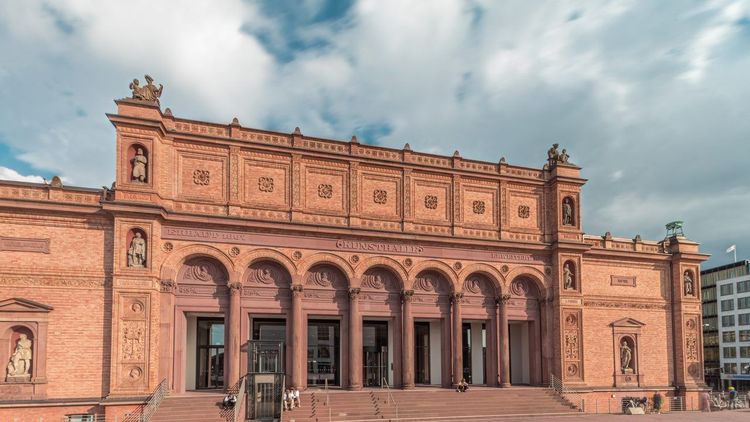
The Kunsthalle Hamburg brings together seven centuries of European art, from Master Bertram's altarpieces to Caspar David Friedrich's Wanderer above the Sea of Fog and Gerhard Richter, in one of Germany's largest art museums, right next to the central station.
If you love the sea, the Internationales Maritimes Museum occupies nine floors of a brick warehouse in the HafenCity district: models, uniforms, navigation instruments and tens of thousands of scale models gathered by a single collector, Peter Tamm, over more than sixty years. Allow a good two hours if you like detail.
The Museum für Hamburgische Geschichte tells the story of the city from its founding in the 9th century to the present day, with port models that help you grasp its real scale. More contemporary, the Deichtorhallen (Deichtorstraße 1-2, 20095 Hamburg, rated 4.5/5 on Google from 3,061 reviews) exhibit photography and contemporary art in two former metal market halls, a stone's throw from the central station.
Finally, for fans of fine machinery, the Automuseum PROTOTYP, housed since 2008 in a former HafenCity warehouse, displays about fifty rare post-war sports and racing cars, from the first Porsches to competition machines: a collection little known to French-speaking visitors. Many of these museums offer a discount to Hamburg Card holders, which eases the bill if you string several together on the same day.
For a broader overview of possible activities in the city, the Ryo article on the best things to do in Hamburg nicely complements this museum selection with ideas for outdoor outings.
An excursion on the Elbe: industrial port and fishermen's houses
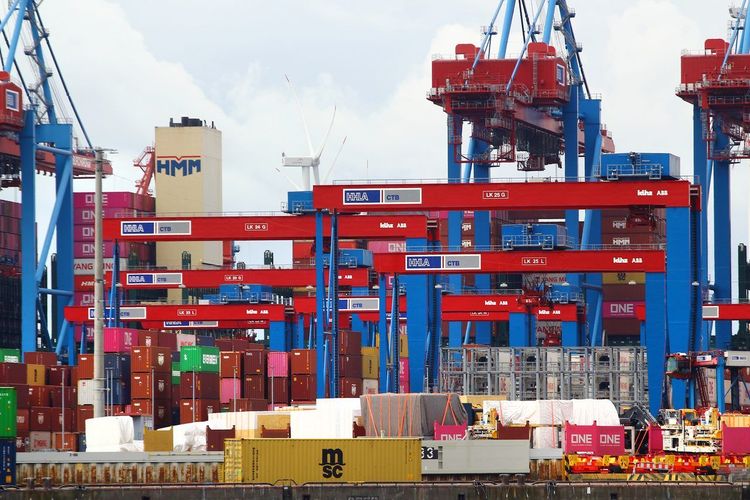
The Port of Hamburg spans more than 7,000 hectares, nearly a tenth of the city's area: it's hard to grasp its scale without boarding a boat. The classic one-hour cruises departing from the Landungsbrücken (between €20 and €25) run along the container terminals, shipyards and dry docks, with commentary that puts the traffic figures into perspective: several thousand ship calls per year and about 8 million TEU containers handled.
For more freedom, the Maritime Circle Line offers a hop-on hop-off ticket that lets you get off at several stops, including the port museum (Hafenmuseum), without queuing again at each stage. The more athletic can also rent a kayak to paddle along the Speicherstadt canals from the water, a radically different way to see the same façades.
Want to extend the outing for the price of a bus ticket? Public ferry no. 62 (included in the HVV ticket, and therefore in the Hamburg Card) reaches Övelgönne (Övelgönne, 22605 Hamburg, rated 4.7/5 on Google from 209 reviews), a former village of captains and pilots preserved along the Elbe, with its low 18th- and 19th-century houses and its sandy beach from which you watch giant cargo ships pass a few dozen meters away. Few hurried visitors take the time to go there, even though the trip takes only about twenty minutes from the Landungsbrücken.
The best light for photographing the port is in the late afternoon, when the low sun lights up the cranes from the west: a good reason to schedule this excursion after lunch rather than first thing in the morning.
Where to eat in Hamburg: from Fischbrötchen to fine dining
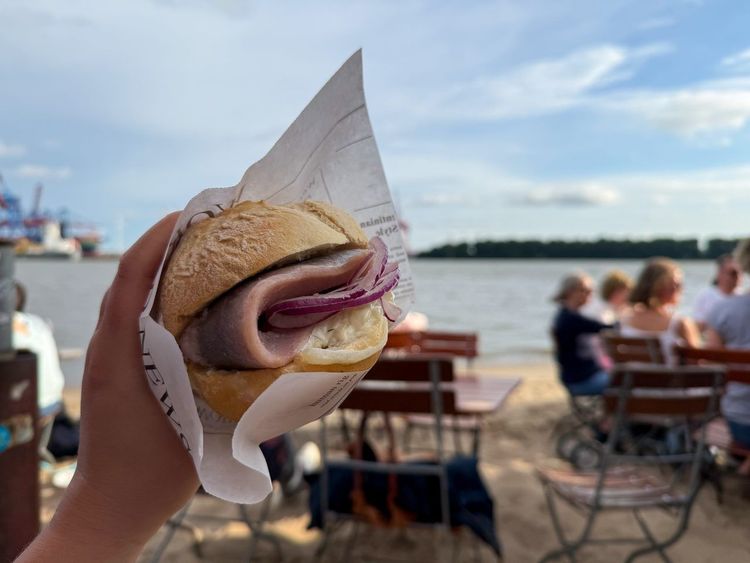
The most universal specialty remains the Fischbrötchen, a small bread roll with herring, smoked salmon or shrimp, sold all over the city for €4 to €6, especially around the Landungsbrücken and the Fischmarkt. The Labskaus, a mix of minced corned beef, potatoes and beetroot topped with a fried egg and a pickled herring, is more divisive but sums up the local maritime history: a sailors' dish designed to last at sea without fresh ingredients. In the morning, treat yourself to a Franzbrötchen, a cinnamon pastry unique to Hamburg, at any bakery in the center.
For a more relaxed meal, the Saint-Georg district, around the Lange Reihe (Lange Reihe, 20099 Hamburg), has one of the most densely restaurant-packed streets in the city: Turkish and Vietnamese cuisine, traditional German brasseries and trendy cafés follow one another over a few hundred meters, ten minutes' walk from the central station.
If you like beer, the microbreweries of Sternschanze and Sankt Pauli deserve an evening: several craft breweries have set up in former workshops since the 2010s, far from the big industrial brands. The vegetarian and vegan scene has also grown a lot, especially around Eppendorf and Sternschanze. And to dig deeper into the subject, the Ryo article on Hamburg's culinary specialties lists ten dishes to try.
Where to stay in Hamburg depending on your budget
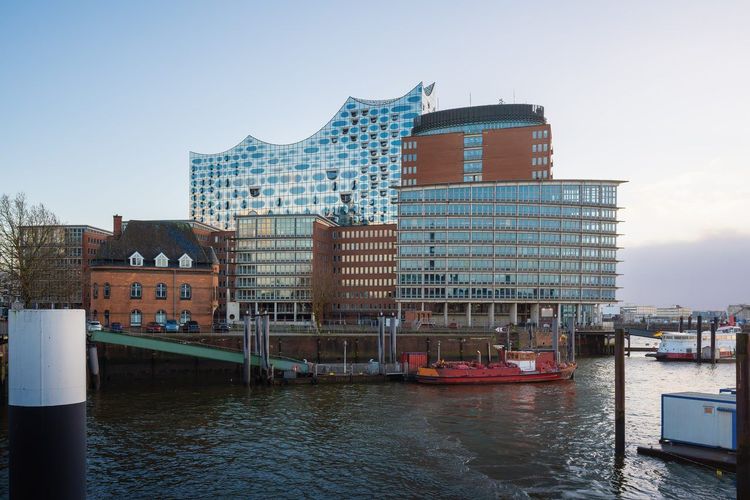
Three areas stand out for a two-day stay. HafenCity and the Speicherstadt suit you if you want to sleep facing the port and the Elbphilharmonie, with recent hotels but rates that quickly climb above €150 a night. Sternschanze and Sankt Pauli offer a younger atmosphere and gentler prices, often between €60 and €100, with the drawback of a district that comes alive late at night, especially on weekends. Finally, Saint-Georg, central and well served by the S-Bahn and U-Bahn, remains a solid compromise for walking everywhere without paying the waterfront price.
Book early if your visit coincides with a major trade fair or the Hafengeburtstag: hotel prices can then rise by 30 to 50% on these dates. For small budgets, several well-rated youth hostels are located in Sternschanze and around the central station, from €25-30 a night in a dorm.
The districts of Altona and Ottensen, a bit farther out, offer good short-term rental apartments if you travel in a group or stay more than two nights, with the advantage of direct S-Bahn access to the center in about ten minutes.
How to get around Hamburg without a car
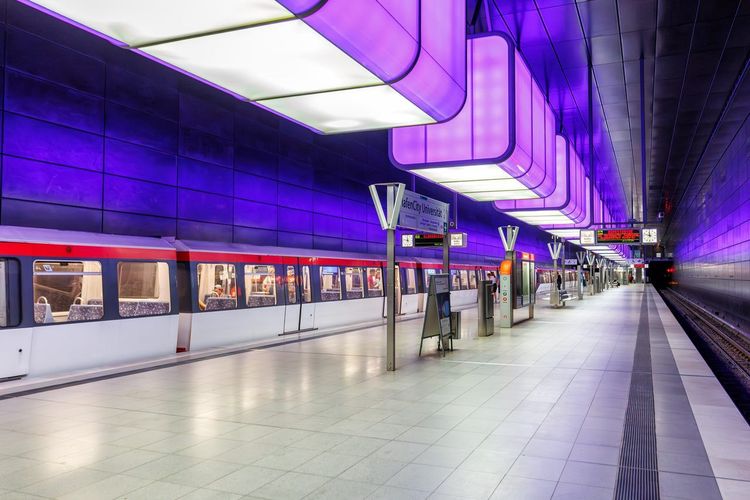
The HVV network combines U-Bahn, S-Bahn, buses and ferries under a single ticket: in 2026, a single trip costs €4.10 in the Hamburg AB zone and the day pass €8.20, slightly less if you buy through the hvv app. The central districts, from the Altstadt to Sternschanze, are very easy to cover on foot or by bike (StadtRAD rental available almost everywhere in the city), and cycling is often faster than driving on short trips thanks to a dense network of bike lanes.
The public ferries, lines 62 and 72 in particular, deserve a special mention: included in the standard HVV ticket, they cross the port and offer a view of the docks for the price of a bus ticket, without paying for a dedicated tourist cruise. For trips between distant districts such as Eppendorf and Altona, allow 20 to 30 minutes by public transport, rarely more; taxis and ride-hailing exist but remain expensive compared with the density of the public network.
If you want to go car-free for the entire stay, Ryo's dedicated article details passes, ferry timetables and the local apps to install before arriving.
Extending your stay: the Lüneburg Heath and beyond

If a third day frees up, the Lüneburg Heath, less than an hour by train, radically changes the scenery: purple heather as far as the eye can see in August-September, Heidschnucke sheep and thatched-roof villages. It is the easiest nature excursion from Hamburg, car-free thanks to direct regional trains to Lüneburg or Soltau, followed by a local bus or a horse-drawn carriage into the nature reserve around Wilsede.
The town of Lüneburg itself, about thirty minutes by train, with its leaning houses and medieval town hall, is worth a stop before or after the heath: it built its fortune on salt for centuries, as shown by the old warehouses of the port on the Ilmenau and its wooden crane.
Others prefer to go as far as Lübeck, the former capital of the Hanseatic League and a UNESCO site, 45 minutes by train, or Bremen, home of the musicians in the Brothers Grimm tale, a little over an hour away. These options combine well with a 3-day stay in Hamburg rather than 2, and a regional ticket such as the Schleswig-Holstein-Ticket or Niedersachsen-Ticket significantly reduces the bill for a small group.



FAQ
How many days do you need to visit Hamburg?
Two days cover the Altstadt, the Speicherstadt, the Elbphilharmonie and an alternative neighborhood such as Sternschanze or Altona. Three days allow you to add an excursion to the Lüneburg Heath or Lübeck, and to sightsee without rushing from one spot to the next. For a first visit, two days remain a good compromise between budget and discovery.
Is Hamburg worth the detour compared with Berlin?
The two cities don't offer the same experience: Berlin appeals with its 20th-century history and alternative cultural scene, Hamburg with its relationship to water, its Hanseatic heritage and its still-working port. Many travelers combine the two: the direct ICE train links the two central stations in about 1h45.
What can you do in Hamburg when it rains?
The Kunsthalle Hamburg, the Miniatur Wunderland and the Internationales Maritimes Museum easily fill half a day indoors. The covered passages in the center, between the Jungfernstieg and the Mönckebergstraße, also let you keep walking without getting too wet between showers.
How can you get around Hamburg without a car?
The HVV network (U-Bahn, S-Bahn, buses, ferries) covers the whole city with a single ticket, and the Hamburg Card includes unlimited transport as well as museum discounts. The center is also very easy to explore on foot or by bike, as distances between neighborhoods remain reasonable.
What budget should you plan for 2 days in Hamburg?
Plan on €90 to €150 per day per person for decent accommodation, meals and transport, more if you add a concert at the Elbphilharmonie or a private harbor cruise. Budget travelers can go below €70 per day by staying in a hostel in Sternschanze.
Do you need to book the Elbphilharmonie in advance?
Since October 5, 2026, access to the panoramic plaza is paid (€5, €3 reduced rate) and must be booked online for a time slot, which is strongly recommended in high season and on weekends. For a concert in the main hall, book several weeks or even several months ahead: tickets go fast.
After these two days among red bricks, salt water and contrasting neighborhoods, you'll understand why Hamburg remains under-visited compared with Berlin or Munich even though it has every argument to compete, with its UNESCO heritage, its music scene and a port that still keeps a large part of the city alive.
Whether you follow this itinerary to the letter or improvise along the canals, the Ryo audio-guided tour of Hamburg accompanies you between visits, with the anecdotes you don't always have time to look up yourself on site.