© Shutterstock
 Votre guide Ryo
Weekend in Munich in 2026: From the Altstadt to the Bavarian Alps
Forty-eight hours are barely enough to exhaust the list of surprises Munich has in store, a Bavarian capital where brewery signs stand alongside rococo palaces and where surfers can be seen tackling an artificial wave right in the city center. For a weekend in Munich, it is best to arrive with a solid plan: between the pedestrian Altstadt, Germany's oldest covered market, and the art collections of the Kunstareal, the city packs more heritage per square meter than most European capitals. The Ryo audio guide for Munich charts a clear path through these must-sees, so you never need to check a map at every corner.
This guide breaks down the weekend using concrete reference points: a permanent wave where local surfers train at noon and in the evening, summer and winter alike; a bar set up on the deck of a former cruise barge parked in a car park; a film studio where you can climb aboard the submarine from Das Boot; and a castle that inspired Disney, just two hours away by road. From the Altstadt and the Englischer Garten to excursions into the Alps, here is how to organize two or three days in Munich without missing anything essential.
Marienplatz and the Historic Heart of the Altstadt
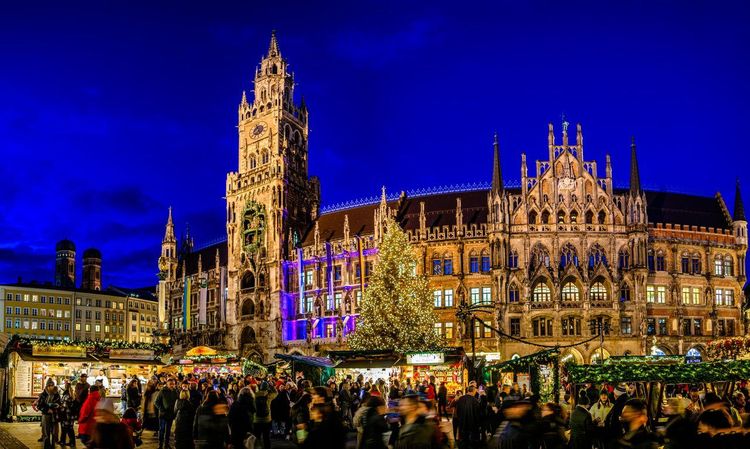
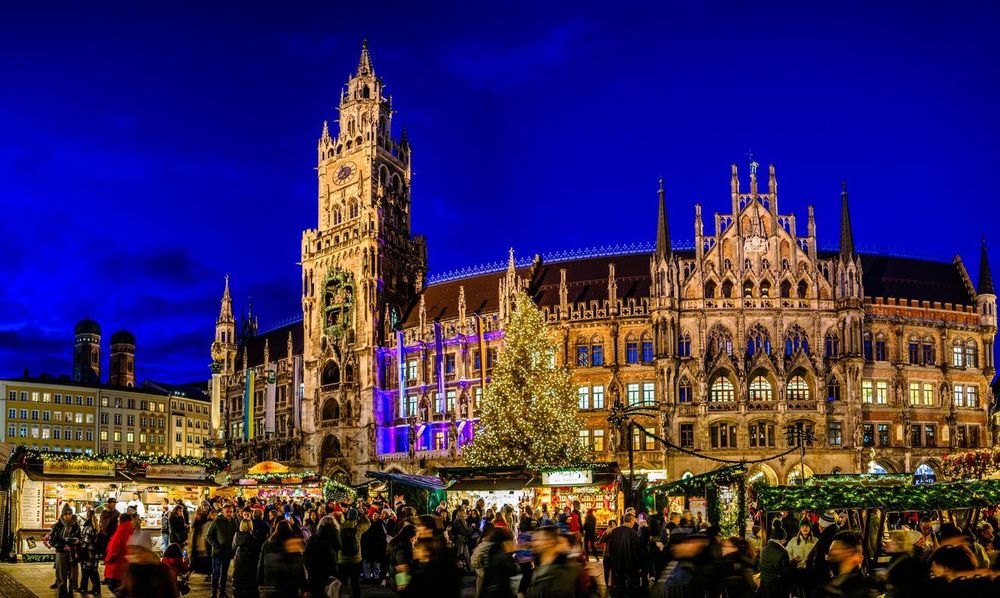
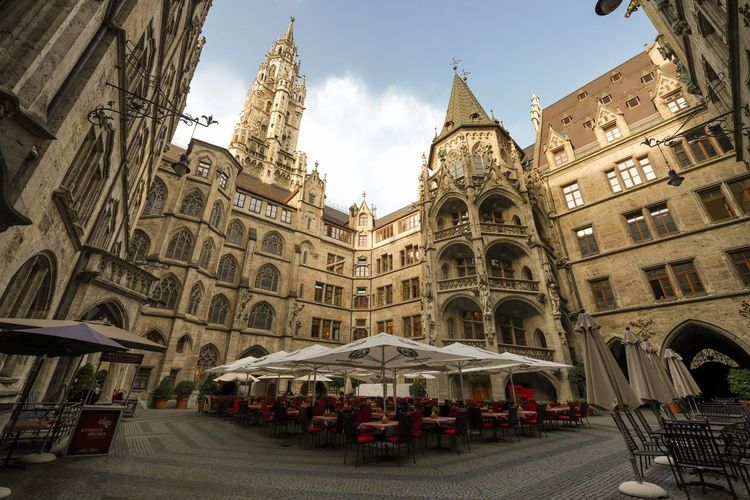
It is hard to start a weekend in Munich anywhere other than here: Marienplatz has been the stage for the city's great events for eight centuries, from royal coronations to Bayern matches celebrated by tens of thousands of fans. The square is flanked by two town halls of different ages and styles, which often confuses hurried visitors.
The Neues Rathaus (New Town Hall), with its neo-Gothic facade blackened by a century of industrial soot, houses the famous Glockenspiel: 43 bells and 32 figurines perform an animated scene every day at 11am, noon, and sometimes 5pm, re-enacting a medieval tournament and a coopers' dance. Allow about 10 minutes for the show, and arrive 5 minutes early if you want to watch without standing on tiptoe. On the opposite side of the square, the Altes Rathaus (Old Town Hall), more discreet with its pale pink tower, was rebuilt after a 19th-century fire and again after 1945. You can also take the elevator to the top of the Neues Rathaus tower for a first panoramic view of the Altstadt, less well-known than that of the neighboring Peterskirche.
Two minutes away on foot, three religious buildings sum up the city's architectural tendencies. The Frauenkirche, the Cathedral of Our Lady with its twin towers topped by onion-shaped domes, is visible from almost every high point in Munich: a municipal rule actually forbids any building in the center from exceeding its 99 meters. The Peterskirche, the city's oldest parish church, can be climbed (299 steps, no elevator) for a panorama that takes in Marienplatz and, on clear days, the Alps on the horizon. As for the Asamkirche, it surprises with its narrowness: a slender facade squeezed between two buildings conceals an interior saturated with baroque gilding, frescoes, and marble, designed by the Asam brothers for their own use before being opened to the public.
Heading north from Marienplatz, Odeonsplatz opens onto a more aristocratic vista: the Theatinerkirche with its saffron-yellow towers, then the Feldherrnhalle (Residenzstraße 1, 80333 Munich, rated 4.5/5 on Google with 1,340 reviews), a loggia inspired by the Florentine Loggia dei Lanzi, adorned with two stone lions that Munichners stroke as they pass for good luck. The contrast with the Gothic density of Marienplatz is immediate; the light and proportions change within just a few hundred meters.
If you prefer to be guided, this Marienplatz–Odeonsplatz triangle is precisely where the Ryo audio guide 'The Secret Capital' begins: 21 audio tracks and 3 hours of walking over 7.4 km, covering the history of the Glockenspiel and the story behind the construction of the Frauenkirche. A great way to listen to the history of the carillon without your nose buried in a paper guidebook.
The Viktualienmarkt and Bavarian Gastronomy
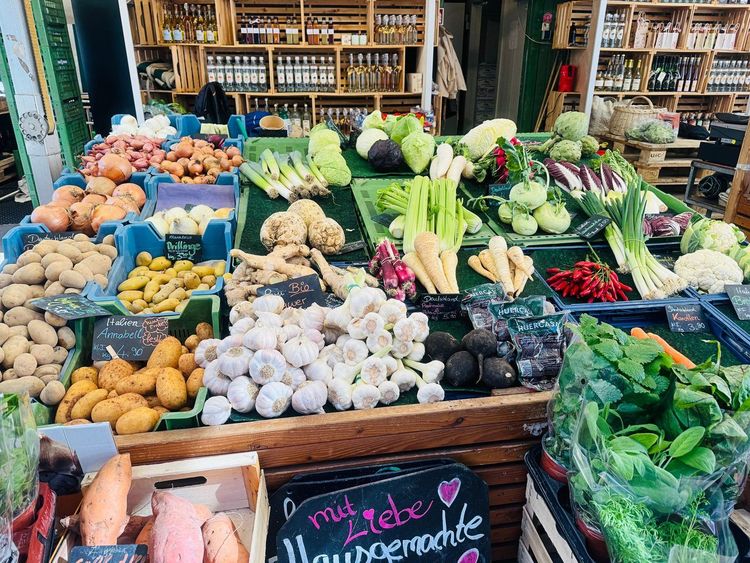
The Viktualienmarkt (Viktualienmarkt, 80331 Munich, rated 4.6/5 on Google with 63,933 reviews) has established itself over two centuries as the belly of Munich: more than 140 permanent stalls sell cheeses, charcuterie, flowers, and exotic fruits on a square that Munichners cross at noon and in the evening. Built in 1807 after the city ran out of space on Marienplatz, the market retains a traditional Maypole (Maibaum) painted with the colors and emblems of local guilds.
Around the stalls, several beer gardens allow you to sit down with a mug without having to order a drink elsewhere: this is a Bavarian rule — you can always bring your own picnic as long as you buy your beer on site. For a more institutional atmosphere, head to the Hofbräuhaus, the city's most famous brewery, founded in 1589 as a royal brewery before opening its doors to the public in 1828. Its vaulted hall can accommodate more than 1,000 people around one-liter steins (the Maß) and a Bavarian orchestra in traditional costume.
For savory and sweet options, two addresses consistently come up in local recommendations: an artisan bakery tucked behind the Viktualienmarkt, known for its warm morning Brezn, and the restaurant Gans Woanders, where traditional Bavarian cuisine (Schweinshaxe, Knödel) is reinvented without losing its identity. You will also find, on the market itself, stalls selling individual items to assemble a nomadic lunch: smoked ham, local goat's cheese, and rye bread.
One stop on the Ryo audio guide pauses right in front of the Viktualienmarkt Maypole to tell the story of the market and discreetly point out the best addresses nearby, complementing the Ryo top 10 culinary specialties of Munich published separately.
The Englischer Garten: Nature and Urban Surfing
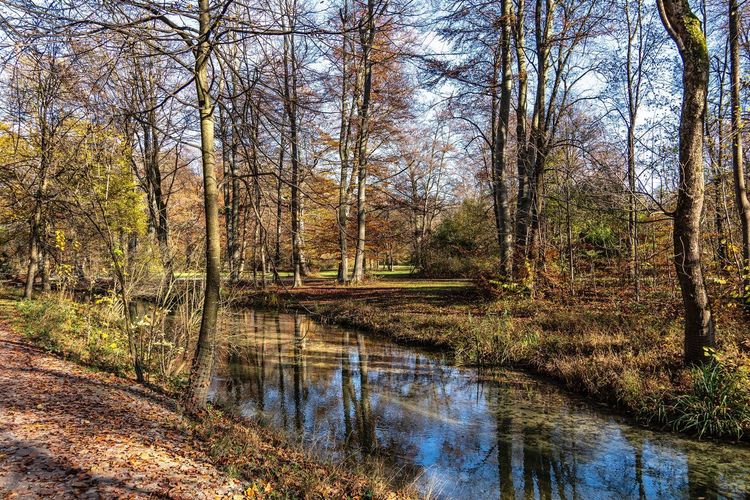
At 375 hectares, the Englischer Garten surpasses Central Park in size and remains, despite its name, a purely 18th-century creation inspired by English landscape gardens rather than a British relic. Munichners gather here summer and winter alike, on foot, by bike, or simply lying in the grass between classes.
The park's most shared image is that of the Eisbachwelle: a standing wave created by the flow of the Eisbach, where surfers take turns year-round — in full wetsuits in winter — in front of a crowd of onlookers leaning over the bridge parapet. Born from a hydraulic installation never designed for surfing, the wave nevertheless disappeared in October 2025 after the stream's annual cleaning, before becoming surfable again in spring 2026: check its status before making the trip, as its future remains a matter of debate between the city and the surfing community.
A little further north, the Monopteros, a small circular temple built on an artificial mound, serves as an informal viewpoint over the Munich skyline, Frauenkirche included. Much busier, the Chinesischer Turm (Englischer Garten 3, 80538 Munich, rated 4.5/5 on Google with 2,056 reviews) hosts one of the city's largest beer gardens around a 25-meter-high wooden pagoda, rebuilt to its original design after the war: here you can nibble on a grilled Wurst while listening to a traditional orchestra playing from the tower's platform.
As soon as the first fine days arrive, the park also transforms into an improvised beach: sunbathing by the streams, sometimes nude according to a well-established local tolerance in designated areas, and a refreshing swim in the calmer stretches of the Eisbach or the nearby Isar. You can also simply settle in the grass with a picnic bought at the Viktualienmarkt — the most common habit among locals. For a more contemplative moment, the Japanisches Haus Kanshoan, a teahouse gifted to the city during the 1972 Olympic Games, offers a traditional Japanese tea ceremony on some weekends, by reservation.
A sub-route of the Ryo Munich audio guide winds through the Englischer Garten across several commented stops, all the way to the Eisbachwelle surfers' spot: a great way to understand while walking why this park means so much to the city's identity.
The Olympiapark and the BMW Museum
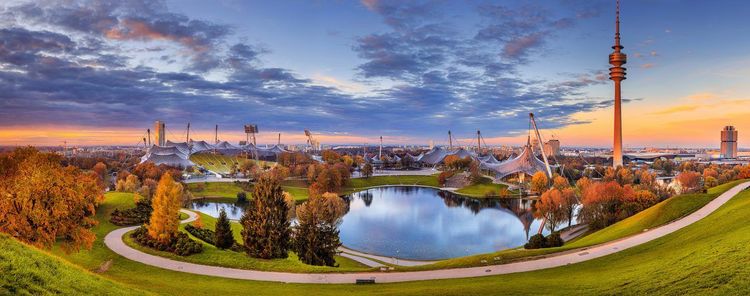
Built for the 1972 Olympic Games, the Olympiapark remains one of Europe's most daring sports architecture complexes: its tensile fabric roofs, designed by Frei Otto, evoke Alpine peaks suspended above the stadium, swimming pool, and Olympiahalle. The park lived through the tragedy of the September 1972 hostage crisis and remains today a place of remembrance as much as a leisure space.
For a bird's-eye view, the Olympiaturm (Spiridon-Louis-Ring 7, 80809 Munich, rated 4.7/5 on Google with 10,378 reviews) rises to 291 meters with an observation platform at 190 meters: on clear days, the view stretches to the Alps, more than 80 km to the south. If you plan to go up on a weekend, book your time slot online to avoid queuing for the elevator, which nonetheless reaches the top in under 30 seconds.
Just below the park, the BMW Museum, recognizable by its silver bowl-shaped building, traces a century of automotive history and design through motorcycles, racing cars, and concept cars. It complements the highly photogenic BMW Welt directly opposite, where new models are delivered to customers in a futuristic showroom open free of charge to the public.
Behind the stadium, the Olympic Village (Olydorf) was converted into a residential neighborhood after the Games: its terraced buildings, hanging gardens, and experimental urban layout remain a case study examined by urban planners worldwide, while most visitors only give it a quick glance on the fringes of the park. The Ryo audio guide includes a dedicated stop at the Olympiapark, where you can hear the story of the 1972 Games and the conversion of the Olympic Village — a chapter often overlooked by conventional guides.
The Deutsches Museum: World Temple of Science and Technology
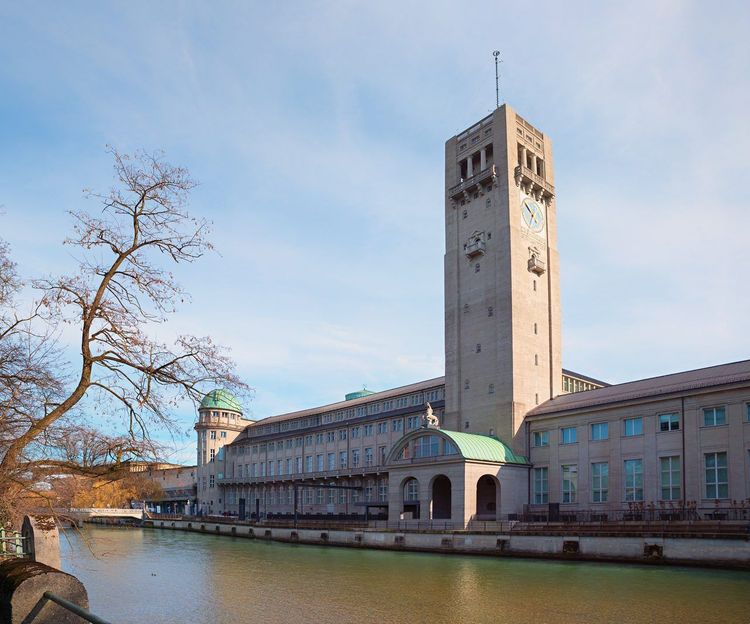
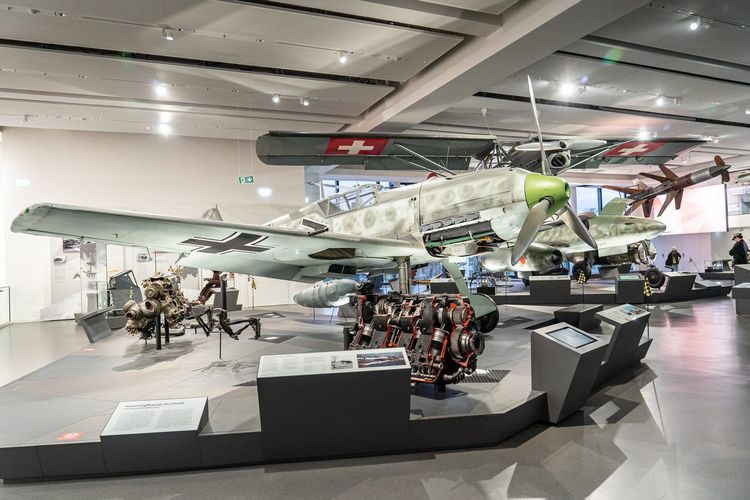
Do you have a weakness for machines? The Deutsches Museum (Museumsinsel 1, 80538 Munich, rated 4.5/5 on Google with 44,032 reviews) is the world's largest science and technology museum by exhibition space: more than 28,000 objects spread across an island in the Isar river, the Museumsinsel, not to be confused with the Kunstareal art museum district located further north.
You will encounter an authentic U1 submarine, planes suspended from the ceiling, a reconstructed coal mine visited underground, and Karl Benz's very first automobile. Allow at least half a day if you want to go beyond a superficial overview: the museum is enormous, and a two-hour visit realistically covers only 2 or 3 of the 40 thematic departments.
For families with children, the interactive workshops (static electricity, balance bridge, planetarium) remain the most memorable part of the visit. Full-price admission is around €15, with reduced rates for students and families; book online during busy weekend hours, particularly crowded between 11am and 2pm. The museum also has two annexes worth visiting if time allows: the Verkehrszentrum, dedicated to the history of transport, and the Flugwerft Schleissheim, devoted to aviation, both accessible with the same combined ticket valid for three days.
Kunstareal and Königsplatz: The Art Museum District
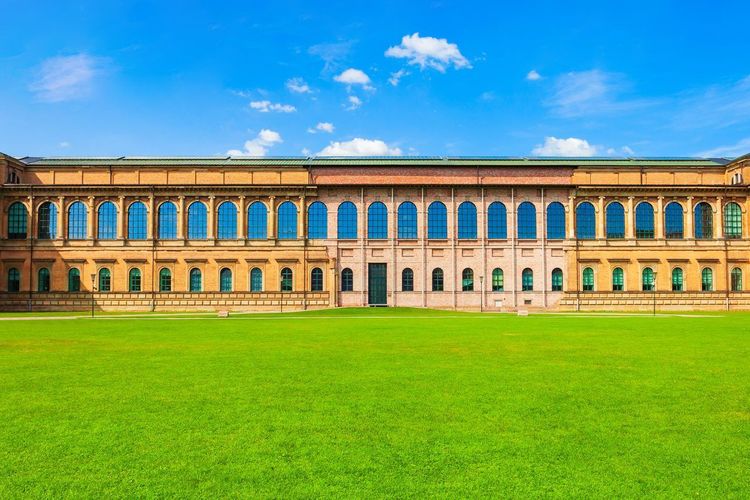
The Kunstareal brings together on a few streets of Maxvorstadt one of the highest concentrations of art museums in Europe, often compared to Berlin's Museumsinsel, though it remains less well-known to French visitors. Three pinakotheks mirror each other architecturally: the Alte Pinakothek, dedicated to Old Masters (Dürer, Rubens, Rembrandt), the Neue Pinakothek, focused on the 19th century and currently closed for renovation until a date yet to be confirmed, and the Pinakothek der Moderne, which brings together modern art, design, architecture, and graphic arts under a single circular roof.
A few steps away, the Lenbachhaus (Villa Lenbach), the former home of painter Franz von Lenbach converted into a museum, holds the world's most important collection from the Der Blaue Reiter movement (Kandinsky, Marc, Münter), founded in Munich in 1911.
The Königsplatz (Königsplatz, 80333 Munich), a neoclassical square commissioned by King Ludwig I to evoke the Acropolis of Athens, rounds out the picture with the Glyptothek (Königsplatz 3, 80333 Munich, rated 4.7/5 on Google with 1,986 reviews), a museum dedicated to ancient Greek and Roman sculpture, and its propylaea that give the ensemble the feel of a Greek temple lost in Bavaria. The square also has a darker history: it served as a Nazi party rally ground in the 1930s, a past that explanatory panels on site acknowledge today.
The Maxvorstadt neighborhood that wraps around all of this deserves more time than just the museums: student cafés, independent bookshops, and 19th-century bourgeois buildings make it one of the most pleasant areas to explore on foot. Take time to wander here — a detour you will miss if you rush straight from one museum to the next.
Good news if you are following the Ryo audio guide for Munich: it makes a loop through Königsplatz and the museum district, with the story of the Pinakothek's founding and the rivalry between the architects who shaped this corner of the city.
Nymphenburg Palace and Its Botanical Garden
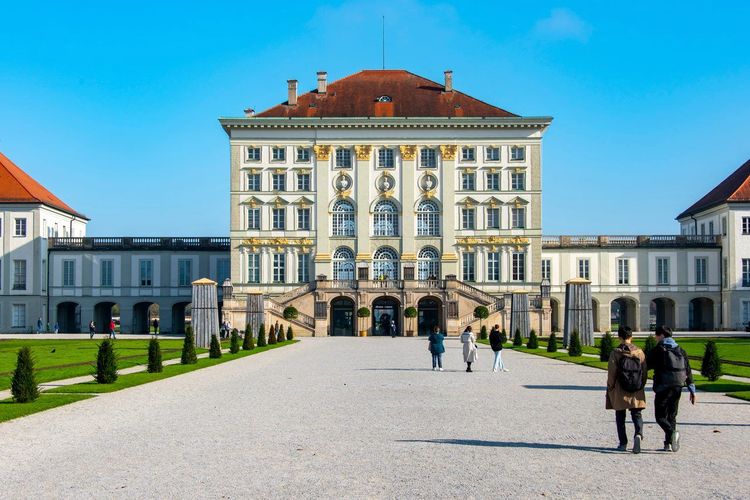
To the west of the center, Nymphenburg Palace grew over three centuries: begun in 1664 as a princely birth gift, it was expanded generation after generation to become one of Europe's largest royal residences, with a facade stretching more than 700 meters. The Gallery of Beauties, a collection of portraits of women considered beautiful at the court of King Ludwig I, remains the most visited room inside.
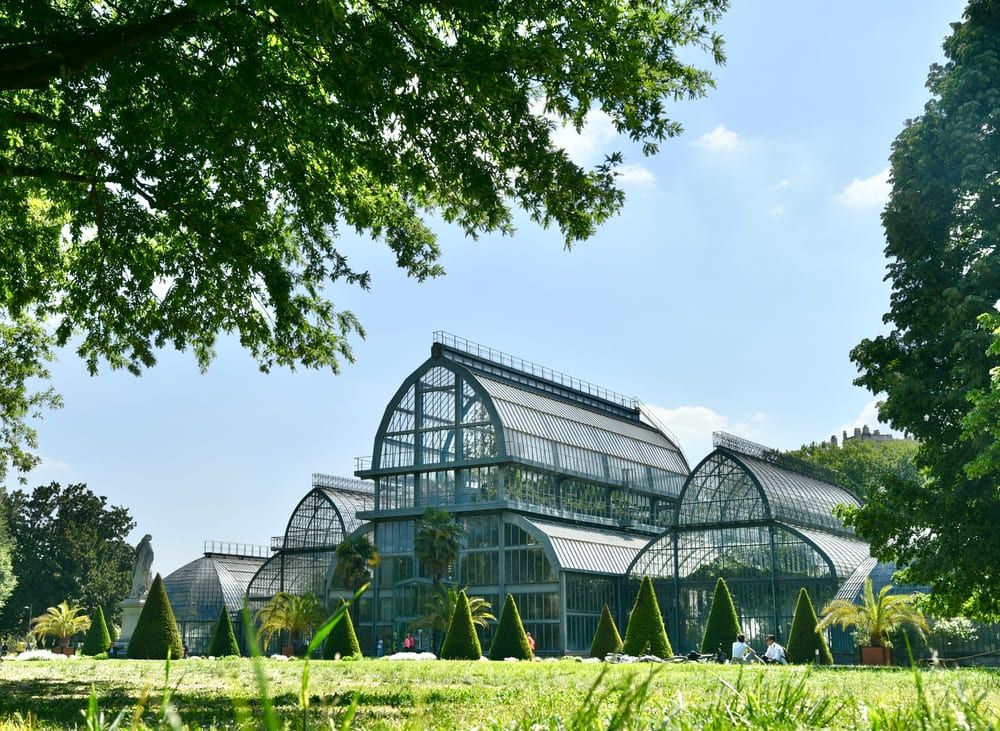
The palace opens directly onto its botanical garden, one of Germany's most highly regarded for its collections of rare plants spread across tropical greenhouses, a reconstructed alpine garden, and ponds where wild ducks roam freely. Allow a good hour to walk the most interesting paths, more if you also visit the greenhouses.
If time does not allow a trip to Nymphenburg, an alternative exists right in the Altstadt: the Residenz (the former Wittelsbach royal residence in the city center) and its adjoining garden, the Hofgarten, offer a comparable glimpse of Bavarian grandeur without leaving the historic center. The Residenzmuseum opens nearly 130 rooms to the public, including the royal treasury and the Antiquarium, one of the largest Renaissance halls north of the Alps.
The palace can be reached by tram from the center (line 17, about 20 minutes from Marienplatz), making it an easy half-day excursion to fit into a two-day weekend. Consider the combined ticket for the palace and the park pavilions (Amalienburg, Pagodenburg) if you have time: these rococo pleasure pavilions, scattered throughout the English-style park, rank among the finest in Bavaria and are often overlooked by visitors in a hurry. The full-price ticket for the palace alone costs around ten euros, compared to approximately €15 to €20 for the combined pass covering the entire estate.
On the audio side, the Ryo Munich guide tells the story of the Wittelsbachs by connecting the two residences — the city-center one and Nymphenburg — to show how the dynasty shaped Munich's urban landscape over several centuries.
Alternative Munich: Street Art and Offbeat Neighborhoods
Far from the baroque facades, Munich also nurtures a more contemporary urban scene, particularly in the Glockenbachviertel, a former working-class district that has become one of the city's LGBTQ+ and trendy hubs: independent boutiques, cocktail bars, and specialty cafés have moved into former workshops.
Munich's street art is concentrated mainly around the Ostbahnhof station and along certain stretches of the Isar, where large-scale murals change regularly according to the artist collectives invited by the city. Nothing like the usual tourist circuits: these murals often tell the industrial history of the neighborhood or address contemporary social issues, without explanatory labels, which encourages you to stop and figure out the meaning yourself.
For antique lovers, the Glockenbach neighborhood also regularly hosts local vintage markets — another way to encounter everyday Munich rather than the postcard version. Allow half a day to explore this alternative Munich on foot, preferably in the late afternoon when the terraces fill up and the neighborhood hits its stride.
Hidden Gems: the Alte Utting, the Alpines Museum, and the Bavaria Filmstadt Studios
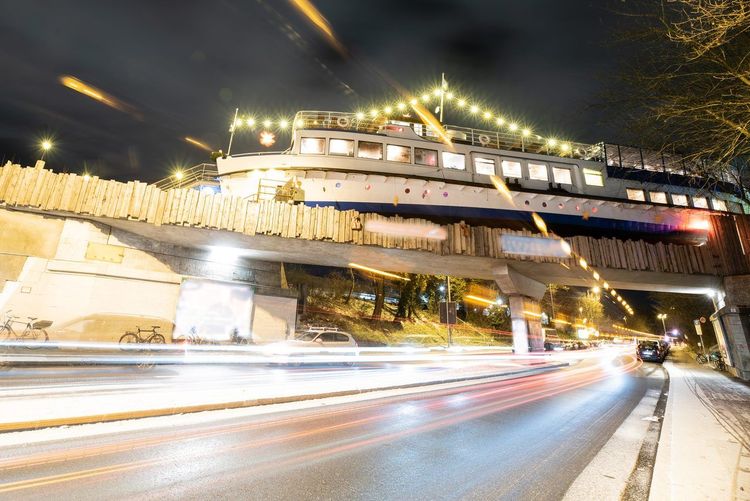
Four addresses rarely covered by mainstream guides offer a way to step off the beaten path of a Munich weekend. The Alte Utting is without doubt the most unusual: a former excursion boat from the Ammersee, in service from 1950 to 2016, transported by road and then hoisted onto a former railway bridge in Sendling, converted into an open-air bar-restaurant where visitors come to sip a drink at sunset on the upper deck.
The Alpines Museum, housed on a small island in the Isar (the Praterinsel), traces two centuries of Bavarian mountaineering history through maps, period equipment, and expedition accounts, with a bonus terrace offering one of the most unobstructed views of the city.
At the Bavaria Filmstadt studios, on the southern outskirts of the city, you can visit the original sets of famous German productions — from the Das Boot submarine to the dragon Falkor from The NeverEnding Story and the classroom from Fack ju Göhte — as well as family-oriented attractions such as flight simulators and special effects.
Football fans will want to add the Allianz Arena (Werner-Heisenberg-Allee 25, 80939 Munich, rated 4.6/5 on Google with 89,337 reviews), Bayern Munich's stadium, recognizable by its inflatable facade that changes color depending on the event: behind-the-scenes guided tours and the club museum are available even on non-match days. If time is tight, choose just one of these four addresses rather than trying to squeeze them all into the same afternoon, alongside the Ryo top 7 things to do in Munich.
Excursion into the Bavarian Alps: Neuschwanstein Castle
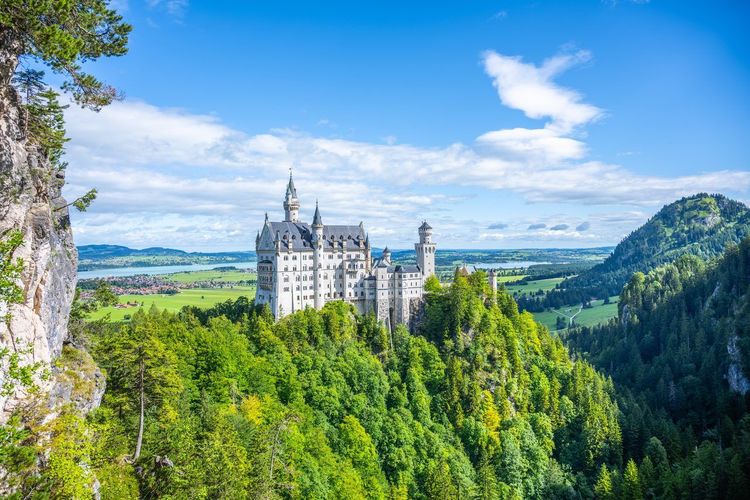
Just under two hours by road or train south of Munich, Neuschwanstein Castle justifies a full day away from the city on its own. Commissioned by King Ludwig II of Bavaria in 1869 as a personal retreat inspired by Wagnerian legends, it was never completed in his lifetime and served as a residence for only a few months before the king's mysterious death in 1886. Walt Disney is said to have drawn inspiration from it for Sleeping Beauty's castle, a connection local guides are fond of mentioning even though it has never been officially confirmed by Disney's archives.
To plan the day, there are two main options: the regional train from the central station (Hauptbahnhof) to Füssen, about 2 hours, then a local bus or a 40-minute walk to the village of Hohenschwangau at the foot of the castle; or an organized bus excursion that often includes the neighboring Hohenschwangau castle, Ludwig II's childhood home, in the same ticket. Book your entrance tickets online several days in advance during high season (June to September): time slots fill up quickly and the wait on site can exceed two hours without a reservation.
Allow a good half day at the site itself, between the ascent (on foot, by horse-drawn carriage, or by minibus), the approximately 30-minute interior visit in a mandatory guided group, and the stop at Marienbrücke, a bridge that spans a gorge at 92 meters in height for the castle's most photographed view. If you leave early in the morning from Munich, the round trip in a day is entirely doable, provided you accept a packed schedule.
The castle lies at the heart of the Bavarian Alps, in a region of lakes and peaks that contrasts sharply with Munich's urban flatness: the Alpsee and Forggensee lakes, just a few minutes' walk from the site, are worth a stop if you have a little time before catching the train back. In winter, snow slows the ascent but transforms the setting into a picture postcard; wear appropriate footwear, as the cobbled path can become slippery.
More broadly, this immediate proximity to the Alps is one of the first advantages Munich residents mention when asked what sets their city apart from other German capitals: in under two hours, you can go from urban beer gardens to Alpine hiking trails — a shift that few major European cities allow as effortlessly.
Sites of Memory: Munich and World War II
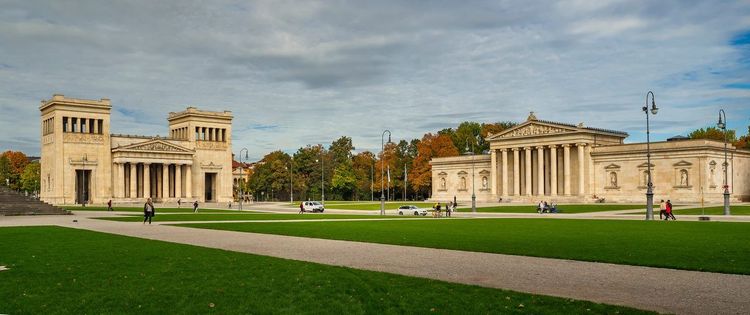
Munich played a central role in the rise of Nazism, a past the city acknowledges today through several memorial sites handled with sobriety rather than spectacle. On Königsplatz, already mentioned above, explanatory panels detail the square's use as a Nazi party rally ground in the 1930s, just a few meters from the Kunstareal art museums.
For those with an extra day, the Dachau concentration camp, about 20 minutes by train from the center followed by a short bus ride, can be visited as a memorial today managed with the support of survivor associations and their descendants.
This is not a required visit for a simple weekend, but it is worth knowing about for those extending their stay by a day. Allow a full half-day on site: the density of information and the weight of the place do not lend themselves to a rushed visit. Admission is free; only the audio guide (around €4) is paid and is strongly recommended to follow the site's chronological layout.
Experiencing the Oktoberfest and Bavarian Traditions
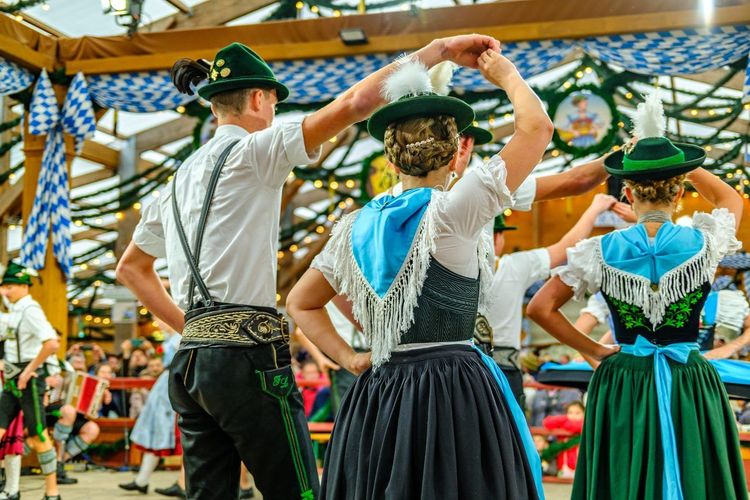
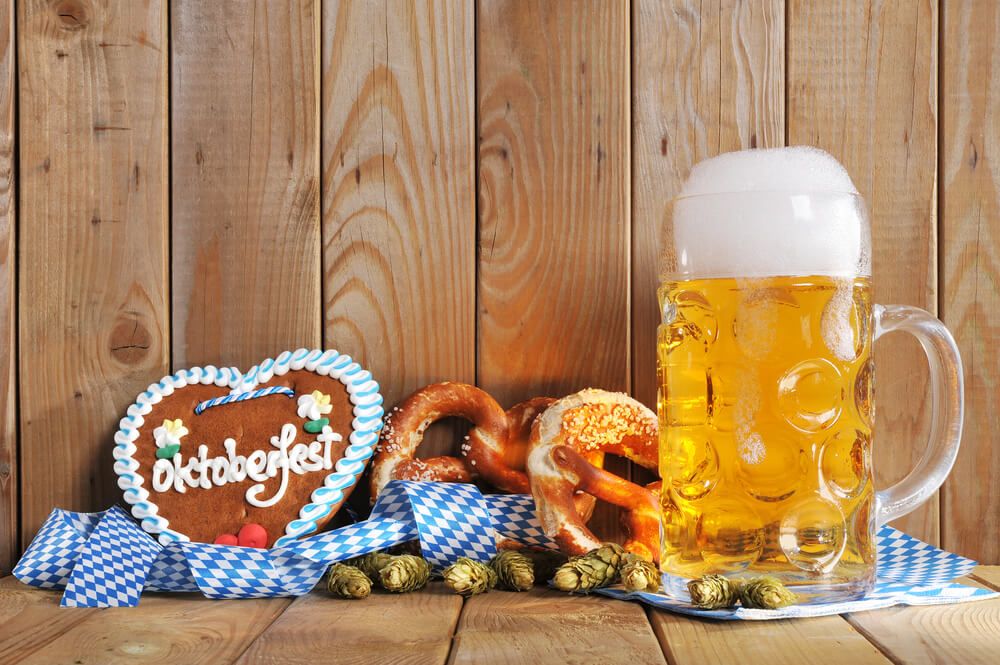
If your weekend falls in late September or early October, it is hard to ignore the Oktoberfest: the world's largest beer festival draws more than 6 million visitors each year to the Theresienwiese fairground, with Ferris wheels, roller coasters, and brewery tents each capable of holding several thousand people. The festival, born in 1810 to celebrate a royal wedding, lasts about 16 days and generally ends on the first Sunday in October.
Booking a table in a tent completely changes the experience: without a reservation, access to the main tents (Hofbräu-Festzelt, Schottenhamel) becomes unpredictable from early afternoon on weekends. If you dislike crowds, avoid the main tents on Saturday afternoons and opt instead for a morning arrival. The price of a Maß rises every year, around €15 to €16 in 2026, and Tracht (Dirndl or Lederhosen) is widely worn even by foreign visitors who embrace the spirit.
If you cannot be there during the 16 days of the festival, several historic breweries in the center (Hofbräuhaus, Augustiner) recreate a comparable atmosphere year-round, with the same one-liter steins and the same musical folklore, without the crowds or the inflated prices of the Theresienwiese. Locals themselves appreciate the Frühlingsfest, a springtime little sister held in April on the same Theresienwiese — more relaxed than the main autumn fair, considered too touristy — a lead worth following if you are looking for a more local atmosphere.
Whatever period you choose, to prepare a visit during or outside the Oktoberfest, the Oktoberfest in Munich on Ryo and Oktoberfest Munich on Ryo each cover complementary practical angles, from accommodation during the festival to tent itineraries.
When to Go and How to Manage Crowds in Munich
Tourist crowds vary greatly by season in Munich, and this is a factor worth anticipating before setting the dates for a weekend. Spring (April–May) and early autumn, outside the Oktoberfest period, remain the most favorable windows: pleasant temperatures, manageable queues at the Frauenkirche or the Deutsches Museum, and accommodation prices still reasonable.
Summer (July–August) remains the busiest high season, driven by international tourists and group excursions to Neuschwanstein, while late September and all of October see room prices rise sharply because of the Oktoberfest, even in neighborhoods far from the Theresienwiese. Winter, outside the December Christmas markets, offers the greatest calm, with hotel rates sometimes halved. If you are still weighing dates, the best compromise is May–June or late September just before the Oktoberfest begins.
On the recurring question of how many days you need: two full days are enough to cover the Altstadt, the Viktualienmarkt, and the Englischer Garten without rushing; allow three days if you want to add the excursion to Neuschwanstein or a half-day at the Deutsches Museum, and four days if Dachau and the full Kunstareal are also on the program. In any case, visiting the most popular sites early in the morning before 9:30am or in the late afternoon after 5pm allows you to avoid the bulk of tour groups, whatever season you choose.
How to Get to Munich and Get Around
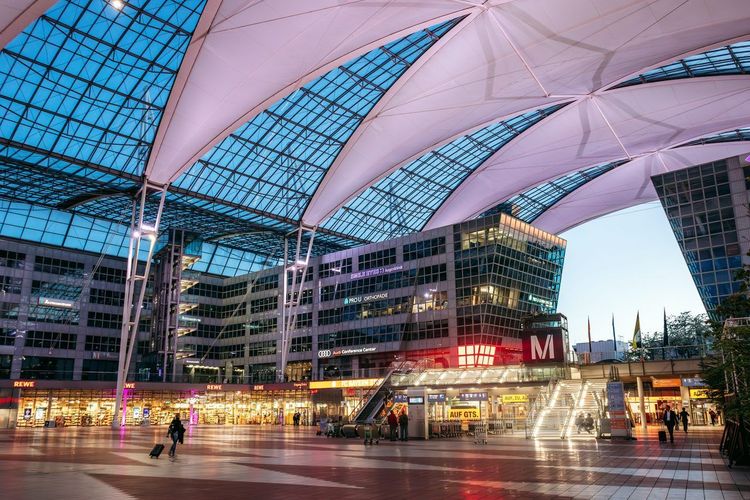
Munich is easy to reach from France: direct flights from Paris, Lyon, Marseille, or Nice in just under two hours to Munich International Airport, Franz Josef Strauss (MUC), located about 40 minutes from the city center by S-Bahn train (lines S1 and S8, a train every 10 to 20 minutes). By train, a direct TGV links Paris-Est to Munich via Strasbourg and Stuttgart in just under 6 hours — a comfortable option if you are looking to reduce air travel.
Once there, the public transport network efficiently covers the entire metropolitan area: the U-Bahn (metro) for quick journeys between neighborhoods, the S-Bahn (suburban rail) for the airport and excursions such as Dachau, and a dense network of trams serving destinations including Nymphenburg. A day ticket (around ten euros for the central M zone) is better value than single tickets from the second journey onward.
The historic center, on the other hand, is almost entirely walkable: from Marienplatz to the Viktualienmarkt is barely five minutes, and the Odeonsplatz–Kunstareal area is reachable in 20 minutes of easy walking. Bike-sharing schemes usefully complement this setup for reaching the Englischer Garten or the Olympiapark without depending on bus timetables.
For the excursion to Neuschwanstein, the regional train journey can be done with a group regional day ticket, valid for several travelers and significantly cheaper than individual standard tickets on this route. Leave early if you are traveling on a high-season weekend: regional trains without seat reservations fill up quickly. Finally, bear in mind that the majority of attractions in the center are clustered within a one-kilometer radius of Marienplatz: a weekend in Munich therefore requires very little motorized travel once you have arrived.
Where to Stay in Munich: Recommended Neighborhoods and Hotels
Three neighborhoods concentrate most of the best accommodation options for a weekend in Munich. The Altstadt, the historic center, puts everything within walking distance: Marienplatz, Viktualienmarkt, and Frauenkirche just minutes away, at the cost of higher hotel rates and sometimes noisy Friday and Saturday evenings.
Maxvorstadt, around the Kunstareal, offers an attractive balance between residential calm and proximity to the center: allow 15 to 20 minutes on foot or two metro stops to Marienplatz, generally at softer rates than the Altstadt, with a more student-oriented setting full of cafés and bookshops.
The Glockenbachviertel, already mentioned for its street art and alternative atmosphere, appeals to travelers looking for a more local feel, with charming small hotels and converted residential buildings, about 10 minutes' walk from the Viktualienmarkt.
For tighter budgets, slightly more outlying neighborhoods such as Schwabing to the north or Sendling to the south often allow savings of 20 to 30% on room rates while staying less than 15 minutes by U-Bahn from Marienplatz. Youth hostels and mid-range hotels are concentrated mainly near the central station, practical for train arrivals but a less pleasant area in the evening than the Altstadt or Maxvorstadt.
Whatever neighborhood you choose, book early if your stay falls during the Oktoberfest: prices can triple and availability dries up as early as the preceding spring. In all cases, it is better to prioritize accommodation close to a U-Bahn or S-Bahn station rather than immediate proximity to a specific attraction, since distances between neighborhoods remain short in Munich.
FAQ
Is Munich worth it for a weekend trip?
Absolutely: between the pedestrian Altstadt, the Viktualienmarkt, the Englischer Garten, and the immediate proximity of the Bavarian Alps, Munich packs into two days a diversity of heritage, urban nature, and gastronomy that few comparable European cities offer as effortlessly.
How many days do you need to visit Munich?
Two full days are enough for the essentials of the historic center and the Englischer Garten. Allow three days if you add the excursion to Neuschwanstein castle, and four if the full Deutsches Museum and Dachau are also on the agenda.
How do you get to Munich from France?
By plane, allow just under two hours of direct flight from the main French cities to MUC airport, then about 40 minutes by S-Bahn to the center. By train, the direct TGV from Paris-Est takes just under 6 hours.
Where should you stay in Munich for a weekend?
The Altstadt puts everything within walking distance, Maxvorstadt offers a good balance of quiet and price, and the Glockenbachviertel appeals for its more local atmosphere. Book early if your stay coincides with the Oktoberfest, a period when rates rise sharply.
What is the best time to visit Munich?
Spring and early autumn, outside of Oktoberfest, offer the best balance between pleasant weather and manageable crowds. Summer remains the busiest high season, while winter, outside of the Christmas markets, allows you to visit in near-total peace and quiet.
What can you do in Munich for free?
Strolling through the Englischer Garten, watching the surfers at the Eisbachwelle (when the wave is running), admiring the facade of the Frauenkirche, wandering around Marienplatz during the Glockenspiel, or exploring the street art around the Ostbahnhof area cost nothing and can easily fill half a day.
Is Munich suitable for a family weekend?
Yes: the Deutsches Museum with its interactive workshops, the Englischer Garten for picnicking and swimming, the BMW Museum, and the Olympiapark appeal to children and adults alike, not to mention the excursion to Neuschwanstein, which feels like a fairy tale come to life.
A weekend in Munich ultimately takes shape around contrasts that complement each other well: the baroque order of the Altstadt set against the organized chaos of the Eisbachwelle surfers, the grandeur of royal residences set against an improvised bar on an old cruise boat. Two or three days are enough to experience all of this without rushing, as long as you accept that you cannot see everything.
To connect these places without losing time, our Ryo audio guide for Munich remains the simplest way to follow a logical thread between Marienplatz, Viktualienmarkt, and Englischer Garten, at your own pace and without relying on a human guide. A great way to finish planning this Bavarian weekend before you even set foot at the airport.