© Shutterstock
 Votre guide Ryo
Things to Do in Pisa in 2026: 27 Experiences to Explore the City
What to do in Pisa when the whole city seems to boil down, in the popular imagination, to a single photo: the tourist "holding up" the tower with their fingertips? Yet this Tuscan city hides a dense historic centre, crossed by the Arno, where the lanes of Borgo Stretto open onto university squares far quieter than the packed crowds of Piazza dei Miracoli. Between two snapshots, you discover a lively student city by night, a botanical garden nearly five centuries old, and easy day trips to Lucca or the Cinque Terre.
This guide details 27 experiences, from the top of the tower tilted at 3.97 degrees to the preparatory frescoes revealed by a 1944 fire, via a Keith Haring mural hidden on a church wall and a former tram line converted into a cycle path. You will also find everything you need to plan a one-day or three-day stay, enjoy Pisa for free, and extend your adventure into the surrounding area, between the Tuscan hills and the Ligurian coast. The Ryo app offers an audio-guided tour to locate each stop without spending your trip staring at a map.
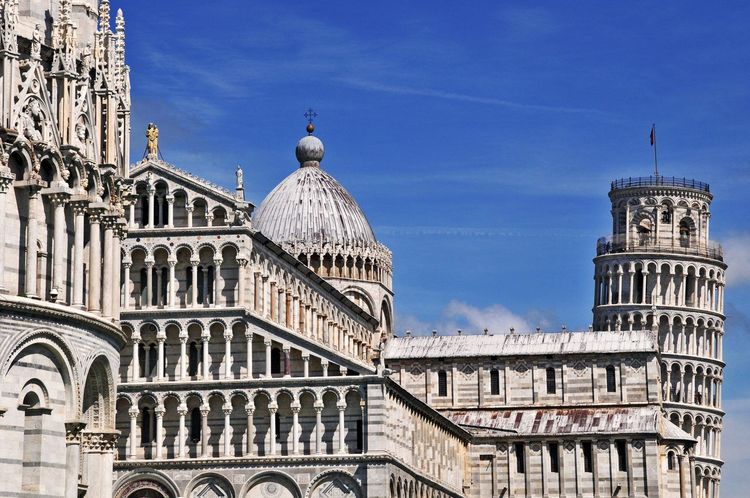
1. The Leaning Tower of Pisa
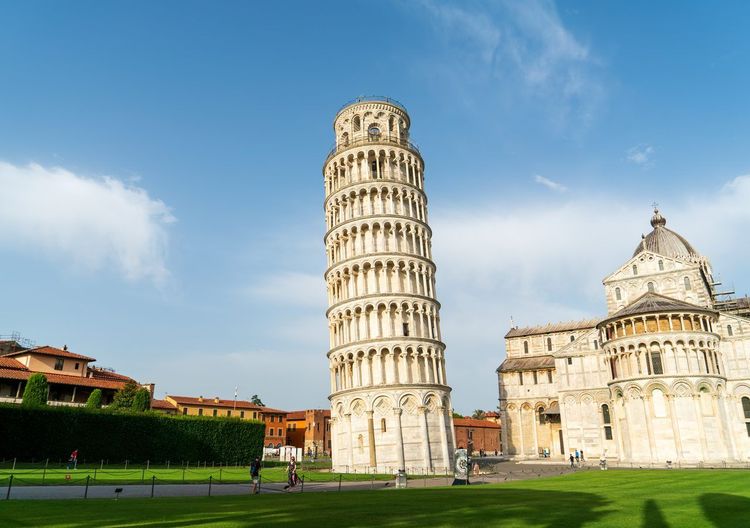
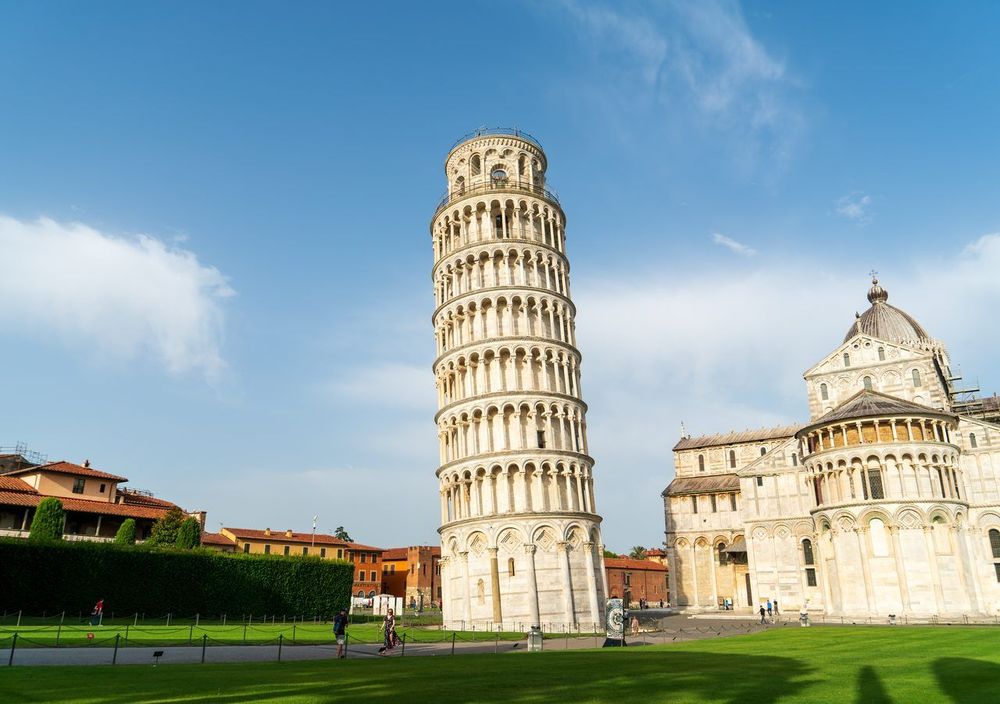
There is no other way to open the list: the Leaning Tower of Pisa single-handedly accounts for most of the city's tourism, and for good reason. Begun in 1173 as the cathedral's bell tower, the structure started to lean as early as the third storey was being built, due to soft, unstable clay subsoil. Two centuries of interrupted construction later, the tower rises to 55.86 metres on its lower side and currently displays a stabilised tilt of around 3.97 degrees, compared to more than 5.5 degrees before the consolidation campaign carried out between 1990 and 2001 under the direction of British engineer John Burland.
Climbing the 294 spiral steps to the top remains the most sought-after experience in the city, to the point that tickets sell out online several days in advance in high season. Access is limited to groups of 40 visitors every 15 to 20 minutes, bags and pushchairs must be left in a free cloakroom, and children under 8 are not permitted to enter. Once at the top, the view sweeps across the entire Piazza dei Miracoli, with the Monti Pisani hills in the background.
You will avoid the crowds by booking the very first slot of the morning, usually around 9 a.m. Organised groups arrive after 10:30 a.m. and fill the queues until late afternoon. Another detail few visitors notice: the seven bells at the top, known as the Campanone, each correspond to a note of the musical scale, a function that has remained symbolic since their actual use was suspended in the 19th century for fear of additional vibrations.
If the full climb does not appeal to you, the classic "propping up" photograph is still a ritual worth experiencing, provided you position yourself on the north-west lawn, the only angle that correctly recreates the optical illusion. Expect to pay around 20 euros for a solo climbing ticket, and consider a combined ticket if you also want to visit the cathedral and baptistery on the same day.
2. Piazza dei Miracoli
Officially known as Piazza del Duomo, Piazza dei Miracoli (Piazza del Duomo, 56126 Pisa, rated 4.7/5 on Google from 140,969 reviews) owes its poetic nickname to writer Gabriele D'Annunzio, who coined it in his 1910 novel. Listed as a UNESCO World Heritage Site since 1987, the esplanade brings together four major monuments on a single lawn: the cathedral, the baptistery, the Camposanto and the Leaning Tower, a rare architectural grouping for a medieval religious site.
The vast green lawn surrounding the buildings contrasts with the white and grey marble of the facades, an aesthetic choice made as early as the 11th century to enhance the whiteness of the stones imported from Carrara. The souvenir stalls set up around the perimeter have been selling the same miniature towers for decades, a tourist folklore almost as old as the monument itself.
To photograph the square without the tour-bus crowds, arrive before 8:30 a.m. or after 6 p.m., when the low evening light illuminates the marble beautifully. A combined ticket allows you to visit several monuments at a reduced price; you can book it directly on site at the Opera della Primaziale Pisana, the body that has managed the entire complex since the 12th century.
3. Pisa Cathedral (Duomo)
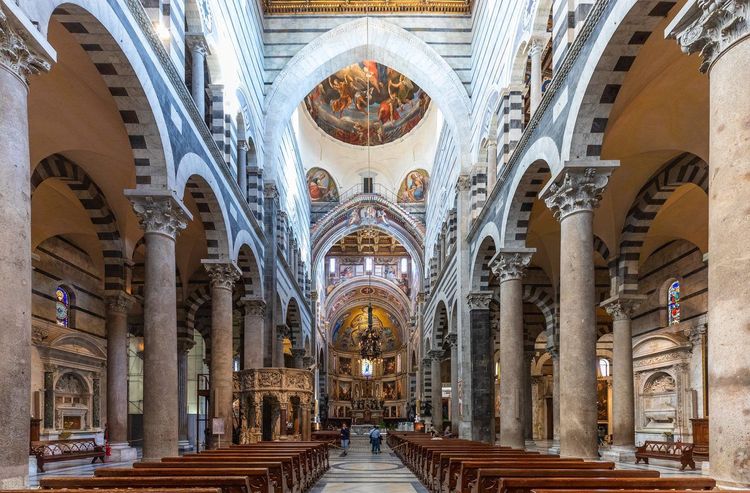
The Cathedral of the Assumption of the Virgin Mary, begun in 1064 using the spoils of a naval victory against the Muslims of Palermo, gave its name to an entire architectural style: Pisan Romanesque, recognisable by its blind arcades and bands of bicoloured marble. The main facade, added a century later, multiplies superimposed galleries of small columns, a vocabulary subsequently echoed by the neighbouring tower and baptistery.
Inside, the granite columns partly come from the mosque of Palermo, reused as war trophies. Legend has it that Galileo, then a student at the University of Pisa, observed the regular swing of a bronze chandelier hanging in the nave and used it to formulate the basis of his isochronism theory of the pendulum — an anecdote that local guides enjoy recounting even though historians today doubt its accuracy.
The pulpit by Giovanni Pisano, carved between 1302 and 1310, adorns the right side of the nave: its panels depict the life of Christ with a dramatic realism unusual for the period. Entry to the cathedral is free, but requires a timed ticket to be collected at the ticket office, or a coupon included in the combined ticket — it is best to pick it up on arrival, as morning slots go quickly. Look up at the gilded coffered ceiling and the mosaic of Christ in Majesty in the apse, completed in the early 14th century with Cimabue's contribution to the face of Saint John. Allow 30 to 45 minutes for a full visit, avoiding Sunday Mass times if you prefer to move around freely.
4. The Baptistery of Saint John
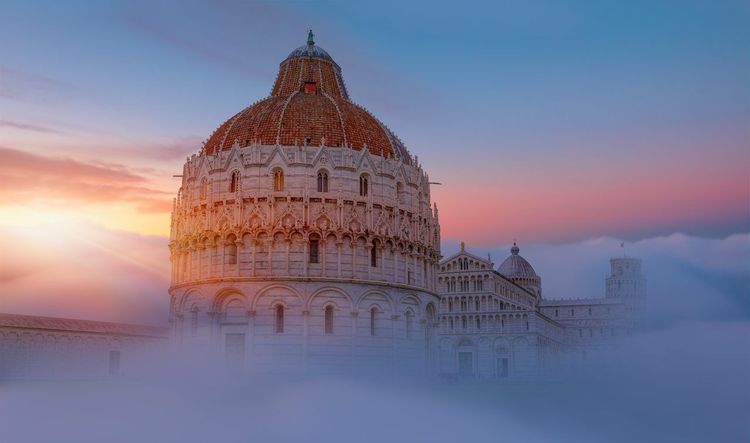
At 54.86 metres tall, the Baptistery of Pisa actually exceeds the height of the Leaning Tower — a fact most visitors are unaware of as they photograph the ensemble from the lawn. Construction began in 1152 and stretched over more than two centuries, which explains the visible mix of Romanesque base and Gothic crown added by Nicola and Giovanni Pisano.
The circular building, the largest baptistery in Italy at 34.13 metres in diameter, conceals spectacular acoustics. Roughly every 30 minutes, a custodian sings two or three notes a cappella to demonstrate the dome's exceptional reverberation — a moment many visitors film without having been warned in advance. Try to time your visit with this demonstration: the sustained notes layer into a suspended chord that seems never to resolve beneath the double dome.
The pulpit by Nicola Pisano, completed in 1260, is considered a landmark of Italian Gothic sculpture: its biblical scenes already anticipate the naturalism of the Renaissance, a full century ahead of its time. At the centre, the octagonal baptismal font, carved in the 13th century, was used for baptism by full immersion, a common practice in the medieval period.
5. The Monumental Camposanto
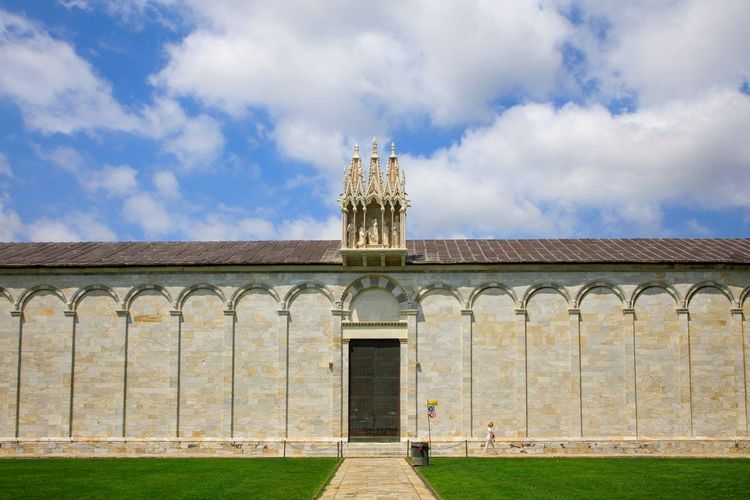
The Camposanto functions as a rectangular cloister-cemetery enclosed on four sides, a unique configuration that sets it apart from ordinary open cemeteries. According to tradition, the earth in the central garden was brought back from the Holy Land by Pisan crusaders in the 13th century, giving the soil supposed sacred properties believed to accelerate the decomposition of bodies.
The galleries once housed a cycle of monumental frescoes, including the celebrated Triumph of Death, before an Allied bombing in 1944 triggered a devastating fire: the lead roof melted onto the paintings, causing severe damage. The restored fragments are now displayed in a dedicated room, alongside a collection of Roman sarcophagi reused during the Middle Ages by the city's noble families.
Before leaving, look along the galleries for the chains of the old port of Pisa: captured by the Genoese after the naval defeat at the Battle of Meloria in 1284, they were dispersed among several rival cities before being returned to the city as a gesture of reconciliation in the 19th century. The visit takes 20 to 30 minutes and often ends in surprise: the tranquillity of the place contrasts sharply with the bustle of the neighbouring lawn.
6. The City Walls of Pisa (Le Mura di Pisa)
Less well known than the square with four monuments they partially surround, Pisa's medieval walls stretch for approximately 3.2 kilometres and rank among the best-preserved in Italy. Built from 1156 onwards, they protected the city for more than seven centuries before losing their defensive function in the 19th century.
Since 2013, a roughly 900-metre section can be walked along the Cammino delle Mura trail, accessible via Porta Nuova. The elevated walk offers an unusual perspective over the tiled rooftops and the tower, seen from an angle that few visitors experience.
You can complete this section in just under an hour. A Ryo audio guide allows you to set each section of the wall in its defensive context, which is useful for understanding why certain gates were walled up and then reopened again over successive sieges.
7. Piazza dei Cavalieri
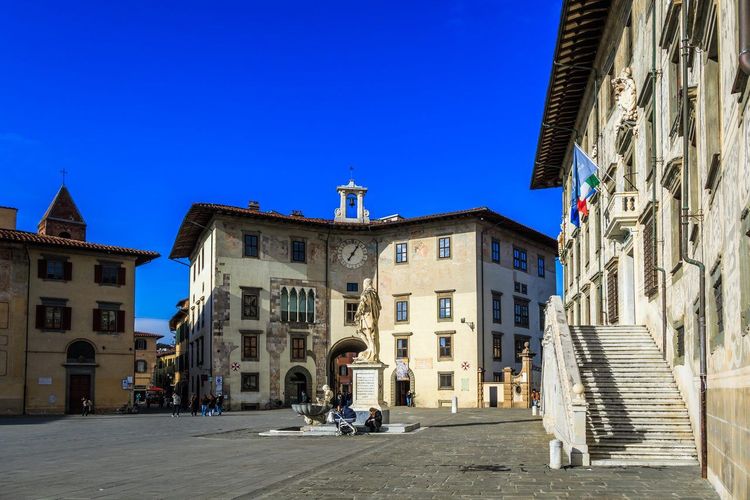
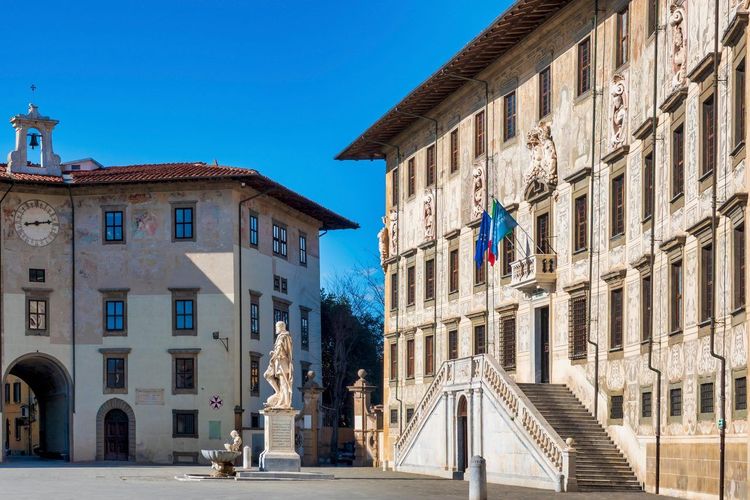
Ten minutes' walk from the tourist lawn, Piazza dei Cavalieri (56126 Pisa, rated 4.6/5 on Google from 12,067 reviews) tells another story of Pisa — one of political and intellectual power. Redesigned in the 16th century by Giorgio Vasari for the military order of the Knights of Saint Stephen, the square is dominated by the Palazzo della Carovana, whose facade covered in trompe-l'œil sgraffito now houses the prestigious Scuola Normale Superiore.
At the centre stands a statue of Cosimo I de' Medici, while the Torre della Fame, attached to the neighbouring palace, owes its macabre name to an episode recounted by Dante in the Inferno: Count Ugolino della Gherardesca is said to have starved to death there with his children following a political betrayal in 1289.
Take time to decipher the sgraffito on the facade of the Palazzo della Carovana: beneath the allegorical decorations drawn by Vasari himself are hidden zodiac signs and busts of illustrious figures. The square, often almost deserted compared to Piazza dei Miracoli, makes for unhurried photography. Students of the Scuola Normale, admitted through one of the most competitive entrance exams in the country, pass through all day long between lectures.
8. Palazzo Blu
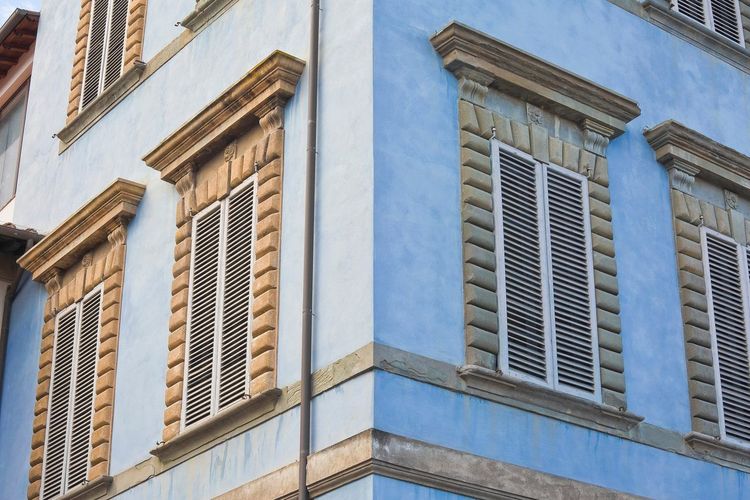
Recognisable by its pastel-blue facade on the Lungarno, Palazzo Blu (Lungarno Gambacorti 9, 56125 Pisa, rated 4.5/5 on Google from 6,181 reviews) occupies a building of medieval origin that was remodelled several times, notably in the 18th century. Restored and transformed into a cultural centre in the early 2000s, it combines a permanent collection of Tuscan paintings from the 14th to the 19th century with a programme of temporary exhibitions that regularly attracts internationally renowned works.
Every winter, the museum mounts a major monographic exhibition, often devoted to a master of modern art, drawing visitors from well beyond Tuscany. Access to the permanent collection is sometimes free, and the view of the Arno from the upper-floor windows is worth the visit in itself. Its location on the banks of the Arno makes it a convenient stop between the cathedral and the Borgo Stretto neighbourhood, with significantly fewer visitors than at the square with four monuments.
9. The National Museum of San Matteo
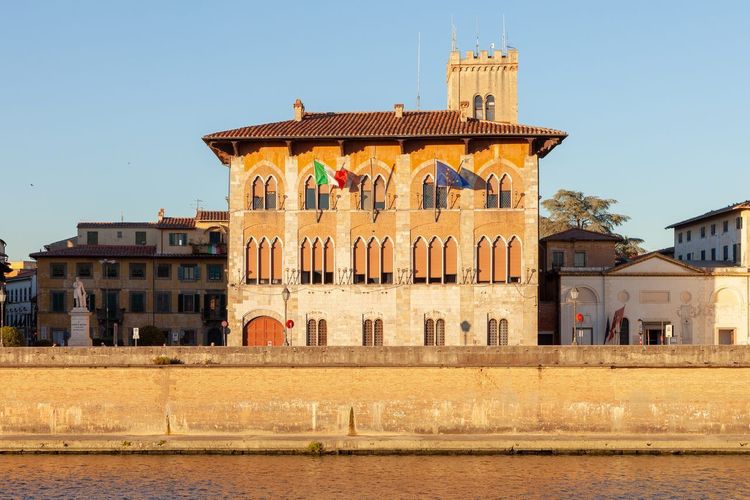
Housed in a former Benedictine convent on the banks of the Arno, the Museo Nazionale di San Matteo (Piazza San Matteo in Soarta 1, 56127 Pisa, rated 4.4/5 on Google from 679 reviews) brings together one of the finest collections of medieval Tuscan sculpture, with pieces by Nino Pisano and painted panels attributed to Simone Martini. Rarely crowded by hurried visitors, it offers a serene immersion into Pisan religious art of the 13th and 14th centuries.
The vaulted rooms of the former convent add to the almost monastic atmosphere of the visit. Allow an hour to tour the entire collection at a leisurely pace.
10. The Sinopie Museum
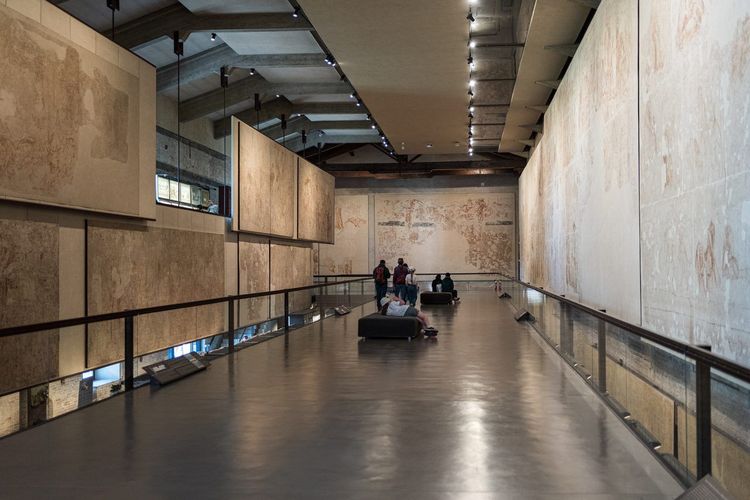
Opposite the baptistery, the Museo delle Sinopie (Piazza del Duomo 23, 56126 Pisa, rated 4.1/5 on Google from 933 reviews) owes its existence to the 1944 fire: when specialists detached the damaged frescoes from the Camposanto for restoration, they discovered the original preparatory sketches, known as sinopie, drawn directly onto the wall before the final painting. This museum, rare of its kind, displays these raw drawings, which reveal the artistic gesture before the finished work.
The visit is short but rich, and ideally complements a tour of the neighbouring Camposanto.
11. The Borgo Stretto Neighbourhood
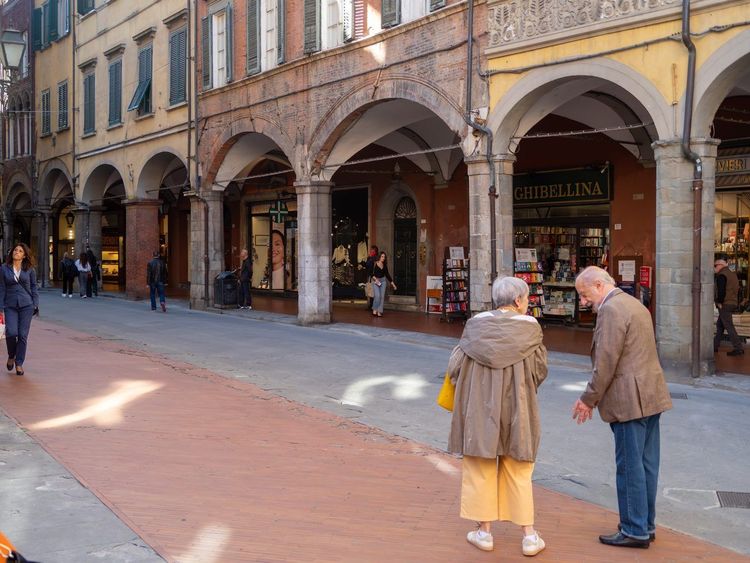
While Piazza dei Miracoli draws the tourist coaches, Borgo Stretto (Via Borgo Stretto, 56125 Pisa) is where everyday Pisan life takes place. This arcaded street, one of the city's oldest commercial thoroughfares, links the historic centre to Ponte di Mezzo by winding beneath 13th-century porticoes, now occupied by independent shops, bookshops and pastry makers.
At number 27, Caffè dell'Ussero has been welcoming customers since 1775 in a setting that has remained almost unchanged: dark wood panelling, portraits of writers and tables where the intellectuals of the Italian Risorgimento once gathered. Stopping for a coffee or an aperitivo here gives you a feel for the city's real rhythm, far from the tourist bustle.
On the first weekend of every month, an antiques market sets up under the arcades, with bric-a-brac, vinyl records and local crafts. On weekdays, it is rather the morning food market at the nearby Piazza delle Vettovaglie that sets the pace of the neighbourhood.
In the evenings, the terraces fill up with students from the nearby university — a striking contrast with the relative calm of the daytime. You can easily spend an hour wandering these lanes without any particular destination, which remains one of the most honest ways to understand Pisa beyond its monuments.
12. The Lungarni and the Banks of the Arno
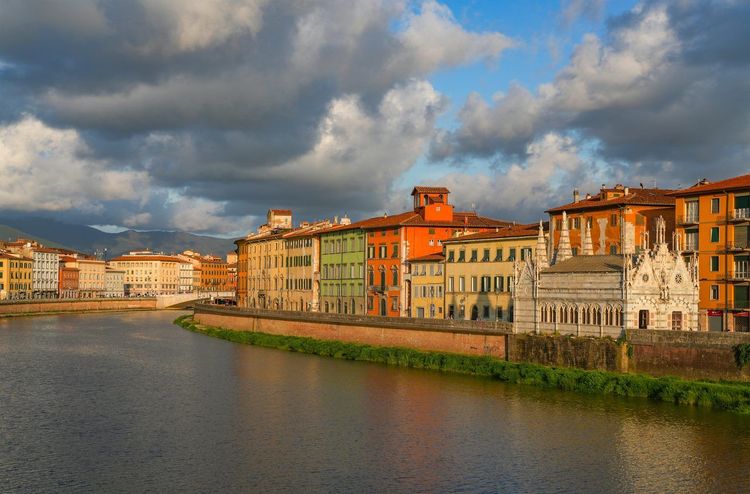
The Lungarni, the quaysides running along both banks of the Arno, offer the most pleasant walk in Pisa at the end of the day. The colourful facades — ochre, pink and pale yellow — are reflected in the calm waters of the river, a scene that local painters have been reproducing on postcards for generations.
The Ponte di Mezzo (Lungarno Mediceo, 56127 Pisa, rated 4.5/5 on Google from 3,693 reviews), rebuilt after its destruction during the Second World War, marks the geographical centre of the city and traditionally separates the two rival teams of the Gioco del Ponte, a medieval tournament re-enacted every year in late June, in which teams compete to push a seven-tonne cart across the bridge.
On the south bank, the working-class San Martino neighbourhood lines up former fishermen's and craftsmen's houses, now appreciated for their more affordable rents and unpretentious trattorias, away from the tourist menus near the tower. Another date to note: the night of 16 June, for the Luminara di San Ranieri. Tens of thousands of candles illuminate the facades on both banks, followed by a fireworks display — a spectacle that locals consider more impressive than any Venetian festival.
13. The Church of Santa Maria della Spina
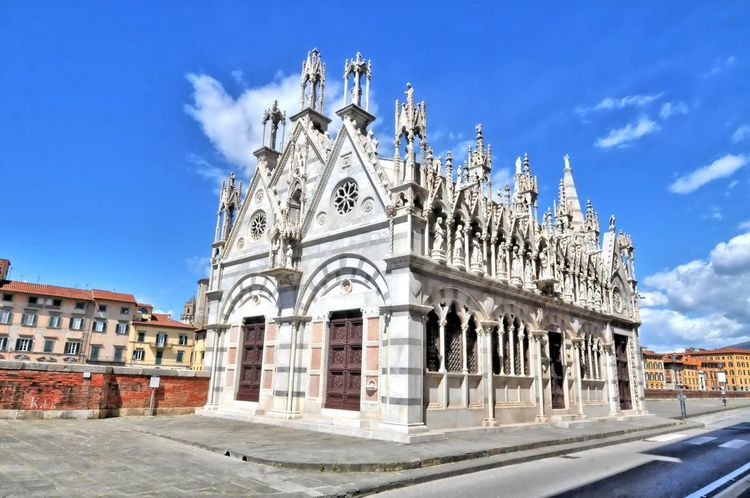
Set directly on the bank of the Arno, the small Gothic church of Santa Maria della Spina resembles a stone reliquary more than a conventional religious building, with its elaborate pinnacles and sculptures carved into every nook and cranny of the facade. Its name comes from a relic it once housed: a thorn supposedly from the Crown of Christ.
Threatened by repeated flooding from the river, the church was dismantled stone by stone and rebuilt several metres higher in 1871, a rare architectural rescue operation for the time. Long positioned at water level, it served as a landmark for mariners sailing up the Arno from the sea, at a time when Pisa still thrived on maritime trade. The original statues, too fragile, have been replaced by copies: several authentic sculptures are now preserved in the San Matteo museum, protected from humidity. The interior is tiny and can be visited in a few minutes, but the facade deserves a lingering look from the opposite bank.
14. Keith Haring's Tuttomondo Mural
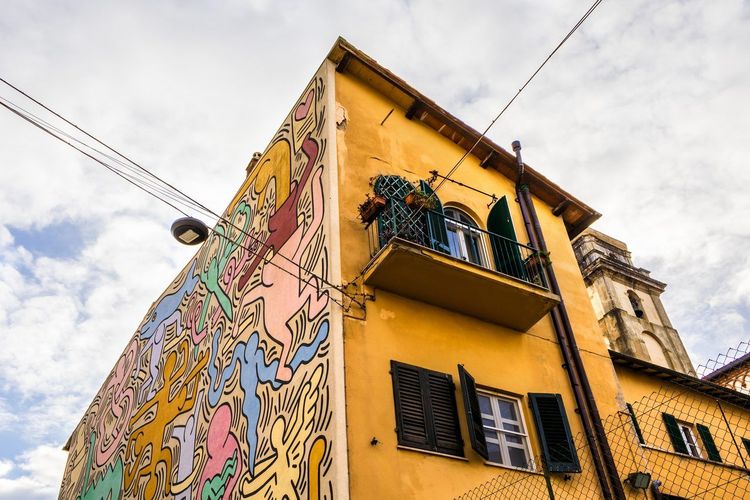
On the gable wall of the church of Sant'Antonio, a mural of 30 colourful figures signed by Keith Haring covers nearly 180 m² of facade. Painted in June 1989, Tuttomondo remains the last monumental work completed by the American artist before his death in February 1990, lending it a particularly testamentary significance within his body of work.
The interlocking silhouettes — scissors, hearts and dancing figures — symbolise universal peace among peoples, a message that Haring himself chose in agreement with a local student who had invited him to paint the wall.
The work can be visited for free, at any time, in a quiet residential neighbourhood ten minutes' walk from the centre. Few printed guides mention it, making it a still relatively undiscovered stop.
15. The Botanical Garden of Pisa
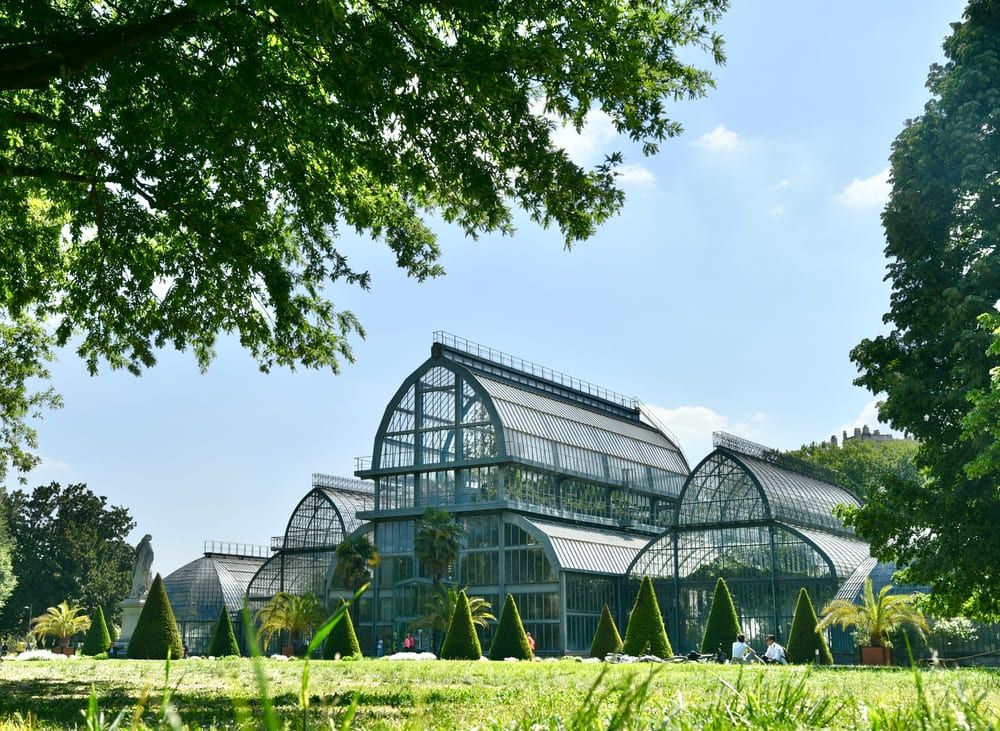
Founded in 1544 at the initiative of Cosimo I de' Medici, the Orto Botanico di Pisa (Via Luca Ghini 5, 56126 Pisa, rated 4.4/5 on Google from 4,575 reviews) is one of the oldest university botanical gardens in the world still in operation. Attached to the university, it houses 19th-century greenhouses and several trees planted more than two hundred years ago, including a magnolia and a ginkgo among the oldest in Italy.
The shaded paths, arranged by plant families according to the Renaissance scientific tradition, make a pleasant contrast with the stone-heavy density of the historic centre. The tropical greenhouses shelter a collection of carnivorous plants and cacti that is particularly popular with families.
You can spend a quiet hour here away from the queues — a welcome complement after the busy visit to Piazza dei Miracoli. Entry is inexpensive, and certain days offer reduced rates for students and school groups. Back in Lucca, the Through ramparts and secret alleyways audio-guided tour makes for a pleasant contrast, at a slower pace.
16. The Museum of Ancient Ships of Pisa
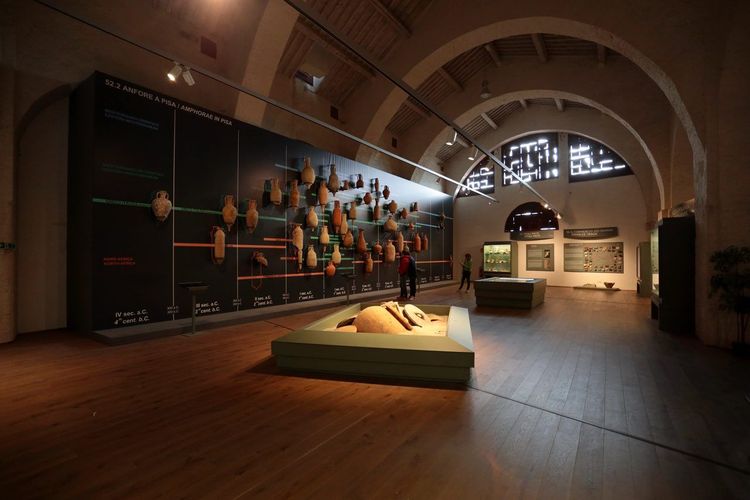
In 1998, railway works near the station uncovered around thirty ancient wrecks, remarkably well preserved thanks to the gradual silting of a former river port. The Museo delle Navi Antiche di Pisa (Lungarno Ranieri Simonelli, 56122 Pisa, rated 4.7/5 on Google from 1,598 reviews) has since displayed these Roman hulls, some dated to the 2nd century BCE, alongside everyday objects found intact: ropes, amphorae and even a sailor's skeleton.
The museum occupies the Arsenali Medicei, former Medici shipyards restored for the occasion — a fitting setting for these maritime remains. Among the wrecks, an almost intact merchant vessel found with part of its cargo remains the centrepiece of the tour. The Italian press quickly nicknamed the site the "Pompeii of the Sea", a comparison that aptly illustrates the scale of the discovery. The restoration of the ships — a slow process requiring controlled drying over several years — is still ongoing today, in full view of visitors in an open workshop.
17. The Cittadella and the Torre Guelfa
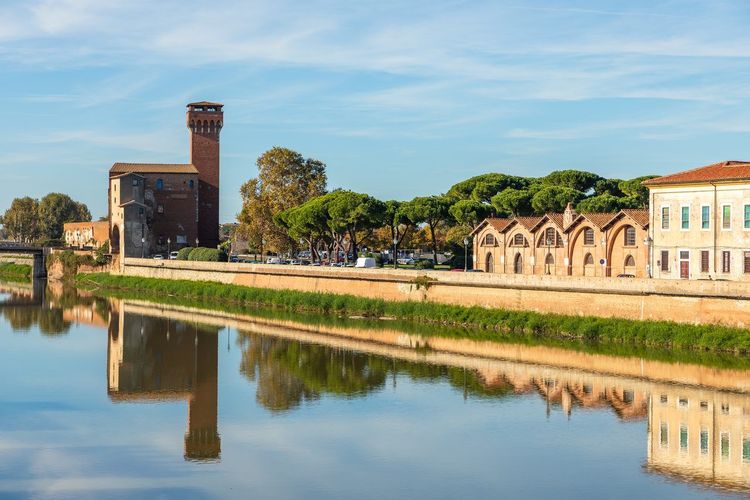
At the point where the Arno once formed the city's military harbour, the Cittadella preserves the remains of a defensive system built in the 14th century. The restored Torre Guelfa stands today at the entrance of the former arsenal: from its summit, now reopened to visitors, the unobstructed view takes in the Lungarni and the rooftops of the old city, often with no one else around.
On the other side of the river, Giardino Scotto (Lungarno Fibonacci, 56127 Pisa, rated 4.4/5 on Google from 60 reviews), a public park laid out in the 19th century on former fortifications, hosts open-air concerts and an outdoor cinema every summer — a programme that draws a mostly local rather than tourist audience. The spot remains pleasant for a riverside picnic by the Arno, away from the bustle of the centre.
18. The Piazza delle Vettovaglie Market
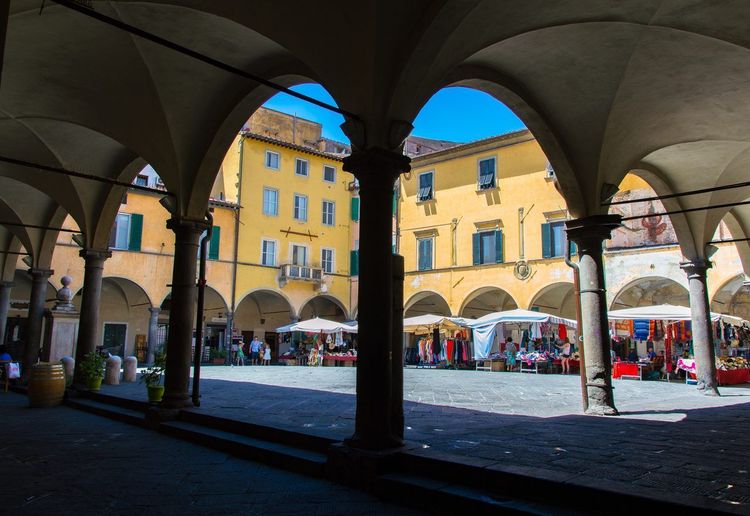
Surrounded by a 16th-century Renaissance loggia, Piazza delle Vettovaglie (56127 Pisa, rated 4.3/5 on Google from 1K reviews) changes its character completely depending on the time of day. In the morning, stalls of fruit, vegetables and local cheeses fill the square beneath the arcades — a daily market frequented mainly by neighbourhood residents rather than passing visitors.
As night falls, the same square transforms into the epicentre of student nightlife, with bars and cocktails replacing the crates of vegetables. This dual use, rare for a square of this size, neatly sums up Pisa's double identity: a city of history by day, a student city by night.
19. The Trammino Cycle Path by Bike
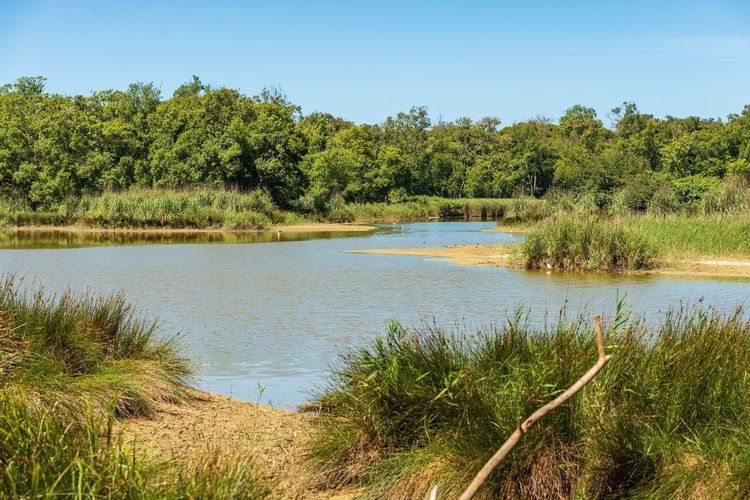
The former tram line linking Pisa to Tirrenia, decommissioned in the 1950s, has been converted into a cycle path known as the Trammino. Over more than 5 kilometres, it winds through the San Rossore regional park, a wooded area of pine trees and cork oaks where horses and fallow deer still roam semi-freely.
Several hire shops in the centre offer bikes by the day, a pleasant option for escaping the stone-heavy setting of the historic centre for a morning. The path is almost completely flat, making it accessible even for occasional cyclists. It ends near the beaches of Marina di Pisa and Tirrenia, allowing you to combine the ride with a swim in summer. Remember to bring water: the pine shade is welcome, but there are no shops along the central section of the route.
20. Student Life Around the University of Pisa
Founded in 1343, the University of Pisa ranks among the oldest in Italy and still shapes the city's atmosphere today: of approximately 90,000 inhabitants, a considerable proportion are students — a ratio that explains the density of bars, second-hand bookshops and cheap pizzerias around Piazza dei Cavalieri and Borgo Stretto.
Two elite institutions, the Scuola Normale Superiore and the Scuola Superiore Sant'Anna, recruit by competitive examination from the country's top students and sustain an intellectual reputation that far exceeds the city's size. This student presence permeates everything: concert posters stuck to walls, bikes clustered outside faculty buildings, terraces packed from the first warm days. Galileo himself was first enrolled here as a medical student before going on to teach mathematics. Do not look for an American-style campus: the faculties are scattered throughout the medieval urban fabric, and that is precisely what gives Pisa its university-city atmosphere. You will quickly notice that student menu prices are significantly cheaper than in the tourist zones around the tower.
21. A Day Trip to Lucca
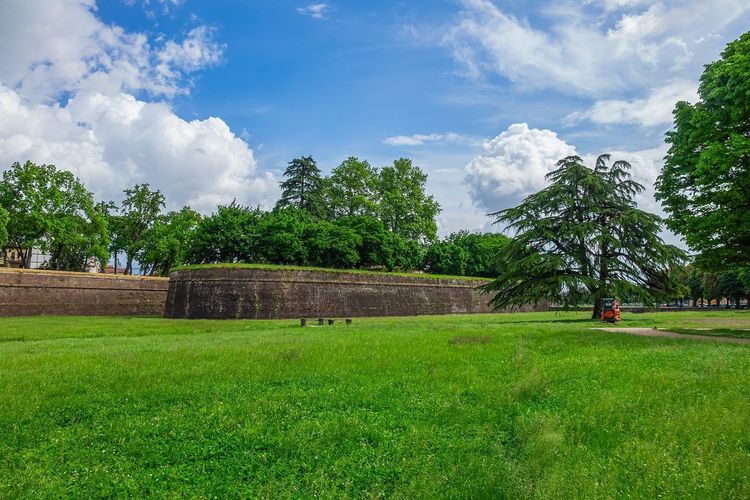
Just 30 minutes away by train, Lucca deserves a full day and perfectly complements a stay in Pisa. Unlike most Tuscan cities, its Renaissance walls from the 16th century were never demolished or breached to allow modern traffic: they form today a tree-lined promenade 4.2 kilometres long, where local joggers and cyclists cross paths at sunset.
Inside the walls, the Torre Guinigi (Via Sant'Andrea, 55100 Lucca, rated 4.6/5 on Google from 11,614 reviews) surprises with its summit planted with holm oaks — a rare botanical curiosity: several oaks have been growing for centuries on a platform 44 metres up, offering from their shade a 360-degree view over the tiled rooftops. Climbing the roughly 230 steps requires some effort, richly rewarded.
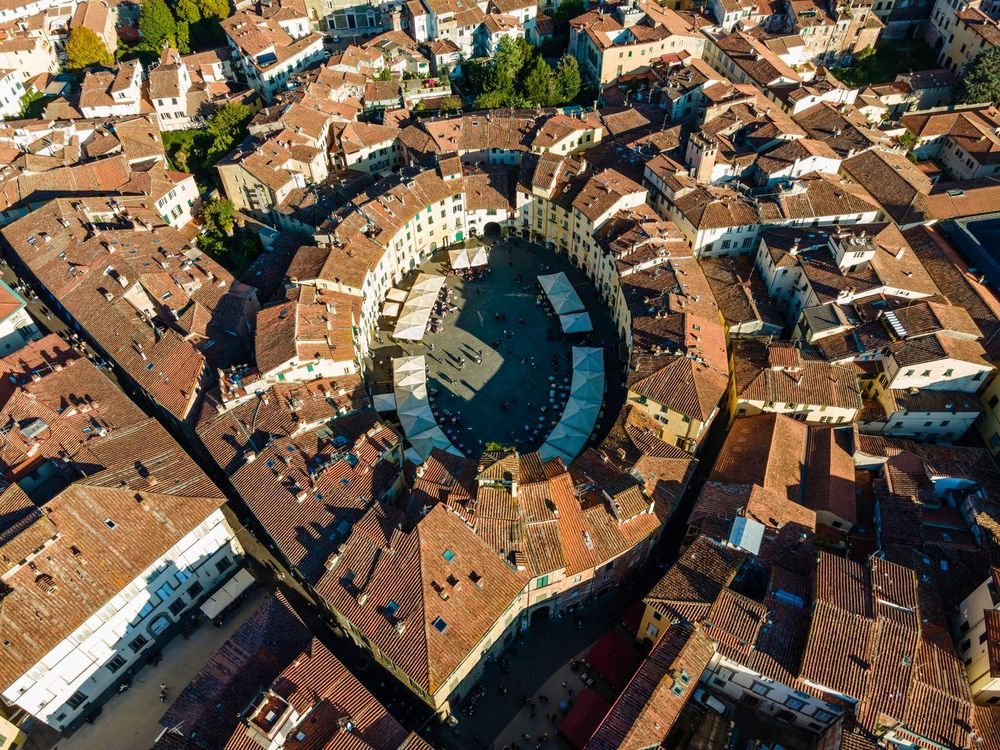
Nearby, Piazza dell'Anfiteatro occupies the exact site of a Roman amphitheatre: the buildings erected over the centuries have preserved the oval shape of the ancient tiers, an urban phenomenon rarely as legible elsewhere in Italy. The cafe terraces lining the square take advantage of this unusual geometry to create an almost theatrical space.
Lucca is also the birthplace of Giacomo Puccini, whose childhood home can be visited near Via di Poggio. Opera lovers will appreciate the collection of personal items and handwritten scores on display in the family residence.
Allow a full day to enjoy the walls, the historic centre and a leisurely lunch, without needing to return to Pisa before evening.
22. A Day Trip to the Cinque Terre
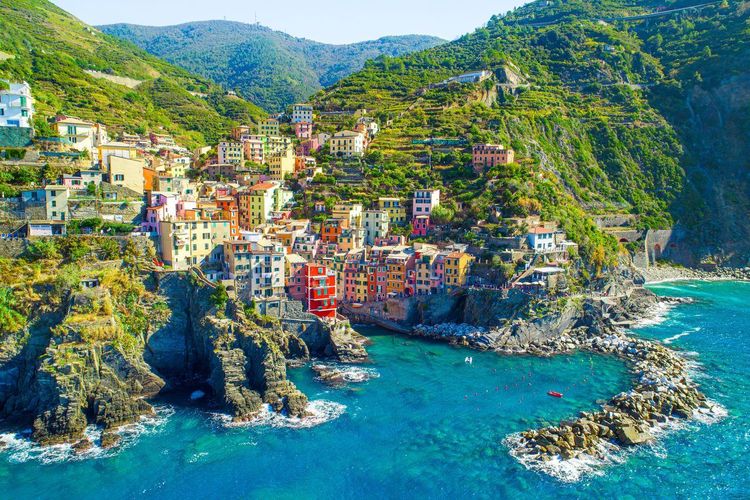
Less obvious on a map than Lucca, the trip to the Cinque Terre is nonetheless accessible by train from Pisa, via a change at La Spezia, for a total journey of around 1.5 to 2 hours depending on connections. This UNESCO-listed national park groups together five villages perched on the Ligurian coast: Monterosso al Mare, Vernazza, Corniglia, Manarola and Riomaggiore.
Each village retains its own distinct character: Vernazza for its small natural harbour surrounded by colourful houses, Manarola for its vineyards suspended above the sea and its renowned sunset, Corniglia for its position perched more than 100 metres above the water, accessible via a stairway of around 377 steps — the Lardarina — or by shuttle bus. The historic trail linking the villages, the Sentiero Azzurro, alternates easy sections with steeper passages depending on which portions remain open after recurring landslides.
A Cinque Terre Card combines access to the trails, local trains between villages and certain services: an almost essential purchase if you plan to visit several villages in a day. Book your return train ticket in advance during high season, as trains to La Spezia sell out early in the morning in July and August.
While a single day is clearly not enough to see everything, it still allows you to comfortably visit two or three villages, using boat connections between the coves to save time on train transfers.
23. Pisa at Night: Bars, Aperitivos and Nightlife
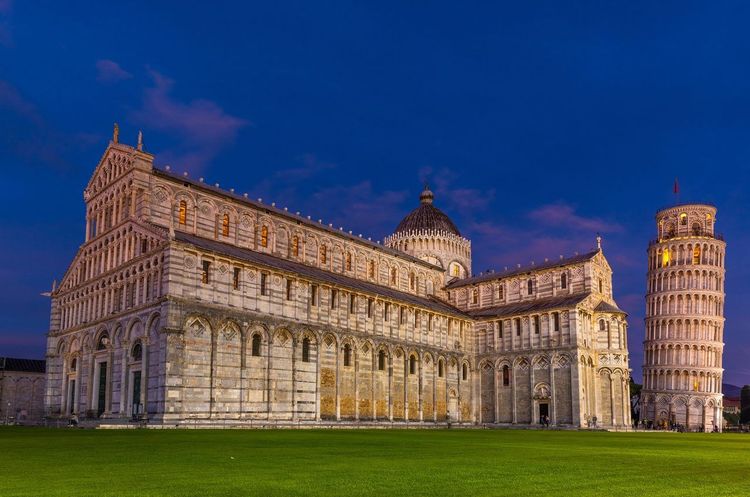
Once the tourist coaches have departed around 6 p.m., Pisa's atmosphere changes completely. The illuminated Piazza dei Miracoli at night, almost deserted, offers an entirely different view of the tower — without the queue or the daytime crowds.
The real heart of nightlife beats around Borgo Stretto and Piazza delle Vettovaglie, where cocktail bars and local craft breweries attract a predominantly student crowd. The aperitivo, often served between 6 p.m. and 8 p.m. with a buffet included in the price of a drink, remains an economical way to eat lightly before a longer evening.
In summer, do not miss the occasional events organised along the Lungarni: free concerts, night markets and, every 16 June, the spectacular Luminara with its tens of thousands of candles. For the rest of the year, evenings are quieter but still lively near the universities.
24. Pisa for Free: the Best Activities Without Spending a Thing
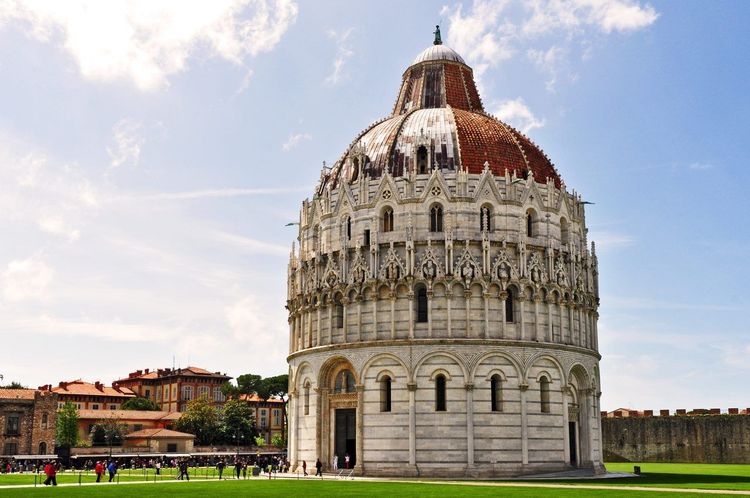
Visiting Pisa for free is easier than it might seem. Piazza dei Miracoli itself, with its sculpted facades visible from the lawn, costs nothing: only the interiors of the monuments and the climb up the tower are paid. Keith Haring's Tuttomondo mural, the Lungarni at sunset and a walk along the open section of the city walls also rank among the must-see sights that require no ticket.
Some municipal museums, including several religious collections, offer occasional free admission on the first Sunday of the month, as part of an Italian national initiative extended to several public sites. The botanical garden also offers reduced or free entry on certain days for school groups and students with a valid card.
To plan your free itinerary without missing anything, a Ryo audio guide downloaded on your phone lets you follow a step-by-step route between outdoor points of interest, without relying on a paper map or a paid guided tour.
25. How to Get to Pisa and Get Around the City
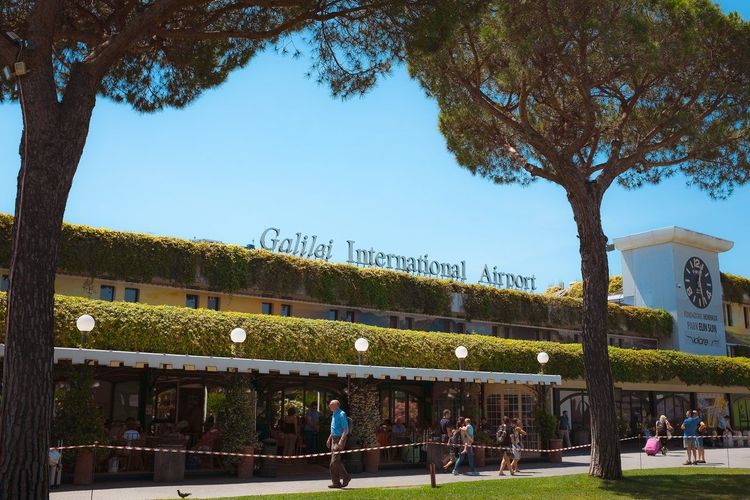
Galileo Galilei airport, one of the best-positioned in Europe relative to its city centre, is just 20 minutes' walk from the Duomo, or a few minutes via the PisaMover automated shuttle linking the terminal directly to the central station. This unusual proximity even makes a day trip from other European cities possible.
From Pisa Centrale station, allow around 20 to 25 minutes on foot to reach Piazza dei Miracoli, or take the LAM Rossa bus line which runs directly to the historic centre. Once there, the city centre is easily explored on foot: most major sites are within 25 minutes' walk of each other.
The PisaMover ticket costs a few euros for a journey of barely five minutes — a worthwhile time-saver with luggage. If you arrive by car, note that the historic centre is largely in a restricted traffic zone (ZTL): park in one of the peripheral car parks, such as Pietrasantina to the north, which has a shuttle to the tower. If you are planning a day trip to Lucca or La Spezia, the central station is the logical departure point, with frequent regional trains throughout the day.
26. Where to Stay in Pisa
The area around Piazza dei Miracoli concentrates the most tourist-oriented hotels — convenient for a late arrival but often pricier and noisier in season. The Borgo Stretto and San Martino neighbourhoods, more central and lively in the evenings, appeal to travellers who prefer to walk to the monuments rather than sleep right next to them.
A useful tip: rates drop considerably just a few streets away from Piazza dei Miracoli, as soon as you move beyond the first row of hotels facing the monuments. The Santa Maria neighbourhood, between the tower and the Arno, offers a good balance of calm, reasonable prices and walking distance to all the main sites. For visitors making a brief stop before a flight or train, accommodation near Pisa Centrale station remains a pragmatic option, even if it means sacrificing some of the historic centre's charm. Book several weeks in advance in June and July, when the Luminara and the Gioco del Ponte push prices up.
27. How Many Days in Pisa? Itineraries for 1 and 3 Days
If you are wondering how many days to spend in Pisa, the answer depends mostly on your appetite for day trips to the surrounding area. One full day is enough to cover the essentials of the centre: Piazza dei Miracoli and its four monuments in the morning, lunch and a leisurely stroll in Borgo Stretto in the early afternoon, then a walk along the Lungarni at sunset.
Over 3 days, you can spread things out differently: the first day for Piazza dei Miracoli and its smaller museums (San Matteo, Sinopie, Palazzo Blu), the second for a day trip to Lucca or the botanical garden and the university quarter, the third to head out to the Cinque Terre or simply wander without a fixed itinerary through the less-visited lanes.
To build your own Pisa itinerary without retracing your steps, following a Ryo audio guide helps you visit the monuments in a logical order rather than at random from tourist signs, while still leaving plenty of room for improvisation.
FAQ
How long does it take to visit Pisa?
One day is enough to cover the main highlights of the historic centre: Piazza dei Miracoli, Borgo Stretto and the Lungarni. Allow 3 days if you want to add the smaller museums and a day trip to Lucca or the Cinque Terre.
What to do in Pisa in 1 day?
Prioritise Piazza dei Miracoli in the morning, early to avoid tour groups, then have lunch in Borgo Stretto before ending with a stroll along the Lungarni at sunset. Book your tower and cathedral tickets online before you go.
What to do in Pisa for free?
The lawn of Piazza dei Miracoli, Keith Haring's Tuttomondo mural, the partially open city walls and the banks of the Arno can all be enjoyed without spending a euro. Several municipal museums also offer free admission on the first Sunday of the month.
What is the best time to visit Pisa?
Spring (April–May) and early autumn (September–October) offer the best balance between pleasant weather and moderate crowds. June, with the Luminara and the Gioco del Ponte, remains spectacular but significantly busier.
Can you climb the Leaning Tower of Pisa without a reservation?
It is possible outside peak season, but strongly discouraged between May and September: time slots often sell out several days in advance. Booking online remains the only way to guarantee access at your preferred time.
What to do in Pisa and the surrounding area?
Lucca, 30 minutes away by train, and the Cinque Terre, roughly 1.5–2 hours via La Spezia, are the two most accessible day trips from Pisa. San Rossore park, just outside the city, is ideal for a shorter cycling outing.
What to do in Pisa at night?
The illuminated Piazza dei Miracoli is worth a second evening visit, followed by an aperitivo in the Borgo Stretto neighbourhood or at Piazza delle Vettovaglie, the hub of student life after sunset.
Pisa: Far More Than a Leaning Tower
Pisa refuses to be reduced to a single image, even if the tower continues to dominate online searches. Between millennial monuments, student-filled lanes and easy day trips to Lucca or Liguria, this Tuscan city rewards those who look beyond the obligatory souvenir photo. Take time for a coffee in Borgo Stretto, a twilight stroll along the Lungarni and a morning cycle through San Rossore park: it is there, far from the lawn with four monuments, that Pisa reveals its true rhythm.
Whether you are staying for one day or three, keep the Ryo app close at hand to turn every street into historical context rather than a mere postcard backdrop, and follow an audio-guided tour that leaves plenty of room for improvisation between planned monuments.