© Shutterstock
 Votre guide Ryo
Rome Neighborhoods: the 2026 Guide to Understanding Each One and Choosing Where to Stay
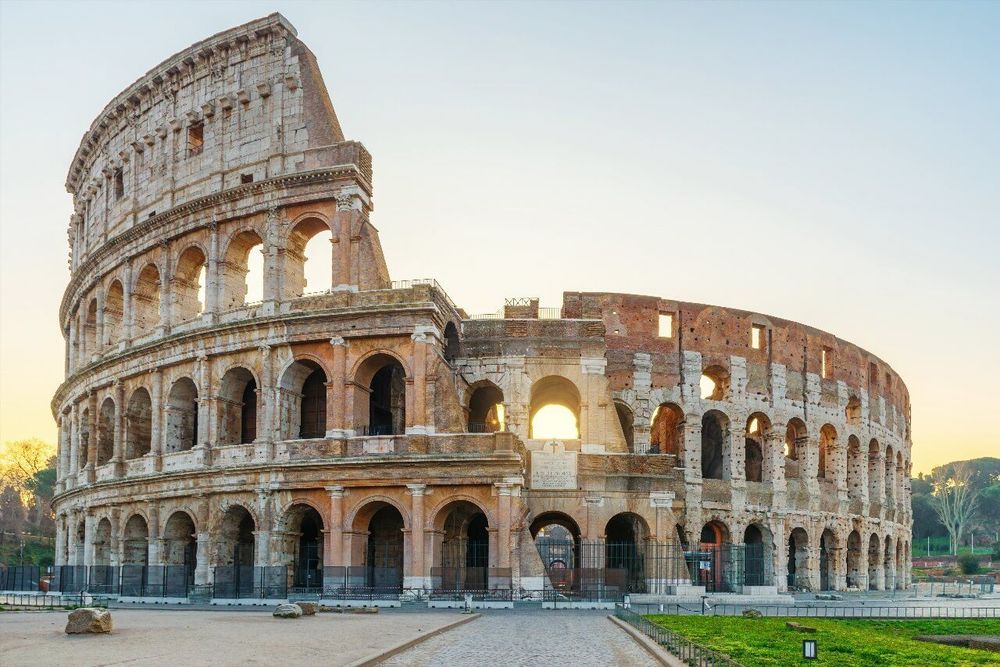
At eight in the morning, the line for the Colosseum already snakes a hundred meters, while fifteen minutes away on foot, the shutters of Monti are barely opening onto independent designers' workshops and half-empty cafés. Rome's neighborhoods look nothing alike, and that is precisely what makes discovering them so compelling: a single city that shifts from ancient marble to bohemian alleyways, from the Vatican's domes to the popular tables of Testaccio. To get your bearings before setting off to explore, the Ryo audio-guided tour of Rome connects several of these areas on foot, explaining step by step why they have so little in common.
This guide details the areas that truly matter to a visitor: the historic center and its ancient ruins, the Ghetto and Campo de' Fiori, the Vatican and Prati, Trastevere and its nightlife, the Aventine-Testaccio duo of gardens and gastronomy, the alternative neighborhoods of Ostiense, San Lorenzo, Pigneto, and Garbatella, then the residential north around Villa Borghese. You will also find guidance on getting from one to another, plus practical recommendations based on your profile: first visit, family trip, nightlife, or areas that are less convenient. Everything you need to know where to walk, where to sleep, and where to eat.
Map of Rome's Neighborhoods: How to Find Your Way
Forget the official administrative breakdown of 22 historic rioni and 35 quartieri: for a visitor, Rome is more simply read in two layers. A dense core, barely 3 km in diameter, concentrates the bulk of ancient and baroque heritage, from the Colosseum to the Vatican by way of the pedestrian historic center. Around it, a much larger ring groups residential and working-class neighborhoods where people live, eat, and go out far from tour groups.
On a map of Rome's neighborhoods, this central core can almost be crossed entirely on foot in a well-paced day. That is the logic this article follows: from the ancient center outward, ending with a practical comparison to help you choose where to stay. Bear in mind that the Tiber cuts the city in two, with the Vatican and Trastevere on the west bank and virtually everything else on the east bank. The rioni are identified by marble plaques at street corners, each bearing a Roman numeral: Monti is rione I, Trastevere is XIII.
The Historic Center and Ancient Rome
This is where most visitors set foot first, and for good reason: a few square kilometers concentrate the monuments that have given the city its worldwide reputation. The neighborhood blends open-air ancient ruins, baroque squares, and medieval alleyways, with no clear transition between eras.
The Colosseum, the Roman Forum, and the Palatine Hill
The Colosseum remains the most photographed symbol of ancient Rome, with its four facade levels still partially standing nearly 2,000 years after its inauguration in 80 AD.
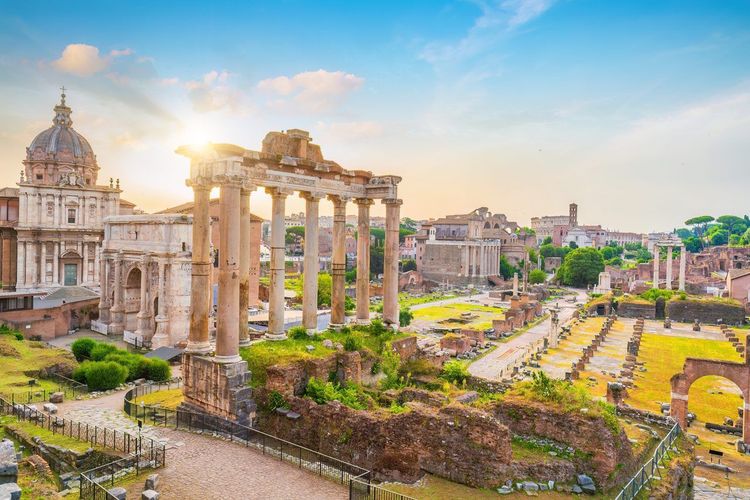
Just behind it stretches the Roman Forum, the political and religious heart of ancient Rome, where the columns of the Temple of Saturn stand alongside the Curia, the Senate's historic seat. Allow at least two hours to appreciate its scale, more if you then climb the Palatine Hill, the hill where emperors resided and which offers one of the finest panoramic views over the Forum below.
An 18-euro ticket covers all three sites, valid for 24 hours, with a set time slot for the Colosseum. Buy it in advance on the official archaeological park website: slots sell out quickly in high season. Come early in the morning or late in the afternoon — the raking light on the ruins is well worth the effort.
The Pantheon, Piazza Navona, and the Trevi Fountain
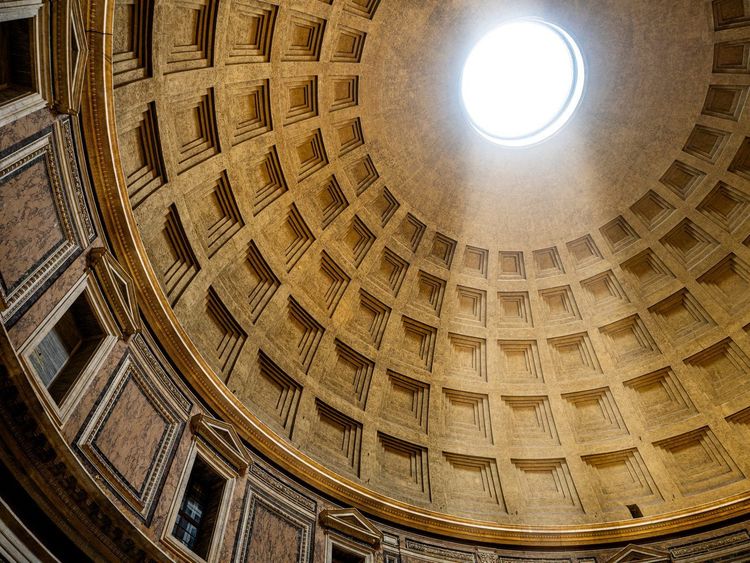
A quarter of an hour's walk to the northwest, the neighborhood shifts register. The Pantheon, a Roman temple converted into a church in 609, preserves its unreinforced concrete dome and its oculus open to the sky — a technical feat still studied by engineers today.
A few streets away, Piazza Navona unfolds its elongated shape inherited from Domitian's stadium, lined with palaces and animated by Bernini's Fountain of the Four Rivers. Street artists and café terraces make it a natural stopping point to catch your breath between visits.
Finally, the Trevi Fountain (Piazza di Trevi, 00187 Roma, rated 4.7/5 on Google with 524,079 reviews), the largest baroque fountain in the city, draws dense crowds at all hours. Tradition has it that you toss a coin with your right hand over your left shoulder to ensure a return to Rome. Visit early in the morning if you want to photograph it without a hundred heads in the frame. Just above, the Quirinal Hill and its presidential palace offer a far quieter viewpoint.
Monti, the Bohemian Neighborhood at the Gates of Antiquity
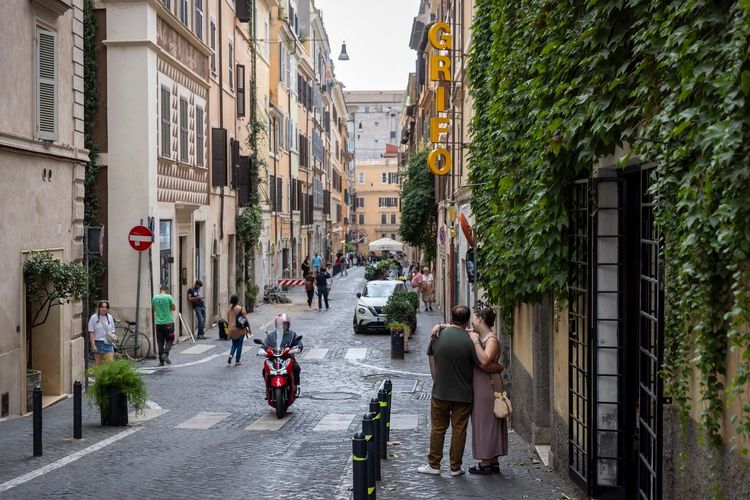
Nestled against the north side of the Colosseum, Monti stands out for its atmosphere. Heir to the ancient Subura, the working-class neighborhood of imperial Rome, it is today a haven for independent designers and discreet wine bars. Via del Boschetto and Via Panisperna concentrate vintage shops and small galleries, far from the nearby hustle.
If you are looking for a great Rome neighborhood to have dinner without the inflated prices of the ancient center, this is probably where to look for a table. In the evenings, locals sit on the steps of the fountain at Piazza della Madonna dei Monti, beer in hand.
This entire axis — from the Colosseum to the Forum and on to the Trevi Fountain — is the route followed by the Ryo audio guide: at each stop, an anecdote about Roman antiquity helps you understand what you are looking at rather than simply photographing it.
The Ghetto, Campo de' Fiori, and the Tridente
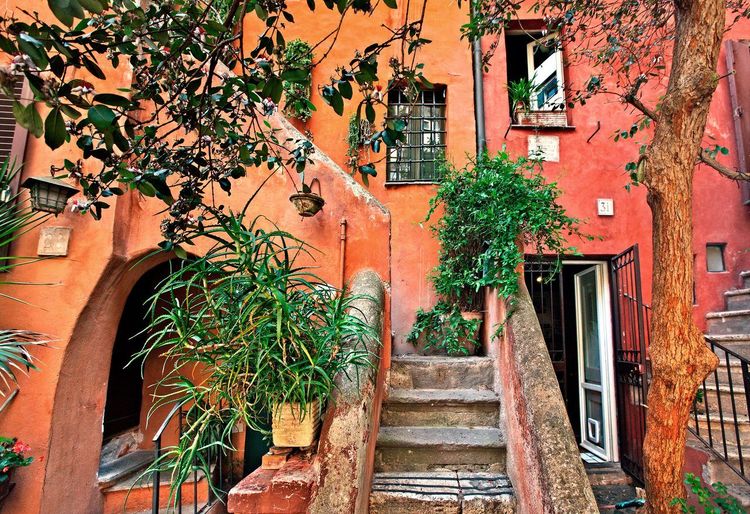
Between the Tiber and the Via del Corso, three small sectors round out the historic center, each with a very distinct identity. You will inevitably pass through them — it is worth knowing what you are looking at.
The Jewish Ghetto and Campo de' Fiori
Established in 1555 on the orders of Pope Paul IV, the Ghetto confined Rome's Jewish community behind walls for more than three centuries. Today, Via del Portico d'Ottavia lines up Jewish-Roman cuisine restaurants, where fried artichokes alla giudia are ordered in spring, facing the remains of the ancient portico and the early-twentieth-century Great Synagogue.
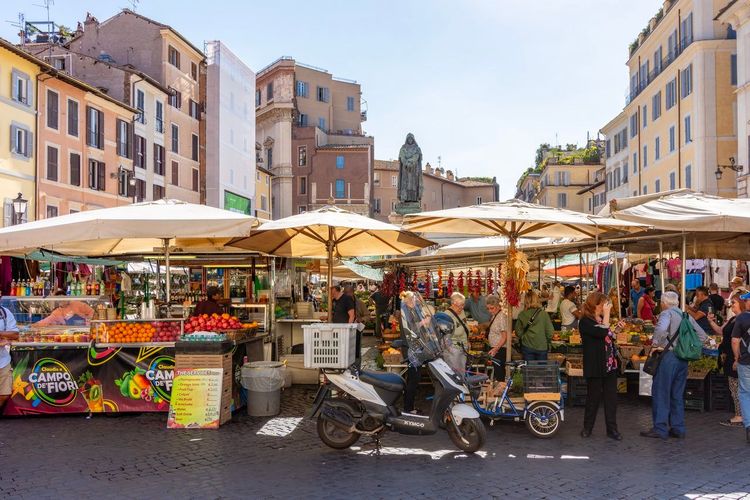
Five minutes' walk away, Campo de' Fiori hosts a fruit, vegetable, and spice market every morning except Sunday. The hooded statue of Giordano Bruno is a reminder that the philosopher was burned alive there in 1600. In the evening, the square changes face and fills with students and café terraces.
Piazza di Spagna, Via del Corso, and the Tridente
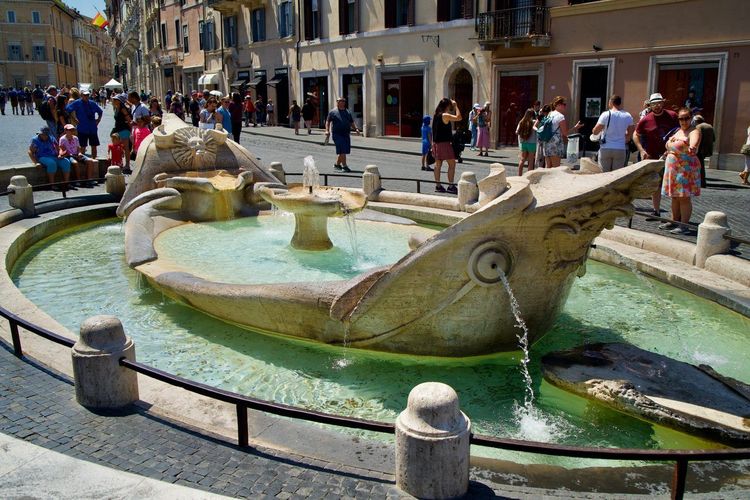
To the north, three straight streets fan out from Piazza del Popolo: Via di Ripetta, Via del Corso, and Via del Babuino. This is the Tridente, Rome's shopping district, with Via Condotti for the top luxury houses and Via del Corso for more accessible brands.
The Spanish Steps, at Piazza di Spagna, date from the eighteenth century. Sitting on them is now prohibited and subject to a fine: enjoy the view standing, then climb up to the church for the rooftop panorama. Staying here is expensive, but you will be ten minutes' walk from most major sights.
The Vatican and the Prati Neighborhood
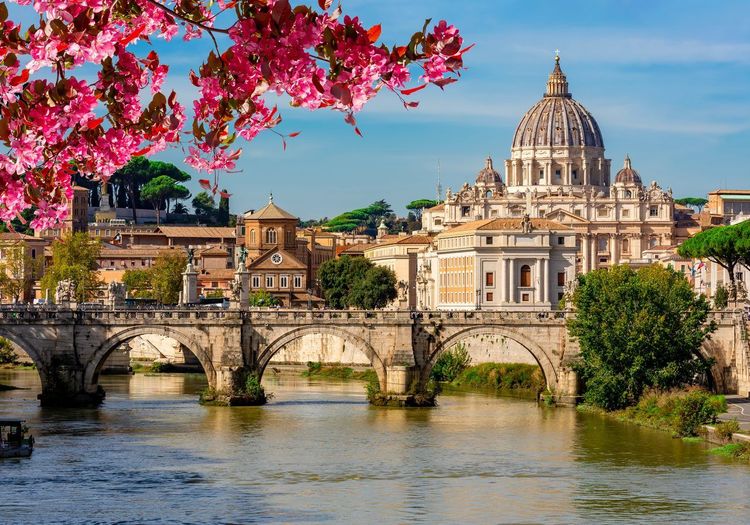
On the right bank of the Tiber, geographically set apart from the rest of the historic center, lies a territory unto itself: the Vatican City State, the world's smallest sovereign state, and the neighborhoods that surround it.
Vatican City and St. Peter's Basilica
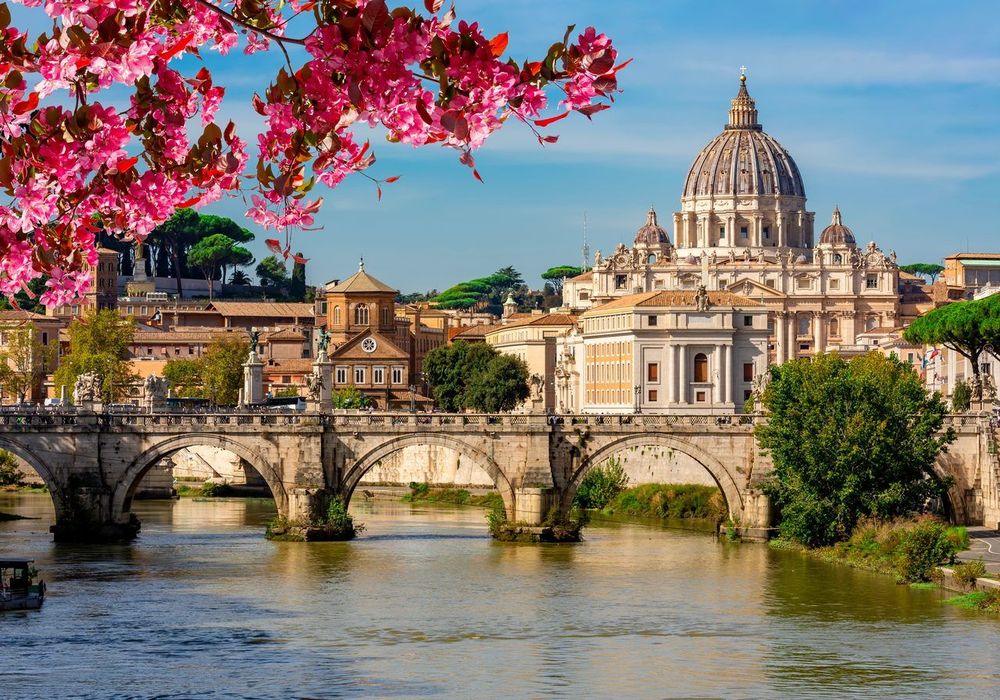
St. Peter's Basilica dominates the square of the same name, designed by Bernini with its elliptical colonnade capable of welcoming around 300,000 people during major ceremonies. The climb to the dome — partly by elevator, then up more than 300 steps — rewards the effort with a 360-degree view over Rome.
A quarter of an hour's walk away, the Vatican Museums (Viale Vaticano, 00165 Roma, rated 4.6/5 on Google with 210,930 reviews) house one of the world's richest art collections, with the Sistine Chapel and its ceiling painted by Michelangelo as the crowning highlight. Be sure to book your time slot in advance: without a timed ticket, the wait can exceed three hours in high season.
Borgo and Prati, Where to Stay near the Vatican
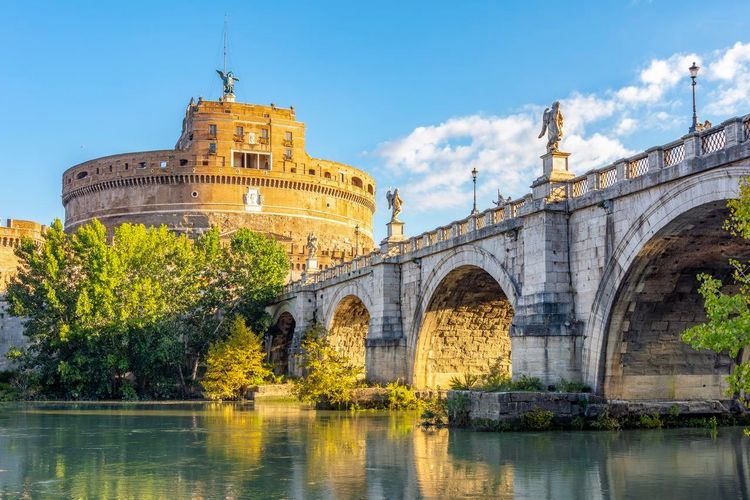
Between the Tiber and the Vatican walls, the small neighborhood of Borgo was profoundly reshaped by the opening of the Via della Conciliazione, cut through between 1936 and 1950 at the cost of demolishing an entire city block. A few alleyways such as Borgo Pio nonetheless retain a village atmosphere. Castel Sant'Angelo, Hadrian's former mausoleum transformed into a papal fortress, marks its boundary on the river side.
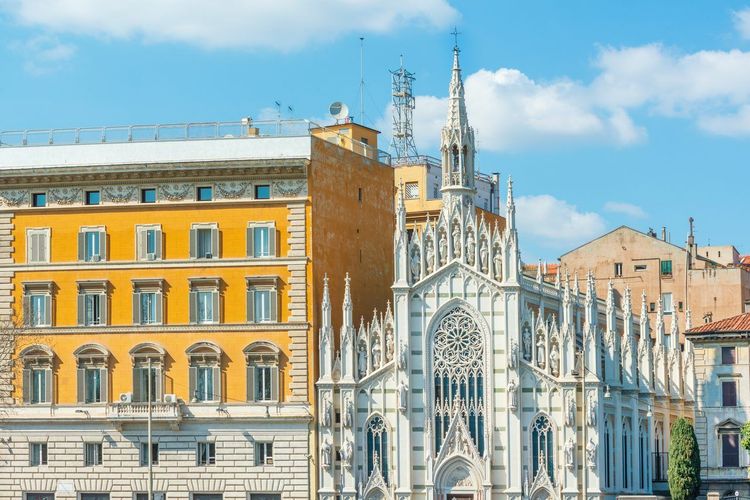
Just to the north, Prati lays out a grid plan inherited from late-nineteenth-century urban development, with bourgeois apartment buildings and a clientele that is more Roman than tourist. It is frequently cited as the best neighborhood to stay in Rome if you prioritize quiet evenings, while remaining within walking distance of the Vatican and, via the bridges, of the historic center.
To move between both banks without retracing your steps, the Ryo audio-guided sub-tour from Trevi to the Vatican connects these two worlds on foot through Borgo, with commentary on the birth of the Vatican State in 1929.
Trastevere, the Liveliest Neighborhood on the Tiber Bank
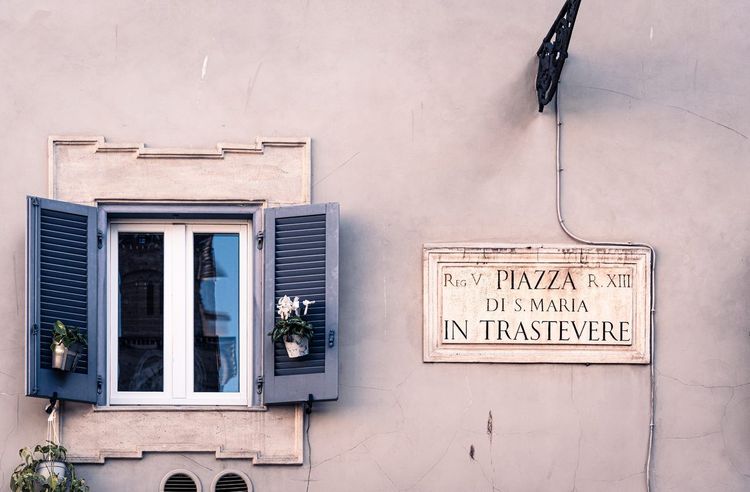
The name literally means "beyond the Tiber," and that is exactly what visitors feel when crossing one of the bridges that lead to this neighborhood apart.
Cobblestone Alleys, Trattorias, and Nightlife
By day, Trastevere reveals itself at the pace of neighborhood markets and artisans working with doors open onto cobblestone alleys too narrow for cars. The Basilica of Santa Maria in Trastevere (Piazza di Santa Maria in Trastevere, 00153 Roma, rated 4.8/5 on Google with 23,364 reviews), one of the oldest churches dedicated to the Virgin, watches over the main square, and its twelfth-century mosaics are alone worth the detour.
When night falls, the scene changes completely. Family trattorias give way to one of the highest bar densities in the city, and terraces spill out onto the cobblestones until late. It is also one of the go-to spots for young Romans themselves. With children, favor the area around Viale di Trastevere, which is calmer than the noisy alleyways after 11 p.m.
Tiber Island and the Bridges to the Historic Center
To the north of the neighborhood, Tiber Island floats in the middle of the river, connected to both banks by the Pons Fabricius, in service since 62 BC, and the Pons Cestius. The Fatebenefratelli hospital has been treating patients there since 1584, in the tradition of the Temple of Aesculapius, god of medicine, built here in the third century BC.
From the island, a few minutes are enough to reach the Ghetto and the historic center, making Trastevere a practical base rather than an isolated neighborhood. Allow fifteen to twenty minutes on foot to reach the Pantheon.
If your stay is short, the short version of the Ryo audio-guided tour of Rome covers the must-sees of the center in a tight session, leaving you the evening to wander watch-free through the alleyways of Trastevere.
Testaccio and the Aventine: Gastronomy and Secret Gardens
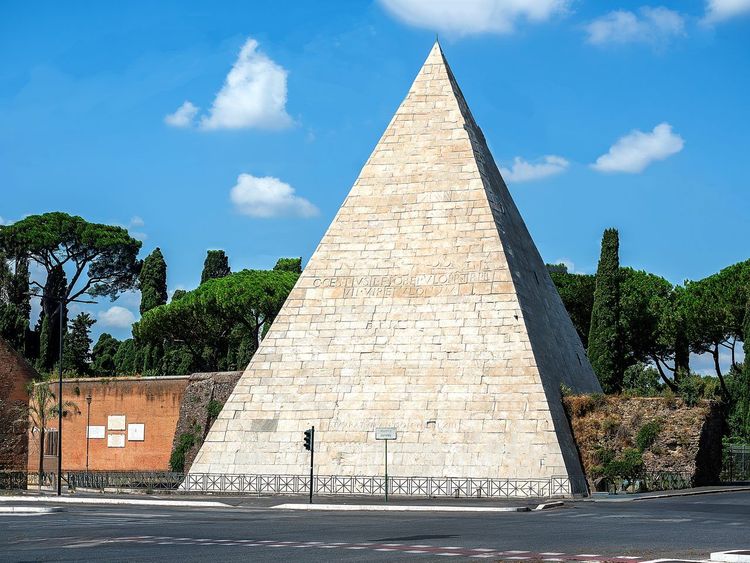
South of the Circus Maximus, a green and silent hill overlooks a former working-class neighborhood that has become the city's finest food destination, just steps from the Pyramid of Caius Cestius.
The Aventine, the Orange Garden, and the Keyhole
The Aventine is one of Rome's most residential and peaceful hills, almost untouched by the crowds of the center. The Giardino degli Aranci (Via di Santa Sabina, 00153 Roma, rated 4.7/5 on Google with 26,231 reviews), or Garden of Oranges, offers one of the finest free panoramas of the city, with the dome of St. Peter's in the distance.
Two minutes' walk away, the famous keyhole of the Piazza dei Cavalieri di Malta frames, through a simple opening in a green gate, a perfect perspective on the Vatican dome at the end of a trimmed avenue. The photo has become a classic, and the wait can exceed twenty minutes in peak season.
Testaccio, the Covered Market, and Roman Popular Cuisine
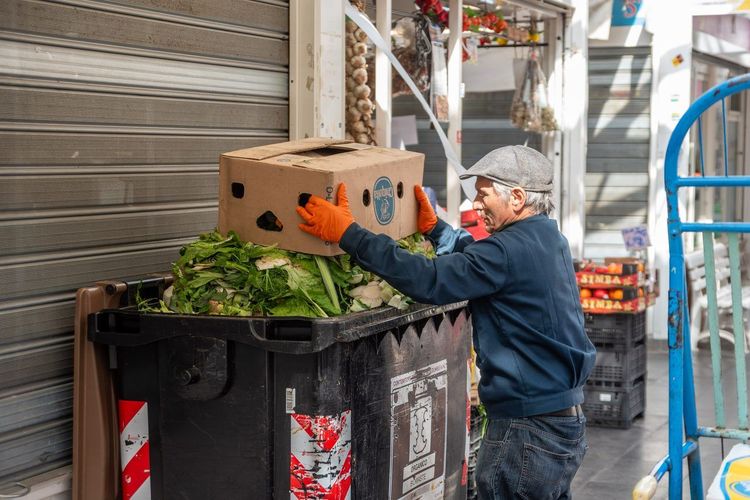
Below, Testaccio cultivates a radically different identity: it is the neighborhood of Rome's former slaughterhouse, and that history has left a lasting culinary imprint, from coda alla vaccinara to Roman-style tripe. The neighborhood takes its name from Monte Testaccio, an artificial hill formed by millions of fragments of ancient amphorae discarded there by merchants from the river port.
The Testaccio Market, housed since 2012 in a modern hall, brings together around a hundred stalls where you eat standing up, between the trapizzino — born right here — and crispy supplì.
If you are looking for the best neighborhood in Rome for food lovers, it is probably here rather than in the historic center, where prices rise with tourist footfall. You will often eat better and cheaper, five minutes' walk from the Tiber.
Ostiense, San Lorenzo, Pigneto, and Garbatella: the Alternative Neighborhoods
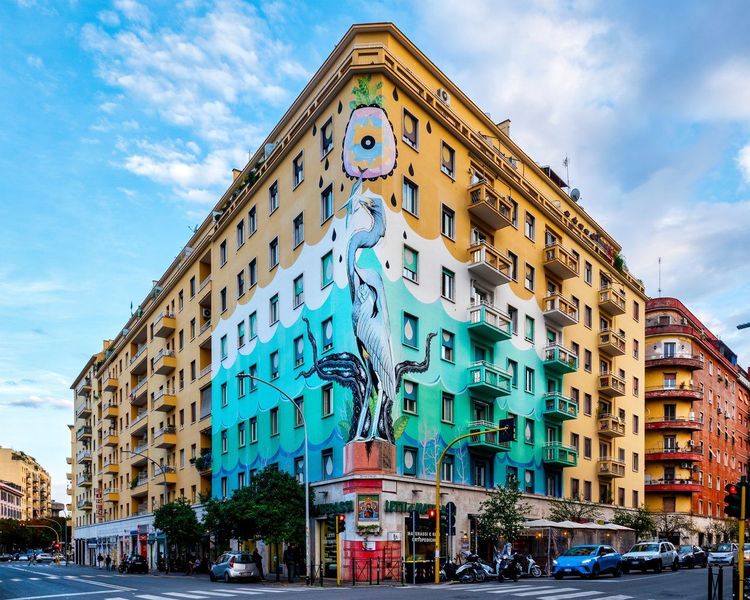
These four zones together form the most contemporary face of Rome, largely overlooked by classic tourist circuits. To reach them, metro line B does most of the work.
Ostiense and Tor Marancia: Street Art and Former Factories
Ostiense was built around a former industrial area, of which the Centrale Montemartini, Rome's first public power plant, illustrates the conversion: its turbines and diesel engines now stand alongside ancient sculptures from the Capitoline Museums.
A little further to the southeast, Tor Marancia was covered in 2015 with twenty monumental frescoes, 14 meters high, painted by international street artists on the façades of a post-war social housing complex. The Big City Life project turned it into an open-air urban museum, free and accessible at any hour.
San Lorenzo, the Student Neighborhood
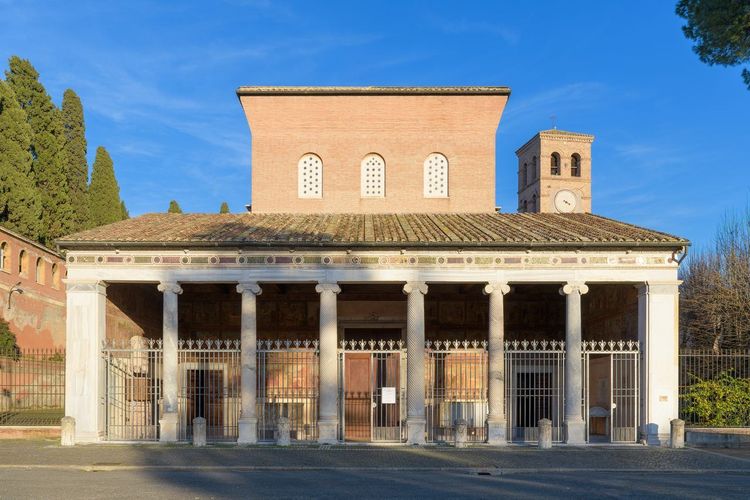
Located just behind Termini station, San Lorenzo lives to the rhythm of the nearby La Sapienza university. Prices here remain among the lowest in the broader center, and unpretentious beer bars and trattorias line Via dei Sabelli one after another. The neighborhood paid a heavy toll in the bombing of July 19, 1943, and the Basilica of San Lorenzo fuori le Mura, rebuilt after the war, keeps that memory alive.
Pigneto and Centocelle: Village Vibe and Aperitivo Bars
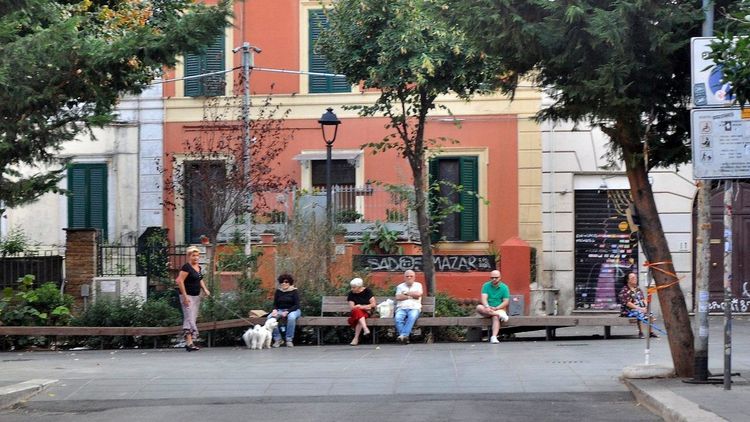
Further east, Pigneto was long a working-class neighborhood: Pasolini shot Accattone here in 1961. Since the 2000s, artists and students have made it one of the trendiest corners of the city. The pedestrian stretch of Via del Pigneto (00176 Roma) concentrates an impressive density of bars where the aperitivo starts as early as 6 p.m.
Even further out, Centocelle extends this village atmosphere with quieter streets and affordable rents — a profile that appeals mainly to Romans themselves.
Garbatella, the Most Authentic Neighborhood in Rome
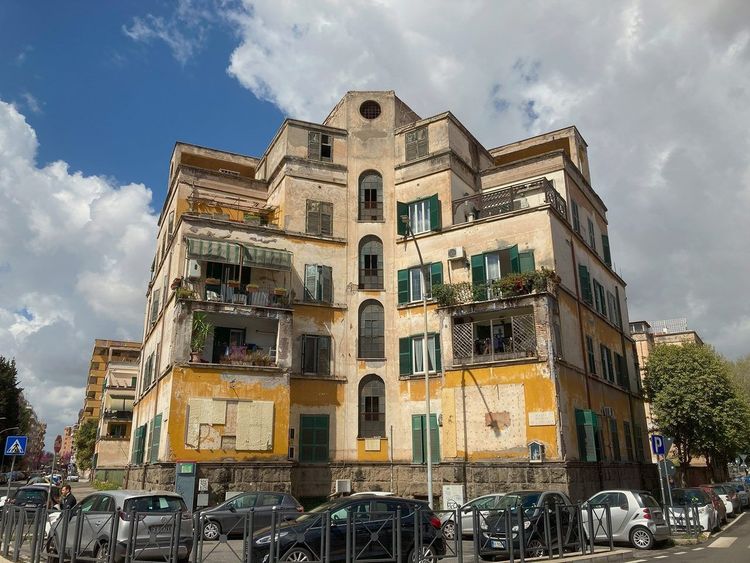
Founded in 1920 as a working-class garden city, Garbatella retains its small inner courtyards, exterior staircases, and pastel façades, a world away from the classic image of Rome. Locals claim it as the city's most authentic neighborhood, and fans of Italian TV series will recognize the sets of I Cesaroni.
You will encounter almost no foreign visitors here on a Tuesday afternoon: a genuine breath of fresh air after a packed day in the historic center.
Northern Rome: Villa Borghese and the Residential Neighborhoods
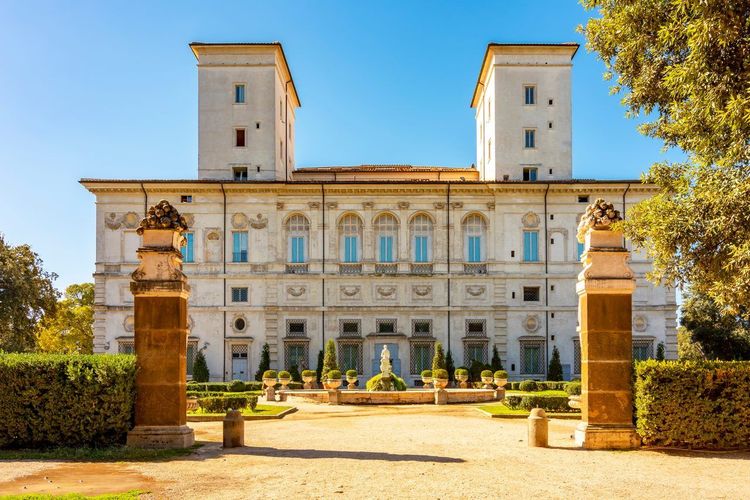
North of the historic center, the city changes pace and scale, with more green spaces and wide avenues lined with bourgeois apartment buildings.
Villa Borghese: Its Gardens and Gallery
Villa Borghese ranks among the largest parks in central Rome, with its shaded paths, artificial lake, and small Temple of Aesculapius. Rent a rowboat or a bicycle to explore it, then head to the Pincio terrace for sunset over Piazza del Popolo. The Galleria Borghese (Piazzale Scipione Borghese 5, 00197 Roma, rated 4.6/5 on Google with 30,573 reviews), housed in Cardinal Scipione Borghese's villa, holds masterpieces by Bernini and Caravaggio, with visitor numbers limited to two-hour time slots.
Booking is mandatory: reserve your slot several days, or even weeks, in advance.
Parioli and the Upscale Northern Neighborhoods
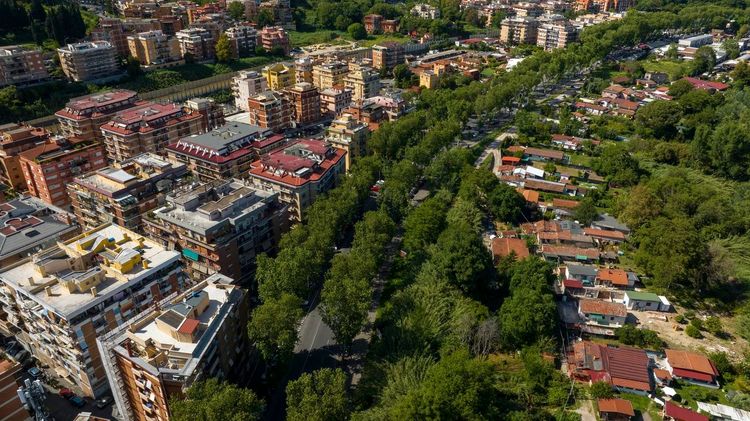
Just above the park, Parioli ranks among Rome's most sought-after residential neighborhoods, with its villas, embassies, and tree-lined streets that are nearly silent in the evenings. It is not a neighborhood designed for tourism, but it remains practical if you are traveling with family and want quiet accommodation, about fifteen minutes by bus or tram from the center.
Further west, Flaminio is home to the MAXXI, the contemporary art museum designed by Zaha Hadid, and the Auditorium by Renzo Piano — offering ways to extend a visit to northern Rome well beyond the postcard circuit.
Getting Around Rome's Neighborhoods
The good news is that the historic core is walkable. The less good news is that the metro almost entirely avoids it, due to the archaeological subsoil.
On Foot: the Best Way around the Center
From the Colosseum to the Pantheon, then from Piazza Navona to the Vatican, no journey exceeds half an hour on foot. Wear sturdy shoes: the sampietrini, those basalt cobblestones, are rough on ankles. Carrying a water bottle is useful — the nasoni, cast-iron public fountains, dispense free drinking water on almost every street corner.
Metro, Tram, and Bus for the Outskirts
Metro lines A and B intersect at Termini. Line A serves Spagna and Ottaviano (Vatican); line B serves the Colosseum, the Pyramid stop (Testaccio, Ostiense), and Garbatella. Tram 8 connects Largo Argentina to Trastevere in a few stops, and tram 19 serves Pigneto and Centocelle. A BIT ticket at €1.50 remains valid for 100 minutes; contactless payment by bank card works directly at metro gates.
Which Neighborhood to Choose for Staying in Rome Based on Your Profile
After this overview, one practical question remains: where to set down your suitcase. The answer depends mainly on the length of your stay and what you are looking for in the evenings.
For a First Visit or a Short Stay
For a two-to-three-day stay focused on the must-sees, favor Monti or the historic center itself: you will minimize travel between the Colosseum, the Pantheon, and the Trevi Fountain. For five days or a week, expanding toward Trastevere or Prati allows you to vary the atmosphere without straying far from transport links.
Before booking, mentally follow the Ryo audio guide itinerary: from day one, it shows you which neighborhoods connect naturally on foot, and therefore where accommodation will save you the most time.
With Family or for Nightlife
With children, Prati and the north around Parioli offer a comfortable compromise: wider streets, less noise in the evenings, and Villa Borghese within stroller range. For nightlife, Trastevere and Pigneto remain the safe bets, with San Lorenzo for a tight budget.
Neighborhoods to Avoid or Less Practical for Visitors
There is no truly dangerous neighborhood in Rome for a visitor, but some areas around Termini station — poorly lit at night and known for pickpockets — are mainly unpleasant: impersonal dining options, a transit atmosphere. The outlying industrial zones of Ostiense fall into the same category: interesting to visit, less appealing to sleep in for several nights. On packed buses like the 64 toward the Vatican, simply keep an eye on your pockets.
FAQ
How many neighborhoods does Rome have?
Administratively, Rome is divided into 22 historic rioni in the center and 35 more peripheral quartieri, plus suburbi and rural areas. For a visitor, only about ten zones are truly relevant — those detailed in this guide.
What is the best neighborhood to stay in Rome for a first visit?
Monti and the historic center remain the most practical choices for a short first visit, as they reduce travel time to the main monuments. Prati is a quieter alternative, within walking distance of the Vatican and well connected to the center by line A.
Which neighborhood should you avoid in Rome?
No neighborhood is truly off-limits, but the immediate surroundings of Termini station at night and the outlying industrial areas of Ostiense offer little appeal for accommodation, without posing any particular danger during the day.
What is the liveliest neighborhood in Rome at night?
Trastevere has the highest density of bars and late-night restaurants, closely followed by Pigneto for a more local vibe, and San Lorenzo on the student side.
Where should you stay in Rome with children?
Prati and the areas around Villa Borghese, toward Parioli, offer wider streets, less nighttime noise, and proximity to green spaces — two appreciable advantages when traveling with young children.
How many days do you need to visit Rome's main neighborhoods?
Allow three days to cover the historic center, the Vatican, and Trastevere, and a full week to add the Aventine, Testaccio, and alternative neighborhoods like San Lorenzo or Garbatella without rushing.
Conclusion
Between ancient marble and street-art murals, Rome's neighborhoods tell very different stories depending on which street you turn onto. The simplest approach is to start with the historic center, then let whatever time you have left carry you toward the areas that genuinely draw you, rather than ticking everything off a list. To avoid losing time finding your way between monuments, the Ryo audio-guided tour of Rome takes you through the center's must-sees at your own pace, headphones on.
À lire également