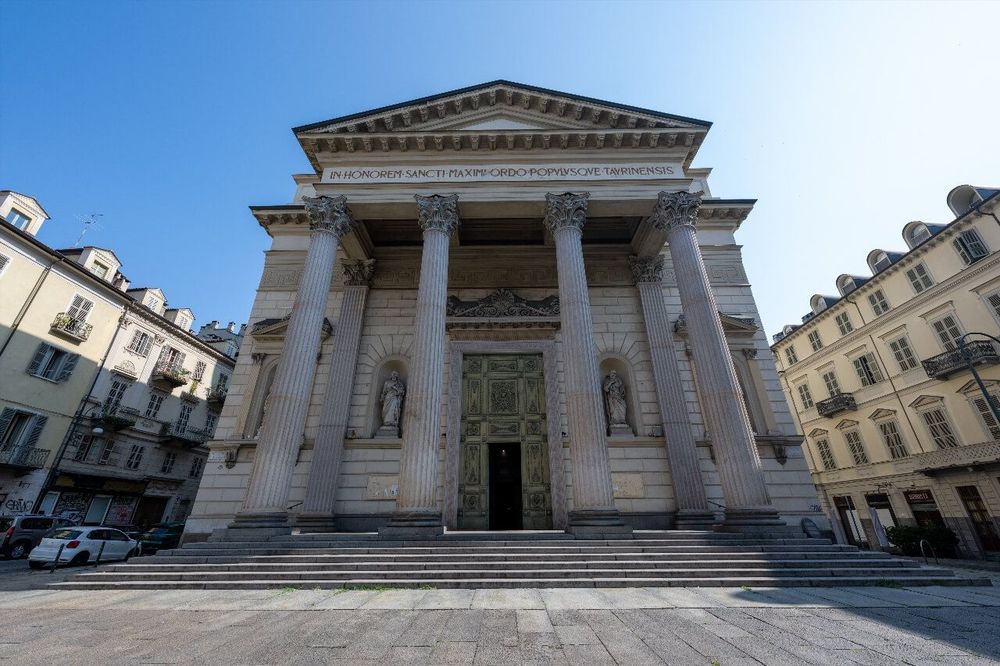
© Shutterstock
 Votre guide Ryo
Visiting Turin for the First Time: Complete Itinerary for 2026
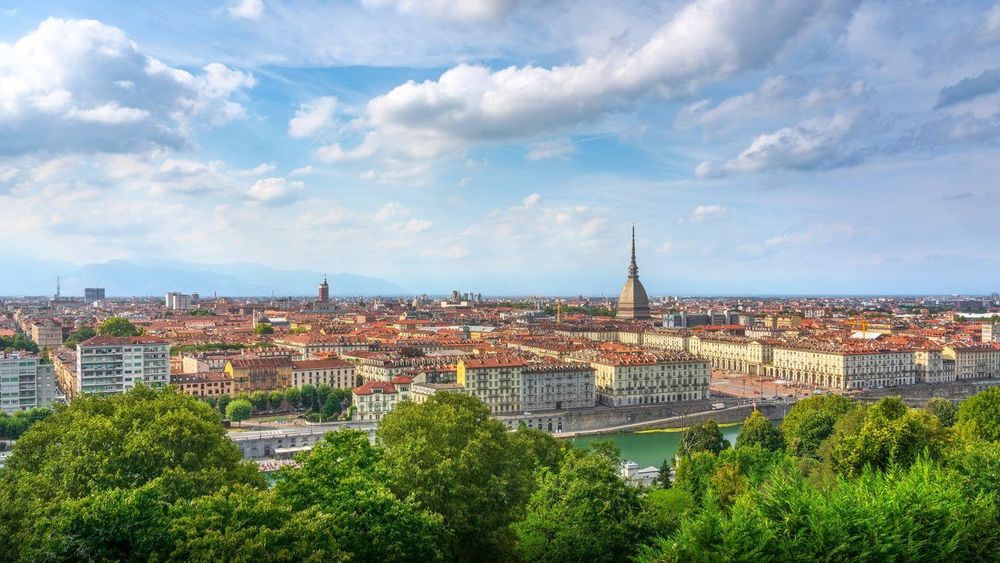
Turin almost always surprises those who discover it on leaving the station of Porta Nuova: no canals like Amsterdam, no leaning towers, but endless arcades and Alps visible at the end of certain streets on a clear day. The city has long carried the label of Italy's discreet capital, ever since it gave up that role to Florence and then Rome in the 19th century. If you are preparing to visit Turin for the first time, three days are enough to grasp the essentials, as long as you don't spread yourself too thin. To get your bearings from the moment you arrive, the Ryo audio-guided tour of Turin lets you link the main squares on foot without relying on a paper map.
Throughout this guide, you will come across an Egyptian museum that rivals the one in Cairo, a hot chocolate so thick that it is sometimes served with a small spoon, a basilica perched at 670 metres above sea level and reached by a century-old rack tramway, and arcades totalling more than 18 kilometres that shelter you from the rain. You will also find the royal residences in the surrounding area, good places to eat and stay, and tips for avoiding the crowds. Enough to fill three well-packed days, without ever feeling like you are rushing.
Turin at a Glance: Practical Information for a First Visit
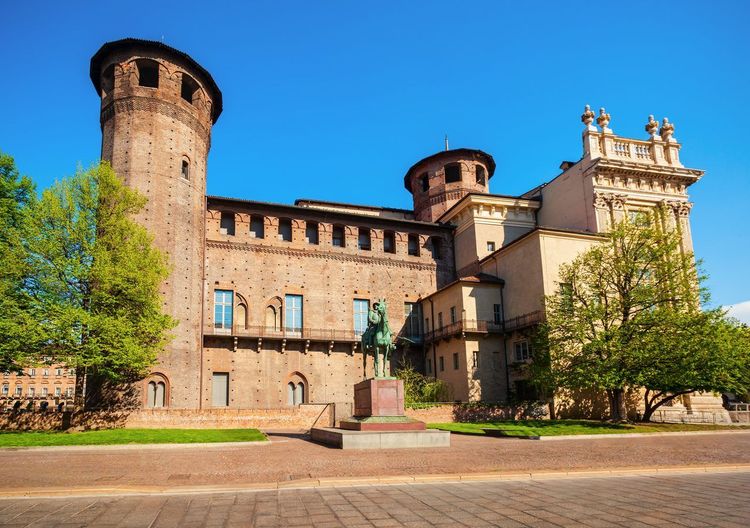
Turin can be visited all year round, but spring (April to June) and early autumn (September to October) offer the best compromise: mild temperatures, a calendar of events picking up again after the summer, and a sky often clear enough to glimpse the Alps from Piazza Castello. In winter, expect temperatures close to zero but a city lit up from mid-November, with Christmas markets enlivening the centre until early January.
Three days is the ideal length for a first visit: enough to cover the historic centre, a major museum and an excursion in the surrounding area, without sacrificing the coffee breaks that make up a good part of Turin's charm. Turin-Caselle airport is 16 kilometres from the centre (shuttle or taxi, about 30 minutes); if you arrive by rail, Porta Nuova station drops you right at the edge of the historic centre, a few minutes' walk from Piazza San Carlo.
For sightseeing, the Torino+Piemonte Card is worth considering as soon as you arrive: it gives access to several dozen museums, monuments and royal residences in the city and its region, valid for 1, 2, 3 or 5 days (from 29.90 to 52.90 euros in 2026). Public transport is not included, but the tourist office also sells a discounted 48- or 72-hour GTT "Tour" ticket. The card becomes worthwhile as soon as you plan to visit more than two paid sites, with the Egyptian Museum and Palazzo Madama often being enough to cover its cost.
The main information point of Turismo Torino e Provincia, the official tourist office, is located on Piazza Castello: there you can pick up a free map, a museum card and a calendar of current exhibitions, often more up to date than what you find online.
Budget-wise, Turin remains significantly cheaper than Milan or Florence: a coffee at the counter costs between 1.20 and 1.50 euros, and a decent plate of pasta between 10 and 14 euros outside the most touristy areas. Italian is the everyday language, but English is easily understood in places frequented by visitors. Pharmacies (identifiable by a green cross) operate an on-call service posted in the window, and tap water is safe to drink everywhere in the city.
Getting Around Turin Without Breaking the Bank
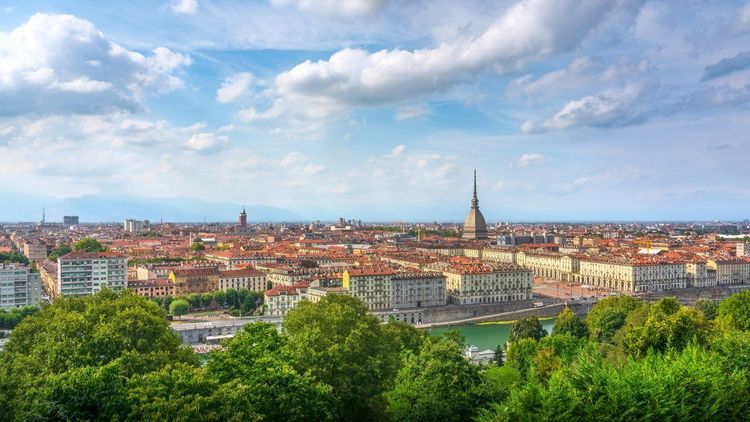
Turin was built on a grid plan inherited from the Romans, which makes it particularly easy to explore on foot: most sites in the historic centre are within 20 minutes' walk of each other. There is no need to rent a car, and it is even a handicap: parking in the very centre is paid and complicated.
The GTT network (bus, tram, metro) covers the rest of the city for more distant outings, such as the hill of Superga. The urban "City" ticket costs 1.90 euros in digital form (2 euros on paper) and is valid for 100 minutes, with one metro journey included; contactless payment by bank card works directly on board. On some weekends, vintage trams restored by the historic trams association run on historic line 7: a fun way to cross the city with no particular destination.
To cover the centre at your own pace rather than following a bus map, the Ryo audio guide to Turin offers a walking route that links the main squares without unnecessary detours, useful from the first day to get your bearings before diving into the museums. Bike sharing completes the offer for rides along the Po, where the riverbanks are well suited to cycling.
3-Day Itinerary in Turin: Day 1, the Historic Heart
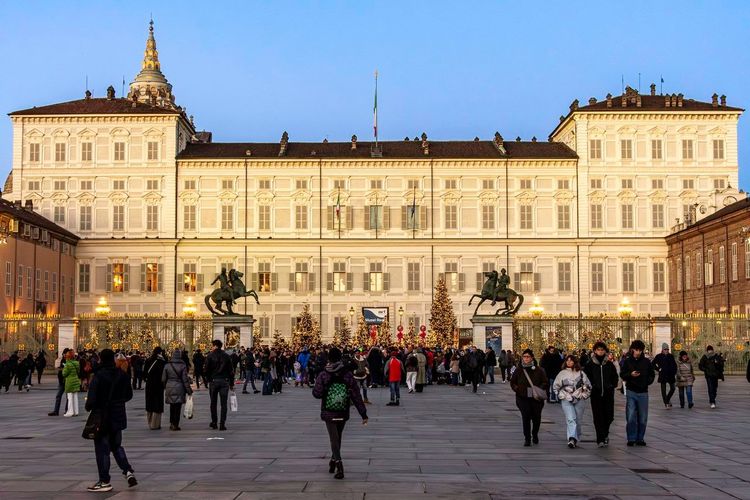
The first day focuses on the historic centre, where the city concentrates its heritage as capital of the Kingdom of Sardinia and then of unified Italy. Allow a full day, coffee included, to link the two poles that structure this part of the city: the royal palaces around Piazza Castello, then the old Roman quarter and the shopping arcades that run down towards Piazza San Carlo.
Piazza Castello and the Palaces of the House of Savoy
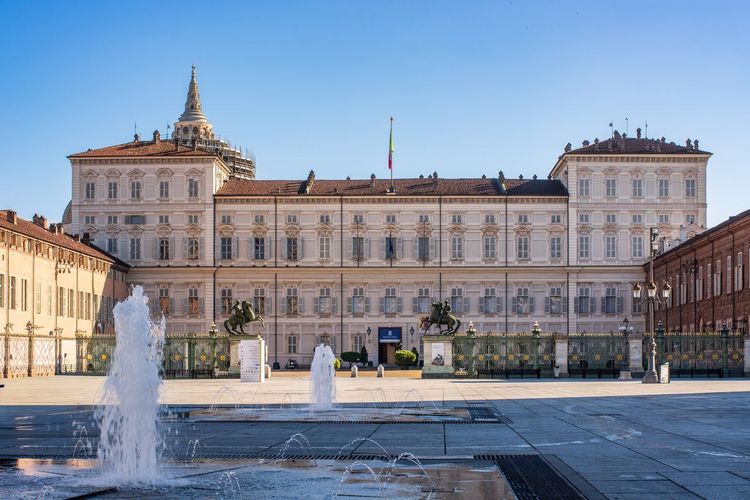
The Piazza Castello serves as ground zero for anyone visiting Turin for the first time: this vast rectangular square brings together several centuries of architecture, from medieval to Baroque.
In the centre, the Palazzo Madama has a double façade that sums up the building's history: a medieval castle at the back, and a Baroque façade by Filippo Juvarra at the front, added in the 18th century for the regent Marie Jeanne Baptiste of Savoy-Nemours, the "Madama Reale" from whom the palace takes its name. The interior now houses the city's museum of ancient art, with a collection ranging from medieval ceramics to 18th-century painting.
To the north of the square begins the Palazzo Reale, the official residence of the sovereigns of the House of Savoy until 1865. You can visit the royal apartments, but it is often the Galleria Sabauda, part of the same Royal Museums complex, with its Flemish and Piedmontese paintings, that keeps visitors longer than planned. Just behind, the Giardini Reali, originally designed by André Le Nôtre in the late 17th century, offer a green break before you resume walking.
If time allows, you can also step into the Cathedral of St John the Baptist, right next to the royal palace: this is where the Holy Shroud is kept, shown to the public only during exceptional expositions. The building itself, in Renaissance style, contrasts with the Baroque that dominates the rest of the district.
This district corresponds exactly to the route of the Ryo audio-guided tour of Turin, short version The Heart of the House of Savoy: a short loop to link the palaces without missing any of the details you discover when walking slowly, such as the sculpted mascarons on the façades or the line of arcades facing the square.
The Quadrilatero Romano and Piazza San Carlo
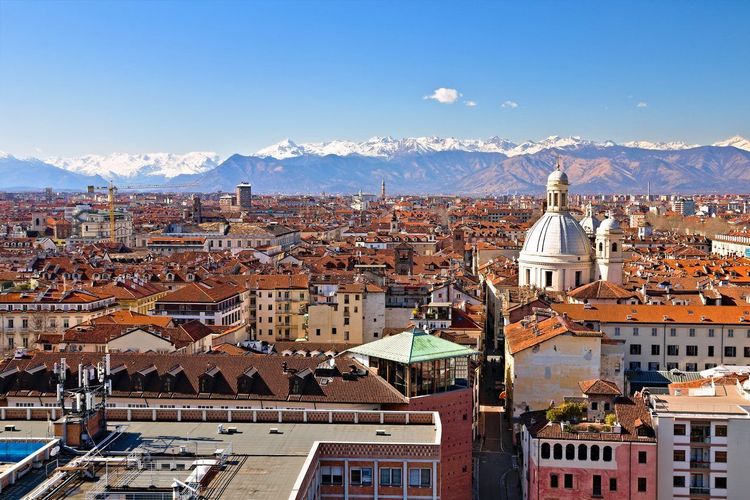
Heading west from Piazza Castello along Via Garibaldi, you enter the Quadrilatero Romano: the district that preserves the grid plan of the ancient Roman colony of Augusta Taurinorum, founded in the 1st century BC. The streets are narrow, lined with colourful façades, and the district comes especially alive at aperitif time, when the bars put their tables out on the cobblestones.
Then return to Piazza Castello and head south down Via Roma: a few minutes are enough to reach Piazza San Carlo, often described as Turin's drawing room. The twin churches framing its southern side, San Carlo and Santa Cristina, create a symmetrical effect photographed for generations; the equestrian statue in the centre depicts Emmanuel Philibert of Savoy, victor of the Battle of St. Quentin in 1557.
On this square you will find the Caffè San Carlo (Piazza San Carlo 156, 10123 Torino, rated 3.8/5 on Google from 2,506 reviews), open since 1822 and ranked among Italy's historic cafés: crystal chandeliers, mirrors and gilded mouldings create a décor that has barely changed since the 19th century. Having a coffee or hot chocolate in this setting, even for ten minutes, gives a good idea of what Turin's social life was like in the days of the House of Savoy.
Continuing south along Via Roma, the main shopping street, the arcades follow one after another all the way to Porta Nuova station. The artisan shops that remain between the big brands, coffee roasters and chocolate makers above all, are worth a few minutes of your time. You can end the first day here, window-shopping without a precise goal, or return to Piazza Castello by the small parallel streets to avoid the evening crowds.
Day 2: Museums and Views of the Alps
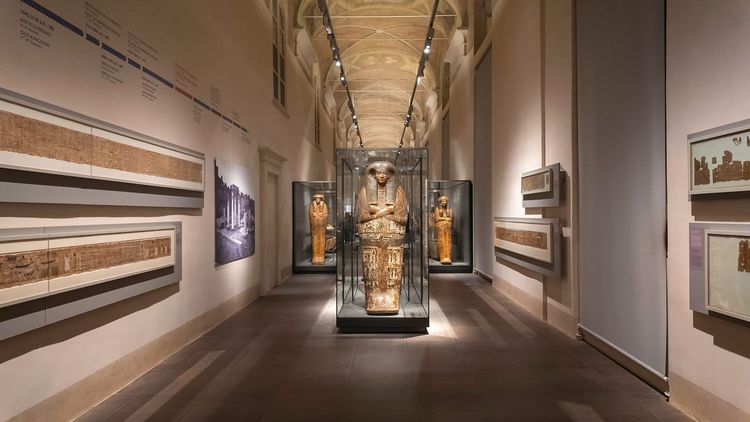
The second day shifts from royal Baroque to two experiences that sum up Turin's other identity: an Egyptological collection of world importance, and a panorama of the Alps reached by a means of transport that is itself over a hundred years old. Allow the morning for the museums, and the afternoon for the hill.
The Egyptian Museum and Turin's Great Collections
The Egyptian Museum of Turin) is, according to many Egyptologists, the world's second-largest collection devoted to ancient Egypt after the one in Cairo. Founded in 1824 from the acquisitions of King Charles Felix, it holds more than 40,000 pieces, of which only a fraction is on display: mummies, papyri, colossal statues and everyday pharaonic objects follow one another across several levels renovated in 2015.
Book your time slot online before you come, especially in high season: the museum deliberately limits the number of simultaneous visitors to preserve visiting comfort, and queues can grow around midday. Allow at least two hours for a visit that isn't rushed, three if you take the time to read the labels.
A few hundred metres away, the Palazzo Carignano deserves a detour for two reasons: its undulating Baroque brick façade, unique in Turin, and its role in Italian political history, since it is where Victor Emmanuel II was born and where the first Parliament of the unified Kingdom of Italy sat in 1861. The Risorgimento Museum, housed inside, tells this period through objects rather than text alone: uniforms, flags and private correspondence make up a visit of about an hour.
For an overview of the city before heading up to Superga in the afternoon, climb the Mole Antonelliana: this 167-metre spire, originally designed as a synagogue before being bought by the city, now houses the National Museum of Cinema. The glass panoramic lift rising through the centre of the dome offers a 360-degree view over the city and, on a clear day, over the entire Alpine arc.
If time is short, prioritise the Egyptian Museum over the Mole: the Egyptological collection remains the experience most often cited by visitors returning from a first stay in Turin.
The Basilica of Superga and the Rack Tramway
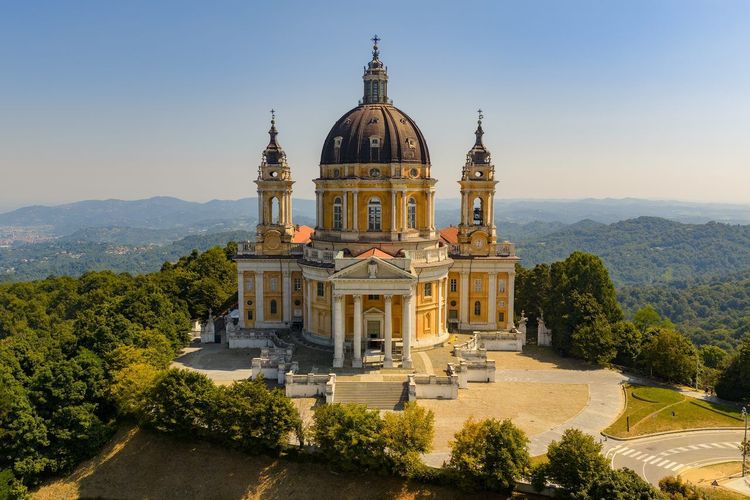
The afternoon lends itself to an outing beyond the centre, towards the hill that overlooks the city to the east. The Basilica di Superga (Strada Basilica di Superga 73, 10132 Torino, rated 4.7/5 on Google from 18K reviews), completed in 1731 on the orders of Victor Amadeus II to thank the Virgin for helping Turin withstand the French siege of 1706, occupies a promontory at 670 metres above sea level.
The basilica, designed like the façade of Palazzo Madama by Filippo Juvarra, can be seen from a good part of the city on a clear day. Beneath the church lie the royal tombs of the House of Savoy, in a crypt visited with a guide. The outdoor terraces offer a panorama over the Po plain and, on haze-free days, over the whole Alpine range as far as Monte Rosa. The best conditions are generally found early in the morning after a night of rain, when the air has cleared of the pollution that sometimes lingers over the plain.
To get up there, forget the taxi: the Cremagliera Tranvia da Sassi a Superga, opened in 1884 and nicknamed the "dentera" by the Turinese, climbs from the Sassi district in about twenty minutes, with a gradient reaching 21%. The journey itself, in wooden carriages that have come through the 20th century without losing their charm, is almost as much a part of the experience as the basilica. In 2026, it runs every day except Wednesday, with roughly one departure per hour and extended service on Saturday evenings in summer: check the GTT timetables before travelling to Sassi station, accessible by bus or tram from the centre.
One piece of advice that applies to the whole day: start early. Both the Egyptian Museum and the Basilica of Superga see their peak crowds between 11am and 4pm, especially at weekends.
Day 3: Parks, Market and Final Treasures
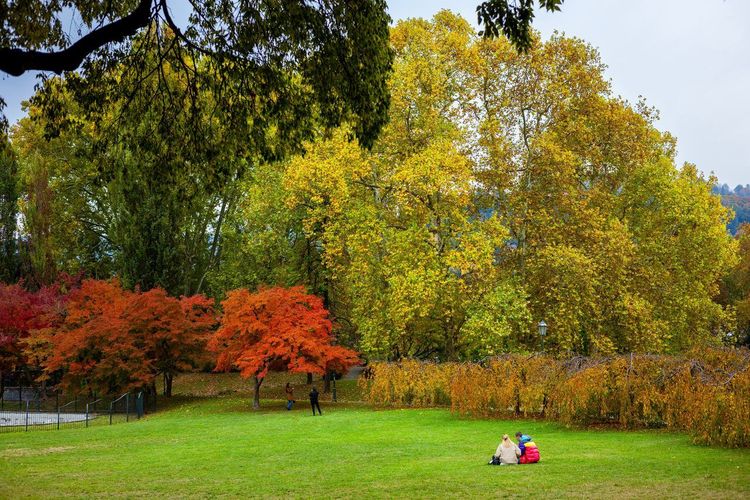
The third day allows a more leisurely pace: a large park on the banks of the Po, a reconstructed medieval village that isn't really one, and the liveliest market in the city before closing out the stay with a bit of shopping.
The Parco del Valentino and the Borgo Medievale
The Parco del Valentino stretches over some fifty hectares along the Po, just south of the historic centre: it is the Turinese's favourite green lung, with its shaded paths, early-morning joggers and benches occupied by students from the neighbouring campus.
In the heart of the park stands the Borgo Medievale, a complete reconstruction of a 15th-century village and castle, built for the Italian General Exhibition of 1884. The whole is by no means an authentic ruin, but the attention to detail (recreated craftsmen's workshops, frescoes copied from Piedmontese and Aosta Valley originals) makes it a curiosity that often surprises visitors who arrive with no preconceptions.
Also in the park, the Castello del Valentino, a residence of the House of Savoy listed as a UNESCO World Heritage Site along with the other Savoy residences, now houses the faculty of architecture: you will admire it mostly from the outside, except during occasional open days.
Then head back up to the San Salvario district, which borders the park to the west and extends to Porta Nuova station, known for its nightlife and restaurants. In the late afternoon, its terraces fill with students and young professionals rather than tourists, making it a good transition before dinner.
Shopping and the Porta Palazzo Market
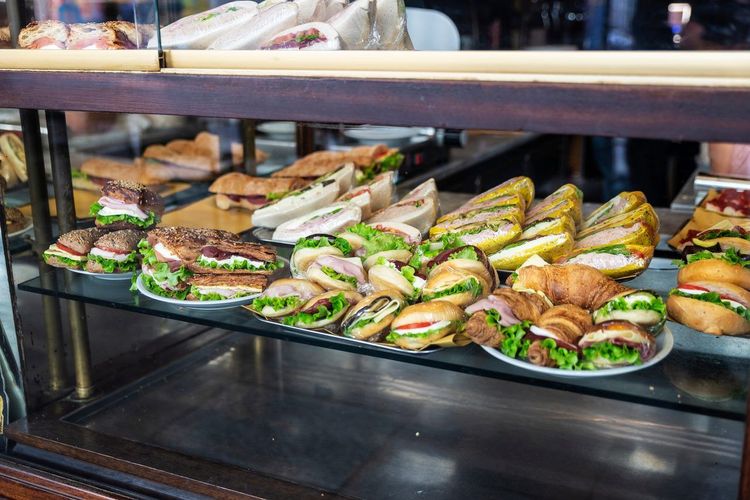
For last-minute purchases, Via Roma and its adjoining galleries (Galleria San Federico, Galleria Subalpina) bring together Italian and international brands under arcades, handy if Turin's rain, frequent in autumn, shows up at the wrong moment.
For a more local experience, head to the Mercato di Porta Palazzo (Piazza della Repubblica, 10152 Torino, rated 4.2/5 on Google from 31,198 reviews), north of the Quadrilatero Romano: with its open-air stalls and covered halls, it is often described as the largest open-air market in Europe, open every day except Sunday (mornings on weekdays, all day on Saturday). You'll find Piedmontese cheeses, fruit and vegetables, and on Saturdays the Balôn flea market sets up right next door, in the Borgo Dora district.
It is also a chance to pass through the Quadrilatero Romano one last time for its artisan shops. The Ryo audio guide to Turin covers precisely this area between the market and the Baroque centre: useful if you want to link the two without rechecking your map at every crossroads, with anecdotes triggered as you walk.
To end your stay, keep an hour before your train or flight to pass by Piazza San Carlo at sunset: the low light on the Baroque façades often provides the most beautiful image to take home from a first visit to Turin.
Excursions Around Turin: the Royal Residences of Savoy
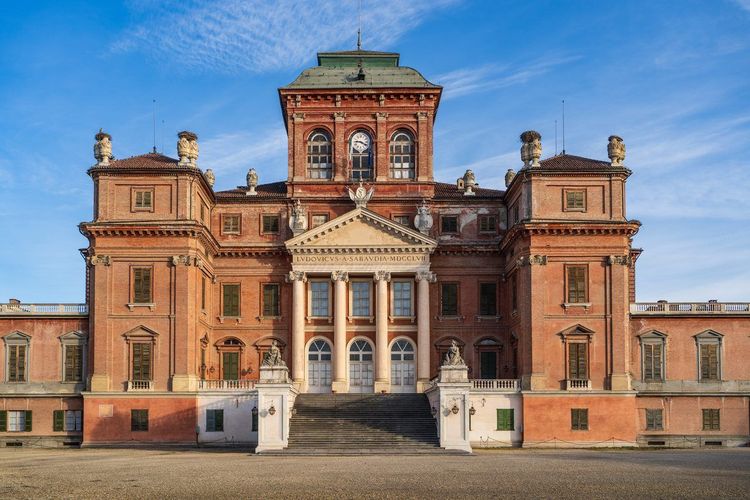
If you have a fourth day, or if you prefer to skip the Parco del Valentino, the residences of the House of Savoy that ring the city are worth half a day. Together with the palaces of the centre, they form a UNESCO World Heritage Site since 1997.
The Reggia di Venaria Reale
About ten kilometres north of the centre, the Reggia di Venaria Reale is often compared to Versailles: a hunting lodge turned monumental palace in the 17th century, enlarged the following century by Juvarra, who is responsible for its light-filled Grand Gallery. Abandoned for nearly two centuries, the residence reopened in 2007 after one of Europe's largest restoration projects, and its gardens can easily be toured in an hour or two. Allow half a day on site; the Torino+Piemonte Card covers admission.
Stupinigi and the Tradition of the Merenda Reale
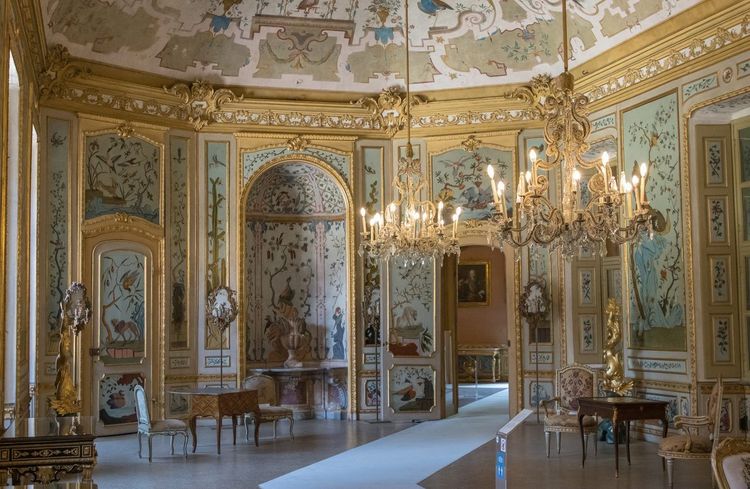
To the south-west of the city, the Palazzina di Caccia di Stupinigi is another masterpiece by Juvarra, begun in 1729: a star-shaped hunting lodge topped by a bronze stag, more intimate than Venaria and often less crowded.
These residences gave their name to a delicious ritual you will also come across in the city: the Merenda Reale, the afternoon snack of the Savoy court, served with a hot chocolate or a bicerin and a selection of Piedmontese biscuits. Several historic cafés and some residences offer it in the afternoon, a good way to extend the visit with a sweet break.
Where and What to Eat in Turin: Historic Cafés and Specialities
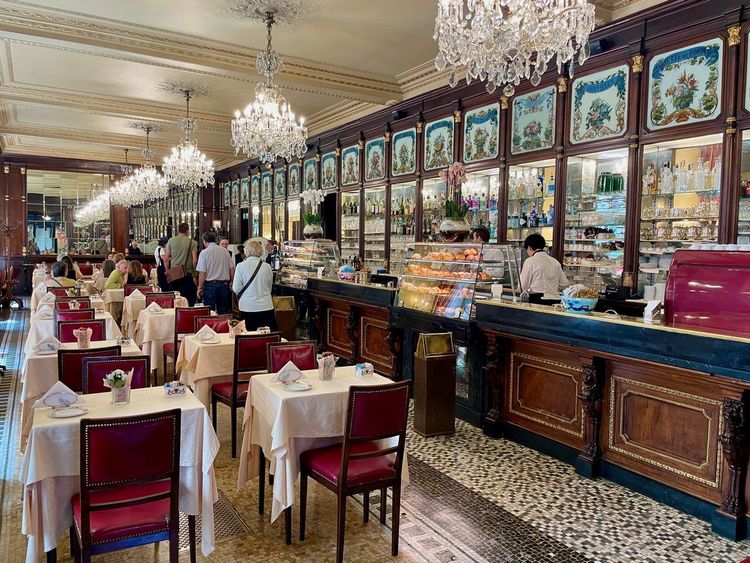
Turin's table owes as much to France as to Italy, a legacy of the Savoy court, which long looked towards the Alps rather than the south. Two experiences sum up this identity: the coffee ritual and the trio of chocolate, vermouth and wine that built Piedmont's gastronomic reputation.
Historic Cafés and the Bicerin Ritual
The bicerin is arguably the drink most associated with Turin: a layered blend of coffee, hot chocolate and cream, served in a small glass without a handle. The recipe is said to date from the 18th century, derived from an older drink called bavareisa.
The reference address remains Al Bicerin (Piazza della Consolata 5, 10122 Torino, rated 4.3/5 on Google from 3,935 reviews), a small café open since 1763 on Piazza della Consolata, right opposite the sanctuary of the same name. The interior, with its dark woodwork and small marble tables, holds barely twenty seats: expect a wait at busy times, especially at weekends.
Other historic cafés share the city's reputation: the Caffè San Carlo mentioned on the first day, but also the Caffè Baratti & Milano, installed in the Galleria Subalpina since 1875 and known for its chocolates and pastilles. Each of these places has seen Italian writers and politicians pass through, who made them a near-daily habit.
A practical tip: order at the counter if you are in a hurry and want to pay the local price; sitting at a table often costs double, a common practice throughout Italy rather than something specific to Turin.
Chocolate, Vermouth and Piedmont Wines
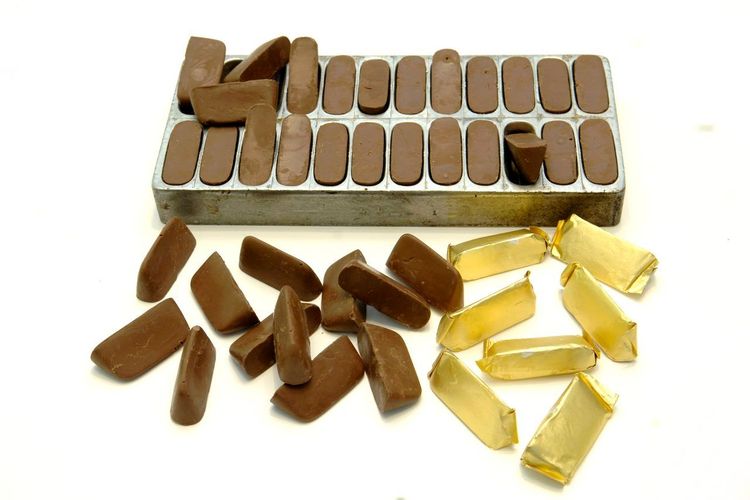
Turin claims the invention of the gianduiotto, the chocolate shaped like a small ingot. Its ancestor, gianduja paste, was born during the Napoleonic blockade, when a shortage of cocoa pushed chocolatiers to blend it with local hazelnuts; the gianduiotto itself was launched by the Caffarel house in 1865. Historic chocolatiers such as Peyrano or Stratta still sell them, individually wrapped in gold paper.
The vermouth is the other Turin speciality, to the point that the city claims its modern invention in 1786, attributed to the distiller Antonio Benedetto Carpano. Several bars in the Quadrilatero Romano keep the vermouth hour alive, the aperitif served with a small plate of Piedmontese charcuterie and cheeses to tide you over before dinner.
As for wine, Turin is about 1h15 by road from the vineyards of Barolo and Barbaresco, two of Italy's most renowned appellations. Without leaving the city, several wine merchants in the centre organise guided tastings that give a decent overview of these wines before, possibly, a dedicated excursion into the Langhe for a stay longer than three days.
For dinner, avoid restaurants directly on Piazza Castello or Piazza San Carlo, where prices climb without always justifying the quality: the alleys of the Quadrilatero Romano and the San Salvario district offer more authentic options at more reasonable prices, from the casual wine bar to the family trattoria.
Where to Stay for a First Visit to Turin
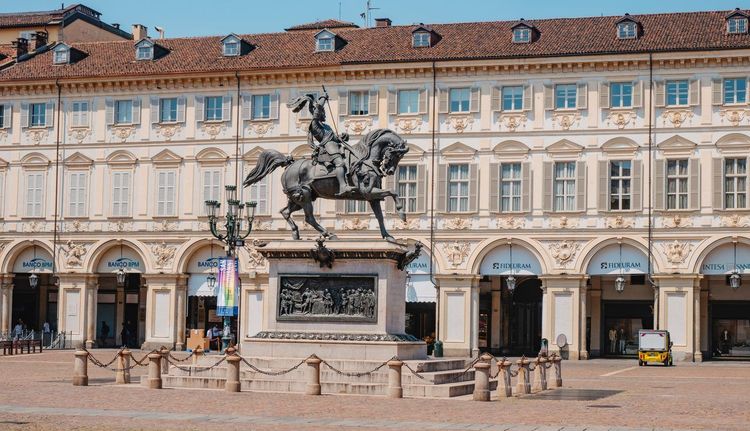
For a first stay, choosing the historic centre makes everything easier: you minimise travel on public transport and stay within walking distance of most of the sites mentioned above. The area around Piazza San Carlo and Via Roma has a wide choice of mid-range and high-end hotels, often housed in 19th-century buildings with high ceilings.
For a tighter budget without straying too far, the San Salvario district, just east of Porta Nuova station, offers a good compromise: a younger atmosphere, plenty of restaurants, and about fifteen minutes' walk from the historic centre. It is also a sensible choice if you arrive late or leave early, as the station is close by.
On the other hand, avoid booking too far from the centre to save a few euros on the nightly rate: repeated journeys quickly eat up the time saved, especially on a three-day stay where every hour counts. Out of season (November to February, excluding the Christmas period), hotel rates drop noticeably, and Turin is in any case less crowded than Florence or Venice even in high season.
Avoiding the Crowds at Turin's Must-Sees
Turin doesn't have the tourist volume of Rome or Florence, which doesn't stop some places from filling up at the same times as anywhere else in Italy. The Egyptian Museum, in particular, peaks between 11am and 3pm; booking the first or last slot of the day makes a real difference to visiting comfort.
The same logic applies to the Basilica of Superga: on weekdays, aim for the first ride up in the morning, before the arrival of organised groups, who generally go up after lunch. At weekends, it is better to aim squarely for opening time.
Piazza San Carlo and the Quadrilatero Romano never really empty, but their atmosphere changes completely between midday and late afternoon: if you are looking for photos without too many people, the hour after shops open, around 9:30–10am, remains the quietest.
One last useful tip: in July and especially August, holiday season for a large part of the Italians, some restaurants and shops close for annual leave, while tourist sites remain fully open. Check the summer opening hours if your stay falls in this period.
What to Do in Turin When It Rains or in Winter
It rains in Turin more often than you might imagine, especially in spring and autumn: fortunately, the city has more than 18 kilometres of arcades in its historic centre, about a dozen of them continuous, which lets you link a good part of the sites mentioned above while staying dry.
Days of heavy rain are well suited to a museum day: the Egyptian Museum, the Mole Antonelliana and Palazzo Madama can all be visited entirely indoors, and the Torino+Piemonte Card saves you from going back to the ticket office. The Automobile Museum (MAUTO), a little out of the way but accessible by metro, offers another indoor option for motoring enthusiasts, with a collection tracing the industrial history of the city, birthplace of Fiat.
In winter, Turin takes on a different look: the Luci d'Artista light installations transform the streets of the centre from late autumn, with Christmas markets setting up on several squares. Temperatures can drop below zero in January, but the dry cold is generally more bearable than the damp of some Italian cities at the same time of year. Just remember to check the reduced hours of the Basilica of Superga and its tramway, often scaled back out of season.



FAQ
How many days do you need to visit Turin for the first time?
Three days cover the essentials: the historic centre and its palaces, one major museum, and an excursion such as the Basilica of Superga. With only two days, focus on Piazza Castello, the Egyptian Museum and the Quadrilatero Romano, dropping Superga or the Parco del Valentino depending on your priorities. A fourth day lets you add the Reggia di Venaria Reale.
What is the best time of year to visit Turin?
Spring (April to June) and early autumn (September to October) offer the best balance between mild weather and moderate crowds. December appeals for its Christmas atmosphere, despite the cold, while in July and August some local businesses close for the holidays.
Is Turin an expensive city to visit?
No, Turin remains more affordable than Milan, Florence or Venice for both accommodation and dining. A decent meal can be found for around 15 euros, and the Torino+Piemonte Card quickly pays for itself if you visit several paid museums.
Do you need to speak Italian to visit Turin?
It isn't essential in tourist areas, where English is generally understood, but a few words of Italian make exchanges easier in more local cafés and markets such as Porta Palazzo.
Is the Egyptian Museum in Turin really worth the detour?
Yes: with more than 40,000 pieces and a museum layout renovated in 2015, it is one of the most important Egyptological collections in the world outside Egypt. Book your time slot in advance to avoid waiting, especially in high season.
How do you get from central Turin to the Basilica of Superga without a car?
Take the tram or bus to Sassi station, then the Cremagliera Tranvia da Sassi a Superga, a rack tramway opened in 1884 that climbs in about twenty minutes. It doesn't run on Wednesdays: check the GTT timetables, which are reduced outside the high season.
Where should you stay for a first visit to Turin?
The historic centre, around Piazza San Carlo and Via Roma, remains the most practical choice for a short stay: you minimise travel to the main sites. San Salvario, east of the station, offers a more affordable alternative fifteen minutes away on foot.
Can you visit Turin in winter or in the rain?
Yes, easily: more than 18 kilometres of arcades cover the historic centre, and the major museums (Egyptian Museum, Mole Antonelliana, Palazzo Madama) can be visited entirely indoors. Winter adds the Luci d'Artista light installations in the streets of the centre.
Three days are enough to understand why Turin continues to divide travellers between those who find it austere at first glance and those who, once they have tamed the arcades and historic cafés, come away completely won over. Between the palaces of Piazza Castello, the Egyptian Museum, the Basilica of Superga and a bicerin enjoyed at the counter of Al Bicerin, the city offers a condensed version of northern Italy that has nothing to envy its better-known neighbours, for a fraction of their tourist crowds.
If you want to retrace this route step by step, without rechecking your position at every crossroads, our Ryo audio-guided tour of Turin covers the essentials of the historic centre described in this guide, from the royal palaces to the Quadrilatero Romano, to be listened to as you walk and at your own pace rather than set to a group's schedule. A perfect way to turn this first visit into a desire to return.