© Shutterstock
 Votre guide Ryo
Visiting the Doge's Palace in Venice: Tickets, Hours, and Itinerary 2026
For nearly a thousand years, all the power of the Serenissima was held within a single pink-and-white building perched on the edge of the lagoon. Visiting the Doge's Palace means crossing in a single morning the rooms where wars, trials, and commercial alliances were decided — the very deals that built Venice's fortune — all the way to the cells connected to the building by the Bridge of Sighs. Before pushing open the heavy door of the Piazzetta, consider opening the Ryo app: its audio guide accompanies you room by room, so you never have to bury your nose in a brochure to understand what you're looking at.
In the pages that follow, you will find the exact ticket price and the trick to skipping the queue, opening hours by season, and a list of the rooms that are truly worth your time — starting with a 1,300 m² space with no central pillar, covered by the largest oil painting ever made. You will also learn how long to budget, how to reach the entrance by vaporetto, why the Sala del Maggior Consiglio displays one portrait blacked out among 76 others, and how to plan the rest of your stay around St. Mark's Square. Ryo's audio-guided tour, linking the Doge's Palace to the Bridge of Sighs, picks up right where these pages leave off.
The Doge's Palace: a Thousand Years of Venetian Power
The first palace built on this site dates back to the 9th century, during the rule of Doge Angelo Participazio, at a time when Venice was still no more than a federation of fortified lagoons. That original building looked far more like a fortress than the Gothic monument we discover today: it was destroyed and rebuilt several times, notably after the fires of 976 and 1106, and was extensively remodelled over the following centuries.
The structure visible in 2026 dates for the most part from the 14th and 15th centuries, driven by doges such as Francesco Foscari, who commissioned the Porta della Carta and much of the wing facing the Piazzetta. The building then combined three functions in a single location: official residence of the doge, seat of the government of the Republic, and law court, with its own adjoining prisons. This combination explains the complexity of the interior layout, designed to allow magistrates, ambassadors, and the accused to circulate without crossing paths.
It is important to understand that the doge, despite his splendour, was not a king. Elected for life through a dizzying electoral process mixing successive lotteries and ballots, he governed surrounded by councils that constrained his every move. It is these collegial institutions — the Grand Council, the Senate, the formidable Council of Ten — that give their names to the great halls you will walk through. Each room corresponds to a precise cog in the Venetian political machine, and that is the great fascination of the visit: you are not simply touring a backdrop, but the life-size org chart of a thousand-year-old republic. To grasp the scale of this machine, one figure suffices: in the 16th century, the Grand Council brought together up to nearly two thousand patricians, all registered in the Libro d'Oro, the Golden Book of Venetian nobility. It was precisely because such an assembly needed to be seated that the Grand Council chamber reaches such extraordinary dimensions: the architecture here simply translates, in stone and painted canvas, the reality of collegial power.
The Serenissima occupied this palace until its fall in 1797, when Napoleon Bonaparte put an end to eleven centuries of Venetian independence. The building subsequently went through various administrative uses before being transformed into a museum, today managed by the Fondazione Musei Civici di Venezia. You are therefore not walking through a reconstruction: every room genuinely served to govern one of the wealthiest maritime powers in Europe.
Doge's Palace Tickets: Prices and Booking
The standard ticket is purchased on the museum's official website, palazzoducale.visitmuve.it, and grants access not only to the Palazzo Ducale but also to the combined circuit of the Musei di Piazza San Marco, which includes the Museo Correr, the Museo Archeologico Nazionale, and the monumental rooms of the Biblioteca Marciana. Expect to pay around 35 euros at full price, or 30 euros if you book online at least 30 days in advance — the difference is not negligible for a family. The reduced rate, around 15 euros, applies to children aged 6–14, students aged 15–25, those over 65, and certain other categories, with free admission for children under 6.
Booking online through the official website remains the best option: it avoids the queue that regularly stretches all the way to the Piazzetta during peak season, and guarantees a specific time slot. Paper tickets bought from resellers near the square almost always cost more for the same access, with no queue-jumping benefit whatsoever. If you plan to visit several Venetian museums during the week, also take a look at the Museum Pass for civic museums, which can prove worthwhile from the third site onwards.
If the history of Venetian institutions intrigues you, the "Itinerari Segreti" (Secret Itineraries) guided tour is worth the surcharge. It takes a small group through the ducal chancellery, the torture chamber, the Piombi cells installed beneath the lead roof, and all the way to the cell from which Casanova made his famous escape in 1756. Expect around 40 euros at full price, 20 euros at the reduced rate for those over 65 and students, with admission to the palace and the square's museums included. The tour lasts approximately 1h15 and offers English-language slots every day; in peak season, it is best to book several days in advance, as these limited-capacity departures sell out quickly.
One final practical note: St. Mark's Basilica, just opposite, operates its own ticketing system. Entry to the main nave is free, but certain areas (the Pala d'Oro, the treasury, the terraces) require a separate ticket. There is, as of today, no official single ticket covering both the palace and the basilica in its entirety: plan for two separate bookings if you want to see everything, and expect two independent queues.
Opening Hours and the Best Time to Visit
From April to October, the palace is open from 9 am to 7 pm, with last admission at 6 pm. From November to March, hours are reduced to 9 am–6 pm, with last admission at 5 pm. The site remains closed on 25 December and 1 January, and hours may occasionally vary during official events: it is therefore worth checking the hours page on the official website the day before your visit.
The peak crowd window falls between 10 am and 2 pm, when cruise ships disgorge their passengers onto the Piazzetta. If you have the choice, aim for opening time at 9 am or, alternatively, the last two hours before closing: the raking light on the Verona marble façade is also at its most beautiful then. The months of November through February, outside the Christmas and Carnival periods, offer the lowest visitor numbers of the year and allow you to discover the monument in ideal conditions.
A word on Carnival: if you are travelling to Venice during the two weeks leading up to Shrove Tuesday, expect record crowds across the whole of St. Mark's Square. The spectacle of the costumes is well worth it, but book your time slot well in advance and aim without fail for the first hour of opening.
How to Get to the Doge's Palace
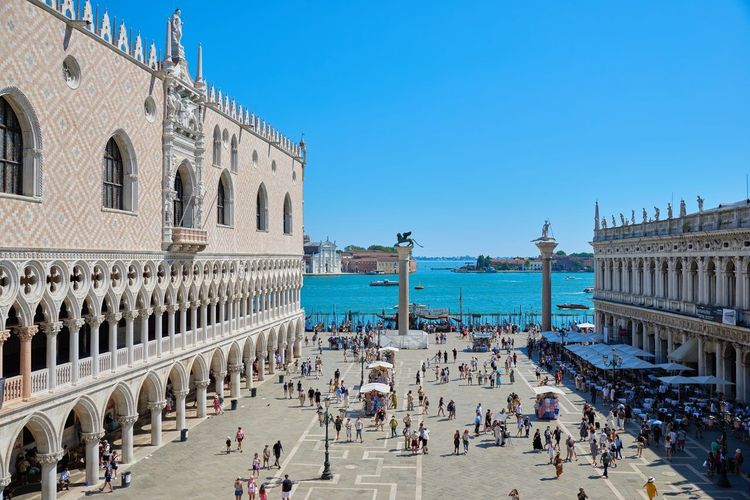
The palace stands on the edge of the lagoon, at the southern corner of St. Mark's Square, impossible to miss once you emerge onto the Piazzetta. From Santa Lucia station or Piazzale Roma, the simplest option is to take the vaporetto on line 1 or 2 and get off at the San Marco-San Zaccaria or Vallaresso stop: from there, the entrance is just a few minutes' walk along the waterfront.
If you are staying in the historic centre, reaching the palace on foot is often the most pleasant option: simply follow the yellow signs marked "Per San Marco", which are ubiquitous throughout the alleyways. Allow around twenty minutes from the Rialto at a leisurely pace. Visitors enter through the Porta del Frumento, on the lagoon side, and not through the monumental Porta della Carta, which you will admire from the courtyard.
Guided Tour, Audio Guide, or Self-Guided Visit
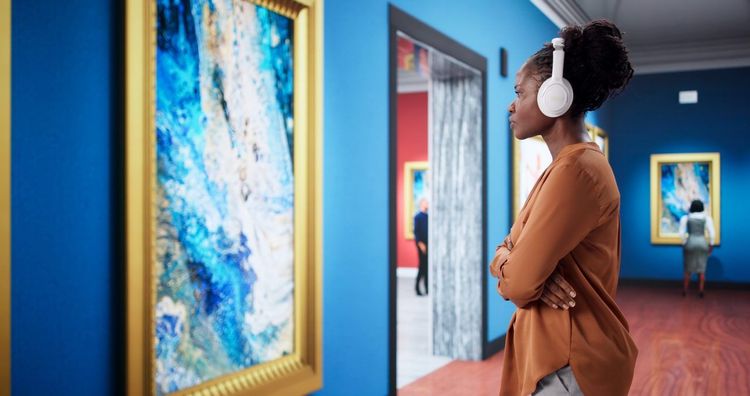
The standard ticket allows you to rent a multilingual audio guide on-site for a modest supplement, with an identity document left as a deposit. Small-group guided tours led by accredited guides are also available and last on average 1h30, with a quicker pace through the busiest rooms.
For a more independent experience, the Ryo audio guide offers a narrated circuit linking the monument to the surrounding buildings on St. Mark's Square, with no group schedule to follow. You move at your own pace, linger as long as you like in front of Tintoretto's Paradise, and resume listening whenever you are ready. This format suits families with young children particularly well, or travellers who prefer to wander rather than follow a guide at a brisk march.
If your schedule is tight, the classic circuit (without the Secret Itineraries) works perfectly well as a fully independent visit using the simple map handed out at the entrance. The rooms are numbered and the visiting order is clearly marked, making the self-guided option entirely workable even without an audio guide. Choose whichever pace fits your Venetian day.
How Long to Allow for the Visit
The main circuit takes on average between 1h30 and 2h, walking at a relaxed pace and pausing in the grand state rooms. Add just over an hour if you opt for the Secret Itineraries tour, which takes place separately before or after the classic circuit.
If you plan to continue with the Museo Correr, the basilica, and possibly the Campanile, allow half a full day. Many visitors underestimate this and find themselves rushing through the last rooms twenty minutes before closing. It is better to plan generously: the mosaics of the basilica and the view from the Campanile deserve more than a hurried glance.
The Itinerary Inside: Rooms Not to Miss
The visit begins in the Courtyard of Honour, where the Giants' Staircase stands, adorned with statues of Mars and Neptune sculpted by Jacopo Sansovino. It was on this landing that doges received their crown, the corno ducale, during their investiture. The courtyard itself blends several centuries of architecture, from flamboyant Gothic to later Renaissance additions, and it is worth looking up before you even enter the building.
Inside, the Golden Staircase (Scala d'Oro), covered in 16th-century gilding and stucco, leads to the official apartments. It was reserved for members of the Grand Council and foreign dignitaries — a detail that gives a sense of the strict hierarchy governing life in the palace.
Next comes the sequence of institutional rooms at the heart of Venetian power. The Anticollegio, the antechamber where ambassadors waited, houses several masterpieces including Veronese's Rape of Europa and mythological canvases by Tintoretto: this small space alone concentrates more first-rate painting than many entire museums. The adjoining Sala del Collegio, where the doge officially received delegations, is admired above all for its ceiling painted by Veronese. Further on, the Sala del Senato housed the legislative power, while the dreaded Sala del Consiglio dei Dieci, the secret tribunal responsible for state security, bore a name that was enough to make suspected conspirators tremble. The Sala d'Armi, slightly set apart, preserves a collection of armour and ancient weapons that gives a very tangible sense of the Serenissima's military might.
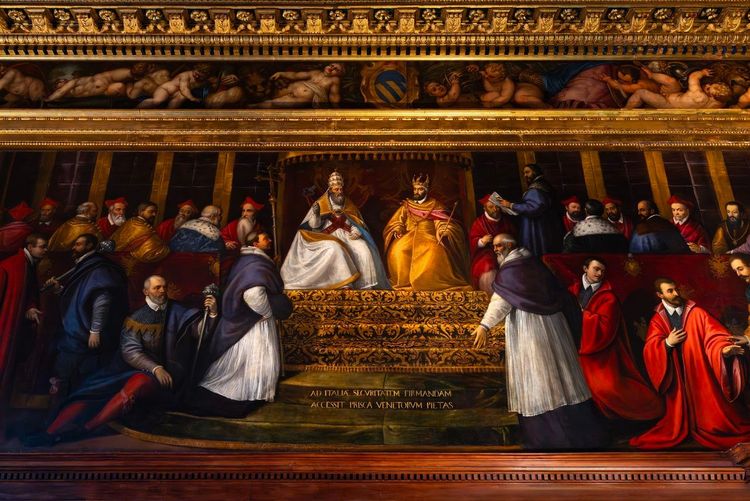
The highlight of the circuit remains the Sala del Maggior Consiglio, one of the largest rooms in Europe built without a single central pillar to support the roof, covering nearly 1,300 m². The far wall is occupied by Tintoretto's Paradise, considered the largest oil painting ever made, at roughly 22 metres wide. Running around the entire room is a frieze of 76 portraits of doges, all painted in identical fashion — with one exception: that of Marino Falier, beheaded in 1355 for attempting a coup d'état, has been replaced by a simple black veil. This detail, almost invisible if you do not know where to look, encapsulates in a single image the political brutality that lurked behind the magnificence of the place.
Just beside it, the Sala dello Scrutinio, the ballot-counting room, extends the experience with an immense Last Judgment and a large fresco celebrating the Battle of Lepanto, the naval victory of 1571 that was Venice's great pride.
Also watch out, along the circuit and in the corridors, for the famous Bocche di Leone: these stone mouths shaped like lion heads served as denunciation boxes. Any Venetian could slip a letter inside accusing a neighbour of fraud, smuggling, or plotting against the state, and the Council of Ten would take care of the rest. Some still bear inscriptions specifying the type of offences they were meant to receive. This detail, easy to miss, says much about the climate of surveillance that pervaded the Serenissima, behind the gilded veneer of the ceilings. From the last room, a covered passageway then leads to the Bridge of Sighs and the former prisons, the final stage before exiting the circuit.
The Bridge of Sighs and the Former Prisons
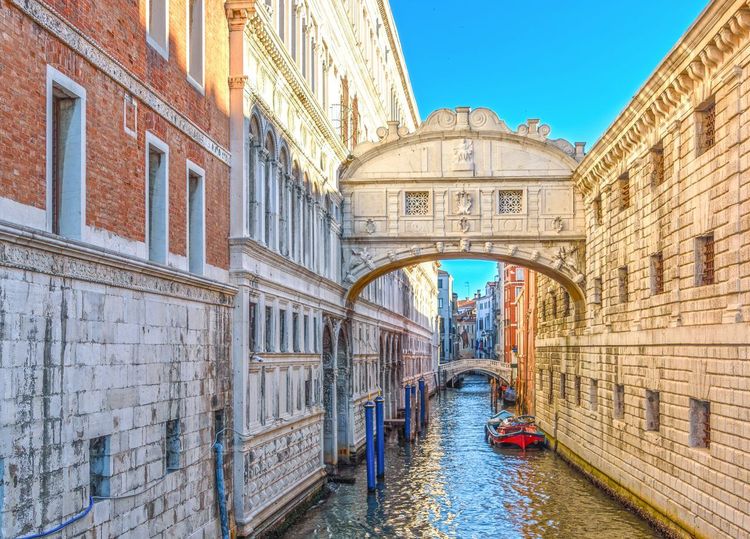
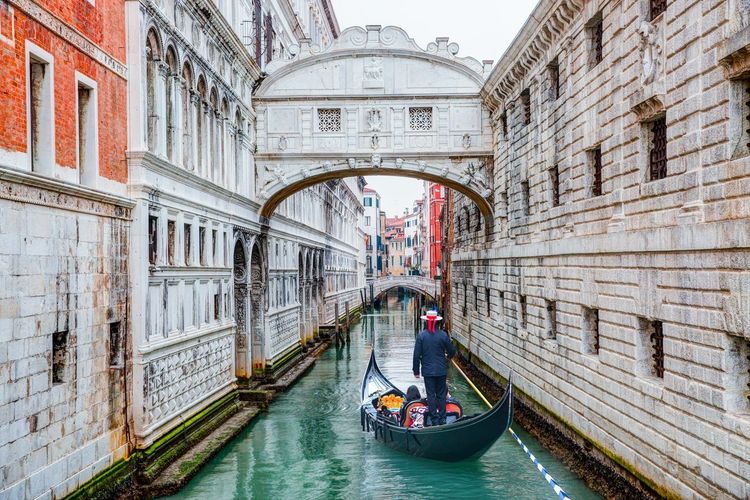
Built at the very beginning of the 17th century by the architect Antonio Contino, the Bridge of Sighs connects the palace's interrogation rooms to the Prigioni Nuove, the new prison built on the other side of the canal. Contrary to what its romantic silhouette might suggest from the gondolas passing beneath it, the bridge owes its name to the sighs of prisoners who, as they crossed it, caught one last glimpse of the lagoon before being led to their cell.
On the detention side, two worlds coexisted. The Piombi (i Piombi), set beneath the lead roof, were suffocating in summer and freezing in winter, but were reserved for prisoners of higher standing: it was from here that Casanova pulled off his famous escape in 1756. The Pozzi, by contrast, were dark, damp dungeons installed at water level, where the most harshly treated inmates were held. Moving between the two, through the dimly lit corridors, gives a very physical sense of Venetian justice.
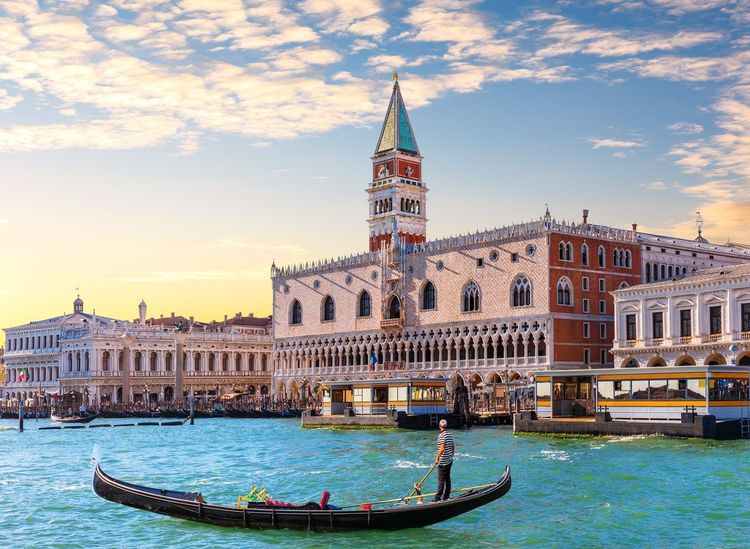
Tourist legend now has it that couples who kiss in a gondola beneath the bridge at sunset are guaranteed eternal love. This is a 19th-century invention, largely popularised by the poet Lord Byron, but it continues to draw a line of boats every evening beneath the white stone arch.
The cells themselves, in bare stone and dimly lit, contrast sharply with the splendour of the state rooms you have just walked through. Some still preserve graffiti carved by former inmates — a rather striking reminder that this place was not merely a backdrop for festivities and diplomacy.
A Gothic Façade Unlike Any Other
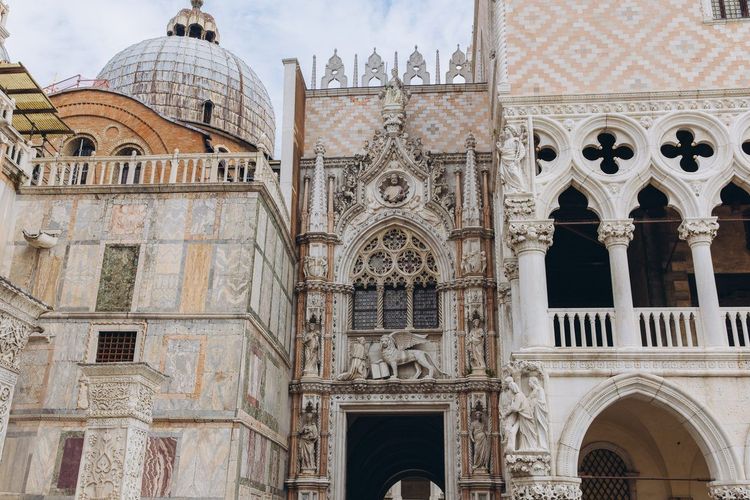
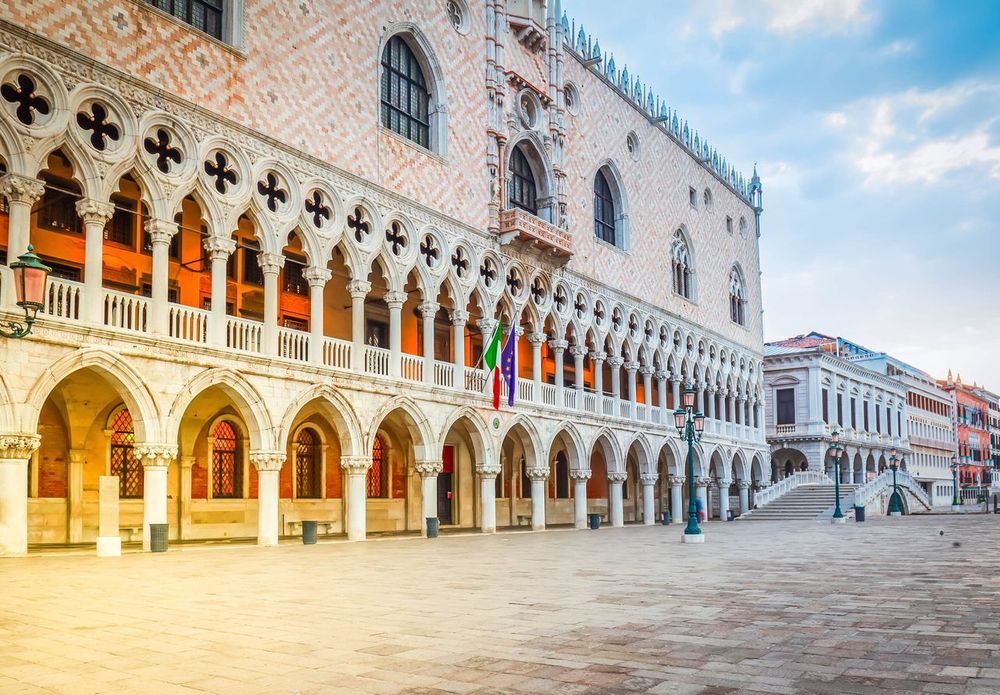
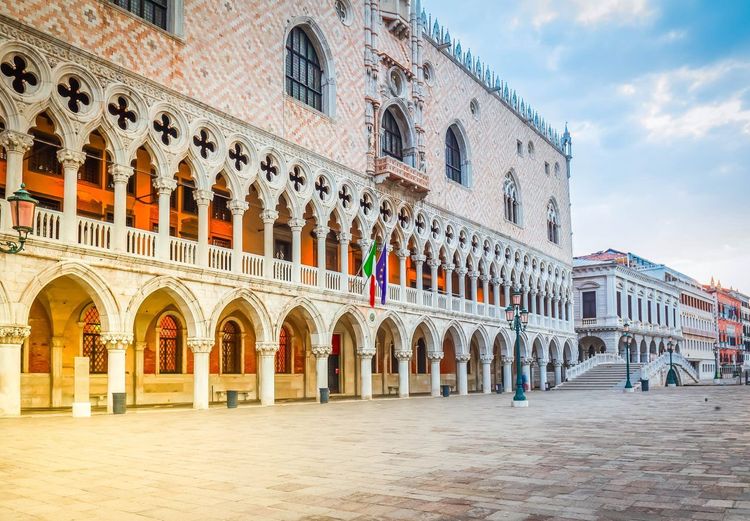
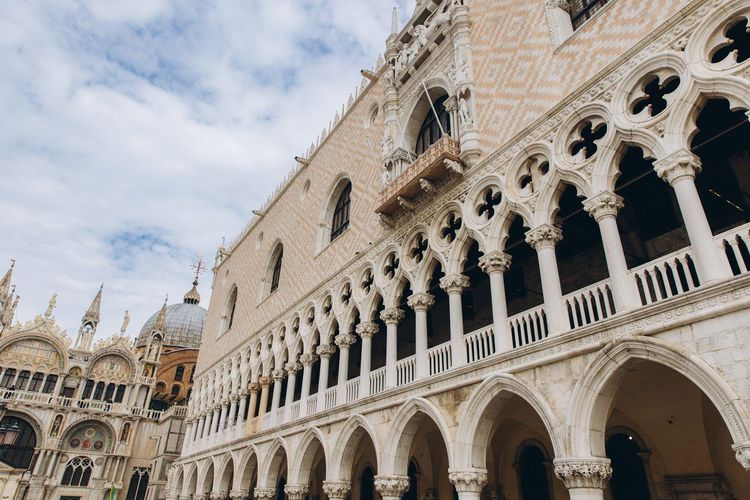
On both the lagoon side and the Piazzetta side, the façade plays a trick on classical Gothic architecture: rather than lightening the upper portion of the walls, it inverts the usual principle. The ground floor opens onto a light arcade of pointed arches, surmounted by an almost equally airy loggia of slender columns, while the upper storey — theoretically the heaviest — closes in on a solid wall of pink-and-white Verona marble pierced by only a few windows. This inversion of masses, rare in European medieval architecture, gives the building its distinctive appearance, as though it floats above the water.
At the corners of the palace, 14th-century sculptural groups depict biblical scenes: the drunkenness of Noah, the temptation of Adam and Eve, the Judgment of Solomon. These reliefs, worn by centuries of sea air, are often overlooked by visitors eager to get inside, yet they rank among the oldest sculpted elements still visible on the building. Take thirty seconds to spot them before crossing the threshold: it is a reading of the façade that most tourists miss entirely.
Tips for Avoiding the Crowds
Book your time slot online before you leave: this saves you from the queue that starts forming from 9:30 am in peak season. If you are travelling off-season, between November and February, outside the Christmas and Carnival periods, the rooms can be explored with almost no jostling.
Avoid Wednesdays and Thursdays in summer if possible, as several cruise ships often dock at Venice at the same time on those days. The Secret Itineraries tour, in a small group and by reservation, also remains the most peaceful way to explore the interior, even in the middle of peak season: while the crowds pile into the Sala del Maggior Consiglio, you are walking corridors that the majority of visitors will never see.
Visiting with Children: What Works
The long enfilades of state rooms, however sumptuous, can quickly tire younger visitors. Three sections tend to hold their attention: the Sala d'Armi with its armour, swords, and ancient crossbows, the crossing of the Bridge of Sighs, whose story of prisoners captures the imagination, and the discovery of the dark dungeons just beyond. Turn the visit into a treasure hunt: ask them to spot the blacked-out portrait in the Grand Council chamber, or to count the lion-head denunciation boxes.
On the practical side, admission is free for children under 6 and at a reduced rate for those aged 6–14. Note, however, that the Secret Itineraries tour is only permitted from the age of 6, and its narrow staircases are not suitable for pushchairs, which are best left at the cloakroom for this part of the visit.
Accessibility and Practical Information
Part of the palace, including the Courtyard of Honour and several rooms on the main circuit, is wheelchair-accessible, with a lift serving certain floors. Some older areas, particularly around the prisons and the Secret Itineraries, remain difficult to access due to steps and narrow passages, and are not recommended for those who suffer from vertigo or claustrophobia.
A free cloakroom allows you to leave bulky backpacks and umbrellas — deposit is compulsory for luggage exceeding a certain size. Photography is permitted in most rooms, with no flash, and toilets are available near the entrance and in the inner courtyard. Finally, bring water in summer: the circuit is entirely indoors, with no garden or shaded courtyard to rest in, and refreshment points are rare once you have passed through the ticket check.
Around the Palace: St. Mark's Square and Basilica
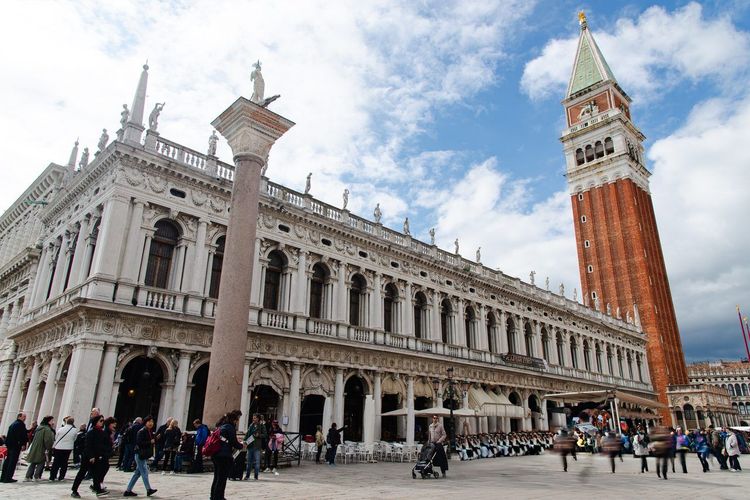
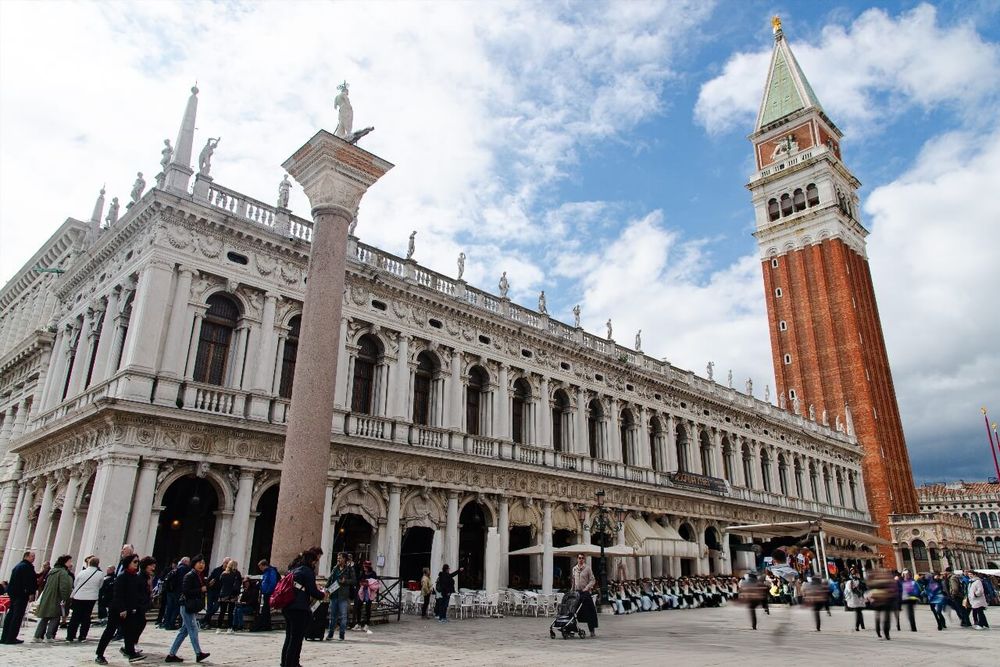
On your way out, you emerge directly onto St. Mark's Square, Venice's symbolic heart for a thousand years.
St. Mark's Basilica, with its five Byzantine domes and golden mosaics, is just a few minutes' walk away. Look up towards the gilded vault: more than eight thousand square metres of mosaics tell the story of the saints — a decorative scheme without equal in Western Europe.
Many visitors then continue to the Campanile di San Marco (Piazza San Marco, 30124 Venice, rated 4.7/5 on Google from 10,089 reviews), whose summit offers an unobstructed view over the tiled rooftops and the lagoon, or to the Clock Tower, less well known but just as steeped in history.
If time allows, take a few minutes to sit on the steps of the square and look at the façade from the lagoon side: it is often only from this distance, once the visit is over, that the true scale of the building reveals itself. Ryo's audio-guided tour continues on to St Mark's Basilica just steps away, keeping the story going.
Where to Eat and Stay Near the Palace
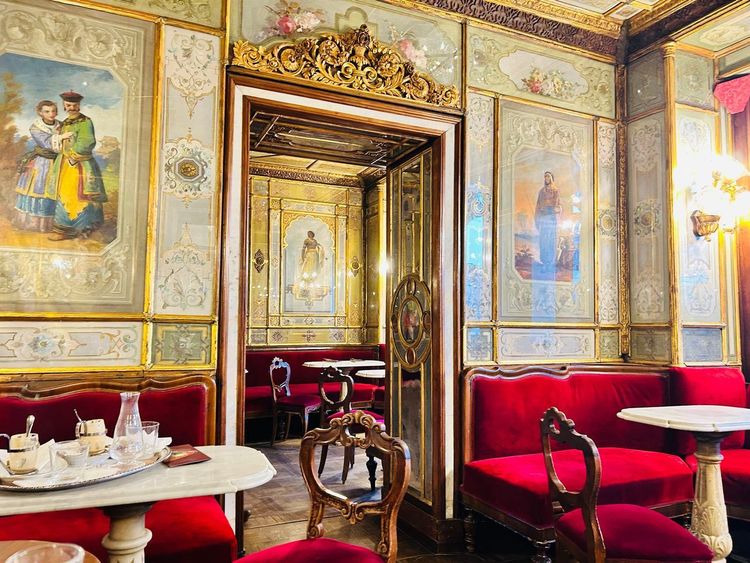
Just steps from the exit, Caffè Florian (Piazza San Marco 57, 30124 Venice, rated 3.8/5 on Google from 7,801 reviews), open since 1720, remains one of the square's historic addresses — even if the prices are, unsurprisingly, commensurate with the view and the orchestra playing beneath the arcades.
For a more affordable meal, it is better to move a few hundred metres towards the Castello or Cannaregio districts, where the bacari (small wine bars) serve cicchetti and spritz at rates considerably gentler than on the square itself. This is also where you will encounter the most Venetians, far from the crowds of the Piazzetta. Local tradition, in fact, calls for hopping between bacari at the end of the day, a glass and a bite at each stop: an economical and delicious way to dine without ever sitting down at a proper table, and a welcome counterpoint to the palace's splendour.
On the accommodation side, staying in the San Marco district offers undeniable convenience for reaching the palace at opening time, but at a high cost. The Dorsoduro or Cannaregio neighbourhoods, fifteen to twenty minutes on foot, offer a better value for money while remaining a reasonable walk from St. Mark's Square.
Going Further: More Treasures of Italy to Discover
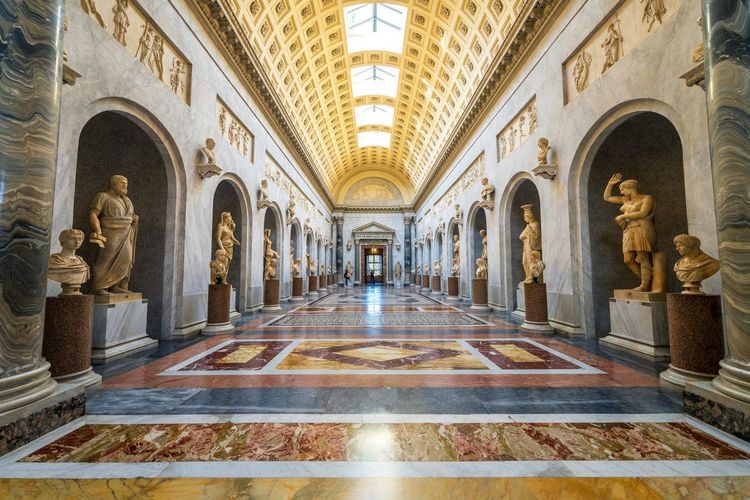
If the rooms of Venetian power have given you a taste for great historic monuments, Italy is full of sites of the same calibre. Rome, a few hours away by train, is home to one of the largest museum complexes in the world: our Ryo article on visiting the Vatican in Rome details the must-sees of the Sistine Chapel and the pontifical museums.
If your trip extends beyond Italy, our Ryo guide to the Theatre of Dionysus in Athens offers another journey through history — that of the ancient theatre where Greek tragedies were born. Two different ways, but equally rich, of understanding how power and art staged themselves across the centuries in the Mediterranean world.
FAQ
What is the ticket price for the Doge's Palace?
The full-price ticket costs around 35 euros, or 30 euros if you book online at least 30 days in advance, and grants access to the palace as well as the combined circuit of the museums on St. Mark's Square, including the Museo Correr and the Museo Archeologico Nazionale. The reduced rate, around 15 euros, applies to children aged 6–14, students aged 15–25, and those over 65, with free admission for children under 6.
Where can I buy tickets on the official Doge's Palace website?
Tickets can be purchased directly at palazzoducale.visitmuve.it, the museum's official website. Booking online allows you to choose a specific time slot, take advantage of the advance-purchase rate, and avoid the queues that regularly form at the entrance during peak season.
How long does a visit to the Doge's Palace take?
Allow between 1h30 and 2h for the main circuit. If you add the Secret Itineraries tour, plan for just over an extra hour, and half a day if you continue on to the basilica and the Museo Correr.
What are the opening hours of the Doge's Palace?
From April to October, the palace is open from 9 am to 7 pm, with last admission at 6 pm. From November to March, hours are reduced to 9 am–6 pm, with last admission at 5 pm. The site is closed on 25 December and 1 January.
Is it necessary to book a guided tour of the Doge's Palace?
It is not required for the standard circuit, which can easily be visited independently using the map provided at the entrance or an audio guide. Booking does, however, become essential for the guided Secret Itineraries tour, as English-language slots are limited and sell out quickly during peak season.
Is there a combined ticket for the Doge's Palace and St. Mark's Basilica?
No, as of today there is no official single ticket covering both sites in their entirety. The nave of the basilica is free, but areas such as the Pala d'Oro or the treasury require a separate ticket, distinct from the palace ticket.
What is the best time to visit the Doge's Palace without the crowds?
The months of November through February, outside the Christmas and Carnival periods, offer the lowest visitor numbers. During the day, aim for opening time at 9 am or the last two hours before closing, avoiding the 10 am–2 pm window when cruise ship passengers flood in.
In Summary: Plan Your Visit
At the end of this circuit, it is hard not to carry away the image of Tintoretto's Paradise dominating the Sala del Maggior Consiglio, or the sight of the Bridge of Sighs from a gondola at the end of the day. The Doge's Palace distils a thousand years of Venetian history into a single building — encompassing diplomatic splendour and uncompromising justice — all within a space you can walk through in just a few hours. Book your time slot online, aim for the first hour of opening, and keep half a day free to continue with the basilica: that is the recipe for a successful morning on St. Mark's Square.
Whether you choose the self-guided circuit, a classic guided tour, or the Secret Itineraries, remember to bring the Ryo app to extend the experience beyond the monument itself, out onto St. Mark's Square and into the surrounding alleyways. The Ryo audio guide takes you from one site to the next, at your own pace, without ever imposing the tempo of a group. Venice cannot be reduced to a single building, however impressive, and our audio-guided circuits help you move seamlessly to the next stages of your stay in Italy without losing time wondering where to go next.