© Shutterstock
 Votre guide Ryo
14 Free Things to Do in Kyoto in 2026: Temples, Trails and Hidden Corners
Looking for free things to do in Kyoto? The city has a reputation for paid temple gardens and reservation-only teahouses, yet some of its most photographed sights, the vermilion torii tunnel at Fushimi Inari, the bamboo corridor in Arashiyama, the lantern-lit lanes of Gion, cost nothing to walk through. That contradiction is the whole point of this guide: Kyoto rewards people who are willing to walk rather than pay. If you like context with your sightseeing, Ryo's audio-guided tour of Kyoto is worth downloading before you land, since it narrates many of the stops below as you walk them.
Over the next fourteen sections you will find a covered food market where certain stalls still hand out samples if you know which counters to approach, a hillside temple founded in 778 whose approach and pagoda cost nothing even though its famous wooden stage sits behind the ticket line, a former boat incline lined with cherry trees that most visitors walk straight past on their way to Nanzen-ji, and a shopping street in northern Kyoto where monsters peer out from the shopfronts. There is also a practical closing section on budget, transport and cheap ways to string these sights together, plus a short FAQ on timing and the best free temples in Kyoto. None of it requires a ticket.
1. Walk the Thousand Torii Gates of Fushimi Inari Taisha
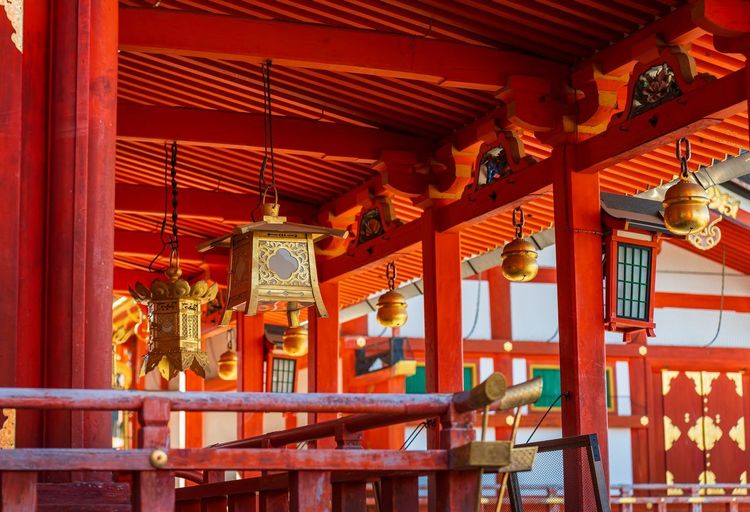
Fushimi Inari Taisha (68 Fukakusa Yabunouchicho, Fushimi Ward, Kyoto 612-0882, rated 4.6/5 on Google (91 795 avis)) is the reason many people put Kyoto on their itinerary in the first place, and it happens to be entirely free, open around the clock, every day of the year. Founded in 711, the shrine is dedicated to Inari, the Shinto deity of rice and prosperity, whose messengers take the form of foxes; you will notice stone fox statues, often holding a key or a jewel in their mouths, guarding nearly every sub-shrine on the mountain.
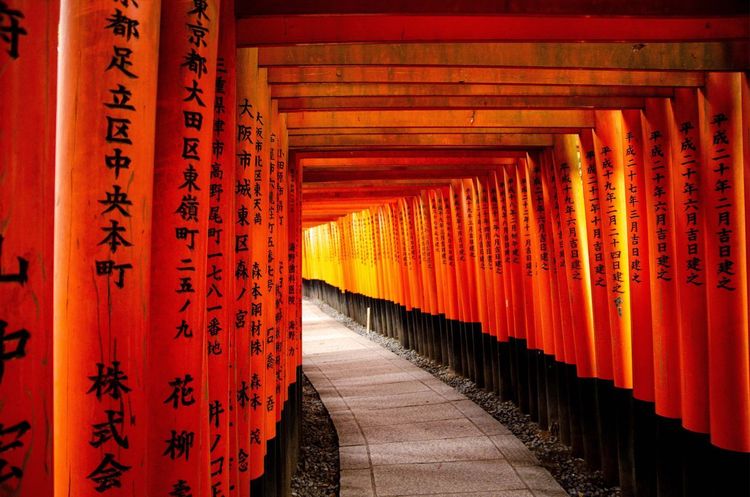
What makes the shrine famous is the corridor of roughly ten thousand vermilion torii gates, donated by individuals and businesses over centuries, that climbs the wooded slopes of Mount Inari. Each gate carries the name of its donor and the date of donation painted in black ink down its back, a detail most visitors miss because they are too busy photographing the tunnel effect. Walk up, then turn around: the inscriptions only face you on the way down.
A full loop to the 233-metre summit and back takes two to three hours, but you do not need to hike the whole mountain to get the postcard shot. The twin rows of Senbon Torii sit within the first ten minutes of the main hall, and the Yotsutsuji intersection, about 30 to 45 minutes up, is where most people should stop: it offers the best free view over southern Kyoto, and the crowd thins dramatically beyond it.
Arrive before 8am if you want the tunnel without a stranger in every frame; tour groups build from mid-morning and the lower section stays busy until early evening. Behind the inner shrine, Okusha Hohaisho, look for the Omokaru-ishi, a pair of stone lanterns topped with round stones. Make a wish, then lift the stone: if it feels lighter than you expected, the wish is said to come true; if it feels heavier, try harder. It costs nothing and it is one of the few interactive traditions on the mountain.
Night visits are another option, since the lanterns stay lit and the grounds never close, though the upper trail is dark and best done with a torch. Along the way you will pass small teahouses selling inari-zushi, rice stuffed into fried tofu pouches said to be the foxes' favourite food. Before you start climbing, open Ryo's guided walk of Kyoto on your phone: the audio covers the shrine's history and fox legends so you can keep your eyes on the gates instead of on plaques.
2. Wander the Bamboo Groves and Riverside Trails of Arashiyama
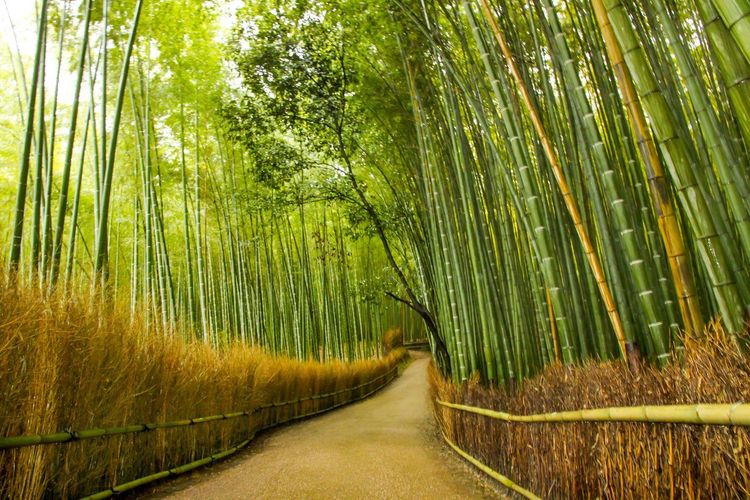
Arashiyama sits on the western edge of the city, a district built around a river, a mountain and one of the most photographed bamboo groves on earth. It rewards an early start: the narrow lanes fill with groups by 10am, and the difference between a 7:30am visit and a midday one is dramatic. The JR Sagano line to Saga-Arashiyama station, or the old Randen tram from central Kyoto, gets you there cheaply.
Arashiyama Bamboo Grove and Togetsukyo Bridge
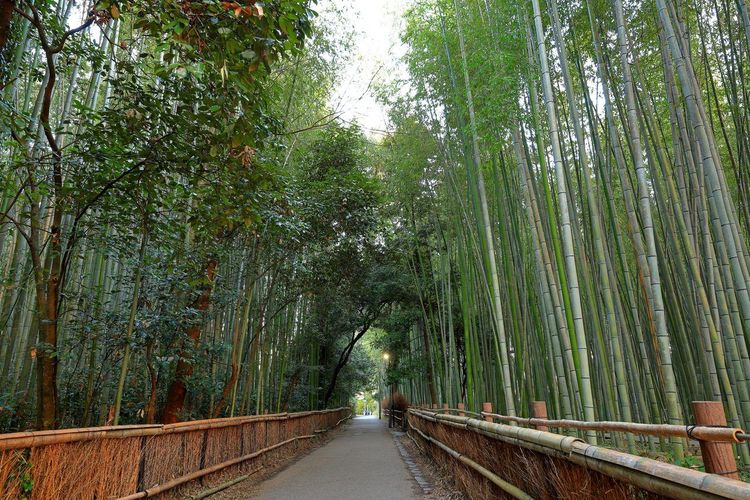
The Arashiyama Bamboo Grove) is a roughly 500-metre pedestrian path through a dense stand of towering moso bamboo, where the stalks creak and knock together in the wind. The sound is distinctive enough that Japan's Ministry of the Environment listed the Sagano bamboo forest among its « 100 Soundscapes of Japan » in 1996. There is no gate and no ticket booth, and the path takes ten to fifteen minutes if you are not stopping for photos, which nobody manages.
About ten minutes' walk south of the grove, past the main entrance of Tenryu-ji, the long Togetsukyo Bridge) (« Moon Crossing Bridge ») spans the Katsura River with the forested slopes of Mount Arashiyama behind it. Walking across is free, and the gravel riverbank on the upstream side is a favourite spot for a convenience-store picnic with a mountain view.
Kameyama Park and the Hozu River Trails
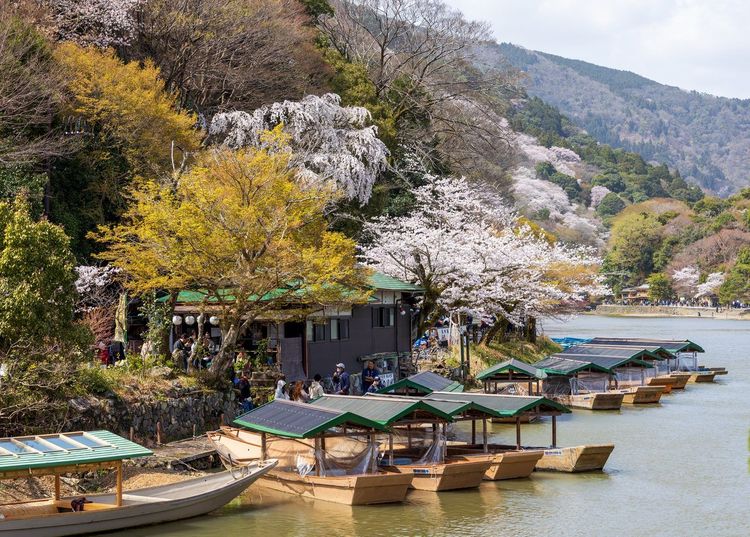
At the far end of the bamboo path, Kameyama Park (Saga Ogurayama Kamenocho, Ukyo Ward, Kyoto 616-8385, rated 4.5/5 on Google (1 340 avis)) climbs the hillside on a network of dirt paths with no admission fee. A short climb brings you to an observation deck over the Hozu River gorge, where you can watch the flat-bottomed boats of the Hozugawa river descent come through the rapids without paying for the ride yourself. Wild monkeys occasionally wander the upper paths; keep food out of sight.
From the park you can drop down to the riverside path heading back toward Togetsukyo, a flat, quiet stretch that feels far removed from the bamboo crowds. Note that the famous Iwatayama Monkey Park sits on the opposite bank and charges admission, so it falls outside a free day. Ryo's Kyoto audio guide is handy here too, because the narration plays as you walk, letting you absorb the district's history without stopping in a crowded lane to read your phone.
3. Nibble Your Way Through Nishiki Market, Kyoto's Kitchen
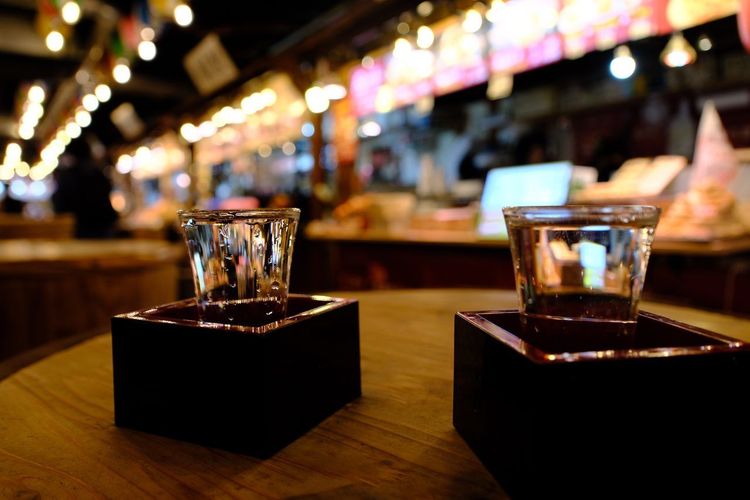
Nishiki Market (Nishikikoji-dori, Nakagyo Ward, Kyoto 604-8054, rated 4.3/5 on Google (54 253 avis)), known locally as Kyoto's Kitchen, is a roughly 400-metre covered arcade of more than a hundred shops selling pickles, skewered street food, dried seafood, sweets and kitchen knives. Entry is free, since it is a working market rather than an attraction, and the free samples are the real draw on a budget.
Not every stall offers a taster, and it helps to know the difference before you walk in expecting a free lunch. Pickle shops (tsukemono-ya) almost always set out small cups of their current stock, since pickles are hard to sell without tasting first. Sesame-tofu counters, tea merchants, soy-sauce specialists and some of the sweet shops do the same, usually with a small dish and toothpicks near the register. Sushi counters, grilled skewers and anything cooked to order almost never give samples away.
At the eastern end of the arcade, where Nishiki meets Shinkyogoku, stands Nishiki Tenmangu, a tiny free shrine squeezed between shops. Its stone torii is so hemmed in that both ends of the crossbeam disappear into the walls of the neighbouring buildings, a favourite small detail for photographers. Inside, a mechanical fortune-telling puppet dispenses omikuji for a coin, and the well water is traditionally considered pure enough to drink.
One piece of etiquette trips up first-time visitors: the market association asks shoppers not to eat while walking, even though the arcade is full of ready-to-eat food. Signs in several languages repeat the rule. Step aside, finish what you bought beside the stall that sold it, and move on. Many shops close by 5 or 6pm and some shut on Wednesdays or Sundays, so a late-morning visit on a weekday gives you the most open counters and the best chance of tasting.
4. Follow the Philosopher's Path Along the Canal
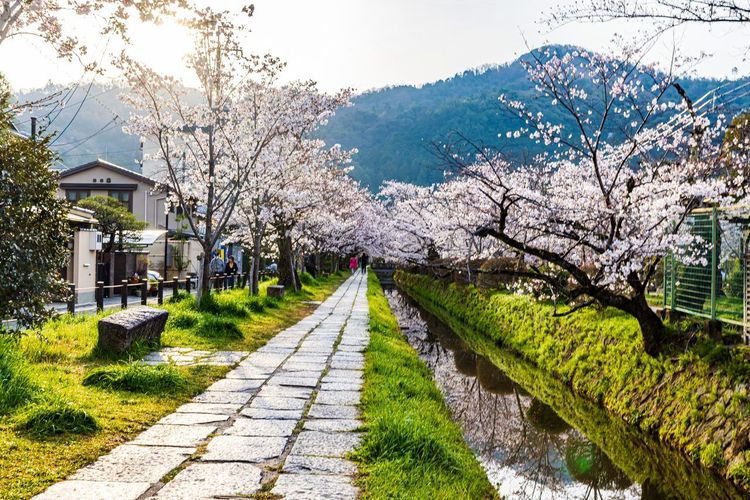
The Philosopher's Path (Shishigatani, Sakyo Ward, Kyoto 606-8406, rated 4.6/5 on Google (3 479 avis)) is a roughly two-kilometre stone walkway that traces a cherry-tree-lined branch of the Lake Biwa Canal, connecting the area near Ginkaku-ji in the north to the Nanzen-ji neighbourhood in the south. The full length takes thirty to forty minutes at an unhurried pace, and it costs nothing.
The path takes its name from Nishida Kitaro, a Kyoto University philosopher who is said to have walked this stretch daily while thinking through his lectures. Small cafes, pottery shops and quiet neighbourhood temples such as Honen-in, whose moss-covered thatched gate is free to walk through, line the route. If you have ever wondered what to do in Kyoto for a slow, unstructured hour between bigger sights, this is it.
Halfway along, a short detour uphill leads to Otoyo Shrine, a small, free neighbourhood shrine guarded by stone mice instead of the usual lion-dogs; the mice honour a legend in which the animals saved the deity's life. At the northern end, the lane lined with souvenir shops leading up to Ginkaku-ji is also free to walk, even if the temple itself charges admission.
During hanami season, roughly late March into early April, the canal-side trees turn the walk into one of the best free cherry-blossom spots in the city, and it gets correspondingly busy; a weekday at 7am beats a weekend afternoon by a wide margin. The route is flat and signposted, so it suits an audio companion well: with Ryo's Kyoto guide playing in your ears, the story of Nishida Kitaro and the canal builders unfolds as you walk, and you never need to break stride to look anything up. In June, look down at the water after dark: fireflies appear along some quieter stretches.
5. Explore Gion and Higashiyama's Historic Streets
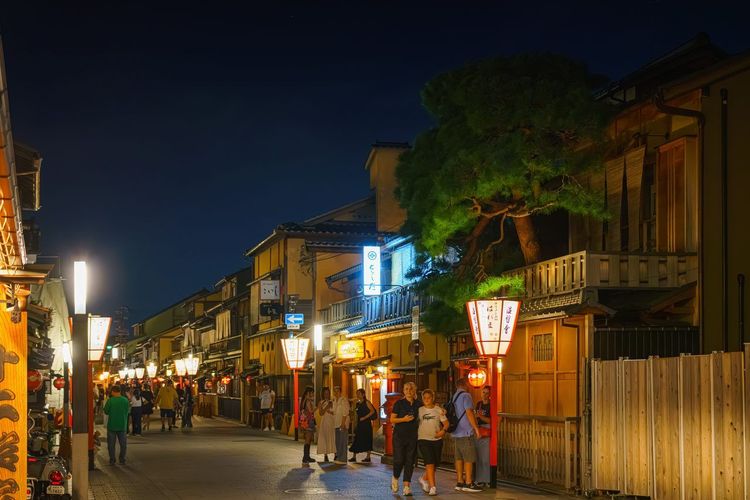
Gion) and Higashiyama sit side by side on the eastern side of the city and are usually walked as one stretch, since the historic streets run almost continuously from one into the other. Together they hold the densest concentration of free sightseeing in Kyoto's old town.
Gion's Teahouse Lanes and Yasaka Shrine
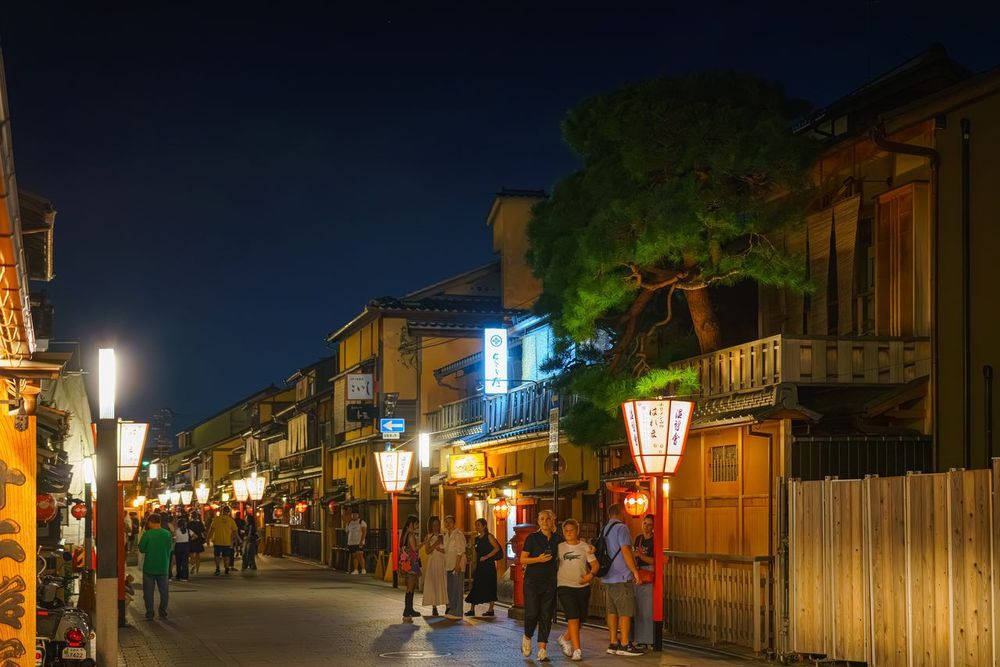
Gion is Kyoto's best-known district for geiko (the local term for geisha) and maiko, and its wooden teahouses along Hanamikoji-dori and the willow-lined Shirakawa canal cost nothing to walk past, even though the teahouses themselves require an introduction to enter. Early evening, roughly 5 to 6:30pm, is when you are most likely to see geiko and maiko heading to appointments. Keep your distance, never block a lane for a photo, and note that photography is banned on the private side alleys off Hanamikoji, with fines posted on signs.
At the eastern end of Shijo-dori, Yasaka Shrine) marks the transition into Higashiyama, its vermilion west gate and lantern-hung dance stage lit from dusk. Entry is free at any hour, which makes it one of the best places to visit after dark, once the daytime crowds have thinned. In July the shrine hosts the Gion Matsuri, one of Japan's most famous festivals, whose street-side float displays are free to look at.
Higashiyama's Sannenzaka, Ninenzaka and Maruyama Park
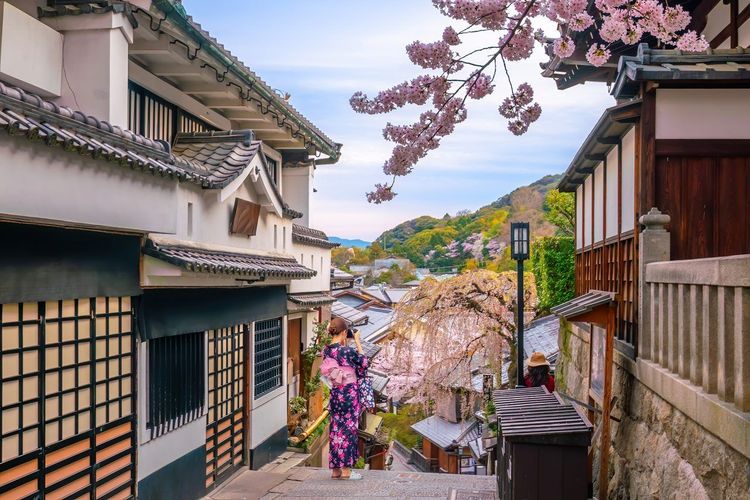
South of Yasaka Shrine, the stone-paved slopes of Sannenzaka) and Ninenzaka climb past wooden machiya houses, tea shops and craft stalls toward Kiyomizu-dera. Neither lane charges admission, and both are at their most atmospheric before 8am or after the groups leave around sunset. Local superstition says tripping on Sannenzaka brings bad luck, so watch the steps.
Just behind Yasaka Shrine, Maruyama Park (Maruyamacho, Higashiyama Ward, Kyoto 605-0071, rated 4.4/5 on Google (6 930 avis)), opened in 1886 and Kyoto's oldest public park, is free to enter and built around a famous weeping cherry tree that anchors the city's liveliest hanami parties each spring. On an ordinary afternoon it is simply a quiet green space where locals eat lunch on benches; during blossom season, picnickers stay late under lanterns strung between the trees.
Gion feels like two different places depending on the hour, which is why walking it twice, once in the morning and once at dusk, pays off. Ryo's audio tour of Kyoto fills in the teahouse traditions and district stories as you pass, so the second walk turns into more than a repeat.
6. Admire Heian Shrine and Kiyomizu-dera's Free Grounds
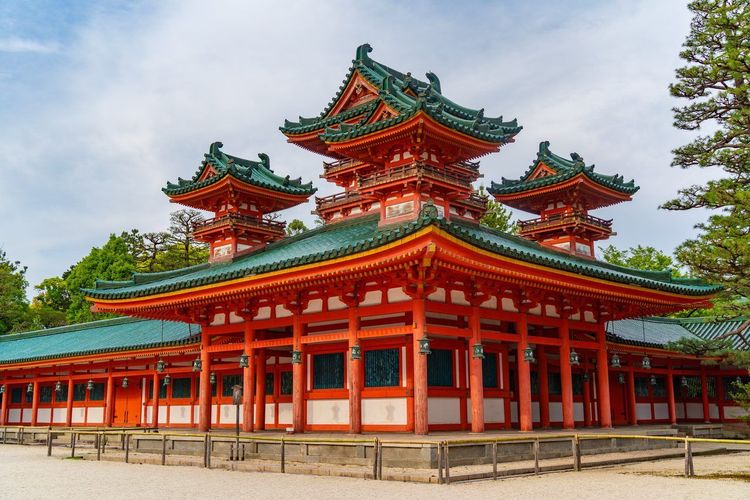
Both of these sites get lumped in with Kyoto's paid temples, yet each has a substantial free portion.
Heian Shrine), built in 1895 to mark the 1,100th anniversary of Kyoto becoming the imperial capital, is announced by a giant vermilion torii roughly 24 metres tall on the Okazaki approach. Walking under the torii, through the Otenmon gate and into the vast white-gravel courtyard facing the main hall costs nothing; only the strolling garden behind the halls, Shin'en, charges a separate fee.
Kiyomizu-dera (1-294 Kiyomizu, Higashiyama Ward, Kyoto 605-0862, rated 4.6/5 on Google (72 788 avis)), founded in 778, works the other way around. The wooden stage that juts over the hillside, the one on nearly every Kyoto postcard, sits inside the paid main hall precinct. But the approach along Chawan-zaka and Kiyomizu-zaka, the vermilion Nio-mon gate, the three-storey pagoda and the city view from the upper steps are all outside the fee line. You can get a real sense of the complex, and a decent photo, without a ticket. For the classic view of the stage itself, walk the free path toward the Koyasu pagoda on the far side of the ravine.
Below the main hall, the Otowa Waterfall, three thin streams of spring water falling into a pond, is reached by steps outside the paid stage area. Visitors queue with long-handled cups to drink from one stream, each said to bring longevity, success in study or luck in love; picking all three is considered greedy. Arrive before 8am and the queue is short or nonexistent.
7. Stroll the Kyoto Imperial Palace Park
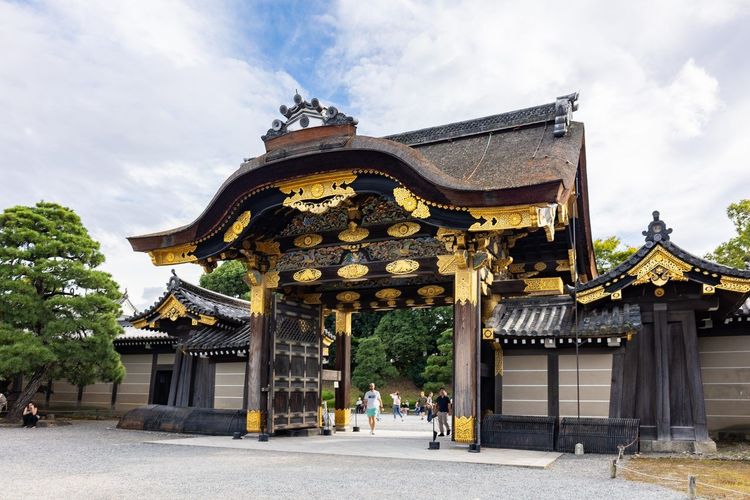
The Kyoto Imperial Palace (3 Kyotogyoen, Kamigyo Ward, Kyoto 602-0881, rated 4.5/5 on Google (1 907 avis)), the residence of Japan's emperors until the capital moved to Tokyo in 1869, sits inside Kyoto Gyoen, a public park open every day. Since 2016 the palace grounds no longer require an advance reservation: you enter through the Seishomon gate, pass a quick bag check and follow a marked route past ceremonial halls and gardens, all free.
The palace grounds open from 9am, with closing times between 4pm and 5pm depending on the season, and close on Mondays (Tuesday when Monday is a holiday) and over the New Year break. Free guided tours in English run at 10am and 2pm, no booking needed; just turn up at the gate a few minutes early.
The surrounding park stays open around the clock: gravel boulevards, pine groves, a plum orchard that blooms in late February and open lawns popular with joggers and families. If your itinerary has a gap between morning and afternoon plans, this is an easy way to fill it without spending a yen.
8. Visit the Twin Temples of Higashi and Nishi Honganji
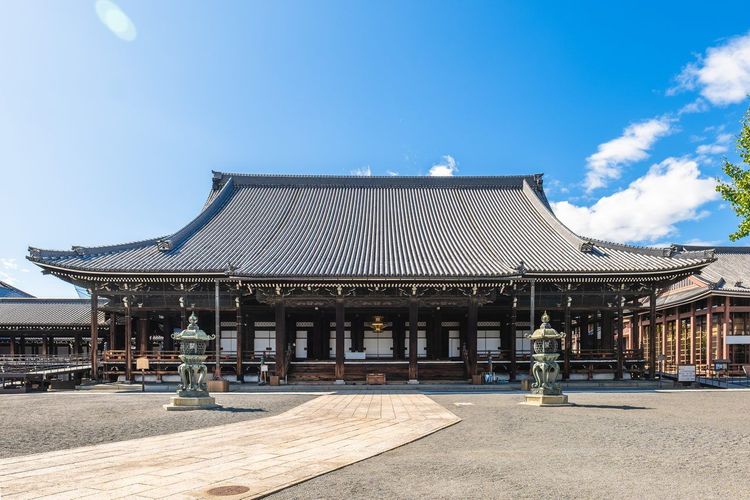
A short walk apart, just north of Kyoto Station, Higashi Honganji) and Nishi Honganji (60 Horikawa-dori Hanayacho-sagaru, Shimogyo Ward, Kyoto 600-8358, rated 4.4/5 on Google (5 961 avis)) are the head temples of two branches of Jodo Shinshu Buddhism, and both are free to enter.
Higashi Honganji's Founder's Hall is one of the largest wooden buildings in the world, and you can sit on its tatami beneath the huge timber beams without paying. Look for the display of a thick rope woven from women's hair, donated by followers in the 19th century to haul the timber for the rebuild. Nishi Honganji, a UNESCO World Heritage site, has a ginkgo in front of its Founder's Hall estimated at over 400 years old, which legend says sprayed water to save the temple from fire; it turns gold in late November. On the south side, the ornate Karamon gate, a National Treasure, can be admired from the street.
Because both sit so close to the station, they make an efficient stop on an arrival or departure day, something you can slot in with luggage stored in a station locker. Photography inside the halls is discouraged during services, so check the signs.
9. Cool Off Along the Kamo River
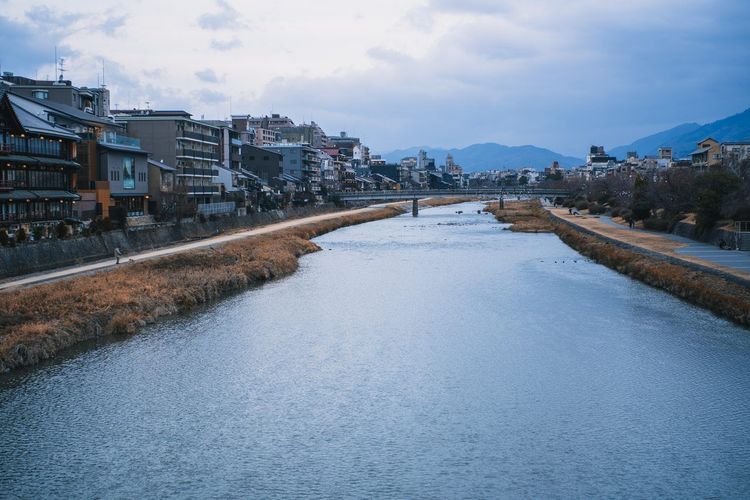
The Kamo River (Kamogawa, Nakagyo Ward, Kyoto, rated 4.6/5 on Google (858 avis)) cuts north to south through the city centre, and its grassy banks are free public space used by everyone from students with guitars to families flying kites. From May to September, the stretch between Nijo and Gojo bridges, particularly along Pontocho, sprouts rows of wooden dining platforms called noryo-yuka, built out from the restaurants over the riverside canal. (The word kawadoko refers to the same tradition in Kibune and Takao, where platforms sit directly over the stream.)
You do not need a table on one of these terraces to enjoy them: walking the riverside path at dusk, when the yuka are lit and full of diners, is its own free show, and the view from the public bank often beats the one from a seat. Locals sit along the bank at evenly spaced, unspoken intervals, and following that rule is a quick way to blend in.
Between Sanjo and Shijo bridges, the west bank is also where Kyoto's street musicians and dance crews gather on weekend evenings. Stand, listen and move on; nobody expects a tip, though a coin in an open guitar case is always appreciated. In early morning the same stretch belongs to joggers, tai chi groups and herons fishing in the shallows, a completely different side of the city.
Further north, at the Y-shaped confluence where the Kamo and Takano rivers meet near Demachiyanagi, a line of turtle-shaped stepping stones crosses the water. Hopping across them is free, surprisingly fun and a favourite with Kyoto families on hot afternoons. From there, the forest of Shimogamo Shrine is just a few steps away.
10. Discover Kyoto's UNESCO River Shrines: Shimogamo and Kamigamo
Upstream from the busier stretches of the Kamo River sit two of Kyoto's oldest Shinto shrines, both UNESCO World Heritage sites, both free to visit, and both skipped by travellers who stop at the famous names.
Shimogamo-jinja is set inside Tadasu no Mori, a remnant of primeval forest that has survived within the city for centuries. The approach path, about a kilometre of gravel under towering trees, is one of the most atmospheric free walks in Kyoto precisely because so few visitors make the trip. At the end, the vermilion two-storey gate opens onto the shrine buildings; look for the small Kawai sub-shrine near the entrance, dedicated to feminine beauty, where visitors buy mirror-shaped votive plaques.
If you are visiting in summer, the stream running through the grounds, the Mitarashi River, is where the shrine holds its foot-bathing ritual in late July, when visitors wade barefoot through the cold water by candlelight; a small donation is asked for the candle, but watching is free.
Further north, Kamigamo-jinja is counted among the oldest shrines in Kyoto. Its wide lawns, cypress-bark roofs and the two perfect cones of white sand (tatesuna) in front of the Hosodono hall are the images to remember, and a small stream runs through the grounds past the priests' old residences in the Shake-machi neighbourhood next door. Pair both shrines into one quiet loop by bus or bicycle for a strong contrast to the crowds at Fushimi Inari or Kiyomizu-dera.
11. Trace the Lake Biwa Canal from Keage Incline to Nanzen-ji
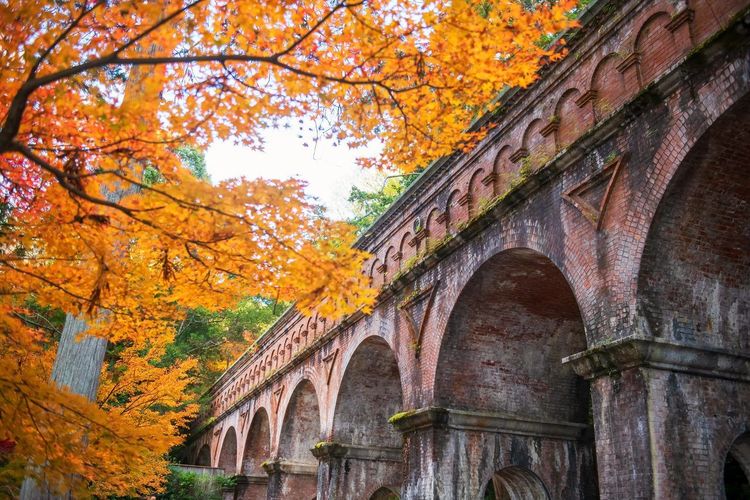
Two of the most photogenic free sights in eastern Kyoto sit a ten-minute walk apart along the same piece of Meiji-era engineering, and they belong together.
Keage Incline and the Lake Biwa Canal
The Keage Incline) is a disused inclined railway, built in the 1890s to haul boats on wheeled cradles between two levels of the Lake Biwa Canal, that is now simply a wide, free, tree-lined path. Cherry trees planted along the old tracks make it a quieter hanami alternative each spring, and the rails are still there underfoot for most of its length. Walk to the bottom and look for the Nejiri-manpo, a small brick tunnel whose bricks spiral inside, built to support the incline above.
Right beside the incline, the Lake Biwa Canal Museum documents the project that brought water and, from 1891, Japan's first commercial hydroelectric power into Kyoto. Entry is free and twenty minutes is enough to see the models and old photographs.
Nanzen-ji's Aqueduct and Temple Grounds
A few minutes away, Nanzen-ji (Nanzenji Fukuchicho, Sakyo Ward, Kyoto 606-8435, rated 4.5/5 on Google (12 662 avis)) is one of the most important Zen temple complexes in Japan, and its outer grounds are free. You can stand beneath the massive Sanmon gate (climbing it costs extra) and walk to the Suirokaku, a red-brick, Roman-style aqueduct completed in 1890 that still carries canal water across the temple precinct. Only the Hojo garden, the Sanmon balcony and the subtemples charge admission.
For a bonus, climb the steps at the side of the aqueduct: a narrow path follows the water channel along the top, heading toward the Philosopher's Path. Walking beneath the arches with monks occasionally crossing nearby photographs surprisingly well and needs almost no planning.
12. Hunt for the Monsters of Ichijo-dori and Other Quirky Free Corners
Ichijo-dori (Kamigyo Ward, Kyoto), nicknamed Yokai Street, runs through the Taishogun shopping district in northern Kyoto, not far from Kitano Tenmangu. Legend says the Hyakki Yagyo, the Night Parade of a Hundred Demons, passed along this very road, and since 2005 the roughly 400-metre shopping street has leaned into it: shopkeepers set life-sized yokai figures, the folkloric monsters and spirits of Japanese legend, outside their doors. Expect a barbershop with a creature on its step, a bakery selling monster-shaped bread and hand-made figures of all sizes along an otherwise ordinary street. A costume parade usually takes place in autumn, and watching it is free.
Combine it with Kitano Tenmangu, the shrine dedicated to the scholar Sugawara no Michizane, whose main grounds are free and busy with students praying before exams. On the 25th of every month it hosts Tenjin-san, a huge flea market of antiques, kimono and street food where browsing costs nothing.
While you are in the area, wander the lanes south of the Taishogun street toward the Nishijin district, Kyoto's historic textile quarter. Many of the old weaving houses still stand, and on a quiet weekday you can sometimes hear the clack of a loom through an open window, a free soundtrack to an unhurried walk.
Across town near Kyoto Station, Umekoji Park (Kankijicho, Shimogyo Ward, Kyoto 600-8835, rated 4.2/5 on Google (10 301 avis)) is a plain, free green space with a pond and lawns beside the railway museum and the aquarium. It is not a destination on its own, but it is a useful rest stop if you are staying near the station, and children love its wide play areas and the old tram occasionally parked on display.
13. Hike Between Takao and Hozukyo Gorge
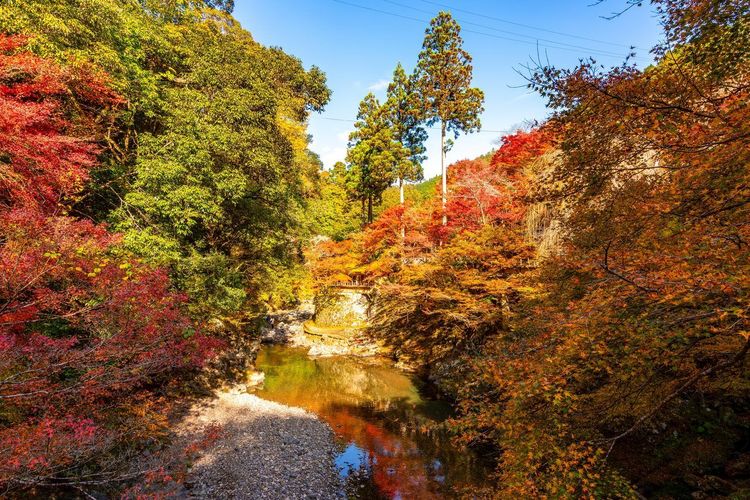
For a half-day escape from the temple circuit without leaving the city limits, the hills around Takao (Umegahata Takaocho, Ukyo Ward, Kyoto 616-8292, rated 4.2/5 on Google (271 avis)), in the far northwest, offer free hiking. The riverside trail along the Kiyotaki River from Takao to the Hozukyo area follows a valley thick with maple trees, spectacular in autumn and quietly green the rest of the year, with almost none of the crowds found downtown.
Takao itself is home to three temples, Jingo-ji, Saimyo-ji and Kozan-ji, linked by a footpath through cedar forest and across vermilion bridges over the Kiyotaki River. The paths between them are free, and in autumn the bridges framed by red maples are among the most photographed scenes in the Kyoto hills, with a fraction of the crowds you meet in the city.
Allow roughly two to three hours from the Takao bus stop to Hozukyo station on the JR Sagano line, a mostly flat route with a few rocky sections and stream crossings. The hike costs nothing beyond the bus fare out and the train fare back, and you can pair it with Jingo-ji temple (paid) if you want a mountaintop stop. Wear proper shoes, carry water and set off early in November, when the colours peak and daylight is short.
14. Catch Kyoto's Free Seasonal Moments: Hanami, Festivals and Illuminations
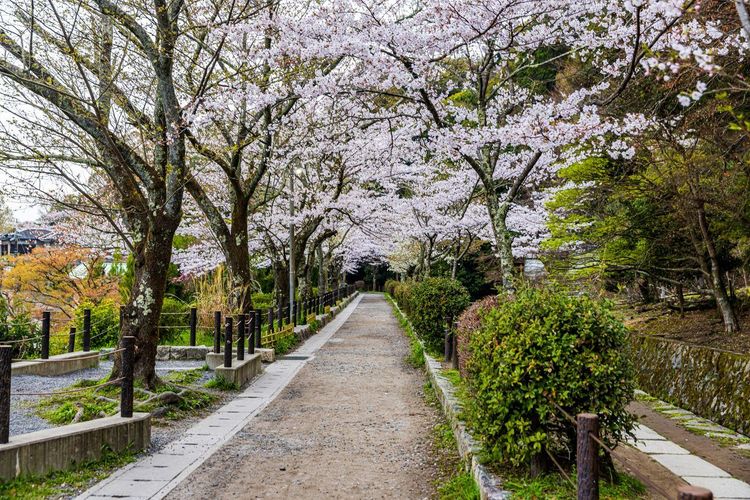
Much of what makes Kyoto special is tied to the calendar, and a lot of it is free. Cherry blossom season, roughly the last week of March into mid-April, turns the Philosopher's Path, Maruyama Park, the Keage Incline and the Kamo River banks into spontaneous hanami parties, with locals claiming patches of grass with blue tarps from early morning. You are welcome to join: bring a snack and a mat and sit where there is space.
Autumn brings a second peak: maples around Nanzen-ji, Tofuku-ji's outer grounds and the Takao trails turn deep red from mid-November, and walking the free approach paths during peak colour rivals paying for a dedicated garden.
Festivals fill the rest of the year. The Aoi Matsuri procession on 15 May walks from the Imperial Palace to Shimogamo and Kamigamo shrines; the Gion Matsuri runs through July with its giant floats on 17 and 24 July; and on 16 August the Gozan no Okuribi bonfires light characters on the mountains around the city, best seen free from the Kamo River banks. In December, the Arashiyama Hanatouro lights up the bamboo grove and riverside paths for about ten evenings, also at no charge. Check the dates before you go, since some illuminations are ticketed while others are open to all.
Planning Your Free Days in Kyoto: Budget, Transport and Timing
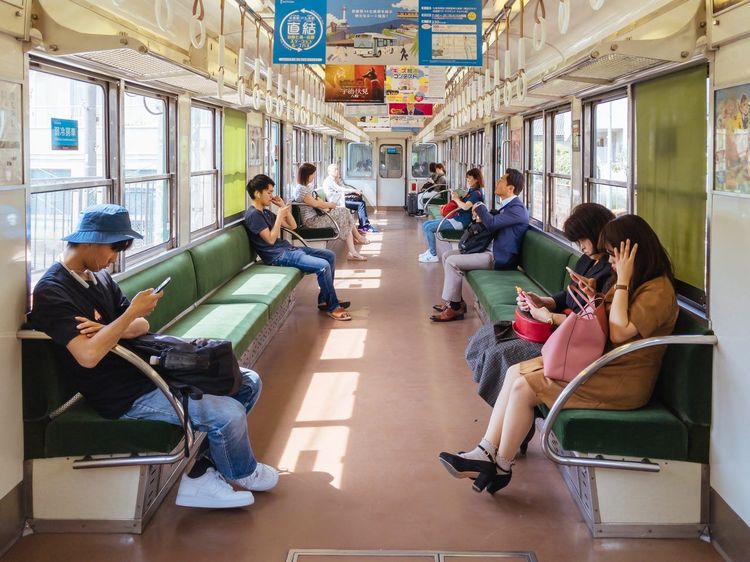
Most of the sights above cluster into a handful of walkable zones, so grouping your days by area saves both time and fares.
Group Your Days by Zone
Fushimi Inari sits south of the centre with its own JR station; Arashiyama is a separate trip west; and Gion, Higashiyama, Heian Shrine, the Philosopher's Path, Keage Incline and Nanzen-ji all connect on foot along the eastern hills. The northern shrines and Ichijo-dori make a fourth cluster, easy to combine by bus. Plan one zone per morning and leave afternoons flexible. To link the eastern hills sights into one walking day with a narrated thread, Ryo's audio-guided walk of Kyoto lets you move at your own pace rather than to a tour group's timetable.
Getting Around Cheaply
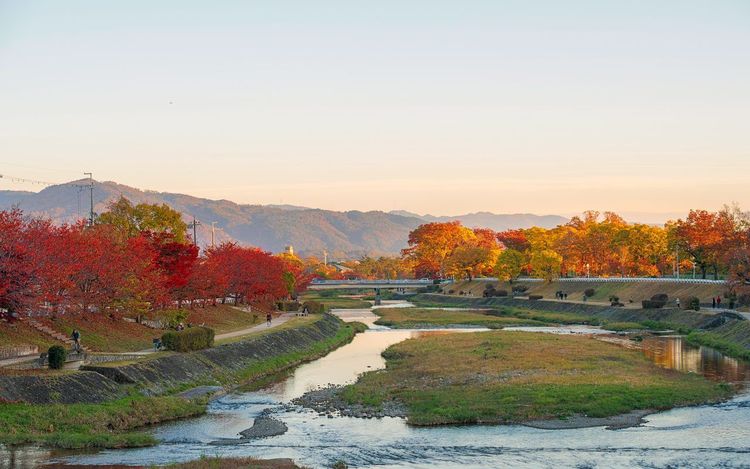
Kyoto's city buses charge a flat fare in the central area, but they get crowded near the big sights, and walking is often faster across the eastern hills. The subway and JR lines are quicker for longer hops such as Fushimi Inari or Arashiyama. Renting a bicycle is one of the smartest cheap things to do in Kyoto: the city is flat, the Kamo River path is a car-free cycle highway, and a day rental usually costs less than a single paid garden. Park only in official bicycle lots, as bikes left elsewhere are regularly impounded.
Free Views and Rest Stops at Kyoto Station
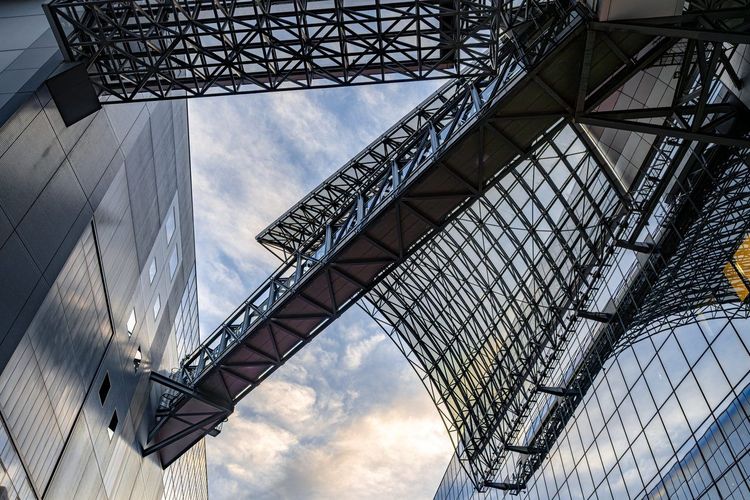
Kyoto Station is worth a free half-hour. Ride the escalators beside the 171-step Grand Stairway to the Sky Garden on the roof for an open view over the city and Kyoto Tower, and on some evenings the stairway itself turns into an LED light display. The station's Skyway corridor high above the concourse is free too. For budget meals, the department store food halls and convenience stores inside and around the station are cheap places to assemble a picnic before heading out.
Day Trips Beyond Kyoto
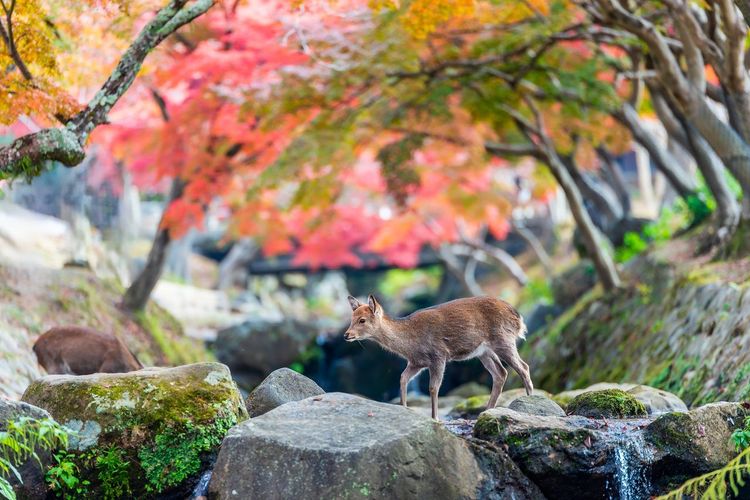
The same logic works across the Kansai region. Free things to do in Nara centre on its deer park and the grounds around Todai-ji; Osaka offers free wandering around the Osaka Castle park and the neon of Dotonbori; and if Tokyo is on your route, its shrine grounds and free government observation decks follow the same principle. Nara and Osaka are both under an hour by train, making them easy day trips from a Kyoto base.
A Sample Free Day in Eastern Kyoto
If you only have one day and want to spend nothing on admissions, this route strings together six free sights on foot. Start at 7am at Fushimi Inari, climbing as far as Yotsutsuji before the groups arrive. Take the JR Nara line back two stops to Tofukuji or on to Kyoto Station and connect to Gion-Shijo, then walk up Hanamikoji and the Shirakawa canal to Yasaka Shrine and Maruyama Park for a late-morning break. Continue through Ninenzaka and Sannenzaka to the Kiyomizu-dera approach and the Otowa Waterfall.
After lunch at a convenience store or a cheap noodle counter on the approach streets, head north by bus to Okazaki, walk through Heian Shrine's courtyard, then follow the canal to the Keage Incline, the Nanzen-ji aqueduct and the Philosopher's Path. Finish at dusk back in Gion or on the Kamo River bank. You will cover roughly 15 to 18 kilometres on foot, so wear shoes you trust, carry water and plan a few sit-down breaks in the free temple courtyards along the way.
Etiquette That Keeps Your Free Visit Smooth
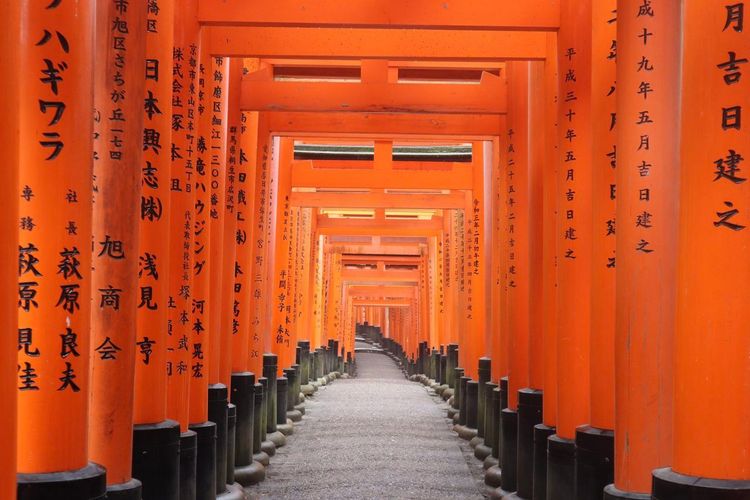
Free sights stay free because visitors respect them. At shrines, bow once before passing under a torii and walk slightly to the side of the central path, which is reserved for the deity. At temples, remove your shoes where you see a step up and shoe racks, and keep your voice low inside the halls. Rubbish bins are rare in Kyoto, so carry a small bag for your own waste. Drones are banned in most public parks and temple grounds, and many shrines ask you not to photograph the inner sanctuary; when in doubt, look for a no-camera sign or ask.
FAQ
Is $1000 enough for 1 week in Japan?
It can be, if you lean on free sightseeing. Accommodation and food absorb most of a $1000 budget over a week, but by prioritising free shrines, parks and walks over paid attractions, transport and meals become the main costs rather than entrance tickets.
How many days do you need to see Kyoto's best free sights?
Three full days cover the highlights comfortably: one for Fushimi Inari and the station temples, one for Arashiyama and the western trails, and one for Gion, Higashiyama and the eastern hills around Heian Shrine and Nanzen-ji. A fourth day lets you add the northern shrines or the Takao hike.
Is Fushimi Inari Taisha completely free to visit?
Yes. The shrine grounds, the entire torii trail up Mount Inari and every sub-shrine along the way are free, with no admission booth anywhere on the mountain, at any hour.
What are the best free temples and shrines in Kyoto?
Fushimi Inari Taisha, Yasaka Shrine, Heian Shrine's courtyard, Shimogamo-jinja, Kamigamo-jinja, Higashi and Nishi Honganji and Nanzen-ji's outer grounds all offer free entry, though some, like Kiyomizu-dera and Nanzen-ji, charge for specific halls, gardens or subtemples.
What's the cheapest way to get around Kyoto for sightseeing?
Walking covers the eastern hills cluster almost entirely for free. A rented bicycle is the next cheapest option for the centre and the northern shrines, while buses and trains handle Fushimi Inari, Arashiyama and Takao.
When is the best time to see free cherry blossom spots in Kyoto?
Late March through the first half of April, depending on the year's bloom. The Philosopher's Path, Maruyama Park, the Keage Incline and the Kamo River banks are among the most reliable free hanami spots, ideally visited on a weekday morning.
Kyoto on Foot, Without a Ticket
Between the torii gates of Fushimi Inari, the bamboo corridors of Arashiyama and the quiet forest approach to Shimogamo-jinja, Kyoto turns out to reward patience and footwork more than a big budget. Most of what makes the city worth the trip sits outside a ticket booth, waiting for anyone willing to walk to it.
Start early, group your days by district and keep an eye on the calendar for festivals and blossoms. And to turn this list of free things to do in Kyoto into one continuous day on foot, Ryo's audio-guided tour of Kyoto supplies the stories behind the streets while you walk.