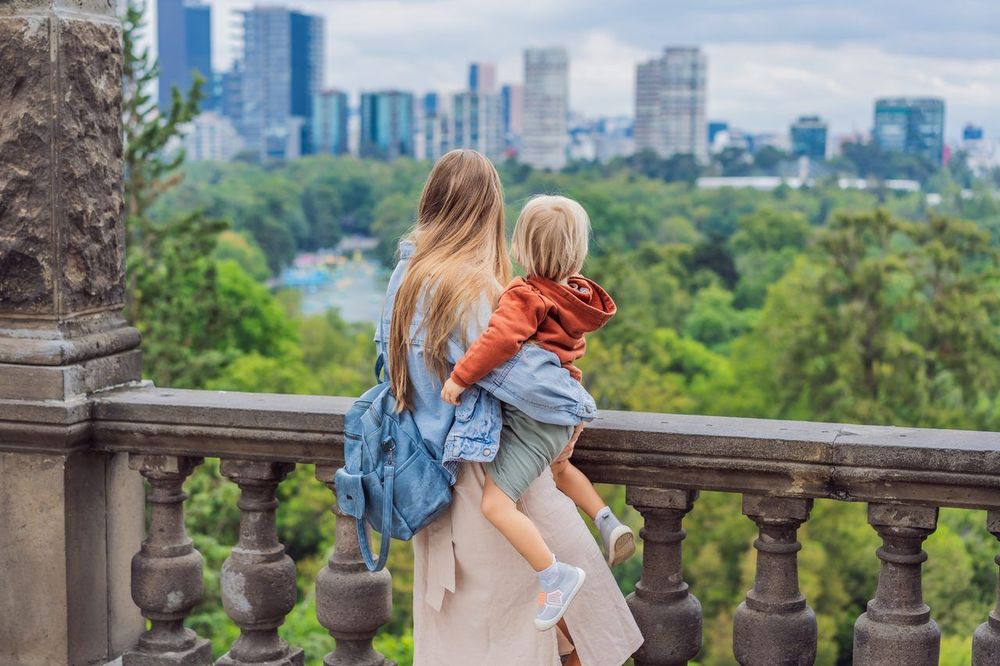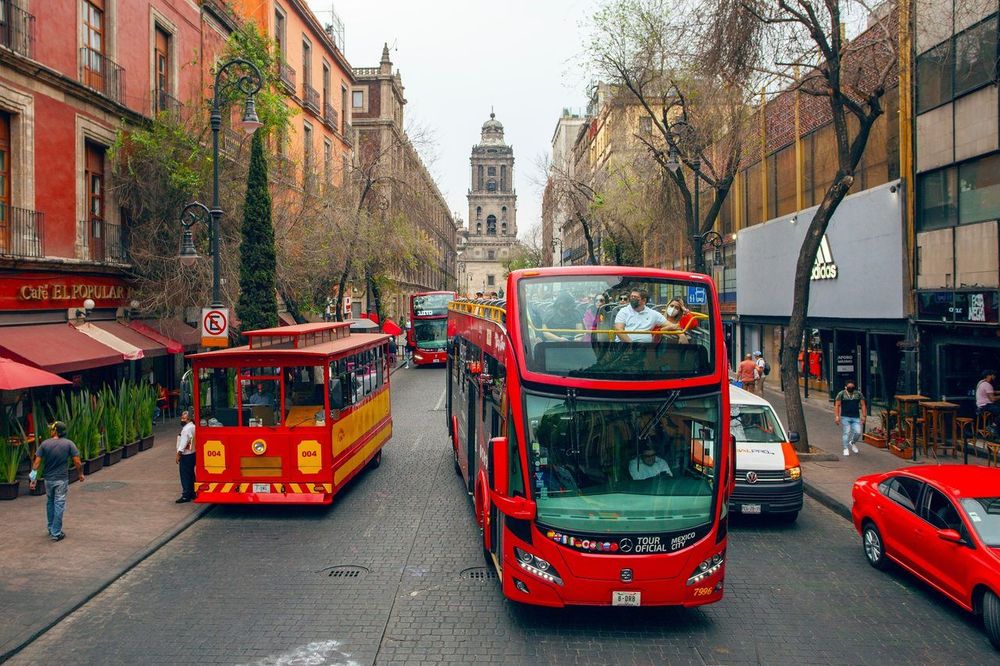
© Shutterstock
 Votre guide Ryo
Solo Travel in Mexico City: A Practical 2026 Guide
Solo travel in Mexico City starts with a number most people overlook: 2,240 meters. That is the altitude of the capital, high enough that your first flight of stairs out of the metro will remind you of it. Add a metropolitan area of more than 21 million people and it is easy to see why first-timers hesitate. They shouldn't. The neighborhoods you will actually use form a compact, walkable cluster, and Ryo's audio-guided tour of Mexico City starts right in the historic center, so your first morning alone can follow a planned route instead of a map checked on a street corner.
This guide breaks the trip into its real pieces: which three neighborhoods hold almost every solo traveler's booking, why an app-booked ride beats a taxi hailed off the street, where a single museum keeps the 24-ton Aztec Sun Stone, and why mariachi bands at Xochimilco arrive by boat rather than on a stage. You will also find a volcano, Popocatépetl, visible from certain rooftops on a clear evening, a lucha libre arena where a vendor in the third row will try to sell you a beer, a realistic weekly budget and the scams worth recognizing. None of it requires a group tour. It requires a plan, and that is what follows.
Is Mexico City Safe for Solo Travelers?
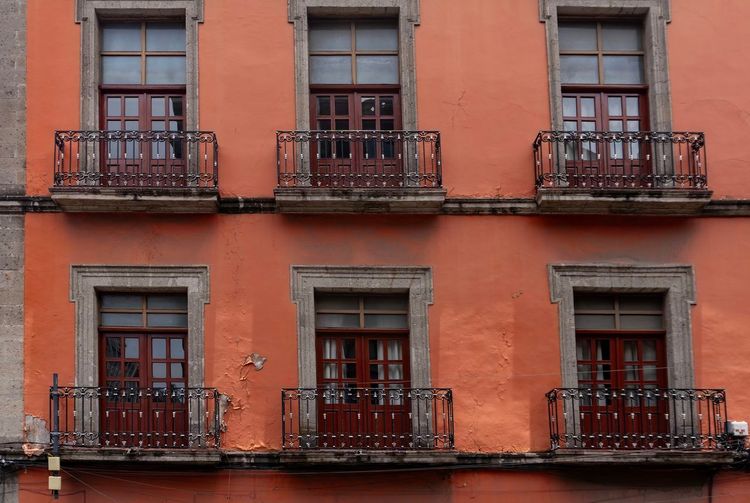
For most visitors, yes, provided you treat CDMX the way you would treat any dense, unfamiliar capital: with specific, boring precautions rather than vague anxiety. Tourist police keep a visible presence in Centro Histórico, Roma Norte, Condesa and Polanco, which is where the overwhelming majority of visitors spend their days. Crime against tourists in these areas tends to be opportunistic (phone snatching, pickpocketing) rather than violent, and it clusters around crowded, distracted moments: packed metro cars, busy markets, nightlife strips after midnight.
What about solo female travellers specifically? The honest answer is that unwanted attention is more common than outright danger, much as in Paris or Barcelona. Catcalling happens, especially on quieter streets, and the most effective response is usually to keep walking without engaging. Women living in the capital dress put-together but rarely flashy in daily life, and you will notice that visible jewelry or a big camera draws looks faster than you'd expect.
Staying Alert, Dressed Right and Aware of Altitude
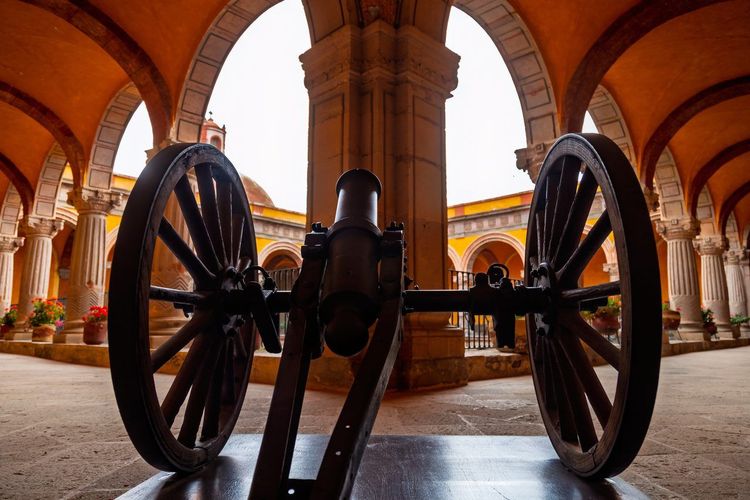
Keep your phone out of your back pocket, don't walk while reading it, and check your route before stepping out rather than mid-stride. Split your valuables between a bag and a hidden pocket instead of keeping cards, cash and passport in one wallet. If your bag has to touch the floor in a restaurant, loop a strap through the chair leg first. At ATMs, use machines inside bank branches or shopping centers during the day, and cover the keypad.
Altitude catches more solo travelers off guard than crime does. At over 2,200 meters the air holds roughly 25% less oxygen than at sea level, and the symptoms (headache, breathlessness on stairs, a faster hangover from a single mezcal) show up within the first 24 to 48 hours. Drink more water than feels necessary, keep day one light instead of sightseeing nonstop, and go easy on alcohol until your body adjusts.
Dress and awareness go together: closed shoes for the cobblestones of Centro Histórico and Coyoacán, a light jacket for evenings that drop ten degrees after sunset, and statement jewelry left at home. Have you got travel insurance sorted before you land? Make sure it covers medical care and evacuation; private hospitals in the capital are excellent but expensive without a policy.
Neighborhoods to Avoid and Common Scams
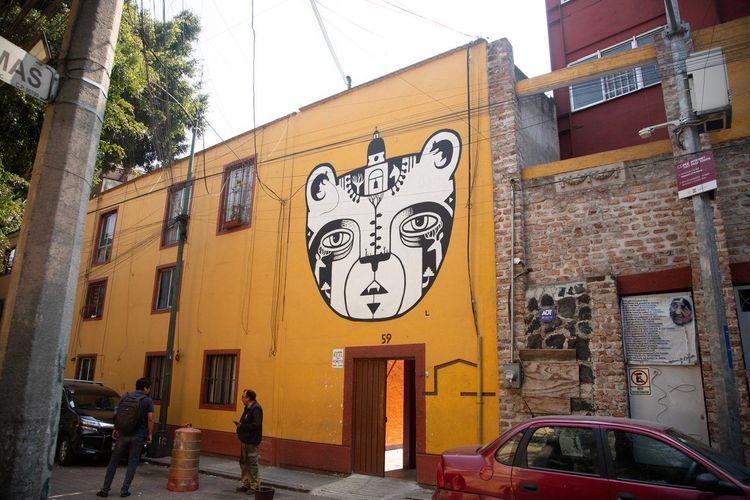
The areas to avoid are mostly outside the zones you would naturally visit anyway: Tepito, parts of Iztapalapa after dark and the area around the Central de Abastos wholesale market have higher crime rates and little for a first-time visitor. Within the tourist core, the advice is about timing rather than whole streets: Alameda Central and the blocks just south of the Zócalo thin out after 9 or 10pm, so save evening walks for Roma Norte or Condesa, which stay lively late.
A few scams come up again and again. Unofficial drivers approach arriving passengers inside the airport. Card skimmers turn up at stand-alone ATMs. Street currency changers offer suspiciously good rates. In bars, check the bill against what you ordered, since an extra round occasionally appears on tabs handed to visibly foreign customers. None of this is unique to CDMX, and simply knowing about it removes most of the risk.
Where to Stay in Mexico City Solo
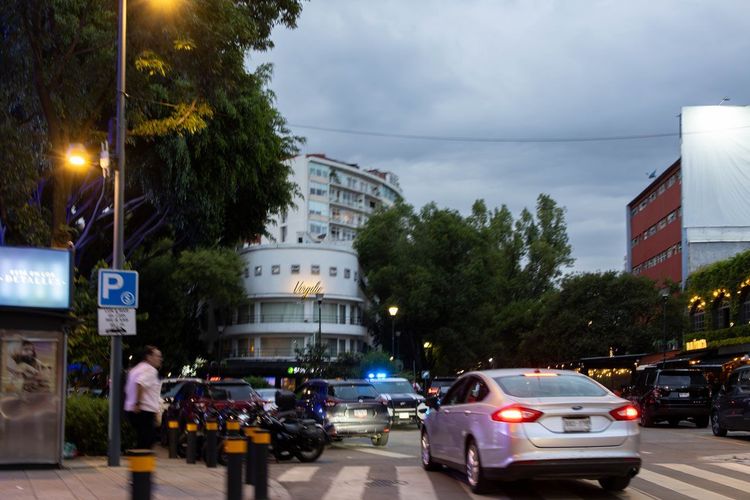
Three neighborhoods cover almost every solo traveler's needs, plus a fourth option inside the historic core itself. If you are a woman traveling alone, the answer barely changes: the same three zones, with a preference for blocks that keep pedestrian traffic into the evening.
Best Neighborhoods: Roma Norte, Condesa and Polanco
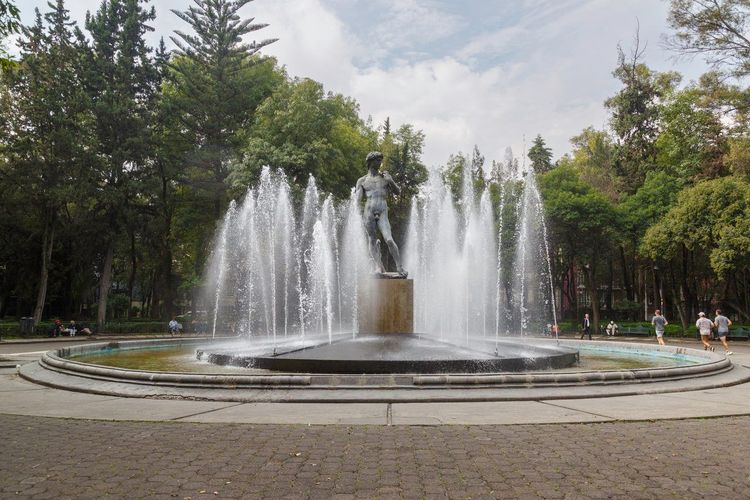
Roma Norte has become the default base for first-time solo visitors over the past decade, thanks to tree-lined streets, cafes with a laptop open at every table and a walkable grid that makes getting lost feel like a feature rather than a risk. Its neighbor Condesa trades a little edge for more green space, centered on the oval Parque México), where joggers and dog walkers set the pace from early morning.
Polanco sits at the top of the price scale, next to Bosque de Chapultepec and built around designer shopping streets. It is also one of the most heavily policed, consistently calm neighborhoods after dark, which matters if nighttime security outranks nightlife energy on your list. Centro Histórico is the fourth option: unbeatable for sightseeing, cheaper per night, but noticeably quieter once the offices close.
Hotels, Hostels and Apartments
In Polanco, Pug Seal Polanco Anatole France) offers boutique-style rooms on a quiet residential street, a short ride from the Museo Soumaya and Chapultepec.
In Condesa, Hotel Casa Cuenca) is a small design hotel inspired by 1930s Mexican architecture, within walking distance of both Roma Norte and Chapultepec, and its intimate common spaces make it easy to swap tips with other guests over breakfast.
In the historic core, Hotel Zócalo Central (Av. 5 de Mayo 61, Centro Histórico, 06000 Ciudad de México, rated 4.6/5 on Google (5 676 avis)) on Avenida 5 de Mayo puts you a three-minute walk from the Metropolitan Cathedral, and its rooftop restaurant looks straight over the plaza and the cathedral, a view worth booking a sunset table for even if you sleep elsewhere.
Hostels are concentrated in Centro Histórico and Roma Norte, where dorms with female-only rooms, lockers and organized pub crawls or taco tours make meeting people almost automatic. Apartments and Airbnbs cluster in Roma Norte and Condesa, often cheaper than a comparable hotel room, and they make sense for stays longer than four or five nights once you have confirmed the building has a doorman or 24-hour secure entry. Once you have checked in, the Ryo audio-guided tour starts from the city center, so there is no route-planning before heading out on day one: you open the app, pick the first stop and start walking.
Getting to Mexico City and From the Airport
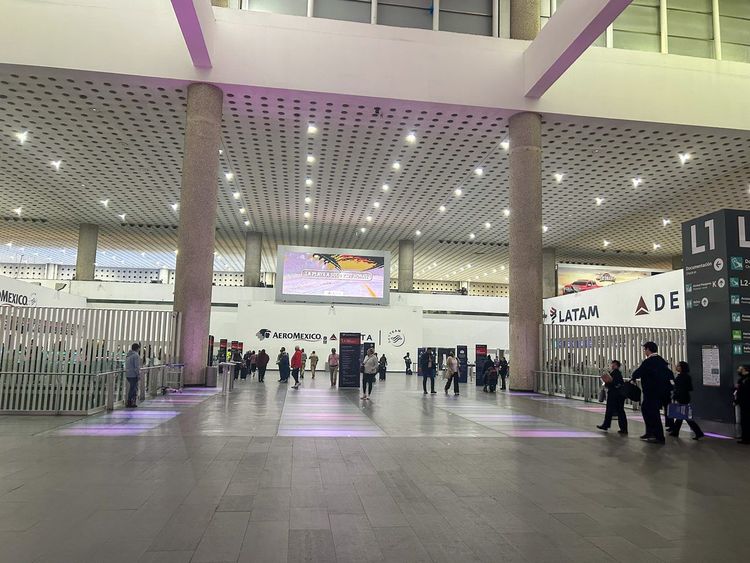
Most international flights land at Benito Juárez International Airport (MEX), about 20 to 30 minutes from Centro Histórico and 30 to 45 minutes from Roma Norte or Condesa, depending heavily on traffic. Is the airport safe? Yes, it is a modern, closely monitored hub; the main risk is the unlicensed drivers who approach arriving passengers in the terminal offering rides.
Book airport taxis at the official authorized taxi counters inside the terminal, which issue a prepaid ticket at a fixed zone-based rate before you get in a car, removing the negotiation entirely. Ride-hailing apps also work, although pickup is from a designated zone rather than the curb, and the app will direct you. Expect roughly 250 to 450 pesos to the central neighborhoods depending on destination and time of day. Both options are far safer than accepting a ride from anyone who approaches you in arrivals. If you land late at night, a hotel transfer arranged in advance is worth the small premium.
Getting Around Mexico City Alone
The capital's size is intimidating on a map, yet the neighborhoods you will use form a fairly tight cluster once you set day trips aside. Your choice comes down to distance, time of day and budget.
Uber, Taxis and Public Transportation
Uber is the default for most solo travelers, and with good reason: the app shows the driver's name and plate before pickup, logs the route and lets you share your trip live with someone at home. DiDi and Cabify work the same way and are sometimes cheaper. Ubers vs taxis is less of a debate than it once was; street taxis are regulated, but an app's built-in paper trail makes it the lower-friction choice after dark.
Public transportation includes the metro (5 pesos a ride, by far the cheapest option), the Metrobús rapid transit lines and reserved cars at the front of metro trains for women and children, a detail many solo female travellers only learn when a local points it out. Buy a rechargeable Mi Movilidad Integrada card at any station to use both metro and Metrobús. The metro gets very crowded at rush hour and isn't ideal with luggage, but for daytime hops between Centro Histórico and Roma Norte it is hard to beat. On Sunday mornings, Paseo de la Reforma closes to cars for cyclists, and the public Ecobici bike-share makes joining in easy.
Free Walking Tours
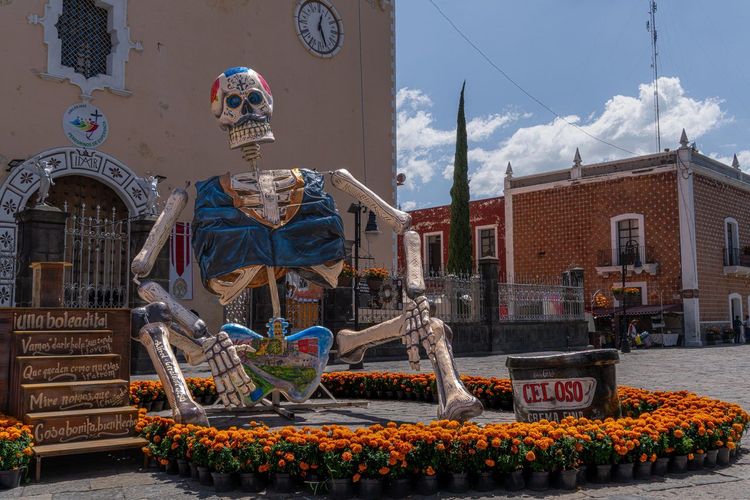
Joining a free walking tour is a low-stakes way to meet other travelers on your first day. Several leave daily from the Zócalo and run two to three hours through Centro Histórico on a tip basis, and the guides are a reliable source of current neighborhood advice. They complement rather than replace a self-paced audio tour: a live guide answers questions on the spot, while the Ryo audio guide lets you revisit the same stops later, alone and at your own rhythm.
Centro Histórico: Mexico City's Historic Heart
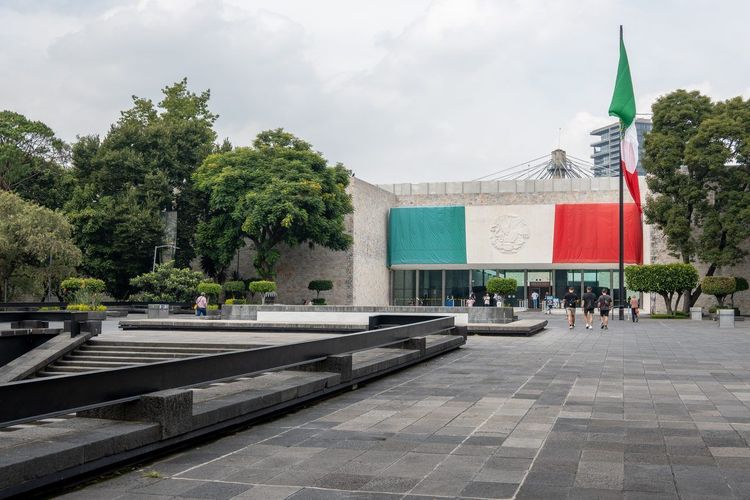
Start here. The historic centre holds the densest concentration of landmarks in the city, built directly on top of the Aztec capital Tenochtitlan, and it is compact enough to cover on foot in one full, satisfying day.
The Zócalo, Templo Mayor and Palacio de Bellas Artes
The Zócalo), officially the Plaza de la Constitución, is one of the largest public squares in the world and the obvious starting point: the Metropolitan Cathedral and the National Palace line two of its sides, and a giant Mexican flag is raised and lowered with ceremony each day.
Just beside the cathedral, the excavated ruins of the Templo Mayor) reveal the main temple of the Aztec empire, rediscovered in 1978 when electricity workers struck a huge carved stone disc of the moon goddess Coyolxauhqui while digging. The on-site museum displays artifacts pulled from the excavation, and you can easily spend two hours here.
A fifteen-minute walk west, the Palacio de Bellas Artes) is a white marble concert hall and museum topped with an Art Nouveau dome. Construction dragged on for some 30 years, from 1904 to 1934, so long that its interior ended up Art Deco. Step inside for the murals by Diego Rivera and José Clemente Orozco, then cross the street to the Torre Latinoamericana viewing deck for the best overview of the whole area.
This is exactly the stretch where Ryo's short tour retracing the steps of the Aztecs earns its keep: it narrates the Zócalo, the Templo Mayor ruins and Bellas Artes stop by stop, so the history lands with context instead of a guidebook paragraph read on a bench between sights.
Museums Worth Your Time
Two of the city's best museums sit a short Uber ride from the historic core, in Chapultepec and Polanco. At the Museo Nacional de Antropología), you will find the Aztec Sun Stone, a 24-ton carved basalt disc that anchors what is widely considered the finest archaeology collection in Latin America. Entry is free on Sundays for Mexican nationals and residents, with a modest fee for everyone else; plan at least three hours, and note that it closes on Mondays.
The Museo Soumaya (Blvd. Miguel de Cervantes Saavedra 303, Granada, 11529 Ciudad de México, rated 4.8/5 on Google (71 943 avis)), instantly recognizable by its curved, aluminum-tiled exterior, holds one of the largest Rodin collections outside France and charges no admission at all, which makes it an easy add-on to a Polanco afternoon.
Roma Norte, Condesa and Polanco: Food, Shops and Nightlife
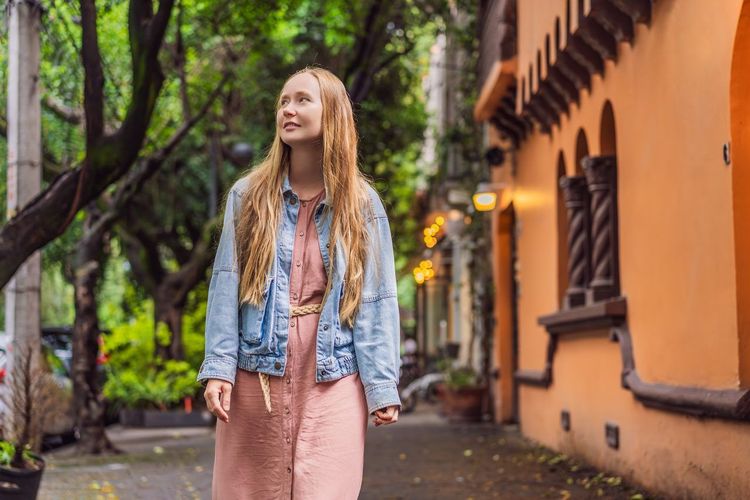
Roma Norte and Condesa, usually spoken of as one stretch, plus Polanco further north-west, form the belt where most solo travelers end up spending their evenings, planned or not. For history and culture, Centro Histórico wins; for a long dinner followed by a slow walk home, this belt does.
Markets and Shopping
If you like browsing, start with Mercado Roma (Querétaro 225, Roma Norte, 06700 Ciudad de México, rated 4.3/5 on Google (17 092 avis)), a multi-level food hall in Roma Norte built around local vendors rather than chains, ideal for a solo lunch at a counter seat without the awkwardness of a table for one.
Shopping in Polanco runs toward international fashion houses along Avenida Presidente Masaryk, nicknamed the Rodeo Drive of Mexico, while Condesa leans into independent boutiques and vintage shops on quieter side streets. For crafts, the Mercado de Artesanías La Ciudadela near Centro Histórico gathers textiles, ceramics and alebrijes from across the country at fairer prices than tourist stalls. What is the Pink Zone? That is Zona Rosa, in the Juárez neighborhood just north of Roma Norte along Paseo de la Reforma, historically the heart of the capital's LGBTQ+ nightlife and still a dense strip of bars, restaurants and shops.
Rooftop Bars and Nightlife
Have a sunset drink at one of the rooftop bars scattered across Roma Norte and Condesa, several of which catch a clear line of sight to Popocatépetl on a good-visibility evening. Nightlife here leans toward cocktail bars and mezcalerías rather than clubs, which suits you well when traveling alone: striking up a conversation at a bar counter is far easier than on a crowded dance floor. Order a ride home rather than walking long distances after midnight. By day, the parks and plazas of these neighborhoods are part of what the main Ryo audio-guided tour covers, so you can stroll Parque México or Plaza Río de Janeiro with the story behind each facade in your ears rather than a map pin.
Coyoacán and the Frida Kahlo Museum
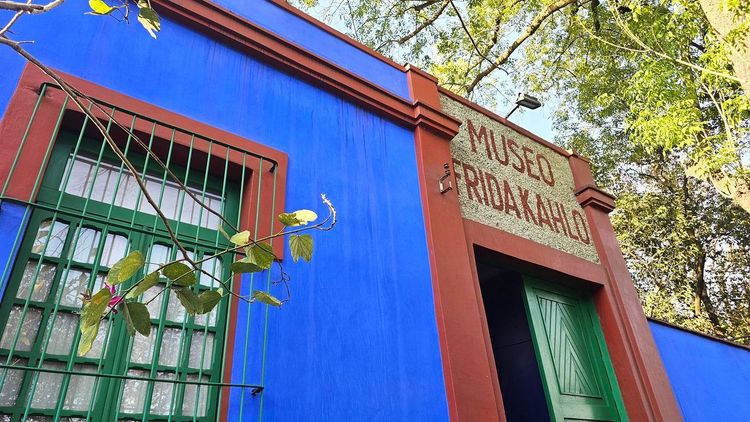
Coyoacán feels like a separate town: cobblestone streets, colonial buildings painted deep blue and red, and a slower pace that comes from being a former village the capital eventually grew around. Allow a half-day, more if you linger over coffee.
Casa Azul: Book Frida Kahlo's House Early
Casa Azul, the cobalt-blue house where Frida Kahlo was born in 1907 and later lived with Diego Rivera, is now the Museo Frida Kahlo and the most in-demand museum ticket in town. There is no ticket window on site: every entry is a timed ticket bought online through the museum's official site, around 320 pesos for international visitors. Book one to three weeks ahead for weekends, as slots sell out.
Coyoacán's Plazas and Markets
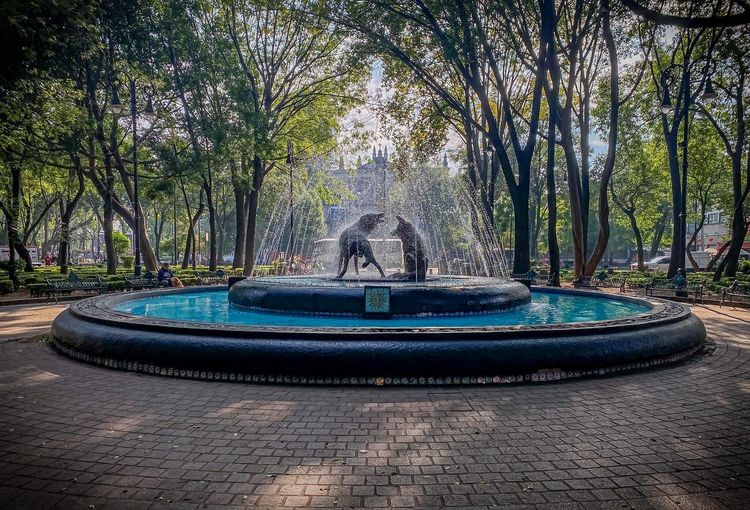
The twin plazas at the center of Coyoacán, Jardín Centenario and Plaza Hidalgo, fill with families, street musicians and churro vendors most weekend afternoons, and the Mercado de Coyoacán (Ignacio Allende s/n, Del Carmen, Coyoacán, 04100 Ciudad de México, rated 4.5/5 on Google (56 319 avis)) nearby is one of the best spots in the city for a solo lunch of tostadas at a counter.
If you have time, the Leon Trotsky house museum sits a few blocks north of Casa Azul and is rarely crowded. Getting there is simple: the metro's line 3 runs to Viveros or Coyoacán stations, about a 15-minute walk from the center, or an Uber from Roma Norte takes 25 to 40 minutes. Weekday mornings are the calmest time to walk the leafy streets around Viveros de Coyoacán, a former tree nursery now popular with runners. Pair the half-day with the audio-guided tour back in the historic center, so your day has structure on both ends without extra planning squeezed in between.
Best Day Trips from Mexico City
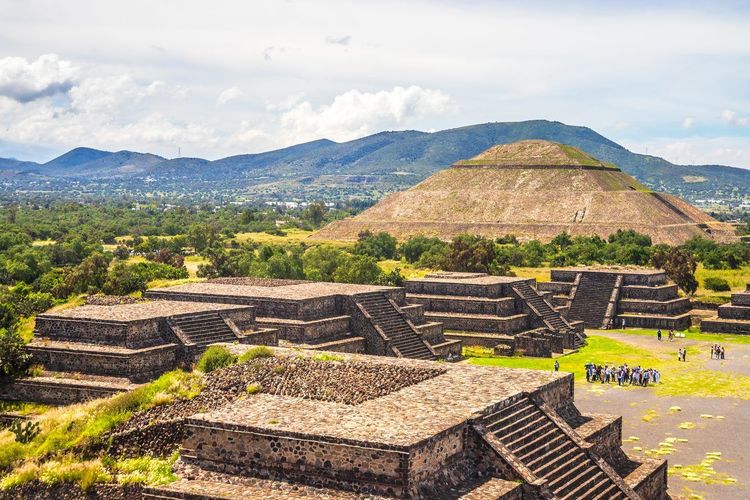
Ancient ruins, floating gardens, a wrestling night and colonial towns: every option below works perfectly well solo, either through a group tour or independently by bus.
Teotihuacán Pyramids
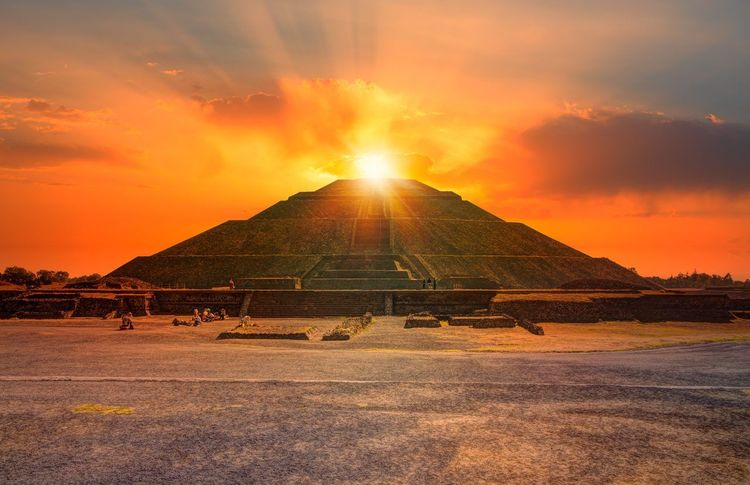
Teotihuacán), about an hour north-east, is the pre-Aztec city whose Pyramid of the Sun ranks among the largest pyramids in the world, built more than a thousand years before the Aztecs reached the Valley of Mexico. Buses leave regularly from Terminal Central del Norte, and most visitors budget a full morning to walk the Avenue of the Dead and climb the Pyramid of the Moon before the midday heat. Bring sun protection: there is almost no shade on site. Hot-air balloon flights at dawn are a popular, if pricier, alternative.
If you go independently, buy a return ticket at the bus station, arrive at opening time to beat the tour buses, and enter by the gate nearest the Pyramid of the Moon so you finish at the Sun pyramid, close to the exit. Water, a hat and cash for the on-site museum make the visit far more comfortable. The site museum near the Pyramid of the Sun is small but worth a stop for its scale model of the ancient city, which helps you picture what you have just walked through.
Xochimilco's Floating Gardens
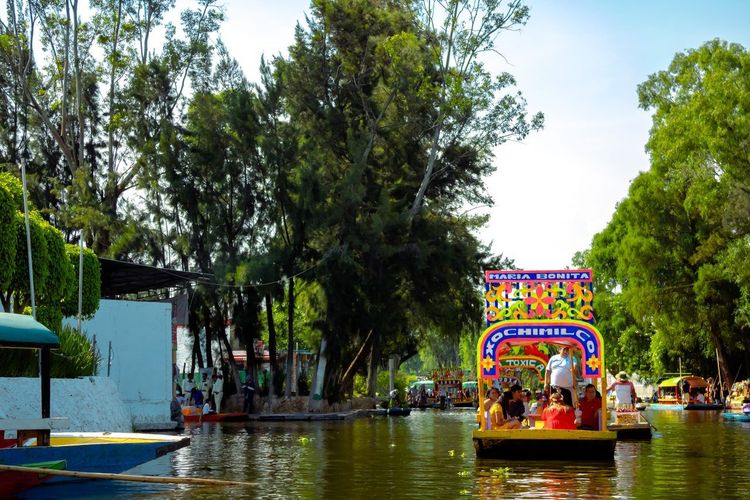
At Xochimilco), colorful flat-bottomed boats called trajineras drift along canals dating back to Aztec times, while mariachi bands pull up alongside on their own boats, ready to play a song for a fee. It is livelier (and louder) on weekends when local families turn it into a party. Since boats are rented by the hour rather than per person, joining a group tour is the cheapest way for you to go alone; otherwise, aim for a quieter weekday morning.
Lucha Libre Wrestling Night

Lucha libre, Mexico's masked professional wrestling spectacle, fills Arena México (Dr. Lavista 189, Doctores, 06720 Ciudad de México, rated 4.7/5 on Google (29 246 avis)) in the Doctores neighborhood most Friday nights. You will fit right in alone: buy a ticket at the box office or through the official sellers, grab a beer from a vendor working the aisles and let the crowd's running commentary explain the plot better than any program. Doctores is not a place to wander at night, so arrive and leave by app-booked ride.
Puebla, Cholula and Beyond
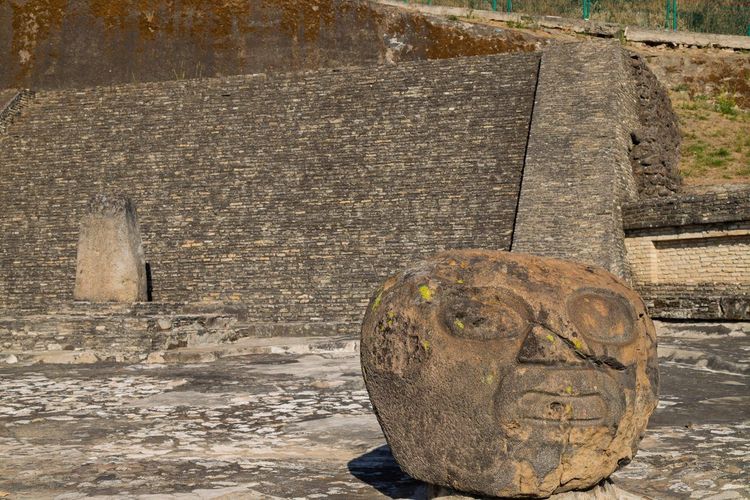
Puebla, Cholula and Tonantzintla make a full-day trip about two hours east by direct bus: Puebla's talavera-tiled facades and churches, Cholula's Great Pyramid hidden under what looks like an ordinary hill topped by a church, and Tonantzintla's tiny, almost overwhelmingly decorated chapel. Las Grutas de Tolantongo, natural hot spring pools set in a canyon in Hidalgo, sits further out and suits an overnight trip better than a rushed day trip from the capital.
Eating Alone in Mexico City: Street Food and Restaurants
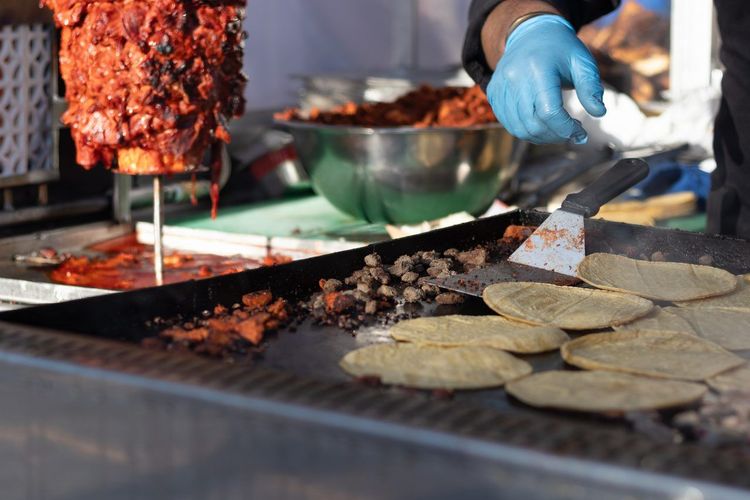
Food is one of the best reasons to come solo in the first place, and eating alone here carries none of the stigma it might elsewhere. Counter seating at street stalls and market stands is the norm, which makes solo dining genuinely easy. For a broader overview of what to order, see our guide to the top 10 culinary specialties of Mexico.
Is street food safe? Generally yes, with a few filters: pick stalls with a visible line of local customers, watch that meat is cooked in front of you rather than sitting out, and favor busy stalls that turn over ingredients quickly. Tacos al pastor, shaved straight off a vertical spit, are the obvious start, followed by tlacoyos, esquites and the capital's famous quesadillas, which are often served without cheese unless you ask for it.
Stick to bottled or filtered water throughout the trip, and keep a bottle on hand during long walking days given the altitude's extra dehydrating effect. Ice in established restaurants and cafes is made from purified water. For a sit-down meal alone, try a comida corrida, the set lunch of soup, main and dessert served in small family restaurants for a modest price. And if you are curious what the city looks like through a couple's eyes, our list of romantic things to do in Mexico City also works for a treat-yourself evening alone.
Meeting People and Spending Time Alone
Social Activities for Solo Travelers
Traveling alone doesn't have to mean eating every meal alone. Cooking classes in Roma Norte and Condesa, where you shop for ingredients at a local market before preparing mole or salsas, are one of the easiest ways to spend an afternoon with other travelers. Street food tours of the historic center work the same way and double as a crash course in what to order on your own later. Hostels run nightly activities, from taco crawls to mezcal tastings, that are usually open to non-guests too, and language-exchange evenings in Roma and Condesa pair travelers with locals who want to practice English while you practice Spanish.
Even a few words of Spanish change how the city responds to you. A simple buenos días when entering a shop, por favor and gracias at every stall, and ¿cuánto cuesta? at the market go a long way, and locals are generally patient and warm with visitors who try. Translation apps fill the gaps, especially at restaurants where menus rarely come in English outside the tourist core.
Chapultepec and Quiet Moments
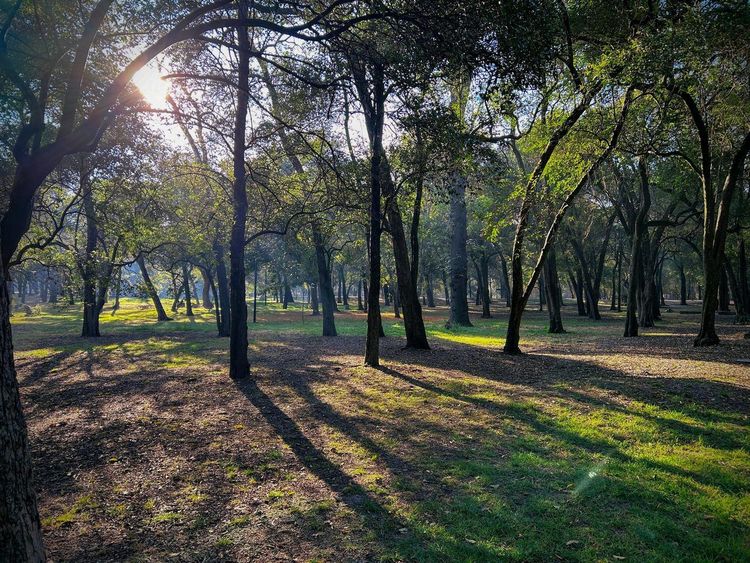
Some of the best solo hours in the capital are the quiet ones. Bosque de Chapultepec, one of the largest urban parks in Latin America, holds the Anthropology Museum, a lake with rowing boats, and Chapultepec Castle on its hilltop, the only royal castle in the Americas to have housed sovereigns, now home to the National History Museum with sweeping views down Paseo de la Reforma. Go on a weekday morning, when joggers and families outnumber tour groups, and bring a book for a long sit under the trees.
Sunday is a good day to plan around: Reforma fills with cyclists, Coyoacán's plazas buzz with families and many museums stay open while the traffic eases. Wherever you are, the reassuring part of exploring the capital alone is how easy it is to set your own pace, lingering an extra hour where something catches your eye and skipping what doesn't, with the Ryo audio guide filling in the history at each stop whenever you want it.
When to Visit and What to Wear
The best time to visit depends on rain and crowds more than temperature, since the altitude keeps CDMX mild all year, rarely below 8°C at night or much above 26°C by day. What is the best month to visit? Many travelers choose March to May, the dry season before the summer rains, when jacaranda trees turn Roma Norte and Condesa purple and crowds stay manageable.
June to September brings short, predictable afternoon showers that are easy to plan around, while late October and early November bring the Day of the Dead parade and altars across the city. December is the busiest and most festive month, with hotel prices climbing accordingly.
What to wear comes down to comfortable, closed walking shoes above all, given the cobblestones of Centro Histórico and Coyoacán. Layer for evenings, since temperatures drop noticeably after sunset even in warmer months. Add a compact umbrella in the rainy season, sunscreen year-round (UV is strong at altitude) and broken-in shoes for the day you climb a Teotihuacán pyramid.
Budget, Connectivity and Practical Tips
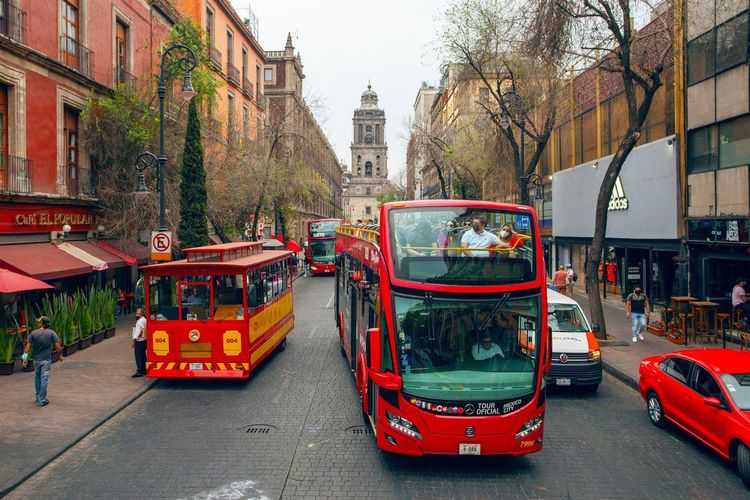
Is $1,000 enough for a week? For a solo traveler staying in a hostel or budget hotel, eating mostly street food and markets with a few sit-down meals, and using the metro or Uber rather than private tours, $1,000 covers a comfortable week with room for museum entries and one day trip. As a rough guide, tacos cost 20 to 40 pesos each, a hostel dorm runs about 15 to 30 dollars a night and most rides within the central neighborhoods stay under 150 pesos. A mid-range week with boutique hotels and several day trips will push past that figure.
Stay charged and connected by buying a local SIM or eSIM at the airport; tourist plans with a week of reliable data are cheap, and you will rely on data for rides, maps and translation. A portable battery pack earns its weight on long museum-and-market days.
Before you go, notify your bank of international use, keep a photo of your passport saved offline and download an offline city map in case data drops in the metro. Tipping runs 10 to 15% at sit-down restaurants and isn't expected at street stalls. Most museums close on Mondays, a detail that trips up more first-time visitors than almost anything else. If you only have four or five days, a simple outline works well: Centro Histórico on day one, Chapultepec and Polanco on day two, Coyoacán on day three, then a day trip and a free day for Roma Norte and Condesa. For day one, download the Ryo audio-guided tour before leaving your room so it plays offline, even when the metro swallows your signal.


FAQ
Is $1,000 enough for a week in Mexico City?
Yes, for a solo traveler keeping accommodation modest and leaning on street food and public transit, $1,000 covers a full week comfortably, including a few paid attractions and a day trip.
Should I go to Mexico City by myself?
For most travelers comfortable navigating a large capital alone, yes. The walkable core around Centro Histórico, Roma Norte, Condesa and Polanco holds the majority of the main sights, and solo dining and sightseeing come easily thanks to counter seating and daily group walking tours.
What is the Pink Zone in Mexico City?
The Pink Zone, or Zona Rosa, is a nightlife and shopping district in the Juárez neighborhood, just north of Roma Norte. It is historically the center of the city's LGBTQ+ scene and still packed with bars, restaurants and boutiques.
Is CDMX safe for solo female travellers?
Yes, with the standard precautions that apply in any major capital: stay alert in crowds, avoid flashing valuables, use app-booked rides or authorized taxis rather than hailing cars off the street, use the women-only metro cars and stick to busy neighborhoods after dark.
How many days do you need in Mexico City?
Four to five days covers Centro Histórico, Chapultepec, Roma Norte, Condesa, Polanco and Coyoacán with room for one day trip. A week allows two day trips, such as Teotihuacán and Puebla, without feeling rushed.
What's the best way to get around Mexico City alone?
Uber or DiDi for anything after dark or longer than a short walk, the metro for cheap daytime hops, and your own feet within Centro Histórico, Roma Norte or Condesa, since all three are compact enough to explore on foot.
Mexico City rewards a solo traveler who arrives with a loose plan rather than none: a neighborhood to sleep in, a museum or two booked ahead, and a rough idea of how the Zócalo connects to Coyoacán and to a rooftop bar in Condesa. Fill in the gaps as you go, and let Ryo's audio-guided tour of Mexico City handle the historic center stop by stop, at whatever pace your solo trip calls for.