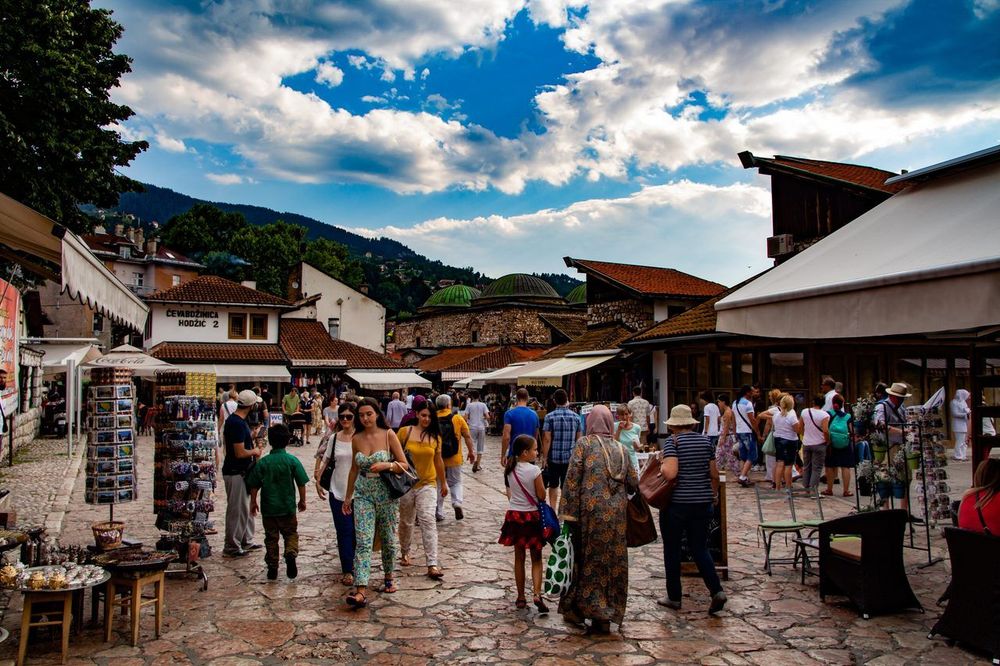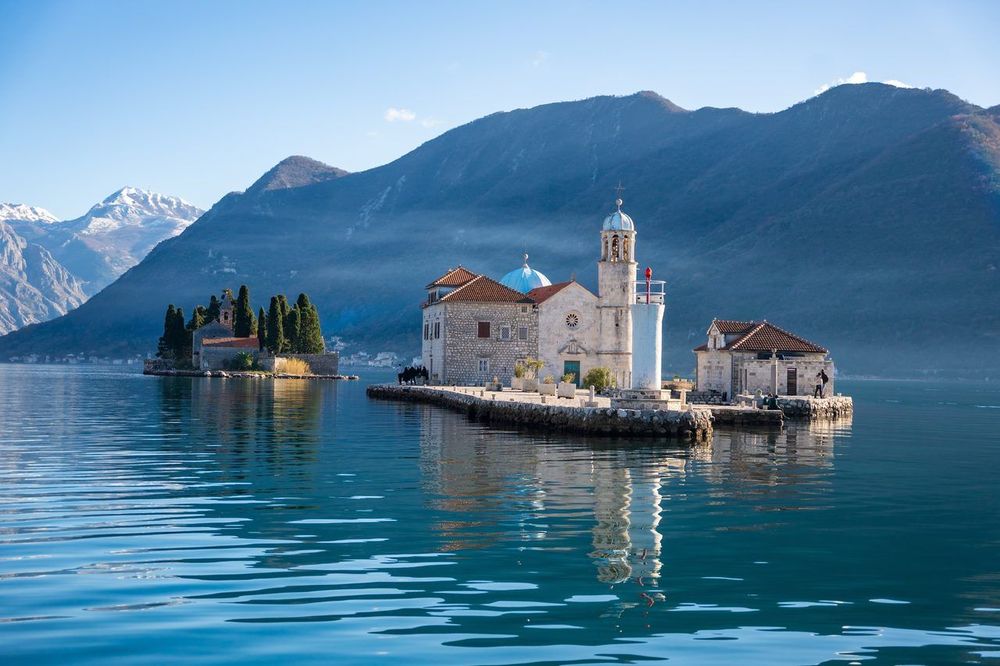
© Shutterstock
 Votre guide Ryo
Things to Do in Kotor: 18 Must-Have Experiences in 2026
Nestled at the end of Europe's southernmost fjord, Kotor wakes each morning beneath a blue-tinged shadow cast by the cliffs of Mount Lovćen, before the first cruise buses fill its streets around 10 a.m. Wondering what to do in Kotor means first accepting its dual nature: a Byzantine then Venetian city compressed within thousand-year-old walls, and a bay stretching nearly 28 kilometres to the Adriatic. The old town, a UNESCO World Heritage Site since 1979, packs in a Romanesque cathedral, baroque palaces, and a museum dedicated entirely to cats.
This guide details the 18 experiences that make for a successful stay, whether you have a few hours on a cruise stopover or a full week in the Bay of Kotor. You will learn why the Fortress of Saint John demands climbing 1,350 stone steps before noon, how a cable car inaugurated in 2023 changed everything for tired knees, what the city walls entrance ticket actually costs, and why the small village of Perast, fifteen minutes away by road, sometimes deserves more time than Kotor itself. Keep the Ryo app handy too: it will be there for your next audio-guided stops as soon as you leave Montenegro.
1. Pass Through the Sea Gate
Every visit to Kotor begins, almost by architectural obligation, at the Sea Gate (Stari Grad, 85330 Kotor, rated 4.7/5 on Google with 1,193 reviews). This 16th-century Venetian gateway, topped by a winged lion of Saint Mark, opens directly onto the Arms Square and sets the tone: polished limestone, gleaming cobblestones, and already the hum of café terraces. A 1944 inscription commemorating the liberation of the city is carved just below the older coat of arms.
Pass through it early in the morning, before 9 a.m.: that is the only time you will photograph it without a queue of organised groups blocking the shot.
2. Get Lost in the Streets of Stari Grad
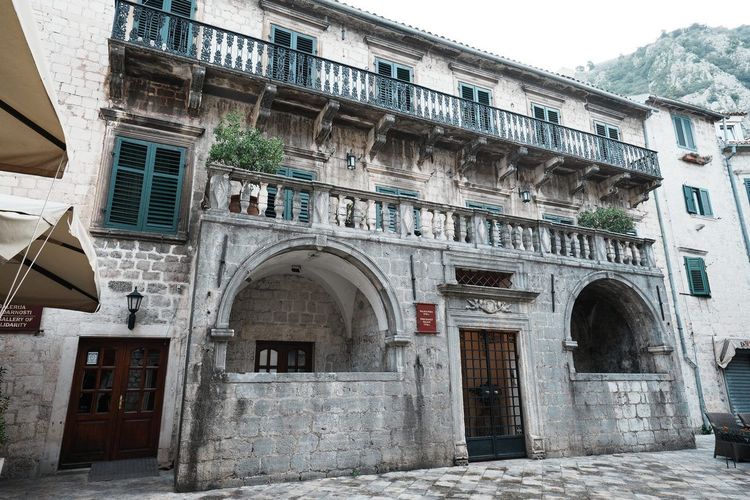
Beyond the gate, old Kotor nestles within a tangle of streets that follow no grid plan. The Venetians who shaped the city between the 14th and 18th centuries favoured defence over logic, stacking palaces, chapels, and inner courtyards with little concern for alignment. The result is a stone labyrinth where it is easy to get pleasantly lost, and where every street corner reveals a carved coat of arms, a mullioned window, or a cat asleep on a doorstep.
The history of Stari Grad goes beyond its aesthetics. The earthquake of 15 April 1979, which struck the bay at a magnitude of 7.0, destroyed nearly a third of its historic buildings. The reconstruction, partly funded by UNESCO, took more than twenty years and explains why some façades still show consolidated rather than concealed cracks. Locals readily recount how their grandparents carried icons out of churches before the roofs collapsed, a gesture that saved part of the city's religious heritage.
To see everything without following a strict map, orient yourself using the four main squares: Arms Square at the entrance, Flour Square, Milk Square, and Saint Tryphon Square in front of the cathedral. Between them, set aside the map of Kotor from your hotel and let the side streets guide you: that is where you will find craftsmen's workshops, small galleries, and shaded courtyards where laundry still dries in the Venetian tradition. Allow a good hour for a first loop, longer if you give in to the temptation of an iced coffee on a tucked-away square. A dedicated audio-guided tour for Kotor does not yet exist, but the spirit of the Ryo audio guide would find ideal territory here: every alley would deserve its own commentary.
3. Visit the Cathedral of Saint Tryphon
The Cathedral of Saint Tryphon (Trg Svetog Tripuna, 85330 Kotor, rated 4.6/5 on Google with 2,774 reviews) has dominated the square of the same name since 1166, when it was consecrated over the relics of the city's patron saint — an Armenian merchant martyrised in the 3rd century whose bones are said to have been bought by a Venetian captain before ending up, by a navigational accident, in the Bay of Kotor. Local legend insists on the coincidence: the ship carrying the relics to Venice reportedly stopped for three consecutive nights off Kotor, interpreted as a divine sign to leave them there.
The Romanesque building paid a heavy toll to the region's earthquakes: the 1667 quake destroyed its original façade, replaced by an asymmetric baroque design still visible today, with the north tower clearly differing from the south tower, completed a century later due to lack of funds. The 1979 earthquake again weakened the structure, leading to a restoration lasting several decades. Inside, the polychrome marble high altar and the choir frescoes, partially uncovered during works in the 1990s, are worth more than the usual five-minute glance.
The cathedral treasury, reached via a narrow staircase on the first floor, holds Byzantine silver reliquaries and a collection of 15th-century liturgical vestments. Admission costs 2.50 euros, a deliberately modest fee intended to fund ongoing maintenance rather than to filter visitors. Many hurried travellers stick to the main nave and miss this floor entirely, even though it is one of the few air-conditioned spots in the old town in summer.
The two towers contain a public staircase climbing to a terrace overlooking the red-tiled rooftops of the quarter. The access, often overlooked by printed guides, requires finding a left side door that is generally open from 9 a.m. to 6 p.m. in season. The climb — about a hundred worn stone steps — opens onto a view taking in both the Arms Square and the first slopes of Mount Lovćen, a vantage point far less crowded than the Fortress of Saint John.
Religious services are still held daily, usually at 8 a.m. and 6 p.m., and tourist visits pause for about thirty minutes during these times. Many travellers planning their day around the question of what to do in Kotor in a single day choose to time their visit between these services, which also has the advantage of avoiding the midday peak. Cruise groups, who typically disembark around 9:30 a.m., reach the cathedral around 10:30 a.m.: arriving at opening time, 8:30 a.m., allows you to enjoy the nave almost empty, before the first guided commentary echoes under the vaults.
4. Compare the Churches of Saint Nicholas and Saint Luke
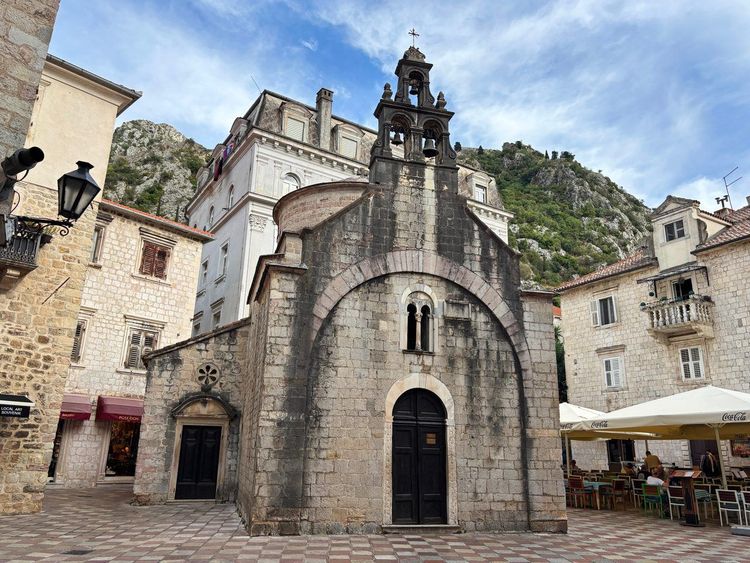
On the small Saint Luke's Square stand two religious buildings that tell, between them, the story of Kotor's confessional coexistence. Saint Luke's Church (Trg Svetog Luke, 85330 Kotor, rated 4.7/5 on Google with 664 reviews), built in 1195, long served alternately for Catholic and Orthodox worship — a rare arrangement in the Balkans, explained by the mixed Venetian and Slavic population of the time. Its plain Romanesque façade contrasts sharply with the neo-Byzantine front of its neighbour.
Directly opposite, Saint Nicholas's Church, completed in 1909, displays green domes and an interior laden with gilded icons, typical of Serbian Orthodoxy. Comparing the two in a ten-minute walk delivers a lesson in religious history more vivid than any explanatory panel: on one side, medieval austerity; on the other, the grandeur of 20th-century national revival. The contrast of the two façades photographs particularly well in the late afternoon, when raking light accentuates the relief of the stone without flattening the colours of the domes.
You will not need more than twenty minutes for both, but avoid Sunday mornings if you do not wish to interrupt an Orthodox service in full celebration.
5. Browse the Kotor Market
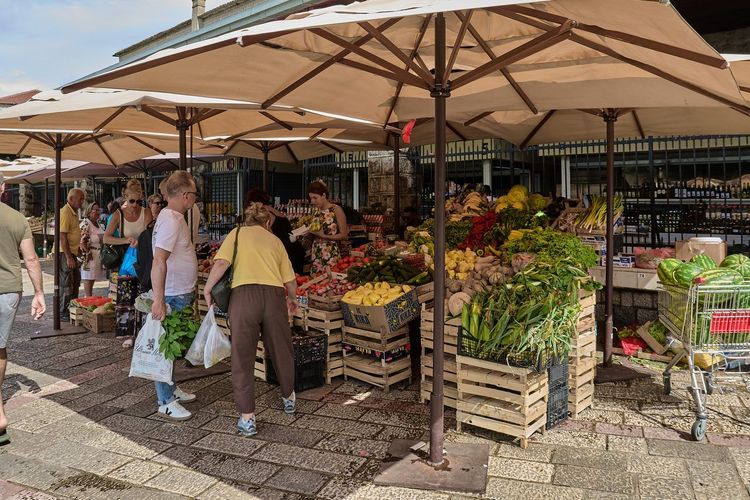
Backed up against the sea-facing city walls, the Kotor market (Škaljari bb, 85330 Kotor, rated 3.9/5 on Google with 149 reviews) opens every morning from 7 a.m., well before the first tourists pass through the Sea Gate. Producers from inland villages sell aged sheep's cheese, smoked pršut ham, sage honey, and bay fruits still covered in morning dew.
It is also the best place to observe the daily life of a city that, outside tourist season, runs to the rhythm of fishing and farming. The fish stalls, set up on the sea side, receive the catch directly from boats moored a few metres away. A bag of local capers or a bottle of Montenegrin olive oil rarely costs more than five euros and fits easily into carry-on luggage.
Come before 9:30 a.m.: after that, the most popular stalls have often already sold out their daily produce.
6. Linger on Arms Square and by the Clock Tower
The Arms Square, immediately past the Sea Gate, serves as the city's open-air living room. At its centre, the Clock Tower, erected in 1602, long served as a public pillory — a function still recalled by the small stone of infamy sealed at its base.
The terraces all around charge higher prices than elsewhere in the old town, but the view of the tower justifies a late-afternoon coffee when the stone takes on a golden hue.
7. Walk Along the City Walls of Kotor
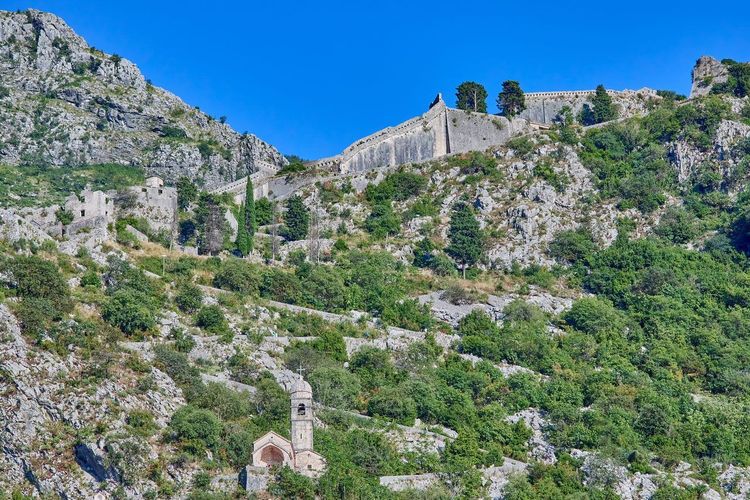
The city walls of Kotor (Stari Grad, 85330 Kotor, rated 4.8/5 on Google with 550 reviews) encircle the old town for nearly 4.5 kilometres and rise, in places, up to 20 metres high. Built progressively from the 9th to the 19th century under Byzantine then Venetian influence, they form a continuous defensive system between the lower town and the Fortress of Saint John, perched 260 metres higher on Saint John's Hill.
Contrary to a common belief, it is not possible to walk the entire length of the walls: only the section leading to the fortress — about 1,350 steps — is open to the public and requires a ticket. The rest of the wall, including the section running alongside the port, can only be seen from the streets below or from a boat, never walked along. This clarification saves a frequent disappointment for visitors who picture a full elevated walk around the entire city.
The white limestone, quarried from the surrounding hills, was chosen for its resistance to naval artillery: the Venetians particularly feared Ottoman attacks from the sea, which explains the disproportionate thickness of the first few metres of the wall on the bay side. Inscriptions carved by soldiers on watch duty, some dated to the 17th century, still survive near the intermediate guard posts halfway up the climb.
Halfway up, a small alcove fitted out as a viewpoint offers a place to catch your breath without losing sight of the marked path. Many amateur photographers set up their tripods here in late morning, when the sun still lights the bay without casting harsh shadows on the white stone walls.
The best moment to take in the walls as a whole remains sunset, from a boat in the middle of the bay or from the road that overlooks Kotor on the Lovćen side. At that hour, the white stone blazes with an orange light that picks out every battlement and watchtower — a spectacle many visitors discover almost by chance at the end of the day.
Bring plenty of water before setting out on the open section: there are no vendors along the climb, and shade becomes scarce past the first third of the route. The best-prepared visitors carry at least one and a half litres per person, more in high summer when temperatures regularly exceed 35°C at midday.
8. Climb to the Fortress of Saint John
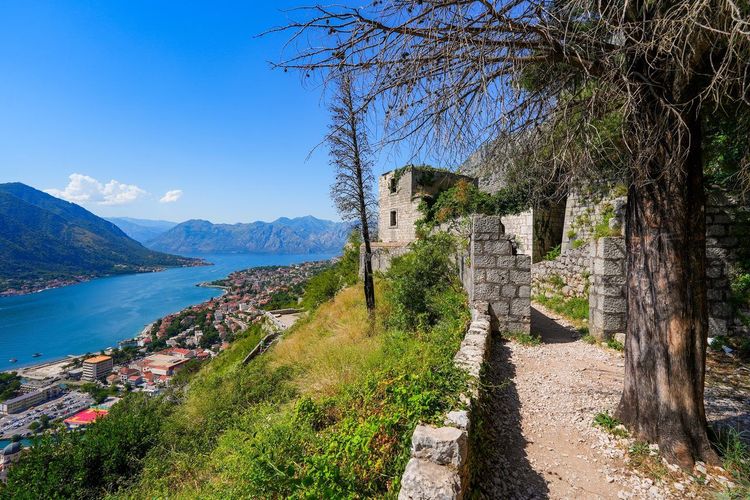
The undisputed highlight of any visit to Kotor, the Fortress of Saint John (Stari Grad, 85330 Kotor, rated 4.5/5 on Google with 5,029 reviews) must be earned: you need to climb around 1,350 uneven stone steps, often slippery after rain, to reach the fort ruins at 260 metres above sea level. Allow between 45 minutes and an hour and a quarter depending on your pace and the number of photo stops — the climb is not technically difficult but demanding in strong heat.
Admission currently costs 15 euros per adult, a price that has been revised sharply upward in recent years as visitor numbers have grown. Tickets are sold at a booth at the foot of the path, generally open from 8 a.m. to 7 p.m. in peak season, and there is no official online booking: arriving early is the best way to avoid queues, especially on cruise ship days.
The path winds past the remains of the small Church of Our Lady of Health, built in the 16th century as a votive offering after a plague epidemic, and several designated viewpoints where less experienced hikers rest. The fortress itself, largely in ruins, occupies the summit and offers a sweeping panorama over the bay, the old town's tiled rooftops, and on clear days, as far as the first ridges of Croatia.
Many visitors in a hurry stop at the first half of the route, up to an intermediate viewpoint roughly two-thirds of the way up: the view from there is already spectacular, and turning back from that point saves about twenty minutes compared to completing the full ascent. This compromise suits families with young children or those unaccustomed to steep uphill walking particularly well.
For last-minute planners wondering how much time to budget for this stop in a packed itinerary, allow a full half-day including the ascent, the visit at the top, and the descent, not counting breaks. Setting off before 8 a.m. remains the best option: the heat rises quickly in this stone amphitheatre facing due south, and shade becomes scarce after the first hundred metres of elevation gain.
Some local operators now offer a torchlit night climb, reserved for organised groups and limited to a few dates per month during summer. The experience — cooler and far less crowded — generally costs twice the daytime rate but includes a guide and marked lighting along the steepest section of the path, where the steps become irregular and a phone torch alone is not always enough to ensure safe footing.
Hiking shoes or, failing that, thick-soled trainers are essential: stone polished by centuries of footfall becomes genuinely slippery after a shower, common on spring afternoons. Bring a cap and a high-factor sunscreen too — the path offers virtually no vegetation cover along its south-facing route.
9. Ride the Kotor Cable Car
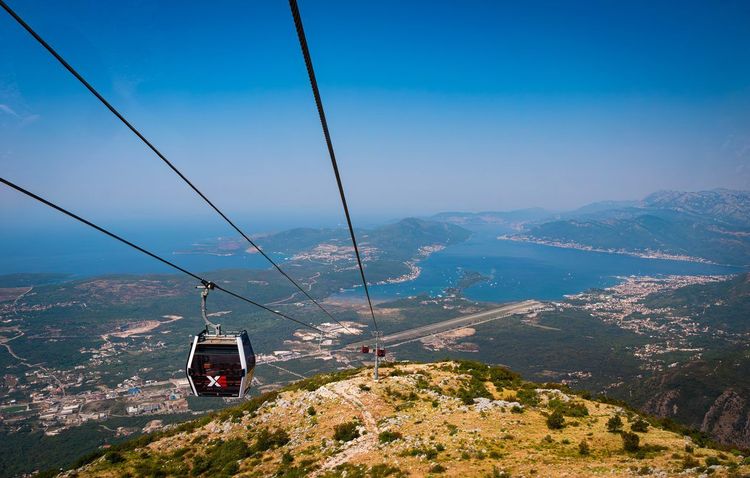
Inaugurated in 2023, the Kotor cable car (Špiljari bb, 85330 Kotor, rated 4.8/5 on Google with 2,225 reviews) connects the foot of the hill to a mountain station perched at around 1,300 metres above sea level, on the Kuk summit, well above the Fortress of Saint John, in about ten minutes. Contrary to a common misconception, it does not serve the fortress directly: it climbs higher, onto the slopes of Mount Lovćen, and offers a different, wider panorama encompassing the entire Bay of Kotor all the way to its opening onto the Adriatic.
A round-trip ticket starts at around 20 euros and rises in peak season — a price that often surprises travellers who enquire after already having paid the fortress entrance fee: the two experiences are separate and cumulative if you want both viewpoints. The lower station, a few kilometres from the historic centre, is most conveniently reached by taxi, as the walk along the road from the old town offers little of interest.
At the top, a small café and observation platform make for a pleasant stop, especially at sunset when the low light traces every bend of the bay. Many older guides still overlook this option, new as it is on the city's tourist timeline: keep it in mind if your original map of Kotor only mentioned the walk up.
Tickets can be bought on-site or online a few days in advance during peak season, when queue times at the booth sometimes exceed forty minutes at midday. Booking an early-morning or late-afternoon slot remains the best strategy to avoid both the heat and the crowds, as the cabin's limited capacity quickly lengthens queues at the height of summer. People with reduced mobility or families with pushchairs will particularly appreciate this alternative: unlike the walk up to the fortress, the cabin provides comfortable access to a comparable panorama without the 1,350 steps or the physical effort involved.
10. Explore the Maritime Museum of Montenegro
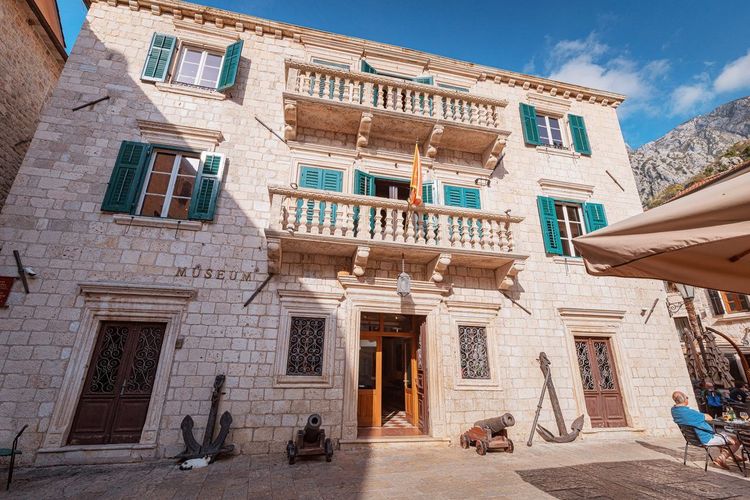
Housed in an 18th-century baroque palace, the Maritime Museum of Montenegro (Trg Bokeljske mornarice 391, 85330 Kotor, rated 4.5/5 on Google with 500 reviews) traces eight centuries of local naval tradition, from the powerful Bokeljska Mornarica maritime brotherhood to the merchant fleets of the 20th century.
Three floors display galleon models, admirals' uniforms, antique nautical charts, and navigation instruments, including a particularly well-preserved 16th-century astrolabe. The ground floor even recreates a typical bourgeois interior from a Kotor shipowner's family, complete with period furniture and portraits of sea captains.
Allow 45 minutes for a full visit, and favour the English-language explanations on the wall panels over the audio guide, which is frequently out of battery according to recent visitor feedback. The entrance fee, around 4 euros, remains one of the lowest in the old town relative to the density of exhibits. On rainy days — rare but possible in spring — this museum makes a comfortable retreat just a short walk from the cathedral, an easy add-on to a day that also takes in Ryo's audio-guided tour of Dubrovnik, less than an hour's drive away.
11. Give In to Curiosity at the Cat Museum
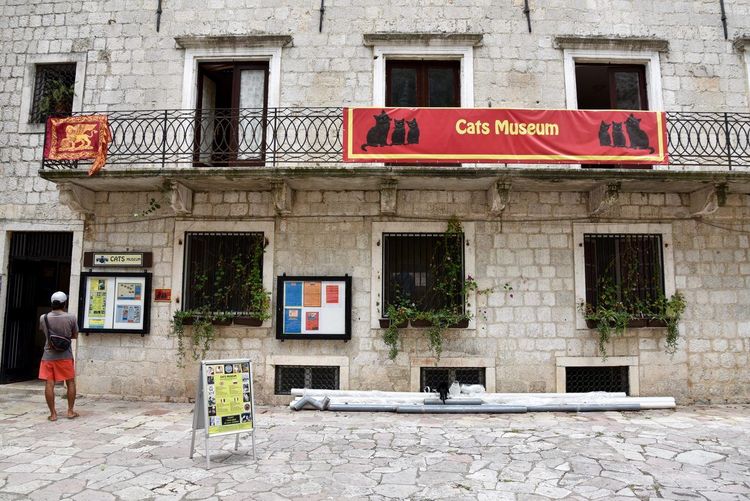
Improbable yet very popular, the Cat Museum (Stari Grad 371, 85330 Kotor, rated 4.2/5 on Google with 1,368 reviews) brings together more than 200 cat-related objects — from antique postcards to Japanese prints — across two small rooms on the first floor of a Venetian townhouse.
Kotor has a special relationship with cats dating back to the Venetian era, when they were taken aboard ships to protect cargoes from rodents before spreading throughout the city. To this day, several hundred stray but well-loved cats populate the streets, fed daily and tolerated in most shops.
Admission, around 2 euros, partly funds a local cat welfare association. Allow twenty minutes — no more — for a visit that is above all a charming curiosity rather than a major cultural highlight.
12. Sail the Bay of Kotor by Boat
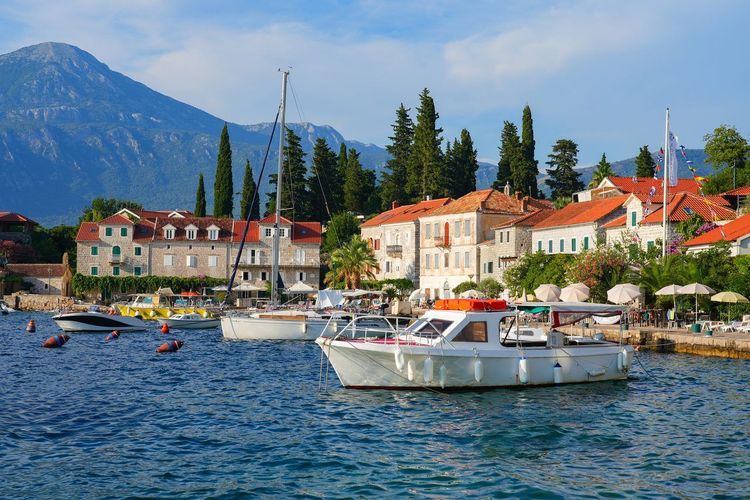
The Bay of Kotor forms Europe's southernmost fjord, an inland body of water stretching nearly 28 kilometres through four successive bays. Taking to the water by boat remains the best way to grasp the true scale of this landscape, impossible to appreciate from the old town alone or even from the Fortress of Saint John.
Most excursions departing from the port of Kotor last three to five hours and combine several stops: the man-made island of Our Lady of the Rocks near Perast, sometimes a sea cave on the opposite shore, and a swim in open water if the itinerary includes one. Prices vary considerably, between 20 and 60 euros per person depending on group size and duration, with small private boats significantly more expensive than the collective shuttles departing at fixed times from the main quay.
For those who prefer independence, renting a small boat without a licence — common throughout the bay — allows you to design your own half-day itinerary. This option suits travellers who already have a clear idea of what they want to see and who wish to linger longer at one spot than others, such as the secluded cove of Plavi Horizonti rather than the busiest sites.
Dolphins, present year-round in the bay's deep waters, can sometimes be spotted from the deck of a boat in complete quiet, though no excursion ever guarantees a sighting. Local captains, used to identifying the usual transit zones, will cut the engine for a few minutes to maximise the chances of a silent encounter.
Check the weather before booking: the bay, hemmed in between mountains exceeding 1,500 metres, can generate sudden downslope winds in the late afternoon — a local phenomenon called bura that regularly cuts short excursions scheduled too late in the day. Morning departures, between 9 a.m. and 11 a.m., are statistically the most reliable in meteorological terms.
Book the evening before with agencies near the Sea Gate rather than on the morning itself during peak season: the most sought-after time slots, especially those that include a sunset on the return, are fully booked by early morning in July and August.
13. Visit Perast and the Island of Our Lady of the Rocks
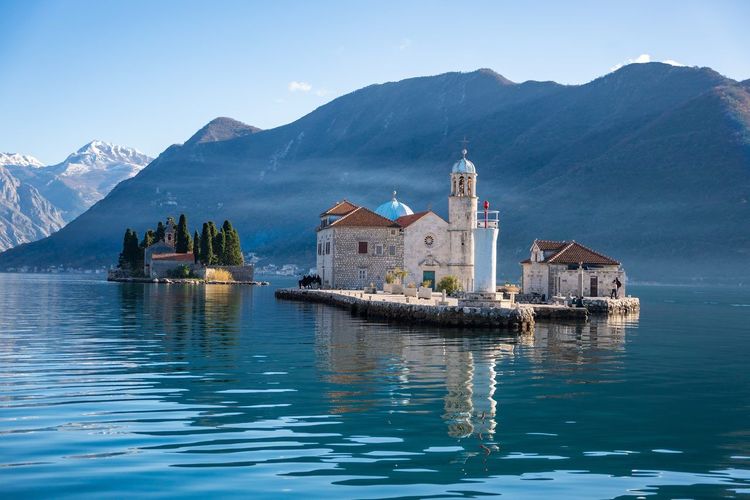
About fifteen kilometres north-west of Kotor, the village of Perast is home to 17 baroque palaces built by sea captains' families enriched by maritime trade in the 17th and 18th centuries — a disproportionate heritage for a settlement that today counts only around 300 permanent residents. The coastal road leading there, served by local bus or shuttle, hugs the bay almost continuously and already provides, in itself, one of the finest perspectives on the Bay of Kotor.
Facing the village, two islets rise from the calm water: Saint George, a Benedictine monastery closed to the public, and Our Lady of the Rocks (Perast, rated 4.6/5 on Google with 2,730 reviews), the Adriatic's only man-made island, shaped over several centuries by sailors who, according to local legend, threw a stone into the water each time they returned safely from a voyage to thank the Virgin Mary. The custom lives on symbolically every 22 July, when residents throw stones into the water during a commemorative regatta.
The church built on the islet houses a modest but surprising museum: maritime ex-votos, paintings donated by captains who survived shipwrecks, and above all a two-century-old embroidery made by a sailor's wife who, legend has it, waited twenty-five years for her husband's return, patiently adding gold and silver threads as her sight faded. The story, widely recounted by local guides, deserves to be heard on-site rather than read on a simple panel.
The islet is reached only by boat from Perast quay, with a round-trip fare of around 5 euros including waiting time on the island. Departures run every fifteen to twenty minutes in season with no booking required, making this excursion easy to combine with a broader boat trip from Kotor. The few souvenir shops on the quay sell miniature reproductions of the islet, a more original memento than the standard fridge magnets found in Kotor's old town.
Many visitors in a hurry settle for an afternoon in Perast before heading back to Kotor, but the village deserves more: the waterfront café terraces, almost empty outside peak tourist hours, offer one of the few moments of complete calm to be found anywhere in the Bay of Kotor.
The Bujović Palace, now a small local maritime museum, rounds off the visit with a collection of captains' portraits and antique nautical charts — less extensive than the Maritime Museum in Kotor but useful for understanding Perast's own history as a long-standing commercial rival of its neighbour before its gradual decline in the 19th century. The nearby bell tower, tilted several degrees by an ancient earthquake, is a reminder that the entire bay shares the same seismic vulnerability as Kotor.
To get there without a car, a local bus departs regularly from the Kotor bus station, about 500 metres from the old town, for a twenty-five-minute journey costing less than 3 euros. A taxi is faster and generally costs around 20 euros one way, a price that makes sense if you are travelling as a group or want to make the most of a day already packed with several stops around the Bay of Kotor.
14. Discover the Hamlets of Dobrota and Prčanj
A few minutes north of Kotor by car or bus, the settlements of Dobrota and Prčanj stretch along the bay for nearly six kilometres of continuous waterfront, dotted with baroque palaces built by deep-sea captains' families. Unlike Kotor, these villages were never enclosed by walls: their wealth depended precisely on direct access to the water, each residence once having its own private landing stage.
Dobrota alone has more than a dozen churches, some barely larger than a private chapel, built by rival families eager to display their prosperity. The path along the waterfront, shaded in places by centuries-old cypresses, is far less busy than the old town's streets — a welcome contrast on a high-season afternoon when Kotor is overflowing with groups.
Further along, Prčanj is built around a neoclassical church disproportionate to the size of the village, funded in the 19th century by sailors who had grown rich through trade with South America. The small but still-active harbour now welcomes more leisure sailing boats than fishing vessels, a sign of the gradual tourist reinvention that has been under way for some twenty years.
To visit both settlements without a car, a local bus links them regularly to the Kotor bus station for a journey of under twenty minutes at a nominal fare. A bicycle rental — available from several hire shops in the old town — also allows you to combine both stops in a single relaxed half-day, far from the bustle of the historic centre.
15. Swim at Ploče Beach or in Dobrota
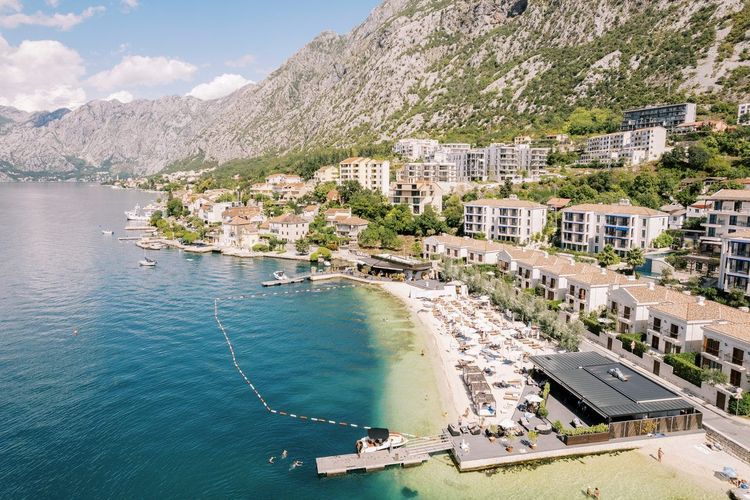
Kotor itself has no sandy beach: Ploče Beach (Dobrota, 85330 Kotor, rated 4.5/5 on Google with 130 reviews) — a concrete platform and a few pebble areas along the Dobrota waterfront — remains nonetheless the closest swimming option to the centre without needing transport.
The water, cool even in midsummer owing to the fjord's depth and the underwater springs that feed it, is noticeably colder than the open Adriatic coast at, say, Budva. Many visitors underestimate this temperature difference and come out surprised after a quick first dip.
For an experience closer to what most people picture when they think of a classic beach, two options are worth the trip: Plavi Horizonti, a pebble cove about 45 minutes' drive towards Budva renowned for its turquoise waters, and the small beach of Žanjic, reachable by water taxi from Kotor for a modest sum. Both are far quieter than anything directly on the water in the old town.
Bring water shoes: most swimming access points in the bay are over pebbles or flat rocks, rarely soft sand — a reality that few promotional photos make clear.
July and August are the warmest months for swimming, with water temperatures rarely exceeding 24°C even during a heatwave. June and September, cooler, offer far less crowded access — a trade-off that many travellers with flexible dates choose deliberately to enjoy the bay without the high-season crowds.
16. Stroll Along the Port of Kotor and Its Waterfront
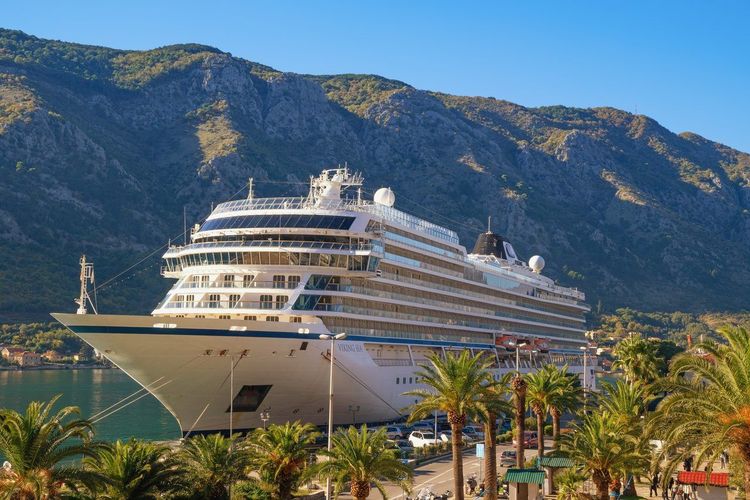
The port of Kotor (Škaljari bb, 85330 Kotor, rated 4.7/5 on Google with 1,461 reviews) welcomes several hundred cruise ship calls each year, some vessels exceeding 300 metres in length and offloading thousands of passengers in a single morning during the summer peaks. This economic reality, essential to the city, also explains why the old town fills so abruptly between 10 a.m. and 4 p.m. on days with multiple calls.
The promenade along the quay, between the cruise terminal and the entrance to the old town, offers a close-up view of these giants of the sea — a spectacle in itself for anyone who has never seen a cruise ship moored just metres from medieval walls. Boards usually display the day's call schedule, useful information for anticipating crowd peaks before even entering the old town.
Outside busy days, the promenade also provides one of the best free vantage points over the full sweep of the city walls and the Fortress of Saint John, particularly photogenic at the end of the day once the cruise ships have put back to sea.
17. Hike the Vrmac Trail
For a high-altitude perspective without the crowds that swarm the Fortress of Saint John, the Vrmac trail climbs from the village of Muo or from Kotor itself to the ridge of the massif of the same name, at around 780 metres above sea level. The route, an old Austro-Hungarian military path cobbled in places, passes through abandoned fortifications now reclaimed by Mediterranean vegetation.
Allow three to four hours for a full round trip from the foot of the trail, more if you continue to Fort Vrmac itself — an Austro-Hungarian ruin from the early 20th century that simultaneously overlooks both the Bay of Kotor and the Bay of Tivat, a 360-degree view rarely matched anywhere in the region.
Unlike the climb to the Fortress of Saint John, this trail is largely ignored by passing visitors, making it an ideal option for hikers seeking complete solitude in the landscape. The shade, more generous than on Kotor's fortified route, also makes the walk more bearable at midday in summer.
The Austrian fort crowning the ridge, built at the turn of the 20th century to monitor both strategically important bays simultaneously, still preserves a few vaulted casemates where you can make out soldiers' graffiti dated to the 1910s, scratched into the plaster before the garrison was permanently abandoned after the First World War.
Good hiking boots are advisable: the upper section of the trail, unimproved, features rocky passages and some loose scree that require a minimum of care, especially on the descent. Set off with a downloaded map or an offline hiking app — mobile coverage becomes intermittent past the first bends of the path.
The vegetation, typically Mediterranean, mingles Aleppo pines and junipers with pockets of fragrant heather that scent the path in spring. Early-morning hikers sometimes come across semi-wild goat herds grazing freely on the steepest slopes — a reminder that this mountain remains a pastoral landscape first and a tourist site second.
The simplest starting point is the hamlet of Muo, about twenty minutes' walk from Kotor along the bay, where a discreet sign marks the beginning of the waymarked trail. No major tourist signage points the way to this trailhead, which largely explains its limited footfall compared to the city's more publicised routes.
18. Venture Further to Budva or Lovćen National Park
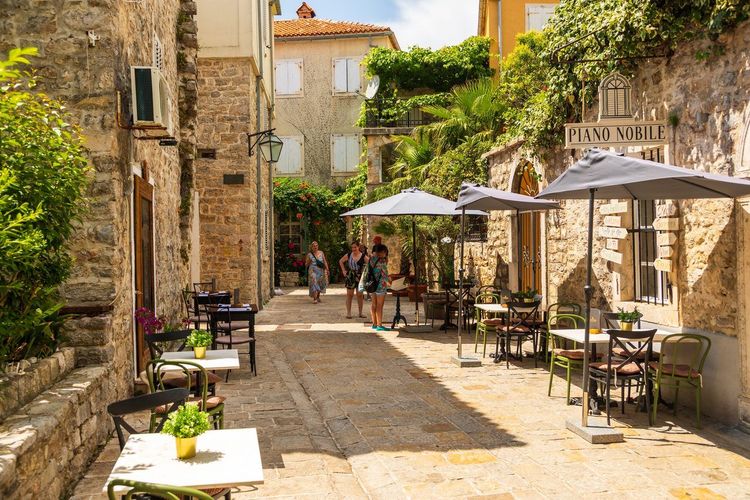
Once Kotor and the bay's highlights have been explored, two complementary day trips allow for a change of scenery without travelling too far. Budva, about 35 minutes' drive south, offers a fortified old town more compact than Kotor's but bordered by proper sandy beaches — a welcome option for those who have already tried the pebbles at Ploče or Žanjic without being entirely won over.
Largely rebuilt after the 1979 earthquake, like Kotor, the town today blends medieval alleyways, resort buildings from the 2000s, and a nightlife considerably livelier than Kotor's more subdued scene. Many travellers based in Kotor organise a day trip to Budva combined with a swim stop — an itinerary easily managed by local transport or shared taxi.
In the opposite direction, Lovćen National Park (Njeguši, Montenegro, rated 4.8/5 on Google with 5,384 reviews), about 45 minutes away via a mountain road spectacularly lined with hairpin bends, peaks at 1,749 metres on the Štirovnik summit. The mausoleum of Njegoš, Montenegro's 19th-century poet-prince-bishop, stands slightly lower, atop Jezerski vrh at 1,657 metres, reached after climbing 461 steps carved into a rock tunnel — an effort comparable to the Fortress of Saint John, but rewarded by a panorama that takes in, on a clear day, the whole of Montenegro as far as Albania.
National park entry costs around 5 euros per vehicle, and the mausoleum requires an additional ticket of around 3 euros per person. The access road, often cited among Europe's most scenic for its tight switchbacks and plunging views over the Bay of Kotor, is worth the journey in its own right, even for travellers who ultimately skip the final climb to the mausoleum.
The village of Njeguši, passed through on the way, produces a smoked ham and a cheese renowned throughout Montenegro: several family-run farm restaurants offer a tasting accompanied by a glass of rakija, the local brandy — a detour that adds an hour to the excursion but remains one of the most memorable moments of any full day spent outside Kotor. If these day trips inspire you to keep exploring with audio guides elsewhere, note that Ryo already covers several dozen Mediterranean cities with its audio-guided tours — a great source of inspiration for the next legs of your journey through the Balkans and beyond.
Renting a car for the day remains the most flexible option for combining both excursions at your own pace, with rates starting at around 30 euros excluding fuel in low season. Agencies near the Sea Gate also offer organised minibus excursions — a pricier option but one that removes the hassle of parking, often limited near the Lovćen mausoleum at the height of season. Whether you choose the sea at Budva or the altitude of Lovćen, allow a full day for each excursion including travel: both deserve a dedicated round trip rather than a rushed visit squeezed into a late afternoon between two already-packed stops around the Bay of Kotor.
FAQ
How long does it take to visit Kotor in 1 day?
A full day is enough to cover the old town, the Cathedral of Saint Tryphon, the city walls up to the Fortress of Saint John, and the market. However, allow two to three days to add Perast, a boat trip on the Bay of Kotor, and an excursion to Budva or Lovćen without rushing. Cruise passengers, usually limited to four or five hours ashore, tend to focus primarily on the old town and the walls, often forgoing the full fortress climb.
How much does the Kotor Fortress entrance fee cost?
The ticket for access to the city walls and the Fortress of Saint John currently costs 15 euros per adult, payable only at the ticket booth at the foot of the path. No official online booking exists at this time, so it is best to arrive early during peak season.
Where is the port of Kotor in relation to the old town?
The port of Kotor sits directly alongside the sea-facing city walls, less than ten minutes' walk from the Sea Gate. On days with heavy cruise ship traffic, this proximity explains the sudden influx of visitors into the old town's streets mid-morning.
How does the Kotor cable car work?
Inaugurated in 2023, it connects the foot of the hill to a mountain station at nearly 1,300 metres above sea level in about ten minutes, well above the Fortress of Saint John. A round-trip ticket starts at around 20 euros and can be purchased on-site or online.
How do you visit the Bay of Kotor by boat?
Several group excursions depart each morning from the port of Kotor for three to five hours of sailing towards Perast, the island of Our Lady of the Rocks, and sometimes a swim in open water. Prices range from 20 to 60 euros depending on the option chosen.
Do you need a map to find your way around Kotor?
A map of Kotor helps to locate the main squares, but the old town is small enough to get pleasantly lost in without any real risk: no two points in the historic centre are more than ten minutes' walk apart.
Kotor defies easy summarising, so much does the city thrive on contrasts: the compact historic density of Stari Grad set against the vastness of the Bay of Kotor, the physical effort of climbing to the Fortress of Saint John set against the ease of the new cable car, the baroque grandeur of Perast set against the simplicity of the hamlets of Dobrota. Many travellers plan for two or three days and leave convinced that a full week would not have been too much.
If your schedule allows a little free time, always prioritise the early morning hours, before the cruise ships arrive, to enjoy an almost silent old town. And if the urge to plan your next audio-guided stops strikes once you are back home, the Ryo app is a great way to keep exploring other Mediterranean cities with the same curiosity that Kotor will, we hope, have awakened in you.