© Shutterstock
 Votre guide Ryo
The Best Beaches of Dubrovnik: 15 Must-Visit Spots in 2026
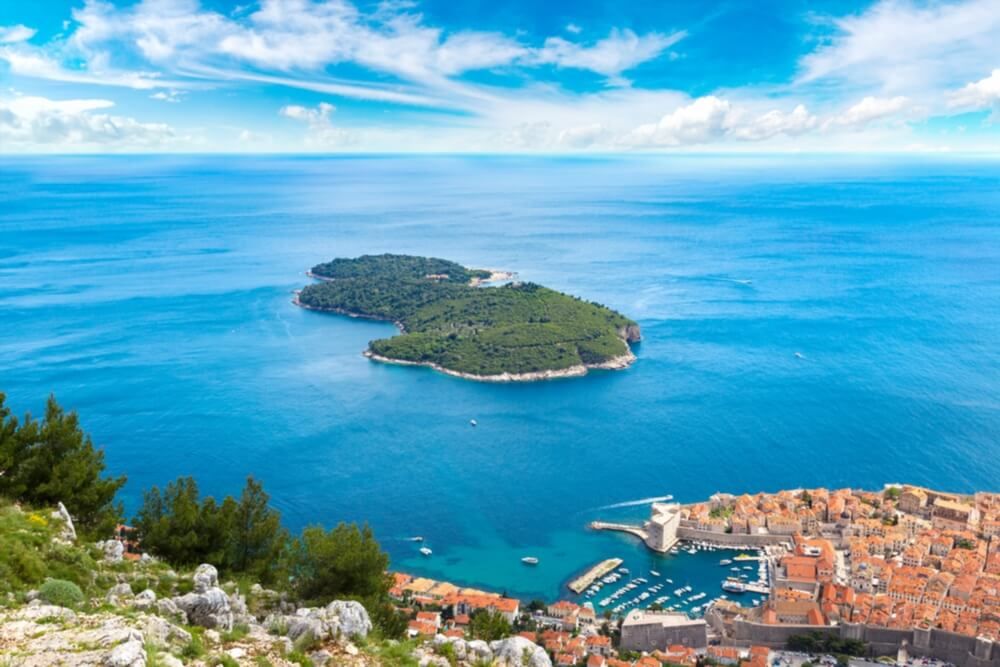
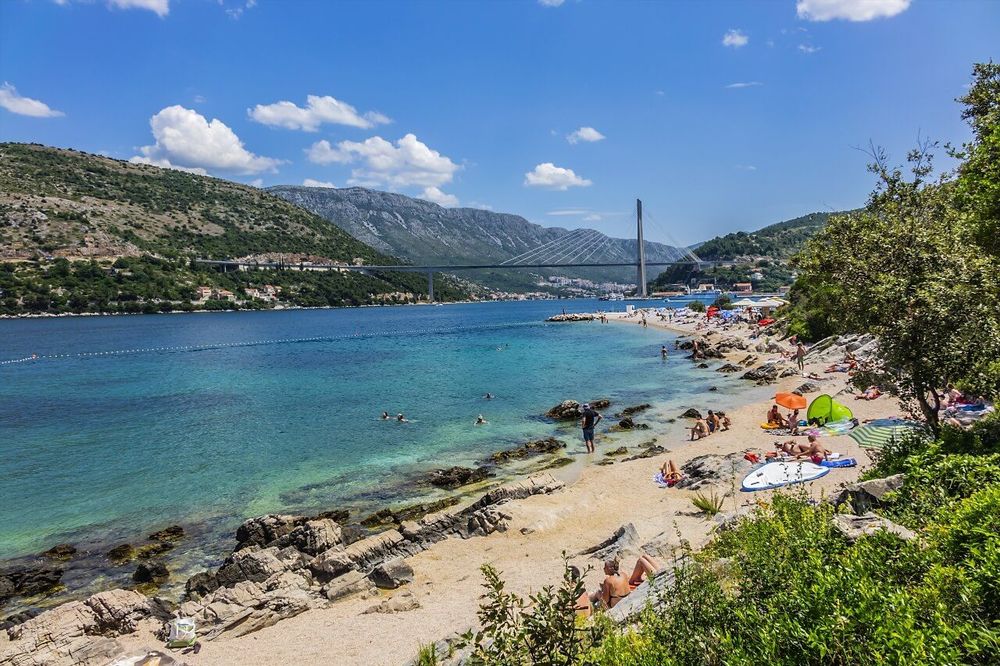
Searching "Dubrovnik beach" online comes as a real surprise: the city is famous for its medieval walls, its white limestone alleyways and the Game of Thrones filming locations, but its beaches are every bit as worth a visit. The Dalmatian coast looks nothing like the Italian Adriatic: no vast stretches of fine sand, but coves of polished pebbles, cliffs plunging into absolutely transparent turquoise water, and islands reachable in just a few minutes by ferry. The Ryo audio-guided tour of Dubrovnik, The Pearl of the Adriatic covers the essential highlights of the walls and the old town; round off your visit with one or more of the beaches presented here to make the most of the setting.
This article lists 15 beaches in Dubrovnik, from the most popular to the most hidden. A few useful reference points: Banje beach, two minutes on foot from the Ploče gate, offers the most photographed view of the walls from the water; Sveti Jakov beach, favoured mainly by locals, requires around 150 steps to reach but rewards the effort with breathtaking beauty; Lokrum island, reachable in 15 minutes by boat, shelters a warm saltwater lake where you can float effortlessly and naturist coves with lush vegetation. City beaches, island beaches or ghost beaches further south like Pasjača and Kupari: there is enough variety to plan each day around a different swim.
1. Banje Beach
Banje beach (Frana Supila, 20000 Dubrovnik, rated 4/5 on Google with 4,762 reviews) is without question the most famous beach in Dubrovnik, and its reputation is thoroughly deserved. Located immediately east of the Ploče gate, less than five minutes on foot from the old town walls, it combines rare accessibility with a panoramic view of the fortifications that few beaches in the world can match.
The beach is made up mainly of light pebbles and a few developed concrete areas. Its length is around 400 metres, making it one of the most spacious beaches accessible from the old town. The water is shallow at the entry point before deepening quickly — an advantage for swimmers, but worth watching for young children.
Banje hosts two distinct areas. The central section is occupied by the Banje Beach Club, one of the most upscale beach establishments in the city: paid sunbeds and parasols, a cocktail bar, electronic music in the evening and access to a floating platform. Prices range from 15 to 25 euros per sunbed depending on the season. Both ends of the beach, however, remain freely accessible: no entry fee, and you can lay your own towel on the pebbles. This is where Dubrovnik's locals gather in the morning before the tourist crowds arrive.
The view from the water towards the walls is exceptional, especially in the late afternoon when golden light strikes the limestone. Many travellers take their only real sea swim here, between visits to the old town. If you want to avoid the crowds, arrive before 9am or after 5pm; the beach fills up very quickly in July and August, with queues for beach club sunbeds forming by 10am.
A water taxi shuttle connects Banje to other beaches along the eastern coast, including Sveti Jakov. The beach is equipped with showers, changing rooms and several food and drink outlets. Arriving by car from the old town is difficult; opt for walking (5 min from the Ploče gate) or the urban bus from the Pile terminus.
2. Sveti Jakov Beach
Sveti Jakov beach is the one that Dubrovnik's residents cite almost unanimously as their favourite. Less commercialised than Banje, less frequented by cruise ship passengers, it nonetheless offers an equally spectacular panorama of the old town, seen from a different and higher angle, which gives it an almost secret character.
To reach it, you must descend around 150 steps from the residential neighbourhood of Sveti Jakov, east of the old town. The descent takes around ten minutes; the return climb takes longer in the heat. This natural filter discourages some hurried visitors and explains the calmer atmosphere that prevails there. The beach itself is narrow — around 80 metres long and 15 wide — but carefully maintained, with polished pebbles and remarkably clear water.
A small beach bar offers cold drinks and snacks. Sunbeds are available to rent, but a good portion of the beach remains free of charge. The water, slightly deeper than at Banje from the very first metres, lends itself to snorkelling: locals regularly explore the rocks bordering the cove.
Sveti Jakov is ideal in the late afternoon, when raking light illuminates the walls and the sea in the same golden tones. Wear non-slip soled shoes for the descent, as the steps can be slippery after rain. There is no parking nearby: come on foot from the old town (20 min from the Ploče gate) or by taxi.
3. Copacabana Beach
Copacabana beach (Iva Vojnovića, 20000 Dubrovnik, rated 4/5 on Google with 4,731 reviews) borrows its name from Rio de Janeiro, but the Dalmatian atmosphere is quite different: no fine sand or joggers in shorts, but a large developed pebble beach set in Lapad Bay, around 4 km from the old town, served by urban bus line 6.
It is Dubrovnik's most water-sports-oriented beach. You will find pedal boats, sea kayaks, jet skis, parasailing and banana boats — a concentration of equipment that few other beaches in the region can offer. Prices are displayed on boards and vary by high season: expect to pay between 20 and 40 euros for 30 minutes of jet skiing, and around 15 euros per hour for a double kayak.
The beach benefits from shallow water over a wide coastal strip, making it one of the best family spots in the area. Children can play near the shore safely while adults try out motorised activities. A beach club managed by the neighbouring hotel offers food, drinks and paid sunbeds. The left-hand section of the beach (when facing the sea) remains freely accessible.
Copacabana is also the departure point for several boat excursions to the Elaphiti Islands. Water taxis leave from a small adjacent jetty. If you are planning an island tour from Dubrovnik, this is often where the adventure begins. For everything you need to know about the surrounding area, the Ryo guide "What to Visit around Dubrovnik" lists the best day trips.
4. Buža Beach
Buža beach, or more precisely the Buža rocks, sits directly at the foot of the old town's southern walls, accessible through a small opening in the city ramparts (buža means "hole" in Croatian). It is one of the most singular places to swim in Dubrovnik: no pebbles, no sand, but flat limestone rocks where locals have been sunbathing for generations.
Two open-air bars are perched on the cliffs on either side of this spot, serving cold drinks and playing soft music. The spectacle of people jumping from the rocks — some reaching 5 to 6 metres in height — draws a daily crowd of spectators as much as swimmers. The water is deep immediately below the rocks, ideal for those who enjoy open-water swimming.
Buža is not suited to swimmers seeking the comfort of a developed beach: no showers, no sunbeds, rocky ground that can be slippery. On the other hand, it is the perfect place to soak up the atmosphere of Dubrovnik off the beaten tourist track. Wear water shoes to enter the water from the rocks. Entry through the "hole" in the walls is free; drinks at the bar, however, are charged at tourist prices.
5. Lapad Beach
Lapad beach (Šetalište kralja Zvonimira, 20000 Dubrovnik, rated 4.4/5 on Google with 2,189 reviews) (also known as Šetalište Kralja Zvonimira) stretches along the bay of the same name on the Lapad peninsula, west of Dubrovnik. It is the beach most frequented by the city's permanent residents, who come here with their families at weekends. It stands out for its accessibility: a direct urban bus, a cycle path along the promenade, and several car parks nearby.
The beach is around 300 metres long, composed of pebbles and partially developed with concrete platforms that make entering the water easier. The water is calm, the bay is well sheltered from the wind and shallow for the first few metres — perfect for families with children. Several cafés and restaurants line the back promenade, turning this Dubrovnik beach into a genuine social hub in the evenings.
Lapad Bay does not offer views of the walls, but the atmosphere is more authentic and far less saturated by mass tourism than Banje. In July and August, the seafront promenade hosts concerts and craft markets in the evenings. A good choice if you are staying in this neighbourhood — the majority of Dubrovnik's large hotels are concentrated precisely on the Lapad peninsula.
6. Lokrum Island
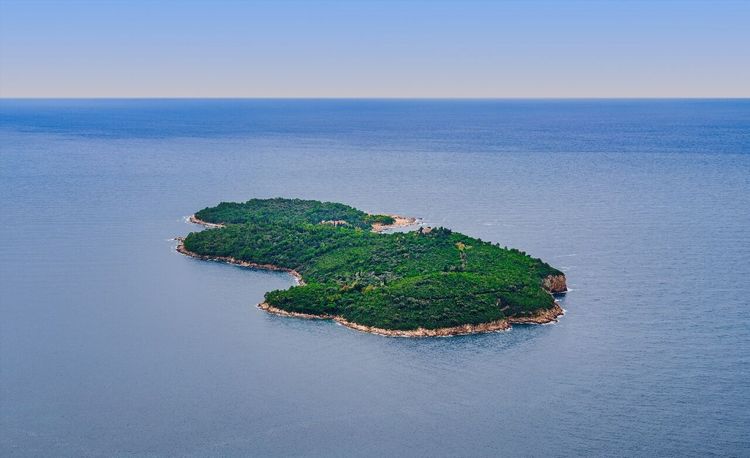
The island of Lokrum (Lokrum, 20000 Dubrovnik, rated 4.6/5 on Google with 898 reviews) is the most popular seaside escape from Dubrovnik, and rightly so. Reachable in 15 minutes by ferry from the old port (at the foot of the walls), it welcomes thousands of visitors each day drawn by its pine forests, its 11th-century Benedictine monastery, its wild peacocks and its extraordinary swimming coves.
The island is classified as a nature reserve: no accommodation is permitted, and visitors must leave before 8pm. Ferries operate from mid-April to the end of October with a frequency of around 30 minutes from the old port jetty; a return ticket costs around 15 euros per adult, a price that includes island entry.
Lokrum's beaches are spread around the entire perimeter of the island. The most frequented is the Portoč cove, facing Dubrovnik, with clear and shallow water. The wilder eastern coast offers flat rocks ideal for sunbathing away from the crowds. The southern section has historically been dedicated to naturists — a well-established tradition on this island since the 1970s.
Mrtvo More (the "Dead Sea") is a small saltwater lake near the island's south-western coast, connected to the sea by underground fissures. Its water, saltier and warmer than the open sea, makes floating effortless — it is one of the most popular swimming spots for families, as the water is calm and shallow. A botanical garden surrounds the former monastery, featuring Mediterranean and subtropical species introduced by Austrian botanists in the 19th century.
To explore Dubrovnik's urban side before or after Lokrum, the Ryo audio guide offers 18 audio stops along the walls and through the old town in a 1-hour route. A great way to combine culture and swimming in a single day.
7. Bellevue Beach
Bellevue beach is one of Dubrovnik's most beautiful pebble beaches, nestled at the bottom of a small enclosed cove between two limestone cliffs, around 1 km west of the old town. Access is via a staircase of around a hundred steps carved into the rock — a fairly demanding passage that helps keep visitor numbers at a reasonable level.
The cove is around 100 metres long. The water here is particularly crystal clear, as the beach is exposed to a current that prevents algae from accumulating. The depth increases quickly from the shore, which appeals to confident swimmers. Rocks on either side allow for diving from moderate heights.
Bellevue has sunbeds and a beach bar managed by the Bellevue hotel, which overlooks the cliff above. Expect to pay 10 to 15 euros for a sunbed for the day. The beach is popular in the late afternoon for enjoying the sunset within the cove. Arriving early in the morning is recommended to secure a spot without waiting.
8. Šulić Beach
Šulić beach (also spelled Šulići) is a small pebble beach located in the Ploče neighbourhood, around 15 minutes on foot east of the old town, just before Sveti Jakov beach. It is less well known than its neighbours, which makes it a good fallback on days of heavy tourist traffic.
The beach is modest in size: about fifty metres of pebbles between two rocky outcrops. No bar, no paid sunbeds — just free pebbles and a cold shower. The water quality is exemplary. Locals appreciate it for its relative tranquillity and the quality of the water, which is slightly cooler than at Banje due to a more direct current from the open sea.
The walk from the Ploče gate takes 10 to 15 minutes along the coastal road, a pleasant journey with sea views. No parking immediately nearby.
9. Danče Beach
Danče beach stretches at the western end of the old town, in the neighbourhood of the same name. It is a pebble and flat-rock beach, wilder and less developed than the beaches on the eastern side, but regularly frequented by residents of the nearby residential districts.
Danče is appreciated for its water quality and accessibility: you can reach it in 20 minutes on foot from the Pile gate (the main entrance to the old town) or by bus line 4. The beach combines a pebble section with wide rocky slabs where regulars spread their towels. Infrastructure is minimal: one shower, a few benches, no bar or sunbeds. In return, access is entirely free and the atmosphere is resolutely local. The beach is very busy on summer weekday mornings with regulars who arrive early to claim a spot on the flat rocks, but it empties out at midday when cruise passengers flood into the old town. It is one of the few beaches in Dubrovnik to offer a direct sunset view, as it faces west directly onto the sea horizon. For the old town itself, our Pearl of the Adriatic audio-guided tour walks the walls in 19 stops.
10. Pasjača Beach
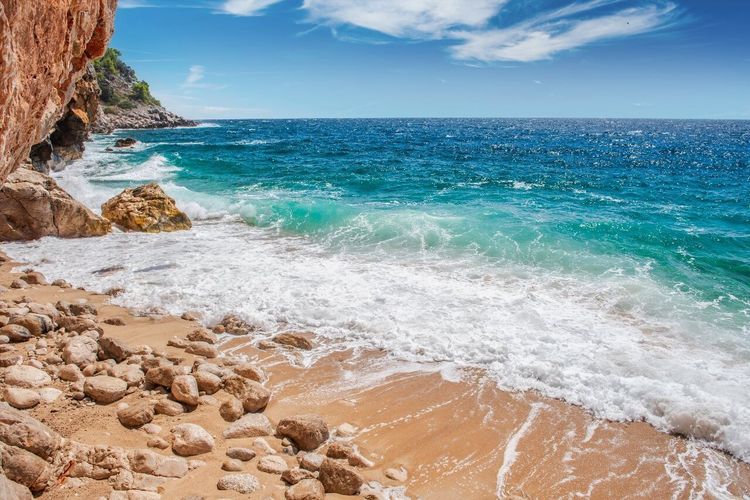
Pasjača beach is one of the most spectacular and least known beaches in the Dubrovnik area. Located around thirty kilometres south of the city, in the municipality of Konavle (near the village of Popovići), it requires an effort to reach that makes it accessible only to travellers with their own transport, and which preserves its wild character. Voted best beach in Europe in 2019 by European Best Destinations, it nonetheless remains largely spared from mass tourism.
To reach it, you must descend a carved and developed staircase cut into the cliff of around 150 steps, with a sheer drop view of the sea throughout the descent. The beach itself is modest in size — around a hundred metres of white pebbles at the bottom of an enclosed cove — but the water is of absolute clarity and the turquoise colour is among the most intense on the entire Dalmatian coast. No services, no bar: bring water, food and everything you need.
Pasjača rewards the effort, and those who make the trip rarely regret it. Avoid peak hours between 11am and 2pm in July and August: descending and climbing back up the staircase in full sun is gruelling. Photographers in the region consider it one of the most beautiful pebble beaches in Croatia.
11. Kupari Beach
Kupari is an extraordinary place on the coast south of Dubrovnik, around 15 km from the city centre. In the 1960s–1980s, it was a seaside resort reserved for senior officers of the Yugoslav army, with five large seafront hotels. The Balkan wars destroyed everything in 1991–1992; the buildings were left abandoned for more than thirty years, creating a post-apocalyptic landscape not unlike certain scenes from Game of Thrones.
Today, the ruins of the former Grand, Pelegrin and Goričina hotels form a spectacular backdrop behind a long pebble beach of around 600 metres, open to the public for several years. Property redevelopment projects have been announced on multiple occasions, but the beach for now remains largely in its natural state, with a few seasonal snack bars.
The water at Kupari is among the clearest in the area, sheltered in a south-east-facing bay that warms up quickly in early summer. The beach attracts a mixed crowd: local families on weekdays, urban exploration photography enthusiasts at weekends. Very few foreign tourists make the trip, which contributes to the singular atmosphere of the place. By car from Dubrovnik, allow 20 minutes along the coastal road. To explore more of the area around Dubrovnik, consult the Ryo guide on what to visit around Dubrovnik.
12. Šunj Beach (Lopud Island)
Šunj beach, on the island of Lopud, is the only large sandy beach accessible from Dubrovnik — an absolute privilege on a Dalmatian coast dominated by pebbles. It is precisely this feature that makes it a sought-after destination for those travelling with children or for whom pebbles are a deal-breaker.
Lopud is part of the Elaphiti Islands archipelago. A regular ferry departs from Gruž port in Dubrovnik several times a day (journey time: 50 to 60 minutes), also serving the islands of Koločep and Šipan. Once on the island, Šunj beach is accessible either on foot (20 to 30 minutes' walk from the landing pier through a picturesque village) or by electric golf cart for a few euros.
The beach itself stretches for several hundred metres of soft sand in a well-sheltered bay. The water is shallow for a good distance from the shore, perfect for very young children. A beach restaurant serves grilled dishes, salads and fresh juices; prices are slightly higher than on the mainland due to island logistics. Sunbeds and parasols are available to rent.
The village of Lopud itself is worth a detour: a car-free seafront promenade (cars are banned on the island), an old church and panoramic views over the archipelago. Many travellers combine a beach day with a quick tour of the island before the last evening ferry.
13. Betina Cave Beach
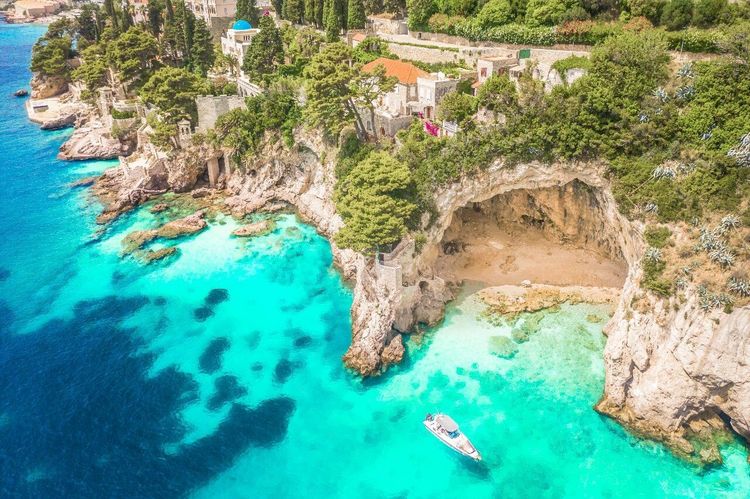
Betina beach (Betina špilja) is one of the most unusual beaches in the Dubrovnik region. Located on the island of Koločep, the closest to Dubrovnik in the Elaphiti archipelago (around 30 minutes by ferry), it takes the form of an ancient partially collapsed sea cave transformed into an open-air cove.
Access is primarily by sea: most visitors arrive by kayak or small water taxi from Donje Čelo, as the land path is narrow and poorly marked. The "beach" is in fact a space of pebbles and rocks inside the cave, with a turquoise water entrance. The cavernous atmosphere and the filtered light that streams through the vault's opening create a striking visual effect, highly appreciated by photographers and snorkellers. Bring water shoes: the rocky floor is uneven. No services on site.
14. Veliki Žal Beach
Veliki Žal is a small pebble beach on the island of Koločep, in the village of Gornje Čelo. Its name simply means "large shore" in Croatian, which is a slight exaggeration for a beach of around a hundred metres, but the water here is exceptionally clear and the setting — framed by old stone houses and dense Mediterranean vegetation — is very pleasant.
Access from Dubrovnik follows the same ferry route as for Betina. The island of Koločep has only a few hundred permanent residents and virtually no cars. The atmosphere is peaceful, in complete contrast with the bustle of the old town.
15. President Relax Beach
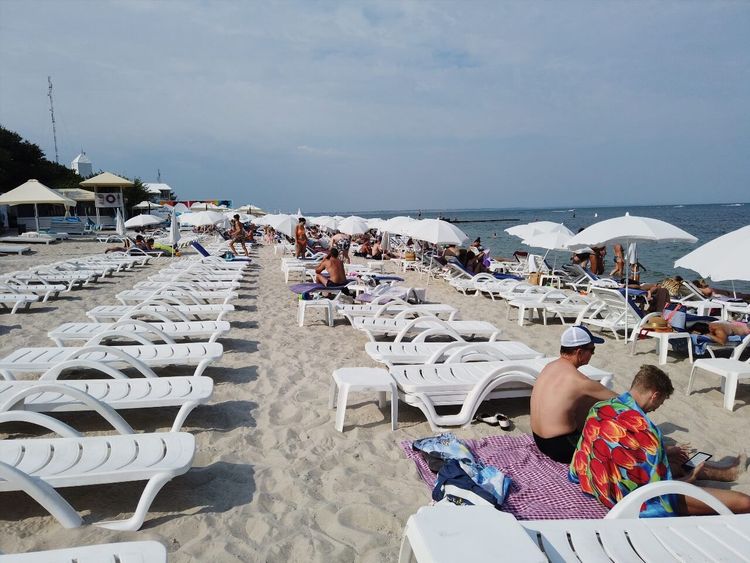
President Relax beach is a private beach managed by the hotel of the same name on the Lapad peninsula. Unlike luxury private beaches that restrict access to hotel guests only, this beach is open to outside visitors for an entry fee of 10 to 15 euros that includes a sunbed and a shower.
The water is shallow and well sheltered in Lapad Bay. The main appeal is the level of comfort: well-maintained sunbeds and parasols, a beach bar, hot showers and clean changing rooms. A good choice for those who prioritise service over authenticity, particularly for families with young children. Access by bus line 6 from the Pile terminal.
FAQ
Which beaches are closest to Dubrovnik's old town?
The beaches closest to the old town are Banje (5 min on foot from the Ploče gate), Šulić (15 min on foot heading east) and the Buža rocks (accessed directly through a hole in the southern walls). For a quieter pebble beach, Sveti Jakov is 20 minutes on foot but requires descending around 150 steps.
Are there sandy beaches in Dubrovnik?
Sandy beaches are rare along the Dalmatian coast. Almost all of Dubrovnik's beaches are pebble or flat-rock beaches. The notable exception is Šunj beach on the island of Lopud, the only large sandy beach easily accessible from Dubrovnik (50 to 60 min by ferry from Gruž). Some developed beaches like Copacabana have concrete areas that make entering the water easier.
What is the best time to swim in Dubrovnik?
The swimming season runs from June to September. The sea reaches its maximum temperature in August (26–28°C). July and August are the busiest months, with beaches packed between 10am and 5pm. June and September offer a good compromise: warm water, thinner crowds, more affordable hotel prices. May is possible for those who enjoy cooler water (18–20°C).
Can you visit Lokrum's beaches from Dubrovnik?
Yes. A ferry connects Dubrovnik's old port to the island of Lokrum in 15 minutes, departing roughly every 30 minutes from mid-April to the end of October. A return ticket costs around 15 euros (island entrance included). There is no accommodation on Lokrum and the last ferries leave before 8pm: staying overnight is not possible.
Are Dubrovnik's beaches free?
Most of Dubrovnik's public beaches are free: Banje (excluding the beach club sunbeds), Šulić, Danče, Sveti Jakov, Buža and the Lapad beaches. Private hotel beaches (President Relax, Coral Beach) charge an access fee of 10 to 15 euros including a sunbed. The ferry to Lokrum (€15) and to Lopud (a few euros per trip) is the main cost for reaching island beaches.
How do you get between Dubrovnik's beaches?
The Libertas urban bus network covers the main beaches: line 6 for Copacabana and Lapad, line 4 for Danče, line 8 towards the eastern beaches (stop near Sveti Jakov). A bus ticket costs 4 euros bought on board (2 euros at kiosks). For more remote beaches (Kupari, Pasjača), a rental car is necessary. Water taxis connect Banje to other coves along the coast.
Conclusion
Dubrovnik is not a beach destination in the classical sense, but that is precisely what makes its beaches so memorable: polished pebbles and turquoise water at the foot of medieval walls, secret coves reached after a hundred steps down, islands just minutes away by boat with their entirely different atmospheres. Every beach on this list has its own character, from the sophistication of the Banje beach club to the wildness of Pasjača, by way of the strangeness of Kupari and its ruined hotels.
To prepare your stay on the heritage side, Ryo offers a 19-stop audio-guided route along the walls and through the old town, ideal to combine with one or more days at the beach. A half-day inside the walls in the morning, a beach in the afternoon: that is probably the best itinerary for making the most of Dubrovnik in summer.