© Shutterstock
 Votre guide Ryo
Visit Saint-Denis in 2 Days: Complete Itinerary Between Barachois and Jardin de l'État (2026)
The sun is already blazing at eight in the morning on the Barachois esplanade, and yet the local joggers carry on with their loop as if nothing were happening. Welcome to Saint-Denis de la Réunion, a tropical prefecture too often relegated to a mere stopover before the cirques and the volcano. Visiting Saint-Denis in 2 days nonetheless lets you stroll through a botanical garden founded in 1767, have lunch on a cari rougail for fifteen euros, walk up a street lined with listed Creole houses and sleep less than ten minutes on foot from the Indian Ocean. Over two well-paced days, you alternate between walks in the historic center, a break in a street market and an outing to the volcanic highlands overlooking the city. This guide details a day-by-day itinerary, from the Barachois to the Jardin de l'État, with addresses and tips to organize your stay without missing anything essential. To follow this thread on site, the Ryo audio-guided tour of Saint-Denis tells the story of the historic center's stops in audio, from the seafront to the cathedral.
Day 1, Morning: The Barachois and the Historic Seafront
Starting the day at the Barachois feels obvious once you are there. This oceanfront esplanade, once a sheltered river mouth where the first ships of the Compagnie des Indes anchored, now gathers morning joggers, Sunday families and a few fishermen casting their lines from the seawall. The air is cooler here than elsewhere in the city, carried by the trade winds that run up against the slopes of the Brûlé.
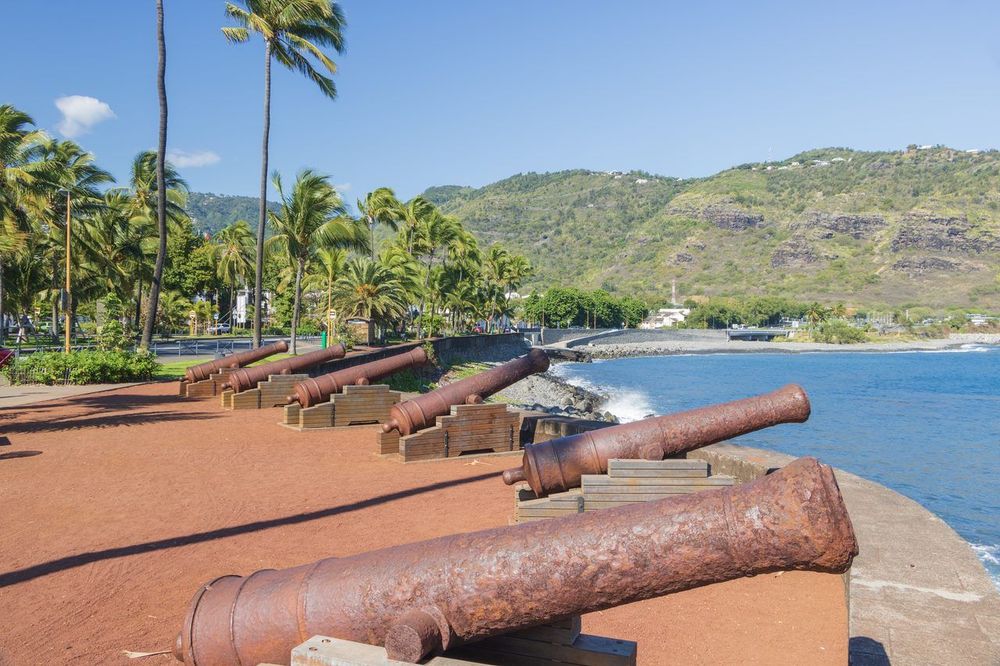
Above all, the site preserves the island's military memory: a row of historic cannons, pointed out to sea since the 19th century, recalls that Saint-Denis long had to defend its port against British ambitions. The fear was not theoretical: in July 1810, more than 6,000 British soldiers landed near the city, which surrendered on July 8. The island remained under the English flag until 1815, an episode few visitors know about when they arrive.
The Ryo audio guide starts precisely on this seaside promenade and tells, cannon by cannon, the story of this waterfront facing the ocean. Allow a good hour to stroll here before heading up to the center, ideally before the heat becomes too heavy in late morning.
Day 1, Late Morning: The Rue de Paris and Colonial Heritage
Leaving the Barachois, geographic logic says to walk up the rue de Paris, a historic avenue planted with old tamarind trees whose foliage filters the light. This is where most of the city's colonial heritage is concentrated: facades with varangues (verandas), slatted shutters and four-sided roofs, some of which have withstood more than two centuries of cyclones.
The Préfecture de La Réunion, at the head of the street facing the Barachois, occupies the former headquarters of the Compagnie des Indes, built in the 18th century: an imposing building that cannot be visited, but whose courtyard can be glimpsed through the gate.
A little further on, the Hôtel de Ville de Saint-Denis (12 Rue de Paris, 97400 Saint-Denis, rated 3.7/5 on Google from 154 reviews), built from 1846 to 1860 on a square plan 37 meters on each side, displays a rather unexpected yellow and white neoclassical facade in this climate. It has been listed as a historic monument since 1975. In between, several private Creole houses, recognizable by their cut wooden lambrequins, are sometimes open to visitors during the heritage days in September.
If you can only remember one street to understand Reunionese architecture, this is the one. Take the time to look up: the most interesting details are often found at the level of the roofs and verandas, not on the ground floor converted into shops.
Day 1, Midday: Lunch Break and Creole Specialties

Noon generally arrives at just the right moment, right after the rue de Paris, in one of the small downtown restaurants serving the dish of the day. A cari (meat or fish simmered with turmeric and combava) served with its tomato-chili rougail and long-grain rice remains the surest bet for a complete meal at around twelve to sixteen euros.
For a quicker bite, the stalls selling samosas and steamed bouchons are easy to spot by the lunchtime queues in front of the downtown restaurants. We will come back to specific addresses in more detail in the restaurants section, a little further down in this article.
Day 1, Afternoon: The Jardin de l'État and Its Museum
The Jardin de l'État remains the green lung of the city center. A first garden of the Compagnie des Indes had appeared in 1761 in the Rivière district, but as it was too often flooded, it was moved in 1767 to its current location by the administrator Honoré de Crémont, then enriched with spices and trees brought back thanks to Pierre Poivre. Its paths lined with royal palms and centuries-old almond trees offer welcome shade after the heat of the rue de Paris, and the contrast with the bustle of the center is immediate from the first steps under the canopy.
Many visitors arrive looking for the giant tortoises that long made the place famous. Don't be disappointed: the former tortoise park has been converted into an exhibition and art space. If your children absolutely insist on seeing some, the Jardin des Tortues des Avirons, in the island's southwest, features more than 200 over two hectares. Here, take advantage of the paths instead to spot the spice trees, a direct legacy of the Poivre era.
At the far end of the garden, the Muséum d'Histoire Naturelle de La Réunion (1 Rue Poivre, 97400 Saint-Denis, rated 4.3/5 on Google from 240 reviews), opened in 1855 in the former legislative palace, is worth a stop of about an hour. Its rooms present the marine fauna of the Indian Ocean, a collection of stuffed endemic birds and a few geological pieces linked to the island's volcanism, including a display case devoted to the historic eruptions of the Piton de la Fournaise. Admission costs €2 (€1 reduced rate) and is free on the first Sunday of the month; note that the museum is closed on Mondays.
The Ryo audio-guided tour of Saint-Denis stops in the garden to detail the botanical history of the place and the origins of its collection. This is one of the moments where the app really makes sense: you listen while walking, without having to look for an explanatory sign that doesn't always exist.
Day 1, Evening: Markets and Street Art in the Center
In the late afternoon, head to the rue du Maréchal Leclerc, the center's shopping thoroughfare, and the Grand Marché of Saint-Denis, now a craft market: embroidered tablecloths, basketry, marquetry boxes, Bourbon vanilla and spices are negotiated here without too much commercial pressure. Be sure to arrive before 5:30 p.m., closing time (Monday to Saturday).
The Petit Marché, a covered market at the corner of rue Sainte-Anne and rue des Limites, is more focused on food: seasonal fruit (lychees in December, Victoria pineapples all year), vegetables, fish, flowers and spices. Open from 6 a.m. to 6 p.m. on weekdays and on Sunday mornings, it is best visited early if you want to see it in full swing.
Looking up between the two markets, you can spot several street art murals painted on the blank facades of the neighborhood, Reunionese portraits and marine scenes that change over the years according to municipal commissions. This corner, less photographed than the Barachois, nonetheless deserves a leisurely detour to end the first day on an urban and colorful note.
Day 2, Morning: Cathedral and Historic Quarter
Second day, new rhythm: head to the Cathédrale de Saint-Denis, built between 1829 and 1832. Originally a simple Saint-Sauveur church, it only became a cathedral in 1850, with the creation of the diocese. Its columned facade, sober and almost austere, faces a cast-iron fountain donated in 1854 by former mayor Gustave Manès. The whole is listed as a historic monument since 1975.
A few minutes' walk away, on rue de Paris, the Musée Léon-Dierx occupies the former bishop's palace built in 1846. Founded in 1911 by brothers Marius and Ary Leblond, it houses a surprising collection for a tropical island thanks to the 1947 donation by Lucien Vollard, brother of the art dealer Ambroise Vollard, who was born in La Réunion: ceramics by Gauguin, a bronze by Picasso, paintings by Caillebotte, Maurice Denis or Émile Bernard, alongside contemporary Reunionese artists.
Further west, on the heights, the fortin de La Redoute (Chemin de la Redoute, 97400 Saint-Denis, rated 4.3/5 on Google from 98 reviews), built in 1756 on a rocky spur, recalls the battle of July 1810 that handed the island to the British. The small listed military building has been restored, and the neighborhood also contains mausoleums and the stadium of the same name. Plan on a short bus or car ride from the center.
The Ryo audio-guided tour passes in front of the cathedral and the Léon-Dierx museum: listening to these two stops while walking helps you pace the rest of the morning without rushing or dawdling.
Day 2: Excursion to the Highlands and Nearby Beaches
The second day lends itself particularly well to an outing beyond the center, since Saint-Denis is also a gateway to the island's volcanic highlands. By car, about twenty minutes is enough to reach the La Montagne district, perched on the slopes above the city, whose viewpoint offers a sweeping view over the bay and the rooftops of the historic center you have just left.
The most motivated hikers will aim for the Roche Écrite, a 2,276-meter summit, whose classic route starts from the Camp Mamode car park, at the end of the route du Brûlé, and crosses the Plaine des Chicots. The panorama you discover there, provided the clouds cooperate in early morning, takes in the cirques of Mafate and Salazie at once, separated by a dizzying ridge. Allow six to eight hours round trip and start early: clouds generally rise by 10 or 11 a.m. and close off the landscape for the rest of the day.
For a less athletic option, head back down to the west coast toward the Boucan Canot beach (Boulevard Hubert Delisle, 97434 Saint-Gilles-les-Bains, rated 4.5/5 on Google from 1,439 reviews), about 35 minutes by road. Its light sand and natural lagoon contrast sharply with the pebble beaches closer to the center of Saint-Denis, and several terrace restaurants let you have lunch with your feet almost in the water.
On the way back, the town of La Possession deserves a last look, especially from the coastal road that runs along impressive basalt cliffs, regularly maintained against rockfalls. It is one of the most photographed roads on the island, and it lets you complete the loop before returning to Saint-Denis at the end of the day.
If time is short or if the weather has cut the morning program short, the short version of the Ryo audio-guided tour lets you wrap up the essentials of the city center before leaving on an excursion in the afternoon, which works particularly well on this second day.
Where to Eat in Saint-Denis: Our Creole Addresses
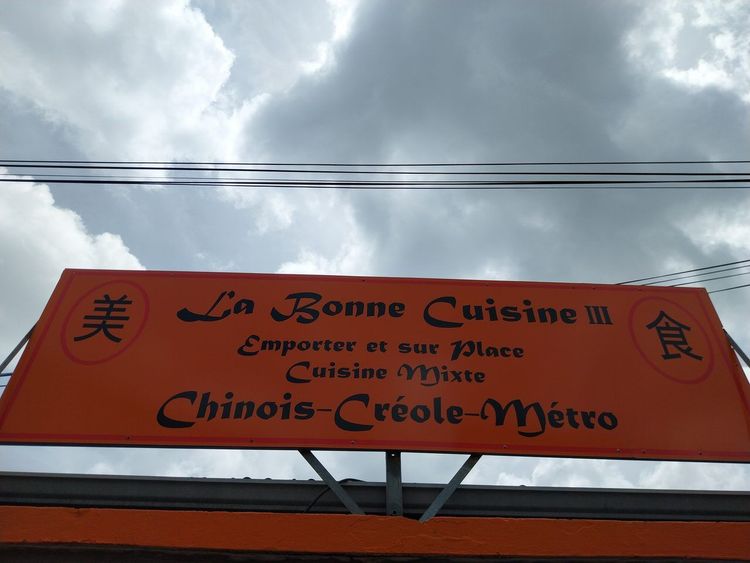
Reunionese cuisine comes in sit-down or on-the-go versions, and Saint-Denis covers both without difficulty. In the historic center, several family-run Creole restaurants serve caris, rougails and duck civets in unpretentious settings; expect to pay fifteen to twenty-five euros for a complete meal with dessert.
As for street food, the mobile vendors set up in late morning around rue Jean Chatel offer samosas, chili fritters and steamed bouchons for a few euros, enough to last until dinner without going to a sit-down restaurant. You mostly see downtown office workers on their lunch break, which generally guarantees a certain freshness of the products.
To go deeper into this subject, this Ryo article on the culinary specialties of Saint-Denis details ten tested addresses, from the gourmet restaurant to the neighborhood eatery, with the dishes to order first depending on the season.
Where to Stay in Saint-Denis by Neighborhood
Three neighborhoods clearly stand out for accommodation. The historic center, around the rue de Paris, puts you within a few minutes' walk of most of the sites in this guide, at the price of a bit more urban noise at night.
The Barachois and seafront area suits those who want an unobstructed view and direct access to the morning jogging mentioned in the introduction; hotels there often charge a twenty to thirty percent premium compared to the center, but the tranquility more than compensates.
Finally, the heights of Bellepierre or La Montagne appeal to travelers with a car who prefer calm and lower rates, at the cost of ten to twenty extra minutes of travel to reach the center each morning. It's up to you to choose depending on whether you favor walking or driving for getting around.
How to Get to and Around Saint-Denis
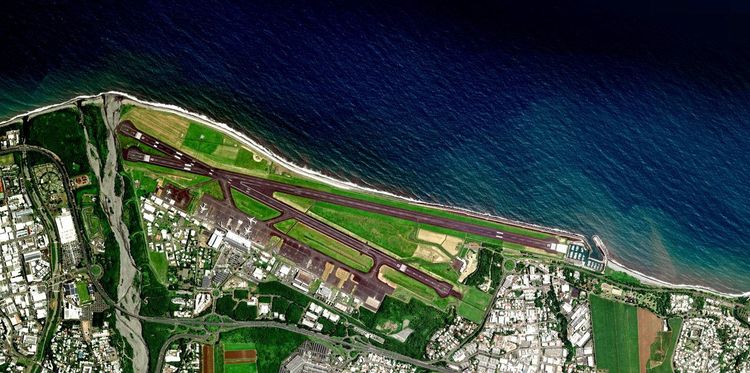
Arrival is almost always via Roland Garros airport (Rue de la Station, 97438 Sainte-Marie, rated 3.8/5 on Google from 3,302 reviews), located in the neighboring commune of Sainte-Marie, about fifteen minutes from the center of Saint-Denis by car or bus.
Once there, the Citalis bus network serves the city center and outlying neighborhoods well, for a ticket at €1.60 on board (book of 10 tickets for €10), handy for trips from the Barachois to the Jardin de l'État or the markets.
For the second-day excursion to the highlands and the west coast, car rental becomes almost indispensable: public transport exists to La Possession, but the Roche Écrite and Boucan Canot are much more comfortably reached by private vehicle. Expect to pay about thirty-five euros per day for a small city car booked in advance.
When to Go: Climate and Best Time to Visit Saint-Denis
Saint-Denis's tropical climate stays warm all year, between 22 and 31 degrees depending on the season, but two periods stand out clearly for planning a smooth stay.
From November to April, the cyclone season officially runs, with a peak from January to March, marked by humid heat and sometimes intense rain that can disrupt excursions to the highlands, or even close some trails as a precaution. It is not the most comfortable time for a dense two-day program like the one described here.
The best season is rather between May and November, during the austral winter: milder temperatures, drier air, and much better visibility on summits like the Roche Écrite. July and August remain the most popular months for travelers from mainland France, so hotel prices rise slightly as a result.
Budget and Tips for Visiting Saint-Denis
For two days in Saint-Denis, expect to spend between 80 and 130 euros per person per day overall, with mid-range accommodation and meals included, excluding car rental for the second-day excursion.
On the free side, the Barachois, the rue de Paris, the markets and La Redoute cost nothing to visit. The Jardin de l'État itself is freely accessible; only the Museum charges a modest €2 entrance fee, free on the first Sunday of the month. For transport, the 24-hour Citalis pass at €3 covers all your bus trips for a day. And if you are looking for other ideas, our selection of things to do in Saint-Denis is a useful complement to this program. And downloading the Ryo app is also free, a good habit to add to this list even before landing on the island.
If You Have More Time: Around Saint-Denis
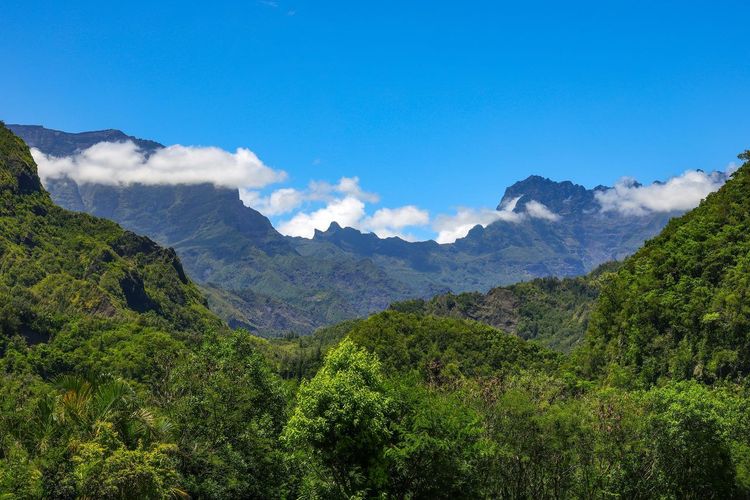
Two days are enough for the heart of Saint-Denis, but the whole island obviously deserves more. A few hours' drive away, the Piton de la Fournaise (Route du Volcan, 97418 Plaine des Cafres, rated 4.8/5 on Google from 1,425 reviews), one of the most active volcanoes in the world, offers spectacular hikes around its summit crater when eruptive activity allows.
The island's three cirques, Mafate, Salazie and Cilaos, each accessible by different roads or trails, easily justify three to four extra days for those who enjoy hiking. Mafate in particular can only be reached on foot or by helicopter, which makes it a stay extension all its own, very different from the urban rhythm of Saint-Denis.
On returning from one of these excursions to the highlands, nothing stops you from listening again to the Ryo audio-guided tour to fill in the details missed in the city center on the first pass, rushed by the two-day program. It is often on the second listen that you catch the anecdotes that went by too fast the first time.



FAQ
How many days do you need to visit Saint-Denis de la Réunion?
Two days comfortably cover the essentials: the Barachois, the rue de Paris, the Jardin de l'État and an excursion to the highlands or the west coast. A third day lets you add a longer hike without rushing.
What is the best neighborhood to stay in Saint-Denis?
The historic center appeals to travelers without a car thanks to its proximity to the sights. The Barachois area is attractive for its view and calm, while the highlands offer lower rates for those who get around by car.
How do you get from the city center to Roland Garros Airport?
The airport is about fifteen minutes from the center, in the commune of Sainte-Marie. A Citalis bus and several taxi lines provide the connection, with driving remaining the fastest option.
What is the best time of year to visit Saint-Denis?
The period from May to November, during the austral winter, offers a drier climate and clear views of the summits. The cyclone season, from November to April with a peak from January to March, makes outdoor excursions more difficult.
What should you see in Saint-Denis in just one day if you are short on time?
Prioritize the Barachois in the morning, then the rue de Paris and the Jardin de l'État in the afternoon. The short version of the Ryo audio-guided tour helps you complete this condensed program without missing anything essential.
Do you need to rent a car to visit Saint-Denis and its surroundings?
For the city center, no: everything can be done on foot or by bus. For the second-day excursion to the Roche Écrite, Boucan Canot or La Possession, a rental car makes getting around much easier.
Is Saint-Denis a good base for exploring the rest of the island?
Yes, its northern location and road network make it a convenient starting point for the Piton de la Fournaise and the cirques, as long as you accept several hours of driving for the most distant excursions.
Saint-Denis ultimately proves far denser than you might imagine before setting foot there: a tropical capital where the Barachois cannons stand alongside the tortoises of the Jardin de l'État, and where evening markets naturally extend the morning museums. Two days are enough to grasp the essentials, as long as you keep an eye on the weather before heading up to the highlands. Before packing your bags, download the Ryo audio-guided tour of Saint-Denis: it remains the simplest way not to miss anything between two stops on the map.