© Shutterstock
 Votre guide Ryo
Visiting Cadiz in 3 Days: Complete Itinerary of Old Town, Beaches, and Day Trips (2026)
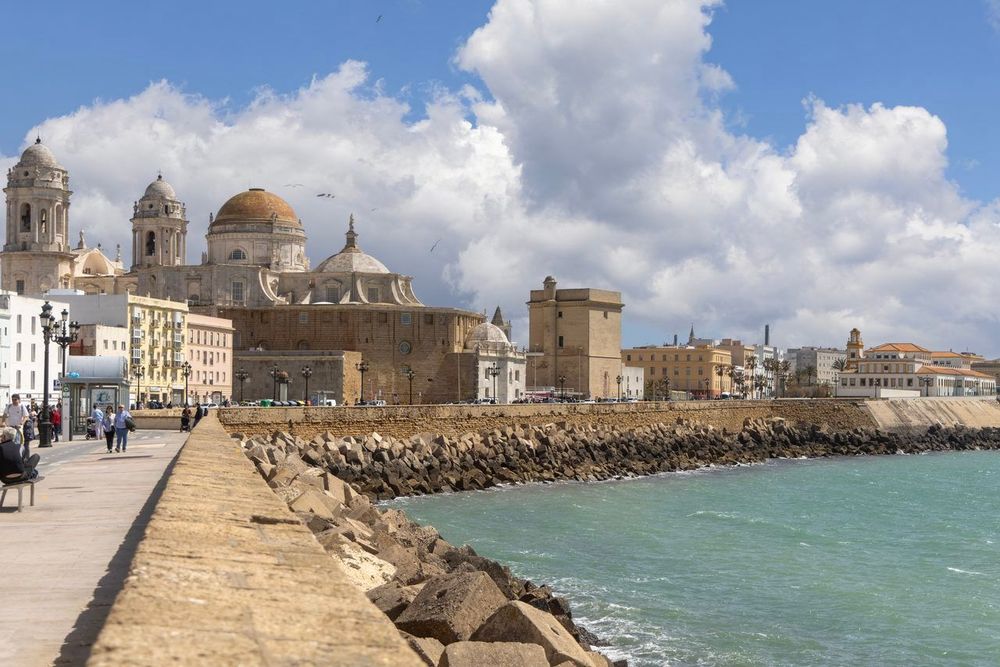
Seen from the ramparts that almost entirely encircle it, Cadiz looks like a ship anchored in the Atlantic. Founded over 3,000 years ago by the Phoenicians, it vies with a handful of Mediterranean cities for the title of oldest continuously inhabited city in Western Europe, and yet it remains largely overshadowed by Seville or Granada on classic Andalusian itineraries. Visiting Cadiz in 3 days is nonetheless enough to understand why the gaditanos, as its residents are called, consider their city to be one of a kind.
A Roman theatre buried beneath 19th-century apartment buildings, a cathedral whose golden dome dominates the entire seafront, an 18th-century watchtower converted into a camera obscura that projects the city in real time, and an urban beach just five minutes' walk from the casco antiguo: this guide follows a day-by-day itinerary, with its best addresses and a possible detour to Jerez de la Frontera. The Ryo audio-guided tour of Cadiz accompanies this journey through the labyrinth of lanes in the historic centre, between the covered market, the ancient theatre, and the wave-battered ramparts.
Day 1: The Historic Heart, from the Central Market to the Cathedral
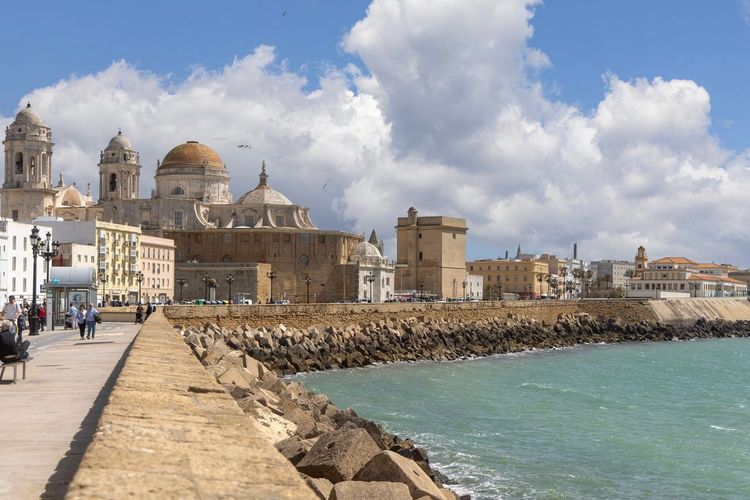
The first day focuses on the casco antiguo, the compact historic centre where most of Cadiz's monuments are concentrated. It's hard to get lost here: the old town fits almost entirely between the port and the Atlantic ramparts, and the day naturally divides into two parts, from the market to the cathedral. If you like to understand what you're looking at, the 'city of the sea and freedom' section of the Ryo audio-guided tour starts at the central market and guides you step by step to the cathedral, along the way recounting the history of the Roman theatre hidden beneath the neighbourhood's houses.
The Central Market and the Roman Theatre of Gadès
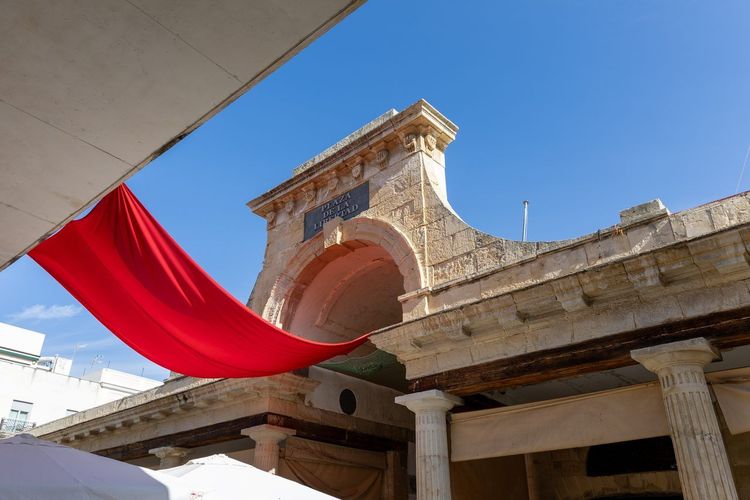
Open from early morning, the Mercado Central de Abastos has occupied the Plaza de la Libertad since 1838, making it one of the oldest covered markets in Spain. Its renovation preserved the original colonnaded courtyard while adding a row of tasting stalls, the 'rincón gastronómico', which buzzes with activity at aperitif time. Fishmongers' counters share the space with freidurías frying fish to take away from 9am onwards — a local habit rather than a tourist trap.
Allow a good hour to wander between the stalls, especially if you come on a Saturday morning when the gaditanos do their weekly shopping. Avoid Mondays: several stalls are closed that day.
Just nearby, the Plaza de las Flores takes its name from the flower stalls permanently set up on the central roundabout, surrounded by terraces where locals have their morning coffee. This is also where the central post office stands, an imposing 1930s building that contrasts sharply with the surrounding Andalusian architecture.
Five minutes' walk away, in the Pópulo neighbourhood, the remains of the Roman Theatre of Gadès (Teatro Romano) lie beneath the foundations of former houses. Built in the 1st century BCE and cited by both Cicero and Strabo, it is the oldest known Roman theatre on the Iberian Peninsula and the second largest in Hispania after that of Córdoba, with approximately 10,000 seats. Its discovery in 1980 was a matter of chance: archaeologists were at the time searching for the remains of the medieval castle of the Villa. Part of the tiered seating remains invisible, swallowed up beneath still-occupied dwellings. The surrounding Pópulo neighbourhood also bears traces of the commercial monopoly Cadiz held in the 18th century with the American colonies, following the transfer from Seville of the Casa de Contratación in 1717: the city became one of the wealthiest ports in Europe.
Cadiz Cathedral and the Old Town
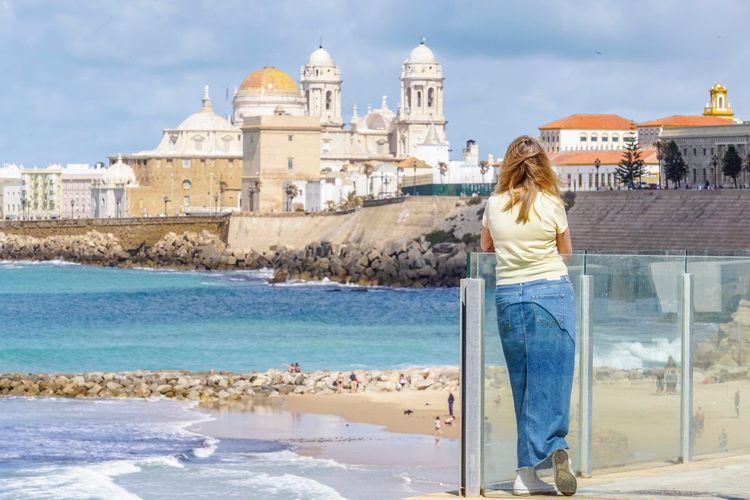
The Cadiz Cathedral dominates the seafront with its dome covered in golden tiles, visible from ships entering the bay. Its construction, spread from 1722 to 1838, explains the mix of styles: Baroque in the foundations, Neoclassical in the towers. The crypt, dug below sea level, is the resting place of composer Manuel de Falla and writer José María Pemán, both born in the city — listen carefully, and you can sometimes hear the surf.
Don't miss the climb up the Torre del Poniente, known as the Clock Tower, the only one of the two towers open to the public: a ramp with no steps leads to nearly 50 metres above the ground, offering the best possible view over the white rooftops, the watchtowers, and the ocean. The combined ticket generally includes the cathedral, the crypt, and the tower.
Heading back down towards the port, the Plaza San Juan de Dios (11005 Cádiz, rated 4.5/5 on Google with 3K reviews) opens onto the Neoclassical town hall and its arcades, a must-pass point between the cathedral and the quays. From there, the walls of Cadiz run along the entire seafront to the bastion of la Candelaria: a twenty-minute walk is enough to understand why the city withstood several sieges, protected along almost its entire perimeter by the Atlantic.
Day 2: Towers, Museums, and the La Viña Neighbourhood
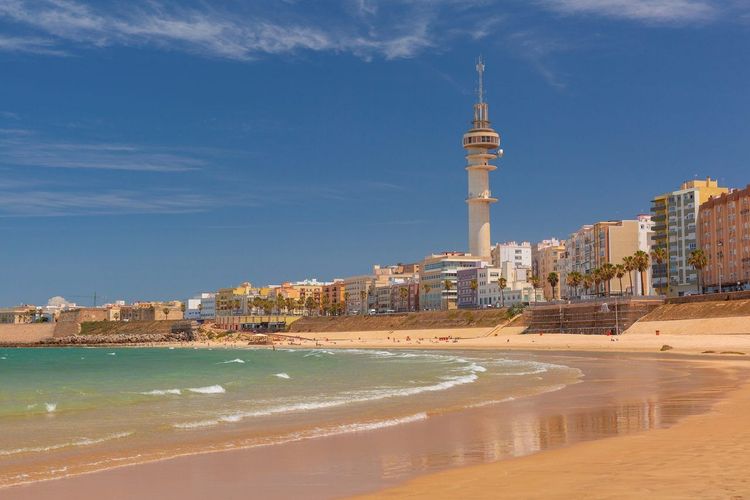
The second day starts by heading into the interior of the casco antiguo, then shifts west, where the La Viña neighbourhood almost touches the ocean. The Ryo audio-guided tour that accompanied you the day before also passes through La Viña: it tells the story of the fishermen's lives and the birth of Carnival songs before reaching la Caleta beach.
Torre Tavira, Oratorio San Felipe Neri, and the Cadiz Museums
Rising 45 metres above the sea, the Torre Tavira is the tallest of the watchtowers in the historic centre. More than a hundred of these towers still survive, built in the 18th century by merchant families to watch for the arrival of their ships from the Americas; this one, which became the port's official lookout in 1778, takes its name from its first watchman, Antonio Tavira. Since the 1990s, it has housed a camera obscura that projects a real-time image of the city onto a circular table — an optical principle centuries old that never fails to impress.
Camera obscura sessions last about twenty minutes and start every half hour: it's best to arrive 10 minutes early to get a good spot near the projection table.
A few streets away, the Oratorio de San Felipe Neri (C. Santa Inés 38, 11001 Cádiz, rated 4.5/5 on Google with 456 reviews) holds a special place in Spanish history: it was in this oval Baroque church that Spain's first liberal Constitution, nicknamed la Pepa, was proclaimed on 19 March 1812. The main altarpiece houses an Immaculate Conception by Murillo, one of the Sevillian painter's last works before his death.
Continuing towards the Plaza de Mina, the Cadiz Museum brings together across three floors a Phoenician and Roman archaeological collection — including two anthropoid marble sarcophagi dating from the 5th century BCE — as well as a fine arts section with paintings by Zurbarán. Ten minutes' walk away, the Museo de las Cortes de Cádiz rounds off the visit with a monumental scale model of the city in 1779, made from mahogany, ivory, and silver — invaluable for visualising the layout of the ramparts before walking them the following day.
The La Viña Neighbourhood and la Caleta Beach
The La Viña neighbourhood, to the west of the casco antiguo, long lived off fishing and retains a working-class identity quite removed from the more polished historic centre. This is where the Carnival comparsas have their deepest roots (Gaditan flamenco, for its part, claims the neighbouring Santa María district): the chirigotas rehearse in the neighbourhood's bars from autumn onwards, several months before the February festivities.
Walk through it in the late afternoon, when the terraces fill up and the smell of fried fish drifts out from the freidurías on Calle Virgen de la Palma, the neighbourhood's main commercial street.
La Viña leads directly onto la Caleta beach, the most urban of Cadiz's beaches, framed by the two castles of San Sebastián and Santa Catalina that you'll visit the following day. It's a small crescent-shaped cove, sheltered from currents, where locals come to swim after work. The Balneario de la Palma, a bathhouse on stilts opened in 1926 and now home to the Andalusian Centre for Underwater Archaeology, marks its centre. You may recognise the beach: it stood in for Havana in the James Bond film 'Die Another Day'.
End the day on one of the terraces facing la Caleta to watch the sunset over the Atlantic: at this latitude, in summer, the sky stays pink well past 9pm.
Day 3: Castles, Gardens, and Urban Beach
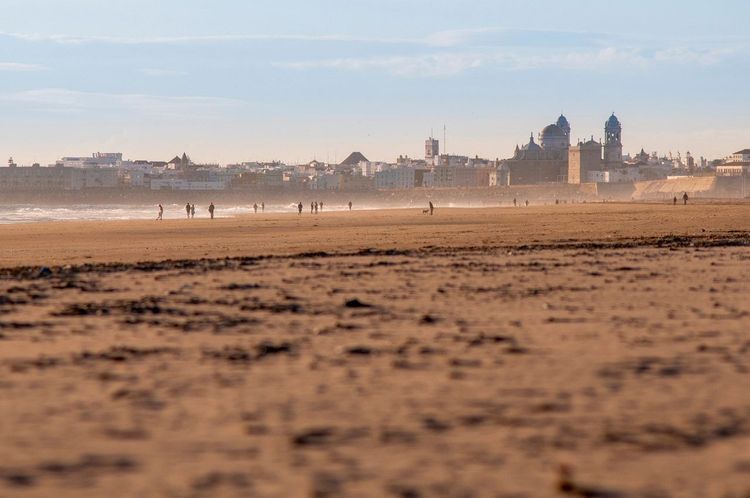
The final day stretches along the Atlantic coastline, from the two fortresses guarding the entrance to the bay all the way to la Victoria beach, the longest in the city. This is the most physically demanding day of the itinerary: wear good shoes, as the full walk covers more than 7 kilometres. Plan to set off early, since the heat can quickly make the Victoria-Cortadura section gruelling in high summer, with no shade for several kilometres. For this long walk, the Ryo audio-guided tour stages devoted to the castles and the seafront can be listened to independently on your smartphone, with no schedule or group to follow.
The Castles of San Sebastián and Santa Catalina
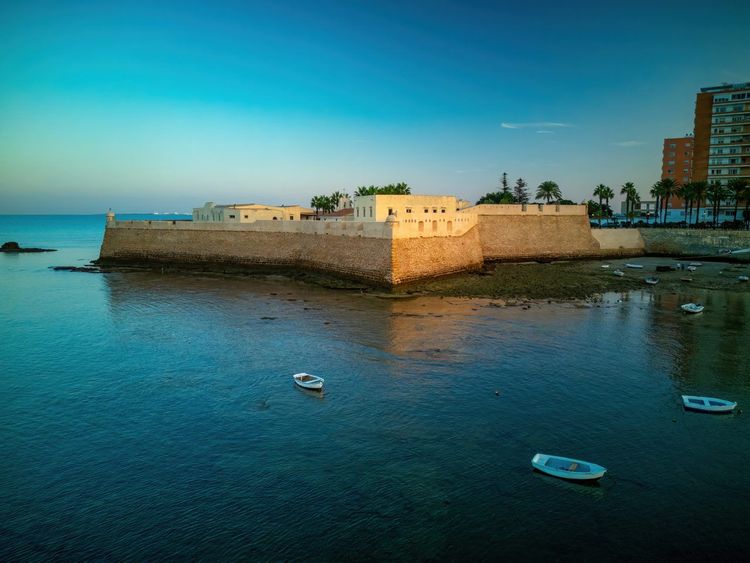
Ordered by Philip II in 1597, in the aftermath of the city's sacking by the Anglo-Dutch fleet of the Earl of Essex in 1596, the castle of Santa Catalina follows a star-shaped plan typical of Renaissance military architecture. It became a military prison in 1769 and remained in the army's hands until 1991 before being converted into a cultural centre; the former casemates now host temporary exhibitions, and admission is free.
Climb the ramparts in late morning: the light is at its most favourable then for photographing la Caleta and both fortresses together.
At the other end of the beach, the castle of San Sebastián stands on a small island connected to the city by a long breakwater built in 1860, accessible on foot. The current fort, begun in 1706, rises on a site occupied since antiquity; the interior, which houses a University of Cadiz laboratory, only opens to the public occasionally. The walk along the breakwater, facing the 1908 metal lighthouse, is nonetheless one of the most photographed spots in Cadiz, especially at sunset.
Parque Genovés and the Ramparts Walk
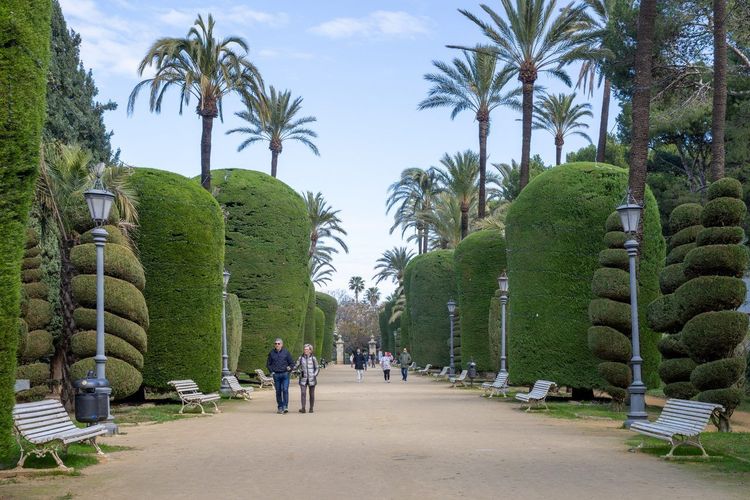
Heading north from la Caleta, Parque Genovés (Avenida Duque de Nájera, 11002 Cádiz, rated 4.6/5 on Google with 15,409 reviews) unfolds its winding paths along the Atlantic, among cypress trees, palm trees, and exotic species. Its artificial grotto, complete with waterfall, lake, ducks, and geese, remains one of the favourite corners for gaditana families on Sundays. The park owes nothing to Genoa: it takes its name from Mayor Eduardo Genovés, who had it remodelled in 1892 by adding fountains and a waterfall. Its geometrically shaped trees alone are worth the detour.
The ramparts walk then connects the park to the Alameda Apodaca, a tree-lined avenue of century-old ficus trees running along the inner bay. Allow 30 to 40 minutes to walk this section at a leisurely pace — it's shaded for much of the day, a welcome alternative when the sun beats down in summer.
La Victoria Beach and la Cortadura
La Victoria beach stretches for nearly 3 kilometres south of the old town, lined by a wide paseo marítimo alternating residential buildings with chiringuitos. It is the gaditanos' favourite beach for a full day out, with finer sand than la Caleta and livelier waves appreciated by beginner surfers.
Rent a bike to ride along the paseo marítimo: the flat, continuous cycle path lets you reach la Cortadura in under 30 minutes, far more pleasant than walking under the afternoon sun.
At the far end of la Victoria, la Cortadura marks the boundary between the built-up strip of land and the wild dunes stretching towards San Fernando. The remains of the fortifications erected in the early 19th century, during the Napoleonic siege, still survive in places in the sand. This is where the beach changes character: fewer people, more wind, and a distinctly wilder atmosphere that makes for a perfect close to this third day.
Cadiz Carnival and Key Events Not to Miss
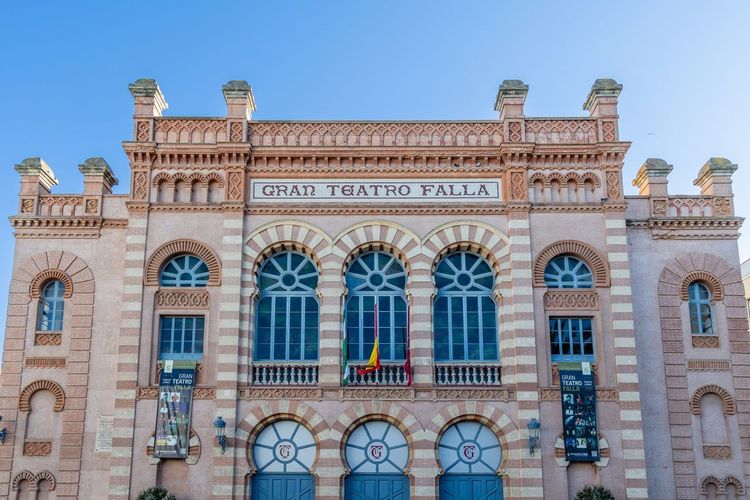
The Cadiz Carnival is among the oldest and most authentic in Spain, very different from the grand costumed parades usually associated with the word carnival. The official competition begins as early as January, then for around ten days in February the streets fill with chirigotas and comparsas — costumed groups who sing satirical couplets about Spanish and local current affairs, often verging on irreverence. The official competition takes place at the Gran Teatro Falla, a Neo-Mudéjar red-brick building, but most of the Carnival is experienced in the streets, for free, where anyone can stumble upon a group in the middle of an impromptu rehearsal. Expect a notably denser atmosphere in the La Viña neighbourhood and around the central market, the traditional epicentres of the festivities.
If your stay falls during this period, book your accommodation several months in advance: prices easily double and the city, already compact, is fully booked weeks before the festivities.
Outside Carnival, Cadiz marks its calendar with Holy Week in March or April — less spectacular than in Seville but just as heartfelt — and several music events, including the Festival de Música Española in autumn. For the rest of the year, the city returns to a quieter pace, ideal for visiting without the crowds.
Day Trips from Cadiz: Jerez de la Frontera and the Andalusian Vineyards
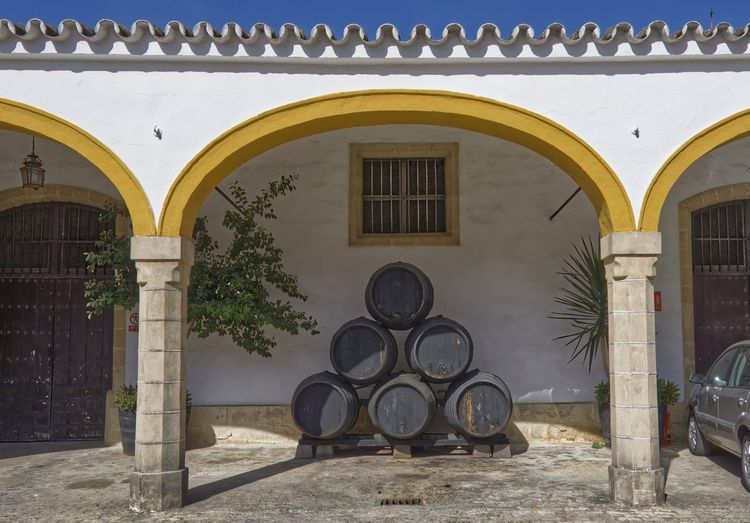
Three days are enough to cover the essentials of Cadiz, but the province deserves a detour if your schedule allows, ideally by adding half a day or a full day. Two options stand out clearly: Jerez de la Frontera (11402 Cádiz) for sherry and flamenco, or El Puerto de Santa María (11500 Cádiz) for a more seaside atmosphere. Allow half a day for Jerez on a quick round trip, or a full day if you add a bodega visit and an equestrian show. If you extend the adventure beyond Cadiz, the Ryo road-trip tour dedicated to Andalusia continues the audio experience as far as Jerez and its bodegas, building on everything you discovered in the city.
Jerez de la Frontera and Its Sherry Cellars
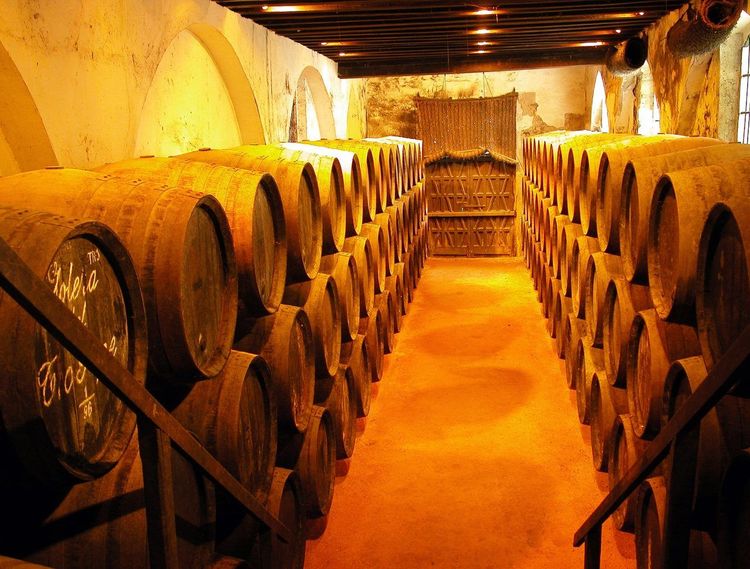
About forty minutes from Cadiz by train, Jerez de la Frontera gives its name to sherry, produced exclusively in this Andalusian triangle for centuries. The great houses open their centuries-old bodegas for visits, with tastings of several styles: dry fino, amber amontillado, or syrupy, sweet pedro ximénez.
Jerez also claims the title of birthplace of flamenco, on a par with Seville, and the Royal Andalusian School of Equestrian Art stages choreographed shows combining dressage and classical music several times a week. Its historic centre, built around a 12th-century Almohad alcázar and a Baroque cathedral, is easily explored on foot in two to three hours, between bodega visits.
Book a bodega visit in advance during high season: slots in French or English fill up quickly, especially at weekends.
El Puerto de Santa María and the Tierra de Cádiz Vineyards
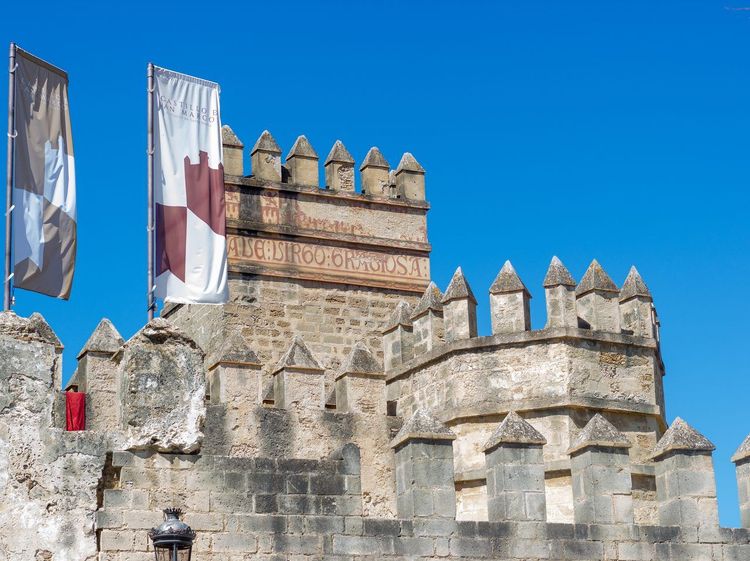
On the other side of the bay, El Puerto de Santa María is reached in about thirty minutes by a catamaran that crosses several times a day — a far more enjoyable journey than going by car. The town also nurtures its own winemaking tradition, with the Osborne bodega and its famous black silhouette bull, which has become a visual landmark along the road between Cadiz and Jerez. It has also built a solid gastronomic reputation, driven by its fried fish restaurants and the port's prawn markets — a less frequented alternative to the tourist spots in the centre of Cadiz.
The Tierra de Cádiz label covers all the vineyards of the province, from classic sherry to more obscure wines produced on the hillsides between Jerez and Arcos de la Frontera. Several family-run bodegas, less touristy than the big Jerez houses, offer tastings by appointment directly among the vines planted on albariza, the chalky white soil characteristic of the region.
Without a car, opt for an organised excursion from Cadiz that combines transport, tasting, and lunch: the region is not well suited to travelling between the various bodegas by public transport. If you have to choose, go for Jerez for its cultural depth and the history of sherry, and El Puerto de Santa María if you're primarily looking for a seaside and culinary break less than an hour from Cadiz.
Where to Stay in Cadiz: Neighbourhoods and Best Hotels
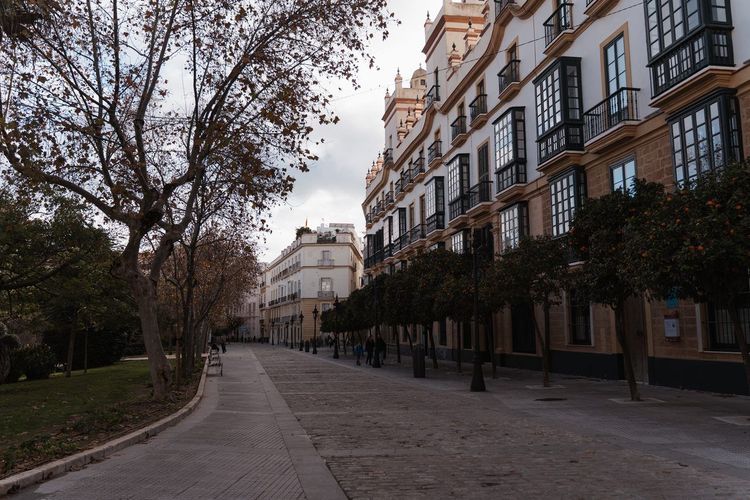
The casco antiguo, the historic centre, concentrates the bulk of the city's monuments and best restaurants. Staying here means doing everything on foot, which greatly simplifies the organisation of a 3-day stay, though the narrow streets and older buildings can sometimes make car access and parking tricky.
Book on the cathedral side or near Plaza de Mina if you want a quiet night: the area around La Viña and Calle Virgen de la Palma stays very lively until late, especially at weekends.
For a more beach-oriented stay, the zona nueva, around la Victoria beach, offers newer hotels, often with a swimming pool, and direct access to the sand. The trade-off: you'll need to allow 20 to 25 minutes on foot, or take a bus, to reach the casco antiguo and its monuments each day.
The Parador de Cádiz (Avenida Duque de Nájera 9, 11002 Cádiz, rated 4.5/5 on Google with 6,173 reviews), right on the seafront facing the bay, remains the benchmark for comfort, with rooms almost all looking out over the Atlantic. Expect to pay upwards of €150 per night in high season, compared with €60 to €90 for a decent hostal in the casco antiguo — particularly in the Santa María neighbourhood, just behind the cathedral and a few minutes' walk from all the Day 1 sights.
Short-stay rental apartments are an interesting alternative for families or stays of more than 3 days: the casco antiguo has several, often set up in old patio houses typical of Gaditan architecture. As with Carnival, book well ahead in July and August: Cadiz, despite its modest size, has limited hotel capacity when faced with the summer influx of Spanish visitors.
Where to Eat in Cadiz: Specialities and Good Addresses

It's impossible to visit Cadiz without trying the pescaíto frito, the assortment of small fried fish that has made the entire Andalusian coast famous, or the tortillitas de camarones, those thin, crispy grey shrimp fritters that the city proudly claims as its own speciality against all comers.
Go for the freidurías, those takeaway counters that sell fried fish by weight in a paper cone: that's where, rather than in a restaurant, the frying is at its freshest and its cheapest.
The neighbourhood around the central market is packed with small tapas bars frequented by locals, where a glass of local fino naturally accompanies a few fish tapas. The terraces of the Plaza de la Catedral, more touristy, are well suited to a dinner with a view of the illuminated dome, even if you pay a little more for the privilege.
With children, go for restaurants with a terrace near la Victoria or la Caleta beach: the more relaxed formats, often with a children's menu and nearby play areas, work better than a crowded tapas bar in the evening.
Sherry, naturally, traditionally accompanies local seafood: a well-chilled fino with prawns or shellfish remains the most common pairing on Gaditan tables, far more so than red wine.
Budget between €20 and €30 per person for a full meal with a drink at a mid-range restaurant, somewhat less at the freidurías and popular tapas bars.
How to Get to Cadiz and Get Around

Getting to Cadiz by Plane, Train, or Bus
Cadiz has no airport: the nearest one, Jerez Airport, is about 35 km away, with direct connections to several cities in summer. Many travellers also fly into Seville Airport, 1h30 by road and better served year-round from abroad. By car from Seville, allow about 1h30 via the motorway; from Málaga, plan for closer to 2h30.
By train, the Renfe line from Seville reaches Cadiz in about 1h40, with a convenient terminus at the entrance to the casco antiguo, a ten-minute walk from the central market. This is the most comfortable option for those arriving without a car, with no need to deal with the complicated parking situation in the historic centre.
Long-distance buses, especially from Seville, Málaga, or Granada, offer a cheaper but slower alternative, with a bus station also close to the centre. The Seville–Cadiz bus journey takes about 1h45, generally at a slightly lower fare than the train.
Getting Around Cadiz Once You're There
Once there, Cadiz is almost entirely walkable: the casco antiguo is barely 1.5 km wide, and most of the sights in this guide are 10 to 20 minutes apart on foot. The city's flat terrain, with virtually no hills to climb, also makes it a comfortable destination for people with reduced mobility or families with pushchairs.
For tired legs after two days of walking, a hop-on hop-off tourist bus serves the main monuments and beaches, with a ticket valid for 24 or 48 hours. Budget around €18 for the 24-hour pass — an investment that quickly pays off if you plan to combine la Victoria beach and la Cortadura in the same day.
Municipal buses cover longer journeys, particularly to the zona nueva, at around €1.50 per ticket. A hire bike, available from several points in the centre, remains the most enjoyable option for riding along the paseo marítimo all the way to la Cortadura.
By car, parking in the casco antiguo is a real headache: narrow streets, paid blue zones, and scarce spaces. It's far better to leave the car in one of the covered car parks on the edge of the old town, near the station or the port, and continue on foot.
What Is the Best Time to Visit Cadiz?
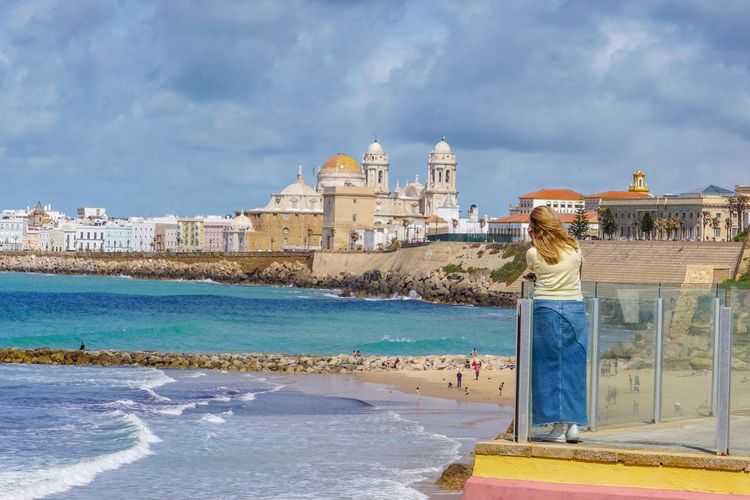
Cadiz's Atlantic climate, windier and more temperate than that of inland Andalusia, noticeably softens summers compared with Seville or Córdoba. May, June, and September offer the best compromise: pleasant warmth, a sea that is already or still warm enough for swimming, and tourist numbers that are far more manageable than in the height of summer.
July and August remain the busiest months, driven by Spanish holidaymakers who flood la Victoria and la Caleta beaches. The levante wind, which gusts in from the east, can also make some summer days less pleasant on the beach, even when temperatures remain high.
Winter stays mild, rarely dropping below 10 °C, and suits a cultural visit to the historic centre without the crowds — with the notable exception of the Carnival period in February, which completely reverses the situation.
When it comes to beaches, la Caleta appeals for its human scale and historic setting, la Victoria for its fine sand and kilometres of promenade, and la Cortadura for its wilder atmosphere — three different vibes for three different moments of the day.
One More Day in Cadiz? Ideas for Extending Your Stay
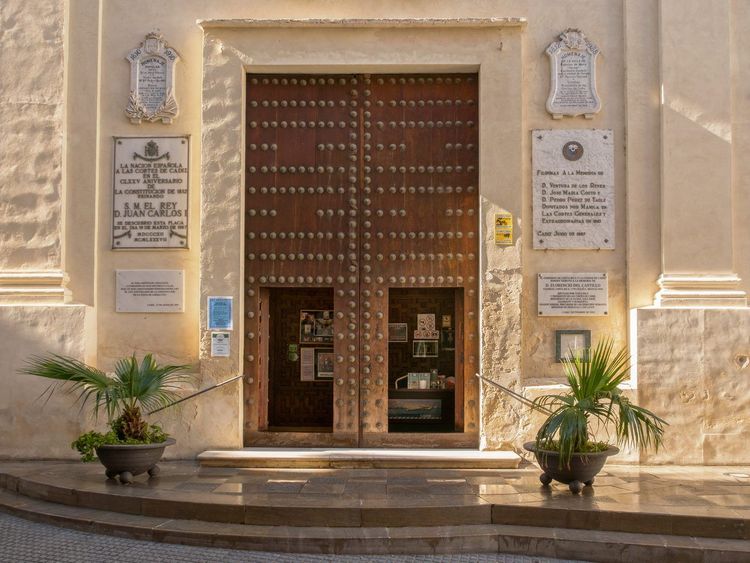
With an extra day, several options open up depending on the type of trip. For those staying one day longer, re-listening to certain sections of the Ryo audio-guided tour is a good way to explore more thoroughly the places visited a little too quickly on previous days — in particular the Roman theatre or the Oratorio San Felipe Neri, often rushed for lack of time.
With children, an extra day allows you to slow the pace: the playgrounds in Parque Genovés and the Alameda Apodaca offer welcome breaks between visits, and la Victoria beach, shallow for its first few metres, remains the safest option for young children.
To dig deeper into the city's history without extensive research, visiting Cadiz with an English-speaking guide remains a worthwhile option, particularly for the medieval part of the city, which is less well documented than the Roman era or the golden 18th century of colonial trade. Several local guides offer themed walks of two to three hours, generally bookable 48 hours in advance during high season.
Cadiz in the medieval period left few visible traces, the city having been largely rebuilt after the sacking of 1596 and then the earthquake of 1755: the few Gothic vestiges, such as certain arches from the old cathedral incorporated into the new one, are best discovered with a guide who knows where to look.
Another option for a fourth day: push on to Conil de la Frontera (45 minutes by road) or Tarifa (about 1h15), for a wilder interlude of beaches and Atlantic wind.


FAQ
How Many Days Do You Need to Properly Visit Cadiz?
Three days are enough to cover the essentials: the historic centre, the castles and beaches, and a short day trip. Two days suffice for a more condensed overview of the casco antiguo, but four days leave time to add Jerez de la Frontera or a genuine lazy beach day without rushing. With fewer than two days, it's best to focus solely on the cathedral, the central market, and la Caleta, accepting that the castles and museums will have to wait.
Is Cadiz Worth a Day Trip from Seville or Jerez?
From Seville, Cadiz can be visited as a day trip thanks to the direct train (1h40), but that only leaves time for the casco antiguo and the cathedral, with no room for the castles or the beaches. From Jerez, barely 35 minutes away by train, half a day is almost enough for an overview of the historic centre. In both cases, spending one night there truly changes the experience, letting you enjoy the seafront in the evening.
Where Should You Park in Cadiz during a 3-Day Stay?
Avoid parking in the casco antiguo: spaces are scarce and expensive. Underground car parks near the train station or the port offer a good compromise, within 10–15 minutes' walk of most sights. Some hotels in the zona nueva include a parking space, worth considering if you're travelling by car. Budget generally between €12 and €18 per day in a covered car park in the centre.
Is Cadiz a Family-Friendly Destination?
Yes: the city is compact, flat, and largely pedestrianised, making it easy to get around with a pushchair. La Victoria and la Caleta beaches offer shallow, safe waters, and several parks such as Genovés have playgrounds. Plan for shorter cultural visits than you would on an adults-only itinerary, alternating monuments in the morning with the beach in the afternoon. Also schedule cool-down breaks in summer between 2pm and 5pm, when the heat becomes tough for young children.
Do You Need to Book Torre Tavira and the Cathedral in Advance?
It's not essential in low season, but strongly recommended from May to September and during Carnival, when queues lengthen around midday. Booking online also often lets you skip the on-site queue, a real time-saver for Torre Tavira where camera obscura slots are limited. For the cathedral, visiting early in the morning, right at opening time, remains the best alternative to booking ahead.
What Budget Should You Plan for 3 Days in Cadiz?
Budget around €80 to €120 per person per day for a comfortable stay without splurging, accommodation included, by choosing freidurías and tapas bars over the tourist restaurants on the seafront. A tighter budget of around €50 to €60 per day is possible by staying in a hostel and prioritising free attractions such as the ramparts, the castle of Santa Catalina, or the beaches.
Cadiz in 3 Days: Key Takeaways
Three days in Cadiz are enough to understand why this city, despite its past as the wealthiest port in Spain, long resisted the mass tourism that transformed Seville or Granada. The rhythm here is still set by the sea: you visit in the morning, swim in the afternoon, and end up on a terrace facing the Atlantic. Between the Roman theatre buried beneath the Pópulo, the camera obscura of Torre Tavira, and the castles that flank la Caleta, the itinerary covers both 3,000 years of history and genuine beach time — a rare combination for a city of this size.
To make sure you don't miss anything in this concentration of Mediterranean and Atlantic history, the Ryo audio-guided tour of Cadiz follows exactly this neighbourhood-by-neighbourhood logic, from the central market to the ramparts: start it on your first morning and let it carry you along as you walk.