© Shutterstock
 Votre guide Ryo
The 6 Most Beautiful Villages around Cordoba Not to Miss in 2026
The province of Cordoba always surprises those who reduce it to its namesake city. Within an hour's drive in any direction, villages clinging to the cliffs of the Sierra Subbética or nestled on the shores of a turquoise lake await in a discretion they never chose. Zuheros tumbles down its limestone rocks at 628 metres above sea level. Priego de Córdoba conceals baroque fountains with 139 spouts that even Andalusians barely know. Iznájar is reflected in the largest artificial reservoir in Andalusia, almost without the sound of cars. These villages around Cordoba do not yet appear on the major tourist itineraries, and that is precisely why they deserve your attention.
Here you will find six villages to explore in a day or over a weekend, at your own pace. From the olive routes of Baena to the ramparts of the medieval castle of Almodóvar del Río, from the wine cellars of Montilla to the white lanes of the Subbética, each stop paints its own portrait of rural Andalusia. Before hitting the road, the Ryo audio tour of Cordoba gives you the keys to the capital through 23 audios and 8.2 km of discoveries — valuable context for understanding the history that runs through the entire province.
The Province of Cordoba: a Hinterland to Rediscover
The province of Cordoba extends over more than 13,700 km², between the foothills of the Sierra Morena to the north and the olive-covered hills of the Subbética to the south. This varied geography has produced villages with very different characters depending on their altitude and history. Some, like Almodóvar del Río, have watched over the Guadalquivir for centuries. Others, like Zuheros, exist only because a limestone cliff offered them natural protection against invasions.
What unites them is an architectural whiteness inherited from the Moorish era and a relationship with time that stands in stark contrast to urban bustle. Most can be visited easily from Cordoba by car, ideally over two days to enjoy several without rushing. For those wishing to connect these stops into a broader regional itinerary, the Ryo travel guide to Andalusia offers a multi-city itinerary covering the region's highlights.
Zuheros: the Suspended Village of the Sierra Subbética
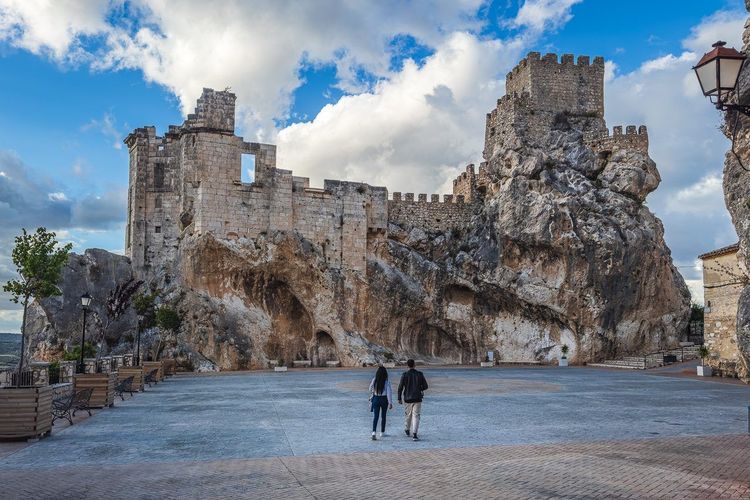
You have to see Zuheros from a distance to understand why this village so captivates photographers. Clinging to a limestone cliff at 628 metres above sea level, 65 km south of Cordoba, it seems to have been placed there by accident, as if the builders had wanted to defy gravity. The village today has around 600 inhabitants, and its silhouette crowned by the Castillo de Zuheros (Calle del Castillo s/n, 14870 Zuheros, rated 4.6/5 on Google for 1,794 reviews) remains one of the most striking images of the Sierras Subbéticas natural park.
The castle of Zuheros occupies the village's highest promontory. Built by the Moors in the 10th century, it was enlarged after the Reconquista. From its towers, the view plunges down over olive groves and the gorges of the río Bailón. The interior houses a small archaeological museum tracing the region's history from the Palaeolithic era, with pieces from the nearby cave.
The Cueva de los Murciélagos (Cave of the Bats) is worth a visit in its own right. Discovered in the 1930s, it contains cave paintings dating back more than 8,000 years and impressive stalagmite formations. Guided tours last about 45 minutes and should be booked in advance, especially in high season. The cave is located 4 km from the village along the road through the Bailón gorges, a narrow canyon that is particularly photogenic.
The village itself can be explored on foot in an hour. The sloping lanes, white houses adorned with red geraniums and the small church of the Virgen de la Miera form a remarkably coherent ensemble. Zuheros holds the 'Pueblos más Bonitos de España' (Most Beautiful Villages in Spain) label, a distinction its residents wear with pride but without ostentation.
For lunch, restaurants offer local cuisine based on Subbética produce: goat's cheese, Iberian ham and first-press olive oil. The set lunch menu runs around €10–12, drinks included. Avoid Mondays, when family-run establishments in the area frequently close.
Practical tip: arrive early in the morning to photograph the castle. The raking light between 8 and 10 a.m. transforms the limestone cliffs into a play of shadows and gold that the midday sun will not replicate.
Priego de Córdoba: the Baroque Jewel of the Province
'The Florence of Andalusia': the expression may seem exaggerated until you step into Priego's historic quarter. Located 100 km south of Cordoba, this town of 22,000 inhabitants concentrates a density of 17th- and 18th-century baroque architecture that has no equivalent in rural Spain. It owes this wealth to the silk industry, which flourished for two centuries before collapsing in the 19th century, leaving behind fountains, churches and façades that nobody had the means to demolish and rebuild from scratch.
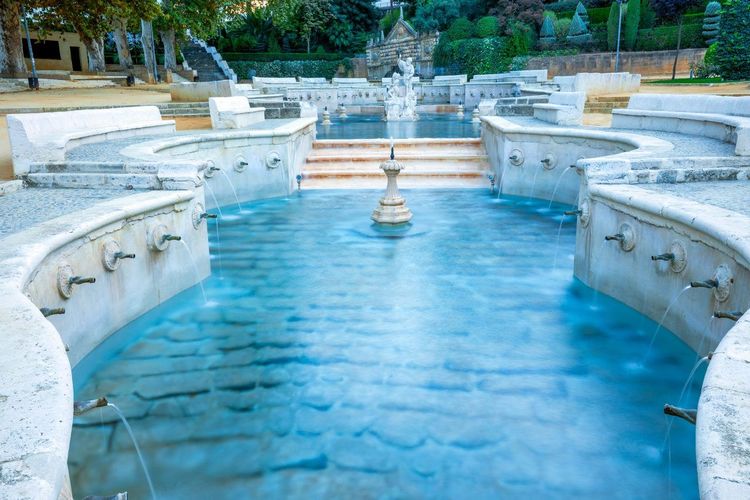
The Fuente del Rey is the centrepiece of Priego's heritage. Built between the 16th and 19th centuries, it is arranged across three basins and features 139 spouts from which water flows continuously. The central scene depicts Neptune and Amphitrite, surrounded by mascarons and allegorical figures. Listed as a national monument, it ranks among the most impressive fountains in Spain for its decorative scale.
Nearby, the Fuente de la Salud (1803) extends the ensemble with more restrained elegance. Both fountains are part of a water network fed by the sierra's karst formations — a rarity that explains why Priego developed so early and so densely at this location.
The Iglesia de la Asunción warrants an extended visit. Its baroque sagrario, completed in 1784, is considered by art historians to be one of the most accomplished baroque spaces in Spain, with an octagonal dome covered in lacework stucco. The effect on visitors is striking: it is hard to believe that such a masterpiece is found in a small provincial town rather than in Seville or Granada.
The barrio de la Villa is the original Moorish quarter, a labyrinth of white lanes where balconies disappear beneath flowers. Calle Real is its main axis, lined with noble houses featuring wrought-iron grilles. At the far end, the Adarve belvedere offers a panoramic view over the plain, the olive groves and the sierra — one of the finest viewpoints in the province, free of charge and rarely crowded.
Allow at least half a day to explore Priego without rushing. Some travellers choose to combine this stop with Zuheros in the same day: the two villages are 35 km apart, connected by a road that winds through the Subbética landscapes.
Baena: the Olive Oil Capital of Andalusia
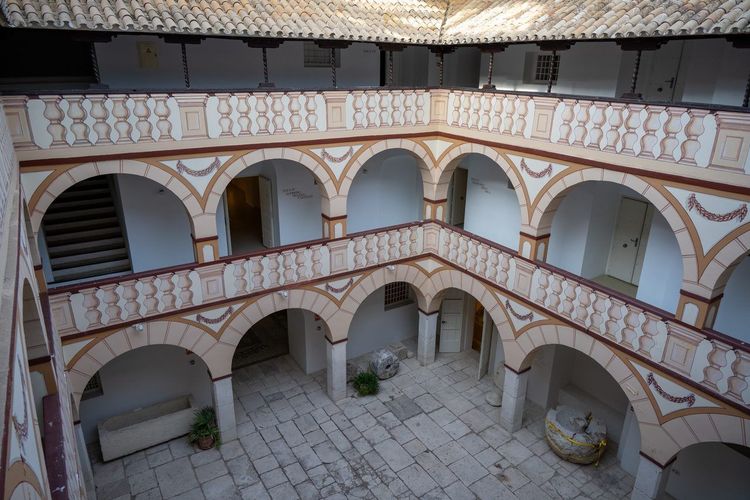
Baena does not impress at first glance. Its streets slope gently down towards the countryside, and the modern buildings on its outskirts give no hint of what lies higher up. But climb towards the historic centre, hold on to the old quarter that overlooks a 360-degree sea of olive trees, and you immediately understand why this town of 19,000 inhabitants located 65 km from Cordoba holds a special place in the province.
Baena produces one of Spain's most renowned olive oils, under a Protected Designation of Origin established in 1981. More than 45,000 hectares of olive trees surround the town, planted in the Picual, Hojiblanco and Lechín varieties. The almazaras (olive mills) open their doors to visitors between November and January during the harvest, but some offer tastings year-round. If you visit between November and December, you may have the chance to see fresh olive paste emerging from the stone millstones.
Baena's medieval castle, of which only partial ruins remain, occupies the highest point of the town. From its surroundings, the view over the countryside is breathtaking. Around the castle, the historic quarter preserves its white houses and flowering patios. The Iglesia de Santa María la Mayor (Plaza de España s/n, 14850 Baena, rated 4.4/5 on Google for 96 reviews) (16th century), in Gothic Mudéjar style, dominates this area with a bell tower visible from the plain.
Baena is also known for its Semana Santa, one of the most singular in Andalusia. Since the 13th century, the brotherhoods have marched to the sound of thousands of drums. The bearers, known as 'sordos', do not utter a single word throughout the procession; the contrast between the thunder of the percussion and the silence of the men creates an atmosphere that even seasoned visitors from Seville do not expect to find in a town of this size. If you are passing through between late March and early April, check the dates: Baena's Semana Santa draws visitors from across Spain.
The municipal archaeological museum is worth a quick visit for its Iberian and Roman collections, including pieces from local excavations. It generally opens Tuesday to Saturday, with free or nominal entry.
Iznájar: the Village on the Shore of Andalusia's Largest Lake
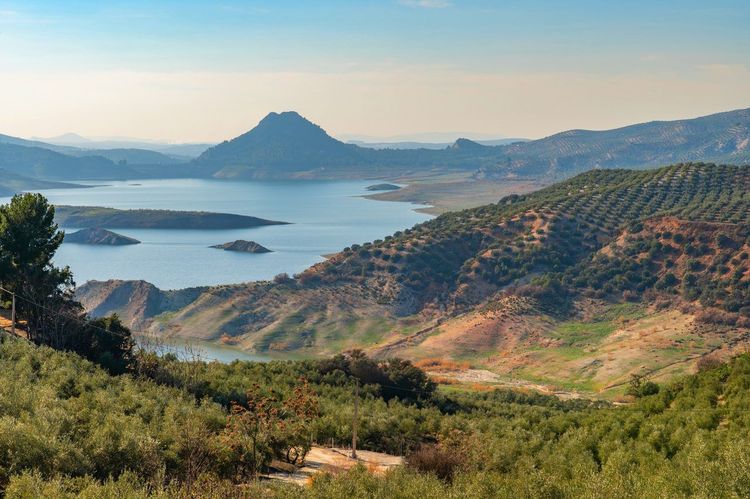
Iznájar is perhaps the most photogenic village in the entire province of Cordoba. Built on a rocky promontory, it descends in terraces down to the shores of a lake that did not exist before 1969. The Embalse de Iznájar (Calle Alta s/n, 14970 Iznájar, rated 4.6/5 on Google for 1,958 reviews) is the largest artificial reservoir in Andalusia: 981 million m³ of water, a surface area of around 2,500 hectares, and a length of over 30 km. From the old town, the white houses seem to float on this blue-green mirror that changes colour depending on the time of day and the season.
The village is 100 km south of Cordoba, at the border between the provinces of Córdoba, Málaga and Granada. This geographical crossroads is felt in the architecture and local cuisine, which borrows from all three regions. The population does not exceed 4,500 inhabitants, which guarantees an authentic atmosphere even in the height of summer.
The castle of Iznájar, of Arab origin, crowns the village on its rocky outcrop. From its mirador, the view takes in the lake in its full extent — one of the most impressive panoramas in the province. The climb is steep but short. The iglesia de Santiago stands next to the castle, with a 16th-century tower that is visible from the access road long before reaching the village.
In summer, the lake becomes a destination for swimming and water sports. Supervised areas welcome families, and kayak and pedalo hire operators work from the marina. Water temperatures reach 25–26°C between July and September, and visitor numbers remain well below those of coastal beaches. A municipal campsite lines the shores for those who wish to extend their stay.
The white village itself can be explored in about an hour. Its sloping lanes, private patios and terrace overlooking the lake create a setting you enjoy wandering through without a set route. Plan to have lunch on site: a few family restaurants offer simple, honest cooking with views over the water.
Almodóvar del Río: in the Shadow of a Storybook Castle
If you could take away just one image from the province of Cordoba, it might be this one: the castle of Almodóvar del Río rising from a sheer hilltop above the Guadalquivir, its eight crenellated towers silhouetted against the Andalusian sky. Just 30 km west of Cordoba, it is the most accessible village on this list and the one that delivers the most immediate visual impact.
The Castillo de Almodóvar del Río (Calle la Silera s/n, 14720 Almodóvar del Río, rated 4.8/5 on Google for 13,716 reviews) has Roman origins, but it is its Arab reconstruction in the 8th century and its Gothic remodelling in the 14th century that gave it its current silhouette. The interior visit gives access to the castle's halls, the courtyard and the towers, from which the views over the Guadalquivir and the olive groves are remarkable. Film enthusiasts may recognise its ramparts: the castle served as a backdrop for several productions, including episodes of Game of Thrones (season 7), a role that earned it unexpected international fame for a village of 8,000 inhabitants.
The castle is open every day except Monday. Adult admission: €7–8, with reductions for children and seniors. The climb from the village takes about 15 minutes along a paved path. Be aware in summer: between June and August, temperatures at the top of the hill can exceed 40°C at midday; opt for a late afternoon visit to enjoy the orange light on the ramparts.
The village of Almodóvar itself is modest but pleasant. The Plaza de la Constitución gathers the terraces where locals have their morning coffee. The whole can be visited in two to three hours including the castle, making it a perfect half-day excursion from Cordoba, combinable with a visit to the city in the morning or evening, when the short version of our audio-guided tour covers the historic centre in 1 hour 40.
Montilla: the Secret Wine Capital of the Province
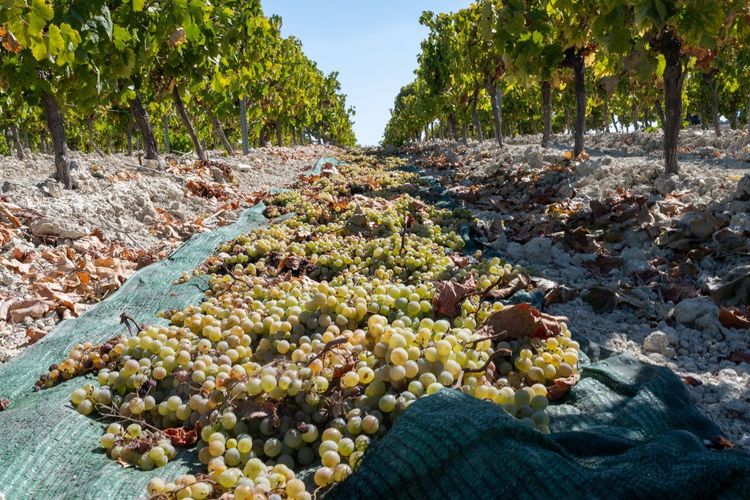
At 45 km south of Cordoba, Montilla does not look like a village: its 22,000 inhabitants make it a proper town. But the atmosphere is provincial and relaxed, and most of what it has to offer lies in its bodegas and compact historic quarter. This is where the wines of the Montilla-Moriles Denomination of Origin are produced, made primarily from the Pedro Ximénez grape without any alcohol fortification, unlike the neighbouring Sherry wines.
The Bodega Alvear, founded in 1729, is the oldest still operating in Andalusia. Its brick cellars house rows of American oak barrels arranged according to the solera system, a method of ageing through the progressive blending of vintages. Guided tours of around an hour conclude with a tasting of fino, amontillado and Pedro Ximénez. Booking is recommended at weekends.
The Bodega Pérez Barquero (Avenida de Andalucía 27, 14550 Montilla, rated 4.7/5 on Google for 294 reviews) offers a comparable experience in a more intimate setting. Between the two visits, lunch at one of the town-centre restaurants allows you to pair local wines with traditional cuisine: salmorejo cordobés, flamenquín (breaded ham roll) and braised rabo de toro.
Montilla is also the birthplace of Gonzalo de Córdoba (1453–1515), nicknamed 'el Gran Capitán', the general who conquered Naples for the Crown of Aragon. A statue honours him on the main square. The historic quarter is worth a one-hour stroll before or after the bodegas: a few lanes retain traces of a restrained and elegant Andalusian architecture.
How to Organise Your Excursion from Cordoba
You cannot visit all six villages in a single day without turning the experience into a motorway sprint. The key is geographical grouping.
Option 1 — The Subbética (1 day): Zuheros + Priego de Córdoba + Baena. These three villages cluster within a 40 km radius around the Subbética. Leave Cordoba at 8 a.m., visit Zuheros in the morning (2–3 hours), have lunch in Priego while exploring the Fuente del Rey and the baroque quarter, and finish in Baena in the late afternoon. Return to Cordoba before nightfall.
Option 2 — The Lake and the Vineyards (1 day): Iznájar + Montilla. These two destinations to the south-east of Cordoba combine easily. Visit Iznájar in the morning for the light on the lake, have lunch in Montilla, and visit a bodega in the afternoon.
Option 3 — The Quick Excursion (half-day): Almodóvar del Río on its own. Just 30 km from Cordoba, ideal in the late afternoon or in the morning before visiting the city.
For all six villages, allow 2–3 days by combining the options above. Staying overnight in Priego de Córdoba or Montilla saves you unnecessary back-and-forth to Cordoba.
The Best Season to Explore These Villages
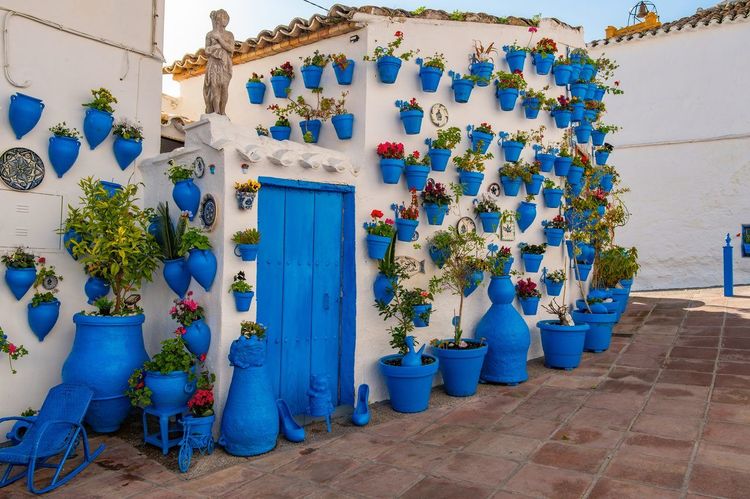
The province of Cordoba has a Mediterranean continental climate with very hot summers. A few benchmarks to help with planning.
Spring (March to May): the best season across the board. Temperatures between 15 and 25°C, lush landscapes, flowers in patios and lanes. Mountain roads towards Zuheros and Priego are clear. Be mindful of Holy Week in Baena: the town is very busy around Easter, but the experience is worth it if you enjoy living traditions.
Summer (June to September): best avoided in mountain villages between noon and 5 p.m., as temperatures regularly exceed 38–42°C on the Cordoban plain. Iznájar and its lake, however, become very pleasant for swimming. Head out early in the morning and rest after lunch.
Autumn (October to November): a very good period. Warm light, few tourists, and the start of the olive harvest in Baena in November. Some village restaurants close out of season — check before you go.
Winter (December to February): peaceful atmosphere, but frost is possible in Zuheros and Priego. Some sites reduce their opening hours or close entirely. Best suited to travellers who appreciate empty villages and silence.
Practical Information: Getting between the Villages
By car: the most convenient option for all villages. Most are accessible via well-maintained provincial roads, with a few winding stretches on the way to Zuheros and Priego. Car hire is available in Cordoba (railway station and airport). Compare prices in advance: rates vary considerably by season.
By bus: lines connect Cordoba to Priego de Córdoba, Baena, Montilla and Almodóvar del Río from the bus station (Estación de Autobuses de Córdoba). Frequencies are limited, often 2–4 departures per day. Check timetables on the websites of Autocares Carrera and Alsina Graells. Zuheros and Iznájar have poor public transport links — a car is essential for these two destinations.
Taxi or private hire: a viable option for groups. Taxis based in Cordoba offer full-day excursions to the villages, generally between €80 and €120, depending on distance and duration.
To prepare your stay in Cordoba before heading out on excursions, the Ryo audio guide to Cordoba covers 23 audios over 8.2 km and 3.5 hours of exploration — a solid foundation for understanding the history that permeates the entire hinterland.
FAQ
Which is the most beautiful village to visit around Cordoba?
The answer depends on what you are looking for. Zuheros is often cited for its spectacular silhouette clinging to a limestone cliff, and its 'Most Beautiful Village in Spain' label is well deserved. Priego de Córdoba rivals it for baroque architectural richness. Iznájar offers the most photogenic setting thanks to its lake. If you can only visit one, choose according to your preferences: nature and hiking (Zuheros), heritage and architecture (Priego) or lakeside scenery (Iznájar).
Can you visit several villages in one day from Cordoba?
Yes, provided you group destinations geographically. The villages of the Subbética — Zuheros, Priego de Córdoba and Baena — can be combined in a single day with an early departure from Cordoba. Almodóvar del Río, 30 km away, fits easily into a half-day. However, trying to see everything in one outing turns the excursion into a succession of roads with no time to truly enjoy each place.
Do you absolutely need a car to visit these villages?
For Zuheros and Iznájar, a car is essential: these two villages have little or no public transport connections. Priego de Córdoba, Baena, Montilla and Almodóvar del Río have bus links from Cordoba, but with limited frequencies. For a day covering several villages, a car remains the most flexible option. Rental is available at Cordoba's railway station year-round.
What is the best season to visit the villages around Cordoba?
Spring, from March to May, offers the best conditions: temperatures between 15 and 25°C, green landscapes, flowering patios and few crowds. Autumn (October–November) is also very pleasant, especially for the olive harvest in Baena. Summer is suitable for Iznájar's lake thanks to swimming, but mountain villages should be avoided during the middle of the day: temperatures regularly exceed 40°C between June and August.
Are there paid entry fees in these villages?
Most public spaces (lanes, viewpoints, patios) are free. Paid entries include Almodóvar del Río castle (€7–8), the Cueva de los Murciélagos in Zuheros (€5–7) and bodega tours in Montilla (generally €5–10, tasting included). Churches sometimes ask for a symbolic contribution of €1–2. Municipal museums are often free or reduced for European citizens.
What should you do in Cordoba before heading out to explore the villages?
Cordoba deserves at least a full day before heading out on excursions into the province. The Mezquita-Catedral, the Alcázar of the Christian Monarchs, the Medina Azahara and the Jewish quarter are the must-sees. The Ryo audio-guided tour of Cordoba with its 24 audios guides you through 3 hours 20 minutes of visits and 8.2 km, covering all these sites with detailed historical context. It is the best starting point for understanding the Arab-Andalusian influence that radiates throughout the entire province.
The province of Cordoba is one of those regions where the essential hides just a few kilometres from the beaten track. Zuheros and its prehistoric cave, Priego and its baroque fountains, Baena and its centuries-old olive trees, Iznájar suspended above its lake, Almodóvar with its storybook ramparts, Montilla and its solera cellars — six different faces of the same rural Andalusia, each telling its own version of history.
The best advice is not to plan everything down to the last detail. Leave time for a terrace café in a village, for a second glass of Pedro Ximénez you hadn't planned on, or for an impromptu conversation with a castle caretaker. And if you are preparing your stay from the city, our audio walking tour of Cordoba remains the best starting point: 24 audios, 3 hours 20 minutes of visits, to enter the province with the keys to its history.