© Shutterstock
 Votre guide Ryo
The Córdoba Feria 2026: The Complete Guide to Experiencing the Festival Like a Local
Córdoba transforms once a year into something impossible to describe without having lived it: the streets of the centre smell of jasmine and manzanilla, hundreds of women in flamenco dresses parade on horseback under a May sun, and the entire city abandons its usual schedule for nine days of celebrations. Attending the Córdoba Feria in Andalusia means diving into one of Spain's most intense popular festivals — not a folkloric re-enactment for tourists, but an authentic celebration that the people of Córdoba look forward to all year long. For those taking the opportunity to visit the city, the Ryo audio guide to Córdoba covers 23 points of interest across 8.2 km of route, to enjoy at your own pace. This guide gives you everything you need to plan your trip: 2026 dates, casetas, shows, dress code, accommodation, and transport.
What Exactly Is the Córdoba Feria?
The Féria de Nuestra Señora de la Salud, its official name, is Córdoba's annual fair, which Andalusians simply call the "Féria de Mayo." It takes place during the last week of May, lasting nine days. Its history dates back to the Middle Ages: originally a livestock market, it became a popular celebration in the nineteenth century in the tradition of the great Andalusian ferias. Today, it attracts several hundred thousand visitors over the course of the week.
Everything takes place at the Recinto Ferial del Arenal (Avenida del Arenal, 14013 Córdoba, rated 4.6/5 on Google with 901 reviews), a purpose-built site in the Arenal district, a few hundred metres from the historic heart of the city. The site hosts up to four hundred casetas — these large decorated tents in the colours of associations, clubs, and local families. Access to the lanes is entirely free; only private casetas require an invitation or a local connection.
What sets the Córdoba Feria apart from other Andalusian ferias is partly its exceptional setting. It takes place steps away from UNESCO World Heritage monuments: the Mezquita-Cathedral and the Roman bridge are within walking distance of the recinto. It is also a feria renowned for its equestrian culture, arguably the strongest in all of Andalusia: riders in traje corto (traditional riding attire) are as much a part of the scene as women in flamenco dresses, and horse-drawn carriages circulate through the lanes from morning until evening.
Tradition dictates that the feria opens with the "alumbrao," the lighting ceremony of the recinto, held on the opening Friday evening. Thousands of coloured bulbs illuminate simultaneously across all the casetas and lanes. It is the most photographed moment, and also the one the people of Córdoba look forward to most eagerly — even after decades, the effect remains spectacular.
The 2026 Dates and Programme
The Córdoba Feria 2026 takes place during the last week of May. According to the official calendar, it runs for nine consecutive days, from Friday to the following Saturday. For 2026, it runs from 22 to 30 May, with the alumbrao scheduled for the evening of Friday 22 May. Check the official website of the city hall (Ayuntamiento de Córdoba) for definitive confirmation, as dates may shift by a day or two from one year to the next.
The programme follows a well-established rhythm that regulars know by heart:
- Opening Friday evening: official alumbrao, speech by the mayor, and the first dancing in the casetas until dawn.
- Sunday morning: inaugural cavalcade. Hundreds of riders process through the city in a solemn cortège.
- Monday to Friday: continuous entertainment from 1pm to 5pm (jornada de mediodía) and from 10pm until 5am or 6am.
- Closing weekend: festivities culminate with the final bullfights and the closing night.
Opening hours vary depending on the type of entertainment you are looking for. The daytime jornada de mediodía is more family-friendly and accessible: it is the ideal time to soak up the atmosphere if you prefer to avoid the night-time crowds or if you are travelling with children. In the evening from 10pm onwards, the atmosphere changes dramatically: the music gets louder, sevillanas play non-stop in every caseta, and the party does not end until the early hours of the morning.
Entry to the recinto is entirely free for the public. Only the bullfighting shows at the plaza de toros are ticketed.
The Casetas: The Soul of the Feria
If you were to remember just one word from the feria, it would be "caseta." These temporary structures — half tent, half party venue erected in just a few days — are the very reason for the event. There are two main categories, and the distinction is important for an outside visitor.
The casetas privadas belong to associations, sports clubs, political parties, or established groups of friends. They require a pass or an invitation from a member to enter. Gaining access without a local connection is difficult, but not impossible: if you are staying in a family-run guesthouse in Córdoba or you strike up a friendship with locals in a bar in the centre, you stand a good chance of being invited to spend an evening in one of them.
The casetas municipales, on the other hand, are open to everyone and free of charge. The Córdoba city hall manages several on the recinto, including a large central caseta that can accommodate several thousand people at once. This is where you will find entertainers, sevillanas performances, and a relaxed atmosphere where no one will ask for a membership card.
Inside a caseta, the social dynamic is straightforward: you order drinks (typically rebujito, cerveza, or a glass of fino), eat at communal tables, and dance. Sevillanas are not quite flamenco in the strict sense — they are a festive popular dance that all Andalusians learn from childhood. Do not be discouraged if you do not know the steps: the people of Córdoba are among the most welcoming in Andalusia towards foreign visitors who give it a sincere try.
The interior decoration of the casetas is an art form in itself. Coloured tissue paper, fairy lights, banners in club colours, or portraits of local personalities: each caseta has its own identity, and wandering from one entrance to the next, when the doors are open, gives a fascinating glimpse into the social diversity of the city.
A practical tip: arrive early in the evening (around 10pm–11pm) to find space in the municipal casetas. After midnight, some lanes are so packed they are difficult to cross.
Horses, Flamenco, and Bullfighting: The Main Events
The cabalgata (cavalcade) on Sunday morning is the most iconic moment of the feria for many visitors. Hundreds of riders and horse-drawn carriages process through the lanes of the recinto and certain streets of the centre in a cortège. Men wear the traje corto — cordobés cowboy hat, fitted short jacket, and high-waisted checked trousers — while women riding side-saddle wear the flamenca dress. The spectacle lasts several hours and can be followed from the lanes of the recinto or from certain points along the Paseo de la Victoria.
Flamenco is everywhere during the feria, but a common misconception is worth clearing up from the outset: authentic flamenco, with singing, guitar, and a professional bailaora, is different from the popular sevillanas danced in the casetas. If you want to see pure flamenco, look for the tablaos or peñas flamencas in Córdoba, which organise special shows during the feria week. Córdoba's flamenco peñas are among the most highly regarded in Andalusia.
The bullfights take place at the Plaza de Toros de Los Califas, inaugurated in 1965 and capable of holding nearly 17,000 spectators. During the feria, several bullfights are scheduled featuring leading matadors from the Spanish circuit. Tickets sell out quickly and cost between 20 and 150 euros depending on the category and the prestige of the cartel. Book several weeks in advance through the plaza's official website.
For those unmoved by bullfighting, equestrian shows — doma vaquera and Andalusian dressage — offer an alternative rooted in the same horse culture, without the kill. Demonstrations are sometimes organised alongside the official feria programme; check with the Córdoba tourist office on arrival.
What to Wear to the Feria
The question every foreign visitor asks without exception. The short answer: you are absolutely not required to dress in a flamenca or a traje corto to attend the feria. The people of Córdoba are perfectly fine with it, and you will not be the only one in jeans and trainers in the lanes. But if you want to blend into the festivities and make it easier to connect with locals, traditional attire noticeably changes the experience.
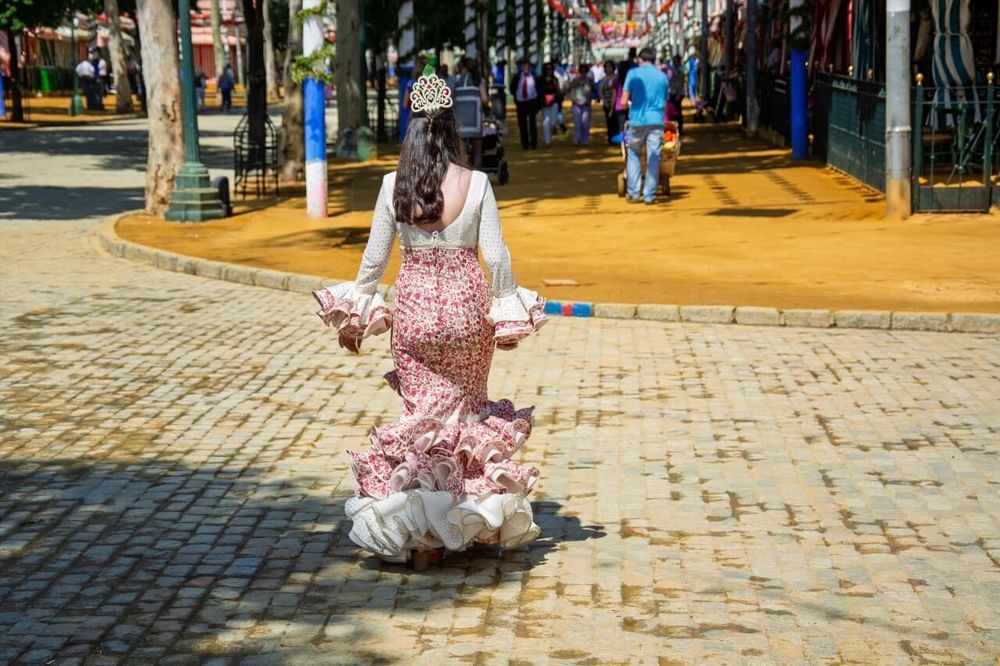
Women who wish to wear a flamenca dress will find specialist shops throughout the centre of Córdoba, with rental options at reasonable prices (between 40 and 80 euros for the week). The ruffled dress is worn with block-heeled shoes or wedges — never stilettos, as the lanes of the recinto are either packed earth or gravel.
For men, the full traje corto (short jacket, high-waisted checked trousers, cordobés hat, and boots) is the most festive option. A classic white shirt with dark trousers works just as well in the feria atmosphere. The key is to avoid shorts and beach sandals, which stand out noticeably against the polished feel of the event.
Eating, Drinking, and Dancing Until Dawn
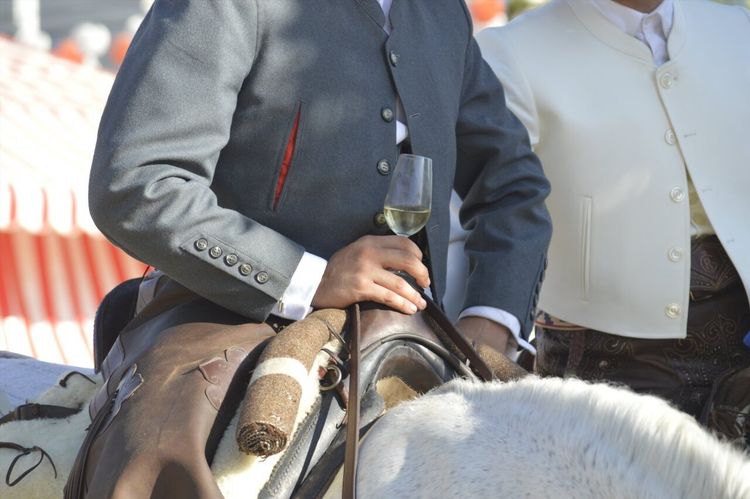
Rebujito is the emblematic drink of the Andalusian ferias: manzanilla (dry white wine from the Jerez region) mixed with sparkling lemonade, served over ice with a few fresh mint leaves. In Córdoba, it is served in large pitchers shared among friends, placed in the centre of the table. Light in appearance (around five percent alcohol), it goes down easily over several hours — be mindful of the quantities.
On the food side, the casetas serve classic tapas: pescaíto frito (small fried fish served in a paper cone), jamón ibérico, tortilla española, and gambas al ajillo. Prices are fair in the municipal casetas and more variable elsewhere. Street food stalls are also available along the main lanes for a quick bite between dances.
For lunch, avoid restaurants directly on the recinto, which tend to be crowded and overpriced. Instead, head to the bars of the Judería or the historic centre, a ten-minute walk away, where you will find set lunch menus with a starter, main course, dessert, and drink for 10 to 14 euros.
At night, the feria does not wind down before dawn. After 2am, the most popular casetas are in full swing and the sevillanas play without pause. If you want to dance without knowing the steps, stand at the edge of the dance floor and watch for a few minutes before joining in. The people of Córdoba appreciate genuine attempts.
May in Córdoba: A Full Month of Festivities
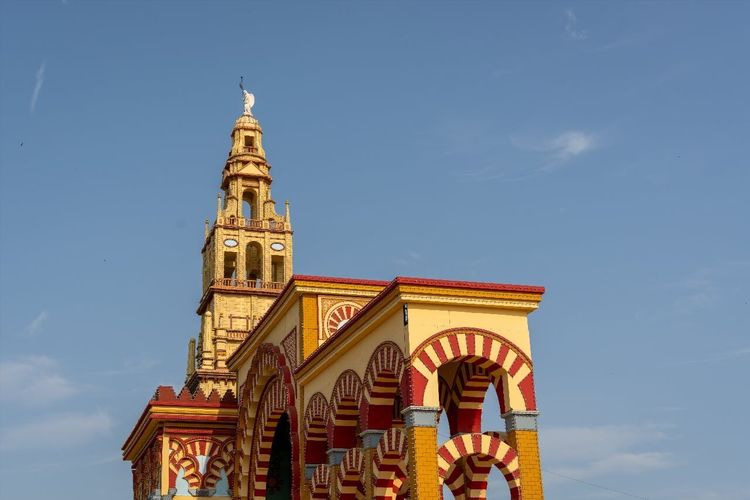
The Féria de Mayo is not the only reason to visit Córdoba in spring. May is by far the most festive month of the year in this city, and the two events that precede the feria are equally worth the trip.
The Festival de los Patios (Córdoba Patio Competition) generally takes place in the first half of May. Dozens of private homes in the historic centre, particularly in the Judería and San Basilio neighbourhoods, open their interior patios — decorated with flowers and climbing plants — for entirely free visits. This tradition, listed as UNESCO Intangible Cultural Heritage, is one of the most authentic experiences you can have in Córdoba.
The Cruces de Mayo also precede the feria: monumental flower crosses are erected in the streets and squares of the city, accompanied by small neighbourhood celebrations with live music and drinks. It is a more intimate moment than the feria, where the people of Córdoba gather with their neighbours and visitors are naturally welcomed into the fold.
If you are planning a trip to attend the Córdoba Feria in Andalusia, extend your visit to cover at least two to three weeks of May. The city is never more alive than during this time of year, and the short version of our audio walking tour covers the centre in 17 stops if you only have a morning.
How to Get to the Recinto Ferial
The recinto ferial is approximately 2 km from the historic centre of Córdoba. Several transport options are available depending on the time of day and your starting point.
On foot: from the Mezquita, allow 25 to 30 minutes on foot, following the Guadalquivir north-west. The walk is pleasant in the evening, but can prove tiring if you are wearing a flamenca and heeled shoes.
Feria bus: the Córdoba city hall runs special shuttle services throughout the duration of the feria, connecting the centre and several neighbourhoods to the recinto. The fare is nominal (generally 1 to 2 euros one way). Check the route map published each year by the Ayuntamiento de Córdoba from the start of May.
Taxi and ride-hailing: readily available until around 11pm. After midnight, demand surges and wait times increase considerably. Plan your return journey in advance or be prepared to walk.
Personal car: strongly discouraged during the feria. Parking in and around the recinto is virtually impossible, and access roads are often controlled by the local police throughout the event.
Where to Stay During the Feria
Book your accommodation in Córdoba several months in advance if you want to attend the feria. Hotels and guesthouses in the historic centre fill up by January or February for the nights of the last week of May. Rates generally rise by 40 to 100 percent compared to standard low-season prices.
The best area to stay remains the historic centre, around the Mezquita and the Judería: you can walk back from the recinto and you are ideally placed for sightseeing. The Ciudad Jardín neighbourhood and addresses near the Renfe station are solid alternatives with good feria bus connections.
If you arrive too late to find accommodation in Córdoba at a reasonable price, nearby towns — Écija (80 km away) or Montoro (45 km) — offer more affordable options, provided you have a vehicle. For flexible travellers, a day trip from Seville (45 minutes by AVE) or from Malaga (1 hour by AVE) is also a viable option, as long as you head back before 10pm–11pm.
Exploring Córdoba Before or After the Feria
Córdoba is well worth a stay of several days. While the feria is the highlight of May, the city possesses a historical heritage of rare richness in Europe, and the concentration of monuments within such a small perimeter is hard to match.
The Mezquita-Catedral de Córdoba is the city's most breathtaking building: a forest of bicoloured jasper and marble columns beneath a Renaissance cathedral built within it in the sixteenth century. Book tickets online well in advance, especially in May when demand is at its peak.
The Alcázar de los Reyes Cristianos (Campo Santo de los Mártires, 14004 Córdoba, rated 4.5/5 on Google with 36,173 reviews) — the former residence of the Catholic Monarchs, including Isabella of Castile and Ferdinand of Aragon — and its terraced gardens with fountains and cypress trees offer a verdant counterpoint to the stonework of the Mezquita.
The Judería, Córdoba's former Jewish quarter, is a maze of whitewashed lanes and flower-filled patios best explored without a fixed itinerary. The Córdoba Synagogue, built in 1315, is one of only three medieval synagogues still standing in Spain — a place many visitors stumble upon by chance while getting lost in the streets.
To discover Córdoba at your own pace with detailed commentary on each site and its history, the Ryo audio-guided tour of Córdoba takes you across 8.2 km through 23 points of interest, roughly 3 hours and 30 minutes of discovery. The layering of Roman, Muslim, Jewish, and Christian cultures that makes Córdoba one of Europe's most singular cities comes fully to life with the commentary in our Ryo app, available offline for the narrow lanes where mobile signal is often unreliable.
FAQ
When does the Córdoba Feria take place in 2026?
The Córdoba Feria 2026 takes place during the last week of May, from 22 to 30 May. The official dates are confirmed by the Córdoba city hall (Ayuntamiento de Córdoba), generally at the beginning of the year. Check the definitive calendar on the municipal website before booking your train tickets or accommodation, as dates may vary by a few days from year to year.
Is entry to the Córdoba Feria free?
Yes, access to the recinto ferial is entirely free to stroll along the lanes and enter the municipal casetas. Only the bullfighting shows at the Plaza de Toros de Los Califas are ticketed, with prices ranging from 20 to 150 euros depending on the category and the cartel on display. Some equestrian shows on the fringes of the feria may also be ticketed; check with the local tourist office for details.
Is it mandatory to wear a flamenca dress to attend the Feria?
No, there is no dress requirement to enter the recinto ferial. Many foreign visitors come in casual clothing without any issue. That said, wearing a flamenca or a traje corto enriches the experience and makes it easier to connect with locals. Rental shops are available throughout the centre of Córdoba, with prices ranging from 40 to 80 euros for the week.
What is the difference between private casetas and municipal casetas?
Private casetas belong to clubs, associations, or local families and are accessible by invitation only. Municipal casetas, managed by the Córdoba city hall, are open free of charge to all visitors without exception. These are the best options for tourists who want to dance sevillanas, drink rebujito, and experience the atmosphere from the inside without any local connections.
How do you get to Córdoba from Seville or Malaga?
From Seville, the AVE high-speed train takes around 45 minutes (from 17 euros depending on the ticket and time of travel). From Malaga, allow 1 hour by AVE (from 20 euros). Córdoba station is a 15-minute walk from the historic centre, or easily accessible by bus. Avoid driving during the feria at all costs: parking in and around the recinto and city centre is virtually impossible.
Can you travel to other cities in Andalusia from Córdoba?
Yes. Córdoba is ideally situated at the geographical heart of Andalusia for day trips to Seville, Malaga, or Granada by AVE. If you want to explore the region in a structured way, the Ryo road trip Andalusia offers a complete itinerary through the main Andalusian stops with audio guides for each city. The immediate surroundings of Córdoba are also worth exploring: check out the Ryo guide to 6 villages to discover around Córdoba to round off your stay with the area's hidden gems.
Conclusion
The Córdoba Feria is not a tourist spectacle to observe from a distance, camera in hand. It is an open-air celebration where the people of Córdoba dance, drink, and revel for an entire week in an atmosphere unlike anything else in Europe — and where visitors who arrive with an open mind are always made to feel welcome. Come with curiosity, a rented flamenca if the mood takes you, and plenty of energy to last until dawn.
If you are spending several days in Córdoba for the feria, take the opportunity to discover the rest of this exceptional city. Our Córdoba audio-guided tour awaits with 24 commented stops through two thousand years of history — the Mezquita, the Judería, the Alcázar, and the flower-filled patios that make Córdoba one of the most fascinating cities in the Mediterranean world.