© Shutterstock
 Votre guide Ryo
Visiting La Orotava Solo in 2026: Itineraries, Hidden Spots and Practical Tips
Visiting La Orotava solo means enjoying a luxury few Tenerife towns still offer: nearly empty cobbled lanes before 10:30 am, before the excursion coaches coming up from the coast flood the center. At 8:30 am, the Plaza de la Constitución still belongs to the cats and the municipal workers watering the bougainvilleas. The Ryo audio-guided tour of La Orotava starts right here, headphones on, with nobody to wait for or follow.
La Orotava is often associated only with Corpus Christi, the June festival when carpets of flowers and volcanic sand cover the streets for a few hours before disappearing under the steps of the processions. But the town is well worth visiting all year round, and even better solo than in a group: gofio mills, three of which are still running, houses with Canarian wooden balconies nearly four centuries old, a Baroque basilica rebuilt after the earthquakes of 1704-1705, a botanical garden from 1788 hidden behind the town hall, and two official walking routes from the tourist office that let you see everything without booking a guide. Enough to fill two to three full days, excursions to Teide or Masca included.
Plaza de la Constitución and the Historic Center of La Orotava
Plaza de la Constitución, the First Stop in Town
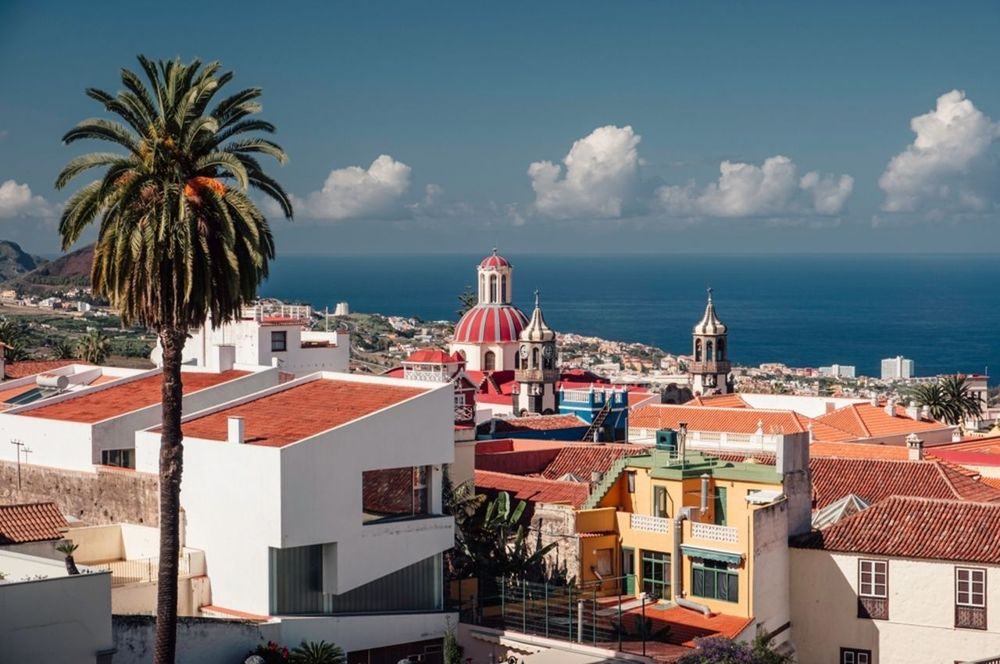
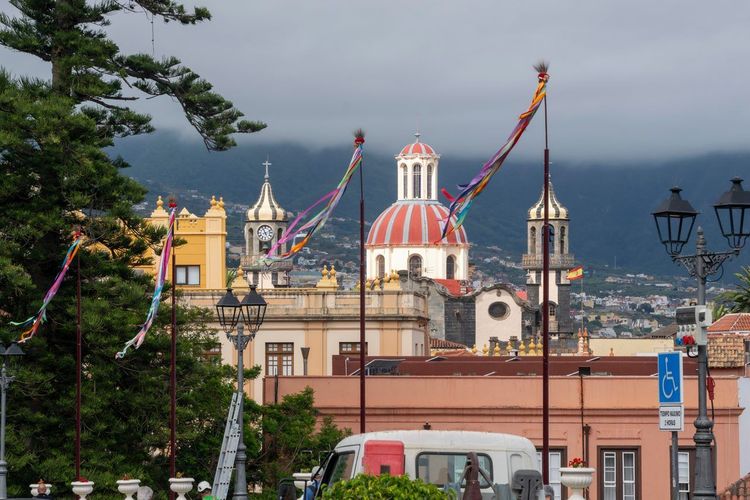
Most visitors set foot in La Orotava directly on this square, and it's no accident: it is the town's great balcony. On one side, the San Agustín church, the former conventual church of the Augustinians; on the other, the white facade of the Liceo de Taoro overlooking the square from its terraces. From the balustrade, your gaze sweeps over the whole valley down to the Atlantic and, on a clear day, up to the summit of Teide behind you.
The square itself is planted with Indian laurel trees whose foliage forms an almost continuous green ceiling, one of the few places in the center where you can find shade in the middle of the day. Before 10 am, you'll mostly meet locals reading the newspaper on a bench rather than tourists. Sitting here for five minutes, with no goal other than letting the town wake up, completely changes how you approach the rest of the visit.
La Orotava Town Hall and Its Iconic Sloping Street
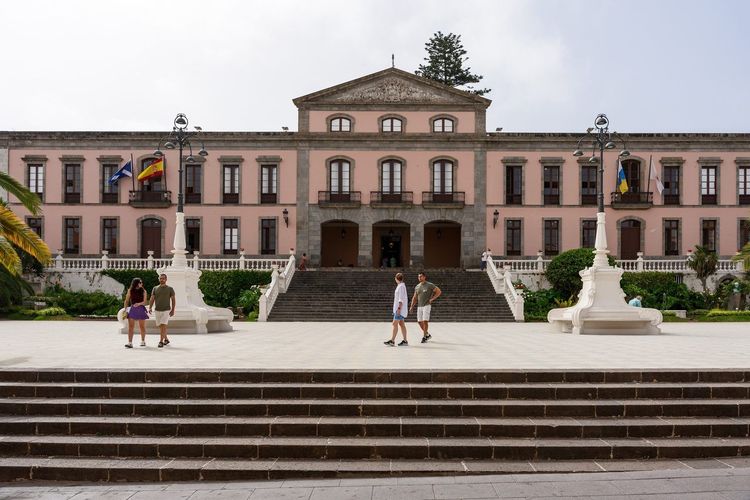
A few minutes' walk away, La Orotava's municipal palace has a neoclassical facade from the late 19th century. Every year, for the octave of Corpus Christi, the square in front of it hosts the town's largest ephemeral carpet, made of volcanic earth and sand.
Around the square, the streets plunging steeply toward the lower part of town offer one of La Orotava's most reproduced postcard views: white facades, dark wooden balconies and, in the distance, the Atlantic. Get your calves ready for the climb back up. This is also where the Ryo audio guide tells, in a few minutes of listening, the story of the square before you start the descent toward the rest of the historic center. No need to book a time slot or wait for a group: you press play and walk at your own pace.
Casa de los Balcones and Casa Lercaro, the Balconied Houses
The Casa de los Balcones and its neighbor across the way, the Casa del Turista, face each other on Calle San Francisco, and it is precisely this face-to-face that makes it the most photographed stop in the historic center.
The Casa de los Balcones, built in 1632, owes its name to its immense galleries of tea wood (the resinous heart of the Canary pine), carved and set on the facade like loggias. The inner courtyard, with its well and dark wooden galleries, houses a workshop and shop for embroidery and lace where you can still see artisans at work.
Opposite, the Casa del Turista, even older (late 16th century), uses the same vocabulary of wooden balconies and offers, on the garden side, a terrace with a view over the valley. A small Teide sand carpet is often on display, giving a glimpse of the Corpus Christi technique even out of season.
A few streets further on, at number 7 Calle Colegio, the Casa Lercaro (Calle Colegio 7, 38300 La Orotava, rated 4.6/5 on Google from 986 reviews) completes this trio of noble residences. This manor house with Baroque elements, listed as a Site of Cultural Interest in 2004, belonged to major families of the local aristocracy. Its galleried courtyard, converted into a café-restaurant, is one of the most pleasant spots in the center for a break alone with a book.
The Ryo audio-guided tour stops in front of these facades and explains the work of the Canarian carpenters, a detail that is easy to miss if you simply photograph from the street. Allow half an hour for the three houses if you travel at your own pace.
The Liceo de Taoro and the Gardens of La Orotava
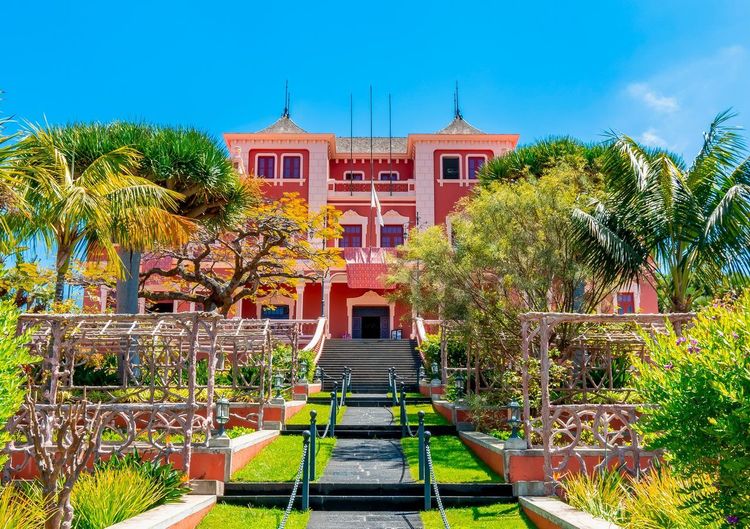
The Liceo de Taoro, a Former Casino with Colonial Architecture
Above the Plaza de la Constitución, the Liceo de Taoro surprises with its white, colonial-inspired architecture set amid terraced gardens. A social club for the great landowning families, in the manner of Spanish "casinos", the building remains an active cultural center: temporary exhibitions, concerts, and gardens that descend toward the valley, often open during the day.
Victoria Gardens and the Hijuela del Botánico Garden
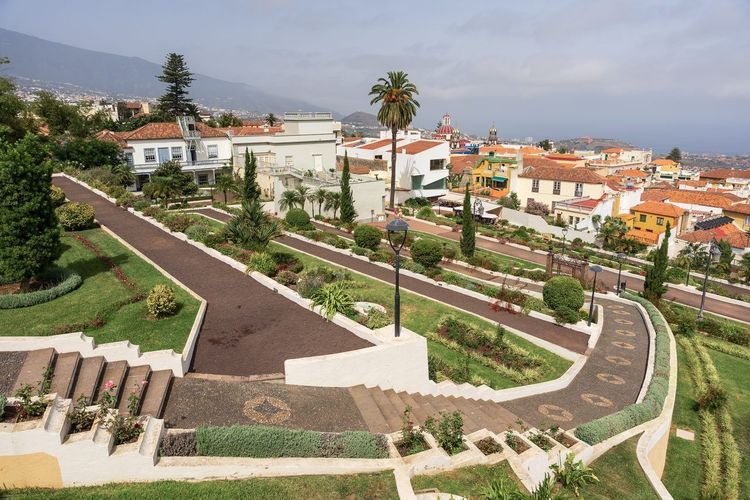
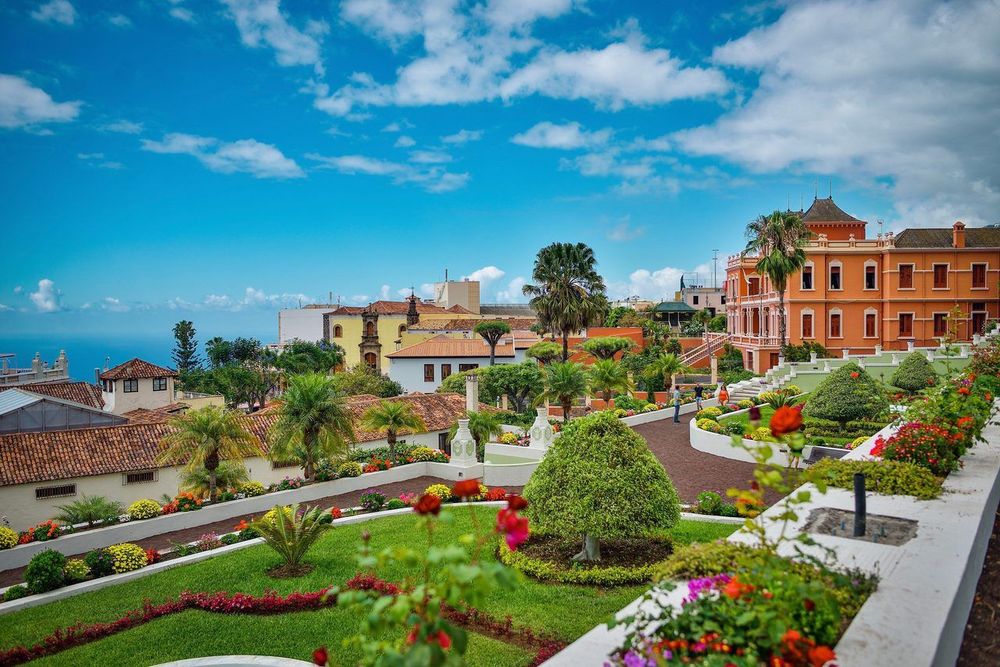
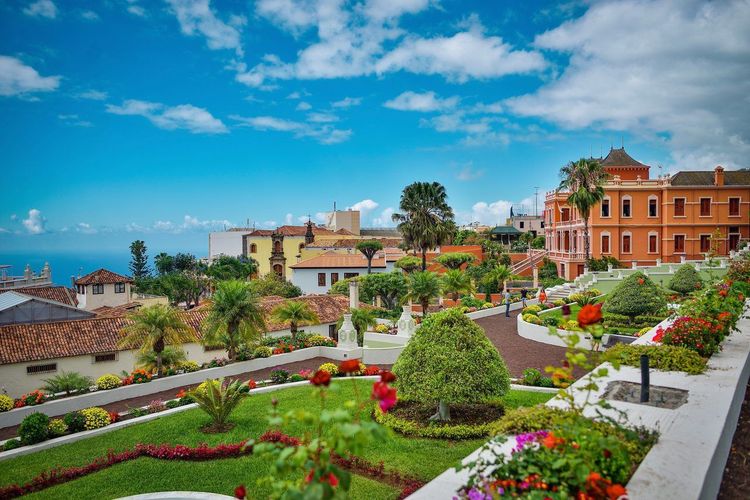
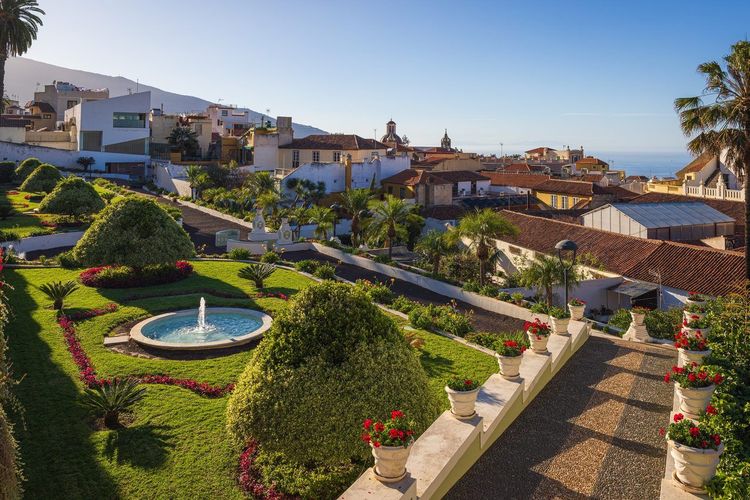
On the way back down to the center, two gardens can be visited in one to two hours. The Jardín Victoria (or gardens of the Marquesado de la Quinta Roja) plays on levels and stone terraces, with its French-style flowerbeds and its unfinished white marble mausoleum, to offer an open view over the rooftops of the historic center: a quick stop, perfect for a photo break.
The Jardín Hijuela del Botánico (Calle Tomás Pérez 7, 38300 La Orotava, rated 4.6/5 on Google from 673 reviews), just behind the town hall, deserves a longer stay. Created in 1788 by the Marquis of Villanueva del Prado, it is an offshoot of the Acclimatization Garden of La Orotava (the botanical garden of Puerto de la Cruz), designed to acclimatize tropical species before their shipment to Europe. Over 3,390 m², you'll find centuries-old trees, palms, cycads and a few rare species that even regular visitors to the Canary Islands have never seen elsewhere. Settle on a shaded bench: it's not unusual to spend half an hour there meeting only two or three other visitors, even in high season.
The Church of Our Lady of the Conception and the Dragon Tree, Symbols of the Town
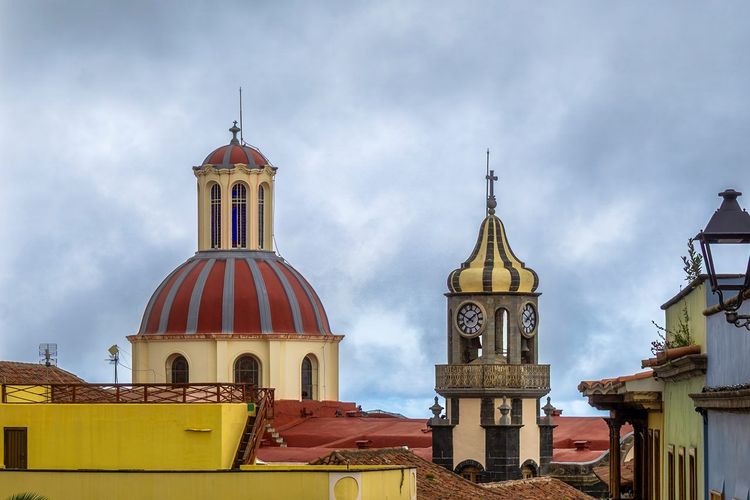
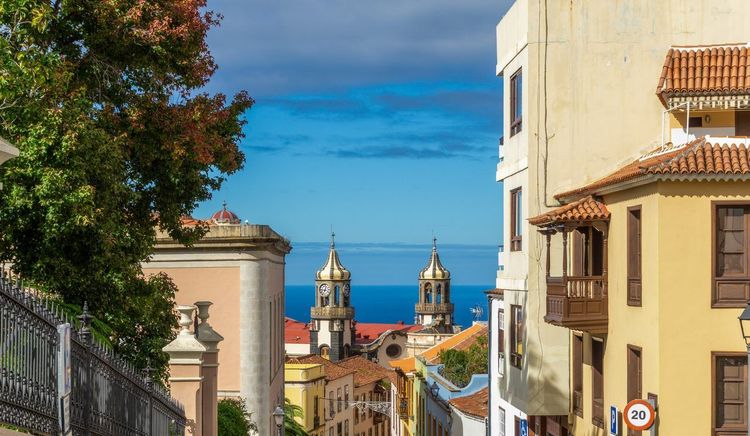
The Iglesia de Nuestra Señora de la Concepción (Plaza Casañas, 38300 La Orotava, rated 4.6/5 on Google from 875 reviews) dominates the historic center with its two towers and its dome. The previous building having been ruined by the earthquakes linked to the eruptions of 1704-1705, the current church was built in the second half of the 18th century, and it is considered one of the finest examples of Canarian Baroque. Inside, look up at the marble high altar and the gilded altarpieces: the visit takes a quarter of an hour, ideally late in the morning, when light enters through the dome.
The town's other symbol is a plant. In the Hijuela del Botánico, a few minutes from the church, a dragon tree (Dracaena draco) is a reminder that the emblematic tree of the Canary Islands isn't found only in Icod de los Vinos. Less spectacular than its famous thousand-year-old cousin, it has the advantage of being seen without an entry ticket or a queue.
Crafts and Traditions: Ibero-American Museum and Gofio Mill
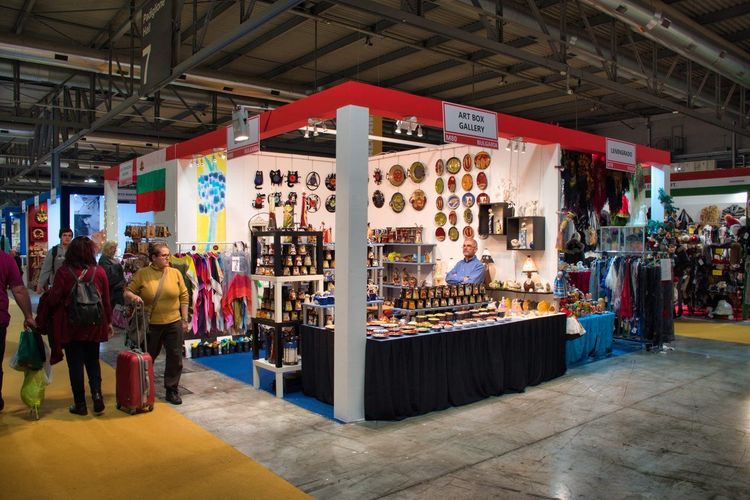
The Ibero-American Crafts Museum of Tenerife
Housed in a former convent in the historic center, the Museo de Artesanía Iberoamericana (MAIT) tells a piece of history rarely covered elsewhere on Tenerife: the ties woven between the Canary Islands and Latin America through centuries of emigration and trade. Textiles, ceramics, musical instruments and Canarian handcrafted pieces are displayed side by side, with labels clear enough for a self-guided visit.
The Gofio Mill, a Living Canarian Tradition
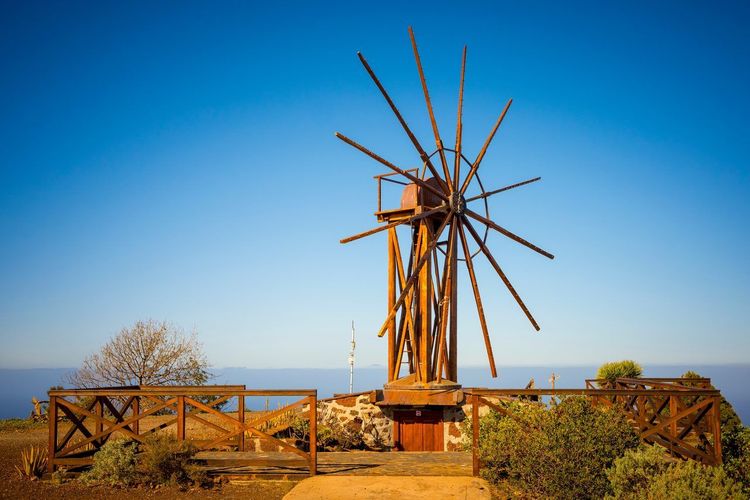
La Orotava once had as many as thirteen water mills lined up along the slope, fed by canals coming down from the mountain. Ten are still standing, and three continue to grind the toasted grain that makes gofio, the essential flour of Canarian cuisine. You can usually buy a small bag on site, an edible souvenir far more original than a fridge magnet.
If you're to keep only one food souvenir from La Orotava, this is probably it: unlike the packaged products sold in the tourist areas of the south of the island, this gofio is ground on site, amid the smell of roasted grain that fills the street.
Corpus Christi and the Flower Carpets, La Orotava's Unmissable Festival
The Corpus Christi of La Orotava remains one of the most spectacular events in the Canary Islands, and yet one of the least well explained in French. Every year, for the octave of Corpus, between late May and June depending on the liturgical calendar, residents cover the streets of the center with ephemeral carpets made of flower petals, heather and seeds.
The most famous carpet, the one on the town hall square, is of a different nature: it is made entirely of volcanic earth and sand taken from the Cañadas del Teide, whose natural shades range from deep black to ochre red. Its motifs often reproduce biblical scenes or masterpiece paintings. The artisans work for days, kneeling on the ground, so that the work is finished in time. Then the procession crosses it and erases it: the whole thing survives only a few hours.
Your stay doesn't fall on these dates? All is not lost. The Ryo audio-guided tour tells this tradition at the relevant stops in the historic center, which lets you visualize the scale of the carpet even outside the festival period. You'll come away with a much finer understanding of what it means to the locals than from seeing it on a postcard.
Official Walking Routes: the Secret Circuit and the Legendary Circuit
The La Orotava tourist office offers an official audio guide, VisitLaOrotava, structured into two distinct routes, free to download and designed for a completely independent visit.
The Blue Circuit, Secret La Orotava
The blue route, dubbed "Secret La Orotava", lingers in the least-visited corners of the center: discreet inner courtyards, side streets, architectural details that you miss when following only the classic tourist arrows. Allow about an hour to complete it in full, without rushing.
The Green Circuit, Legendary La Orotava
The green route, "Legendary La Orotava", favors instead the must-see monuments already mentioned above, with a narrative thread centered on local legends and the history of the great families who shaped the town. Comparable duration, about an hour as well.
These two official circuits cover the area well, but a good part of their detailed content remains in Spanish, which can hold back a French-speaking visitor who wants to understand everything without juggling translation and listening. That's where the Ryo audio-guided sub-route Authenticity on the Mountainside finds its place: 16 audios in French, about 1 hour of listening for 2.5 km covered, a format close to the official routes but designed to help you understand each place without relying on a guide or an approximate translation.
North or South: Where to Base Your Stay in Tenerife to Visit La Orotava
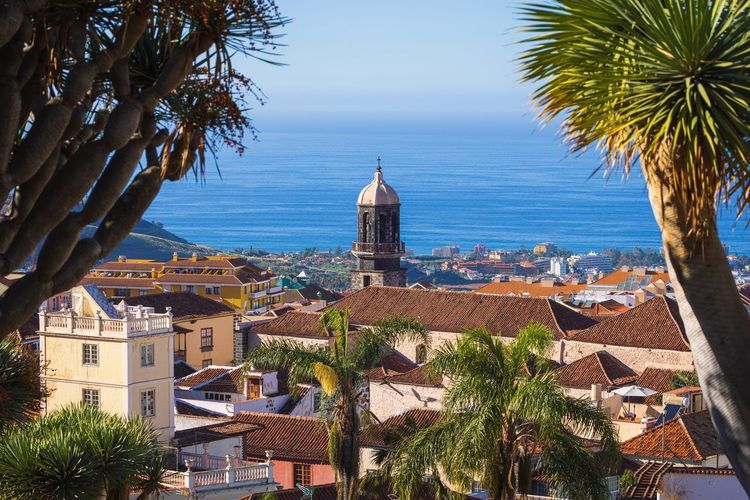
La Orotava is located in the north of Tenerife, and this simple positioning changes a lot for a solo trip. The north, greener and cooler, concentrates the island's historical heritage: La Orotava, Puerto de la Cruz, Garachico, La Laguna. The south, around Costa Adeje and Los Cristianos, banks on near-guaranteed sun, developed beaches and a much livelier nightlife, with a strong concentration of solo travelers and backpackers.
If your priority is La Orotava and its heritage, base yourself in the north, ideally in Puerto de la Cruz or right in town. If you're combining this visit with a beach-and-nightlife stay, plan a day trip from the south: the drive takes a little under an hour, longer by bus.
Where to Stay in La Orotava When Traveling Solo
La Orotava doesn't have an accommodation offering as dense as its neighbor Puerto de la Cruz, but what exists is almost entirely concentrated in or around the historic center, within walking distance of all the places mentioned above. Casas rurales and small guesthouses set up in old Canarian mansions dominate the offering, often run by families who know every corner of the town.
For a solo trip, this format has a real advantage: hosts often act as local informants, far more useful than a standardized hotel reception. Expect to pay between 45 and 80 euros a night for a double room used as a single in these places.
If you're looking for more social life among solo travelers, Puerto de la Cruz, fifteen minutes away by bus, has most of the hostels with an international atmosphere in the north of the island, with dorms at around 18 to 28 euros a night. Many solo travelers choose to sleep there and visit La Orotava as a day trip.
Where to Eat in La Orotava
The historic center has several traditional restaurants serving unpretentious Canarian cuisine: papas arrugadas with mojo, conejo en salmorejo (marinated rabbit) and croquettes appear on almost every menu.
For an even more local experience, look for a guachinche in the heights of the municipality, toward La Perdoma or Benijos. These informal restaurants, often set up in a garage or a family cellar, serve the year's wine produced on site with simple, generous dishes, at prices well below those of the town center. A full meal with wine rarely costs more than 15 euros.
Eating alone in a guachinche is nothing unusual: tables are easily shared among strangers when the place is full, and it's often there that the best impromptu conversations of a solo trip begin.
How to Get to La Orotava and Get Around Without a Car

Tenerife's two airports serve the region, but not at equal distances. Tenerife North (Los Rodeos), about twenty minutes by road from La Orotava, mainly handles domestic flights and a few European connections. Tenerife South (Reina Sofía), which handles most direct flights from France, is about an hour away depending on traffic.
From either airport, TITSA buses (the island's company) run to Puerto de la Cruz, where a connection takes you to La Orotava in about ten more minutes. The whole airport-to-town trip rarely costs more than 10 euros by bus.
Once there, La Orotava can be visited entirely on foot: the historic center fits within a radius of about 800 meters, and the elevation change, quite real between the top and bottom of town, remains manageable with good shoes. A car is mainly useful for the excursions described below, to Masca or Teide, where buses exist but involve many connections. Many solo travelers rent a vehicle for just two or three days, for the excursions, and get around on foot or by bus for the rest of the stay.
Safety, Meeting People and Social Life: Traveling Solo in La Orotava
Safety: Without Alarmism, but Without Naivety
La Orotava remains a quiet town, largely spared the petty crime that sometimes affects the very touristy areas in the south of the island. The streets of the historic center can be walked without worry both by day and in the evening, and there is objectively no reason to be alarmed about visiting alone, including for a woman traveling without a companion.
A few precautions remain common sense: avoid isolated trails late in the day without company, keep an eye on your belongings on crowded buses, and always tell someone your route before a solo hike toward Teide or Teno. At altitude, the weather changes quickly: bring a warm layer even in summer.
Meeting People, or Not
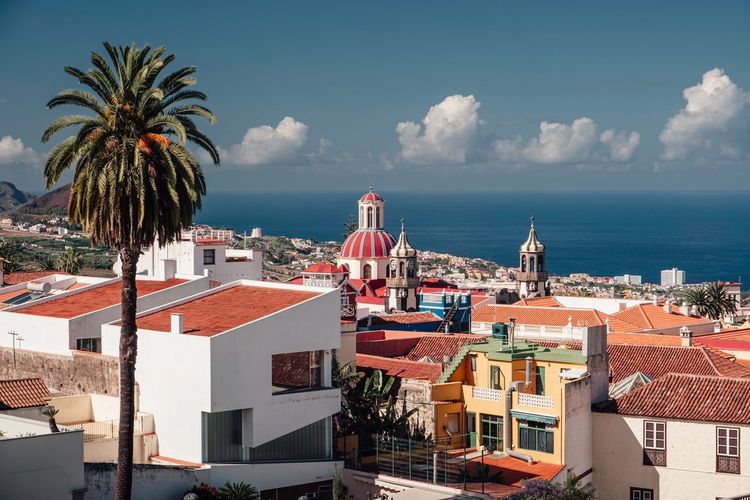
La Orotava isn't designed for socializing among travelers: it's a town where residents live their daily lives, not a backpacker hub. If you want to exchange with other travelers, the hostels in Puerto de la Cruz, organized excursions to Masca or Teide and the tapas bars in the center in the evening remain your best options. Conversely, if you're looking for a quiet interlude in your solo trip, La Orotava's calm becomes a real asset.
What You Do Really Well Solo in Tenerife
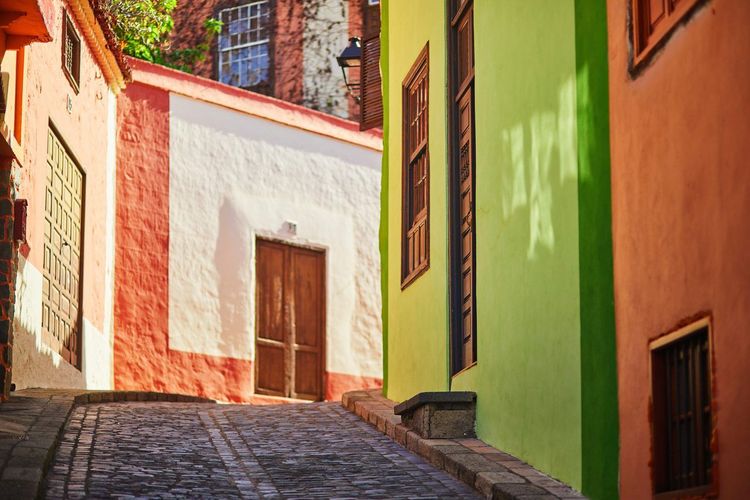
Following a structured visit is reassuring when exploring alone lanes that follow no grid: no more need to improvise a route on the fly or rely on a paper map. With its 16 audio stops over 2.5 km, the Ryo audio guide marks out a complete visit of the historic center without ever imposing a group's pace, and you can pause it for a coffee on a terrace.
Day excursions to Teide, Masca or Garachico also suit solo travel very well: minibuses shared with other travelers, local guides who know the best viewpoints, and no need to sync your schedule with a partner. It's often on these group outings, more than on city visits, that the encounters of a solo stay in Tenerife happen.
Budget: What a Solo Trip to La Orotava Costs
For a five-to-seven-day stay in La Orotava and its surroundings, traveling solo without needlessly cutting corners, expect a realistic total budget between 600 and 950 euros all-inclusive.
The flight from France is the most variable item: between 90 and 280 euros round trip depending on the season and how far ahead you book. Accommodation in a casa rural or single room runs around 50 to 70 euros a night, versus 20 to 30 euros in a hostel in Puerto de la Cruz. For food, 20 to 30 euros a day is plenty when mixing guachinches and restaurants in the center.
Excursions weigh most on the overall bill: the Teide cable car costs about 40 to 45 euros round trip for a non-resident (online booking recommended), access to the Masca trail is paid and subject to reservation, and renting a car for two or three days adds roughly 60 to 100 euros. The good news: strolling through the center, the gardens, the churches and the official routes cost nothing.
When to Go: the Best Time to Visit La Orotava Solo
La Orotava's climate stays mild all year round, with temperatures generally between 15 and 25 degrees, but northern Tenerife gets more clouds and rain than the south. This is the panza de burro (the "donkey's belly"), the cloud layer carried by the trade winds that often stagnates on the northern slopes.
Spring, from March to May, offers the best compromise between clear skies and pleasant coolness for walking in the gardens and on the surrounding trails. If your stay can coincide with late May or June, aim for the dates of Corpus Christi: it is the most spectacular time to discover the town, provided you accept a much higher crowd for a few days.
Around La Orotava: Must-Do Excursions

Teide, Teno, Masca and Los Gigantes: Nature, Volcano and Cliffs
The Parque Nacional del Teide, a UNESCO World Heritage Site since 2007, peaks at 3,715 meters. Its cable car goes up to La Rambleta, at 3,555 meters, and the departure station is about an hour's drive from La Orotava. The lunar landscapes around the volcano, with solidified lava flows and ochre-hued rocks, have little in common with the green valley you just left.
To the west, the Parque Rural de Teno and the village of Masca, perched above a deep barranco, make up one of the most photographed excursions on the island. The descent of the Barranco de Masca to the sea is no longer freely accessible: it requires advance booking, with a paid access fee, and the trail closes occasionally for safety reasons. Check its status before leaving, and favor a guided outing if you don't want to venture alone into an isolated canyon.
On the way back down to the coast, the cliffs of Los Gigantes, several hundred meters high, are sailed along by boat during dolphin and pilot whale watching excursions, an activity easily booked solo with small operators from the harbor.
Puerto de la Cruz, Garachico, La Laguna and Santa Cruz: the Neighboring Towns
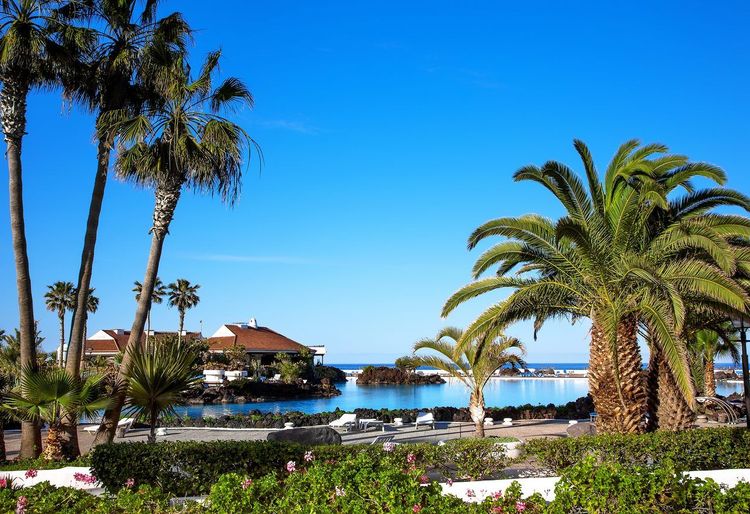
Puerto de la Cruz, only fifteen minutes by bus, combines a developed seafront, the Lago Martiánez pools designed by César Manrique, and a much more international atmosphere than La Orotava. It's the easiest excursion to improvise without a car.
Further west, Garachico was rebuilt after the eruption of 1706, whose lava flow filled its old harbor. These same rocks formed the natural pools of El Caletón, one of the most popular stops for a sea swim.
In the opposite direction, to the east, San Cristóbal de La Laguna, the island's former capital and a UNESCO-listed university town, charms with its gridded colonial center and its student buzz, a total contrast with the calm of La Orotava. Santa Cruz de Tenerife (Santa Cruz de Tenerife, Tenerife, rated 4.5/5 on Google from 11K reviews), the current capital, completes this list with its auditorium designed by Santiago Calatrava and its Nuestra Señora de África market, about forty minutes away by road.
To prioritize these outings according to the time you have, our selection of the activities not to miss in La Orotava makes a good complement.



FAQ
How long should I plan to visit La Orotava solo?
One to two days are enough for the historic center, the gardens and the balconied houses without rushing. Allow three to five additional days if you include excursions to Teide, Masca and the neighboring towns.
Is it safe to visit La Orotava alone, especially for a woman traveling solo?
Yes, La Orotava is a quiet town where the risk of crime remains very low, both during the day and in the evening. The precautions to follow are those that apply to any volcanic hiking destination: tell someone your route before an isolated walk, and avoid barranco trails late in the day.
What is the time difference between France and Tenerife?
The Canary Islands are one hour behind mainland France all year round: both territories change their clocks on the same dates.
How long is the direct flight to Tenerife?
A direct flight from Paris or most major French cities takes about 4h15 to 4h30, depending on the departure airport and the winds.
What are the entry requirements for traveling to the Canary Islands from France?
There are no special formalities: the Canary Islands are part of Spain and the European Union. A valid ID card or passport is enough.
What budget should I plan for a solo trip to La Orotava?
Between 600 and 950 euros all-inclusive for five to seven days, flight included, mixing casa rural accommodation with a few paid excursions such as the Teide cable car or the Masca descent.
Is it better to stay in La Orotava or in Puerto de la Cruz?
La Orotava offers more calm and authenticity, but a more limited social life for a solo traveler. Puerto de la Cruz, fifteen minutes away by bus, concentrates the hostels and the international atmosphere, at the cost of a daily trip to reach the historic center.
Solo, but Never Really Alone in La Orotava
What strikes you once the stay is over is how such a small town keeps you captivated for several days without ever feeling repetitive: balconied houses, an 18th-century botanical garden, gofio mills still in operation, and this tradition of sand and flower carpets that few French-language guides explain properly. Add the excursions to Teide, Masca or Garachico, and the solo program easily goes the distance.
If a single piece of advice had to sum up this visit, it would be this: from the Plaza de la Constitución, start the Ryo audio-guided tour of La Orotava and let yourself be guided, one audio after another, with no constraint other than your own pace.