© Shutterstock
 Votre guide Ryo
Visit Las Palmas in 2 Days in 2026: Complete Itinerary through Vegueta, Las Canteras, and the Island Interior
Visiting Las Palmas in 2 days means moving in a single morning from a cathedral begun in 1497 to a three-kilometre urban beach, then climbing the next day to the rim of a volcanic crater twenty minutes from the centre. Nine o'clock on the Plaza de Santa Ana: the sun is already warming Vegueta's cobblestones, the first visitors are seeking shade beneath ochre façades, and the bronze dogs on the square are waiting for their photo. This capital of 380,000 inhabitants, the most populous in the Canary Islands, surprises with the density of what it packs in. The Ryo audio-guided tour of Las Palmas connects its historic neighbourhoods on foot, making it a great starting point for planning your stay.
In 48 hours, you will walk in Christopher Columbus's footsteps at the Casa de Colón, swim sheltered by La Barra — the natural reef that shields Las Canteras beach from Atlantic swells — hike around the Caldera de Bandama, and taste papas arrugadas at the foot of a volcanic-stone church in Arucas. This guide explains how to link these highlights, with the best addresses for eating and sleeping, the ideal season to visit, and practical information useful from the moment you land.
Day 1 (Morning): Vegueta, the Historic Centre of Las Palmas
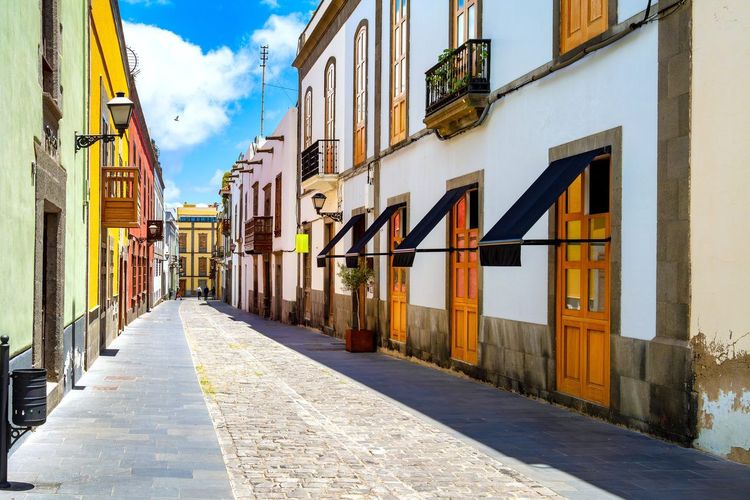
Vegueta is the birthplace of the city: founded in 1478 at the mouth of the Barranco Guiniguada, this neighbourhood has retained its colonial layout, colourful façades, and traditional Canarian wooden balconies. It is the only place in Las Palmas where you can cross four centuries of architecture in less than ten minutes on foot. Arrive early: before 10 a.m., the lanes are almost empty and the low-angle light flatters the stonework.
Santa Ana Cathedral and the House of Christopher Columbus
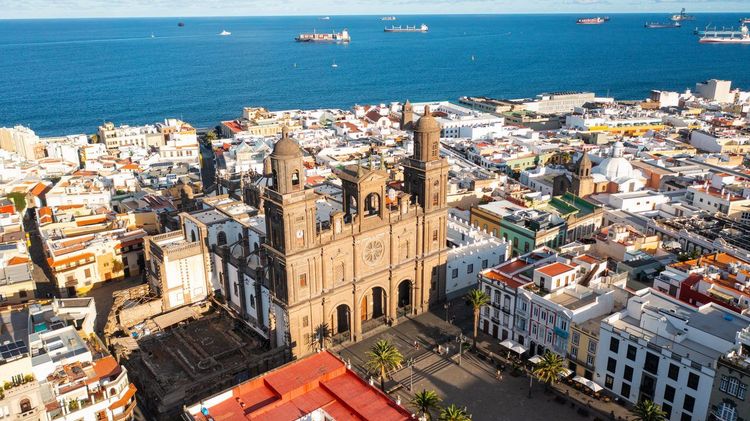
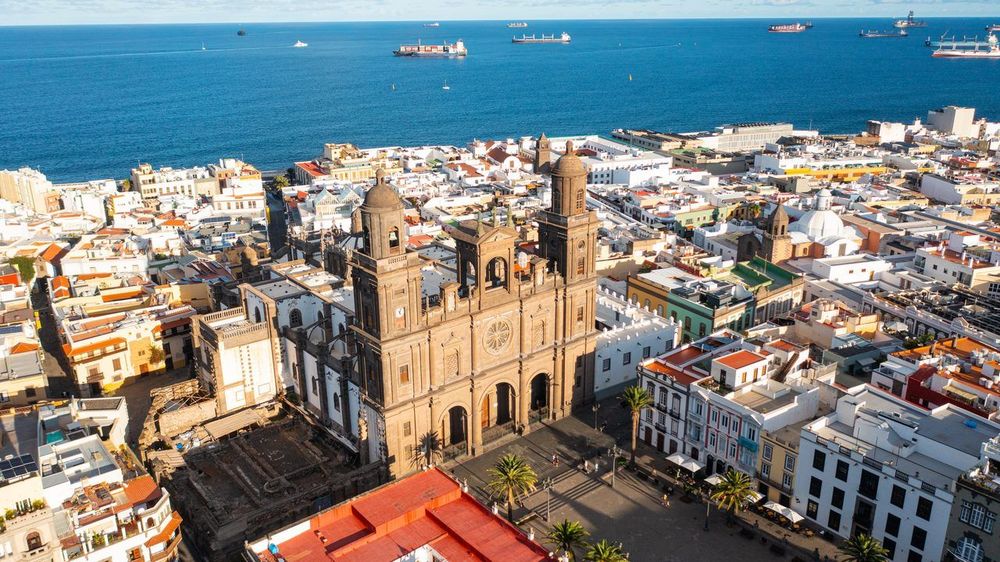
The Santa Ana Cathedral took nearly four hundred years to reach its current form: begun in 1497 in a Gothic style, it was completed over the centuries with Renaissance elements and then a neoclassical façade, resulting in a hybrid silhouette that is quite unique in the Canary Islands. Climb one of its towers (paid lift) for a panoramic view over the rooftops of Vegueta and, on a clear day, over the ocean.
Just steps away, the Casa de Colón incorporates part of the former governor's residence, where Christopher Columbus is said to have stopped in 1492 to have the Pinta repaired before crossing the Atlantic. The museum, opened in 1951, is dedicated to the relationship between the Canary Islands and the Americas, spread across courtyards with wooden balconies that are worth the visit in themselves. Allow 45 minutes for a quick tour.
Museo Canario and the Mercado de Vegueta
The Museo Canario, founded in 1879, holds the largest pre-Hispanic archaeological collection in the Canary Islands: trepanned skulls, pottery, idols, and mummies found in the island's caves. It is a little austere, but essential for understanding that Gran Canaria was home to a civilisation well before the arrival of the Castilians.
A few streets away, opposite the Teatro Pérez Galdós, the Mercado de Vegueta (Plaza del Mercado 1, 35001 Las Palmas de Gran Canaria, rated 4.4/5 on Google with 9,360 reviews) has been operating since 1858, making it the oldest market in the city. Local goat's cheese, homemade mojo, tropical fruits: this is the place to put together a picnic or grab a bite at the counter. To make the most of this maze of lanes, the Ryo audio-guided tour 'An Eternal Spring' connects the cathedral, the Casa de Colón, and the market in 18 audio stops spread over 1h15 and 3.1 km, at your own pace.
Day 1 (Late Morning): Triana, Shopping and Tapas
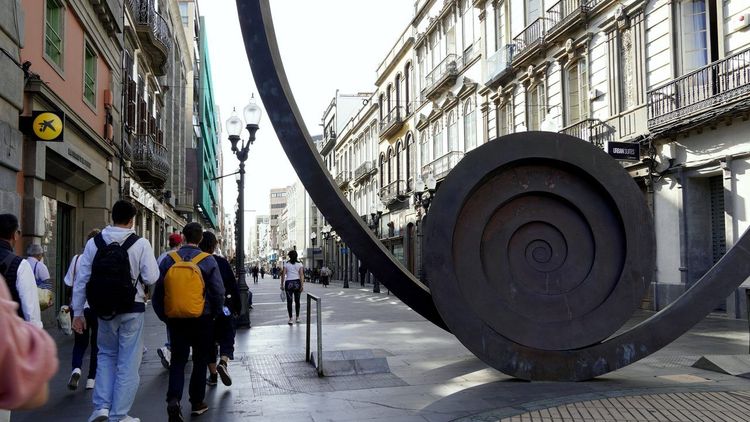
From Vegueta, cross the former bed of the Guiniguada (five minutes on foot) to reach Triana, the central shopping district. The Calle Mayor de Triana (35002 Las Palmas de Gran Canaria, rated 4.3/5 on Google with 39 reviews), a pedestrian street, lines up some of the best-preserved Modernist façades in the Canary Islands: ironwork, stained glass, and balconies dating from the prosperous port era of the early 20th century. Look above the shop windows — that is where the real décor hides.
This is also a good moment for a tapas break. The bars on the side streets serve generous portions of octopus, grilled cheese, or croquettes, with a glass of local wine at a low price. For shopping, you will find more independent shops here than elsewhere in the city, from fashion boutiques to second-hand bookshops. An hour is enough.
Day 1 (Afternoon and Evening): Las Canteras Beach
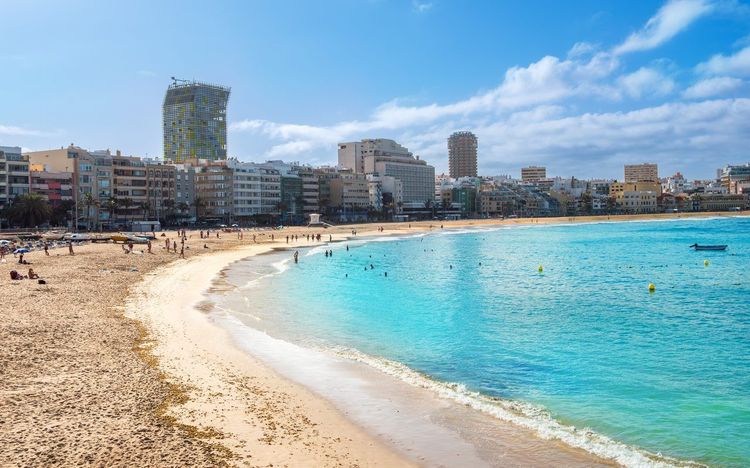
Swimming and Strolling along Las Canteras
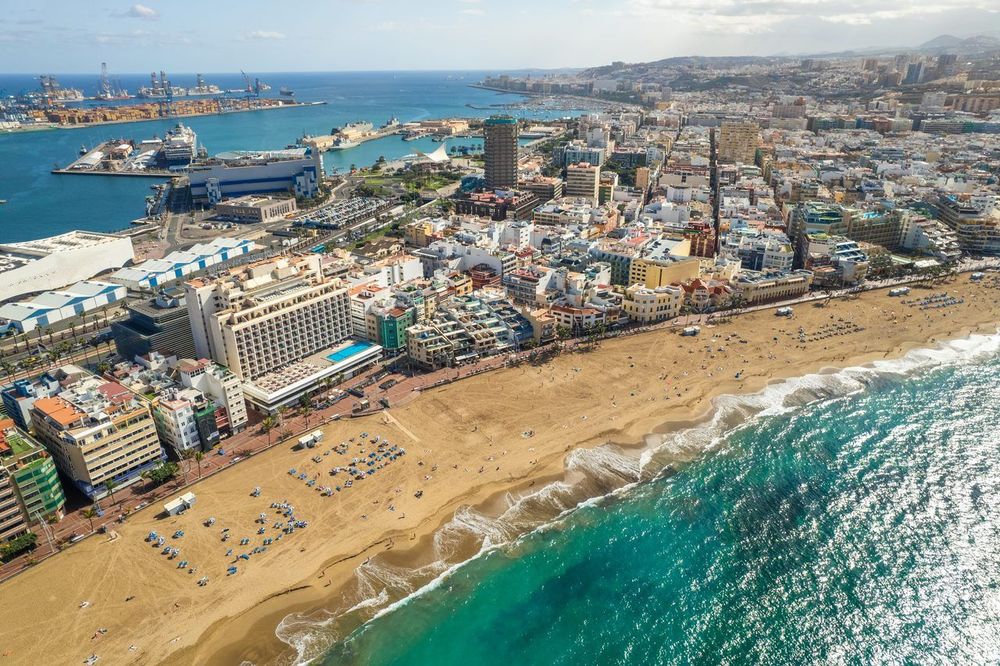
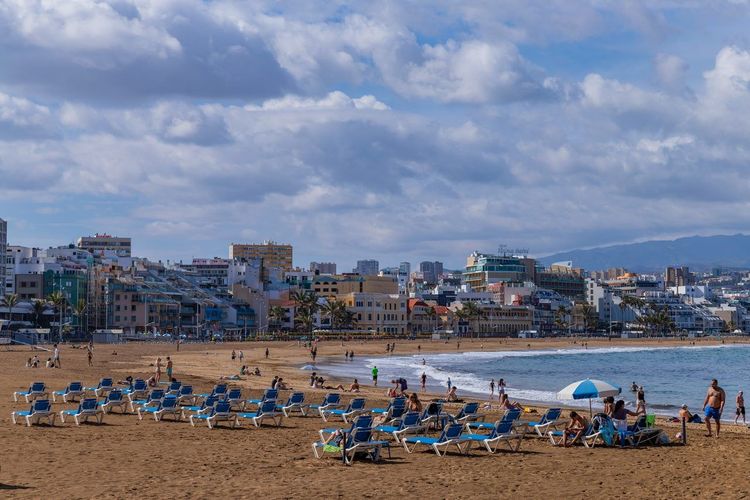
The Las Canteras beach stretches for just over three kilometres right in the city centre — a rare feature for a capital. Its defining characteristic is La Barra, a natural rock barrier that breaks the Atlantic swell and turns the northern section of the beach into a large, calm basin, ideal for swimming or snorkelling even with children. The southern section, around La Cícer, is more exposed and draws surfers.
The promenade running alongside the sand, lined with terraces, is perfect for walking or jogging. You can rent a paddleboard or kayak on site, or simply settle in during the late afternoon when the low light catches the waves. At the southern end, the Alfredo Kraus Auditorium, perched facing the ocean, makes a pleasant goal for a stroll.
Dinner and Sunset in Santa Catalina
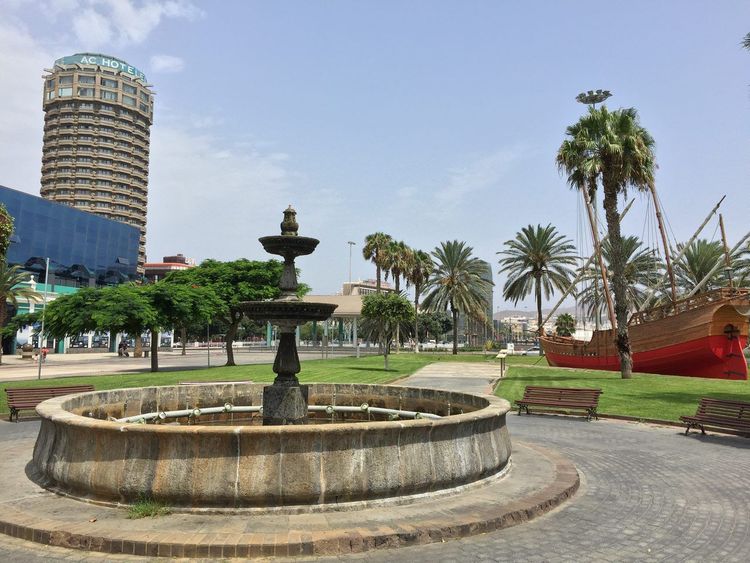
Near the northern end of the beach, the Santa Catalina neighbourhood is packed with lively terraces. The Parque Santa Catalina (35007 Las Palmas de Gran Canaria, rated 4.4/5 on Google with 24,626 reviews), with its kiosks and popular evening atmosphere, serves as a useful landmark before choosing a restaurant.
Head back to the beach side around 8:30 p.m. in summer to watch the sun dip below the horizon — a moment of calm after the bustle of the day. With the Ryo audio guide in your ears, you can easily spot the small landmarks between the seafront and Santa Catalina without pulling out a paper map.
Day 2 (Morning): Caldera de Bandama and the Botanical Garden
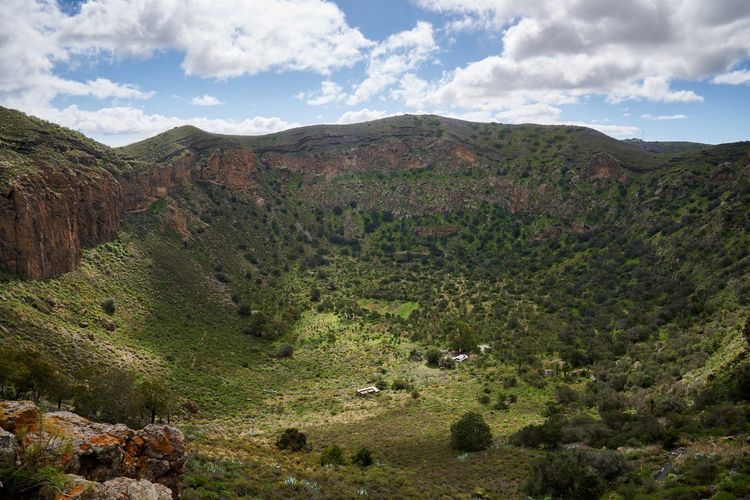
The Crater of the Caldera de Bandama
About twenty minutes' drive south of the city, the Caldera de Bandama is a crater roughly one kilometre in diameter and more than 200 metres deep, formed by an eruption around 2,000 years ago — likely the most recent on Gran Canaria. A trail circles the rim in just over an hour; another, steep and sometimes slippery, descends to the floor, where an old farmhouse and a few vines survive. Wear proper footwear.
The Pico de Bandama viewpoint, reachable by car, offers the widest view over the crater and the bay of Las Palmas. On the edge of the caldera stands the Real Club de Golf de Las Palmas, founded in 1891 — the oldest golf club in Spain. The name Bandama itself comes from Daniel Van Damme, a 16th-century Flemish merchant who planted vines there: the surrounding slopes, around Monte Lentiscal, remain the island's wine-growing heartland.
The Viera y Clavijo Botanical Garden
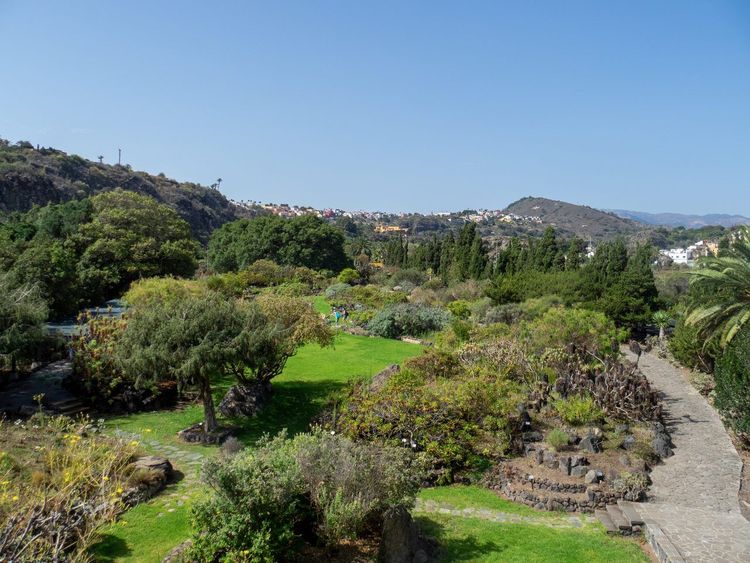
A little further on, the Jardín Botánico Viera y Clavijo (Camino del Palmeral 15, 35017 Tafira Alta, rated 4.5/5 on Google with 10,004 reviews) is the largest botanical garden in Spain, dedicated to the flora of Macaronesia. Created in 1952, it brings together dragon trees, groves of Canarian palms, and endemic species spread across the terraced slopes of a landscaped barranco. Admission is free.
Allow a good hour for the main paths. Bandama is served by regular buses from the city, but combining the crater, the garden, and the villages in a single day remains much easier with a hire car. The Ryo audio-guided tour covers the urban section: save it for a return to the city at the end of the day.
Day 2 (Afternoon): The Interior Villages, Arucas and Teror
Arucas and Its Basalt Church
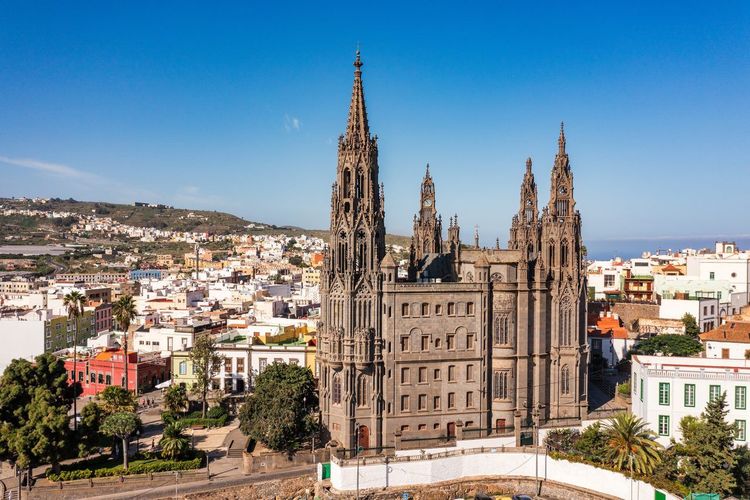
Arucas, about twenty minutes north-west of Las Palmas, owes its reputation to the Iglesia San Juan Bautista, nicknamed 'the cathedral': built in dark volcanic stone in a neo-Gothic style, begun in 1909 and completed in 1977. The effect is striking in the late afternoon, when the stone contrasts with the orange-tinged sky.
The town also thrives on sugar cane and bananas: the Arehucas distillery, founded in 1884, still produces the best-known rum in the Canary Islands and can be visited, tasting included.
Teror and the Canarian Vineyards
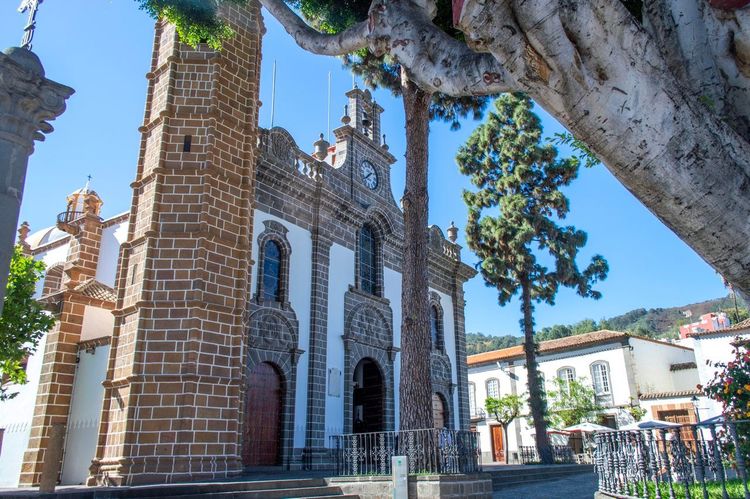
Higher up in the hills, Teror is arguably the best-preserved village on the island, with its carved wooden-balcony houses framing the Basílica del Pino (Plaza del Pino, 35330 Teror, rated 4.7/5 on Google with 8,622 reviews), the most important Marian pilgrimage site on Gran Canaria. On Sunday mornings, a farmers' market fills the square: spreadable chorizo from Teror, bread, and sweets from the Cistercian sisters.
To extend the wine route, the bodegas of the Gran Canaria appellation, especially around Santa Brígida and Monte Lentiscal, offer tastings by appointment: volcanic soils, low-trained vines, and grape varieties such as listán negro. If you would rather not hire a car, stay in the city: the Ryo audio-guided tour covers Vegueta and Triana on foot.
Where to Eat in Las Palmas: Mercado de Vegueta and Canarian Cuisine
Canarian cuisine comes down to one essential dish: papas arrugadas, small potatoes cooked in heavily salted water and served wrinkled, with mojo verde (coriander, garlic) or mojo rojo (chilli, paprika). You can find them everywhere, but the best versions are enjoyed in neighbourhood tascas and bodegones, where the menu changes according to the morning market.
For fish, grilled vieja and cherne are the safe bets by the sea, especially around Santa Catalina and the La Isleta port area. Try sancocho canario, a salted fish dish served with potatoes and mojo, and gofio, a flour made from roasted grains used in both desserts and as a side dish. To wash it all down, the local Tropical beer is drunk cold almost everywhere for around 2 to 3 euros at the bar.
The best restaurants in Las Palmas are concentrated in two areas: Vegueta and Triana for traditional and affordable cuisine, Santa Catalina and the Las Canteras seafront for terrace dining with a view and a more international menu.
Where to Stay in Las Palmas: the Best Neighbourhoods
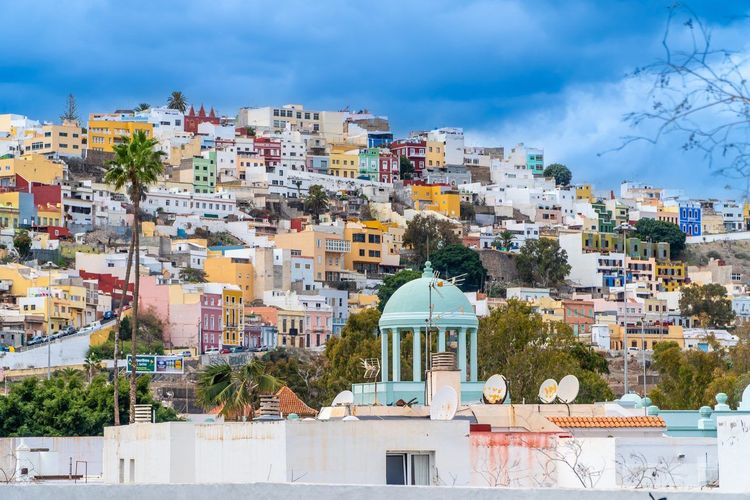
Two neighbourhoods compete for visitors. Vegueta and Triana offer boutique hotels in historic townhouses, within walking distance of the cathedral and the museums: the most practical option for a heritage-focused stay.
Las Canteras, by contrast, plays the beach card: sea-view hotels, family-friendly self-catering apartments, and direct access to the sand. Prices rise in high season — which in the Canary Islands runs mainly from November to March — but remain reasonable. The two areas are connected by a fifteen-minute bus ride, giving you plenty of flexibility when organising your two days.
When to Go to Las Palmas: Climate and Ideal Season
Nicknamed the city with the world's best climate by some climatologists, Las Palmas enjoys mild temperatures year-round: around 20 °C in winter, 26 °C in summer, with very little rain. You can visit at any time of year, but each period has its own logic.
- November to March: the winter sun attracts northern Europeans, flights and hotels are pricier, and the water stays around 19 °C.
- April to June: the best period in our view, with moderate crowds and long days. Watch out, however, for the 'panza de burro' — the low cloud ceiling that frequently sits over Las Canteras in early summer.
- July to October: warmer sea (up to 23 °C), Spanish school holidays, and a lively atmosphere on the beach.
The Las Palmas Carnival, held in February or March depending on the year, is one of the most festive in Spain: if your dates coincide, book your accommodation well in advance.
If You Have More Time: the South of the Island
Two days are enough for Las Palmas itself, but Gran Canaria deserves more if your schedule allows.
Maspalomas and Its Dunes
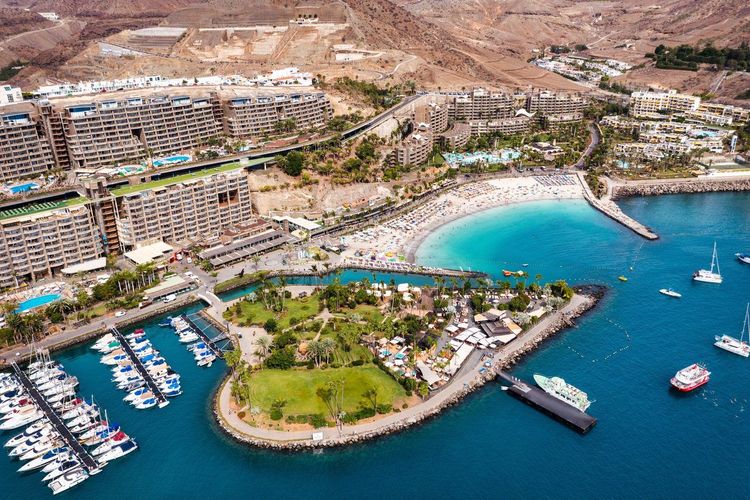
Less than an hour's drive to the south, the Maspalomas dunes form a nature reserve of around 400 hectares, a Saharan landscape set right beside the ocean. The lighthouse at the far end of the beach is a good starting point for a walk through the sand at sunrise or sunset, when the heat has died down.
Puerto Rico, Mogán, and Guayadeque
Further west, Puerto Rico is the classic departure point for boat trips to spot dolphins and sometimes pilot whales. A little further on, Mogán is nicknamed the 'little Venice' of Gran Canaria for its flower-lined canals and fishing harbour.
To the east, the Barranco de Guayadeque offers a different experience: houses, a hermitage, and even restaurants carved directly into the volcanic rock. Allow half a day to combine a hike through the ravine with lunch in a cave. Around Santa Lucía de Tirajana, hikers will find quieter trails with views over the entire south. Finally, ferries connect Gran Canaria to Tenerife from the port of Las Palmas or from Agaete — an option if your stay extends beyond the two days planned here.
Practical Information for Visiting Las Palmas in 2 Days
Entry requirements: the Canary Islands are part of Spain and the European Union. For EU citizens, a valid national identity card or passport is sufficient.
Time difference: the Canary Islands are one hour behind mainland Spain, both in summer and winter. Bear this in mind if you book an activity immediately after landing.
Getting around: the Guaguas Municipales network covers the centre well, with frequent lines between Vegueta, Triana, and Las Canteras; Global buses serve the airport and the rest of the island. To combine Bandama, Arucas, and Teror in a single day, a hire car is preferable. Allow around 25 minutes by road between the airport and the city centre.
Free activities: Las Canteras beach, the seafront promenade, the Viera y Clavijo botanical garden, the exterior of the cathedral, and wandering through the lanes of Vegueta are all free of charge.
Safety: Las Palmas de Gran Canaria is a safe city, comparable to other Spanish cities. The usual precautions are sufficient: keep an eye on your belongings on the beach and stay alert at night near the port.
FAQ
Is Las Palmas de Gran Canaria worth visiting?
Yes: few Spanish cities combine such a rich historic centre, a benchmark urban beach, and quick access to volcanic and wine-growing landscapes half an hour away by road.
How many days do you need to visit Las Palmas?
Two days are enough to cover Vegueta, Triana, Las Canteras, and a trip into the interior (Bandama, Arucas, Teror). Allow three to four days to add the south, Maspalomas, or Guayadeque.
Is Las Palmas de Gran Canaria safe?
Yes, its safety level is comparable to that of other major Spanish cities. Basic precautions are still recommended at night around the port and Santa Catalina.
What activities are free in Las Palmas?
Las Canteras beach, the seafront promenade, the Viera y Clavijo botanical garden, the exterior of the Santa Ana cathedral, and strolling through the lanes of Vegueta are all free of charge.
What are the best restaurants in Las Palmas?
The tascas of Vegueta and Triana for traditional and affordable Canarian cuisine, the terraces of Santa Catalina and Las Canteras for seafood with ocean views.
What are the best hotels in Las Palmas?
Vegueta and Triana for a heritage-focused stay, Las Canteras for direct beach access, particularly well suited to families and longer stays.
What is Las Palmas known for?
For its Las Canteras urban beach, often ranked among the most beautiful in Europe, for its history linked to Christopher Columbus, for its mild year-round climate, and for its port, a historic stopover between Europe, Africa, and the Americas.
Two days in Las Palmas de Gran Canaria give a surprisingly complete picture of the island: colonial heritage, urban beach, and volcanic landscapes all within less than an hour of each other. To explore the city without wasting time on the ground, the Ryo audio-guided tour of Las Palmas guides you on foot from Vegueta to Triana, with historical commentary at every stop.