© Shutterstock
 Votre guide Ryo
Weekend in Las Palmas de Gran Canaria: 2026 Itinerary Between Vegueta, Las Canteras and the Wild Interior
Catch a Friday evening flight and you're swimming in the Atlantic on Saturday morning before having lunch in a 15th-century alley. That's the promise of a weekend in Las Palmas de Gran Canaria: the island's capital brings together a colonial old town, an urban beach counted among the most beautiful in Europe and, less than an hour away by road, mountain villages and an extinct volcano. Two days are enough to grasp the essentials; a third lets you leave the city and see another Gran Canaria, more rural and wilder.
In the pages that follow: the Santa Ana cathedral and its square guarded by bronze dogs, a 19th-century market where you can taste local goat cheese before noon, a 3 km beach of fine sand right in the city center, and a volcanic caldera you can explore in half a day's walk. To get your first bearings before you leave, the Ryo audio-guided tour of Las Palmas links the historic districts and the seafront, earphones in, without waiting for a guide or booking a time slot.
Day 1: Vegueta and Triana, Historic Las Palmas
Las Palmas was built from south to north, and visiting the city in that order makes sense: you start with its colonial origins in Vegueta, move on to Triana for the commercial 19th century, then head up to the seafront for the rest of the weekend. Allow a full day, museums included, without rushing.
Vegueta, Santa Ana Cathedral and the Casa de Colón
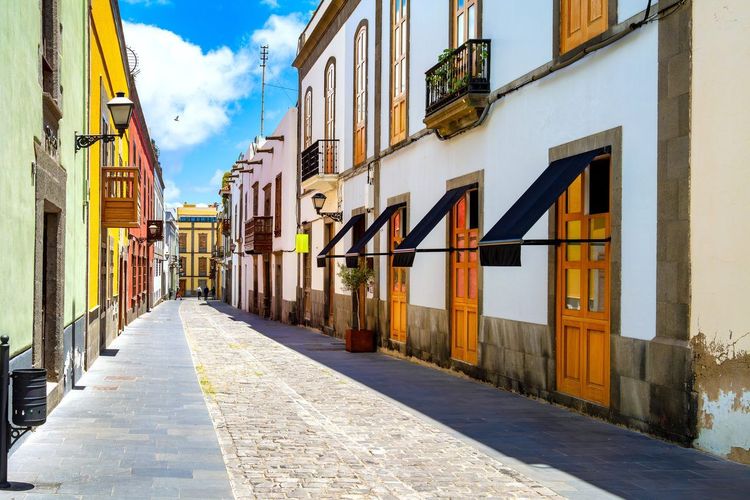
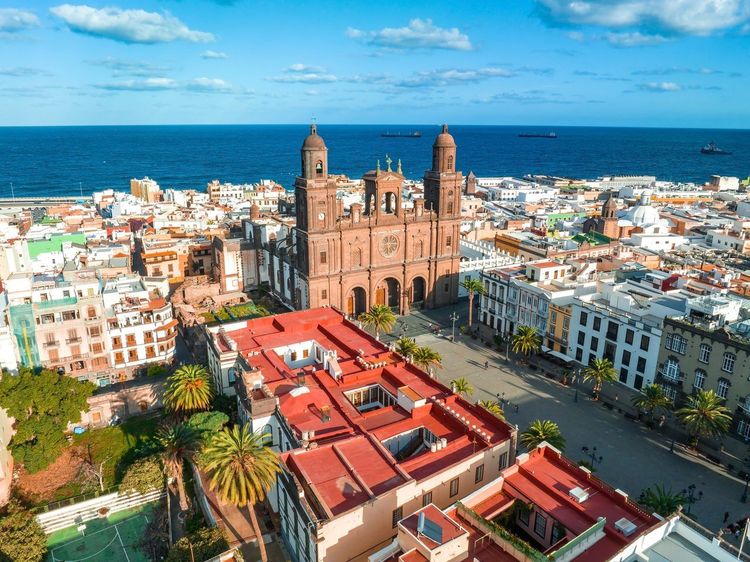
Vegueta is the founding district of Las Palmas, born in 1478 with Juan Rejón's camp around what is now the Plaza de Santa Ana. The ochre facades and Canarian wooden balconies have changed little over the centuries, and the district forms one of the best-preserved colonial ensembles in the archipelago.
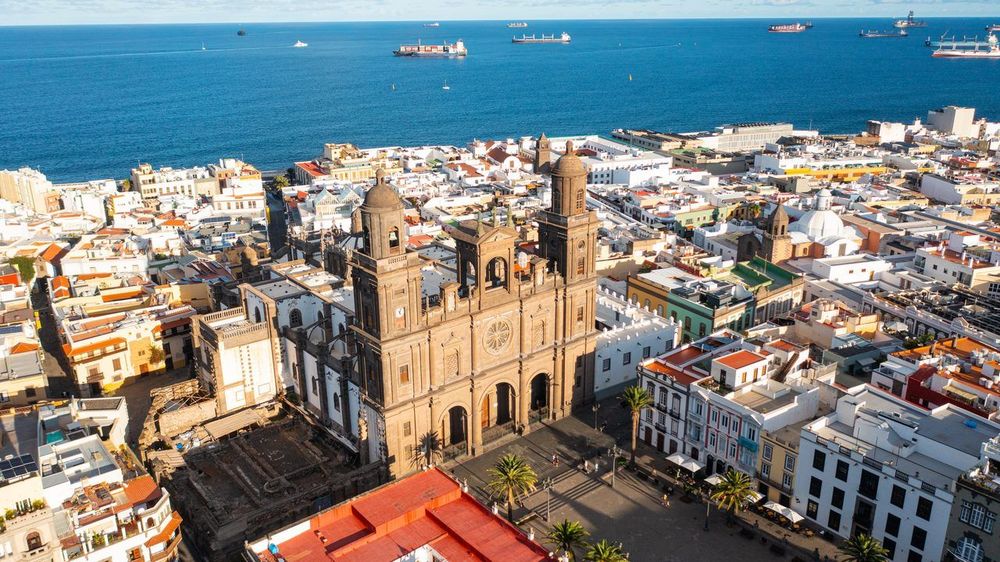
The Catedral de Santa Ana dominates the square of the same name with its neoclassical facade and two towers. Its construction spanned nearly four centuries, which explains the mix of Gothic inside and neoclassical outside. On the square, eight bronze dogs recall the probable origin of the archipelago's name, from the Latin canis. You can take the elevator up the tower (combined ticket with the diocesan museum) for a panorama over the rooftops of Vegueta and, in the distance, the port.
Two minutes' walk away, the Casa de Colón occupies the former governors' residence, where Christopher Columbus is said to have stopped in 1492 before crossing the Atlantic. The museum traces the transatlantic voyages and the colonial history of the archipelago across several rooms arranged around patios with wooden galleries.
Allow 45 minutes for the cathedral and as much for the Casa de Colón: in the morning, before 11 a.m., both sites can be visited without queues.
The Mercado de Vegueta and the Museo Canario
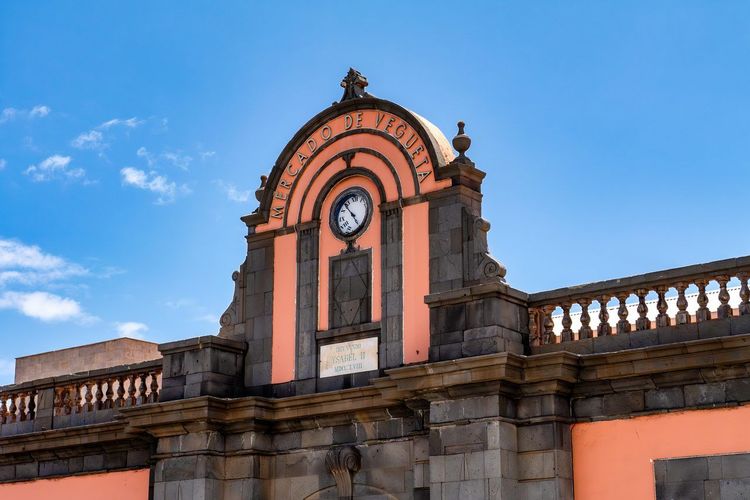
Heading back down toward the old ravine bed, the Mercado de Vegueta, the city's oldest covered market (mid-19th century), is still in full swing in the morning. It sells Gran Canaria goat cheese, mojos (Canarian chili or coriander sauces) and small potatoes for making papas arrugadas, well before the restaurants in the center serve them at the table.
Go before noon, preferably on a Saturday: the stalls are full, locals do their weekly shopping, and most cheesemongers let you taste before you buy. A piece of queso de flor de Guía, made with curd from cardoon flowers, slips easily into carry-on luggage.
A few streets away, the Museo Canario (Calle Doctor Verneau 2, 35001 Las Palmas de Gran Canaria, rated 4.5/5 on Google from 2,611 reviews) holds one of the world's most important collections of Guanche skulls and mummies, the archipelago's first inhabitants before the Castilian conquest of the 15th century. The mummy room is impressive, but it is the everyday objects, ceramics and pintaderas (terracotta seals), that best illuminate what life on the island was like before 1478.
Plan an hour for the museum if archaeology interests you, half that otherwise: the signs are in Spanish and English, not always in French.
Triana, Modernist Architecture and Shopping Streets
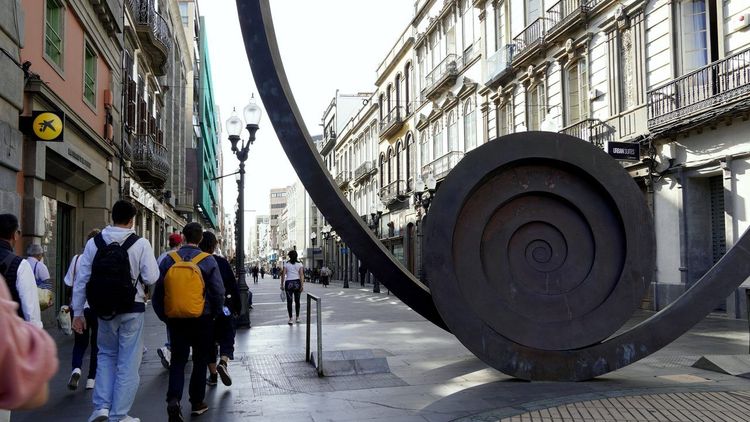
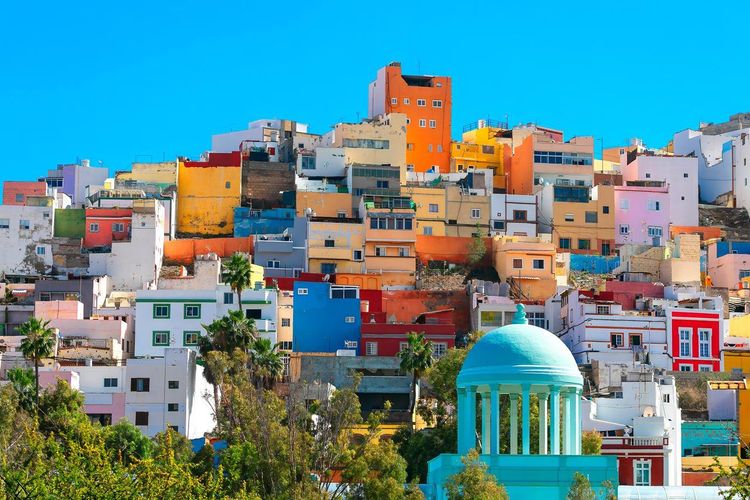
You once had to cross the Guiniguada ravine to get from Vegueta to Triana; it is now covered by an expressway, but the change of scenery remains sharp. Here, the facades are modernist, dating from the early 20th century, when port trade money financed mansions of wrought iron and colored glass. The Calle Mayor de Triana, pedestrianized along its entire length, concentrates a good share of the city's independent shops.
The Gabinete Literario, a cultural society established since the 19th century on the site of the former Cairasco theater, deserves a look for its facade and its terrace on the Plaza de Cairasco, which hosts a restaurant open to the public. Right next door, San Telmo park and its modernist kiosk make an ideal break before setting off again.
To link Vegueta and Triana without thinking about the route, the Ryo audio guide to Las Palmas strings the stops together from the cathedral to the Casa de Colón, with the anecdotes you don't have time to look up yourself between two museums: the origin of the bronze dogs, Columbus's stopover, the wooden balconies.
Late in the afternoon, head north: the bus runs along the Avenida Marítima and reaches Santa Catalina in about twenty minutes, just enough time to prepare for the rest of the weekend.
Day 2: Santa Catalina, Las Canteras and the Confital Promenade
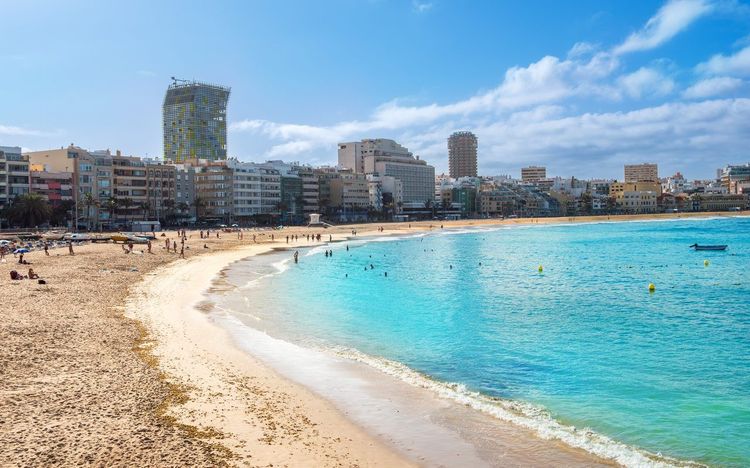
The second day changes pace completely: head to the Guanarteme isthmus, where Las Palmas becomes a full-fledged seaside resort. Santa Catalina, Las Canteras and Confital follow one another in a single walk, with no need for a bus or taxi.
Santa Catalina, the Port and the Seafront
Santa Catalina is the district of the Puerto de la Luz, through which ferries to Tenerife and Fuerteventura still pass today. The Parque Santa Catalina, lined with kiosks and terraces, serves as the locals' outdoor living room from late afternoon, and the Elder science museum, housed in a former port warehouse, keeps families busy on gray days.
This is also where many 3- and 4-star hotels are concentrated, a practical argument if you want to stay 10 minutes' walk from the beach without paying direct beachfront rates.
The Mercado del Puerto, an iron-and-glass hall from the late 19th century, has kept a few fish stalls but lives mostly off its tapas counters: a good spot for a vermouth and a few croquettes before lunch. A little further north, the Castillo de la Luz, a 15th-century fortress built against pirates, now houses a foundation dedicated to the sculptor Martín Chirino.
Playa de Las Canteras, the Urban Beach
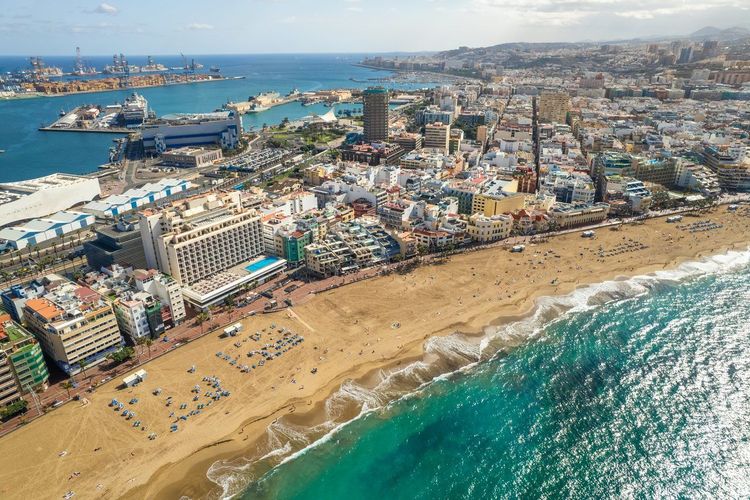
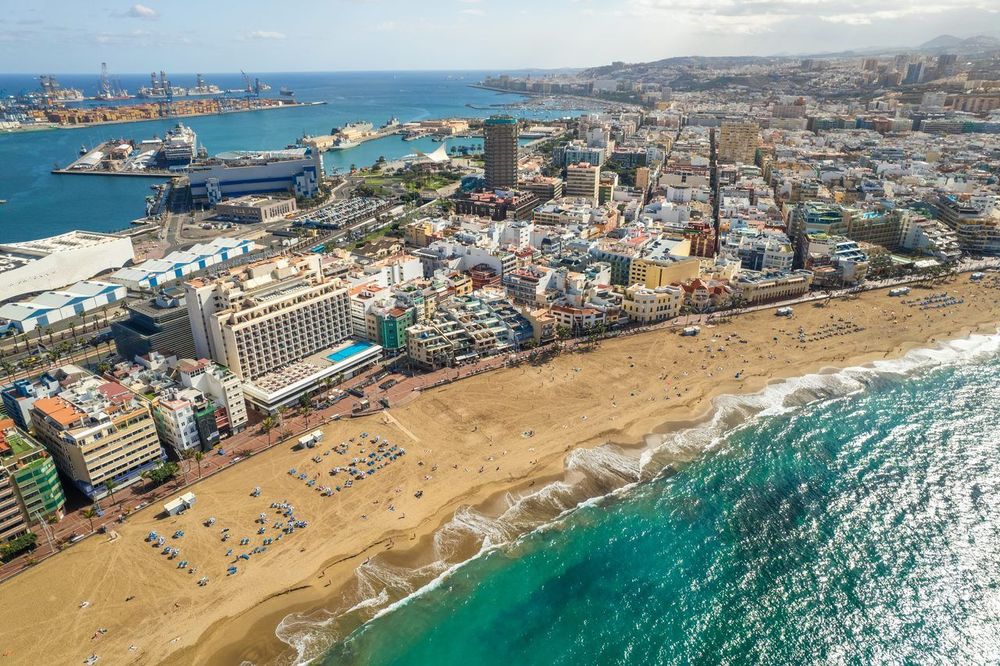
The Playa de Las Canteras (Paseo de Las Canteras, 35010 Las Palmas de Gran Canaria, rated 4.7/5 on Google from 16,274 reviews) stretches over 3 km of golden sand in the heart of the city, protected by a natural rocky bar, the Barra, which calms the Atlantic swell along much of its length. It is one of the few urban beaches in Europe regularly ranked among the continent's most beautiful.
The southern part, near the Auditorio Alfredo Kraus, attracts surfers when the swell comes in freely; the central part, sheltered by the Barra, is the calmest for swimming. At low tide, bring a mask: the Barra forms a reef where you can spot parrotfish and small rays just a few meters from shore.
Late in the morning, Canarian retirees swim laps parallel to the beach, like a well-established daily ritual: follow their example rather than lying still, as the water ranges between 18 and 23°C depending on the season.
The Paseo that runs along the beach is perfect for a 45-minute walk without ever losing sight of the sand, from the terraces in the center to the fish restaurants of La Puntilla. For an afternoon of relaxation and lounging, it offers the best effort-to-pleasure ratio in the whole city.
The Confital Promenade at Sunset
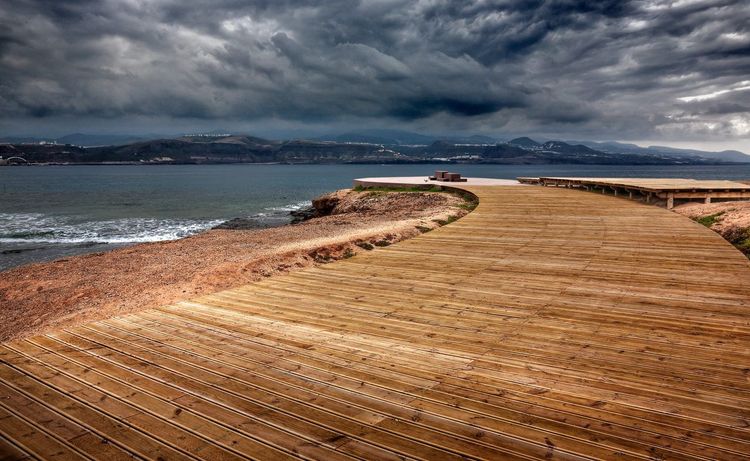
At the northern end of the beach, past La Puntilla and the La Isleta district, the Confital promenade follows a raw volcanic coast of black rock and small coves. It is one of the least crowded viewpoints over the Atlantic, about twenty minutes' walk from Las Canteras.
Many visitors walk right past it because they don't know about it: yet this is where the Ryo audio guide makes the most sense at sunset, when the final story accompanies the low light on the volcanic rock.
Plan half an hour there, no more: there is no shade and no shops, only the sound of waves on the rock and, on days with swell, local surfers trying out the Confital wave, reserved for experienced levels.
Day 3 (Optional): Northern Villages and the Island's Wild Interior
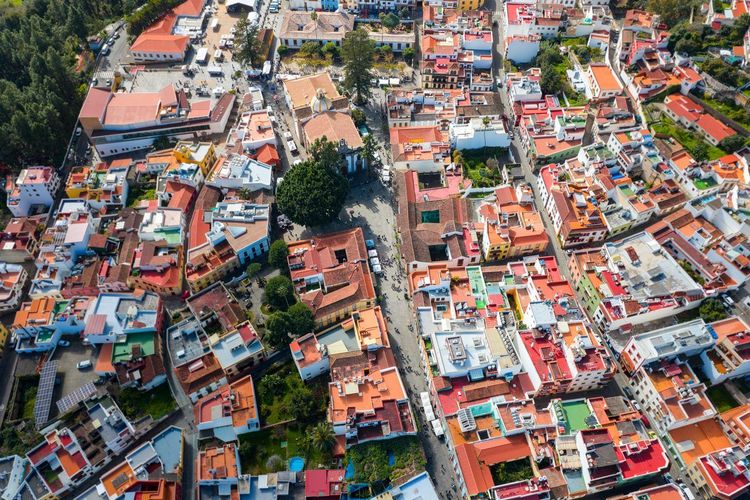
With a third day ahead of you, leave the city: rent a car for the day and take the road inland, where Gran Canaria changes completely. In 30 to 40 minutes' drive from the center, you go from the Atlantic to Canary pines and mountain villages.
The Caldera de Bandama and the Viera y Clavijo Botanical Garden
The Caldera de Bandama, an extinct volcanic crater about 1,000 meters across and 200 meters deep, can be descended by a path leading to an old farm at the bottom of the crater, or walked around the rim in about 2 hours. The viewpoint at the Pico de Bandama, just above, offers a full panorama of the crater, the city of Las Palmas in the distance and the island's east coast.
Start early: after 11 a.m., the sun beats directly down on the path into the crater, with no shade at all, and the climb back up is done in scorching heat.
A few kilometers away, the Jardín Botánico Viera y Clavijo, the largest botanical garden in Spain at 27 hectares, holds a reference collection of Canarian and Macaronesian flora. The dragon trees, cacti and palm grove are worth the visit even outside the flowering season, and admission is free.
Teror and Arucas, Typical Villages of the North
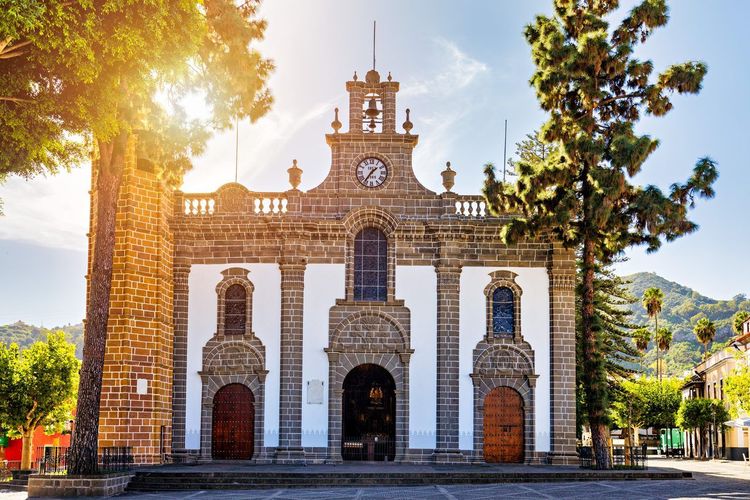
Teror, a religious village born around the apparition of the Virgin of the Pine, dated by tradition to 1481, preserves houses with carved wooden balconies among the most beautiful on the island, gathered around the Basílica de Nuestra Señora del Pino. The Sunday morning market around the basilica sells cheese, spreadable Teror chorizo and sweets from the convents.
Arucas, about twenty minutes' drive away, is recognizable from afar by its neo-Gothic church of San Juan Bautista, which everyone calls "the cathedral." Carved from local basalt stone, it was built between 1909 and 1977, and its pinnacles seem outsized for a town of this size.
The Arehucas rum distillery, on the edge of town, offers tours of its cellars with tastings (booking recommended), a good complement if you're traveling without children and someone else is driving back.
Guayadeque and Santa Lucía de Tirajana, the Wild Interior
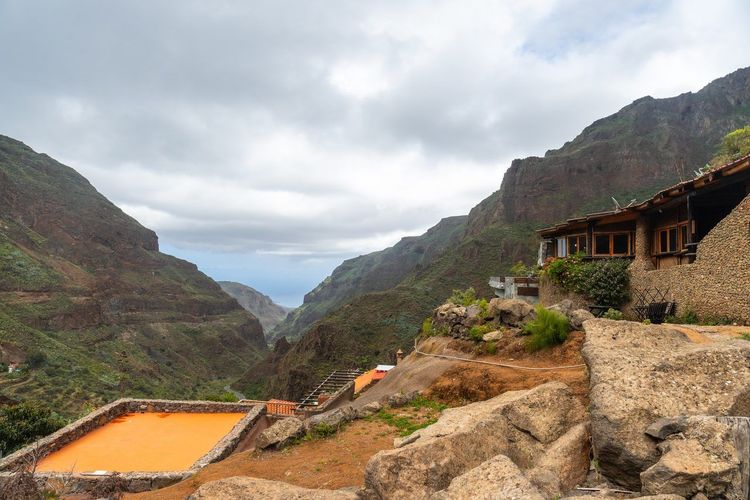
Further south, the Barranco de Guayadeque (Camino Guayadeque, 35260 Ingenio, rated 4.6/5 on Google from 715 reviews) carves a deep volcanic valley still partly inhabited in cave houses, some converted into restaurants where you eat directly in the rock. The interpretation center, at the entrance to the ravine, explains the site's occupation since pre-Hispanic times.
Santa Lucía de Tirajana, a little further on, deserves a detour for its white church and sloping alleys overlooking the Tirajana caldera: it is one of the least visited villages on the island, and you can feel it in the calm of the terraces.
There is no shortage of hikes in the Canaries in this area: if you still have energy, continue to Tejeda and Roque Nublo, an 80-meter monolith perched at the top of the island, reachable in 30 to 40 minutes' walk from the parking lot. The trails are well marked around the emblematic sites, much less so elsewhere: download the track before setting off, as the signal is unreliable in the mountains.
For this third day, the Ryo audio-guided tour of Las Palmas serves mainly as a foundation: listened to the day before in the city, it gives you the keys to the island's history (conquest, Guanches, the sugar trade) that you will then find again in the inland villages.
The Tourist South: Maspalomas, Puerto Rico and Mogán
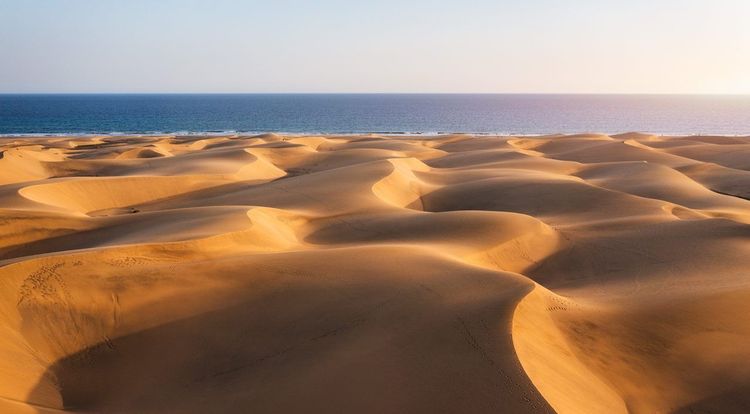
The south of Gran Canaria belongs to another world, built from the 1960s around guaranteed sunshine all year round. Allow 45 minutes to 1 hour by road from Las Palmas via the GC-1 depending on the exact spot, a journey that makes it a day trip rather than a simple afternoon.
The Maspalomas Dunes
The Maspalomas dunes extend over about 400 hectares between the ocean and the hotels, protected since 1987 despite their immediate proximity to tourist complexes. On the east side, they border Playa del Inglés; at the western end, the Maspalomas lighthouse marks the end of the beach.
Crossing the dunes on foot, in the middle of the day, gives the impression of a complete desert: the sand heats up quickly underfoot and vegetation almost entirely disappears, a striking contrast with the green of the island's interior visited the day before.
Favor sunrise or sunset: the low light sculpts the sand's contours, and the heat remains bearable. Stay on the marked paths, as the reserve is fragile and rangers issue fines.
La Charca, a brackish lagoon near the lighthouse, hosts migratory birds for a good part of the year and can be walked around without encroaching on the protected sand.
Puerto Rico and Mogán, Seaside Resorts of the South
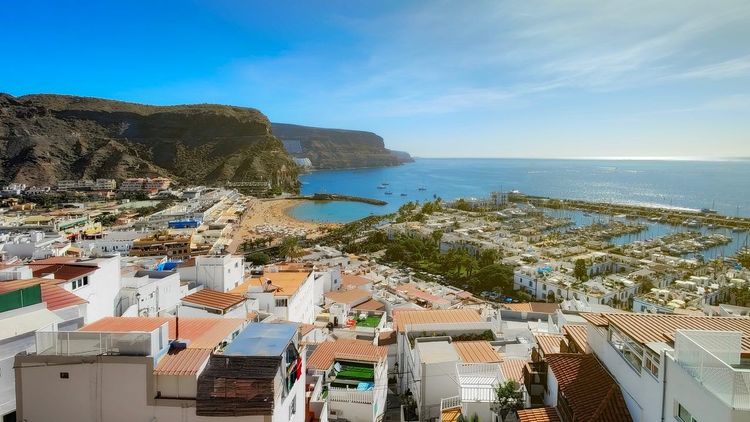
Further west, Puerto Rico concentrates a large share of the island's water activities: diving, big-game fishing and catamaran excursions to watch dolphins leave its marina every morning.
Puerto de Mogán (Puerto de Mogán, 35138 Mogán, rated 4.6/5 on Google from 27,620 reviews), about fifteen minutes' drive away, has kept a real fishing port behind its low houses, nicknamed the "little Venice" of the Canaries for its canals spanned by small bridges and its facades covered in bougainvillea.
On Friday mornings, a large weekly market sets up at the port: crafts, tropical fruit, cheeses, to be combined with a grilled-fish lunch facing the boats.
For the return, the GC-1 remains the fastest route; the more spectacular west coast, via La Aldea and Agaete, is best saved for those with a full day ahead of them.
Exploring the Vineyards and Flavors of Gran Canaria
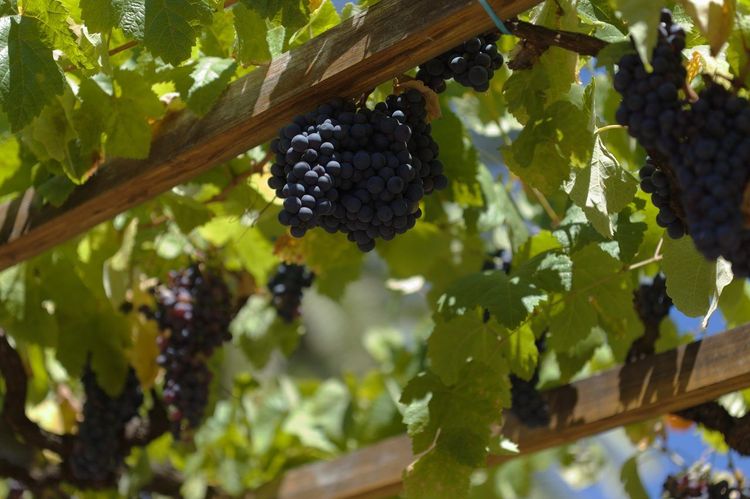
Gran Canaria has produced wine since the time of the Castilian conquest, a tradition long overshadowed by Tenerife but revived in the late 1990s with the Monte Lentiscal appellation, merged in 2005 into the Denominación de Origen Gran Canaria. The vineyards, planted on volcanic soils at varying altitudes, yield dry whites and light reds rarely exported outside the archipelago.
The Monte Lentiscal area, at the gates of Las Palmas and next to the Caldera de Bandama, is home to several family-run bodegas that organize tastings by reservation: allow a morning to visit two estates and understand why volcanic soil changes the taste of the wine so much from one plot to another.
Book in advance, especially on weekends: most bodegas are small family productions, without staff dedicated to continuous visitor reception.
As for beer, Tropical, a brand born in Las Palmas in 1924, remains the local beer found in every bar in the center. Its rival, Dorada, comes from Tenerife and fuels a friendly rivalry between inhabitants of the two islands: order the wrong one, and you'll get a comment.
For the best restaurants in Las Palmas, Vegueta, Triana and Santa Catalina concentrate most of the offerings: traditional Canarian cuisine built around mojo and grilled fish in the first two, more touristy seafood spots near the port in the third. In any case, beware of menus displayed with photos in several languages: it is often a sign of a kitchen designed for groups rather than for local produce.
On Thursday evenings, Vegueta's "ruta de pinchos" tours the neighborhood's bars, a tapa and a drink at a low price: a chance to taste gofio, the toasted grain flour of the Guanches, in all its forms.
One last useful tip: ask for the "menu del día" at lunchtime on weekdays, even in restaurants that don't display it in the window. It is often the best way to eat local at a reasonable price, starter, main course and dessert included.
Where to Stay in Las Palmas: Recommended Neighborhoods and Hotels
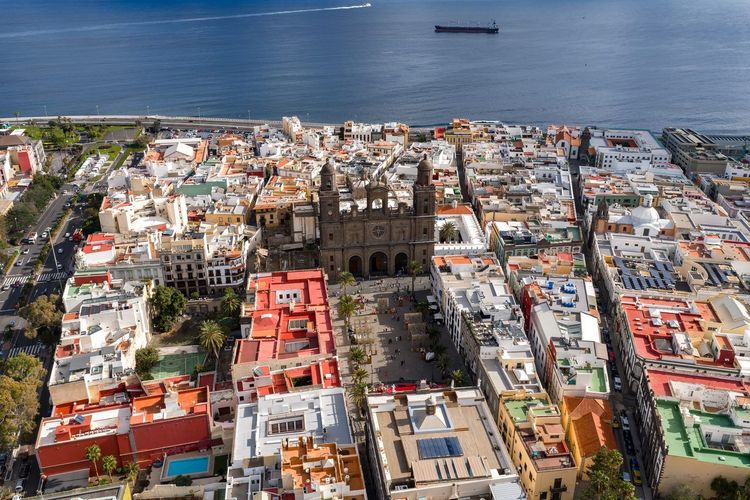
The choice of neighborhood determines a good part of your weekend: it's up to you to decide between waking up facing the sea or immersing yourself in the historic city.
Staying at Las Canteras, by the Beach
Most visitors stay near the Playa de Las Canteras, between Santa Catalina and the Auditorio district. It is the logical choice for a weekend centered on the beach and sunsets.
Among the addresses often mentioned in this area, the Occidental Las Palmas 4* and the Exe Las Palmas target guests who want a classic hotel a few minutes from the sand. Before booking, check the real distance to the Paseo on the map: "near the beach" can mean three streets back.
Allow 10 minutes by bus or 40 minutes on foot between this area and Vegueta: enough for a round trip once a day, too long for multiple back-and-forths.
Staying in Vegueta or Triana, in the Historic Heart
For a stay more focused on heritage, Vegueta and Triana offer Canarian houses renovated into boutique hotels, with interior patios and wooden balconies, an atmosphere very different from the seafront buildings.
The Hotel Puerto de la Luz 3*, as its name suggests on the port side, represents the middle option: between the historic center and Las Canteras, it lets you go from one to the other by bus without changing.
If you're only staying 48 hours and heritage comes first, staying in Triana limits travel: you're 10 minutes' walk from Vegueta and a quarter-hour bus ride from Las Canteras.
Whatever neighborhood you choose, check the floor and the elevator: some old houses in Vegueta have steep stairs, a detail that booking photos never show.
How to Get Around Las Palmas and the Island of Gran Canaria
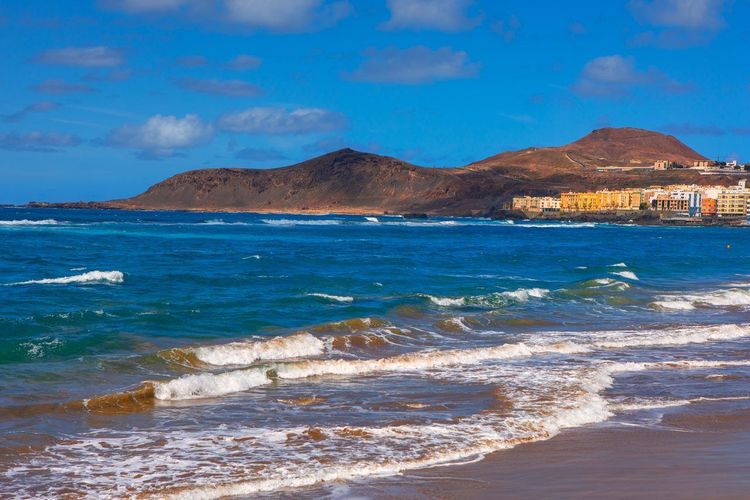
Within Las Palmas itself, everything is done on foot or by guagua (the local bus): the city stretches lengthwise along about ten kilometers of coast, but the tourist areas (Vegueta, Triana, Santa Catalina, Las Canteras) are connected by frequent lines that run along the maritime avenue or León y Castillo street.
A Guaguas Municipales ticket costs around €1.50 per trip; if you plan to make many journeys, a rechargeable card, sold at kiosks and stations, lowers the unit price. Check current fares on arrival, as they change regularly.
For the third-day excursions to the island's interior, renting a car remains the most realistic option: Global buses serve the villages, but at frequencies poorly suited to a weekend format. Allow from €25-30 per day off-season, noticeably more in high season.
Gran Canaria airport, about 20 km south of Las Palmas, can be reached in 25 minutes via the GC-1 motorway or by direct bus (Global line 60) for about €3. Taxis cost €30 to €40 depending on the time and traffic.
When to Go and How Long to Stay
Las Palmas can be visited all year round: it is the Canaries' number-one selling point, nicknamed the islands of "eternal spring" for temperatures that hover between 18°C and 26°C almost twelve months a year. The best time to visit Las Palmas nonetheless corresponds to the European winter, from November to April, when you're escaping the cold of the continent for a sea still warm enough to swim in.
The carnival (February-March) deserves a special mention: hotel prices climb and the streets fill up for one of Spain's most renowned carnivals. An experience in itself, but not ideal for a quiet weekend. In summer, the panza de burro, a cloud layer pushed by the trade winds, sometimes veils the north of the island in the morning: nothing serious, as sunshine remains guaranteed in the south.
How long do you need to visit Las Palmas de Gran Canaria? Two days cover the historic heart and the seafront; a third day becomes necessary as soon as you want to see the island's interior (Bandama, Teror, Guayadeque), hard to fit into a simple 48-hour weekend without sacrificing the city itself.
The time difference is minimal: the Canaries are one hour behind France all year round, summer and winter. With a direct flight of about 4h15 from Paris, you even gain an hour on arrival.
Budget, Safety and Formalities: Good to Know Before You Go
Formalities remain simple for French travelers: the Canaries belong to Spain and therefore to the European Union, so a valid ID card or passport is enough, with no visa. Remember to bring your European Health Insurance Card.
Is Las Palmas de Gran Canaria safe? Yes, overall: it is a city of about 380,000 inhabitants where the usual precautions apply (watch your bags on buses, be vigilant at night in certain streets near the port), nothing that justifies particular concern compared with any other European city.
For the budget, count on an indicative €70 to €120 per night for a 3- or 4-star hotel outside high season, €12 to €15 for a menu del día, around twenty euros for a full dinner in a neighborhood restaurant and less than €10 a day for transport in the city. A two-night weekend for two, excluding flights, therefore fits within a budget of €400 to €550 without depriving yourself.
A few travel tips for the Canaries: direct flights from several French cities remain competitive outside school holidays, and the archipelago applies its own tax, the IGIC, at a general rate of 7% versus 21% VAT in mainland Spain, which makes meals and rentals a bit cheaper than expected.
Free activities in Las Palmas are plentiful: Las Canteras beach itself, the Confital promenade, the Plaza de Santa Ana and its bronze dogs, the parks of Santa Catalina, San Telmo and Doramas, the Viera y Clavijo botanical garden, or a stroll through the Mercado de Vegueta.
For adults, evenings are spent in the tapas bars of Vegueta and Triana, on the terraces of the Paseo de Las Canteras at sunset, or at a concert at the Auditorio Alfredo Kraus, whose large bay window looks directly onto the Atlantic. A catamaran outing to watch dolphins rounds out the program on the south side.
Looking for a more romantic version of the city? Our guide to visiting Las Palmas as a couple gathers the addresses and viewpoints to share together.
Extending Your Trip: Tenerife and the Other Canary Islands
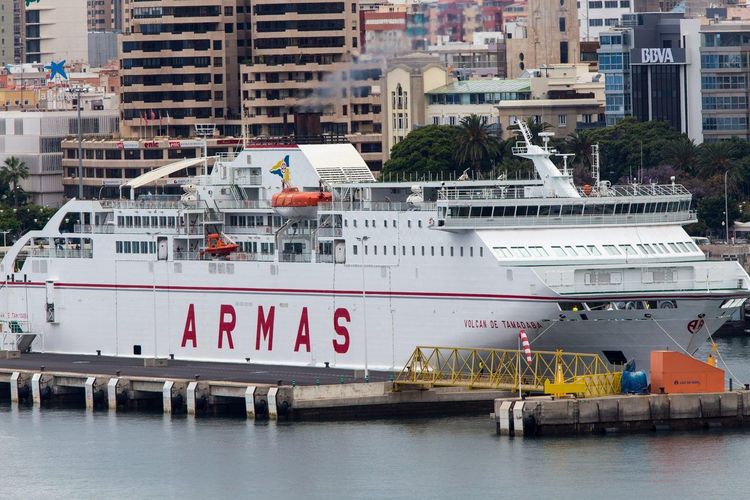
Want to add an island? To take the boat to Tenerife, there are two options: Naviera Armas connects the port of Las Palmas directly to Santa Cruz in about 2h30, while Fred. Olsen departs from Agaete, on the northwest coast, for a crossing of about 1h20 (with a connecting bus from Las Palmas).
Which Canary island should you choose to extend your trip? Tenerife appeals with the Teide, Spain's highest peak, and La Laguna, a colonial city listed as a UNESCO World Heritage site; Fuerteventura, further east, banks on its white sandy beaches and its surf and kitesurf spots, the opposite of Gran Canaria's mountainous terrain.
San Cristóbal de La Laguna, the most beautiful of Tenerife's colonial cities, can be visited in a day from Santa Cruz: grid-pattern streets, colorful facades and a calm that the tourist coast in the south of the island no longer knows.
To get off the beaten track in the Canaries, the least visited islands (La Gomera, El Hierro, La Palma) offer preserved nature far from mass tourism, accessible by ferry or short flight from Gran Canaria or Tenerife, for those who will come back a second time to the archipelago.
Enough to turn a simple weekend in Las Palmas into a starting point for exploring the whole archipelago, one island after another.
FAQ
When is the best time to visit Las Palmas?
From November to April, for mild temperatures (18-24°C) without the heat or crowds of summer. It is also when direct flights from France are most frequent. That said, Las Palmas is pleasant all year round thanks to its stable climate.
How long do you need to visit Las Palmas de Gran Canaria?
Two days are enough for the historic heart (Vegueta, Triana) and the seafront (Las Canteras, Confital). Allow a third day to add the island's interior (Bandama, Teror, Guayadeque). If you add an excursion to the south (Maspalomas, Puerto Rico), plan for an extra day.
What is the best place to stay in Gran Canaria?
Las Palmas suits a combined urban and beach weekend; the south of the island (Maspalomas, Puerto Rico) is better suited to a multi-day relaxing stay, without comparable historical heritage. Hiking enthusiasts will prefer accommodation inland, near Tejeda or Valleseco.
Which is the paradise island of the Canaries?
There isn't just one: La Graciosa, a small island north of Lanzarote, and some secluded beaches in Fuerteventura come closest for those looking for turquoise waters and few crowds.
Is Las Palmas de Gran Canaria safe?
Yes, like most Spanish cities: the usual precautions are enough (keep an eye on your bags, be careful at night in certain streets near the port). Simply avoid leaving valuables visible in a car parked in the city or near hiking sites.
Is Las Palmas de Gran Canaria worth the detour?
Yes, especially for those who want to combine a historic city, an urban beach and excursions into volcanic nature less than an hour away by road. Few Spanish cities offer all three at once.
What free activities are there in Las Palmas?
Las Canteras beach, the Confital promenade, the Plaza de Santa Ana, the parks of Santa Catalina, San Telmo and Doramas, the Viera y Clavijo botanical garden and a stroll through the Mercado de Vegueta.
A weekend in Las Palmas de Gran Canaria is ultimately built like a geographic mille-feuille: the colonial town of Vegueta, the Las Canteras seafront and, if time allows, the volcanoes and inland villages where the scenery changes completely in less than an hour's drive. And all of this without ever boarding a plane between stops.
Once there, keep most of your time for wandering: the Ryo audio-guided tour of Las Palmas can be started whenever you like in the alleys of Vegueta and Triana, with no reservation or fixed schedule, leaving your afternoon free for the beach or an excursion into the island's interior.