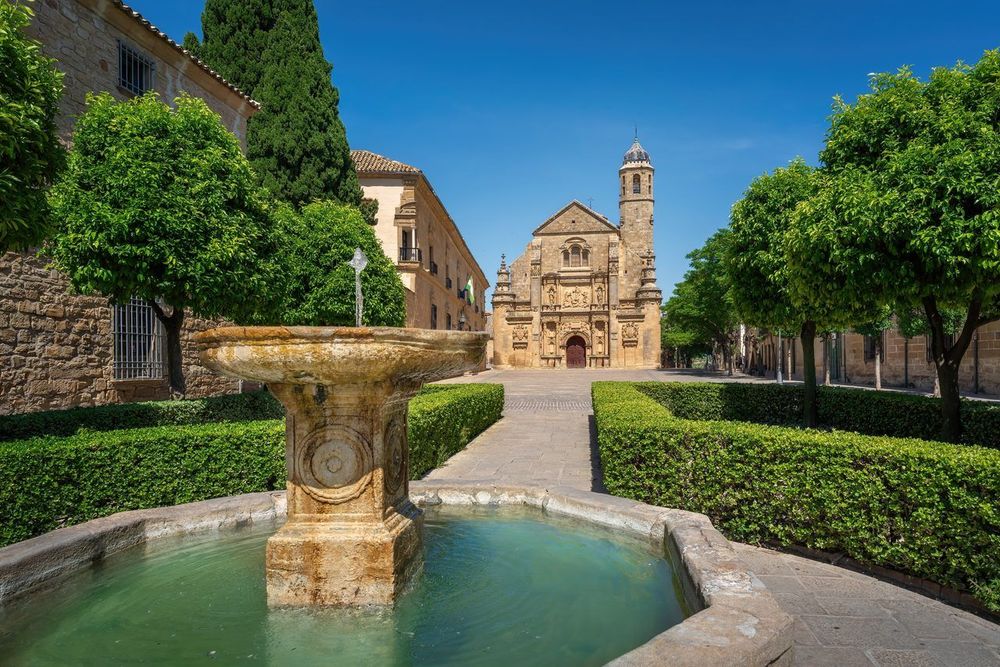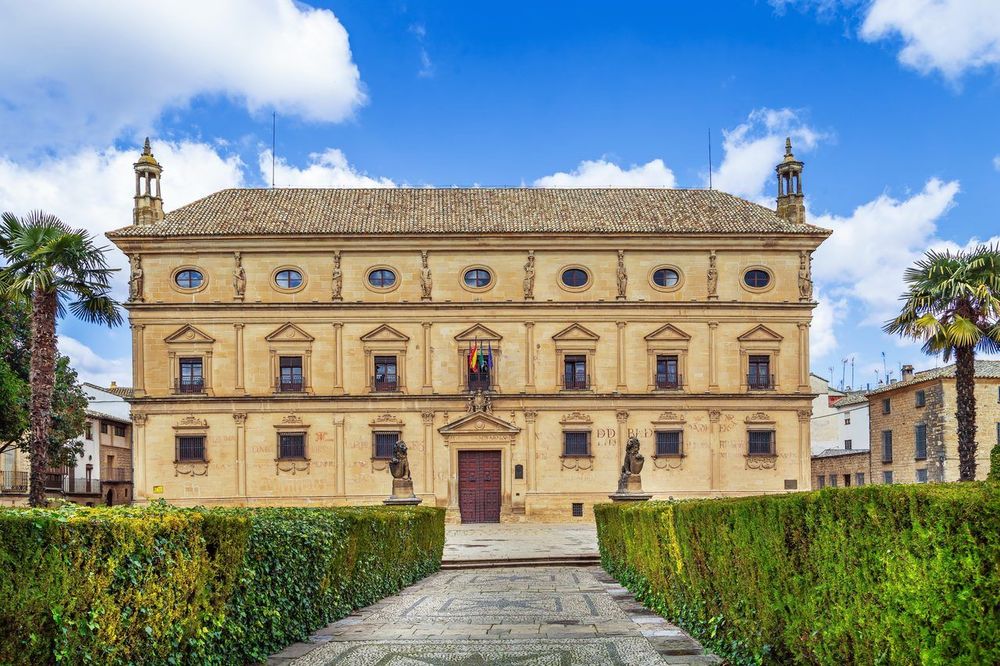
© Shutterstock
 Votre guide Ryo
13 Free Things to Do in Úbeda in 2026: Andalusian Renaissance Under the Open Sky
Looking for free things to do in Úbeda to enjoy the city without blowing your budget? Good news: the evening light turns the golden stone of the palaces into a backdrop that costs nothing for anyone who takes the time to stop. Listed as a UNESCO World Heritage Site together with its neighbor Baeza since 2003, this small town in the province of Jaén holds one of the densest collections of Renaissance architecture in Europe, and most of it can be discovered without opening your wallet. This selection covers the monumental square, the potters' quarter, the ramparts, a few palace patios open to the public and excursions in the surrounding area. Before setting off on foot, the Ryo audio-guided tour of Úbeda tells this story palace after palace, at your own pace.
Admiring the façade of the Palacio de las Cadenas, watching a potter turn green clay, walking along the ramparts to a viewpoint overlooking the whole Guadalquivir valley, or stepping into the Sacra Capilla del Salvador during the half hour when it doesn't charge: that's the program. Úbeda also makes an excellent day trip from Baeza, Jaén or Granada, for those who prefer not to stay overnight.
1. Admire the Plaza Vázquez de Molina and Its Renaissance Monuments
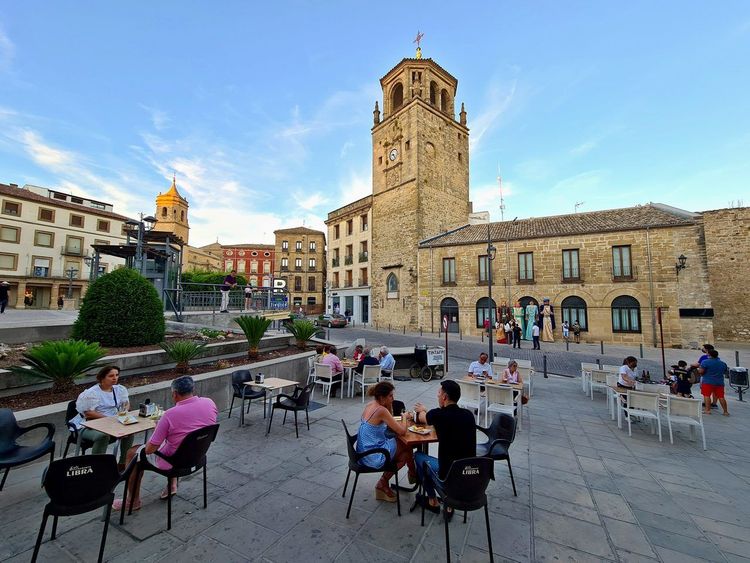
Often cited among the most beautiful squares in Spain, the Plaza Vázquez de Molina gathers within a few hundred meters the highest concentration of Renaissance architecture in Andalusia. You can enter freely at any hour, day or night, and visiting it simply means walking from one façade to the next while looking up. The honey-colored stones change shade throughout the day: come at 10 am, then return at sunset, and you'll feel as if you're seeing two different squares.
The Palacio de las Cadenas and the Sacra Capilla del Salvador
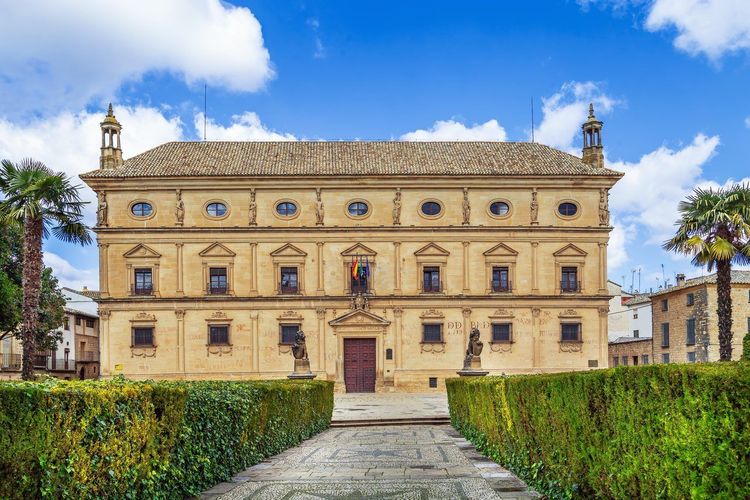
The Palacio de las Cadenas was built between 1546 and 1565 for Juan Vázquez de Molina, Secretary of State to Felipe II, to plans by Andrés de Vandelvira. Its name is said to come from the chains that surrounded its gallery, a sign of seigneurial privilege in the Castilian tradition, or from the Dominican convent of Madre de Dios de las Cadenas that it later housed. Now the town hall, it lets you see its two-level arcaded patio during the town hall's opening hours, especially on weekdays.
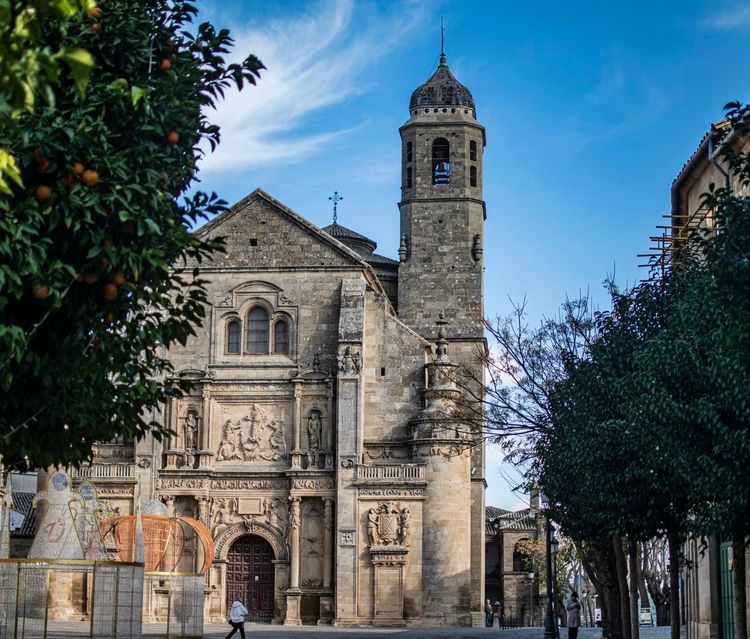
A few steps away, the Plateresque façade of the Sacra Capilla del Salvador (Plaza Vázquez de Molina, 23400 Úbeda, rated 4.5/5 on Google from 1,558 reviews) can be admired in detail from the forecourt. Designed by Diego de Siloé and completed by Vandelvira between 1536 and 1559 for Chancellor Francisco de los Cobos, it serves as the family pantheon. Admission normally costs €7, audio guide included, but here is the city's best-kept secret: from Monday to Friday (excluding public holidays), individual entry is free from 9:30 to 10 am. Set your alarm, because the sacristy is worth that early half hour.
The Palacio del Deán Ortega and Santa María de los Reales Alcázares
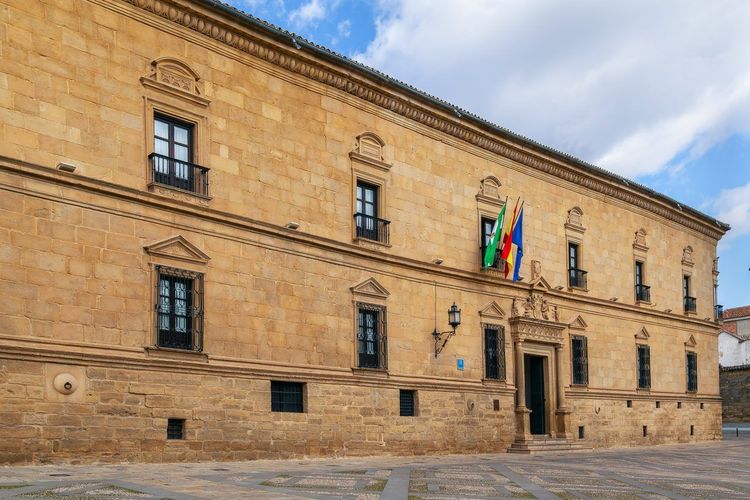
The Palacio del Deán Ortega (Plaza Vázquez de Molina, 1, 23400 Úbeda), built in the 16th century for Dean Fernando Ortega, now houses a Parador. You can step inside to admire the Renaissance patio and its staircase, as long as you stay discreet: it is a working hotel, not a museum. A coffee at the bar is the only possible expense, and a completely optional one.
Opposite, the basilica of Santa María de los Reales Alcázares (Plaza Vázquez de Molina, 4, 23400 Úbeda) stands on the site of the former great mosque. Its façade and bell tower can be admired from the square; the interior and the Gothic cloister, however, require a €5 ticket (QR audio guide included), or €7 combined with San Pablo.
In short, the four major monuments of the square can be viewed without a ticket; only some interiors cost money. To place each façade in context without depending on a guided tour schedule, the Ryo audio-guided tour starts right on this square and details each palace one after the other, to listen to while you look up.
2. Join a Free Tour Through the Old Town, or Go Without
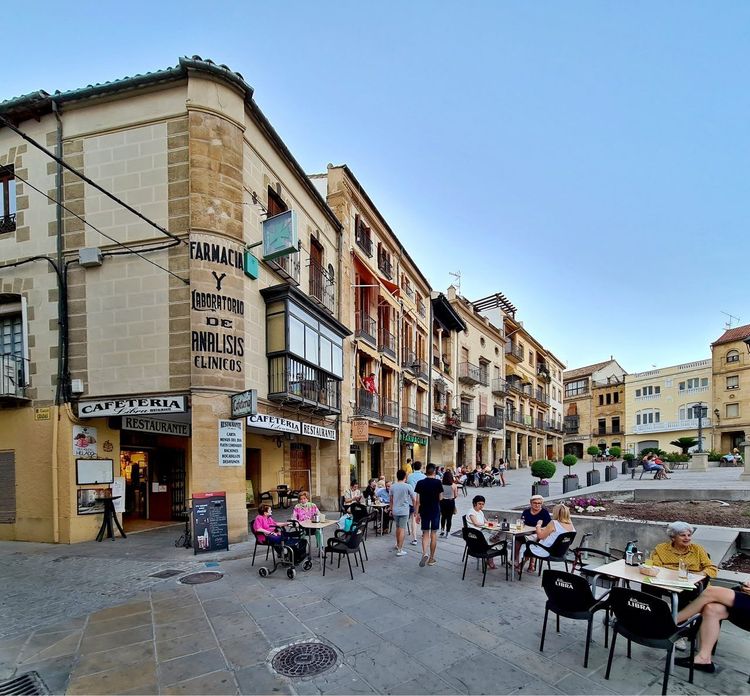
As in many Spanish cities, local guides offer a free tour of Úbeda: about an hour and a half of walking in a group, with a fixed meeting point near the tourist office (Plaza de Andalucía, 5) or the monumental square, and a voluntary tip at the end. The route covers the Plaza Vázquez de Molina and a few surrounding alleys, mostly in Spanish, sometimes in English or French depending on the time slot.
Book the day before, as groups fill up quickly in high season, and keep in mind that the tip is the guide's only pay: 5 to 10 euros per person is customary if you enjoyed the tour. If fixed schedules don't fit your plans, or if you prefer to move on without waiting for the rest of the group at every door, an audio guide on your phone lets you create your own route, coffee break included.
3. Explore the Historic Potters' Quarter of San Millán
The San Millán district, east of the historic center, has been home to Úbeda's pottery tradition for centuries. The local green ceramic, recognizable by its copper oxide glaze, is passed down here from generation to generation using techniques inherited from the Andalusian period, with a wheel still foot-operated in some workshops.
At Alfarería Pablo Tito (Calle Valencia 22, 23400 Úbeda, rated 4.8/5 on Google from 618 reviews), one of the city's oldest potter families, the Museo de Alfarería Paco Tito "Memoria de lo cotidiano" opens without a ticket, Monday to Friday from 9 am to 2 pm and from 4:30 to 8 pm, and on weekend mornings. You will see old kilns, historic pieces and, with a bit of luck, a craftsman at work, with no obligation to buy. The nearby Góngora workshop continues the same tradition.
The neighborhood itself, with its low houses and its Calle Valencia lined with workshops, is perfect for a stroll of a little under half an hour. You are then very close to the Puerta del Losal and the ramparts.
4. Walk Along the Ramparts on the Redonda de Miradores
Úbeda is perched on a hill, and its walls of Muslim origin still stretch in long sections. To the south, the Redonda de Miradores (23400 Úbeda) skirts the former Hispano-Muslim alcázar, dismantled in the era of the Catholic Monarchs, and forms a freely accessible promenade overlooking the whole Guadalquivir valley.
The view stretches over a sea of olive trees lined up across countless hills, all the way to the peaks of the Sierra Mágina and the Sierra de Cazorla in clear weather. The best moment? The hour before sunset, when the low light gilds the stone and the silvery foliage below. Allow a little under an hour for the full walk, photos included.
To better understand what you are looking at, the Ryo audio-guided tour of Úbeda passes along these ramparts and tells, facing the valley, what the city had to defend over the centuries.
5. Admire the Hospital de Santiago, the Andalusian Escorial
Nicknamed "the Andalusian Escorial" for its almost military sobriety, the Hospital de Santiago (Calle Obispo Cobos, 23400 Úbeda, rated 4.6/5 on Google from 3,191 reviews) (Avenida Cristo Rey, s/n, 23400 Úbeda) was built between 1562 and 1575 by Andrés de Vandelvira, the same architect who completed the Sacra Capilla del Salvador. Its façade framed by two square towers and its relief of Saint James on horseback are among the most photographed images of the city.
Converted into a municipal cultural center (library, auditorium, exhibition rooms), the building was usually open without a ticket. Please note, however: the tourist office reports it closed for renovation in 2026. You can still admire its façade from the avenue, but check with the office (Plaza de Andalucía, 5) before hoping to see the patio and the grand staircase.
6. Discover the Churches of San Pablo, San Miguel and Santa María
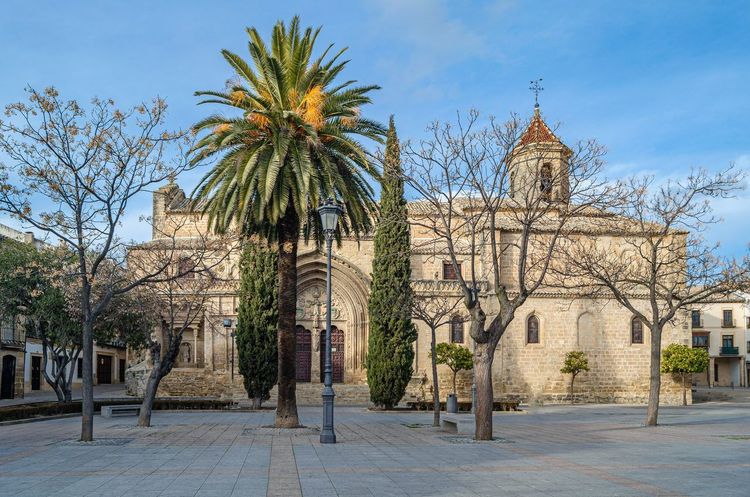
The Iglesia de San Pablo (Plaza 1º de Mayo, 23400 Úbeda, rated 4.6/5 on Google from 271 reviews), whose origins date back to the 13th century, combines a late Gothic portal with Renaissance additions. Its façade and the Plaza 1º de Mayo, the former commercial heart of the city, can be explored freely; the interior costs €3. If you are not in a hurry, the square deserves a pause on a bench, at the hour when the locals gather there.
For an interior without a ticket, head instead to the Iglesia de San Miguel (Calle Carmen, 13), a 17th-century Baroque church open every day from 9 am to 1:30 pm and linked to the memory of Saint John of the Cross, who died in Úbeda in 1591. And if you kept an eye on Santa María de los Reales Alcázares, come back at the end of the day: its façade looks much better in low light than under the midday sun.
7. Stroll Through the Alleys of the Historic Center
Beyond the listed monuments, Úbeda reveals itself by walking aimlessly among the coat-of-arms-adorned houses of the center. The cobbled alleys, sometimes steeply sloped, hide details for those who take the time to look up: a carved coat of arms, a Renaissance grille, a patio glimpsed through a door left open.
Calle Real and Its Traditional Shops
The Calle Real (23400 Úbeda), a historic pedestrian street, lines up craft shops, pastry shops and façades of 16th-century noble houses. Strolling along it costs nothing, and some storefronts have kept their original wrought-iron balconies. Take the opportunity to taste the convent sweets sold through the turntable at Santa Clara, two streets away.
Palace Patios and Free-Access Museums
This is the least-known side of Úbeda. Several palaces open their patios without a ticket on weekdays: the Palacio de Don Luis de la Cueva (Plaza Josefa Manuel, 9 am to 1 pm), the Palacio Anguís de Medinilla (Plaza Álvaro de Torres, 4, 8 am to 2:30 pm) and the Casa de las Torres (Plaza de San Lorenzo), a Plateresque façade turned arts and crafts school, open from 8 am to 2 pm. On weekends everything is closed: save these visits for a weekday morning.
Nearby, the Museo Arqueológico, housed in a Mudéjar house from the 14th and 15th centuries (Calle Cervantes, 6), is free for citizens of the European Union, Tuesday to Sunday. Its collections trace the occupation of the territory since prehistory, and the house's patio is worth the visit on its own.
The Puerta del Losal and the Clock Tower
On the way down to San Millán, the Puerta del Losal displays its double horseshoe arch in Mudéjar style, the most monumental of the surviving gates of the city wall. You can walk through it freely, and the contrast with the Renaissance façades of the center is striking.
At the other end of the center, the Torre del Reloj (Plaza de Andalucía, 23400 Úbeda, rated 4.4/5 on Google from 999 reviews) is a tower of the medieval wall (13th century) converted in the 16th century into a clock tower. Before the image of Our Lady of Remedies that adorns it, Charles V and then Philip II swore to respect the privileges of the city. The belfry can usually be visited, except from April to July: it then closes to let lesser kestrels nest.
To miss none of the anecdotes attached to each gate of this district, the Ryo audio-guided tour dedicated to Úbeda's Renaissance gem guides you step by step from the Calle Real to the clock tower, with a different story behind each stop.
8. Enjoy the Viewpoints at Sunset
The Redonda de Miradores is not the city's only balcony. Behind Santa María, the Mirador del Alcázar offers a tighter angle over the rooftops and the plain, while the street of the Miradores de San Lorenzo, near the church of the same name, looks toward the Sierra Mágina from the southeastern flank of the hill.
Arrive about thirty minutes before sunset: the best spots go quickly in summer, and the light changes fast once the sun drops below the horizon. In winter, stopping by around 5:30 pm is enough, and you'll have the railing almost to yourself. Bring a light sweater: on these heights, the temperature drops quickly once the sun disappears.
9. Walk or Cycle Along the Province's Greenways
The province of Jaén has converted several former railways into greenways, freely accessible to pedestrians and cyclists. The closest to Úbeda is the Vía Verde del Guadalimar: 15.3 flat kilometers between Ibros and Begíjar, about twenty minutes by car, through olive groves. At its start, a 6-kilometer branch heads toward Linares.
For a big outing, the famous Vía Verde del Aceite starts in Jaén and runs 128 kilometers to Puente Genil, in the province of Córdoba, with an average gradient below 3%, metal viaducts, tunnels and water points spread along the route. A two- or three-hour section starting from Jaén is enough to get a feel for it.
Bring water and a cap: shade is scarce on these old railways, especially between June and September.
10. Admire the Seas of Olive Trees and Taste Oil at the Cooperatives
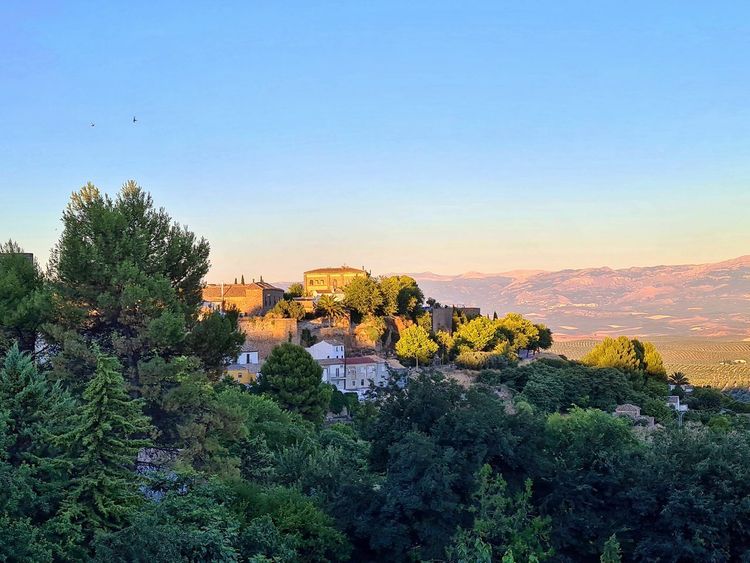
The province of Jaén has more than 60 million olive trees and alone produces a considerable share of the world's olive oil. Úbeda lies at the heart of this sea of greenery: from any elevated point, the view gets lost in a silvery-green horizon that comes alive at harvest time, from November to February.
Several cooperatives and mills in the surrounding area welcome visitors and sometimes offer a free tasting, especially outside the harvest season. Nothing is guaranteed: call before you go. If you want to understand the industry from A to Z, the Centro de Interpretación Olivar y Aceite (Corredera de San Fernando, 32) costs €3.50 and is free for children under 12.
11. Take a Trip to Baeza, the Renaissance Twin Town
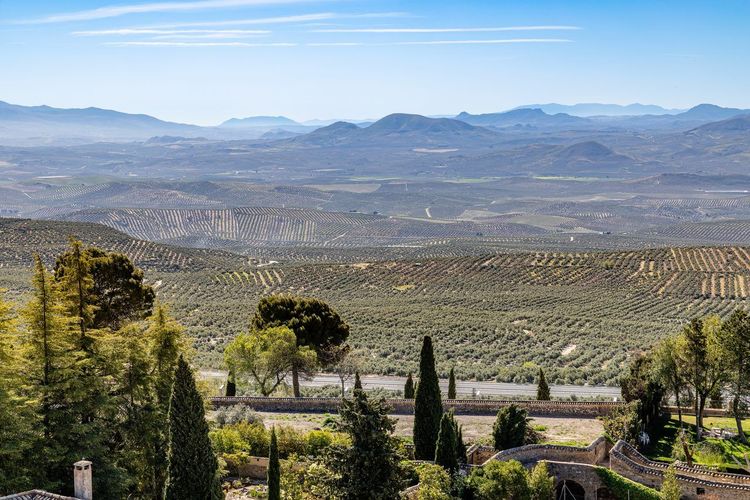
Only 9 kilometers away, Baeza forms with Úbeda the duo listed as a UNESCO World Heritage Site in 2003, the two towns sharing the same heritage left by the same notable families and the same architect, Vandelvira. The trip takes about fifteen minutes by car, or a little longer by regular bus for a few euros.
The historic center can be covered entirely on foot, starting with the Plaza del Pópulo (23440 Baeza, rated 4.5/5 on Google from 224 reviews) and its Fountain of the Lions, adorned with an ancient statue from the Ibero-Roman city of Cástulo. The cathedral costs €7 (tower, cloister and audio guide included), but you can enter without paying on Monday and Tuesday from 6 to 7 pm, without access to the cloister or the tower.
Half a day is enough to tour the main squares and the former university, now the Antonio Machado high school, where the poet taught French. Combining Úbeda in the morning and Baeza in the afternoon remains the most efficient option if you have only one day in the region.
12. Go Further: Jaén and the Sierra de Cazorla
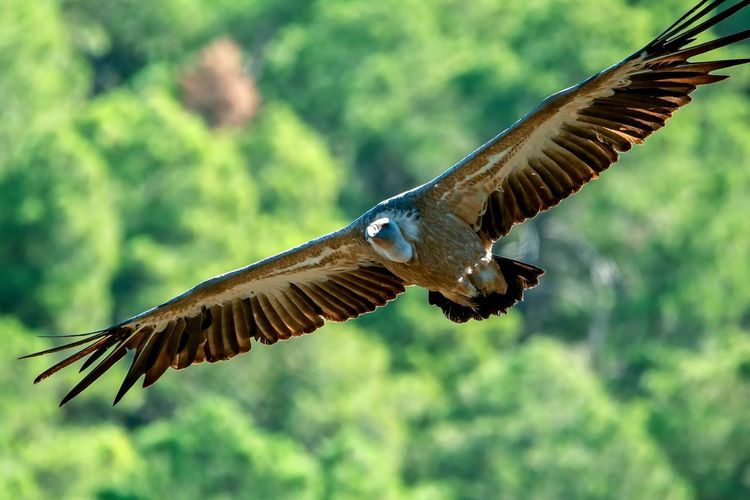
With one more day and a car, the surroundings of Úbeda are well worth the detour, between a fortified city, protected mountains and large reservoir lakes. Two directions emerge depending on the time available: west toward Jaén and its olive groves, or east toward the Sierras de Cazorla and Segura.
Jaén and the Guadalquivir Olive Groves
Less than an hour's drive away, Jaén overlooks its valley from the promontory of the Castillo de Santa Catalina. The interior of the fortress is paid, but the esplanade and the Cross viewpoint remain freely accessible and offer one of the finest panoramas in Andalusia over the city and its olive groves.
On the way down, Jaén's Renaissance cathedral, another masterpiece by Vandelvira, can be admired from the Plaza de Santa María, and the alleys of the Magdalena district invite you to wander without a set route, as in Úbeda.
Segura de la Sierra and Lake Negratín
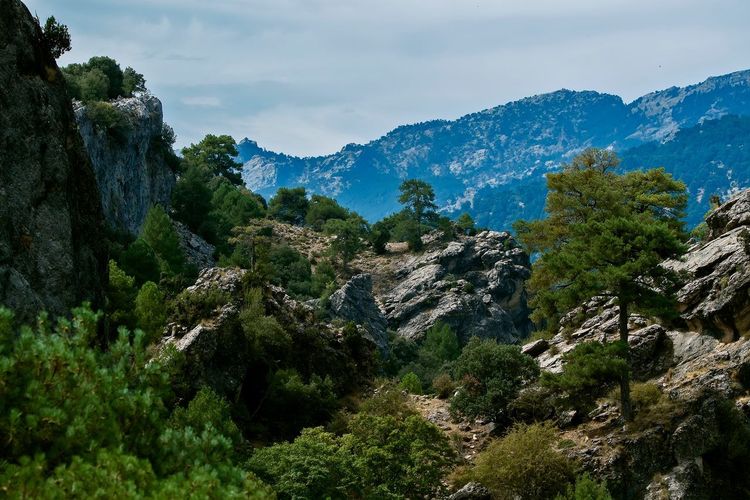
To the east, the village of Segura de la Sierra, clinging to its rocky peak in the Sierras de Cazorla, Segura y Las Villas Natural Park, can be explored on foot in a little under an hour. Its steep alleys and its bullring partly carved into the rock are already worth the trip, even before climbing up to the castle.
Further southeast, the Embalse del Negratín (Baza, Granada, rated 4.7/5 on Google from 265 reviews), a vast reservoir lake on the Guadiana Menor, offers freely accessible shores popular for swimming and sunsets over the water in summer. Allow about an hour and a half of driving from Úbeda: it is more a road-trip stop than a simple day outing.
If you are linking several cities, the Ryo audio-guided road trip through Andalusia takes over between stops, designed for a multi-day trip rather than a single excursion.
13. Spot the Events and Markets by Season
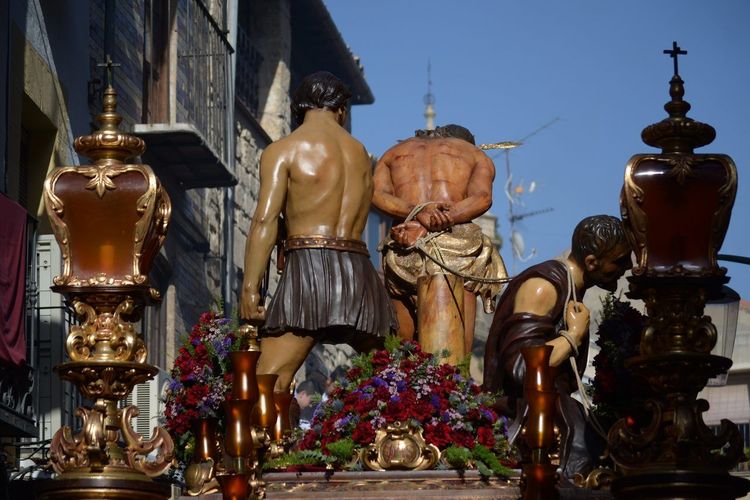
Úbeda's Holy Week, declared of National Tourist Interest in Andalusia in 1997, fills the streets with night processions to be watched from the sidewalk, in an atmosphere radically different from the usual calm of the monumental square. Book your accommodation very early if you are aiming for these dates.
In late September, the Feria de San Miguel enlivens the city with open-air concerts and fairground attractions, with no ticket needed to access the fairground. In spring, the Ciudad de Úbeda International Music and Dance Festival also schedules, depending on the edition, a few open-air events. And every week, the weekly market lets you taste olive oil and local cheeses without going through a tourist shop.
Practical Info for Visiting Úbeda Without Spending
For French travelers, a valid ID card or passport is enough, as Spain belongs to the Schengen area. The currency is the euro, and there is no time difference with France. Úbeda has no airport: the nearest is Granada's, about an hour and a half away by road, while Málaga's is two and a half hours away. From Paris, the flight to Andalusia takes about two hours.
Parking is free on most streets of the lower town, outside the historic center where traffic is restricted: park on the outskirts and finish on foot. Budget-wise, all the activities listed here cost nothing, except for the optional interiors (€3 to €7 per monument). Spring, from April to June, and autumn, from September to October, are the best seasons to avoid the heat of the Andalusian summer, which regularly exceeds 35 °C in July and August.
Half a day lets you see the monumental square and the potters' quarter; a full day leaves time to add the ramparts, the patios and the viewpoints; two days or more open the door to Baeza, Jaén and the sierras.



FAQ
How much time should you plan for visiting Úbeda?
Half a day is enough for the Plaza Vázquez de Molina and the potters' quarter. To include the ramparts, the patios and a lunch break, allow a full day. If you add Baeza, plan on two days.
Is the Úbeda free tour really free?
The tour has no fixed ticket price: the guide lives on tips left freely at the end of the walk, generally 5 to 10 euros per person depending on how satisfied you are. Booking costs nothing but is still recommended.
What is the difference between Úbeda and Baeza?
The two towns share the same UNESCO listing and the same period of construction, but Úbeda has more monumental palaces gathered around a single square, while Baeza stands out for its cathedral and its former university. Each can be visited in half a day.
Where can you park for free in Úbeda?
The streets of the lower town, outside the pedestrian zone of the historic center, offer free parking. Avoid the immediate surroundings of the Plaza Vázquez de Molina, which are regulated or crowded in high season.
What is the best time of year to visit Úbeda?
Spring, from April to June, and early autumn, from September to October, offer pleasant temperatures for walking all day. Summer often exceeds 35 °C, which makes outdoor sightseeing tiring between noon and 5 pm.
Can you visit Úbeda in one day from Jaén or Granada?
From Jaén, less than an hour's drive makes a day return trip easy. From Granada, allow about an hour and a half to an hour and forty-five minutes, which is still doable if you leave early in the morning.
Úbeda proves that a World Heritage city does not need a big budget to reveal itself: its Renaissance façades, ramparts, patios, potters' quarter and panoramas over the sea of olive trees can all be discovered on foot and without a ticket. The few optional expenses, such as the interior of Santa María or an oil tasting, are minor compared with everything the city offers.
To link these places together once you are there, the Ryo audio guide to Úbeda gives you a common thread, with no schedule or group to follow. All that is left is to let the chance of the alleyways do the rest.