
Créé par Romane, le 3 juin 2026
Votre guide Ryo
© Shutterstock
London has a way of catching you off guard even when you think you know it. The city that invented the queue also invented the 24-hour Tube rave, the cemetery tour as an art form, and the concept of eating world-class ramen five metres from a centuries-old Wren church. Whether it's your first visit or your fifteenth, there's a version of London you haven't experienced yet, and Ryo's London audio guide (Ryocity London) is one of the best ways to start unpacking it street by street.
The 35 experiences in this list span iconic landmarks and seriously underrated corners: a subterranean war bunker that still smells faintly of pipe smoke, a free glass greenhouse suspended above the City's rooftops, a cemetery where Victorian poets and radical philosophers rest side by side under ancient yews, and a canal boat ride that passes from punk markets to a pocket of Venice in west London. This isn't a shortlist of monuments, it's a working guide to what actually makes London worth visiting.
1. Tower of London
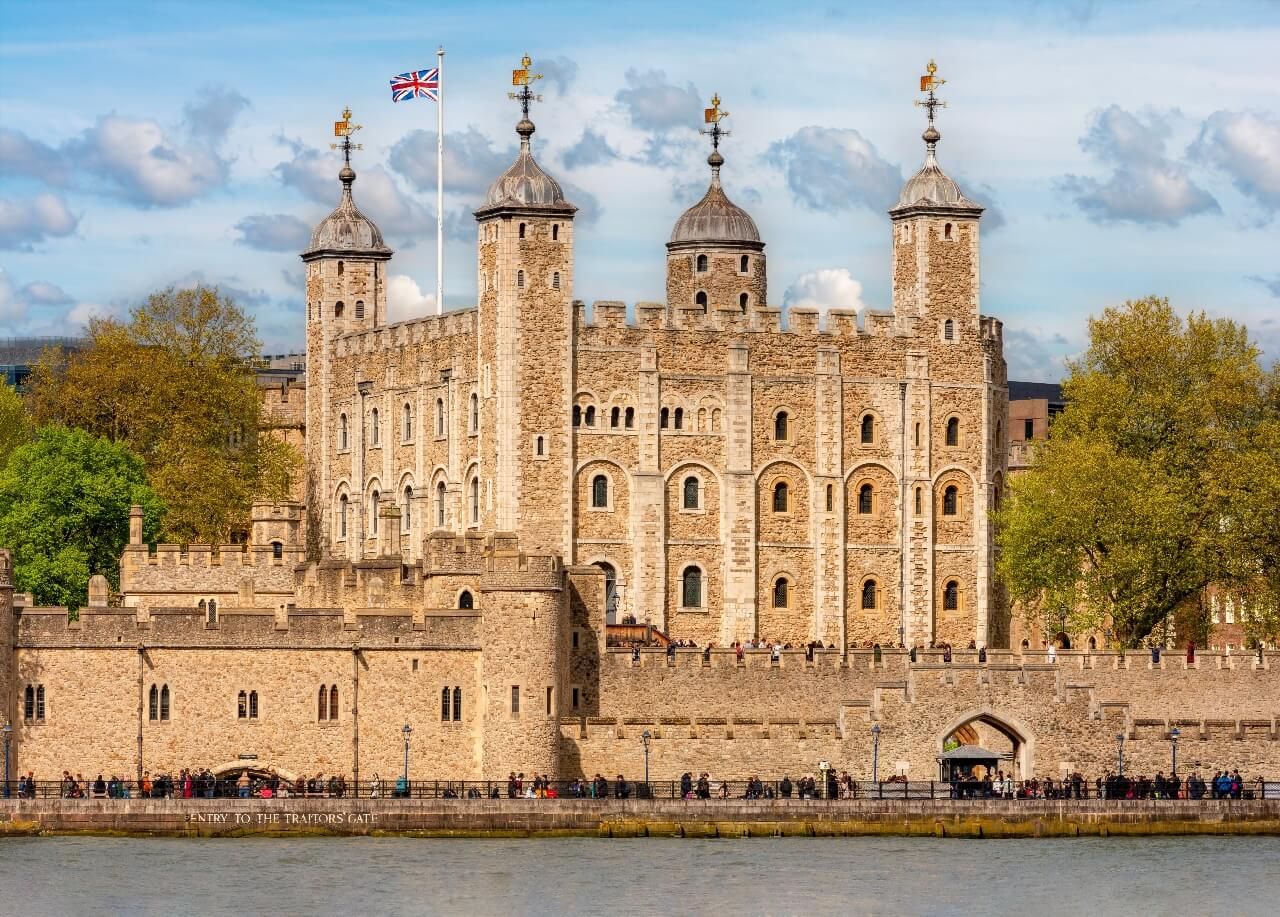
Few buildings in England carry as much concentrated history as the Tower of London. Founded by William the Conqueror in 1066 and expanded relentlessly over the following five centuries, it has served as a royal palace, a political prison, an armoury, a menagerie, lions were kept here until 1835, and a mint. Today it houses the Crown Jewels, including the Imperial State Crown set with over 2,800 diamonds, and draws around 3 million visitors a year.
Don't rush through the Jewel House. Most visitors spend five minutes glancing at the cases before moving on; give yourself 20 minutes to actually read the explanatory panels and understand what each piece was used for. The Yeoman Warders, better known as Beefeaters, run guided tours throughout the day that are genuinely entertaining and factually dense. Their stories about the various prisoners held here, from Anne Boleyn to Rudolf Hess, are far more vivid than any audio guide.
Book tickets online in advance, queues on summer weekends can be 45 minutes long even once you reach the gates. Aim for a weekday morning opening if you want the White Tower largely to yourself. The Medieval Palace and the walkway along the outer battlements are quieter than the Jewel House and offer the best views of Tower Bridge from ground level.
2. British Museum
The British Museum is one of the most visited museums on earth, with good reason: its permanent collection of around 8 million objects spans two million years of human history across every inhabited continent. The Rosetta Stone, the Elgin Marbles, the Lewis Chessmen, the Sutton Hoo helmet, these are not reproductions. You are looking at the actual objects.
Entry to the permanent collection is free. Given its scale, a selective approach works better than trying to see everything: pick two or three rooms that genuinely interest you and spend real time there rather than speed-walking the entire ground floor. The Africa galleries and the Enlightenment Room (Room 1, with its overwhelming density of 18th-century curiosities) are consistently less crowded than the Egyptian and Greek sections.
Arrive at opening time on a weekday if crowds concern you. The Great Court, designed by Norman Foster and opened in 2000 with its spectacular tessellated glass roof, is itself worth seeing regardless of which galleries you enter.
3. Westminster Abbey
Westminster Abbey has been the site of every English and British coronation since 1066, a record of 39 coronations in a single building. It is also the burial place of Isaac Newton, Charles Darwin, Stephen Hawking, Geoffrey Chaucer, and the Unknown Warrior, whose tomb is the only one in the Abbey that no one is permitted to walk over.
Admission is not free (around £27 for adults), but the building is extraordinarily rich. The Henry VII Lady Chapel at the eastern end, with its fan-vaulted ceiling, among the finest examples of Perpendicular Gothic stonework in England, alone justifies the entrance fee. Poets' Corner in the south transept, where memorials to Dickens, Shakespeare, and T.S. Eliot cluster on the walls, has a peculiar intensity that even non-literary visitors tend to notice.
Allow at least 90 minutes. The included audio guide with Jeremy Irons is actually good.
4. Tate Modern
The Tate Modern occupies a converted Bankside power station on the South Bank, its Turbine Hall, 155 metres long and 35 metres high, serving as a permanent challenge to artists commissioned to fill it. Since 2000, Louise Bourgeois, Ai Weiwei, and Olafur Eliasson have each reimagined what a public art installation can be in that space. The current commission is worth seeking out regardless of your existing relationship with contemporary art.
Permanent collection entry is free. The ticketed temporary exhibitions, Picasso, Cézanne, and Hilma af Klint have each had major shows here in recent years, are generally world-class and worth the £20-25 admission. The tenth-floor viewing gallery offers one of London's better panoramas: St Paul's Cathedral directly across the river, the City skyline to the east, and the Oxo Tower to the west.
5. Borough Market
Borough Market (8 Southwark Street, London SE1 1TL, rated 4.6/5 on Google (126 909 avis)), tucked under the railway arches near London Bridge, has operated in some form since at least 1014, making it older than the current iteration of London Bridge itself. Today it is one of Britain's finest food markets, with around 100 stalls selling everything from Monmouth coffee to raclette scraped directly onto your bread.
The market is at its most atmospheric on Thursday and Friday mornings, before the weekend crowds arrive. Come hungry and treat it as breakfast: a coffee from Monmouth, a salt beef bagel from Beigel Shop down the road, a portion of churros or freshly made pasta depending on where the queue takes you. It's easy to spend £25 here without trying very hard and feel completely satisfied about it.
The surrounding Bermondsey Street area, with its independent galleries, the Fashion and Textile Museum, and the White Cube gallery, rewards an extra hour of exploration if the market has warmed you up.
6. Camden Market
Camden Market (Camden Lock Place, London NW1 8AF, rated 4.6/5 on Google (148 971 avis)) is less a market than a district, a maze of interconnected market spaces, food halls, canal-side walkways, and music venues that sprawls across a significant chunk of north London. It officially occupies several distinct market areas: the Lock Market, the Stables Market (formerly a horse hospital, the vaulted brick passages still visible), the Electric Ballroom, and the Hawley Wharf development on the canal.
The food options here are genuinely diverse: you can eat your way through Korean fried chicken, Ethiopian injera, Venezuelan arepas, and Japanese takoyaki within a ten-minute walk. Weekend afternoons are busy to the point of exhaustion; Saturday mornings from 10am offer much the same produce with significantly less jostling.
The Regent's Canal towpath runs directly through Camden, from here you can walk or cycle west towards Regent's Park and beyond, or pick up the canal boat towards Little Venice (see section 34). Ryo's audio guide for the Camden to Regent's Park route covers the history of the canal and the surrounding neighbourhood with considerably more depth than a standard tourist map.
For music, the Jazz Café and the Electric Ballroom on Camden High Street have been putting on notable shows since the 1980s. The Roundhouse, a five-minute walk north, hosts larger acts in a converted Victorian engine shed.
7. Buckingham Palace
Buckingham Palace has been the London residence of the British monarch since Queen Victoria moved in during 1837. The exterior, that famous east façade with its Portland stone frontage, is a reasonable spectacle at any time of year, but the Changing of the Guard ceremony is the main draw for most visitors.
The ceremony takes place most mornings (check the official schedule, as it doesn't run every day) and lasts around 45 minutes. Arrive at least 30 minutes early for a decent vantage point. The State Rooms are open to visitors in summer (late July through September), the interior is opulent and genuinely interesting if you have an appetite for royal history.
8. Tower Bridge
Tower Bridge is one of the most photographed structures in the world, which hasn't made it any less impressive in person. The Victorian Gothic towers house the original steam engines that once powered the bascules, and the glass-floored walkway 42 metres above the Thames offers a perspective on the river that no photograph quite captures.
Admission to the Tower Bridge Exhibition (which includes the walkway and the engine rooms) is around £14 for adults. The bridge still lifts roughly 800 times a year, the schedule is published online a few days in advance if you want to plan your visit around a lift. The view of the Tower of London from the south bank approach, with Tower Bridge framing the background, is one of the city's defining images. The South Bank here connects directly to Bermondsey and Borough Market on foot.
9. St Paul's Cathedral
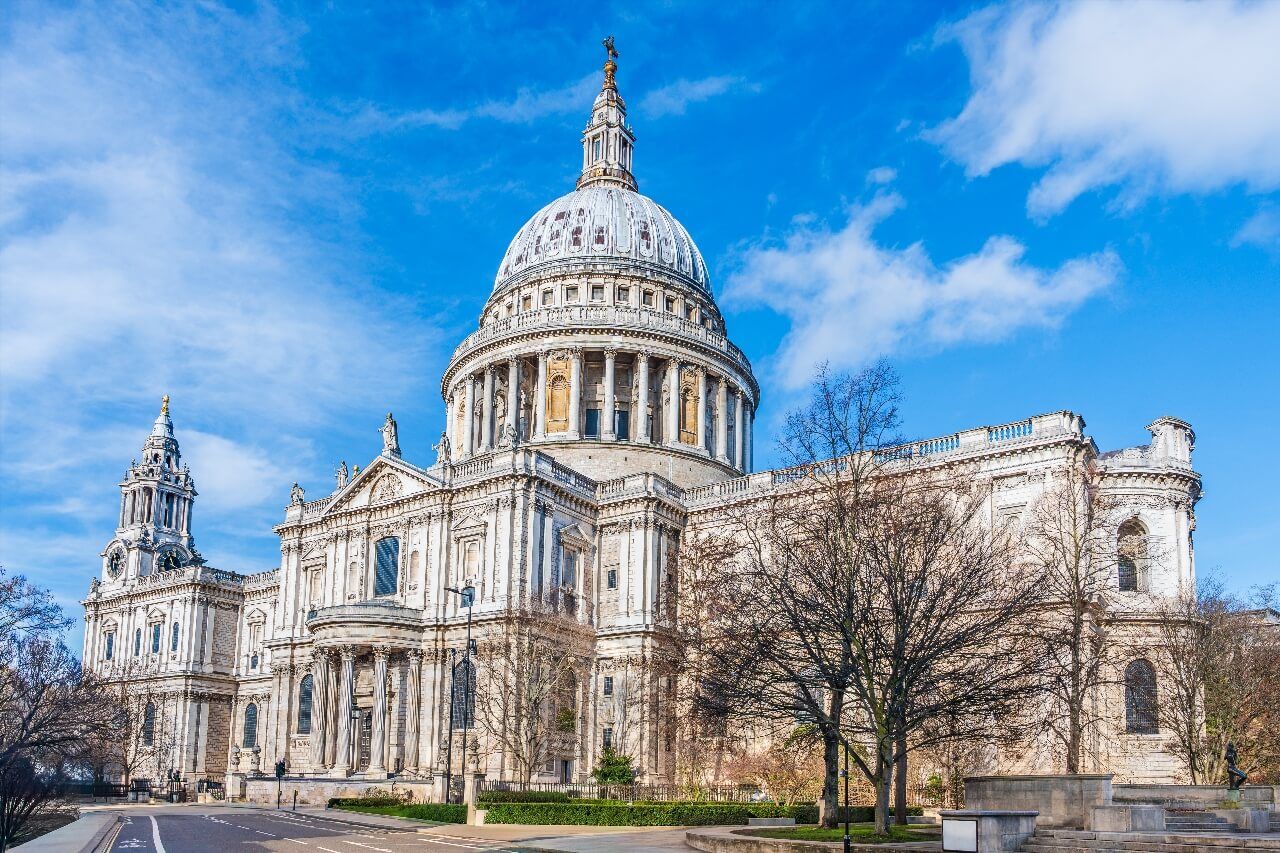
When St Paul's Cathedral (St Paul's Churchyard, London EC4M 8AD, rated 4.7/5 on Google (55 701 avis)) reopened in 1710 after 35 years of construction, Christopher Wren was 78 years old. He had spent most of his professional life on a building that nearly bankrupted his patrons and was nearly cancelled three separate times by parliamentary committee. The result is a dome that remained London's tallest structure for more than 250 years and still anchors the skyline from almost every approach to the City.
Admission is around £23 for adults and includes access to three galleries within the dome. The Whispering Gallery, a circular walkway 30 metres above the cathedral floor, is famous for its acoustic peculiarity: a whisper against the wall on one side can allegedly be heard 34 metres away on the opposite side. Scientists have measured the effect more prosaically as a creeping wave phenomenon, but the sensation of hearing a quiet voice travel the full circumference remains striking.
The Golden Gallery at the top requires climbing 528 steps in total but delivers what many visitors consider the best 360-degree view of London available at reasonable cost, the dome of the Old Bailey to the west, the Gherkin directly below to the east, and the Thames glinting between the buildings to the south. Allow at least two hours for the full interior including the crypt, where Wren himself is buried beneath the simple inscription: Lector, si monumentum requiris, circumspice, Reader, if you seek his monument, look around you.
10. Churchill War Rooms
The Churchill War Rooms (Clive Steps, King Charles Street, London SW1A 2AQ, rated 4.6/5 on Google (15 412 avis)) occupy the basement of the Cabinet Office building in Whitehall, where the British government directed operations during the Second World War from a suite of underground rooms protected by a 3-metre concrete slab overhead. The Cabinet Room looks today exactly as it did on 15 October 1940, the last day it was used before it was locked and left undisturbed for four decades.
This is one of London's most affecting museums, and significantly less visited than the nearby Houses of Parliament. The physical reality of the space, low ceilings, bare bulbs, narrow corridors, the original maps still pinned to the walls, communicates something about wartime decision-making that no amount of documentary footage quite achieves. Churchill's personal bedroom (a converted broom cupboard with a single iron bed) is particularly disquieting given what was decided a few metres away.
The Churchill Museum, integrated into the War Rooms, is a comprehensive biography of the man from birth to death. Allow 2.5 to 3 hours for both. The museum is included in the Historic Royal Palaces membership if you plan to visit multiple sites; entry otherwise is around £27 for adults. Book in advance, it regularly sells out on weekends.
The location makes it easy to combine with a walk along Whitehall to Parliament Square, past the Cenotaph, Downing Street's gates, and the mounted life guard changing at Horse Guards at 11am daily.
11. Natural History Museum
The Natural History Museum in South Kensington has been free to enter since 1881, a fact that still surprises many visitors arriving for the first time. The Waterhouse Building, Alfred Waterhouse's 1881 Romanesque terracotta palace, is itself an argument for visiting before you even look at an exhibit.
The dinosaur galleries draw the largest crowds, but the Human Evolution gallery and the Earth Halls (particularly the escalator through a giant model of the Earth) are consistently undervisited. Hope, the blue whale skeleton suspended in the entrance hall since 2017, replaced the diplodocus that had greeted visitors for a century. Come on a weekday morning to see the building at its quietest and most architecturally legible.
12. The Shard
The Shard, designed by Renzo Piano and inaugurated in 2012 (with the public viewing gallery opening in February 2013), is western Europe's tallest building at 309.6 metres and contains hotels, offices, restaurants, and a public viewing gallery spread across floors 68 to 72. The panoramic views on a clear day extend up to 64 kilometres, far enough on exceptional days to see the North Downs of Surrey to the south.
Admission is expensive (around £34 in advance) and the crowds are significant. If that gives you pause, consider that Horizon 22 in the City offers free viewing from floor 58 on weekdays by advance booking, the views are excellent and the experience is significantly less crowded. The Shard wins on pure height and the intimacy of the enclosed gallery; Horizon 22 wins on value.
13. Sky Garden
The Sky Garden at 20 Fenchurch Street, better known as the Walkie-Talkie building, is London's answer to a rooftop public park: a three-storey glass atrium at the summit of the building, planted with Mediterranean and African flora and open to the public free of charge. The catch is that you need to book in advance online, which many people don't realise until they're standing at the base of the building.
The 360-degree views from the observation deck at the top take in St Paul's, the Gherkin, the Cheesegrater, the Shard, Tower Bridge, and the Thames, essentially the full architectural vocabulary of contemporary London in a single panorama. It's free, the planting is lush, and on weekday mornings the space is genuinely quiet. The bar and restaurant are predictably expensive; the views are worth every minute of the booking process.
14. Covent Garden
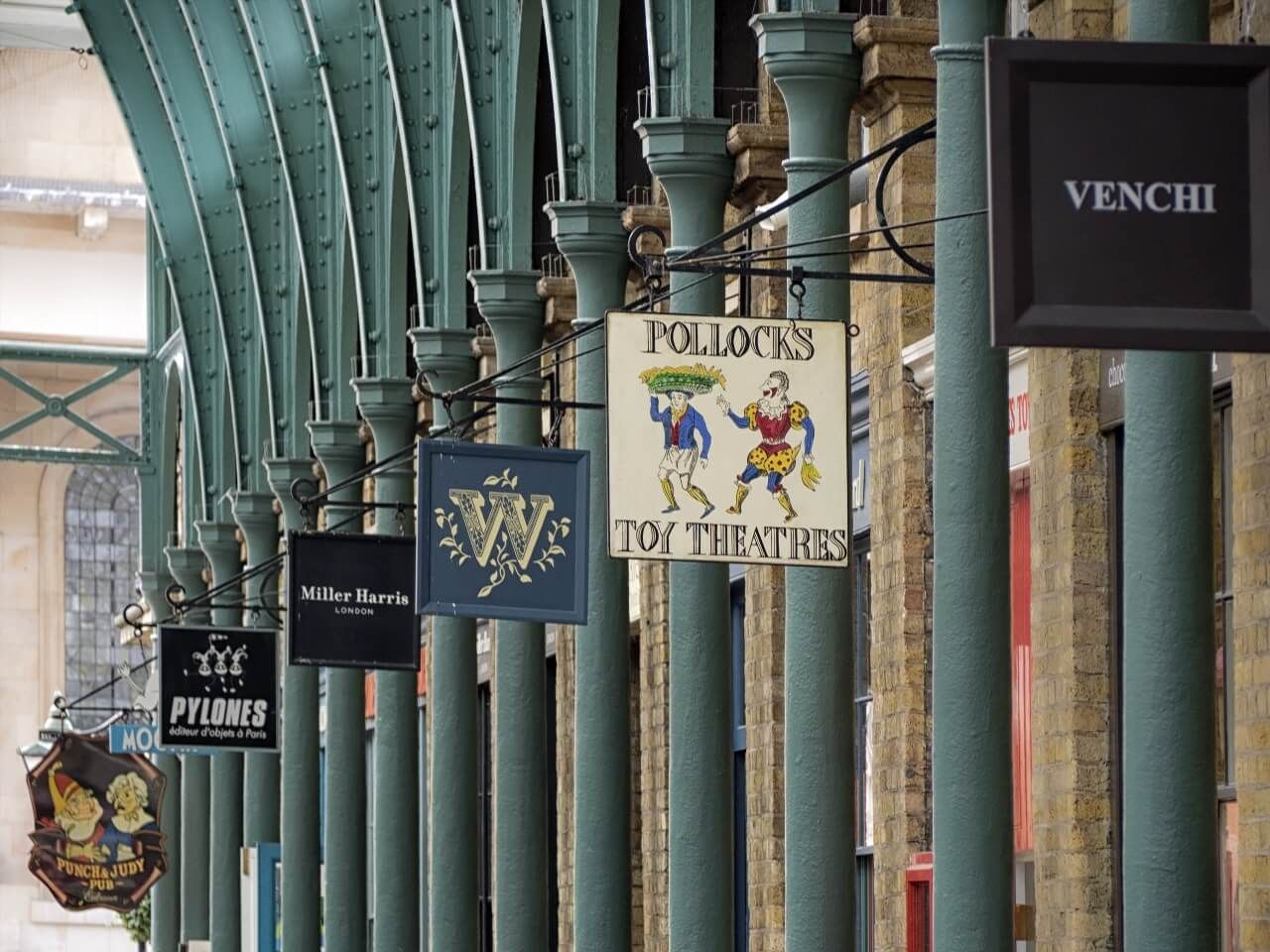
Covent Garden started life as a walled garden belonging to Westminster Abbey, became London's principal fruit and vegetable market in the 17th century, and is now a pedestrianised piazza surrounded by independent boutiques, street performers, and the entrance to the Royal Opera House. The London Transport Museum is housed in the Victorian flower market building on the eastern side.
The street performance tradition here is officially regulated, performers audition for their pitches, which means the standard is unusually high. Come in the early evening when the performers are at their most ambitious and the piazza lights up. The area around Neal's Yard, a five-minute walk north through the Seven Dials alleyways, offers a different atmosphere entirely: independent coffee shops, an apothecary, and walls painted in colours that feel deliberately at odds with London's habitual grey.
15. Portobello Road Market
Portobello Road Market (Portobello Road, London W11 1LU, rated 4.5/5 on Google (28 428 avis)) in Notting Hill runs along one of London's most architecturally consistent Victorian streets, with around 1,000 dealers operating on Saturdays, antiques dealers at the Notting Hill end, fruit and vegetables in the middle, and vintage clothing and records near the Ladbroke Grove end.
Saturday is the only day all sections operate simultaneously. The antique silverware, vintage maps, and pre-war photography at the southern end reward serious browsing. The area around Golborne Road at the northern end, less known to tourists, has a mix of Portuguese cafés and Moroccan restaurants that provide an excellent post-market lunch. The Notting Hill Carnival in late August transforms the same streets into Europe's largest street festival.
16. Highgate Cemetery
Highgate Cemetery (Swain's Lane, London N6 6PJ, rated 4.7/5 on Google (1 528 avis)) was opened in 1839 as one of the seven great Victorian cemeteries built to solve London's overcrowding crisis, and it remains among the most atmospheric outdoor spaces in the city. The West Cemetery, the older half, with its Egyptian Avenue, the cedar of Lebanon growing through the roof of the catacombs, and the extraordinary Circle of Lebanon, a ring of vault entrances set into a hillside, can only be visited on a guided tour.
The East Cemetery, where Karl Marx is buried under a substantial granite monument (added in 1956, considerably grander than his original headstone), is open for self-guided visits. George Eliot is also buried here, as is Douglas Adams, whose grave is reliably marked by pencils left by admirers. The Gothic atmosphere of the place, dense ivy, tilting headstones, lanes canopied by yews planted when the cemetery was new, is not morbid so much as extraordinarily alive with history.
Tours of the West Cemetery run daily and must be booked in advance at highgatecemetery.org. The guided tour lasts around one hour and covers the Egyptian Avenue, the catacombs, and the stories of the more notable permanent residents. Arrive early if you can, the morning light filtering through the yew canopy is genuinely something.
The neighbouring Waterlow Park, accessible through a gate from the cemetery grounds, has fine views over London and a small café that is reliably less expensive than anything in the nearby Highgate village.
17. Shakespeare's Globe
Shakespeare's Globe (21 New Globe Walk, London SE1 9DT, rated 4.6/5 on Google (24 251 avis)) on the South Bank is a reconstruction of the 1599 original, built 230 metres from where the first Globe stood before it burned down during a cannon-fire mishap in 1613. The current building, completed in 1997 after decades of campaigning by the American actor Sam Wanamaker, uses techniques and materials as close as possible to the 16th-century original, oak timber, lime plaster, and hand-made thatch.
The theatre operates between April and October for live performances staged in the original conditions: open roof, standing yard tickets for £5, and performances run regardless of weather. If you want to see a Shakespeare play as it was originally seen, this is the closest approximation available anywhere. The standing yard tickets are genuinely the best deal in London theatre, and the proximity to the stage creates an intensity that seated performances rarely match.
The exhibition and tour of the building is available year-round, covering the archaeology of the original site, the construction of the current theatre, and the Elizabethan theatrical world in considerable detail. Allow 90 minutes for the tour. The indoor Jacobean theatre, the Sam Wanamaker Playhouse, a candlelit, wood-panelled jewel on the same site, runs productions through the winter months and is worth a visit in its own right.
The surrounding South Bank walk connects the Globe to Tate Modern (five minutes east) and to Bankside, where the Rose Theatre's foundations are preserved beneath a modern office building just off the main path.
18. West End Shows
London's West End is the largest concentration of commercial theatre in the world, with around 40 venues in the area between Shaftesbury Avenue, the Strand, and Charing Cross Road. The Lion King has been running at the Lyceum since 1999. Les Misérables transferred to the Sondheim Theatre in 2004. These are not touring productions, they are long-run London originals.
For same-day discounted tickets, the TKTS booth (Leicester Square, London WC2H 7LU, rated 4.5/5 on Google (829 avis)) in Leicester Square offers genuine savings, up to 50% off on some shows, though the most popular productions rarely appear on the day board. The National Theatre and the Barbican Centre, slightly outside the traditional West End, offer a different range: new writing, classic productions, and international companies at prices that are generally lower than the commercial sector. The National's cheapest seats are £15 on some productions.
19. Thames River Cruise
A Thames River Cruise from Westminster Pier (Westminster Bridge Road, London SW1A 2JH, rated 4.6/5 on Google (177 avis)) to Greenwich covers approximately 10 kilometres of river and passes, in sequence: the Houses of Parliament, the Tate Modern, Shakespeare's Globe, HMS Belfast, Tower Bridge, and the Cutty Sark dry-docked at Greenwich. It takes around an hour in each direction and provides an angle on the city that land-based visitors rarely get.
The City Cruises boats run year-round. A return ticket is around £20 for adults. The commentary on the main services is variable in quality; the river itself is not. The light on the Thames on a clear afternoon, especially heading east with the dome of St Paul's appearing and then receding behind the railway bridges, is one of those simple pleasures that visitors often mention as an unexpected highlight.
20. Greenwich & the Prime Meridian
Greenwich stands apart from central London in atmosphere as much as geography. Reached by river boat or DLR from the centre, the Royal Borough of Greenwich contains more listed buildings than any other place in England, a concentration of Baroque and Wren-era architecture around the park and the Naval College that led to its designation as a UNESCO World Heritage Site.
The Royal Observatory, positioned on the hill above the park, straddles the Prime Meridian of the World, the 0° longitude line established here in 1884 at the International Meridian Conference. The Meridian Line is marked by a brass strip in the courtyard, and visitors can photograph themselves with one foot in each hemisphere. This is slightly more meaningful than it sounds: the line is the reference point for every time zone on earth.
The Flamsteed House inside the Observatory contains the original instruments used to make the precision astronomical observations that eventually allowed the calculation of longitude at sea, which, in the 18th century, was one of the most pressing technical problems facing global navigation. The story is told well, and the Great Equatorial Telescope in its distinctive dome is still used for public observations on clear evenings.
The Cutty Sark in the dry dock below the park is the world's only surviving composite clipper ship, built in 1869 to carry tea from China to London, and is genuinely worth the admission (around £20). The park itself, with its formal avenue of chestnut trees and the view north over Wren's Painted Hall and the Thames to the City skyline beyond, is one of the finest urban vistas in Europe. Greenwich rewards a slower pace, and a Ryo audio guide adds the kind of layered context (the maritime history, the Stuart court politics, the science of longitude) that signage alone never quite delivers. Allow at least half a day.
21. Kensington Palace
Kensington Palace (Kensington Gardens, London W8 4PX, rated 4.5/5 on Google (31 786 avis)) has been a royal residence since William III moved in from Hampton Court in 1689. It is where Queen Victoria was born in 1819 and where she received news of her accession to the throne in 1837. The State Apartments are open to visitors and the permanent exhibition on Queen Victoria's early life is one of the better royal displays in London.
Admission is around £25 for adults. The Sunken Garden adjacent to the palace, with its formal planting and the reflecting pool at the centre, is free to enter and one of the quieter corners of Kensington Gardens. The palace's position on the western edge of Hyde Park makes it a natural endpoint for a walk through the park from the East or through the Italian Gardens at the northern end of the Long Water.
22. Hyde Park
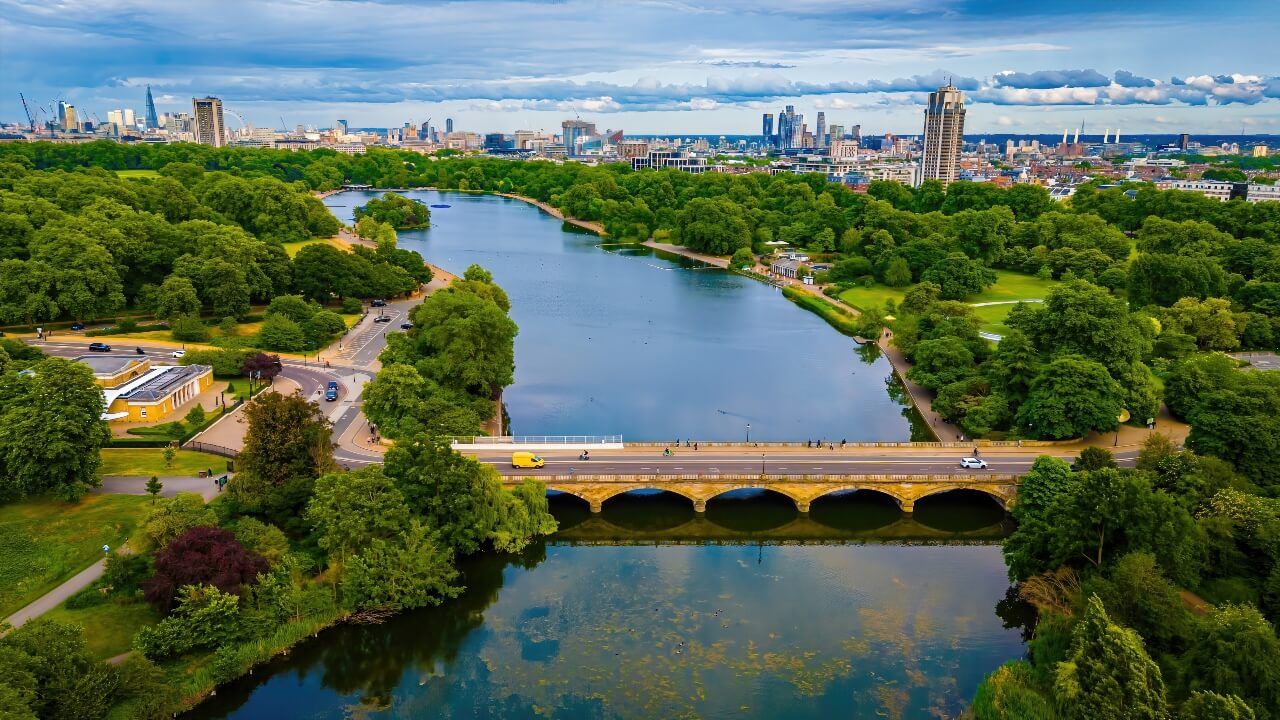
Hyde Park covers 350 acres in central London, approximately the same area as Monaco, and has been royal land since Henry VIII appropriated it from Westminster Abbey in 1536. The Serpentine Gallery and its annual summer Pavilion commission make the park as relevant to contemporary architecture as to pastoral recreation.
Speakers' Corner at the northeast entrance near Marble Arch has been a designated site for public speech since 1872. On Sunday mornings, a rotating cast of speakers on improvised platforms addresses small, sceptical, occasionally heckled audiences on subjects ranging from politics to theology to personal grievance. It is free, often strange, and deeply English.
23. Barbican Conservatory
The Barbican Conservatory (Silk Street, London EC2Y 8DS, rated 4.5/5 on Google (1 206 avis)) on the second floor of the Barbican Centre is one of London's least-publicised free spaces: a glass-roofed tropical greenhouse containing over 2,000 species of exotic plants and trees, built into the architecture of one of Europe's largest multi-arts centres.
It opens to the public on Sundays from noon and on some Bank Holidays. The arid house contains desert cacti several metres tall; the main conservatory has ferns, palms, and terrapins in a central pond. Combine it with an evening performance at the Barbican, the resident London Symphony Orchestra, a film in the cinema complex, or an exhibition in the gallery, for one of London's better value cultural days.
24. St Dunstan in the East
St Dunstan in the East (St Dunstan's Hill, London EC3R 5DD, rated 4.7/5 on Google (8 239 avis)) in the City of London was bombed during the Blitz and never rebuilt. Instead of clearing the ruins, the Corporation of London converted the shell into a public garden in 1967, allowing climbing plants to reclaim the Gothic stonework and the Wren-designed tower.
The result is one of the most photographed spaces in London, an open-air ruin garden where ivy covers the arched windows, fig trees grow from the floor of what was the nave, and office workers eat lunch among the overgrown window tracery. It's free, quiet on weekday mornings, and takes about 20 minutes to visit properly. Easy to combine with a walk along the Thames Path from London Bridge.
25. The Outernet
The Outernet (Denmark Street, London WC2H 8NL, rated 4.6/5 on Google (2 804 avis)) is a free immersive media venue in St Giles, a five-minute walk from Tottenham Court Road. The centrepiece is Now, the world's largest immersive experience space: four interconnected screens totalling around 23,000 square feet of LED surface area that cycle through artist commissions, nature films, and music performances throughout the day.
Entry is free and no booking is required. The programming changes regularly, some of it is genuinely extraordinary, some of it is advertising content, and the distinction is usually obvious. Worth ten minutes of your time even if you're just walking through the area. The surrounding Denmark Street, historically London's music industry row (the Rolling Stones recorded their first album in a studio here), still has several guitar and instrument shops.
26. Leake Street Arches
Leake Street Arches (Leake Street, London SE1 7NN, rated 4.5/5 on Google (9K reviews)) runs beneath the Waterloo railway viaduct, a 300-metre tunnel that the City of London Corporation designated as a legal graffiti zone after Banksy used it as the venue for his Cans Festival in 2008. The murals cover every centimetre of the curved brick walls and are replaced continuously.
The tunnel is free to walk through at any time. Street artists work on the walls openly during the day. The adjacent railway arches have been converted into bars, a comedy club, and food stalls that operate in the evenings. It's not particularly well-publicised and tends to be quieter than you'd expect given its central location, ten minutes' walk from the London Eye on the South Bank.
27. Walking Under the River Thames
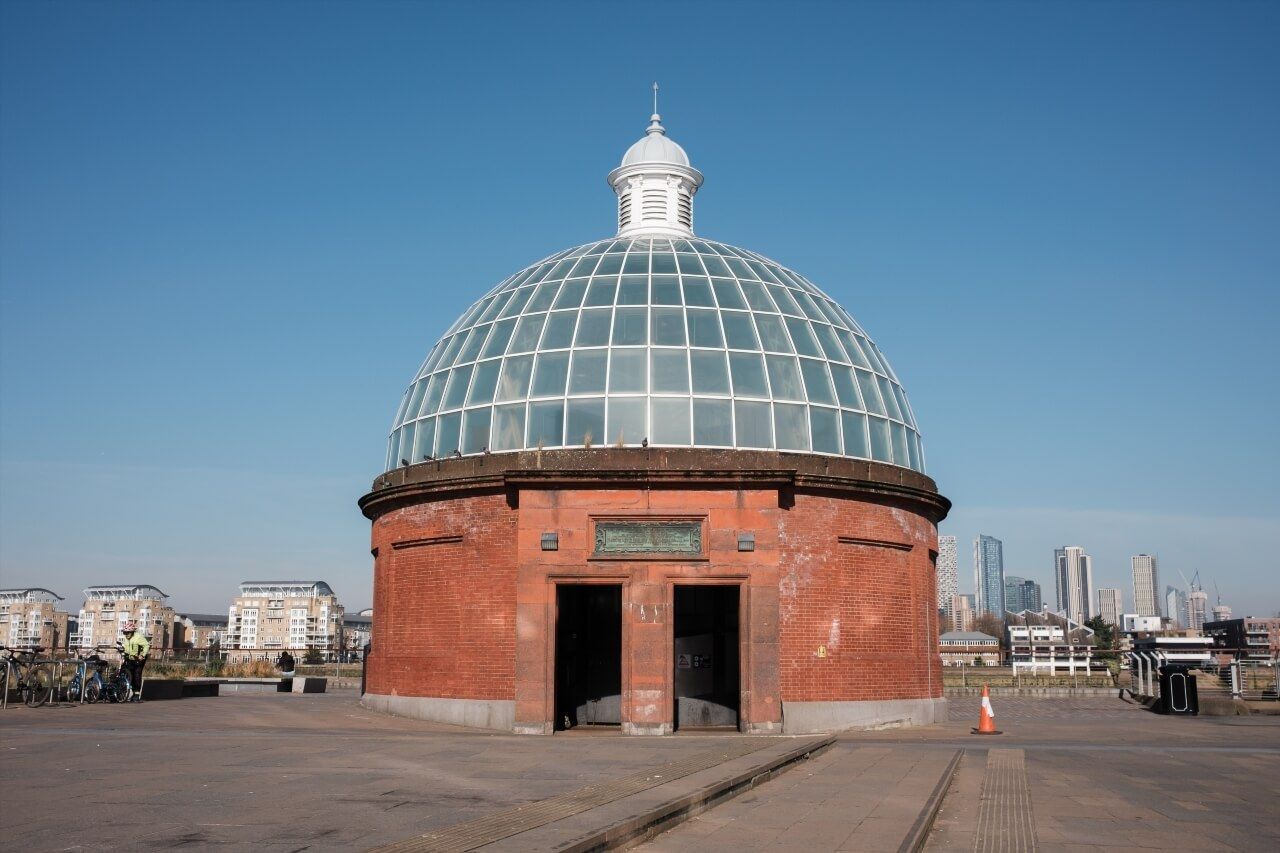
The Greenwich Foot Tunnel, opened in 1902, runs for 370 metres beneath the Thames, connecting Greenwich on the south bank to the Isle of Dogs on the north. It is free to use, open 24 hours, lit by fluorescent strip lighting along its curved white-tiled walls, and entirely unremarkable in appearance, which makes the experience of walking beneath the Thames in it all the more peculiar.
The original Victorian lifts that lower you to tunnel level still operate alongside modern alternatives. The walk takes about 10 minutes. There is also the Woolwich Foot Tunnel further east (also free), but the Greenwich tunnel wins on atmosphere given the spiral staircase entrances and the proximity to everything else in the Greenwich area worth visiting.
28. Afternoon Tea on a Double-Decker Bus
London's double-decker bus has been a design constant since the 1950s, and several operators now run afternoon tea services on vintage Routemaster buses that travel through central London while you eat. B Bakery's bus tour is the best-known: it departs from near Victoria Station and circuits through Hyde Park, past Harrods, and along the Embankment over the course of around 90 minutes.
The tea itself, finger sandwiches, scones with clotted cream and jam, pastries, is good without being extraordinary, and the point is as much the experience of seeing London from the top deck of a moving bus with a cup of tea in hand as it is the food. Prices are around £55 per person including unlimited tea and prosecco. Book well in advance, particularly on weekends. A worthwhile splurge for a special occasion or a first visit.
29. Brick Lane & Shoreditch
Brick Lane (Brick Lane, London E1 6RF, rated 4.6/5 on Google (1 473 avis)) in east London cuts through one of the city's most contested and layered neighbourhoods. The street takes its name from the brickfields that supplied Tudor London with building material; by the 18th century it was a centre of the Huguenot silk-weaving trade; by the mid-20th century it had become the heart of London's Bangladeshi community; today it is most visibly associated with street art, bagel shops open 24 hours, and the Sunday market that spills through several converted warehouses off Brick Lane itself.
The Sunday Brick Lane Market (open from roughly 9am to 5pm) is one of London's best: vintage clothing, records, ceramics, street food from multiple continents, and a density of independent sellers that the bigger markets can't quite replicate. The 24-hour Brick Lane Beigel Bake at the northern end has been serving salt beef beigels to the local community and curious visitors since 1974 at prices that haven't kept pace with London inflation in the most welcome way possible.
Shoreditch, immediately to the north and west, has been London's design and technology quarter since the late 1990s. The street art here, concentrated on Shoreditch High Street, Rivington Street, and the streets around Spitalfields, is among the best outdoor gallery work in the city. Stik, Zabou, and ROA have all produced significant pieces here, and the turnover is high enough that each visit reveals something new. The Old Truman Brewery complex on Brick Lane contains studios, market spaces, and event venues in the original Victorian brewery buildings and is a useful landmark for navigating the area.
Allow at least half a day if you're combining Brick Lane, Shoreditch, and Spitalfields Market, the latter is covered in section 30 and is a ten-minute walk west through Spitalfields.
30. Spitalfields Market
Old Spitalfields Market (16 Horner Square, London E1 6EW, rated 4.6/5 on Google (9 868 avis)) operates Thursday to Sunday in a glass-and-iron Victorian market hall adjacent to Hawksmoor's Christ Church, one of the most architecturally dramatic churches in London, its Portland stone towers visible for some distance above the rooftops.
The market concentrates on independent fashion designers, artists, and vintage dealers. The surrounding streets, Artillery Lane, Brushfield Street, Fournier Street, preserve some of the best-maintained 18th-century domestic architecture in London, largely because the area was neglected for most of the 20th century and the Victorian buildings were never replaced with the concrete blocks that swept through other parts of east London.
31. London Eye
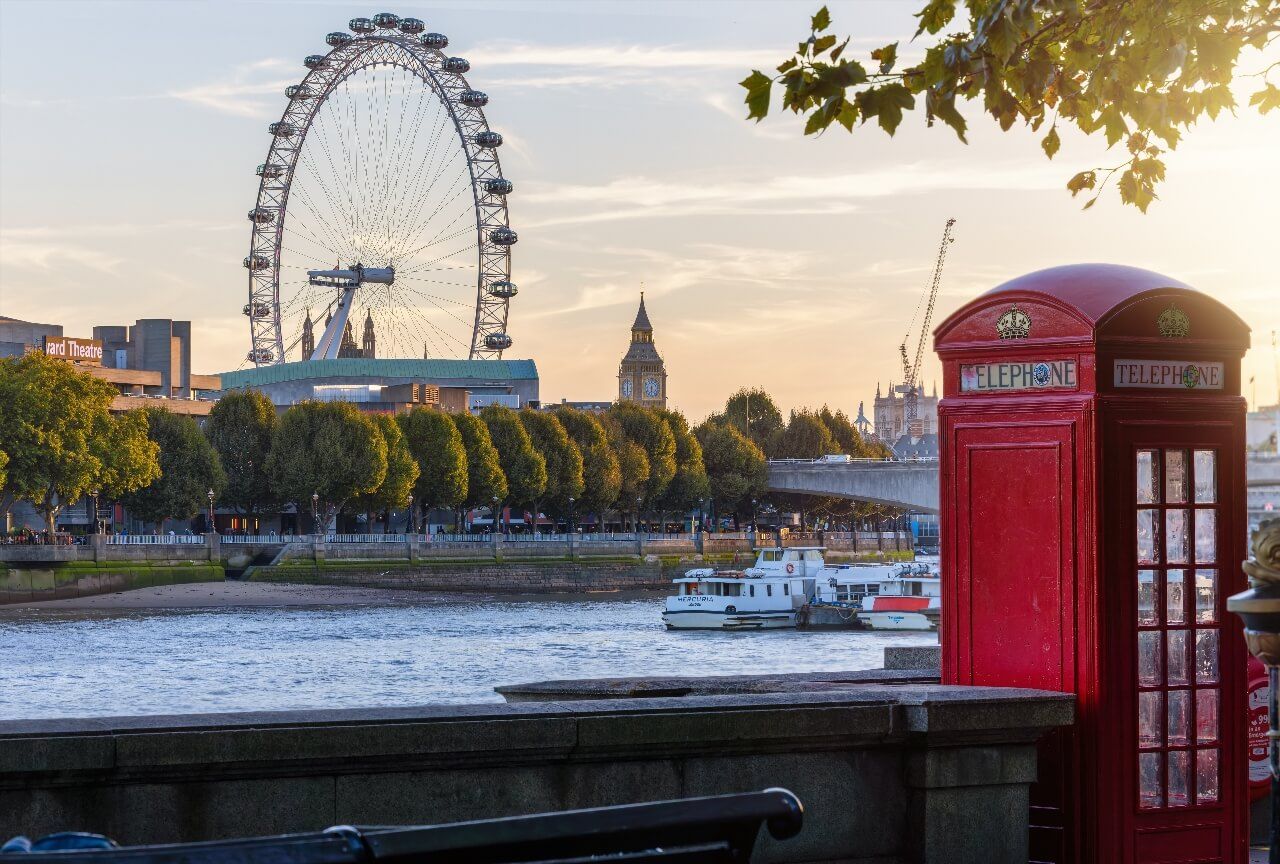
The London Eye, a 135-metre observation wheel on the South Bank, rotates slowly enough that each capsule holds up to 25 passengers and completes one full rotation in around 30 minutes. Each capsule is fully enclosed and climate-controlled, which makes it appreciably more comfortable than the open viewing galleries at the Shard or the Sky Garden in winter or rain.
Book in advance, walk-up queues in high season can exceed an hour. The views are excellent and distinctly different from those at rooftop venues: you're looking down and across rather than up and outward, and the proximity to the river and Parliament gives the panorama a particular quality. Not the cheapest attraction in London (around £35 in advance), but consistently popular for good reason.
32. Madame Tussauds
Madame Tussauds has occupied its current site in Marylebone since 1884, making it one of London's longest-running tourist attractions. The wax figures range from the eerily accurate to the mildly unsettling, and the whole enterprise is good-natured enough that it tends to be more entertaining than critics of the concept would predict.
Book online in advance, the price drops significantly from walk-up rates, and the queues without a timed ticket are deterrently long. Worth it as part of a broader Marylebone day: the surrounding streets (Marylebone High Street, the Wallace Collection, Daunt Books) provide a pleasantly unhurried alternative to the more tourist-heavy central areas.
33. Science Museum
The Science Museum in South Kensington is free to enter and houses one of the world's most important collections of scientific and technological objects, from Stephenson's Rocket locomotive to the Apollo 10 command module to the world's oldest surviving railway engine, Puffing Billy (1813).
The Making the Modern World gallery on the ground floor is the best introduction: it moves chronologically from 1750 to 2000 and places every object, the first jet engine, an early Cray supercomputer, a chunk of the first transatlantic telegraph cable, in the context of what was actually understood and possible at the time. Allow two to three hours. The IMAX cinema and the paid Wonderlab interactive gallery are separately ticketed and worth considering if you're visiting with children.
34. Regent's Canal from Camden to Little Venice
The Regent's Canal was completed in 1820 to connect the Grand Junction Canal at Paddington to the Limehouse Basin on the Thames, a route of 8.6 miles through what were then the northern suburbs of London. Walking or cycling the towpath from Camden Lock to Little Venice takes around 45 minutes on foot and passes through several of London's most distinct urban landscapes in close succession.
From Camden Lock, the towpath passes through the landscaped cutting at Regent's Park, where the canal is hemmed in by steep wooded banks and the rooftops of Nash's Regency terraces are visible above. The London Zoo backs directly onto the canal on the north side of the park, the aviaries and giraffe enclosures visible from the towpath at no charge. After the park, the canal passes through Lisson Grove and arrives at Little Venice, where the canal opens into a wide basin ringed by white stucco townhouses and moored narrowboats, several of which operate as floating cafés.
The contrast between Camden's market energy and the composed, almost Mediterranean stillness of Little Venice, barely two miles apart on the same waterway, is one of London's more surprising juxtapositions. Canal boat services (the Jason's Trip and the London Waterbus Company) operate between Camden and Little Venice in both directions from spring through autumn for those who prefer to sit on the water rather than walk beside it. Ryo's audio guide for the Camden to Regent's Park stretch is worth downloading before you set out, it adds context to the industrial history of the waterway that makes the landscape considerably more interesting.
35. Rooftop Sauna at Peckham Levels
Peckham Levels (95A Rye Lane, London SE15 4ST, rated 4.4/5 on Google (1 464 avis)) occupies the upper storeys of a multi-storey car park in south London, an adaptive reuse project that has filled seven floors of concrete with studios, bars, event spaces, and a rooftop terrace with panoramic views of the south London skyline. The rooftop sauna, operated by Hackney-based Wild Swimming Brothers, combines wood-fired heat with a cold plunge and views across the city.
Booking is essential and sessions fill up quickly, particularly in winter when the contrast between the heat inside and the open air outside is at its most dramatic. The views from the rooftop alone, unobstructed to the north towards the City and the Shard, justify the trip to Peckham, an area that also contains the excellent Peckham Rye Park, the Bussey Building's independent cinema, and some of the city's better wine bars.
For a different angle on London's sauna scene, Pells Pool Lido in Lewes is worth the day-trip, but for something genuinely urban and distinctive, the Peckham rooftop experience is hard to replicate anywhere else in the city.
FAQ
What is the best time of year to visit London?
London is a year-round destination. June to August offers the longest days and the best weather for outdoor attractions, but also the largest crowds and highest hotel prices. September and October are excellent: good light, smaller crowds, and lower costs. December is busy around Christmas but atmospheric. February and March are often London's quietest months for tourism.
How many days do you need in London?
Three days gives you time to cover the major landmarks without rushing. Five days allows you to explore neighbourhoods beyond the centre, Shoreditch, Greenwich, Camden, Kensington, at a reasonable pace. A week is genuinely not too long if you want to mix day trips with the city itself.
Is London expensive to visit?
London is one of the more expensive European capitals, but many of its best experiences are free: the British Museum, the Natural History Museum, the Science Museum, Tate Modern, the National Gallery, Hyde Park, and the Sky Garden (free with advance booking) are all included. A daily budget of £80-100 per person covers accommodation outside zone 1, meals at independent restaurants, and one or two paid attractions.
What is the best way to get around London?
The London Underground (the Tube) is the most efficient way to cover distance. Buses are slower but give a much better sense of the city. Walking between close-together attractions is underrated, central London is more compact than it appears on the Tube map. Use an Oyster card or a contactless bank card; paper tickets are significantly more expensive.
Are there free things to do in London?
More than most people realise. The British Museum, Natural History Museum, Science Museum, Tate Modern, National Gallery, V&A, and National Portrait Gallery are all permanently free. The Sky Garden (book online), St Dunstan in the East, Leake Street Arches, the Barbican Conservatory (Sundays), and all of London's Royal Parks are also free.
Do you need to book attractions in advance in London?
For the Churchill War Rooms, the Sky Garden, Shakespeare's Globe performances, and the London Eye: yes, advance booking is strongly recommended. For free museums, walk-in is generally fine except during school holidays, when the Natural History Museum in particular can be overwhelmingly busy. West End shows benefit from advance booking for best seat selection, though last-minute TKTS deals are available.
London rewards preparation on the things that matter most and spontaneity everywhere else. The city is large enough that you can always find a quieter version of whatever you came to see, a less-visited museum, a neighbourhood market, a park bench with an unexpectedly good view. The Ryo London Ryocity (explore it here) covers the streets of central and north London with curated audio commentary that puts the layers of history back into buildings you might otherwise walk past without a second glance. Whether you're working through a list or wandering without one, this city has enough to sustain both.