© Shutterstock
 Votre guide Ryo
Brooklyn Without a Car: A Practical Guide for 2026
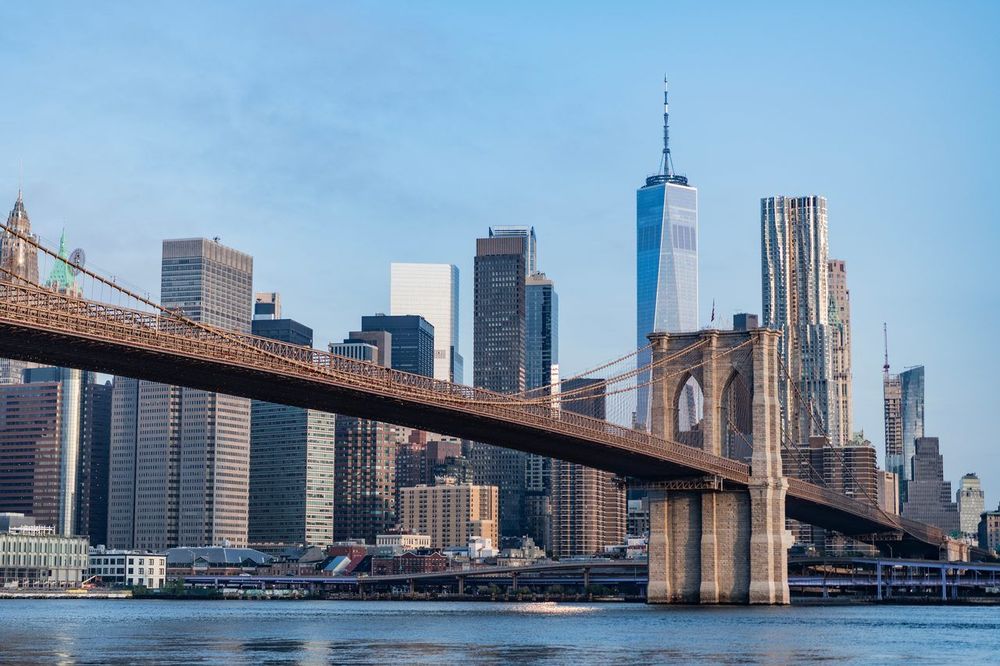
Ask a lifelong Brooklynite how they get around, and most will mention the subway before they mention a car at all. More than half of Brooklyn households don't own one, and entire neighborhoods near the water were laid out decades before anyone assumed every resident would need to park one. If you're wondering whether Brooklyn without a car is actually workable, for a weekend visit or a permanent move, the short answer is yes, and in several neighborhoods it's the easier choice. Ryo's audio-guided tour of Brooklyn threads through some of the most walkable pockets of the borough, which is a useful place to start scouting before you commit to a block.
Over the next few sections you'll see which neighborhoods make car-free life simplest (hint: it's not just Williamsburg), how the G train solves a routing problem the L train can't, when a $20 cab ride actually saves you money over a 45-minute bus transfer, and why one waterfront neighborhood still trips up even transit-savvy New Yorkers. There's also a lease-signing checklist for apartment hunters who want to skip car ownership altogether.
Is Car-Free Living Possible in Brooklyn?
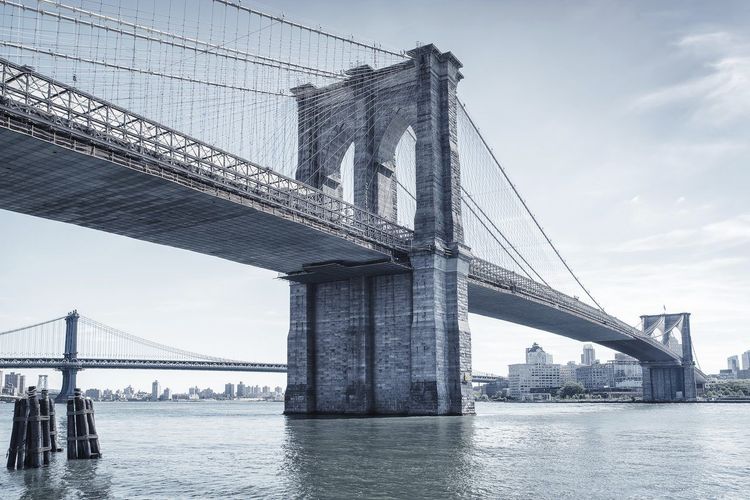
Yes. Brooklyn is dense enough, and its transit network extensive enough, that owning a car is an option rather than a requirement for most residents. The borough is served by nearly twenty subway services, dozens of bus routes, a growing Citi Bike network, and NYC Ferry docks along the waterfront, covering far more ground than any single subway map suggests.
Walkability is the real test, and Brooklyn passes it unevenly. Brownstone neighborhoods close to the East River, such as Brooklyn Heights, DUMBO, and Downtown Brooklyn, score in the high 90s on Walk Score, with groceries, laundromats, and a subway entrance within a five-to-ten-minute walk of most apartments. Push further from the water and that convenience drops off fast.
So navigating Brooklyn without a car isn't one experience. It depends on where you land, which is what the next section breaks down.
The Best Car-Free Neighborhoods in Brooklyn
Here's the detail that trips up a lot of apartment hunters: two blocks on the same subway line can have wildly different car-free livability, because the map tracks train access, not grocery stores, sidewalk width, or how often a bus actually shows up. Neighborhood choice matters more than which colored line runs underneath you.
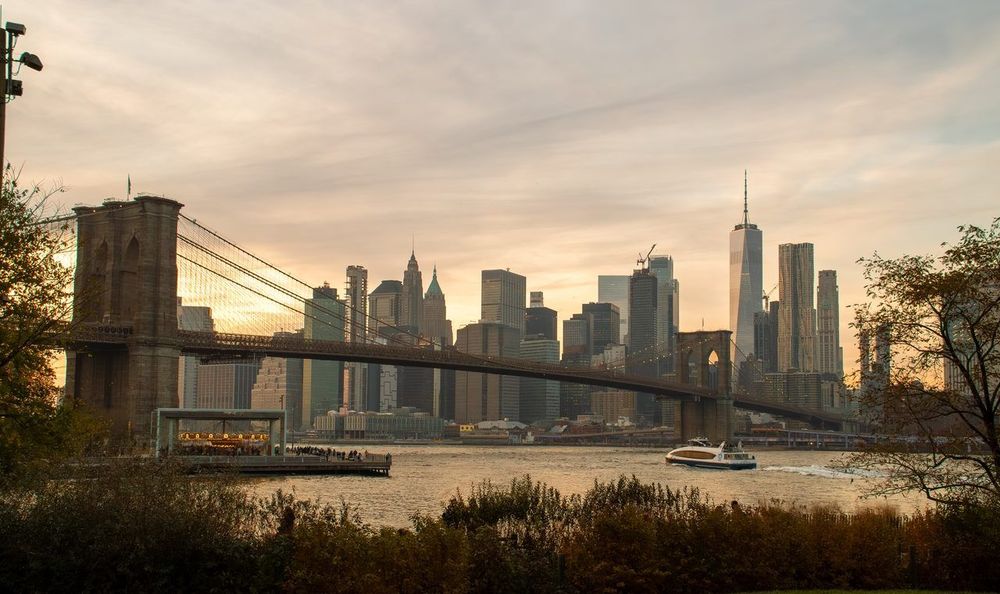
Downtown Brooklyn, Brooklyn Heights, and DUMBO form the single easiest car-free cluster in the borough. Downtown stacks the 2, 3, 4, 5, B, D, N, Q, and R at Atlantic Avenue-Barclays Center and the A, C, F, and R at Jay Street-MetroTech, so a missed train rarely costs more than a few minutes. Walk ten minutes west and you're in Brooklyn Heights, a neighborhood built for walking long before cars existed, where brownstone blocks slope gently down toward the water. Keep going north and the cobblestones of DUMBO open onto Brooklyn Bridge Park), with the Manhattan skyline close enough that you can watch commuters crossing the bridge on foot.
If you'd rather scout this stretch in person before signing a lease, Ryo's Brooklyn audio-guided walk links Downtown Brooklyn, Brooklyn Heights, and DUMBO into one loop, so you can compare all three on a single afternoon without backtracking.
Williamsburg trades brownstones for warehouses and a younger crowd, but it's just as workable without a car. The L train runs under Bedford Avenue into Manhattan, the J, M, and Z cross the Williamsburg Bridge from the south side, and the ferry docks a few blocks from Smorgasburg), the Saturday food market. The neighborhood is flat enough that biking covers in fifteen minutes what the bus takes forty to do.
Park Slope, further south, runs on the 2 and 3 along Flatbush Avenue, the B and Q at its eastern corner, the R along Fourth Avenue, and the F and G through its southern half, plus a position right against Prospect Park (95 Prospect Park West, Brooklyn, NY 11215, rated 3.5/5 on Google (19 avis)) that makes weekend errands feel more like a stroll than a chore. Families tend to land here for exactly that reason: strollers move easily on wide sidewalks, and the park absorbs a lot of what would otherwise require a drive. Weekend mornings along Seventh Avenue fill with strollers and dog walkers rather than cars, which tells you most of what you need to know about how residents actually get around.
Getting Around by Subway and Bus
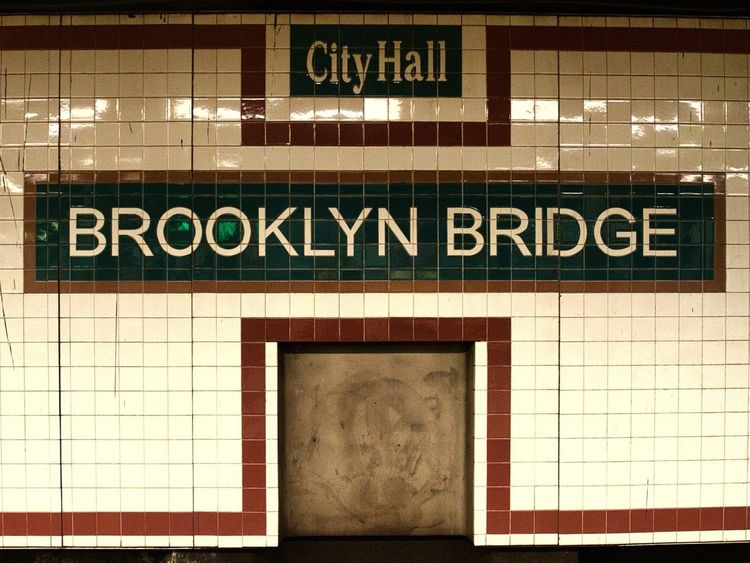
Brooklyn's subway coverage is uneven by design: the system was built around getting Brooklynites into Manhattan, not necessarily across the borough. The 2, 3, 4, 5, A, C, B, D, F, G, J, L, M, N, Q, R, and Z all touch Brooklyn at some point, but the G is the one locals rely on for cross-borough trips, since it's the only full-length line that skips Manhattan entirely and connects Williamsburg to Fort Greene, Carroll Gardens, and the edge of Park Slope.
Buses fill the gaps the subway leaves. The B61 links Downtown Brooklyn to Red Hook, a stretch the subway doesn't cover, and Select Bus Service routes like the B44 on Nostrand Avenue add dedicated lanes that cut travel time noticeably during rush hour. Expect buses to run less often than trains, especially at night, so build in a buffer if you're relying on one to make a connection.
Fares run through OMNY now, the tap-to-pay system that replaced MetroCards. Tap a contactless card or phone at any turnstile or bus reader, and fares cap automatically: after twelve paid rides in a seven-day window, the rest of the week is free. There's no need to load value in advance, which removes one of the last friction points for anyone navigating Brooklyn without a car day to day.
Weekday service on the core lines runs every four to eight minutes during peak hours, stretching to twenty minutes or more late at night, so a 1 a.m. ride home from a bar in Bushwick is realistic but not instant. Use a transit app that tracks live arrivals rather than trusting the posted schedule, since signal delays are common enough to matter.
Walking and Biking Across Brooklyn
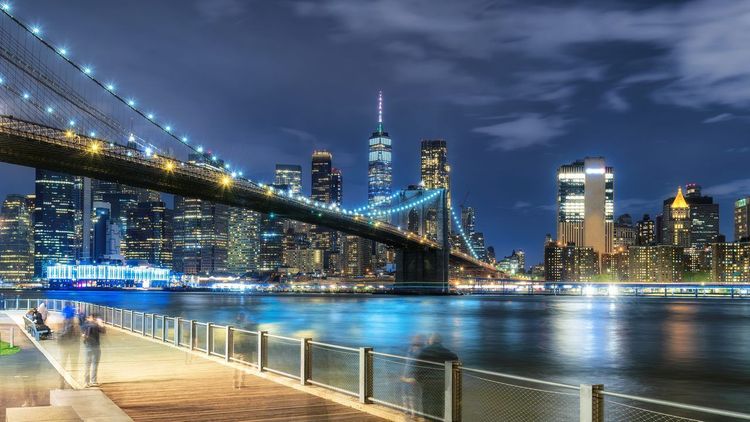
Brooklyn rewards walking in a way few other boroughs do, mostly because its street grid predates the automobile. The flagship stretch is the Brooklyn Heights Promenade (Brooklyn Heights, Brooklyn, NY 11201, rated 4.8/5 on Google (7 197 avis)), a walkway of roughly a third of a mile cantilevered above the BQE, with an unobstructed view of the Manhattan skyline and the harbor. Locals use it as a jogging loop; visitors use it as a reason to linger.
Ryo's narrated walk along the Promenade covers the stretch stop by stop, so you get the history behind the benches and brownstones without pulling out your phone mid-walk. That matters more than it sounds: it's easy to stroll straight past the small plaques explaining why the view exists at all.
Biking closes the gap between walking and the subway. Citi Bike stations cover most of northern and central Brooklyn densely enough that a short ride almost always beats waiting for a bus, and protected lanes now run along Kent Avenue, Prospect Park West, and much of the Brooklyn Waterfront Greenway connecting Greenpoint down toward Sunset Park. An annual Citi Bike membership costs $239 since January 2026, which still pencils out quickly against even occasional cab fares.
Treat biking as a layer on top of transit rather than a replacement for it. It's fastest for trips under two miles, awkward once you're carrying groceries or crossing a bridge in January, and risky on a handful of avenues that still lack protected lanes. Flatbush Avenue and parts of Atlantic Avenue are the two stretches most Brooklyn cyclists route around when they can, since both carry heavy bus and truck traffic with only intermittent bike infrastructure. If a route planner offers a detour that adds five minutes to avoid either one, take it.
Ferries and Waterfront Transit
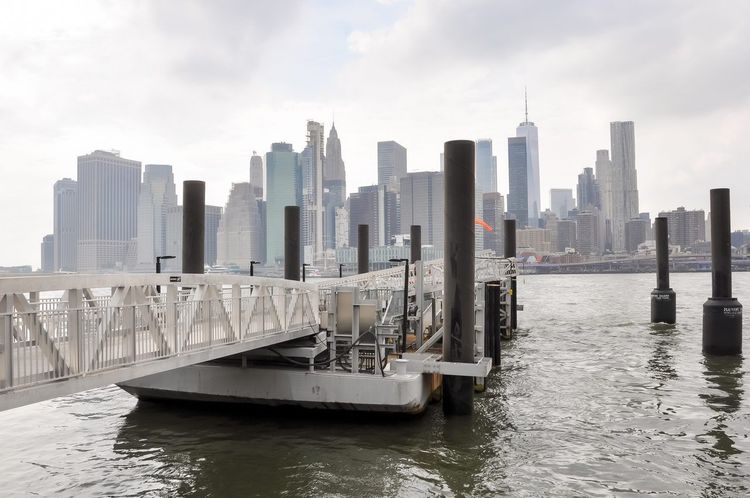
NYC Ferry's East River route is the most useful waterfront option for Brooklyn residents. It leaves Wall Street/Pier 11, stops at Fulton Ferry Landing (1 Old Fulton St, Brooklyn, NY 11201, rated 4.6/5 on Google (42 avis)) in DUMBO, then continues to South Williamsburg, North Williamsburg, Greenpoint, and Long Island City. A ride costs $4.50, a little more than the $3 subway fare, and the hop between DUMBO and North Williamsburg takes about a quarter of an hour, with a harbor view the subway can't match.
Ferries beat the subway in a few specific situations: getting from DUMBO or Williamsburg to Lower Manhattan during rush hour, when the F and L trains are packed, or reaching Red Hook, which has no subway stop and relies on the South Brooklyn ferry route and the B61 bus instead. Once you step off at DUMBO, the opening stops of the Ryo audio guide are less than five minutes away on foot, a handy next move if you've arrived with no plan for the afternoon.
Where ferries fall short is frequency outside peak hours. Expect gaps of thirty minutes or more midday and on weekends, so check the schedule before building a ferry leg into a tight itinerary.
Taxis, Rideshare, and When a Car Still Makes Sense
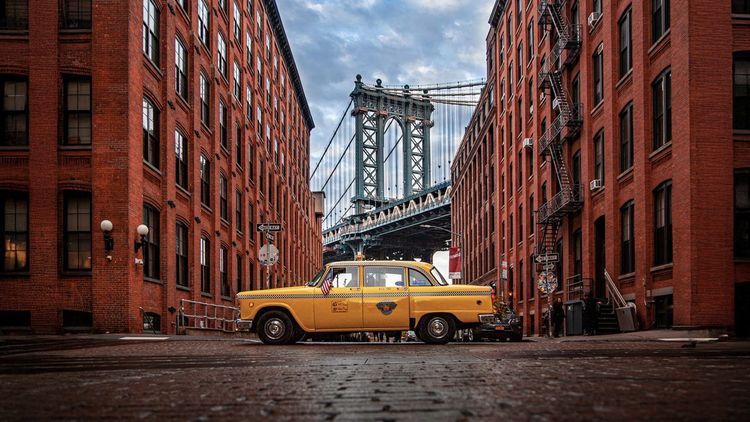
Yellow cabs are scarcer in Brooklyn than in Manhattan, but green boro taxis and apps like Uber and Lyft cover the gap reliably, usually arriving within five to ten minutes outside surge windows. For most short hops, a rideshare costs more than the subway and less than most people assume, often $12 to $20 for a trip across a few neighborhoods.
There's also a tradeoff in using Manhattan as the default comparison: car culture there revolves around avoiding parking and tolls most Brooklyn residents never deal with, which skews a lot of generic NYC advice toward assumptions that don't hold in Brooklyn's quieter, more residential stretches.
Three situations still tip the scale toward a cab, rental, or borrowed car. Late-night trips after subway frequency drops to every 20-30 minutes. Moving anything larger than a few grocery bags, think furniture, a mattress, or a big-box run. And cross-borough errands, say a dentist appointment in the Bronx, where three transfers can turn a 20-minute drive into a 90-minute slog.
So is it worth it to have a car in Brooklyn? For most residents who stay within the borough and a couple of subway stops into Manhattan, no. The math rarely works once you factor in parking (often $300 or more a month for a guaranteed garage spot) and alternate-side parking tickets. A car can make sense mainly for people who regularly leave the city on weekends.
Running Errands and Shopping Without a Car
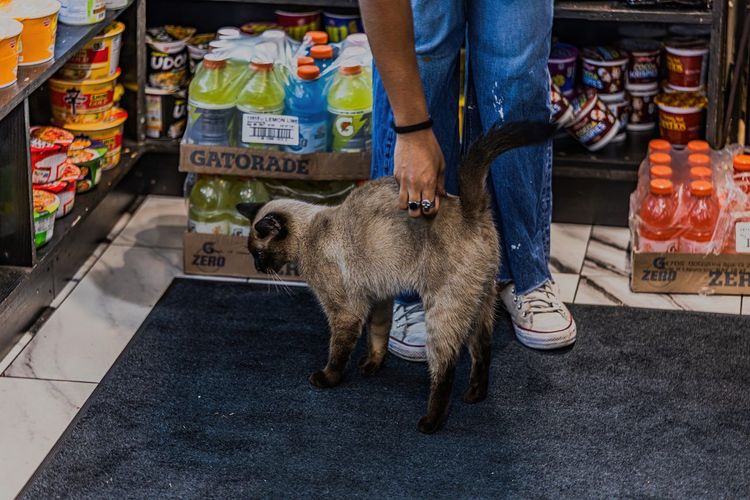
Grocery shopping without a car is less of an adjustment than it sounds, mostly because Brooklyn's grocery density makes bulk trips unnecessary. Most residents shop more often and buy less each time, which a five-minute walk to a corner grocery or a mid-size supermarket supports better than a weekly big-box haul ever could. Delivery apps handle the heavy stuff: cases of water, cat litter, anything you'd rather not carry up three flights of stairs.
Laundry is the other errand people worry about, and the fix is usually in-building. Listings that advertise laundry in the building or the basement are worth prioritizing because they remove one of the few car-dependent errands, hauling bags to a laundromat.
For furniture and big-box runs, most Brooklynites either use delivery (most furniture retailers deliver to NYC addresses for a flat fee) or book a car-share vehicle by the hour for the time it takes to get the job done. That's usually cheaper than owning a car for the other 363 days of the year you don't need one.
Car-Free Things to Do in Brooklyn
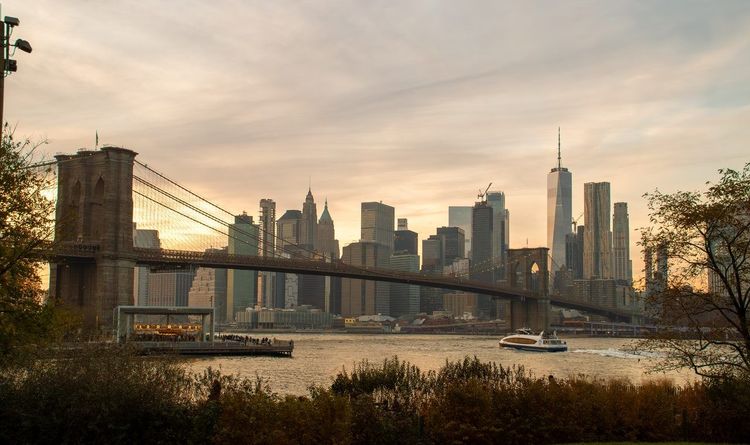
Brooklyn's best car-free activities cluster along the waterfront and inside a handful of walkable pockets, so you can fill a whole day out without ever thinking about parking.
Start along the water: Brooklyn Bridge Park stretches from DUMBO down to Atlantic Avenue across a string of piers, with lawns, sports courts, and enough benches facing the skyline to make an hour disappear. A few subway stops away, Brooklyn Botanic Garden) and the adjacent Brooklyn Museum) pair well on a single afternoon, both reachable from the 2 or 3 train at Eastern Parkway-Brooklyn Museum.
Red Hook deserves its own callout, because it's the one neighborhood on this list where transit gets trickier. There's no subway stop in the neighborhood itself, so your options are the B61 bus from Downtown Brooklyn or the year-round NYC Ferry South Brooklyn route, which reaches Red Hook/Atlantic Basin about fifteen minutes after leaving Wall Street/Pier 11. The payoff is worth the extra planning: Louis Valentino Jr. Park and Pier) has one of the closest unobstructed Statue of Liberty views in the city, and Pioneer Works (159 Pioneer St, Brooklyn, NY 11231, rated 4.7/5 on Google (366 avis)), a few blocks inland, runs rotating art installations in a converted ironworks building most visitors never hear about.
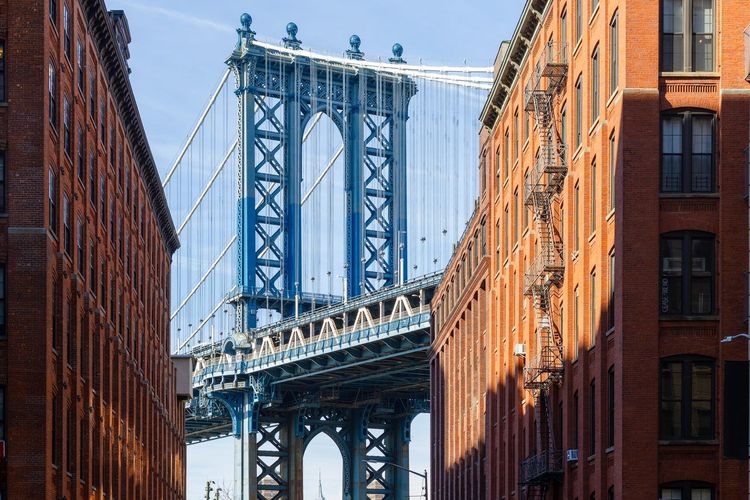
Back toward the center of the borough, Smorgasburg on Saturdays and the Brooklyn Flea under the Manhattan Bridge archway in DUMBO (Sundays, April through October) round out a car-free itinerary without requiring more than one bus or train transfer between stops. Want to string several of these sights into one half-day without checking a map at every corner? Ryo's self-guided Brooklyn walk plots a route through them back to back, with a short recorded story at each stop so the walk between sights never feels like dead time.
Moving to Brooklyn Without a Car: What to Know Before You Sign a Lease
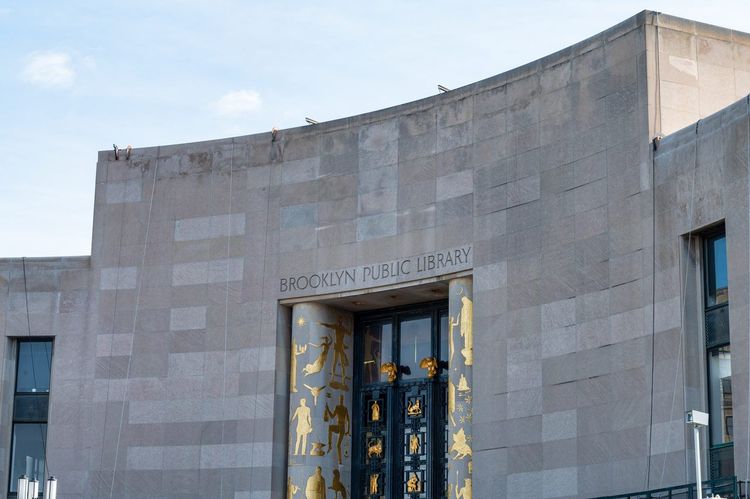
Most moving guides assume you'll have a car within the first month, which is the wrong assumption for a lot of renters moving into Brooklyn. A few checks before you sign will save you more hassle than any packing list.
Check the block's actual transit access, not just the neighborhood's. Two apartments a ten-minute walk apart can be very different: one near an express stop like Jay Street-MetroTech, another a fifteen-minute walk from the nearest local stop with thin weekend service. Walk the route at the time of day you'd actually use it before committing.
Grocery proximity matters more without a car than any other single factor. If the closest full supermarket is more than a ten-minute walk away, add delivery fees to your monthly budget rather than assuming you'll make the trip on foot every week.
Ask specifically about laundry, in the building or next door, since it's the errand hardest to outsource without wheels. And if the building sits against an elevated subway line or a bus depot, ask to see the apartment at rush hour: street noise that sounds tolerable at a Tuesday afternoon showing can feel very different at 7 a.m. on a Monday.
A car can solve problems a careful lease can't, mainly storage and space, but for daily living these four checks do more for a car-free move than any moving company checklist.
How to Get to Brooklyn Without a Car
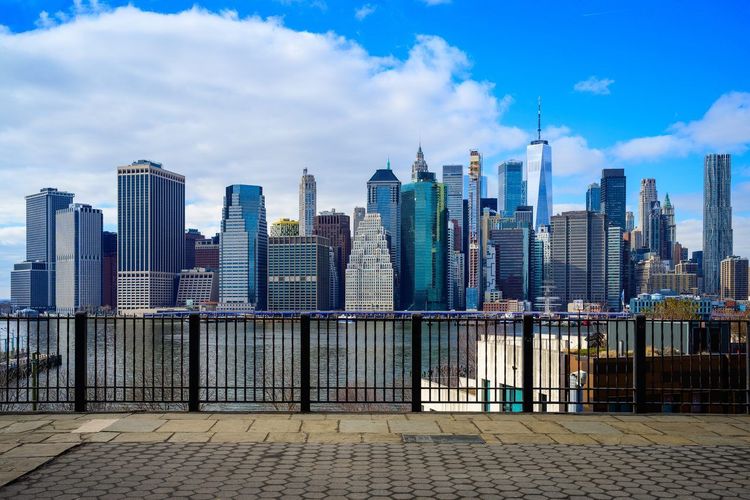
From JFK, the AirTrain connects to the A train at Howard Beach, which runs straight into Brooklyn, or to Jamaica Station, where the J and Z head into Bushwick and Williamsburg and the Long Island Rail Road reaches Atlantic Terminal in Downtown Brooklyn in about twenty minutes. Either route usually beats a cab once you factor in traffic on the Belt Parkway. From LaGuardia there's no rail link; the fastest car-free option is the Q70 LaGuardia Link bus to Jackson Heights-Roosevelt Avenue, then the F train into Brooklyn.
Coming from Manhattan, most subway lines reach Brooklyn without a transfer: the L from 14th Street into Williamsburg, the 2 and 3 from the Upper West Side into Park Slope and beyond, the A and C from Midtown into Downtown Brooklyn and Brooklyn Heights. Most of these trips take 30-40 minutes end to end.
From Queens or the Bronx, expect at least one transfer, and check whether the G solves your specific trip before defaulting to a route through Manhattan. If you're also planning time across the river, our New York without a car guide covers the Manhattan-side version of the same logic.



FAQ
Can I live in Brooklyn without a car?
Yes, and a large share of residents already do: more than half of Brooklyn households have no car. Subway density in neighborhoods like Park Slope, Brooklyn Heights, and Williamsburg makes that easy. The tradeoff is that your choice of neighborhood matters more than almost anywhere else in the country, since walkability and transit access vary sharply block to block.
Do you need a car in Brooklyn, New York?
No, not for day-to-day life in most neighborhoods close to the water or a major subway hub. A car becomes more useful if you regularly travel outside the city on weekends, haul bulky items for work, or live in one of the neighborhoods with thinner bus and train coverage, like parts of southeastern Brooklyn.
Is Brooklyn a walkable city?
Large parts of it, yes. Brownstone neighborhoods near the East River rank among the most walkable in the country, with most daily errands reachable in a ten-minute walk. That drops off toward the edges of the borough, where blocks are wider and amenities more spread out.
Is it worth it to have a car in Brooklyn?
Usually not, once you factor in parking, which can run $300 or more a month for a guaranteed spot, plus alternate-side parking rules that require moving the car on a schedule. It tends to make financial sense mainly for people who leave the city most weekends or work somewhere transit can't reach.
What is the best way to get around Brooklyn without a car?
A mix, not one single mode. Subway for longer trips, buses for waterfront and cross-neighborhood routes the subway misses, biking for anything under two miles, and the occasional rideshare for late nights or bulky errands. Most residents switch between all four depending on the trip.
Which Brooklyn neighborhoods are best for car-free living?
Downtown Brooklyn, Brooklyn Heights, DUMBO, Williamsburg, and Park Slope consistently rank highest, thanks to dense subway access, walkable grids, and short distances to groceries and parks. Each has its own flavor, brownstone quiet in Brooklyn Heights versus denser energy in Williamsburg, but all five remove car ownership from the daily equation.
Final Thoughts on Brooklyn Without a Car
Brooklyn without a car isn't a compromise so much as a different, often faster, way of covering the same ground. Pick a block within walking distance of an express train or a waterfront ferry stop, and most of what this guide covers, groceries, errands, a Saturday at the park, sorts itself out without much extra planning.
The neighborhoods worth scouting first are the ones you've just read about: Downtown Brooklyn, Brooklyn Heights, DUMBO, Williamsburg, and Park Slope. To compare a few of them in person before deciding where to live or where to spend a weekend, start with the Ryo audio guide to Brooklyn: it walks you through several of these pockets at your own pace, narrating the history behind blocks you'd otherwise just be passing through.