© Shutterstock
 Votre guide Ryo
Chicago in 2 Days: The Complete 2026 Itinerary From Millennium Park to Navy Pier
Forty-eight hours sounds impossibly short for a city whose skyline needs a boat ride to properly see, yet Chicago rewards a tight schedule better than almost any major American destination. The landmarks sit close together along the lakefront and the Loop, the L trains run every few minutes, and the whole downtown core folds into roughly four square miles you can cover on foot. Spending Chicago in 2 days means picking a sequence and sticking to it: Millennium Park and the skyline first, the neighborhoods and the lake second.
This guide lays out that sequence hour by hour, from The Bean's warped reflections on morning one to the Centennial Wheel lit up over Navy Pier on evening two, with Willis Tower's glass Ledge, a wedge of deep-dish pizza and the Art Institute's Monet rooms stitched in between. You'll also find out whether the Chicago Architecture River Cruise is worth the ticket price, which neighborhood to book a hotel in, how far a CityPASS actually stretches over 48 hours, and where locals eat when they're not queuing for pizza. For the walk itself, Ryo's Chicago audio-guided tour narrates the Loop and Michigan Avenue stop by stop as you go, which happens to be almost exactly the route below.
Is 2 Days Enough to See Chicago?
Two days is enough to hit Chicago's headline landmarks without feeling rushed, provided you accept upfront that you're seeing the greatest-hits set, not the full discography. A realistic 48 hours covers Millennium Park, Willis Tower, the Art Institute, the Riverwalk and Navy Pier, plus one real sit-down meal and one classic Chicago dish eaten standing up. What it doesn't comfortably fit is a Cubs or White Sox game, a full afternoon in Wicker Park, or a day trip out to the suburbs; those are third-day material.
If this is a layover extension or a weekend bolted onto a business trip, two days is the right amount of time and you shouldn't feel like you're missing the city. If you're flying in specifically for Chicago and can add a day, do it. A third day is what turns a highlights reel into neighborhoods: Pilsen's murals, a game at Wrigley, an evening in Wicker Park. The itinerary below is built to work as a self-contained 48 hours first, with the extra-time section near the end absorbing everything a third day would add.
Quick overview, for anyone skimming: day one is downtown and vertical, Millennium Park, Willis Tower, deep-dish dinner. Day two is cultural and lakefront, the Art Institute, the Riverwalk, Navy Pier. Everything else, where to sleep, how to get around, when to go, slots around that spine.
Day 1 in Chicago: Millennium Park, Willis Tower and Deep-Dish Pizza
Day one stays almost entirely downtown, which is the point: everything below sits within twenty minutes' walk of everything else, so the only real decision is what time to start. Arrive at Millennium Park) close to opening if you can, both to beat the tour groups at The Bean and to leave enough daylight for the Skydeck later in the afternoon. Ryo's audio-guided walking route through the Loop covers almost this exact stretch, Millennium Park through Michigan Avenue, with a short story queued up at each stop.
Morning: Millennium Park, The Bean and the Loop
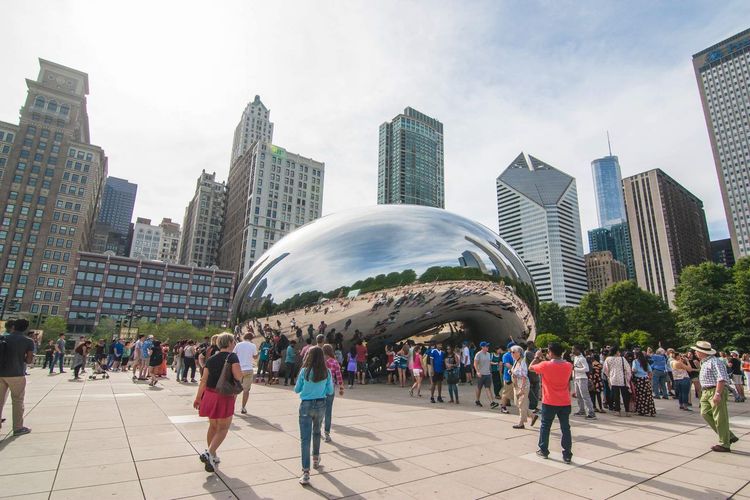
Millennium Park opened in 2004 on top of old rail yards and a parking garage, and it still functions as downtown's front yard: free, open from 6am to 11pm, and anchored by the sculpture everyone actually came to see.
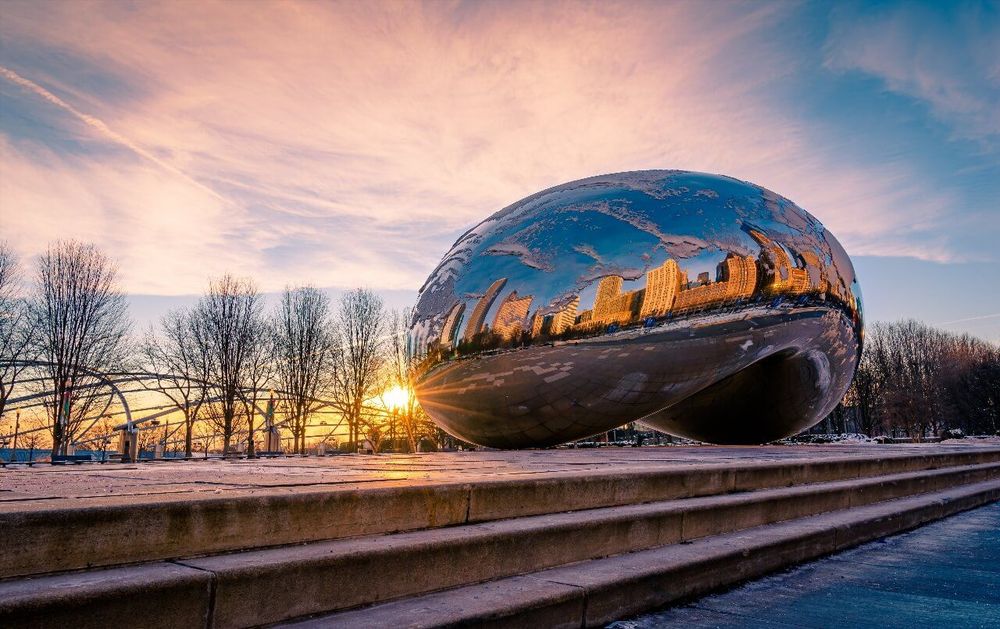
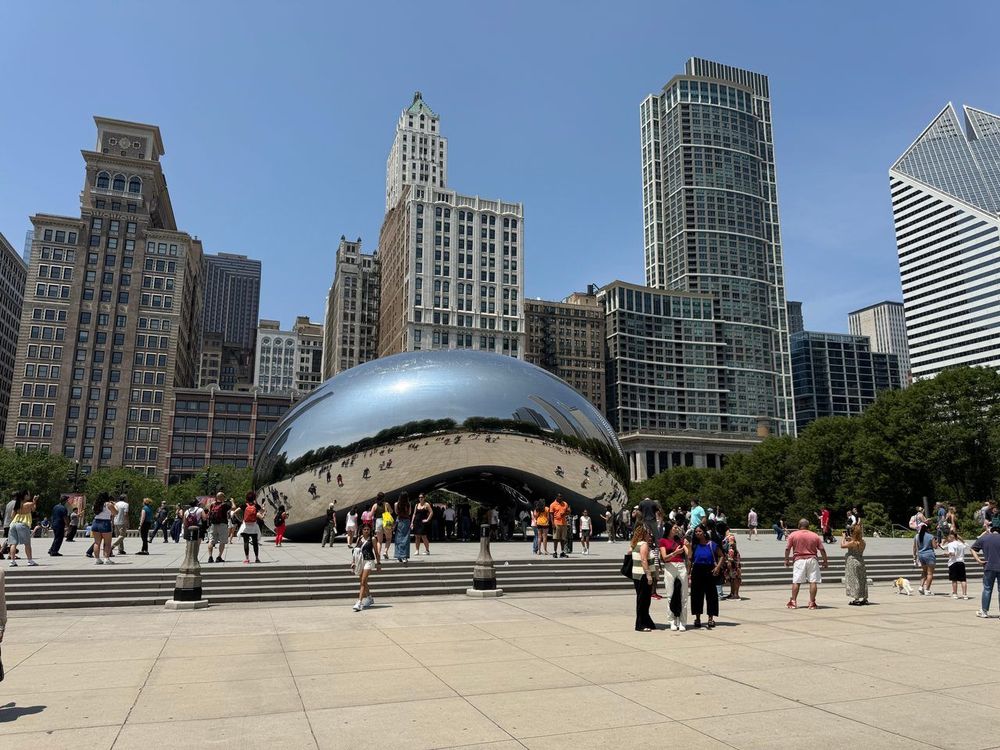
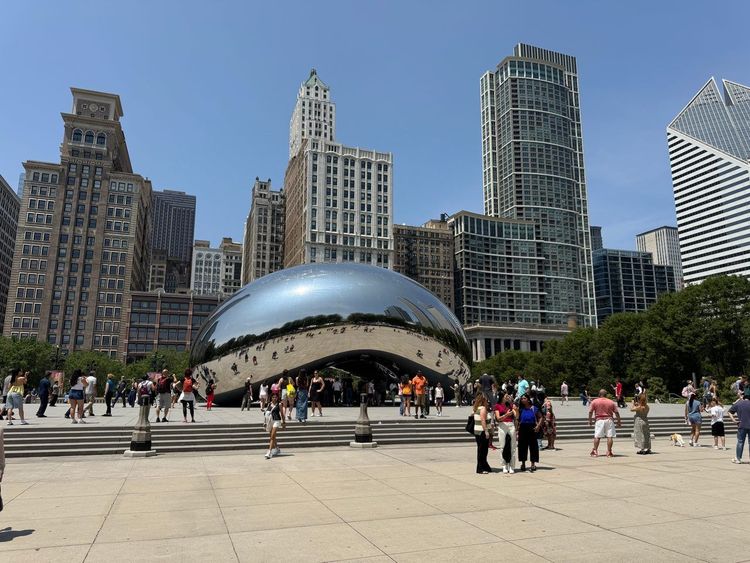
Cloud Gate), universally called The Bean, is a 110-ton stainless steel sculpture by Anish Kapoor that took over two years to install and reflects the skyline in a way photographs never quite capture in person. Arrive before 9am on a weekday and you'll get it close to empty; by 11am it's a scrum of selfie sticks.
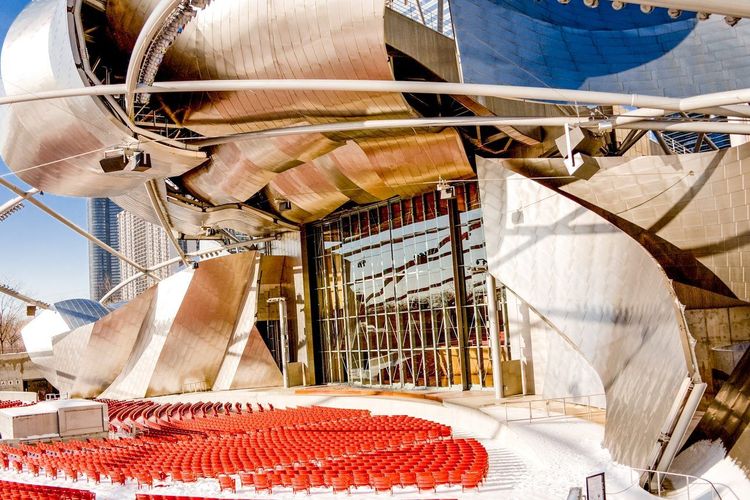
From The Bean, cut south through Lurie Garden), a perennial planting designed by the same team behind New York's High Line, then cross the BP Pedestrian Bridge), a Frank Gehry-designed ribbon of brushed steel that carries you over Columbus Drive's traffic to Maggie Daley Park.
Head back north-west and you'll hit the Michigan Avenue Bridge), officially the DuSable Bridge, where the river splits downtown from the Mag Mile and the view in both directions, river traffic one way, skyscraper canyon the other, is one of the better free ones in the city. Walk north onto the Magnificent Mile (North Michigan Avenue, Chicago, IL 60611) itself for a stretch of Michigan Avenue lined with flagship stores, and if you're short on time this is also where the morning can fold straight into lunch. Grant Park), the green frame around all of it, is worth a mention mainly because it's where Lollapalooza and the city's summer festivals pitch their stages; outside festival season it's just a long, pleasant lawn.
Locals use Millennium Park as a running route in summer and an ice rink in winter, when the Bean becomes a mirror for falling snow instead of skyscrapers. Both versions are worth seeing if your trip timing allows it, though the itinerary below assumes the warmer months most first-time visitors pick.
Afternoon: Willis Tower Skydeck and Michigan Avenue
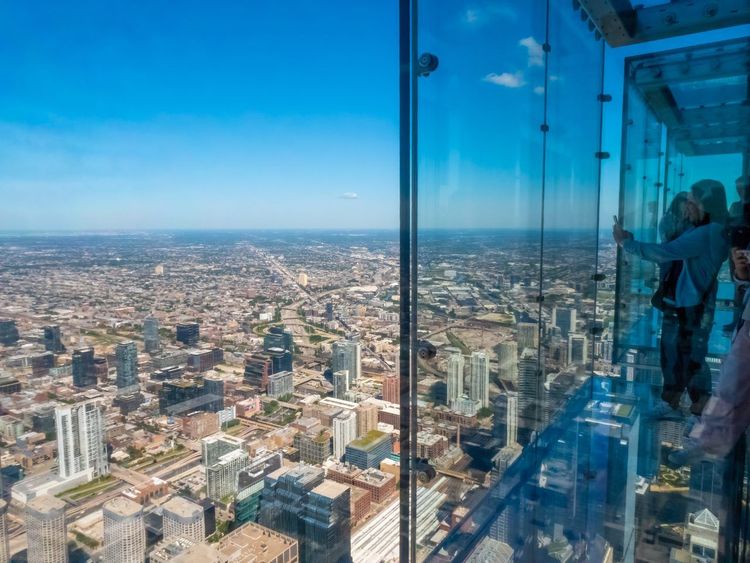
From the Loop, it's a fifteen-minute walk or a quick ride on almost any southbound bus to Willis Tower), still called the Sears Tower by half the city more than fifteen years after the 2009 name change. At 1,450 feet it was the tallest building in the world from 1973 until 1998, and the Skydeck Chicago (233 S Wacker Dr, Chicago, IL 60606, rated 4.6/5 on Google (37 774 avis)) on floor 103 is the reason to come up.
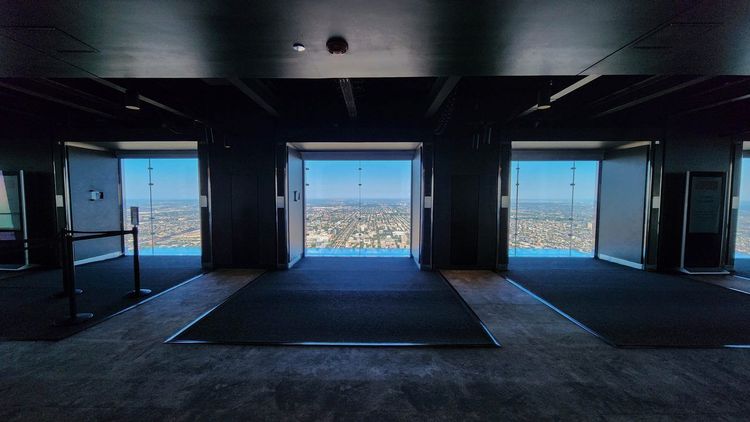
Buy timed tickets online the night before if you can; walk-up lines routinely run 45 minutes to an hour in summer. The Ledge, four glass boxes that cantilever four feet out from the 103rd floor, is the part everyone photographs; standing on it with nothing but glass between you and a 1,353-foot drop is more unsettling than it looks in other people's photos. On a clear day you can see four states from up there, and sunset slots, roughly an hour before dusk, book out first.
If the line looks brutal and you've already got city views planned for day two from Museum Campus, 360 Chicago), the observation deck at the old John Hancock Center on North Michigan Avenue, is the standard alternative: shorter queues, a view angled more toward the lake, and a tilting glass ledge of its own called TILT.
Afterward, Michigan Avenue is right there for browsing or an early coffee stop before dinner.
Evening: Deep-Dish Pizza Dinner

Deep-dish is non-negotiable on night one, and Lou Malnati's is the name most visitors ask for by default, a family-run chain since 1971 with a buttery, cornmeal crust that holds its shape when you lift a slice.
Expect a 25 to 40 minute bake time for a full pie, so order the moment you sit down, and know that a single deep-dish easily feeds two. A full-size pie runs around $28 to $35 depending on toppings. If Lou Malnati's has a line out the door, common on weekends, Giordano's is usually a few blocks away, and Pequod's in Lincoln Park is worth the short ride for its caramelized crust. Before you leave the Loop tonight, note that Ryo's audio guide already sequences Millennium Park, The Bean and these Michigan Avenue blocks, so you can replay tomorrow's stories without planning a walking order yourself.
Day 2 in Chicago: Art Institute, Riverwalk and Navy Pier
Day two trades vertical views for art and water, starting indoors at the Art Institute before spending the rest of the day outside along the river and the lake. It's a longer day geographically than day one, so plan on taxis or the bus for at least one of the three legs rather than walking the whole thing.
Morning: The Art Institute of Chicago
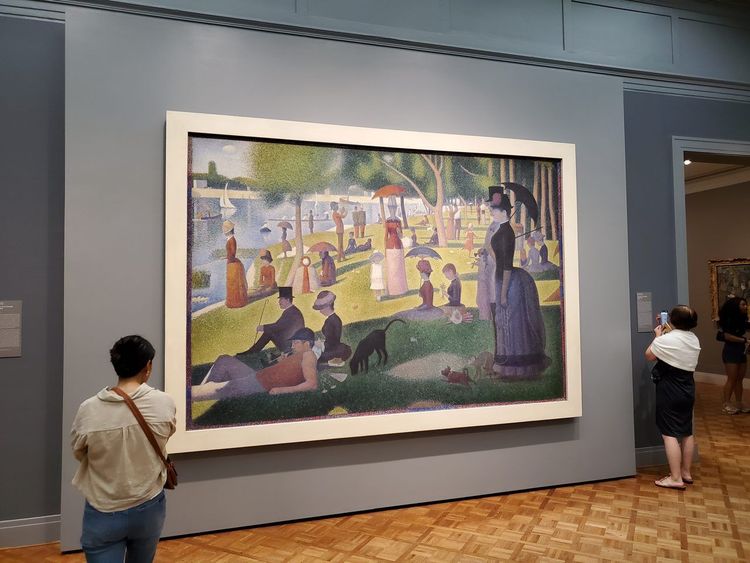
The Art Institute of Chicago) holds one of the best Impressionist collections outside France; Seurat's A Sunday on La Grande Jatte and a room of Monets are the two works people cross the museum for, plus Grant Wood's American Gothic a few galleries over.
Budget two to three hours minimum; the museum is large and the Modern Wing alone could absorb an afternoon. General admission runs around $32 for out-of-state adults (Illinois and Chicago residents pay less), and it's one of the optional attractions in the Chicago CityPASS, worth checking before buying a ticket at the door. The museum opens at 11am and closes on Tuesdays and Wednesdays, so plan your day two around that; arrive at opening to get the Grande Jatte room before tour groups do, and don't skip the small, easy-to-miss Thorne Miniature Rooms on the lower level; almost nobody mentions them until they've seen them.
The museum's main entrance on Michigan Avenue is flanked by two bronze lions that have guarded the steps since 1894 and have become as photographed as anything inside; don't skip snapping them on your way in. If you're visiting with a CityPASS or Go City pass, skip-the-line entry here is one of the better uses of either, since ticket lines at the main doors can stretch 20 minutes on weekend mornings even with timed tickets elsewhere in the city.
Afternoon: Chicago Riverwalk and Navy Pier
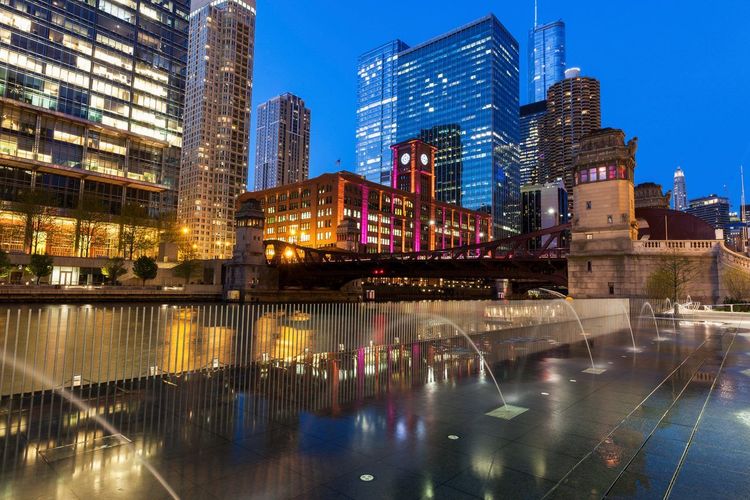
From the museum, walk two blocks north to the Chicago Riverwalk), a paved path along the south bank of the river that runs roughly 1.25 miles from Lake Shore Drive to Lake Street, stitched together with cafes, kayak rental docks and the occasional outdoor bar built onto the water.
Kayak and paddleboard rentals launch from a few points along the path between May and October, usually $20 to $40 an hour, if you'd rather see the skyline from the water than beside it. Food along the Riverwalk ranges from fast-casual tacos to a proper raw bar, and most spots have outdoor seating built right over the river. This stretch is also the easiest place to pair with a river cruise departure if you're doing one, since most boats dock along this exact path.
Follow it east toward the lake and you'll land at Navy Pier), a 3,300-foot pier that's been Chicago's lakefront amusement strip since 1916, now home to restaurants, the Chicago Children's Museum, a Shakespeare theater, fireworks in summer and the Centennial Wheel), a 196-foot Ferris wheel that opened in 2016 for the pier's 100th anniversary.
A ride on the wheel costs roughly $20 and takes about twelve minutes for three full rotations in enclosed gondolas, worth timing for an hour before sunset if your schedule allows it. Navy Pier itself is free to enter; you only pay for individual attractions like the wheel, the IMAX theater or the boat tours leaving from the south dock. In summer, fireworks launch off the end of the pier on Wednesday and Saturday nights around 9:30pm, worth timing dinner around if your evening lines up. The bridges and facades along this whole walk each have their own story, and Ryo's audio stops along the river tell you who built what at each crossing, so you can keep walking toward the pier instead of stopping to read plaques.
Evening: Museum Campus Sunset
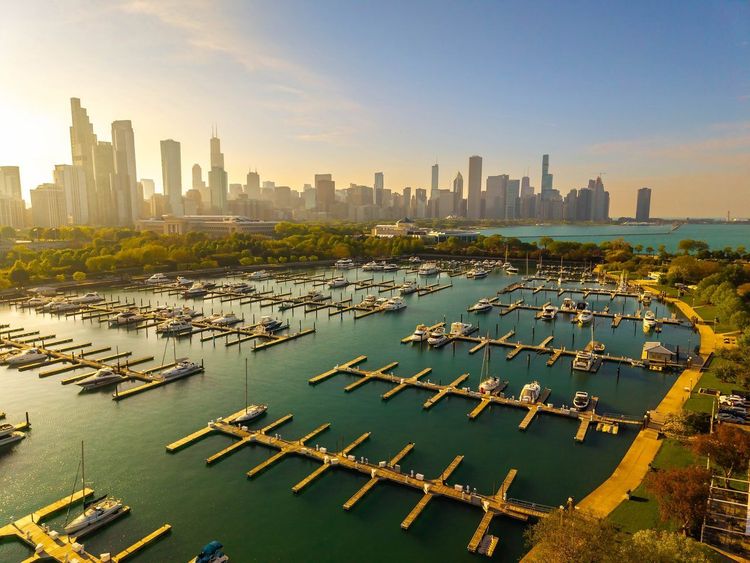
If you've got energy left, Museum Campus (1200 S Lake Shore Dr, Chicago, IL 60605), the lakefront park housing the Field Museum, Shedd Aquarium and the Adler Planetarium (1300 S Lake Shore Dr, Chicago, IL 60605, rated 4.2/5 on Google (3 214 avis)), sits a short cab ride south of Navy Pier and makes a great sunset stop even if you don't go into any of the buildings.
The strip of grass behind the Adler faces directly back at the skyline across the water, which is the best view of the skyline you'll get on this trip without paying for an observation deck, and it's free. The Field Museum and Shedd Aquarium both sit on the same campus if a third attraction tempts you, though either one alone can easily absorb half a day. If day two still has gas in the tank, the planetarium's evening sky shows run most nights and are worth checking ahead for timing.
Is the Chicago Architecture River Cruise Worth It?
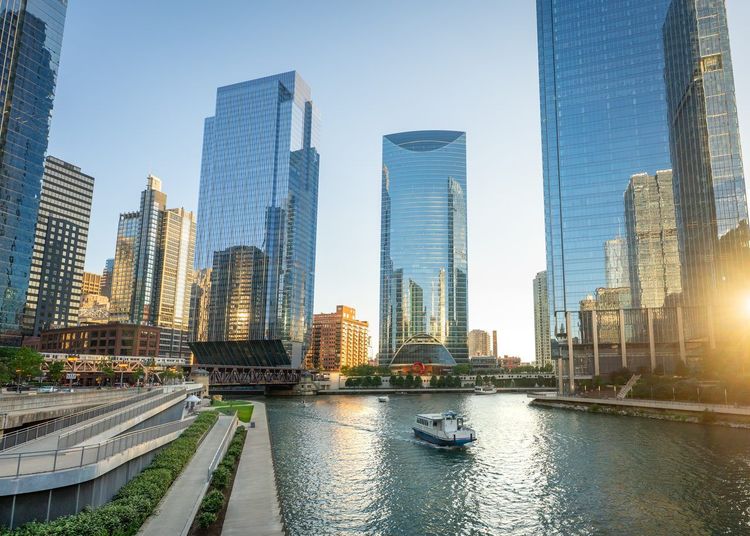
Short answer: yes, if you care even slightly about buildings, and Chicago is a city that makes architecture fans out of people who've never cared before. The Chicago Architecture Center (111 E Upper Wacker Dr, Chicago, IL 60601, rated 4.6/5 on Google (2 123 avis)) runs the most established version of the cruise, a 90-minute architectural boat tour along both branches of the river narrated live by a trained docent rather than a recorded track, covering roughly 50 buildings and the history of why Chicago's skyline looks the way it does: steel frames, the 1871 fire, the birth of the skyscraper.
Tickets run around $55 to $65 depending on season and time slot, and the center isn't the only operator; the CAC tour itself runs aboard Chicago's First Lady boats, while Wendella and Shoreline Sightseeing run similar routes with their own commentary style, so it's worth comparing departure times rather than assuming there's only one option. Who gives the tour matters more than it sounds: Chicago Architecture Center docents are volunteers who train for months and tend to go deeper into the history than crews on the purely commercial lines, which lean more toward general sightseeing patter.
Parking near the main docks, Michigan Avenue Bridge and the Riverwalk, is limited and expensive; expect $30 to $45 at a nearby garage for a few hours, so taking the L or a rideshare to the dock is the more sensible plan for most visitors. Group and private tours are available through most operators if you're traveling with more than six or seven people, usually booked at least a few weeks ahead in peak season, June through September.
Is it worth stacking onto an already packed two days? If you're doing this trip once, probably yes, slot it into the afternoon of day two before or after the Riverwalk walk, since the dock sits right along that path anyway. If you'd rather stay on dry land and save the ticket price, the riverside stops on Ryo's Chicago audio tour narrate several of the same buildings the cruise points out, on foot and without a boarding time to catch.
More Things to Do If You Have Extra Time in Chicago

Everything above fits inside 48 hours. If you've stretched this trip to three days, or you're the type who'd rather trade one downtown stop for a neighborhood with fewer tourists, these are the additions locals suggest first.
Neighborhoods Beyond Downtown: Wicker Park, Bucktown and Pilsen
Wicker Park (Wicker Park, Chicago, IL 60622) and its neighbor Bucktown, a fifteen-minute Blue Line ride northwest of the Loop, swap downtown's glass towers for vintage shops, record stores and a bar scene that runs later than anything near Michigan Avenue.
Milwaukee Avenue is the spine of both neighborhoods, worth an afternoon of wandering rather than a fixed checklist, and it's the pick if the rest of your trip has felt like a tourist itinerary and you want an evening that doesn't.
South and a bit west, Pilsen (Pilsen, Chicago, IL 60608) is the city's historic Mexican-American neighborhood, built around 18th Street and known for block after block of murals and independent galleries rather than any single attraction.
Both neighborhoods are a reasonable Uber ride or 25 to 35 minute transit trip from downtown hotels, which is part of why most two-day itineraries skip them; they reward their own half-day rather than a rushed detour.
Extra Stops: Garfield Park Conservatory and the National Museum of Mexican Art
Inside Pilsen itself, the National Museum of Mexican Art) is free, accredited by the American Alliance of Museums, and one of the only Latino art museums in the country with a permanent collection this size, worth building a Pilsen afternoon around rather than treating as an add-on.
Budget half a day for Pilsen if you're doing both the museum and a proper taco lunch on 18th Street; the neighborhood's food scene is good enough that rushing it defeats the purpose of coming.
On the West Side, the Garfield Park Conservatory) is one of the largest greenhouse conservatories in the country, about 4.5 acres of indoor and outdoor gardens with free admission (timed reservations and a suggested donation), and one of the city's most underrated stops, especially in February when everything outside is gray and this is still green. It pairs naturally with a West Side afternoon if you're renting a car anyway, since parking there is free and the conservatory rarely feels crowded even on weekends.
Back near downtown in River North, Headquarters Beercade (213 W Institute Pl, Chicago, IL 60610, rated 4.5/5 on Google (4 086 avis)) pairs a rotating draft list with a room full of working arcade cabinets, a solid rainy-afternoon or late-evening stop if museums aren't the plan.
For a different evening than anything downtown offers, dinner on Devon Avenue on the Far North Side is worth the trip out, more on exactly what to order in the food section below. And if the calendar lines up, attending a Cubs game at Wrigley Field or a White Sox game at Rate Field is the one addition locals suggest most often for a third day; baseball season runs April through September. If you do stretch to a third day, the Ryo audio-guided tour of Chicago is still worth replaying on your last morning downtown: it covers the Loop stories you may have rushed past on day one.
Where to Stay in Chicago for a Short Trip
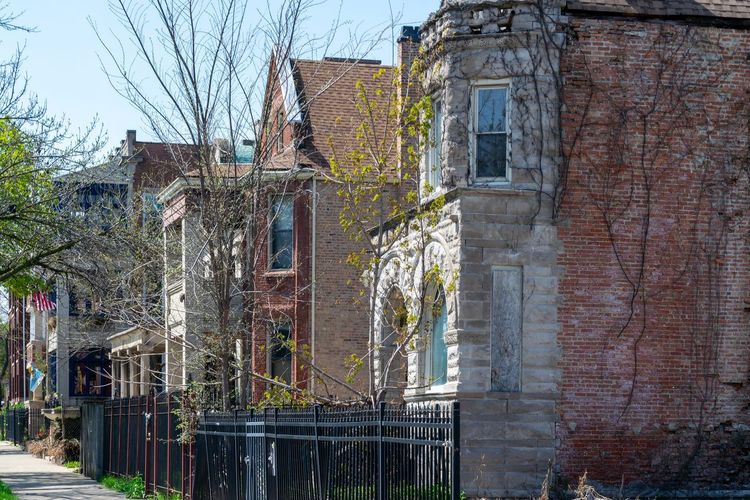
Three neighborhoods cover almost every reasonable base for a 48-hour trip, and which one fits depends more on your priorities than any objective ranking.
The Loop puts you inside the itinerary itself: Millennium Park, Willis Tower and the Art Institute are all walkable, and the L connects you to everything else within fifteen minutes. It's the pick for first-timers who want zero commute time between attractions, though it goes quiet at night since it's primarily an office district, and weekend room rates can actually dip lower here than in flashier areas because business travel empties out.
River North, just north of the river, is the better choice if evenings matter as much as sightseeing: this is where most of downtown's restaurants and rooftop bars cluster, along with a busy Lou Malnati's on Wells Street, and it's still a ten to fifteen minute walk to Michigan Avenue. Expect to pay slightly more here in peak season than in the Loop proper.
The Magnificent Mile itself, meaning hotels directly on or just off North Michigan Avenue, suits travelers prioritizing shopping and skyline views from the room, with Navy Pier an easy walk and the Riverwalk just south. It's also the most expensive of the three on a typical weekend.
Rough price bands help more than neighborhood names alone: a clean, well-located 3-star room in the Loop or River North runs $150 to $220 a night most of the year, climbing to $280 or more on summer weekends. Budget-focused travelers who don't mind a short commute can find comparable rooms in Streeterville or the South Loop for $20 to $40 less a night, a meaningful saving across even a two-night stay. Business-class hotels directly on Michigan Avenue start higher, often $300-plus in peak season, and are worth it mainly if the view or the walk to Navy Pier is the priority rather than the room itself.
For families, River North or a Magnificent Mile hotel with a pool tends to work better than the Loop, since evenings near restaurants and fewer late weeknight crowds matter more with kids in tow than shaving ten minutes off a museum walk. Whichever neighborhood you pick, book early if your trip lands in summer: June through September is when rates jump hardest and when rooms near Navy Pier or Millennium Park sell out first, sometimes six to eight weeks ahead for big weekends tied to festivals like Lollapalooza. None of these neighborhoods requires a car, which matters when weighing where to stay against what you'll spend getting around.
Getting Around Chicago: Transportation Tips
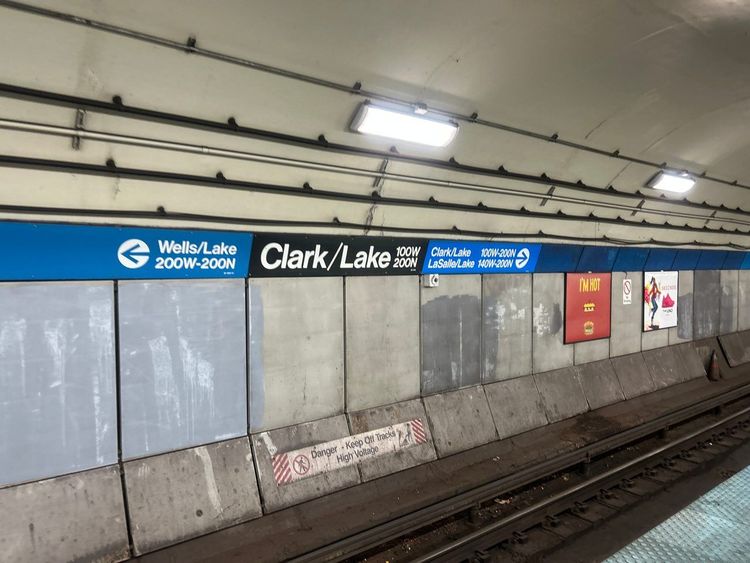
Walking covers most of day one and the Riverwalk half of day two; downtown Chicago is compact and flat, so comfortable shoes do more work than any transit pass. For the legs that are too far to walk, the CTA (Chicago Transit Authority) runs both the L trains and city buses on the same fare system: a single L ride costs $2.50 ($2.25 by bus), and an unlimited 3-day pass runs around $20, which pays for itself after about eight rides.
Download the Ventra app before you land; it handles both L and bus fares with a tap, and it's faster than fumbling with cash or a physical card at a turnstile. The L's Loop and Red Line cover almost every stop in this itinerary; Willis Tower, the Art Institute and Navy Pier's closest stations are all one or two stops from a downtown hub.
Rideshare fills the remaining gaps, mainly the trip out to Museum Campus if you're short on daylight, or anywhere in Pilsen, Wicker Park or Garfield Park if you're doing the extra-time section. Expect $10 to $18 for most downtown-to-neighborhood trips depending on traffic and time of day.
The hop-on hop-off bus tour, run locally by Big Bus, is worth it mainly for travelers with mobility limitations or very young kids who can't manage the walking distances above; it loops past most of the same landmarks with recorded narration and all-day reboarding, usually $45 to $55 for a one or two-day pass. For everyone else, walking and the L cover the same ground for a fraction of the cost, and you'll see more of the city at street level doing it that way.
Winter changes the math slightly: wind off the lake makes a ten-minute walk feel longer than it is, so budget a bit more rideshare use between December and March, and don't underestimate how much faster the L moves than a bus stuck in downtown traffic during rush hour, roughly 4 to 6pm on weekdays. Whatever mix you land on, a day pass or the Ventra app's auto-reload feature beats buying single rides one at a time; the savings add up fast over 48 hours of hopping between neighborhoods.
Chicago CityPASS and Skip-the-Line Tickets: Is It Worth It?
Whether a CityPASS earns its price over just two days comes down to how many paid attractions you're actually planning to hit, and the math is closer than it sounds. Chicago CityPASS bundles five attractions into a single prepaid ticket at around $144 for adults: Shedd Aquarium and Skydeck Chicago are fixed, then you pick three from the Art Institute, the Field Museum, 360 Chicago, the Museum of Science and Industry, the Adler Planetarium and a 75-minute Shoreline architecture river tour. Tickets stay valid for nine days from the first visit.
Buy separately, and the Skydeck starts around $32, the Art Institute around $32, and the 90-minute Chicago Architecture Center cruise $55 to $65 (not part of CityPASS, which uses the shorter Shoreline tour); those three alone come to roughly $120. The pass only pulls ahead once Shedd Aquarium and a fifth attraction enter the picture, pushing separate tickets well past $200 while the pass price stays fixed.
The catch: CityPASS only pays off if you're actually going to all five attractions, and Shedd Aquarium isn't on this itinerary's core route. If your two days only call for the Skydeck and the Art Institute, buying those two tickets directly costs less than the pass and skips the pressure to cram in extra stops just to feel like you got your money's worth.
Where the pass clearly wins regardless of math is skip-the-line access: most CityPASS tickets come with reserved or expedited entry at the Skydeck and the Art Institute, both of which build real lines by mid-morning in peak season. Upgrading your ticket to a skip-the-line version, even without the full bundle, is worth the extra few dollars at either attraction if you're visiting between June and September.
Go City, a competing pass with a similar bundle, is worth a quick price comparison before you commit either way; which one comes out cheaper shifts depending on the current attraction lineup and whether you want an explorer format, choose a set number of attractions, or an all-inclusive one. For a strict 48-hour trip, the explorer-style passes capped at two or three attractions usually beat the all-inclusive versions on price, since you're not going to physically fit more than that into two days anyway. Buy directly through the official site rather than third-party resellers; prices on resale sites are rarely better and refund policies tend to be worse if your plans change.
Where to Eat in Chicago: Signature Dishes and Local Favorites

Deep-dish gets covered on day one, so this section goes past the obvious pick: the hot dog nobody mentions until they've had one, and the neighborhood where Chicago's food scene actually diversifies past pizza.
Deep-Dish Pizza and Chicago-Style Hot Dogs
If Lou Malnati's on day one was your only deep-dish stop, know that Chicago's pizza argument runs deeper than one restaurant: Giordano's stuffed pizza, thicker, with a layer of dough pressed between two crusts, and Pequod's caramelized, almost-burnt crust edge are the other two names that come up constantly, and loyalty to one over the others is a genuine local debate. Expect to wait 20 to 45 minutes for a table at any of the big three on a Friday or Saturday night; if you only have one pizza slot across your whole 48 hours, a weekday lunch at any of them cuts that wait close to zero.
The dish that actually confuses first-time visitors more than pizza is the Chicago-style hot dog: an all-beef dog on a poppy seed bun, topped with yellow mustard, chopped onion, bright green relish, a dill pickle spear, tomato wedges, pickled sport peppers and a dash of celery salt, never ketchup. Ask for it « Chicago style » at any hot dog stand and that's what arrives, no need to list toppings yourself.
Portillo's is the chain most visitors try first and it's a fair introduction, but a standalone stand like Superdawg or The Wiener's Circle, the latter famous for servers who insult customers as a bit, part of the show rather than genuine rudeness, gets you closer to how locals actually experience it. Either way, a hot dog and fries runs $8 to $12 and takes five minutes, making it the easiest meal to fold into a packed two-day schedule.
Beyond the Classics: Devon Avenue and Local Shops
Devon Avenue (Devon Avenue, Chicago, IL 60659) on the Far North Side is Chicago's most underrated food street: a strip of Indian, Pakistani and Middle Eastern restaurants and groceries that runs for over a mile, closer to a culinary tour than a single dinner stop.
It's a 30 to 40 minute trip from downtown by rideshare or bus, which puts it firmly in extra-time territory rather than a standard 48-hour evening, but it's worth flagging here since almost no visitor itinerary mentions it and it's a genuine break from the deep-dish-and-hot-dog loop most two-day trips fall into. If Devon Avenue doesn't fit your schedule, a smaller taste of the same cuisines exists closer to downtown in the West Loop, which has absorbed a fair amount of the city's South Asian and Middle Eastern restaurant scene over the last decade, with a shorter commute from most downtown hotels.
Closer to downtown, Stan's Donuts & Coffee is the local shop worth the detour if you're near Lincoln Park or Lakeview; the peanut butter cup donut has a cult following for good reason, and a coffee-and-donut stop here makes a better breakfast than most hotel buffets.
For Ryo's culinary guide to Chicago, covering a few local shops that don't make most tourist roundups, it's worth a quick browse before you lock in a full itinerary of meals.
Best Time to Visit Chicago for a 2-Day Trip
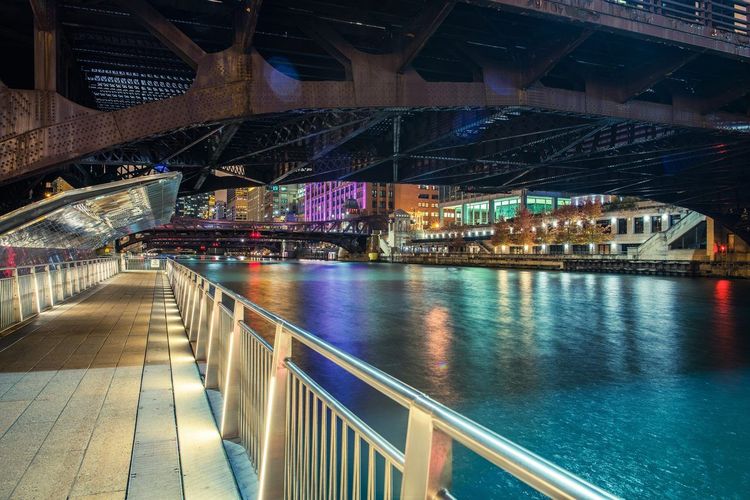
Late May through early October is Chicago's sweet spot: warm enough for the Riverwalk and Navy Pier to make sense, long enough daylight to fit the Skydeck sunset slot, and every outdoor stop in this itinerary is running at full capacity, both literally and in terms of what's open. June and September specifically thread the needle best, summer's warmth without quite the peak-season crowds or room rates of July and August.
July and August bring the heaviest crowds and the highest hotel prices, plus humidity that makes the all-day downtown walking in this itinerary noticeably more tiring; if you're set on summer, start the walking portions of each day as early as the attractions allow.
Spring, April and May, and fall, October and early November, trade a few degrees of warmth for thinner crowds and lower room rates, and most of this itinerary (Millennium Park, the Riverwalk, the Art Institute) works just as well in a light jacket as it does in shorts.
Winter in Chicago is a different trip, not a lesser one: Millennium Park's ice rink runs through the Bean reflecting snow instead of skyline, the Christkindlmarket takes over Daley Plaza in late November and December, and hotel rates drop hard outside the holiday weeks themselves. The tradeoff is real: wind chills regularly drop below freezing, the Riverwalk's outdoor bars and kayak rentals close for the season, and the Centennial Wheel sometimes pauses operations in the worst stretches of cold. If you're doing Chicago in 2 days in January or February, lean harder on indoor stops, the Art Institute, museums, Devon Avenue's restaurants, and treat the outdoor landmarks as quick photo stops rather than lingering visits.
Shoulder weekends also matter for the river cruise and the Skydeck specifically: both run shorter hours and smaller time-slot windows outside roughly April through October, so double-check operating calendars before building either into a winter itinerary. Convention season, several large trade shows run through spring and fall, can also spike downtown hotel rates independent of weather, worth a quick check against the city's convention calendar if your dates are flexible. There's no bad month to do this itinerary, only different versions of it: the landmarks don't move, but how much time you spend outside versus in does.
Practical Tips: Budget, Safety and What to Avoid in Chicago
Budget-wise, a realistic two-day trip for one person, excluding flights and hotel, lands somewhere between $120 on a tight budget, walking, CTA passes, counter-service meals, free attractions, and $300-plus if you're doing the Skydeck, the Art Institute, a river cruise and one real sit-down dinner. The single biggest lever is attractions: skip one paid observation deck or the river cruise and you save $35 to $65 instantly without losing much of the itinerary's substance.
A few free swaps keep costs down without feeling like you're missing out: Millennium Park, the Riverwalk, Grant Park, Garfield Park Conservatory and the view from Museum Campus are all free, and together they cover a genuinely full day on their own. Lunch at a counter-service spot, a hot dog stand, a deep-dish slice shop doing individual slices, runs $10 to $15 versus $25-plus for a sit-down meal, an easy place to trim a two-day budget without cutting an attraction.
Where to be cautious: downtown, the Loop, River North, the Mag Mile, Museum Campus and Navy Pier are all well-patrolled and genuinely safe for the overwhelming majority of visitors, day or night. The advice that actually matters is more mundane than avoiding certain neighborhoods: keep bags zipped and in front of you on crowded L trains and buses, especially during rush hour, and stay alert around the Loop late at night the way you'd be in any major downtown after the bars close. If you're venturing into the extra-time neighborhoods above, Pilsen, Wicker Park, Garfield Park, daytime visits are uneventful; treat them the way you'd treat an unfamiliar neighborhood in any big city after dark, which mostly means sticking to lit, populated streets.
For a family trip, this itinerary compresses reasonably well with kids, but swap the architecture river cruise and some of the Art Institute's deeper wings for Navy Pier's more kid-direct attractions, the Centennial Wheel, the Chicago Children's Museum on-site, and budget more transition time between stops than the adult-pace version above assumes. Stroller access is solid on the Riverwalk and through Millennium Park, less so on the L during rush hour, when rideshare becomes worth the extra cost for a family group.
Tipping norms are standard American: 18 to 20 percent at sit-down restaurants, a dollar or two per drink at bars, and rideshare apps prompt a tip after the ride ends. Tap-to-pay works almost everywhere, including CTA turnstiles directly with a contactless card or phone, so there's rarely a need to carry much cash. None of this should read as a warning label on the city; Chicago's downtown core, where this whole 48-hour itinerary takes place, ranks among the more visitor-friendly big-city cores in the US. The caution above is the same baseline awareness worth carrying in any major city, not something specific to Chicago.



FAQ
Is 2 days enough to see Chicago?
Yes, for the headline landmarks: Millennium Park, Willis Tower, the Art Institute, the Riverwalk and Navy Pier all fit comfortably into 48 hours using the itinerary above. What doesn't fit is a deep dive into any single neighborhood beyond downtown, a baseball game, or a day trip out of the city; those are the first additions worth making if you can stretch to three days instead of two.
Where should tourists avoid in Chicago?
There's no downtown neighborhood in this itinerary that requires avoidance; the Loop, River North, the Mag Mile, Navy Pier and Museum Campus are all well-trafficked and safe for visitors day or night. General city-smart habits, watching bags on transit, sticking to lit streets late at night, cover the rest, the same baseline you'd use in any major US city.
What are the top must-see things to do in Chicago?
Millennium Park and The Bean, Willis Tower's Skydeck, the Art Institute of Chicago, the Chicago Riverwalk and Navy Pier's Centennial Wheel cover the core of a first visit, with a deep-dish dinner and a river cruise rounding out the list if you have room for both.
What's the best month to visit Chicago?
June and September tend to balance warm weather, long daylight and manageable crowds better than peak summer. July and August are hotter and busier with higher hotel rates, while winter, December through February, suits travelers who want lower prices and don't mind swapping outdoor time for museums and indoor dining.
Is the Chicago CityPASS worth it for a 2-day visit?
Only if you're planning to hit most of the attractions it bundles, the Skydeck, the Art Institute and a river cruise or aquarium visit among them. At around $144 for five attractions, Shedd Aquarium and the Skydeck included, it only wins if you use all five; for just the Skydeck and the Art Institute, buying directly is cheaper. It does add expedited entry at the Skydeck.
Do I need a car in Chicago, or is it walkable?
No car needed for this itinerary. Downtown is flat and walkable, the CTA's L trains and buses cover everything else for $2.50 an L ride or around $20 for a 3-day pass, and rideshare fills the occasional gap, like the trip out to Museum Campus or the extra-time neighborhoods.
Where should I stay in Chicago for a short trip?
The Loop puts you inside the itinerary with the shortest commutes, River North is better for evening dining and nightlife, and the Magnificent Mile suits shopping and skyline views. Families tend to do better in River North or on the Mag Mile; budget travelers should look at Streeterville or the South Loop for lower rates a short ride from everything above.
Forty-eight hours in Chicago comes down to sequencing: start downtown and vertical, end lakefront and cultural, and let the practical stuff, where you sleep, how you get around, whether a CityPASS makes sense, slot in around that spine rather than dictate it. Whichever day-by-day order you land on, it's hard to go wrong with Millennium Park on one end and Navy Pier's wheel lit up over the lake on the other.
However you divide the two days, Ryo's Chicago audio guide is worth loading onto your phone before day one starts, so the story behind The Bean, the bridges along the river and the rest of this route is already queued up the moment you arrive.