Créé par Emilie, le 17 nov. 2026
Votre guide Ryo
Chicago, United States
The Windy City
Parcours audioguidé pour visiter Chicago en 1 jour
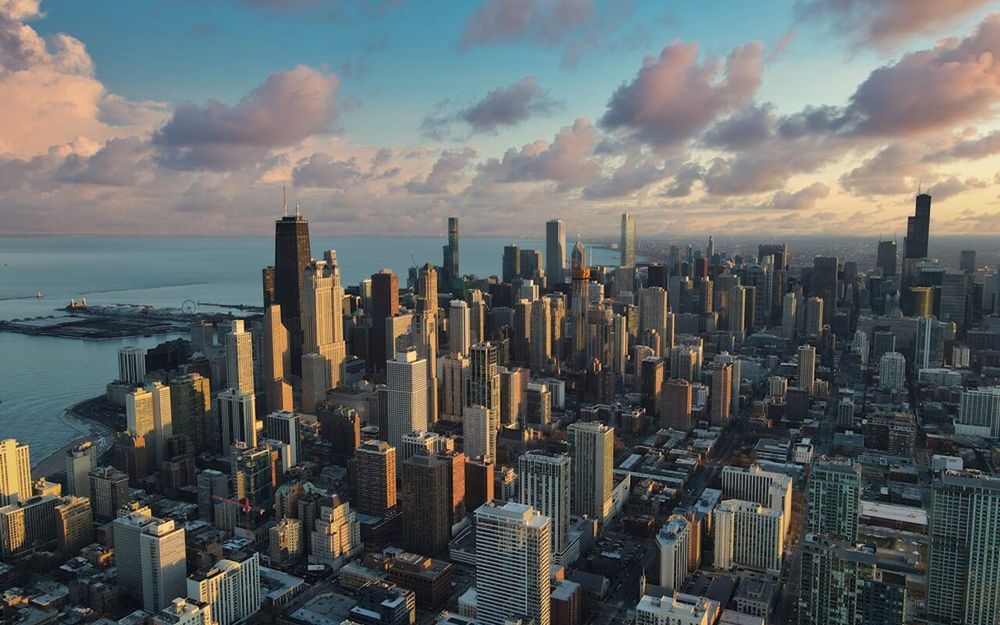
This visit invites you to an immersion in the heart of the birthplace of modern architecture, where iconic skyscrapers draw a giant's silhouette between the sky and the lake. Let yourself be carried by the electrifying energy of a metropolis that has reinvented itself with panache, transforming its industrial past into a theater of light, art, and suspended parks. Between the strength of the iron structures spanning the river and the serenity of the blue horizons stretching as far as the eye can see, the city reveals a character that is proud, daring, and deeply vibrant.
Quand partir à Chicago ?
Jan.
-1°
10
Feb.
1°
9
March
8°
10
April
15°
11
May
21°
11
June
27°
10
July
29°
9
Aug.
28°
9
Sept.
24°
8
Oct.
17°
10
Nov.
9°
9
Dec.
2°
10
Chicago is the main city in Illinois, resting along the shores of Lake Michigan. Its seasons vary depending on continental climate, from freezing winters with heavy snowfalls to very hot summers. Expect minimal temperatures between -7°C and -3°C from December to February, and higher temperatures between 25°C and 30°C from June to September. Unless you want to admire the city's frozen lake and Christmas decorations, the best time to visit Chicago is between April and October.
Départ conseillé
No need to worry about where to begin! Our tours are designed as a loop, so you can jump in wherever you are. The navigation system and audio-guide will automatically adjust to your location. However, if you happen to be nearby, we do have a preferred starting point: The Cloud Gate (The Bean)/ Millenium Park
Parking à proximité
Grant Park North Garage - 44 Michigan Ave/ Millennium Train Station
Parking in the USA is generally easy, given that streets are wide and parking spots even wider. If you're used to Europe, you'll quickly realise that Americans are friendly and good drivers. However, there is a catch: Chicago is one of the worst cities in the world to park in. Not in the top three alongside New Delhi or Beijing, but still. In Chicago, parking spots are expensive and on-street spaces are rare. Chicago's parking meters are one of the most expensive in the US, and don't get me started on fines for traffic violations, both strict and severe. A word of advice: take the metro! Leave your car at the hotel though you must pay for parking, or even better, don't come to Chicago with any car at all!
À savoir
If you plan on trying out many activities that require money, it is important to inform yourself on the various city passes that Chicago has to offer. Depending on your plans, they will save you both time and money. There are different options: the Chicago CityPASS, the Go Card, and Ceetiz passes. All of them offer access to attractions at advantageous prices, discounts on transportation, shopping, and dining, as well as skip-the-line tickets to major attractions.
While visiting Chicago, you'll discover the incredible glass patio of the Rookery Building. The building is open Monday to Friday from 7:00 am to 6:00 pm and Saturday from 8:00 am to 2:00 pm. Unfortunately, it is closed on Sundays. You can take photos here, but don't use any tripod or other professional equipment. If you do, it will be considered a photo shoot, which is allowed, but only under certain conditions.
The tour takes you inside the Tiffany Dome at the Chicago Cultural Center. Access is free, but the building is open from 10 a.m. to 7 p.m. on weekdays, and from 10 a.m. to 5 p.m. on weekends. Don't miss it!
Découvrez 26 lieux d'intérêt pour visiter Chicago










What to see in Chicago on your 3h tour?
This 7 km loop takes about three hours and links 23 sights. From Millennium Park, home to Cloud Gate and the Frank Gehry-designed stage, it reaches Lake Michigan, crosses the river toward Riverwalk and Marina City, climbs State Street into the Loop, runs along Wacker Drive and the Willis Tower, crosses Federal Plaza and the start of Route 66, before looping back past the Chicago Cultural Center. With the Ryo app in your ears, every sculpture, bridge and skyscraper tells the city's story.
Information checked in October 2026 and subject to change.
1 - Cloud Gate (The Bean)
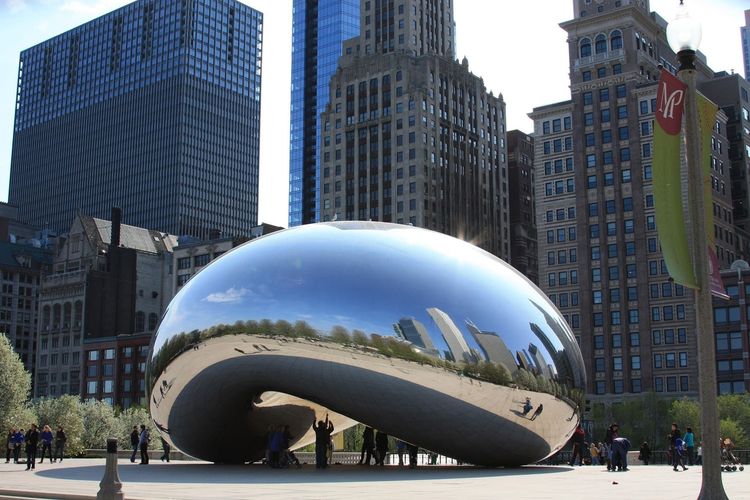
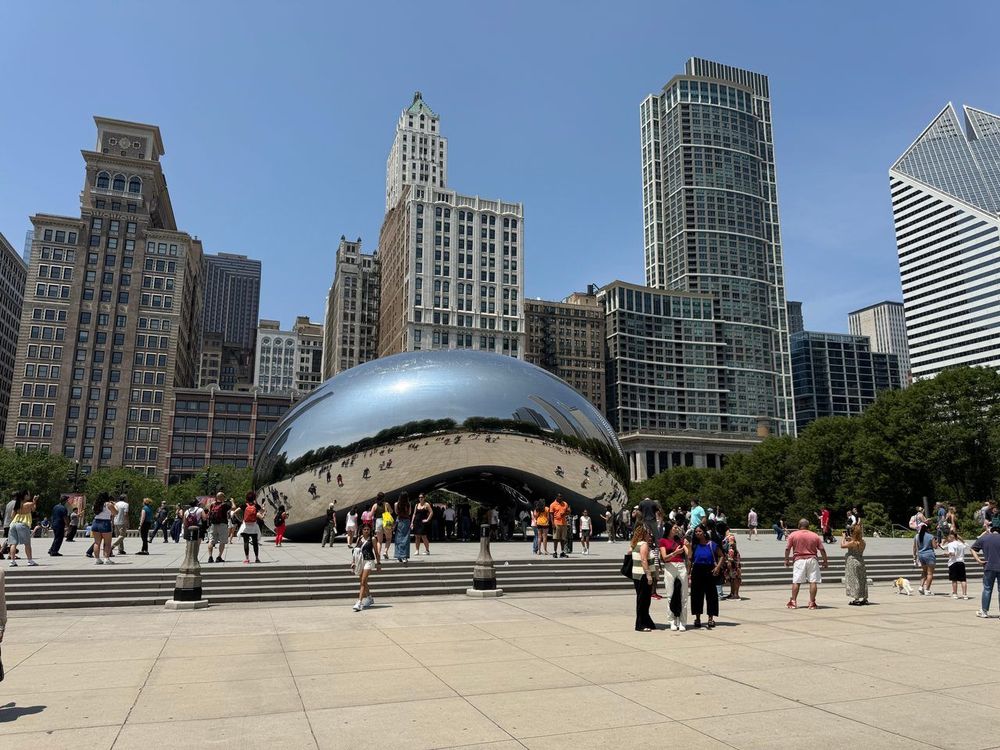
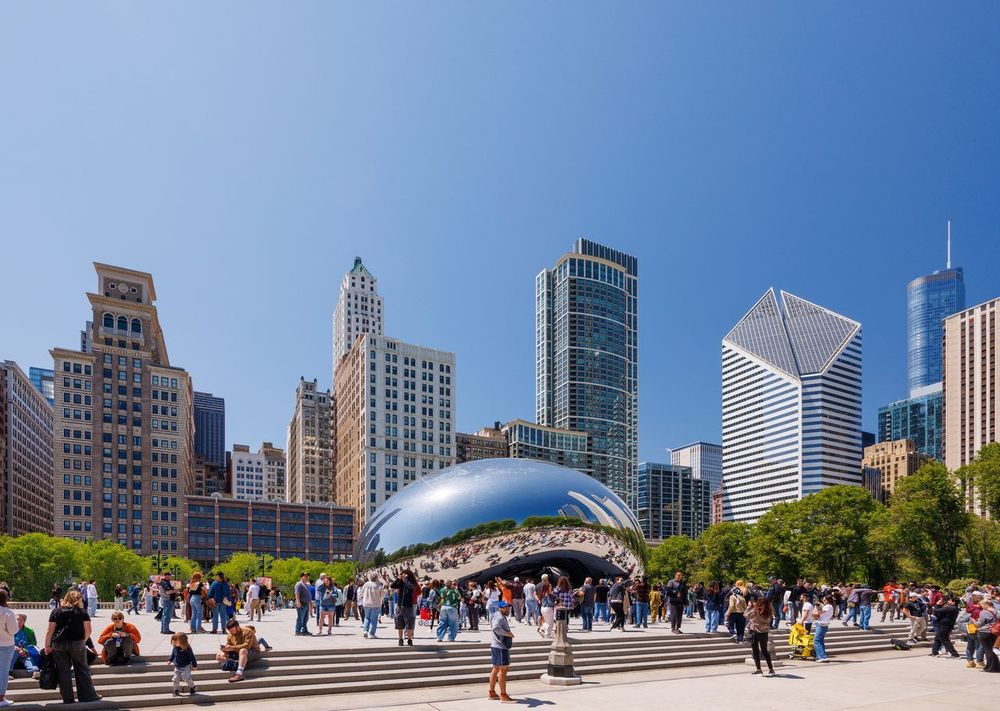
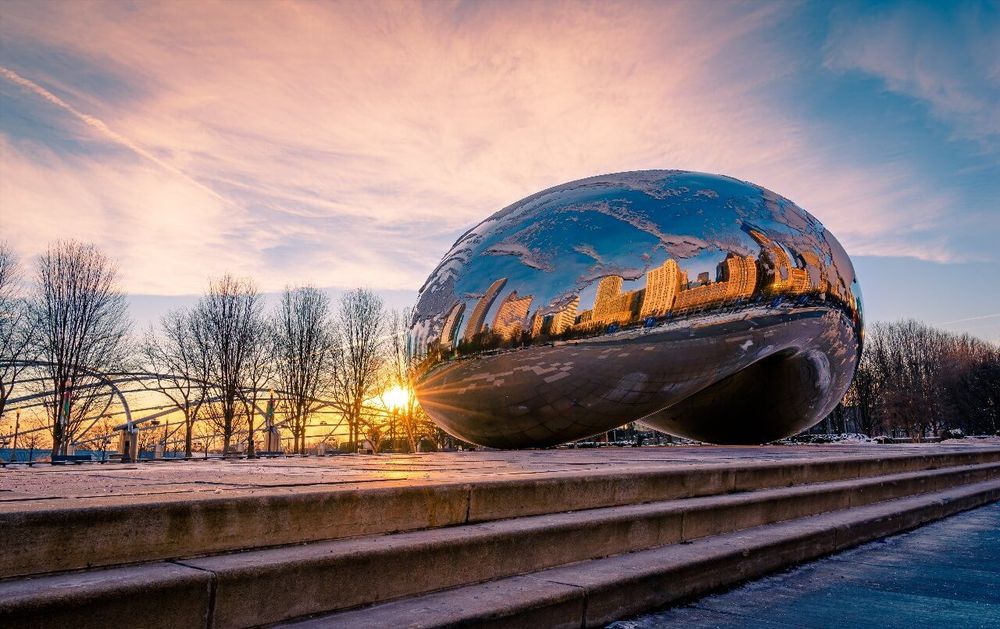
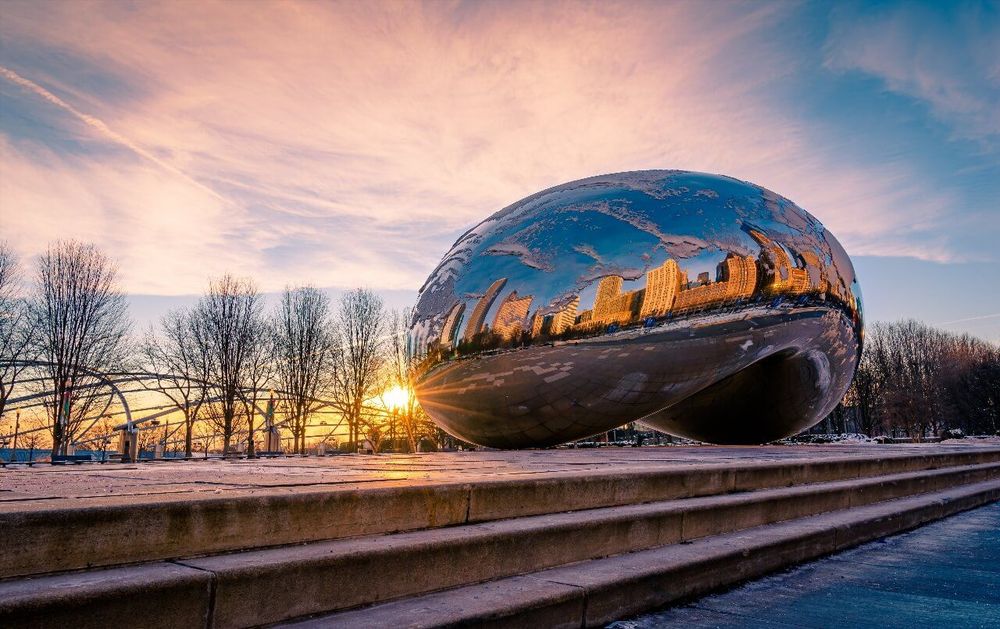
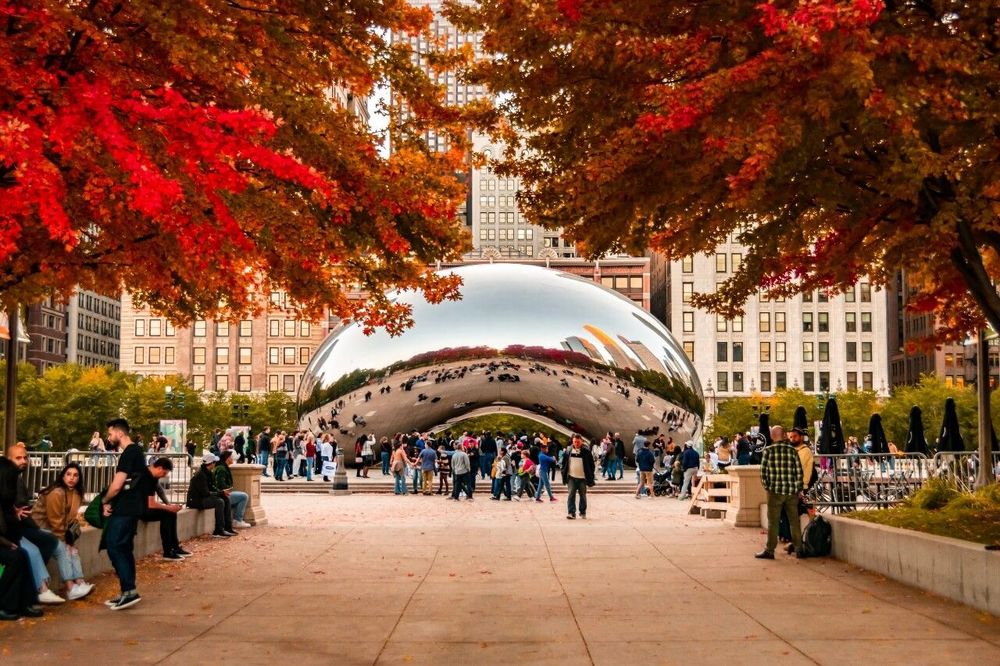
Nicknamed the Bean for its bean-like shape, this giant sculpture sits at the heart of Millennium Park. British artist Anish Kapoor shaped it from polished stainless steel plates welded with no visible seam, creating a surface so smooth it mirrors the sky and surrounding towers. Step under its central arch and watch your reflection multiply endlessly. Kept pristine through constant care, the piece keeps changing with the shifting daylight.
Free entry · Best late in the day
2 - Jay Pritzker Pavilion
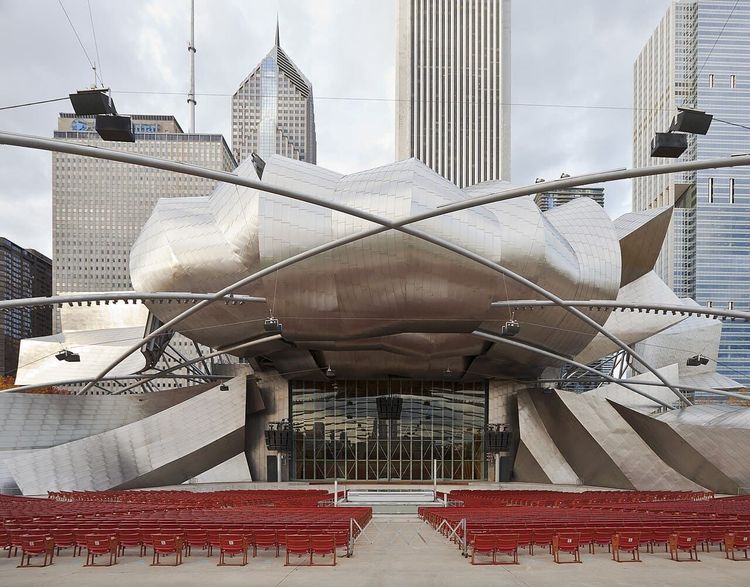
Just behind the Bean stands an open-air stage designed by renowned architect Frank Gehry, also behind the Guggenheim Museum in Bilbao. Its steel-ribbon canopy shelters a vast space that holds a huge crowd between fixed seating and an open lawn. Home to a resident symphony orchestra and a free classical music festival each summer, it has also stirred controversy, not least over the name it owes to a generous local benefactor.
Free entry
3 - BP Bridge
This winding footbridge, also designed by Frank Gehry, links Millennium Park to the neighbouring park across a busy avenue. Its shimmering steel cladding evokes a silver serpent and doubles as a sound barrier, muffling traffic noise for concerts on the nearby stage. From its gently sloping deck, the eye sweeps over downtown rooftops and the lake beyond. Since snow cannot be cleared without blocking the road below, the bridge closes each winter.
Free entry
4 - Parks
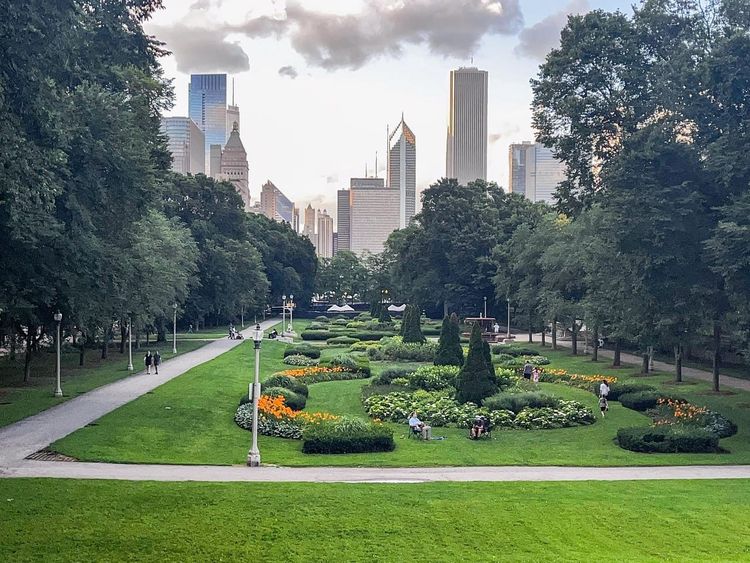
You're now in a sprawling family park created some fifteen years ago on the site of a former car park, just north of a larger public garden. Striking playgrounds, a climbing wall, mini-golf and a winter ice rink sit alongside a garden designed as a place of hope for people affected by cancer. Further south lie an art institute, the starting line of the local marathon and a monumental fountain, plus a natural history museum and a planetarium for those extending the walk.
Free entry
5 - Lake Michigan
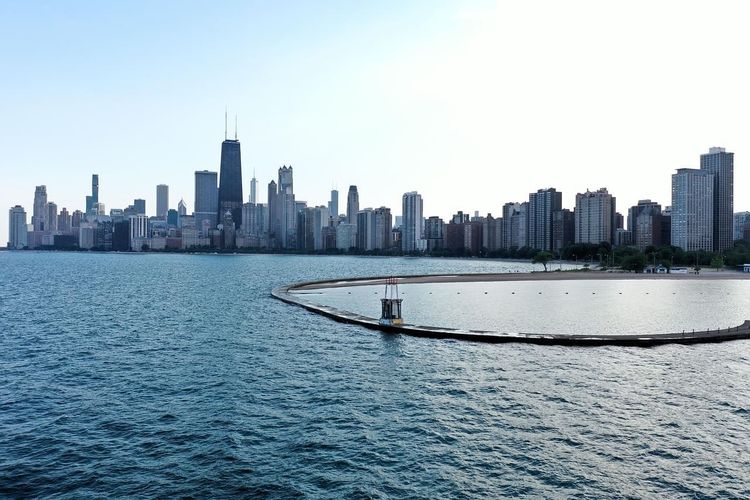
A busy trail popular with joggers and cyclists winds along waters so vast you lose sight of the far shore. The only one of the five Great Lakes lying entirely within the United States, it takes its name from an Algonquian word meaning great water. Miles of beaches and waterfront paths line the city, which grew up on its shore. By boat, kayak or simply on foot, this inland sea has shaped the whole of local history.
Free entry · Best on weekdays
6 - Jean-Baptiste Point du Sable
At the bridge entrance stands the bronze portrait of a trader of Haitian descent who settled here in the late 18th century, long before the settlers later credited with founding the city. Married to a Native American woman, he ran a trading post with trappers and local tribes, giving the place its name. Overlooked for generations because of his origins, he was only identified as the city's true founder in the mid-19th century, and properly honoured almost a century later still.
Free entry
7 - Chicago’s Four
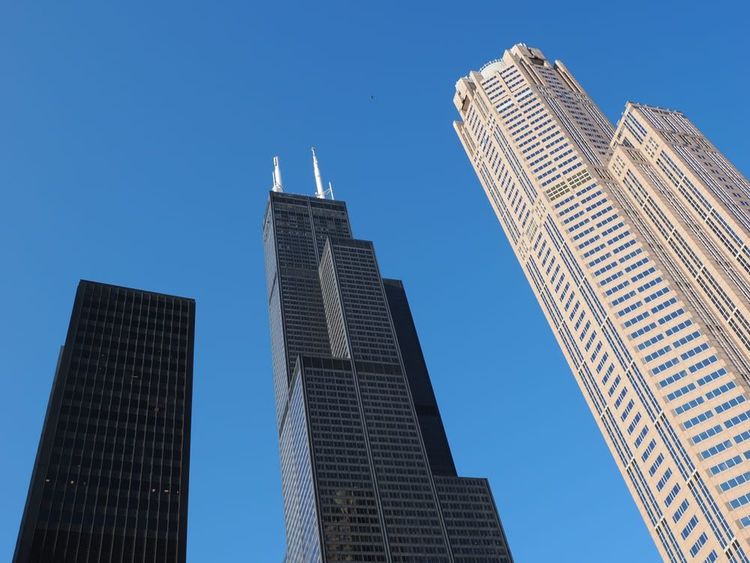
Four towers raised in the 1920s frame this bridge, forming one of the city's most photographed views. One recalls an ancient temple, another carries a huge clock and borrows its style from a Spanish cathedral, a third piles on gargoyles and flying buttresses inspired by a Norman landmark. That last one, home to a major local newspaper, has fragments of monuments from around the globe embedded in its walls, from the Great Wall to the Parthenon.
Free entry
8 - Riverwalk and Marina City
This riverside promenade, designed to revive banks long given over to industry, unfolds over several sections lined with terraces and boat docks. Right opposite stand two round concrete towers nicknamed the corn cobs, built around 1960 to keep families living downtown, their floors shared between flats, parking and assorted services. Their unmistakable silhouette has made them a favourite backdrop for many a Hollywood film shot in the city.
Free entry
9 - Chicago Theatre
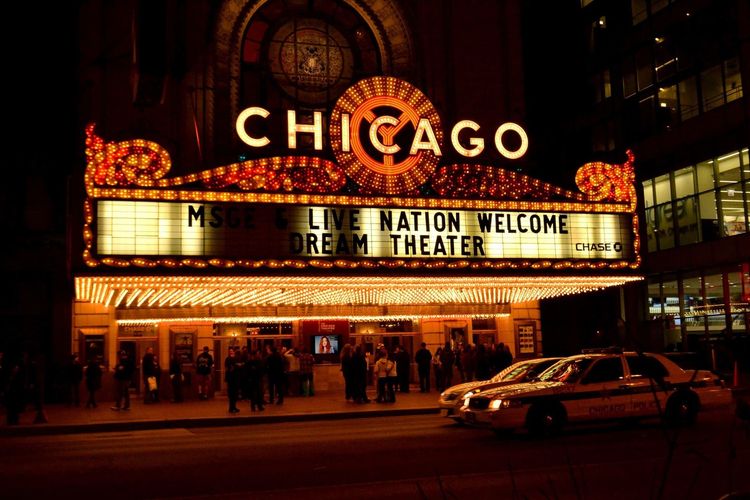
Recognisable by its tall vertical sign and glowing marquee, this lavish venue opened in the early 1920s and set the tone for the grand movie palaces that followed across America. For decades it premiered films and hosted the biggest stars, before a decline that nearly led to demolition. Rescued and restored by devoted locals, it reopened in splendour inspired by great chateaux and now stages concerts and shows for thousands of spectators.
Free to see from outside
10 - Macy’s
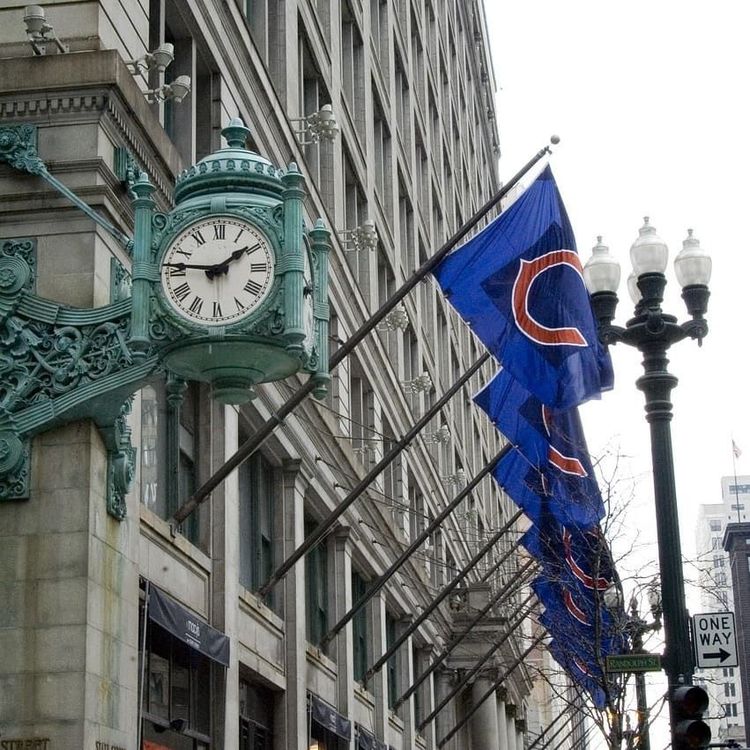
Easy to spot thanks to the massive bronze clock on its corner, this historic department store occupies a landmark building dating from the late 19th century. Founded under a different name before the current chain took over in the mid-2000s, it remains an icon of American retail. Even without shopping in mind, step inside for the stained-glass mosaic ceiling that soars above several floors devoted to fashion.
Free entry
11 - Picasso’s statue
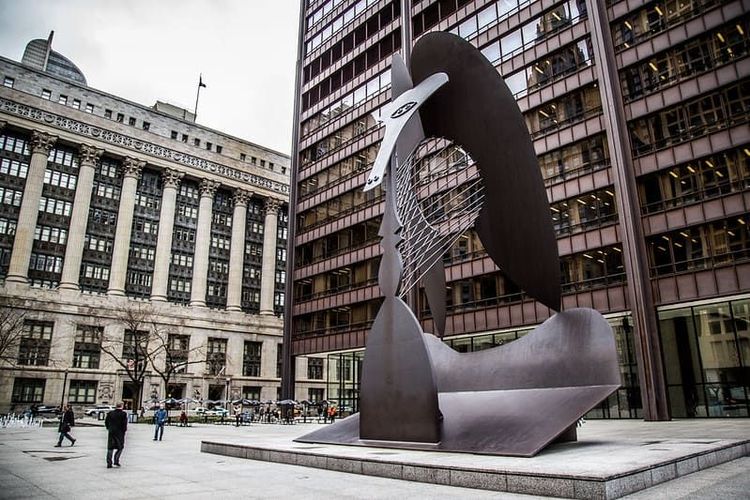
Standing several metres tall, this steel sculpture, a gift from the Spanish artist, has crowned a civic plaza since the late 1960s. Never named by its creator, it leaves everyone free to see a bird, a baboon or a woman's face, according to some close to the painter. The first of a long line of public artworks that have since sprung up downtown, it remains a favourite meeting point where visitors young and old love climbing its sloping base.
Free entry
12 - First United Methodist Church
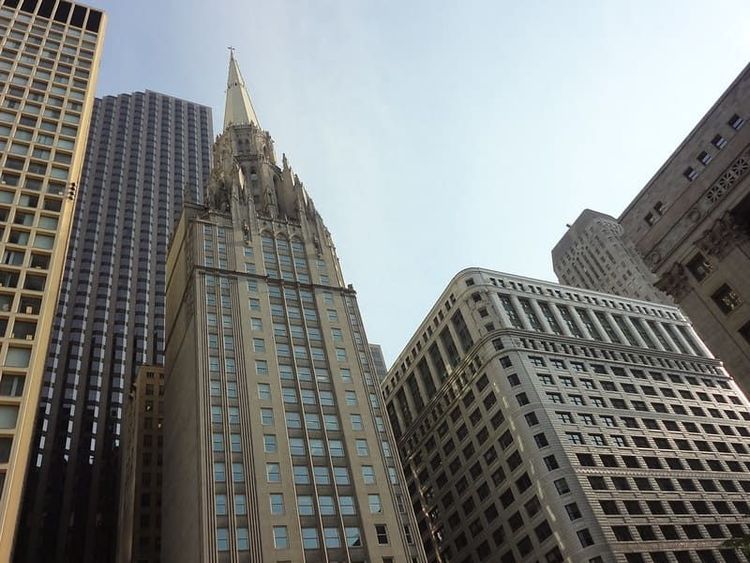
Looking up at this neo-Gothic skyscraper, you'd never guess it houses a congregation all the way to its summit. Since no large windows could be cut into a structure carrying so many floors above, the interior relies on artificial light to set off striking stained glass, while the visible beams actually hide a steel frame dressed in wood. Right alongside, a bronze statue by a Spanish sculptor completes this surprising urban scene.
Free entry
13 - Thompson Center 2.0
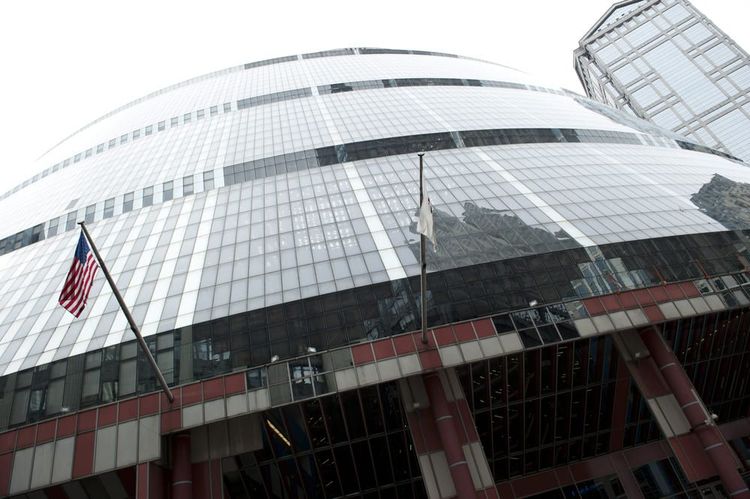
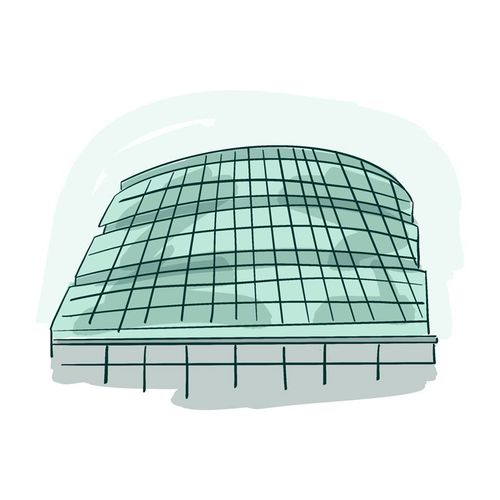
This glass-and-steel giant, designed by a German architect also behind an airport terminal and a Berlin complex, long served as the seat of the regional government. Its interior atrium rises some fifteen storeys, meant to symbolise democratic transparency, but single glazing instead of the planned double panes turned it into an oven in summer and an icebox in winter. Once threatened with demolition, it was eventually bought by a tech giant and renovated while keeping its striking architecture.
Free entry · Best on weekdays
14 - City Hall
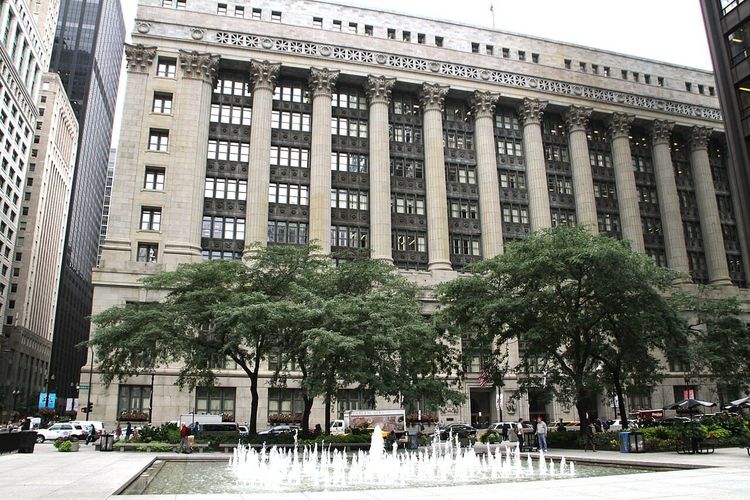
With columns rising over ten metres, this imposing early-20th-century building shares its block between the city hall and the neighbouring county's administration. Its facade once served as the backdrop for the finale of a beloved American comedy. Hidden on its roof lies a lesser-known secret: a rooftop garden planted with thousands of plants and home to beehives, which stays far cooler than neighbouring tar roofs even in intense heat.
Free entry · Best on weekdays
15 - Cadillac Palace Theatre
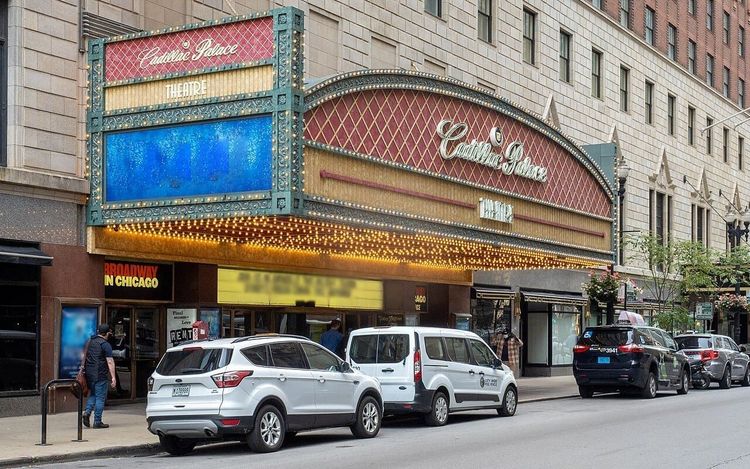
Opened under a different name in the mid-1920s, this theatre unfolds a sumptuous interior inspired by famous French chateaux, with giant mirrors, marble and gilding at every turn. During the war its ornaments were repainted white to dodge the requisition of metals destined for ammunition, before being restored to their original splendour. First a vaudeville stage hosting major stars, then a cinema, it now hosts the big musicals touring from Broadway.
Free to see from outside
16 - Civic Opera House and Chicago River
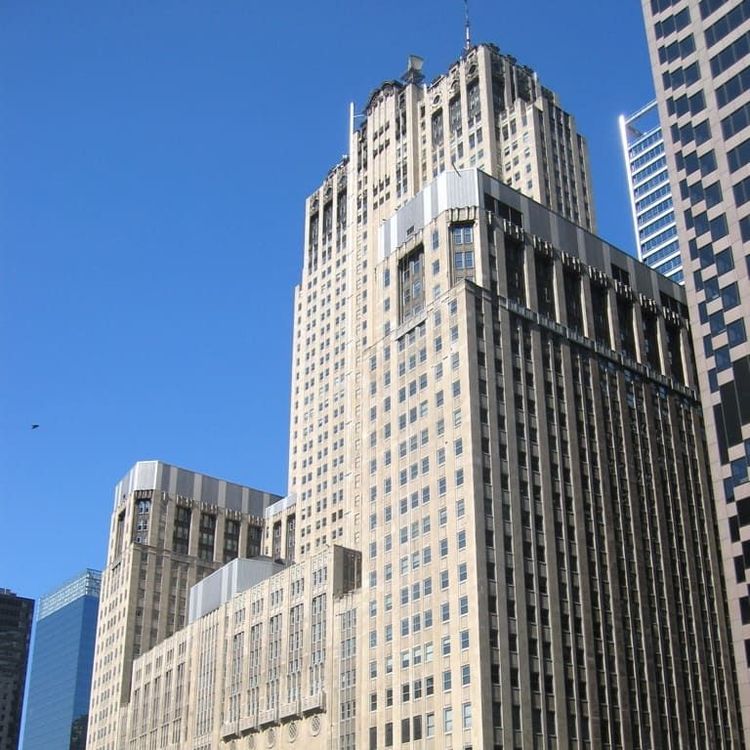
Across the water stands the home of a renowned opera company, housed in a massive skyscraper whose silhouette is often likened to a throne facing the river. The river's own story is remarkable: turned toxic in the 19th century and threatening the drinking water supply, it was literally reversed to protect public health. Each spring it turns green in honour of the city's Irish community, while dozens of movable bridges still swing open for passing boats.
Free to see from outside
17 - SkyDeck Chicago Willis Tower
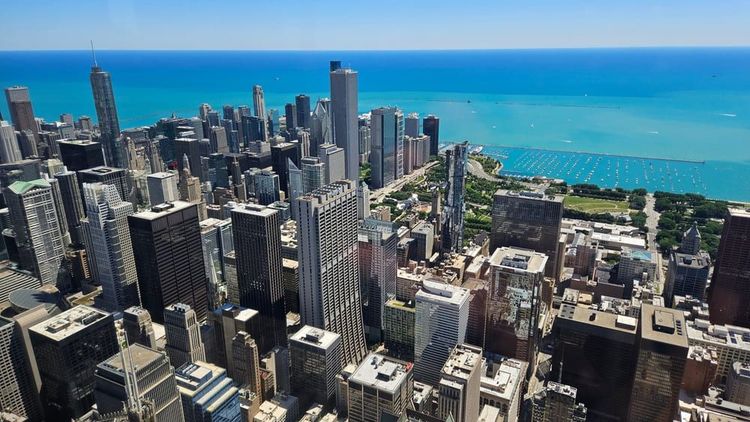
Once the tallest skyscraper on earth under a different name, this tower remains one of the country's highest and still carries broadcast antennas right at its peak. Its observatory, perched over 400 metres up, draws millions of visitors each year who dare step onto glass balconies jutting out into thin air. Two daring climbers, one dressed as a superhero, the other with no safety gear at all, have each scaled its facade by hand on separate occasions.
Paid entry (about $32)
18 - The Rookery
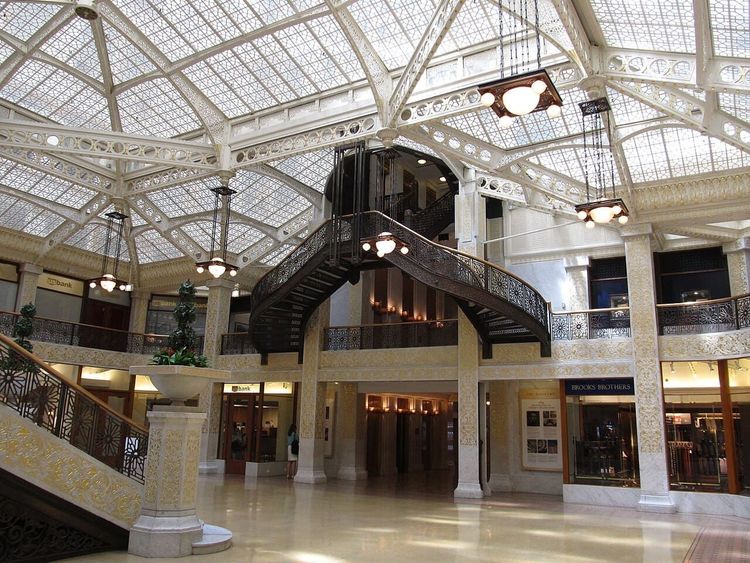
Its name evokes a crow's nest, a nod to the birds that once perched here, and, some say, to the local politicians who worked within. Built in the late 19th century during the architectural boom that followed a great fire, this building ranks among the city's earliest tall structures, blending steel framing with traditional craftsmanship. Behind its stone facade hides a central courtyard flooded with natural light, later redesigned by an architect who went on to design a spiral museum in New York.
Free entry · Best on weekdays
19 - Calder's Flamingo
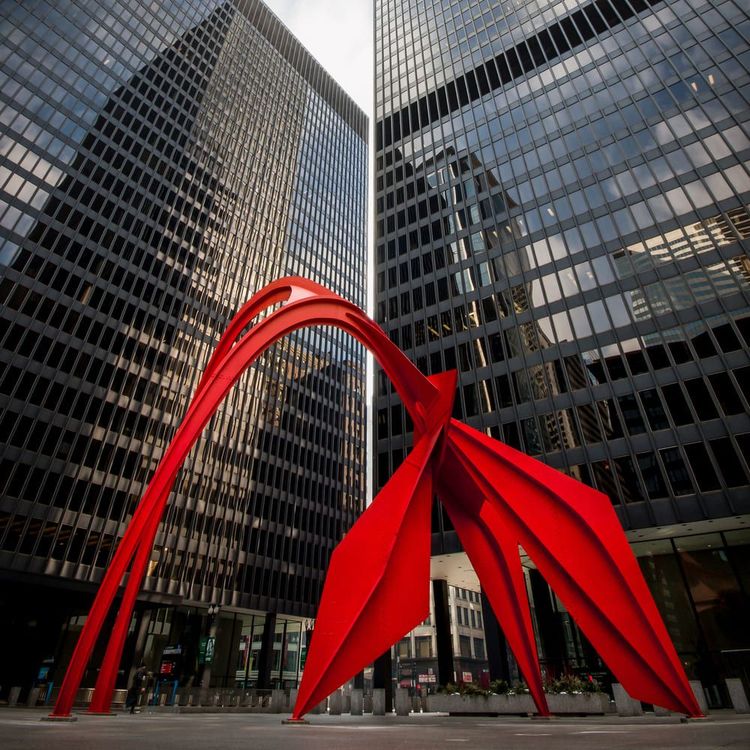
Standing some fifteen metres tall and painted a bold red chosen to stand out against the dark buildings nearby, this fixed steel structure takes its name from a tropical bird. The work of an American sculptor known for abstract art and his hanging mobiles, it was funded in the early 1970s under a scheme setting aside a share of every new federal building's budget for public art. Amused by its colour, locals sometimes simply call it by its creator's name.
Free entry
20 - Chicago’s subway
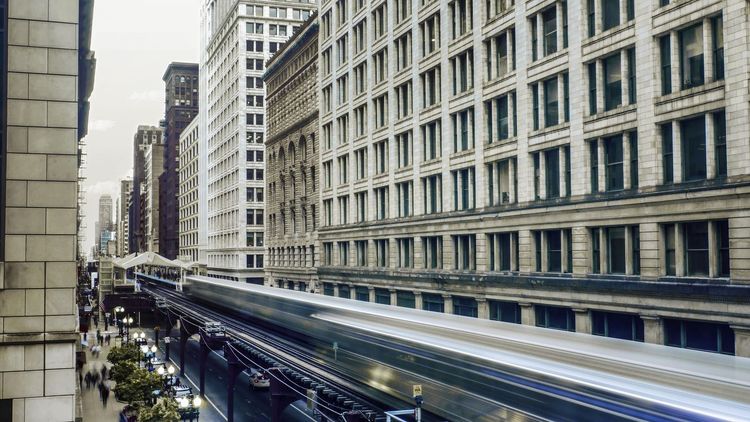
Nicknamed after a single letter because of its elevated tracks, this network was the second in the country to open, right after the one in the biggest city on the East Coast. Its very first line, dating from the last decade of the 19th century, still forms part of today's loop around the business district, which borrows its name from that very structure. Mostly underground elsewhere now, it stays elevated and striking right here, where its steel framework rubs shoulders with the skyscrapers.
Free entry
21 - Begin Route 66
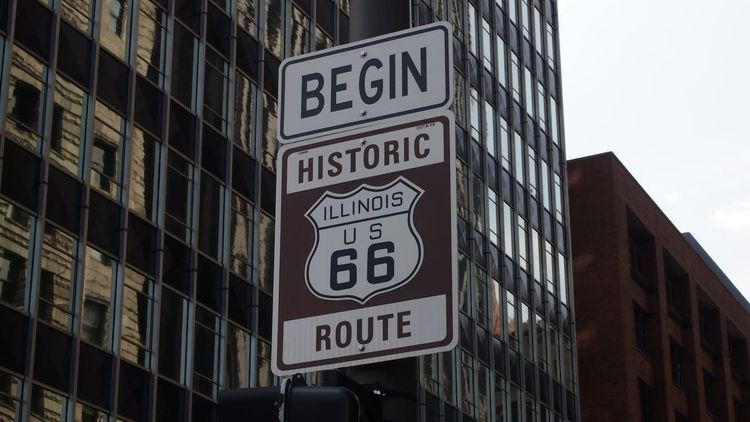
A modest sign marks, on a downtown street corner, the starting point of a legendary route running all the way to the Pacific coast on the far side of the country. Laid out in the 1920s by stitching together existing roads through small towns once cut off from the wider world, it became a symbol of freedom and escape, immortalised in American literature as the mother road. Officially decommissioned in favour of modern highways, it remains a pilgrimage site for road-trip lovers and nostalgics alike.
Free entry
22 - Crown Fountain
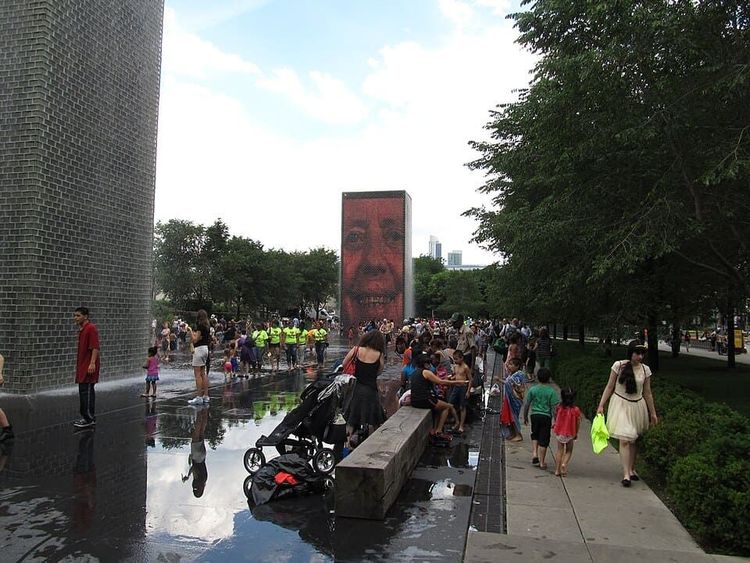
Two glass towers some fifteen metres tall frame a black-granite reflecting pool where hundreds of residents' faces, filmed by young local artists, flicker one after another on giant screens. In a playful nod to medieval gargoyles, each projected mouth eventually releases a jet of water, to the delight of children cooling off in summer. Funded entirely by private donations and unveiled in the mid-2000s, the Catalan-designed work recycles almost all the water it uses.
Free entry
23 - Chicago Cultural Center
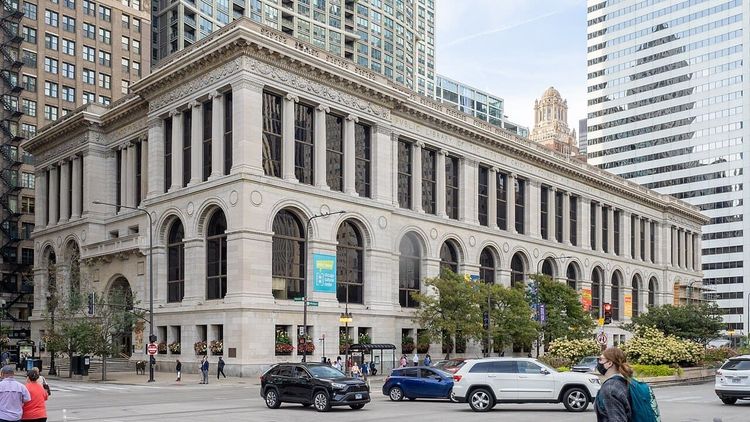
The first entirely free venue of its kind in the United States, this 19th-century building was originally meant to house the city library, rebuilt through donations after the original was lost in the great fire. Outgrown by a booming population, it was later turned into a cultural centre hosting more than a thousand events each year. Behind its heavy doors hides a dazzling reception hall, crowned by one of the largest stained-glass domes on earth.
Free entry · Best on weekdays
What to do in Chicago in 2 or 3 days?
A 7 km loop linking 23 stops, covered in about 3 hours between Millennium Park and the Loop, only scratches the surface: Chicago rewards two or three days, between the lakefront, its museums and the neighbourhoods further out.
The next day, head south from Millennium Park: the route notes, along this stretch, the Art Institute of Chicago, the start of the Chicago Marathon, Grant Park with its Buckingham Fountain, and, a little further, the Field Museum and the Adler Planetarium. Our complete guide for first-time visitors to Chicago lays out a four-day itinerary to fit it all in.
Day three suits an architecture cruise on the Chicago River, boarding from the Riverwalk, followed by an evening at Wrigley Field: in a Chicago Tribune readers' poll, the ballpark placed just behind Lake Michigan among the city's 7 wonders. More ideas appear in our pick of the best things to do in Chicago.
Which neighbourhoods does the tour cross?
The loop crosses several faces of downtown Chicago, from the lakefront park to the skyscraper canyons of the Loop.
It starts in Millennium Park, between Cloud Gate and Lake Michigan (stops 1 to 5), then crosses the river over the Michigan Avenue Bridge, framed by four early 20th-century towers, to reach the Riverwalk and the round towers of Marina City (stops 6 to 8).
Next comes the heart of the Loop, around State Street and Daley Plaza: the Chicago Theatre marquee and Macy's clock, the Picasso statue, the spire of the First United Methodist Church, the Thompson Center atrium and the columns of City Hall (stops 9 to 14).
The final stretch runs along LaSalle Street and the Chicago River, past the Cadillac Palace Theatre and the Civic Opera House, then south by the Willis Tower, the Rookery, Calder's Flamingo and the Route 66 sign, before returning past Crown Fountain and the Chicago Cultural Center (stops 15 to 23).
What to see in Chicago in 2 hours?
Short on time? Stay in Millennium Park: the first 5 stops sit within a few hundred metres, between the Cloud Gate plaza and the Lake Michigan shoreline.
Start under Cloud Gate's steel mirror, walk over to Frank Gehry's Jay Pritzker Pavilion stage, then cross the sinuous BP Bridge into Maggie Daley Park and its playgrounds, a short walk from the shore of Lake Michigan, where the Lakefront Trail invites a longer stroll.
How much does it cost to visit Chicago?
Of the 23 stops on the route, only one requires a ticket; 3 others can only be seen from the street, unless you catch a show:
- the Chicago Theatre, whose interior only opens for performances;
- the Cadillac Palace Theatre, whose gilded interior is reserved for show nights;
- the Civic Opera House, best admired from the opposite bank of the Chicago River.
The only paid stop on the route is the Skydeck at the Willis Tower, on the 103rd floor, for around $32. For the museums nearby, the Chicago CityPASS costs $144 over 9 consecutive days and covers the Skydeck, the Shedd Aquarium, plus 3 attractions of your choice among the Field Museum, the Art Institute of Chicago or the Adler Planetarium. More budget-friendly ideas feature in our top 6 activities to do in Chicago.
Information checked in October 2026 and subject to change.
Where to stop for a bite along the tour?
The route offers plenty of chances to stop and eat, between Loop street stalls and the grand tables that built Chicago's food reputation.
The local hot dog skips ketchup, swapped for a pickle-based relish, while deep-dish pizza, born in the city's own kitchens, piles cheese and meat into a thick crust; some pizzerias post waits of up to 45 minutes at peak times. In between, Garrett popcorn, mixing caramel and cheese, is made for eating on the move.
For a fuller round-up of local classics, burgers and sweet treats included, our top 10 culinary specialties in Chicago covers what to try before moving on.
What to do in Chicago with children?
The route passes two stops that children especially enjoy, without leaving its loop.
Maggie Daley Park, at stop 4, combines an ice rink, a climbing wall, mini-golf and tennis courts around a contemplative garden for cancer survivors. Further on, at stop 22, Crown Fountain turns into a splash pad once the weather warms, as kids run between its two 15-metre glass towers.
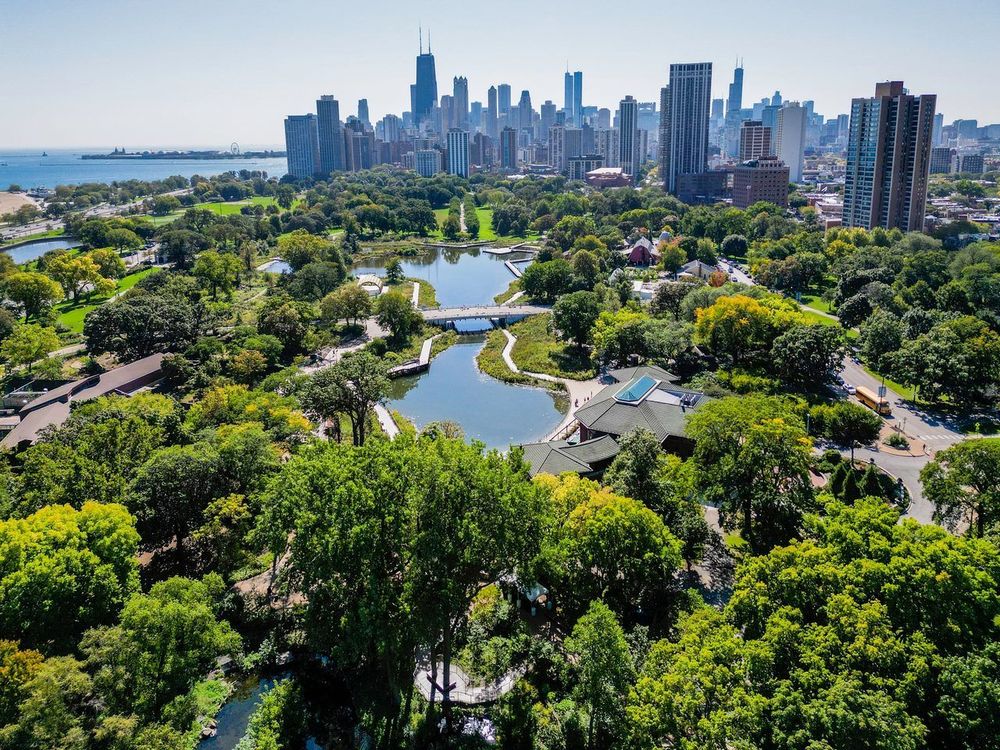
For a family outing beyond downtown, Lincoln Park Zoo, free and open all year, rounds out the visit well: our pick of fun things to do in Chicago covers how to get there.
What should you know before visiting Chicago?
Three stops on the route keep their own hours, worth planning around so you're not left facing a locked door.
The Thompson Center atrium, at stop 13, closes on weekends and public holidays, as does the main hall of the neighbouring City Hall, open to visitors only during weekday business hours. The Rookery Building's glass-roofed light court, at stop 18, opens Monday to Saturday and stays closed on Sundays.
The Chicago Cultural Center also closes earlier on weekends, at 5 pm against 7 pm on weekdays, even though entry stays free all year.
What's on in Chicago right now?
As the year winds down, Chicago's cultural calendar stays busy before the cold really sets in.
On 21 November, the Wintrust Magnificent Mile Lights Festival lights up North Michigan Avenue with an illuminated parade, starting at 5:30 pm from Oak Street, among more than a million lights strung across 200 trees. Through the same date, the SAIC galleries show 80 works by painter LeRoy Neiman, at 33 East Washington Street.
Information checked in October 2026 and subject to change.
Le plein d'inspirations
Explorez le monde en totale liberté, à pied au cœur des villes ou au fil des routes. Nos guides audios transforment chaque destination en une découverte culturelle immersive et unique.
FAQ for visiting Chicago
When is the best time to visit Chicago?
The ideal time to discover Chicago runs from April to October, when the city's continental climate turns milder. Summers are warm, with pleasant temperatures for exploring the shores of Lake Michigan and enjoying the many open-air festivals. Spring and autumn offer perfect conditions for walking around the city, with mild temperatures and the magnificent autumn colours. Winter, particularly harsh with its sub-zero temperatures and heavy snowfalls, may appeal to lovers of snowy landscapes and festive atmospheres, but remains less suited to long urban strolls.
How many days do you need to visit Chicago?
For a first visit to Chicago, ideally plan for three to four days. This will give you time to explore the iconic neighbourhoods, admire the city's exceptional architecture, stroll along the Riverwalk and enjoy the major museums. Two days are enough to see the essentials if your time is limited, but you will have to make choices. With five days or more, you can go deeper into your visit, discover less touristy neighbourhoods and take the time to savour the unique atmosphere of each area. As the city is very spread out, a longer stay also lets you better appreciate its rhythm without rushing.
How do you get around Chicago without a car?
Chicago has an excellent public transport network that makes a car completely unnecessary. The elevated train, known as the L, efficiently serves the main neighbourhoods and tourist attractions. Buses perfectly complement the network to reach less central areas. For short trips, Divvy bike-sharing is handy, especially along the lake. The city centre is easy to explore on foot, and many neighbourhoods are very pleasant to discover while walking. Taxis and ride-hailing services remain available for greater flexibility. The Ventra card makes using public transport easier with a unified payment system.
Which observation deck should you choose between Willis Tower and 360 Chicago?
Both observation decks offer spectacular but different experiences. The Willis Tower, the taller of the two, features its famous Skydeck with glass boxes suspended over the void, perfect for sensational photos if you don't suffer from vertigo. The 360 Chicago observatory, located in the John Hancock Center, offers a perhaps more photogenic view of the skyline and Lake Michigan, with its TILT attraction that tips visitors out over the void. The choice often comes down to waiting times, generally shorter at 360 Chicago, and to your personal preferences. Both are worth a visit if your budget allows; otherwise, opt for the one whose location fits better into your itinerary for the day.
What typical food should you try in Chicago?
Chicago is a paradise for food lovers with its iconic specialities. Deep-dish pizza, thick and generously topped, is a must that is eaten like a main course. The Chicago-style hot dog, with its specific toppings and no ketchup, is the quintessential local street food. The Italian beef sandwich, juicy and flavourful, is also worth tasting. Caramel and cheese popcorn mixed together, known as Chicago mix, makes an excellent snack. The city also boasts excellent steakhouses and a diverse culinary scene reflecting its many communities. Don't forget to try the restaurants in the Greektown or Chinatown neighbourhoods for a change of flavours.
Which neighbourhoods are must-sees?
The Loop, the historic and financial heart, impresses with its skyscrapers and iconic architecture. Millennium Park and its surroundings are a must for admiring the works of public art. The Magnificent Mile on Michigan Avenue will delight fans of shopping and urban buzz. Lincoln Park charms with its green spaces and free zoo. Wicker Park and Bucktown attract a trendy crowd with their independent shops and cafés. The Ryo audioguide accompanies you as you discover these iconic neighbourhoods with narrated tours that reveal the history and secrets of each area, letting you explore Chicago at your own pace while enjoying captivating anecdotes.
How do you get from O'Hare Airport to the city centre?
You have several options for reaching the city centre from O'Hare. The Blue Line train remains the most economical way, with a direct trip to the Loop in about forty-five minutes. Shared shuttles offer door-to-door service at a mid-range price, handy if you have a lot of luggage. Taxis and ride-hailing services provide more comfort but at a higher price, especially at peak times. The journey generally takes between thirty minutes and an hour depending on traffic. Remember to check traffic conditions before choosing your mode of transport, as congestion can considerably lengthen the travel time by car.
Is Chicago a safe city for tourists?
Chicago remains generally safe for tourists who visit the central, touristy neighbourhoods. The Loop, Magnificent Mile, Lincoln Park and the areas around the lake are usually very busy and well policed. As in any large metropolis, stay alert with your personal belongings and avoid displaying valuables. Some outlying neighbourhoods are best avoided, especially at night. Use public transport, which is safe, particularly during the day. In the evening, opt for taxis or ride-hailing services to get around. Locals are generally welcoming and happy to help visitors. Trust your instincts and follow local recommendations to enjoy your stay with peace of mind.
What do you see on an architecture cruise on the Chicago River?
Boarding a boat on the Chicago River is still the best way to understand why the city is seen as an open-air architecture textbook. From the deck you watch the skyscrapers of the Loop go past from below, a perspective you simply cannot get from the pavement: the neo-Gothic silhouette of the Tribune Tower, the pale façade of the Wrigley Building, the corncob towers of Marina City or the dark volumes left behind by Mies van der Rohe. The commentary usually comes back to the rebuilding that followed the great fire of the nineteenth century, to the birth of the Chicago School and to the reversal of the river's course. Departures are generally from the Riverwalk or from the lakefront, and the milder months remain the most pleasant time for the trip.
Which museums should you not miss in Chicago?
Chicago offers one of the richest museum scenes in the United States, and two clusters stand out. The Art Institute of Chicago, guarded by its bronze lions along Michigan Avenue, holds a celebrated collection of French Impressionists as well as icons of American painting such as American Gothic and Nighthawks. A little further south, the Museum Campus brings together, right by the lake, the Field Museum and its natural history collections, the Shedd Aquarium and the Adler Planetarium, whose terrace offers one of the finest views of the skyline.
If you have more time, the Museum of Science and Industry, housed in Hyde Park in a palace inherited from the world's fair, appeals to visitors of every age, while the Museum of Contemporary Art rounds things off near the Magnificent Mile. The Ryo audio guide offers a dedicated Chicago route that links these great institutions to the other highlights of the centre.
Why is a Chicago hot dog served without ketchup, and what other specialities should you try?
In Chicago, the hot dog comes without ketchup: it is replaced by relish, a pickle-based topping. Deep-dish pizza, born in the city's kitchens in the 1940s, is the great local pride, generously loaded with meat and cheese.
For something sweet, the Rainbow Cone stacks five ice creams (chocolate, strawberry, pistachio, orange and vanilla), while Garret popcorn is best known in caramel and cheese flavours. Steakhouses, doughnuts, grilled steak tacos, burgers and the green beer of St Patrick's Day round off the list.
Discover all ten cult dishes in our guide to Chicago's culinary specialities.
What are the six standout activities not to miss in Chicago?
Start with Marina City, two circular concrete towers over 170 metres tall, designed by Bertrand Goldberg and built between 1959 and 1967. Then stroll through Millennium Park to Cloud Gate, and on into the Loop, the business district dominated by the 108-storey Willis Tower.
The Art Institute, guarded by two bronze lions, traces 5,000 years of art history. Lincoln Park Zoo is free, open every day and close to the beach, while the John Hancock Center observatory, at 305 metres, offers views stretching 130 kilometres on a clear day.
Find addresses and opening times in our top 6 things to do in Chicago.
What can you do in Chicago beyond the postcard sights?
Free Millennium Park is the ideal starting point: Anish Kapoor's Cloud Gate, nicknamed the Bean, can be photographed without crowds before 9am. The Art Institute displays American Gothic and Nighthawks, and the Willis Tower Skydeck, on the 103rd floor, juts its glass-floored Ledge balconies out 412 metres above the street.
Add the Riverwalk, Navy Pier and its Ferris wheel, the 30-degree TILT at 360 Chicago, the T. rex at the Field Museum, the free Lincoln Park Zoo and the improv stages of Second City.
Pick your favourites from our guides to the 20 best things to do in Chicago, 25 Chicago experiences you'll actually remember and 25 fun things to do in Chicago.
Where should you start on a first visit to Chicago?
Almost everything begins in the Loop, compact enough to walk from Cloud Gate in Millennium Park to the Skydeck in about twenty minutes. Follow the Riverwalk, then board a 75 to 90-minute architecture cruise, booked a day ahead in July and August.
Between the two observation decks, choose Skydeck for The Ledge and 360 Chicago for the lake view and shorter lines. The Chicago Theatre, the untitled Picasso in Daley Plaza and the Museum Campus, with the Shedd Aquarium, the Field Museum and the Adler Planetarium, complete a first stay.
Get the itinerary and tips in our Chicago guide for first-time visitors.
What can you see in Chicago in 2 days, and how should you plan your itinerary?
Two days are enough for Chicago's headline sights if you stick to a tight plan. Day one stays downtown: Millennium Park and The Bean early in the morning, the glass Ledge at Willis Tower's Skydeck in the afternoon, then a deep-dish pizza for dinner.
Day two mixes culture and lakefront: the Art Institute in the morning, then the Riverwalk, Navy Pier and its Ferris wheel, with sunset at Museum Campus. A baseball game or an evening in Wicker Park is better saved for a third day.
Get the full itinerary, plus tips on the architecture river cruise, where to stay and the CityPASS, in our guide to Chicago in 2 days.
Is Chicago a good destination for kids, and what can families do there?
Discover the 15 family adventures in Chicago, with tips by kids' age and by season.
Where should I go for Christmas markets in Chicago, and when do they open?
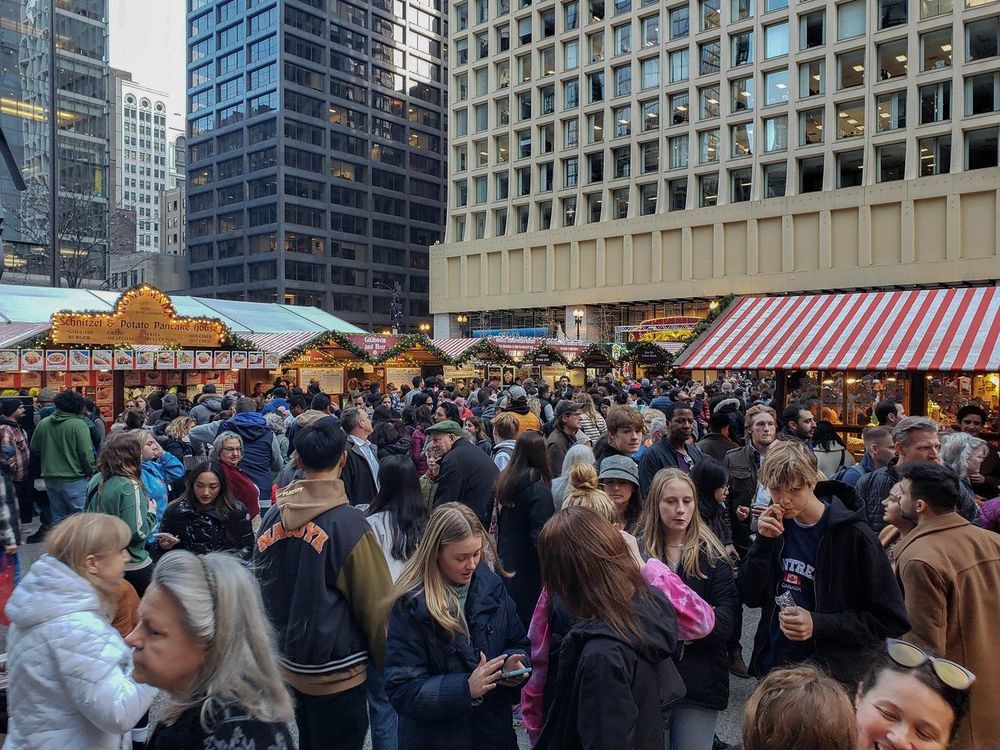
Chicago has three official Christkindlmarket sites: Daley Plaza in the Loop, the largest; Gallagher Way in Wrigleyville; and RiverEdge Park in Aurora, about 40 minutes from downtown. All open on Friday, November 20 and are free to enter. Daley Plaza and Aurora close on December 24, while Gallagher Way stays open until December 31.
You'll find Glühwein served in a collectible mug, bratwurst and hand-blown glass ornaments. For locally made gifts, artisan shows such as the One of a Kind Holiday Show (from $15) round out the season.
Find every location, opening hours and shopping tips in our guide to Chicago's Christmas markets.
Vos commentaires, idées et suggestions
Aucun avis pour le moment