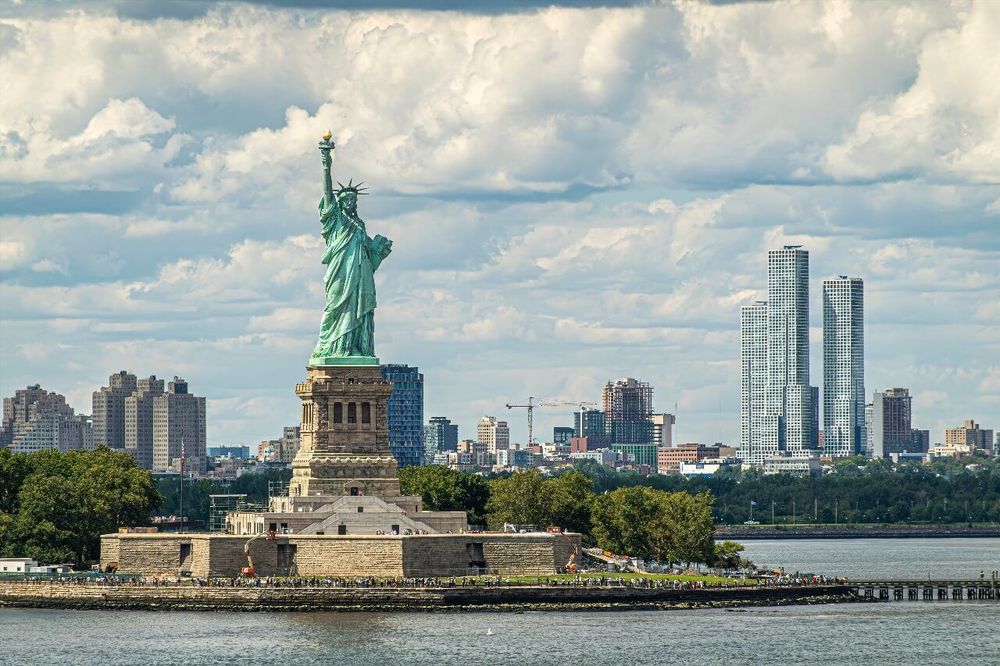
© Shutterstock
 Votre guide Ryo
25 Free Activities and Visits in New York in 2026
New York has a reputation that precedes its skyline: expensive, overwhelming, budget-draining. Yet free activities and visits in New York are more numerous and more surprising than you might imagine. Hundreds of millions of dollars' worth of contemporary art are displayed outdoors in Brooklyn, a centuries-old ferry crosses the Hudson offering views of the Statue of Liberty without spending a cent, and Central Park hosts Shakespeare performances under the stars every summer, seats included. To explore the city with historical and architectural context, the Ryo New York audio guide accompanies each site with anecdotes and practical reference points.
New York is not a city you visit — it's a city you roam. The Bushwick Collective displays more than 200 giant murals created by artists from 25 countries, all accessible without a ticket. Grand Central Terminal conceals in its lower corridor a whispering gallery used by lovers since 1913: two people standing in opposite corners of an elliptical vault can hear each other perfectly across the room, even in the midst of noise. The High Line transforms a 2.33-kilometer disused freight railway into a suspended contemporary art walkway above Manhattan. Twenty-five concrete ways to explore the city without paying admission — from legendary parks to pay-what-you-wish museums, from artistic neighborhoods to generously open architectural landmarks.
1. Central Park
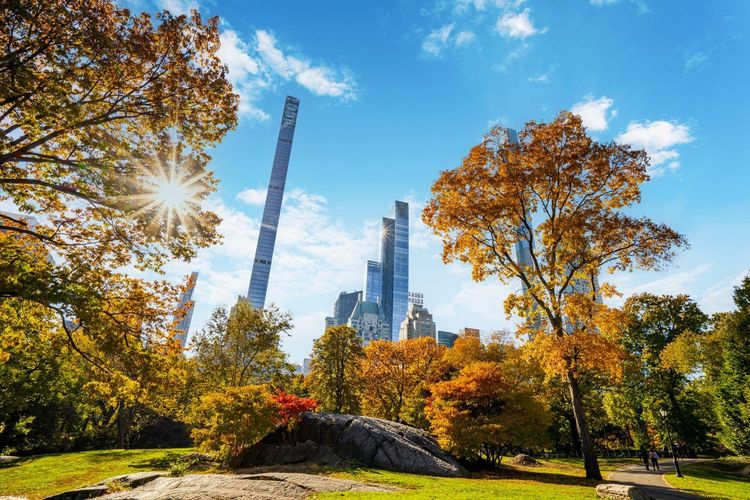
Central Park is an urban anomaly: 341 hectares of nature framed by the skyscrapers of the Upper East Side and Upper West Side, free to enter since the park's inauguration in 1858. It welcomes more than 40 million visitors a year — more than the Louvre, the British Museum, and the Pyramids of Egypt combined. Yet at dawn on a Wednesday in November, you can walk alongside the Reservoir hearing only the footsteps of joggers and the calls of migrating wild geese.
The list of what you can do there without spending a dollar is almost absurd. Picnic on the Great Lawn (7 hectares of grass at the center of the park), sit beside the Bethesda Fountain — the park's geometric center, completed in 1873 — cross the cast-iron Bow Bridge from 1862, stroll through the Conservatory Garden on the east side (the park's only formal gardens), or get lost in the Ramble, a 15-hectare maze where 200 species of migratory birds nest. Regulars know that sunrises from Belvedere Castle, the small Gothic castle at the center of the park, offer a skyline view that no observation deck ticket can match.
In summer, the SummerStage program hosts dozens of free concerts at Rumsey Playfield — jazz, world music, symphony orchestras — featuring international artists. The Shakespeare in the Park series at the Delacorte Theater is one of the city's most beloved cultural traditions: two plays per season (July–August), Broadway performers, under open skies. Admission is free but limited — arrive early or use the virtual lottery app. On the west side of the park, opposite the Dakota building, Strawberry Fields draws street musicians every Sunday to pay tribute to John Lennon, who was killed here in 1980.
The park changes dramatically with the seasons. In winter, the ponds sometimes freeze and the Wollman Rink (paid) comes alive; but walking around the Reservoir in silence, with a snow-covered Manhattan as backdrop, is an experience in itself. In spring, the cherry trees along the north promenade burst into two weeks of bloom. To deepen your visit, the Ryo audio guide for the Central Park walk details the historical anecdotes of each section of the park, from Strawberry Fields to Conservatory Water, where model boat enthusiasts sail their miniature yachts on Sunday mornings.
2. The Free Staten Island Ferry
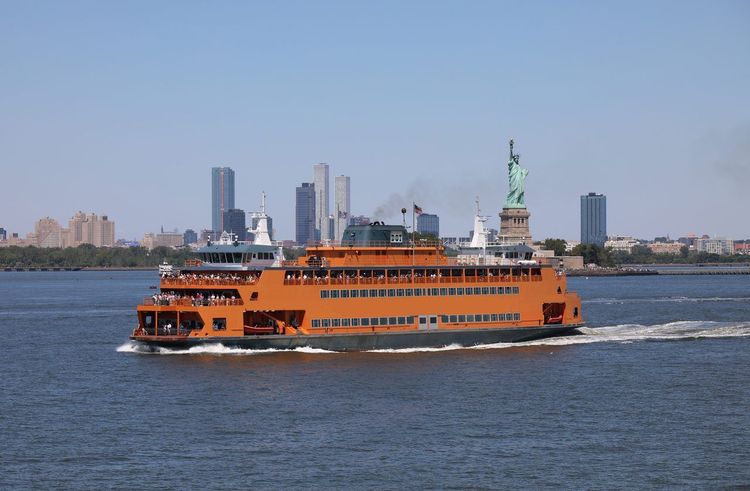
The Staten Island Ferry is arguably New York's best deal: a 25-minute crossing of the Hudson River, entirely free, operating 24 hours a day, 365 days a year. In both directions, the ferry passes within 300 meters of the Statue of Liberty — a proximity that even official tickets to Liberty Island don't always guarantee, depending on navigation conditions.
The Whitehall Street terminal on the Manhattan side is a 5-minute walk from the Charging Bull on Wall Street. The crossing to Staten Island offers the most iconic view of New York: the Lower Manhattan skyline cuts to the right while the statue rises on its island to the left. There's no need to disembark — many simply make the round trip for the views and the sea air. If you do get off, the St. George terminal gives access to a few affordable restaurants.
Practical tip: Board between 8am and 9am to avoid tour groups, or at dusk to watch Manhattan gradually light up from the upper deck. The evening crossing, with the sun setting behind New Jersey, remains one of the most memorable urban scenes on the East Coast.
3. The Brooklyn Bridge
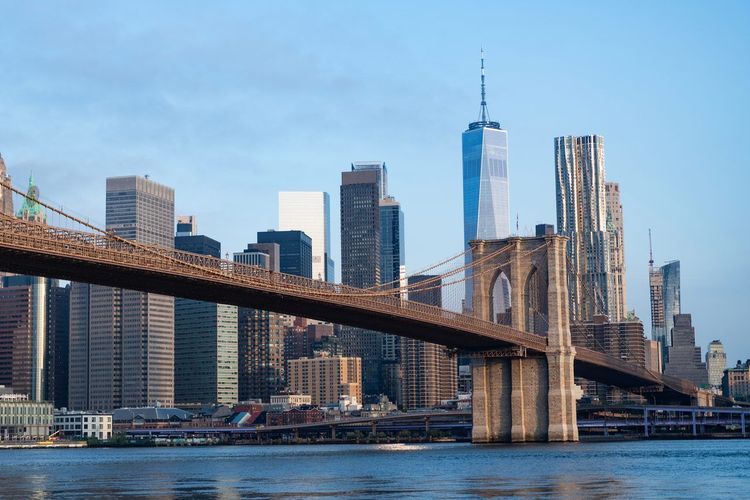
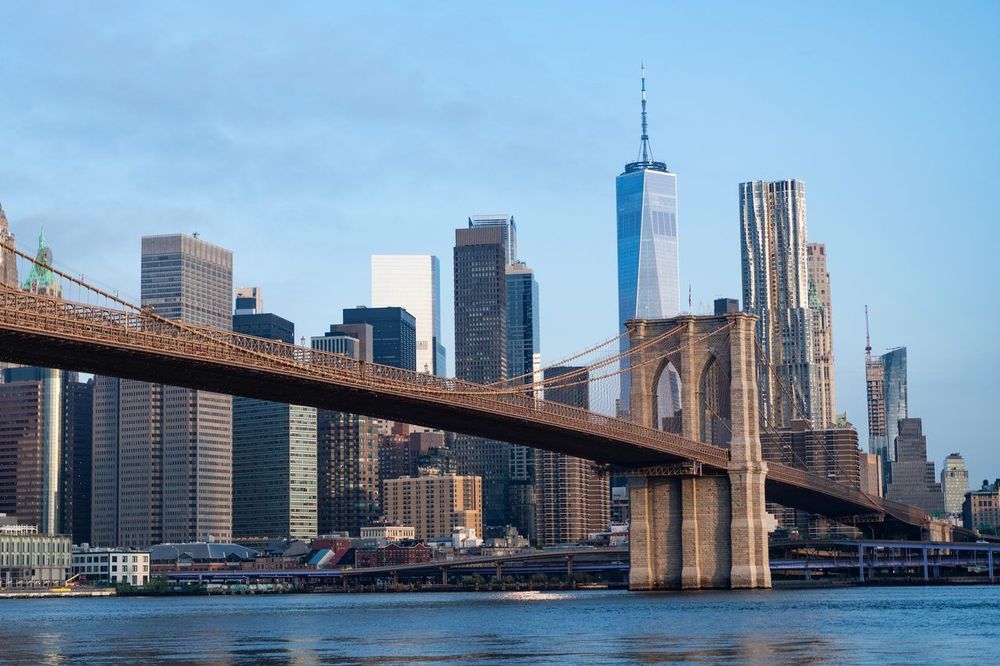
The Brooklyn Bridge was completed in 1883 after 14 years of construction and the deaths of dozens of workers. The first structure to use steel cables on a large scale, it connects Manhattan to Brooklyn over 1,825 meters in total length, with a 486-meter suspended central span. For 20 years, it was the longest bridge in the world. Walking across the upper pedestrian walkway — reserved for walkers and cyclists — costs nothing, and offers a perspective on both shores that few other vantage points can rival.
The walkway can be accessed from the Manhattan side near City Hall or from the Brooklyn side in DUMBO (subway A/C, High Street stop). The walk takes 30 to 40 minutes. Early morning, before 8am, the walkway belongs almost exclusively to joggers and photographers: the raking eastern light illuminates the harp-like cables from Brooklyn and provides the best conditions for photographing Manhattan. Between 11am and 4pm on summer weekends, the walkway becomes crowded and difficult to enjoy at a leisurely pace.
On the Brooklyn side, arriving in the DUMBO neighborhood is worth an extra detour. The triangular plaza at the intersection of Washington Street and Front Street offers one of New York's most photographed backdrops: the Manhattan Bridge frames perfectly at the end of the street, with the skyline visible in the distance. Several independent cafés line the cobblestone streets, and the former Empire Stores warehouses house shops and a terrace overlooking the East River.
For the full history of the bridge, the ingenuity of John Roebling, the pneumatic caissons, and the divers' disease, our article on visiting the Brooklyn Bridge explores the lesser-known facts of this monumental construction project.
4. Times Square
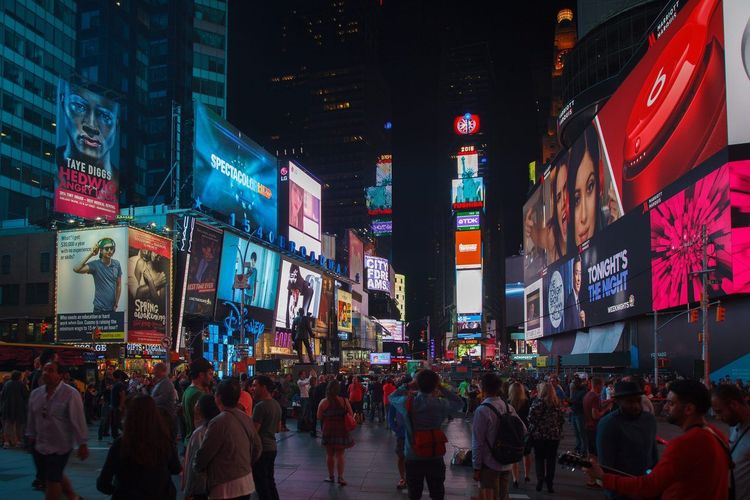
Times Square is the most photographed intersection in the world, and one of the rare places in New York where you can stand for 30 minutes without a particular destination and never get bored. It is not an enclosed venue but a public crossroads between Broadway and 7th Avenue, from 42nd to 47th Street. The 100,000 m² of LED screens illuminate the area around the clock; at night, Times Square is as bright as midday.
What most visitors don't know: the Times Square steps — the red granite bleachers installed in 2017 at the north end of the intersection — are official public seating from which you can look down over the ballet of yellow taxis and delivery trucks. On December 31st, Times Square hosts the famous ball drop, with the 5.4-ton crystal ball descending at midnight before a crowd of several hundred thousand people. Access is free, but the areas closest to the intersection fill up through a queuing system as early as midday. The TKTS booths on the steps of the central red box sell Broadway tickets at 20–50% off on the day, if you'd like to round out the evening.
5. The High Line
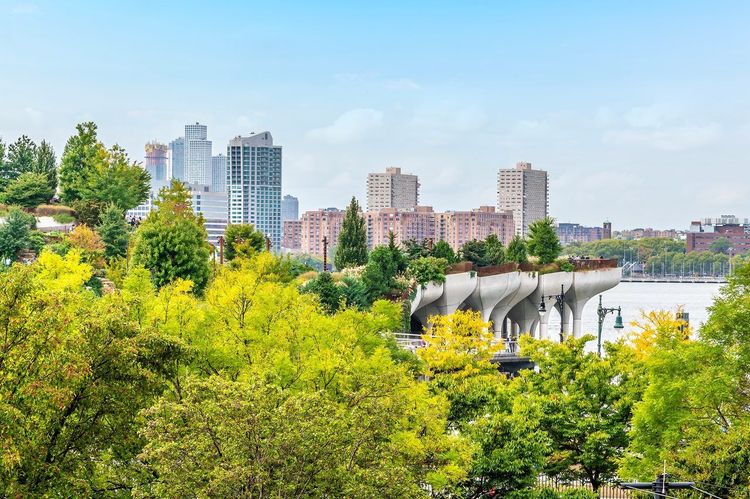
The High Line is the most ambitious example of urban rehabilitation from the 2010s: a disused freight railway, used to deliver goods to the Meatpacking District's slaughterhouses from 1934 to 1980, transformed into an elevated linear park 2.33 kilometers long along the west side of Manhattan. It passes through the Meatpacking District, Chelsea, and Hudson Yards at a height of 9 meters above street level. Access is free.
What makes the High Line unique among New York's parks is its permanent contemporary art programming. Sculptures, sound installations, and site-specific works punctuate the walkway throughout its length. The collection is partially refreshed each year, in partnership with Chelsea's galleries — the densest concentration of contemporary art galleries in New York. Works by Kara Walker, Elmgreen & Dragset, and Taryn Simon have been exhibited here. No ticket is required to access the works.
The views of the Hudson River and New Jersey from the High Line's terraces are among Manhattan's most open — from the heights of Chelsea, the western horizon stretches in a way found nowhere else in the city. In summer, the High Line After Hours program hosts jazz concerts and film screenings on select sections. Gardeners manage a collection of more than 300 plant species — grasses, perennials, shrubs — that change in appearance with the seasons.
Practical tip: Start from the Gansevoort Street entrance (south end, Meatpacking District) heading north to finish at Hudson Yards. If you start from the north (34th Street entrance), the descent toward Chelsea offers the best perspectives on the surrounding galleries.
6. The National September 11 Memorial
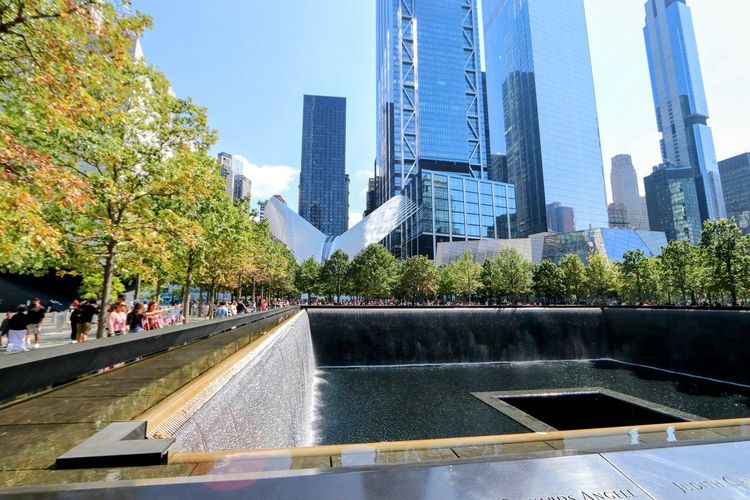
The National September 11 Memorial (180 Greenwich St, New York, NY 10006, rated 4.8/5 on Google with 94,300 reviews) is built on the exact footprint of the two World Trade Center towers. Its two granite pools, each 4,046 m² in size, replicate the footprint of the fallen towers. Water cascades 9 meters into a central void, creating a permanent sense of disappearance. The names of the 2,983 victims of the September 11, 2001 and February 26, 1993 attacks are engraved in bronze on the parapets. Access to the pools and the outdoor memorial is free.
The underground museum (9/11 Museum), located directly beneath the pools, is paid (around $30). But the outdoor memorial alone is worth the visit: the tree-lined plaza, the water's reflections, the names engraved in bronze, and the contemplation of the space that opens between the surrounding buildings. The Survivor Tree, a Callery pear tree found in the rubble, nursed back to health for several years in the Bronx before being replanted on the site in 2010, stands to the east of the pools. It has become a symbol of the city's resilience.
Architect Michael Arad designed the pools so that the water is visible from the street at multiple angles, inviting reflection without imposing a prescribed path. At lunchtime on a weekday, employees from nearby offices sit along the edges of the memorial, a reminder that this space is simultaneously a place of daily life and a national memorial.
7. Grand Central Terminal
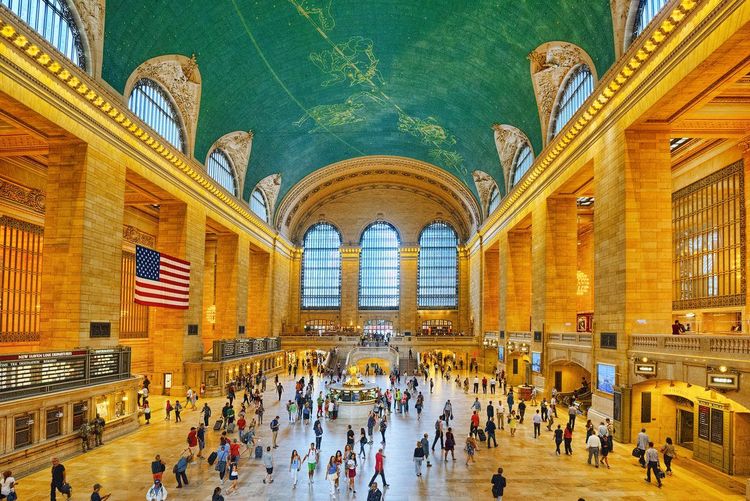
Grand Central Terminal (89 E 42nd St, New York, NY 10017, rated 4.8/5 on Google with 33,455 reviews) is not merely a train station: it is one of the world's most accomplished Beaux-Arts buildings, designed by the firms Reed & Stem and Warren & Wetmore, inaugurated in 1913. The Main Concourse measures 91 meters long, 37 meters wide, and 38 meters high — the height of a 12-story building. The painted turquoise and green celestial ceiling depicts the winter sky constellations with 2,500 gilded stars, arranged in reverse according to a medieval tradition (as monks copied them in their illuminated manuscripts). Access is free at all hours.
The strangest acoustic phenomenon hides in the lower corridor (Lower Level), just before the entrance to the Oyster Bar restaurant: the Whispering Gallery. If two people each stand in opposite corners of the elliptical vault and whisper facing the wall, they can hear each other perfectly across the room — even during rush hour. The geometry of the limestone vault is responsible for this phenomenon. Couples regularly come to exchange words across the distance.
The Municipal Art Society organizes themed guided tours on Wednesday lunchtimes, allowing visitors to discover the lower levels and the history of the negotiations that saved the terminal from demolition in the 1970s, thanks in part to Jacqueline Kennedy Onassis. Even without a guided tour, sitting in the Main Concourse for 20 minutes and watching the human flow converge and diverge beneath the light of the great windows is an experience in itself.
8. The New York Public Library
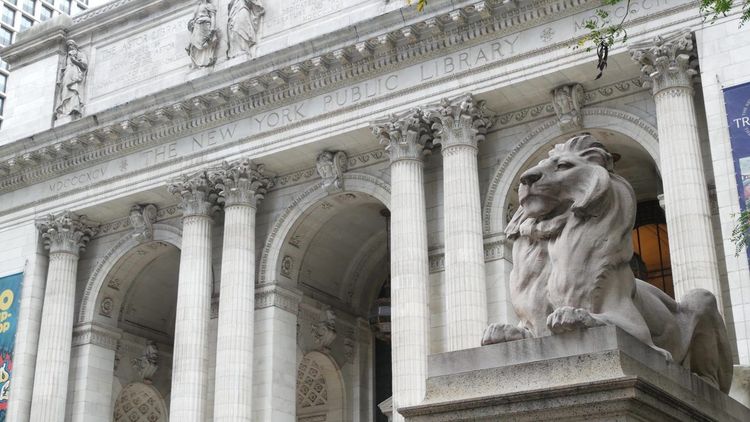
The New York Public Library, in its main building on 5th Avenue and 42nd Street, is one of Manhattan's most spectacular Beaux-Arts buildings. Inaugurated in 1911, it is guarded by two white marble lions, Patience and Fortitude, named during the Great Depression by Mayor Fiorello La Guardia. Admission is free.
The Rose Main Reading Room on the 3rd floor is one of the most sumptuous reading rooms in the United States: 90 meters long, with oak tables, green lamps, and a hand-painted coffered ceiling in cloudy blue. The library holds a copy of the American Declaration of Independence, a Gutenberg Bible (one of 49 surviving in the world), and the original manuscript of Virginia Woolf. These treasures are displayed on a rotating basis in the ground-floor galleries, with no appointment required. Come in the morning (opening at 10am Tuesday through Saturday) to enjoy the reading room in relative quiet.
9. The Metropolitan Museum of Art
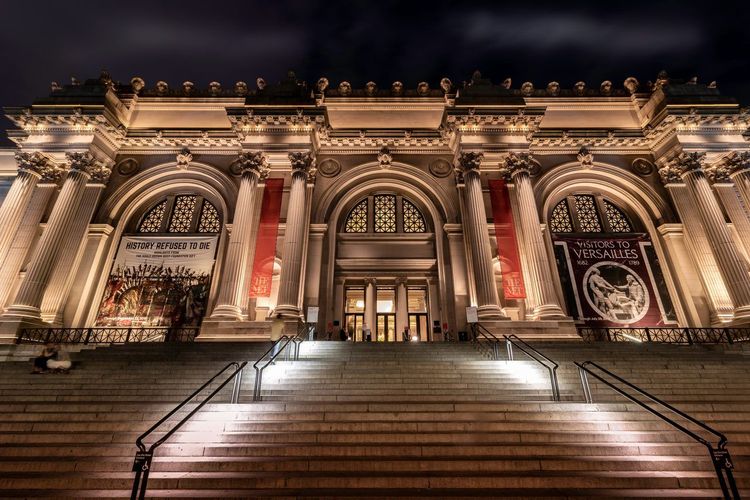
The Metropolitan Museum of Art, universally known as the Met, is one of the five largest museums in the world. Its 300,000 works span 5,000 years of art history — from ancient Egypt to contemporary graffiti, through medieval Japanese armor and an entire Egyptian temple transported from the banks of the Nile (Temple of Dendur, 15 BCE, relocated in 1974). The collection is spread across 186,000 m² of galleries.
The question of admission warrants clarification. The Met applies a suggested contribution policy only for residents of New York State and students from New York, New Jersey, and Connecticut — for these visitors, the listed price ($30 in 2026) is genuinely optional, and you may pay whatever you wish. For travelers from other states or abroad, the $30 admission has been mandatory since 2018.
For international travelers, the Met remains a worthwhile investment at full price, but if budget is tight, several strategies exist. Some New York library programs offer monthly passes for residents. Access to the Met Roof Garden, included with main admission, offers one of the best views over Central Park, with an art installation renewed each summer. The entrance atrium, the shop, and the ground-floor café are freely accessible without paying, as are the neoclassical façade on 5th Avenue and the monumental steps.
For an in-depth visit of the collections, our article on visiting the Metropolitan Museum of Art details the must-see rooms and often-overlooked sections, from 17th-century samurai helmets to the gowns of the Costume Institute collection.
10. The Brooklyn Museum (First Saturday of the Month)
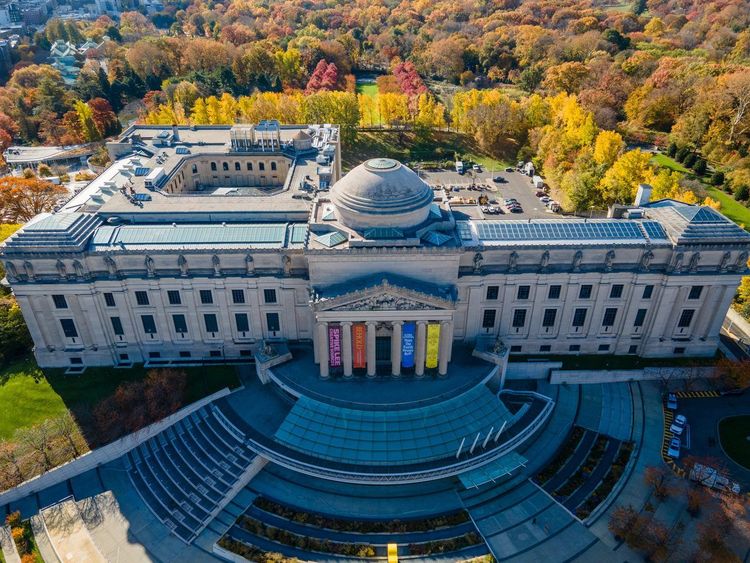
The Brooklyn Museum (200 Eastern Pkwy, Brooklyn, NY 11238, rated 4.7/5 on Google with 10,298 reviews) is New York's second-largest museum, with 1.5 million objects spread across five floors in a Beaux-Arts building on Eastern Parkway. Its standard admission is $20. But during First Saturday evenings — held on the first Saturday of select months (February through June, August, and October) — the museum opens for free from 5pm to 11pm, with concerts, tastings, themed guided tours, and live performances.
The First Saturday program has existed since 1997 and draws several thousand visitors per evening. Collections not to miss during these evenings: the Egyptian wing (one of the richest on the East Coast, with over 1,700 objects), the Contemporary Drawings gallery, and the American Art section with its Hudson River School paintings. On First Saturday nights, the galleries take on a different atmosphere — more festive, more spontaneous. Check the dates on the official website: the program does not run every month and online registration is required in advance.
11. Governors Island
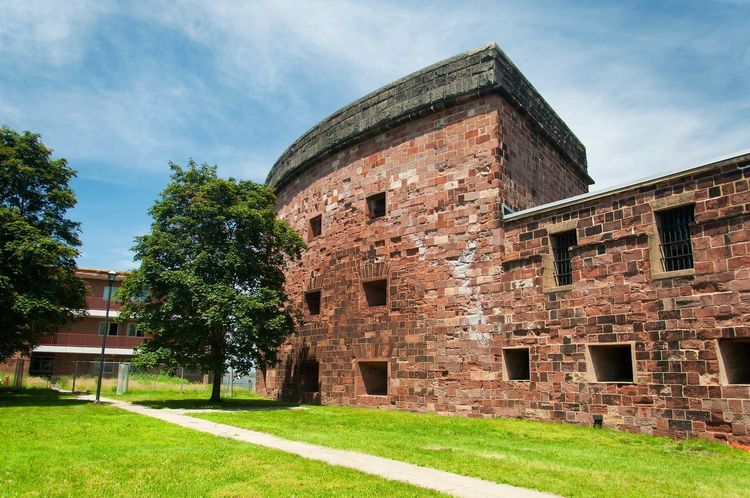
Governors Island is one of New York's best-kept secrets: a 172-acre (70-hectare) island 800 meters off the southern tip of Manhattan, a former military base closed to the public until 2003, since transformed into a park, arts campus, and urban experimentation space. The ferry from the Battery Maritime Building (Whitehall Street, Manhattan) is free for everyone on Saturdays and Sundays before 11am; at other times, a round-trip costs about $5 (free for children under 12). The island is accessible year-round, with the most active season running from May to October.
The island is divided into two zones. The Historic District on the northern side is a designated national monument: Fort Jay (1794) and Castle Williams (1811, a circular red sandstone fortress) bear witness to New York's defensive strategy in the early 19th century, freely accessible on foot. The southern area, known as the Hills, was artificially raised (the hills are built from New York City subway rubble) and offers the best panoramic view of the Lower Manhattan skyline from a low vantage point: the towers appear just a few hundred meters away, with no fence or barrier between you and them.
In summer, the island hosts contemporary art exhibitions, a craft market, free-access morning yoga classes, and music events. The Billion Oyster Project, a program to restore oyster reefs in New York Harbor, has set up an educational space accessible to visitors. The island can be explored entirely on foot or by bicycle (rentals available on site). The ferry crossing from Manhattan takes 8 minutes.
Allow at least 3 hours on the island. Bring a picnic: on-site food options are limited and expensive. The first morning crossings (9am–10am on Saturdays) are the quietest.
12. The Bushwick Collective
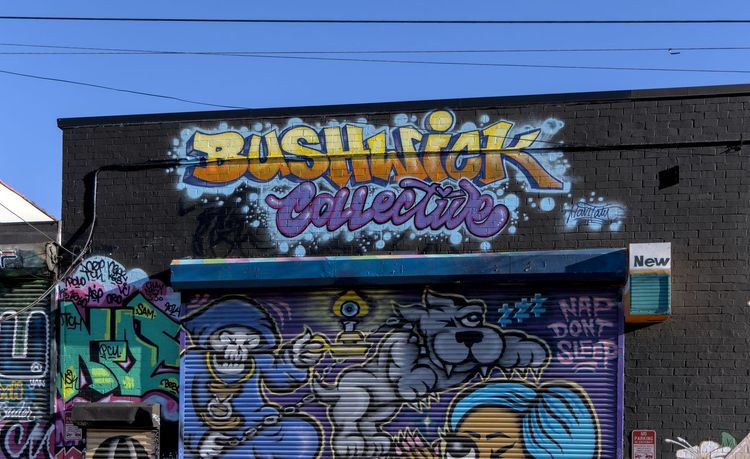
The Bushwick Collective is New York's largest open-air museum: a residential and industrial neighborhood in Brooklyn where hundreds of building facades have been transformed into giant murals since 2012, at the initiative of local entrepreneur Joe Ficalora. Today more than 200 murals have been painted by artists from 25 countries, within a few blocks around Troutman Street and Wyckoff Avenue.
No ticketing, no schedule, no official guide — it's simply an open neighborhood, visible and walkable at any hour. The works span a wide range of styles: from photorealistic painting to abstract graffiti, architectural trompe-l'œil, and political murals. Some artists are internationally recognized — Shepard Fairey, Blek le Rat, Os Gemeos — while others are emerging local artists. The murals are regularly refreshed; a work painted in June may have disappeared or been painted over by September.
Come on a Saturday morning, when the streets are lively but not overwhelmed. The M or L subway (Jefferson Street or Morgan Avenue stops) gives access to the neighborhood. Allow 1.5 to 2 hours of wandering to see the highlights.
13. 5th Avenue
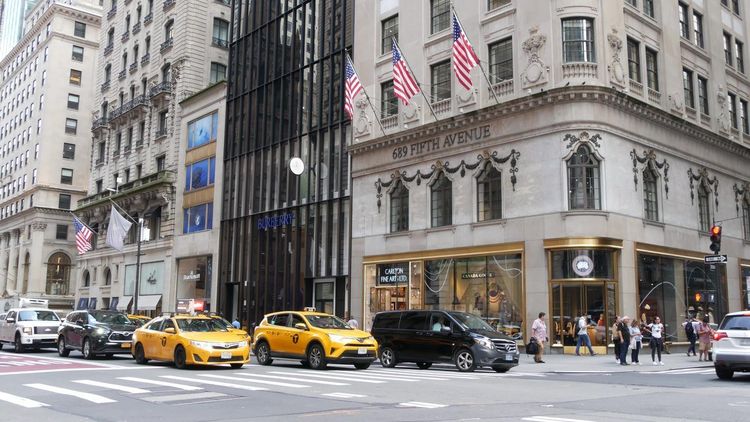
5th Avenue is the commercial and architectural backbone of Midtown Manhattan, and walking it costs nothing. It concentrates some of New York's most sumptuous interiors, freely accessible: the Art Deco lobby of the Empire State Building (the upper floors are paid, but the lobby is open to all), the New York Public Library with its marble lions, and St. Patrick's Cathedral.
The department store window displays are worth the trip in themselves. Bergdorf Goodman deploys artistic installations in its 57th Street windows, with teams spending weeks on the design. At Christmas, the Saks Fifth Avenue windows (New York, NY 10019, rated 4.6/5 on Google with 20K reviews) host a synchronized light show on the facade, visible from the sidewalk at no charge. The stretch between 50th and 59th Street concentrates an exceptional architectural density within less than one kilometer, which our In the Heart of Manhattan audio-guided tour works its way up, past St. Patrick's Cathedral and the view over the Empire State Building.
14. Rockefeller Center
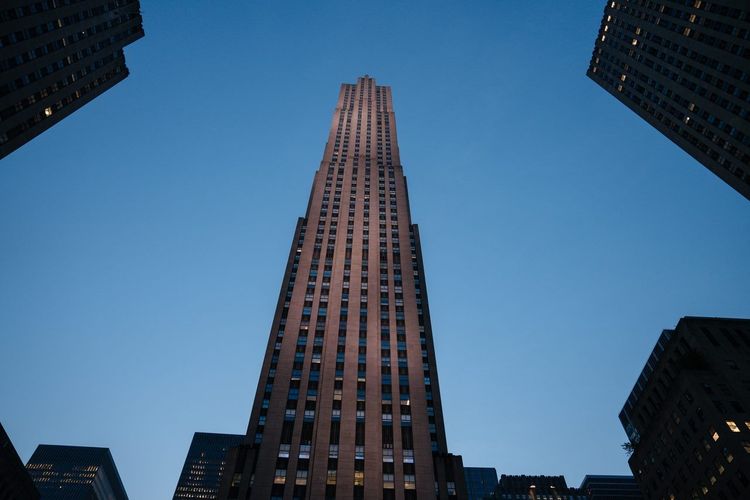
The Rockefeller Center is a complex of 19 Art Deco buildings constructed between 1930 and 1939 — one of the most ambitious real estate projects of the 20th century, launched in the depths of the Great Depression by the Rockefeller family. 30 Rockefeller Plaza rises to 259 meters. Access to the complex is entirely free: the lobbies, interior passageways, and central plaza are open to the public without a ticket.
The Lower Plaza at the heart of the complex hosts an ice rink in winter (paid to skate, but free to watch from the walkways above) and becomes an open-air café in summer. The main building lobbies are worth a detour: the mural paintings by José Maria Sert in the 30 Rock lobby cover vast surfaces. They replaced in 1937 the original paintings by Diego Rivera, who was dismissed for refusing to remove the portrait of Lenin from his composition. The Art Deco sculptures on the facades, including Lee Lawrie's Atlas above the main entrance, rank among the city's greatest decorative works.
To explore the Financial District and neighboring towers with historical context, the Ryo audio guide to the Wall Street towers covers the architecture and economic history of Lower Manhattan, from the first 19th-century banks to contemporary skyscrapers. Please note: the Top of the Rock observation deck is paid (~$40). The winter ice rink is paid for skaters. Everything else in the complex is open to all.
15. St. Patrick's Cathedral
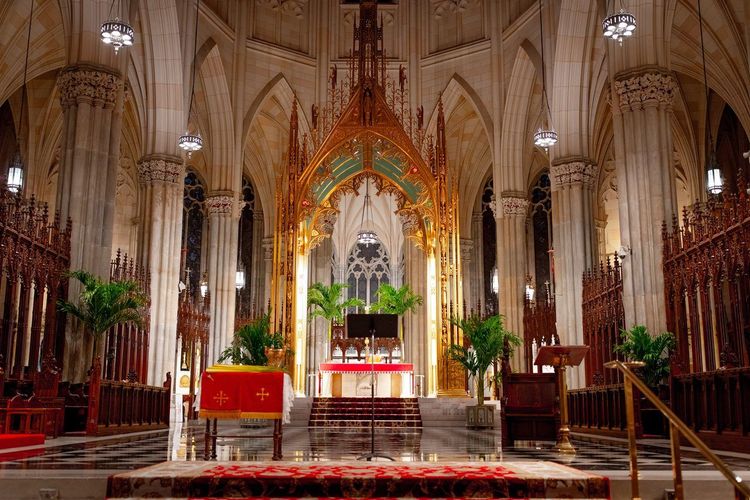
St. Patrick's Cathedral is one of New York's most visited landmarks, and one of the rare ones where access remains entirely free. Built between 1858 and 1879 in a Neo-Gothic style inspired by the cathedrals of Cologne and Amiens, it stands opposite Rockefeller Center on 5th Avenue, surrounded by skyscrapers that tower over it on all sides — which paradoxically intensifies the sense of refuge inside.
The interior measures 101 meters long, with vaults 33 meters high. The 3,000 seats are often occupied during the several daily services, and visitors are welcome to enter and attend silently at any time. The 2,000 stained-glass windows depict biblical scenes created by French, Irish, and American craftsmen between 1870 and 1930. The Kilgen organ (1930) has 9,000 pipes and resounds at every midday mass.
16. The Charging Bull and the Fearless Girl
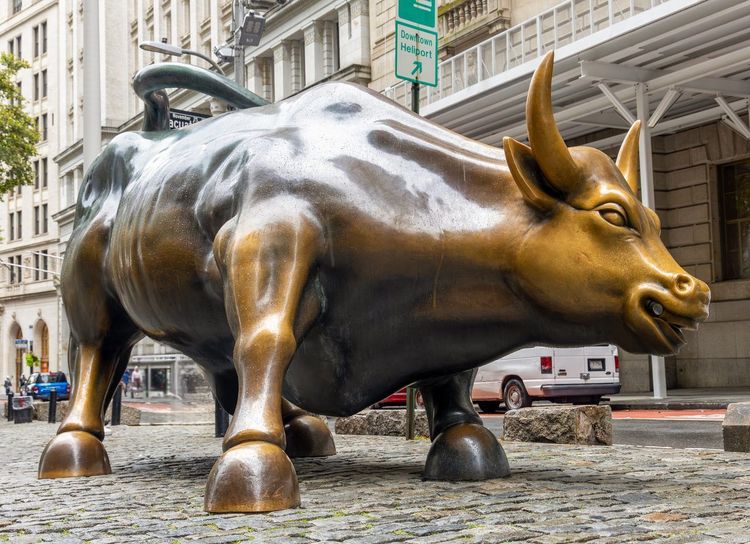
The Charging Bull (Broadway at Morris St, New York, NY 10004, rated 4.4/5 on Google with 43,171 reviews), a bronze bull sculpture weighing 3.4 tons and 4.9 meters long, is perhaps New York's most photographed work of public art — though its history is little known. It was not commissioned by the city or by Wall Street: Italian-American artist Arturo Di Modica installed it clandestinely in front of the New York Stock Exchange on the night of December 15, 1987, to symbolize America's resilience after the stock market crash of that October. The police moved it two days later to Bowling Green Park, where it still stands.
Facing the bull since 2017, the Fearless Girl — a 130-cm bronze girl, hands on her hips, staring the bull straight in the eyes — was commissioned by State Street Global Advisors to symbolize the need for greater representation of women on corporate boards. She was moved from Wall Street to her permanent location in front of the New York Stock Exchange in 2018. Both sculptures are freely accessible 24/7, a few minutes' walk from the Staten Island Ferry terminal.
17. Columbia University
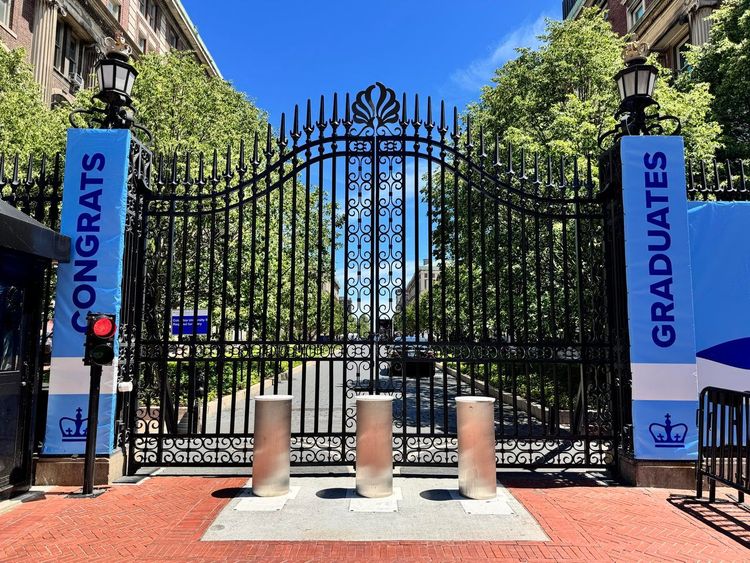
The Columbia University campus (116th St & Broadway, New York, NY 10027, rated 4.6/5 on Google with 2,793 reviews) in Morningside Heights is one of the most beautiful university campuses in the United States, and one of the rare ones freely open to the general public. Founded in 1754 as King's College (New York's oldest university), Columbia is today an Ivy League institution. Its main campus, designed by McKim, Mead & White in the late 19th century, occupies a 16-hectare quadrangle between 114th and 120th Streets.
The main buildings are arranged around Low Plaza, dominated by the dome of Low Memorial Library (1895). The Alma Mater statue — a crowned woman with open arms — presides over the steps and has become the university's photographic symbol. Students picnic on the plaza in summer; in autumn, the campus maples offer spectacular fall colors. Heading down toward Riverside Drive after the visit, Riverside Park runs along the Hudson for 6 kilometers — another major green space in Manhattan, almost always less crowded than Central Park.
18. The Roosevelt Island Tramway
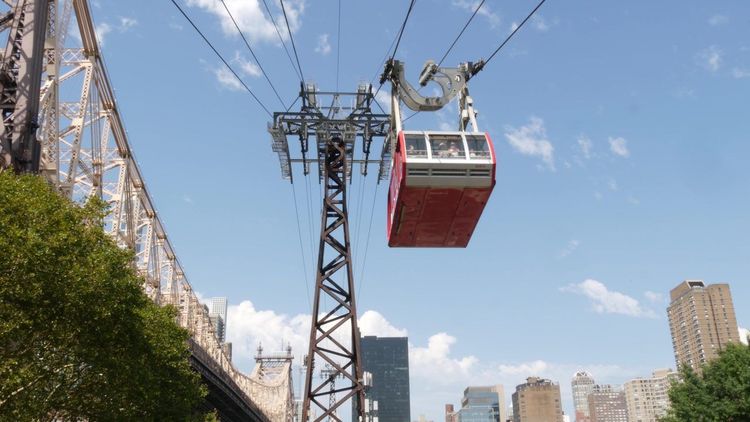
The Roosevelt Island Tramway (59th St & 2nd Ave, New York, NY 10022, rated 4.7/5 on Google with 9,178 reviews) is New York's only aerial tramway, and one of the very few in the entire eastern United States. It connects Midtown Manhattan to Roosevelt Island, a narrow island in the East River between Manhattan and Queens, in 3 minutes 30 seconds of aerial travel. In service since 1976, it operates with a simple MetroCard or OMNY swipe — the same fare as the subway, approximately $2.90 in 2026.
The crossing is fully glazed and rises to 75 meters above the East River, offering a view of the Midtown Manhattan skyline from a rarely accessible angle. The cables pass above the rooftops of East Side buildings, at the height of the 30th floor of surrounding towers. Roosevelt Island is worth a brief exploration: the island is home to the ruins of the Smallpox Hospital (1856), the only landmarked ruin in New York City, visible behind a fence on the south side. FDR Four Freedoms State Park (2012, originally designed by Louis Kahn) is freely accessible at the southern tip of the island, with an open view of the Queensboro Bridge and the Midtown towers.
19. DUMBO and the View of the Manhattan Bridge
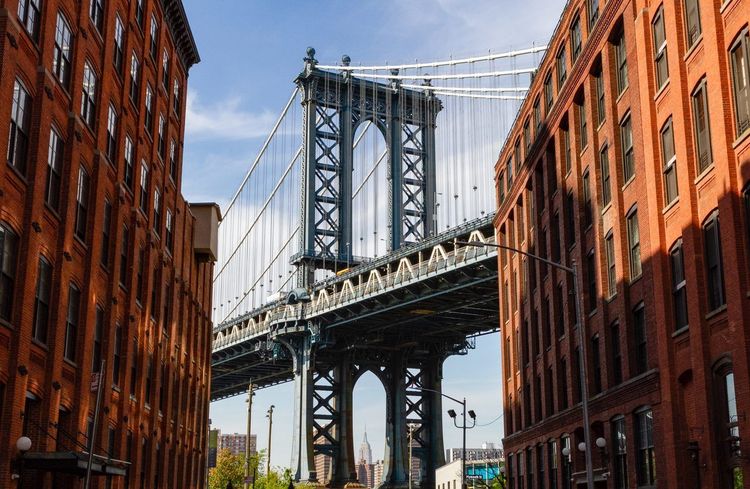
DUMBO (Down Under the Manhattan Bridge Overpass) is one of New York's most photogenic neighborhoods. A former industrial area reinvented since the 1990s as an artists' quarter and then an upscale residential and commercial district, DUMBO offers the red-brick and cobblestone backdrop that New York TV series have made famous. The entire neighborhood can be explored on foot in 30 to 45 minutes, with no ticket required.
New York's most reproduced photo spot is at the intersection of Washington Street and Front Street: the Manhattan Bridge frames perfectly at the end of the street, with the 1 World Trade Center tower visible in the gap. This image, reproduced on millions of screens and magazine covers, is accessible from a simple sidewalk. The best lighting conditions: in the late afternoon, when golden light illuminates the steel arches from the west.
The Brooklyn Bridge Park, developed on the former East River piers, is adjacent to DUMBO. From its lawns, the view of the Brooklyn Bridge with Manhattan as backdrop is one of the city's most classic. Deck chairs are available free of charge in summer. Jane's Carousel (1922), restored and reinstalled in a Jean Nouvel pavilion, can be seen from the outside without a ticket.
20. Washington Square Park
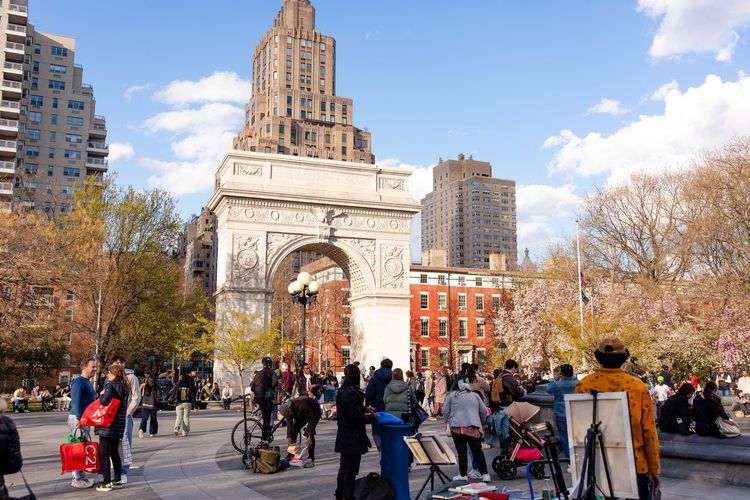
Washington Square Park (New York, NY 10012, rated 4.6/5 on Google with 32,859 reviews) is the gravitational center of Greenwich Village — Manhattan's intellectual, bohemian, and historically LGBTQ+ neighborhood. The white marble triumphal arch marking the north entrance, built in 1892 to commemorate the centennial of George Washington's inauguration, is the symbol of the Village. The park has no gate, no ticket, and no closing time.
On weekends and weekday afternoons, Washington Square is a permanent open-air stage: chess players around the central fountain, guitarists and singers on the benches, jugglers on the paths, dog walkers creating spontaneous gatherings. NYU, whose buildings surround the park on three sides, holds its graduation ceremonies here in May — a spectacular ceremony that the public can attend freely from the lawns. The central fountain, active from May to October, has been an iconic Village gathering spot since the 1960s.
21. The Oculus at the World Trade Center
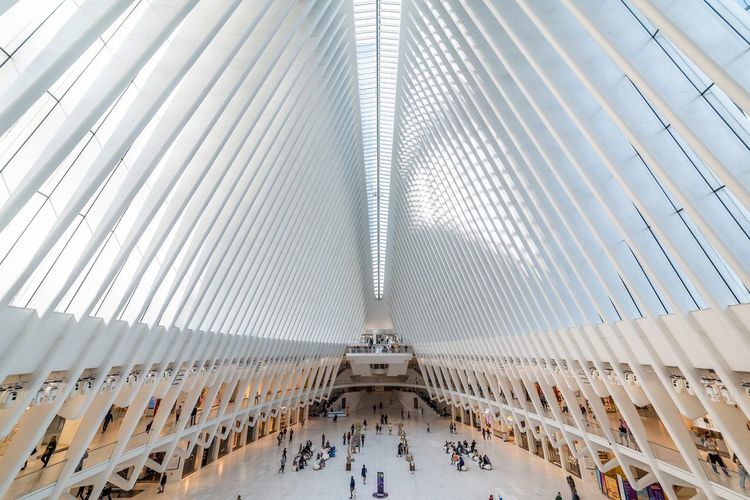
The Oculus (officially the Westfield World Trade Center Transportation Hub) is one of the world's most extravagant transit stations. Designed by Santiago Calatrava and inaugurated in 2016, it cost $4 billion — roughly triple its initial budget. Its form evokes a bird taking flight, or from certain angles a dinosaur in mid-stride. Access to the interior is entirely free.
The interior is a white elliptical hall 100 meters long and 50 meters high, with a skylight opening in the roof that lets in a beam of light precisely on September 11 at 10:28am — the exact time the second tower collapsed in 2001. This design detail, intended by Calatrava, is only visible once a year under favorable weather conditions. For the rest of the year, the Oculus functions as a pedestrian passage and shopping center, but the architectural quality of the space is worth a visit regardless of the shops.
22. Socrates Sculpture Park
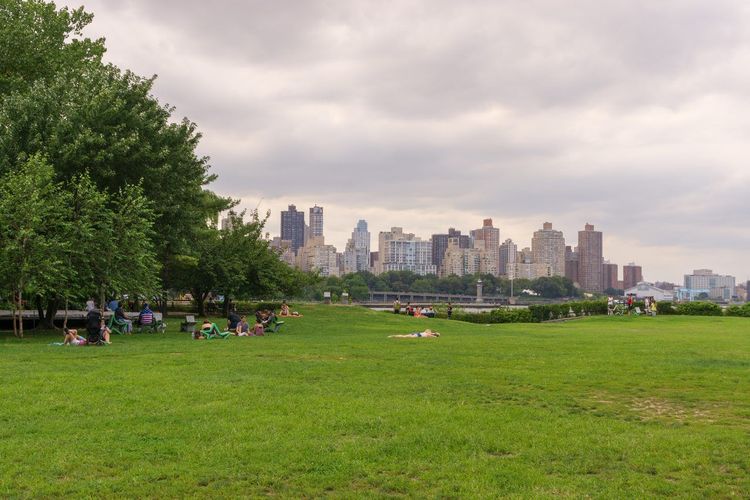
The Socrates Sculpture Park (32-01 Vernon Blvd, Long Island City, NY 11106, rated 4.4/5 on Google with 2,110 reviews) is an alternative cultural space little frequented by tourists: a former abandoned industrial riverside lot in Long Island City (Queens), transformed into an outdoor sculpture park in 1986. Admission is free at all hours, every day of the year.
The park displays a selection of large-scale contemporary sculptures refreshed each year, in a deliberately raw landscape setting: grass, gravel, and an unobstructed view of the East River and the Midtown Manhattan skyline directly across. The artists on display are generally in residence in New York and produce works specifically for this space. Widely used by Queens residents for picnics, the park offers a perspective on Manhattan rarely found in tourist guides. Accessible by subway (N/W line, Broadway stop) in 20 minutes from Midtown.
23. The New York Hall of Science
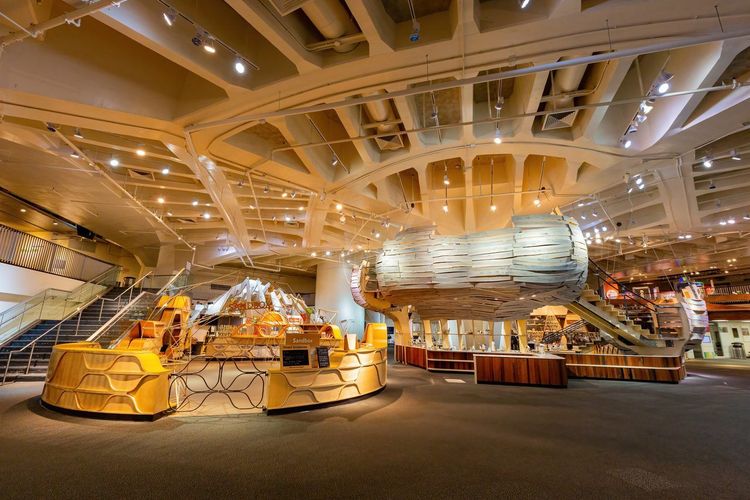
The New York Hall of Science (47-01 111th St, Corona, NY 11368, rated 4.5/5 on Google with 6,268 reviews) (NYSCI) is New York City's only science museum, and one of the best designed for making science accessible to all ages. Located in Corona (Queens), it occupies a Googie-style building designed for the 1964 World's Fair. Its 450 interactive exhibits cover biology, physics, chemistry, astronomy, and technology.
NYSCI offers free admission slots each week: Fridays from 2pm to 5pm and Sundays from 10am to 11am, September through June (these slots are suspended in July and August). Online reservation is required and spots are limited — arrive early during peak season. Outside these slots, adult admission is approximately $22. The museum also features an outdoor Science Playground, one of the largest outdoor science playgrounds in the United States (5,800 m²), accessible separately or with museum admission.
24. Coney Island Beach
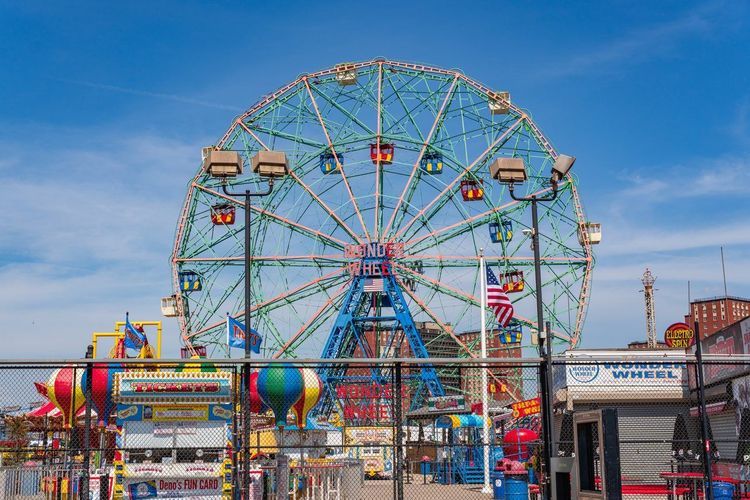
Coney Island (Surf Ave & Ocean Dr, Brooklyn, NY 11224, rated 4.5/5 on Google with 2,544 reviews) is New York's urban beach: a 5-kilometer strip of Atlantic-facing sand at the southern tip of Brooklyn, reachable by subway in 50 minutes from Midtown. Beach access is free; showers and changing rooms are paid. The water at Coney Island is not the clearest, but the beach is lifeguarded and well maintained from late June to early September.
The boardwalk running alongside the beach for 4 kilometers is free to walk, lined with hot dogs, ice cream, and game stalls, in a slightly retro setting that contributes to Coney Island's unlikely charm. Nathan's Famous, founded in 1916 on Surf Avenue, is New York's most iconic hot dog establishment. Luna Park amusement park is adjacent to the beach (paid admissions), but strolling past the roller coasters and rides costs nothing. Subway access is via the D, F, N, or Q lines to the Coney Island–Stillwell Avenue stop.
25. Farmers Markets and Neighborhood Events
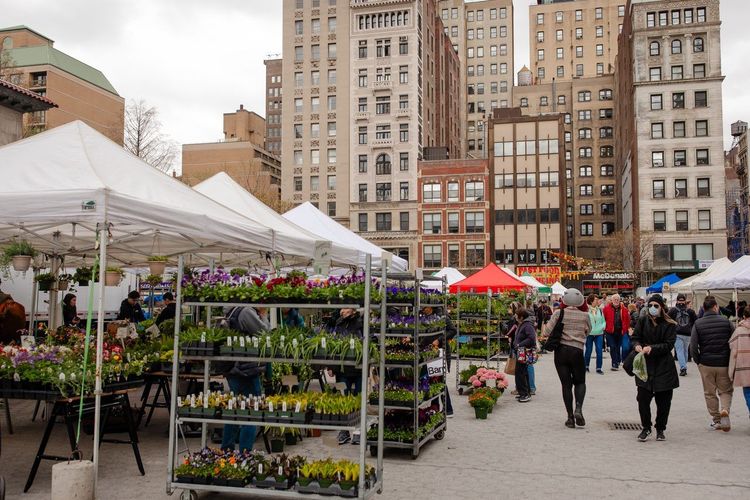
New York organizes a considerable number of free outdoor events, particularly from May to October. The Union Square Greenmarket (Union Square W, New York, NY 10003, rated 4.6/5 on Google with 6,378 reviews) (open Monday, Wednesday, Friday, and Saturday from 8am to 6pm) is the city's largest producers' market: 140 producers from New York, New Jersey, and Connecticut offer fruit, vegetables, cheeses, wines, and artisanal products. Admission is free, and tastings are often provided.
SummerStage hosts dozens of outdoor concerts every summer in Central Park and neighborhood parks — from jazz to reggae, symphony orchestras to DJ sets. Full programs are published in April on the official website. Bryant Park hosts free outdoor film screenings on Monday evenings in summer — arrive early to find a spot on the lawn. The BAM DanceAfrica Festival in Brooklyn is one of North America's largest African dance festivals, with outdoor demonstrations every Memorial Day Weekend. Smorgasburg, Brooklyn's food market (Williamsburg and Prospect Park, Saturdays and Sundays from May to October), is free to enter; dishes range from $8 to $15.
FAQ
Is New York accessible on a tight budget?
New York can be if you plan smartly. The free activities on this list cover several full days: Central Park, the Staten Island Ferry, the High Line, the Brooklyn Bridge, Times Square, DUMBO, Washington Square Park, Governors Island on weekends from May to October — all ticket-free experiences. Accommodation and transport remain the main expenses, but subway travel stays affordable ($2.90 per ride in 2026).
Can you see the Statue of Liberty for free?
Yes, from the upper deck of the Staten Island Ferry, which passes within 300 meters of the statue. The crossing requires no ticket and operates 24/7. To land on Liberty Island and visit the pedestal or crown, tickets are required (between $24 and $25 depending on the access level). Our article on everything you need to know about the Statue of Liberty details all visit options and tickets to book in advance.
Which museums offer free admission in New York?
The Brooklyn Museum is free during First Saturday evenings (the first Saturday of select months, 5pm–11pm). The New York Hall of Science offers free admission on Fridays from 2pm to 5pm and Sundays from 10am to 11am, September through June. The MET applies pay-what-you-wish pricing for New York State residents only. The National Museum of the American Indian (Financial District) is entirely free at all hours. The Staten Island Museum regularly offers free admission days.
Is the High Line really free?
Yes, completely. Access is free at all hours, every day of the year. Several staircases and elevators provide access to the walkway from street level. The section from Gansevoort Street (southern end, Meatpacking District) to 30th Street is open from 7am to 11pm; the Hudson Yards segment (30th–34th Street) follows the same hours. No prior registration is required.
Are there free concerts in New York?
Many. The SummerStage program in Central Park hosts dozens of concerts from June to August. The Shakespeare in the Park series at the Delacorte Theater offers free tickets for evening performances (online lottery or physical queue). The Prospect Park Bandshell in Brooklyn hosts the Celebrate Brooklyn Festival outdoors every summer. Lincoln Center hosts free concerts in its plaza in July and August.
What are the best free parks in New York?
Central Park (Manhattan, 341 hectares), Prospect Park (Brooklyn, 237 hectares, designed by the same Olmsted and Vaux), Riverside Park (Manhattan, 6 km along the Hudson), Brooklyn Bridge Park (former converted piers with views of Manhattan), Socrates Sculpture Park (Queens, contemporary sculptures and views of Midtown). All are accessible without a ticket, at any hour.
What is the best time to visit New York for free?
From late May to early October, when most free programs are active: SummerStage, Shakespeare in the Park, Governors Island (free ferry on weekends before 11am), outdoor films, neighborhood festivals. Fall (October–November) offers the colors of Central Park and Prospect Park with pleasant temperatures, without the summer crowds. Winter is less generous with outdoor events, but the halls of Grand Central, the public library, and open interior spaces take on a different dimension.
New York imposes its scale at first glance — hotel prices, $30 admission to iconic museums, a pace that exhausts before you even begin. But the city was built on a layering of public and private spaces, and its public areas — parks, streets, monuments, station halls, elevated walkways — represent a richness that no one can put behind a ticket booth.
The Ryo New York audio guide offers tours that provide historical and architectural context for these public spaces: the anecdotes about the Brooklyn Bridge that information panels omit, the history of Governors Island's fortifications, the timeline of Central Park told by those who designed it. Download the Ryo app before you leave, and these twenty-five free activities and visits in New York become open-air lessons in urban history.
À lire également