© Shutterstock
 Votre guide Ryo
Philadelphia in 3 Days: A Local's Itinerary for 2026
Philadelphia spends most of the year in New York and Washington D.C.'s shadow, then quietly hands you the actual Liberty Bell, a cobblestone alley people still live on, and a cheesesteak habit you didn't know you had. Philadelphia in 3 days is enough time to walk the length of American independence, climb the real Rocky Steps before the tour buses show up, and eat through a market that has fed this city since 1893. This itinerary follows roughly the same ground as Ryo's audio-guided tour of Philadelphia, from Independence Hall's assembly room to the rowhouses of South Philly, for readers who would rather have the history narrated while they walk than read it off a plaque.
Over the next three days: a bell that was recast twice before anyone gave up on it, an ice cream counter that has been scooping in the same market since the day it opened, a museum staircase that turned a boxing movie into a ritual thousands of people repeat every morning, and a prison where Al Capone did his time in a cell nicer than most college dorms. You will also find what a realistic 3-day budget looks like, which neighborhood makes sense for a hotel, and how to compress the plan into a single day in Philadelphia or stretch it into a full weekend if three days isn't quite what you have.
Day 1: Independence Hall, the Liberty Bell, and Old City
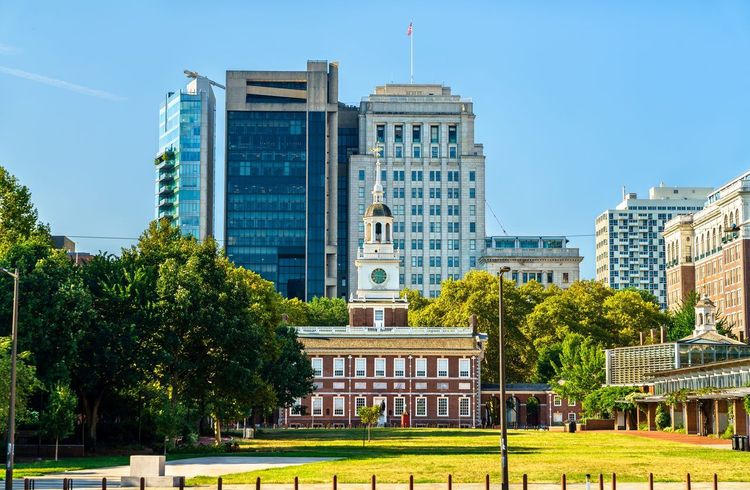
Day one stays almost entirely inside Old City, the same handful of blocks where the Declaration of Independence was debated for weeks, nearly stalled more than once, and finally adopted. You can walk this entire day in under two miles, which is really the point: it's the densest concentration of founding-era history anywhere in the country, and it rewards slow walking far more than a rental car ever could. In 2026, the 250th anniversary year of the Declaration, expect more visitors, more costumed interpreters, and a few extra exhibits around the park.
Morning: Independence Hall, the Liberty Bell, and Elfreth's Alley
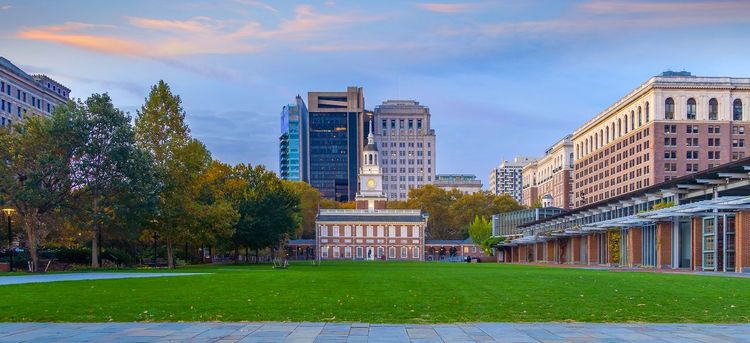
Sort out your tickets before you even leave the hotel. Tours of Independence Hall) are free, but timed entry must be reserved on Recreation.gov for a $1 processing fee, up to 30 days ahead. A small batch of next-day tickets is released at 5pm the evening before, which is your backup plan if the date you wanted is gone. The Independence Visitor Center) across the lawn is still the best first stop for maps, restrooms, and ranger advice on the day's schedule.
Independence Hall itself is smaller than most people expect, a red brick Georgian building completed in 1753 where delegates adopted the Declaration of Independence in 1776 and drafted the Constitution in 1787. The ranger-led tour, around 20 to 30 minutes, walks you into the Assembly Room, where the silver Syng inkstand used for both signings still sits on the table. Book the earliest slot you can; mid-morning security lines in summer regularly add half an hour.
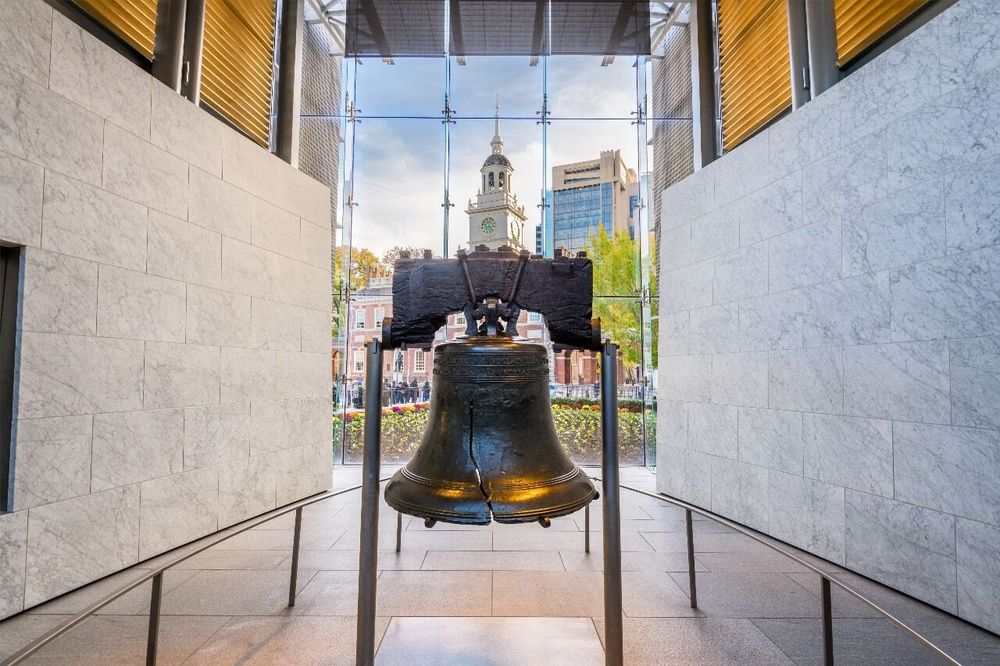
Cross Chestnut Street afterward to the Liberty Bell Center), no ticket required, just a security check that moves quickly on weekday mornings. The bell cracked on its first test ring after arriving from London in 1752, was recast twice by two local metalworkers, John Pass and John Stow, and gave out for good in 1846 while ringing for Washington's birthday. That final fracture is the one you see today, and it's smaller in person than every photo makes it look.
From there, walk ten minutes northeast to Elfreth's Alley), a narrow cobblestone row lived in since 1702 and often called the oldest continuously inhabited residential street in the country. Real people still own these 32 houses, so keep voices down and stay off the stoops. This is where the history starts to feel personal, and it's also a natural stretch to switch on the Ryo audio guide: the Philadelphia tour threads Independence Hall, the Liberty Bell, and the Old City lanes into one walking loop, with the story of each doorway playing as you reach it.
Midday: Reading Terminal Market
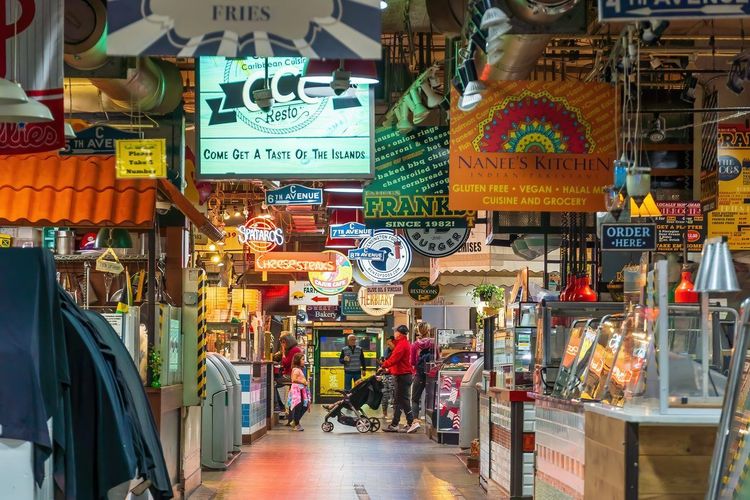
Walk about fifteen minutes west to Reading Terminal Market), which has operated beneath the old Reading Railroad train shed since 1893 and still packs in roughly 80 independent merchants. The Pennsylvania Dutch vendors, who drive in from Lancaster County, keep shorter hours than the rest of the market and close on Sundays, so come on a weekday or Saturday if you want their pretzels and whoopie pies.
Go hungry. Between the roast pork sandwiches, the dumpling counters, and the raw bar, it's easy to lose an hour just circling. Try to arrive before noon on weekdays: by 12:30pm the office crowd from Center City fills every seat at the central tables, and the most popular counters, the roast pork and the doughnut stands especially, can run twenty-minute lines. Save room for Bassetts Ice Cream), founded in 1861 and the last of the market's original 1893 merchants, still run by the fifth generation of the same family. The butter pecan is the one locals order without looking at the board.
Afternoon and evening: City Hall, LOVE Park, and Rittenhouse Square
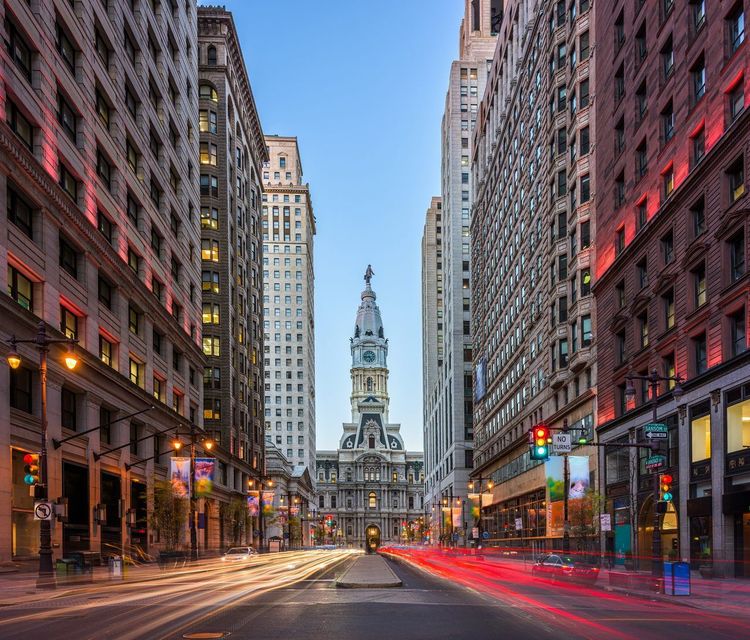
From the market, City Hall) is a five-minute walk, and it deserves more than a passing glance. Finished in 1901, it remains one of the tallest load-bearing masonry buildings in the world, topped by a 37-foot bronze statue of William Penn. The tower tour sells a limited number of same-day tickets and gets you closer to that statue's hat than seems reasonable, with the whole street grid laid out below you.
Just northwest sits LOVE Park), officially JFK Plaza, home to Robert Indiana's LOVE sculpture, installed in 1976. It's a five-minute photo stop at most, but it also marks the start of the Benjamin Franklin Parkway you'll walk in full tomorrow.
End the day at Rittenhouse Square (210 W Rittenhouse Square, Philadelphia, PA 19103, rated 4.8/5 on Google (10K reviews)), one of William Penn's five original city squares and now the anchor of Philadelphia's most polished residential pocket. Grab dinner on one of the side streets branching off Walnut, where the restaurant density rivals anything in Center City, then sit on a bench and let your legs recover before day two.
Day 2: Museums, monuments, and the Parkway
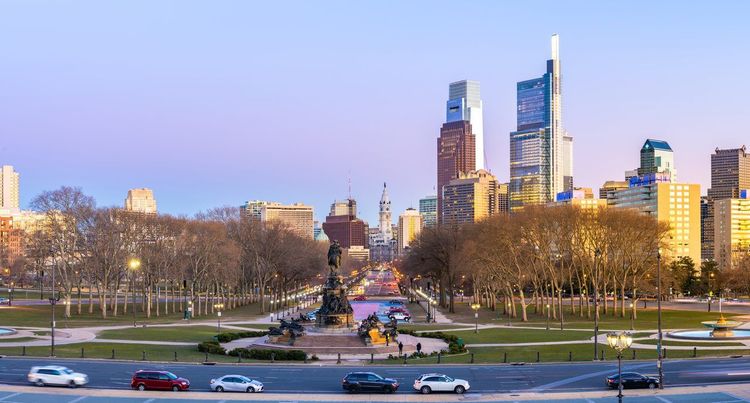
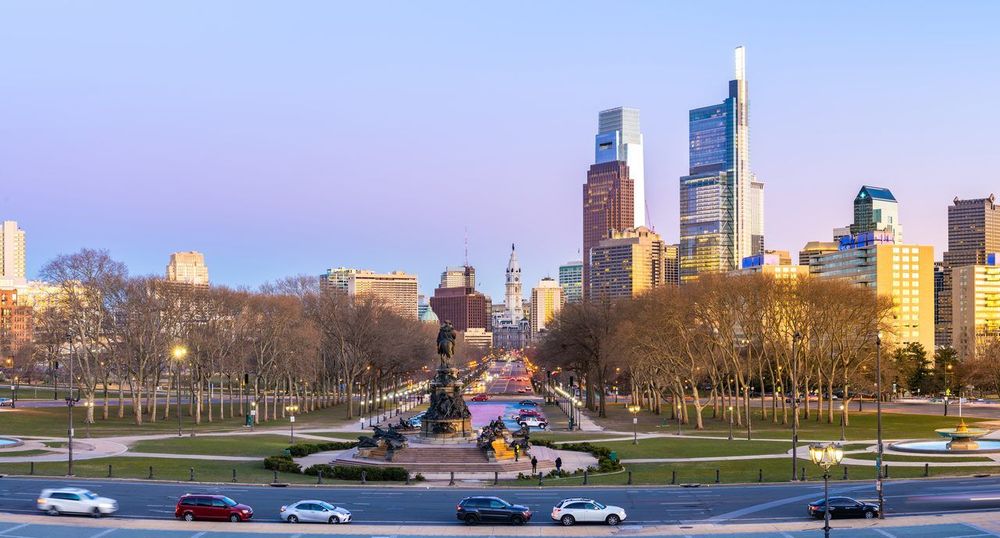
Day two trades cobblestones for the wide diagonal sweep of the Benjamin Franklin Parkway (Philadelphia, PA 19130), Philadelphia's answer to the Champs-Élysées, laid out in the 1910s and 1920s to link City Hall to the art museum about a mile away. Wear shoes you don't mind standing in for six hours; this day covers more ground than day one, and most of it is on your feet inside galleries.
Morning: the Benjamin Franklin Parkway, the Art Museum, and the Barnes Foundation
Walk or take the bus up the Benjamin Franklin Parkway itself, flanked by international flags and a string of museums most visitors never get past the first two of.
The Philadelphia Museum of Art) anchors the far end, a Greek Revival temple that opened in 1928 and holds more than 240,000 works, from Cézanne to a full-scale Japanese teahouse reassembled inside. You may see a griffin logo and the name Philadelphia Art Museum on older signage: the museum rebranded in October 2025, then went back to its original name in February 2026 while keeping the new look. Two to three hours covers the highlights without exhausting anyone.
A fifteen-minute walk back down the Parkway, the Barnes Foundation) is the one many locals recommend over the bigger museum. Albert Barnes assembled one of the world's greatest private collections of Renoir, Cézanne, and Matisse, hung salon-style in dense, idiosyncratic clusters exactly as he arranged them. Timed tickets sell out on weekends, so book at least two days ahead.
Afternoon: the Rocky Steps and Boathouse Row
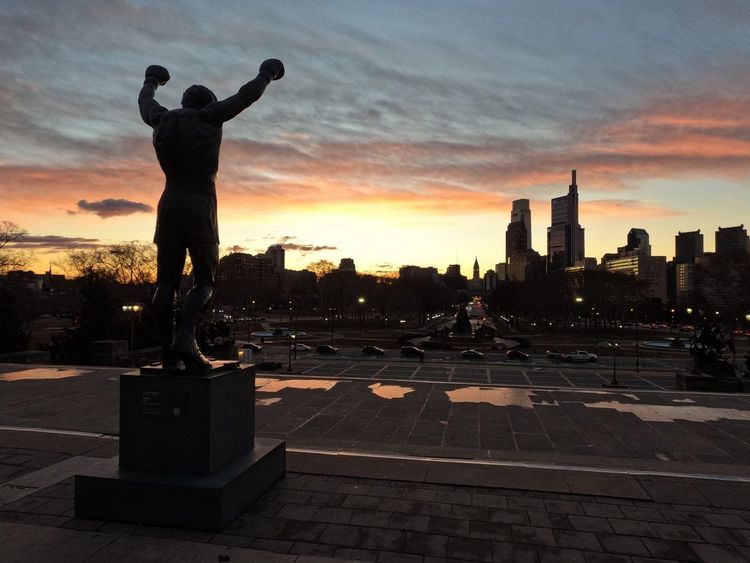
Back at the Art Museum, climb the 72 steps that gave the building its unofficial nickname, the Rocky Steps), after Sylvester Stallone ran them in the 1976 film. Most visitors show up midday and fight for photos; locals go at sunrise or right before closing when the crowd thins out.
The Rocky Statue has had a busier life than most bronzes. Cast for Rocky III in 1982, it bounced between the museum and a sports arena, spent twenty years on a pedestal near the foot of the steps from 2006, and in September 2026 was moved to the top of the staircase, where the climb now ends face to face with it. It stands 8 feet 6 inches tall, so your photo will look better from a few steps below.
Follow the river path northwest for about ten minutes to Boathouse Row), a string of fifteen Victorian boathouses that have anchored Philadelphia's rowing clubs, grouped as the Schuylkill Navy since 1858. After dark, each building is outlined in small lights, visible from the Art Museum terrace and from the Schuylkill River Trail.
Evening: Fairmount and Eastern State Penitentiary
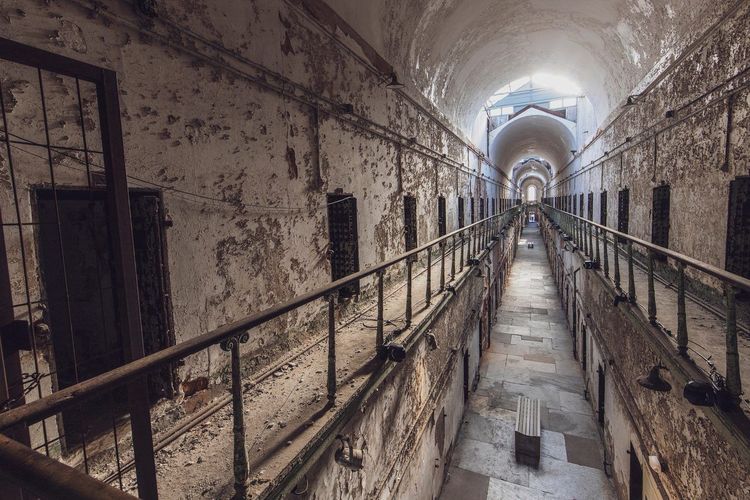
Wrap the day in the Fairmount neighborhood at Eastern State Penitentiary (2027 Fairmount Ave, Philadelphia, PA 19130, rated 4.7/5 on Google (2 537 avis)), a former prison opened in 1829 whose radial, solitary confinement design was copied by around 300 prisons worldwide. It operated until 1971 and held Al Capone in 1929 and 1930, in a cell with rugs, a desk lamp, and a radio that looks absurdly comfortable next to the bare cells around it.
The self-guided audio tour, narrated by actor Steve Buscemi with the voices of former guards and inmates, plays on your phone through the Bloomberg Connects app. Allow 90 minutes to two hours in total to wander the crumbling cell blocks, Capone's cell, and the exercise yards. If your trip falls in late September or October, the site's Halloween Nights event, now in its 35th season, draws lines around the block after dark, so book it well ahead or plan your daytime visit around it. Want the Parkway half of today narrated too? The Ryo audio guide covers the museums and monuments you walked this morning, so you can replay the stories on the Art Museum terrace while Boathouse Row lights up below.
Day 3: Old City depth, South Philly, and local flavor
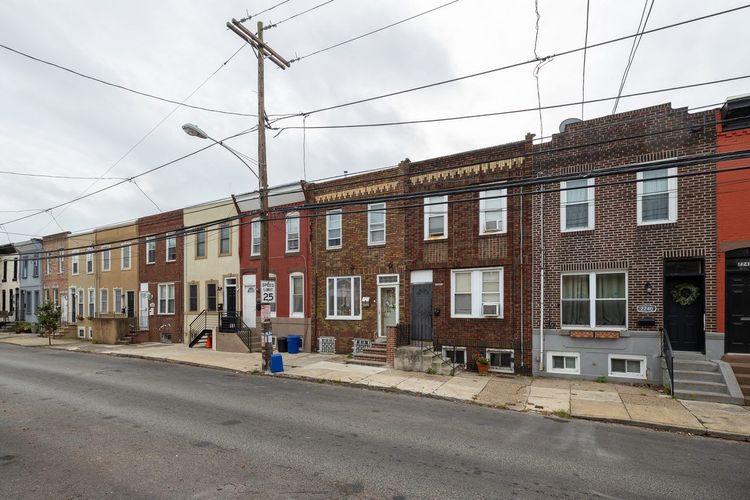
The first two days cover the names everyone knows. Day three goes further: a fuller pass through Old City's back streets, a trip south into the neighborhood where the cheesesteak wars actually happen, and a rooftop to close the trip out on. It's the day most short itineraries leave out, and the one that makes the city feel lived in rather than toured.
Morning: Old City beyond Independence Hall
Start at the Betsy Ross House), the colonial home traditionally credited as the birthplace of the first American flag, though historians still debate how much of the story is verified fact versus 19th-century civic mythmaking. Either way, the house itself, with its narrow winding stairs and period furnishings, is worth the twenty minutes.
A short walk away, Christ Church) has held services since 1695 and counted Washington and Franklin among its congregation. Franklin himself is buried a few blocks over in the church's burial ground, where visitors still toss pennies onto his grave, a nod to his line that a penny saved is a penny earned.
If you have an hour before lunch, wander the lanes between Arch and Market: Church Street, Letitia Street, and the galleries along 2nd and 3rd are where Old City shows its quieter side. Ryo's Best Things to Do in Philadelphia guide goes deeper on a few of these backstreets and the smaller museums around them.
Midday: the Italian Market and a Philly cheesesteak
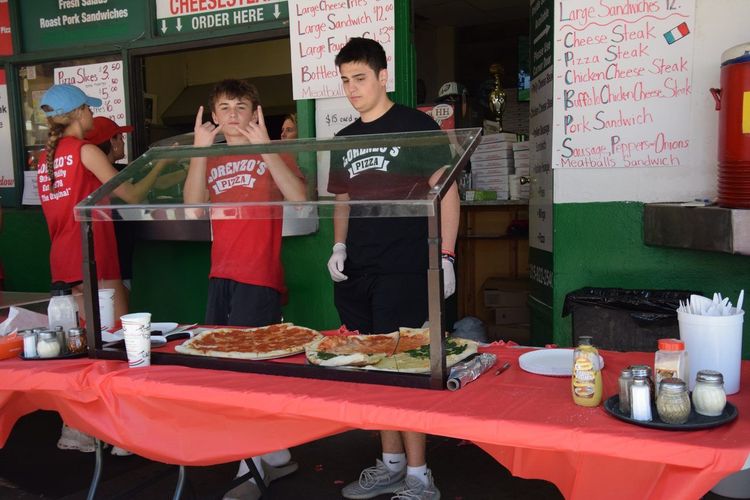
Head south into South Philly for the Italian Market), a stretch of 9th Street that has run as an open-air market since the late 1800s and is often called the oldest outdoor market of its kind in the country. Produce stands, cheese shops, and butchers spill onto the sidewalk under metal awnings, and Saturday mornings are when it's at its loudest and busiest.
This is also cheesesteak territory. The rivalry between Pat's King of Steaks and Geno's Steaks, facing each other across the same South Philly intersection at 9th and Passyunk, has run for decades and still divides opinion down the middle. Order confidently: 'wiz wit' gets you Cheez Whiz and fried onions, and hesitating at the window is the only real faux pas. Prefer a less touristy version? Several neighborhood spots a few blocks off the main drag serve a sandwich locals actually rate higher, without the line.
Evening: rooftop bars and skyline views
Close the trip out above the skyline rather than at street level. Stratus Rooftop Lounge (433 Chestnut St, Philadelphia, PA 19106, rated 3.9/5 on Google (637 avis)) sits eleven floors up at the Kimpton Hotel Monaco, a few blocks from Independence Hall, with an indoor-outdoor terrace, living green walls, and DJs on Friday and Saturday nights. It fills fast on weekends, so arrive before 6pm if you want a table with a view rather than a spot at the bar.
For sky-high cocktails with a different angle, a handful of hotel rooftops around Rittenhouse and the Parkway run similar setups, some with sharper cocktail lists and others with views straight down the Parkway to the Art Museum. Pick based on which part of the trip you want to be looking at on your last night in town.
What to eat in Philadelphia
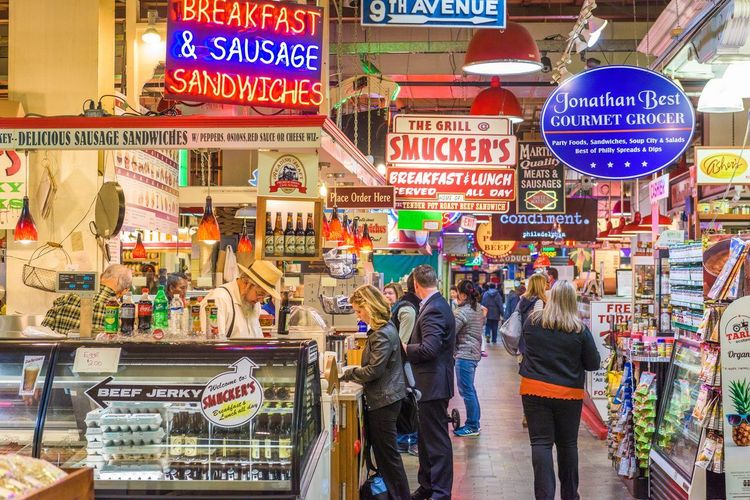
Cheesesteaks get all the attention, but they're really just the entry point. Reading Terminal Market alone could fill a full day of eating: scrapple for breakfast, a roast pork sandwich with broccoli rabe and sharp provolone for lunch, and a scoop of Bassetts for dessert, all without leaving one building.
South Philly's Italian Market works the same way at a slower pace. Cheese shops that have sold handmade mozzarella for three generations sit next to butchers who still break down whole animals in view of the counter. Buy a sandwich to go and eat it on a stoop; it's the most honest version of the neighborhood you'll get.
Beyond the obvious hits, look for tomato pie (a thick, cheese-light Sicilian-style square usually eaten at room temperature), water ice from a corner stand on a hot afternoon, and soft pretzels from a street cart, ideally with yellow mustard. None of it is fancy. Most of it costs under $10, and that's the whole point of Philadelphia's food scene: it built its reputation from the sidewalk up, not from tasting menus.
Where to stay in Philadelphia
Old City puts you inside the day-one itinerary, within walking distance of Independence Hall, Elfreth's Alley, and the market, but it goes quiet after dinner since much of the neighborhood is historic sites and offices rather than nightlife. It suits a first visit built around history more than anything else.
Center City, roughly the blocks around City Hall and Rittenhouse Square, sits at the geographic middle of the whole itinerary and keeps you within walking or short transit distance of everything covered across all three days. It's also where most of the mid-range hotel inventory concentrates, so prices swing less dramatically by season than in Old City's smaller boutique properties.
Rittenhouse Square itself is the pricier, leafier option, better suited to a trip weighted toward restaurants and shopping than sightseeing. Rates climb on weekends, when the square's restaurant scene draws a local crowd on top of visitors.
Fairmount, near the Art Museum and Eastern State Penitentiary, is worth considering if day two matters more to you than day one, though it has far fewer hotels than the other three areas and leans residential after dark.
Getting around Philadelphia
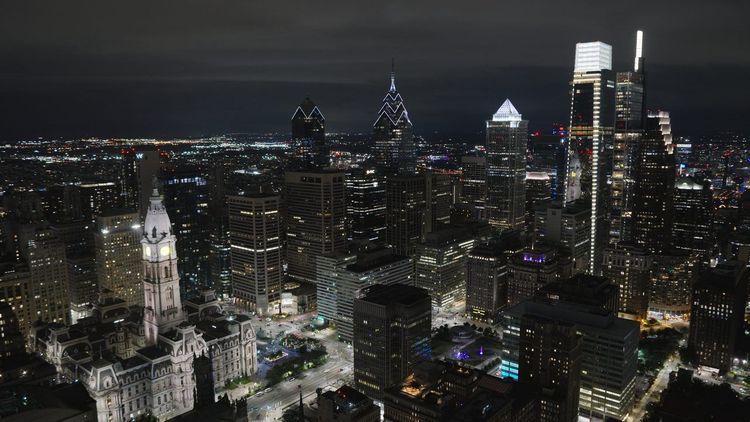
Philadelphia is genuinely walkable, more so than most East Coast cities its size. The grid William Penn laid out in the 1680s still governs Center City: numbered streets run north-south, tree-named streets like Chestnut, Walnut, and Spruce run east-west, which makes wrong turns hard to make.
For the stretches that outrun a comfortable walk, particularly the run up to the Art Museum or back from South Philly, SEPTA runs the city's subway, bus, and trolley network. The Market-Frankford Line crosses Old City and Center City east to west, and the Broad Street Line runs south toward the stadiums; SEPTA has been relabeling them the L and the B on new signage, so you may see both names. A ride costs $2.90 whether you tap a SEPTA Key card, tap a contactless bank card, or pay exact cash, but only card taps give you two free transfers within 90 minutes.
Rideshare fills in gaps reasonably cheaply given the city's compact footprint, and Indego bike share stations are common enough in Center City to make a short pedal between the Parkway museums a real option. A car is more liability than asset for these three days; downtown parking is expensive, and most of what you'll want to see clusters within a few walkable zones anyway.
Best time to visit Philadelphia
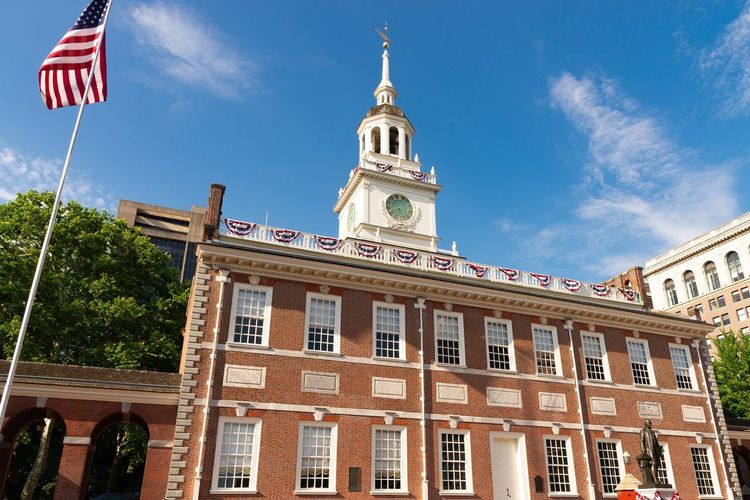
Late spring, roughly April through early June, and early fall, September into October, give you the most comfortable walking weather for an itinerary this outdoor-heavy, with daytime temperatures generally in the 60s and 70s Fahrenheit and lighter crowds than peak summer.
Summer brings heat and humidity that make the Parkway's long, shadeless stretches uncomfortable by early afternoon, though it's also when the city runs the most outdoor events, including the Fourth of July celebrations around Independence Hall. Winter drops temperatures near or below freezing for stretches, which thins the Independence Hall lines considerably but also shortens the daylight window for an already packed three days.
If your dates are flexible, October stands out as the sweet spot: comfortable temperatures, fall color along the Parkway, and Eastern State's Halloween Nights for anyone who wants that on the itinerary. Just book the evening event early, since it's the one thing in this guide that regularly sells out.
Adapting this itinerary: Philadelphia in 1, 2, or 3 days
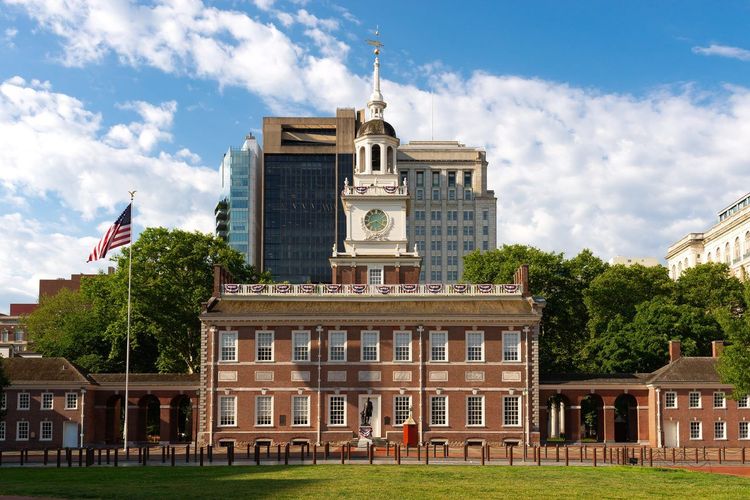
A single day in Philadelphia means picking one thread and following it. Most first-timers choose the historic core: Independence Hall, the Liberty Bell, Elfreth's Alley, and Reading Terminal Market for lunch, all within the same walking loop covered on day one above. It's tight but doable between a 9am start and a 6pm dinner, provided your Independence Hall slot is booked in advance.
A Philadelphia itinerary for 2 days lets you add the Parkway without rushing it. Pair day one's Old City loop with a condensed version of day two, trimming either the Barnes Foundation or Eastern State Penitentiary depending on whether art or history interests you more, since fitting both museums and the prison into one afternoon is a stretch.
Three days, the version this guide is built around, is really the minimum for seeing Old City, the Parkway, and South Philly without feeling rushed through any of them. If you've got a fourth day, that's when the day trips below start to make sense.
For a weekend in Philadelphia rather than a strict three-day trip, compress days two and three into a single busy Saturday and save Sunday morning for a slower version of day one, when Old City's streets are noticeably quieter before 10am. If you'd rather work from a ranked list of things to do in Philadelphia than a day-by-day plan, Ryo's Best Things to Do in Philadelphia sorts them by priority. Short on time? Start the Ryo audio-guided walk wherever you are and stop when your schedule does: each stop's story stands on its own, so a half-day version still makes sense.
Budget tips for a long weekend in Philadelphia
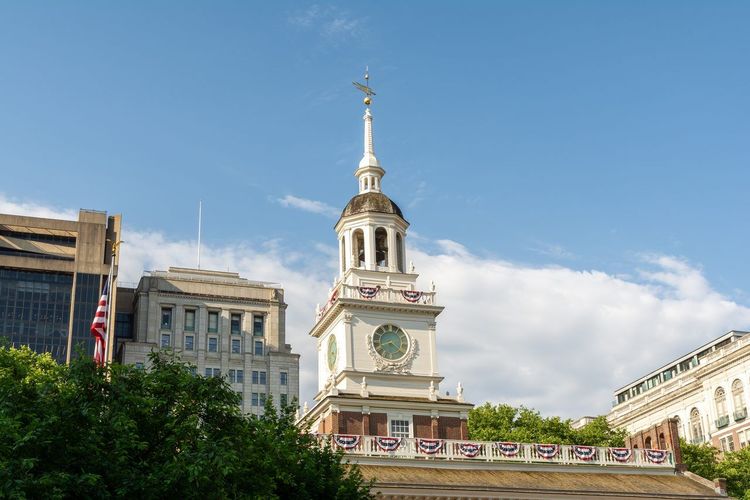
Most of the highest-value sights in this itinerary are free or close to it. Independence Hall (apart from the $1 booking fee), the Liberty Bell, Elfreth's Alley, the Rocky Steps, and a walk through Old City cost nothing beyond your time, and Reading Terminal Market and the Italian Market only cost what you choose to eat there.
Attraction passes such as CityPASS or Go City can save money if you plan several paid sites in a row, but check which attractions are actually included and run the math against buying tickets separately; for an itinerary built on free landmarks, a pass often doesn't pay for itself.
A realistic 3-day budget for one person, excluding flights, lands somewhere between $350 and $600: a mid-range hotel runs $130 to $220 a night in Center City, meals average $40 to $60 a day if you lean on markets over sit-down restaurants, and transit at $2.90 a ride stays well under $20 across the whole trip. Splitting a hotel room between two travelers cuts the total meaningfully, since lodging is the single biggest line item by far.
For more free things to do in Philadelphia, LOVE Park, Boathouse Row's evening lights, the Schuylkill River Trail, and a walk down the Parkway itself cost nothing and fill an evening as well as anything paid does.
Day trip ideas if you have extra time
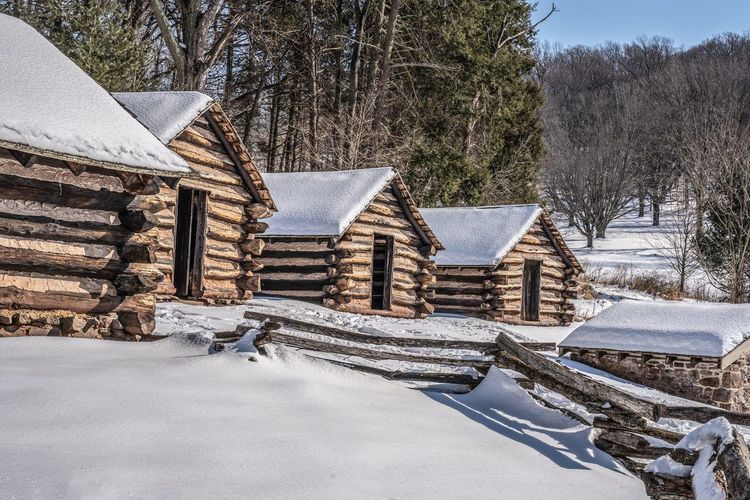
If your trip runs past three days, or you're simply not ready to leave, Valley Forge sits about 30 to 40 minutes outside the city by car and marks the site of George Washington's Continental Army winter encampment of 1777 to 1778. The national historical park spreads across rolling hills with reconstructed log huts and a visitor center that puts that brutal winter in context better than any city plaque could.
The Brandywine Valley, roughly 45 minutes to an hour southwest, packs in Longwood Gardens' conservatory and fountain shows, the Brandywine Museum of Art with three generations of Wyeth family paintings, and the sprawling Winterthur estate and gardens. It's an easy full-day add-on for anyone extending a long weekend in Philadelphia into four or five days, and it requires a car or an organized tour, since public transit doesn't reach most of it.
Closer in, two half-day ideas need no car at all. The Franklin Institute, a few blocks from the Barnes on the Parkway, is the city's big hands-on science museum and the easiest win on a rainy day with kids, home to a walk-through giant heart that has been thrilling school groups since the 1950s. Across the river, the Wissahickon Valley in Fairmount Park, reachable by Regional Rail or a short rideshare, trades museums for forested gorge trails, a covered bridge, and a stone creekside inn, a reminder that this very urban city also hides one of the largest urban park systems in the country.
Both options work better as a fourth-day extension than as a rushed detour squeezed into the three days already covered here; forcing either into days one through three tends to cost you time better spent in the city itself.
FAQ
What is the best month to go to Philadelphia?
October is generally the strongest single month: comfortable walking temperatures, fall color along the Parkway, and Eastern State Penitentiary's Halloween Nights if that interests you. April, May, and September are close runners-up.
How many days do you need to see Philadelphia?
Three days covers the historic core, the Parkway museums, and a meaningful pass through South Philly without rushing. Two days works if you're willing to trim either the Barnes Foundation or Eastern State Penitentiary, and one day is enough for the Old City highlights alone.
Is Philadelphia walkable for a 3-day visit?
Yes. William Penn's original grid keeps Center City easy to navigate on foot, and most of this itinerary's sights cluster within a few walkable zones. SEPTA covers the longer stretches, particularly between the historic core, the Parkway, and South Philly.
Do you need tickets for Independence Hall?
Yes, for most of the year. Tours are free but require a timed ticket reserved on Recreation.gov for a $1 fee, up to 30 days in advance, with next-day tickets released at 5pm. The Liberty Bell Center next door needs no ticket.
What neighborhood should you stay in for 3 days in Philadelphia?
Center City offers the most central base for a three-day trip covering Old City, the Parkway, and South Philly. Old City suits a history-first visit, and Rittenhouse Square suits travelers prioritizing restaurants over sightseeing.
How much does a 3-day trip to Philadelphia cost?
Budget roughly $350 to $600 per person excluding flights, covering a mid-range hotel, market-heavy meals, and SEPTA transit. Most of the itinerary's landmark sights, including Independence Hall and the Liberty Bell, are free.
Can you do Philadelphia in a weekend?
Yes, by compressing days two and three into one packed Saturday and using Sunday morning for a slower pass through Old City before the crowds arrive. It's tighter than the full three-day version but hits most of the same highlights.
What food is Philadelphia known for?
The Philly cheesesteak tops the list, especially the Pat's versus Geno's rivalry in South Philly, but Reading Terminal Market's roast pork sandwiches, Bassetts Ice Cream, tomato pie, water ice, and soft pretzels shape the local food identity just as much.
Before You Go
Three days in Philadelphia takes you from a Georgian assembly room where a country was argued into existence, up a museum staircase made famous by a boxing movie, and into a South Philly sandwich line that has sparked debates for decades. Few American cities pack that range into a few walkable square miles.
If you'd rather have someone tell the story as you go than read it off a plaque between stops, Ryo's audio-guided tour of Philadelphia covers much of this same ground at your own pace, whether you've got the full three days or just one afternoon to spare.