© Shutterstock
 Votre guide Ryo
Weekend in Gjirokastër: Complete Guide to Discovering Albania's Museum City in 2026
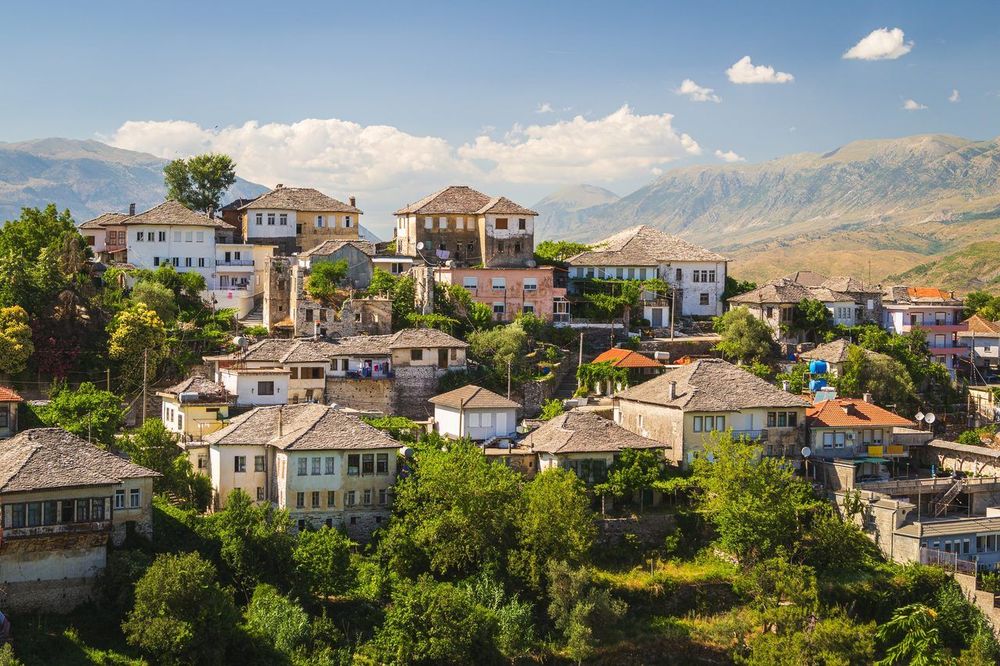
In the rain, the grey stone roofs of Gjirokastër take on an almost metallic hue, the one that gave the city its nickname of “Silver Castle.” Spending a weekend in Gjirokastër means walking down the cobbled lanes of an entire Ottoman city, listed by UNESCO, where each tower house tells three centuries of history without any of them having been rebuilt for tourists. The Ryo audio-guided tour of Gjirokastër sets the scene from the very first stop, even before you have dropped your bag at the hotel.
In two days, you will climb up to a castle that houses an American fighter jet that fell into Albanian hands during the Cold War, you will taste fried rice balls that you can hardly find anywhere else in Albania, and you will follow a trail to the arch of a forgotten aqueduct. Between the covered market, the ethnographic museum and an excursion to a dizzying blue spring, this guide details what to see, a day-by-day itinerary, where to stay, how to get there and how much to budget.
Gjirokastër, Albania's UNESCO-Listed Museum City
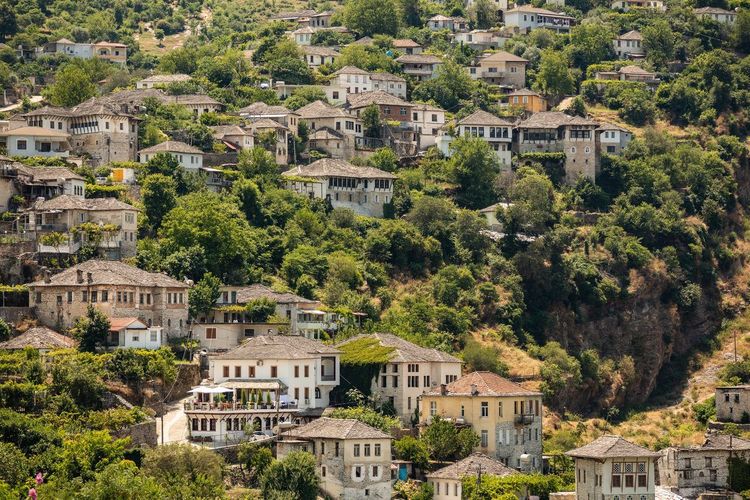
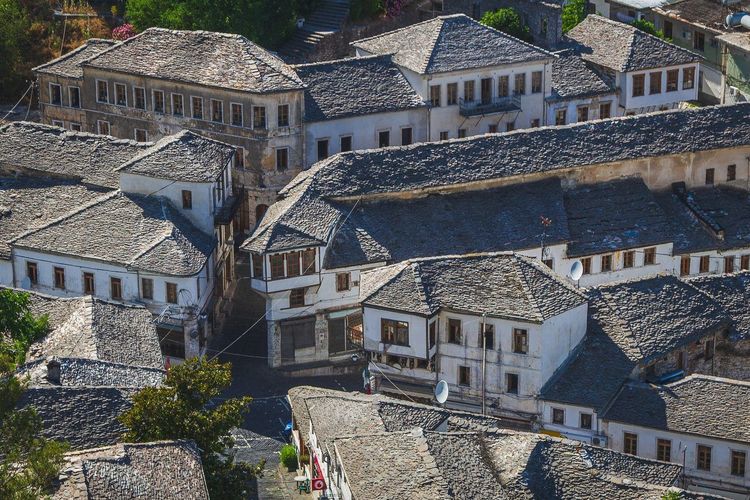
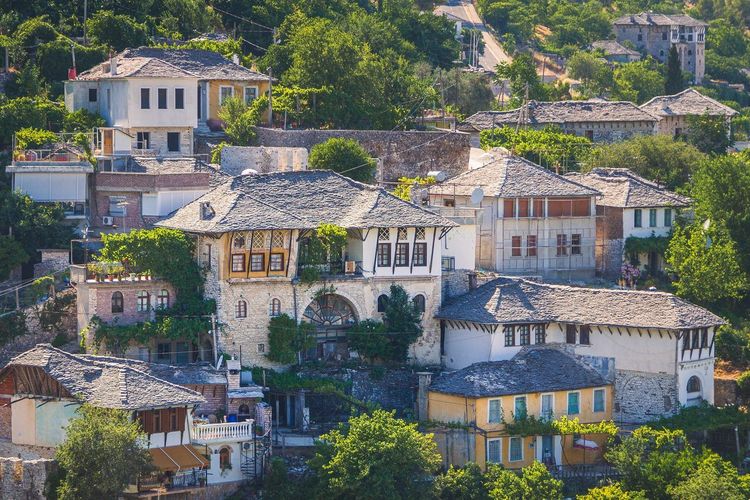
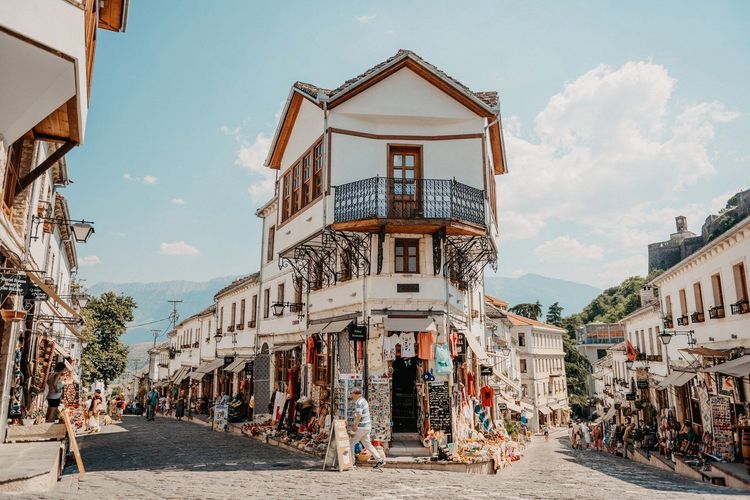
UNESCO inscribed the historic centre of Gjirokastër on the World Heritage List in 2005, before adding Berat in 2008 under a single shared title: “Historic Centres of Berat and Gjirokastra.” What strikes you on arrival is that nothing looks like a reconstruction. The hundreds of tower houses still standing mostly date from the 18th and 19th centuries, built from local stone with steeply pitched slate roofs, designed to withstand harsh winters as much as the clan rivalries of the Ottoman era.
The nickname “Silver Castle” is said to come precisely from the reflection of these roofs in the low morning light or after the rain. Unlike Saranda or Ksamil, Gjirokastër has never really tipped into mass tourism: groups coming from the coast stop here for a few hours, leave, and the town returns to its rhythm. That is precisely what makes a weekend enough for a complete first overview, while leaving you wanting to come back for longer.
What to See in Gjirokastër in a Weekend
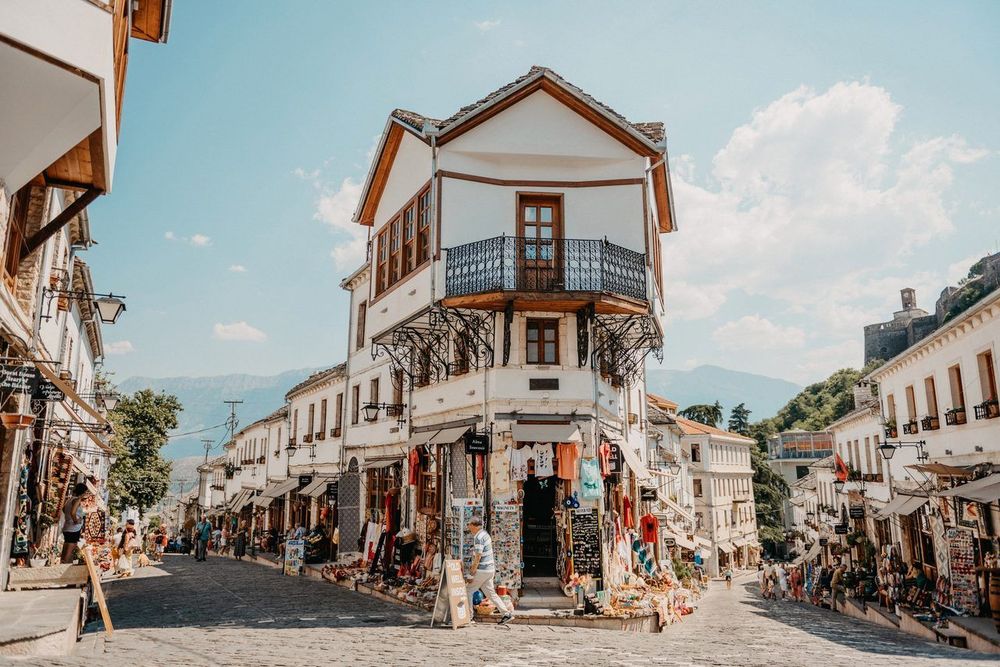
The essentials of the visit are concentrated in a tight area, which you can cover on foot in a day and a half without rushing. The sights follow one another almost naturally, from the highest point of the town down to the market, then on to the neighbourhoods below.
Gjirokastër Castle and Its Museums
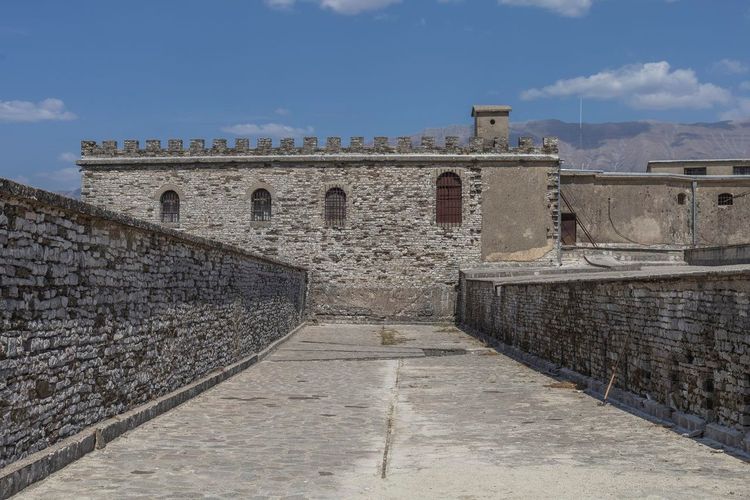
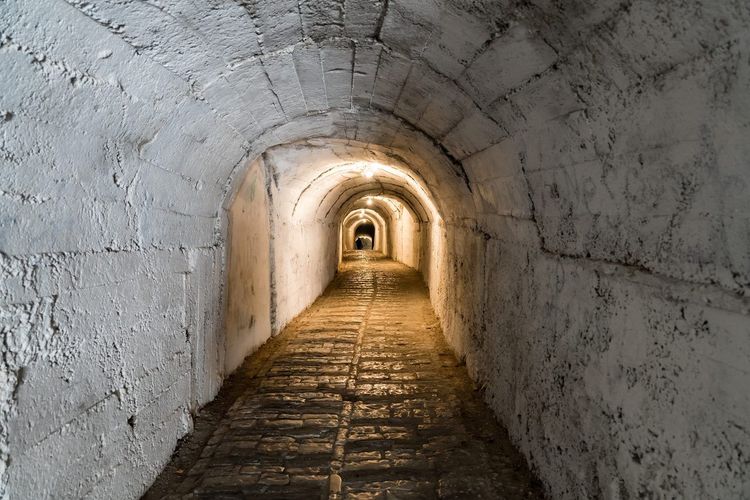
The Gjirokastër Castle overlooks the old town from a rocky promontory. Its first mentions date back to the 12th century, but it was Ali Pasha of Tepelena who gave it its current silhouette in the early 19th century, with its massive towers and vaulted galleries. Allow an hour and a half for the ramparts, the panorama over the Drino Valley and the weapons museum housed in the former galleries.
The detail that almost always surprises: an American T-33 aircraft, forced to make an emergency landing in Albania in 1957, still sits on the ramparts. The regime long presented it as a shot-down spy plane, a version you will still hear told on site. Roughly every five years, the fortress also hosts the National Folklore Festival, which brings together dancers and polyphonic singers from across the country.
On the way down from the castle, the Ryo audio-guided tour takes you step by step to the Old Bazaar, triggering commentary in front of each tower house you pass along the way, with no need to consult a map.
The Old Bazaar, Its Tower Houses and Its Cuisine
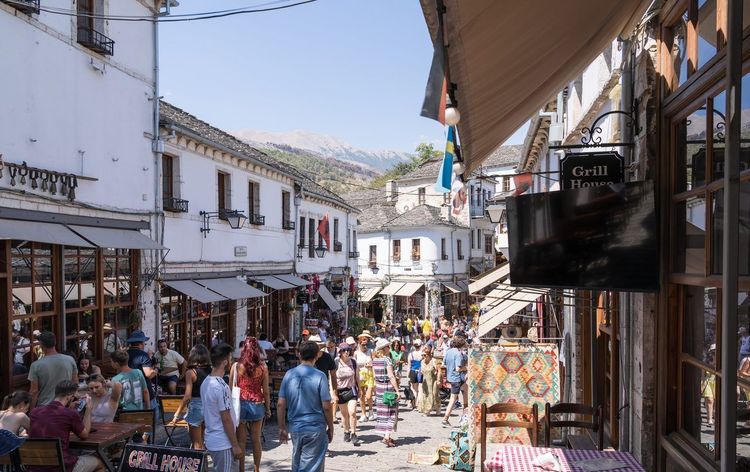
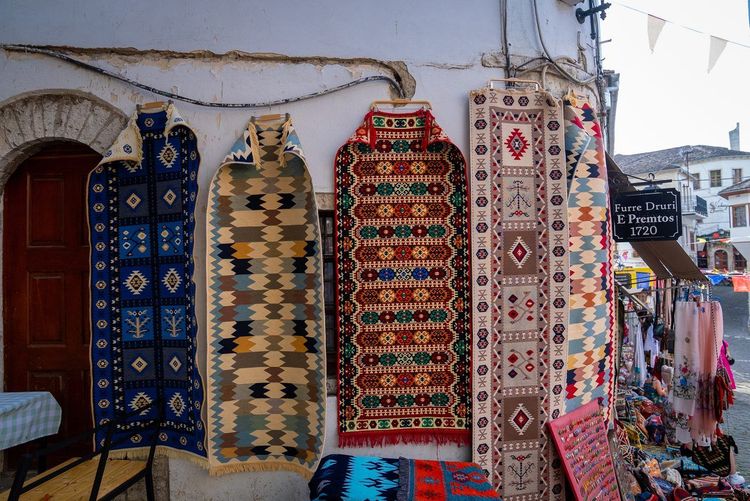
The Old Bazaar dates back to the 17th century. Ravaged by a fire in the last third of the 19th century, it was rebuilt in one go, hence the harmony of its two- or three-storey façades: the craftsman's workshop on the ground floor, the upper floor for storage or living quarters. It is the living heart of the town, where you can best feel the difference between a frozen museum city and one that is still inhabited. You will find woven rugs, embroidery, copper objects and mountain honey.
A few minutes' walk away, the Zekate House remains the most accomplished example of Ottoman tower house architecture: three levels, carved wooden ceilings, twin towers and a loggia that opens onto the whole valley. Nearby, the ethnographic museum stands on the site of Enver Hoxha's birthplace, a detail that local guides never fail to point out with a wry smile. If you have time, the Skenduli House can also be visited, often with commentary from a descendant of the family.
As for food, one local speciality is worth the detour: qifqi, fried rice balls flavoured with mint, which you can find almost nowhere but here. Try them in a small eatery in the bazaar rather than in a restaurant geared toward groups, with a glass of raki and a cheese byrek. To extend your discovery, our Ryo article on how to visit Gjirokastër in 2 days details an hour-by-hour itinerary.
The Clock Tower and the Ali Pasha Bridge
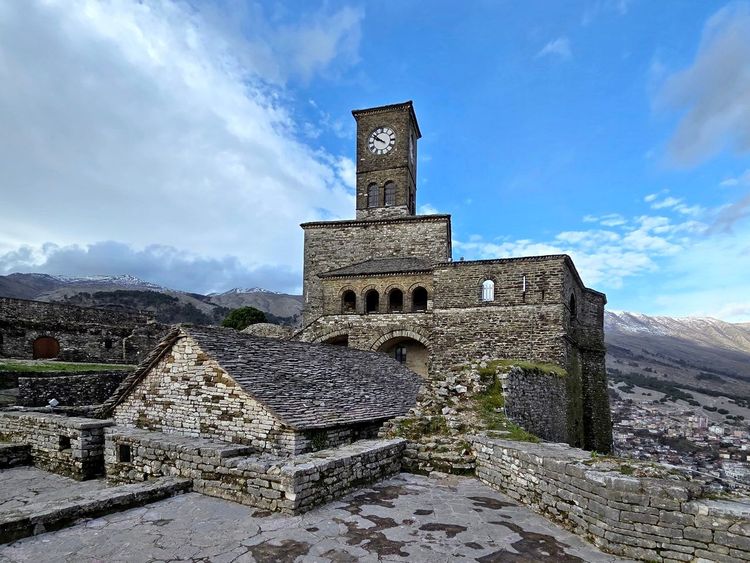
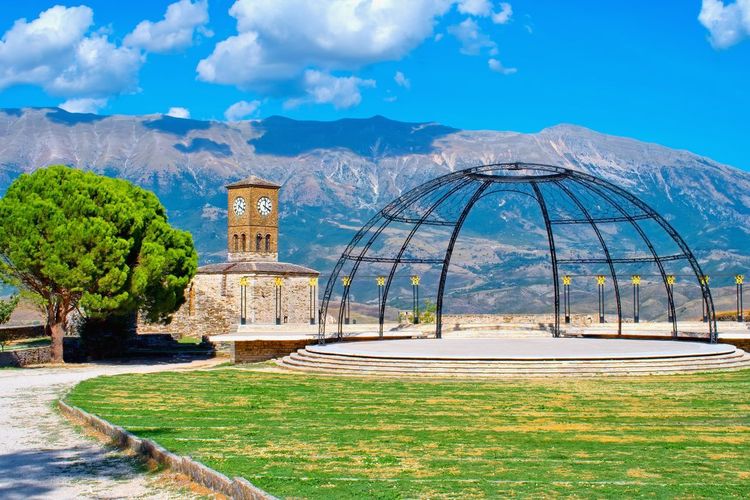
Within the castle grounds, the clock tower was added under Ali Pasha in the early 19th century. Visible from much of the old town, it serves as a landmark when you get lost in the lanes below.
Further out, the Ali Pasha Bridge (Ura e Ali Pashës, Dunavat, Gjirokastër, Albania, rated 4.6/5 on Google from 865 reviews) is one of the most pleasant walks in the town. It is not a road bridge but the last remnant of an aqueduct commissioned by Ali Pasha in the early 19th century to supply the castle's cisterns with water from Mount Sopot. Most of the structure was demolished in 1932; only this stone arch remains in the Dunavat district. Allow about thirty minutes' walk from the centre on an easy trail, and an hour round trip if you stop for photos.
Ideal Itinerary for a Two-Day Weekend
Do you have two days ahead of you? Here is a sequence that limits unnecessary climbs and saves the best light for the viewpoints.
Saturday: Castle, Tower Houses and Sunset
Start early at the castle, before the heat and the midday groups. Then walk back down through the lanes to the Zekate House, followed by the ethnographic museum. Have lunch in the bazaar, take a nap or a coffee in the shade, then stroll in the late afternoon through the Palorto district, where the view over the stone roofs is most photogenic at sunset.
Sunday: Bazaar, Ali Pasha Bridge and Excursion
In the morning, wander through the Old Bazaar as the shops open, then walk to the Ali Pasha Bridge. In the afternoon, if you have a vehicle, head to the Blue Eye spring, a little under an hour's drive away, before taking the road back. Without a car, keep this half-day for the Skenduli House and one last qifqi.
Excursions and Activities Around Gjirokastër
Most guides stop at the town gates. Yet it is from Gjirokastër that three of the finest excursions in southern Albania can be organised, each reachable in half a day to a full day. Enough to turn your weekend into a three- or four-day stay with no extra planning effort.
The Blue Eye Spring (Syri i Kaltër)
Less than an hour's drive to the south, via the Muzinë pass, the Blue Eye spring) gushes from a karst sinkhole whose bottom no one has yet measured: divers have stopped at depths beyond 50 metres. The water, a striking turquoise blue, stays around 10 °C all year round.
Note that since the site was designated a nature park, swimming in the spring is officially forbidden and checks have been stepped up. Entry costs 50 leks per person, plus a parking fee. Arrive early in the morning: coaches from Saranda arrive around midday.
Butrint, a UNESCO-Listed Ancient City
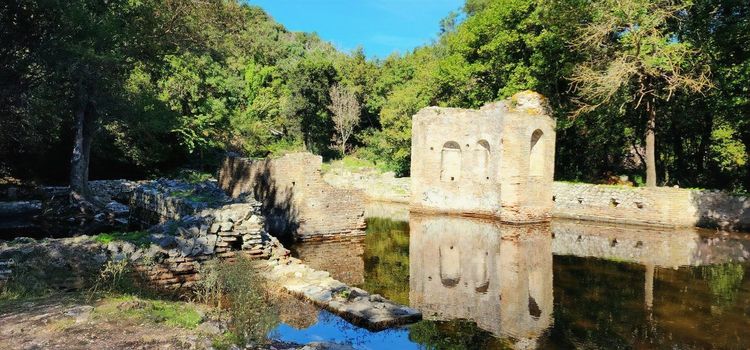
About an hour and a half's drive away, the archaeological site of Butrint layers Greek, Roman, Byzantine and then Venetian occupation on a peninsula bordered by a lagoon. There you will see an ancient theatre, Roman baths, an early Christian baptistery and a Venetian fortress guarding the entrance to the Vivari Channel.
Like Gjirokastër, Butrint is a UNESCO World Heritage Site, which makes this excursion a logical extension rather than a mere detour. To link the two without worrying about logistics, the Ryo audio-guided tour that crosses several Albanian towns triggers at each stage of the journey, from Gjirokastër all the way to Butrint.
Berat, the City of a Thousand Windows
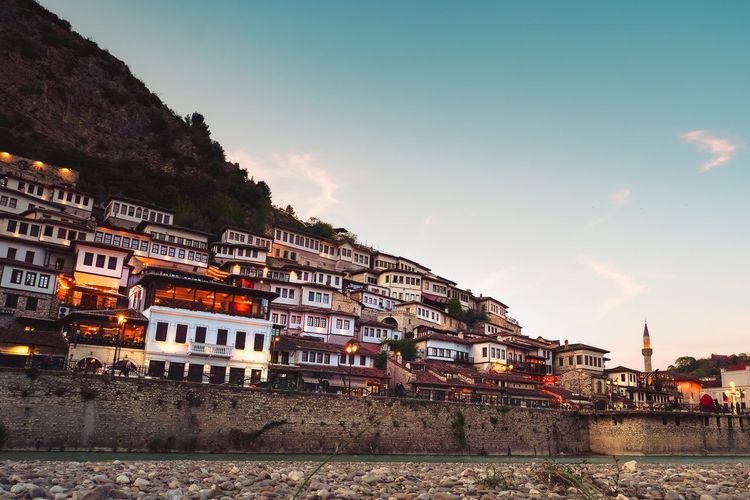
Further north, two and a half to three hours' drive away, Berat (Kalaja e Beratit, Berat, Albania, rated 4.7/5 on Google from 12,390 reviews) deserves an overnight stay if time allows. Its still-inhabited citadel, the Mangalem district with its stacked white houses and the Gorica district on the other side of the Osum River earned it the nickname “city of a thousand windows.” The Onufri Museum, housed in the Church of the Dormition inside the citadel, holds one of the finest collections of icons in the country.
Where to Stay in Gjirokastër
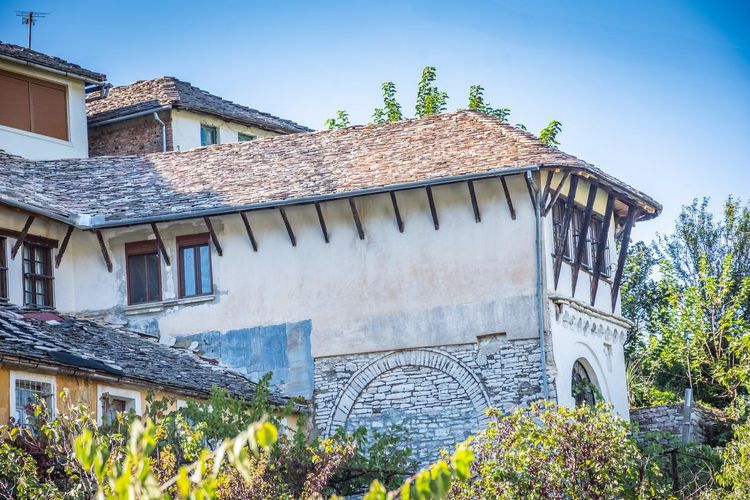
The accommodation offer remains modest in volume but is often remarkable in character: most reputable places are themselves housed in restored Ottoman tower houses.
Charming Hotels in the Ottoman Houses of the Old Bazaar
The Hotel Bebej Tradicional (Lagjja Palorto, 6001 Gjirokastër, Albania, rated 4.9/5 on Google from 288 reviews) illustrates this principle well: a family-run stone house, a stone's throw from the bazaar, furnished in the old style. You will sleep in rooms with traditional woodwork, sometimes with views over the rooftops of the historic centre.
Other Ottoman houses converted into traditional hotels can be found a few streets away, often run by families who still live in part of the building. Choosing this kind of place rather than a standard hotel in the lower town noticeably changes the experience of your stay.
Good Places to Stay for Every Budget
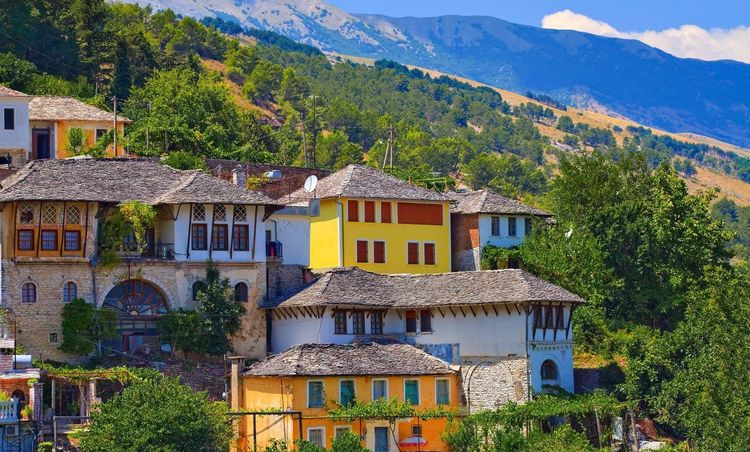
Simple guesthouses start at around 20 to 30 euros a night, often with an Albanian breakfast included. Restored traditional houses cost more like 35 to 60 euros, and remain affordable even for a short stay.
In high season, from June to August, book at least two to three weeks in advance: the historic centre's accommodation capacity is limited by the very size of the protected buildings.
How to Get to Gjirokastër and Get Around
From Tirana or the Airport
The nearest international airport is Tirana (Rinas), about three and a half to four hours' drive to the south. Buses and minibuses (furgon) leave several times a day from Tirana's south terminal, for around twelve to fifteen euros. If your trip includes the Albanian coast, the journey from Saranda takes about an hour and a quarter.
Renting a car remains the most comfortable solution for combining the town with the Blue Eye, Butrint or Berat on an extended weekend, without depending on local bus schedules.
Getting Around the Old Town on Foot
The historic centre is visited on foot: the cobbled streets, called kalldrëm, are narrow, steeply sloped and barely passable by car. Bring closed shoes with treaded soles, as stone polished by the centuries becomes slippery as soon as it is wet.
In this maze, the Ryo audio guide plays the role of a discreet companion: each commentary starts as you approach the site, without you having to check where you are at every junction.
Practical Information: Duration, Season and Trip Budget
How Long to Plan and Which Season to Choose
Two full days are enough to cover the castle, the Old Bazaar, the clock tower and the Ali Pasha Bridge without rushing. A third day lets you fit in the Blue Eye or Butrint without leaving frustrated.
May–June and September offer the most pleasant conditions for climbing up to the castle. July and August become very hot, with the stone storing heat all day. Winter remains manageable, colder but much quieter, with occasional morning mist over the valley that gives the town a very different face.
Average Budget for a Weekend
Counting accommodation, meals and local transport, a weekend in Gjirokastër for two people generally costs between 150 and 220 euros, not including flights. Entrance fees remain modest: a few hundred leks for the castle and its museums, 1,000 leks for Butrint and 50 leks at the Blue Eye. A full meal in a bazaar tavern costs around 10 to 15 euros per person.
Before you leave, download the audio-guided tour in the Ryo app: you won't have to look for a signal once you are in the lanes of the Old Bazaar.


FAQ
How long does it take to visit Gjirokastër?
Two full days are enough to see the essentials: the castle, the Old Bazaar, the clock tower and the Ali Pasha Bridge. Plan a third day if you want to add an excursion to the Blue Eye, Butrint or Berat.
Is Gjirokastër a touristy town?
Less so than the Albanian coast. Groups stop here for a few hours around midday, but the town remains lived-in and returns to its own rhythm early in the morning and in the evening.
How much does a weekend in Gjirokastër cost?
Expect to spend between 150 and 220 euros for two people, accommodation and meals included, not counting flights. It is one of the most affordable destinations in southern Albania.
Do you need to book a hotel in advance in Gjirokastër?
Yes, especially from June to August: the Ottoman houses converted into hotels have limited capacity because of their original architecture. Booking two to three weeks before departure avoids unpleasant surprises.
What is the best season to visit Gjirokastër?
May, June and September offer the most comfortable temperatures for walking the cobbled streets. July and August are very hot, while winter stays cool but is much quieter.
Can you visit Gjirokastër without a car?
The town itself can be explored entirely on foot. However, a car makes excursions to the Blue Eye, Butrint or Berat much easier; otherwise you have to work around less frequent buses.
Gjirokastër, a Weekend That Makes You Want to Return
A weekend in Gjirokastër rarely leaves anyone indifferent: the town lives up to its promise of a living museum city, without the crowds that often weigh down UNESCO-listed sites. Between the castle, the bazaar and excursions to Butrint or Berat, two to three days are enough to understand why it is still nicknamed the Silver Castle.
To connect all these places without planning an itinerary, follow the Ryo audio-guided tour through the old town: from the castle to the tower houses, each stop tells you what the stones leave unsaid.