© Shutterstock
 Votre guide Ryo
Visiting Gjirokastër in 2 Days: Complete Itinerary for the City of Grey Stone (2026)
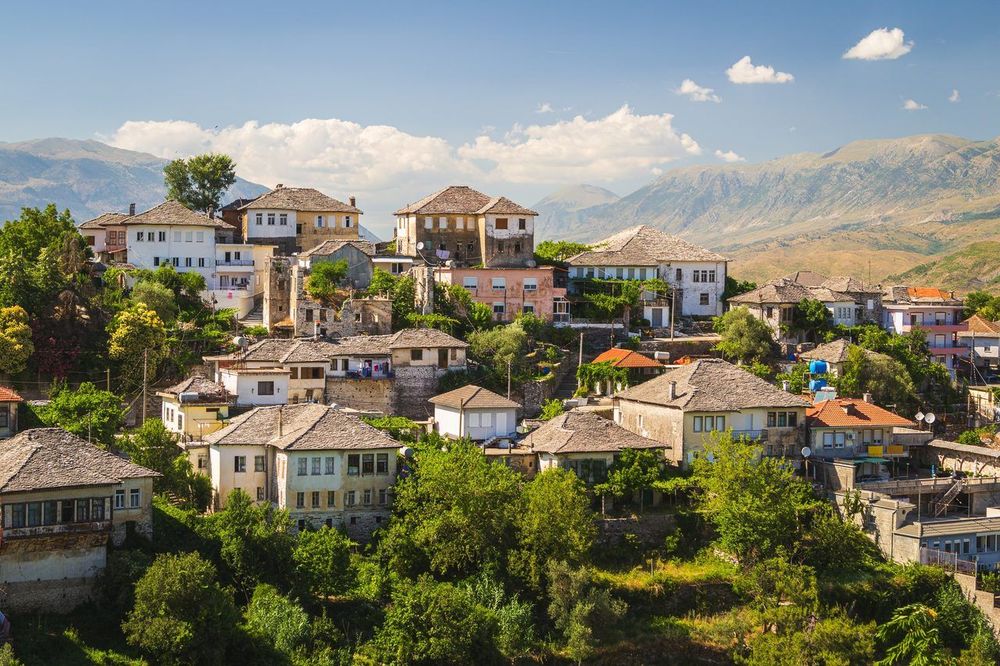
In Gjirokastër, the rooftops don't gleam — they weigh. Tens of thousands of grey stone slabs cover the Ottoman kullë clinging to the mountainside, and it is this mineral mass that gives the city its nickname of the city of stone. Here is how to visit Gjirokastër in 2 days, constantly descending and climbing back up between the citadel that dominates the Drino valley and the cobbled lanes of the Old Bazaar, a rhythm that the Ryo audio-guided tour of Gjirokastër helps you organise without stress, step by step.
In forty-eight hours, you will have time to see, inside the citadel, the wreckage of an American aircraft forced to land in Albania in 1957, to push open the door of an Ottoman house from 1811 still furnished with its cushions and painted ceilings, and to descend into an anti-atomic tunnel dug beneath the city by the communist regime. You will also taste the qifqi, a mint-flavoured rice ball typical of Gjirokastër that is rarely found elsewhere in Albania. This guide details the day-by-day itinerary, possible excursions to the Blue Eye and Berat, and everything you need to know before you go.
Gjirokastër in Brief: a UNESCO-Listed Museum City
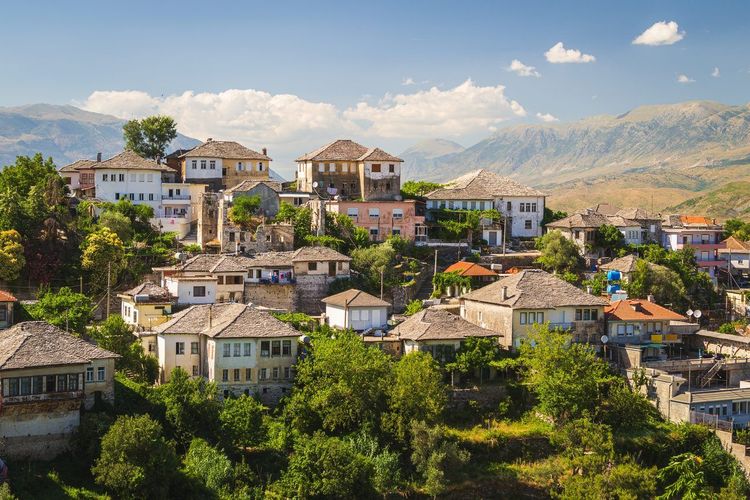
Gjirokastër rises up the slopes of Mount Gjerë, in southern Albania, about thirty kilometres from the Greek border. The city owes its inscription on the UNESCO World Heritage List in 2005 (Berat joined the same list in 2008) to a unique ensemble of fortified tower houses, the kullë, built from the 17th to the 19th century by the city's merchant families. Their thick-scaled grey stone roofs gave Gjirokastër its other name: the city of stone.
The history of the city dates back to the Middle Ages, but it was under the Ottoman Empire, between the 17th and the early 20th century, that Gjirokastër took on the appearance it is known for today: a merchant bazaar at the foot of the hill, residential districts organised around the citadel, and defensive architecture designed for local vendettas as much as for invasions. The writer Ismail Kadaré, frequently mentioned for the Nobel Prize in Literature, was born here in 1936 and set several of his novels in these alleyways, beginning with Chronicle in Stone.
Today, Gjirokastër has around 20,000 inhabitants and lives largely on heritage tourism, without having lost its character as a provincial town: morning markets, craftsmen's workshops in the bazaar, cafés where people play dominoes. The key takeaway: two days are enough to cover the citadel, the Old Bazaar, two or three house-museums and an excursion to the surroundings, provided you accept a walking pace on slopes, since the city is visited almost exclusively on foot.
How Long to Allow and Who This Stay Is For
Two days are the most rewarding format for visiting Gjirokastër: one day is just barely enough for the citadel and the bazaar, but it forces you to skip the house-museums and any excursion. Conversely, three days in the city quickly become repetitive given how compact the historic centre is. Most travellers heading north from Saranda or stopping between Tirana and Greece schedule Gjirokastër over two nights, leaving half a day's flexibility for the Blue Eye or the Ali Pasha Bridge.
This format will suit you if you enjoy Ottoman heritage and vernacular architecture, if you want to combine city sightseeing with walking in the Drino valley, or if you are travelling with children old enough to walk (cobblestones on steep slopes make pushchairs impractical). To avoid losing time navigating the bazaar's maze, the Ryo audio-guided tour links the stops in a logical order: a framework to follow on the first morning, then to adjust to your own pace.
Gjirokastër remains touristy without being overwhelmed: unlike Berat or Kotor, coach parties are few, and most visitor activity concentrates around the citadel in late morning. Outside that window, you will mainly encounter locals going about their day.
How to Get to Gjirokastër and Get Around
From Tirana, Saranda or Corfu
From Tirana, allow around 3.5 to 4 hours by road (230 km) by rental car or furgon, the minibuses that connect Albanian cities at modest prices. There is no train station or airport in Gjirokastër: the road remains the only option, via Fier, then Tepelena and the Drino valley.
From Saranda, on the Ionian coast, the journey is considerably shorter: about one hour to one hour and fifteen minutes along a winding but spectacular mountain road, with several bus departures a day in season. This is the most common option for travellers combining Albanian beaches with inland heritage.
From Corfu, in Greece, you first need to reach Saranda by ferry (30 minutes to 1h15 crossing time depending on the boat), then continue by road to Gjirokastër. Allow half a day door to door including formalities and connections. No visa is required for European citizens for a tourist stay of fewer than 90 days, and there is no time difference with France.
Getting Around on Foot in the Old Town
Once there, a car becomes a hindrance: the historic centre is effectively pedestrian-only, with steeply sloping cobbled streets and passages too narrow to drive through. Park once near your accommodation and do everything on foot. Wear closed-toe shoes with grip: the stones, polished by centuries of foot traffic, become slippery as soon as it rains.
Day 1: the Citadel of Gjirokastër and the Old Bazaar
The Citadel and Its Museums (Arms, Resistance)
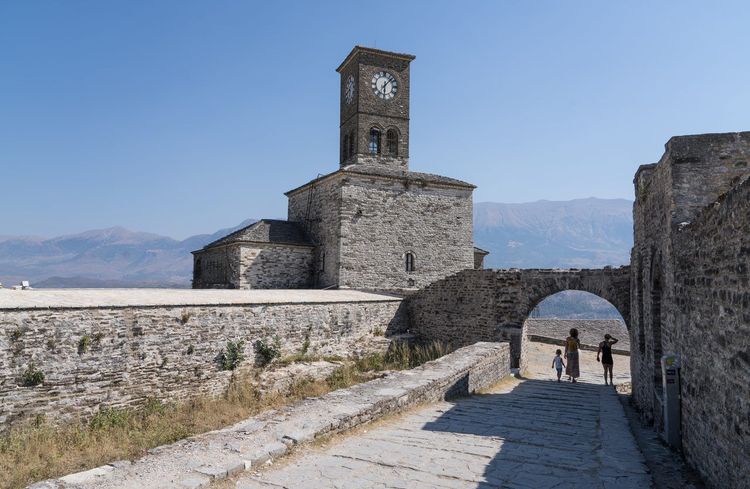
Start early, before the heat settles into the basin in which the city rests. The climb to the Citadel of Gjirokastër takes about twenty minutes from the bazaar, along a cobbled street lined with Ottoman houses clinging to the slope.
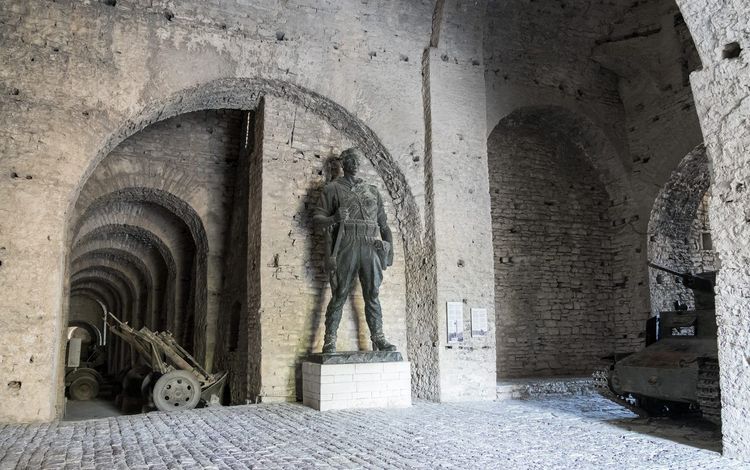
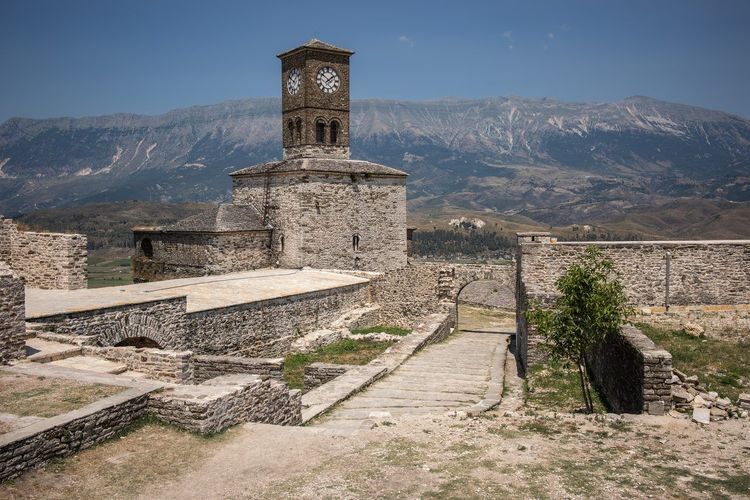
The fortress, enlarged by Ali Pasha of Tepelena in the early 19th century and later turned into a prison under King Zog in the 1930s, stretches for several hundred metres and dominates the entire Drino valley. The Arms Museum, housed in vaulted galleries, traces the country's military history up to the communist period, with a row of captured cannons and tanks. Perched on the ramparts is the most photographed exhibit: a Lockheed T-33 of the US Air Force forced to land near Tirana on 23 December 1957. Washington spoke of a pilot who had strayed in fog; the regime claimed it was a spy plane intercepted by its MiGs. The aircraft has been on display here since 1969 as a propaganda trophy.
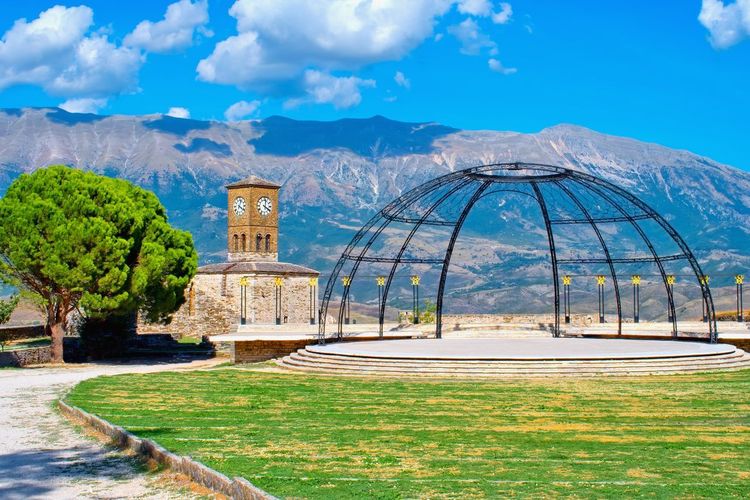
Inside the ramparts, the National Folk Festival is also held approximately every five years — one of the Balkans' great gatherings of traditional music. Even outside festival time, the open-air stage is worth seeing for its bird's-eye view over the stone rooftops.
The Old Bazaar and the Grand Bazaar Mosque
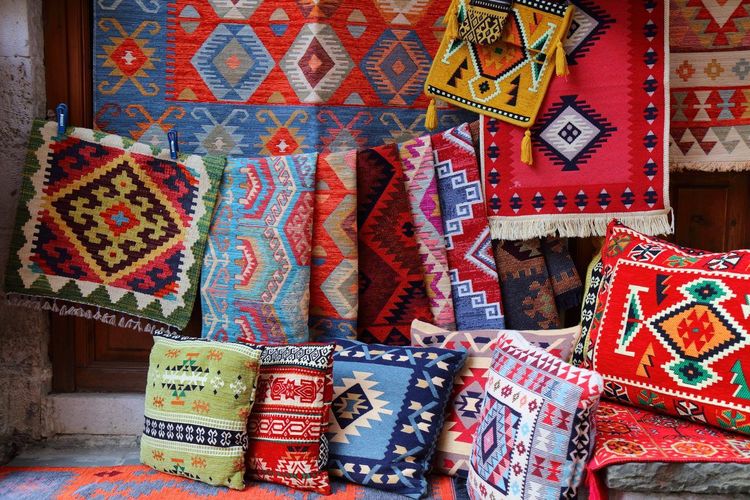
Coming back down from the citadel, you emerge directly onto the Old Bazaar, the city's commercial heart since the 17th century.
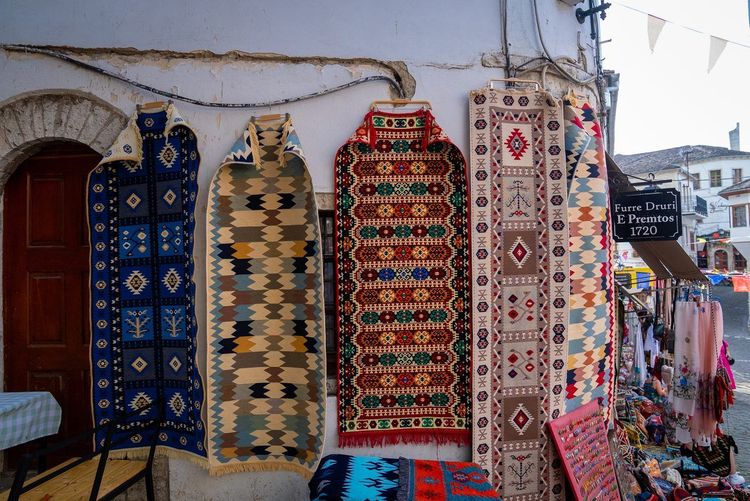
The shops, often run by the same family for several generations, sell crafts, hand-woven rugs and souvenirs in stone buildings with low arches typical of Ottoman merchant architecture. Wander without a fixed route: it is by zigzagging between the stalls that you discover the coppersmithing and embroidery workshops.
At the centre of the district stands the Grand Bazaar Mosque (Sheshi i Çerçizit, 6001 Gjirokastër, Albania, rated 4.7/5 on Google with 23 reviews), also known as the Memi Bey Mosque, built in 1757 after a fire that had devastated the bazaar.
Under communism, which closed the country's places of worship from 1967, it escaped destruction thanks to its listing as a cultural monument in 1973, and even served as a training hall for circus acrobats. Its minaret, still intact, is visible from the heights, and the mosque has since regained its religious function.
The Clock Tower and the Viewpoints
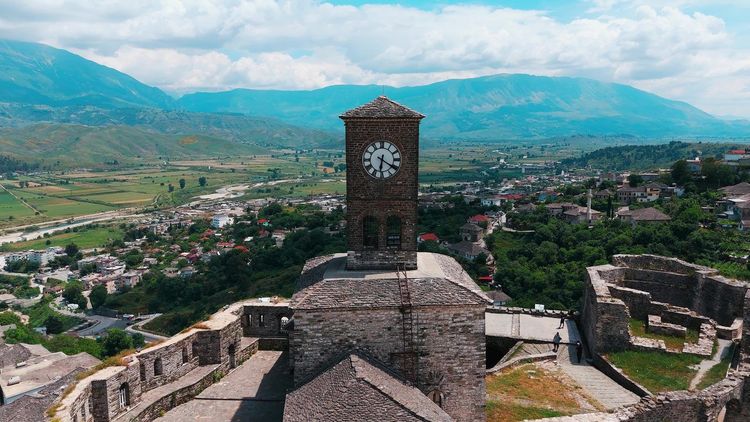
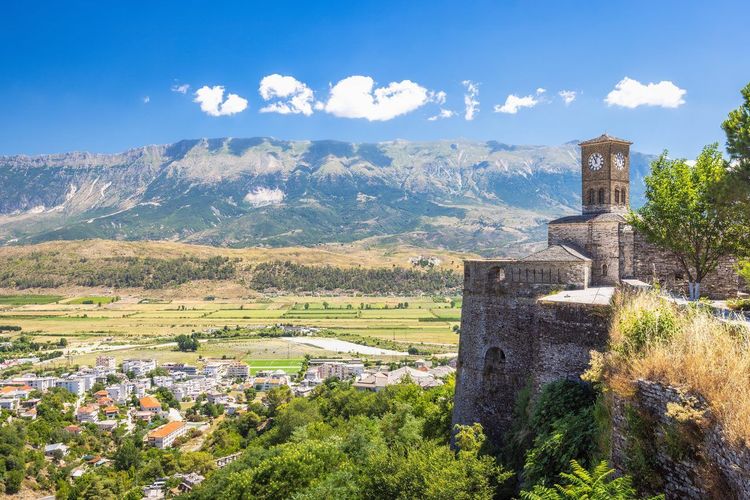
Head back up to the Clock Tower, Kulla e Sahatit, incorporated into the citadel's ramparts in the early 19th century. Its square silhouette is visible from everywhere in the city.
The area around the tower and the walkways along the ramparts offer one of the best panoramas at the end of the day, when the raking light brings out the relief of the stone rooftops. If you want to understand what you are looking at without juggling a paper guide, the Ryo audio-guided tour of Gjirokastër connects the citadel and the bazaar, commenting on the Ottoman architecture at each stop.
Day 2: Ottoman House-Museums and Historic Neighbourhoods
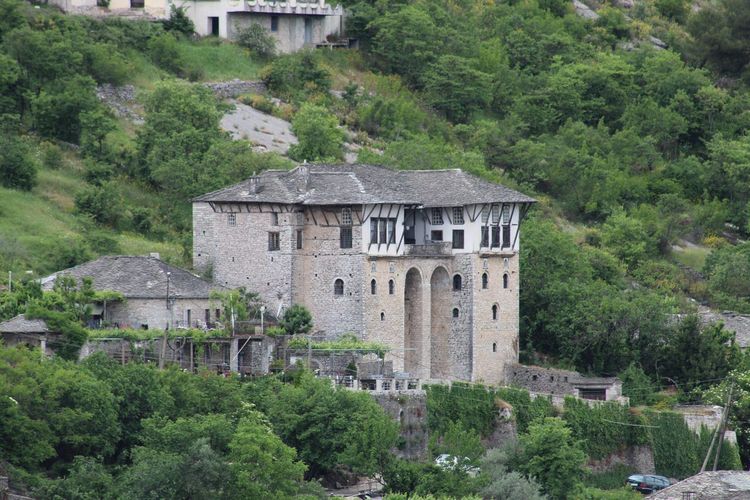
The Zekate House and the Skenduli House
The second day is devoted to interiors — the tower houses that earned Gjirokastër its UNESCO listing. The Zekate House, built in 1811–1812 for the Zeko family, is the most accomplished example.
Its twin towers linked by an arcaded gallery, its carved wooden ceilings and its grand reception hall on the top floor give a concrete idea of the standard of living enjoyed by the great Ottoman families. Note the defensive layout: a windowless ground floor reserved for storage and a cistern, upper floors pierced with arrow slits, a single entrance lockable from inside. The climb from the bazaar is steep, but the view from the gallery alone justifies it.
In the neighbouring district of Palorto, the Skenduli House (Lagjja Palorto, 6001 Gjirokastër, Albania, rated 4.5/5 on Google with 908 reviews) dates back to the early 18th century and was remodelled in the 19th.
Returned to the Skenduli family after the fall of the regime, it is often presented by one of its members. Less restored than the Zekate House, it retains a rawer charm: carved fireplaces, a private hammam, winter and summer rooms, and a multitude of wall cupboards where people sometimes slept.
The Palorto and Dunavat Neighbourhoods
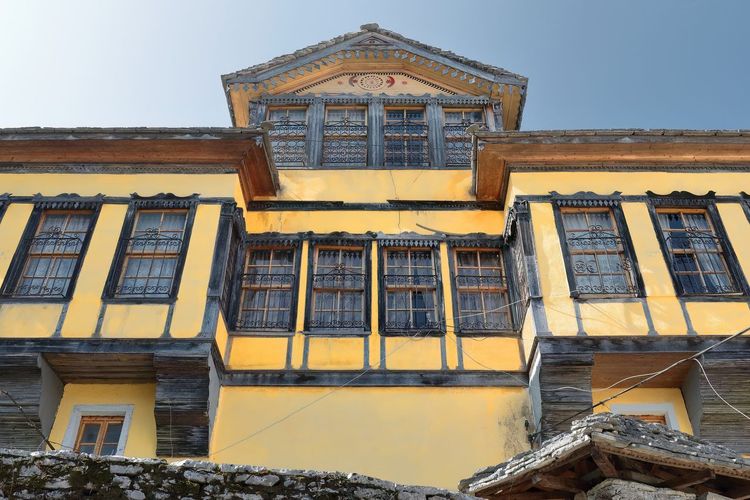
Between the two house-museums, get lost in the Palorto and Dunavat neighbourhoods, among the best-preserved residential areas in the city. Some alleyways are so narrow that two people can barely pass each other, lined with dry-stone walls and studded gates.
This is where the Ottoman urban fabric is most legible, far from the bustle of the bazaar: walled gardens, fountains, fig trees spilling over low walls. Many houses are still inhabited, which gives the neighbourhood an authenticity that some entirely tourist-oriented museum cities have lost.
The Cold War Tunnel and the Manalat Neighbourhood
End the day with a sharp contrast: the Cold War Tunnel, an anti-atomic shelter dug beneath the citadel in the 1970s on the orders of the Enver Hoxha regime — himself a native of Gjirokastër — to shelter local Party officials in the event of an attack.
Open to the public since the mid-2010s, it is visited with a guide through a labyrinth of corridors and dozens of rooms: offices, dormitories, a meeting room, original ventilation equipment. A striking counterpoint to the refined interiors visited earlier that morning.
Heading back up towards the Manalat neighbourhood, on the other slope, you discover another side of Gjirokastër: quiet alleyways, open views of the citadel, traditional houses undergoing restoration. For this second day, keep the app open: the Ryo audio-guided tour slips in a local anecdote at every stop in the old town, turning a simple stroll into a fully documented visit.
Excursions and Surroundings of Gjirokastër
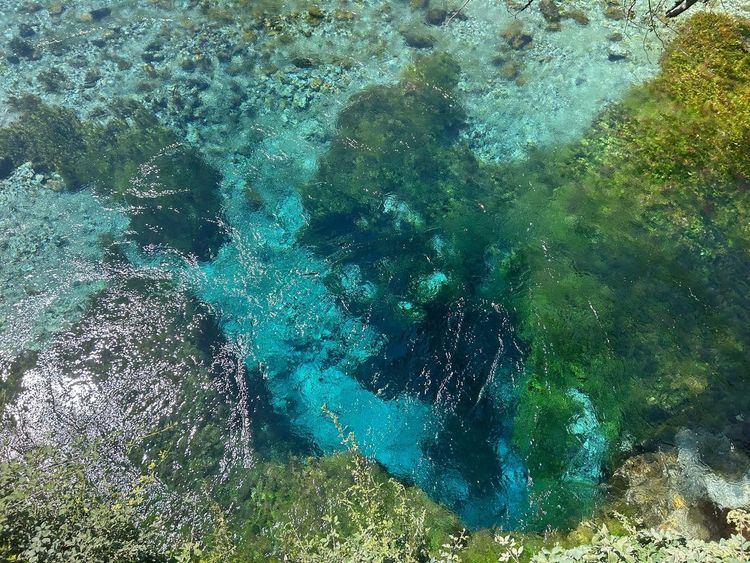
The Blue Eye Spring and the Ali Pasha Bridge
If you have an extra half-day, two excursions stand out. The Blue Eye Spring, Syri i Kaltër in Albanian, is about 45 minutes by road to the south-west, on the road to Saranda.
This intensely blue karstic resurgence, whose depth has never been measured beyond 50 metres, feeds the Bistrica river at a constant temperature of around 10 degrees. Don't pack your swimsuit: swimming in the spring is now banned, as the site is a protected and monitored natural monument. Come early in the morning to avoid the midday crowds.
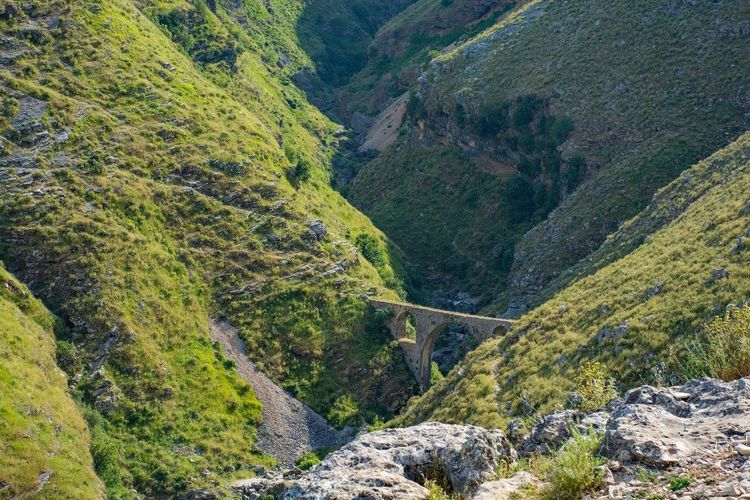
Even closer, the Ali Pasha Bridge (Dunavat, 6001 Gjirokastër, Albania, rated 4.6/5 on Google with 828 reviews) can be reached on foot from the city. It is in fact a stone aqueduct bridge, a remnant of the network built in the early 19th century by Ali Pasha of Tepelena to supply the citadel's cisterns with water from the surrounding mountains.
Allow about 30 minutes each way from the Dunavat neighbourhood, along an easy path with views over the valley: an ideal outing for late afternoon.
The Drino Valley and the Natural Surroundings
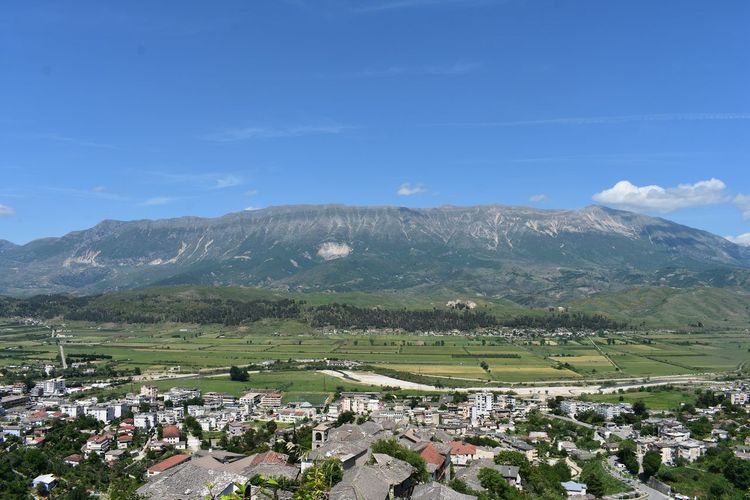
The Drino valley, visible from the ramparts, stretches between the Greek border and Tepelena, dotted with olive groves and little-visited farming villages. On the opposite slope, the villages of Lunxhëri and the Lengarica canyon, near Përmet, attract hikers. More demanding nature lovers can push on to the Bredhi i Hotovës national park, above Përmet, known for its fir forests and quiet trails, 1.5 to 2 hours away by road.
These surroundings are best explored by rental car, as public transport schedules are too infrequent for a day trip.
Continuing to Berat, Saranda or Korçë
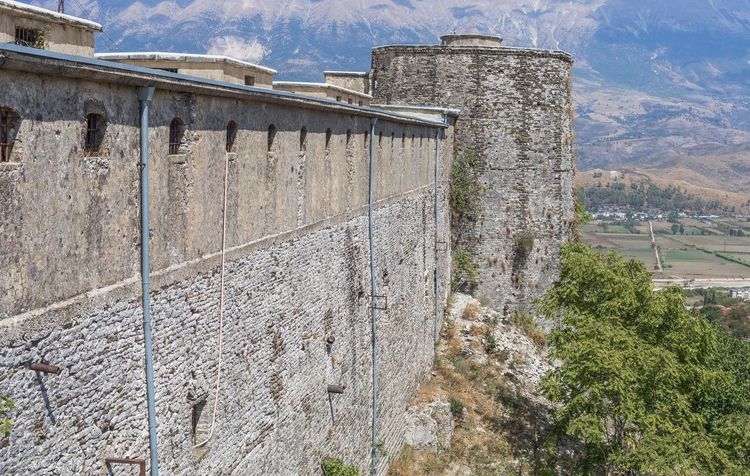
If you have more than two days, Gjirokastër lends itself well to extending your trip. Berat, the country's other UNESCO city, can be reached in two and a half to three hours by road heading north. Saranda and its Ionian beaches complete the itinerary to the south, while Korçë, further east near the Greek border, appeals with its restored old bazaar and its Cathedral of the Resurrection. To connect these stages, the Ryo audio-guided tour across Albania adds audio stops in the south of the country, useful if you extend your stay beyond the two-day base.
Gjirokastër or Berat: Which Should You Prioritise
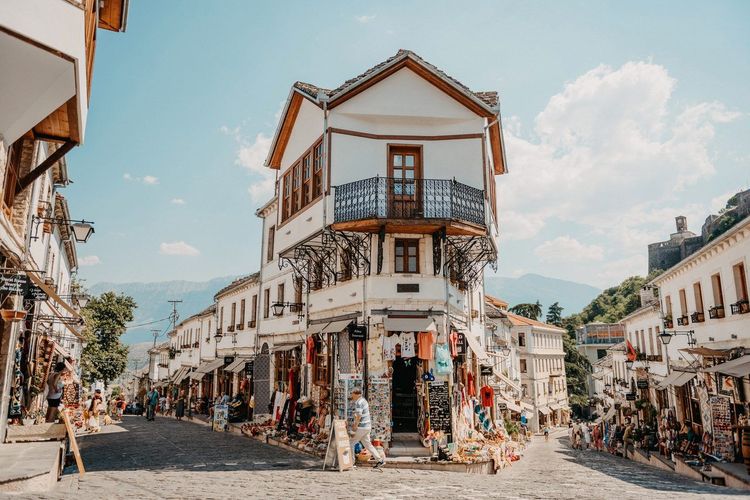
When time is short for visiting both of southern Albania's museum cities, the question often comes up. Berat, nicknamed the city of a thousand windows for its white houses stacked up the hillside, has a brighter atmosphere, with a more extensive historic centre and a greater choice of dining options.
Gjirokastër, more austere with its grey stone, stands out for a considerably more imposing citadel and house-museums of great architectural interest, notably the Zekate House. For a single day, Berat is easier to visit thanks to its less steep terrain. For two days or more, Gjirokastër rewards a slower pace more richly, with its residential neighbourhoods to explore without any particular plan.
If your itinerary allows, the two cities complement each other very well over a five to six-day trip in southern Albania.
Where to Stay in Gjirokastër
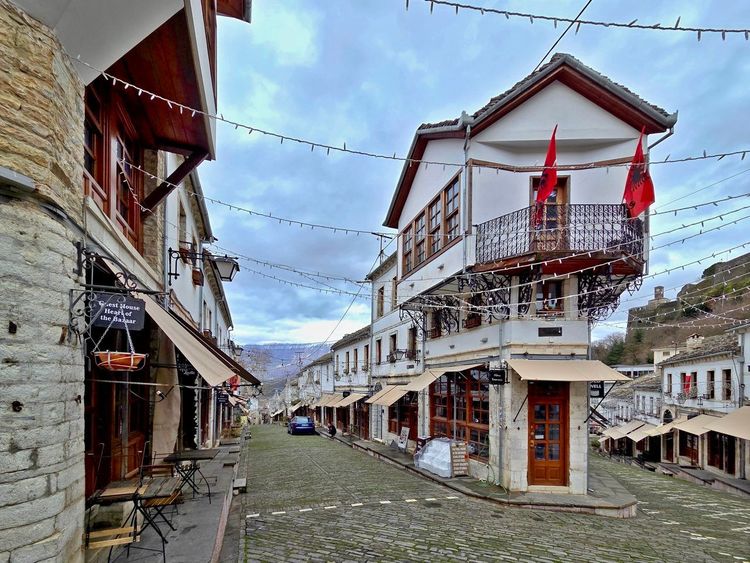
Staying in the Old Town (Ottoman Guesthouses)
Sleeping in an Ottoman house converted into a guesthouse remains the most memorable option: wooden ceilings, stone stairs worn by generations of footsteps and breakfast served on a terrace overlooking the grey rooftops. Comfort can be basic at times (supplementary heating in winter, cramped bathrooms in the older properties), but the immersion more than makes up for it.
These accommodations are concentrated around the bazaar and on the first slopes leading to the citadel, within walking distance of all the Day 1 sites.
Staying near the Modern Centre
Further down, in the new town, modern hotels offer a better comfort-to-price ratio, with parking and air-conditioned rooms — a real advantage in summer. The downside: you have to walk back up to the old town each day, or take a taxi in the evening. For a two-day stay focused on heritage, prioritise immediate proximity to the bazaar, even if it means sacrificing a little comfort.
Where to Eat: Culinary Specialities of Gjirokastër
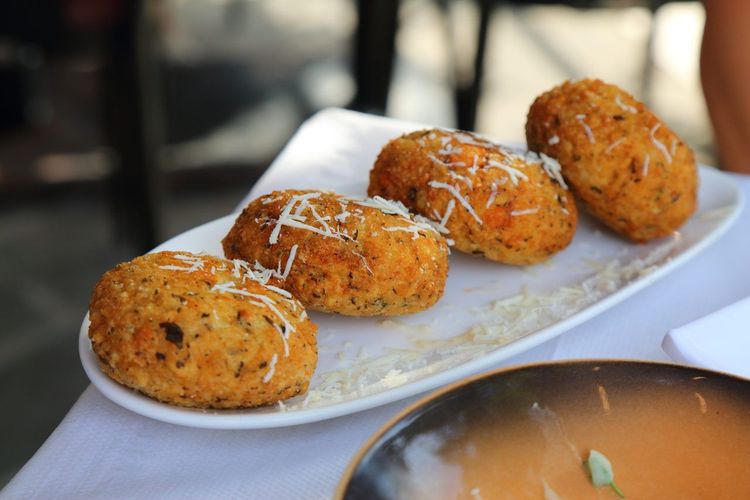
Gjirokastër's cuisine is distinctly different from the rest of Albania. The qifqi, a rice ball bound with egg, flavoured with mint and browned in a dimpled pan, is the city's signature speciality: you will find it in almost every traditional restaurant in the bazaar, served as a starter or a light dish.
Another must-try is the oshaf, a dessert made from dried figs and ewe's milk, long reserved for special occasions. On the savoury side, try the homemade byrek and grilled meats served with local sheep's cheese.
Around 8 to 12 euros is enough for a full meal in a restaurant set up in a former merchant's house, including Turkish coffee. Craftsmen in the bazaar also sell homemade raki and mountain honey — two souvenirs that slip easily into a suitcase.
Budget and Activity Prices
Visiting Gjirokastër is light on the travel budget. Entry to the citadel costs 400 lekë (around 4 euros), with an additional charge of around 200 lekë for the museums. The Zekate House charges around 300 lekë, the Skenduli House a comparable amount, payable in cash. The Cold War Tunnel can be visited for around 200 lekë, again in cash.
On top of entry fees, add transport: a bus or furgon journey to Saranda costs just a few euros, a little more for Tirana. For the Blue Eye, access to the site is paid for vehicles, and an organised excursion from Gjirokastër generally costs between 15 and 30 euros per person — a practical option if you don't have a car.
In total, a full day in Gjirokastër, including guesthouse accommodation and meals, rarely comes to more than 40 to 50 euros per person, placing the city among the most affordable destinations in the Balkans.
Free Activities and Tips
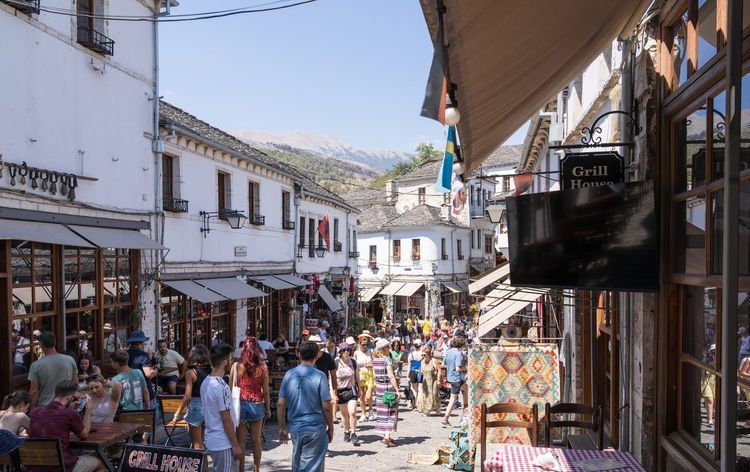
Not every experience in Gjirokastër comes with a price tag. Strolling through the streets of the Old Bazaar is free, and it is often there that the finest discovery of the city is made: workshops open to the street, the smell of Turkish coffee, conversations you don't understand but sense are warm.
The walk to the Ali Pasha Bridge and wandering through Palorto, Dunavat or Manalat are also free. Many travellers underestimate the time needed simply to sit on a low wall and watch the Drino valley: set aside at least an hour across the two days for just that.
When to Go: Climate and Best Season
Gjirokastër experiences a Mediterranean climate amplified by its position at the foot of the mountain: summers are very hot, with temperatures regularly exceeding 35 degrees in July and August, made more oppressive by the heat reflected off the stone. Spring, from April to June, offers the best balance: mild temperatures, still-green vegetation in the valley and moderate crowds.
Autumn, from September to October, is an equally valid alternative, with photogenic light on the rooftops at the end of the day. Winter remains manageable but cool: snow sometimes falls on the surrounding peaks between December and February, and some house-museums reduce their opening hours outside the season.
Adapting the Itinerary to the Weather
A two-day programme must remain flexible in the face of weather that can be changeable in spring as well as autumn. In the event of rain, group the indoor visits: the Arms Museum, the Zekate House, the Skenduli House and the Cold War Tunnel can all be visited under cover, making it easy to postpone the outdoor sites without any loss.
Conversely, make the most of clear spells for the panoramas from the ramparts and for excursions to the Blue Eye or the Ali Pasha Bridge, two sites that lose much of their appeal under a grey sky. If rain sets in, group your visits by geographical proximity rather than by theme, to minimise climbing and descending on slippery cobblestones.
Practical Tips and Advice for Visiting the City
A few simple habits make the visit considerably easier. Wear walking shoes with thick soles: Gjirokastër's cobblestones become treacherous when wet. The citadel generally closes in the late afternoon and some sites are shut on Mondays: check opening times the evening before with your accommodation.
In summer, avoid the 12pm–3pm slot for climbing to the citadel, as the heat stored in the stone makes the effort unpleasant. Always keep lekë in cash: museum entry fees and many bazaar restaurants do not accept card payments.
FAQ
How much time do you need to visit Gjirokastër?
Two full days are enough to cover the citadel, the Old Bazaar, the main house-museums and a trip to the surroundings. One day is possible but forces you to skip the house-museums.
How do you get to Gjirokastër from Tirana or Saranda?
From Tirana, allow 3.5 to 4 hours by car or bus. From Saranda, the journey takes about one hour along a mountain road. There is no train station or airport in Gjirokastër.
Gjirokastër or Berat: which should you prioritise?
For a single day, Berat is easier to visit thanks to its less steep terrain. For two days or more, Gjirokastër rewards you more thanks to its citadel and house-museums.
What budget should you plan for two days in Gjirokastër?
Budget around 40 to 50 euros per person per day, including guesthouse accommodation and meals, adding 15 to 30 euros for an excursion to the Blue Eye.
What is the best time to visit Gjirokastër?
Spring (April to June) and early autumn (September–October) offer the best balance between mild temperatures and low crowds, avoiding the heat of July and August.
Is Gjirokastër a touristy and safe city?
Gjirokastër is a safe city, less busy than Berat or Kotor, with visitor numbers concentrated mainly around the citadel in late morning.
Conclusion: Two Days for the City of Stone
Two days are enough to understand why Gjirokastër holds a unique place among the Balkans' museum cities: neither frozen in a postcard, nor surrendered to mass tourism, it retains that blend of remarkable architecture and everyday Albanian life that more popular destinations lack. Whether you come for the citadel, the Ottoman houses or simply to wander through the bazaar, take the time to get deliberately lost in Palorto or Dunavat.
To make the most of these two days without losing your way in the alleyways, the Ryo audio-guided tour of Gjirokastër can be followed at your own pace, with no booking or fixed schedule required: a simple way to turn a list of monuments into the city's full story.