© Shutterstock
 Votre guide Ryo
Christmas Markets in Salzburg 2026: The Complete Guide, from Domplatz to Hellbrunn
From mid-November, the scent of cinnamon and mulled wine fills the Residenzplatz well before the first garlands light up on the fir trees of the old town. Christmas markets in Salzburg almost always begin there, between the Baroque cathedral and the Archbishop's Residence, and most visitors don't realise that there are at least six others scattered across the city and its surroundings. To link the cathedral, the Residenzplatz and the fortress without losing an hour looking for your way between two Baroque alleys, the Ryo audio-guided tour of Salzburg covers precisely this route, headphones on and guide in your pocket.
Behind the postcard, the city hides a few surprises that few guides really detail. One market sets up in the courtyard of a Baroque palace where the famous water games that drenched guests in the 17th century still stand, and that market charges admission. An Advent concert is given every evening in the halls of a fortress perched more than 120 metres above the rooftops of the city. Each cup of mulled wine is paid for with a deposit that almost no stall explains to French-speaking visitors. And in Grödig, at the foot of the Untersberg, a small church market opens only at weekends, attended mostly by local Salzburg families. Between Austrian crafts, a Krampus parade that terrifies well-behaved children and an Advent cruise on the Wolfgangsee, here is what you need to organise a stay that goes beyond the photo in front of the Domplatz Christmas tree. You will also find, section after section, answers to practical questions: 2026 dates, opening hours, the real budget for a day and crowd levels by day of the week.
Christmas Markets in the Old Town: Domplatz, Residenzplatz and Mirabellplatz
Three markets are held within a few minutes' walk of each other in the historic centre, and it is almost always with them that an Advent visit to Salzburg begins. Two of them almost touch each other, while the third has a distinctly more family-friendly feel. Understanding how they fit together saves you from walking in circles for an hour in alleys that all look a little alike at night.
Christkindlmarkt am Domplatz and the Residenzplatz, at the Foot of the Cathedral
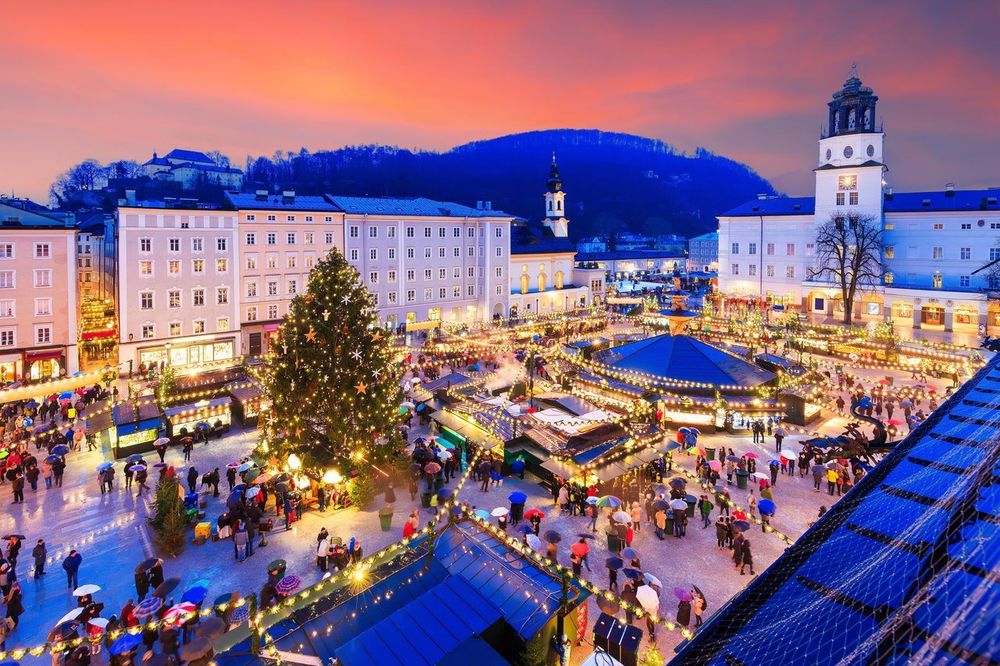
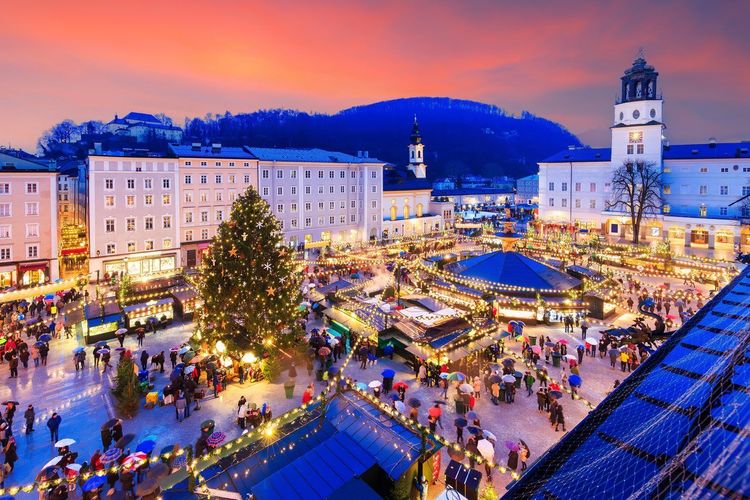
The Christkindlmarkt am Domplatz has occupied the square in its current form since 1974, squeezed between the cathedral façade and the arcades of the Archbishop's Residence, with an overflow onto part of the Kapitelplatz. About a hundred wooden chalets line up here, selling blown-glass baubles, candles, carved nativity scenes and decorations made of braided straw. The lights come on in the late afternoon, at the precise moment when the cold pushes everyone towards the first mulled wine stalls.
Its roots are much older than 1974: as far back as the late Middle Ages, a December market, the Tandlmarkt, was already held in the heart of the city. Today, the same families of craftspeople often return to the same spot, generation after generation: a glassblower shapes baubles and stars before the eyes of passers-by, while his neighbours sell gingerbread and candied fruit in dark chocolate. The scene changes little from one year to the next, and that is precisely what makes it a ritual for locals as much as for visitors. On Advent Sundays, the Salzburg Christkind, a winged figure dressed in white, appears among the chalets, and brass ensembles play from the heights surrounding the square.
Beyond the market itself, the cathedral that overlooks it hosts concerts or sung vespers on certain Advent evenings: a good way to warm up for a few minutes between two stalls, and to hear its Baroque domes resonate in a way you can't in the middle of the tourist summer.
The neighbouring Residenzplatz extends the atmosphere without a clear break: its large Baroque fountain, switched off for the winter, serves as a landmark in the middle of a second group of chalets, often accompanied by a brass band or a choir at the end of the day. Many visitors cross both markets without realising they have changed squares, which makes this the nerve centre of Salzburg's Advent.
Come in late morning or just after opening if you want to photograph the chalets without the evening crowds: between 5 pm and 8 pm, the passage between the two squares becomes packed, especially at weekends and in the week before Christmas. If you arrive by train, allow about twenty minutes' walk from the station to the first chalet, or a few bus stops.
Christkindlmarkt Mirabellplatz, the Family Market at the Foot of the Gardens
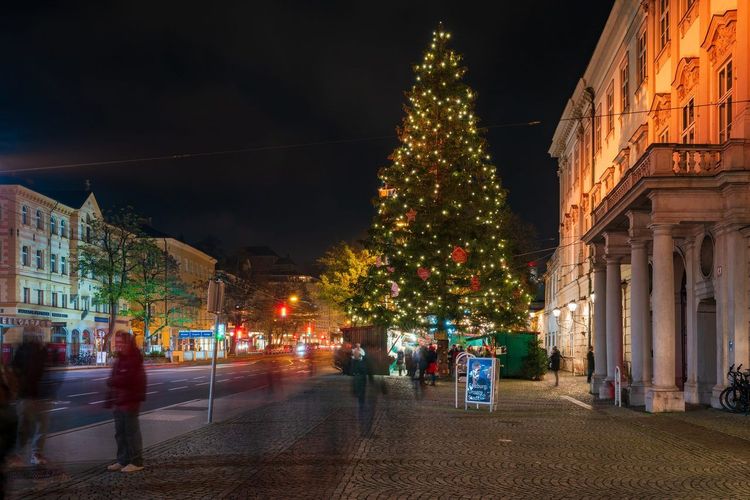
Ten minutes' walk from there, on the other bank of the Salzach, the Mirabellplatz market (Mirabellplatz, 5020 Salzburg, rated 4.5/5 on Google from 1.1K reviews) changes tone. Set up in front of Mirabell Palace, it focuses on children's stalls and treats rather than high-end crafts, and stays open until 31 December.
This is the market to choose with young children: less dense than Domplatz, easier to get around with a pushchair, and a stone's throw from the gardens themselves, pleasant to walk through even in winter when the flowerbeds sleep under the snow. The Pegasus fountain, just behind, also offers one of the best viewpoints over the fortress overlooking the city, especially at sunset.
The stalls here sell fewer rare crafts and more simple little decorations and sweets designed for children: candy apples, toasted marshmallows, small star-shaped biscuits. You generally spend less time here than at Domplatz, which makes it a logical stop in late morning before heading back up to the historic centre for the afternoon.
The Ryo audio guide stops in front of the cathedral and on the Residenzplatz: a way to combine Baroque heritage and market atmosphere without having to choose between the two, at your own pace with the Ryo audio guide.
The Enchanting Advent Market at Hellbrunn Palace
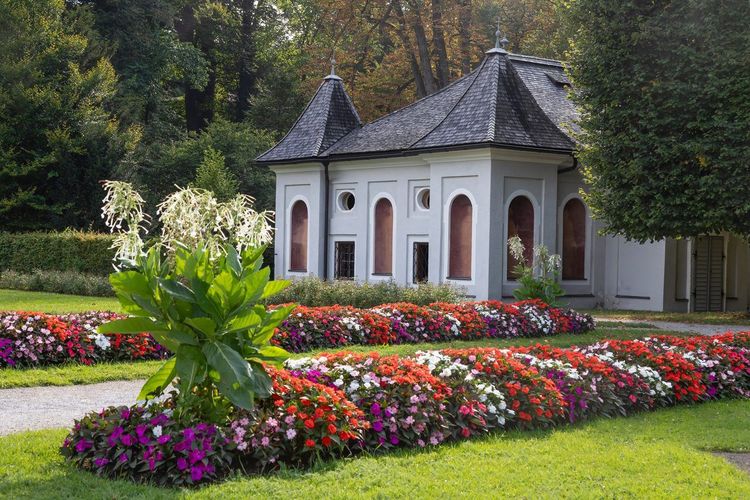
About twenty minutes from the centre, the atmosphere changes radically: you leave the cobbled squares of the old town for the courtyard of a Baroque palace, where the winter silence makes the experience more intimate than at Domplatz.
Hellbruner Adventzauber: The Family-Friendly, Magical Atmosphere of the Palace
The Hellbrunn Palace is best known, the rest of the year, for its Wasserspiele, water games hidden in the gardens that drenched the guests of Prince-Archbishop Markus Sittikus by surprise in the 17th century. In winter, with the fountains turned off, the Advent market takes over under the name Hellbruner Adventzauber: dozens of craft stalls set up in the main courtyard and nearby paths, beneath hundreds of decorated fir trees, while the windows of the façade are transformed into an immense Advent calendar.
The atmosphere here is much more subdued than in the centre: fewer people, paths lined with fir trees, and a Baroque façade that serves as a backdrop at nightfall. It is the kind of market where you happily stay an hour longer than planned, glass of Glühwein in hand. On Wednesdays, chamber music is played in the orangery, and at weekends bands perform live.
Families find a Christmas world for children: a little train, an enclosure of animals to pet, bread toasted over the scouts' campfire, face painting, Santa's post office and a fairy-tale-themed treasure hunt. As for the stalls, ceramics, weaving and handmade jewellery dominate, with prices slightly higher than in town.
Note that, unlike the markets in the centre, admission is paid: 8 euros, including a hot drink, free for children under 6, from 7 pm and all day on 24 December. In 2026, the market is open from 19 November to 24 December, from 1 pm to 8 pm Tuesday to Friday and from 10 am to 8 pm at weekends, but is closed on Mondays (except 21 December), a detail that catches out visitors every year. Take bus 25 from the centre, about twenty minutes' journey, or a short drive with parking on site.
Grödig, the Discreet Market on the Outskirts of Salzburg
Even further from the centre, at the foot of the Untersberg, the Adventmarkt St. Leonhard (Gartenauerstraße 8, 5083 Grödig, rated 4.8/5 on Google from 16 reviews) in Grödig has been set up next to the pilgrimage church of St. Leonhard since 1973, largely ignored by French-language guides.
It opens only on Advent Saturdays (2 pm to 7 pm), Sundays and 8 December (11 am to 7 pm), from 28 November to 20 December 2026. If you want to see how Salzburgers themselves experience Advent, away from the crowds of Domplatz, it is worth the detour: craftspeople from Austria, Bavaria and South Tyrol, carved nativity scenes, glass and straw decorations, ceramics, roasted chestnuts, and moments of reflection organised inside the church.
To combine Domplatz and Hellbrunn in a single day, the simplest approach remains the following: morning in the old town, a light lunch around midday, then a bus to Hellbrunn in mid-afternoon to enjoy the fading light from 4:30 pm, and why not stay after 7 pm, when admission becomes free. By bus, allow a margin on the return: in the evening, line 25 fills quickly with visitors leaving Hellbrunn at the same time, and the stops in the centre are stormed around 8 pm. Another option is to reverse the order: Hellbrunn in the early afternoon, when crowds remain moderate, then back to the old town for the evening, when the chalets of Domplatz and the Residenzplatz shine in all their glory and the brass bands play on the square. If you prefer to concentrate on the historic centre rather than multiply journeys, reserve your morning for the Ryo audio stops around the cathedral and the fortress; keep Hellbrunn for a separate outing rather than adding it in a rush at the end of the day.
The Advent Concert at Hohensalzburg Fortress
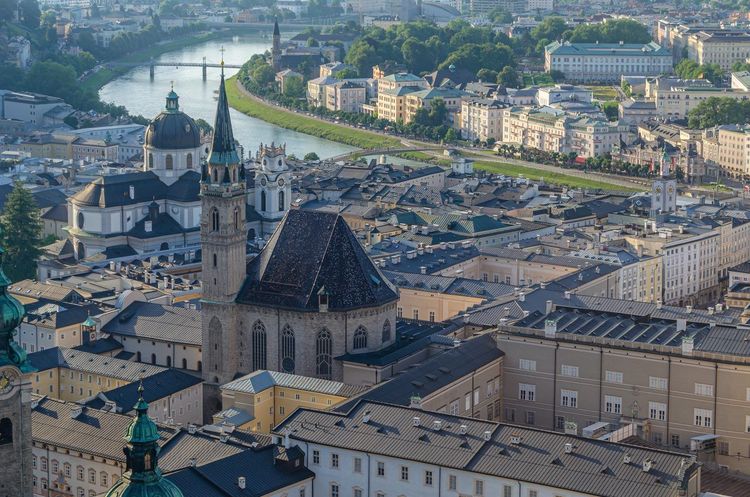
Above the old town, the Hohensalzburg Fortress (Mönchsberg 34, 5020 Salzburg, rated 4.6/5 on Google from 55,051 reviews) hosts a series of concerts every Advent evening in its historic halls, far from the noise of the markets below.
You get up by funicular (Festungsbahn), departing from the Festungsgasse, a few minutes' ride for a panorama that completely changes the perspective on the illuminated city. In 2026, concerts take place every day from 21 November to 23 December at 8 pm, in the Golden Hall or the Castle Hall, decorated for the occasion. A string ensemble blends works by Mozart with traditional Advent music from the Salzburg countryside.
You can also dine before the concert, around 6 pm, at the fortress's panoramic restaurant. Book your seats in advance: performances fill up quickly, especially the last weekend before Christmas. Dress warmly even for the ascent; the wind on the ramparts easily drops below zero in the evening. The Ryo audio-guided tour also climbs up to the fortress and tells you its history, so you arrive at the concert knowing why the prince-archbishops fortified this rock so heavily.
Crafts, Glühwein and Treats: What to See and Buy at the Markets
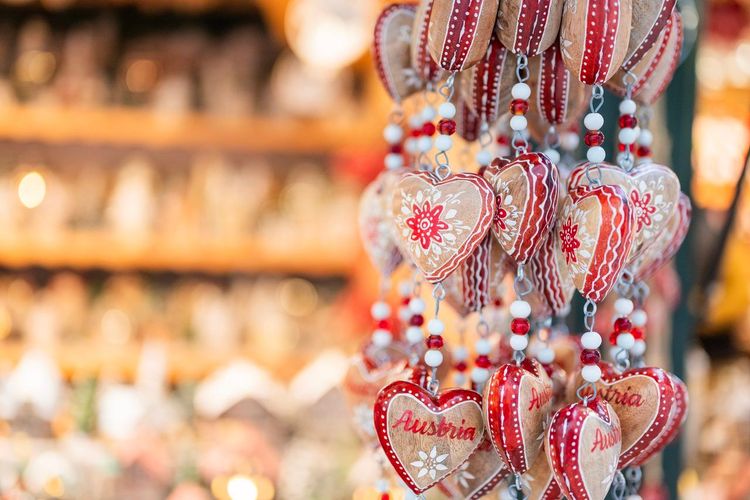
Salzburg's markets sell broadly the same categories of products, but quality and prices vary greatly from one stall to another, and from one market to another.
Typical Crafts and Decorations to Bring Home
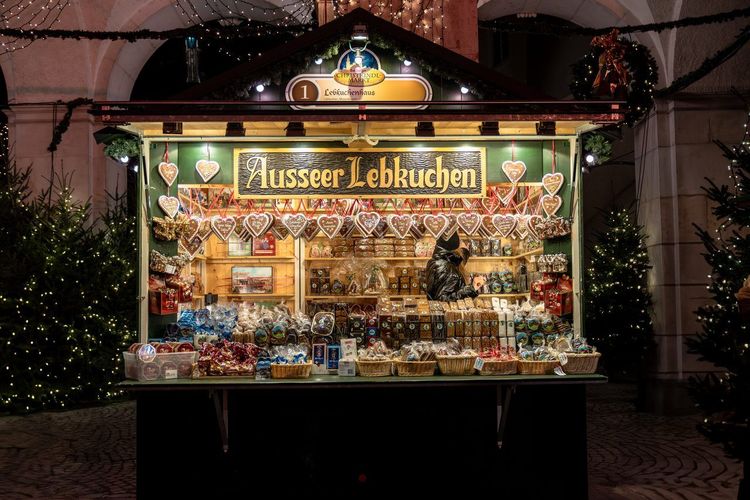
Hand-blown glass baubles, beeswax candles and carved wooden nativity scenes remain the safe bets, sold at almost every market in the city. Figurines of Krampus and Perchten, grimacing and horned, also make an original souvenir, much more typical than a generic Christmas bauble you could find anywhere in Europe.
Traditional textiles, boiled-wool scarves and felt socks, travel better than a glass decoration slipped to the bottom of a suitcase. Ask how the item was made before buying: the craftspeople present are happy to explain, especially on weekdays.
Be wary, however, of stalls selling decorations that are clearly mass-produced somewhere other than Austria: they sometimes slip in between two authentic craft stalls, at the same displayed price. A real glassblower generally works before your eyes, portable furnace included; a stall that merely stacks cardboard boxes almost never is one.
For Food Lovers: Glühwein, Deposit (Pfand) and Savoury Specialities
The Glühwein, a mulled wine spiced with cinnamon and cloves, comes in a classic red wine version or as a milder Punsch made with rum or fruit. On the savoury side, Kiachl, fried doughnuts filled with sauerkraut, and roasted chestnuts (Maroni) keep you warmer than gingerbread eaten on the move.
Each cup is paid for with a deposit, the Pfand: allow 5 euros for the ceramic mug at the Christkindlmarkt, a little less at some markets. Take it back to the stall to get your deposit back, or keep it as a souvenir: at the main market, the mugs carry a different design depending on the square, Domplatz or Residenzplatz, and some visitors leave with both. Many French speakers don't know this and abandon their coin thinking they paid a final extra charge.
The system sometimes works from one stall to another, provided the mug model matches: some markets use mugs common to all exhibitors, others do not. If in doubt, ask the seller at the time of purchase, and bring small change: many chalets still prefer cash.
Avoid the most central stalls at Domplatz, often the most expensive because of their location: a few metres further on, or at Mirabellplatz, prices drop for equivalent quality. To dig into local cuisine beyond the market, our article on culinary specialities in Salzburg details the dishes to look for outside the Advent period.
Entertainment and Traditions of the Austrian Advent
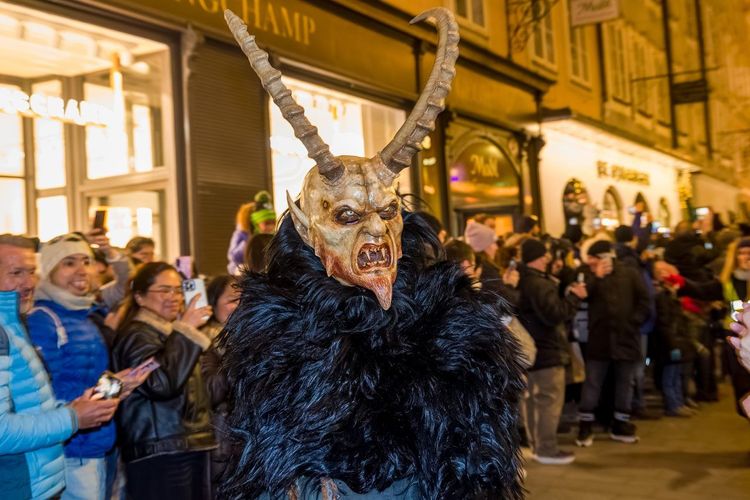
Salzburg's Advent is not limited to wooden chalets and mulled wine: several traditions punctuate the end-of-year calendar and often surprise visitors who aren't familiar with them.
The Krampuslauf, a parade of horned figures supposed to punish disobedient children, is the highlight. In 2026, the big traditional parade takes place on Saturday 5 December around 7 pm, directly on the Domplatz and the Residenzplatz, with several groups (the "Passen") following one another. Dressed in furs and carved wooden masks, the participants shake chains and bells in a deliberately impressive din: if you come with young children, stay back from the barriers.
The next day, 6 December, it is the turn of Nikolo, the Austrian version of Saint Nicholas, to visit well-behaved children with sweets and small gifts, sometimes accompanied by less frightening "Kinderkrampus", a striking contrast with the day before.
Later in the month, Perchtenläufe, mask parades linked to ancient rites meant to drive away the evil spirits of winter, are held mainly in the surrounding villages rather than in the centre. Check the dates with the tourist office if you wish to attend, as some editions change location every year. And if you are there on an Advent Sunday, look out for the Christkind's appearance at the main market.
Photographing the Salzburg Christmas Markets
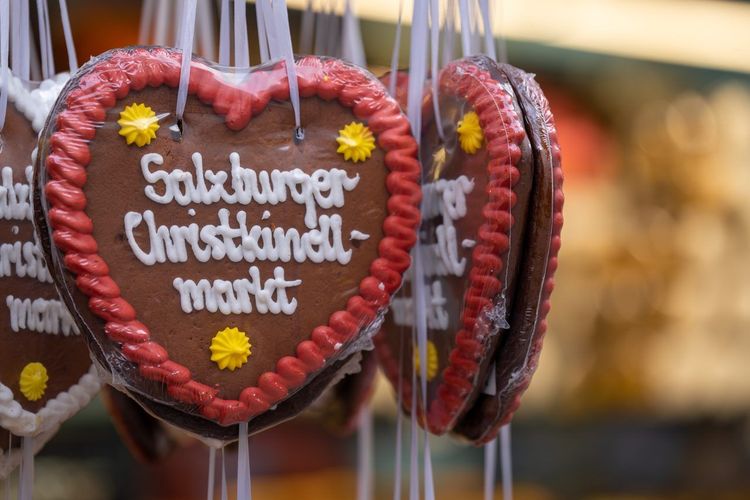
The evening light, between 4:30 pm and 6 pm, remains the best slot: the sky still holds a touch of blue while the garlands light up, a contrast that the dark night erases an hour later.
For an overview, climb the Mönchsberg or go up to the fortress: you look down over Domplatz and its illuminated rooftops. At ground level, stand near the Residenzplatz fountain, cathedral in the background, just before the rush hour to avoid silhouettes in every frame. At Hellbrunn, the illuminated calendar façade is best framed from the back of the courtyard.
As for settings, raise the sensitivity a little rather than lengthening the exposure: passers-by move constantly between the chalets and motion blur quickly ruins the scene. A small tripod is frowned upon in the Domplatz crowd; better to lean against an arcade on the Residenzplatz. Think about details too: the steam rising from a cup of Glühwein, the hands of a glassblower at work or the reflections of baubles in a chalet window often tell the atmosphere better than a wide shot. In snowy weather, head out at the first flakes; the whitened old town sometimes lasts only a few hours before salt and foot traffic turn it into slush. Finally, keep a spare battery in an inside pocket: Salzburg's cold drains it twice as fast as in summer.
Day Trip to the Wolfgangsee Region and the Salzkammergut
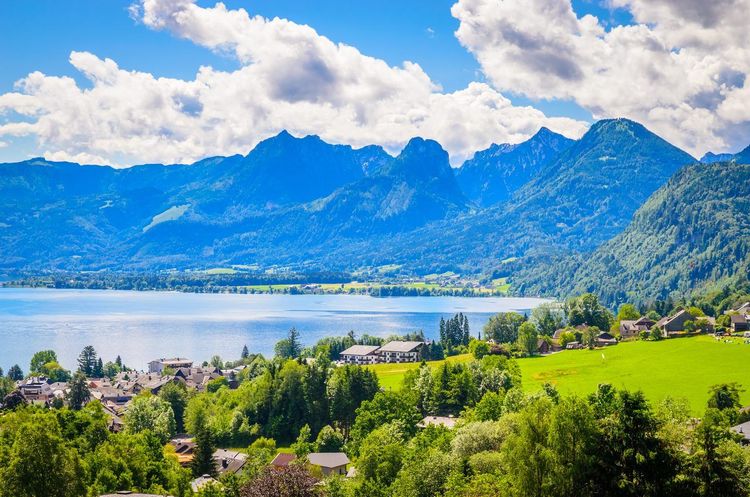
About 45 minutes to an hour by road, Lake Wolfgangsee hosts the Wolfgangseer Advent, a market spread across three villages: St. Wolfgang, St. Gilgen and Strobl. In 2026, it runs from 20 November to 20 December, in an alpine setting that completely changes the tone.
The good surprise is that you can travel from one market to another by boat: during Advent, the lake's navigation company links the three illuminated villages with a single ticket. In the middle of the water floats an immense lantern, a symbol of the light of peace, which serves as a landmark after dark. St. Wolfgang, known for its Weisses Rössl inn made famous by an operetta, can easily be visited in half a day, between the market, the lakeside walk and the parish church overlooking the harbour.
From Salzburg without a car, the regional bus reaches St. Gilgen in about an hour; check the return times, as evening buses become scarcer. After 20 December, boat rotations resume between 26 December and 3 January.
The Ryo audio-guided tour covers the city itself, not the lake: treat this excursion as a separate parenthesis, ideally over a full half-day rather than squeezed in a rush between two markets in the centre.
How to Get to Salzburg and Where to Stay During Advent
The city is easy to reach from several major cities in Central Europe, and once there it can be visited almost entirely on foot.
By Train and by Car
By train, Salzburg is about an hour and a half from Munich on a direct service, less than two hours from Innsbruck and about two and a half hours from Vienna. The main station (Hauptbahnhof) is about twenty minutes' walk, or a few bus stops, from the heart of the old town, which makes the train much more practical than a car if you aren't planning an excursion to the Wolfgangsee.
By car, the A1 motorway connects the city directly from Germany as well as from Vienna. Car parks in the historic centre, notably under the Mönchsberg, fill quickly on December weekends and are expensive by the day. A park-and-ride on the outskirts, combined with city buses, spares you a lot of frayed nerves in the dense Advent traffic, especially around 5 pm when everyone converges on the centre.
Where to Sleep: Accommodation and Practical Neighbourhoods
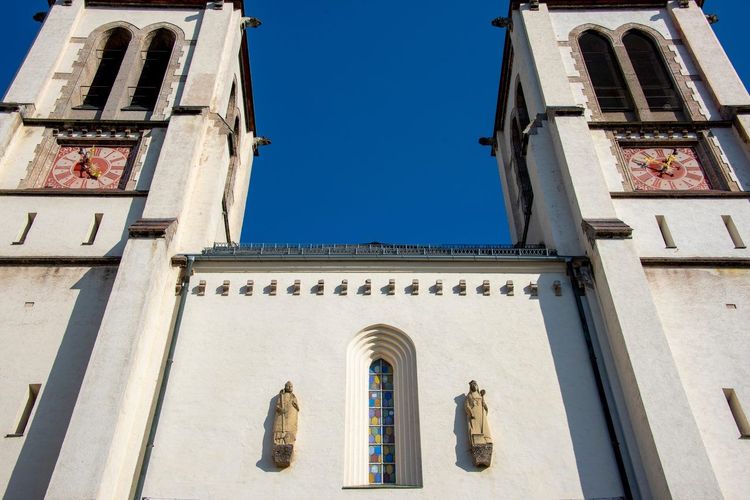
Staying in the old town lets you do everything on foot, markets included, but rates climb significantly on December weekends, sometimes doubling compared with a week in November. The Neustadt district, around Mirabellplatz, offers a good compromise: ten minutes' walk from the main markets, at gentler prices, and at the foot of its own family market.
Around the station, budget options abound, with direct bus access to the centre. Whichever district you choose, book early: Advent weekends, particularly the first and the one before Christmas, are fully booked several weeks in advance in a good number of hotels in the centre.
Budget, Opening Hours and Crowds: Practical Information to Plan Your Visit
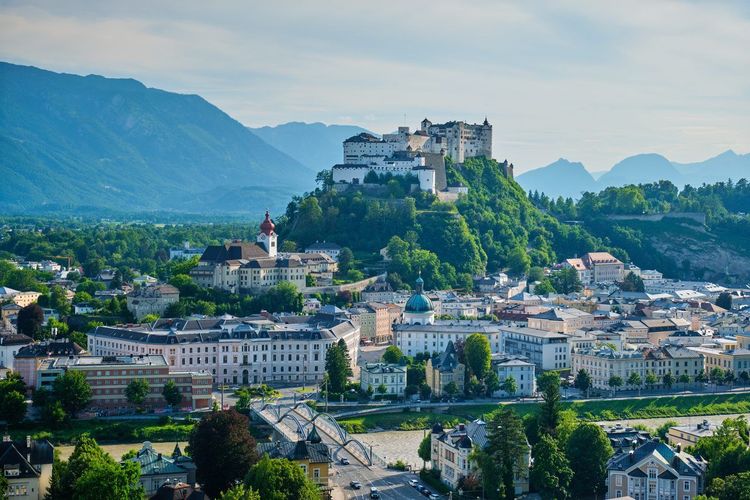
Before packing your bags, a few concrete pointers help avoid unpleasant surprises once there, especially for a first winter stay in Austria.
Opening Hours and the Advent Calendar, Weekend by Weekend
In 2026, the Christkindlmarkt at Domplatz and Residenzplatz opens on Thursday 19 November and stays open until 1 January 2027; Mirabellplatz opens the same day and closes on 31 December, Hellbrunn on 24 December. At the main market, allow 10 am to 8:30 pm Monday to Thursday, 10 am to 9 pm on Friday, 9 am to 9 pm on Saturday and 9 am to 8:30 pm on Sunday and public holidays, with reduced hours on 24, 25 and 26 December.
Each Advent weekend brings its own atmosphere: the first attracts locals for the opening and the lighting of the illuminations. The second and third remain calmer during the day, ideal for a quiet morning visit, even though the Saturday of the Krampuslauf draws crowds in the evening. The last one before Christmas logically concentrates the most people, last-minute shopping included.
Daily Budget, Crowds and What to Wear
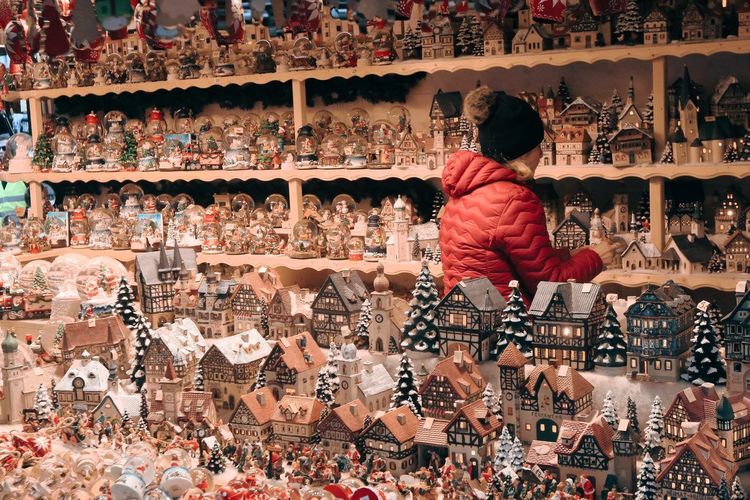
Access to the markets in the centre is free: you only pay for what you consume or buy. Only Hellbrunn (8 euros before 7 pm) and the fortress concert require a ticket. For a reasonable day including two or three Glühwein, a savoury snack and a small souvenir, allow around 25 to 40 euros per person, without forgetting to set aside the deposit for your mugs.
Crowds concentrate mainly at weekends between 4 pm and 8 pm, and almost systematically in the week before Christmas. Weekday mornings, by contrast, remain surprisingly calm and let you take your time at each stall without elbowing your way through. Dress in several layers, bring waterproof shoes and thick gloves: you will spend most of the time standing, outdoors, often below zero in the evening, especially near the river or on the heights of the Mönchsberg.
Salzburg in Winter Beyond the Markets: In the Footsteps of Mozart and Good Addresses
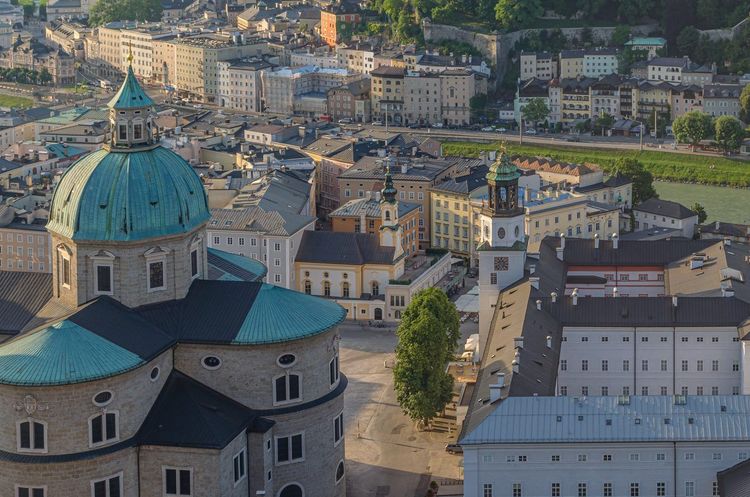
The markets tell only part of Salzburg's winter; the city of Mozart and its historic eateries also deserve a detour between two chalets.
The Mozart's birthplace, at number 9 Getreidegasse, remains the essential stop to see where it all began in 1756, before heading, on the other bank, to the house on the Makartplatz where the family moved in 1773.
As for cafés, the Café Tomaselli (Alter Markt 9, 5020 Salzburg, rated 3.8/5 on Google from 5,042 reviews), open since 1700, claims the title of oldest café in Austria still in business: people come as much for the pastries and Viennese coffee as for the hushed atmosphere, far from the bustle of the neighbouring chalets. Sitting for an hour inside, local newspaper on the table, is almost as much a part of the Advent ritual as the market itself for some regulars.
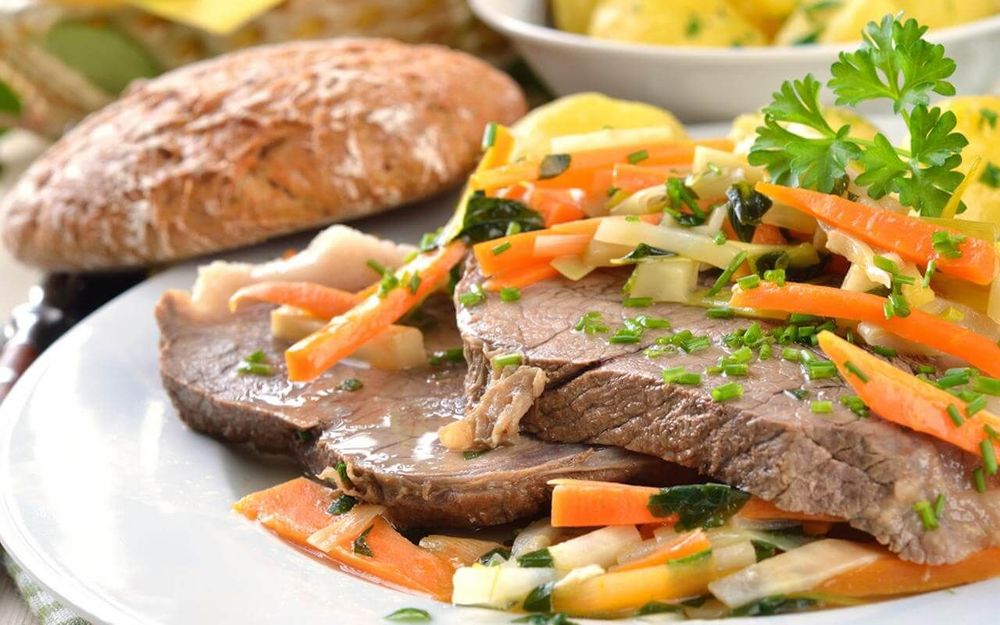
For a heartier meal, the Stiftskulinarium St. Peter, set within the grounds of the abbey of the same name and mentioned as early as 803, presents itself as one of the oldest restaurants in Europe, with traditional Austrian cuisine, Tafelspitz and Schnitzel at the forefront, served in vaulted rooms.
It is this combination, Baroque heritage and music mingled with the markets in a small area, that sets Salzburg apart from other Austrian Christmas markets: few cities let you go from a wooden nativity scene to a composer's birthplace in ten minutes' walk, then end the evening in a restaurant documented since the 9th century. To extend your discovery beyond Advent, our article on the best activities to do in Salzburg lists other ideas for days without markets. And to link these addresses without a paper map, follow the Ryo audio-guided tour in the footsteps of Mozart and the old town, without depending on a guided-tour schedule.



FAQ
When do the Salzburg Christmas markets open and close?
In 2026, most open on 19 November. The Christkindlmarkt at Domplatz and Residenzplatz stays open until 1 January 2027, Mirabellplatz until 31 December and Hellbrunn until 24 December (closed on Mondays). Opening hours are longer on Fridays and Saturdays.
What is the best Christmas market in Salzburg?
It all depends on the atmosphere you are looking for. Domplatz and the Residenzplatz offer the most photogenic setting with the cathedral in the background, Hellbrunn a more intimate atmosphere in the courtyard of a Baroque palace, and Mirabellplatz is better suited to families with young children.
How crowded are the Salzburg Christmas markets?
Weekend late afternoons and the whole week before Christmas see most of the crowds, particularly at Domplatz, as does the evening of the Krampuslauf. Weekday mornings are much quieter.
Is admission to the Salzburg Christmas markets free?
Yes for the markets in the centre (Domplatz, Residenzplatz, Mirabellplatz). The Hellbrunner Adventzauber, however, costs 8 euros with a hot drink included, and is free after 7 pm and for children under 6. The Advent concert at Hohensalzburg Fortress also requires a ticket.
What is Glühwein and how does the Pfand system work for mugs?
Glühwein is a spiced mulled wine, sometimes replaced by a Punsch made with rum or fruit. Each mug is paid for with a deposit (Pfand), around 5 euros at the main market, refunded when you return it to the stall, or kept as a souvenir.
Where should I stay for the Salzburg Christmas markets?
The old town lets you do everything on foot but is significantly more expensive at weekends. The Mirabellplatz area offers a good compromise ten minutes' walk from the centre, and the area around the train station has cheaper options with direct bus access.
Can I combine the Salzburg Christmas markets with a day trip?
Yes: the Wolfgangseer Advent, spread across St. Wolfgang, St. Gilgen and Strobl and connected by boat, can be visited in half a day or a full day. Closer to the city, the Grödig market at the foot of the Untersberg opens on Advent weekends.
Salzburg during Advent is a Baroque old town that serves as the backdrop to its own markets, complemented by alternatives a few kilometres away for those who want to escape the crowds, from Hellbrunn Palace to the shores of the Wolfgangsee. Between Domplatz, a concert at the fortress and a Mozart-themed detour between two Glühwein, a week passes quickly. Between two markets, let yourself be guided through the old town and around the cathedral with the Ryo audio guide to Salzburg, headphones on and with no group schedule.