© Shutterstock
 Votre guide Ryo
Visiting Bruges Solo in 2026: Complete Itinerary, Great Addresses and Practical Tips
At 7 a.m., before the first tourist buses park near the station, Bruges still belongs to the Minnewater swans and a few local joggers. Visiting Bruges solo often begins with this simple observation: the center can be crossed on foot in half an hour, which makes it one of the easiest European cities to explore alone, without having to negotiate an itinerary with anyone. The Ryo audio-guided tour of Bruges was designed with this in mind: follow the historic center at your own pace, headphones on, with 22 narrated stops and no need to depend on a group.
This guide details a concrete itinerary over 1 or 2 days, with landmarks you don't always find elsewhere: an 83-meter belfry whose 366 steps filter out a good part of the crowds, a beguinage where Benedictine sisters still live, a family brewery that has been brewing its own beer for six generations, and a museum pass whose value depends almost entirely on the number of paid visits. Well prepared, traveling solo in Bruges is less a question of safety than of finding your rhythm.
Why Bruges Is an Ideal Destination for Solo Travel
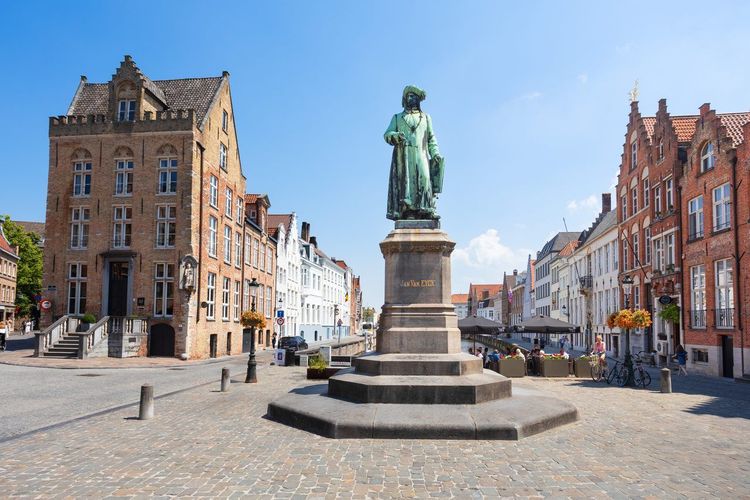
Bruges ticks almost every box that reassures a solo traveler: a pocket-sized city (the UNESCO-listed historic center covers about 410 hectares), dense tourist traffic so there is never a truly deserted street, and English spoken almost everywhere, from waiters to train station staff. For anyone who likes to set off without a fixed itinerary, stop wherever they please and move on as soon as the urge passes, the city is a dream playground.
The profile that thrives best here is the curious walker rather than the nightlife seeker. The streets empty out relatively early, around 10-11 p.m. outside the Zand and a few beer bars in the center, which also makes it a city perceived as safe for solo female travel. Solo women travelers regularly mention the visible police presence on Markt square and along the main tourist routes, as well as the local habit of crossing paths with cyclists at all hours of the day.
Another argument in favor of going solo in Bruges: the city imposes no sightseeing rhythm. No mandatory reservation for most sites (the Belfry being the exception), no endless queue outside July-August, and short distances that let you change plans along the way. Your trip to Bruges can literally reinvent itself between breakfast and lunch, which is much harder to improvise in a group.
This relative calm changes the way you visit. Many solo travelers say they spent a whole hour on a bench along the Dijver simply watching the boats go by, a luxury hard to afford in a group where someone always wants to move on.
One point of caution remains that most guides overlook: the historic center lives largely off tourism, and eating or sleeping right on Markt costs significantly more than 400 meters away. Moving a little away from the main squares means both saving money and finding a more lived-in, quieter city. Looking for a common thread without a human guide? The Ryo audio-guided tour acts as a discreet travel companion: it tells you about each place just as you arrive, without having to look up from a map.
How Much Time to Plan: Bruges in 1 Day or 2 Days Solo
One day is enough to see the essentials: Markt, Belfry, canals, Beguinage. It's the format chosen by most visitors who make a round trip from Brussels, Lille or Ghent. But one day, when traveling solo, leaves little room for the unexpected: no long pause on a terrace, no detour to the Sint-Anna windmills, no second chocolate tasting.
Two days change everything, especially for solo travel where the main luxury is precisely the time available. The second day lets you leave the Markt-Burg-Dijver triangle, see the Beguinage at the hour when the last groups have left, or simply retrace a route walked the day before but in the opposite direction.
Our recommendation: if you sleep on site for at least one night, aim for two days. The first covers the medieval heart in a logical walking order (Markt, canals, Burg, Vismarkt). The second slows down toward the Beguinage, the Minnewater, then the ramparts and windmills, without having to race for a return train.
If your constraint is budget rather than time, know that a single night is enough to transform the experience: arriving the evening before lets you see Markt illuminated, without the daytime crowds, then start the day at 8 a.m., before the coaches arrive. To go further, our guide to visiting Bruges in 2 days details a more classic program.
Day 1: The Medieval Heart of Bruges on Foot
The first day follows a route that even a traveler without a map can retrace alone: from Markt to the canals, then to the Burg and the Vismarkt (Vismarkt, 8000 Brugge, rated 4.3/5 on Google from 1.1K reviews). These are precisely the stops covered by the Ryo audio guide of Bruges, with commentary at each stop over 4.4 km and 1h45 of actual walking: handy for moving along without pulling out your phone at every crossroads.
The Market Square and the Belfry
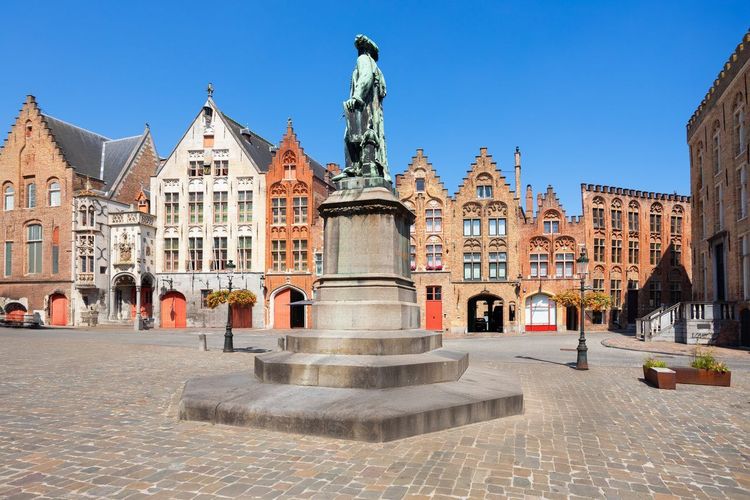
Everything usually starts on Markt, Bruges's main square, lined with stepped gables in saturated colors and terraces that, by 10 a.m., are already full in summer.
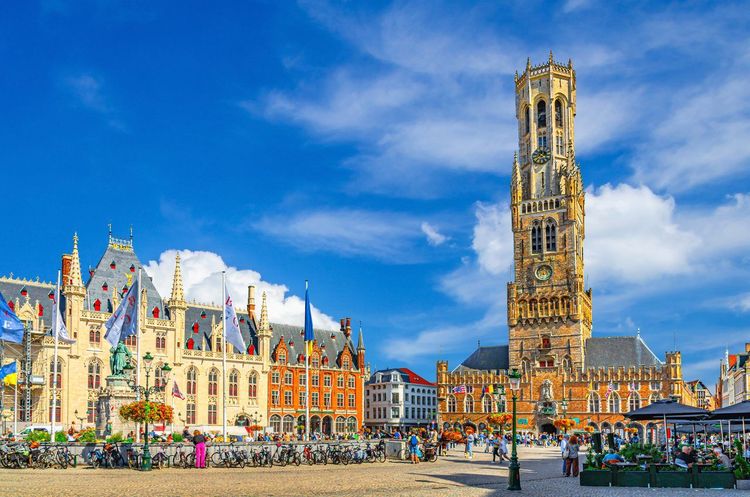
At the center of the square stands the statue of Jan Breydel and Pieter de Coninck, heroes of the Battle of the Golden Spurs (1302). But Markt's vertical attraction remains the Belfry, 83 meters high, with 366 spiral steps and a view that, on a clear day, stretches as far as the Flemish polders.
Climbing alone has a concrete advantage: you go up at your own pace, stop on the intermediate landings without blocking a line, and can wait for the carillon to ring the hour to experience the moment right in the stairwell, vibrations included. Allow 15 euros for entry and book a time slot online on the Musea Brugge website a few days ahead in high season: the number of visitors per hour is limited.
Photographers often come before 8 a.m., when the square is almost empty and the light still grazes the facades. With no group constraints, that's the slot to aim for: you'll have Markt almost to yourself.
The Canals and the Rosary Quay (Rozenhoedkaai)
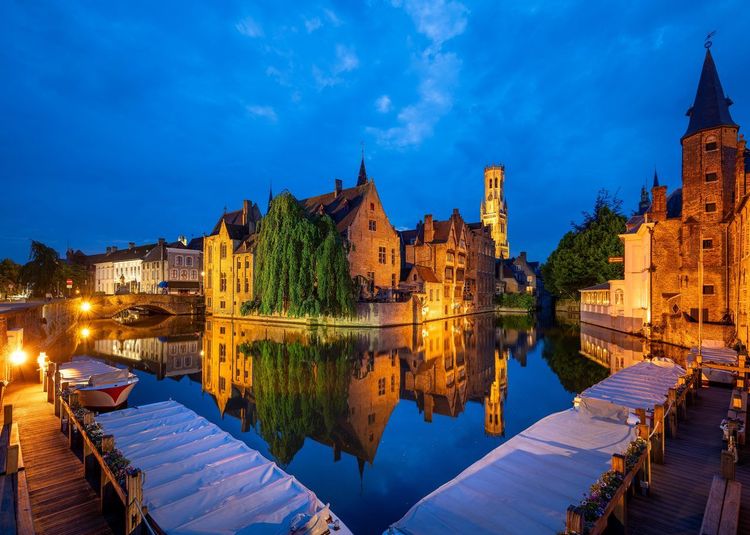
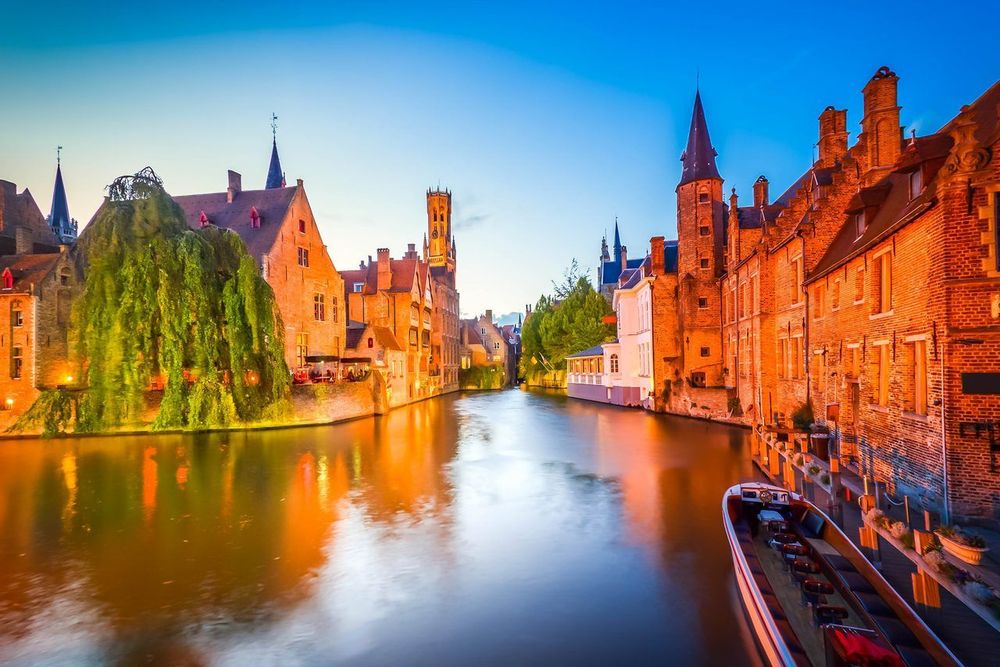
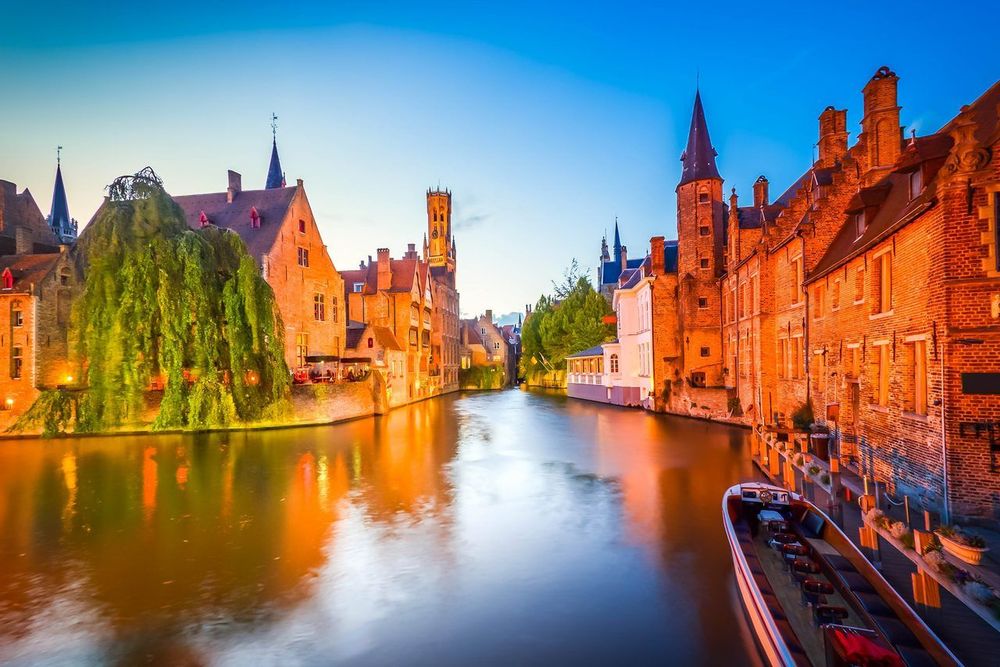
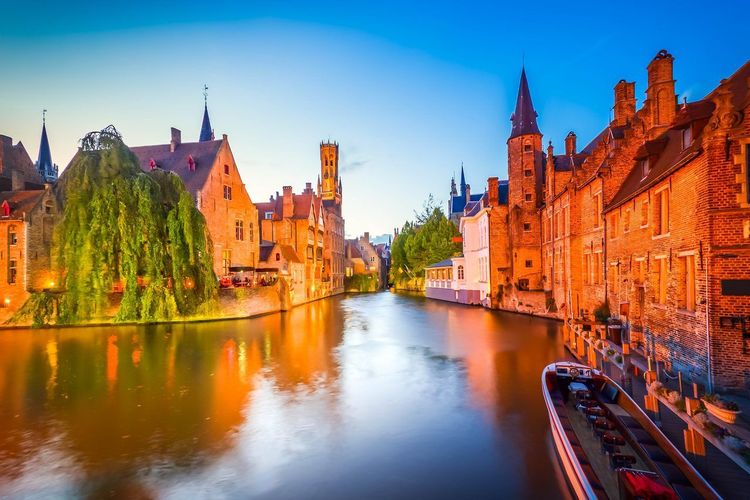
Leaving Markt toward the east, the lanes quickly open onto the canals, the most reproduced image of Bruges. The most photographed viewpoint is at the Rosary Quay), where the Belfry, the gabled houses and the water line up in a single frame.
This is also the area where several tour boats depart: 15 euros per adult (price set by the city), about 30 minutes, tickets bought directly at the landing stage, with no reservation possible. Traveling solo, taking a boat is nothing unusual: the boats mix strangers without distinction, and the trip on the water offers a perspective you can't get on foot.
To extend the stroll without spending, follow the Dijver canal then reach the Bonifacius Bridge, a small stone arch built in 1910, which has become one of amateur photographers' favorite spots despite its recent construction.
If the queue grows at the jetty nearest the Rozenhoedkaai, other landing stages exist along the Dijver and near Katelijnestraat, often less crowded in mid-morning. The boatmen narrate the trip in several languages, which lets you, even alone, follow the history of the houses you pass.
Town Hall, Basilica of the Holy Blood and the Vismarkt
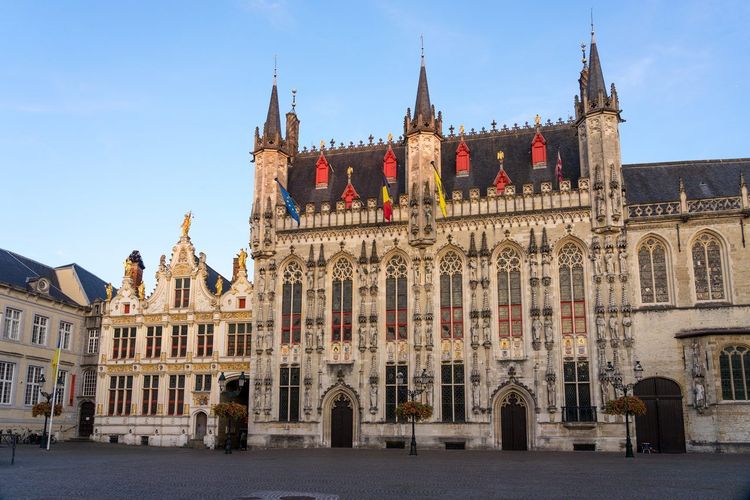
Two minutes' walk from the Rozenhoedkaai, Burg square brings together two monuments that can be visited in under an hour combined. The Town Hall (Stadhuis), built between 1376 and 1421, is one of the oldest in the former Low Countries, with a Gothic hall covered in late 19th-century murals.
Right next door, the Basilica of the Holy Blood preserves a vial of blood attributed to Christ, brought back, according to tradition, in the 12th century. Access to the Romanesque lower chapel and the upper chapel is free; the relic is displayed for veneration every day from 2 to 4 p.m., and the small treasury costs 5 euros.
The day ends gently at the Vismarkt, the colonnaded fish market dating from 1821, where a few fishmongers still set up on Wednesday to Saturday mornings, joined by craft stalls. It's a good place for a final break, away from the crowded main squares.
Around noon, the Burg and Vismarkt area also has several cafés with canalside terraces, a simple option for lunch without a reservation: a table for one is never a problem on weekdays.
In total, this first day amounts to around 5 km of walking, spread over 5 to 6 hours with visits and breaks. Nothing exhausting, as long as you keep good shoes and a plan B for rain: the covered cafés in the center make excellent improvised shelters.
Day 2: Bruges off the Beaten Path
The second day deliberately moves away from the Markt-Burg-Dijver triangle to explore a quieter Bruges, that of the beguinages and windmills. Traveling solo, it's often travelers' favorite day, because it leaves room for wandering without a strict itinerary, and the stories heard the day before help you read these more discreet neighborhoods.
The Beguinage and the Minnewater
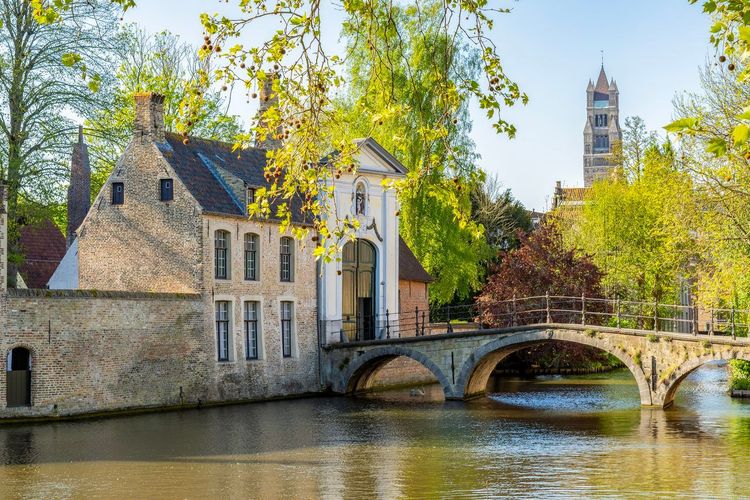
The Beguinage) remains the most photographed spot of this second day, and yet one of the calmest. Founded in 1245, it has housed Benedictine sisters since the 20th century, in an enclosure of white houses around a lawn planted with tall trees. Entry is free; only the beguine's house-museum (2 euros) is paid. Silence is requested: speak softly, it is a lived-in place.
A short walk away, the Minnewater, nicknamed the Lake of Love, extends the silence of the Beguinage. Legend has it that lovers who cross its bridge will see their relationship last, an anecdote that often amuses solo travelers who have come simply to enjoy the park and the swans.
The bench by the water, just after the lock, remains one of the few places in the center where you can sit for twenty minutes without a group filling the space. No one to wait for, no one to explain to why you're stopping for so long.
Church of Our Lady, St. Salvator's Cathedral and Arentshuis
Heading back toward the center, the Church of Our Lady) houses the Madonna of Bruges, the only Michelangelo sculpture to have left Italy during the artist's lifetime. Its tower, 115.5 meters high, is among the tallest brick structures in the world.
Right next door, the Arentshuis, sister house of the Groeninge Museum, devotes its upper floor to the British artist Frank Brangwyn, in a setting far less crowded than the major museums of the Dijver. Check opening hours on the Musea Brugge website before going; its garden, the Arentshof, is in any case a shaded canalside break.
Continuing toward Steenstraat, St. Salvator's Cathedral (Sint-Salvatorskathedraal (Steenstraat 20, 8000 Brugge, rated 4.6/5 on Google from 8,332 reviews)) completes the city's religious trio. Less visited than the Basilica of the Holy Blood, it nonetheless preserves 18th-century Brussels tapestries and a treasury you can tour in under 20 minutes, handy for filling a gap between two visits.
Allow about 1h30 for this trio if you enter all three buildings, or 45 minutes if you stick to the exteriors and Michelangelo's Madonna.
The Sint-Anna Windmills and the Ramparts
If you still have energy, head to the Sint-Anna district in the northeast, a residential area almost free of tourists where the facades are more modest and lived-in. This is where the end of the day lends itself to a stroll along the ramparts, the former medieval city wall turned into a shaded linear park, almost always deserted on weekdays.
Four windmills remain along this route, two of which can be visited (Sint-Janshuismolen and Koeleweimolen), generally from the warmer season until September. The rest of the year, they remain visible from the path, motionless against the Flemish sky, but still photogenic when the light drops.
To complete the loop, a pedestrian path follows the canal to the Kruispoort, one of the four historic gates still standing, before heading back down calmly toward Markt for dinner. The rampart stretch is a few kilometers of flat walking, with no elevation gain, accessible even with already tired legs.
This second day, less dense in monuments but richer in silence, is probably the one that most convinces travelers hesitant about exploring Bruges alone.
Activities Particularly Well Suited to Solo Travel
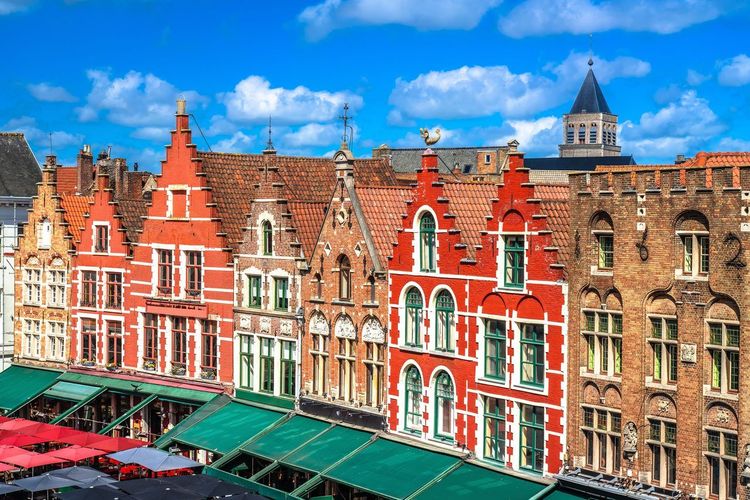
Bruges requires no group activity to be enjoyed. Three formats coexist without competing: the audio guide for total freedom, the guided tour for human exchange, and the workshop for informal encounters around a shared activity. On the freedom side, the Ryo audio tour of Bruges offers 22 audio stops over 4.4 km, to start and pause whenever you like, without booking a slot or following a group's schedule.
Walks, Cycling and Guided Tours Solo
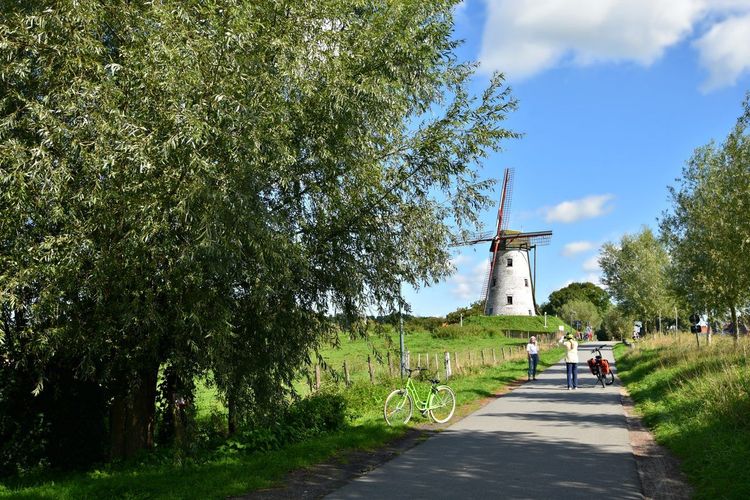
The bike ride remains the activity most cited by solo travelers in Bruges. Some agencies offer guided tours into the surrounding countryside, notably toward Damme, a village about 7 km away connected by a straight, tree-lined canal. Allow 2h30 round trip taking your time, easily doable alone.
For those who prefer company without traveling in a closed group, fixed-schedule guided tours exist, with certified guides from the city who lead small groups, often a mix of solo travelers and couples. It's an in-between option, useful if you want to ask questions in real time.
Finally, some tourism partners offer themed walks (beer, chocolate, photography) in small groups, a comfortable format even alone, the shared goal naturally encouraging conversation.
Workshops and Tastings to Enjoy Alone
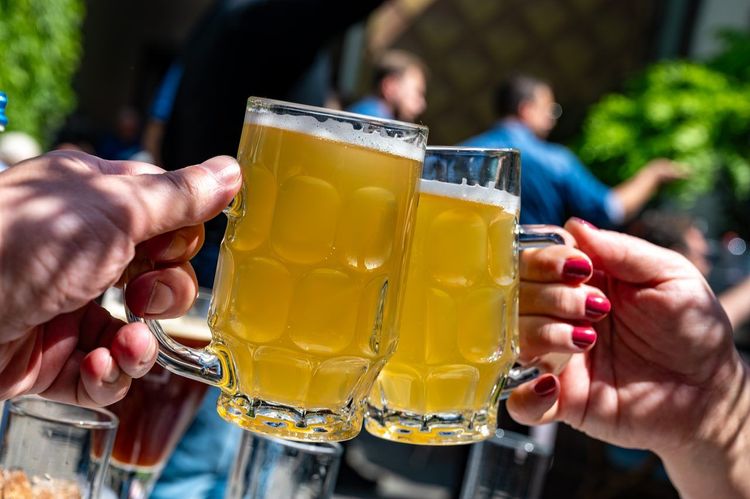
Beer or chocolate tasting workshops suit solo travel well: the shared table makes it natural to spend a moment with strangers. Allow 25 to 40 euros for a guided tasting of several Belgian beers, often accompanied by explanations of styles and local breweries.
Lace-making demonstrations, a historic craft of the city, attract fewer people but offer a calm one-hour break. An alternative to consider if you want to slow down between two days of walking.
At your own pace, with no group to follow: that is ultimately the argument that comes up most often among travelers who recommend Bruges for a first solo trip. Whatever format you choose, book the day before in high season (June to September), as the slots for the best-known workshops fill up quickly.
Eating and Drinking Alone in Bruges Without Feeling Watched
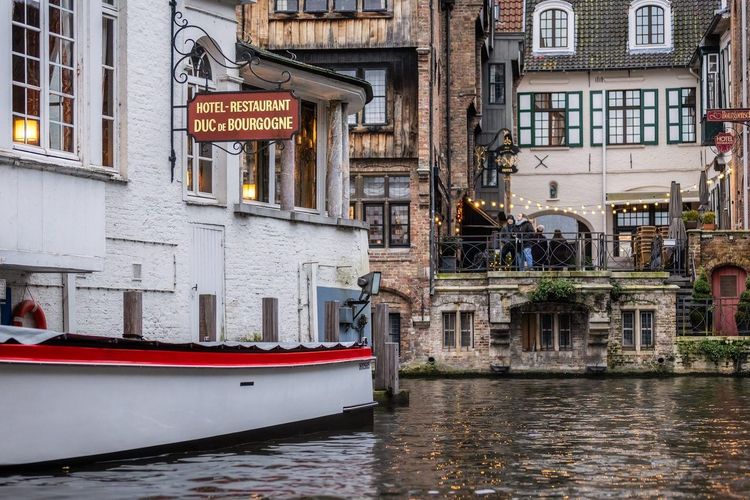
Eating and drinking alone in Bruges is nothing to be uncomfortable about: the city has lived off individual tourism for decades, and beer bars and restaurants are used to tables for one, at the counter or in the dining room. The feeling of being watched, often feared before leaving, generally disappears after the first meal. Many restaurants in the center offer a fixed-price lunch menu, handy for a last-minute table, while some canalside spots require a dinner reservation, even for one person.
Where to have lunch and dinner in Bruges without breaking the bank? The areas around Sint-Jakobsstraat and Langestraat are home to small Flemish restaurants that are more affordable than those on Markt, often run by families who naturally welcome tables for one.
De Halve Maan Brewery and Local Beers
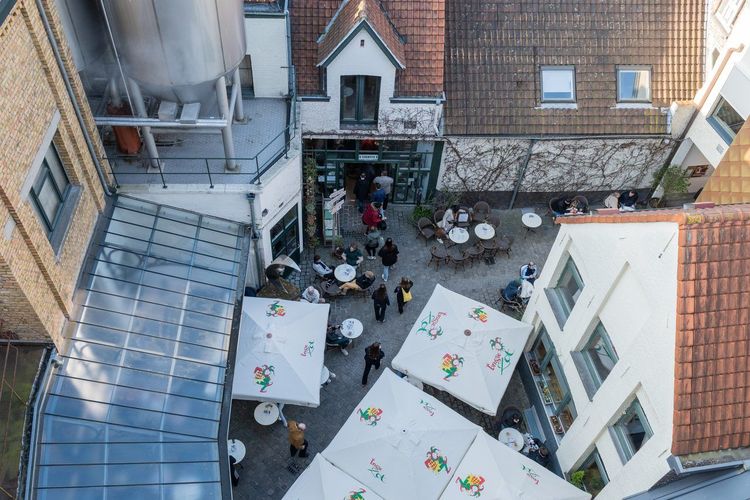
The De Halve Maan Brewery (Walplein 26, 8000 Brugge, rated 4.6/5 on Google from 5,495 reviews), established on Walplein since 1856, remains the only family brewery still operating in the historic center. It produces Brugse Zot and Straffe Hendrik, and offers a 45-minute tour (16 euros, one beer included) in French, Dutch or English, which ends at the bar: there you often share a table with other visitors who came alone. On weekends, an XL version lasting 1h30 with three tastings is offered for 26 euros.
For a drink without a tour, several beer bars in the center offer menus with several hundred references, with servers used to recommending a style based on your tastes. Sitting at the counter rather than at a table is common there, and speeds up conversation with the staff or neighbors.
For a quick lunch before setting off again, the brewery also serves a menu of simple Flemish dishes (carbonnade, cheese croquettes), a convenient option between two visits on the second day.
Waffles, Chocolate and Sweet Breaks
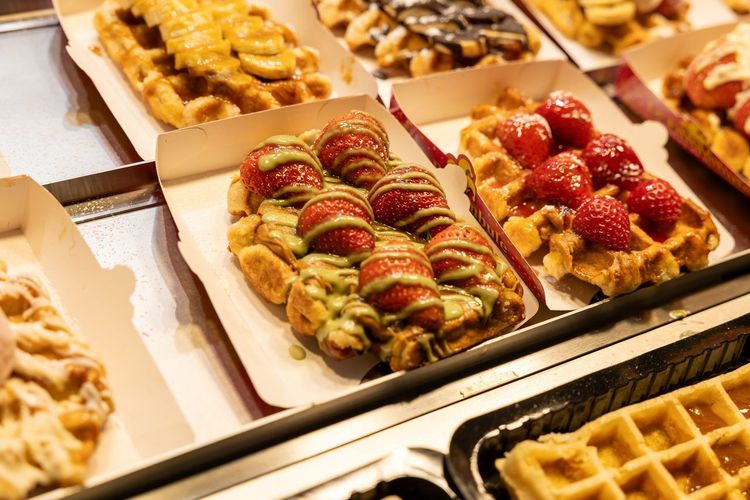
Treating yourself to a sweet break in Bruges almost inevitably involves a waffle, in its Liège version (sweet, caramelized dough) or Brussels version (lighter, often topped). Stalls a little away from Markt, in the streets around Wollestraat, often charge gentler prices than in the heart of the tourist center.
Belgian chocolate completes the list: the artisanal chocolatiers in the center, often family businesses, frequently offer small tastings that let you compare without committing to a purchase.
For those who want to dig deeper into the subject, our article on the best culinary specialties of Bruges details a broader selection, useful for putting together a foodie route over two days without repeating yourself.
In the evening, the terraces of Markt and Vismarkt remain lit and busy quite late, which lets you dine outside after nightfall without feeling the isolation you might fear when alone in an unfamiliar city.
Where to Stay in Bruges When Traveling Solo
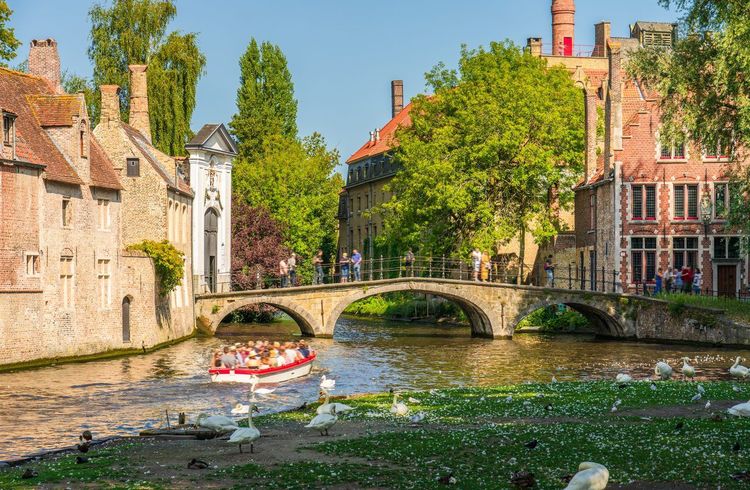
This is the number one budget question of solo travel: how do you avoid paying for a double room for a single person? The city, very touristy, rarely offers advantageous solo rates in traditional hotels.
The hostels in the center (around Sint-Jakobsstraat and Langestraat) remain the most suitable option: dorms from 25-30 euros a night, simple private rooms around 50-60 euros, and above all a crowd used to solo travelers, which makes it easier to meet people at the shared breakfast.
If you value your privacy, the guesthouses (B&Bs) of the historic center, often set in old houses, offer single rooms from 70-80 euros, a compromise between budget and calm.
Three areas stand out for staying alone: the immediate center (Markt-Burg), convenient but expensive and lively at night in summer; the Sint-Gillis district, a 10-minute walk from Markt, more residential and noticeably quieter; and the area around the station, useful for an early arrival or departure but 15-20 minutes' walk from the historic center.
The station has luggage lockers, useful if you combine Bruges with another city on the same day. Pack a backpack or a small suitcase instead: the cobblestones of the center, photogenic but uneven, make pulling a bag difficult over several hundred meters.
The most useful rule: choose accommodation within 15 minutes' walk of Markt. The streets remain lit and busy over that distance, even after 10 p.m. And book at least three weeks ahead in July-August: well-located single rooms become scarce quickly, a constraint felt more keenly when you aren't splitting the bill.
Budget and Best Time to Visit Bruges Solo
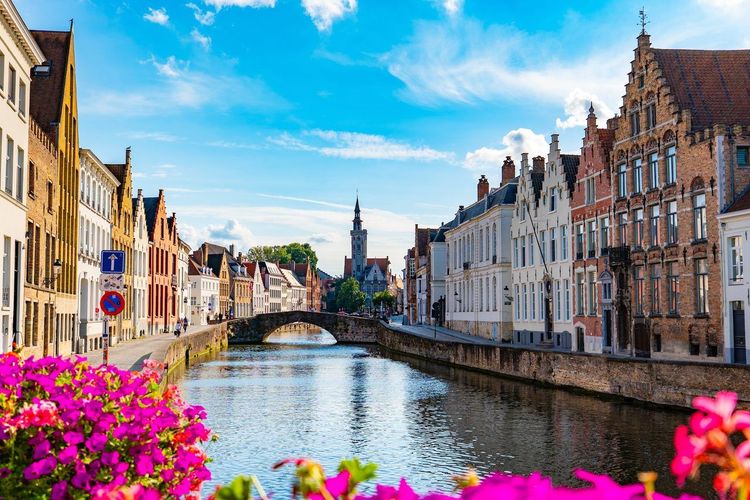
What budget should you plan for a solo weekend in Bruges? Allow on average 70 to 100 euros per day with budget accommodation (hostel or B&B), simple meals and two or three paid visits. This budget easily climbs to 130-150 euros per day with a more comfortable hotel in the historic center and a canalside dinner every evening.
The most variable item remains visits: Belfry (15 euros), Holy Blood treasury (5 euros), Groeninge Museum, Halve Maan (16 euros). If you plan several museums, the Musea Brugge Card, often called the Brugge City Card, becomes worthwhile: valid for 72 hours, it costs around 49 euros and opens the municipal museums, Belfry included. Below three or four paid entries during your stay, it rarely pays for itself.
What is the best time to visit Bruges? July-August offer the liveliest evenings but also the longest queues at the Belfry and in the museums, a factor to weigh when no one can hold your place while you go get a coffee.
Winter remains underrated: the Christmas markets, from late November to early January, bring life to Markt and Simon Stevinplein, and the city, much less crowded outside weekends, can be visited in an almost intimate atmosphere, though cold and often rainy.
Season, budget, rhythm: these variables are negotiated together. Traveling in April or October lowers accommodation prices compared to July-August, while keeping days long enough for the two itineraries suggested above. In midwinter, prices drop even further but useful days shrink to 7-8 hours of daylight, which pushes you toward a tighter format.
For concrete benchmarks, a typical day excluding accommodation breaks down as follows: 15-25 euros for simple meals, 15-20 euros for paid visits, 5-10 euros for coffee and sweet breaks. Add the train: a one-way Brussels-Bruges ticket in second class costs around 15-17 euros.
How to Get to Bruges and Get Around Once There
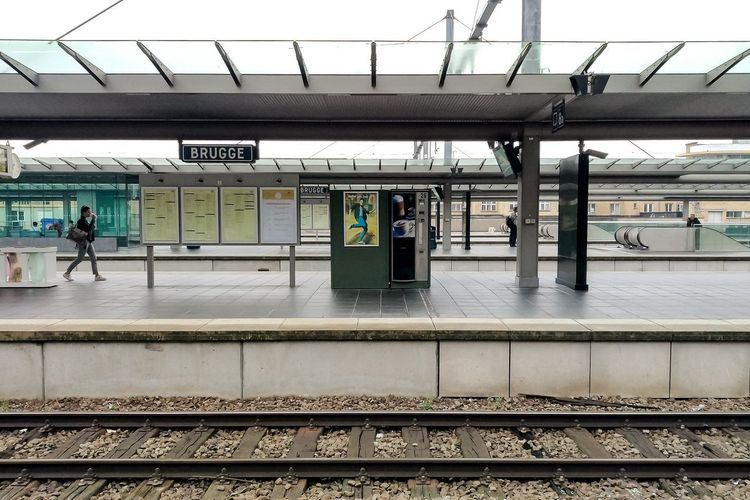
The train is by far the simplest way for a solo traveler: direct service from Brussels (about 1 hour), Ghent (about 25 minutes) or Lille (about 1h30 to 2 hours with a change at Kortrijk). The station is about a twenty-minute walk from Markt, or a few minutes by bus, with lines to the center leaving very frequently from the forecourt.
From France, Brussels is the logical gateway: Eurostar (formerly Thalys) from Paris in about 1h25, then a train to Bruges. If you leave that same morning, you arrive late in the morning, leaving a good part of the first day to start the Markt itinerary.
Once there, walking is enough: the historic center, ringed by canals, can be crossed from end to end in 25-30 minutes. The bike, omnipresent, extends your range toward Damme or the polders, with plenty of cycle paths. Daily rental costs around 12-15 euros in shops in the center and near the station.
Where to park in Bruges? The historic center is very restrictive for cars. The Centrum-Station car park, right next to the station, caps at about 7 euros for 24 hours and includes a free round-trip bus to the center on the day of arrival (up to 4 people). Several peripheral park-and-ride car parks (P+R) are even free, connected to the center by bus or a reasonable walk.
Without a car, the combination of train, walking and the occasional bike covers practically all your travel over two days, with no advance reservation, except possibly for the international leg in high season.
Mistakes to Avoid and Tips for a Successful Solo Trip to Bruges
The first and most common mistake is trying to see everything in a single day by stacking paid visits without leaving any margin. The result: a race against the clock between the Belfry, the museums and the canals, leaving little room for wandering.
Second trap: staying only in the Markt-Burg-Dijver triangle. It's the most photographed area, but also the most expensive and the most crowded in high season. Moving a few hundred meters away, toward Sint-Anna or Sint-Gillis, reveals a more lived-in city.
On the safety side, evenings generally pose no problem in the historic center: the streets around Markt and Burg remain lit and busy quite late. The usual vigilance mostly applies around the station after 11 p.m., a more remote and less lively area.
Another classic mistake: neglecting the Flemish weather, changeable even in summer. A light windbreaker and waterproof shoes spare you from interrupting your visit, as the cobblestones become slippery at the first rain.
Some travelers also regret having booked a group guided tour on the very first day, before having had time to get their bearings. It's better to start with a free walk or an audio-guided format, then add a guided activity once you have your bearings.
How do you avoid overloading your trip? Choose two or three highlights per day rather than six, and keep at least one hour with no specific goal, just to walk. And plan a seated break every two hours: on uneven cobblestones, fatigue is felt more when no one suggests stopping.



FAQ
How many days do you need to visit Bruges solo?
One day covers the essentials of the historic center: Markt, Belfry, canals and Beguinage, though at a fairly packed pace. Two days leave more room for wandering and let you add the Minnewater, the ramparts and the Sint-Anna windmills without rushing. For a first solo trip, two days is the most comfortable format.
Is Bruges a safe city for solo travelers?
Yes, Bruges is generally considered a very safe city for solo travel, including in the evening in the historic center. The dense tourist presence limits deserted streets. The usual vigilance mostly applies around the train station late at night.
What budget should you plan for a solo trip to Bruges?
Plan on 70 to 100 euros per day, including budget accommodation (hostel or B&B), meals and two or three paid visits. Excluding accommodation, a day costs 35-55 euros, train not included.
What is the best time to visit Bruges solo?
April-May and September-October offer the best compromise between mild weather and moderate crowds. Summer guarantees lively evenings but longer queues, while winter, around the Christmas markets, offers a more intimate atmosphere despite often rainy weather.
How do you get around Bruges without a car?
Walking is more than enough: the historic center can be crossed from end to end in 25-30 minutes. A bike, available for daily rental, extends your range toward Damme or the surrounding polders.
Where should you park if you come to Bruges by car?
The Centrum-Station car park, next to the train station, is the simplest solution: about 7 euros for 24 hours with a free round-trip bus to the center. Free park-and-ride car parks also exist on the outskirts.
Is the Musea Brugge Card worth it for a solo traveler?
Valid for 72 hours for about 49 euros, it pays off from three or four paid museums, Belfry included. For a stay focused on walking and the canals, you're better off paying for entry separately.
Traveling solo in Bruges means accepting that there is no single best itinerary, only the one that leaves you time to linger on the Rosary Quay longer than planned, or to walk around the Minnewater again because the evening light calls for it. Compact, safe and rich enough to fill two full days, the city remains one of the most comfortable European destinations for a first solo trip.
As soon as you leave the train station, start the Ryo audio-guided tour of Bruges: 22 narrated stops, 4.4 km, 1h45 of walking, to pause whenever a bench by the water keeps you longer than planned.