© Shutterstock
 Votre guide Ryo
25 Day Trips from Brussels You Absolutely Must Do in 2026
Brussels often baffles hurried visitors: they pass through, skim the surface, and reduce it to the Grand-Place and fries. Those who linger, however, discover that day trips from Brussels open onto a capital of exceptional reach, encircled by a cultural and natural density that few European metropolises can offer within such a short radius. In less than two hours by train or car, you can stroll along medieval canals, climb a Napoleonic battlefield, get lost in a forest of century-old beech trees, or come face to face with giant pandas in a zoo that feels straight out of a fairy tale. To explore the capital before venturing further, the Ryo Brussels audio-guided tour covers the historic neighbourhoods in 2h40 with 25 commented stops.
These 25 day trips from Brussels cover very different profiles: a city whose belfry rings 47 bells above swan-filled canals, a zoo voted best in Europe where pandas are born, Cistercian abbey ruins so photogenic they attract photographers from across the continent, a geographic enclave where the Belgian-Dutch border cuts streets in two, and a military ceremony repeated every evening since 1928 without interruption. Enough to fill a good ten weekends.
1. Bruges, the Venice of the North
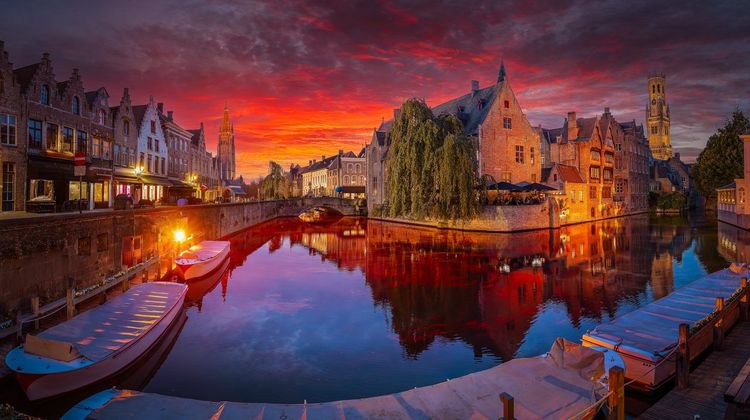
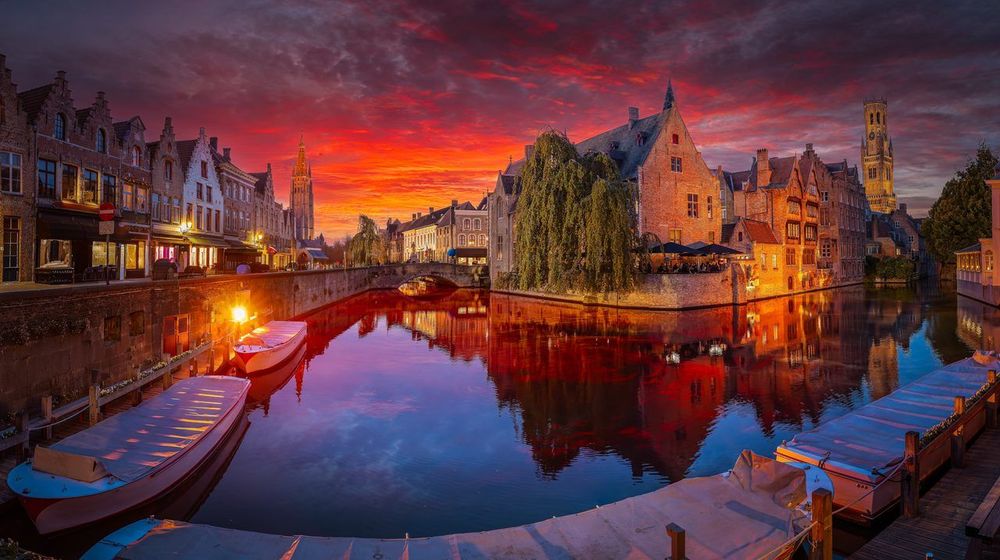
Just 1h10 from Brussels by direct train, Bruges remains the most sought-after destination for Belgian day-trippers, and it never disappoints, even on the twentieth visit. The entire city has been a UNESCO World Heritage Site since 2000, and its canals, beguinages and gabled facades form such a coherent medieval ensemble that it seems lifted from a film set. It is no coincidence that several Hollywood productions have planted their cameras here.
The Bruges Belfry on the Markt is the logical starting point. Standing 83 metres tall, it houses a carillon of 47 bells whose music can be heard from any bridge in the city. Its 366 steps lead to a panoramic view over the red-tiled rooftops and the meanders of the Reie, well worth the effort. Allow twenty minutes for the climb; children under 6 are not permitted to access the belfry.
The Lake of Love (Minnewater), south of the old town, is an unexpectedly gentle stroll: swans glide between weeping willows, steps from the Wijngaard Beguinage, founded in the 13th century and inhabited until 1928 by lay women living in community. On autumn afternoons, when fog rises from the canals, the atmosphere takes on a genuinely melancholic, Nordic quality. Avoid the Markt in July–August between 11am and 3pm: organised tour groups saturate the square.
For craft beer enthusiasts, Brewery De Halve Maan (Walplein 26, 8000 Bruges, rated 4.6/5 on Google with 5,008 reviews) offers a guided tour ending with a draught tasting of Brugse Zot, a 6° blonde brewed by a family brewery founded in 1856 in the historic centre. In 2016 the brewery laid a 3.2 km pipeline under the streets of Bruges to carry beer directly from the vat to the bottling site on the outskirts, with no tanker trucks in the pedestrian lanes. Book the 5pm tour at the weekend to avoid queues.
Bruges's museums also deserve your attention: the Groeningemuseum houses top-tier Flemish Primitives (Jan van Eyck, Hans Memling), and the Museum of the Countess's Hospital reconstructs the life of a 13th-century medieval hospital with remarkably well-preserved period furnishings. Allow a full day for Bruges, or stay overnight if you want to see the city after the day-trippers have left.
2. Ghent, Flanders' Best-Kept Secret
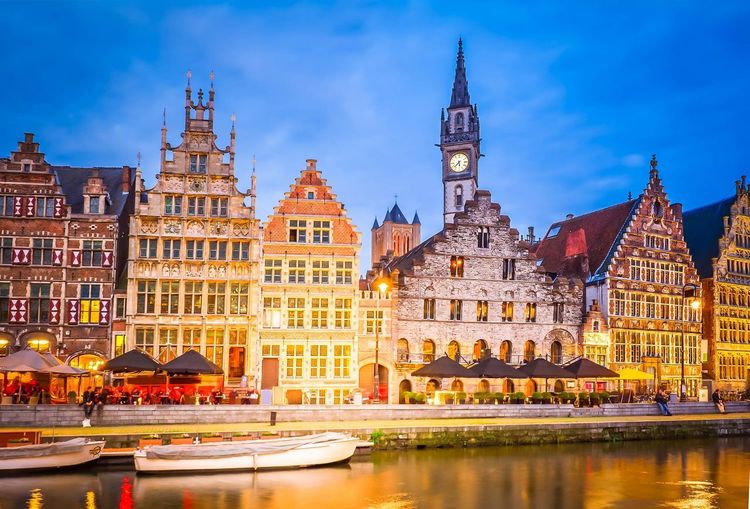
Ghent suffers from an unjustly low profile: overshadowed by Bruges on one side and Antwerp on the other, it is nevertheless one of the best-preserved medieval cities in northern Europe, and the only one where the Gentse Feesten transforms the historic centre every July into an open-air stage for 10 days of free concerts and festivities. Outside this period, Ghent can be visited without the tourist pressure of Bruges; queues in front of monuments are rare.
The Gravensteen Castle rises in the middle of the city like a deliberate anachronism: moats, a drawbridge and 12th-century keeps, surrounded by 19th-century buildings. Inside, a collection of medieval torture instruments fascinates as much as it unsettles. Admission: €15 adult (free for under-18s).
The Graslei and Korenlei, the two banks of the Lys in the historic centre, form the photographic heart of Ghent. 16th-century guild facades are reflected in the green water, café terraces spill onto the quays, and flat-bottomed boats ferry passengers between bridges. Take time for a boat trip from Korenlei; the guides, often students from Ghent University, know every architectural anecdote.
The Ghent Altarpiece (Adoration of the Mystic Lamb) by Jan van Eyck, displayed in Saint Bavo's Cathedral (Sint-Baafsplein 1, 9000 Ghent, rated 4.7/5 on Google with 14,212 reviews), is the most stolen work in art history: several panels were stolen, recovered, then lost again over the centuries. The central panel dates from 1432 and survived the Wars of Religion, the revolutionary French and the Nazis. The dedicated exhibition in the Baptist Chapel recounts this odyssey better than any guidebook. Polyptych admission: €8 adult.
Ghent is also the unofficial European capital of vegan cuisine, with more vegan restaurants per capita than any other city on the continent. Allow a full day, or even an overnight stay for food lovers.
3. Antwerp, the Diamond Capital
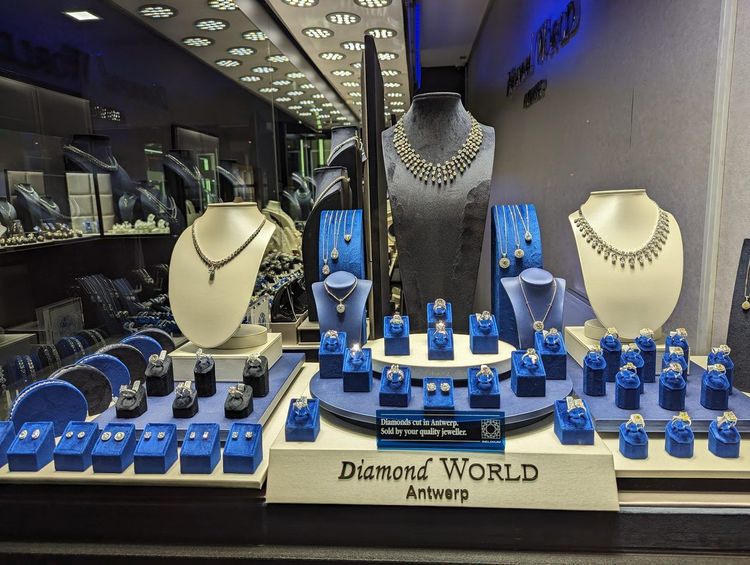
Antwerp is visited differently from Bruges or Ghent: less contemplative, livelier, more urban. It is Belgium's second city, Europe's second port, and the world centre of the diamond trade. 85% of the world's rough diamonds pass through the Diamond Quarter near the central station every year. That figure alone captures the scale of the city.
Antwerp's Central Station is worth the trip in its own right. This neo-baroque cathedral built between 1895 and 1905 has a glass vault 57 metres high; the traveller arriving from Brussels need not even leave the building to be awestruck. Arrive 15 minutes before your connection to photograph it without the rush-hour crowds.
The Antwerp Grand Place (Grote Markt) is flanked by 16th-century guild facades and dominated by the Brabo Fountain, which depicts the city's founding legend: the Roman soldier Silvius Brabo supposedly cut off the hand of the giant Druon Antigon to free the river boatmen. Notre-Dame Cathedral in Antwerp (Handschoenmarkt 1, 2000 Antwerp, rated 4.6/5 on Google with 13,110 reviews), steps away, contains four large canvases by Rubens in its chapels, including the famous Descent from the Cross (1614) — one of the rare places to see the master in his original context, without glass or cold museography.
For another side of Antwerp, head to the MAS (Museum aan de Stroom) on the rehabilitated former docks: 10 floors of collections on the city's port and global history, with a free panoramic terrace at the top. The surrounding docklands, with their warehouses converted into lofts, galleries and restaurants, embody Belgian architectural recycling at its finest. Antwerp is 45 minutes from Brussels by train, with departures every 15 to 30 minutes.
4. The Soignes Forest
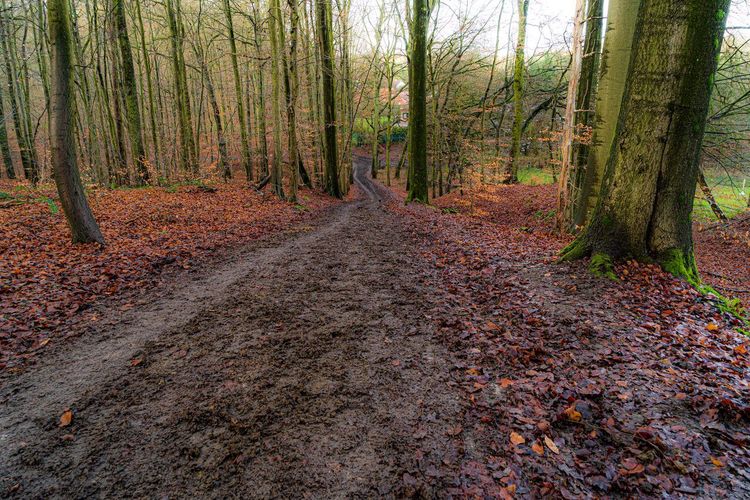
On the south-eastern edge of Brussels, the Soignes Forest (Drève du Comte, 1170 Watermael-Boitsfort, rated 4.7/5 on Google with 3K reviews) is a remnant of the vast Charcoal Forest that once covered all of central Belgium. Its 4,421 hectares of century-old beech trees make it the largest forested massif in the Brussels region, and UNESCO listed it in 2017 among Europe's primeval beech forests, alongside forests in Albania and Ukraine.
The beeches grow so straight and so densely that their canopies form a continuous vault: light filters through as if in a Gothic nave, and the silence is broken only by the cracking of branches and the distant drumming of a great spotted woodpecker. The drèves (avenues lined with beeches) were laid out in the 17th century for royal hunts; some stretch 8 km without a single bend. In autumn, falling leaves copper the silver-grey trunks and turn every avenue into a golden tunnel.
Several access points from the municipalities of Auderghem, Watermael-Boitsfort and Uccle. The Drève du Comte car park is the busiest on Sunday mornings; arrive before 9am to have the beeches to yourself. Cycling paths and equestrian trails cross the massif. Free entry year-round.
5. The Meise Botanic Garden
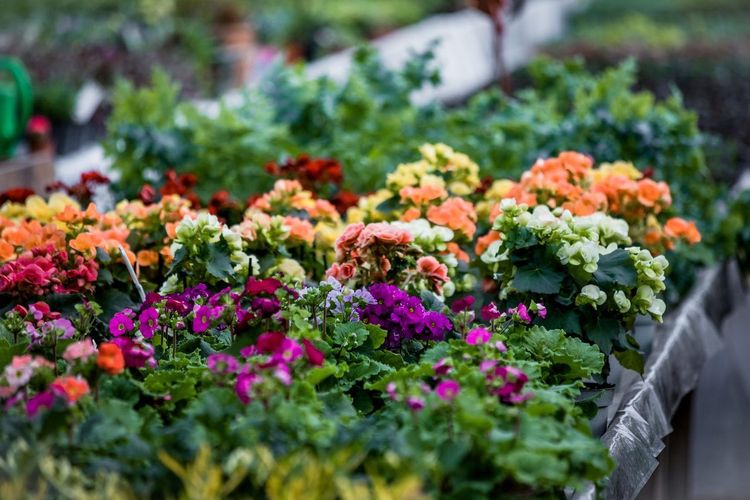
Just 13 km north of Brussels, the National Botanic Garden of Belgium (Nieuwelaan 38, 1860 Meise, rated 4.6/5 on Google with 8,324 reviews) is one of the largest botanic gardens in the world: 92 hectares of living plant collections, an 18th-century neo-Gothic castle at its centre, and tropical greenhouses sheltering more than 18,000 different species. It is said to be one of Europe's least-known botanical institutions for its size, which makes it a haven of calm even on summer weekends.
The Plant Palace, the large central greenhouse, is particularly spectacular in winter: when the Belgian cold turns the outside world into grey monochrome, the tree ferns and banana plants inside reach 12 metres under warm overhead light. The peak rhododendron flowering in May is the other highlight of the year. Admission: €10 adult, free for under-6s.
If you wish to deepen your cultural exploration of Brussels before heading to Meise, our selection of 8 museums to visit in Brussels complements this nature escape perfectly.
6. Waterloo and Its Historic Sites
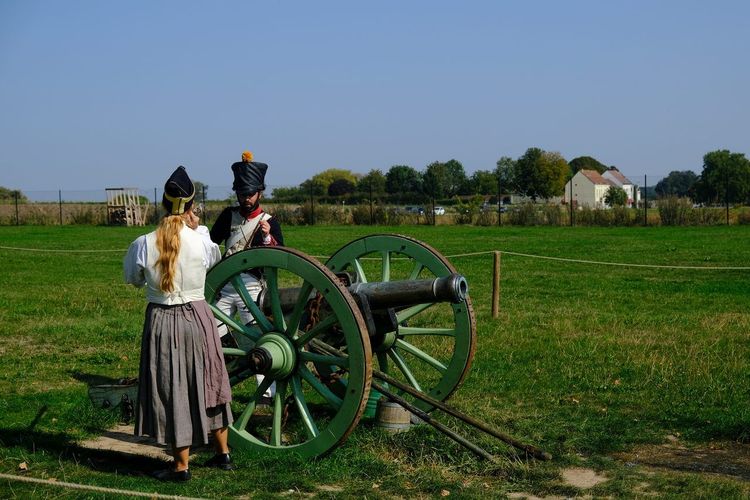
On 18 June 1815, an agricultural plain in Brabant Wallon changed the course of Europe. Napoleon's final defeat 20 km south of Brussels brought 15 years of Napoleonic Wars to an end and redrew the map of the continent. The site is today one of the best-preserved battlefields in Europe, and its interpretation was thoroughly renewed following the memorial's reopening in 2015.
The Waterloo 1815 Memorial (Route du Lion 1815, 1420 Braine-l'Alleud, rated 4.5/5 on Google with 6,195 reviews) is the main museum: a 360° panoramic projection recreates the final hours of the battle with striking sound and visual effects. Costumes, weapons and period testimonies complete the immersion. Allow 2h30 to 3h for the full visit. Right next door, the Lion's Mound rises 43 metres above the plain; its 226 steps reward visitors with a view of the battlefield as it was in 1815: rolling, open, exposed to every wind.
Napoleon's Last Headquarters in Vieux-Genappe (15 km from the battlefield) is a more intimate museum that recreates the hours preceding the defeat from the Emperor's perspective. For those who have read Victor Hugo's digression on Waterloo in Les Misérables, the visit takes on an additional literary dimension.
7. La Hulpe Castle
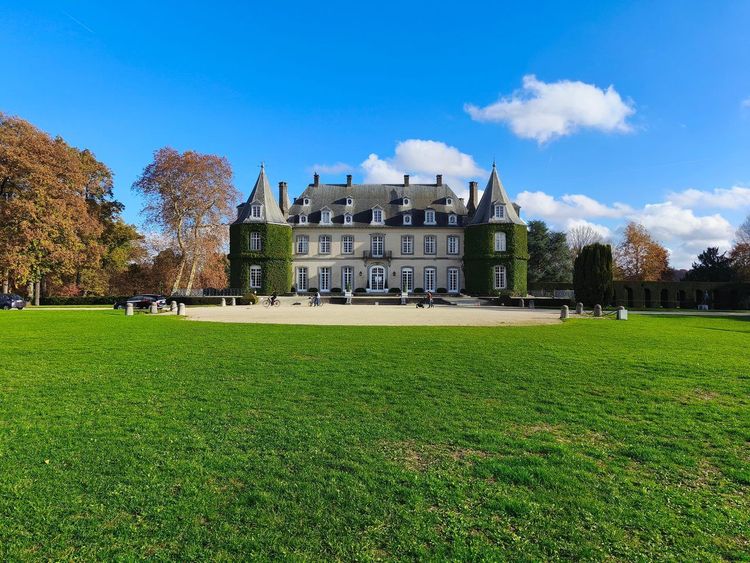
Just 20 km south-east of Brussels, the Solvay Estate at La Hulpe is one of Belgium's finest landscaped parks: 220 hectares of forests, ponds and meadows surrounding the castle that Ernest Solvay, inventor of the industrial process for manufacturing sodium carbonate, had built at the end of the 19th century. The park is freely accessible year-round, with no ticket and no set hours.
Forest paths follow streams and pass through canopies of century-old oaks. In April, the daffodil flowering in the open meadows creates a seasonal spectacle that few Brussels residents know about. Ideal for a Sunday picnic with children, just 25 minutes by car from the centre.
8. Villers-la-Ville Abbey
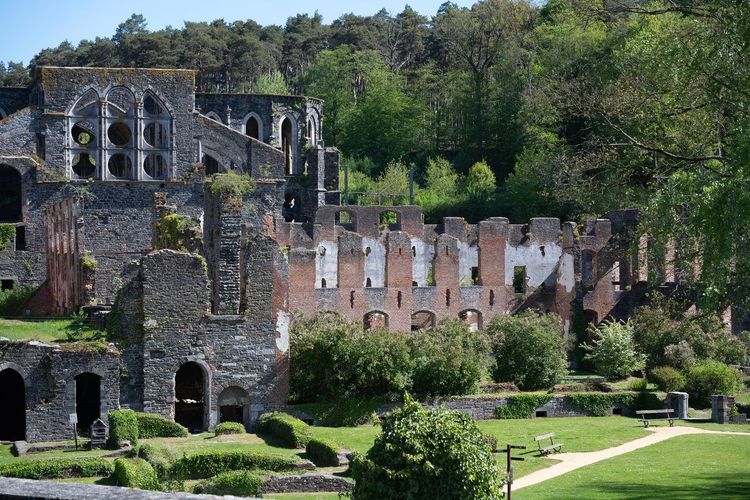
The ruins of Villers-la-Ville Abbey (Rue de l'Abbaye 55, 1495 Villers-la-Ville, rated 4.7/5 on Google with 6,340 reviews) rank among the most photogenic in Belgium, and are arguably one of the most underrated day trips less than 35 km from Brussels. Founded by Cistercian monks in 1146, the abbey flourished for six centuries before being looted and burned by the French revolutionary armies in 1796. What remains is magnificent: an abbey church whose nave measures 90 metres long, vaults still standing on columns with sculpted capitals, and a refectory open to the sky.
The site is particularly striking at sunset, when the blonde stone takes on an ochre hue and shadows lengthen the pointed arches. In summer, classical music concerts are held here under the stars. Allow 1h30 to visit and bring sturdy shoes: the nave floor is unevenly paved. Admission: €8 adult.
9. Pairi Daiza, the Animal Kingdom
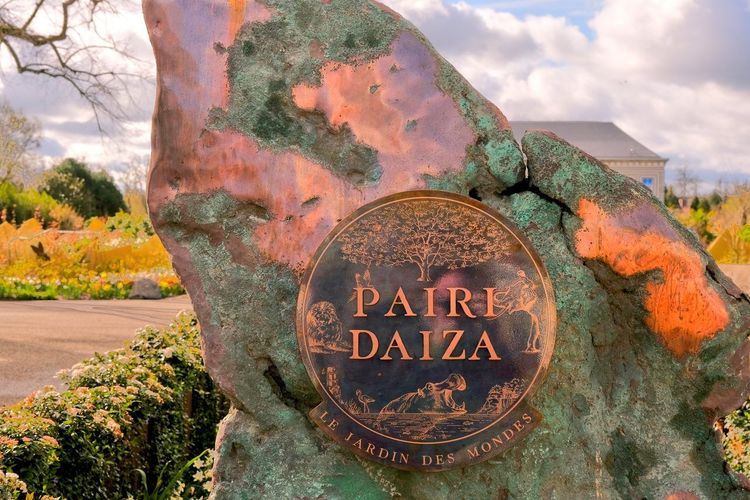
Pairi Daiza (Domaine de Cambron, 7940 Brugelette, rated 4.6/5 on Google with 83,403 reviews) is no ordinary zoo. Founded in 1994 on the former estate of the Cambron-Casteau Abbey (province of Hainaut, 60 km west of Brussels), it has been voted best zoo in Europe on multiple occasions, notably at the Diamond ThemePark Awards and by the German magazine Parkscout. Across 70 hectares of themed gardens, 8,000 animals from more than 600 species cohabit in spaces designed to replicate their natural environments, divided into distinct worlds (Asia, Africa, the aquatic world).
Giant pandas Hao Hao and Xing Hui, who arrived from China in 2014, were long the park's most celebrated residents. Their first cub, Tian Bao, born at Pairi Daiza in 2016, was the first panda born in Belgium; as stipulated by the cooperation agreement with China, he returned to Chengdu at the end of 2024 with his younger siblings, but the breeding couple continues to welcome visitors. The Asian pavilion recreates the architecture of the Forbidden City in miniature, with glazed-tile roofs and bamboo gardens. The Atlantis Garden houses sharks and rays in a 25-metre underwater tunnel. The World of Birds zone releases 3,000 birds to fly freely above visitors.
Book dated tickets online in advance (from around €44 adult, reduced rates for children): the park attracts over a million visitors a year and weekend entry queues can exceed 45 minutes from 10am. Arrive at opening time at 9am to access the panda pavilion before the crowds. Allow a full day.
10. Leuven, a Medieval University City
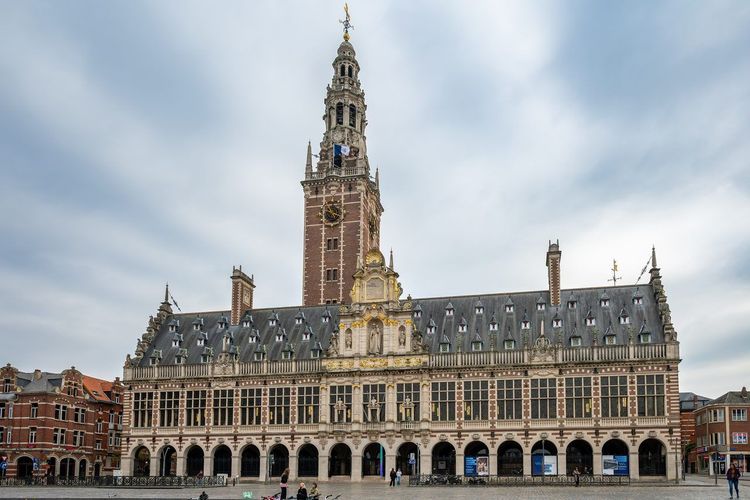
Leuven (Louvain in French) is 30 minutes from Brussels by train, and yet many Brussels residents have never been. That is a mistake: one of Europe's oldest universities (founded in 1425) has given this Flemish city a Gothic town hall that Viollet-le-Duc considered the most beautiful in northern Europe, one of the liveliest student squares in the country, and a brewing tradition the whole world tries to imitate.
The Grote Markt (Main Square) of Leuven is dominated by this three-turreted town hall covered with 236 niches filled with statues of saints, scholars and counts of Leuven. Saint Peter's Collegiate Church opposite houses the famous triptych by Dirk Bouts (15th century) and a Romanesque crypt dating from the earliest centuries of Christianity in Flanders. Between the two monuments, terraces packed with students are a reminder that Leuven remains a living city.
The Stella Artois brewery was born here in 1926 (the Christmas beer 'Den Hoorn' dated back to 1366). Guided tours now combine Gothic heritage with craft brewery circuits. The Oude Markt (Oude Markt, 3000 Leuven, rated 4.4/5 on Google with 2K reviews) (the Old Market), nicknamed 'the longest bar in Europe', concentrates over thirty establishments around a pedestrian square, the ideal way to round off the visit.
Before heading out on a day trip, the Ryo Brussels audio guide gives you all the keys to reading the capital before venturing out towards Leuven and its Flemish neighbours.
11. Mechelen, a Gem of Flemish Goldsmithing
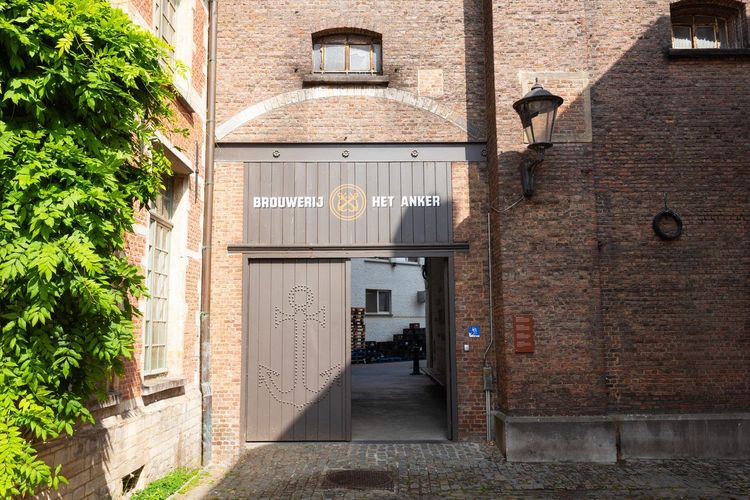
Mechelen (Malines in French) is just 25 minutes from Antwerp and 30 minutes from Brussels, a positioning that makes it an ideal stopover. The city was the capital of the Low Countries under Margaret of Austria (1507–1530), and that period of glory left it a remarkable architectural heritage that few foreign visitors suspect.
Saint Rumbold's Cathedral has an unfinished tower 97 metres tall — it was originally meant to reach 167 metres, which would have made it the tallest Christian tower in the world. The interior houses Van Dyck's Crucifixion (c. 1627), one of his most accomplished religious compositions. The city competes with Bruges for the title of world carillon capital: two carillon schools train musicians from around the world, and belfry concerts ring out over the Grand Place every weekend.
The Mechelen Grand Place is lined by the town hall (the former Cloth Hall, 15th century) and the Schepenhuis, two Gothic buildings that give it an intimate character. Take time to stroll along the Dijle, the river running through the city, before catching the train back. The walk takes twenty minutes and passes several Renaissance facades that most tourists miss.
12. Tervuren Park
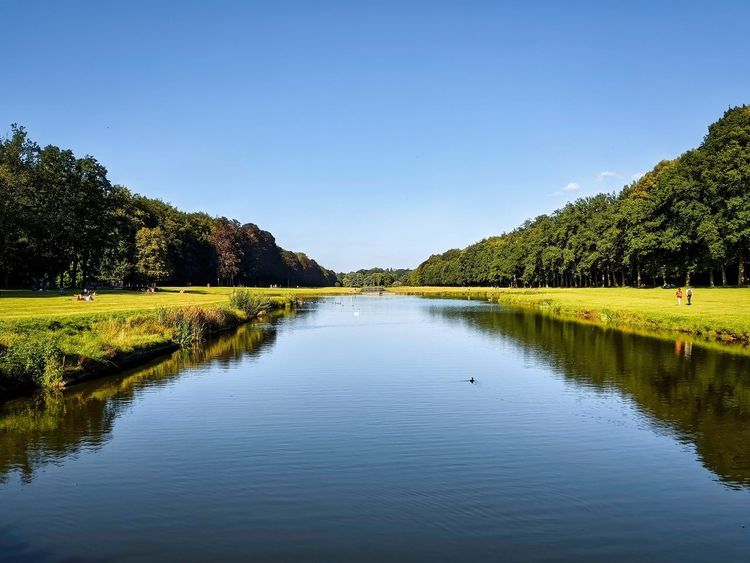
15 km east of Brussels, accessible by tram from the city centre (line 44 from Montgomery), Tervuren Park is the green setting of the Royal Museum for Central Africa (Leuvensesteenweg 13, 3080 Tervuren, rated 4.2/5 on Google with 1,497 reviews), one of the world's largest museums dedicated to sub-Saharan Africa, reopened in 2018 after a ten-year renovation. The renovation profoundly revised the colonial narrative of the original museum, built under Leopold II, to incorporate African perspectives and question the legacy of Belgian colonisation in the Congo.
The park itself is worth a walk independently of the museum: intertwined ponds, avenues of lime trees, a rose garden and an arboretum compose 200 hectares of royal greenery laid out in the 17th century. In summer, open-air concerts are held there on Sunday afternoons. Museum admission: €12 adult.
13. Hallerbos and Its Bluebells
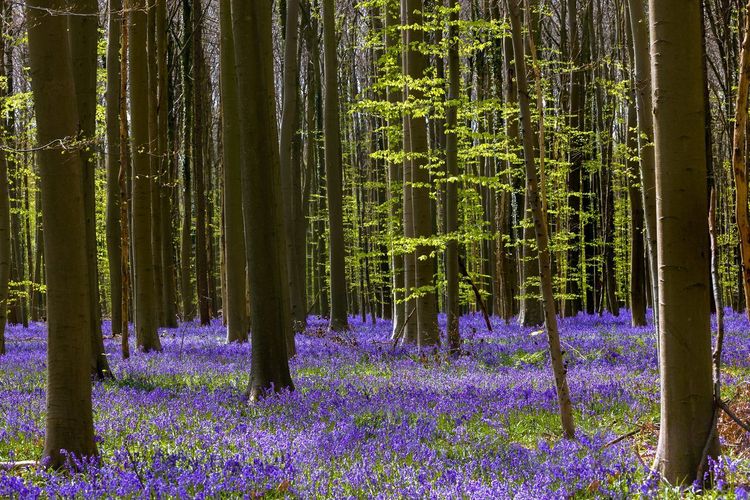
The Hallerbos (Hal Forest), 20 km south of Brussels, is known worldwide for a phenomenon that lasts only two to three weeks a year, in April: millions of wild bluebells carpet the ground in an intense blue-violet beneath century-old beech trees. Photographers travel from across Europe to capture this floral tapestry.
Outside bluebell season, the forest is a pleasant walking destination in any season, with 6 marked trails ranging from 2 to 10 km. Access is free year-round, but during flowering, a timed-entry reservation system is put in place to limit pressure on the soil: register several weeks in advance on the Agentschap Natuur en Bos website. The exact timing varies each year depending on spring weather.
14. Namur, Confluence and Citadel
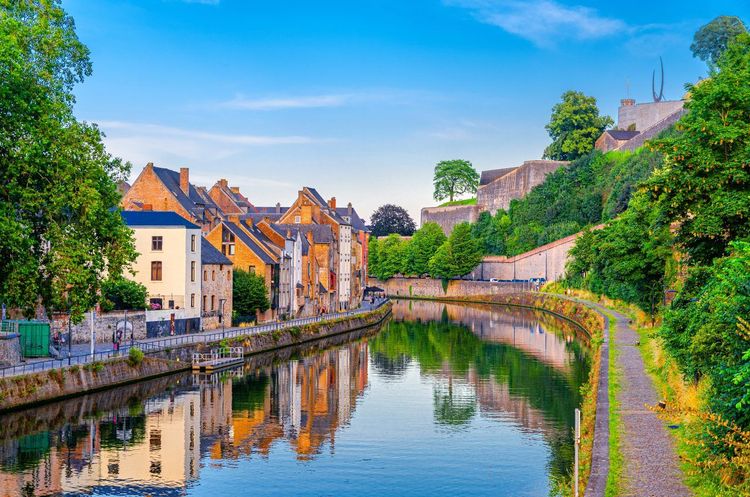
Namur is the capital of Wallonia and one of the most appealing cities in the Meuse basin. 1 hour from Brussels by train, it sits at the confluence of the Meuse and the Sambre, dominated by a citadel whose fortifications date back to the Middle Ages and were continuously remodelled until the 19th century, making it Belgium's largest citadel.
A tourist train climbs up to the citadel for those who prefer to avoid the walk. At the top, the view over the confluence of the two rivers and the slate rooftops of the old town is among the most beautiful in Wallonia. The treasure of Saint Aubain Cathedral (Place Saint-Aubain 1, 5000 Namur, rated 4.3/5 on Google with 415 reviews) houses one of the most important collections of medieval goldsmithing in Belgium: reliquaries, chalices and episcopal croziers from the 12th to the 15th century, preserved under exemplary museum conditions.
The old town can be explored on foot in two hours: the lanes around the covered market and the Rue de l'Ange are packed with artisan chocolate makers and praline makers that Belgian cocoa enthusiasts will not want to miss. A former distillery in the Faubourg de Namur, converted into a museum of Meuse spirits, is a discreet address well worth a detour. Enough to fill a day before heading back to Brussels, whose historic quarters our audio walking tour brings to life.
15. Ostend, the Belgian Coast
Ostend, 1h20 from Brussels by direct train, is the main city on the Belgian coast, a coastline stretching 67 km of fine sand between France and the Netherlands, served by a coastal tramway linking 68 seaside municipalities along the shore on a single line.
The city has a royal past: Leopold II made it his summer residence and had the royal villa built there. James Ensor, one of the most important painters of Belgian Symbolism, was born here in 1860 and lived here all his life; his house-museum on Vlaanderenstraat is a cult address for art lovers. The MU.ZEE, a museum of modern and contemporary art, holds a permanent collection dedicated to 20th-century Flemish and Belgian Expressionism.
If you have a full day, the De Lijn coastal tramway allows you to discover wilder beaches: De Panne to the west with its dunes 35 metres high, or Knokke-Heist to the east, more upmarket. For local specialities, the Ostend grey shrimp, fished on horseback on the Oostduinkerke beach, is an institution: the harbour brasseries serve them as croquettes or simply peeled in a bowl with butter.
To plan your day from Brussels before heading to the coast, find the top 6 activities to do in Brussels that our team recommends for a first day.
16. Kortrijk, Pearl of the Lys
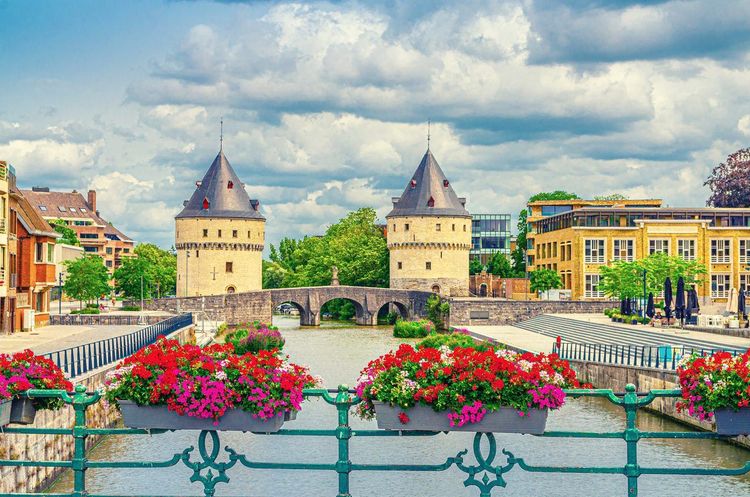
Kortrijk (Courtrai in French), 80 km west of Brussels, contains two monuments that are worth the trip on their own. The Broeltorens (Broelkaai, 8500 Kortrijk, rated 4.4/5 on Google with 1,529 reviews), two 13th-century medieval towers flanking the bridge over the Lys, are the city's symbol and one of Flanders' best-preserved fortified ensembles. The Kortrijk 1302 outdoor monument dedicated to the Battle of the Golden Spurs of 11 July 1302 recalls the victory of the Flemish militias on foot over the French cavalry: this date is now Flanders' national holiday.
The Texture Museum traces the history of flax, the plant that brought prosperity to Kortrijk for centuries. The city remains a textile production centre, and some workshops can still be visited. Half a day is enough to tour the historic centre.
17. Huy, Namur's Overlooked Rival
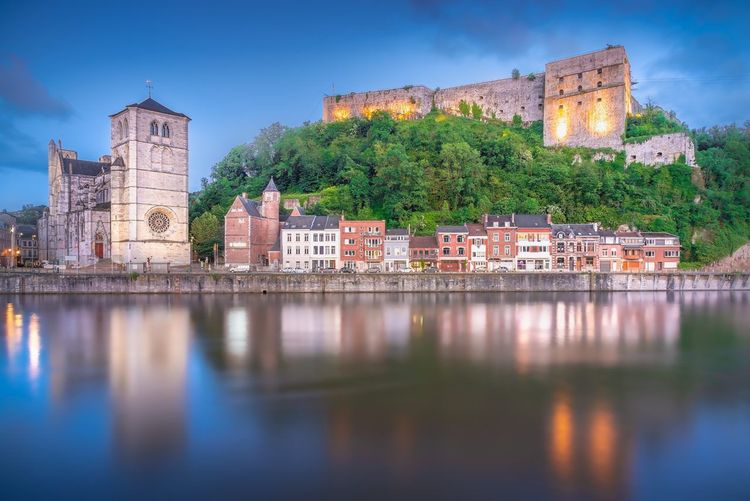
Huy is often overshadowed by Namur in tourist guides. Wrongly so: this small city of 21,000 inhabitants 80 km from Brussels has a Notre-Dame Collegiate Church featuring 'Li Rondia', the largest Gothic rose window in Belgium, a citadel perched 135 metres above the Meuse accessible by cable car, and the Bassinia, a 14th-century quadrangular medieval fountain listed among the four wonders of Wallonia.
Huy's citadel served as a prison during the Second World War; a memorial there recounts the history of the deportees. The view from the ramparts over the loop of the Meuse is remarkable.
18. Beloeil Castle
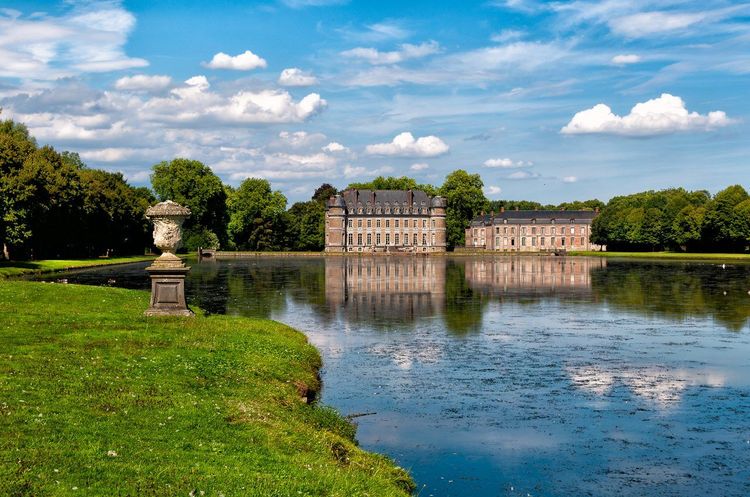
The Beloeil Castle (Rue du Château 11, 7970 Beloeil, rated 4.2/5 on Google with 2,222 reviews), 65 km south-west of Brussels, is nicknamed the 'Belgian Versailles', a flattering comparison that is not entirely undeserved. The property of the de Ligne family since the 14th century, it is still inhabited today by the Prince de Ligne. The 25-hectare French formal garden, with its pools, star-shaped vistas and trimmed hornbeam hedges, was designed in the 18th century in the tradition of the great royal gardens.
The interior, accessible from May to October, houses a library of 22,000 volumes and a collection of portraits, porcelain and furniture accumulated over thirty generations of princes de Ligne. Castle + garden admission: €12.
19. Ypres and Its Memorials
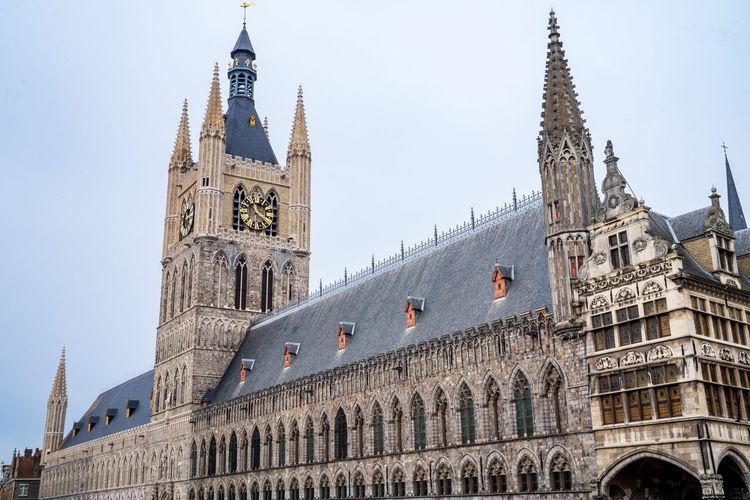
Ypres (Ieper) was 98% destroyed during the First World War — one of the rare cities in the world to have been so completely razed by fighting — then rebuilt identically during the 1920s. The result is paradoxical: a medieval city that appears authentic but is in reality a century old, reconstructed brick by brick.
The reconstructed Cloth Hall houses the In Flanders Fields Museum, Belgium's most comprehensive Great War museum. The storytelling technology is impressive: each visitor receives an RFID bracelet that allows them to 'choose' a soldier from among the millions who fell in Flanders and follow their fate throughout the visit. Allow 2h to 3h for the visit.
Every evening at 8pm since 1928 (except during the Second World War occupation), the Last Post Ceremony takes place under the Menin Gate: the buglers of the Ypres fire brigade sound the last call in tribute to the soldiers who fell in Flanders. Free, open to all, extraordinarily simple and moving. Thousands of people attend every evening in summer; arrive half an hour early to find a spot.
20. Lille, French Elegance Within Train Reach
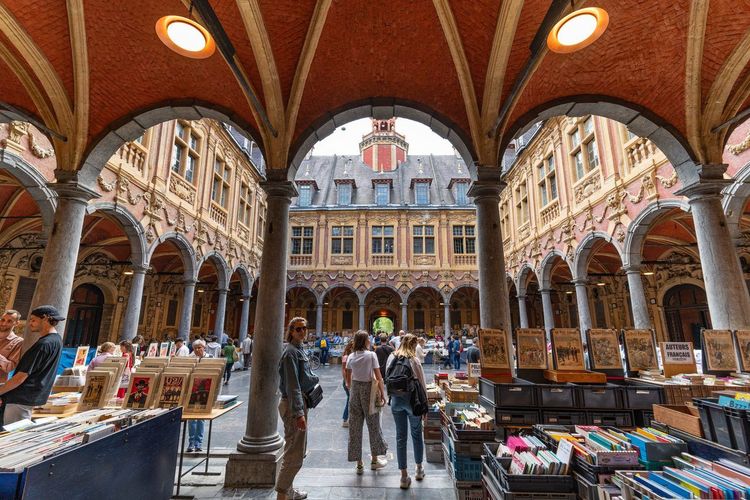
Lille, 1 hour from Brussels by Thalys, is technically in France, but it falls within Brussels's natural sphere of influence and is easily visited as a day trip. The Vieille-Bourse, with its inner courtyard where chess players gather every Sunday, is one of the finest examples of 17th-century Flemish Baroque architecture on French soil.
The Palais des Beaux-Arts de Lille is considered the second museum in France after the Louvre: Rubens, Courbet, 16th-century Flemish paintings and an entire room of relief maps of 17th-century fortified towns. Admission: €7 adult, free on the first Sunday of the month. The Vieux-Lille market on Sunday mornings, around the Place du Concert, is one of the liveliest markets in northern France.
21. The Villages of the Pajottenland
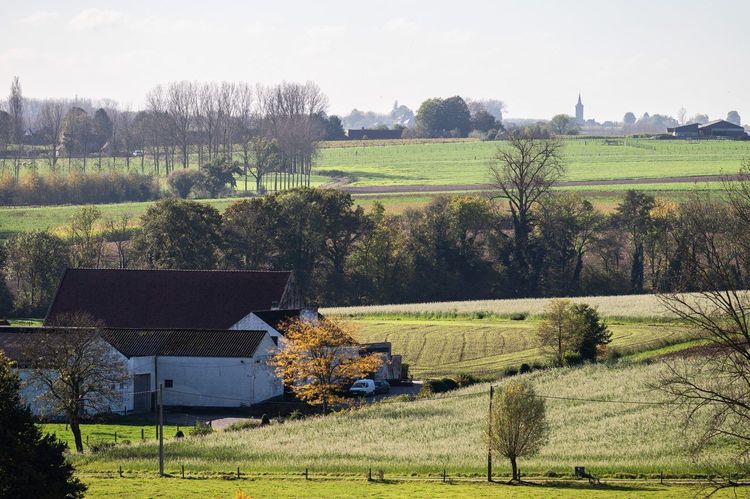
The Pajottenland is an agricultural plateau south-west of Brussels, between the capital and Geraardsbergen, dotted with small Flemish villages that have retained their rural character despite the proximity of the metropolis. This region is the historic birthplace of lambic, the spontaneous-fermentation beer that gives rise to gueuze and kriek — sour, complex flavours that craft beer enthusiasts worldwide try to replicate without ever quite succeeding outside this precise geographic zone.
The traditional breweries of the Pajottenland — Boon in Lembeek, 3 Fonteinen in Beersel, Tilquin in Rebecq — open on certain weekends for guided visits with tastings. The region is best explored by bicycle, along the cycling paths that follow the Senne and the Dyle. A day's pedalling between breweries and square-towered village churches makes for a memorable excursion.
22. The Wallonia Trappist Beer Route
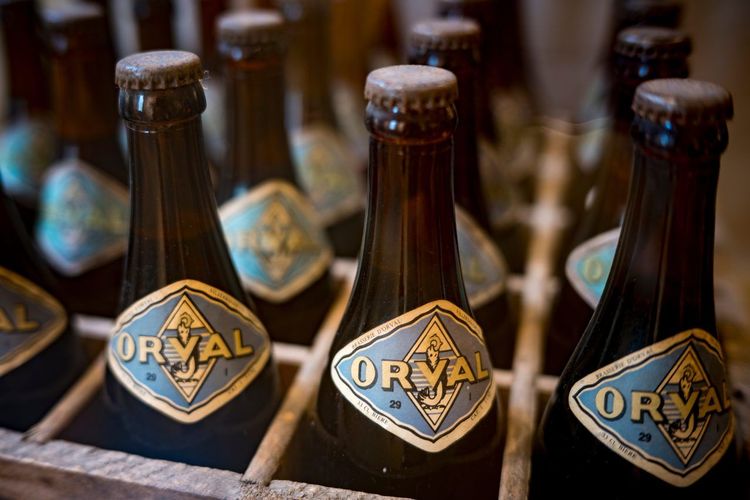
Wallonia produces some of the world's most renowned Trappist beers: Orval, Rochefort, Chimay and Leffe are abbeys whose beers are exported worldwide. From Brussels, a 2-to-3-day route allows you to visit the main producing abbeys, several of which are less than 2 hours' drive away.
Chimay Abbey (Hainaut) is the only Trappist abbey to offer guided visits with tastings at its Welcome Centre. The village of Chimay also has an artisan cheese maker and a cooperative dairy whose products are as well-known as the beer. Orval Abbey (province of Luxembourg), further away at 2 hours from Brussels, has ruined 12th-century Cistercian architecture that rivals Villers-la-Ville, gardens to visit and a unique beer brewed with Brettanomyces yeast.
23. Baarle-Nassau and Baarle-Hertog, Europe's Strangest Border
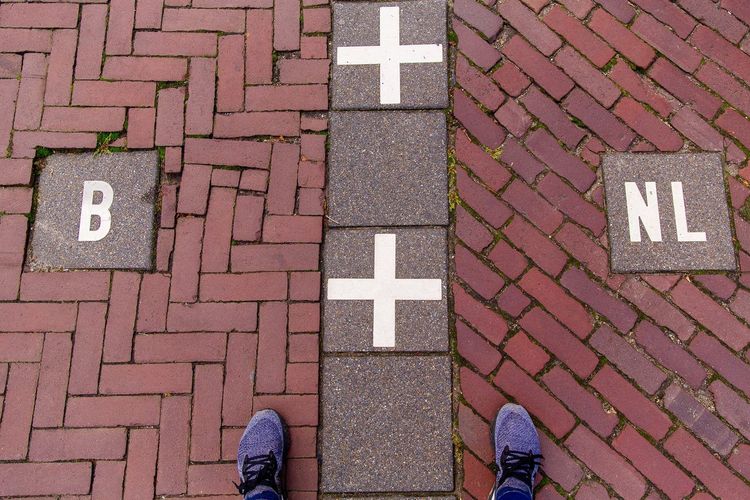
80 km north of Brussels, two intertwined municipalities form one of Europe's most peculiar geographical curiosities: Baarle-Nassau is Dutch, Baarle-Hertog is Belgian, and the two municipalities interpenetrate in some twenty enclaves and counter-enclaves. Black and white markers on the pavements mark the border that runs through the middle of certain houses, cutting across streets, gardens and even restaurants.
The tourist office provides a detailed map of the borders. A 90-minute walk allows you to follow them on foot and 'cross' from Belgium into the Netherlands dozens of times. Anachronistic, photogenic, unforgettable.
24. Durbuy, the World's Smallest City
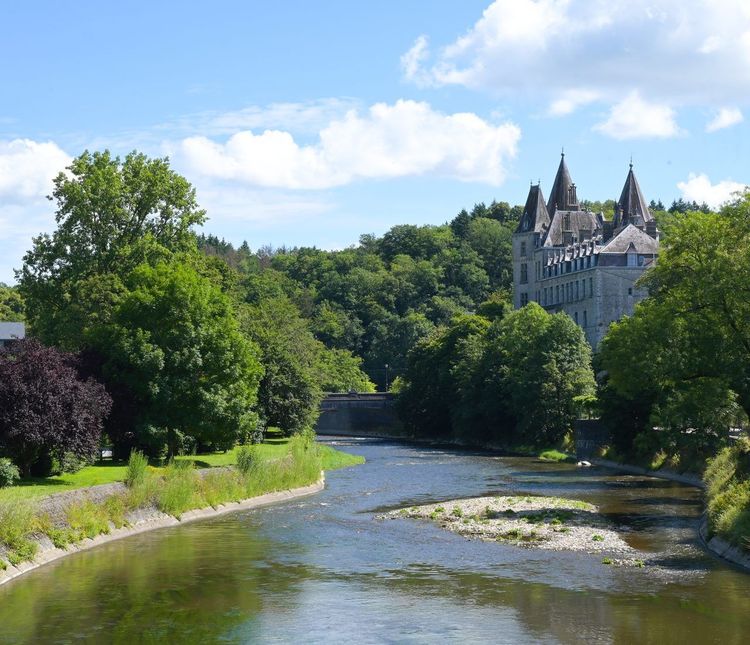
Durbuy, in the Belgian province of Luxembourg, lays claim to the title of 'world's smallest city': barely 400 inhabitants within its historic walls. The title is debatable, but the town is real and charming — medieval lanes between grey limestone houses, a castle overlooking a bend in the Ourthe, a cobbled Grand Place lined with gastronomic restaurants.
1h30 from Brussels, Durbuy pairs well with Namur for a full day in Wallonia. Kayaking on the Ourthe and mountain biking in the Ardennes hills add an outdoor dimension for the more active visitor.
25. Enghien Park
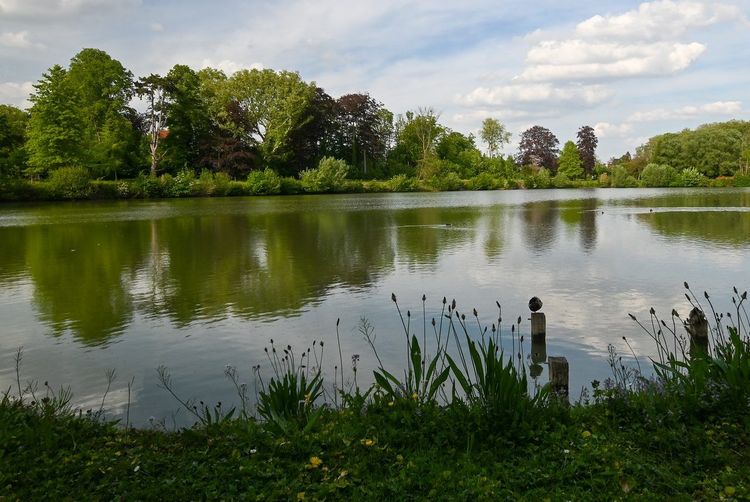
35 km south-west of Brussels, Enghien Park (Parc d'Enghien, 7850 Enghien, rated 4.5/5 on Google with 3,364 reviews) is one of Belgium's largest historic parks: 185 hectares of French and English gardens, inherited from the princes of Arenberg who resided here from the 16th to the 20th century. Listed as a historic monument, the park is open from March to October.
The central lake, the neo-Gothic pavilions and the sculptures scattered along the avenues make Enghien Park an elegant and restful walk, off the beaten tourist track. A fine alternative for a green Sunday away from the crowds of Hallerbos or the Soignes Forest.
FAQ
What is the best day trip from Brussels?
Bruges remains the obvious answer for a first day trip: 1h10 by train, a medieval UNESCO-listed centre, canals and century-old breweries. For nature lovers, the Soignes Forest offers an alternative just 30 minutes from the capital. For a powerful historical site, the Waterloo 1815 Memorial is one of the most memorable visits in Belgium.
Can you do Bruges as a day trip from Brussels?
Yes, comfortably. Direct Brussels–Bruges trains run every 30 minutes (journey: 1h10, return ticket around €18 on weekdays off-peak). Leaving at 8:30am gives you 6 to 7 hours on site, enough for the Markt, the belfry, the canals and two museums.
Ghent or Bruges: which one to choose?
Both deserve a visit, but they offer different experiences. Bruges is more picturesque and more intimate; Ghent is livelier, more student-oriented, more resilient to weekend tourist crowds. Bruges in winter or spring, Ghent in summer for the Gentse Feesten.
What are the best day trips from Brussels with children?
Pairi Daiza is the answer without hesitation: the zoo-garden in Brugelette offers a full day with giant pandas, sharks and free-flying birds. Hallerbos in April (bluebell flowering) and the Soignes Forest are free and memorable options. Walibi Belgium, 30 km away, is the alternative for roller-coaster fans.
How far are the main cities around Brussels?
Bruges: 96 km (1h10 by train). Ghent: 56 km (32 minutes). Antwerp: 48 km (45 minutes). Leuven: 28 km (25 minutes). Namur: 63 km (1h by train). Ostend: 110 km (1h20). All these cities are directly accessible from Brussels's three main stations (Bruxelles-Midi, Bruxelles-Central, Bruxelles-Nord).
These 25 day trips from Brussels cover only a part of what Belgium and its immediate surroundings have to offer. The real surprise, when you settle in Brussels for a few days, is realising just how exceptional the country's cultural and natural density is within such a short radius. To start with the capital itself before venturing further, the Brussels audio walking tour runs for 2h40 and 26 commented stops through the historic neighbourhoods — the best way to understand Brussels before setting out to explore its surroundings.
For all your future getaways from the Belgian capital, the Ryo app accompanies you from the Manneken-Pis to the battlefields of Flanders.
À lire également