© Shutterstock
 Votre guide Ryo
Brussels with Kids: Complete Itinerary and Best Addresses in 2026
At a child's eye level, Brussels is anything but an institutional capital. A six-year-old couldn't care less about the European Parliament, but they will remember for the rest of their life the first time they saw a 61-centimetre bronze statue urinating in front of a hundred delighted tourists. Visiting Brussels with children is exactly that: rediscovering a city through its absurd details, its comics murals painted on blank gable walls, and its waffles overflowing with sugar. To get a sense of the distances before diving into the thick of things, the Ryo audio-guided tour of Brussels allows you to identify in advance the neighbourhoods most worth exploring with young travellers.
Over three days on the ground, you can encounter a room housing thirty iguanodon skeletons 125 million years old, climb inside a steel sphere 18 metres in diameter built for the 1958 World's Fair, and taste a waffle that has nothing in common with the one from Liège. This guide details a day-by-day itinerary, the museums that genuinely hold children's attention, the parks where you can catch your breath between visits, and the full-day excursions to a zoo or amusement park when the city feels too small for the group's energy.
The Belgian capital lends itself particularly well to a city break thanks to its short distances: the historic centre, the European quarter and the Heysel plateau are all less than twenty-five minutes away by metro. A three-day weekend is more than enough to cover the essentials without spending the whole stay on public transport.
Day 1: the Grand-Place, Comics and Puppets of the Historic Centre
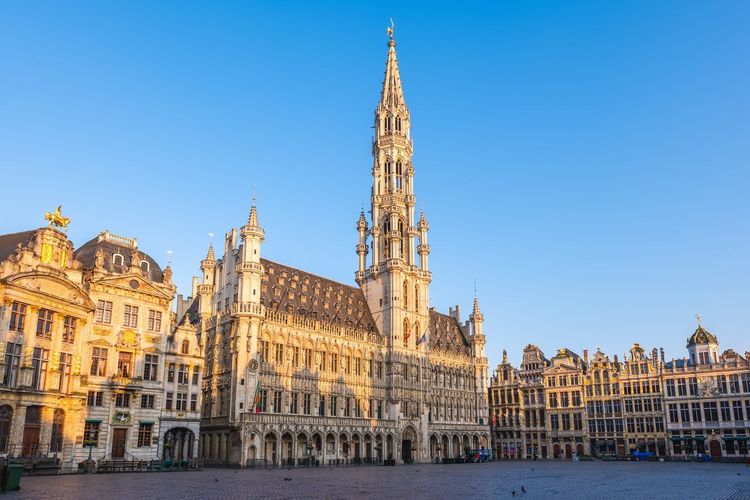
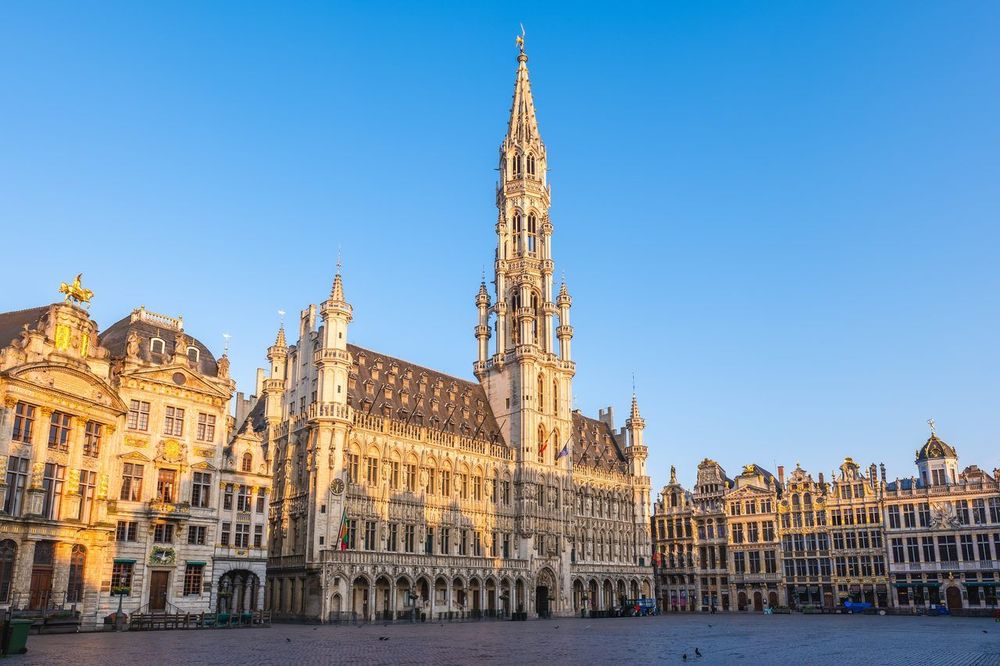
Start early, before the tour groups invade the cobblestones. The Grand-Place is breathtaking at 9 in the morning: the gilded facades of the guild houses, rebuilt after the French bombardment of 1695, catch a light that midday photographs never capture. Tell the children that this square almost disappeared in a single night of cannon fire, then let them search for the sculpted figures on the cornices — a game that easily fills twenty minutes.
Five minutes on foot, the rue de l'Étuve leads to the Manneken Pis. The statue is only 61 centimetres tall, which often disappoints adults but always amuses children once you explain that it has a wardrobe of more than a thousand costumes, changed around 130 times a year according to a schedule set months in advance. The full collection can be visited right next door, at the Maison du Roi, where the costumes are displayed by theme: firefighter, astronaut, national footballer.
From there, move on to the comics murals trail. Brussels has around sixty painted walls scattered across the city centre, including Tintin descending a fire escape on the rue de l'Étuve, Gaston Lagaffe seemingly falling from a building on the rue du Marché au Charbon, and the clown Broussaille in his Art Nouveau setting, also on the rue du Marché au Charbon. Turn the walk into a treasure hunt: give each child three character names to find on a map and let them lead the way for an hour. It's free, it works in any weather, and it burns energy without them even noticing.
The neighbouring Marolles district is worth a detour late in the morning, especially on a Thursday, Friday, Saturday or Sunday, when the flea market is held on the Place du Jeu de Balle. Running since 1919, it is one of the oldest permanent flea markets in Europe. Children love rummaging through boxes of old toys and mismatched medals while parents negotiate over a lamp or a vinyl record. The streets around the square are also full of small permanent second-hand shops, open all week, where sellers happily let young ones handle objects without a telling-off.
For lunch, the rue Blaes is lined with small chip shops serving fries in a cone with around twenty dipping sauces — a meal that consistently pleases even the fussiest eaters. Save your appetite: the food section below details chocolate workshops and the differences between a Brussels waffle and a Liège waffle, two textures that few visitors can tell apart on the first try. If you are looking for more ideas to fill a morning in the city centre, our selection of the best things to do in Brussels is a great complement to this first day.
Late in the afternoon, head to the small rue des Six Jeunes Hommes and its miniature theatre. Théâtre Toone (Impasse Schuddeveld 6, 1000 Bruxelles, rated 4.7/5 on Google from 675 reviews) has been staging traditional Brussels puppet shows since 1830, in a room that barely seats fifty spectators and has been run for eight generations by the same family of puppeteers. All-ages performances use a delightful mix of French and Brussels dialect, and even children who don't catch every word follow the action thanks to the hand-carved wooden puppets, manipulated in full view from a walkway above the stage. Book the day before: seats go quickly at weekends, and the small room sells out from sixteen people — a fitting way to wind down after a day spent on Brussels' audio-guided tour, between the Grand-Place and Manneken Pis.
Day 2: the European Quarter, between Science and Vintage Cars
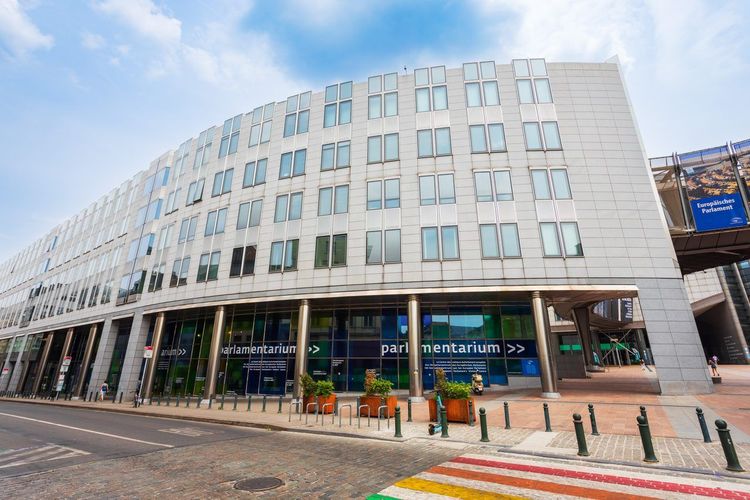
The second day is a complete change of scene. Head to the Léopold quarter, where the European institutions sit alongside one of the city's finest parks. The Parlamentarium, the European Parliament's visitor centre, is free to visit and offers an interactive trail designed to capture the attention of teenagers and younger children alike: touchscreens, scale models, multilingual audio guides that tell the story of European integration without institutional jargon. Allow an hour and a half to avoid rushing. Our dedicated guide to visiting the European Parliament details opening hours and booking tips, which is particularly useful on a Friday when school groups are less frequent.
Just behind it, the Parc du Cinquantenaire offers 30 hectares of tree-lined paths and a triumphal arch built in 1880 to celebrate fifty years of Belgium. Younger children can run freely around the ponds while older ones climb the arch's interior staircase for a panoramic view of the whole European quarter, when the monument is open to the public. The park also hosts artisan markets on certain weekends, worth a quick look before heading to the nearby museums.
Hidden inside the old halls of the same park is Autoworld, a motoring museum that lines up nearly 250 vintage vehicles, from the first steam-powered cars to 1960s limousines, including an entire section dedicated to military vehicles from the Liberation. Budding motoring enthusiasts can easily spend an hour getting lost here, especially in front of the racing models and the display cases of stripped-down engines showing the mechanics laid bare.
At the other end of the park, the Royal Belgian Institute of Natural Sciences (Rue Vautier 29, 1000 Bruxelles, rated 4.5/5 on Google from 14,638 reviews) deserves a full afternoon: its dinosaur gallery brings together around thirty iguanodon skeletons discovered in 1878 in a coal mine in Bernissart — the largest concentration of complete dinosaur skeletons ever found in Europe.
The museum is not limited to dinosaurs. Children under ten often spend the most time in the whale gallery and in the hands-on space where they handle real fossils under the supervision of staff, or in the basement vivarium of live insects, which is as fascinating as it is grimace-inducing for some parents. Plan a break at the indoor café, very busy on Wednesday afternoons and weekends: arriving at opening time, around 9:30, avoids the bulk of the school crowds.
If time allows, end the day with a leisurely stroll along the avenue de Tervueren, where tall trees and wide pavements offer a restful contrast after a day packed with visits. Parents with pushchairs particularly appreciate this stretch, which is virtually flat for several kilometres, with benches placed at regular intervals for a breather.
Day 3: Heading North, from the Atomium to Laeken
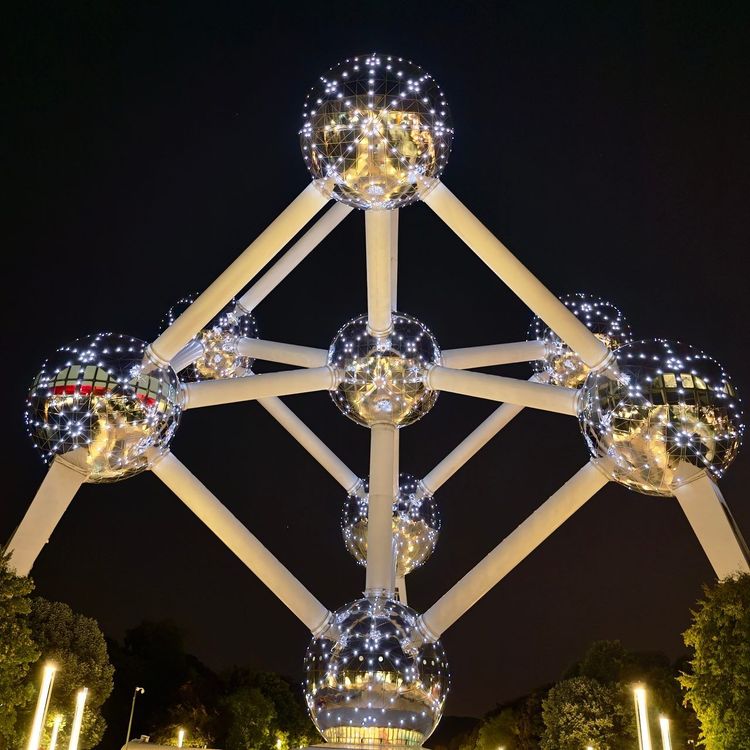
The third day revolves around the Heysel plateau, to the north of the city. The Atomium dominates the area with its nine steel spheres connected by tubes, built for the 1958 World's Fair and intended to represent an iron crystal lattice magnified 165 billion times. The central lift rises 92 metres in 23 seconds, and younger visitors love taking the escalator that runs through one of the inclined tubes, reputed to be one of the longest of its kind in Europe. Our article dedicated to the Atomium details the temporary exhibitions currently on show and the best time slots to avoid queuing.
A few minutes' walk away, Mini-Europe recreates 350 European landmarks at a scale of 1:25, from the Roman Colosseo to the Eiffel Tower and a mini Big Ben. Children under ten have enormous fun comparing sizes and spotting the mechanical animations, such as Mount Vesuvius erupting every fifteen minutes or the miniature trains whistling their way through the park. On some summer evenings, the park stays open late and illuminates the models, offering a different experience from the classic daytime visit.
In the mid-afternoon, head back down towards the Domaine Royal de Laeken (Avenue du Parc Royal, 1020 Bruxelles, rated 4.4/5 on Google from 146 reviews). The public park surrounding it can be explored freely all year round, with its rolling lawns and views of the Japanese Tower and the Chinese Pavilion, two unusual early-twentieth-century structures built for Léopold II that few visitors expect to find in Brussels. The famous royal greenhouses, meanwhile, open their doors for just one month a year, generally in spring — a tradition dating back to the reign of Léopold II himself: if your dates coincide, the visit is well worth the detour for the century-old tropical plant collections and the period metal-and-glass structures.
End the day in the Parc Josaphat in Schaerbeek, less well known to tourists but very popular with Brussels families for its tiered play areas and mini-golf. It is the ideal spot to let children burn off some energy before a last relaxed meal, away from the bustle of the city centre, and large enough to improvise a late picnic without searching long for a free patch of grass.
The Museums That Captivate Young Curious Minds
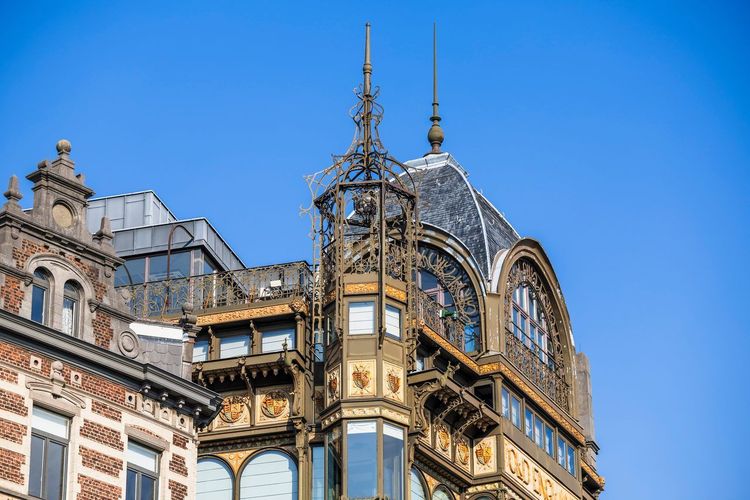
Beyond the three-day itinerary, several Brussels museums deserve a special mention because they were designed — or adapted — for a young audience. The Musical Instruments Museum (MIM), housed in the former Old England department store, an Art Nouveau building recognisable by its metal structure and large glass windows, gives every visitor an infrared headset that automatically triggers the sound of the instrument being observed. No musical knowledge is needed to enjoy it: simply approach a display case and hear the exhibited instrument play, from medieval bagpipes to the first electronic synthesisers.
In Schaerbeek, Train World houses its collections in a fully renovated 1887 station designed by the same architectural practice as the Gare Centrale. Full-size steam locomotives, carriages you can climb aboard, driving simulators: the museum fully embraces its playful dimension, making it an excellent rainy-day retreat. Budding train enthusiasts can easily spend two hours here without a moment's boredom, especially in front of the Welsh locomotive that arrived in Belgium in 1835 for the inauguration of the continent's first railway line.
Art lovers can also try the Magritte Museum (Rue de la Régence 3, 1000 Bruxelles, rated 4.3/5 on Google from 8,572 reviews), which brings together the world's largest collection dedicated to the Surrealist painter — more than 200 works, drawings and objects. Magritte's universe, with its bowler-hatted men and clouds invading interiors, speaks surprisingly well to children used to absurd imagery: many parents organise a little game of 'spot the thing that doesn't belong' in front of each canvas, a simple way to keep younger visitors engaged throughout.
Finally, the Belgian Comic Strip Centre, housed in a former textile store designed by Victor Horta, naturally completes the murals hunt from the first day, with original pages and full-scale reconstructions of artists' studios. The Art Nouveau glass roof of the entrance hall is impressive in its own right, even before you encounter the first panel. To choose from the city's rich museum offering without spending your entire stay inside, our selection of the 8 museums to visit in Brussels helps you prioritise according to the age of your children.
Parks, Gardens and Cycling Routes
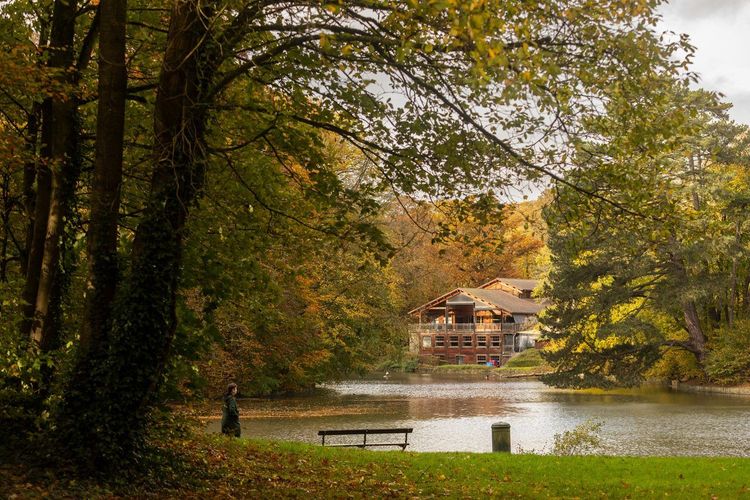
Brussels is not only a city of museums: it also has real green lungs, useful for releasing the pressure between visits. The Bois de la Cambre (Bois de la Cambre, 1000 Bruxelles, rated 4.6/5 on Google from 14,159 reviews), 124 hectares in the south of the city, organises its paths around a central lake where pedal boats can be hired in summer. Cyclists particularly appreciate this park because it connects directly to the Sonian Forest via secure cycle paths, away from traffic, along a stretch that allows you to ride side by side for several kilometres without encountering a single car.
For rentals, several points across the city offer bikes and children's trailers by the day — a practical solution for covering greater distances without exhausting small legs. Expect to pay around fifteen euros a day for a child's bike, a little more for a two-seat trailer. The Ryo audio-guided tour of Brussels identifies the quietest cycling routes through the centre, useful for connecting the main parks without getting lost in urban traffic.
Less well known to foreign visitors, the Parc Josaphat already mentioned and the Parc de Woluwe round out the map of green spaces, each with their own play areas and often a pond or a duck pond that keeps the youngest children occupied for a long time. An entire afternoon can be built around just one of these parks, without spending a penny, simply by bringing a ball or personal bicycles.
A Day at Planckendael Zoo
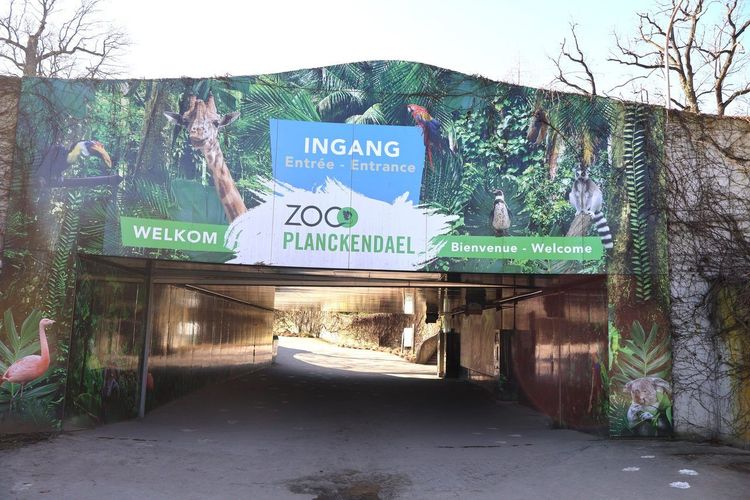
About twenty minutes by train or car north of Brussels, near Malines, Planckendael Zoo deserves a full day during your stay. Affiliated with the same group as Antwerp Zoo, it presents more than 7,000 animals across a vast landscaped park, with a strong focus on endangered species — gorillas, Asian elephants and okapis among them, a species native to the Congolese forest that few visitors have ever had the chance to see in person.
What sets Planckendael apart from more urban zoos is the space: the enclosures extend over several hectares, and a river shuttle lets you cross part of the park by boat — an activity that younger children generally demand a second time before leaving. Daily events, such as elephant feeding or a gorilla presentation, punctuate the day at set times, displayed at the entrance from the morning. Plan for the full day and bring a picnic; there is no shortage of shaded tables near the elephant enclosure. To organise this outing and other excursions around the capital, our guide to day trips around Brussels lists the options accessible by public transport.
Thrills at Walibi and Aqualibi
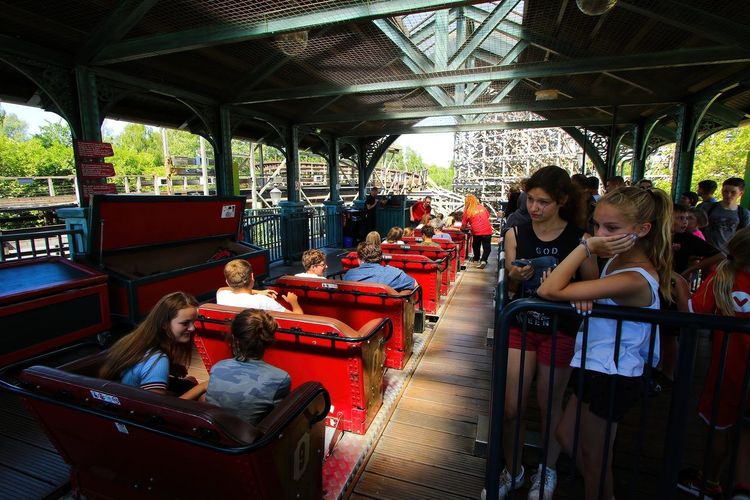
For children aged seven or eight and up, a half-day at Walibi Belgium, in Wavre, about thirty minutes south-east of Brussels, makes a pleasant change of pace after several days of museums. The park alternates family roller coasters with gentler rides for very young children, and has a dedicated zone for under-8s that avoids frustratingly long queues. Some of the headline attractions do, however, have a minimum height requirement of 1.20 metres — a detail worth checking before promising a ride to an impatient child.
Adjacent to the park, Aqualibi (Boulevard de l'Europe 100, 1300 Wavre, rated 4/5 on Google from 9,237 reviews) offers water slides and a lazy river under a vast heated glass roof — an option that works all year round, rain or shine. Many visitors combine both sites in a single day with a combined ticket, which allows you to alternate thrills and aquatic relaxation depending on how tired the group is, saving the heated pool for late afternoon when legs start to flag.
A Day Out at Plopsa Coo and Technopolis
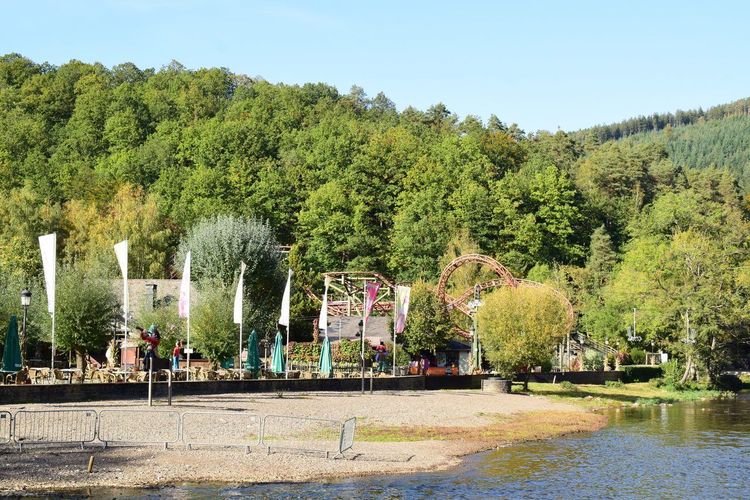
Two more distant options are worth mentioning for stays of more than three days. Plopsa Coo, in the Ardennes, about one hour and forty-five minutes by road, brings together in a single park the famous Smurfs village and the characters from Studio 100's Flemish children's series, such as Samson en Gert and Maya the Bee. It is too far for a simple afternoon, but justifies an overnight stay if the programme allows, especially since the Ardennes region itself offers plenty to fill a second day in the forest.
Closer by, in Malines, halfway between Brussels and Planckendael Zoo, Technopolis (Technologielaan, 2800 Mechelen, rated 4.2/5 on Google from 6,073 reviews) functions as an interactive science centre where children themselves operate more than 300 experiments, from a flight simulator to a static electricity workshop that makes the boldest visitors' hair stand on end. Unlike a traditional museum, everything can be touched and tested, making it an excellent alternative on days when Brussels weather decides not to cooperate with anyone.
Waffles, Chocolate and Foodie Workshops
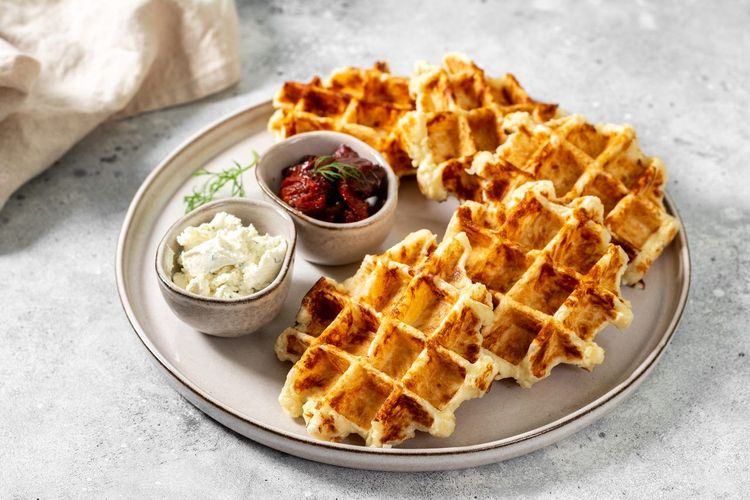
No trip to Brussels with children would be complete without a foodie detour, and the city approaches the subject with an almost scientific seriousness. The first lesson to give the children: the Brussels waffle, rectangular, crispy and light, is often eaten plain or with icing sugar, while the Liège waffle, denser, round and dotted with caramelised sugar pearls, crunches under the teeth without needing any topping. Having both tasted on the same day, bought from two different stalls, quickly becomes a game in itself, with everyone voting for their favourite by the end of the day.
On the chocolate front, Belgium produces around 600,000 tonnes of chocolate a year, most of which is exported, and several workshops in the city centre offer the chance to make your own pralines in an hour, guided by a chocolatier who explains the difference between praline, ganache and gianduja in simple terms. Children leave with their own box, which turns a simple souvenir into personal pride, and some workshops even let you customise the mould. Our top 10 culinary specialities of Brussels details the most reliable addresses for these workshops.
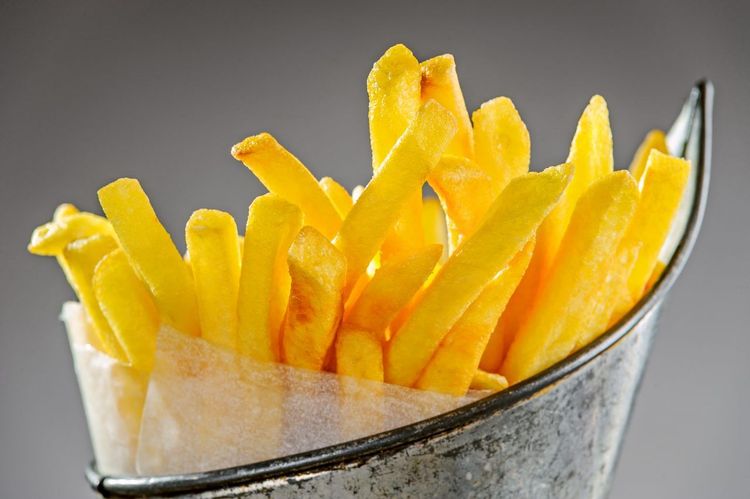
Also worth trying, more discreetly: the fried cheese bites sold in certain chip shops, and double-fried cones of chips accompanied by around twenty different sauces. Many Bruxellois consider that the real Belgian snack is eaten standing up, in the street, cone in hand, rather than seated in a tearoom, and younger visitors tend to embrace this philosophy very quickly.
What to Do in Brussels with Children on a Rainy Day
Belgian weather spares no one, and it is worth having a Plan B before you set off. The museums mentioned above (MIM, Train World, Royal Belgian Institute of Natural Sciences, Autoworld) all work perfectly as rainy-day refuges, with enough content to keep everyone occupied for several hours without going back outside.
The Galeries Royales Saint-Hubert, covered since 1847 and considered one of the first glazed shopping arcades in Europe, also allow for a sheltered stroll between chocolate boutiques and vintage shopfronts — an option underrated by visitors in a hurry. Some of Brussels' municipal swimming pools, such as those in Saint-Josse or Neder-Over-Heembeek, accept day visitors and offer a welcome aquatic interlude when the rain sets in for good.
Finally, always keep a downloaded city map on your phone: many travellers download the Ryo app before departure to have an offline audio guide and quickly move from one indoor activity to the next without losing time in the rain — a detail that matters particularly with young children who hate waiting at a bus shelter.
Where to Eat in Brussels with Small Appetites
Traditional brasseries in the city centre generally welcome children well, as long as you avoid the 8 to 9:30 pm slot when the atmosphere becomes more intimate. The Sainte-Catherine and Saint-Géry neighbourhoods have many addresses with simple children's menus, often small-portion versions of moules-frites served in individual pots that younger visitors invariably find amusing.
For a quick meal between visits, chip shops remain the safe bet: fast, inexpensive, and generally tolerant of noisy groups. Some waffle chains in the centre also have pushchair-friendly seating areas — a detail that matters when you are dragging a tired child at the end of the afternoon. In the European quarter, several neighbourhood canteens and brasseries, less touristy than those in the centre, serve generous dishes at reasonable prices — a good option after a morning at the Parlamentarium.
Where to Stay in Brussels
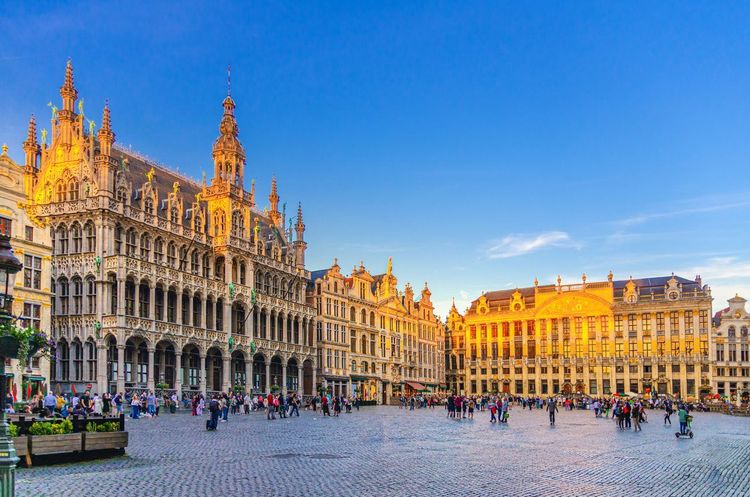
The historic centre neighbourhood around the Grand-Place has the advantage of putting everything within walking distance, but some streets remain noisy in the evenings, particularly those near the rue du Marché aux Fromages. Travellers who prefer peace and quiet often turn to the European quarter, which is more residential, or to Ixelles, where there are more apartments with a kitchenette — handy for preparing breakfast without depending on a hotel's timetable.
Expect to pay from 90 to 120 euros per night for a family room or apartment in low season, more during Belgian school holidays and major trade fairs that push up prices in the European quarter. Booking accommodation close to a metro station greatly simplifies journeys to the Heysel and the European quarter — the two points furthest from the historic centre — and avoids long walks at the end of the day with tired children.
Getting Around Brussels with Children
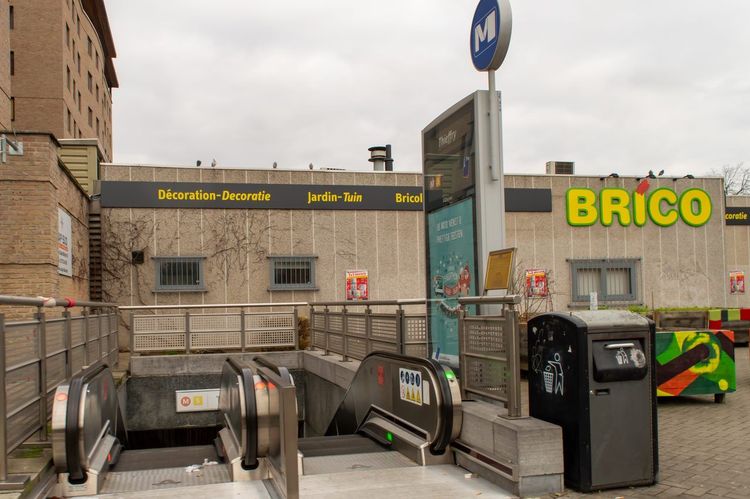
The STIB network (buses, trams, metro) covers the whole city effectively, and children under 6 travel for free, with a single adult ticket costing around 2.60 euros. Pushchairs fit without issue in most modern metro carriages, and slightly less easily on some older trams with high steps, where it is better to have a baby carrier as a backup.
For short trips, the historic centre can be crossed almost entirely on foot: from the Grand-Place to the Magritte Museum is barely ten minutes' walk along largely pedestrianised streets, ever since the vast car-free zone was created around the Boulevard Anspach. This pedestrianisation, one of the most extensive in Europe, makes getting around with a pushchair considerably more comfortable than a few years ago. For longer distances, the STIB mobile app shows real-time timetables and indicates which stations have lifts — invaluable information when travelling loaded down. Taxis and rideshare services remain affordable for a late return to your accommodation after a full day out.
The Brussels Card, sold as a 24-, 48- or 72-hour pass, combines unlimited public transport with free or reduced admission to most of the museums mentioned in this guide. For a group that chains several visits a day, it generally pays for itself from the second paid museum onwards — a calculation worth doing before departure based on the number of days planned.
Budget and Money-Saving Tips for Your Stay
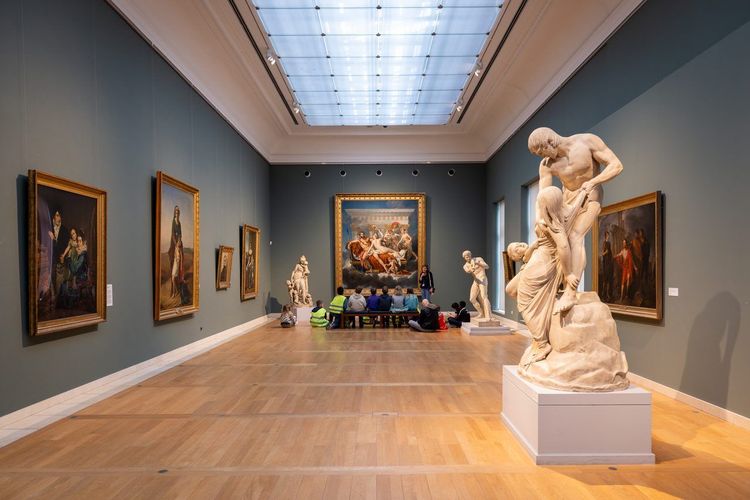
Most of Brussels' major museums offer free admission for children under 6, and reduced rates up to age 18 or 26 depending on the institution. On the first Sunday of the month, several federal museums open their doors for free — a windfall to combine with an advance booking to avoid queuing, since the free slots tend to go within a few days.
The comics murals, parks and the Laeken Domain are free all year round, making it easy to put together a full day without spending a single entry ticket, saving the budget for a chocolate workshop or a trip to Mini-Europe. A three-day stay for four people, including accommodation and meals, generally works out at between 700 and 1,100 euros depending on the season and the level of comfort desired.
FAQ
How many days should you plan to visit Brussels with the family?
Three full days cover the essentials: the historic centre and comics, the European quarter and sciences, then the Atomium and Laeken. Add an extra day for a trip to Planckendael Zoo or Walibi if your stay exceeds four days, or to enjoy a more leisurely visit to the art museums.
What is the best age to visit Brussels with children?
The city works well from age 4–5 thanks to interactive museums and parks, but it takes on another dimension from age 7–8, when children can fully enjoy the Walibi attractions and the more detailed explanations at the Parlamentarium or the Royal Belgian Institute of Natural Sciences.
Is Brussels with kids an expensive destination?
It remains reasonable compared to other European capitals. The comics murals, parks and the Laeken Domain are free, and the Brussels Card significantly reduces the cost of paid museums over a two- or three-day stay, while also including public transport.
Which museums are free for children in Brussels?
The Parlamentarium is free to visit all year round. Several federal museums, including the Royal Belgian Institute of Natural Sciences, offer free admission on the first Sunday of the month, subject to prior online booking — a time slot to secure as soon as reservations open.
How do you get around Brussels with a pushchair?
The metro is the simplest option, as most modern stations have lifts. Older trams sometimes have high steps; it is best to check the type of tram before boarding with a folded pushchair, or to favour bus lines, which are generally more accessible.
Should you book the Atomium and Mini-Europe in advance?
In high season, yes — especially for the Atomium, whose central lift limits the number of simultaneous visitors. Booking online a few days ahead avoids a wait that can exceed an hour on summer weekends, and also lets you choose a less busy time slot.
What day trips can you take around Brussels with children?
Planckendael Zoo, in Malines, and Walibi Belgium, in Wavre, are the two most popular full-day excursions. Technopolis, also in Malines, and Plopsa Coo, in the Ardennes, nicely complement a stay of four days or more.
After these three days — or more, depending on the pace you choose — Brussels rarely leaves children indifferent: too many absurd details, too many museums where you can touch everything, too many waffles to compare seriously to ever get bored. The city can be explored at its own pace, between a morning of comics murals and an afternoon of dinosaurs, without ever needing to force the enthusiasm of the youngest travellers.
Before packing the suitcases, one last look at the Ryo audio-guided tour of Brussels helps to plan the final journeys between the historic centre, the European quarter and the Heysel plateau, without losing time on the morning of departure.
À lire également