© Shutterstock
 Votre guide Ryo
Museums to Visit During Your Stay in Brussels: 2026 Guide
Choosing which museums to visit in Brussels can quickly become overwhelming: the capital has over one hundred museums for 1.2 million inhabitants, a museum concentration that few European cities can match. The Ryo Brussels audio guide takes you through the historic neighbourhoods in 2h40, but to get into the collections, here is the guide. The world's largest collection of Magritte is housed in a neoclassical building on the Mont des Arts, thirty Iguanodon skeletons discovered at Bernissart stand in a glass cathedral at the Natural Sciences Museum, and the Belgian Comic Strip Center occupies a masterpiece designed by Victor Horta. From the single ticket for the Royal Museums to the Brussels Card for more than 45 sites, this guide also provides practical pointers so you don't miss the free admission days and can organise your visit by geographic hub.
The Royal Museums of Fine Arts of Belgium
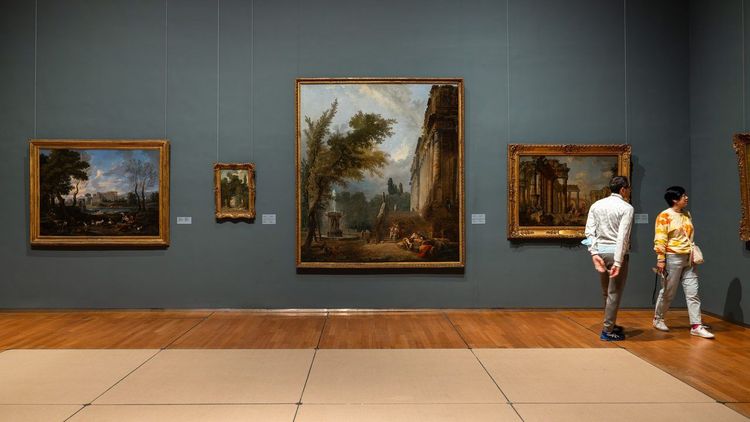
The Royal Museums of Fine Arts of Belgium form one of the most important museum complexes in Europe: six museums united under one complex, with a permanent collection of more than 20,000 works spanning seven centuries of painting and sculpture. The main entrance opens onto the Rue de la Régence, a stone's throw from the Royal Palace and the Mont des Arts.
The Old Masters Museum is the historical heart of the complex. It is home to the world's most important collection of works by Pieter Bruegel the Elder outside Vienna, including several masterpieces such as 'The Census at Bethlehem', 'The Fall of the Rebel Angels' and the famous 'Landscape with the Fall of Icarus'. The Flemish Primitives occupy the first rooms: Van der Weyden, Memling, Bosch. Each canvas tells of an era when Flanders dominated European painting, long before Paris imposed its academicism. The museography is sober, almost austere, which allows the works to be seen without the bustle of major tourist institutions.
The Fin-de-Siècle Museum occupies the underground levels and surprises with its scale. Works by James Ensor, Fernand Khnopff and the Belgian Symbolists engage in dialogue with monumental sculptures and installations that trace the link between Art Nouveau and the avant-gardes of the 20th century. This period is often overlooked in major Parisian retrospectives: Brussels holds the most complete records of it. Allow at least an hour for this section alone.
The combined ticket for all six museums costs €15 full price, €12 for seniors and groups, and is free on the first Wednesday of each month from 1 pm. Queues tend to build up on weekend mornings: arrive at opening time at 10 am or aim for the 2 pm–5 pm slot on weekdays, when school groups have left.
An address few guides mention: permanent entry to the Meunier and Wiertz museums is always free. The Constantin Meunier Museum, housed in the sculptor's home and studio in Ixelles, presents the essential body of his work in an intimate setting. The Antoine Wiertz Museum (Rue Vautier 62, 1050 Ixelles, rated 4.4/5 on Google based on 363 reviews) with its enormous, melancholy canvases — paintings of moral and fantastical subjects set against a backdrop of Belgian history — are two addresses off the beaten track that are worth the half-hour detour.
The Magritte Museum
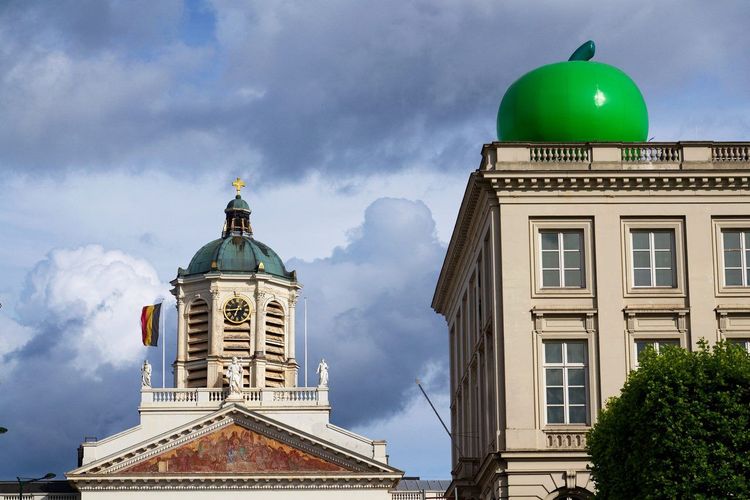
The Magritte Museum (Place Royale 1, 1000 Bruxelles, rated 4.3/5 on Google based on 8,486 reviews) brings together more than 230 works by the Surrealist painter, the most exhaustive collection in the world dedicated to René Magritte. Located in the neoclassical building adjoining the Royal Museums on the Mont des Arts, it covers Magritte's entire creative trajectory, from his early commercial work in advertising in the 1920s to the metaphysical canvases that redefined European Surrealism.
The layout across five levels follows an intelligent chronology. You begin with experimental works from when Magritte was still searching for his own language, gradually arriving at his best-known series: the man in the bowler hat, the green apples, the skies spilling over wooden stretchers. Each room is sufficiently airy for the paintings to breathe, which is not always the case in institutions that cram masterpieces together.
What sets this museum apart from travelling retrospectives is the presence of personal documents: the painter's notebooks, photographs he took himself (Magritte was also a passionate amateur photographer), and correspondence with the Parisian Surrealists. The biographical context transforms the reading of the works and reveals a man who was both rigorous and playful. Allow 1h30 to 2h for a complete visit. Admission is included in the combined ticket for the Royal Museums of Fine Arts (€15), making it one of the best museum deals in the city.
The Belgian Comic Strip Center
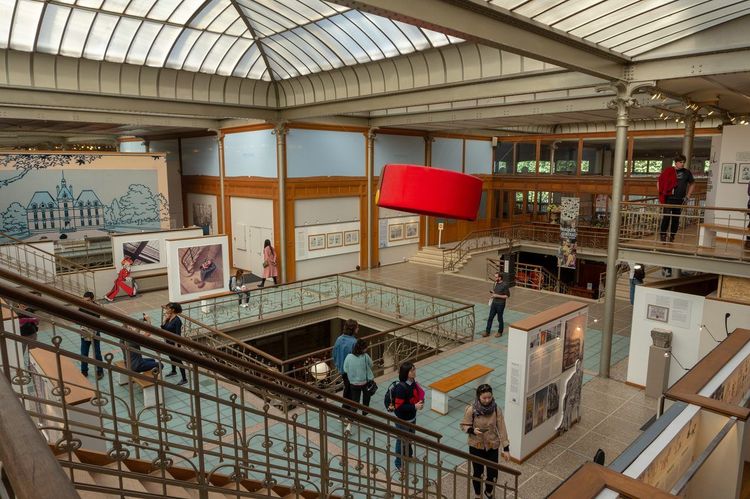
If Brussels claims the title of world capital of comic strips, the Belgian Comic Strip Center (Rue des Sables 20, 1000 Bruxelles, rated 3.9/5 on Google based on 3,697 reviews) is the most convincing proof. Established in 1989 in the former Waucquez department store, a commercial gallery built by Victor Horta in 1906, the building itself is a spectacle: a steel and glass façade, a hall bathed in natural light, translucent domes. An Art Nouveau masterpiece that Horta designed to be flooded with northern light.
The permanent collection covers the great Belgian authors with rare comprehensiveness. Hergé and Tintin, of course, but also Franquin (Spirou, Gaston Lagaffe), Morris (Lucky Luke), Peyo (The Smurfs), Jacobs (Blake and Mortimer). The archive holds more than 60,000 original pages and documents related to the history of Belgian comics. An entire section is devoted to narrative technique: how a page is born, from pencilling to inking through to digital colouring. For enthusiasts, it is a dive into the behind-the-scenes of an art form often underestimated in traditional museums.
What tourist circuits rarely mention: the Centre offers high-quality temporary exhibitions that complement the permanent collection with retrospectives of contemporary authors or cross-cutting themes. The recent programme has notably showcased Francophone African comics and new forms of digital graphic storytelling. Check the programme online before your visit, as temporary exhibitions last 3 to 6 months and significantly change the experience.
The adult ticket is €14, with reductions for under-26s. The museum is closed on Mondays. A specialist bookshop occupies the ground floor and is worth a visit even if you are not going to the museum: the selection is one of the most comprehensive in Belgium. From the Belgian Comic Strip Center, the Manneken Pis can be reached on foot in ten minutes via the Rue du Midi and its galleries.
The Musical Instruments Museum
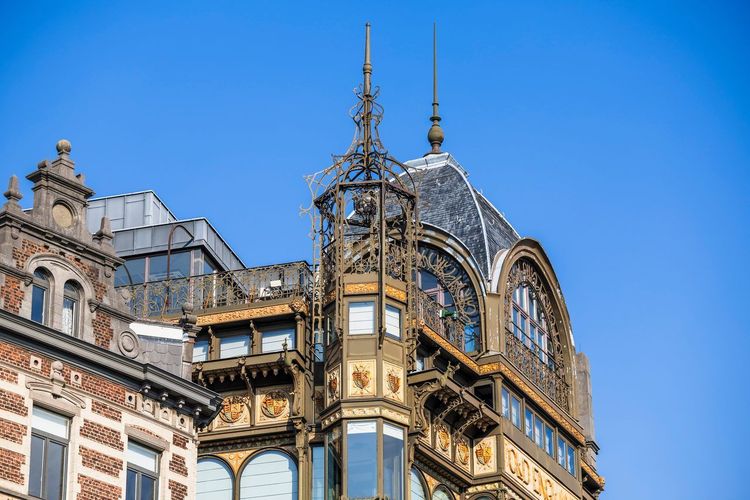
Few museums combine an exceptional collection with an urban panorama so naturally. The Musical Instruments Museum (Rue Montagne de la Cour 2, 1000 Bruxelles, rated 4.4/5 on Google based on 6,291 reviews), known as the MIM, occupies the Art Nouveau building of the former Old England department store, built in 1899 at the heart of the Mont des Arts. The reason to head up to the top floor is as much musical as it is visual: the terrace offers a panoramic view of the Cathedral of Saints Michael and Gudula, the rooftops of the Îlot Sacré and, on a clear day, the Heysel Plateau.
The collection brings together more than 8,000 instruments from around the world, classified by family, civilisation and era. What makes the visit unique is the audio system included in the ticket: as you approach each instrument, headphones play the sound it produces. Irish bagpipes, Javanese gamelan, Indian sitar, barrel organ, Flemish carillon: the sonic experience is as carefully constructed as the visual dimension, which is rare in a museum. Children are particularly captivated by this interactive approach and are rarely eager to leave.
The admission ticket is €15 at standard price. The museum is closed on Mondays. Practical tip: visit in the early afternoon and head up to the terrace around 4 pm, when the light is at its most beautiful over the Brussels rooftops. The museum restaurant on the top floor offers a decent Belgian menu for a break between two Mont des Arts museums.
The Horta Museum, Sanctuary of Art Nouveau
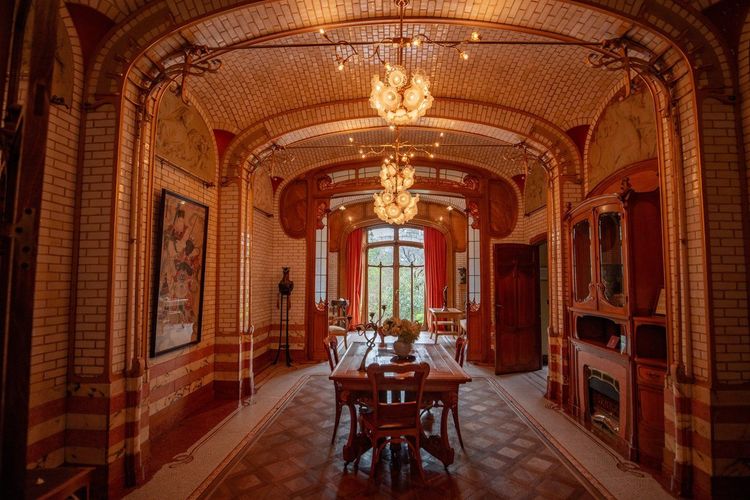
In Ixelles, twenty minutes' walk from the Mont des Arts, the house where Victor Horta lived and worked from 1898 to 1919 has been a UNESCO World Heritage Site since 2000. The Horta Museum (Rue Américaine 25, 1050 Ixelles, rated 4.4/5 on Google based on 3,827 reviews) is not a museum of paintings or sculptures: it is a home entirely conceived by a single architect, where every door handle, every stained-glass window and every curve of the banister was drawn by him.
Stepping into the vestibule is enough to understand why Horta revolutionised European architecture. Light filters through the glazed façades to play across golden mosaics, metal structures painted in blue-green, white marble steps edged with sinuous railings. Everything is organic, everything draws inspiration from plant forms in their most coherent expression. No applied decorative ornament here: the structure is the decoration.
The ticket costs €14 and includes an audio guide available in several languages. Online booking is recommended at weekends, as visitor capacity is limited. If this visit enthuses you, note that other Art Nouveau façades in Brussels can be seen from the street: the Ryo audio guide includes several of these addresses in its tour of the historic neighbourhoods.
The Natural Sciences Museum
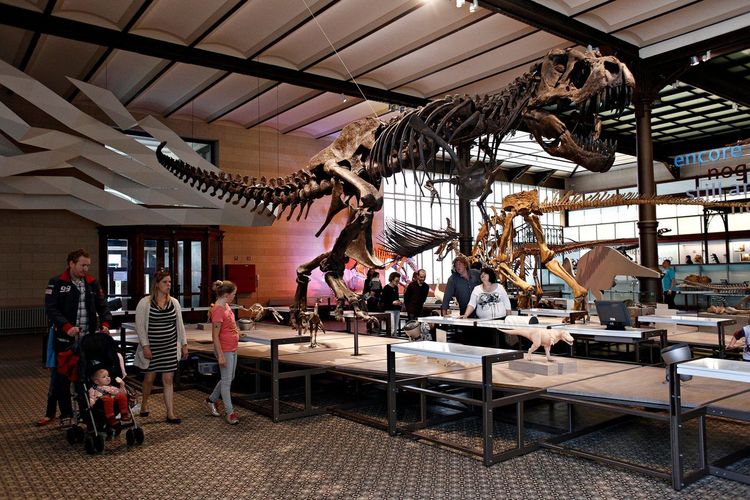
A dinosaur gallery 80 metres long. That is what awaits visitors at the Royal Belgian Institute of Natural Sciences (Rue Vautier 29, 1050 Ixelles, rated 4.5/5 on Google based on 14,557 reviews), and it is one of the most impressive experiences Brussels has to offer families. The Dinosaur Gallery brings together thirty Iguanodon skeletons discovered in 1878 in the Bernissart mine — the largest palaeontological discovery in Belgian history — mounted upright in a spectacular display beneath a glass roof.
Beyond the dinosaurs, the museum covers global biodiversity across several floors: minerals, giant insects, human evolution. The life-size blue whale suspended from the ceiling stops every visitor in their tracks, even adults who came without children. Temporary exhibitions oscillate between life sciences and contemporary ecological issues, with an anchor in ongoing Belgian scientific research.
Admission: €13 for adults, €8 for children aged 6 to 17, free for under-6s. Families with young children: arrive at opening time at 9:30 am, or opt for a weekday outside Belgian school holidays to avoid the density of group visits. Open Tuesday to Sunday.
Train World, the Belgian Railway Epic
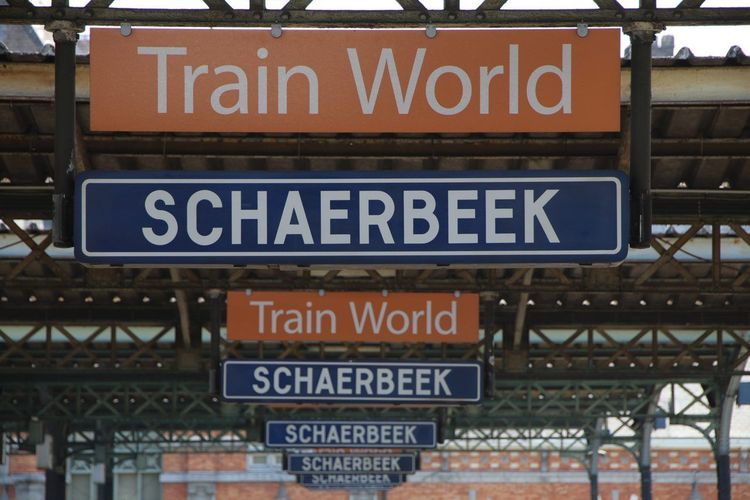
Opened in 2015 in the former Schaerbeek station, Train World (Place Princesse Élisabeth 5, 1030 Schaerbeek, rated 4.6/5 on Google based on 6,532 reviews) is regularly cited among the best railway museums in Europe. From the moment you enter, the scenography commands attention: around twenty heritage locomotives, some dating from the late 19th century, are displayed in the original industrial halls beneath metal vaults that amplify the atmosphere of the golden age of rail.
Belgium was the first country on the European continent to inaugurate a railway line, in 1835, between Brussels and Mechelen. Train World tells this story by combining restored locomotives, audiovisual archives, period compartment reconstructions and testimonies from railway workers collected over several decades. The Pacific 10.018 locomotive, the museum's emblem, is one of the finest pieces of railway heritage in existence in Europe.
The museum is located in Schaerbeek, ten minutes by metro from the city centre. Allow 2 hours for a complete visit. Admission: €15 adults, €9 children. Closed on Mondays. A cafeteria is available on site, and the specialist shop dedicated to railway history and model-making is worth a browse before you leave.
The Atomium and Its Permanent Museum
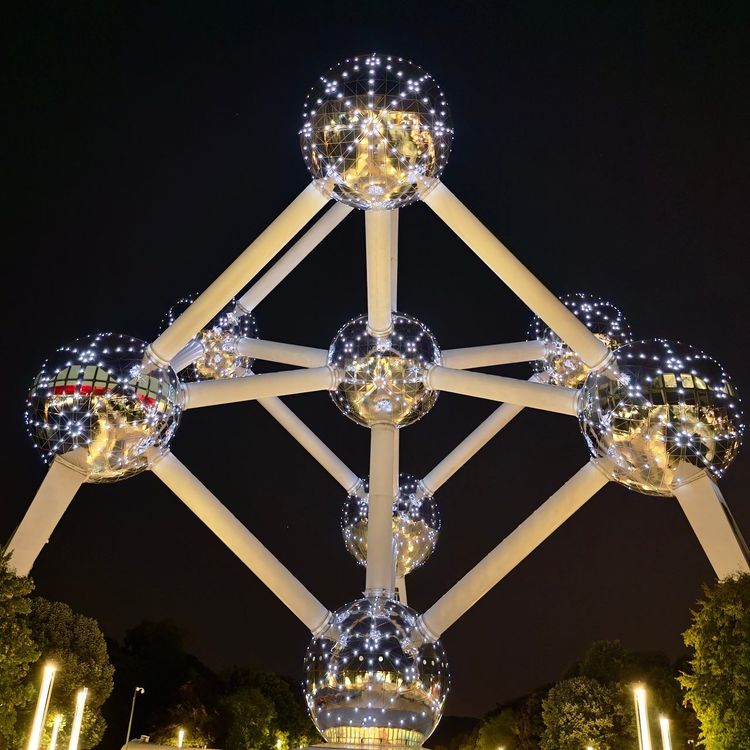
The Atomium is to Brussels what the Eiffel Tower is to Paris: a temporary structure built for a world's fair that became the permanent symbol of a city. Designed by engineer André Waterkeyn for the 1958 World's Fair, it represents an iron molecule magnified 165 billion times, with nine spheres of 18 metres in diameter connected by tubes. The total height reaches 102 metres.
The Atomium is not merely a monumental sculpture: it is also a permanent exhibition space. The top sphere houses a 360° panoramic view over Brussels, accessible by high-speed lift. Five other spheres host temporary exhibitions on design, science, architecture or Belgian popular culture. A permanent section traces the history of Expo 58 with photographic archives and testimonies from 1958 visitors. To plan your visit and discover the current exhibitions, our dedicated article on the Brussels Atomium details the opening hours and the best ways to photograph the spheres from the ground.
The adult ticket is €17. The Atomium is located on the Heysel Plateau, ten minutes by metro from the Place de Brouckère (line 6). Combine the visit with Mini-Europe (Avenue du Football 1, 1020 Bruxelles, rated 4.3/5 on Google based on 12,127 reviews), the adjacent miniature park that reproduces 350 European monuments at a scale of 1:25: both sites complement each other well for a half-day at the Heysel.
The Art and History Museum at the Cinquantenaire
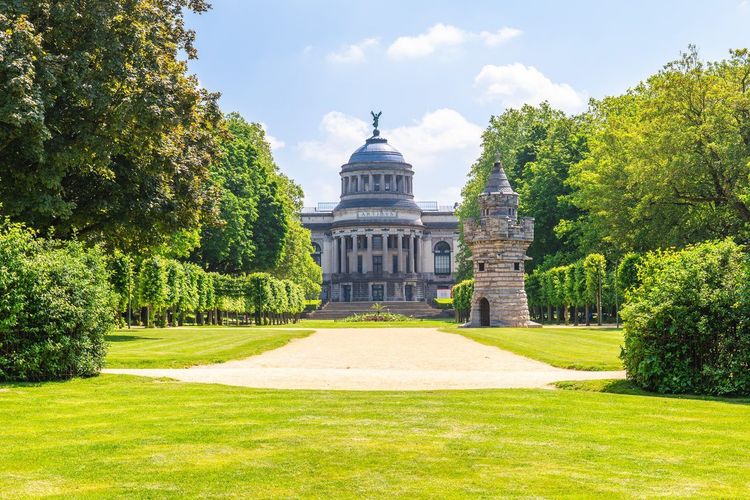
Housed in one of the pavilions of the Cinquantenaire Park, the Art and History Museum (Parc du Cinquantenaire 10, 1000 Bruxelles, rated 4.4/5 on Google based on 3,237 reviews) is among the ten largest archaeology and decorative arts museums in Europe. The collection covers an immense spectrum: ancient Egypt, classical Greece, Rome, pre-Columbian civilisations of the Americas, European decorative arts from the Middle Ages to Art Deco, and Islamic arts.
The building itself deserves attention. The arched galleries of the Cinquantenaire, built to mark the fiftieth anniversary of Belgian independence in 1880, create monumental perspectives that few European museums can offer. The Egyptian mummy in its original sarcophagus, the collection of blown Roman glass and the Byzantine mosaics are among the most admired pieces. The pre-Columbian civilisations room is among the finest in French-speaking Europe.
Admission €10, free on the first Wednesday of the month. Accessible by metro at Mérode station. Allow a half-day for the sections that interest you: attempting to see everything in one visit is unrealistic given the vastness of the collections. Back in the centre, our audio walking tour of Brussels takes the historic quarters at a gentler pace.
The BELvue Museum, History of a Nation
In the shadow of the Royal Palace, the BELvue Museum (Place des Palais 7, 1000 Bruxelles, rated 4.4/5 on Google based on 1,078 reviews) occupies the Bellevue Palace, an 18th-century hotel adjoining the official residence of the Kings of Belgium. Across five floors, it traces the history of the country from independence in 1830 to the present day, without shying away from its most controversial chapters.
The narrative is honest: Belgium's colonial history in the Congo is addressed with a rigour that many national museums still avoid. The linguistic crises, the two world wars as experienced from occupied Belgium, the role of the monarchy at moments of national fracture. Audiovisual archives, personal objects and reconstructions make history tangible and accessible to all audiences, including teenagers.
Admission: €8. Ideal to combine with the Mont des Arts and the Royal Museums of Fine Arts, five minutes' walk away. Closed on Mondays.
Autoworld
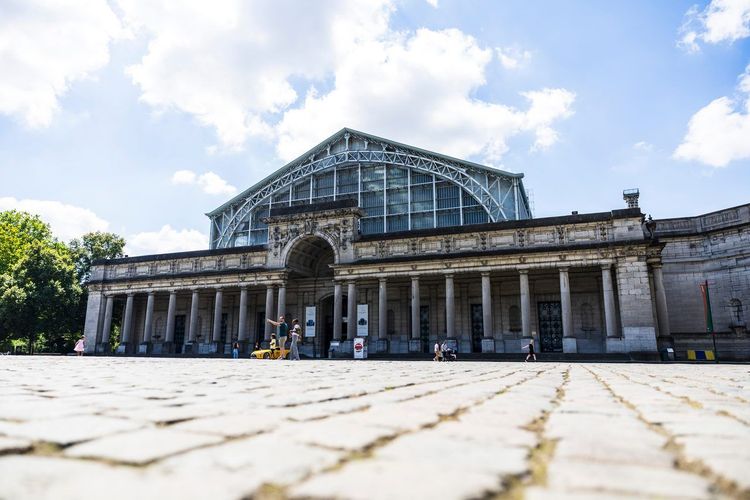
In the halls of the Cinquantenaire Palace, Autoworld (Parc du Cinquantenaire 11, 1000 Bruxelles, rated 4.6/5 on Google based on 12,508 reviews) brings together more than 350 historic vehicles across 10,000 m², including several examples of Minerva, the Belgian prestige marque that flourished between 1900 and 1935. Rolls-Royce, Bugatti, Citroën DS, Ford T: a century of mechanical innovation displayed in the monumental naves of the Cinquantenaire, with a section dedicated to the Belgian automotive industry that has since disappeared.
Adult ticket €15, children €7. Combine with the Art and History Museum in the same park for a full half-day at the Cinquantenaire.
The Parlamentarium, at the Heart of Europe
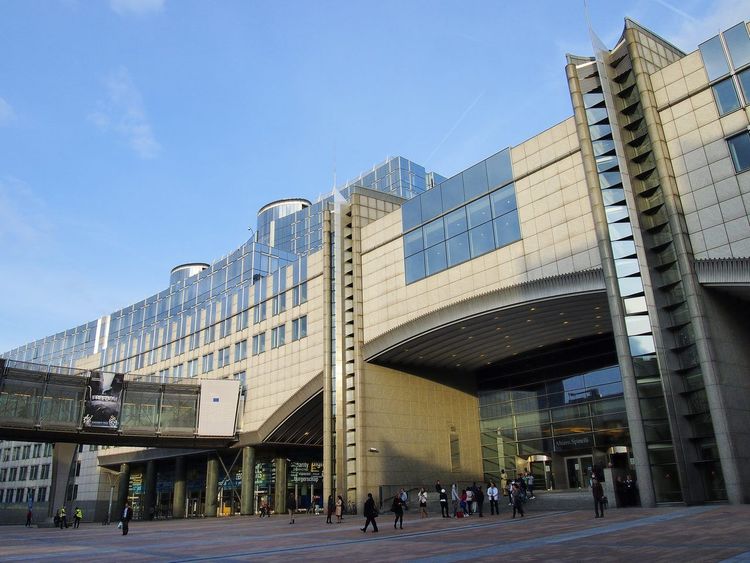
The Parlamentarium (Rue Wiertz 60, 1047 Bruxelles, rated 4.4/5 on Google based on 2,472 reviews) is the official visitor centre of the European Parliament in Brussels. Admission is entirely free, and the visit lasts approximately two hours. It is the most modern exhibition space in the European Quarter, with interactive museography designed to make EU institutions accessible to all audiences.
The visit begins with an immersive circular installation: a 360° projection on the history of European integration, from the Treaty of Rome in 1957 to the most recent enlargements. An audio guide available in the 24 official EU languages then accompanies visitors through the thematic rooms: how Parliament works, how European laws are passed, and what role each institution plays in the legislative process.
Our guide to visiting the European Parliament in Brussels details plenary session visits and time slots for attending debates. Accessible by metro from the Trône station (lines 2 and 6).
Hidden Museums: Off-the-Beaten-Track Addresses
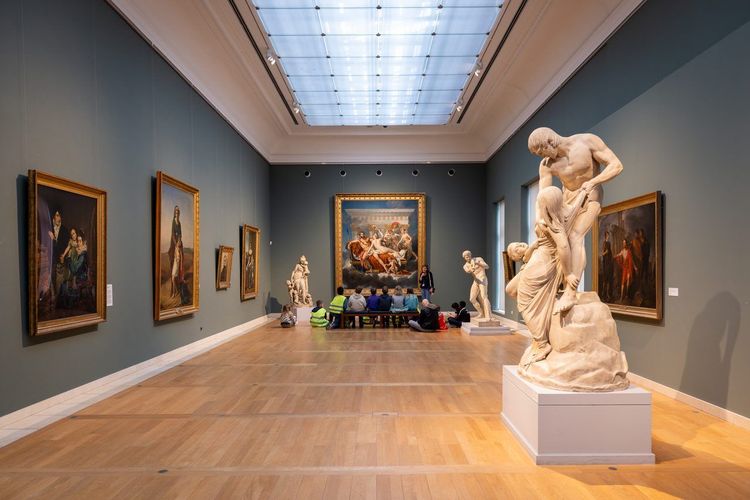
Brussels harbours museums that mainstream tourist circuits overlook, and these are sometimes the most memorable of an entire stay.
The Museum of Illusions Brussels, opened in 2022, has quickly become one of the most visited places in the city. Its rooms play with visual perception: monumental optical illusions, an upside-down room where visitors appear to walk on the ceiling, a spinning tunnel that gives the impression of losing your balance. A participatory museum that works equally well with children and among adults. Ticket €16, visit of approximately one hour.
The Jewish Museum of Belgium, housed in a townhouse in the Sablon neighbourhood, traces two millennia of Jewish presence in Belgium and neighbouring countries. The section on the Holocaust in Belgium is handled with rigour and sobriety: between 1942 and 1944, 25,000 Belgian Jews were deported to extermination camps. This museum was the target of an attack in May 2014, a fact that weighs on the visit but does not diminish its historical and human significance. Admission €13.
The Fashion and Lace Museum occupies two townhouses in the Lower Town, a stone's throw from the Grand-Place. Belgium has a centuries-old history in bobbin lace and the museum preserves its finest examples, from the royal lace of the 17th century to contemporary creations by Belgian designers such as Dries Van Noten and Ann Demeulemeester. An unexpected museum that blends historic craftsmanship with contemporary fashion design. Admission €8.
The Erasmus House in Anderlecht, twenty minutes by metro from the city centre, is one of the best-preserved 16th-century houses in Belgium. The humanist philosopher Erasmus stayed here in 1521. The collection brings together original editions of his works, portraits of the era by Holbein and Dürer, and period furniture in an intact late Gothic setting. Admission just €5, making it one of the most affordable cultural visits in the Brussels region.
The Museum of Medicine (Avenue Franklin Roosevelt 30, 1050 Bruxelles, rated 4.2/5 on Google based on 158 reviews), affiliated with the ULB on the Solbosch campus, presents the history of medicine from Antiquity to contemporary discoveries, with period surgical instruments that sometimes make the skin crawl. Free admission. An address for the curious who want to step off the path marked out by tourist guides.
Admission Prices, Free Entry and the Brussels Card
Brussels is one of the European capitals where the question of admission prices warrants a real strategy. Free admission policies are generous but little known to passing visitors.
Permanently free museums:
- The Parlamentarium (European Parliament): free all year round, no prior booking required
- The House of European History, adjacent to the Parlamentarium: free
- The Museum of Medicine (ULB): free admission
Museums free on certain days:
- The Royal Museums of Fine Arts and the Magritte Museum: free on the first Wednesday of each month from 1 pm
- The Art and History Museum: free on the first Wednesday of the month
- Several Brussels municipal museums: free on the first Sunday of the month (check the conditions of each establishment)
The Brussels Card is the option to consider if you plan to visit more than three museums during your stay. It gives access to 49 museums and attractions in the region:
- 24 hours: €39
- 48 hours: €51
- 72 hours: €57
Note: the basic version does not include public transport. To travel between the four museum hubs, opt for the Brussels Card + STIB version (metro, tram, bus), slightly more expensive (€47.50 for 24h, €67 for 48h, €73 for 72h) but often more advantageous as soon as you start making multiple journeys. For a three-day stay with five or six museums on the agenda, the card pays for itself from the third site. One point to note: it does not always include temporary exhibitions. Check the conditions on the official visit.brussels website before purchasing.
Online booking: for the Royal Museums of Fine Arts, the Horta Museum and the Atomium at weekends, advance booking is recommended to avoid queues. Most museums accept tickets purchased directly on site on weekdays outside Belgian school holidays.
Planning Your Route Through Brussels' Museums
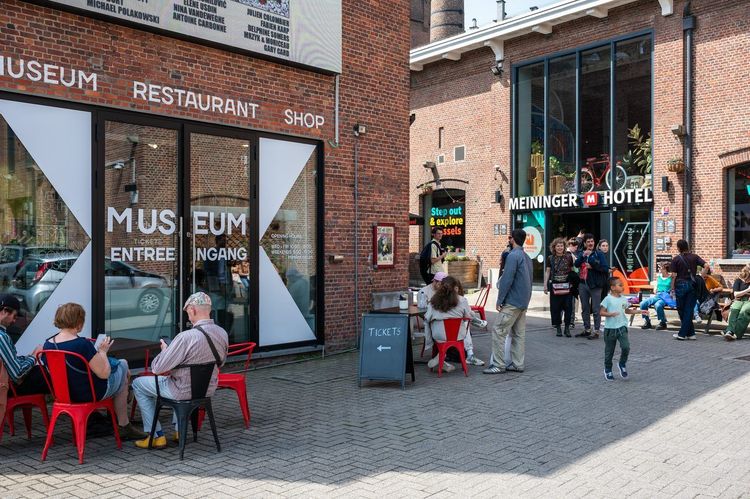
Geographically, the museums are divided into four distinct hubs, which makes it easy to organise your days or half-days.
Mont des Arts / City Centre hub: Royal Museums of Fine Arts, Magritte Museum, MIM, BELvue Museum, Fashion and Lace Museum, Belgian Comic Strip Center. Everything is walkable from the Centrale station. Allow a full day for this hub.
Cinquantenaire / European Quarter hub: Art and History Museum, Autoworld, Parlamentarium, Jewish Museum of Belgium, House of European History. Accessible by metro (Mérode or Schuman stations). Half a day to a full day depending on your pace.
Ixelles / Schaerbeek hub: Horta Museum, Natural Sciences Museum, Train World in Schaerbeek. Brussels' public transport network (tram and metro) allows you to link them in a single day with a little organisation.
Heysel hub: The Atomium and Mini-Europe deserve a standalone half-day, ideally combined with the Laeken neighbourhood and its royal greenhouses if your stay allows.
Our guide to things to do in Brussels complements this itinerary with the city's must-see non-museum sites, from the Marolles neighbourhood to the Jeu de Balle market.



FAQ
What are the must-see museums to visit in Brussels?
The Royal Museums of Fine Arts, which include the Magritte Museum, remain the absolute priority for any visitor interested in Flemish painting and Belgian surrealism. The Belgian Comic Strip Center is essential for understanding an entire facet of Belgian culture. The Atomium, the MIM and the Horta Museum round out a three-day weekend. With a week, add Train World, the Natural Sciences Museum and the Parlamentarium for a well-balanced programme.
Are there free museums in Brussels?
Yes, several. The Parlamentarium and the House of European History are free all year round. The Royal Museums of Fine Arts and the Art and History Museum offer free admission on the first Wednesday of each month from 1 pm. Several municipal museums open free of charge on the first Sunday of the month. The Brussels Card (€51 for 48h, €67 with STIB transport included) gives access to 49 museums and attractions.
How much time should I allow to visit the main museums in Brussels?
Allow a minimum of three days to cover the major museums comfortably. A two-day weekend allows you to visit four to five museums if you organise your route by geographic hub: the Mont des Arts hub on the first day, the Cinquantenaire or Heysel on the second. For families with children, the Natural Sciences Museum and the Atomium each require a full half-day.
Do I need to book Brussels museums in advance?
Online booking is recommended at weekends for the Horta Museum (limited capacity), the Royal Museums of Fine Arts and the Atomium. On weekdays outside Belgian school holidays, most museums show no notable queues. The Parlamentarium never requires a reservation.
Is the Brussels Card worth it?
For a three-day stay with five museums on the agenda, yes. The 72h card at €57 (€73 with transport included) becomes worthwhile from the third or fourth site visited. The Brussels Card + STIB version adds public transport, which simplifies travel between museum hubs and avoids buying separate tickets. For just two museums, it is more economical to pay at the door.
Which museums are suitable for children in Brussels?
The Natural Sciences Museum with its thirty dinosaur skeletons is the first choice for families. The Museum of Illusions with its interactive visual installations captivates children of all ages. The Atomium works well for children aged 6 and up. The MIM with its interactive audio headsets also delights younger visitors. The Belgian Comic Strip Center is suitable for children who already read comic albums.
How do I get around between the museums in Brussels?
The STIB network (metro, tram, bus) efficiently covers the four museum hubs. A 10-journey card costs €14 and is valid on all modes of transport. From the Arts-Loi station, lines radiate towards the centre, the Cinquantenaire, Ixelles and the Heysel. On foot, only the Mont des Arts hub is walkable in its entirety: between hubs, distances reach 3 to 5 km.
Brussels' museums form one of the most diverse cultural heritages in Europe, often underestimated compared to its Parisian or London neighbours. From the Flemish collection of the Royal Museums to Magritte's surrealism, from the Art Nouveau of the Horta Museum to the railway epic of Train World, each visit reveals a different facet of a city that cultivates excellence without ostentation.
To explore Brussels between museums, the Ryo Brussels audio guide offers a 2h40 route through the historic neighbourhoods, with 25 audio commentaries on the monuments, architecture and anecdotes of the city. A natural way to extend the cultural discovery begun in the exhibition rooms.
À lire également