© Shutterstock
 Votre guide Ryo
Visiting Brussels in 3 Days: Complete Itinerary 2026
Brussels has a secret that few guides mention: the Belgian capital is almost entirely walkable, the distances between its historic neighborhoods fitting in the palm of your hand. To visit Brussels in 3 days without rushing, all you need is to stay near the Grand-Place and let the rest follow naturally. The Ryo audio tour of Brussels already maps out this center over 6.2 km, with 25 audio stops spread across approximately 2 hours and 40 minutes of guided walking.
Over three days, you will come across a tiny Manneken Pis submerged in a crowd that is anything but, the nearly 180-year-old Galeries Royales Saint-Hubert, an Atomium standing 102 meters tall with a panoramic restaurant inside one of its spheres, and the Marolles neighborhood where the flea market sets up every morning at the crack of dawn. The program alternates between Gothic and Art Nouveau architecture, fries served in a paper cone, still-warm chocolate, and free museums on the first Wednesday of the month. This guide follows a day-by-day itinerary, with addresses, 2026 prices, walking times, and two or three detours well worth the effort, all of it easily rounded off with Brussels' audio-guided tour between the Grand-Place and the Manneken Pis.
Day 1: Grand-Place, Manneken Pis, and the Galeries Royales
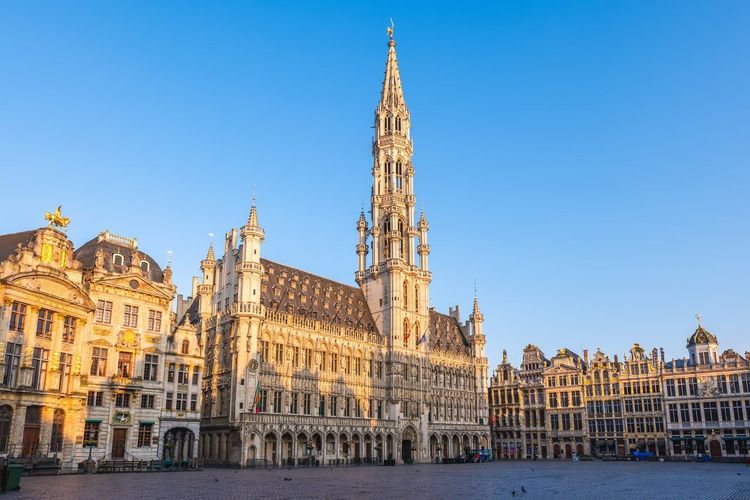
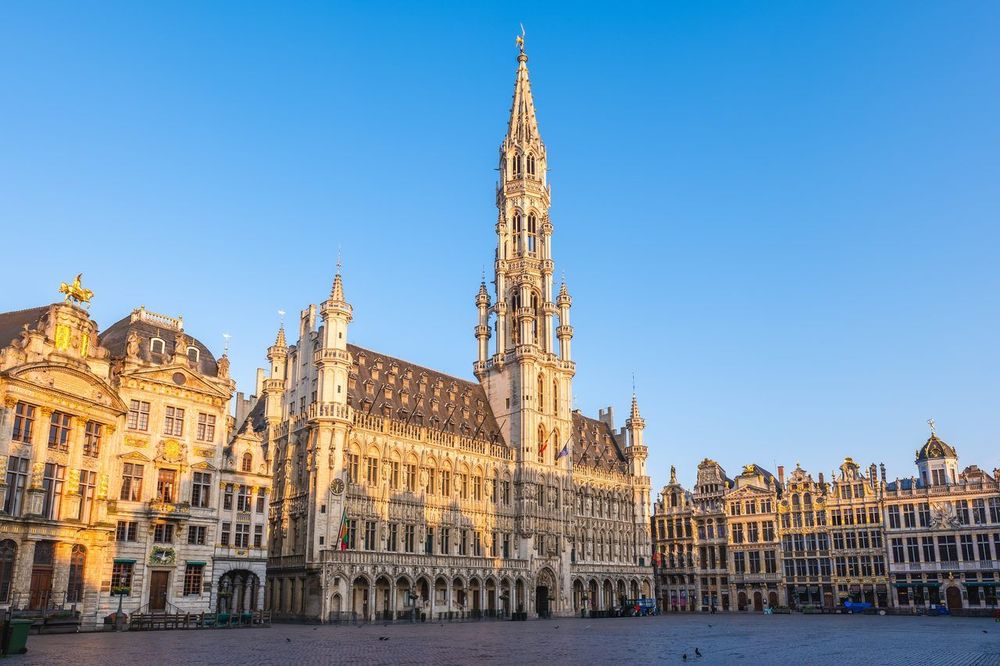
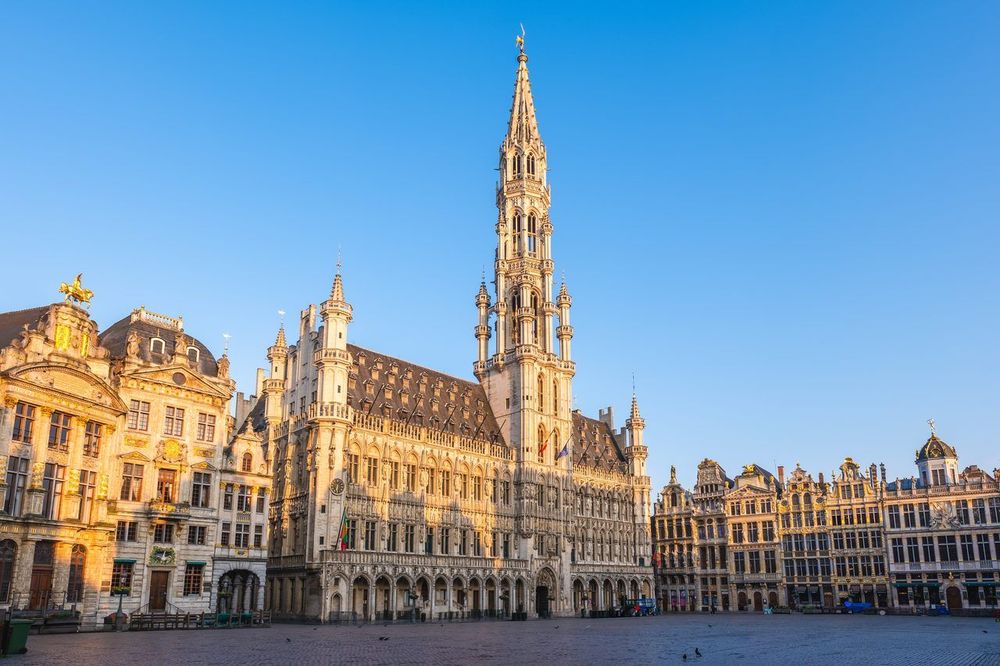
Start early, before 9 a.m. if possible. The Grand-Place in Brussels, a UNESCO World Heritage Site since 1998, lines up guild houses adorned with gilding and a 15th-century Gothic City Hall whose spire reaches 96 meters. At that hour, the square is almost yours: tour buses don't arrive until late morning, and the raking light on the gilded facades alone justifies the early rise.
Take time to look up at the Maison du Roi, which never housed any king and today holds the Museum of the City of Brussels, then at the Maison des Ducs de Brabant, whose facade actually unifies six distinct houses. A detail that 90% of visitors miss: the entire square was rebuilt within just a few years after the French bombardment of 1695, which explains its surprisingly unified Baroque appearance for such an ancient site.
A five-minute walk away, the Manneken Pis statue draws a disproportionate crowd for its 55.5 centimeters (61 centimeters including the pedestal). What you photograph is a copy installed in 1965; the 1619 original is kept at the Museum of the City to prevent theft, which has marked its history on several occasions. The legend varies depending on who tells it: a child who extinguished a fuse threatening to blow up the city, or simply a symbol of the defiant Brussels spirit.
Its wardrobe can be visited a hundred meters away at the GardeRobe MannekenPis on Rue du Chêne. The venue holds over 1,000 costumes donated by delegations from around the world, with twenty to thirty new outfits each year and a rotating display of around 140 pieces. Admission is €5, free for under-18s and for everyone on the first Sunday of the month, open Tuesday to Sunday from 10 a.m. to 5 p.m. A combined ticket for €10 includes the Museum of the City on the Grand-Place: the best time-to-value option of the morning if the weather turns.
Then head back to the Galeries Royales Saint-Hubert (Galerie du Roi 5, 1000 Brussels, rated 4.5/5 on Google with 45,553 reviews), inaugurated in 1847 and considered one of the first covered shopping arcades in Europe. Their glass roof filters a distinctive light in late morning, when the sun passes directly overhead. The window displays of historic chocolatiers such as Neuhaus, founded here in 1857 in a pharmacist's shop before becoming a chocolatier, are worth a tasty pause before lunch.
The Ryo audio tour connects these three stops in less than 30 cumulative minutes of walking, with anecdotes about each facade you pass.
For lunch, Rue des Bouchers is lined with moules-frites terraces, but prices climb quickly with the crowds and touts can be persistent. Better to find a spot two streets away, near Rue du Marché aux Fromages or Place Saint-Géry, for a more honest price-to-quality ratio. In the late afternoon, wander through the Îlot Sacré, the maze of medieval lanes wedged between the Grand-Place and Boulevard Anspach, before coming back to admire the square's nighttime illumination, free and changing with the seasons. On summer evenings, impromptu concerts or projections extend the day at no cost, picking up right where the first stretch of Brussels' audio-guided tour leaves off, between the Grand-Place and Manneken Pis.
Day 2: European Quarter, Sablon, and Mont des Arts
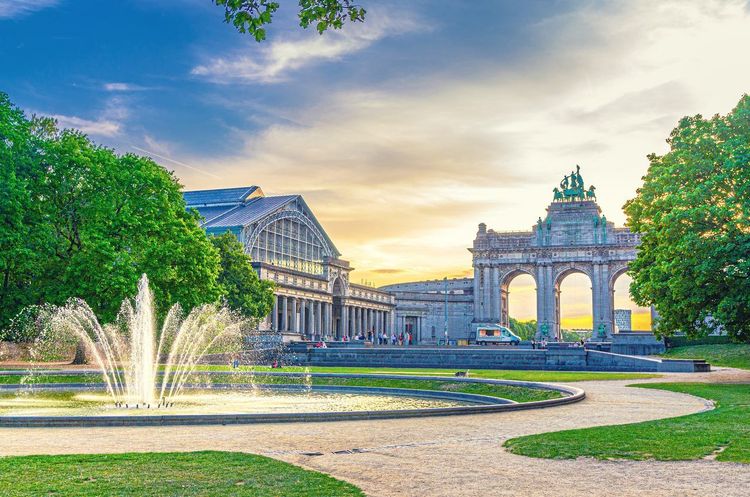
The second day opens on a more institutional Brussels. Head to the Parc du Cinquantenaire, laid out for the fiftieth anniversary of Belgian independence in 1880; its monumental arch, however, was only completed in 1905, funded by Leopold II. The park is home to three museums at once: the Art & History Museum with its 650,000 pieces, Autoworld with its vintage cars, and the Royal Museum of the Army, whose panoramic terrace atop the arch is free to visit.
About a twenty-minute walk west, the Espace Léopold is home to the European institutions. The Parlamentarium, the interactive museum of the European Parliament, is free to visit year-round: Monday from 1 p.m. to 6 p.m., Tuesday to Friday from 9 a.m. to 6:30 p.m., weekends from 10 a.m. to 6:30 p.m. Allow 90 minutes, more if the multilingual displays capture your attention. Guided tours of the hemicycle are also free, but must be booked online one to two weeks in advance, and slots fill up quickly during plenary session periods.
This Ryo article on the European Parliament in Brussels details access procedures and the documents required at the security checkpoint.
Then head down to the Sablon neighborhood, known for its antique dealers and record-breaking concentration of chocolate shops per square meter. The Antiques Market sets up here on Saturdays from 9 a.m. to 5 p.m. and Sundays from 9 a.m. to 3 p.m., with finds ranging from antique silverware to 1960s vinyl. Even without buying anything, strolling between the stalls and the 15th-century Flamboyant Gothic Church of Notre-Dame du Sablon easily fills an hour.
A little further north, the Cathedral of Saints Michael and Gudula imposes its twin Gothic towers and 16th-century stained glass windows, some depicting Emperor Charles V himself. Entry to the nave is free; only the Romanesque crypt and the treasury are ticketed, for a few euros. If you visit on a Sunday morning, the Grenzing organ with its 4,300 pipes, installed in 2000 in a suspended position, is worth a sonic pause.
Then climb up to the Mont des Arts, whose terraced gardens offer one of the most photographed views in the capital, with the City Hall spire piercing the skyline in the distance. This is where the major museums are concentrated: the Royal Museums of Fine Arts and the Magritte Museum, which brings together over 230 works by the Surrealist painter, each deserve at least an hour. On the first Wednesday of the month, both open for free from 1 p.m. — a slot worth blocking if your stay falls at the start of the month.
This Ryo comparison of museums to visit during a stay in Brussels ranks eight institutions by visit duration and admission price, handy for making choices when time is short.
For dinner, head back to the Sablon: the Wittamer pastry shop, on the square since 1910, still makes its pralines on-site. If the weather holds, end the day at Place Poelaert (Place Poelaert, 1000 Brussels, rated 4.5/5 on Google with 9K reviews), in front of the imposing Palace of Justice, for a sunset over the lower city that rivals any paid terrace. The free Marolles elevator then takes you straight back down to the lower part of the city.
Day 3: Atomium, Laeken, and Street Art
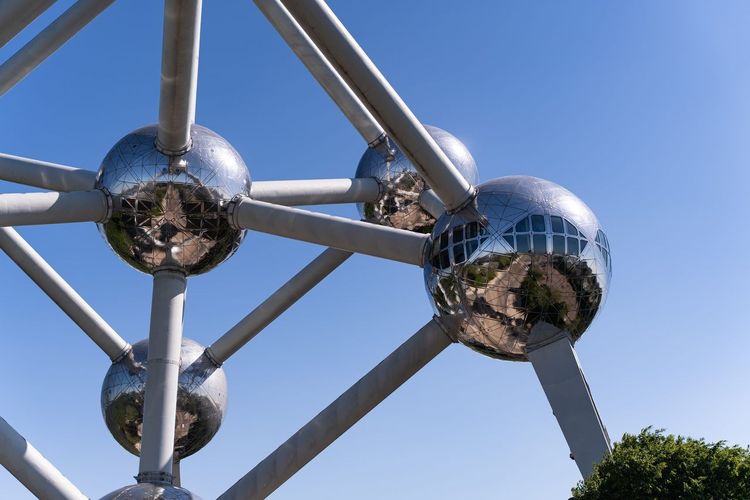
The third day is organized around the north of the city, greener and more surprising. The Atomium, built for the 1958 World's Fair, stands 102 meters tall and represents an iron crystal unit magnified 165 billion times. Admission is €16 for an adult in 2026, €8.50 for 12–17 year-olds and students, free for children up to 11; the ticket also includes the Design Museum Brussels, right across the way. An elevator goes up to the top sphere, which houses a panoramic restaurant.
This Ryo article on the Atomium in Brussels covers the history of its construction, originally designed to last just six months. Book your time slot online: the price is the same, but the queue at the base of the structure can exceed an hour in summer.
Right next door, Mini-Europe recreates around 350 iconic monuments from across the continent in miniature, from the Eiffel Tower to an erupting Vesuvius. The park opens at 9:30 a.m. from March to September, until 7 p.m. in July and August. Allow two good hours if you're traveling with children, one hour for a quick visit.
A ten-minute tram ride away, the Serres Royales de Laeken open to the public for only a few weeks each year: from April 17 to May 10 in 2026, with evening openings on Fridays, Saturdays, and Sundays. Two routes are available, one of 2 km and another of 3 km, and the Grande Galerie d'honneur of the château joined the itinerary for the first time this year, while the Winter Garden remains closed for renovation. Tickets sold out within days in 2026: if you are aiming for this window, keep an eye on the booking page from March onward.
On the way back to the center, follow a few stops along Brussels' comic-strip trail: the city has around fifty murals inspired by comic strips, including a life-size Tintin on Rue de l'Étuve, steps from the Manneken Pis. The trail is entirely free and takes about an hour on foot with a map. Enthusiasts can continue to the Belgian Comic Strip Center, housed in a former textile shop designed by Victor Horta.
For dinner, head to the Ixelles ponds (Ixelles, 1050 Brussels, rated 4.4/5 on Google with 1,235 reviews), lined with restaurants and, in summer, terraces open late into the evening. The atmosphere is distinctly more local than in the city center, with a student population and the Châtelain neighborhood, whose Wednesday evening market serves as a weekly gathering for Brussels locals.
One More Day: Marolles and Ixelles
If your stay stretches to four days, add this stop before leaving. The Marolles neighborhood has hosted a daily flea market since 1873 at Place du Jeu de Balle (Place du Jeu de Balle, 1000 Brussels, rated 4.3/5 on Google with 5K reviews), open from 6 a.m. and until 2 p.m. on weekdays, 3 p.m. on weekends. The best finds come early, before professional dealers have skimmed the cream, and prices drop significantly in the last half-hour when sellers would rather let things go than pack them up.
The neighborhood is also worth visiting for its Rue Haute and Rue Blaes, lined with antique dealers, secondhand clothing shops, and neighborhood cafés where the Brussels dialect can still be heard. A few streets away, Ixelles and Saint-Gilles concentrate a large part of Brussels' Art Nouveau heritage: the Horta House, a UNESCO-listed site, is open Tuesday to Sunday, and several facades by Horta, Hankar, or Strauven can be admired for free from the pavement, particularly around the Ixelles pond and Place Brugmann.
This addition also works for a fifth day, by adding a day trip by train as detailed further below.
Where to Stay in Brussels
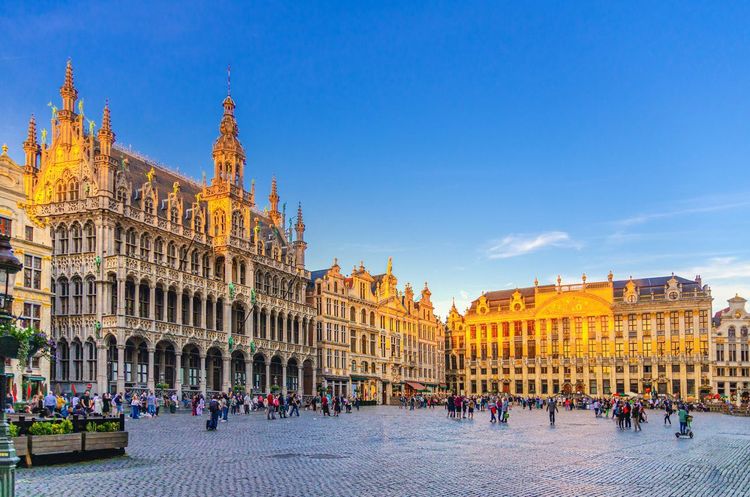
Three areas stand out depending on your travel style. The historic center, around the Grand-Place, puts everything within walking distance but comes with higher prices and significant nighttime noise on weekends, especially between Place Saint-Géry and Rue du Marché au Charbon.
The European Quarter, quieter, suits business travelers or those who prefer international hotels with breakfast included. A local quirk: prices drop sharply on weekends, when European civil servants leave the capital. A four-star hotel there can sometimes cost less on a Saturday than a standard room near the Stock Exchange.
For tighter budgets, Ixelles, Saint-Gilles, and the area around the Gare du Midi offer better value, 15–20 minutes on foot from the center or two metro stops away. This is also where the best bars and small restaurants frequented by locals are concentrated. A municipal tourism tax is added to the bill at most hotels: check whether it is included at the time of booking.
What to Eat and Drink in Brussels
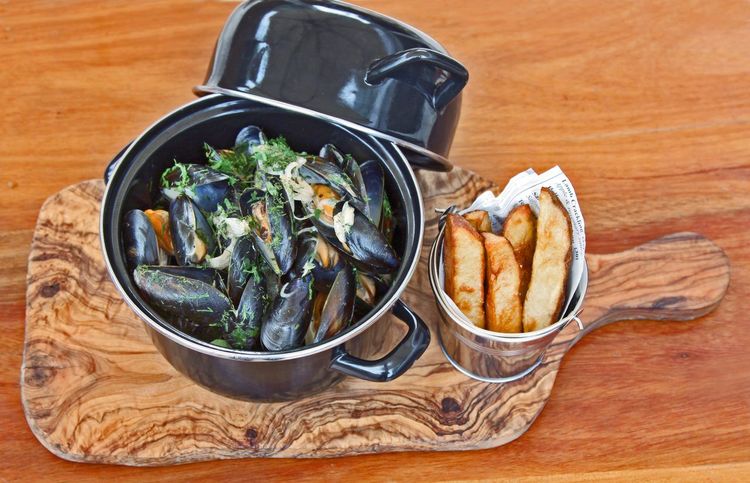
Brussels gastronomy deserves time, not just a rushed meal between two sights. Moules-frites remain the must-have, traditionally served from September to April, but quality varies enormously from one place to the next: avoid terraces with laminated food photos and menus translated into eight languages.
The waffle comes in two schools: the Brussels waffle, rectangular and light, and the Liège waffle, denser and caramelized, sold warm in the street. Local purists eat it plain, without mountains of whipped cream or strawberries. Chocolate is best enjoyed at a dedicated shop rather than a supermarket bar: artisan houses in the Sablon still offer tastings before purchase, and a single praline bought by weight often costs less than €1.50.
On the savory side, don't leave without trying a stoemp, a mashed potato and vegetable dish served with a sausage, or a carbonnade flamande slow-cooked in dark beer. The fry stands, called fritkots, remain the best value in the city: under €5 for a cone, sauce included.
On the drinks side, Belgium counts over 1,500 different beers, from Trappist ales to spontaneously fermented lambics typical of the Senne valley around Brussels. A well-dry gueuze or an artisan kriek bears no resemblance to the sweetened exported versions. The Delirium, with its menu of over 2,000 references, makes for a good introduction, even if the atmosphere is decidedly touristy.
This Ryo ranking of culinary specialties in Brussels lists specific addresses by neighborhood, useful for avoiding the tourist traps concentrated around the Grand-Place.
Getting Around Brussels
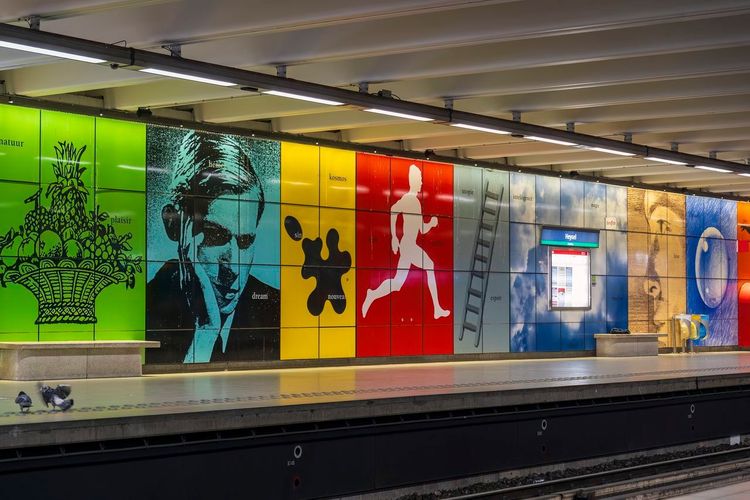
The city is mostly walkable: the historic center fits within a 2 km radius, and the Pentagon, the heart-shaped perimeter traced by the old ramparts, can be crossed in about thirty minutes. For longer journeys, such as to the Atomium or the European Quarter, the STIB/MIVB network (metro, tram, bus) operates with single tickets and tourist passes valid for 24, 48, or 72 hours, to be validated on first use.
The metro has four lines and doubles as an art gallery at times: Stockel station features a 140-meter Tintin mural, and Bourse houses a work by Paul Delvaux. A simple commute thus becomes a complementary visit, free with your transport ticket.
The Villo! bike-sharing scheme rounds out the options, particularly for cycling along the canal or reaching Ixelles, though the system is set to give way to a fully electric docked service in the coming years. Be mindful of the terrain: Brussels is noticeably hillier than it looks, and the climb up to the Mont des Arts is felt in the legs. Avoid driving: parking in the center is expensive and the road layout, divided into loops, quickly discourages visitors. From Zaventem airport, the train reaches the Gare Centrale in about twenty minutes.
The Ryo audio tour of Brussels follows exactly this pedestrian logic, with 25 audio stops spread over 6.2 km and 2 hours 40 minutes of walking, which you can split across the three days if you prefer.
Budget for a 3-Day Stay
Budget around €90 to €150 per night for a mid-range hotel in the city center, half that in outlying neighborhoods or at a hostel. Meals range from €10 for a waffle and a cone of fries eaten on the go, to €35–45 for a full sit-down meal with moules-frites on a terrace.
Museums average €10 to €16 admission: €16 for the Atomium, €5 for the GardeRobe MannekenPis, free for the Parlamentarium. A beer on a terrace runs about €4 to €6 depending on the neighborhood, versus €2.50 at a local café.
Over three days, a budget of €250 to €400 per person including accommodation remains realistic for a comfortable trip without excess. By timing your stay around the first Wednesday of the month and opting for fritkots over tourist brasseries, the €200 mark becomes achievable.
Free Brussels: What You Need to Know
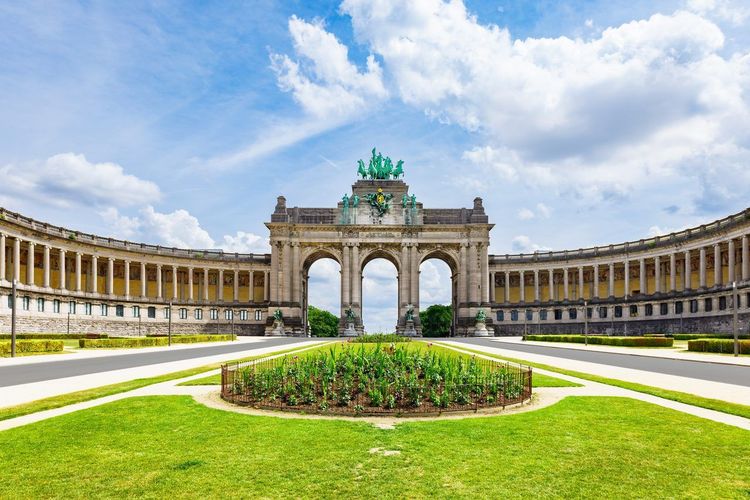
Contrary to its reputation as an expensive institutional capital, Brussels offers a surprising number of activities without spending a cent. The comic-strip mural trail, the Mont des Arts gardens, the Parc du Cinquantenaire, the Bois de la Cambre, and a stroll through the Marolles are all free.
On the museum front, the rule to remember is simple: on the first Wednesday of the month, around ten Brussels institutions open for free from 1 p.m., including the Magritte Museum, the Royal Museums of Fine Arts, the Fin-de-Siècle Museum, the MIM, and the Art & History Museum. The BELvue, dedicated to Belgian history, offers free admission every Wednesday afternoon. On the first Sunday of the month, it is the municipal museums of the City of Brussels, GardeRobe MannekenPis included, that open their doors at no charge.
Add to that the Parlamentarium, free all year round, plus public greenhouses and parks, and you have two full days of visits without a single ticket. The Ryo selection of things to do in Brussels lists further ideas, particularly around markets and urban parks overlooked by mainstream guides.
When to Visit Brussels
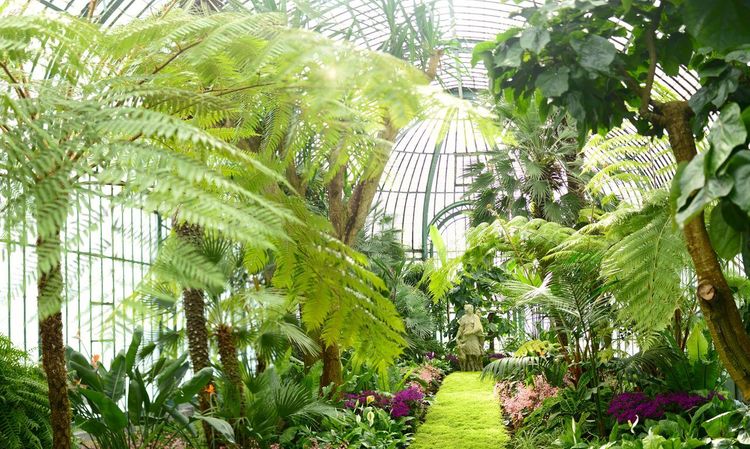
Spring, from April to early June, offers the best balance: mild temperatures, open terraces, gardens in bloom, and the brief opening window of the Serres de Laeken in late April. Early autumn, in September, brings beautiful light and cheaper hotel rates than in summer.
Summer concentrates the crowds and queues, but also the festivals and evenings that stay light until 10 p.m. In even-numbered years, the Flower Carpet covers the Grand-Place in begonias for four days in mid-August: a free spectacle worth the crowds it draws.
Winter has its own appeal, starting with the Winter Wonders Christmas market, which runs from late November to early January between the Grand-Place, Place Sainte-Catherine, and the Stock Exchange. Pack a raincoat in any season: rain falls here about 200 days a year, rarely for long, but often without warning.
Day Trips Around Brussels
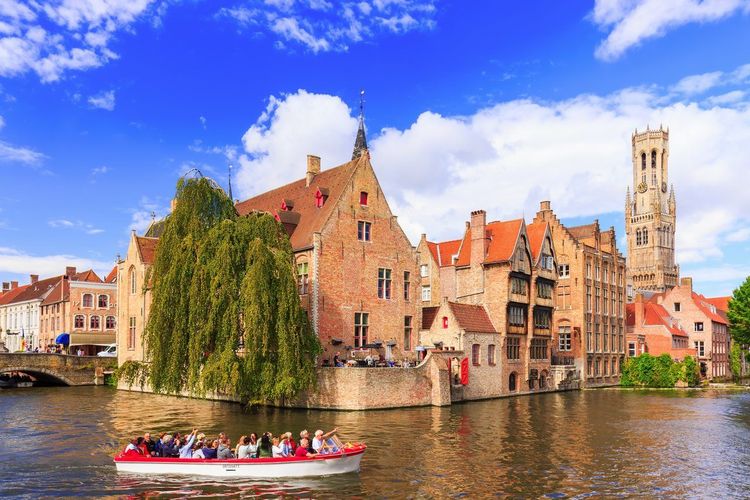
If your stay extends beyond three days, several cities can be reached in under an hour by train from the Gare du Midi, Gare Centrale, or Gare du Nord. Bruges, about 1 hour away, captivates with its canals and intact medieval center. Gand, around thirty minutes away, offers a more local feel with fewer visitors, along with the Ghent Altarpiece at Saint Bavo's Cathedral. Louvain, just 25 minutes away, is worth half a day for its university library and its Flamboyant Gothic town hall, one of the most ornate in Europe.
Even closer, the Butte du Lion at Waterloo is reachable in about an hour door to door, and the 1815 battlefield can be explored on foot or by bike. Antwerp, 45 minutes away, rounds out the list for lovers of fashion and Flemish painting.
This Ryo guide to day trips around Brussels details rail connections and the most advantageous combined tickets depending on your chosen destination.
FAQ
How many days do you need to explore Brussels?
Three days are enough to cover the essentials: the historic center, the European Quarter, and the Atomium. Two days suffice for a more condensed overview, while four to five days leave time to add the Marolles, Ixelles, and a day trip to Bruges or Gand.
Is two days enough in Brussels?
Yes, for the must-sees: the Grand-Place, Manneken Pis, the Galeries Royales Saint-Hubert, and the Atomium all fit into 48 well-organized hours. You will, however, have to skip the in-depth museums and outlying neighborhoods like the Marolles.
What should you see in a single day if you're short on time?
Focus on the Grand-Place, Manneken Pis, and the Galeries Royales Saint-Hubert in the morning, then head to the Atomium and Mini-Europe in the afternoon via metro line 6 to Heysel. It's a tight schedule, but doable.
Can you visit Brussels for free?
Largely, yes: historic streets, parks, comic-strip murals, and the Parlamentarium are all free, and around ten museums open for free on the first Wednesday of the month from 1 p.m. Budget only for meals and one or two paid museums.
Is the city walkable?
Very much so. The historic center can be crossed entirely on foot in half a day. Only the Atomium, Mini-Europe, and the Serres de Laeken, located further out, require the metro or tram.
What is the best time of year to visit?
Spring, from April to June, and early autumn offer mild weather and smaller crowds than midsummer. In late April, the Serres Royales de Laeken also open their doors for just a few weeks.
Brussels is better explored than described: three days are enough to understand why the city cultivates this blend of institutional austerity and surrealist whimsy, often on the same street. Between a waffle eaten standing up and a free museum on a Wednesday afternoon, the pace suits every budget.
To plan your visit without having to reorganize everything on the ground, the Ryo audio tour of Brussels is the simplest way to connect these three days of itinerary without losing time between neighborhoods.
À lire également