© Shutterstock
 Votre guide Ryo
The 15 Best Campgrounds in Europe in 2026: Our Selection
5-star camping now has little to envy of the all-inclusive holiday resort: wave pools, spas, gourmet restaurants, daily entertainment — and yet you sleep under the stars or in a wooden lodge facing the sea. In Europe, competition is fierce between establishments that reinvent themselves every season to claim the top spots in major rankings. Finding the best campground in Europe therefore requires knowing what you are looking for: a Mediterranean shoreline with 300 days of sunshine, an Austrian lake ringed by 3,000-metre summits, or a Croatian coast with turquoise waters that even photographs fail to do justice.
This selection covers fifteen campgrounds spread across ten countries, from Denmark to Greece, from the Netherlands to Corsica, favouring establishments that combine an exceptional natural setting, services that meet today's expectations and honest value for money. You will find all-inclusive resorts on private beaches, family estates deep in the Ardennes forest, permanent tent villages in thermal Slovenia and seaside campgrounds in Brittany where the Atlantic wakes you every morning. To explore these destinations beyond the campground, our Ryo guide to motorhome rental in Paris and our article on the Italian lakes by motorhome usefully complement this overview.
How to Choose Among the Best Campgrounds in Europe?
Before diving into the rankings, a few key criteria that make all the difference to your stay. The first is your booking date: 5-star campgrounds on the Mediterranean coast are fully booked as early as March for July–August, and the best pitches go even faster. The second is accommodation type: bare pitch (for a tent or motorhome), mobile home, lodge, bungalow on stilts or safari glamping tent — every establishment in this list offers several options at very different price points.
The leading European reference label remains the national star classification, but real prices and standards are better assessed through reviews on booking platforms. A campground rated 9.0/10 on Booking with 4,000 reviews is more reliable information than an official star rating. Also keep an eye on whether there is a private beach, an integrated water park and a shuttle service: in summer tourist hotspots, not having to take your car to reach the sea radically changes the quality of your stay.
Finally, consider off-season travel. Several campgrounds in this selection — particularly in Austria, Slovenia and the Netherlands — are open year-round and offer much more accessible rates in May, September or October, with the added bonus of three times fewer visitors.
1. Camping Tamarit Beach Resort, Spain (Costa Daurada)
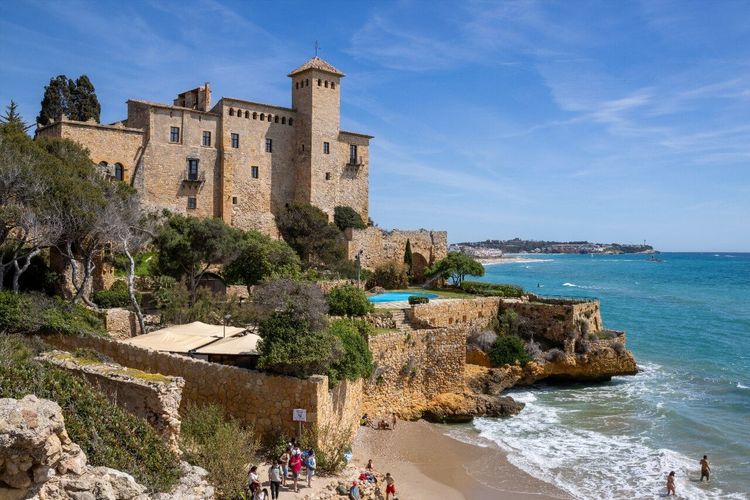
A few kilometres north of Tarragona, facing a fine sandy beach that Barcelona residents consider their secret getaway, Camping Tamarit Beach Resort (Carretera N-340, km 1172, 43080 Tarragona, rated 4.3/5 on Google from 7,037 reviews) embodies the very best that premium Mediterranean camping can offer. The site stretches across several hectares between a century-old pine forest and nearly a kilometre of beach on the Costa Daurada, all overlooked by the silhouette of the Tamarit castle — a combination that few European campgrounds can claim.
The 5-star classification is justified here by the breadth of the facilities: several themed pools (including children's aquatic areas), glamping, modern bungalows and mobile homes, sports courts, several restaurants and snack bars by the sea, a well-stocked grocery store, an active children's club in July–August and a wide entertainment programme. The shaded pitches under the pines are part of the experience — some campers have been returning to the same spot for twenty years, which speaks volumes about the loyalty this place inspires.
Accommodation ranges from a simple bare pitch (from €45 per night in peak season) to two-bedroom bungalows with a terrace and sea view (up to €290 per night). The resort offers Medium pitches (up to 90 m²), Large pitches (90 to 120 m²) and Extra Large pitches (over 120 m²) — a rare level of comfort on this coastline. Beyond the campground, Tarragona deserves a half-day visit: its Roman remains, including an amphitheatre directly on the sea, are listed as a UNESCO World Heritage Site.
A word of caution: the main road runs very close to the campground, and lorry noise can be heard at night from pitches near the entrance. When booking, explicitly request pitch numbers on the beach side. To prepare for the region — especially if you are travelling with a companion — our Ryo guide to travelling with your dog in Europe covers entry rules and key tips.
Ideal for: families with children, groups of friends, motorhome travellers seeking direct beach access. Peak season: June to September. Booking recommended: from January for July–August.
2. Camping Ca' Pasquali Village, Italy (Cavallino-Treporti, Veneto)
The Camping Ca' Pasquali Village (Via Poerio 33, 30013 Cavallino-Treporti, Venezia, rated 4.5/5 on Google from 2,630 reviews) occupies a uniquely strategic position on the Cavallino-Treporti peninsula, a strip of land that separates the Venice lagoon from the Adriatic Sea. From your pitch, Venice is 40 minutes away by boat — and if you think combining a 5-star campground with Venice sounds utopian, this site will prove you wrong.
The establishment has 200 metres of Adriatic beach, a marina for sailing enthusiasts, a pool with a water-slide area and a full programme of water sports. The Venice lagoon on the western side of the site is accessible by bike for rides that rival any outdoor destination in Italy. The sunsets over the lagoon, viewed from the campground, rank among the most beautiful in Europe — some travellers specifically book lagoon-view pitches for this very reason.
Ca' Pasquali is part of the Camping Village network, which guarantees consistent standards in terms of cleanliness and services. The on-site supermarket is well stocked with local Venetian produce (Friuli wines, San Daniele ham, polenta). Boat shuttles to Venice depart regularly from the nearby landing stage between May and September, with a return ticket costing around €14 per person.
Ideal for: couples, families combining culture and beach, motorhome travellers or van lifers wishing to visit Venice without a hotel. Peak season: July and August. Recommended length of stay: 4 to 7 nights.
3. Recreatiepark De Leistert, Netherlands (Limburg)
In a country not spontaneously associated with mountain camping, Recreatiepark De Leistert (Leisterweg 4, 6088 NT Roggel, Netherlands, rated 4.3/5 on Google from 5,683 reviews) surprises by setting itself among the hills of Limburg, the only topographically rolling region in the Netherlands. This 50-hectare park in Roggel offers a family campground that has regularly earned distinctions in ACSI rankings — the reference camping benchmark in Northern Europe.
The aquatic infrastructure is the main draw: a complex with a heated indoor pool, outdoor pool, water slides and a spa area provides entertainment whatever the weather — no small luxury in a region where rain can arrive even in July. The immediately surrounding forest offers dozens of kilometres of marked trails for hiking and mountain biking, and the park provides bike and kayak hire on the adjacent lake.
The chalet and lodge area is a popular option for families wanting the comfort of an apartment with the freedom of a campground. Bare pitches are well separated from the chalets, preserving the atmosphere of each zone. De Leistert is appreciated for the impeccable cleanliness of its sanitary facilities, consistently cited as one of the establishment's strongest points in online reviews.
Close proximity to the city of Venlo (30 km), the cycling paths along the Meuse and Germany (border 20 km away). For travellers discovering Northern Europe by van or motorhome, our Northern Europe cruise guide offers further inspiration.
Season: March to November.
4. Camping Polari, Croatia (Rovinj, Istria)
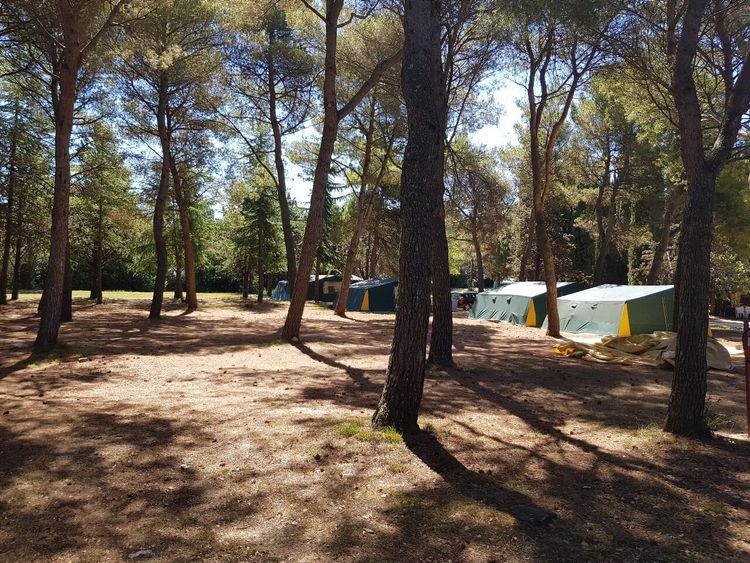
Croatian Istria is one of the most sought-after peninsulas in European camping, and for good reason: translucent waters at 27°C in summer, local gastronomy influenced by neighbouring Italy, medieval villages perched on hilltops and a tourist infrastructure that took decades to reach Western European standards. Camping Polari (Polari bb, 52210 Rovinj, Croatia, rated 4.3/5 on Google from 6,432 reviews), 3.5 kilometres south of Rovinj, encapsulates everything this region has to offer.
With around 1,800 camping pitches and over 600 rental accommodations across some sixty hectares, Polari is one of the largest campgrounds in Croatia. But size does not compromise quality: the site unfolds through a pine forest along a jagged rocky coastline, with several coves accessible on foot from the pitches. The clarity of the Adriatic here is such that you can see the bottom at 5 metres depth from the rocks.
The accommodation offer is one of the most diverse in this selection: bare pitches, premium pitches with enhanced electricity for motorhomes, mobile homes of various categories, wooden chalets and glamping tents directly on the coast. Prices remain around 30 to 40% lower than those of an equivalent campground in France or Spain, which explains the influx of Austrian, German and Slovenian holidaymakers every summer.
Rovinj deserves at least one evening: the old town perched on its former island, with its colourful alleyways and active fishing harbour, remains one of the most beautiful coastal towns on the Adriatic. Allow 20 minutes by bike from Polari, or a few minutes by water taxi from the campground's marina.
Peak season: June to mid-September. Booking: essential from February for the summer.
5. Camping Les Sablons, France (Brittany, Hillion)
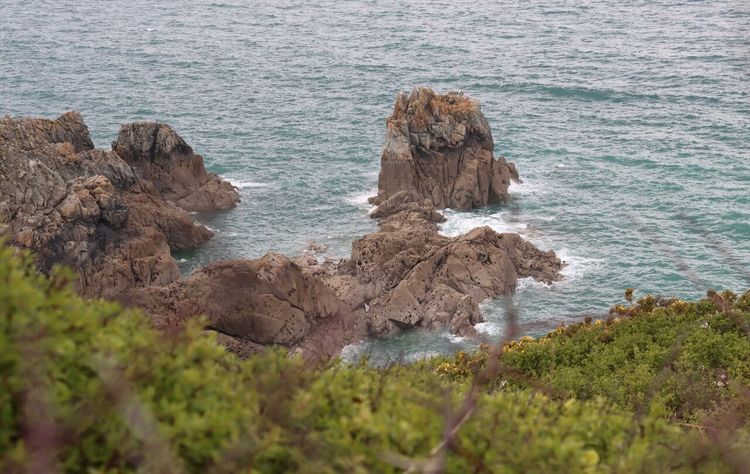
Brittany is not the first destination that comes to mind for a 5-star campground, and that is precisely where Camping Les Sablons (5 rue de la Plage, 22120 Hillion, rated 4.5/5 on Google from 1.6K reviews) defies expectations. Located in Hillion, at the heart of the Baie de Saint-Brieuc — a designated national nature reserve — this campground occupies a position that even luxury hotels would envy: direct access to a vast sandy beach, extraordinary tidal mudflat exploration during spring tides, and an unobstructed view across the bay as far as the eye can see.
The campground has invested heavily in its aquatic infrastructure: a covered aquatic area with a heated pool, outdoor pool and whirlpool allows guests to enjoy the site even when the Breton weather turns capricious. And it does. But that is precisely the Breton deal: a changeable sky, unique light, an impossibly vivid green landscape and seafood of a freshness you will not find on Mediterranean shores.
The entertainment programme is well suited to families: children's club for ages 3–12, themed evenings, pétanque tournaments, cooking classes using local Breton produce. The local market in Saint-Brieuc (20 minutes by car) is worth the trip for its fishmongers and fresh vegetable stalls. The shaded pitches under oaks and pines provide an intimacy that Mediterranean plain campgrounds rarely offer. For van life enthusiasts, our Cotentin motorhome guide usefully extends exploration of France's northern coast.
Season: April to September.
6. Erlebnis Resort Aufenfeld, Austria (Tyrol, Zillertal)
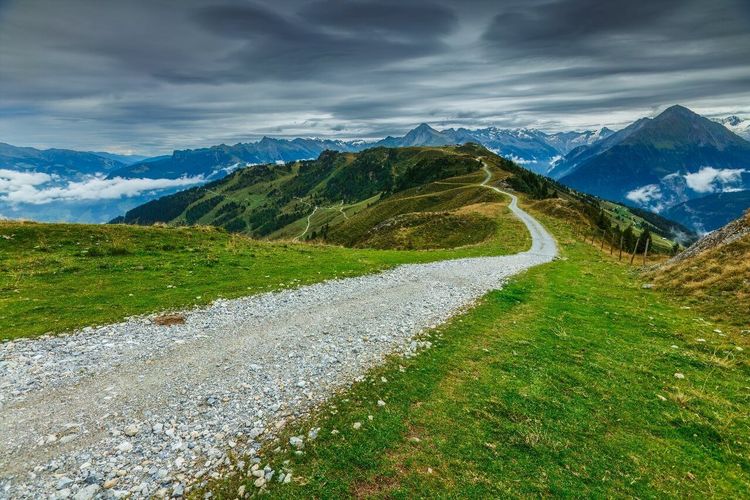
In the Zillertal valley, between Innsbruck and Salzburg, Erlebnis Resort Aufenfeld (Aufenfeldweg 10, 6274 Aschau im Zillertal, Austria, rated 4.6/5 on Google from 1,402 reviews) redefines what «alpine camping» can mean. Regularly awarded best campground in Austria by specialist press, this valley-floor resort offers two radically different experiences depending on the season: summer camping with hiking and mountain biking, or winter with skiing, snowshoeing and ice skating — the Zillertal ski lifts being accessible via a free shuttle.
Aufenfeld's aquatic complex is one of its great strengths: a heated indoor pool with a sports basin, children's area and water slide, sauna, and a wellness zone with a well-being space. Add to this a large leisure park (climbing wall, beach volleyball, trampolines, tennis, fun court, ponies, skatepark) as well as a swimming lake. Watching snowflakes fall from the pool while facing the Tyrolean Alps is an experience many guests describe as unforgettable.
Aufenfeld's mobile homes and wooden chalets offer fully equipped kitchens and décor in a contemporary Tyrolean style, far removed from the standard plastic mobile home. The bare motorhome pitch includes water, waste disposal and electricity connections at reasonable prices for Austria (around €40–55 per night in summer). The village of Aschau, a few minutes on foot, has an excellent bakery open from early morning.
Open: summer and winter seasons, with a few weeks' closure between seasons.
7. Südsee-Camp, Germany (Lower Saxony, Wietzendorf)
In the Lüneburg Heath in northern Germany, 60 kilometres south of Hamburg, Südsee-Camp (Südsee-Camp-Allee 1, 29649 Wietzendorf, Germany, rated 4.5/5 on Google from 2.1K reviews) has built a reputation as Germany's most award-winning campground. The 85-hectare site around a 10-hectare artificial lake offers a comprehensive offer that rivals the best campgrounds in France or Spain, but set within a German heathland landscape.
The central lake is the backbone of the experience: supervised swimming, pedal boats, kayaks, windsurfing, an artificial sandy beach — everything revolves around this stretch of water. The covered water park with giant slides and a wellness area compensates for rainy days, which are not uncommon in Lower Saxony even in summer. The cycle path around the lake (4.5 km) is manageable even with young children.
Südsee-Camp is particularly well organised for groups and families with young children: a structured children's club by age group, a mini-club from age 3, a high-ropes course, mini-golf, sports courts. An adults-only zone (no children) provides a welcome space of tranquillity. The lakeside lodges and permanent tents are the most in-demand accommodation — booking six months in advance is not excessive.
Peak season: July–August. Open: April to October.
8. Henne Strand Resort, Denmark (Jutland, North Sea Coast)
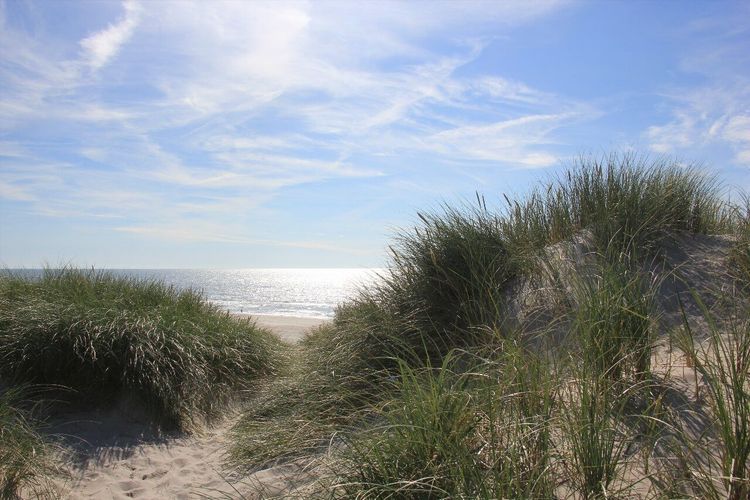
The west coast of Danish Jutland is battered by North Sea winds, and Henne Strand Resort makes no attempt to hide that. A 5-star campground set in the heart of the village of Henne, it gives access to one of the longest sandy beaches in Europe: a vast, preserved dune belt with no parasols or pedal boats — just dunes and the horizon. Surfers know this place well: North Sea conditions generate consistent waves from April to October.
The resort offers a less beach-party experience than its Mediterranean counterparts, and that is its strength: preserved nature, spacious pitches (100 to 140 m²) delineated by green hedgerows, sanitary facilities that meet exemplary Scandinavian standards, and an indoor pool with a water slide, a wellness area and a restaurant to round out windswept days. The beach, a few hundred metres away, remains the main attraction. On summer nights, the sun does not set until after 10 p.m.
For food lovers, the resort's restaurant works with local Jutland producers — moorland lamb, fish from the nearby fjord. The Wadden Sea National Park (UNESCO World Heritage Site), to the south, is worth a full day. Henne Strand Resort is unquestionably one of the serious contenders for the title of best campground in Europe for those who seek nature over entertainment.
Season: May to September.
9. Camping Gythion Bay, Greece (Peloponnese, Laconia)
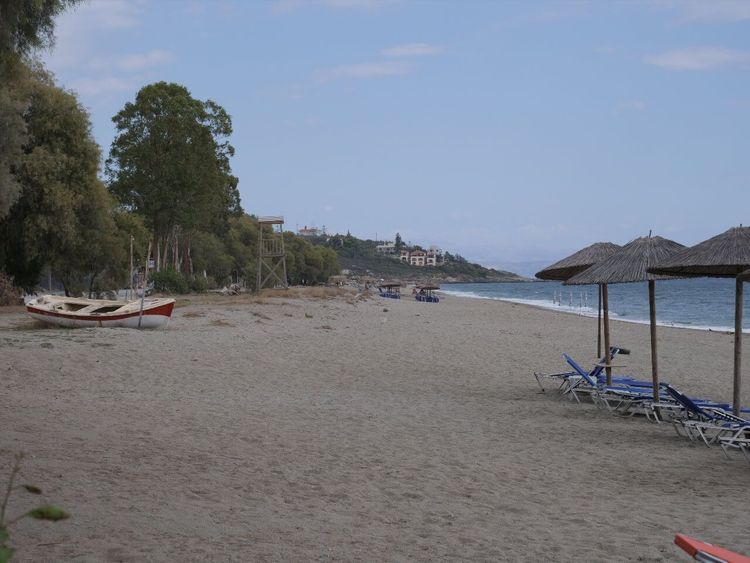
At the gateway to the Mani, the wildest peninsula of the Peloponnese, Camping Gythion Bay (Mavrovouni Beach, 23200 Gytheio, Greece, rated 4.6/5 on Google from 1,765 reviews) enjoys a setting that few European establishments can claim: a sheltered bay with century-old olive trees, crystal-clear water directly below the pitches, and in the background the Taygetos mountains plunging into the sea. This is a human-scale campground (around 150 pitches) that bets on authenticity rather than spectacular infrastructure.
The pitches directly on the fine shingle and sand beach are the most sought-after — some are separated from the water by less than 10 metres. The eastern Mediterranean here is warmer than the western Mediterranean: 26–28°C from June to September, sometimes 29°C in August. The town of Gythio (2 km) has a lively waterfront with fish tavernas, where moussaka and grilled octopus are cheaper than almost anywhere else in tourist Greece.
The Mani deserves two days of independent exploration by car: famous for its hundreds of stone tower-houses rising from the ridges, its near-abandoned stone villages and the Dirou sea caves, it is one of the most distinctive regions of Greece. The campground makes an excellent base. For fans of long European expeditions, our guide to Northern Lights cruises in Northern Europe sets the tone for a very different kind of Nordic journey.
Peak season: June to September.
10. Ardennen Camping Bertrix, Belgium (Province of Luxembourg)
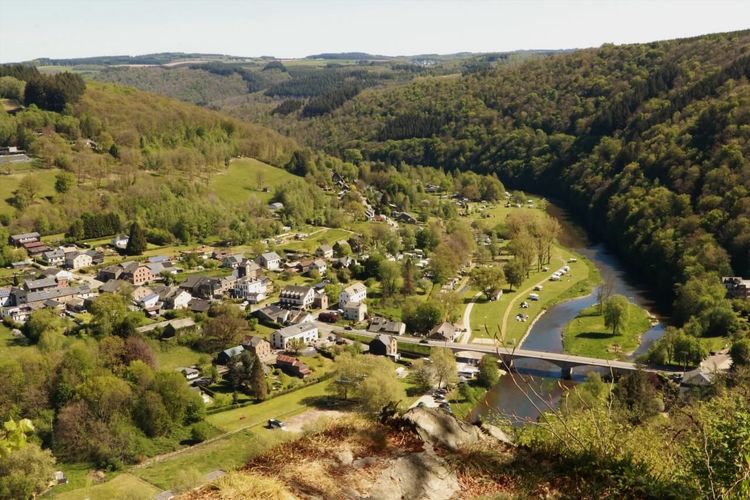
The Belgian Ardennes are underrated as a camping destination. Ardennen Camping Bertrix (Route de Libramont, 6880 Bertrix, Belgium, rated 4/5 on Google from 1,290 reviews), in the Belgian province of Luxembourg, corrects that misconception with a site of dense forest, a river (the Vierre) running along part of the grounds, and a half-nature, half-resort atmosphere that suits both families and couples.
The main draw here is not the sea but the forest: marked hiking trails lead directly from the campground into the Ardennes ridges, and the Vierre allows kayaking and canoeing from May to October (hire available on site). The covered heated pool complex is popular — Ardennes summers can be cool even in July. High-ropes activities and mountain biking in the adjacent woods round out the outdoor offer.
Bertrix is also well placed for exploring the rest of the Ardennes: Bouillon and its medieval castle are 25 km away, and the Semois can be discovered by kayak from Florenville. Prices remain moderate compared to French or Spanish 5-star campgrounds: a pitch in peak season costs around €30–40 per night, and quality chalets are available at €90–130 per night. If the trip starts or ends in Brussels, Ryo's 26-stop audio walking tour of the capital makes a pleasant primer before heading into the Ardennes.
Season: April to October.
11. Camping Porto Vecchio, Corsica (Corse-du-Sud)
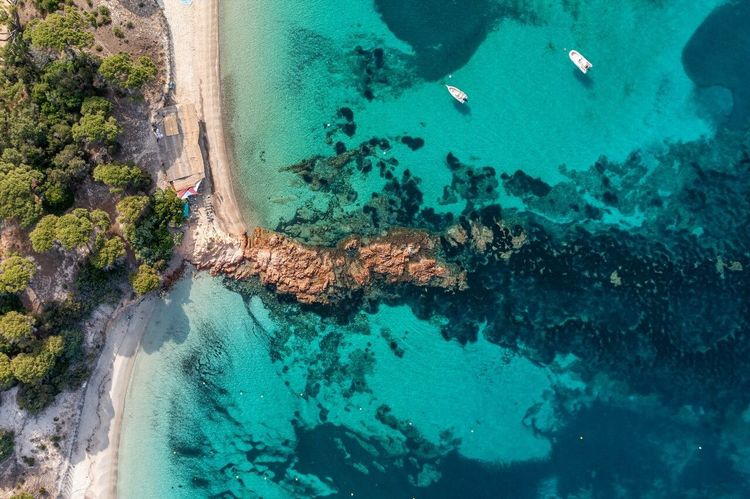
Corsica is home to several of France's most spectacular campgrounds, and the Porto Vecchio area in the south of the island is its epicentre. The beaches of Palombaggia, Santa Giulia and Cala Rossa regularly feature among Europe's most beautiful beaches: turquoise water against a backdrop of pink granite, remarkably fine white sand and the scented Corsican maquis reaching all the way to the sea.
Campgrounds near Porto Vecchio have benefited from significant investment in recent years to reach 5-star level: pools overlooking the Corsican hills, restaurants serving local charcuterie and cheeses, children's clubs, and concierge services organising boat trips, hikes in the Ospédale massif and Figari wine tastings. Our Porto Vecchio camping guide details the best addresses in the area with up-to-date practical information.
Corsica remains expensive in peak season — travelling by motorhome in July or August requires a near-mandatory reservation, and pitch prices can reach €60 per night. In return, the quality of the landscape is unmatched anywhere in mainland France. Ferry crossings from Marseille, Nice or Toulon allow you to make the journey with your own vehicle.
Peak season: July–August. Booking: essential from January.
12. Camping Stobrec Split, Croatia (Dalmatian Coast)
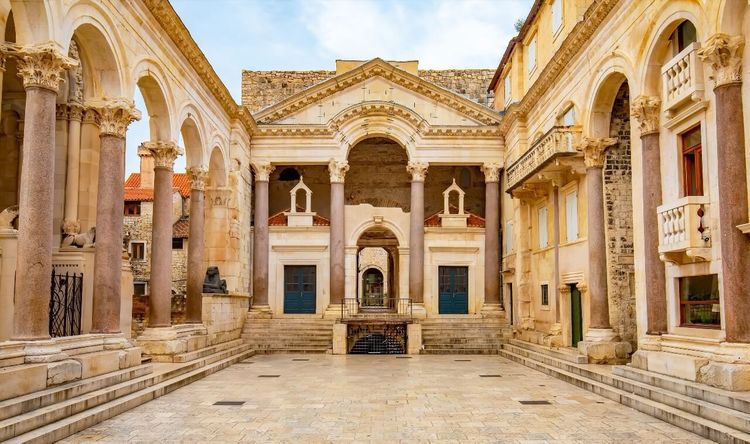
For those wishing to visit Split, Croatia's second city and its UNESCO-listed Diocletian's Palace, from a campground, Stobrec Split (Put Stobreča 33, 21311 Stobreč, Croatia, rated 4.2/5 on Google from 4,829 reviews) is the most practical option. Located 7 km from the city centre, reachable by bus (10 minutes) or by bike, this campground on the Dalmatian coast offers direct access to the Adriatic Sea from a rocky platform.
The facilities are less luxurious than Polari or Tamarit, but the geographical position is unbeatable for a camper wanting to explore the Dalmatian coast: Split and its Roman palace, the islands of Brač and Hvar accessible by ferry, Trogir (UNESCO World Heritage Site) 30 km away. This is the kind of campground where you spend little time on site and a great deal of time exploring the surroundings — which is precisely what the most mobile campers are looking for.
Season: April to October.
13. Camping Miramare, Italy (Lake Garda, Riva del Garda)
Camping Miramare (Viale Rovereto 155, 38066 Riva del Garda TN, Italy, rated 4.5/5 on Google from 1,426 reviews) in Riva del Garda is the archetype of the mountain-lake campground: at the northern tip of Lake Garda, between the Trentino Dolomites and the first warmth of the Lombard plains, it offers a rare combination — lake water, alpine scenery and resort-campground infrastructure.
The lake here is paradoxically cooler and less touristy than the southern shore (Sirmione, Peschiera), but the constant northerly wind, the Pelér, makes it a paradise for windsurfing and kitesurfing. The campground offers windsurfing lessons for beginners directly on the lake. Our Italian lakes motorhome guide covers the full northern Italian lake circuit, from Lake Maggiore to Lake Como.
Peak season: June to September.
14. Camping Aminess Maravea, Croatia (Novigrad, Northern Istria)
In northern Istria, a few minutes from the medieval town of Novigrad and its truffle and fish restaurants, Aminess Maravea is a resort campground that has attracted a loyal clientele from Austria and Germany for years. The sheltered harbour offers calm water for families with young children, and the olive trees shading the pitches create a Mediterranean atmosphere without the aridity of Spanish campgrounds.
Novigrad deserves a full evening for its Istrian gastronomy, directly rooted in the Italian tradition: pasta with black truffles (harvested locally), fish grilled with rosemary, malvazija wines. Istria is indeed a playground Season: May to October.
15. Terme Catez, Slovenia (Thermal Spa, Posavje)
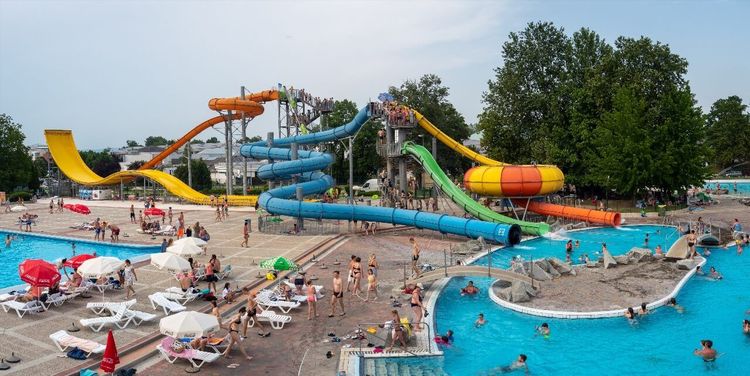
Slovenian thermal camping is a concept in its own right, and Terme Catez (Topliška cesta 35, 8251 Čatež ob Savi, Slovenia, rated 4.2/5 on Google from 10,872 reviews) is its most complete example. Located 90 kilometres east of Ljubljana, this thermal resort combines a 5-star campground, a 10,000 m² indoor and outdoor water park, thermal baths open year-round and an Olympic swimming pool.
Its distinctive feature is thermal water flowing directly into the campground's outdoor pools: heated open-air basins, accessible even in winter, make this site a unique winter campground in Central Europe. The camping pitches are well separated from the adjacent thermal hotel, but campers have access to the full range of aquatic facilities. It is one of the rare European campgrounds where coming in November or March is not a compromise but a genuine experience.
The grape varieties of the Sava valley (Posavje) produce little-known but quality local white wines, well worth tasting in the region. The old town of Novo Mesto (about thirty kilometres away) makes for a pleasant cultural complement.
Open: year-round.
5-Star Beachside Campgrounds in France: What to Choose?
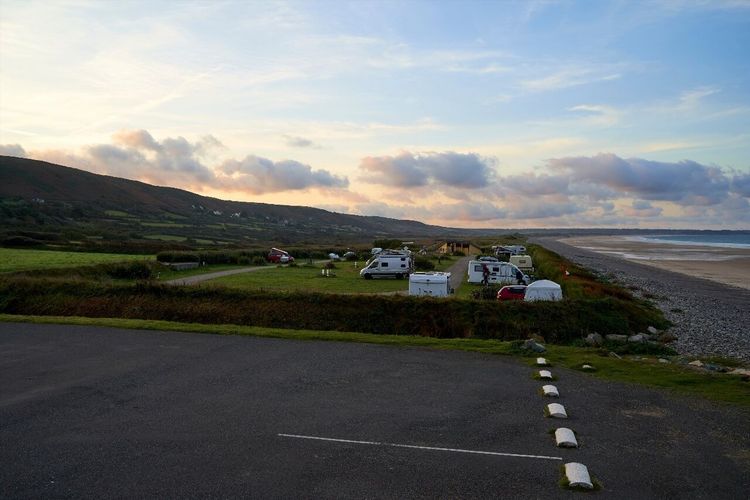
France has one of the densest networks of campgrounds in Europe, with several thousand establishments, a significant proportion of which are rated 4 or 5 stars. By the sea, the highest concentration is found along the Atlantic coast (Vendée, Charente-Maritime, Gironde) and on the Mediterranean (Hérault, Var, Alpes-Maritimes). Brittany and Normandy complete the picture with offerings focused on nature rather than mass beach tourism.
For a luxury beachside campground in France, the decisive criteria are:
- Beach access: direct access (rare and precious) vs. walking distance (5–15 min) vs. shuttle. The price difference between these three situations can reach 40%.
- Integrated water park: a weather compensator for Atlantic regions, almost essential for Brittany and Normandy.
- Pitch size: the best 5-star campgrounds guarantee a minimum of 80 to 120 m² per pitch — check this in your booking conditions.
- Motorhome services: waste disposal point, minimum 10A electricity, parking without surcharge for vehicles over 7 metres.
In Vendée, campgrounds in the Baie de l'Aiguillon and on the Île de Ré earn the highest ratings. In Charente-Maritime, campgrounds on the wild coast and around Royan rival the best Mediterranean establishments. Our Côte d'Azur motorhome guide covers the premium end of the French Mediterranean coast. For the Île-de-France and surrounding areas, our Paris motorhome rental article is a useful starting point.
How to Prepare Your Stay at a High-End Campground?
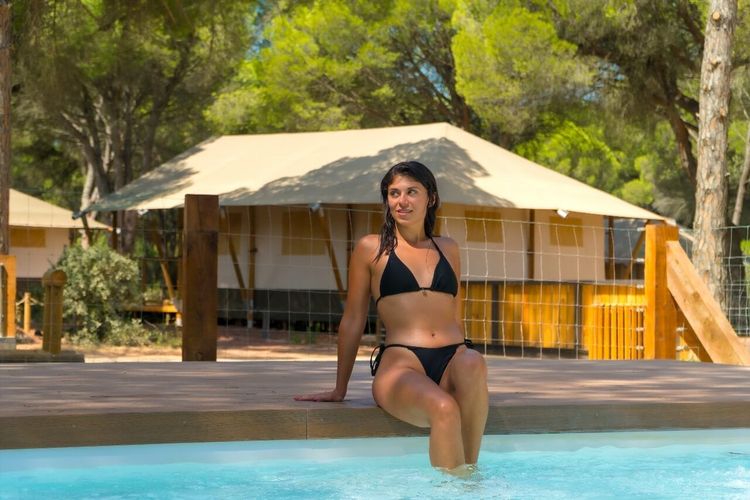
Booking a 5-star campground in Europe is closer to booking a hotel than pitching a tent in a field — with the same constraints. Here are the points that make the difference between a successful stay and an unpleasant surprise.
Booking early is the number one factor. For July–August on Mediterranean and Atlantic coasts, open booking platforms from December. Some campgrounds in this selection (Polari, Tamarit, Porto Vecchio) are fully booked for certain periods as early as mid-March. «Premium» pitches (sea view, natural shade, close to the pool) go even faster than standard pitches.
What to bring to a 5-star campground is evolving: you need less equipment because sanitary facilities, shared kitchens and sometimes barbecues are provided. That said, a good inflatable mattress or quality camp bed remains essential for cool nights, even in summer — particularly at altitude (Austria, French Alps) or on the Atlantic coast.
The real budget includes the pitch plus entry to local attractions plus food. At the campgrounds in this selection, expect to pay between €45 and €120 per night for a pitch depending on the season, plus €20–40 per day for a family in activities and on-site dining. Campgrounds that include water park access in the pitch price offer good economic value.
Getting around on site: for well-connected campgrounds (Polari, Ca' Pasquali, Stobrec), a bike or public transport is sufficient. For campgrounds in rural areas (De Leistert, Aufenfeld, Bertrix), a car or motorhome is still needed for day trips. If you are travelling in Iceland or Scandinavia by van, our Iceland motorhome guide addresses the specific conditions of that type of Nordic journey.



FAQ
Which is the best campground in Europe?
There is no universally recognised ranking considered the absolute reference, but several establishments consistently top the ACSI, Eurocampings and national distinction lists: Tamarit Beach Resort in Spain for Mediterranean seaside camping, Erlebnis Resort Aufenfeld in Austria for alpine camping, Terme Catez in Slovenia for thermal camping, and Recreatiepark De Leistert in the Netherlands for quality-service-price ratio in Northern Europe. The best campground in Europe therefore fundamentally depends on what you are looking for.
What are the best 5-star beachside campgrounds in France?
Vendée (île de Noirmoutier, Saint-Jean-de-Monts), Charente-Maritime (wild coast, Royan, Oléron), Brittany (Quiberon, Carnac, Saint-Malo) and the Mediterranean (Var, Hérault, Alpes-Maritimes) concentrate the best French 5-star seaside campgrounds. In Corsica, the Porto Vecchio area with Palombaggia represents an absolute qualitative pinnacle, with beaches regularly ranked in the European top 10. On the Mediterranean, campgrounds at Cap d'Agde and Fréjus offer all-inclusive packages broadly comparable to Spanish standards.
What is the best time to go camping in Europe?
June and September are the perfect months for the Mediterranean: fewer crowds than in July–August (sometimes 30 to 50% lower occupancy), lower prices, water temperatures of 24–26°C, and long days. For the Alps and mountain areas, July–August remains the peak season with the best weather conditions. In Scandinavia and Denmark, mid-June to late August concentrates most of the tourist traffic. For thermal camping (Slovenia, Austria), October to March offers unique winter conditions with access to heated outdoor baths in the snow.
5-star camping: what does it really include?
In France, the official 5-star classification imposes precise criteria: minimum pitch size, ratio of sanitary facilities per pitch, electricity supply, reception services, and green space. In practice, the 5-star campgrounds in this selection systematically offer: a swimming pool (indoor or outdoor), wifi access across the entire site, multilingual reception, an on-site shop or supermarket, a restaurant or snack bar, a children's club during peak season, and heated sanitary facilities with hot water. Some also add a spa, gym, motorhome service area and concierge. What the classification does not indicate: the quality of the natural setting, pitch sizes beyond the legal minimum, and the overall atmosphere — which is why recent guest reviews matter so much.
Can you camp with a dog in Europe?
Most campgrounds in this selection accept dogs (1 to 2 animals maximum per pitch, with an up-to-date vaccination certificate, particularly against rabies for stays in countries that require it). Dedicated areas for animals are often provided (dog play areas, walking zones). However, pool and dining areas are systematically off-limits to animals. For a trip across Europe with your dog, our guide to travelling with your dog in Europe lists the regulations by country.
Camping or hotel: which is more affordable for a family of 4?
For a family of 4 during peak season on the Mediterranean, a 5-star campground is generally cheaper than an equivalent 3- or 4-star hotel in terms of comfort. Expect to pay €60 to €120 per night for a pitch plus a 2-bedroom mobile home at a 5-star campground, versus €180 to €320 per night for 2 hotel rooms or an upscale family room. The camping advantage grows with on-site cooking (meal savings), included access to the water park (leisure savings) and freedom of movement. The downside: the logistics of transporting equipment and weather dependency for bare pitches.
How do you book the best pitches at a large campground?
All major platforms (Camping.info, Eurocampings, ACSI, Booking, Pitchup) allow online booking with pitch selection for campgrounds that offer this option. For premium pitches (seafront, lake view, under century-old trees), booking directly on the campground's website is often more effective, as some establishments reserve their best spots for direct bookings. The ACSI card provides discounted rates outside peak season at several thousand European campgrounds, including several in this selection.
Conclusion
From the Danish dunes swept by the North Sea to the thermal baths of Slovenia, via the turquoise waters of Istria and the pine forests of the Costa Daurada, the best campgrounds in Europe share the same ambition: to offer an exceptional natural setting without sacrificing the comforts that make a stay truly memorable. The best campground in Europe for you is the one that matches your travel rhythm — families with children, couples on a road trip, solo van travellers or groups of friends in search of beaches and entertainment.
To explore these destinations beyond the campground and discover their neighbourhoods, landmarks and local experiences, the Ryo app offers audio-guided tours in the stopover cities of your stays. Whether you make a layover in Venice from Ca' Pasquali, hike around Rovinj after Polari, or set out to discover Porto Vecchio after your night in Corsica, the Ryo audio guide and its associated city itineraries are designed to enrich every stage of your journey. Happy camping, and safe travels to the most beautiful corners of Europe.
À lire également