© Shutterstock
 Votre guide Ryo
Visiting Ghent with Kids in 2026: The Complete Guide to the Castle, Museums and Walks
In Ghent, kids climb the ramparts of a real medieval castle before snack time, and nobody asks them to whisper. Visiting Ghent with kids means enjoying a compact city where crenellated towers, gabled quays and canals fit into a pocket-sized area. The Ryo audio-guided tour of Ghent follows exactly this thread, through cobbled alleys and along the banks of the Lys, so everyone can go at their own pace instead of chasing after a hurried guide.
In two days on site, you can climb to the top of the belfry to greet the golden dragon, paddle a kayak past the Korenlei, then finish in a century-old sweet shop that still sells cuberdons over the counter. Between a fortified castle, an entire alley handed over to graffiti artists, a museum designed for young curious minds and a boat ride on the canals, the city can be discovered at a child's height without sacrificing its heritage. Here is how to organize this trip, place by place, with addresses to eat, sleep and burn off energy.
The Castle of the Counts (Gravensteen), the Kids' Favorite Fortress
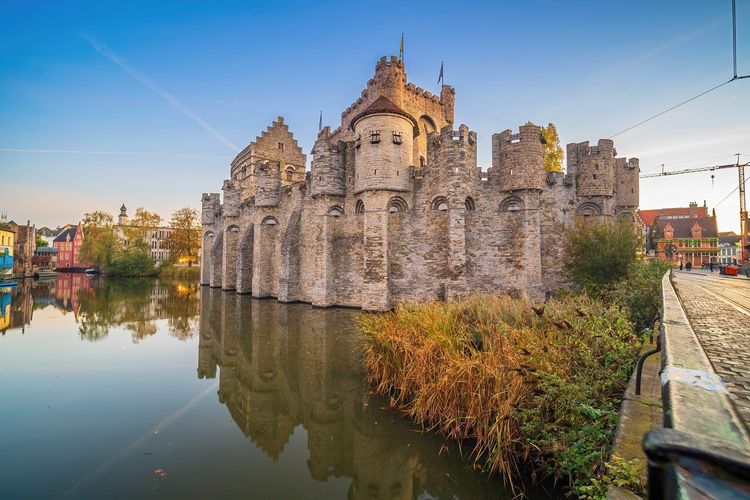
Standing on the banks of the Lys since 1180, the Castle of the Counts (Sint-Veerleplein 11, 9000 Ghent, rated 4.6/5 on Google from 36,520 reviews) (Gravensteen in Dutch) is the first image most children keep of Ghent. Crenellated towers, an access bridge over a moat that still holds water, a wall walk: here, there is no need to imagine the Middle Ages, you step straight into them.
Built on the orders of Count Philip of Alsace on his return from the Crusade, this Flemish castle served as a comital residence, then as a courthouse and prison, before housing a cotton mill in the 19th century. It was even nearly demolished before the city bought it back and restored it at the end of the 19th century. Allow about 1 hour 30 minutes for the full visit, a little less with young children who will prefer the wall walk to the weapons rooms.
Climb to the top of the keep: the view over the rooftops of the historic center and the belfry in the distance is well worth the steep steps, which have to be tackled without a stroller (leave it at the entrance). In high season, book your tickets online to avoid the queue.
For 6-to-12-year-olds, ask for the Little Guide Gravensteen booklet, offered by the Historic Houses of the City of Ghent: it turns the visit into an investigation, with riddles to solve from room to room. In the torture instruments room, warn the more sensitive ones: some pieces are impressive, even if the presentation remains educational rather than macabre.
The castle also marks one of the first stops of the Ryo audio guide to Ghent: the stories about the counts, the sieges and the Ghent revolts can be listened to at the foot of the walls, enough to keep your children on the edge of their seats between two lookout towers.
On the practical side, the castle is located on Sint-Veerleplein, a small square where the fish market once stood. If your kids still have energy after the visit, cross the nearby bridge to reach the Patershol, a former tanners' district with narrow alleys, where you can happily play at getting lost before emerging onto the Kraanlei.
The Belfry of Ghent and St. Bavo's Cathedral
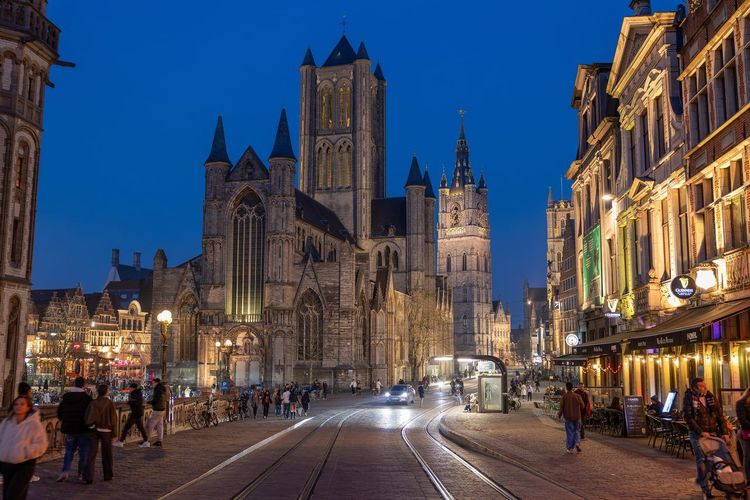
A few minutes' walk from the castle, the Belfry of Ghent has dominated the city since the 14th century. Listed as a UNESCO World Heritage Site along with the other belfries of Belgium and northern France, it bears a golden dragon at its summit, presented by local tradition as the guardian of the city.
An elevator takes you to the upper floors without exhausting little legs, but energetic kids will probably prefer the stairs so they can see the bells and the carillon mechanism along the way. Once at the top, ask them to look for the dragon and count the bell towers visible on the horizon. Here too, a Little Guide Belfry exists to guide the youngest through the floors.
Just opposite, St. Bavo's Cathedral (Sint-Baafsplein, 9000 Ghent, rated 4.7/5 on Google from 14,811 reviews) deserves a calmer stop. It houses The Ghent Altarpiece (The Mystic Lamb) by the Van Eyck brothers, one of the most stolen paintings in art history: a panel taken in 1934 has never been recovered, a mystery that often captivates children more than the artwork itself. The Romanesque crypt, darker and cooler, offers a welcome break on hot days.
Allow a little under an hour for both visits combined. If you are in a hurry, the panorama from the belfry is enough to understand why these towers appear on every postcard of Ghent.
Avoid the middle of the day in summer: the elevator queue quickly grows between 11 a.m. and 3 p.m., whereas it takes just a few minutes early in the morning.
The Graslei and Korenlei Quays: Ghent's Most Beautiful Walk
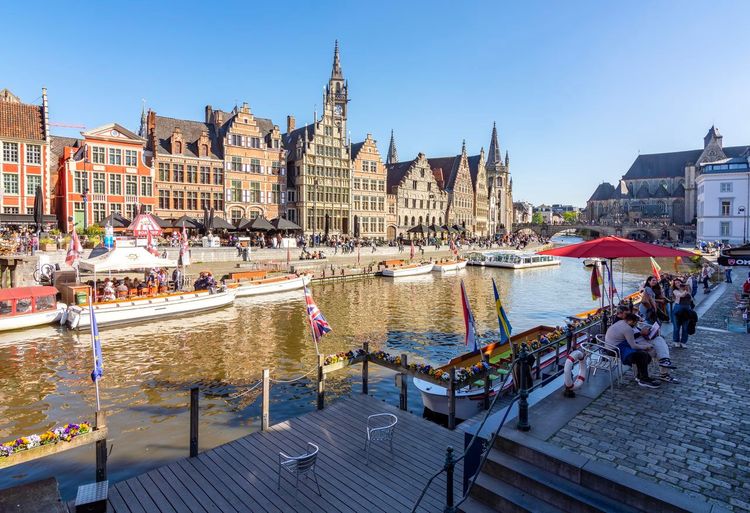
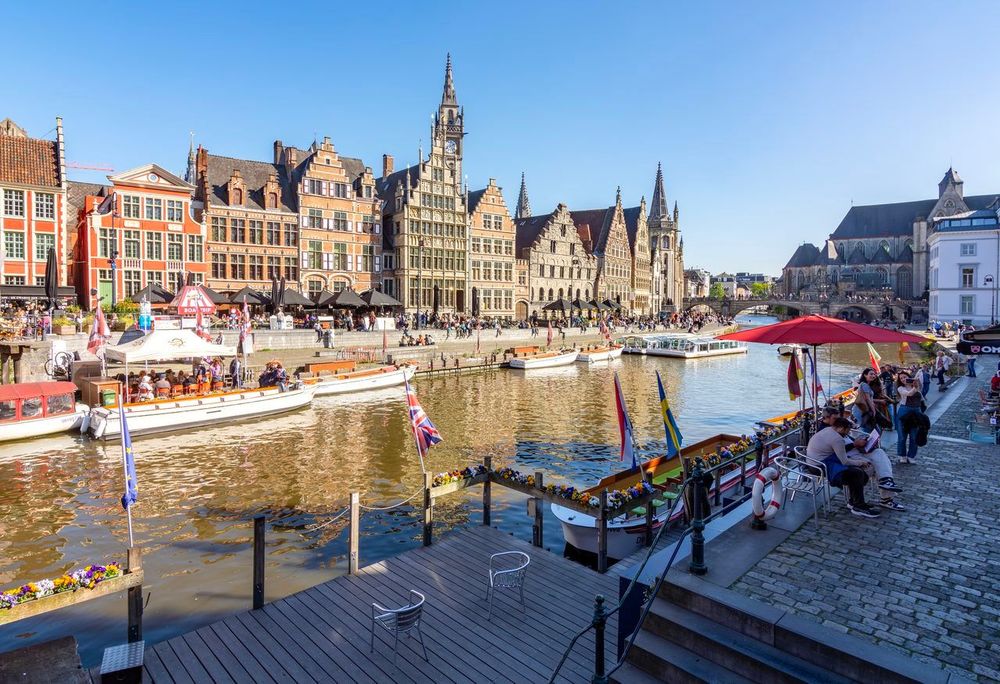
These two quays facing each other along the Lys form the most photographed setting in the city. The Graslei (Herb Quay) and the Korenlei (Korenlei, 9000 Ghent, rated 4.8/5 on Google from 1,191 reviews) (Grain Quay) line up gabled facades from the Middle Ages to the 17th century, each linked to a trade: the boatmen's house, the masons' house, the Romanesque grain warehouse.
It is also the easiest spot with a stroller: the quays are wide, flat and pedestrian for a good part of their length, unlike the cobbled alleys in the rest of the center.
Kids love counting the moored boats and watching for the tourist boats that depart right from here. This stretch is, in fact, the heart of the Ryo audio-guided tour: each facade has its anecdote, told at just the right distance, turning a simple stroll into an observation game.
Late in the afternoon, settle on the steps of the Graslei with an ice cream. It has become a local ritual, and the low light on the facades gives the best photos of the day.
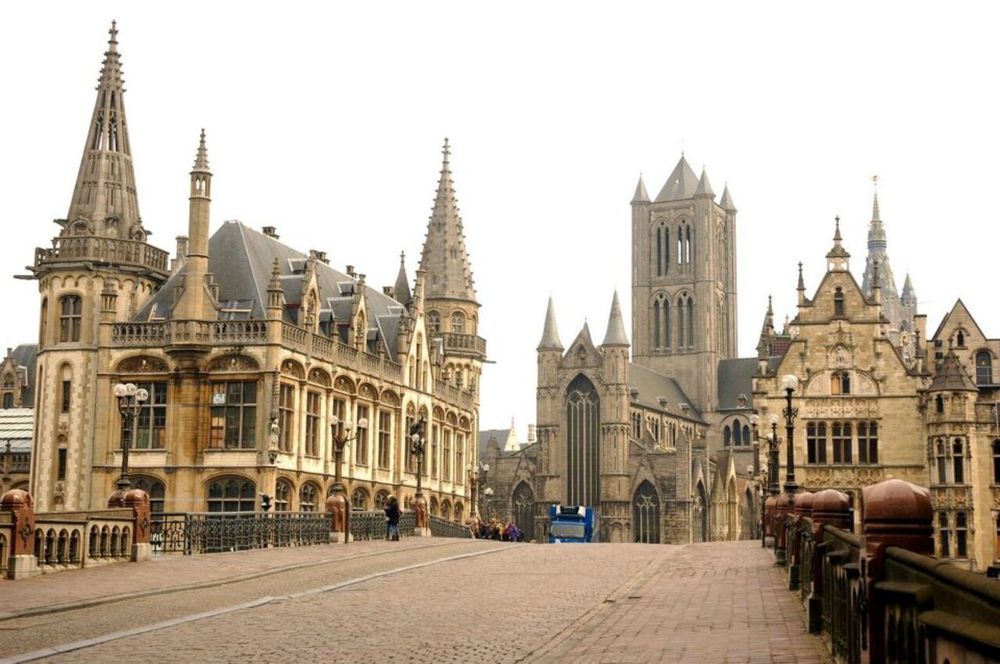
At the end of the Graslei, St. Michael's Bridge offers Ghent's most famous viewpoint: the three towers (St. Nicholas, the belfry and St. Bavo) lined up in a single glance. Kids enjoy naming them in order, and it is the ideal spot for the group photo. Right next to it, St. Nicholas' Church, free to enter, houses a monumental organ and is a cool refuge in case of a sudden shower.
Graffiti Alley (Werregarenstraatje), an Open-Air Street Art Museum
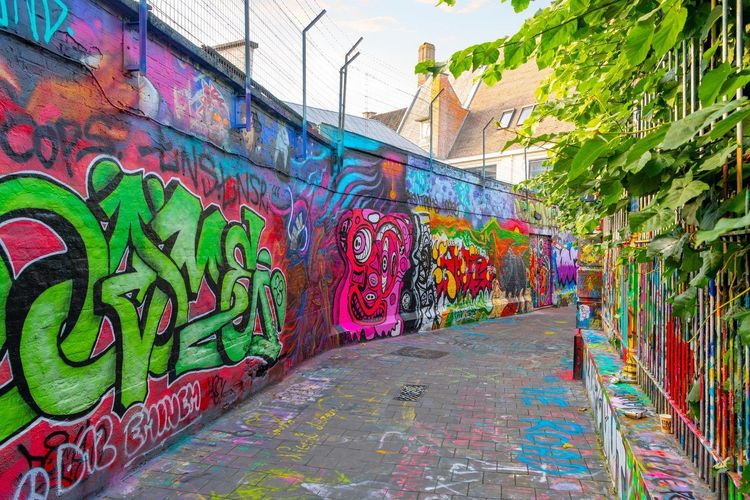
Two minutes' walk from the quays, Graffiti Alley (Werregarenstraatje (Werregarenstraat, 9000 Ghent, rated 4.2/5 on Google from 175 reviews)) contrasts sharply with the neighboring historic facades. Since the mid-1990s, the city has allowed artists to paint freely here, so the walls constantly change their look.
Suggest a little game: spot a character, an animal or a hidden message among the layers of paint. Two visits a few months apart never show the same thing.
Ten minutes is enough. It is the ideal quick stop to lighten a schedule packed with monuments, and teenagers often appreciate it more than their parents: a chance to explain the difference between wild tagging and authorized street art.
Museums to Visit with Kids: Kina and STAM
If you had to choose just one museum for the youngest, it would be Kina (formerly De Wereld van Kina), Ghent's museum "for children and nature". Its main site, Kina Het Huis, occupies a building near St. Peter's Abbey and displays collections of stuffed animals, fossils and minerals, with interactive experiences about nature and science. A second site, Kina De Tuin, offers an educational garden for observing plants and small creatures.
Plan a morning there. The Citadelpark, a few minutes' walk away, then lets children run among the trees and ponds after the exhibition rooms. Most of the installations can be understood without reading a line, which matters when the signs are in Dutch.
For slightly older children, the STAM (Godshuizenlaan 2, 9000 Ghent, rated 4.5/5 on Google from 2,057 reviews) (the Ghent City Museum), housed in the former Bijloke Abbey, traces urban history through models, maps and everyday objects. The large aerial view of the city printed on the floor, which you walk across while looking for your hotel, always makes an impression.
The city's Historic Houses round out the offering with their Little Guides: besides the castle and the belfry, one booklet covers the Hotel d'Hane Steenhuyse, an 18th-century aristocratic residence on the Veldstraat, where you play detective in the drawing rooms. Some workshops in Ghent's museums, such as the sound game that has you recognize noises of the city, extend this link between the street and the exhibition rooms.
If time is short, choose Kina with children under 8 and STAM from age 8-9, when history starts to resonate more. Check the rates: young visitors benefit from significant discounts, or even free entry, in the municipal museums.
Families with a little more time can also head to the MSK, the Fine Arts Museum on the edge of the Citadelpark, right opposite SMAK, which is devoted to contemporary art. Both regularly offer trails or workshops for young visitors during the Belgian school holidays: take a look at the program before leaving, as some activities require booking.
A Boat Ride on Ghent's Canals
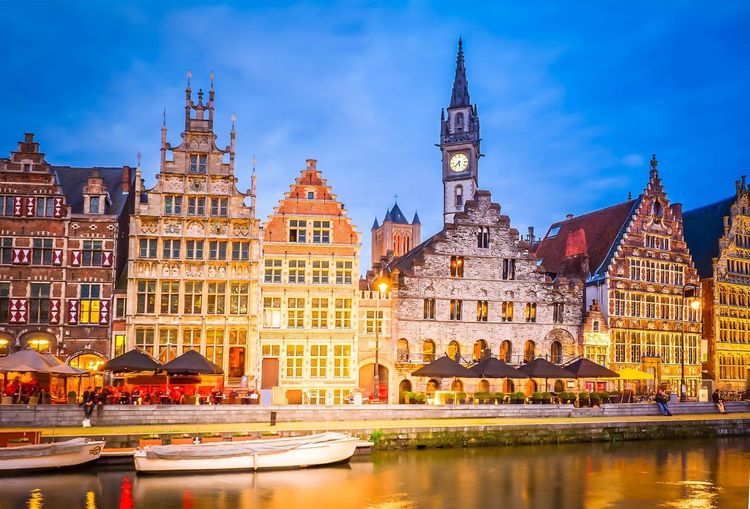
Going aboard remains one of children's favorite ways to discover Ghent. Tourist boats leave regularly from the Graslei, the Korenlei and the Vleeshuisbrug, and the tour lasts about 40 to 50 minutes around the historic center, passing under a series of bridges.
Seen from the water, the Castle of the Counts and the gabled houses take on a whole new dimension. The boatmen tell anecdotes and legends in several languages, with a sense of humor that works on children and parents alike.
Aim for late morning or late afternoon: softer light, shorter waits. Expect to pay around 10 to 12 euros per adult, with a reduced rate for children.
With impatient toddlers, choose a company with frequent departures rather than a fixed schedule.
The Blaarmeersen Recreation Area: Fresh Air, Swimming and Playgrounds
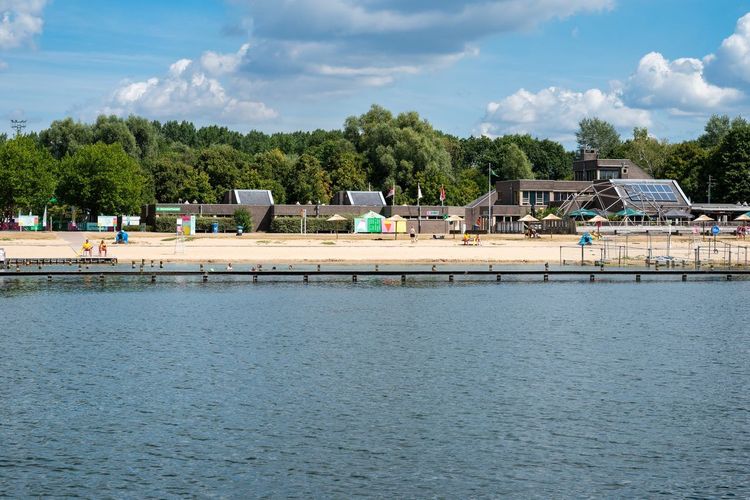
About twenty minutes from the center, by bike or bus, the Blaarmeersen Recreation Area (Zuiderlaan 5, 9000 Ghent, rated 4.3/5 on Google from 1,301 reviews) is a complete change of pace. This large park built around a lake offers a supervised swimming area, a sandy beach, playgrounds and cycle paths: a real breath of fresh air after a morning on the cobblestones.
Swimming is supervised in summer, with a shallow area for the youngest. Off-season, the site remains pleasant for a picnic or a bike ride, on flat paths separated from traffic.
The area also has a skatepark popular with local teenagers, a campsite and several sports fields with free access. It is the place to fit in a whole afternoon without paying an entrance fee, apart from equipment rental.
Combining a cultural morning with an afternoon in the green is the formula that works best with kids: do the center in the morning with the Ryo audio guide in your pocket, then head to the lake when legs crave something other than museums.
Bring a change of clothes: between wet feet and sand, a dedicated bag avoids many complications for the rest of the day.
Activities and Thrills for Little Adventurers
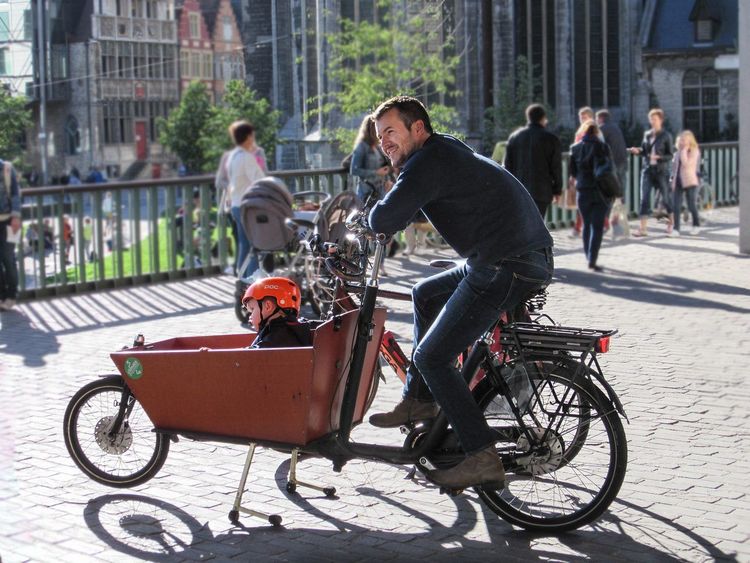
Ghent is not just about its monuments: the city is full of activities to burn off children's energy, and sometimes the parents' too.
Cycling in Ghent remains the simplest option: the city is flat, cycle paths are plentiful, and several rental shops offer child seats or cargo bikes by the day. For a change, the Korenlei kayaks let you paddle on the Lys at your own pace, with no imposed guide, a good option if your children are already comfortable in the water. Outdoor event organizers in the region also offer rafting trips and supervised water activities for the more athletic.
On rainy days, head for indoor activities: Level Up, an arcade and video game hall, appeals as much to kids as to nostalgic parents, O'Learys combines a restaurant, bowling and games, and Overpoort Bowl lines up its lanes in the Overpoort student district. The Bleau climbing center offers boulders suited to beginners, with climbing shoes available for rent.
More unusual, VlotGent rents electric rafts that you steer yourself on the canals, no license required. Transport enthusiasts will go as far as the terminus of the tram to Moscou: yes, it really is the name of a district and an actual stop on the Ghent network, and the ride quickly becomes a game for children who collect improbable names. Finally, a free tour (free guided visit, tips optional) leaves regularly from the center and will appeal mostly to adults and teens.
It is better to pick two or three than to try to cram everything in: an outdoor activity in the morning, an indoor option in case of a downpour in the afternoon. To narrow the list, our top 5 activities to do in Ghent goes straight to the must-dos.
Shops and Treat Stops for Kids
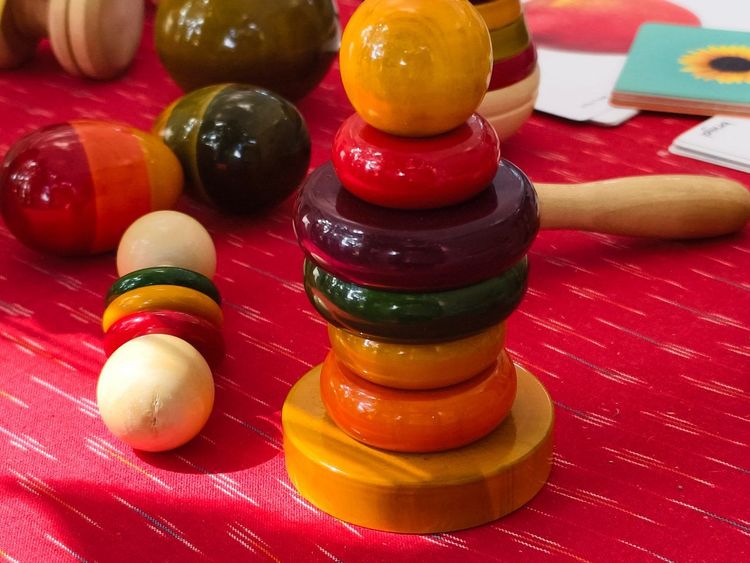
The historic center hides several shops designed for children. Aap Noot Mies and Grote Schatten focus on wooden toys and board games, far from the aisles of the big chains, while Mister Jones and Miss Katie mixes children's clothing and home decor items.
The Fallen Angels attracts fans of antiques and vintage toys, and De Speelfontein completes the picture with a selection of more classic games, handy for finding a souvenir that fits in a backpack.
Don't leave without a detour to the Confiserie Temmerman (Kraanlei 79, 9000 Ghent, rated 4.7/5 on Google from 267 reviews), on the Kraanlei, the oldest confectionery house in the city, run by the same family for over a century. The shelves are laden with jars of old-fashioned candies and cuberdons, those little purple cones with a jelly center, Ghent's sugary emblem. Our top 9 culinary specialties of Ghent details these sweets and a few other classics to bring back.
The snack budget stays reasonable, far from the prices charged in the immediate surroundings of the belfry.
Where to Eat as a Family in Ghent
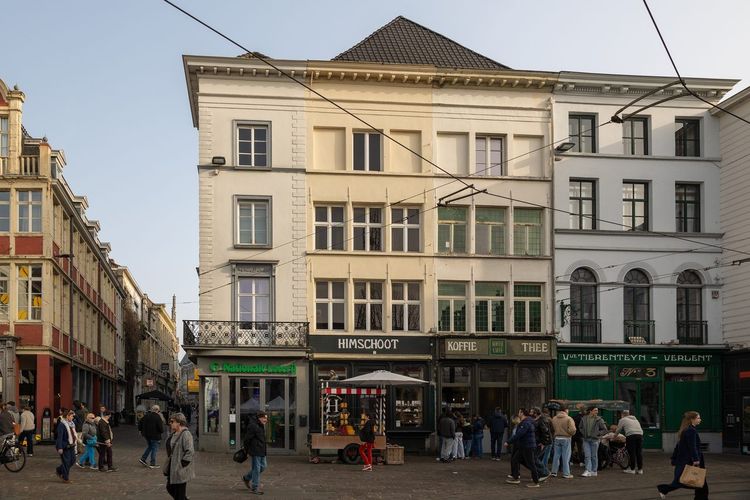
For a quick lunch, head to the Groentenmarkt, the former vegetable market, where fries and waffles can be eaten on the go without making hungry children wait. Right next door, the Groot Vleeshuis hall offers regional products and small plates to share.
For a modern take, the Holy Food Market occupies the former Baudelo Chapel, near the Beverhoutplein: about fifteen stalls (burgers, pasta, Asian cuisine, desserts) around shared tables under high vaults. Handy when nobody agrees on the menu, and the setting impresses even the kids.
For a more relaxed dinner, several places in the center offer a kids' menu without sacrificing the adult menu. Bompa, popular with locals, serves simple Belgian cuisine in a relaxed atmosphere that tolerates noisy little ones after a day of sightseeing.
If the budget needs to stay contained, go for a picnic: the steps of the Graslei, the Citadelpark or Blaarmeersen all offer places to settle in with products bought at the market.
Between meals, try the specialties in miniature form: a cone of fries, a Liège waffle or a few speculoos cookies are often enough to tide everyone over until the next stop.
Suggested Itinerary: Ghent with Kids in 1 or 2 Days
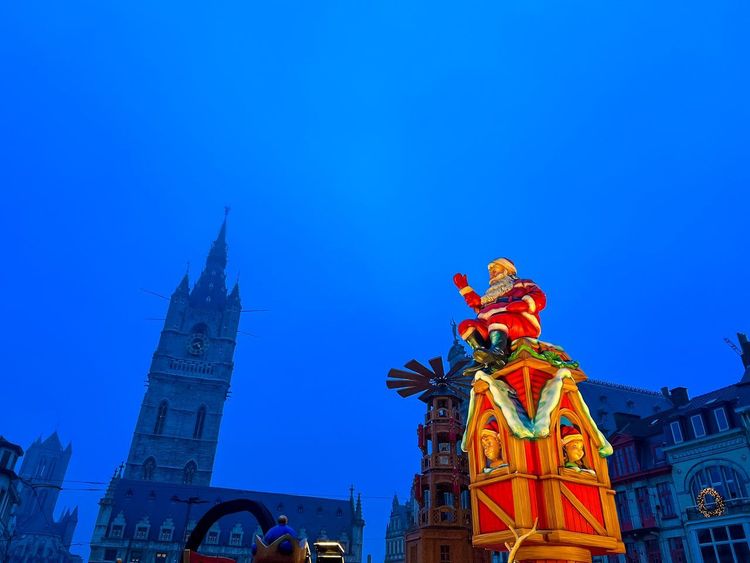
Fitting everything into a single day is difficult, but a quick visit is still possible. Here are two versions, to adjust according to the children's ages and their stamina on the cobblestones.
Day 1, the medieval heart. Start with the Castle of the Counts as soon as it opens, then head up to the Belfry and St. Bavo's Cathedral: these three nearby monuments concentrate most of the medieval heritage and can be visited before lunch without excessive fatigue.
In the afternoon, head down to the Graslei and the Korenlei, hop on the boat ride, then make a detour through Graffiti Alley. A snack at Temmerman is a nice way to end the day.
Day 2, museums and fresh air. Spend the morning at Kina or at STAM depending on the children's ages, then the afternoon at the Blaarmeersen Recreation Area to swim in summer or run in the grass. With teens, replace this part with a kayak or bike session along the Lys.
With a single day, narrow it down to the castle, the belfry, the quays and a treat stop: enough to leave with a lovely picture of the city while saving the museums for next time.
If you are staying overnight, extend the evening on the quays: at nightfall, the city's lighting plan illuminates the facades of the Graslei and the Korenlei, an atmosphere accessible even with a stroller before bedtime.
To follow this program without a map or group guide, the Ryo audio-guided tour of Ghent links most of these stops in a single storyline: you pause when a child demands a waffle, and you resume exactly where you left off.
The calendar can also guide your choice of dates. The Gentse Feesten, ten days of popular festivities in July, turn the center into a giant stage with concerts, street shows and children's entertainment, but the crowds make strollers tricky in the evening. In spring, the Ghent Floralies (held every five years) attract flower lovers, while the light festival, which returns some winters, turns the city into a big hunting ground for illuminated installations.
Practical Info: Where to Stay, Strollers, Transport and Budget
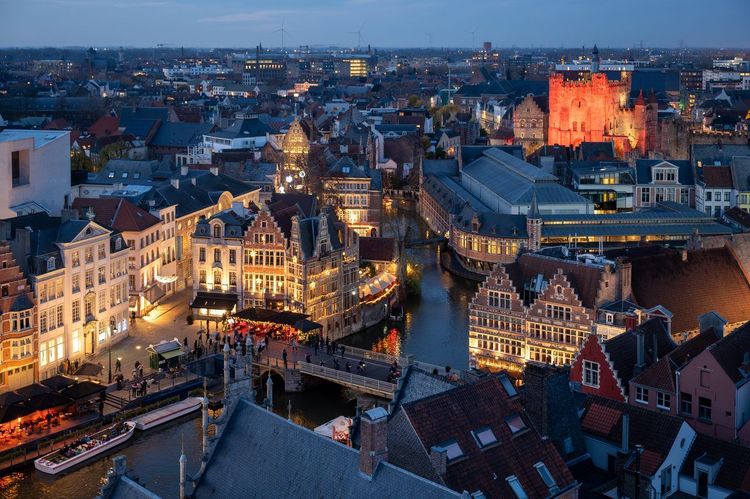
Ghent appeals to parents for a simple reason: the city is compact, largely pedestrian in its historic heart, and rich enough in activities to keep young and old busy. Unlike Bruges, often overcrowded, it keeps the rhythm of a university city that absorbs crowds better.
To stay, favor the historic center, the Patershol district or the area around the Korenmarkt, to limit travel with tired children. Furnished nightly-rental apartments are often more practical than a hotel room for preparing breakfast and picnics.
As for strollers, the center is passable but uneven: quays and large squares are flat, while the cobbled alleys of the Patershol or around Graffiti Alley demand more effort. A baby carrier as a backup makes life easier on these stretches.
To get there, Ghent is reachable by train from Brussels in about thirty minutes, or by car, leaving the vehicle in a park-and-ride lot connected to the center by tram: the city center is a restricted-traffic and low-emission zone. On site, everything is done on foot or by bike, with public transport mainly used for Blaarmeersen.
On the budget side, for a typical day plan for the castle admission, a museum entry and a boat ride, in addition to meals. Youth discounts and frequent free entry for the youngest noticeably lighten the bill. If it's your first stay, our guide to visiting Ghent for the first time complements these tips.
The best season remains spring and early autumn, with shorter queues and pleasant terraces. In summer, keep mornings for sightseeing and afternoons for swimming or the canals.
FAQ
How many days should you plan to visit Ghent with kids?
One day lets you see the essentials (castle, belfry, quays), but two days leave time to add a museum and an afternoon at the Blaarmeersen Recreation Area.
Is Ghent a stroller-friendly city?
Yes on the main streets and along the quays, which are flat and wide. Some cobbled alleys are bumpier: a baby carrier as a backup makes those stretches easier.
What is the best way to explore Ghent with children: on foot, by bike or by boat?
The three complement each other: on foot for the castle, the belfry and the quays, by bike to reach the sites further out, and by boat for a restful break when the kids are tired of walking.
Which museums in Ghent are suitable for children?
Kina, a nature museum designed for the youngest visitors, and STAM, the city museum, are the two go-tos. The Little Guide booklets for the castle, the belfry and the Hotel d'Hane Steenhuyse round out the offering.
Where can you eat with children in Ghent?
The Groentenmarkt and the Holy Food Market cover quick meals, while places like Bompa serve simple Belgian cuisine in the evening. Parks and quays are great for picnics.
What budget should you plan for a stay in Ghent with children?
Count the admission fees for the main sites (castle, museum, boat), meals and accommodation. Youth discounts and frequent free entry for toddlers make the bill lighter than in other Belgian destinations.
Ghent with Kids: What to Remember
A medieval fortress, museums designed for young curious minds, canals and sweet breaks: Ghent offers a rare density of activities for a city of its size, without imposing an exhausting pace. Whether you have one day or a long weekend, the essentials fit within a small area, to be covered on foot, by bike or by boat depending on the day's energy.
To link these stops without spending your evenings planning an itinerary, keep the Ryo audio-guided tour of Ghent in your pocket: everyone goes at their own pace, stops when a child asks for a break, and sets off again as soon as the desire returns.