© Shutterstock
 Votre guide Ryo
Weekend in Liège 2026: Complete Itinerary between Guillemins, Boverie and Outremeuse
A weekend in Liège often starts at a train station — no small thing when that station is Guillemins and looks like a glass vessel set down by the Meuse. The city its residents nickname the Ardent City resembles no other Belgian destination: less polished than Bruges, less stiff than Brussels, it lives at a pace of perpetual celebration among its terraces, markets and steep hills. To find your bearings without wasting time on the ground, the Ryo audio tour of Liège draws a guiding thread between neighbourhoods, to be listened to simply while walking, headphones on.
In just two days, you will climb the 374 steps of the Montagne de Bueren, eat a still-warm waffle bought standing up at a stall in the centre, push open the door of a modern art museum set in the middle of a park and perhaps cross paths with Tchantchès, the puppet that embodies the rebellious spirit of Outremeuse. Between the Sunday market, a historic brewery and winter illuminations, this guide explains how to organise a successful weekend in Liège, whether you stay for one, two or three full days.
Liège, the Ardent City: a Human-Scale City on the Banks of the Meuse
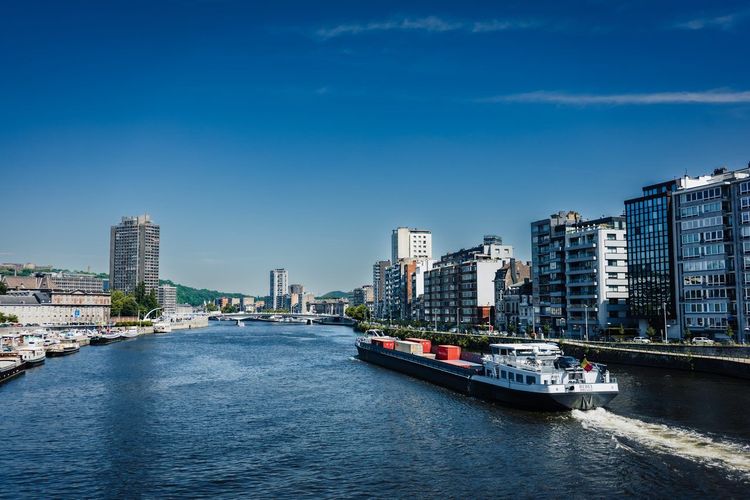
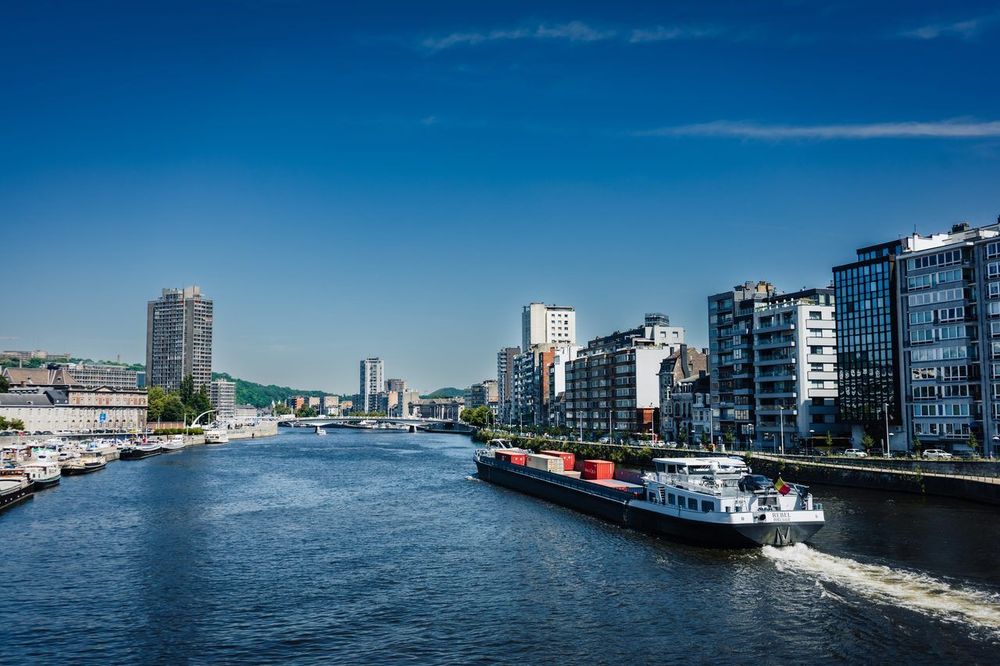
Liège stretches along both banks of the Meuse, one hour from Brussels, fifteen minutes from the Dutch border and just under half an hour from Aachen. Founded around a cathedral that no longer exists, the city grew to the rhythm of coal and steel before reinventing itself around its university, its museums and a gastronomic scene that now rivals the capital. With nearly 200,000 inhabitants and around 600,000 in its metropolitan area, it can be explored almost entirely on foot over a weekend.
The nickname Ardent City was popularised in 1905 by the novel of that name by Henry Carton de Wiart, but it evokes far more: the forges that glowed day and night, like the rebellious temperament of its inhabitants, who were quick to rise up against their prince-bishops in the Middle Ages. This fervour can still be felt in the cafés of the Carré, in the lilting accent of Walloon Liégeois and in the very relaxed way the city approaches tourism: far shorter queues than in Bruges, still-reasonable prices, a city that lives first and foremost for itself and welcomes visitors as a bonus.
The climate is not always generous, but the people of Liège do not wait for the sun to go out: the terraces of the Place du Marché fill up summer and winter alike, and the museums offer a ready refuge on grey days. To miss nothing of this blend of history and neighbourhood life, the Ryo audio tour of the Ardent City marks out 4.3 km through the historic centre across 24 audio stages, around two hours of listening at your own pace.
Day 1 (Morning): from Guillemins Station to the Historic Heart of Liège
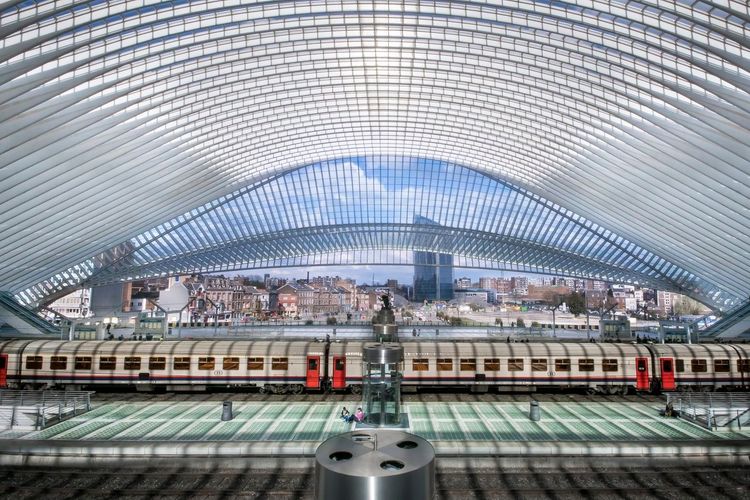
The day starts where most visitors first set foot in Liège: on the station forecourt, before a gradual ascent towards the historic centre and the heights of the citadel.
Liège-Guillemins Station, a Spectacular Starting Point
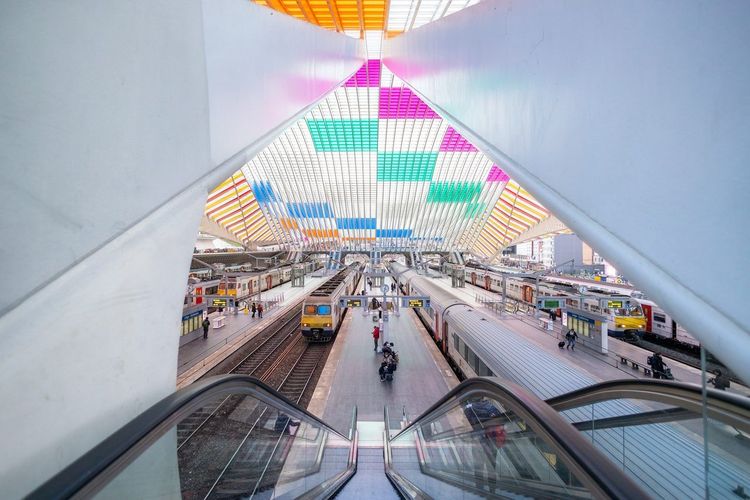
The Liège-Guillemins station opens the show the moment you step off the train: designed by architect Santiago Calatrava and inaugurated in 2009, it unfolds an immense vault of glass and steel with no enclosed façade, a feat that transformed the image of the entire city. Many visitors take the time for a coffee on the terrace just to admire the structure before heading off to explore the centre.
For the clearest photo, come in late morning: at weekends, groups and architecture enthusiasts crowd under the glass canopy. From the forecourt, allow around thirty minutes on foot to reach the Place Saint-Lambert. Since late April 2025, you can also hop on the Liège tram, whose single line connects Guillemins to the centre (stops Opéra and Saint-Lambert) and then to Coronmeuse: an ideal option if you arrive with luggage or want to save your legs for the Montagne de Bueren (Montagne de Bueren, 4000 Liège, rated 4.5/5 on Google with 10,170 reviews).
The Palais des Princes-Évêques and the Place Saint-Lambert
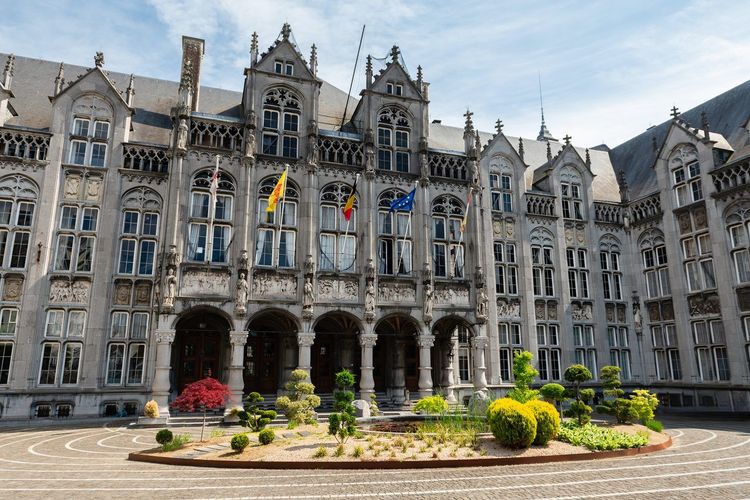
Heading towards the centre, the Place Saint-Lambert suddenly opens up, vast and imposing, flanked on one side by the Palais des Princes-Évêques and on the other by the site of the former Saint-Lambert cathedral, demolished after the Liège Revolution, whose remains can be discovered beneath the square at the Archéoforum.
The Palais des Princes-Évêques, today home to the provincial government and the law courts, dates largely from the 16th century, rebuilt under Prince-Bishop Érard de La Marck. The first inner courtyard is freely accessible, lined with some sixty columns bearing capitals all different from one another — a whimsical flourish by the stonemasons that deserves a proper stop.
You are standing at the heart of Liège's power for eight centuries, when the city formed an independent principality governed by a prince-bishop — neither quite a kingdom nor quite a diocese. This unusual history explains why Liège has always cultivated such a strong identity in relation to Brussels and Flanders, and why its inhabitants readily claim a certain independence of spirit.
The Hors-Château Quarter, Its Alleyways and the Climb to the Montagne de Bueren
A short distance from the Place Saint-Lambert begins the Hors-Château quarter, a maze of cobbled lanes and cul-de-sacs that has retained its ancient layout. Behind discreet archways open the Impasse de la Couronne and the Impasse des Ursulines, small flower-filled courtyards still inhabited where the noise of the city disappears in an instant.
Take the time to get deliberately lost in two or three of these alleyways before making your way to the foot of the Montagne de Bueren, a staircase of 374 steps completed in 1881 to allow soldiers to reach the citadel quickly. Its name honours Vincent de Bueren, who led a desperate sortie against the troops of Charles the Bold in 1468. The climb is steep — allow around ten minutes with stops to catch your breath — but the panorama over the slate rooftops and the Meuse valley justifies every step.
The Ryo audio guide passes through this very neighbourhood and tells the story of this military thoroughfare turned tourist viewpoint — an anecdote best absorbed once you've caught your breath at the top rather than mid-climb. If you are travelling with young children or have limited mobility, note that there is a gentler route by going around via Rue Pierreuse, considerably longer but with no steps to climb.
Day 1 (Afternoon): Parc de la Boverie, Its Museums and Its Delicacies
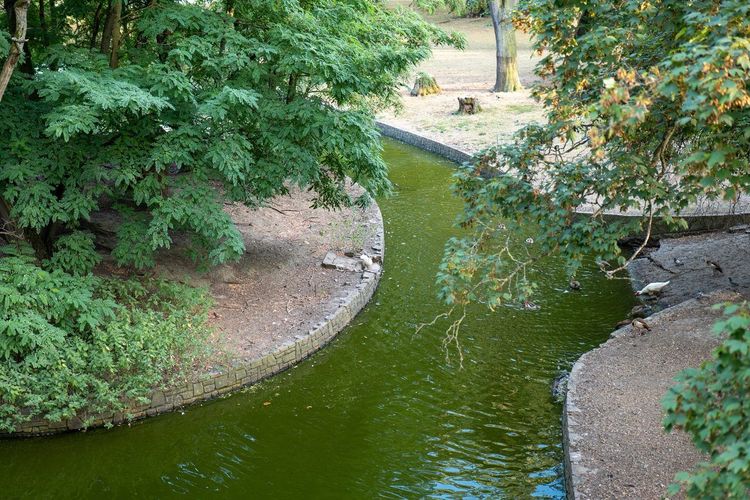
The afternoon crosses the Meuse, in a far greener and more indulgent atmosphere than the morning. From Guillemins, the La Belle Liégeoise pedestrian footbridge takes you there in just a few minutes.
Parc de la Boverie and Its Museum
The Parc de la Boverie occupies the tongue of land separating the Meuse from the Dérivation, a vast green space planted with tall trees where the people of Liège come to picnic at the first hint of good weather. This is where part of the 1905 World's Fair was held.
At its centre, the Musée de la Boverie occupies the former Palais des Beaux-Arts built for that exhibition, reopened in May 2016 after renovation with a glazed extension designed by Rudy Ricciotti. The museum alternates between a permanent collection (Chagall's "La Maison bleue", Picasso's "La Famille Soler", Walloon art) and ambitious temporary exhibitions, making it one of Belgium's museums capable of attracting audiences well beyond the region.
Allow an hour and a half for the permanent collection, longer if a temporary exhibition keeps you. On the way out, walk along the banks of the Dérivation to enjoy an unobstructed view of the river and the silhouette of the station.
A Food Break: Liège Waffles, Boulets and Chocolatiers
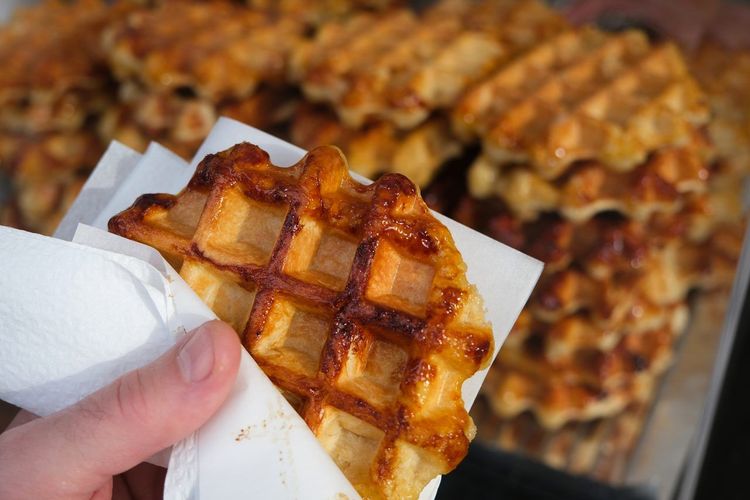
It is impossible to pass through Liège without tasting the Liège waffle, denser than its Brussels cousin thanks to the pearl sugar that caramelises during cooking. It is eaten as it comes, hot, standing in the street, with no whipped cream or fuss: this is how it has been devoured for generations at stalls in the city centre.
At mealtimes, boulets à la liégeoise — two large meatballs topped with a sweet-and-sour sauce based on Liège syrup, served with chips — remain the most-ordered dish in the brasseries of the centre. Hearty and affordable, it is served in almost every estaminet around the Place du Marché.
Another must, the chip is served in a cone at one of the many chip shops scattered throughout the city, often open late into the evening. Round things off with a small glass of peket, the local juniper eau-de-vie that flows freely at neighbourhood festivals.
For a sweeter break, Chocolaterie Darcis offers artisan creations at its city-centre shop. You will find classic bars alongside more inventive pralines and macarons — a great gift idea to take home.
Shopping between Vinâve d'Île and the Grand Poste
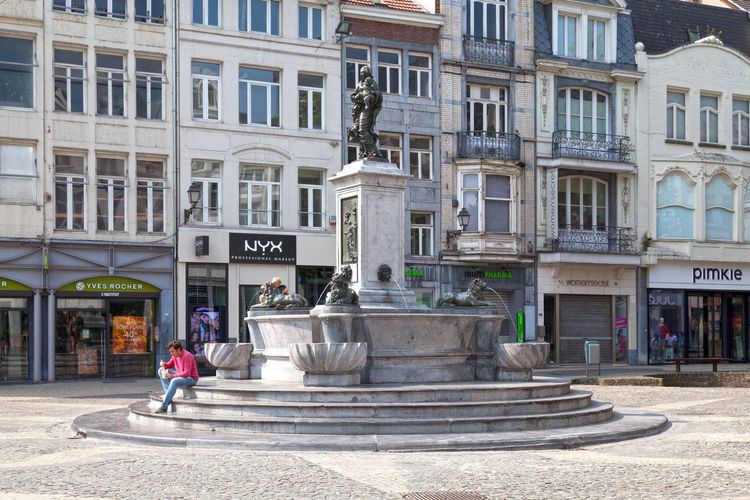
The Vinâve d'Île quarter and Rue Sœurs-de-Hasque concentrate local brands and a handful of independent boutiques, a welcome counterpoint to the major chains of the nearby Rue de la Cathédrale.
More original, la Grand Poste (Place de la République Française, 4000 Liège, rated 4.4/5 on Google with 103 reviews) has transformed the former neo-Gothic post office building of the early 20th century into a hybrid venue blending bar, food, concerts and creative spaces. It makes a pleasant stop in the late afternoon, especially on a rainy day.
The Ryo audio tour route runs along the Meuse before guiding you step by step back towards these shopping streets — a great way to combine museum and window-shopping without retracing your steps or pulling out your map at every corner.
Day 2: the Batte Market, Outremeuse and the Must-See Museums
The second day shifts gear entirely: after the previous day's heritage rush, it is time for the Sunday market, more offbeat culture and a neighbourhood that still lives by its own legends.
Sunday Morning at the Batte Market
On Sunday, head to the Batte market, which has been held along the Meuse quays since 1561, making it the oldest market in Belgium. Its stalls stretch for around 3.6 km, from 8am to 2:30pm, with some 350 regular traders joined by dozens of occasional vendors: vegetables, cheeses, flowers, clothing, bric-a-brac and waffles to go.
Come early, before 10am, to avoid the crowds and enjoy the soft light still hanging over the Meuse. Regulars stop at the aged-cheese stall before making their way back up towards the bridge, a cone of chips or a waffle in hand, among the several million visitors who come each year.
Bring cash: many small traders still prefer it. And if you are after antiques, arrive at opening time — the best finds often go before 9am. For a quiet break, head up to Féronstrée afterwards, parallel to the quay, where cafés and bakeries line up away from the market crowds, just a short walk from the Grand Curtius you will visit later.
The Outremeuse Quarter and Its Traditions
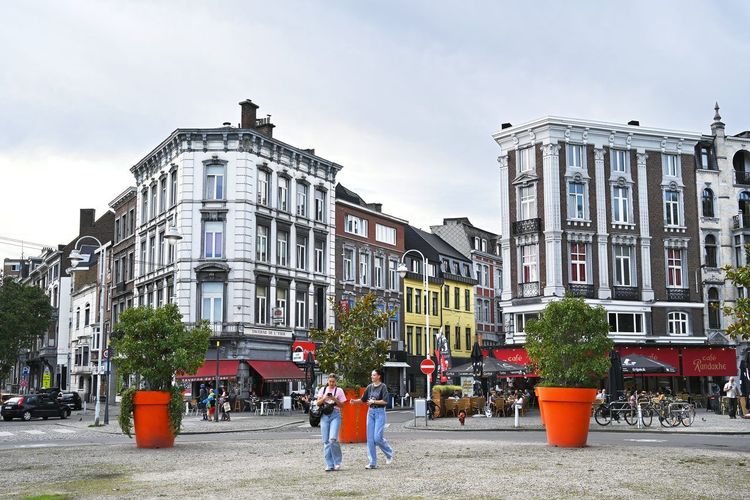
On the other side of the river, the Outremeuse quarter cultivates a distinct identity, almost a village within the city. Georges Simenon, born in 1903 on Rue Léopold, spent his childhood here, and this is where the folklore of Tchantchès lives on — a puppet that appeared in the 19th century in popular theatres and became the symbol of Liège's irreverence. The neighbourhood even claims the title of the Free Republic of Outremeuse, a tongue-in-cheek declaration made in 1927 that is still upheld today.
On 15 August, Outremeuse hosts its great popular festivities, with processions, brass bands, giant puppets and peket at every street corner. Outside this date, visit the small Musée Tchantchès to understand the origins of the character, or simply stroll along Rue Puits-en-Sock, the neighbourhood's main shopping street.
The Ryo audio tour of the Ardent City accompanies you from the Sunday market all the way to this right bank, telling — street by street — the story of Tchantchès and of Outremeuse's permanent revolt against the power seated on the opposite bank.
Curtius, Grand Curtius and Trinkhall: Culture with a Difference
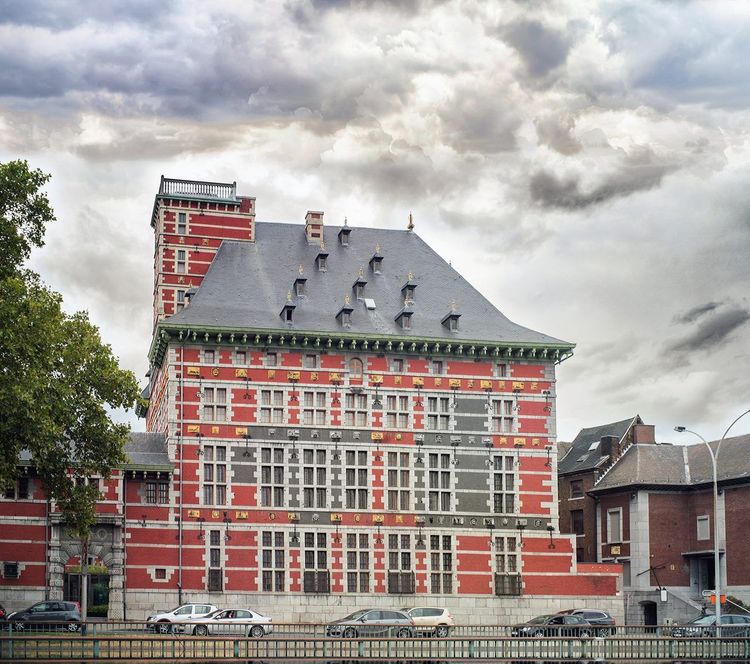
For the weekend's museum fix, two addresses stand out. The Grand Curtius, housed in a red-brick palace built at the turn of the 16th and 17th centuries on the banks of the Meuse, brings together under one roof the city's collections of archaeology, religious art, weapons and glassware. The Brasserie Curtius nearby offers a welcome lunch stop. Allow a full morning if you like to take your time, or focus on the glass and weapons rooms if time is short.
More under the radar, the Trinkhall Museum (Parc d'Avroy, 4000 Liège, rated 4.4/5 on Google with 332 reviews), set in Parc d'Avroy, is dedicated to outsider art and work created in studios by artists with disabilities — a welcome counterpoint if the major collections have already filled your morning. Its terrace overlooking the park is freely accessible, a pleasant way to end the day gently.
Liège After Dark: Bars, Great Tables and the Métamorphoses Festival in Winter
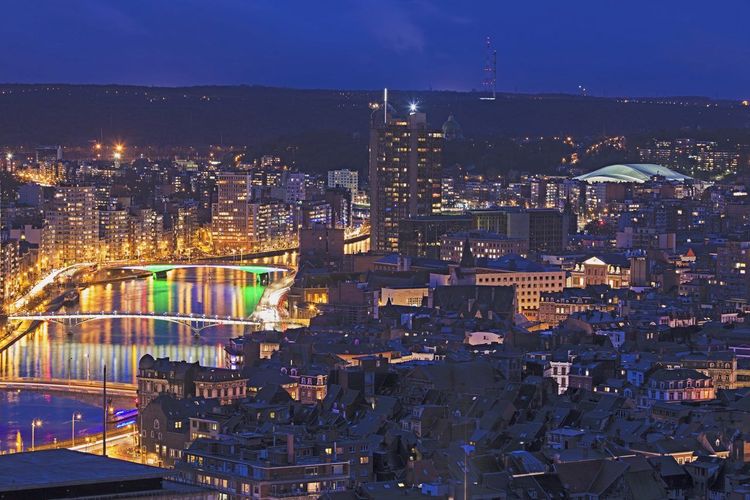
When night falls, the Ardent City truly earns its nickname.
Bars and Great Tables to Extend the Evening
Le Carré, between the Place du Marché and Rue Saint-Adalbert, concentrates the bulk of Liège's nightlife: dozens of bars on just a few streets, open late, where students and locals mix without ceremony.
For a more relaxed dinner, Merci Merry is among the addresses recommended by locals for its reinvented bistro cuisine. Book ahead if you are going on a Saturday. Beer lovers will make the trip to Vaudrée, slightly out of the way in Angleur, renowned for its list of around a thousand references.
If you prefer a quieter evening, the Meuse quays on the Outremeuse side offer a handful of more discreet wine bars, well away from the student buzz of the Carré.
The Métamorphoses Festival: Liège Illuminated in Winter
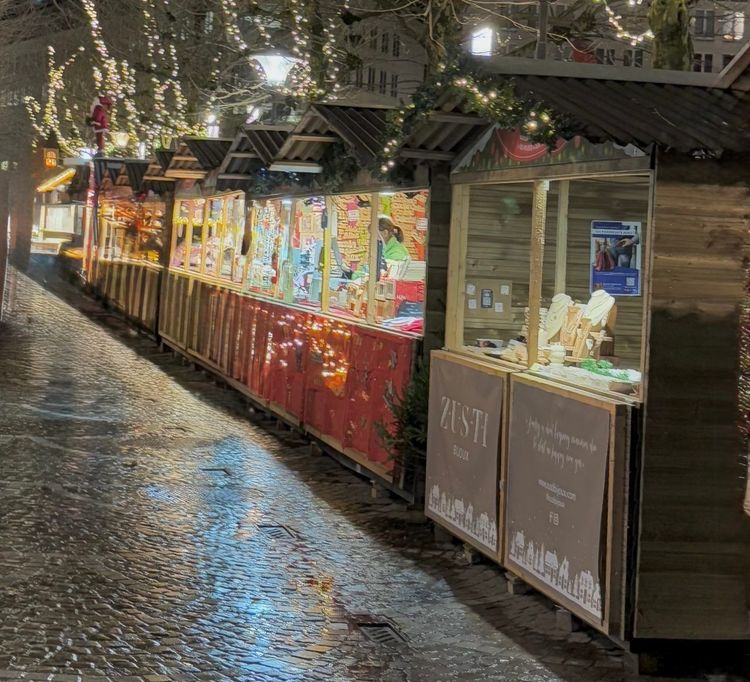
In winter, the Métamorphoses festival lights up the façades and squares of the historic centre, a nocturnal trail explored on foot. Dates vary from one edition to the next: check with the tourist office before booking. At the same time of year, the Christmas Village — one of Belgium's largest Christmas markets — sets up around the Place Saint-Lambert and the Place du Marché with its chalets, mulled wine and peket.
This is arguably the most spectacular time for a romantic weekend in Liège: the streets of the centre take on colours never seen at any other time of year. Bring good shoes — the cobblestones can be slippery in freezing weather.
Outside winter, Liège remains a pleasant destination for couples: a sunset stroll on the Pont de Fragnée, a dinner at one of the Carré's restaurants, or simply an evening watching the boats glide along the Meuse from the quays.
Liège with Kids: Interactive Museums and Activities for Children
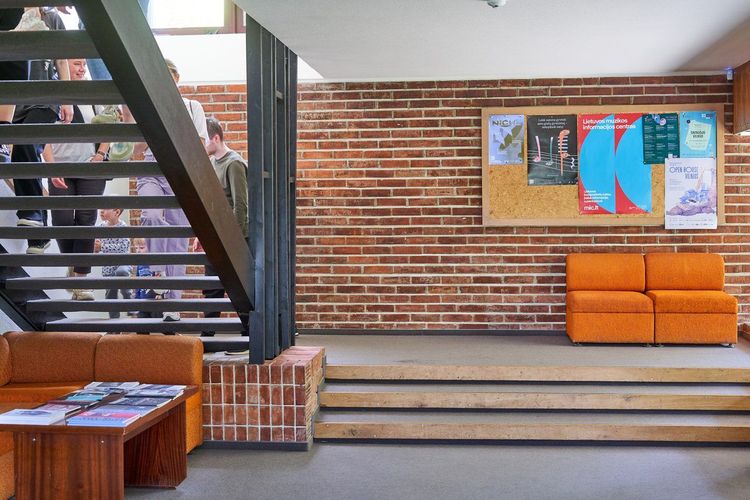
With children, Liège is experienced at pavement level, between short museum visits and large parks.
Child-Friendly Museums and Venues
The Trinkhall Museum, mentioned earlier, is also suitable for families thanks to its highly visual works and the adjacent Parc d'Avroy, where children can let off steam after the visit.
More specifically designed for younger visitors, the Aquarium-Muséum de Liège (Quai Édouard Van Beneden 22, 4000 Liège, rated 4/5 on Google with 4,481 reviews), housed in the university's zoology institute — a late 19th-century building on the banks of the Meuse — lines up tanks of tropical and local species, followed by a zoology hall with thousands of taxidermied specimens that generally fascinate children aged 4 to 12. Allow an hour and a half on site, more if your children ask a lot of questions.
Tips for a Smooth Family Weekend
The Batte market remains, despite the crowds, an outing children enjoy for its waffle stalls and chatty hawkers. Keep the youngest ones by the hand around 11am, when the crowds peak.
Parc de la Boverie, with its large lawns, is ideal for a picnic break between visits. Parc d'Avroy, very close to the centre, has a shaded playground that is particularly popular at the end of the day.
For getting around, opt for the tram or bus rather than walking between Guillemins and the centre if you are travelling with a pushchair: the cobblestones of the Hors-Château quarter, charming on foot, quickly become difficult to navigate on wheels. For meals, most brasseries in the centre offer a children's menu — a safe choice for the evening.
Where to Stay in Liège: Neighbourhoods and Addresses for a Successful Weekend
The choice of neighbourhood matters almost as much as the choice of hotel: staying near Guillemins makes late train arrivals easier, while a hotel in the heart of the historic centre cuts down on walking between sights. Prices remain broadly more affordable than in Brussels or Bruges, even for charming addresses.
Design Hotels in the City Centre
The Yust Liège hotel leans into a hybrid, design concept — somewhere between a hotel and a serviced apartment — with communal spaces suited to both short stays and full weeks. Practical if you arrive by train late on a Friday evening.
Right in the historic heart, Hôtel Neuvice occupies a renovated period building, a few minutes' walk from the Place Saint-Lambert. The rooms, rather small as is often the case in Liège's older buildings, are offset by a location that lets you do everything on foot from the moment you wake up. Expect prices from around €90 per night for a double room at these addresses depending on the season, rising noticeably in December.
Unusual Addresses: Guesthouses and Lofts
For a more intimate experience, The Street Lodge (Rue Pierreuse, 4000 Liège, rated 4.7/5 on Google with 74 reviews), a guesthouse in the centre, offers just a handful of rooms decorated with a genuine aesthetic vision and a personalised welcome that a large hotel simply cannot match.
A growing number of lofts and furnished apartments have also appeared around Outremeuse and the Carré — an interesting option for families or groups of friends who want a kitchen and more space. Compare locations rather than just prices: staying ten minutes' walk from the centre makes a significant difference to a two-day weekend experience.
When to Visit Liège: Seasons, Weekdays or Sundays
There is no truly bad season, but your travel dates will significantly shape the experience. Spring and summer offer long days that allow for an evening stroll along the Meuse or a drink on a terrace at the Place du Marché after the day's programme. It is also the ideal time to picnic at the Boverie and climb the Montagne de Bueren without worrying about slippery steps.
In mid-August, Outremeuse celebrates the 15 August festivities: a guaranteed atmosphere, but accommodation gets booked up quickly — reserve early. In December, the illuminations and the Christmas Village draw crowds from across the Benelux and neighbouring Germany, especially on Saturdays.
If you visit Liège on a weekday outside school holidays, expect much shorter queues at the museums and a more local atmosphere. Bear in mind, however, that several museums close on Mondays — check opening hours before finalising your programme.
Finally, make sure to include a Sunday: it is the only day of the Batte market, which alone justifies building your stay around a Saturday-Sunday rather than a Friday-Saturday.
How Many Days to Visit Liège: 1, 2 or 3 Days
To visit Liège in 1 day, focus on the historic centre: Guillemins, Place Saint-Lambert, Hors-Château, Montagne de Bueren and Boverie are enough to fill a well-paced day without rushing. Have lunch with boulets near the Place du Marché and save the Boverie for late afternoon, when the light drops over the Meuse.
With two full days, you add the Batte market, Outremeuse and an extra museum such as the Grand Curtius, which corresponds exactly to the itinerary detailed above. This is the most comfortable formula for leaving with the feeling of having truly seen the city.
A third day allows you to slow down and explore what hurried visitors leave aside. The Cité Miroir, housed in the former Sauvenière baths and thermal establishment — a fine modernist building from 1942 — hosts exhibitions and debates centred on memory and citizenship. The slopes of the Citadel, with their paths, orchards and hidden stairways between Hors-Château and Pierreuse, offer a surprisingly rural walk just steps from the centre. And the heights of Cointe deliver one of the finest panoramas over the city and the valley.
If you feel like stretching your legs further, Maastricht is just half an hour by train and Spa less than an hour away — enough to turn a long weekend into a three-country escape.
Getting to and around Liège: Train, Tram and Budget
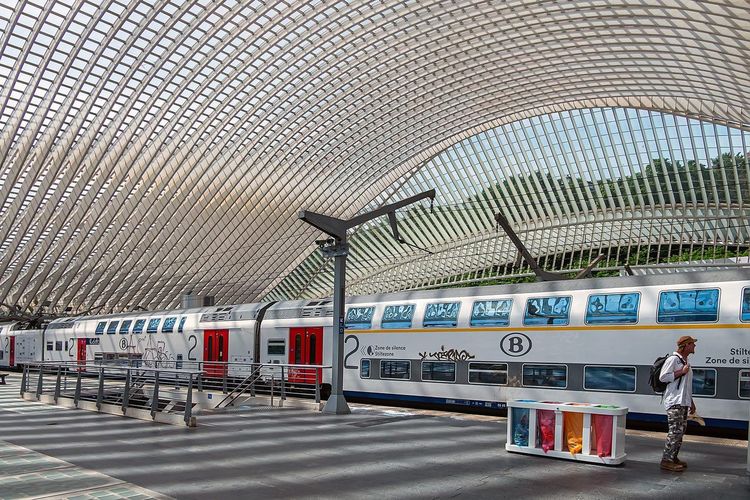
Liège-Guillemins is connected to Brussels in under an hour and to Paris in just over two hours by high-speed train, making the train far more practical than a car for a simple weekend. From the station, the tram reaches the centre in just a few minutes.
Once there, forget the car: the historic centre is largely pedestrianised or has restricted traffic, and parking is difficult on Sundays because of the market. If you do come by car, park at a park-and-ride on the outskirts and complete the journey by tram. A day ticket on the TEC network covers all the needs of a visitor staying in the central neighbourhoods.
Budget around €60 to €90 per person per day excluding accommodation, covering meals at a brasserie, museum entry and a few purchases at the market. Several city museums offer free entry on the first Sunday of the month — a great deal if your dates work out, worth checking before you leave. To keep track of all these stages, the Ryo audio tour and its 24 audio tracks launch from your phone, with no booking or set schedule required.
FAQ
How many days do you need to visit Liège?
One day is enough for an overview of the historic centre, but two full days allow you to cover the essentials described in this guide: Guillemins, the historic heart, Boverie, the Batte market and Outremeuse. Three days work well if you plan to add a day trip to the surrounding area or simply slow down the pace.
What to do in Liège with kids?
The Aquarium-Muséum and the Trinkhall Museum are particularly popular with children, as is a stroll through the Batte market for its waffles. The large lawns of Parc de la Boverie and the playground in Parc d'Avroy offer great breaks between visits.
What to do in Liège on a Sunday?
Sunday morning belongs to the Batte market, open from 8am to 2:30pm along the Meuse. The afternoon lends itself to visiting the Grand Curtius or strolling through the Outremeuse neighbourhood, which is often quieter on that day.
What to do in Liège as a couple?
A sunset stroll along the Meuse quays, a dinner at one of the Carré's restaurants and, in winter, an evening under the light installations make for a perfect romantic weekend. Climbing the Montagne de Bueren in the late afternoon also offers a lovely moment for two with a panoramic view.
What to do in Liège in December?
December means the Christmas Village set up around the Place Saint-Lambert and the Place du Marché, and the illuminations of the historic centre. It is one of the liveliest times of year for a weekend in Liège, provided you bring warm clothes and good shoes.
How to get around Liège without a car?
The historic centre can be explored almost entirely on foot. Since 2025, the tram connects Liège-Guillemins station to the centre and Coronmeuse, and the bus network extends coverage towards Outremeuse or the heights of Cointe, without ever needing a car.
Two days in Liège are enough to understand why the city is called the Ardent City: between the steps of the Montagne de Bueren, the scent of waffles from the Batte market and the winter lights, the energy never truly fades. All that remains is to set your own pace, between a full two-day itinerary and a more relaxed three-day stay.
To make the most of this blend of history and neighbourhood life, the Ryo audio tour of Liège is the simplest companion for turning this programme into a real walk, without pulling out your phone at every corner to check where to go.