© Shutterstock
 Votre guide Ryo
Rio de Janeiro for Couples: Romantic Things to Do in 2026
Looking for romantic things to do in Rio de Janeiro? The city rarely does anything in half measures. It squeezes a granite sugarloaf, a rainforest-covered peak topped by a 38-meter statue, and four kilometers of curved sand into a single afternoon, then tucks a lagoon and three centuries of churches in right behind it. What surprises most couples is how little of it requires planning: half the best moments here happen on a rock ledge, a tram car, or a park bench, not inside a reservation. Before your first sunset, it's worth loading up Ryo's audio-guided tour of Rio de Janeiro, which strings many of the stops below into one walkable route, with the stories delivered straight to your headphones as you go.
Expect a city that mixes the obvious with the overlooked. The famous shot from Christ the Redeemer gets all the postcards, but the low wall at Mureta da Urca, where locals pass beer bottles back and forth at dusk, often lands harder when you have no itinerary to keep. A tram whose electric line dates from the 1890s still climbs into bohemian Santa Teresa. A lagoon loop doubles as a paddleboat date. And a staircase covered in more than 2,000 tiles from over 60 countries turns a ten-minute walk into one of the most photographed backdrops in South America. This guide to Rio moves neighborhood by neighborhood, grouping the viewpoints, walks, meals, and day trips worth building your stay around, with 2026 prices where they matter.
Watch the Sunset Over Arpoador, Ipanema and Copacabana Beaches
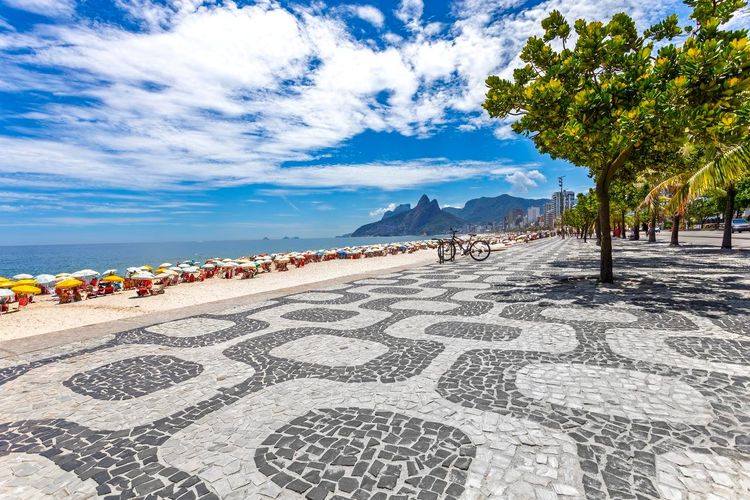
Three beaches, one golden hour: Arpoador, Ipanema and Copacabana sit end to end along Rio's South Zone coastline, and a single evening walk covers all three without rushing. Locals treat sunset here as a small ritual rather than a show for tourists, which is exactly why it works if you'd rather watch the sky than pose for it.
Arpoador Rock at Sunset
Arpoador Rock) sits on the rocky point between Ipanema and Copacabana, and it costs nothing to climb. Every clear evening, a crowd gathers along its flat granite ledges, and when the sun finally drops toward the Dois Irmãos peaks, the whole rock applauds. It's a strange, lovely local custom, and it tends to catch first-time visitors off guard.
Arrive 20 to 30 minutes before sunset if you want a seat on the rock itself rather than the sand below. Surfers usually fill the water just offshore, silhouetted against the light, a second layer of scenery you get for free. Bring a light layer between May and August: the sea breeze picks up fast once the sun is gone, and you'll want to stay for the afterglow.
Ipanema Beach's Golden Hour

Walk west from Arpoador and you're on Ipanema Beach), framed by the twin peaks of Dois Irmãos. The numbered lifeguard posts (locals call them postos) double as meeting points and informal neighborhood markers, with Posto 9 the long-standing favorite for its laid-back, artsy crowd.
A kiosk caipirinha in hand, feet in the sand, is as close to a Rio cliché as it gets, and it's still worth doing. Skip the midday sunbathing crush and come back around 5pm instead, when the light turns everything the color of the drink. On Sundays the beachfront avenue closes to traffic, so you can walk or cycle the whole seafront side by side without dodging cars.
Copacabana Beach's Evening Stroll
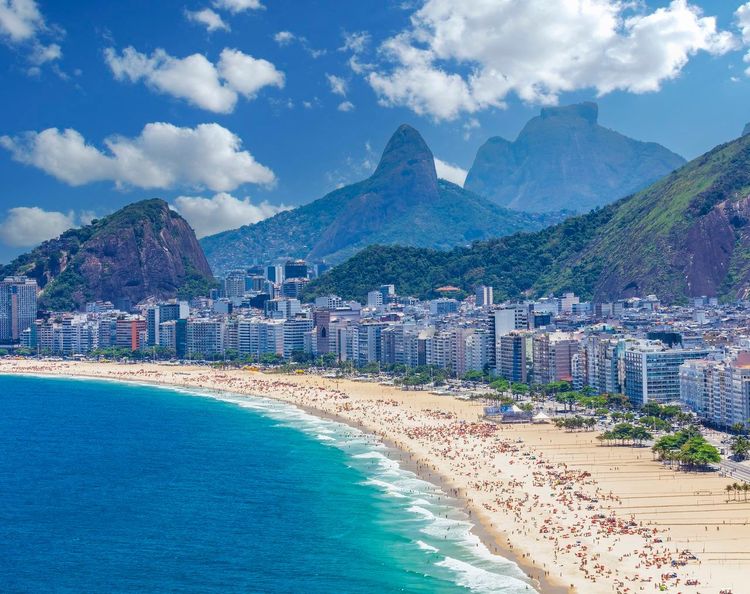
Keep going and the coastline bends into Copacabana Beach (Av. Atlantica, Copacabana, Rio de Janeiro, RJ, Brazil, rated 4.7/5 on Google (9 756 avis)), its black-and-white wave-pattern sidewalk running the length of Avenida Atlântica. At four kilometers, it's long enough for an unhurried stroll that never feels repetitive, especially once the beachfront lights switch on and the Copacabana Palace glows halfway along.
If you want a quieter stretch, head toward the Leme end, where the crowd thins and the view back toward Sugarloaf opens up. On New Year's Eve, this same stretch hosts Réveillon, when around two million people dressed in white gather on the sand for the fireworks over the water; locals jump seven waves at midnight for luck, a ritual you can easily join together. This Arpoador-to-Leme walk is also the kind of seafront leg the Ryo audio guide narrates on foot, with the story of Arpoador's sunset applause timed for when you reach the rock.
Ride the Cable Car up Sugarloaf Mountain and Explore Urca
No single image says Rio quite like the granite domes of Sugarloaf rising straight out of Guanabara Bay, and the ride up is as much a date as the view from the top.
Sugarloaf Mountain's Panoramic Cable Car
The cable car up Sugarloaf Mountain) (Pão de Açúcar) opened in 1912, making it one of the oldest cableways still operating anywhere in the world. Today's glass cabins carry you in two stages, first to a midpoint and then to the 396-meter summit, with Guanabara Bay, Copacabana, and the city spreading out below in one uninterrupted sweep.
Book the late-afternoon slot so your ascent lands close to sunset. In 2026 a standard ticket costs around R$205 for foreign visitors (R$160 for Brazilians), and buying online through the official site saves you the ticket queue at Praia Vermelha. Cabins get crowded at midday, but the crush thins after 5pm, leaving more room at the rail for an actual view rather than a shoulder.
Mureta da Urca for Sunset Drinks
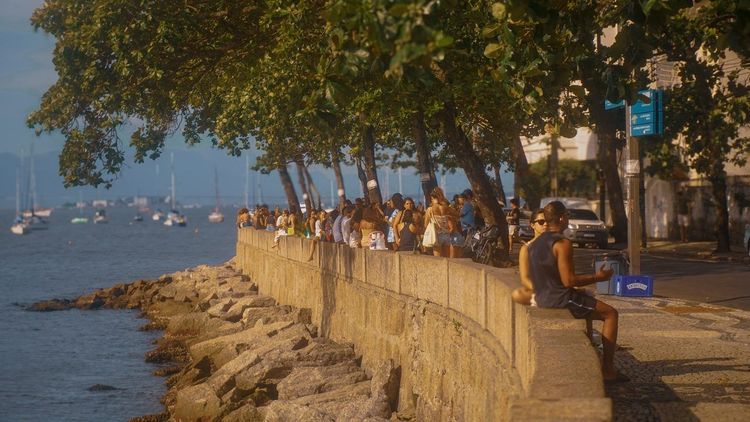
At the foot of the mountain, the low seawall known as Mureta da Urca (Av. Joao Luis Alves, Urca, Rio de Janeiro, RJ, Brazil, rated 4.8/5 on Google (4 851 avis)) has become the neighborhood's unofficial living room. Coolers of beer and caipirinha appear most evenings, sold from the bars across the street, and you share the ledge with locals rather than tour groups.
It's one of the few Rio sunset spots that costs the price of a drink rather than a ticket, and it faces almost the same sweep of sea and mountain the cable car charges for above. Order a plate of fried snacks, sit with your legs over the water, and watch the fishing boats rock in the cove.
Morro da Urca, the First Stop

The cable car's midway stop, Morro da Urca, sits at 220 meters and is often treated as a warm-up by visitors racing to the summit. That's a mistake for couples: its platform has more open space, calmer terraces, and, on some evenings, live music. You can even skip the second leg and spend your evening here, trading a couple of hundred meters of altitude for a quieter table.
The whole Urca outing covers barely more ground than a single neighborhood on foot, which is the pace our Ryo app sets for this stretch of the city: short walking segments between stops, with the 1912 origin story of the cable car queued up for the ride itself.
Marvel at Christ the Redeemer Together

The 38-meter Christ the Redeemer (Parque Nacional da Tijuca, Alto da Boa Vista, Rio de Janeiro, RJ, Brazil, rated 4.8/5 on Google (132 832 avis)) statue (30 meters plus its pedestal), arms spread over Corcovado at about 710 meters, is the image most people picture before they ever set foot in Rio. Built between 1922 and 1931 in an Art Deco style, designed with French sculptor Paul Landowski, it was named one of the New Seven Wonders of the World in 2007, and it photographs as well up close as it does from across the bay.
You have two ways up: the cogwheel train from Cosme Velho through Tijuca Forest, about 20 minutes and part of the experience, or an official van, faster but without the rainforest views. In 2026 the adult train ticket runs about R$134, including the entry fee. For the best light on your photos together, aim for the first train of the morning, before the crowds arrive and before the afternoon haze settles over the bay. Check the forecast too: when clouds cap Corcovado, you'll see little more than white. If you're fit and adventurous, a guided hike up through Parque Lage and the Tijuca Forest reaches the statue in about two to three hours, a memorable way to earn the view together; it is best done with a local guide rather than on your own.
The summit platform is compact, so expect to share it. What makes the visit romantic isn't solitude but scale: standing at the statue's feet and looking out at a city of some six million people spread beneath one outstretched arm makes a shared trip feel larger than the sum of its stops.
Sail Guanabara Bay at Sunset from Marina da Glória

A different angle on the same skyline opens up from the water. Sunset sailboat tours leave most evenings from Marina da Glória, beside Flamengo Park, and spend roughly 90 minutes to two hours tracing Guanabara Bay while Sugarloaf, the Rio-Niterói Bridge, and the city's hills turn gold, then pink, then navy.
Boats range from shared sailboats carrying a handful of couples to private charters with a skipper and a cooler of drinks. Either way, book two or three days ahead between December and March, when demand peaks and slots go fast. If you can, pick a weekday: fewer boats on the water, and the bay feels almost private. Prefer to stay on land? The ferry from Praça XV to Niterói, about 20 minutes each way and costing only a few reais, offers the same skyline at sunset on the ride back, and drops you within reach of Oscar Niemeyer's saucer-shaped Contemporary Art Museum (MAC Niterói), perched on a cliff above the bay.
What sets this apart from the viewpoints on land is the quiet. No crowds, no vendors, just the water and whatever soundtrack you bring. If you've already done Sugarloaf and Christ the Redeemer, the boat gives you the same skyline without the queue, from a lower, calmer angle.
Wander Bohemian Santa Teresa

Up on its own hill, Santa Teresa has spent the last century collecting artists, and it still feels like a village stitched into a city, with cobblestone lanes replacing the grid below.
A Historic Tram Through Colorful Streets
The neighborhood's yellow bonde (tram) leaves from Rua Lélio Gama in Centro, crosses the Carioca Aqueduct, known locally as the Arcos da Lapa, then winds through Santa Teresa's narrow streets. It's often described as the last historic tram still running in Latin America, and the ride itself, slow, open-sided, slightly rattling, is as much the point as the destination.
The return fare costs R$20 in 2026, with departures roughly every 20 minutes (8am to 5pm on weekdays, 9am to 4pm on weekends). Go on a weekday morning: weekend queues can stretch past an hour, and each car carries only about 30 passengers.
Boutique Hotels and Art Galleries
Colonial mansions line the hillside streets, many converted into small boutique hotels or artist studios open to walk-in visitors. If you like to browse rather than sightsee, you'll lose an entire afternoon here, ducking into galleries that double as cafés and cafés that double as galleries, with no need to pick a direction in advance. The ruins of Parque das Ruínas, a former mansion turned cultural space, add a free terrace with views over the bay.
Hillside Cafés with Skyline Views
Several of Santa Teresa's cafés and bars sit right at the edge of the hill, their terraces opening onto downtown and the bay beyond. Come for a late-afternoon coffee and you'll likely still be there, now with a caipirinha, when the city lights switch on below.
The tram-era stories and the boutique-hotel streets of this neighborhood are exactly what Ryo's audio guide leans into here, including the 2011 accident that halted the bonde and the residents' campaign that brought it back from 2015.
Relax Around Lagoa, the Botanical Garden and Parque Lage
A few blocks separate three of Rio's calmest romantic places, all tucked beneath Corcovado and easy to combine into one unhurried outing.
Rodrigo de Freitas Lagoon at Sunset
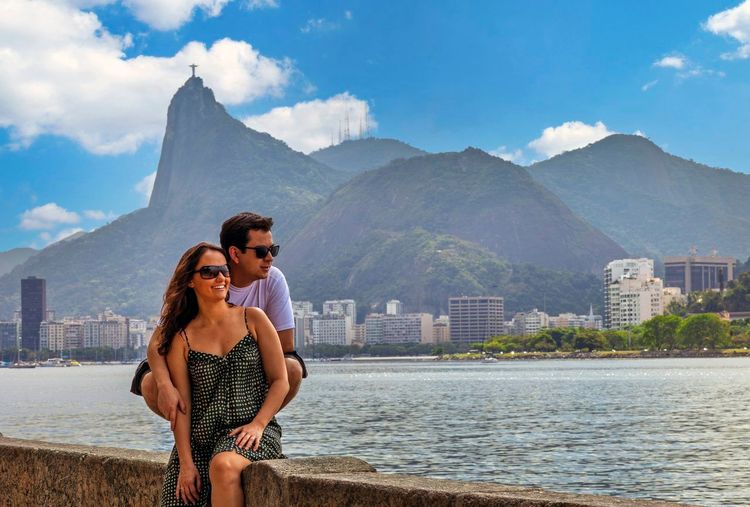
The Rodrigo de Freitas Lagoon) is ringed by a path of about 7.5 kilometers used by joggers, cyclists, and, in the late afternoon, couples in swan-shaped paddleboats drifting toward the reflection of Christ the Redeemer. Simplicity is the whole appeal: no entry fee, no ticket, just a path, a lake, and one of the most famous mountains in the world.
You can rent bikes along the shore for a lap together, then settle at one of the lakeside kiosks for dinner with live music as the water turns orange. In December, a giant floating Christmas tree has long lit up the lagoon, one of the city's favorite holiday traditions.
A Romantic Stroll Through Jardim Botânico
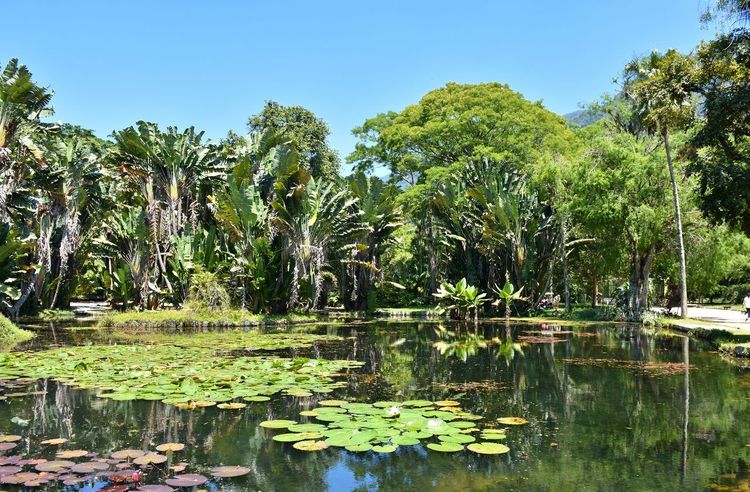
Founded in 1808 by the Prince Regent Dom João, later King João VI, the Rio de Janeiro Botanical Garden holds an avenue of towering imperial palms and an Amazon section where giant Victoria amazonica lily pads float on the ponds. It's shaded, quiet, and large enough that even on a busy weekend you can find a bench with nobody else around.
Brunch at Parque Lage's Mansion Café
At the foot of Corcovado, Parque Lage (Rua Jardim Botanico 414, Rio de Janeiro, RJ, Brazil, rated 4.6/5 on Google (51 458 avis))'s mansion, remodeled in the 1920s by industrialist Henrique Lage for his wife, the opera singer Gabriella Besanzoni, now houses a visual arts school. Its courtyard café, set around a swimming pool, is where you linger over coffee and pastries while the mountain rises directly behind, close enough that the statue seems to be watching brunch.
Walked end to end, the lagoon path, the garden, and the mansion café make an easy half-day loop on foot, with enough slack to stop for the paddleboats or the brunch table. Arrive at Parque Lage early on weekends: the courtyard fills with wedding and engagement shoots by late morning.
Discover Romance in Rio's Historic Downtown
Farther from the beaches, Rio's colonial and 20th-century downtown holds a denser cluster of sights than anywhere else in the city, most of them walkable from one to the next.
The Selarón Steps and Metropolitan Cathedral
Chilean-born artist Jorge Selarón began covering a crumbling staircase near his home in 1990, and by his death in 2013 the Escadaria Selarón carried more than 2,000 tiles sent from over 60 countries. The 215 steps connect Santa Teresa to the nightlife district of Lapa and remain one of the most photographed stairways on earth. Go before 9am if you want a photo without strangers in it.
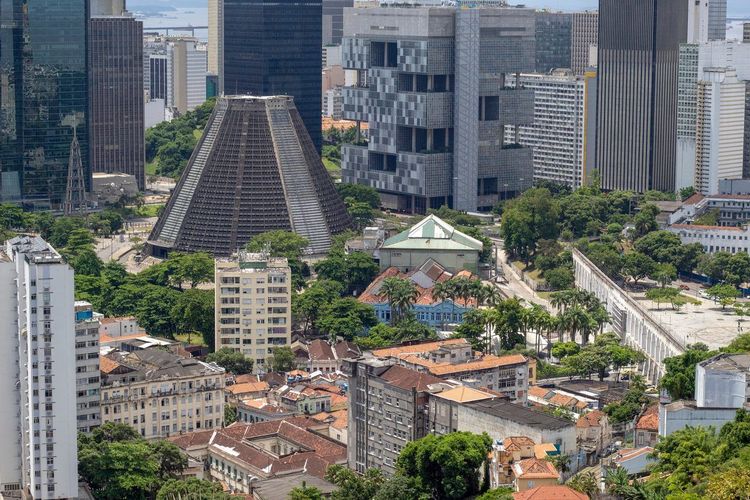
A short walk away, the cone-shaped Metropolitan Cathedral) rises 75 meters, its four stained-glass windows running floor to ceiling. The interior is vast and nearly bare, which makes the colored light pouring through those windows feel almost cinematic by late afternoon.
The Museum of Tomorrow and Praça Mauá

On the revitalized waterfront of Praça Mauá, Spanish architect Santiago Calatrava's angular Museum of Tomorrow) juts out over the bay like a skeletal wing. Exhibits focus on sustainability and the future of the planet, but you may find the reflecting pools and bay-facing esplanade just as worth the visit.
Sunset from the square, with the museum's white ribs catching the last light, is a different, more modern kind of romance than the mountains. Walk a few minutes along the Orla Conde promenade and you'll pass the giant mural Etnias by street artist Kobra, one of the largest graffiti works in the world.
The Bank of Brazil Cultural Center and Mirante Dona Marta

The Historic Bank of Brazil Museum) (Centro Cultural Banco do Brasil, or CCBB) occupies the former bank headquarters on Rua Primeiro de Março, near Praça XV, its domed rotunda now hosting rotating exhibitions that are often free. The building alone justifies a stop.
Later, take a taxi up to Mirante Dona Marta (Estr. Dona Marta, Botafogo, Rio de Janeiro, RJ, Brazil), halfway up Corcovado above Botafogo, for one of Rio's most complete panoramas: Sugarloaf, Botafogo Bay, and downtown visible from a single railing, with Christ the Redeemer directly overhead. It's free, far less crowded than the summit, and at its best in the hour before sunset. Go by car or taxi rather than on foot, and leave before dark.
Stitching the Selarón Steps, the cathedral, the Museum of Tomorrow, and the CCBB into one afternoon is close to what Ryo's downtown Rio walk sets out to do, pacing the audio stops so the history behind each building lands as you stand in front of it.
Escape the City on a Romantic Day Trip

If you have an extra day, two very different escapes sit within reach of Rio, one colonial and coastal, one wild and car-free.
Paraty's Historic Charm and Coastal Romance
About 250 kilometers south of Rio, Paraty's whitewashed colonial buildings and uneven cobblestone streets have barely changed since the 18th century, when the town shipped gold out through its harbor. Horse-drawn carriages clatter past baroque churches, and the surrounding bay holds dozens of small islands reachable by schooner. Paraty and Ilha Grande were jointly added to the UNESCO World Heritage list in 2019.
Treat Paraty as an overnight trip rather than a day trip: the four-hour drive each way eats into the charm if rushed. A night in a converted colonial guesthouse, then a slow schooner tour the next morning, is the version you'll remember.
Ilha Grande's Private Beaches and Nature
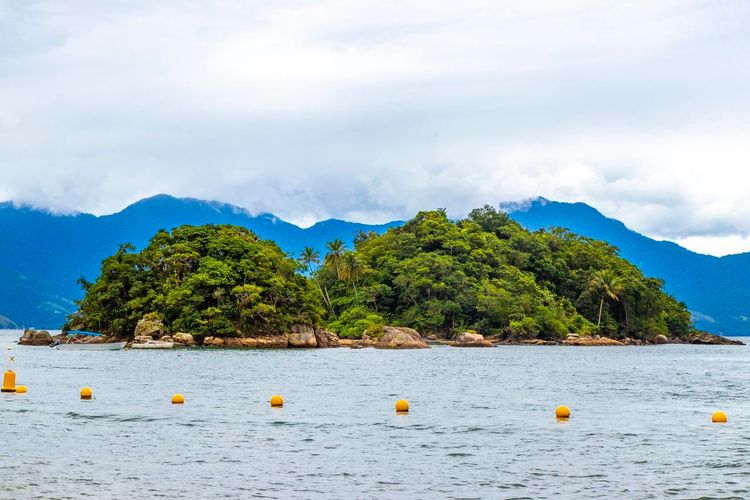
Farther along the same coast, Ilha Grande bans cars entirely, so its trails and beaches are reachable only on foot or by boat. Lopes Mendes, regularly ranked among Brazil's most beautiful beaches, is a two-and-a-half to three-hour hike from the village of Abraão, or a boat ride to Pouso followed by a 20-minute walk. The turquoise inlet of Lagoa Azul rewards anyone willing to swim out from the boat.
Getting there means a ferry or speedboat from Angra dos Reis, Conceição de Jacareí or Mangaratiba, after a two- to three-hour transfer from Rio, so plan at least one night. For nature lovers, the absence of roads and the near-total quiet make it one of the few truly private escapes within range of a major Brazilian city.
Share Rio's Playful Side Together

Not every romantic afternoon in Rio needs a sunset. A looser, more playful side of the city opens up once you step away from the viewpoints.
A Date at AquaRio
South America's largest marine aquarium, AquaRio (Praca Muniz Barreto, Gamboa, Rio de Janeiro, RJ, Brazil, rated 4.5/5 on Google (90 887 avis)), sits in Gamboa a short walk from Praça Mauá and holds a walk-through tunnel where sharks and rays glide overhead. It's indoors, air-conditioned, and a good rainy-afternoon plan when the beach weather doesn't cooperate, which happens more often during Rio's summer storms than most visitors expect.
Time your visit for a weekday morning to avoid school groups, and allow around two hours to see the whole building. Afterward, you are a short stroll from the Museum of Tomorrow and the Orla Conde waterfront, so an aquarium date folds neatly into an afternoon downtown. On the way, the Valongo Wharf, an archaeological site listed by UNESCO in 2017 as the main landing point for enslaved Africans in the Americas, offers a quieter, more reflective stop that gives you real context on the history of this part of the city.
The Sambódromo and Carnival Blocos

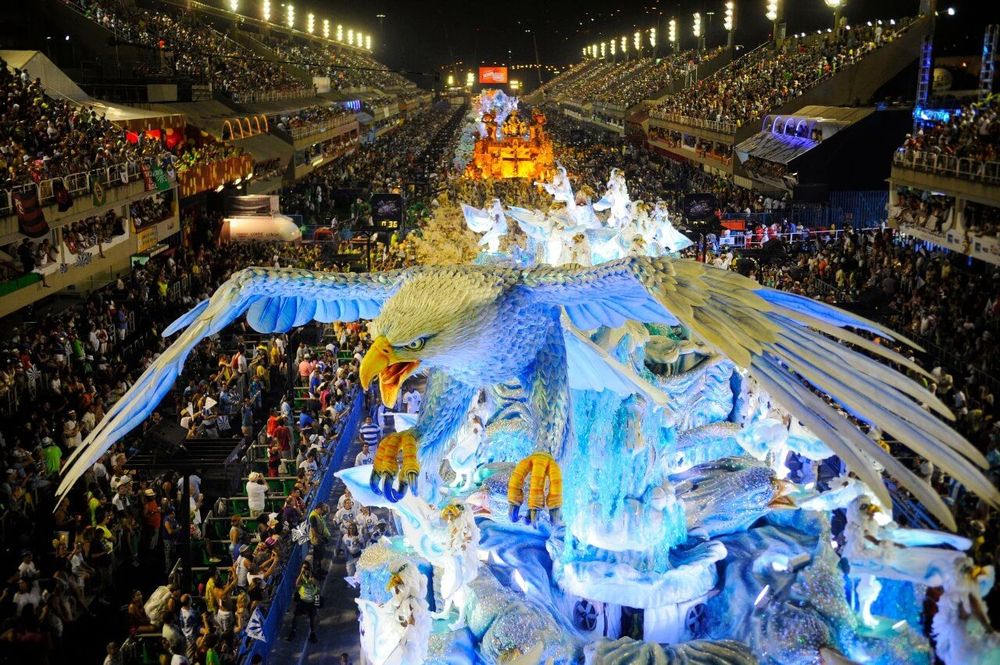
Outside Carnival season, you can walk the 700-meter parade avenue of the Sambódromo, designed by Oscar Niemeyer and opened in 1984, then continue to the Cidade do Samba in Gamboa, where the big samba schools build their floats and costumes. During Carnival itself you have a louder option: joining one of the hundreds of street blocos that take over entire neighborhoods with brass bands, costumes, and crowds dancing shoulder to shoulder for hours.
Out of season, a Friday or Saturday night of samba in Lapa's bars gives you a taste of the same energy. If you'd rather move than pose for photos, an evening dancing in a crowd says as much about Rio as any viewpoint.
Savor a Romantic Brazilian Meal

A good part of Rio's romance happens at the table, and the dining scene ranges from white-tablecloth formality to street-side plastic chairs, both worth booking into your trip.
Where to Book a Table for a Special Occasion
For anniversaries or honeymoons, the better restaurants cluster in Leblon, Ipanema, and Botafogo, many with bay or mountain views. Tasting-menu spots with a handful of tables book out days ahead in peak season, so reserve as soon as your dates are set. For a view-first evening, the restaurants on Morro da Urca and the rooftop bars of Copacabana's beachfront hotels pair dinner with the skyline.
Flavors to Share: Moqueca, Feijoada and Brigadeiro
Moqueca, a seafood stew simmered in coconut milk and dendê palm oil, arrives bubbling in its own clay pot and is built for two spoons rather than one. Feijoada, Brazil's black bean and pork stew, is traditionally served at Saturday lunch, heavy enough to justify a nap afterward. For dessert, brigadeiro, a truffle of condensed milk and cocoa rolled in chocolate sprinkles, shows up at nearly every celebration in the country and takes two bites to understand why.
If you have one dinner to spare, split a moqueca rather than ordering separate mains. Sharing one pot between two is how Brazilians actually eat it.
For a more casual date, do as the cariocas do and settle into a neighborhood boteco, a simple corner bar with tiled walls, ice-cold chope (draft beer) and plates of pastéis or bolinhos de bacalhau to pick at between you. On a hot afternoon, a fresh coconut or an açaí bowl from a beach kiosk counts as a romantic snack too, and costs only a few reais.
Choose Where to Stay for Romance

Where you sleep shapes the whole trip in a city this spread out, so pick your base before booking anything else.
Boutique Hotels in Santa Teresa and Botafogo
Santa Teresa's converted mansions offer the most atmosphere, with narrow staircases, garden courtyards, and views over downtown. Botafogo trades some of that charm for convenience: flatter streets, Metro access, and rooms that often face Sugarloaf itself.
If you plan to spend most of your time on the sand, weigh Ipanema or Copacabana instead; neither has Santa Teresa's historic character, but both cut your travel time to zero for sunset walks. Leblon, next to Ipanema, is the calmest and most upscale of the beach neighborhoods, a natural honeymoon base. Choosing a base near the Metro also makes it easy to follow the Ryo audio guide's neighborhood stops without a car.
Day-Use Hotels for a Few Romantic Hours
Brazil has a long-standing tradition of motéis, hotels rented by blocks of a few hours rather than overnight, often with themed suites, private garages for discretion, and jacuzzis in the room. They're common and not taboo locally, so if you're curious, don't expect anything seedy: most operate like a boutique hotel with a shorter minimum stay.
Pick the Best Time to Visit
Rio's weather splits fairly cleanly into two seasons. December through March brings the hottest, most humid days, along with Carnival and New Year's Eve crowds that push hotel prices to their yearly peak. April through June and September through November offer a gentler middle ground: warm enough for the beach, cooler at night, and much easier for booking a table or a room without planning months ahead.
With flexible dates, you'll get the best version of the city in those shoulder months. Afternoon showers are common, especially in summer, but rarely last long, so keep a backup indoor plan, a museum or a cultural center, rather than canceling outdoor plans outright. Clear winter days (June to August) also give the sharpest views from Sugarloaf and Corcovado, and daytime temperatures still hover in the mid-20s Celsius, so you won't need to give up the beach.
Timing matters for sunsets too. Around the June solstice, the sun sets behind the Dois Irmãos peaks as seen from Arpoador, while in summer it drops closer to the open sea. Sunset falls around 5:15pm in June and nearer 6:45pm in January, so check the time each day and plan your viewpoint accordingly.
Get Around Rio Safely as a Couple

Rio's Metro runs efficiently between Ipanema, Copacabana, Botafogo and downtown, so you won't need a car. Ride-hailing apps are widely used and generally considered safer after dark than hailing a street taxi, particularly on your way back from dinner or a late bloco.
Standard city precautions apply: keep valuables out of sight on the beach, avoid flashing phones on quiet downtown streets at night, and stick to well-lit, busy routes after dark. Rio has an active, visible LGBT-friendly scene, particularly around Ipanema's rainbow-flagged stretch near Rua Farme de Amoedo, and the city hosts one of the world's largest Pride parades on Copacabana each year, making it a comfortable choice for same-sex couples planning a honeymoon.
Plan a Romantic Rio Itinerary in Four Days

If you're wondering how to fit the best things to do into a short stay, grouping stops by neighborhood saves hours of traffic. Here is one way to pace four days without feeling rushed.
Day 1, the South Zone beaches. Start with a slow morning on Ipanema, lunch in Leblon, then walk toward Arpoador for the sunset applause. Finish with dinner along Copacabana's seafront, where the promenade stays lively well after dark.
Day 2, Urca and the bay. Take the cable car up Sugarloaf in the late afternoon, come down for drinks on the Mureta da Urca, and, if you still have energy, end with a samba bar in Botafogo. Swap in the sunset sailboat from Marina da Glória if the weather is clear and calm.
Day 3, Christ the Redeemer, Lagoa and the gardens. Catch the first Corcovado train, then drop down to Parque Lage for a late brunch, wander the Botanical Garden at midday when the shade matters most, and rent a paddleboat on the lagoon as the sun goes down.
Day 4, Santa Teresa and downtown. Ride the bonde up to Santa Teresa in the morning, walk down the Selarón Steps into Lapa, visit the Metropolitan Cathedral and the CCBB, and end on Praça Mauá as the Museum of Tomorrow catches the last light.
This rhythm leaves every evening free for a sunset and every morning for a slow start, which is what most couples remember long after the trip. Keep a loose half-day in reserve for weather: if clouds hide Corcovado on day 3, simply swap it with day 4 and try again. Add Paraty or Ilha Grande as a fifth and sixth day if you have the time.


FAQ
How many days should couples spend in Rio de Janeiro?
Four to five days covers the essential viewpoints, beaches, and at least one historic neighborhood without rushing. Add two or three days if Paraty or Ilha Grande is on your list, since both need at least one night once transit is counted.
Is Rio de Janeiro safe for a romantic trip or honeymoon?
Rio is generally safe for visitors who stick to well-traveled neighborhoods and follow standard precautions. Tourist areas like Ipanema, Copacabana, and Santa Teresa see regular police presence, and most incidents involving visitors are opportunistic theft rather than anything more serious.
What is the best time of year to visit Rio de Janeiro as a couple?
April through June and September through November offer warm weather, fewer crowds, and lower hotel prices than the December-to-March peak. If you're chasing Carnival itself, expect higher prices and book accommodation several months ahead.
What are the most romantic restaurants in Rio de Janeiro?
Leblon, Ipanema, and Botafogo hold the highest concentration of special-occasion restaurants, many with views over the bay or the beach. Reserve tasting-menu tables as early as possible, since the best-known spots fill their limited seating days or weeks ahead in peak months.
Is Rio de Janeiro LGBT-friendly for a honeymoon?
Yes. Rio has a visible, long-established LGBT scene centered on Ipanema's Rua Farme de Amoedo, and the city hosts one of the largest Pride parades in the world. Same-sex couples generally report feeling comfortable in the main tourist neighborhoods.
What's the best neighborhood to stay in for a couple's trip to Rio?
Ipanema, Leblon and Copacabana put beach sunsets within walking distance, while Botafogo and Santa Teresa trade some beach convenience for mountain views and more character. The right choice depends on whether your trip centers on the coastline or the hillside neighborhoods.
Few cities pack this much contrast into one couple's itinerary: a free sunset rock a short walk from a century-old cable car, a bohemian hillside tram not far from a futuristic museum on the water. Whichever stops make your list, Rio rewards couples who leave some evenings unplanned. Loading Ryo's audio-guided tour of Rio de Janeiro onto your phone before the trip keeps the walking routes efficient, leaving more of each day for the parts that don't fit on a map: the applause on Arpoador Rock, the wall at Mureta da Urca, the shared pot of moqueca at the end of it all.
À lire également