© Shutterstock
 Votre guide Ryo
Things to Do in São Paulo in 2026: 17 Experiences Across Museums, Parks, and Vibrant Neighborhoods
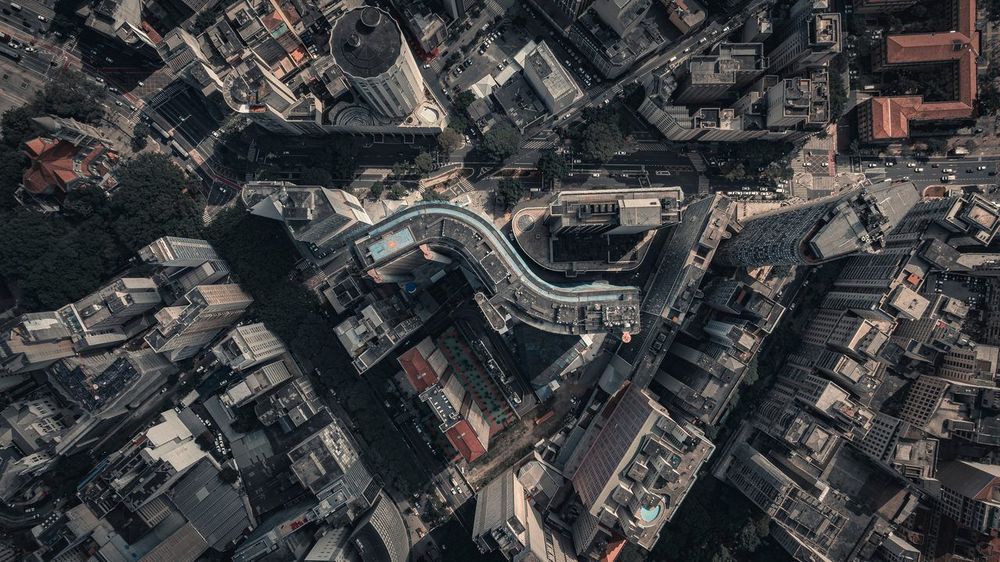
What to do in São Paulo when the city has no beach or giant statue to sum it up in one photo? The largest city in South America, with nearly 12 million inhabitants within city limits, stretches endlessly beneath a blanket of skyscrapers, with no single monument to orient the eye. You must therefore compose your own itinerary, neighborhood by neighborhood, rather than follow a list of postcards. Many travelers combine the megacity with Rio de Janeiro, just one hour away by plane, where a Ryo audio-guided tour lets you explore the historic center on foot — we return to this at the end of the article.
Between a museum suspended in mid-air on four red concrete pillars, a narrow alley whose graffiti constantly changes, a research institute that produces a large share of the country's antivenom serums, and a 161-meter tower inaugurated in 1947 from which you can see the city to the horizon, São Paulo cultivates an art of surprise that few guides take the time to describe. Add to that a 1930s market where you eat standing up a mortadella sandwich as thick as a fist, a park designed for the city's 400th anniversary, and street markets that move from neighborhood to neighborhood depending on the day of the week. Enough to fill four to five days without ever visiting the same kind of place twice.
1. Stroll Along Avenida Paulista, the City's Emblematic Artery
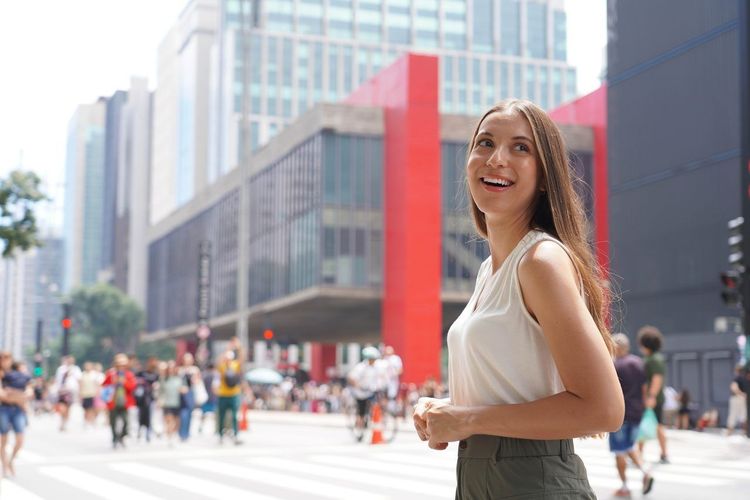
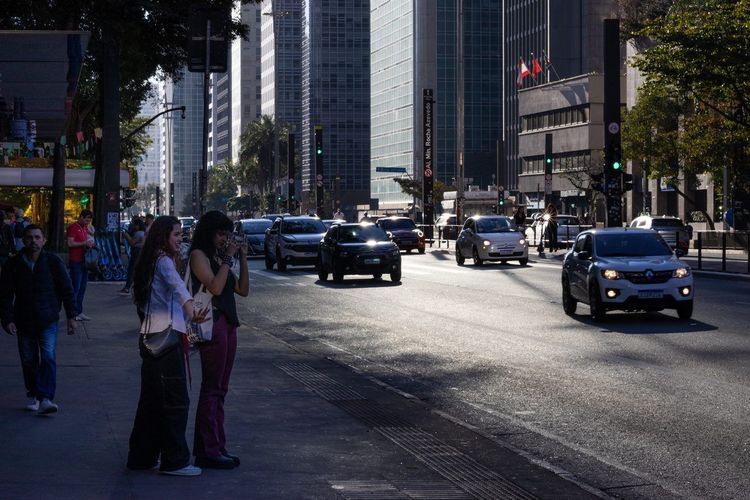
The Avenida Paulista is the landmark that Paulistanos themselves use to give an address. Inaugurated in 1891, at a time when coffee barons were building their residences here, it is today lined for 2.8 kilometers with glass towers, bank headquarters, and cultural centers, from the Conjunto Nacional to the Casa das Rosas, one of the few mansions from that era still standing. It is one of the busiest thoroughfares in the country: more than a million people pass through it every working day, between offices, the metro, and shops.
Every Sunday and public holiday, the avenue completely changes its face: traffic is cut along its entire length for the Paulista Aberta, and the roadway fills with cyclists, skateboarders, street musicians, and impromptu stalls. You can then walk in the middle of the road, which is unthinkable on a weekday. Among the lesser-known addresses, the Japan House and the Instituto Moreira Salles offer free-admission exhibitions — a useful break between two visits on this list.
It is also the best starting point to branch out: the MASP is right in the middle of the avenue, the Jardins and Vila Madalena neighborhoods are just a few metro stops away, and the Centro Histórico is only about fifteen minutes by metro.
2. Admire the Masterpieces of the MASP
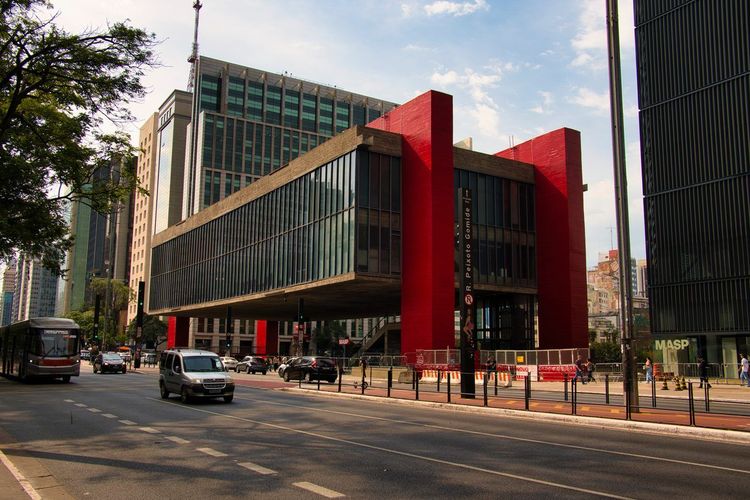
The MASP (Avenida Paulista 1578, São Paulo - SP, rated 4.7/5 on Google with 112,346 reviews) (Museu de Arte de São Paulo Assis Chateaubriand) is recognizable from afar by its red volume suspended between four concrete pillars — an engineering feat designed by architect Lina Bo Bardi and inaugurated in 1968. Beneath the building, a vast covered open space, the "vão livre," hosts an antiques fair on Sundays that is worth a visit in itself.
Inside, the collection exceeds 10,000 pieces and is considered the most important European art holdings in the Southern Hemisphere: Raphael, Rembrandt, Degas, Van Gogh, Renoir, as well as one of the finest collections of Brazilian art, from Portinari to Tarsila do Amaral. The scenography often surprises: paintings are presented on transparent glass easels rather than on traditional wall mounts — a device conceived by Lina Bo Bardi to break the usual hierarchy between works. The museum expanded in 2024 with an adjacent new building, connected by an underground passage, which hosts part of the temporary exhibitions.
Budget-wise, if your stay falls on a Tuesday, admission is free for everyone, as it is on Fridays from 6 p.m. On other days, a full-price ticket costs 85 reais. Two hours are enough for a complete visit, a little more if you linger over the temporary exhibitions.
3. Recharge at Parque Ibirapuera
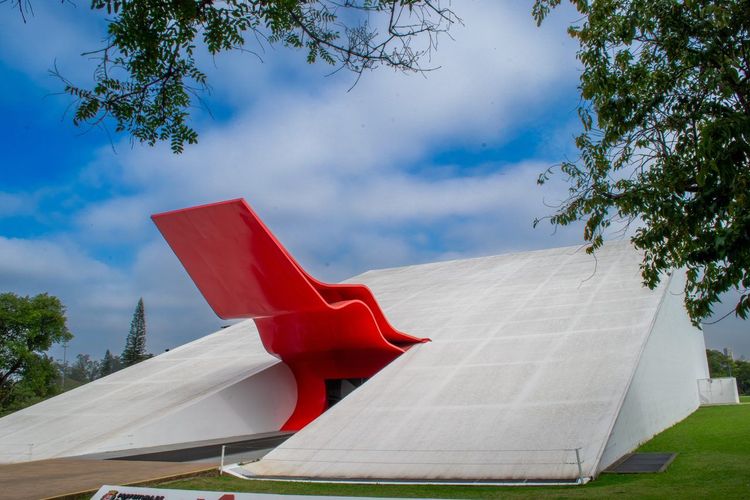
Inaugurated in 1954 for the city's four-hundredth anniversary, Parque Ibirapuera (Avenida Pedro Álvares Cabral, São Paulo - SP, rated 4.8/5 on Google with 297,699 reviews) is to São Paulo what Central Park is to New York — with far more modern architecture. Its 158 hectares bring together several buildings designed by Oscar Niemeyer: the Auditório Ibirapuera with its red tongue-shaped marquee, the Oca with its flying-saucer appearance set on the lawn, and the pavilion that hosts the Bienal de São Paulo every two years, one of the most important contemporary art exhibitions in the world.
The park lends itself well to a leisurely stroll. Cycling paths and shaded walkways connect the different sections, and stands rent bikes and tricycles — a simple way to cover more ground without tiring yourself out: allow a good hour to reach the main points of interest, from the central lake to the Japanese pavilion. You will also come across the Planetário, which screens shows in Portuguese but remains accessible without knowing the language thanks to the visual nature of the spectacle. On weekends, the lawns fill with family picnics and impromptu exercise classes — a great opportunity to observe the city at rest.
In terms of museums, Ibirapuera is a true cultural island. The MAM (museum of modern art) occupies a space beneath the large marquee, the MAC (museum of contemporary art) has moved in just across the way in the former Agriculture Palace, and the Museu Afro Brasil, presented further below, occupies one of the pavilions from the 1954 exhibition. Since 2020, park management has been entrusted to a private operator, which has improved maintenance and multiplied the number of cafés. Plan for at least half a day: it is easy to spend three hours there without having seen half of what you were looking for.
4. Explore the Centro Histórico, the Catedral da Sé, and the Theatro Municipal
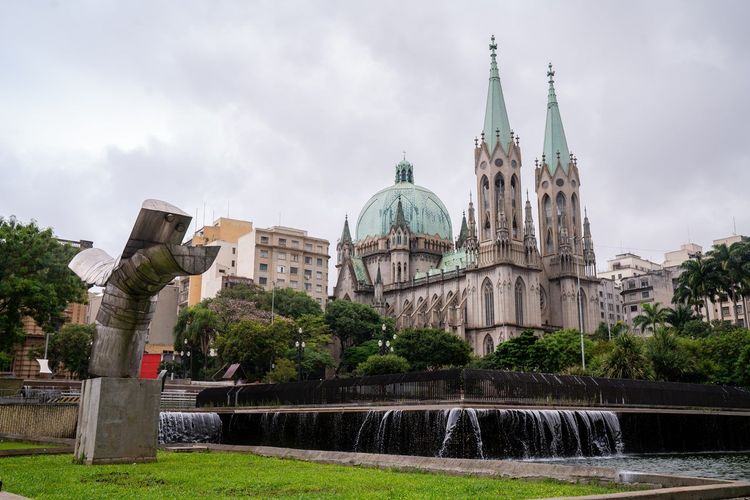
The Centro Histórico holds the memory of the colonial and then republican city — somewhat worn in places but rich in remarkable architecture. You move around mostly on foot, between pedestrian streets, street vendors, and Art Deco buildings from the 1930s. It is also here, on the Pátio do Colégio, that Jesuits founded São Paulo in 1554: the small white church rebuilt on the site marks the zero point of Paulista history.
At the heart of the neighborhood, the Catedral da Sé (metropolitan cathedral of São Paulo) dominates the Praça da Sé with its two 92-meter neo-Gothic towers. The construction, launched in 1913, took so long that the cathedral was inaugurated unfinished in 1954 for the four-hundredth anniversary, and its towers were not completed until the late 1960s. Topped by a Renaissance-inspired dome, it can accommodate around 8,000 people and ranks among the largest neo-Gothic buildings in the world. Its crypt houses the tombs of bishops and historical figures of the state.
About ten minutes' walk away, the Theatro Municipal de São Paulo (Praça Ramos de Azevedo, São Paulo - SP, rated 4.8/5 on Google with 34,923 reviews) surprises with its opulence, almost incongruous amid the modern towers. Inaugurated in 1911, it draws openly on the Opéra Garnier, with gilding, ceiling frescoes, and a grand chandelier. It is the home of the Municipal Symphony Orchestra and the Balé da Cidade, the city's dance company. Even without a show ticket, guided tours allow you to discover the foyer and the auditorium.
A safety tip: avoid the Centro after nightfall and on Sundays, when most businesses close and the streets empty out abruptly. On weekdays and during the day, however, it is one of the liveliest neighborhoods for observing everyday São Paulo, far from the towers of Paulista.
5. Indulge Your Senses at the Mercado Municipal (Mercadão)
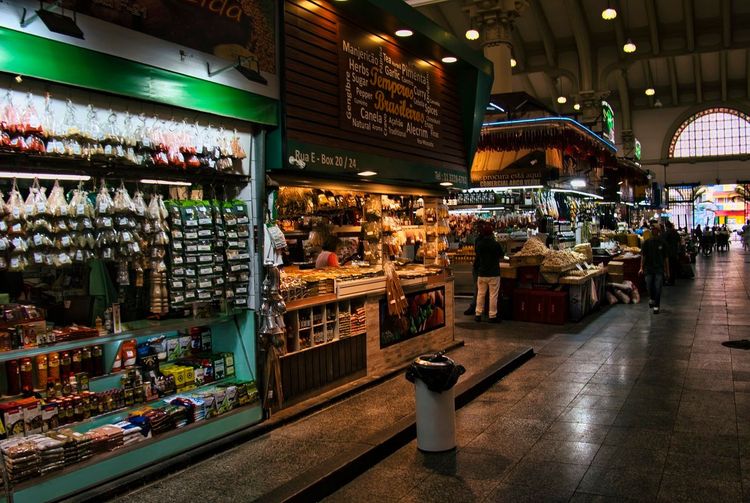
Nicknamed the Mercadão, the Mercado Municipal de São Paulo (Rua da Cantareira 306, São Paulo - SP, rated 4.5/5 on Google with 202,470 reviews) opened its doors in 1933. Its eclectic hall, designed by engineer Felisberto Ranzini within the office of architect Ramos de Azevedo, is lit by 55 stained-glass windows by artist Conrado Sorgenicht Filho, which filter colored light over the stalls of fruits, spices, and cured meats.
The house specialty is the sanduíche de mortadela: a bread roll stuffed with an impressive thickness of hot mortadella, served at the counter for generations. One is often enough for two. Alongside it, the pastel de bacalhau (cod fritter) and Brazilian fruit juices less known in Europe — such as cupuaçu or graviola — round out a memorable lunch break. On the mezzanine level, a row of restaurants offers a bird's-eye view over the hall.
The market is particularly lively between 11 a.m. and 2 p.m., when workers from the nearby Centro come for lunch. If you prefer to avoid the crowds, come mid-morning on a weekday. Also be wary of vendors who offer exotic fruit tastings and then present a hefty bill: ask the price per kilo before accepting.
6. Discover Street Art and the Beco do Batman
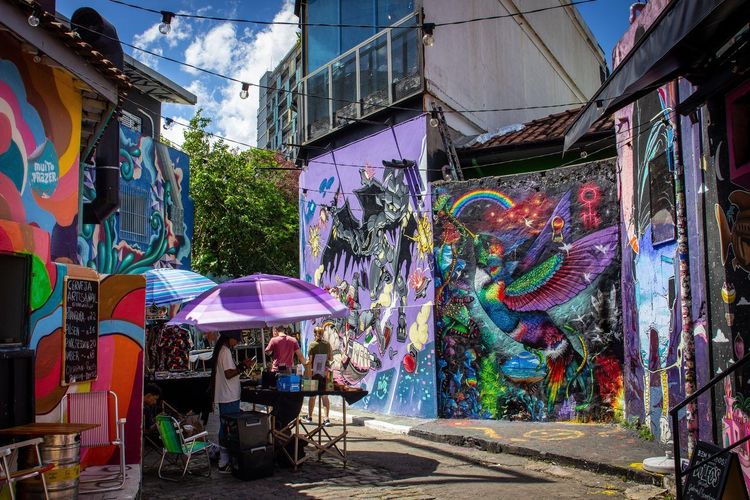
São Paulo claims one of the most active street art scenes in the world, driven by figures such as the twins Os Gêmeos, whose yellow characters adorn building facades across the city. Born in the 1980s alongside the "pixação" — those angular inscriptions typical of the city — the movement is now widely recognized, to the point that large murals are commissioned to cover the blank walls of buildings.
The best-known showcase remains the Beco do Batman (Rua Gonçalo Afonso, São Paulo - SP, rated 4.6/5 on Google with 20K reviews), a narrow alley in the Vila Madalena neighborhood entirely covered in graffiti. Its name comes from a drawing of Batman that appeared on a wall in the 1980s, which started the tradition. The place is never static: artists regularly repaint the walls, so a photo taken this year will look nothing like one taken next year.
If you want to photograph the murals without the weekend crowds, come on a weekday in late morning.
7. Immerse Yourself in Afro-Brazilian History at the Museu Afro Brasil
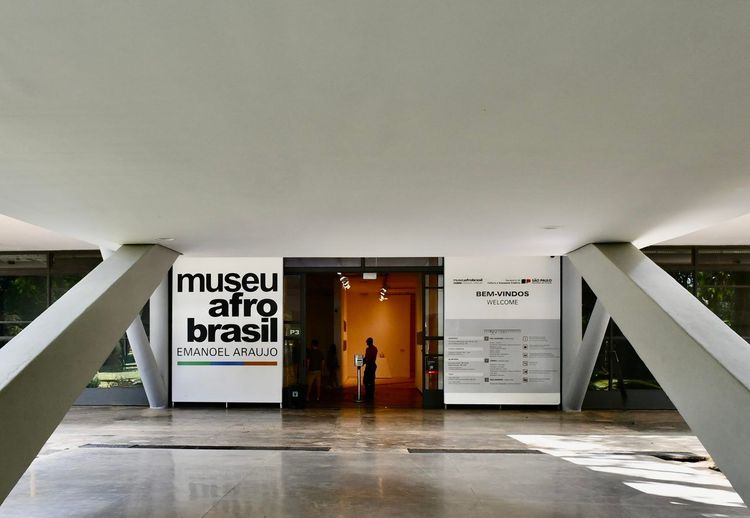
Housed in the Pavilhão Padre Manoel da Nóbrega, designed by Niemeyer for the 1954 exhibition at the heart of Parque Ibirapuera, the Museu Afro Brasil (Avenida Pedro Álvares Cabral, São Paulo - SP, rated 4.8/5 on Google with 11,129 reviews) was founded in 2004 by Bahian artist and curator Emanoel Araújo, former director of the Pinacoteca. Its collection brings together around 6,000 pieces — paintings, sculptures, engravings, photographs, and ritual objects — dedicated to the history of slavery and the African contributions to the building of the country.
The tour blends contemporary art with historical documents, with a section devoted to Afro-Brazilian religions such as candomblé. It is one of the few museums in the country to directly address slavery: Brazil is the country in the Americas that received the largest number of deported Africans. Admission remains inexpensive, making it an easy stop to slip in after a morning in the park (access via portão 10).
8. Relive the Passion of Brazilian Football at the Museu do Futebol
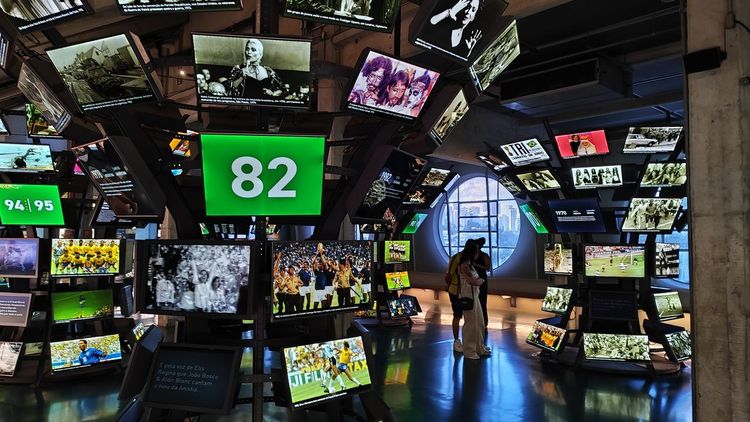
It is hard to imagine Brazil without football, and São Paulo dedicates an entire museum to it, housed beneath the stands of the Pacaembu stadium, renovated and reopened in 2024 under the name Mercado Livre Arena Pacaembu. The Museu do Futebol (Praça Charles Miller, São Paulo - SP, rated 4.7/5 on Google with 18,640 reviews), opened in 2008, traces the history of the national sport from its introduction by Charles Miller in 1894 to the five stars of the Seleção.
The museum favors interactivity over display cases: timed penalty shootouts, video terminals showing the most famous goals, and a sound recreation of the roar of the stands. Even if you are not a passionate fan, you will leave with a better understanding of what this sport means in Brazil. Allow about an hour and a half for the visit.
9. Marvel at Singular Architecture: the Edifício Copan and the View from Farol Santander
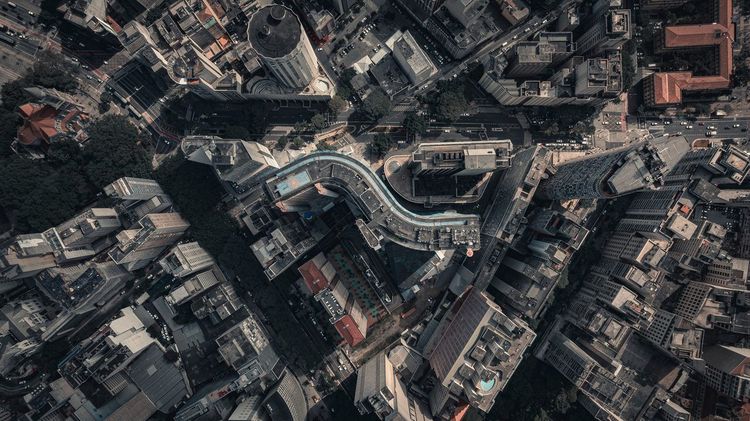
The República neighborhood is home to one of the city's most recognizable silhouettes: the Edifício Copan, whose façade undulates 115 meters high. Designed by Oscar Niemeyer, begun in 1951 and completed in 1966, it contains more than 1,100 apartments spread across six blocks and nearly 5,000 residents — a true vertical city with its own ground-floor shops. Its façade is particularly photogenic when seen from Avenida Ipiranga in the late afternoon, when the horizontal sun-breakers cast bands of shadow.
A little further away, in the Centro Histórico, the Farol Santander (Rua João Brícola 24, São Paulo - SP, rated 4.7/5 on Google with 25,508 reviews) occupies the former headquarters of Banespa bank, the Edifício Altino Arantes: a 161-meter Art Deco skyscraper inaugurated in 1947, directly inspired by the interwar New York towers. It remained the tallest building in the city for about thirteen years. Now restored, it has become a cultural center with exhibitions on several floors and a belvedere on the 26th floor.
From up there, the 360-degree view allows you to spot Avenida Paulista, the Catedral da Sé, and the sea of towers stretching in every direction. It is undoubtedly the best place to grasp the scale of São Paulo, which neither sea nor mountain brings to a halt.
10. View Works at the Pinacoteca do Estado
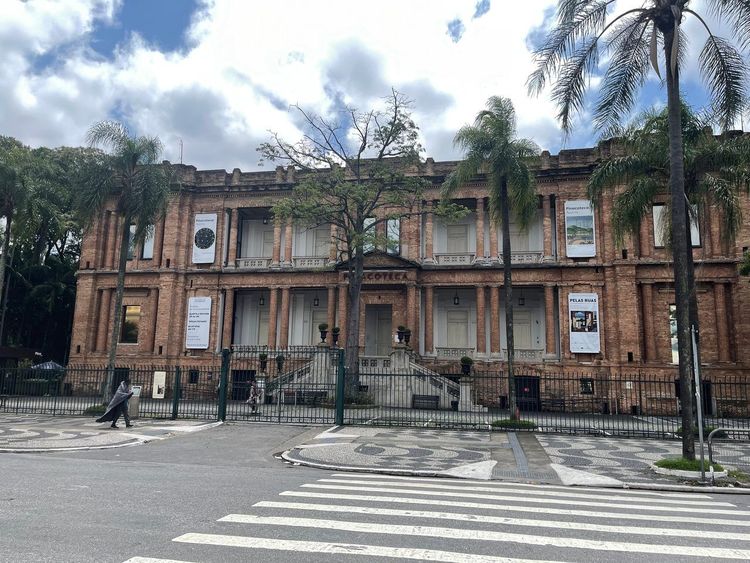
The oldest art museum in the city, the Pinacoteca do Estado (Praça da Luz 2, São Paulo - SP, rated 4.8/5 on Google with 41,441 reviews) opened in 1905 in a brick building designed by the Ramos de Azevedo office for the School of Arts and Crafts. A renovation carried out in the 1990s by architect Paulo Mendes da Rocha, a future Pritzker Prize laureate, covered the inner courtyards with glass roofs that bathe the rooms in natural light.
The permanent collection covers Brazilian art from the 19th century to the present day, with an emphasis on the modernism of the 1920s and 1930s that shaped the cultural identity of the country. Located beside the Jardim da Luz, a historic park often overlooked by visitors in a hurry, the whole complex can be visited in a morning, combining the museum and a stroll. Just across the way, the Estação da Luz station, built by the British, is worth a glance for its clock tower.
11. Reflect at the Memorial da América Latina
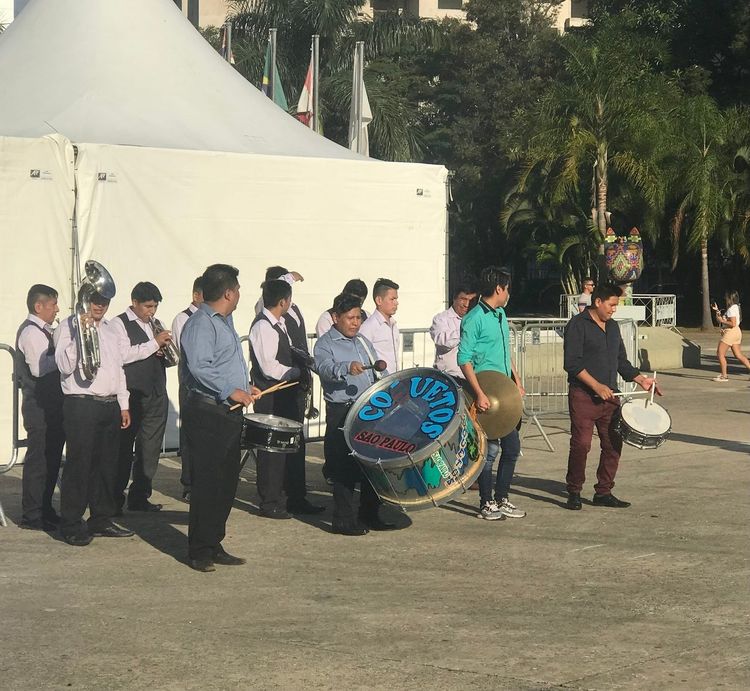
Designed by Oscar Niemeyer and inaugurated in 1989, the Memorial da América Latina (Avenida Auro Soares de Moura Andrade 664, São Paulo - SP, rated 4.6/5 on Google with 60,119 reviews) celebrates the cultural unity of the continent through white buildings arranged around a vast concrete esplanade. The complex houses a library, an auditorium, and exhibition halls.
The most photographed element remains the Hand, a seven-meter concrete sculpture whose palm traces a map of Latin America, marked by a red streak evoking the blood shed across the continent. Rarely crowded, the site offers a calm visit, easy to combine with the nearby Barra Funda neighborhood.
12. Explore Vila Madalena, Jardins, and Rua Oscar Freire
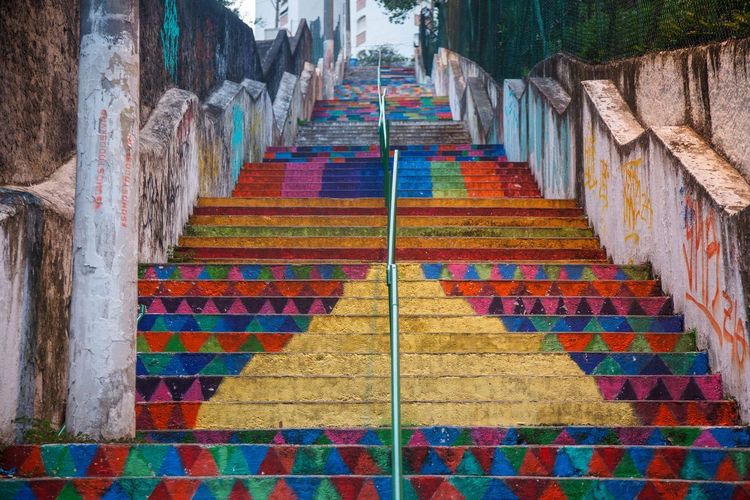
Beyond the landmarks, São Paulo reveals itself through its neighborhoods. Vila Madalena, already encountered with the Beco do Batman, concentrates bars, galleries, and designer boutiques on hilly streets where you wander without a specific goal. Its neighbor, Pinheiros, extends the atmosphere with some of the city's most inventive restaurants.
At the other end of the price scale, Jardins lines up luxury boutiques and well-kept residential buildings. Its backbone, Rua Oscar Freire, regularly features in rankings of the world's most upscale shopping streets. Even without any intention to buy, an hour among the shop windows and cafés gives a very different picture from that of the Centro.
To the southeast, the Ipiranga neighborhood is worth a detour for the Museu Paulista (Parque da Independência, São Paulo - SP, rated 4.8/5 on Google with 38,741 reviews), nicknamed the Museu do Ipiranga, housed in a monumental palace overlooking a French-style garden. It was on the banks of the Ipiranga stream that Brazilian independence was proclaimed in 1822. Closed for nearly ten years for renovation, the museum reopened in 2022 for the bicentennial, with modernized galleries and a city belvedere.
13. Dive into the Nightlife: Samba, Caipirinha, and Bars
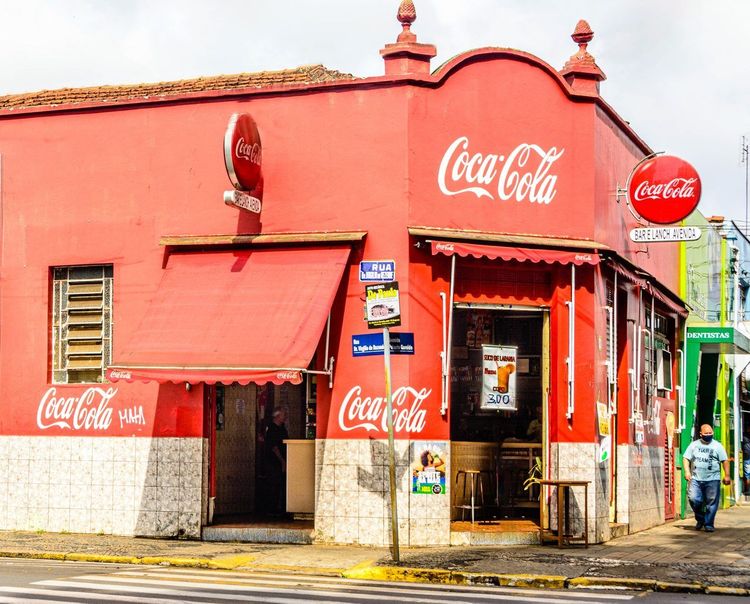
The Paulista night is not limited to one address: it reinvents itself every evening. On Fridays and Saturdays, the bars of Vila Madalena and Pinheiros fill up right after work, in an atmosphere that is more convivial than trendy. São Paulo actually boasts several tens of thousands of bars and botecos, those neighborhood counters where you share an ice-cold beer served in a large bottle.
For a more authentic experience, look for a roda de samba — those informal sessions where musicians and listeners mingle around a table, often on Saturday afternoons, in Vila Madalena or in the Bixiga neighborhood, the birthplace of the Vai-Vai samba school. You don't need to dance to enjoy it: a caipirinha in hand, simply listening is enough to soak up the atmosphere.
Football also sets the rhythm of evenings: on a night when the Seleção plays or when there is a classic match between Corinthians and São Paulo FC, bars broadcast the game on a big screen and the atmosphere rivals that of a stadium. If your stay coincides with a World Cup or a final, book a table in advance so you don't end up standing on the pavement.
14. Browse the Markets and Taste Local Street Food
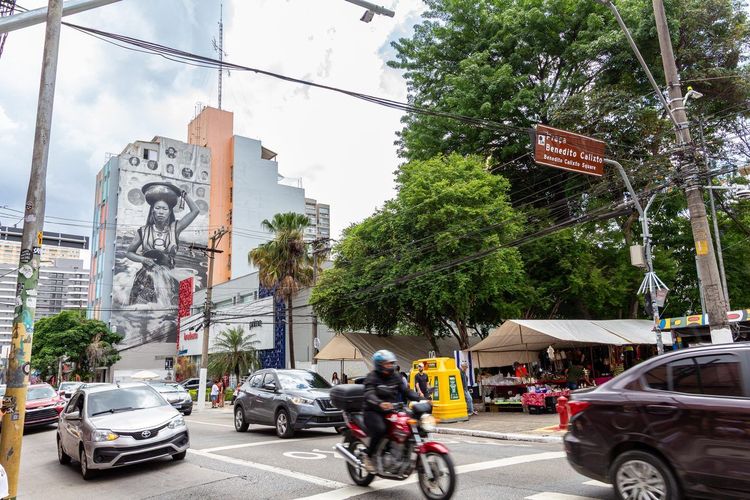
Every Saturday, the feira at Praça Benedito Calixto, in the Pinheiros neighborhood, brings together antique dealers, artisans, and choro musicians under the trees of the square. It is a great place to find a vintage Brazilian object — from vinyl records to jewelry and retro furniture — while listening to an open-air concert.
The city also has several hundred weekly feiras livres — street markets that move from neighborhood to neighborhood depending on the day and sell fruits, vegetables, and snacks at low prices. Stumbling upon one by chance is one of the pleasures of a stay here: it is where you taste the best pastel, fried fresh to order and served with a sugarcane juice (caldo de cana).
For local specialties, try the coxinha (a teardrop-shaped chicken croquette), pão de queijo at breakfast, and, on Wednesdays or Saturdays, the feijoada served in many restaurants. Those with a sweet tooth will love the brigadeiro, a small chocolate truffle ball found everywhere. Another heritage not to be missed: São Paulo is home to the largest Japanese community outside Japan, and the Liberdade neighborhood, with its weekend food fair, is the ideal place to discover it. Paulista pizza, inherited from Italian immigrants, is also the subject of genuine local devotion.
15. Breathe in Nature: Botanical Gardens, the Zoo, and the Instituto Butantan
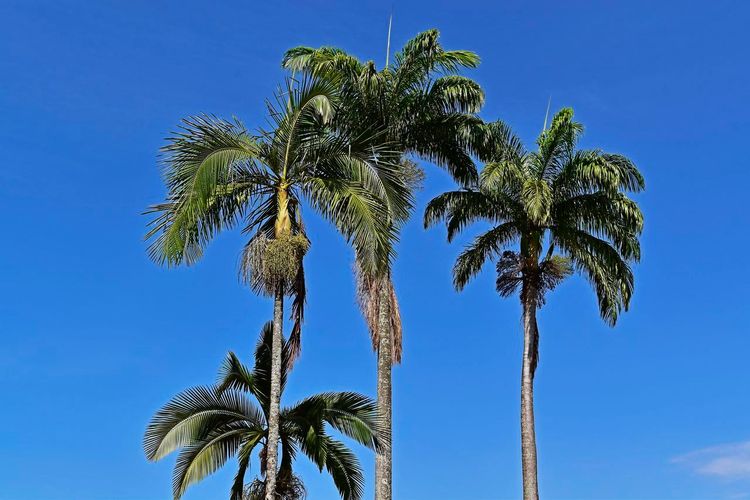
In the south of the city, in the Água Funda neighborhood, a large protected stretch of Atlantic Forest brings together two addresses that reveal a greener side of São Paulo. The São Paulo Botanical Garden covers about 36 hectares within the Fontes do Ipiranga State Park, with marked trails and a wildlife of birds and monkeys that comes as a surprise in the middle of a megacity.
Right next door, the Zoológico de São Paulo, opened in 1958, houses more than 3,000 animals across about 82 wooded hectares, making it one of the largest zoos in Latin America. Families can easily spend half a day there. Allow 45 minutes to an hour of travel from Paulista depending on traffic.
To the west, near the University of São Paulo campus, the Instituto Butantan (Avenida Vital Brasil 1500, São Paulo - SP, rated 4.8/5 on Google with 2,472 reviews) deserves a place in your itinerary: this biomedical research center founded in 1901 produces a large share of the antivenoms and vaccines used in Brazil. Its biological museum displays snakes, spiders, and scorpions from the country in secure vivariums, and the wooded park surrounding it invites a peaceful stroll.
16. Escape the City: Day Trips from São Paulo
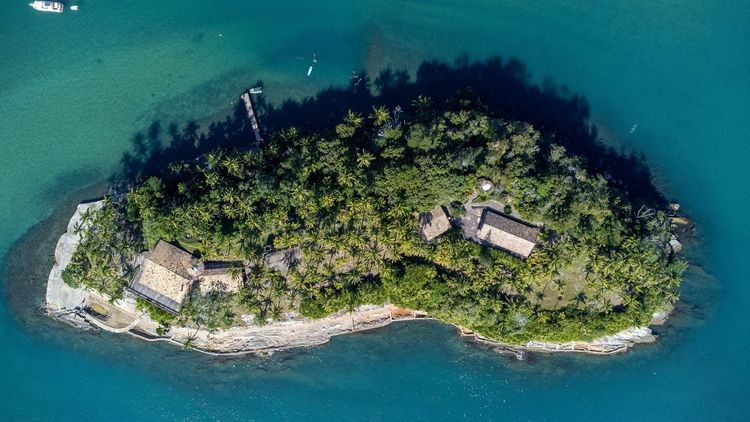
If your stay exceeds three or four days, several excursions allow you to break free from the urban fabric. Ilhabela (Ilhabela - SP), about 200 kilometers away, is reached in three hours by road and then a short ferry ride from São Sebastião: beaches, waterfalls, and tropical forest on an island largely designated as a state park.
Closer to the city, Embu das Artes, less than an hour away, has specialized in crafts and antique furniture, with a well-regarded weekend fair. At altitude, Campos do Jordão, nicknamed the Brazilian Switzerland for its chalets and cool climate, hosts a classical music festival every July. The railway village of Paranapiacaba, built in the 19th century by the British company that connected São Paulo to the port of Santos, captivates with its wooden houses lost in the mist.
And if you want to extend your trip further, Rio de Janeiro is just one hour away by plane. The Ryo audio-guided tour of Rio de Janeiro offers a 7.3 km loop with 25 audios starting from Praça XV, from the Imperial Palace to the Arcos da Lapa via the Selarón staircase — a way to compare the carioca historic center with that of São Paulo in three hours of walking.
17. Plan Your Stay: Duration, Budget, Time Difference, and Entry Requirements
To cover the essentials of this list without rushing, plan for four to five full days. Three days are enough for the must-sees of the city center and Paulista, but leave little room for a day trip or a carefree evening the next morning. If you continue on to Rio, save half a day to follow the 25 stages of the Ryo audio-guided tour through the carioca historic center.
Budget-wise, São Paulo remains generally more affordable than Paris or London, with large differences depending on the neighborhood. A meal at a feira or a boteco costs the equivalent of a few euros, whereas dinner at a well-known Jardins restaurant can easily exceed 40 to 50 euros per person. Accommodation ranges from around thirty euros a night at a hostel to over 150 euros at a business hotel near Paulista.
The time difference with France is 4 hours in winter and 5 hours in summer: Brazil abolished its daylight saving time in 2019, so the gap depends solely on the French clock change. For entry requirements, French citizens with a valid passport do not need a visa for a tourist stay of up to 90 days: nonetheless check the situation on the French Ministry of Foreign Affairs website before booking. A direct flight from Paris takes about 11 and a half hours to Guarulhos Airport, while a connecting flight via Lisbon or Madrid approaches 15 to 17 hours.
On the ground, the metro covers most tourist neighborhoods, supplemented by rideshare apps, widely used for long journeys or evening travel. For accommodation, Paulista and Jardins offer the best compromise between safety, transport links, and neighborhood life.
FAQ
How many days should I plan to visit São Paulo?
Four to five days are enough to see the major museums, Avenida Paulista, the Centro Histórico, and enjoy at least one evening in a lively neighborhood like Vila Madalena. With only two or three days, focus on the Paulista–Ibirapuera–Centro triangle.
What budget should I plan for a stay in São Paulo?
Budget around 60 to 90 euros per day per person for a frugal trip (basic accommodation, street food, public transport), and double that for a mid-range hotel with a few nicer restaurants.
What is the time difference between São Paulo and France?
São Paulo is 4 hours behind France in winter and 5 hours behind in summer, as Brazil no longer observes daylight saving time since 2019.
Do I need a visa to travel to São Paulo?
No, French citizens do not need a visa for a tourist stay of less than 90 days — a valid passport is sufficient. However, check the current requirements before departure.
What is the best time to visit São Paulo?
From May to September, during the austral autumn and winter, temperatures are milder and rainfall is less frequent. From December to March, the summer is hot and humid, with frequent thunderstorms in the late afternoon.
Is São Paulo a safe city for tourists?
Like any megacity, São Paulo requires basic vigilance: avoid displaying your phone and jewelry, prefer rideshare apps at night rather than walking down deserted streets, and avoid the Centro in the evening. Tourist areas such as Paulista, Jardins, or Ibirapuera remain busy and generally calm during the day.
How long is a direct flight to São Paulo?
A direct flight from Paris takes about 11 and a half hours. Connecting flights via Lisbon, Madrid, or Amsterdam extend the journey to 15 hours or more.
At the end of this list, it is hard to put São Paulo in a single box: a business city seen from Paulista, a cultural capital seen from the MASP or the Pinacoteca, a popular megacity seen from the Mercadão or a neighborhood feira. It is precisely this absence of a single identity that makes a stay here interesting — provided you accept composing your own itinerary rather than looking for a single iconic monument.
And if your trip continues toward the coast, the Ryo audio-guided tour of Rio de Janeiro awaits you with its 25 audios to narrate, step by step, the palaces and baroque churches of the historic center of the "Cidade Maravilhosa".
À lire également