© Shutterstock
 Votre guide Ryo
Visit Montréal in 3 Days: The Complete Itinerary for 2026
Just walk down rue Saint-Paul on a Sunday morning, between the damp cobblestones of Vieux-Montréal and the smell of coffee drifting out of bistros that have barely opened, to understand that visiting Montréal in 3 days is no race against the clock. The city unfolds in layers: a bustling underground city beneath the concrete, a wooded mountain right in the center, an Olympic park big enough to get lost in for an entire day. The Ryo audio-guided tour of Montréal connects a good part of it in 25 audio tracks, on an 8.2 km loop (about 3h15) that runs from place des Arts to the Old Port via the underground city, with no need to book a human guide.
In three days, you have time to go down into the RÉSO network, more than 30 kilometers of air-conditioned corridors beneath downtown, to meet penguins at the Biodôme housed in the former Olympic velodrome, and to climb the colorful outdoor staircases of the Plateau without ever walking the same street twice. You can eat bagels baked in a wood-fired oven since 1957, sip a coffee on a terrace on a cobbled square laid out in the early 19th century, and, if winter drops by, skate for free on Beaver Lake. This guide details a day-by-day itinerary, designed for 3 days but adaptable to 2, 4 or 5, with everything you need to know about transport, budget and the best seasons to visit.
Why Visit Montréal in 3 Days
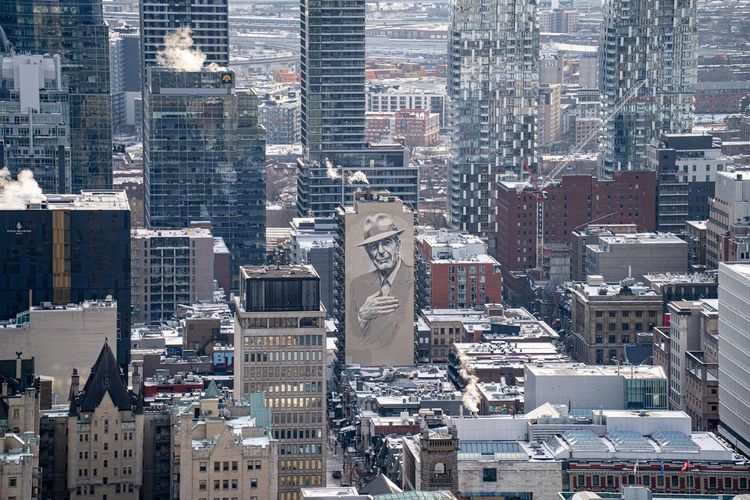
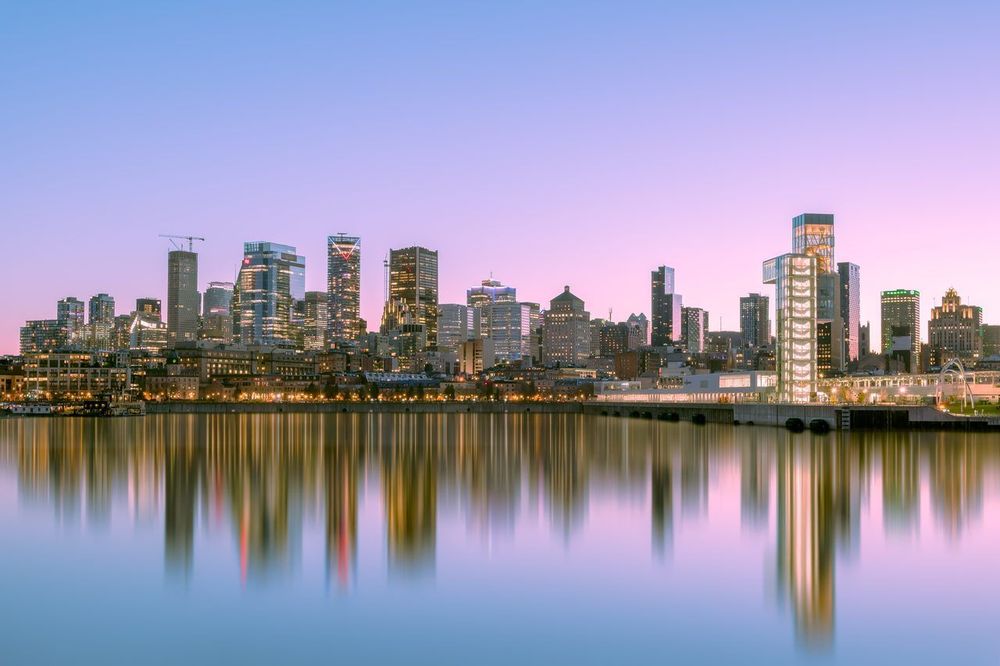
Montréal is neither entirely a North American city nor entirely a European one, and it is precisely this in-between quality that makes it so pleasant to explore on foot in three days. You come across lively terraces buzzing in French around a typically Montréal bagel, then, two streets further on, skyscrapers reminiscent of Chicago or Toronto. The city of Montréal sprawls across an island in the Saint Lawrence River, but its historic center can be covered in just a few hours of walking.
What strikes you first is the atmosphere: Montrealers live outdoors as soon as the thermometer climbs above 15 degrees, terraces spill onto the sidewalks, and street events (festivals, markets, free concerts) follow one another from April to October. The culinary and cultural scene is no slouch either: the city has more restaurants per capita than most North American metropolises, and institutions like the Museum of Fine Arts or the Quartier des spectacles run all year round, well beyond the high tourist season.
Bilingualism, finally, is part of the city's soundscape: people switch from French to English within the same conversation, sometimes within the same sentence, without anyone finding anything to debate. It is this layering of French, British and North American references that gives Montréal an identity found nowhere else in Canada.
Three days are enough to string together historic Vieux-Montréal, the alternative neighborhoods of the Plateau and Mile-End, and then the large parks and cultural institutions of the east of the city. This day-by-day breakdown is the one we detail below, ahead of the practical information on transport, accommodation and the budget to plan for.
How Long Do You Need to Visit Montréal (2, 3, 4 or 5 Days)?
Three days remains the length most often cited by travelers who land in Montréal as part of a trip to Québec, but it isn't a rule carved in concrete.
If you only have 2 days, focus on Vieux-Montréal and Mont Royal, and skip the excursion to the Olympic Park. Visiting Montréal in 2 days remains comfortable for the downtown essentials, provided you accept sacrificing Mile-End or the Botanical Garden.
Conversely, visiting Montréal in 4 days lets you add a full day at Parc Jean-Drapeau or an excursion along the Lachine Canal, without rushing. With 5 days, or even a week, it becomes possible to go as far as Mont-Tremblant or the Eastern Townships on a round trip, or simply to slow the pace and wander more in each neighborhood.
Winter changes the equation: visiting Montréal in winter, over 3 days, means tightening the program around indoor activities (the RÉSO underground city, museums, ice rinks) and reducing the share of long outdoor walks, especially at Parc Jean-Drapeau or along the Lachine Canal. In any case, the 3-day itinerary below is easy to adjust: remove a day for a short format, add the "going further" section for a longer one.
Day 1: Vieux-Montréal, Old Port and Mont Royal
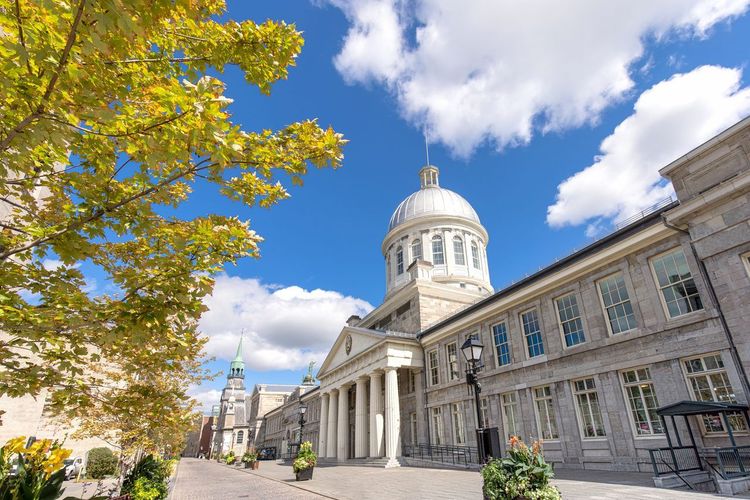
The first day focuses on the city's founding axis, from the historic port to the top of Mont Royal, without ever straying more than three kilometers from the river. Plan for a full day, from breakfast to sunset at the lookout.
Vieux-Montréal and Notre-Dame Basilica
Start with Notre-Dame Basilica, whose midnight-blue interior, studded with gold stars, always surprises those who expected a sober Gothic Revival façade and nothing more. Built in the 1820s, it hosted Céline Dion's wedding and remains, with its Casavant organ of more than 7,000 pipes, one of the most spectacular religious interiors in North America.
On your way out, place d'Armes and the cobbled lanes around it (rue Saint-Paul first and foremost) set the tone for Vieux-Montréal: 18th-century gray stone façades, art galleries and bistros set up in former fur warehouses. Allow a good hour to wander aimlessly between rue Notre-Dame and rue de la Commune. For lunch, the bistros on rue Saint-Paul almost all offer a midday set menu for around 20 to 25 Canadian dollars, much more affordable than the evening menu in the same establishments.
You can continue with place Jacques-Cartier, gently sloping toward the river, where street performers and horse-drawn carriages have shared the space with terraces for over a century. This is also where Montréal's Christmas market traditionally begins, if your stay falls in December.
Old Port and RÉSO, the Underground City
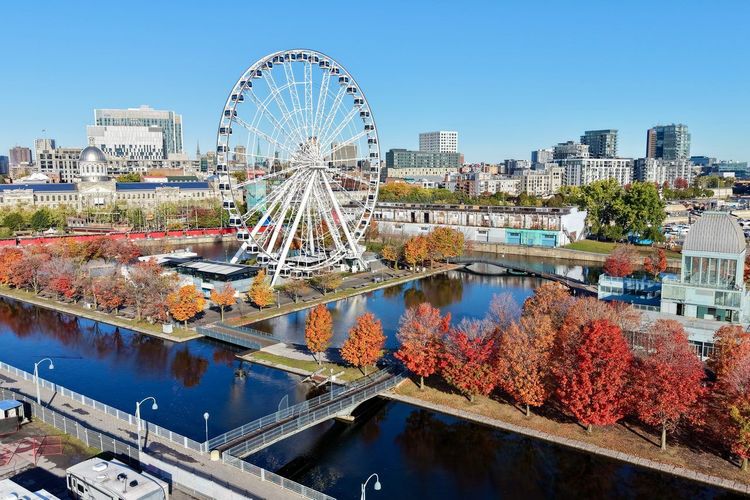
Ten minutes away on foot, the Old Port of Montréal feels completely different: redeveloped quays, a Ferris wheel, the Clock Tower at the end of the pier of the same name and, after dark, the free Cité Mémoire projections on the façades of Vieux-Montréal. The spot is particularly pleasant at the end of the day, when the heat eases and joggers give way to families.
If the weather turns, or simply out of curiosity, head down into the RÉSO. This underground network, one of the largest in the world with more than 30 kilometers of corridors, links metro stations, shopping centers and office buildings without ever needing to set foot outside. Montrealers use it daily in winter, far more than tourists do, which makes it a fairly authentic glimpse into local life. The most convenient entrance from the Old Port is via the Square-Victoria-OACI metro station.
Don't expect a uniform setting: some stretches look like bright shopping arcades, others like administrative corridors with no particular charm. A small tip: keep your STM transit pass handy, as some stretches of the RÉSO require you to tap in again to cross a metro station rather than a simple shopping hall.
Mont Royal and the Kondiaronk Belvedere
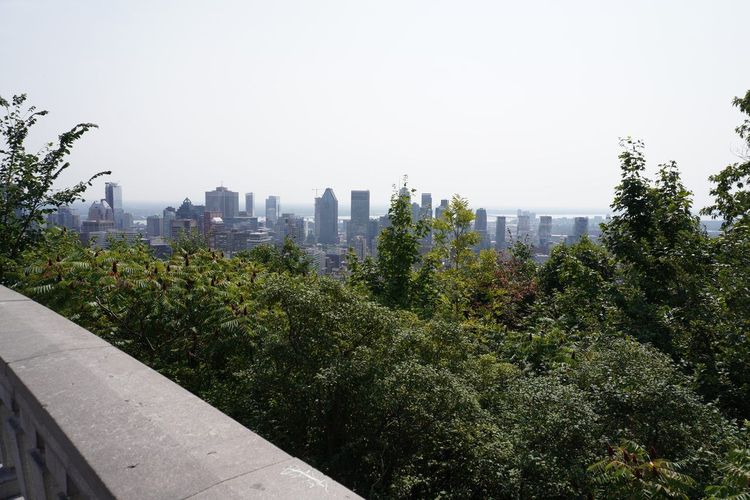
End the day by gaining some height. Mount Royal Park, designed by Frederick Law Olmsted (the designer of Central Park in New York), covers nearly 200 hectares of forest in the heart of downtown. The climb on foot from avenue du Parc takes about 30 to 40 minutes, along a shaded, winding path.
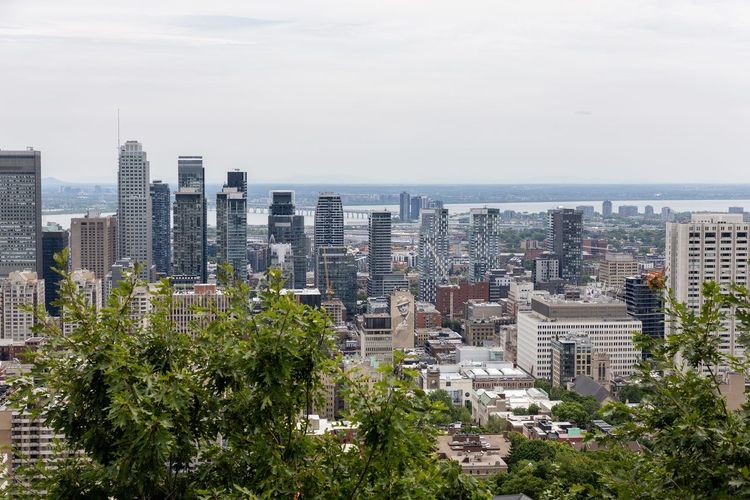
At the top, the Kondiaronk Belvedere (Belvédère Kondiaronk, Montréal, QC H3H 1A1, rated 4.8/5 on Google from 13,295 reviews) offers the most photographed view of the city: the downtown skyscrapers, the Saint Lawrence River and, on a clear day, the Adirondack Mountains on the horizon. The Mount Royal Chalet, just behind, serves as a landmark and houses a small café. To go back down, prefer the Olmsted path, gentler on the knees than the long staircase that descends toward rue Peel, unless you're aiming for the sunset and are short on time.
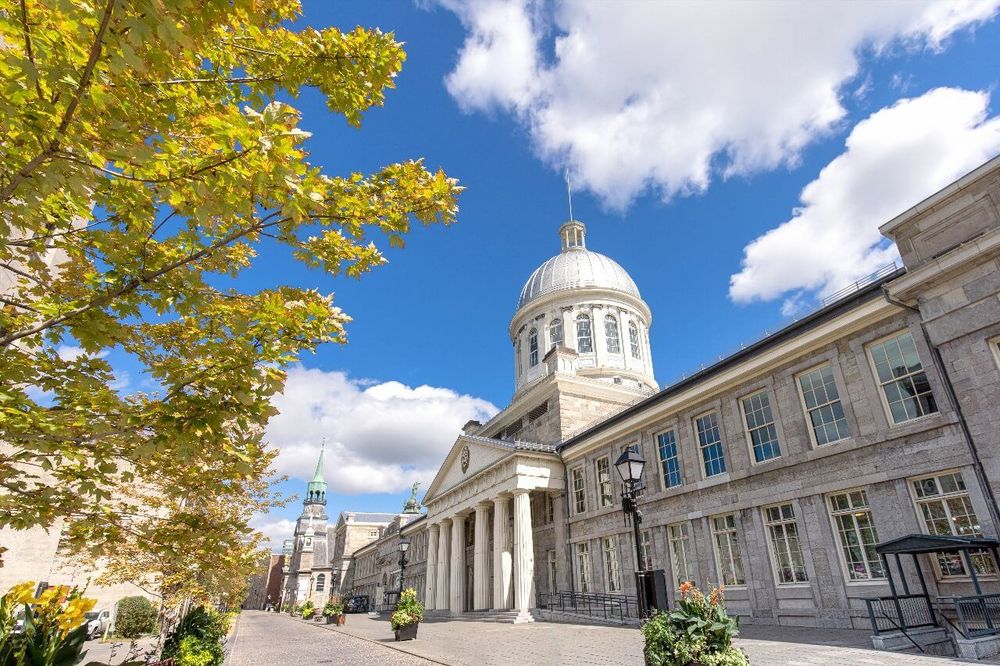
In winter, Beaver Lake, on the mountainside, turns into a free ice rink. In summer, it's rather the spontaneous Tam-Tams gathering, every Sunday afternoon around the Sir George-Étienne Cartier monument, that draws drummers and amateur dancers. For the lower part of the day, you can also follow the Ryo audio-guided tour of Montréal: place d'Armes, Notre-Dame Basilica, rue Saint-Paul, place Jacques-Cartier, the Clock Tower and Bonsecours Market follow one another with commentary on each stop, which you start and pause at your own pace before tackling the climb to the lookout.
Day 2: Plateau Mont-Royal, Mile-End and Quartier des Spectacles
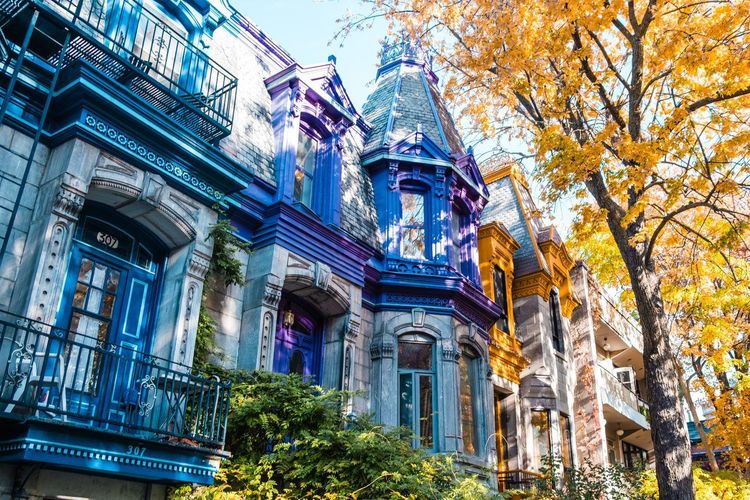
The second day heads up toward the north of the island, into more residential neighborhoods where Victorian architecture rubs shoulders with murals and independent roasters' cafés.
Mile-End, Little Italy and Jean-Talon Market
The Mile-End is probably the most photographed neighborhood in Montréal after the Old Port, for its spiral outdoor staircases and its red-brick houses. It is also the birthplace of the Montréal bagel: at Saint-Viateur Bagel, baked in a wood-fired oven since 1957, the line starts at 7 a.m. on weekends.
A few streets away, Fairmount Bagel, founded by Isadore Shlafman, who arrived in Montréal in 1919, maintains a friendly rivalry that still fuels neighborhood debates; both shops remain open 24 hours a day, which lets you avoid the line if you drop by early in the morning or late at night.
Heading north, Little Italy extends the neighborhood vibe with its historic Italian cafés and delicatessens. The heart of the area is Jean-Talon Market, one of the largest open-air public markets in North America, open since 1933. The stalls change with the seasons: Québec asparagus in May, corn in August, squash and apples in October. Plan to spend the late morning there, ideally on a Saturday, to enjoy the liveliest atmosphere.
Quartier des Spectacles, Downtown and the Museum of Fine Arts
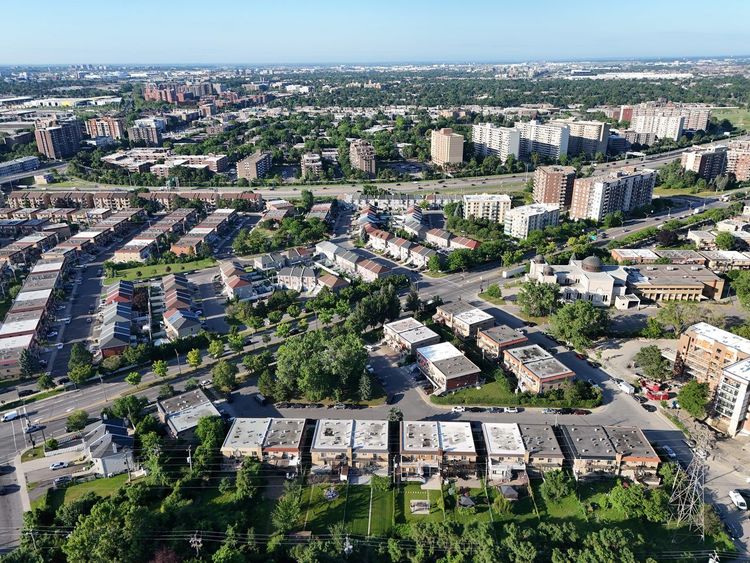
Heading back down toward downtown, the Quartier des spectacles concentrates most of Montréal's concert halls and festivals, including the Montréal International Jazz Festival in summer, one of the most important in the world, which takes over streets and outdoor stages for about ten days. In summer, several squares in the district host free concerts and screenings almost every evening, with no reservation or ticket to buy in advance.
Right next door, downtown mixes office towers, department stores and a few historic landmarks such as the Mary Queen of the World Cathedral, a scaled-down replica of St. Peter's in Rome, right down to its baldachin copied from Bernini's. This area, from place des Arts to place Ville-Marie, also serves as the starting point of the Ryo audio-guided tour, which stops in front of Christ Church Cathedral, the Sun Life Building and St. Patrick's Basilica before diving into the underground city.
Set aside an hour or two for the Montréal Museum of Fine Arts (1380 Rue Sherbrooke Ouest, Montréal, QC H3G 1J5, rated 4.7/5 on Google from 17,914 reviews), founded in 1860 and considered the oldest art museum in Canada, which blends Inuit art collections, French Impressionists and contemporary installations across several interconnected pavilions. Admission to the permanent collections is free for those aged 20 and under.
Plateau Mont-Royal, the Village and Evening Outings
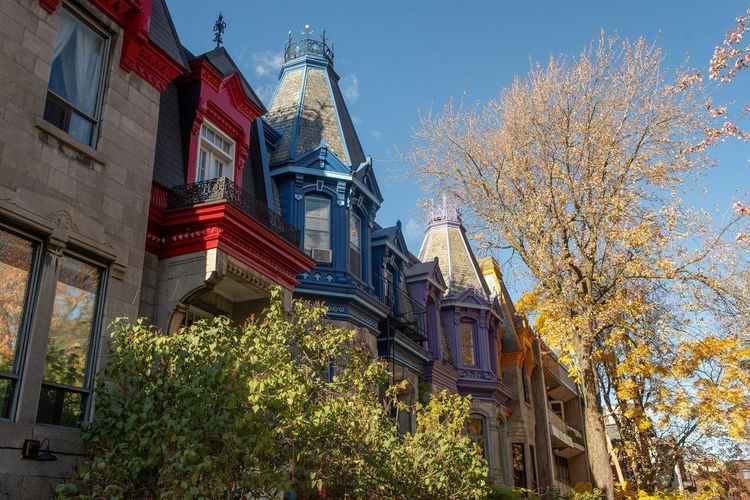
The evening naturally winds up in the Plateau Mont-Royal, the favorite neighborhood of young creatives and families on bikes, where avenue du Mont-Royal and rue Saint-Denis line up restaurants, thrift shops and natural wine bars. If you're looking for somewhere to dine before heading out, the small restaurants on rue Saint-Denis, often run by the same family for two or three generations, offer much better value than the more touristy spots in the Old Port.
Ten minutes' walk away, the Village remains the heart of Montréal's LGBTQ+ nightlife, with its rue Sainte-Catherine pedestrianized in summer, dressed with colorful installations hung above the terraces (Claude Cormier's famous pink balls floated there in the early 2010s). The atmosphere is festive without being exclusively nocturnal: you'll also find quiet cafés during the day.
If you have an hour to spare before dinner, walk up rue Saint-Denis or avenue Laval from Carré Saint-Louis: the Victorian houses with outdoor staircases, built outside to save space inside the dwellings, are among the best preserved in the city.
Day 3: Parc Jean-Drapeau, Biodôme and Saint Joseph's Oratory
The third day heads toward the east and south of the island, between the remains of the 1967 World's Fair and the 1976 Olympic site, before a detour west to one of the most visited pilgrimage sites in the country.
Parc Jean-Drapeau, the Islands and Street Art
The Parc Jean-Drapeau occupies Île Sainte-Hélène and Île Notre-Dame, developed for Expo 67. You can still find the Biosphère there, the former American pavilion turned environment museum, recognizable by its geodesic dome structure designed by Buckminster Fuller.
The park also houses La Ronde, the city's amusement park, with roller coasters among the tallest in Canada; plan for a full afternoon if you decide to go in rather than simply walk alongside the site.
For public art, look for Alexander Calder's large sculpture "Trois disques", commissioned for Expo 67 on Île Sainte-Hélène. For street art proper, it's rather boulevard Saint-Laurent that is the reference: the MURAL festival adds new giant murals there every June, to be seen on your way back to the Plateau. If your visit coincides with the Canadian Formula 1 Grand Prix, plan to bypass the Gilles-Villeneuve circuit, which crosses part of Île Notre-Dame.
Biodôme, Botanical Garden and Olympic Stadium
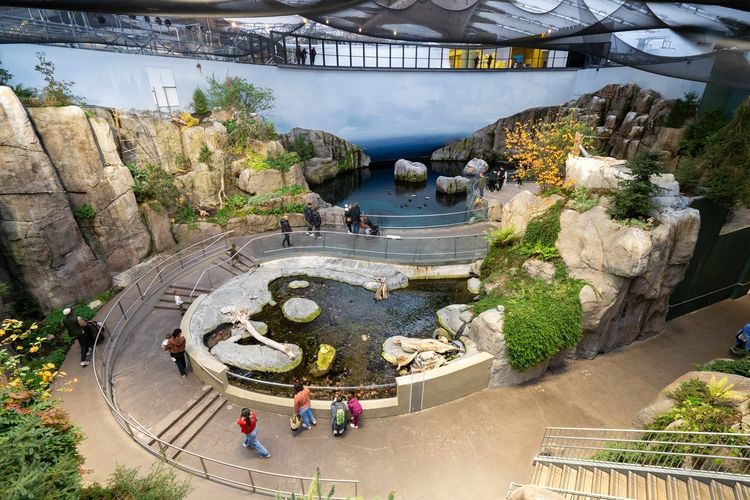
Next, head to the Olympic Park, where several attractions are concentrated within less than a square kilometer. The Biodôme, housed in the former velodrome of the 1976 Games, recreates five ecosystems of the Americas (tropical rainforest, Laurentian maple forest, Gulf of St. Lawrence, Labrador coast and sub-Antarctic islands) under one roof, with penguins, lynx and piranhas visible from just a few meters away.
Just a short walk away, the recently renovated Montréal Insectarium rounds out the visit for families with young children, with free-flying butterflies and recreated giant ant colonies.
Right next door, the Montréal Botanical Garden spans 75 hectares and ranks among the richest in the world, with its Japanese garden, its Chinese garden (the largest outside Asia) and its orchid greenhouses open all year. Autumn is particularly photogenic there, between the colors of the maples and the lanterns of the Chinese Garden of Light, in September-October.
The Olympic Stadium, visible from afar with its inclined tower (the tallest inclined tower in the world, at 165 meters), has long offered, via its funicular, a view that rivals the one from Mont Royal, facing the east of the island. The stadium roof replacement, scheduled through 2027, comes with a renovation of the funicular and the observatory: check whether they are open before heading there.
Saint Joseph's Oratory and the West Side of Mont Royal
End the day at the geographical opposite of the city, on the western slope of Mont Royal. Saint Joseph's Oratory (3800 Chemin Queen Mary, Montréal, QC H3V 1H6, rated 4.7/5 on Google from 25,683 reviews), perched on the mountainside, remains the largest pilgrimage site dedicated to Saint Joseph in the world, with its dome visible from several kilometers away and its wooden staircase climbed on their knees every year by pilgrims seeking healing.
Local legend has it that Brother André, founder of the Oratory in the early 20th century, healed hundreds of pilgrims through prayer alone; his heart, preserved in a reliquary inside the Oratory, remains one of the site's most visited curiosities. The interior, with its organ of more than 5,800 pipes, regularly hosts concerts. Go up to the outdoor lookout, less well known than the one on Mont Royal, for an unobstructed view of the residential neighborhoods of Westmount and Notre-Dame-de-Grâce.
From the Olympic Park, reach the Oratory by metro to Côte-des-Neiges station (blue line), with one or two transfers, then allow a good hour and a half on site, staircase and lookout included.
Going Further: Lachine Canal, Jacques-Cartier Bridge and Boulevard Saint-Laurent
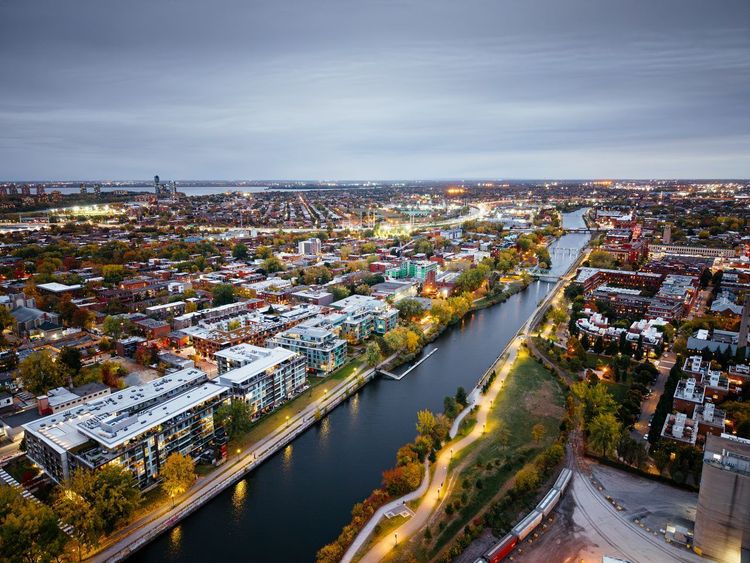
If your stay lasts longer than 3 days, or if you simply want to get out of the historic center, three routes naturally complete the previous itinerary, all accessible by bike or public transit from Vieux-Montréal.
Lachine Canal by Bike or on Foot
The Lachine Canal, dug in the 19th century to bypass the rapids of the same name, now stretches 14 kilometers of bike and pedestrian path from the Old Port to Lac Saint-Louis. Along the way you pass joggers, paddleboards and former textile factories converted into lofts.
Take a break at Atwater Market, a more local and less touristy version of Jean-Talon Market, with its cheese shops and its waterside terrace. BIXI stations dot the entire route, so you can rent a bike at the market and drop it off further along without retracing your steps. Allow two to three hours by bike for the full round trip, or half a day if you add regular photo stops.
Jacques-Cartier Bridge and Île Notre-Dame
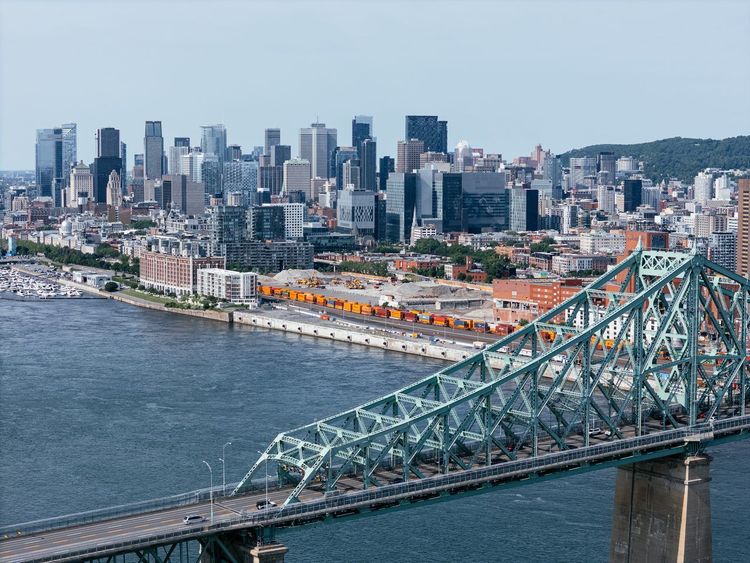
The Jacques-Cartier Bridge (Pont Jacques-Cartier, Montréal, QC), which has linked Montréal to the South Shore since 1930, has been lit up every evening since 2017 by an interactive light show designed by Moment Factory. You can cross it on foot or by bike on a dedicated lane, with an unobstructed view of the Old Port on one side and the river on the other.
Below, Île Notre-Dame, created for Expo 67 from materials excavated for the future metro, now houses an Olympic basin, a casino and gardens, while the big summer festivals of Parc Jean-Drapeau, such as Osheaga, take place on the neighboring island.
Parc La Fontaine and Boulevard Saint-Laurent
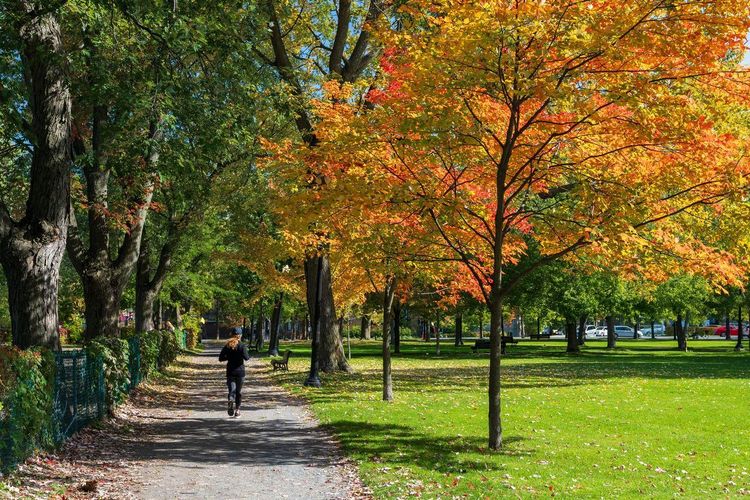
Between the Plateau and the Village, Parc La Fontaine (3933 Avenue du Parc-La-Fontaine, Montréal, QC H2L 3M9, rated 4.7/5 on Google from 4K reviews) offers a greener interlude, with its willow-lined pond, turned into an ice rink in winter, and an open-air theater that programs free evening shows.
The boulevard Saint-Laurent, also known as "the Main", runs through the city from north to south and changes character every few blocks: vintage shops near Mile-End, nightlife bars toward Chinatown, family-run Portuguese restaurants further south. Its southern end, between the Quartier Latin and Chinatown, is one of the stops on the Ryo audio guide of Montréal, a good appetizer before walking back up the Main if you extend your stay beyond 3 days.
How to Get to Montréal
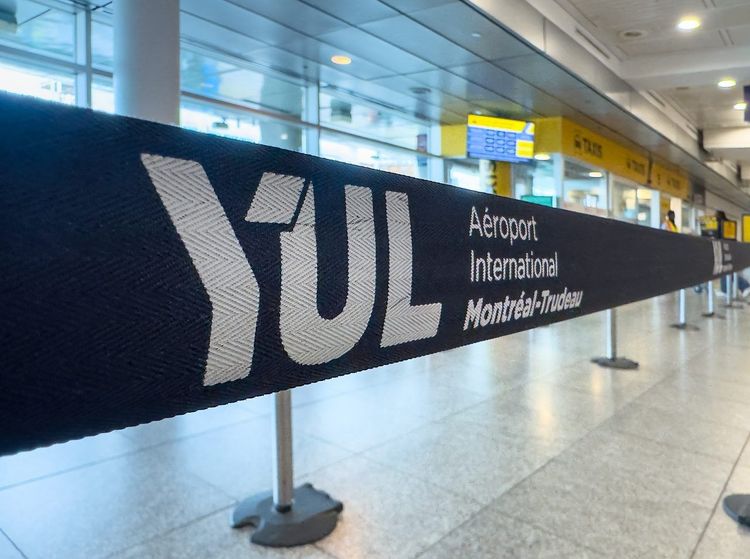
Most international flights land at Montréal-Trudeau Airport (YUL), about twenty minutes from downtown by car or by the 747 express bus, which runs 24 hours a day for a single fare that includes a 24-hour STM transit pass. A taxi or ride-hailing trip from the airport to downtown generally costs between 45 and 55 Canadian dollars, a fixed amount displayed at the arrivals exit, handy if you're traveling with bulky luggage or arriving late in the evening.
From France, allow between 7h30 and 8h of direct flight time, with daily connections from Paris (Air France, Air Canada) and several flights a week from Lyon or Marseille depending on the season. How much does a Paris-Montréal flight cost? Outside the summer peak, round-trip fares start around 400 to 600 euros when booked two to three months in advance; they easily climb above 900 euros in July-August or over the year-end holidays.
For travelers already in North America, Montréal is also accessible by train from Toronto, New York or Québec via VIA Rail or Amtrak, a pleasant option for arriving without the stress of a flight connection.
How to Get Around Montréal in 3 Days
Public Transit and Cycling (STM, BIXI)
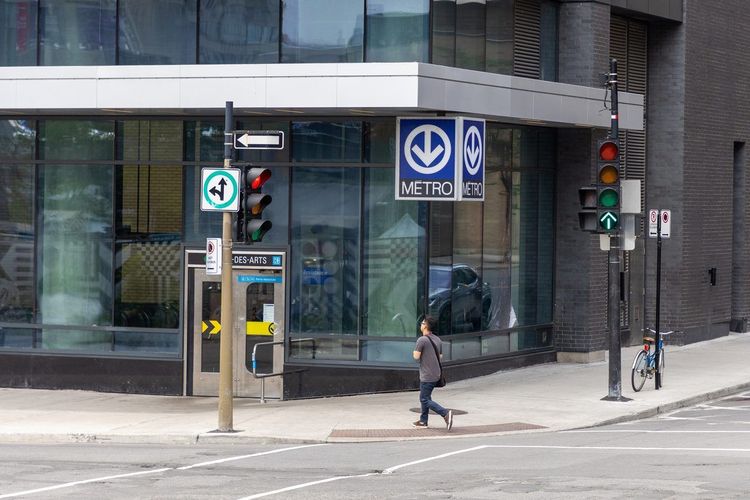
The public transit network (STM) combines 4 metro lines and a dense bus network, more than enough to cover Vieux-Montréal, downtown, the Plateau and Mile-End. A day pass costs about 11 Canadian dollars, and a 3-day pass exists for stays of that length. The orange line and the green line cover most of the sites described in this guide, from Place-d'Armes station in Vieux-Montréal to Pie-IX station for the Olympic Park. Trains run from 5:30 a.m. to about 1 a.m., with a frequency of 3 to 5 minutes during rush hours.
For more outlying areas like the Olympic Park or the Lachine Canal, BIXI, the city's bike-sharing system, is often faster than the bus. Stations are found on every street corner in the central neighborhoods, and a day pass allows unlimited 45-minute trips. The full season runs from mid-April to mid-November; since the winter of 2023-2024, however, a reduced winter network (about 150 stations along cleared paths) remains in service, with bikes fitted with studded tires.
Walking, Taxis and Car Rental
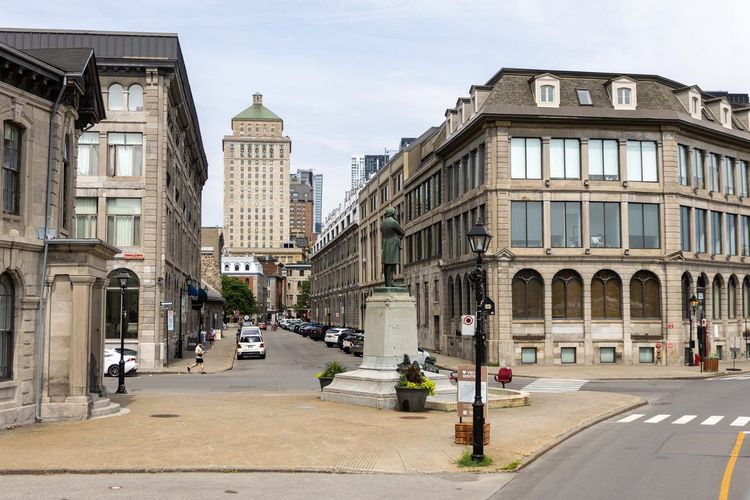
Walking remains the best option for Vieux-Montréal, the Plateau and Mile-End: distances between points of interest rarely exceed 2 kilometers, and the sidewalks are wide and shaded for most of the year. For trips between more distant neighborhoods, such as between Mile-End and the Olympic Park, a metro-plus-bus combination is often faster than a long walk. The Transit app or the rechargeable OPUS card greatly simplifies getting around over 3 days, by avoiding the need to buy a ticket for each trip.
Taxis and ride-hailing services (Uber, Eva) cover trips to the airport or late-night outings when the metro closes, around 1 a.m. Do you need to rent a car to visit Montréal? Not for the 3 days described here: parking is expensive and scarce in Vieux-Montréal and downtown, and the main sites are easily covered by public transit and bike. A car only becomes useful if you extend your trip to the Eastern Townships or the Laurentians after your Montréal stay.
Where to Stay in Montréal Based on Your Preferences
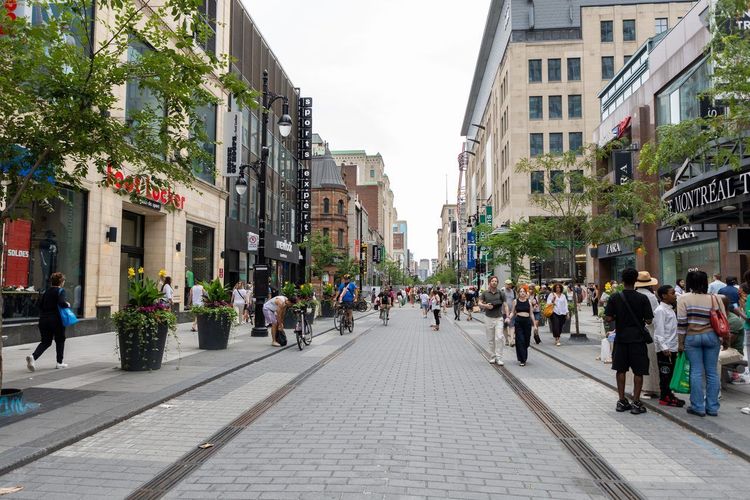
The choice of neighborhood to stay in noticeably changes the experience of these 3 days, between easy walking to the historic sites and a more local atmosphere in the evening.
Vieux-Montréal and Downtown for Convenience
Staying in Vieux-Montréal puts the whole first-day itinerary within walking distance, in hotels often set up in former 19th-century stone warehouses. The atmosphere is more touristy and prices are higher, but the proximity to Notre-Dame Basilica and the Old Port more than compensates for a short stay. Prices rarely start below 180 to 200 Canadian dollars a night in high season for a decent hotel in this area.
The downtown area, just to the north, offers a wider choice of international chain hotels, a stone's throw from the Quartier des spectacles and the RÉSO, handy in winter to limit outdoor trips. Expect rather 130 to 160 dollars for comparable establishments, barely ten minutes further by metro.
Plateau and Mile-End for Local Atmosphere
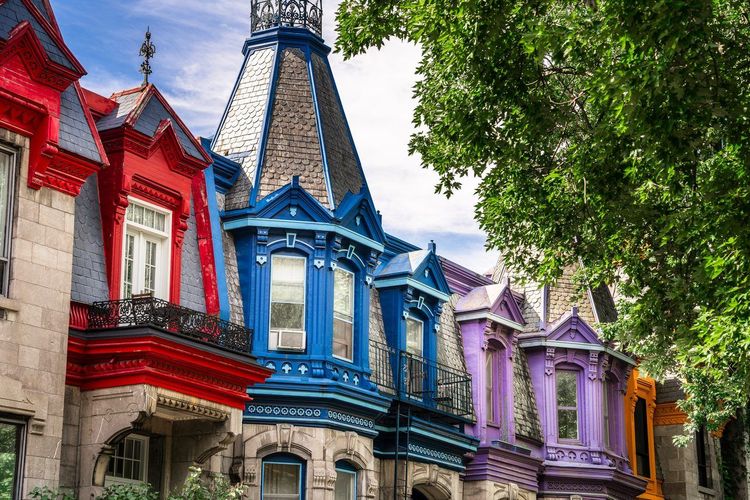
For a more local immersion, the Plateau Mont-Royal and Mile-End concentrate short-term rental apartments and small boutique hotels, amid independent cafés and shops. The apartments there are often in typical residential buildings with a balcony and outdoor staircase, a rather different way of experiencing the city compared with a classic downtown hotel room. The downside: you need to allow 15 to 20 minutes by metro or bike to reach Vieux-Montréal each morning.
Another plus: from the Plateau, place des Arts, the starting point of the Ryo audio-guided tour of Montréal, is only about twenty minutes away on foot down rue Saint-Denis, allowing you to go straight into its 8.2 km loop without taking the metro.
Budget Stays and Hostels
Youth hostels are mostly concentrated in the Village and the Quartier Latin, with dorm beds from 35-40 Canadian dollars a night in low season. Several offer private rooms at a still reasonable rate for a couple or two friends, as well as shared activities (free guided tours, game nights), a good option if you're traveling alone. Book early for July-August, as bed capacity remains limited compared with summer demand.
Where to Eat in Montréal: Brunches, Bagels and Gourmet Tables
Brunch and Bagels, a Local Tradition
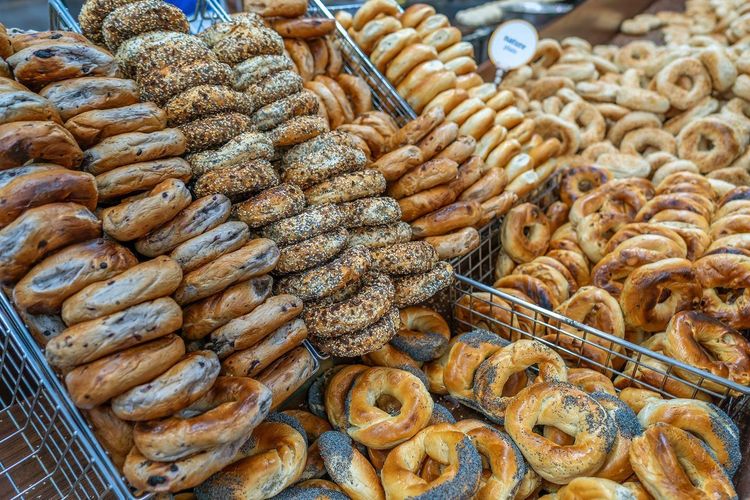
Brunch in Montréal is almost a Sunday ritual, with lines from 9 a.m. in front of the best-known spots in the Plateau and Mile-End. Among the most frequently cited places are often institutions open since the 1990s, where eggs Benedict with smoked salmon and crêpes with local maple syrup show up on almost every neighboring table on a Sunday morning. Bagels, for their part, are enjoyed all day: boiled in honey-sweetened water and then baked in a wood-fired oven, which makes them smaller, denser and slightly sweeter than their New York cousins.
Plan on 15 to 20 Canadian dollars for a full brunch with coffee, and barely 2 or 3 dollars for a plain bagel bought straight from the counter, without sitting down.
Street Food and Budget Eats
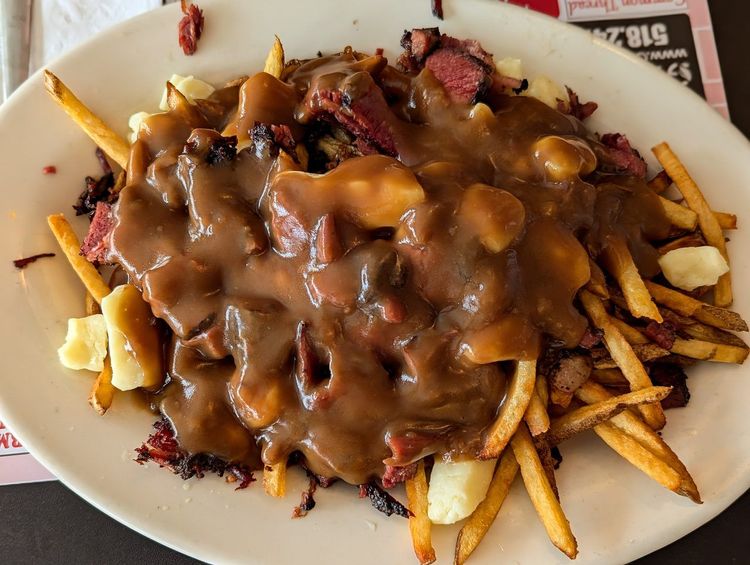
For tight budgets, the canteens and poutine counters of downtown and the Quartier Latin let you eat decently for 10 to 15 dollars. Poutine, for that matter, comes in every version imaginable, from the most classic (fries, cheese curds, brown gravy) to variants topped with pulled duck or smoked meat. Food trucks, concentrated in summer around the Quartier des spectacles and the Old Port, offer a quick alternative for lunch between two visits, often for under 15 dollars with a drink.
The Jean-Talon and Atwater markets are also an economical option for putting together a picnic with local products.
Must-Try Fine Dining
Montréal has several internationally recognized restaurants, particularly around reimagined Québécois cuisine and local products (game, maple, farmhouse cheeses). Many of these restaurants work with short supply chains with producers from Jean-Talon Market, which explains a menu that changes with the seasons rather than staying fixed all year. Prices climb quickly, between 60 and 120 Canadian dollars per person excluding drinks at the most sought-after places, which often need to be booked several weeks in advance for weekends.
For a more accessible dinner without sacrificing quality, the Portuguese restaurants on boulevard Saint-Laurent or the neighborhood bistros of the Plateau offer excellent value for money, far from the tourist crowds of the Old Port. For a more complete overview, see our Ryo article on Montréal's culinary specialties.
When to Go to Montréal: Weather and Seasons
The question of when to go to Montréal depends mostly on what you're looking for: heat and festivals, or snow and ice rinks.
Summer (June to August) remains the most popular period, with temperatures regularly exceeding 25-28 degrees and an intense terrace life, but also the heaviest tourist crowds and the highest accommodation rates of the year.
Spring and autumn (May, September-October) offer a pleasant compromise: mild temperatures, fewer people, and, in autumn, the blazing colors of the maples on Mont Royal and in the Botanical Garden. Booking in April or October often saves 20 to 30% on accommodation compared with July-August rates. Showers remain frequent in spring, and a folding umbrella always finds its place in the bag.
Visiting Montréal in winter radically changes the experience: temperatures regularly drop below -10 degrees, sometimes -20 with wind chill, but the city doesn't stop for all that. The underground RÉSO comes into its own, winter festivals (Igloofest, Fête des neiges) are in full swing, and you can skate for free on several lakes and public squares. Planning 3 days in Montréal in winter simply requires adapting your wardrobe and accepting to spend a bit more time indoors than in summer.
Budget for a 3-Day Stay in Montréal
How much does 3 days in Montréal cost? Excluding airfare, plan on about 100 to 150 Canadian dollars per day per person when traveling on a moderate budget: mid-range accommodation, two restaurant meals, a few public transit trips and one or two paid admissions (museum, Biodôme).
As an example, a typical day on a moderate budget could break down as follows: 15 dollars for public transit and BIXI, 45 dollars for meals, 20 dollars for a paid admission, and the rest for accommodation, which generally remains the most variable item depending on the chosen neighborhood. Tips, to be planned at 15 to 18% in restaurants, are always added to the bill and are never included automatically.
For a tighter budget, staying in a hostel and eating mostly street food or market picnics, you can get down to around 60 to 80 dollars per day. Conversely, a more comfortable stay, with well-regarded restaurants and a downtown hotel, easily exceeds 200 dollars per day.
Formalities remain simple for French travelers: a valid passport and, since 2016, an Electronic Travel Authorization (eTA) to be requested online before departure, for 7 Canadian dollars, valid for up to five years or until the passport expires. No visa is needed for a tourist stay of less than 6 months.
As for booking, remember to reserve accommodation and flights several months in advance if your stay falls in summer or over the year-end holidays. If you're considering a longer getaway, for example a budget for 2 weeks in Montréal and its surroundings, daily costs often decrease when you negotiate weekly rentals rather than nightly ones.



FAQ
How many days do you need to visit Montréal?
Three days let you cover Vieux-Montréal, Mont Royal, the Plateau and Mile-End neighborhoods, as well as the Olympic Park. With 2 days, focus on the historic center and Mont Royal; with 4 or 5 days, add the Lachine Canal or an excursion off the island.
What is the best time to visit Montréal?
Summer (June to August) offers the mildest weather and the most festivals, but also the biggest crowds. Spring and autumn, which are calmer, suit a relaxed pace of sightseeing, while winter requires more thorough preparation when it comes to clothing.
What are the must-see neighborhoods in Montréal?
Vieux-Montréal for history, the Plateau Mont-Royal and Mile-End for local atmosphere, the Quartier des spectacles for culture, and the Olympic Park area (Biodôme, Botanical Garden) for nature and family activities.
Do you need to rent a car to visit Montréal?
No, not for a 3-day stay focused on the city: public transit, BIXI bikes and walking easily cover the itinerary described here. A car only becomes useful for an excursion to the Laurentians or the Eastern Townships.
What is there to see around Montréal?
The Laurentians for hiking and skiing, the Eastern Townships for vineyards and lakes, or Québec City, about 3 hours away by road, to extend your stay with a more historic side of Québec.
How much does a Paris-Montréal flight cost?
Outside peak season, round-trip fares often start between 400 and 600 euros when booked in advance. They can exceed 900 euros in July-August or over the year-end holidays, which is why it pays to book several months before departure.
Three days in Montréal are enough to understand why so many travelers come back after a simple stopover on the way to the rest of Québec: the city combines a dense historic center, creative neighborhoods that change character every few blocks, and large parks that would keep any European metropolis busy for an entire week.
Keep in mind that this day-by-day breakdown is a working base, not a fixed program: if the poutine at Jean-Talon Market keeps you longer than planned, all the better. To find your way effortlessly between stops, the Ryo audio guide of Montréal condenses the heart of the first two days into a 3h15 loop, from place des Arts to Bonsecours Market, with 25 audio commentaries on the places along the way. All that's left is to book your flight and choose the season that suits you.