© Shutterstock
 Votre guide Ryo
Prague Neighborhoods: the Complete Guide to Visiting and Staying in 2026
In Prague, crossing a bridge is all it takes to travel through centuries. On one side, the baroque turrets of Malá Strana cling to the castle hill. On the other, the discreet neon lights of Žižkov illuminate bars open until dawn. The first thing to know before booking: local addresses divide the city into numbered districts, Prague 1 through Prague 10, while residents themselves think in terms of historic neighborhoods. Most visitors only see Staré Město and its astronomical clock in three days of holiday, missing eight or nine areas that each tell a different story about the Czech capital. This guide to Prague neighborhoods starts from this simple observation: each neighborhood deserves its own entry, its own visiting pace, and sometimes its own hotel night.
Staré Město concentrates three monuments you can visit back-to-back in a 45-minute walk. Josefov hides nine centuries of Jewish history within a few hundred square meters. Vyšehrad, largely ignored by printed guides, offers the finest view of the Vltava with not a single queue in sight. And in Žižkov, the television tower rises to 216 meters, with giant crawling babies climbing along its black metal facade. This guide covers ten Prague neighborhoods, detailing for each what to see, the atmosphere you will find there, and the best neighborhoods to base yourself in according to your travel profile. To get your bearings before you leave, the Ryo audio-guided tour of Prague already sweeps through several of these areas in a single narrated walk.
How Prague's Neighborhoods Are Organized
The Vltava cuts the city in two, and this divide shapes all of the tourist geography. On the left bank, pressed against the hillside, lie Malá Strana and Hradčany: baroque alleyways, palaces, and the castle that dominates the skyline. On the right bank, which is far more extensive, Staré Město follows, then the enclave of Josefov, then Nové Město, before the city stretches east and south with Vinohrady, Žižkov, Vyšehrad, and, to the north, Holešovice.
This division actually dates back to 1784, when the Austrian imperial authorities merged four previously independent towns — Staré Město, Nové Město, Malá Strana, and Hradčany — into a single municipality of Prague. Josefov, the Jewish ghetto, only officially joined the whole in 1850, before being largely demolished and rebuilt at the end of the 19th century during a major urban renewal plan that razed much of the original medieval neighborhood, except for the main religious buildings, which are now listed.
This historic division into neighborhoods does not correspond exactly to the ten numbered administrative districts (Prague 1 to Prague 10) you will come across on street signs or in some hotel addresses. Prague 1 alone covers Staré Město, Josefov, Malá Strana, Hradčany, and part of Nové Město — it is the historic heart and the area with the highest density of listed monuments. Vinohrady broadly corresponds to Prague 2 and Prague 3, Žižkov straddles Prague 3, and Holešovice is located in Prague 7. Keep this nuance in mind when booking accommodation: a "Prague 3" address can just as easily fall in the lively heart of Žižkov as on the quiet edge of Vinohrady.
To find your way around before you leave, a map of Prague's neighborhoods remains the simplest tool: it allows you to see at a glance that the historic old town fits within a radius of barely 1.5 kilometers, while Vinohrady, Žižkov, or Holešovice each require a full half-day on their own. If you are only staying two or three days, focus on the left bank and the old town. With a week, you can push into Vinohrady and Žižkov for the lively, local side of the city, or into Vyšehrad and Holešovice for the most off-the-beaten-track experience. Above all, keep one practical rule in mind: Prague's neighborhoods are best visited in clusters — two or three neighboring areas in the same half-day — rather than zigzagging from one bank to the other.
Staré Město, the Historic Old Town
For visiting Prague in 1, 2, or 3 days, this is the unmissable neighborhood, the one where nearly all visits begin. Of all Prague's neighborhoods, it is also the one with the highest concentration of listed monuments per square meter. Staré Město stretches along a relatively short pedestrian axis, which also makes it the most tourist-dense area in the entire city, particularly between 11am and 3pm.
The Must-See Monuments of Staré Město
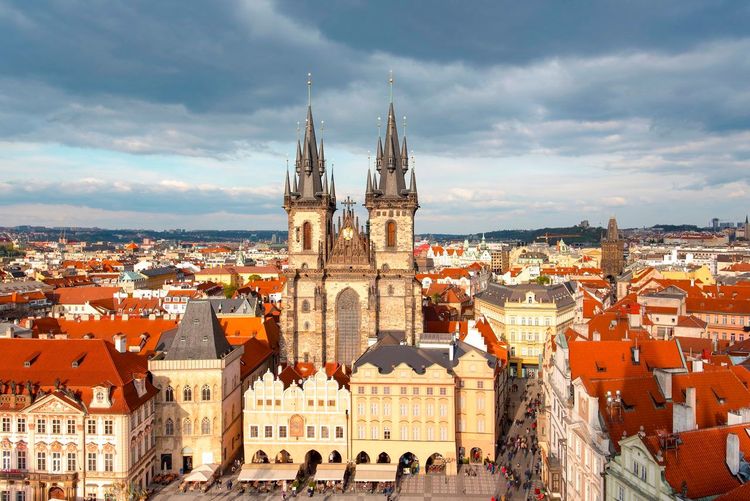
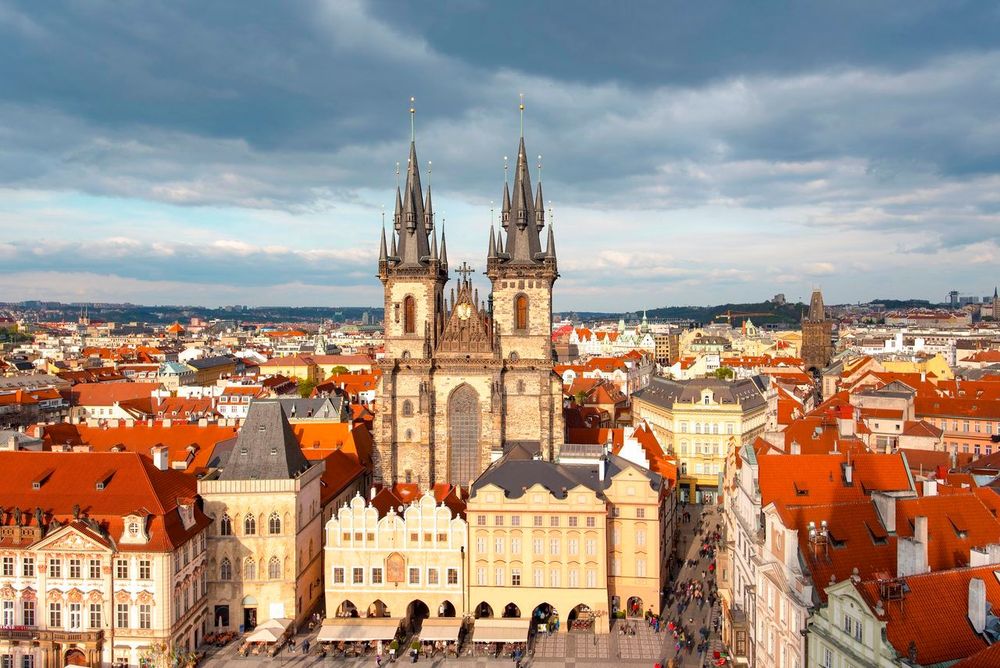
The Old Town Square serves as the logical starting point. Colorful and lined with Gothic and baroque facades, it brings together within a few dozen meters the Church of Our Lady before Týn, St. Nicholas Church, and the Old Town Hall.
It is on the facade of this town hall that the astronomical clock is mounted, installed in 1410 and considered the oldest still functioning in the world. Every hour from 9am to 11pm, a mechanical procession of the twelve apostles draws a dense crowd to the foot of the wall: arrive around five minutes before the hour to find a spot at the front, or come back late in the evening when the square empties out.
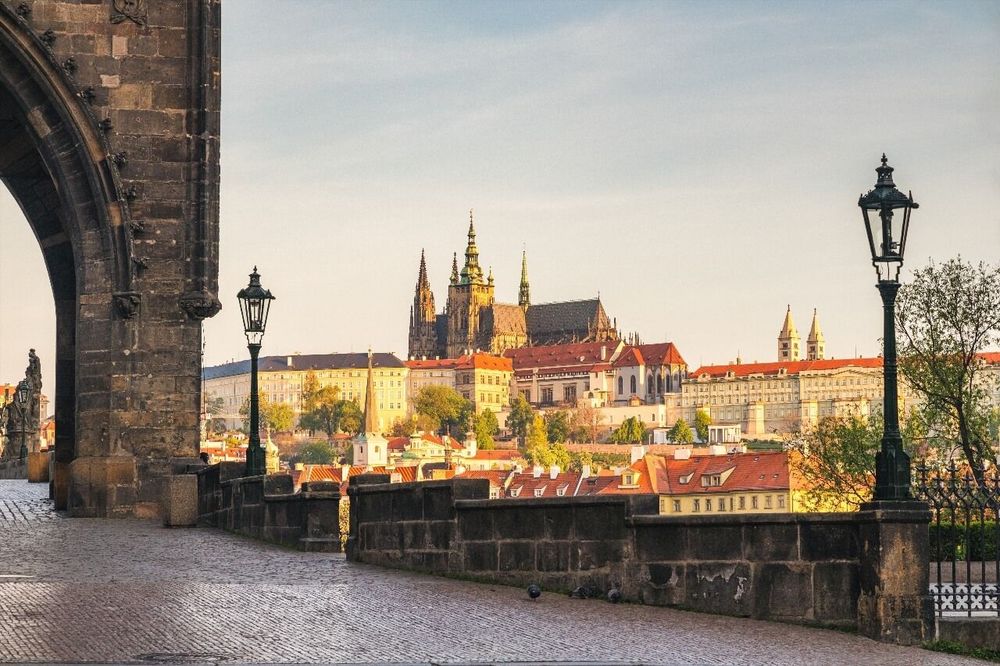
A ten-minute walk away, Charles Bridge has connected Staré Město to Malá Strana since the 14th century. Thirty baroque statues line its parapet, and the pedestrian crossing remains free at any hour — a rare advantage for such a heavily photographed monument. Street musicians and portrait artists set up there from early morning, before the organized tour groups arrive.
The street Celetná, which links Old Town Square to the Powder Tower (náměstí Republiky, 110 00 Praha 1, rated 4.6/5 on Google with 48,947 reviews), follows the route of an ancient medieval trade road, the Royal Route, once taken by the coronation processions of the Bohemian kings on their way to the castle. Walking it in this direction, from the river toward the castle, means following the exact historic itinerary rather than covering it in reverse as most hurried visitors do.
Atmosphere, Daily Life, and Where to Stay in Staré Město
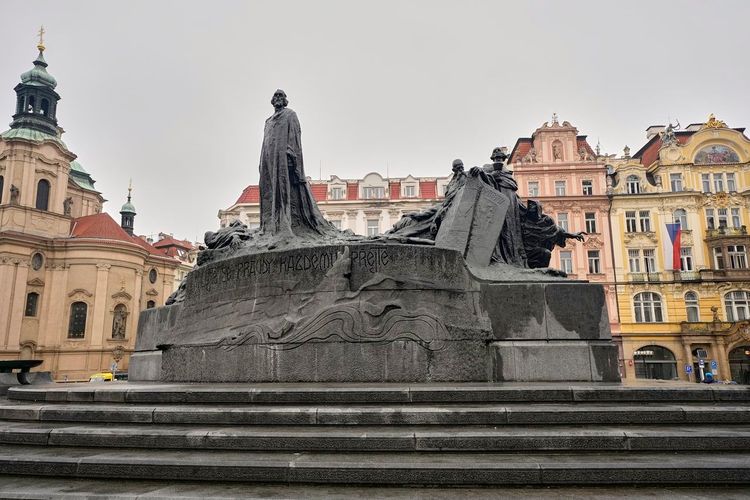
Staré Město operates at an almost exclusively tourist rhythm at its core: restaurants with menus in six languages, crystal shops, horse-drawn carriages. To find a more local atmosphere without leaving the neighborhood, head away from the main thoroughfares into the alleyways between Old Town Square and the river, where a few cafés frequented by Prague locals still survive.
Who is Staré Město for? For a first visit, for travelers who want everything within walking distance, and for those who prioritize ease of access over nighttime quiet. Where to stay in Prague in the Staré Město neighborhood? Expect between 90 and 180 euros per night for a well-located mid-range hotel, with a sharp price spike immediately around Old Town Square itself. One simple tip: book a street or two back from the square and you will gain in nighttime peace without losing any walking distance to the monuments.
On the eastern edge of the neighborhood, the Municipal House, an Art Nouveau gem attached to the Powder Tower, marks the historic boundary with Nové Město: the building is worth a detour for its architecture, less photographed than that of Wenceslas Square but equally refined. A little further south, the covered Havelské tržiště market remains one of the few places in the neighborhood where you can still buy fresh fruit and vegetables among the tourist stalls. If you can only give one morning to Staré Město, focus on the sequence of Old Town Square, the astronomical clock, and then Charles Bridge from the Staré Město side: this triangle can be covered in 90 minutes flat, not counting queues for the clock tower. To extend the visit beyond these sites, our Ryo article on things to do in Prague details further stops within this same area. The audio-guided short tour follows this same triangle, clock included.
Josefov, the Jewish Quarter at the Heart of the Old Town
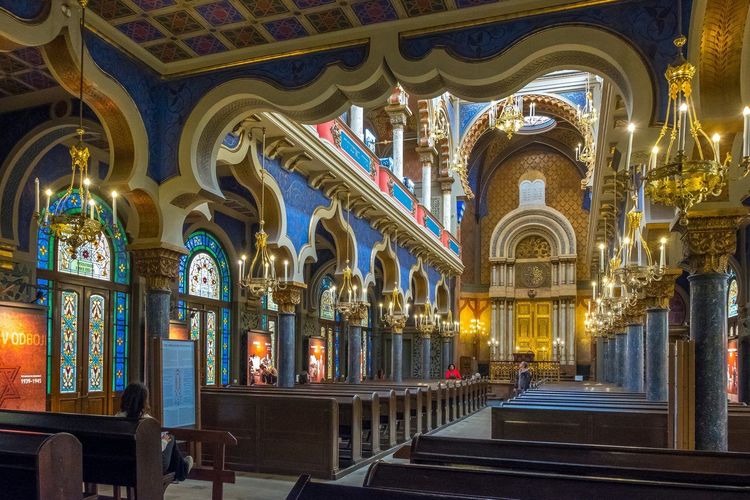
Technically enclosed within Staré Město, Josefov deserves its own stop, so distinct is its atmosphere from that of Old Town Square, barely five minutes' walk away. It is the smallest of Prague's neighborhoods, and arguably the most history-dense: one of the best-preserved Jewish heritage sites in Central Europe, with a community that has occupied this small area since the 13th century.
Synagogues and the Jewish Cemetery
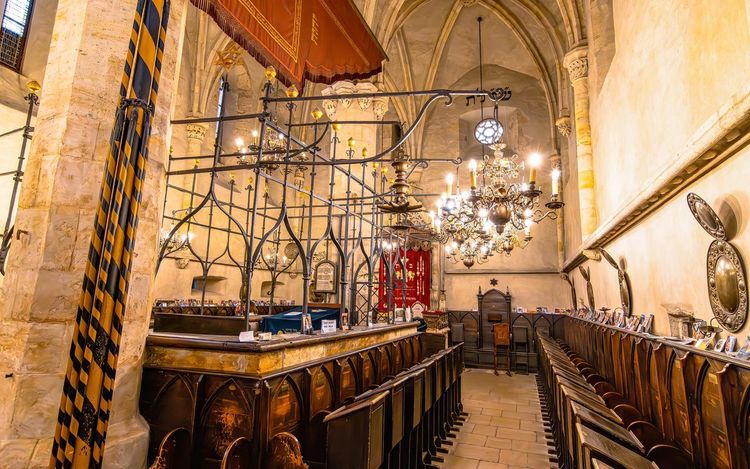
The Old-New Synagogue (Staronová synagoga), built around 1270, claims the title of oldest active synagogue in Europe still used for worship.
On the facade of the neighboring former Jewish Town Hall, a clock fitted with Hebrew numerals runs counterclockwise, since Hebrew is read from right to left. This detail, easy to miss if you do not look up, neatly sums up the spirit of the neighborhood: a dense history that reveals itself in the margins, between two more visible facades.
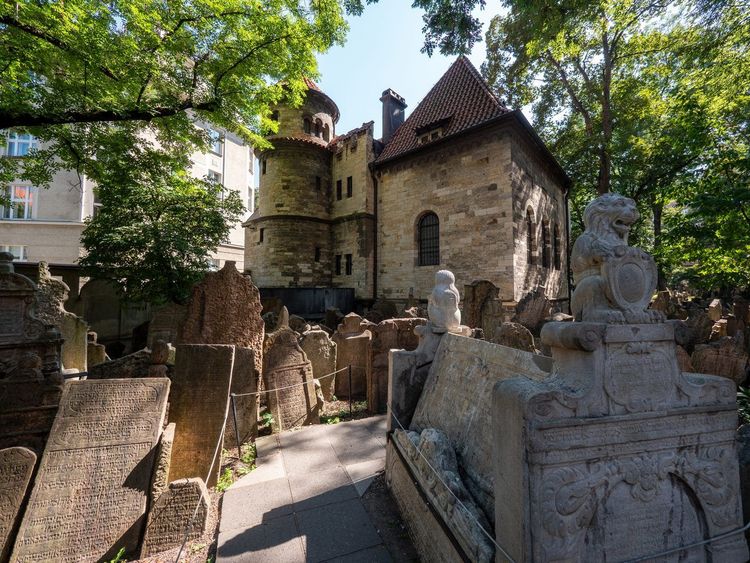
A few meters away, the Old Jewish Cemetery strikes visitors with its density: around 12,000 visible gravestones, stacked across twelve layers of successive burials due to the lack of available space over the centuries. The visit follows a one-way route and generally takes 45 minutes.
The Pinkas Synagogue, adjoining the cemetery, now houses a memorial bearing the names of nearly 80,000 Czech and Moravian victims of the Holocaust. A combined ticket gives access to several synagogues in the neighborhood, which is more economical than buying separate entries.
In Kafka's Footsteps
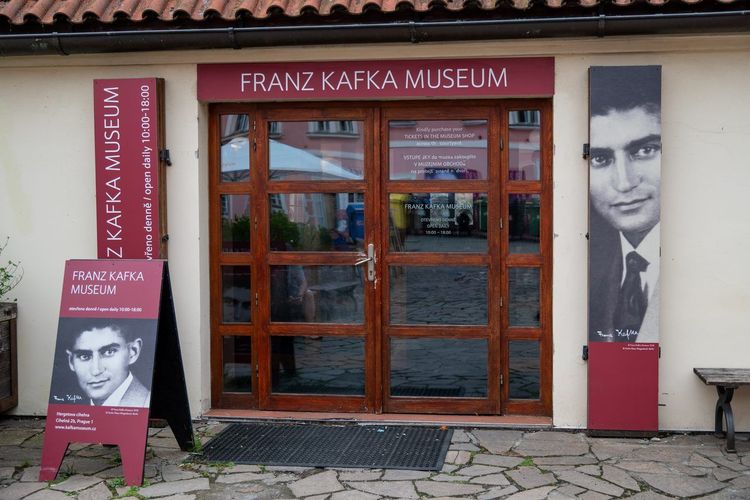
Franz Kafka was born just steps from Old Town Square and spent most of his life within this area. The small Kafka Museum (Cihelná 2b, 110 00 Praha 1, rated 4.1/5 on Google with 7,582 reviews), located on the other side of the bridge on the Malá Strana bank, traces his biography through a deliberately dark staging that is consistent with the writer's universe.
In Josefov itself, a bronze statue depicting Kafka seated on an empty suit, the work of sculptor Jaroslav Róna, stands near the former Spanish Synagogue. If the connection between this Jewish quarter and the royal side of the city interests you, our Ryo guide to Prague Castle links Josefov to the castle hill in a half-day walking itinerary. The audio-guided tour follows this same statue and synagogue before making that same climb.
Malá Strana, the Baroque Neighborhood at the Foot of the Castle
Malá Strana, literally the "little side" of Prague, slopes gently between the river and the castle hill. It is one of Prague's best-preserved neighborhoods: the aristocratic palaces of the 17th and 18th centuries have remained virtually intact, spared by the bombardments and major renovation projects that transformed other European capitals.
Palaces, Gardens, and Picturesque Alleyways
The Wallenstein Garden (Valdštejnská zahrada), laid out in the 17th century by a general who wanted to rival the imperial court in splendor, opens free of charge to the public from April to October. Peacocks roaming freely, an artificial grotto with fake stalactites, and an Italian-style loggia make up one of the most spectacular gardens in the city, often overlooked by visitors in a hurry.
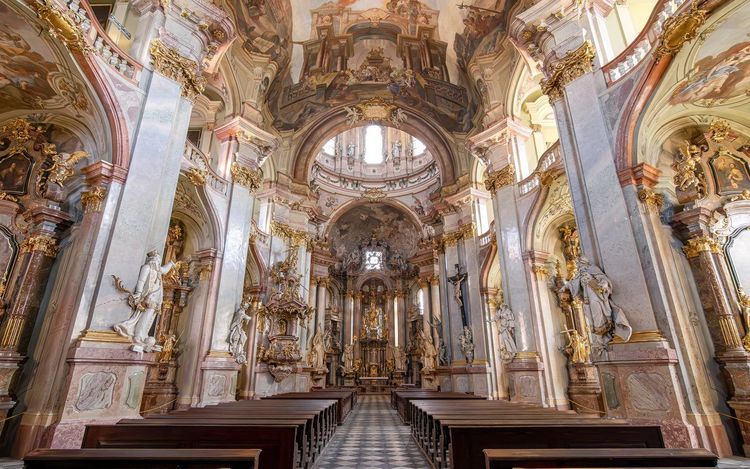
The Church of St. Nicholas (kostel svatého Mikuláše), at the center of Malostranské náměstí square, features one of the most beautiful baroque interiors in all of Central Europe, with a painted dome that makes your head spin and a pulpit carved down to the finest detail. The classical music concert held there almost every evening is a pleasant way to experience the acoustics of the space without rushing through the busier daytime visit.
Heading down toward the river, Kampa Island forms an almost village-like enclave, cut off from the rest of the city by a canal nicknamed the "Venice of Prague." On Sundays, a flea market still sets up there from time to time.
Just nearby, the John Lennon Wall (Velkopřevorské nám., 118 00 Praha 1, rated 4.1/5 on Google with 46,173 reviews) has been continuously repainted since the 1980s, when it served as an indirect outlet for dissent under the communist regime. Today it is mainly a selfie wall, but the political history beneath the layers of paint is worth a couple of extra minutes of anyone's attention.
Where to Stay in Malá Strana
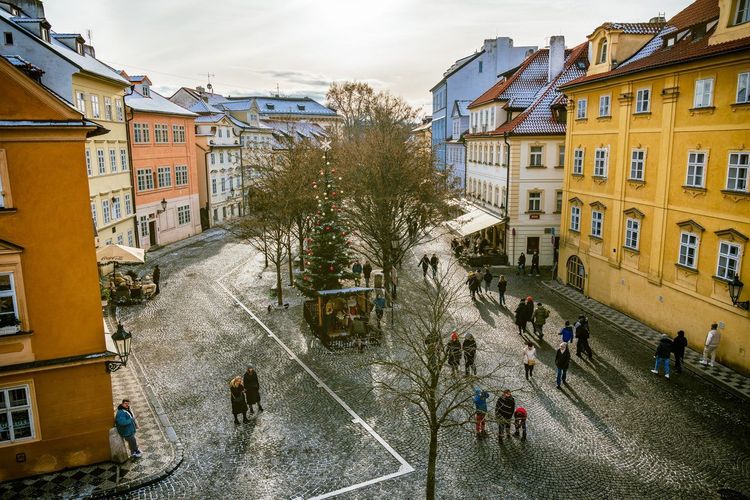
What is the Malá Strana neighborhood in Prague like for a stay? Quiet at night, romantic, but a little out of the way for affordable restaurants: that is the trade-off to be aware of before booking. Where to stay in Prague in the Malá Strana neighborhood? Addresses with a view of Charles Bridge or the castle hill often list at 150 to 300 euros per night, a budget that climbs quickly in high season.
For a more reasonable price-to-quality ratio, look at streets set back from the main areas, between Malostranské náměstí square and the Petřín funicular: you keep walking distance to the castle while avoiding the neighborhood's highest rates. Our Ryo article on the Wallenstein Garden also details the opening hours, which vary considerably by season. The audio-guided tour of Baroque Prague passes the John Lennon Wall and Kampa Island on its way to the bridge.
Hradčany, the Castle Neighborhood
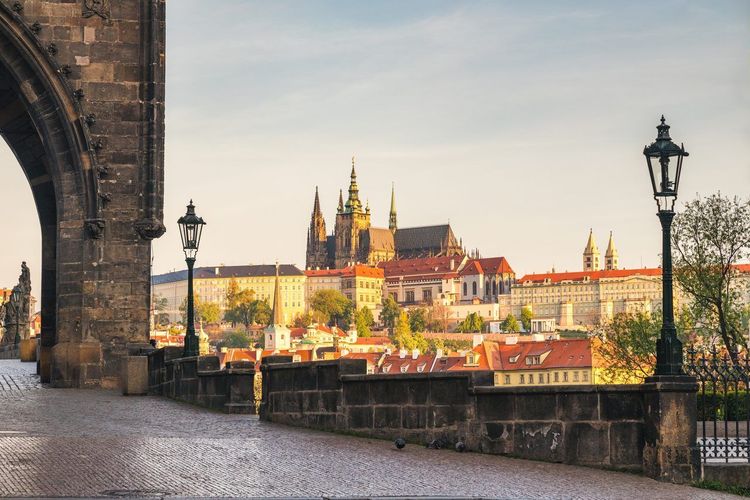
Perched on the hill that overlooks the entire city, Hradčany alone concentrates more listed heritage than most European capitals hold across their entire territory. Of all Prague's neighborhoods, it is the one most thoroughly documented by guides, and for a simple reason: Prague Castle occupies a central place here, both literally and symbolically.
Prague Castle and St. Vitus Cathedral
Prague Castle claims the title of the largest ancient castle complex in the world, with around 70,000 square meters of courtyards, palaces, and gardens. A full visit, with paid tickets for the interiors, can take up an entire half-day if you enter every building open to the public.
At its heart, St. Vitus Cathedral (Katedrála svatého Víta) impresses with its stained-glass windows, one of which was designed by Alfons Mucha, a major figure of Czech Art Nouveau. Climbing the south tower — 287 steps — rewards you with one of the most complete panoramas over the city, provided you do not mind narrow spiral staircases.
Within the castle grounds themselves, Golden Lane lines up about twenty tiny colorful houses, built in the 16th century to house the castle guards and later the goldsmiths. Franz Kafka occupied house number 22 for a few months in 1916–1917, seeking a quiet place to write away from the noisy family apartment in Nové Město.
The changing of the presidential guard, every hour in the Court of Honor, and the more solemn noon ceremony with a fanfare, provide free punctuation to the visit for anyone who happens to be there at the right moment.
Panoramas, Monasteries, and Where to Stay in Hradčany
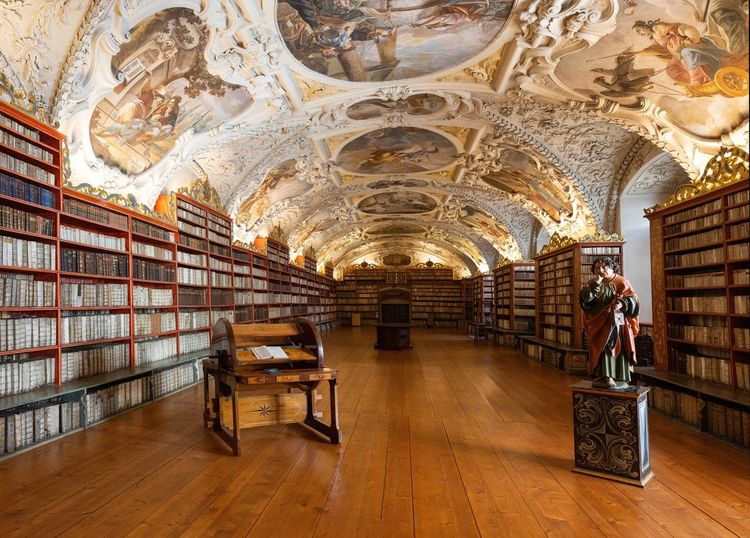
Beyond the castle walls, Strahov Monastery preserves two baroque libraries adorned with ceiling frescoes, as well as a cabinet of curiosities blending natural specimens and exotic objects brought back by the Premonstratensian monks over the centuries.
Just below, Petřín Hill (Petřínské sady, 118 00 Praha 1, rated 4.6/5 on Google with 7,065 reviews) offers an alternative viewpoint, accessible by funicular from Malá Strana, with its miniature tower inspired by the Eiffel Tower and its mirror maze for children.
What is the Hradčany neighborhood in Prague like in terms of accommodation? Residential, quiet, but far from nightlife: you sleep well here, but you do not go out in the evenings. Where to stay in Prague in the Hradčany neighborhood? Options are limited to a few charming addresses, often former aristocratic residences converted into hotels, with rates close to those of Malá Strana. To prepare your castle visit in detail — opening hours, ticketing, and recommended route — our Ryo guide to discovering Prague Castle is a useful complement to this section.
Nové Město, between Wenceslas Square and Art Nouveau Architecture
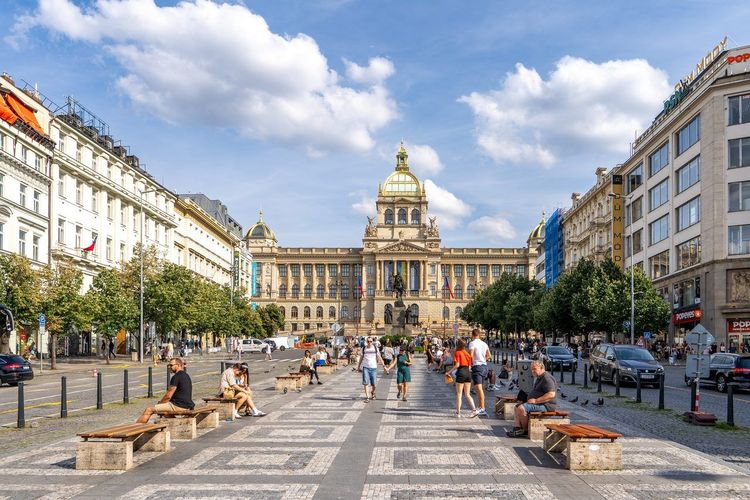
Founded in the 14th century by Charles IV to relieve congestion in the old town, Nové Město remains, seven centuries later, the largest of Prague's neighborhoods. You come here less for a single monument than for the feel of a busy, active major city, blending department stores and corporate headquarters.
Wenceslas Square and Cultural Life
Wenceslas Square (Václavské náměstí), 750 meters long, looks more like a wide boulevard than a square in the traditional sense. This is where the great political moments of the 20th century in Czech history played out, from the 1968 demonstrations to the 1989 Velvet Revolution.
At the foot of the equestrian statue of St. Wenceslas, patron of the country, a small, discreet memorial pays tribute to the victims of communist repression, including Jan Palach, the student who set himself on fire on this very square in January 1969 in protest against the Soviet occupation.
At its upper end, the recently renovated National Museum closes the perspective with its imposing neo-Renaissance facade. The neighborhood where history unfolds before you lives up to that description: every Art Nouveau facade tells a chapter of Prague's economic boom at the start of the 20th century.
The National Theatre, on the banks of the Vltava, completes this cultural triangle with its distinctive gilded roof, visible from several vantage points in Malá Strana.
Shopping, Gastronomy, and Where to Stay in Nové Město
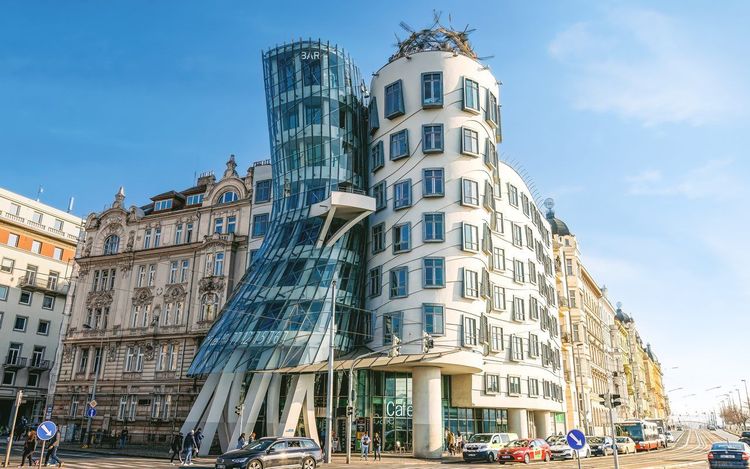
The Dancing House (Tančící dům), designed by architect Frank Gehry with Czech architect Vlado Milunić, marks the southern boundary of the neighborhood with its two towers that appear to embrace each other, one nicknamed Fred and the other Ginger, in reference to the Hollywood dancing duo.
A few streets away, inside the Lucerna Passage (Štěpánská 61, 110 00 Praha 1, rated 4.4/5 on Google with 679 reviews), a sculpture by David Černý depicts the same St. Wenceslas, but riding an upside-down dead horse suspended by its legs — a piece of deliberate dark humor that intentionally contrasts with the official statue.
What else is there to see in the Nové Město neighborhood beyond these sites? The shopping streets around Wenceslas Square concentrate most of the major international chains, while the smaller perpendicular streets hide Czech bistros that are more affordable than those in Staré Město. Where to stay in Prague in the Nové Město neighborhood? It is a good compromise between budget and transport links, with rates often 20 to 30% lower than in Staré Město for a comparable walking distance to the main monuments. Our Ryo article on Prague's culinary specialties lists several addresses located within this area.
Vinohrady, the Upscale Residential Neighborhood
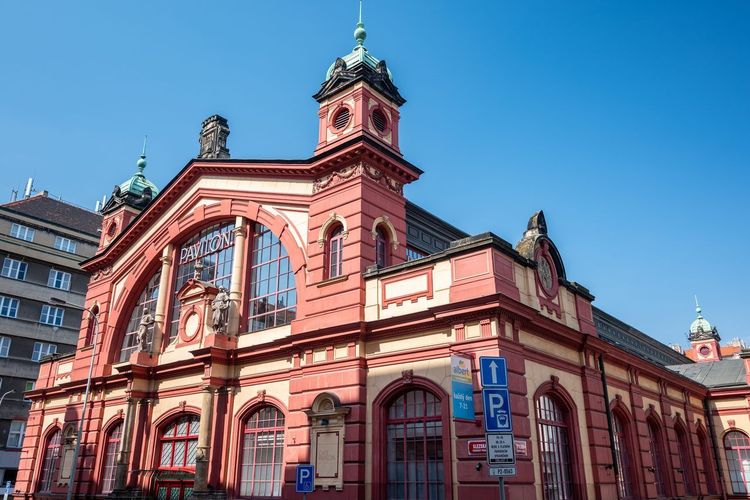
To the east of the old town, Vinohrady stands out for its calm and its well-kept residential architecture. It is a charming hipster-bourgeois village grafted onto the big city, with its well-maintained Art Nouveau apartment buildings and specialty cafés that have largely replaced the traditional kavárna. Its name, meaning "the vineyards," is a reminder that the hill was covered with royal vineyards in the 14th century.
Parks and Art Nouveau Architecture
Riegrovy sady park draws neighborhood residents at the first sign of good weather, with its open-air beer garden offering one of the most unobstructed views of the castle, far from the crowds that usually gather at the foot of the hill.
On Jiřího z Poděbrad Square, the Church of the Sacred Heart, a singular work by Slovenian architect Jože Plečnik completed in 1932, contrasts sharply with the baroque that is ubiquitous elsewhere in the city: bare brick, a massive clock tower, and an openly acknowledged influence from early Christian art.
The Vinohrady Pavilion (Vinohradský pavilon), a 19th-century market hall converted into a shopping gallery, serves as the central landmark for navigating the neighborhood.
Restaurants and Local Life in Vinohrady
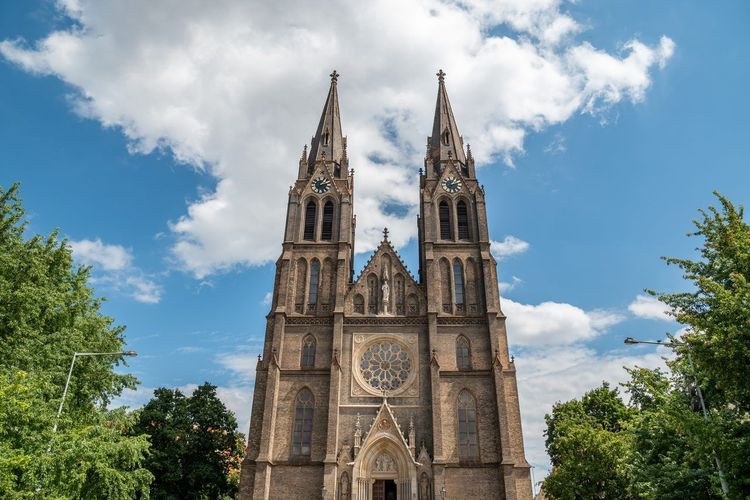
Vinohrady concentrates a good share of the city's recent dining scene: natural wine bistros, American-style brunches, independent roasters. You will encounter far more Prague families than tourist groups here, which noticeably changes the atmosphere on the terraces in the evenings. The neighborhood also has a reputation for being the most welcoming in the city for the LGBT community, with several bars and cafés identified as such around Náměstí Míru square, where another slender neo-Gothic church stands — the Church of St. Ludmila (náměstí Míru, 120 00 Praha 2, rated 4.8/5 on Google with 4,934 reviews) — less well-known than the Sacred Heart church but equally impressive with its twin spires.
For accommodation, Vinohrady ranks among Prague's most relevant neighborhoods if you want to avoid the bustle of the center while staying 15–20 minutes by tram or metro from Staré Město. Prices are generally more affordable than in Malá Strana, with a quality of life that is often higher. For a selection of dining addresses in this area, our Ryo selection of Prague culinary specialties complements this section well.
Žižkov, the Alternative and Bohemian Neighborhood
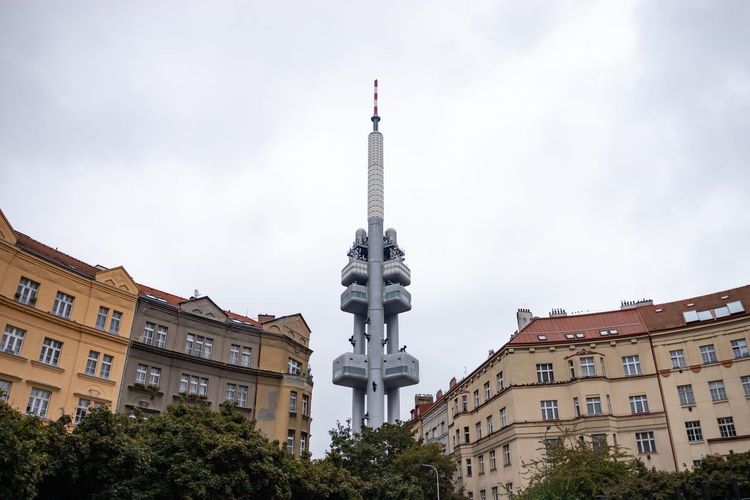
Long considered an unpretentious working-class neighborhood, Žižkov has transformed into a trendy area without entirely losing its popular character. It is the most unconventional of Prague's neighborhoods and the sharpest contrast with the historic center: architecture here is more modest, but the nightlife more than makes up for it.
Television Tower and Street Art
The Žižkov Television Tower, completed in 1992, rises to 216 meters and remains one of the most controversial buildings on the Prague skyline. Since 2000, ten giant baby sculptures by artist David Černý crawl along its facade — an installation that has become one of the most photographed symbols of the neighborhood.
The neighborhood takes its name from Jan Žižka, the one-eyed general of the Hussite Wars who won a decisive battle here against the Crusaders in 1420, on the neighboring hill of Vítkov. The equestrian statue representing him today, cast in bronze, weighs around 16.5 tonnes and is among the largest equestrian statues in the world.
Nearby, Vítkov Hill (U Památníku 1900, 130 00 Praha 3, rated 4.7/5 on Google with 3,242 reviews) bears a massive monument dedicated to Czechoslovak military history. It is also, more discreetly, one of the best free viewpoints over the city, largely overlooked by standard tourist routes.
Bars, Nightlife, and Where to Stay in Žižkov
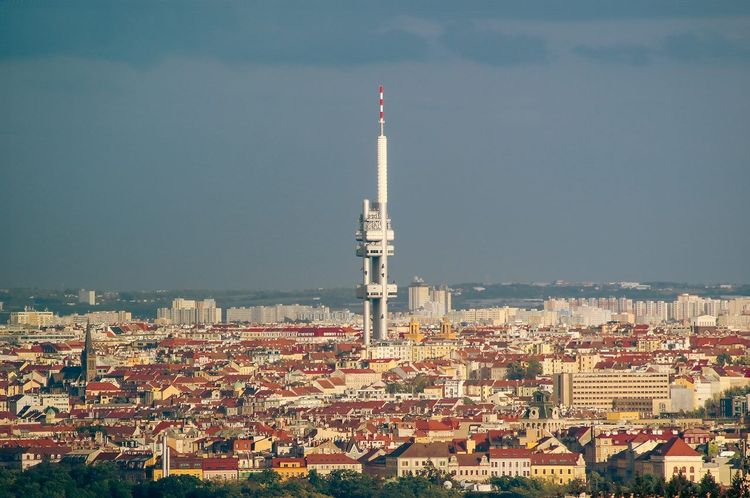
The Žižkov neighborhood has long claimed a reputation — somewhat exaggerated but not entirely unfounded — for a record concentration of bars per square meter. The unusual experience of drinking underground refers to the vaulted cellars of some of them, set up in former medieval cavities.
Where to stay in Žižkov? Prices remain among the lowest in the wider central area, with a genuine neighborhood life in the evenings: late-opening grocery stores, unpretentious small Czech restaurants, and very little tourist presence on weekdays. The downside is that noise levels can be high on weekends around the liveliest streets — something to avoid if you are after absolute quiet.
Vyšehrad and Holešovice, Hidden Gems off the Beaten Track
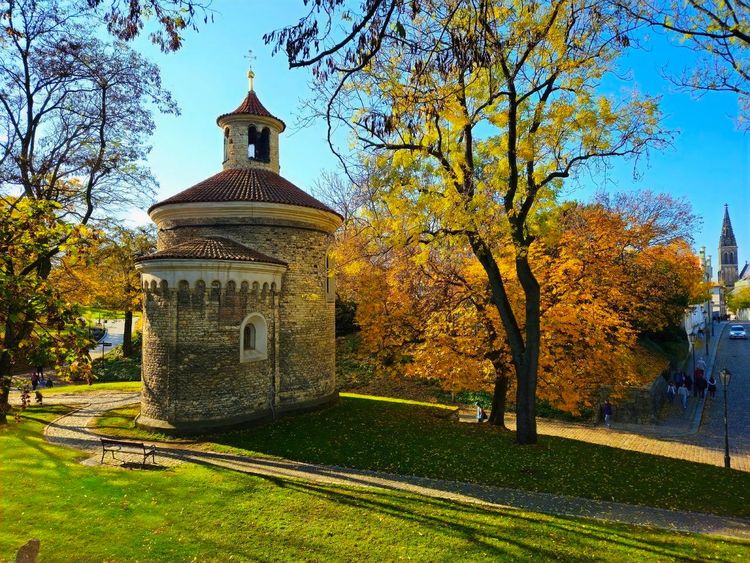
Few guides devote a proper section to these two neighborhoods, yet they are emblematic of a more off-the-beaten-track Prague. These are the two Prague neighborhoods least frequented by passing visitors: if you are looking for hidden-gem neighborhoods in Prague, these are the first names to remember.
The Vyšehrad Fortress
The Vyšehrad Fortress, perched on a rocky promontory south of the center, is said to have preceded the current castle as the seat of princely power, according to the founding legend of the city. People come here today for the calm — rare at this distance from the historic center — and for the view over the meanders of the Vltava. Access to the park and ramparts is free of charge; only the interior monuments require a paid ticket.
According to the founding legend recorded by the chronicler Cosmas of Prague, it was from these very ramparts that Princess Libuše prophesied the future glory of the city, even before the current castle was built. Whether true or invented after the fact to legitimize the power of the Přemyslids, the story adds an extra layer of soul to the walk.
The Basilica of St. Peter and St. Paul, with its two neo-Gothic spires visible from several points across the city, and the adjoining cemetery — where Dvořák, Mucha, and many other Czech cultural figures rest under the collective name Slavín — complete the visit.
Holešovice and Its Art Galleries
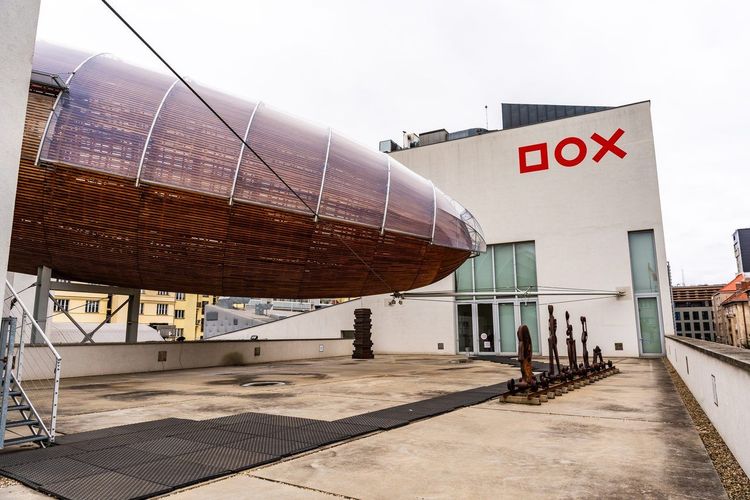
To the north, on the other side of a river bend, the Holešovice neighborhood holds some lesser-known pleasant surprises, in a former industrial area that has been largely redeveloped over the past fifteen years. The neighborhood owes its 19th-century growth to its function as a river port and warehouse district serving the rest of the city; the conversion into a cultural and residential neighborhood is still visible in the contrast between rehabilitated industrial buildings and new constructions going up all around.
The DOX Centre, a gallery dedicated to contemporary art housed in a former factory, is its main landmark, with an architecture that blends original brickwork with contemporary volumes.
The Holešovice Market (Bubenské nábř. 306, 170 00 Praha 7, rated 3.9/5 on Google with 18,576 reviews) (Pražská tržnice), a vast industrial hall converted into a mixed market, alternates between food stalls, secondhand clothing, and small local breweries. Right next door, Stromovka Park, one of the city's largest green spaces, offers a welcome breath of fresh air after several days spent in the dense center.
Which Neighborhood to Choose Based on Your Travel Profile
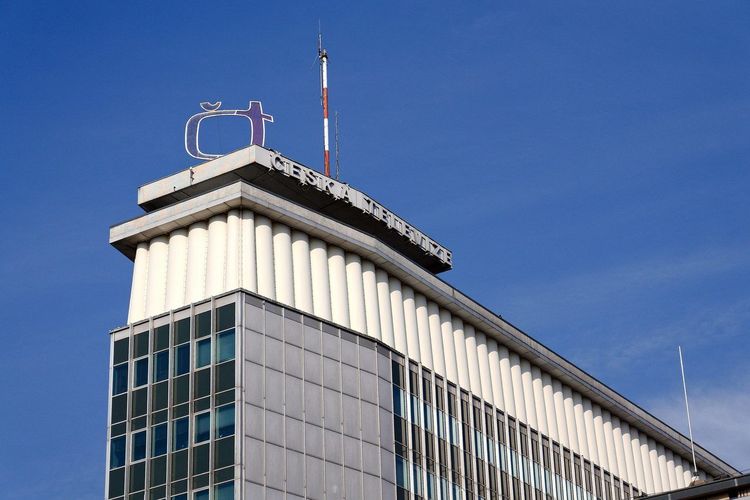
Not all of these areas are equally suited to every length of stay, budget, or desire for calm. Here is how to decide quickly.
The Best Neighborhood for a First Visit
For a first visit, Staré Město remains the most practical choice despite its price and crowds: everything is accessible on foot, and you minimize time lost in transit. If you are looking for the best Prague neighborhood to combine heritage and simple logistics, this is clearly it — though it is worth booking a little back from the main square to gain some nighttime peace. Nové Město is a credible alternative, slightly cheaper, and a ten-minute walk from the same monuments.
Where to Stay Based on Your Budget
The Prague neighborhood to stay in depends above all on your budget. Low budget: Žižkov and Nové Město offer the best price-to-access ratio. Mid-range budget: Vinohrady and Nové Město suit those who want a bit of local life without straying too far from the center. Comfortable budget or romantic stay: Malá Strana and Hradčany, for the views and the calm, at the cost of higher rates and more walking or transit to reach the central restaurants.
For a family stay, Vinohrady ticks most of the boxes: parks, quiet streets, apartments with a kitchen that are easier to find than in the heart of the historic center. For a romantic weekend as a couple, bet on Malá Strana or Hradčany, even if it means sacrificing a little convenience for the views and the quiet evenings.
Where to Go Out, Eat, and Have a Drink by Neighborhood
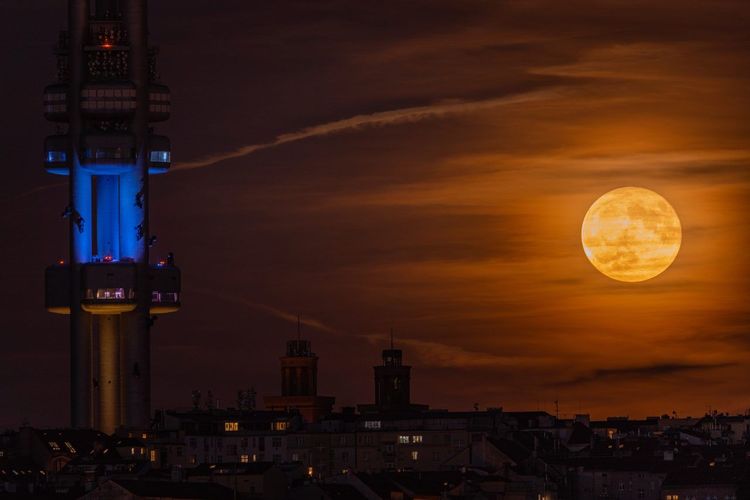
Going out in Prague does not mean the same thing from one bank to the other, and it is often this criterion that tips the balance between Prague's neighborhoods when it comes to booking. For a Czech beer at local prices, in bars where Czech is still spoken at the counter, Žižkov has the edge: most of the addresses are concentrated around Seifertova and Bořivojova streets, a few minutes' walk from one another.
On the dining front, Vinohrady offers the most interesting scene, with natural wine bistros, revisited Czech cuisine, and weekend brunches around Náměstí Míru and Jiřího z Poděbrad squares. Nové Město covers the middle ground: historic breweries, concert venues, and late-night clubs, with the added advantage of metro access. Staré Město mainly concentrates cocktail bars and tourist pubs on Dlouhá and Dušní streets — lively but considerably more expensive — while Holešovice bets on craft breweries set up in former warehouses.
One useful evening landmark: the metro stops around midnight, night trams then take over with a frequency of around 30 minutes, and their main transfer point is the Lazarská stop, right in the heart of Nové Město. In other words, dining in Vinohrady and then finishing the night in Žižkov poses no logistical problem whatsoever, even without a taxi.
The Neighborhood to Avoid at Night
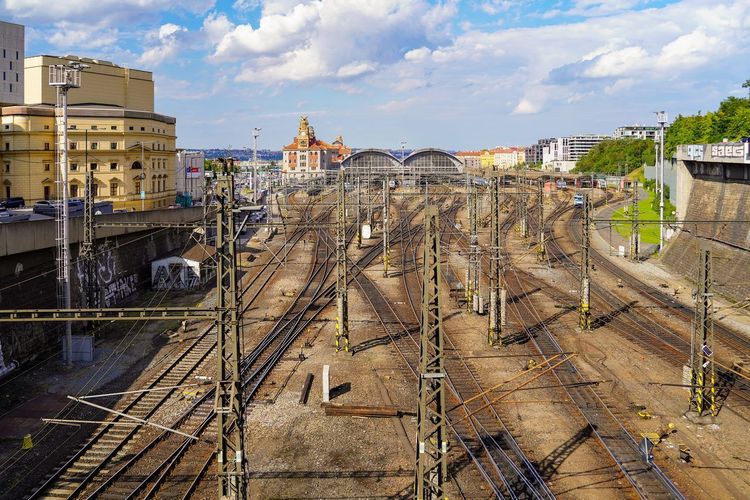
"Which neighborhood should you avoid in Prague?" remains a frequent question, and the honest answer is nuanced: Prague is generally a safe city, even at night, compared to other European capitals. The main area to watch is certain streets around the main train station (Hlavní nádraží), on the edge of Nové Město, which are known for opportunistic petty crime rather than any genuine danger. Simply avoid wandering alone late at night in that specific area, and opt for a taxi or a tram rather than walking after midnight in that part of town.
To get a visual overview of all these areas before making your choice, the Ryo Prague city route, back-to-roots edition offers a narrated itinerary that crosses several of these neighborhoods in a logical order.
Getting around between Prague's Neighborhoods
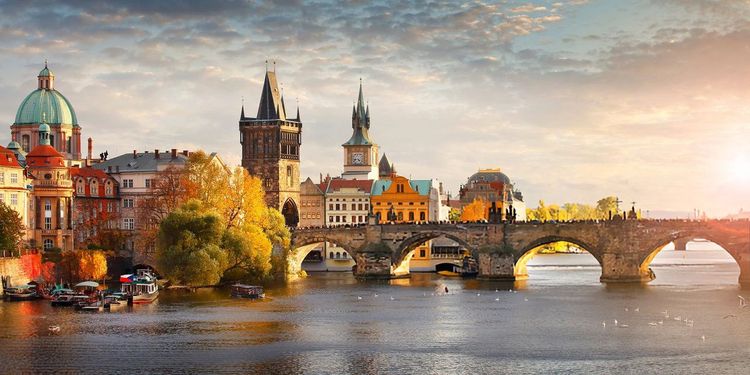
The good news is that most central neighborhoods can be reached on foot. Allow around 20 minutes between Old Town Square and the castle, 15 minutes between Staré Město and Wenceslas Square, and barely 10 minutes to cross Charles Bridge between Staré Město and Malá Strana.
For longer distances, such as Vinohrady, Žižkov, Vyšehrad, or Holešovice, the tram network remains the most efficient solution for getting between Prague's neighborhoods: frequent, punctual, and often faster than the metro for short above-ground journeys. A 90-minute ticket costs 40 Czech crowns, around 1.60 euros, and covers trams, metro, and buses alike.
The metro, with its three lines (A, B, C), is mainly useful for reaching Žižkov or Vyšehrad quickly from the center, or for the return trip to the airport via line A and a connecting bus. By bike, several cycle paths now run along the Vltava on both banks — a pleasant option for linking Holešovice to Vyšehrad without using public transport, even if the city remains broadly better designed for walking and trams than for urban cycling. Allow around 25 minutes by bike to get from Holešovice to the historic center, compared to 35 to 40 minutes on foot. If you are staying in several neighborhoods throughout your trip, a 72-hour pass is generally better value than buying individual tickets, as soon as you exceed six or seven journeys over the course of your stay.
FAQ
What is the best neighborhood to stay in Prague?
For a first visit, Staré Město offers the best compromise between access to monuments and logistical ease, despite higher rates, often between 90 and 180 euros per night. If you want more peace and quiet without straying too far, Nové Město or Vinohrady are good alternatives at a comparable or lower budget, with equally convenient transport links.
Which neighborhood in Prague should you avoid?
No central neighborhood is truly to be avoided as such: Prague remains a safe city. The only area that warrants particular caution at night is immediately around the main train station, on the edge of Nové Město, and this is more due to opportunistic petty crime than any real danger.
How many neighborhoods does Prague have?
There is no single official number: the city has 10 numbered administrative districts (Prague 1 to Prague 10), but in practice around ten historic and lively Prague neighborhoods can be identified, from Staré Město to Holešovice, which structure the tourist experience far more than the administrative divisions do.
What is the most lively neighborhood in Prague?
During the day, Staré Město and Wenceslas Square see the most activity, with monuments and major commercial streets. At night, Žižkov takes over with its high density of bars and local nightlife, noticeably less touristy than that of the historic center.
What do the numbered districts (Prague 1, Prague 2...) mean in relation to the historic neighborhoods?
The numbers correspond to an administrative division that does not always follow the historic boundaries of the neighborhoods. Prague 1 alone encompasses Staré Město, Josefov, Malá Strana, Hradčany, and part of Nové Město, while Vinohrady is split between Prague 2 and Prague 3, and Holešovice makes up most of Prague 7.
Which neighborhood should you visit first in Prague?
Staré Město remains the logical starting point for getting your bearings, before moving on to Malá Strana and Charles Bridge. This central triangle can be covered in half a day and gives a good overall picture before exploring more peripheral neighborhoods like Vinohrady or Žižkov.
Choosing a neighborhood in Prague is above all choosing a pace for your stay. Between the organized bustle of Staré Město, the baroque calm of Malá Strana, the local life of Vinohrady, and the nocturnal energy of Žižkov, the city offers enough contrasts to put together a tailor-made itinerary, whatever the length of your visit.
If you are heading out with a map of Prague's neighborhoods in mind but no precise itinerary, our Ryo audio-guided tour of Prague links several of these areas in a single narrated experience, including Charles Bridge, the castle, and the old town. The perfect way to turn a list of neighborhoods into a real walk, without having to improvise a plan on the spot.