© Shutterstock
 Votre guide Ryo
Visiting Albi with Family in 2026: Episcopal City, Fun Activities, and Getaways in the Tarn
Albi has impressed visitors long before tourism was a thing: its red-brick cathedral, the world's largest brick cathedral, has dominated the city for over seven centuries and still takes the breath away of young visitors looking up at it for the first time. Visiting Albi with family is exactly that: a city whose heritage can be admired at stroller height, between lanes to explore, banks of the Tarn to stroll along, and a compulsory ice cream stop on Place du Vigan. In a single day or a long weekend, you can take in the UNESCO-listed episcopal city, ride a tourist train, cycle along the river, and stop for a meal at Samy's Diner, where the little ones have their own play corner while the order arrives. The surrounding Tarn adds hilltop villages like Cordes-sur-Ciel, the Gaillac vineyard, a leisure base for swimming in summer, and depending on the season, a hot-air balloon flight at sunrise. Ryo has designed an audio-guided tour of Albi to follow this thread at a leisurely pace, with commentary that speaks to younger visitors too. This guide covers, neighbourhood by neighbourhood and village by village, what to see, how long to spend, what budget to allow, and what to do when it rains.
Albi's Episcopal City: a Full-Scale Backdrop
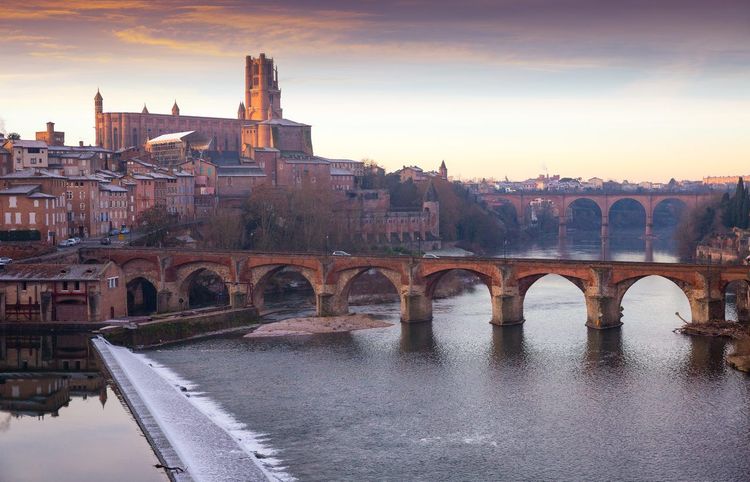
Before choosing any particular activity, give yourself time to walk through the episcopal city on foot. Listed as a UNESCO World Heritage Site since 2010, it spans just a few hundred metres between the cathedral, the episcopal palace, and the cobbled lanes of old Albi, making it surprisingly easy to navigate with a stroller or young walkers. The little ones don't need to understand the history of the red brick to be impressed by the sheer scale: the size of the site alone is enough to hold their attention as you make your way towards the first monuments. Allow half a day for this neighbourhood alone if you want to enter each building without rushing.
The Sainte-Cécile Cathedral: an Interior That Wows All Ages
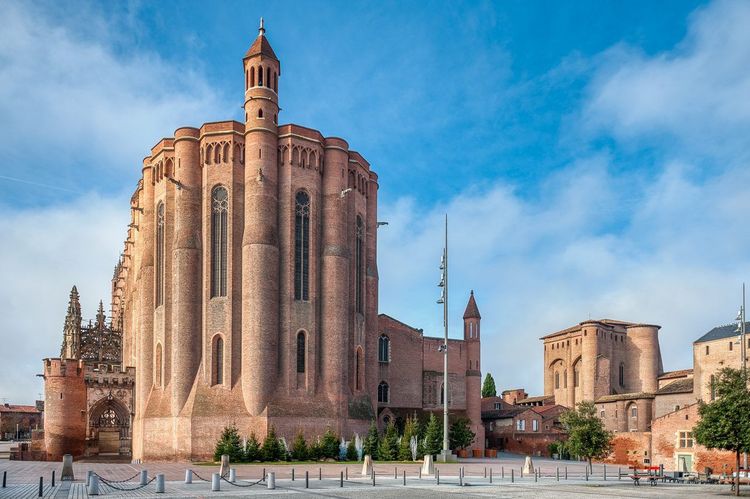
The Sainte-Cécile cathedral is visible from a distance, but it is the interior that surprises most. The lacework stone choir screen, the Italian-style painted ceiling, and the Last Judgement fresco — one of the largest in Europe — deliver a genuinely spectacular visual experience without requiring any explanation. Many visitors spend around twenty minutes inside, taking time to point out a few details with the children: the figures in the Last Judgement, the polychrome statues in the choir, the still-vivid colours of the blue vault.
Access to the nave is free, and an additional ticket opens up the choir and treasury if you want to extend the visit. The best time to go in with very young children is early in the morning, before tour groups arrive and turn the nave into a noisy place by midday. A tip from experienced parents: save the discovery of the fresco for last — it makes a bigger impression when approached after a full circuit of the nave.
The Palais de la Berbie and the Toulouse-Lautrec Museum
Right next door, the Palais de la Berbie houses the Toulouse-Lautrec museum, dedicated to the city's most famous son, who became the painter of the Parisian cabarets. This former episcopal fortress, one of the oldest still standing in France, resembles no other museum in the area: its thick walls and round towers tell a story even before you step inside. The collection may not speak directly to a six-year-old audience, but the terraced gardens overlooking the Tarn are a hit with everyone: there's room to run, the view of the Pont-Vieux is worth a photo stop, and entry to the gardens is free. The museum is open from 10am to 6pm without a break from June to September, and from 10am to 12:30pm then 2pm to 6pm for the rest of the year; the terrace and gardens are accessible from 8:30am and until 8pm in summer.
For older children curious about art, Lautrec's cabaret posters and highly graphic silhouettes tend to land better than his canvases: they are images children recognise without realising it. Otherwise, head for the formal gardens — that is often where the visit ends, sitting on a bench overlooking the river while the little ones run between the clipped flower beds.
The Saint-Salvi Collegiate Church and Its Cloister
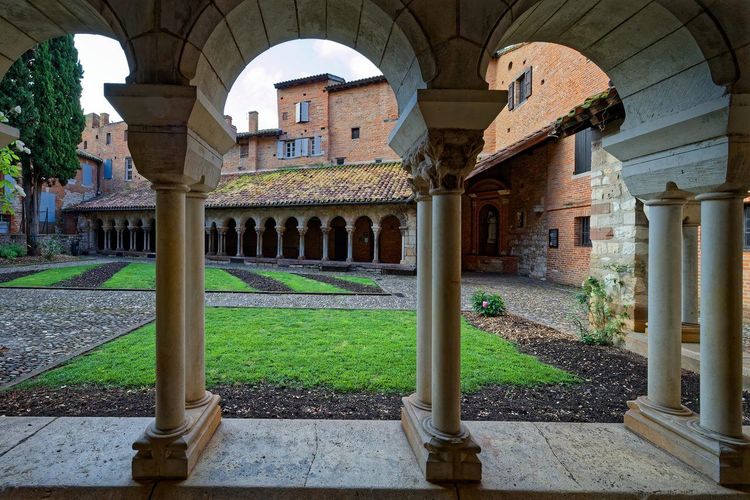
Less visited than the cathedral, the Saint-Salvi collegiate church (Place Saint-Salvi, 81000 Albi, rated 4.6/5 on Google across 414 reviews) has a surprisingly peaceful Romanesque cloister, just five minutes' walk from the Palais de la Berbie.
It is the ideal spot for a shady break when the heat starts to wear on little legs, before heading back down towards the banks of the Tarn. Entry is free, and the quiet of the cloister is a pleasant contrast to the bustle of Place Sainte-Cécile just a few metres away. The building's mix of Romanesque and Gothic is easy to spot at a glance, even for those who know nothing about architecture: on one side, pale stone and rounded arches; on the other, pointed arches and brick.
Walks and Unusual Views of the Tarn
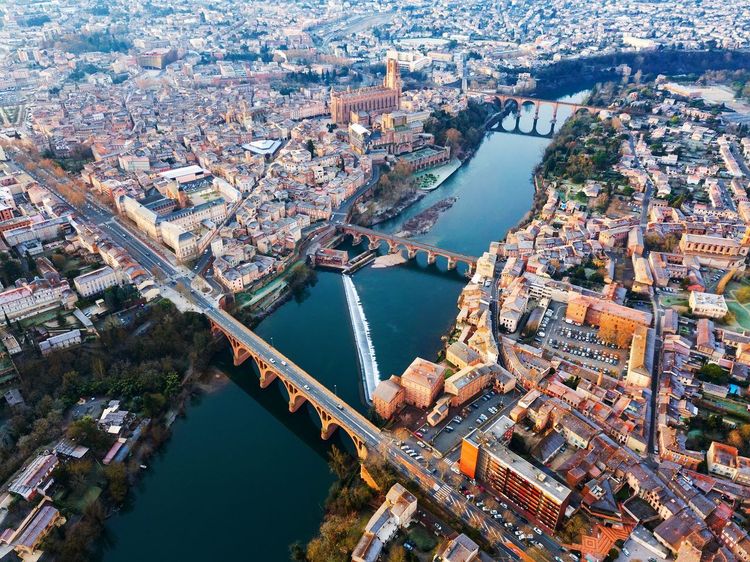
Once you have explored the episcopal city, the best way to keep tired legs moving is to head down to the river. The Tarn runs alongside the old town for its entire length, and several ways of following it can be combined into half a day without ever retracing your steps.
The Petit Train d'Albi: the Easy Ride for Toddlers
For families with a stroller or grandparents keeping pace, the Petit Train d'Albi circuits the episcopal city in about thirty minutes, with audio commentary along the way.
It usually departs from Place Sainte-Cécile in fine weather and helps you identify the monuments before visiting them on foot, which often helps younger children get their bearings in the lanes afterwards. It is also a useful backup when nobody wants to walk any further after an already busy morning. Check the timetable on-site the evening before: frequency varies considerably depending on the season and the weather.
On Foot or by Bike along the Banks of the Tarn
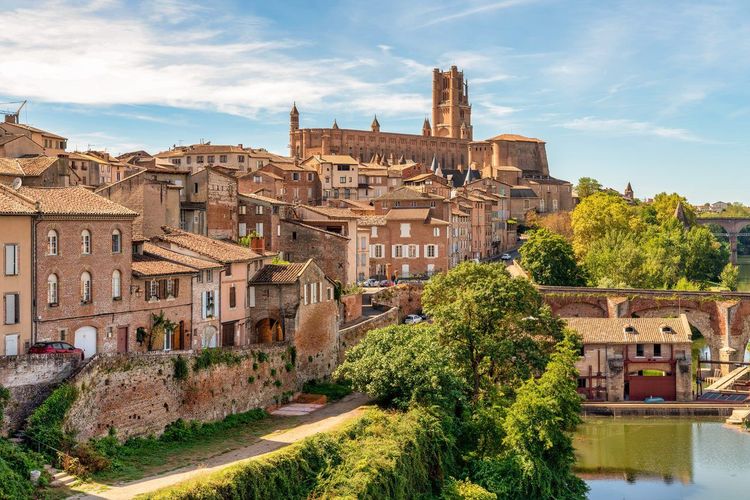
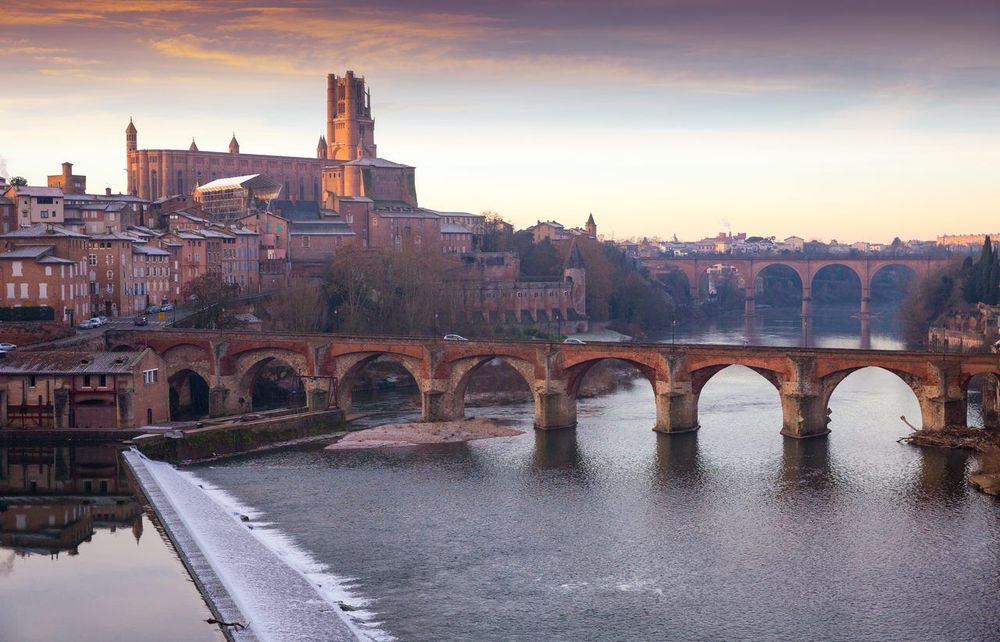
The developed riverbanks are well suited to a bike ride, on flat, shaded terrain for much of the route. Several hire shops offer bikes with child seats or trailers, a practical solution for covering more distance without exhausting everyone. The most photographed viewpoint is from the right bank, facing the cathedral: the brick silhouette, the Pont-Vieux, and the old Albi mills all fit into one frame.
The Association des Guides Interprètes du Tarn (AGIT) also offers themed guided tours, including one that follows in the footsteps of Admiral de Rochegude, an 18th-century navigator and benefactor of Albi who bequeathed his library and park to the city. This guided format works well from around seven or eight years old, when children prefer stories to facades. The Ryo guide to walks in Albi details other walking and cycling routes, from the developed riverbanks to wilder paths outside the city centre.
Panoramic View from the Mira Rooftop
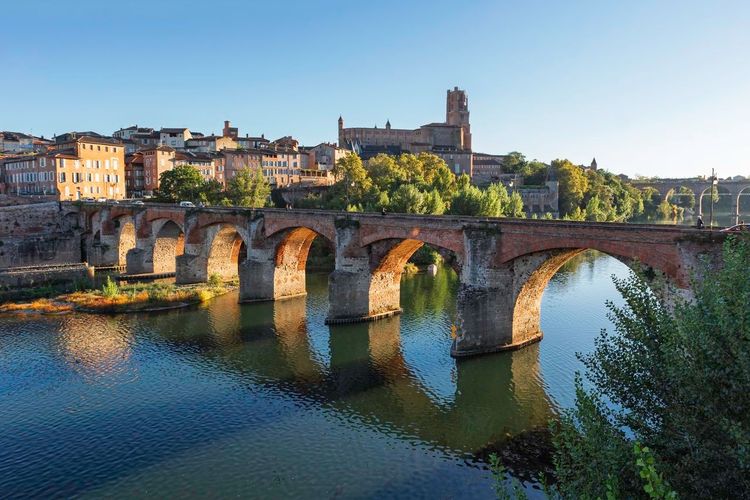
To end the walk on a high note, the Mira Rooftop (1 Rue Timbal, 81000 Albi, rated 4.6/5 on Google across 581 reviews) offers an unobstructed view of the cathedral and the city's pink-tiled rooftops.
It makes a great spot for a drink in the late afternoon, with outdoor space before dinner. The view changes completely depending on the time of day: aim for the end of the afternoon, when the low light colours the rooftops and the brick shifts from red to orange.
Thrills and Fun Activities for All Ages
Albi is not only a city of old stones: the Tarn's nature and adventure side is packed with activities designed to burn off energy, in the air, on the ground, and on the grass.
Hot-Air Balloon Flight over the Tarn
Seeing the episcopal city from the air is a rare experience, reserved for those old enough to stand in the basket for a good hour. Several operators run hot-air balloon flights departing from the Albi area, usually at sunrise or in the early evening when the wind drops. In practice, allow a full morning: from inflation to the roughly one-hour flight itself, then the return by support vehicle to the take-off point.
This kind of outing is expensive for a group, often around 200 euros per adult, with reduced rates for younger passengers depending on the operator. That said, it is one of the rare memories that genuinely stays with you long after a stay in the Tarn. Book several weeks in advance during high season, and have a backup plan in case of bad weather: flights are easily cancelled at the slightest wind, sometimes at the last minute.
Karting and Motor Sports

For fans of speed rather than scenery, the Summer Race Karting circuit, a few minutes from the city centre, offers sessions in karts suitable for children from around 7 to 8 years old.
It works particularly well at the end of a trip, when everyone needs to let off steam after several cultural visits in a row, and parents can often join in the same time slots. Allow about an hour on-site, including the safety briefing. Albi is also firmly on the motor sport map: the Albi racing circuit to the north of the city hosts several meetings throughout the year, the noise of which sometimes carries to nearby neighbourhoods.
Golf, Gardens, and Fresh Air

For a more relaxed option, the Lasbordes golf course (Route de Toulouse, 81000 Albi, rated 4.5/5 on Google across 369 reviews) offers introductory lessons from a young age, on a rolling course on the outskirts of Albi.
Those who prefer not to be sporty will probably favour the Jardin National, the city's main public park: shaded lawns, tree-lined paths, a bandstand, and benches, all with no ticket required. The Parc Rochegude, a little further on, serves the same purpose with its remarkable trees and play area.
An hour is enough to recharge before resuming the visit or heading off to another activity. For more ideas grouped by age, the Ryo top 5 activities in Albi lists the outings most highly rated by previous visitors.
Getting Active Outdoors and Cooling Down around Albi
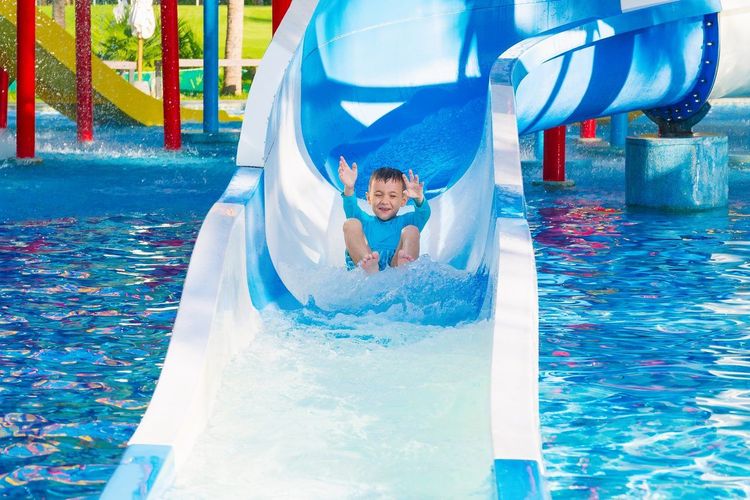
Albi summers can be fierce: beyond 35 degrees, nobody wants to keep walking through brick lanes in the middle of the afternoon. That is when the open spaces and bodies of water in the surrounding area come into their own, less than thirty minutes by car from the centre.
Cap'Découverte: the Former Mine Turned Playground
About twenty kilometres north of Albi, Cap'Découverte (81450 Le Garric, rated 3.8/5 on Google across 1,016 reviews) occupies the site of a former open-cast coal mine converted into a vast adventure park.
Spread across 700 hectares, a short quarter-hour drive from the centre, it offers a toboggan run, trampolines, a skate park and a BMX area, mountain biking on the former mine workings, paintball, mini-golf, and play areas — enough to fill a full day for visitors of very different ages and tastes. One important note to avoid disappointment when packing the swimwear: the site's beach and water activities have permanently closed, and swimming is no longer permitted there. As the site is large and partly exposed, bring hats, water bottles, and closed-toe shoes rather than flip-flops.
For a swim, you will need to look elsewhere: the Aiguelèze leisure base at Rivières near Gaillac, or the Lac de la Roucarié near Carmaux, which is wilder and less busy, both offer supervised swimming in season. Check opening hours and water quality before you go — this information is posted at the entrance to each site.
The Swimming Pool and Activities in Hot Weather
In the city itself, Albi's aquatic centre lets you break up a sightseeing day with two hours in the water, even when the weather turns. It is often the best bargaining chip after a morning of museums: a cultural visit in the morning, a pool session in the afternoon, and the day passes without negotiation.
A word of caution about wild swimming in the Tarn: the river runs through Albi between banks that are sometimes steep, with irregular currents, and there are no facilities or lifeguards. It is better to enjoy the river from the towpaths and quays rather than in the water.
Museums and Workshops for Rainy Days
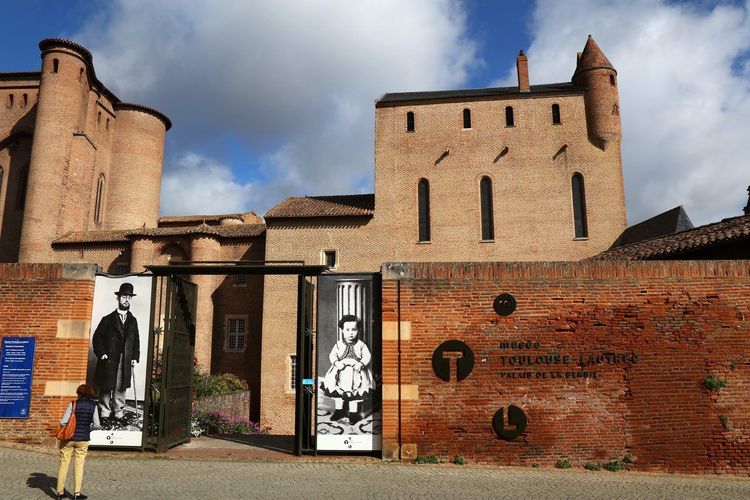
The Tarn can be unpredictable, even in summer, and it is worth having an indoor backup plan ready when the rain sets in.
La Maison du Bois et du Jouet
About thirty minutes from Albi, in Lautrec, the Maison du Bois et du Jouet traces the history of the wooden toy through antique collections and hands-on workshops where you can work with the material yourself.
It is a human-scale museum, designed to keep an audience of 4 to 10-year-olds engaged without boredom, unlike more traditional collections where you look without touching. Allow about an hour, a little more if a workshop is scheduled on the day of your visit.
The Lapérouse Museum: Setting Sail for Great Expeditions
By the Tarn, in the old Albi mills near the Pont-Vieux, the Lapérouse museum tells the story of the navigator born near Albi, who set out to explore the Pacific in 1785 before vanishing along with his two ships, the Boussole and the Astrolabe.
Ship models, navigational instruments, objects recovered from the wreck at Vanikoro, and the story of an expedition that ended in mystery: the narrative works well for adventure lovers, and the visit takes about an hour across roughly 230 square metres. It is also one of the few museums in Albi that appeals equally to adults and children, with a story whose ending remains partially unresolved. Across the department, the museums of the Tarn cover a very wide range — from textiles at Labastide-Rouairoux to mining at Cagnac-les-Mines — which leaves plenty of scope for a rainy stay.
The Covered Market Hall and Its Events
In the city, the Halle du Marché Couvert (Place du Marché Couvert, 81000 Albi, rated 4.3/5 on Google across 522 reviews) hosts producers' stalls several mornings a week, with seasonal fruit, Tarn cheeses, and the smell of fresh bread.
Also useful on weekday mornings when the monuments have not yet opened: half an hour under the market hall, a freshly pressed juice, and the day gets off to a gentle start before the episcopal city opens. Pick up supplies for a picnic in the Berbie gardens — it is the best value-for-money option in the city.
Day Trips to the Most Beautiful Villages of the Tarn
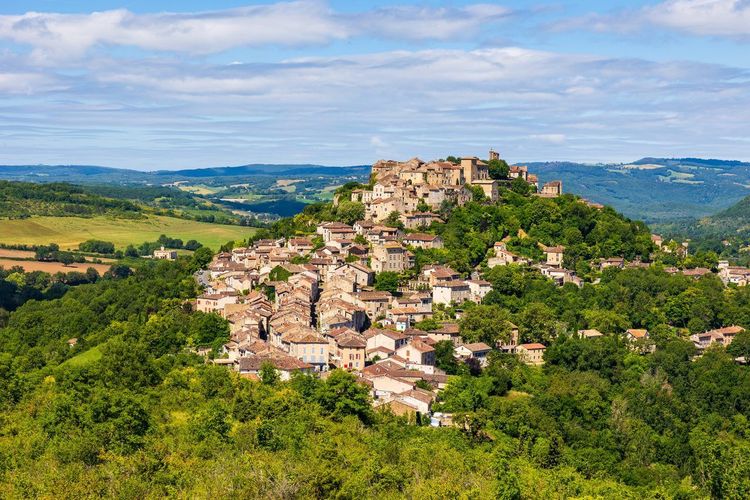
Beyond the city, the Tarn lines up several villages classified as Grands Sites Occitanie or among the Plus Beaux Villages de France, all within 45 minutes of Albi by car. Enough to build one or two day trips without ever taking the same road twice. The best approach is to organise these stops as a loop from Albi, in the order of Cordes-sur-Ciel first, then Castelnau-de-Montmiral (81140 Castelnau-de-Montmiral), and Puycelsi (81140 Puycelsi) last, so the day ends in the vineyard rather than on a sun-baked rampart.
Cordes-sur-Ciel: the Hilltop Village That Captivates Young Visitors
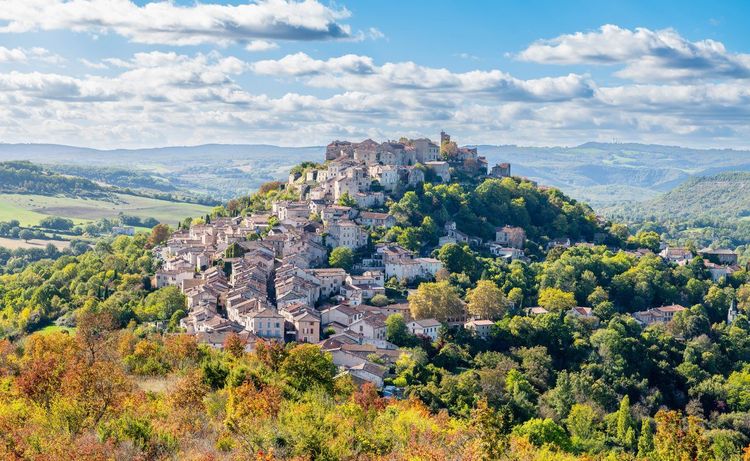
Cordes-sur-Ciel is probably the village that leaves the strongest impression in the region: perched on a rocky outcrop, it literally gives the impression of floating above the countryside on misty mornings.
The cobbled lanes, steep in places, are easily climbed from around 5 or 6 years old, and several artisan workshops — glassmakers, potters — open their doors in season for short demonstrations. Allow a good morning to climb to the top of the village and come back down at a relaxed pace, stopping at terraces along the way. A public lift and a shuttle make the ascent easier from the lower part of the village when legs can't manage it.
The village is also well worth visiting in the late afternoon, when the heat fades and the low light completely changes the atmosphere. Wear sturdy shoes: the cobblestones are slippery after a shower.
Lautrec and Castelnau-de-Montmiral: Bastides and Markets
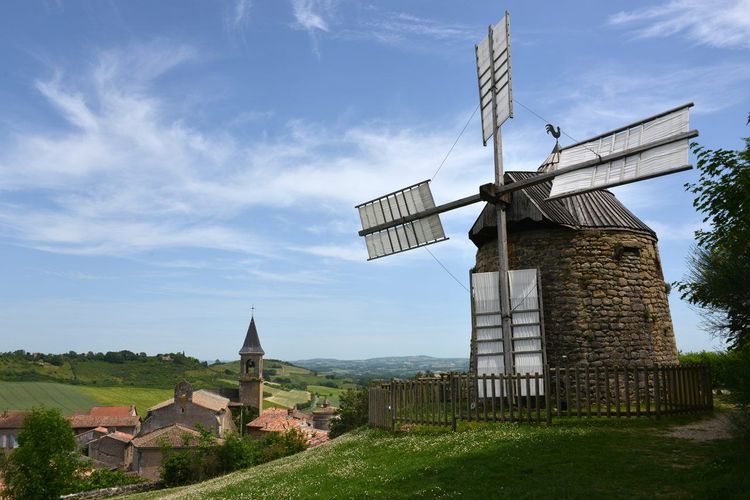
South of Albi, Lautrec is known for its pink garlic and its lively, colourful Friday morning market, with a working windmill that overlooks the village and can be visited in season.
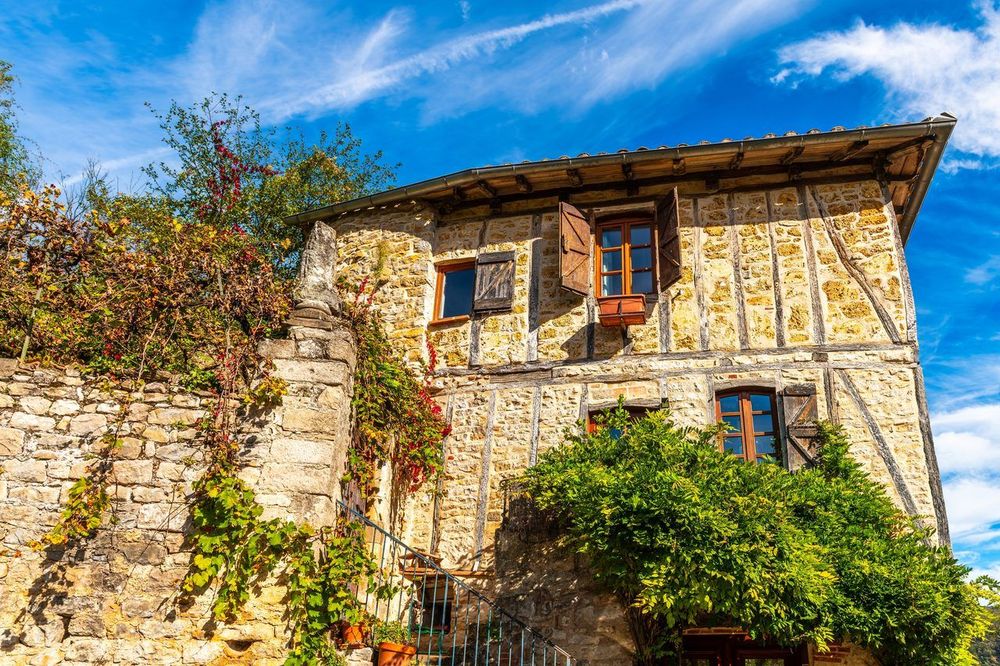
Further west, Castelnau-de-Montmiral has a covered square typical of medieval bastides, surrounded by half-timbered houses where you can easily spend half an hour with a camera.
Each village takes about an hour to explore, making it easy to combine both in the same day with an early start.
Puycelsi, Châteaux, and the Gaillac Vineyard
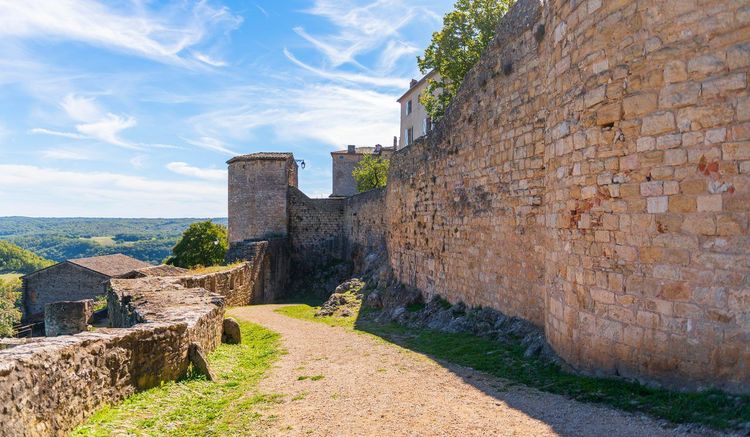
The third village on this route, Puycelsi, overlooks the Grésigne forest from its largely intact ramparts.
Less visited than Cordes-sur-Ciel, it suits those looking for quiet rather than crowds in high season. On the way back to Albi, the Gaillac vineyard spreads across the surrounding hillsides: it is one of the oldest vineyards in France, and several estates based in former wine châteaux, such as Château de Mauriac near Senouillac, open their doors for short visits, with grape juice for some while others taste the wine.
The Tarn also has a fine series of châteaux open to the public, from the Château-musée du Cayla in Andillac to the Cathar fortresses in the south of the department, more spectacular but also more demanding to climb. It is a good way to round off the day without going straight back on the main road — or, if you would rather stay in town, wind down with the audio-guided tour of Albi instead.
For a fuller overview of the region, the Ryo guide to the area around Albi lists further day-trip ideas by season.
Where to Eat in Albi without a Meltdown
After a day spent exploring the episcopal city or clambering around the ramparts of a hilltop village, the question of food comes up quickly — and rarely calmly.
Samy's Diner: American Vibe and a Play Corner
The Samy's Diner (9 Rue de la République, 81000 Albi, rated 4.2/5 on Google across 2,076 reviews) goes all-in on the American diner concept: vinyl banquettes, milkshakes, and generous burgers, with a proper play corner to keep children occupied while the order arrives.
It is the kind of place that defuses a tense end-of-day meal, and often goes down better than a more traditional restaurant in the historic centre.
To vary meals across several days, the Ryo guide to restaurants in Albi lists other vetted addresses, from crêperies to pizzerias with terraces. Several restaurants on the banks of the Tarn offer shaded terraces where children can move around a little between courses, which makes the end of a meal much easier to manage. For local specialities, try the ones you will remember: Lautrec pink garlic, Montagne Noire ham, gimblettes d'Albi, and for a snack break, an ice cream stop on Place du Vigan or on the quays, where several gelatarias open their terraces from the first fine days. Budget around 12 to 18 euros per person for lunch at a central brasserie, about half that for a children's menu.
Where to Stay in Albi and the Tarn
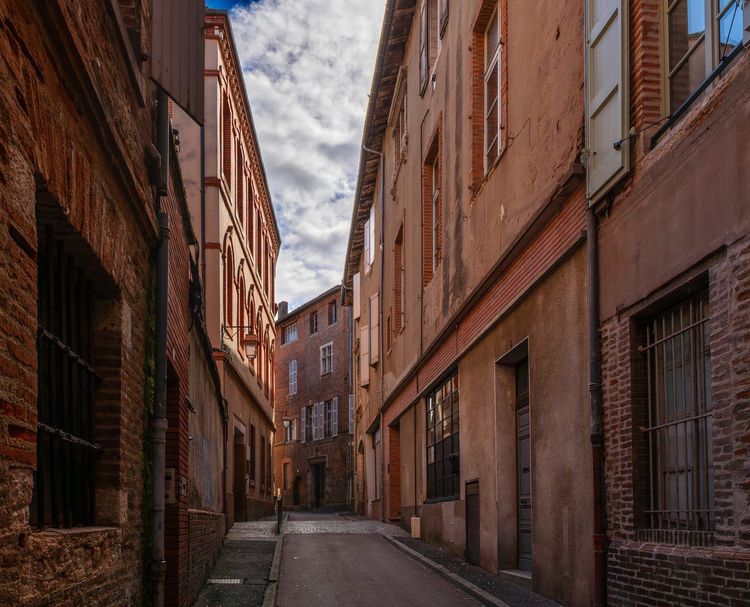
For a short stay, basing yourself in central Albi means you can reach the episcopal city on foot and avoid driving at the end of the day, when fatigue makes every journey a chore. Several central hotels offer interconnecting rooms or suites, an option worth prioritising when the stay extends beyond two nights.
For a longer stay, campsites in the area around Albi — often set on the banks of the Tarn — offer more space with a pool and entertainment in season, at a rate generally lighter on the wallet than a city-centre hotel. They also make a good base for day trips to the Tarn villages without repacking every evening.
Gîtes and bed-and-breakfasts in the countryside, between Cordes-sur-Ciel and Gaillac, suit those looking for peace and a more personal contact with the hosts, who are often excellent sources of advice on local activities. Budget on average 90 to 130 euros per night for a room for four in a central Albi hotel during high season, and around 25 to 40 euros for a campsite pitch. Prices rise sharply around 14 July and the first two weeks of August: it is worth booking several weeks ahead in the smaller villages, where availability is limited, unlike Albi itself which absorbs summer visitor numbers more easily.
How Long to Allow: One-Day and Weekend Itineraries
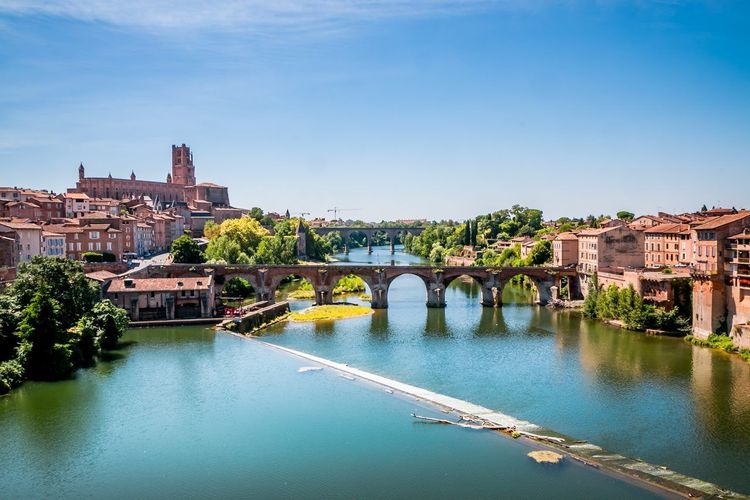
The question comes up in every pre-trip conversation: does Albi deserve a stopover or a proper stay? The answer depends mainly on how much you want to explore the surrounding department.
One Day in Albi: the Highlights without Rushing
One day is enough for the city centre essentials. In the morning, the Sainte-Cécile cathedral followed by the gardens of the Palais de la Berbie, before the heat and the tour groups arrive. Around midday, a shop at the Halle du Marché Couvert and a picnic on the riverbanks, or a quick lunch around Place du Vigan. In the afternoon, the tourist train to get your bearings, then a walk down to the Tarn and back up via the Pont-Vieux with an ice cream stop on the way. In the early evening, up to the Mira Rooftop to watch the brick turn orange. The Ryo audio-guided tour covers exactly this sequence, with 26 audio tracks and about 1 hour 40 minutes of commentary over 3.5 kilometres.
Two or Three Days to Explore the Tarn
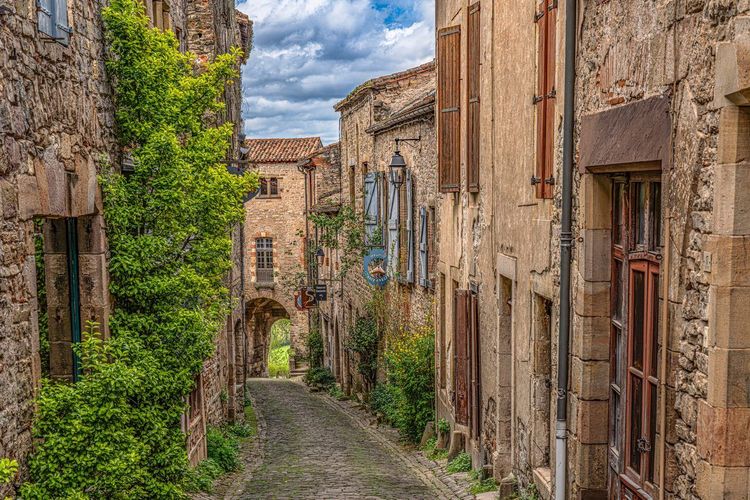
With a second day, add a morning trip to Cordes-sur-Ciel and an afternoon at Castelnau-de-Montmiral, or a high-energy activity such as karting, a hot-air balloon, or Cap'Découverte. The third day lends itself well to the Gaillac vineyard, Lautrec on a Friday morning for the market, and a late afternoon by the water.
A few useful benchmarks for pacing the days: the cathedral takes 30 to 45 minutes, the Toulouse-Lautrec museum between 1 hour and 1 hour 30, Cordes-sur-Ciel a half-day including the climb, Cap'Découverte a full day. Two major visits per day, not three: beyond that, the day invariably ends in negotiation.
Practical Information: Getting There, Parking, and When to Go
Beyond the sightseeing, a few practical pointers will save you unpleasant surprises once you arrive. Albi is about one hour from Toulouse via the A68 motorway, and Albi-Ville station, ten minutes' walk from the centre, puts the city around one hour by train from Toulouse-Matabiau. The historic centre is fully walkable: park once in one of the car parks on the immediate outskirts and forget the car until the evening. The cobbled lanes of the episcopal city are manageable with a stroller, though with some bumps.
Events and Festivals Calendar
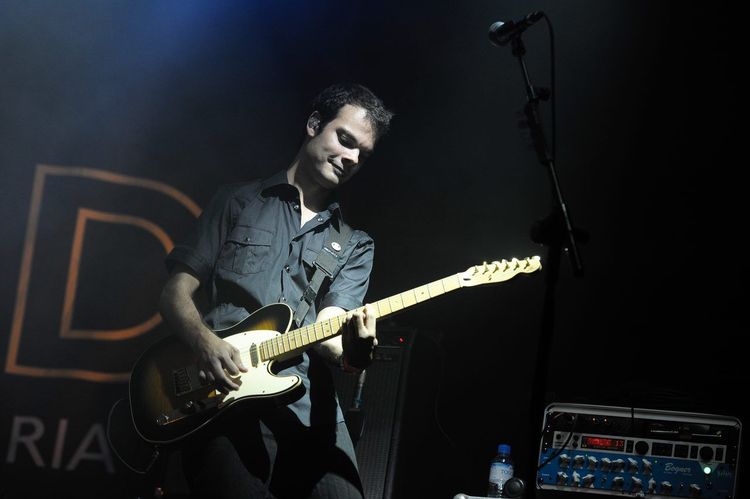
Albi and the Tarn regularly programme free or low-cost events: farmers' markets, outdoor street performances in summer, and festivals including the Pause Guitare in spring, which takes over the city for several days. The programme changes every month, so it is better to check dates with the tourist office before planning a trip around a specific event rather than assuming it will take place.
In summer, several free evening events animate the banks of the Tarn, sometimes with live music or open-air screenings — a good option for filling an evening without extra expense after a full day of sightseeing.
What to Do in the Tarn in Winter
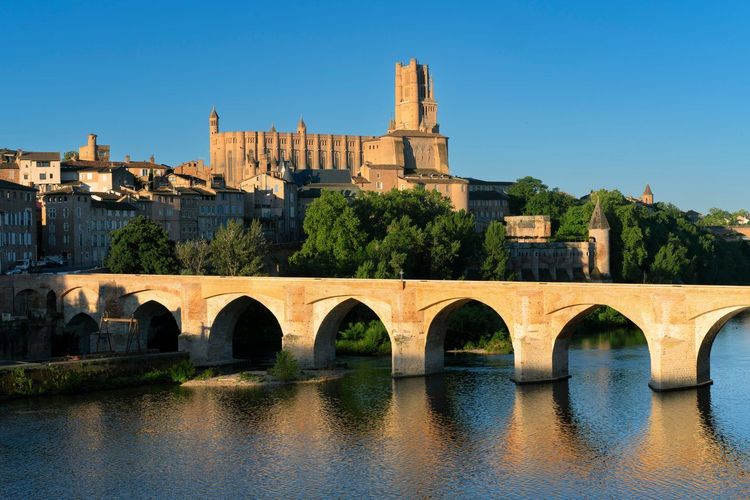
Contrary to what many assume, Albi is well worth visiting out of season. The cathedral and the Toulouse-Lautrec museum stay open year-round, with far fewer visitors than in July and August — which completely transforms the experience for those who struggle with crowds.
In winter, hilltop villages like Cordes-sur-Ciel lose some of their tourist bustle but gain in charm, especially during the Christmas markets that bring certain squares to life in December. Simply plan for reduced opening hours at some sites and more time indoors — museums and workshops rather than outdoor activities. Spring and early autumn remain the best windows: mild temperatures, sites open, and reasonable accommodation prices.
To go beyond the classic visit, the Ryo unusual tour of Albi highlights some of the city's less-frequented angles, useful if you return for a second visit.

FAQ
How many days should I plan to visit Albi with family?
One full day is enough to explore the episcopal city, the cathedral, and the Toulouse-Lautrec museum. Plan two to three days if you want to add a trip to Cordes-sur-Ciel, a nature activity such as karting or a hot-air balloon ride, and a morning in a village like Lautrec or Puycelsi without rushing.
Is Albi suitable for toddlers?
Yes: the episcopal city is stroller-friendly with flat terrain, the banks of the Tarn offer plenty of space to run around, and several spots such as Samy's Diner or the Jardin National allow for regular breaks suited to the pace of young children.
What free activities are there to do in Albi?
Entry to the nave of the Sainte-Cécile cathedral, the gardens of the Palais de la Berbie, the Saint-Salvi cloister, the Jardin National, a walk through Vieux Albi or along the Tarn, and some summer events on the riverbanks are all free. The Lautrec market on Friday mornings is also free to visit.
What budget should I plan for a three-day stay in Albi?
Budget around 90 to 130 euros per night for a room for four in a hotel, 25 to 40 euros at a campsite, 12 to 18 euros per person for a brasserie lunch, and about thirty euros for museum entry for a family of four. High-energy activities such as karting, golf, or a hot-air balloon ride add a highly variable cost and are often cheaper on weekdays.
When is the best time to visit Albi with children?
Spring and early autumn offer more comfortable temperatures for exploring hilltop villages than the height of summer, when afternoons frequently exceed 35 degrees. Winter is still a worthwhile option for visiting museums and the cathedral without the crowds, provided you plan more indoor activities.
Which villages should I visit around Albi?
Cordes-sur-Ciel, Lautrec, Castelnau-de-Montmiral, and Puycelsi make a coherent circuit, all within 45 minutes of Albi and easy to combine over one or two day trips. Cordes-sur-Ciel is the most spectacular, Puycelsi the most peaceful, and Lautrec the most lively on market days.
Albi lends itself well to a multi-generational stay because the highlights are concentrated in a compact area: the episcopal city, the banks of the Tarn, and a handful of good restaurants are enough to fill a day without ever feeling rushed. The surrounding villages, from Cordes-sur-Ciel to Puycelsi, naturally extend the trip for those with more time, offering a genuine variety of heritage, vineyards, lakes, and open countryside.
To organise your visit without spending hours researching on the ground, the Albi audio-guided tour connects the main landmarks of the episcopal city, with commentary designed to remain accessible to younger visitors — turning a simple list of sights into a real stroll, with minimal preparation.
À lire également