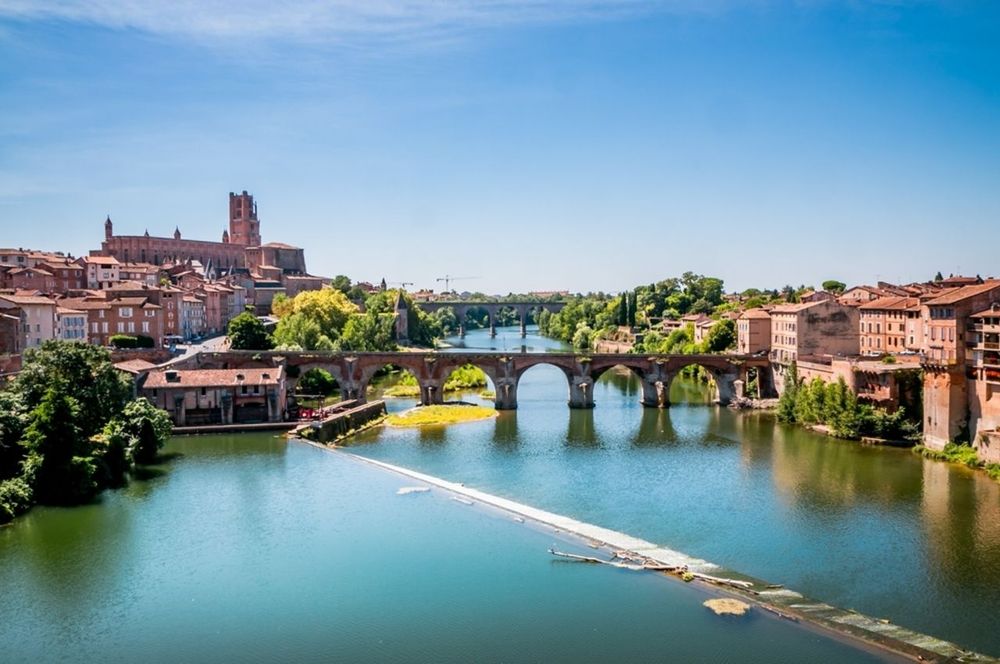
© Shutterstock
 Votre guide Ryo
Visiting Albi in 3 Days: Complete Itinerary Between the Episcopal City and the Hidden Gems of the Tarn (2026)
Albi's pink brick reveals its true color at early morning, when the light grazes the 78 meters of the fortified bell tower of Sainte-Cécile Cathedral. That precise moment explains why UNESCO inscribed the entire episcopal city on the World Heritage List in 2010. Visiting Albi in 3 days is exactly the right amount of time to do it justice: the cathedral deserves a full morning just for its 18,500 m² of Italian Renaissance paintings, the Palais de la Berbie another for its terraced gardens hanging above the Tarn, and there are still two full days left to wander the half-timbered lanes of the Castelviel, follow in Toulouse-Lautrec's footsteps at his birthplace, and head out to Cordes-sur-Ciel or the Gaillac vineyard.
This guide lays out a day-by-day chronological itinerary: one of the Southwest's largest Gothic naves, a gabarre cruise on the Tarn, the house where the most whimsical painter of Montmartre was born, stone dovecotes planted in the middle of the Tarn's fields, and a hilltop village that has preserved its 13th-century urban plan. To enhance the experience on the ground, the Ryo audio-guided tour of the episcopal city accompanies this first day step by step, with historical context and anecdotes delivered straight to your ear.
Day 1: The Episcopal City and Sainte-Cécile Cathedral
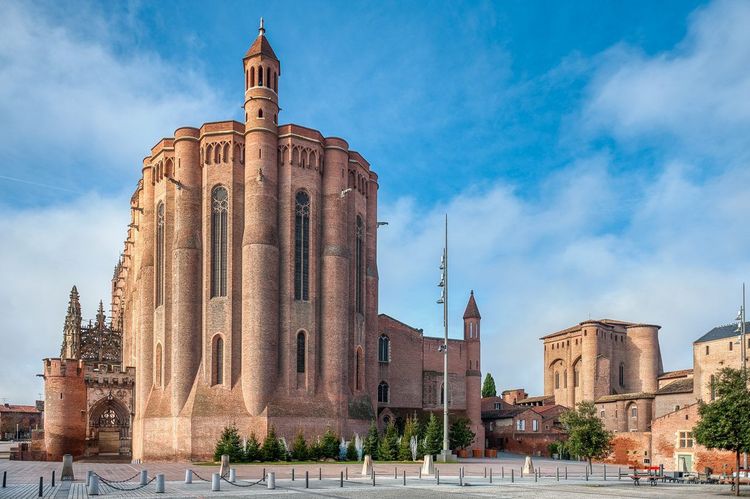
Dedicate this first morning to Albi's episcopal city, the historic heart of the town and its flagship UNESCO listing. The ensemble brings together the cathedral, the Palais de la Berbie, and the remains of the Pont Vieux on a single promontory overlooking the Tarn. Allow plenty of time: between the interior visit of the cathedral, a stroll through the palace gardens, and a pause before the brick facades, this part of the city can easily absorb a full half-day.
Sainte-Cécile Cathedral: a Brick Jewel and Gothic Treasure
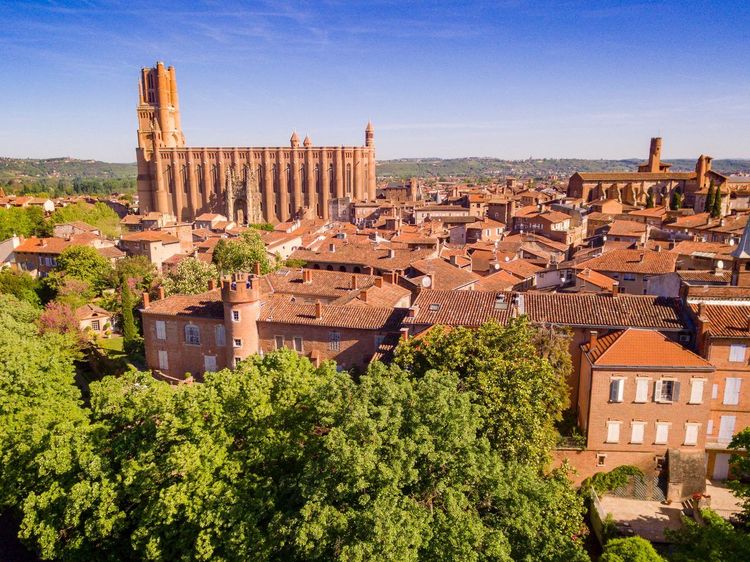
From the outside, Sainte-Cécile Cathedral looks more like a fortress than a place of worship: its fired-brick walls, several meters thick at the base, proclaimed the restored power of the Church after the Crusade against the Cathars, at the time the building work began in 1282. The bell tower rises 78 meters — a record for a brick structure — and the sculpted baldachin porch added at the end of the 15th century contrasts sharply in its delicacy with the roughness of the facades. Take time to walk around the building through the gardens of the Palais de la Berbie to appreciate the full scale of the volume, nearly one hundred meters in length.
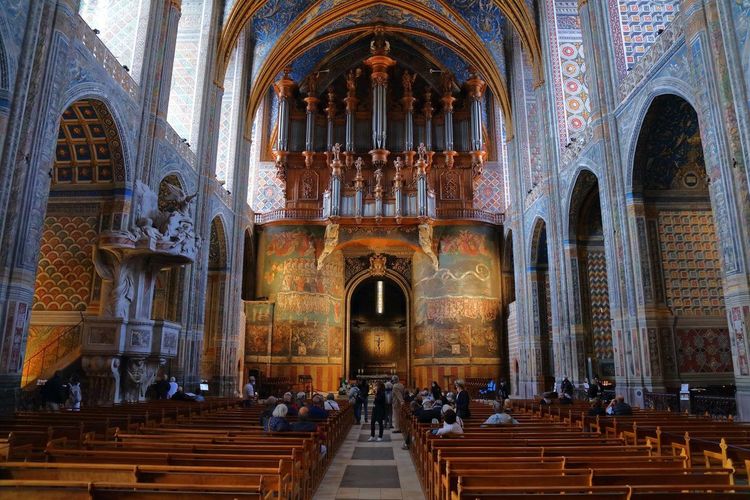
The interior shifts into an entirely different register. The single nave, one of the largest in southern Gothic architecture, is entirely covered with Italian paintings from the early 16th century: approximately 18,500 m² of frescoes on a blue background, considered the largest ensemble of Italian Renaissance paintings preserved in France. The sculpted stone rood screen separating the choir from the nave ranks among the finest surviving Flamboyant Gothic ensembles in the country, with hundreds of statues of biblical figures. The Last Judgment painted on the west wall, its center cut away when a chapel was pierced through it in the 17th century, remains one of the largest painted representations of this theme in Europe.
Visiting the choir and treasury rooms requires a small supplementary ticket, but access to the sculpted choir stalls and late-15th-century woodwork is well worth it. Allow 1 to 1.5 hours for a complete visit of the cathedral and treasury, more if you take an audio guide or join a guided tour of the choir.
In terms of planning, the length of your visit depends mostly on when you arrive. To visit Sainte-Cécile Cathedral in good conditions, go at opening time in the morning or during the last hour of the afternoon: between 11am and 3pm, tour groups cross paths in the nave and following commentary becomes difficult. Entry into the building is free; only access to the choir and treasury is ticketed, and the building closes during services — a detail worth checking the night before if your schedule is tight. A photographer's tip: evening light filters through the apse windows and brings out the blues of the ceiling far better than midday light.
The Palais de la Berbie and Its Remarkable Gardens
Once the fortified residence of the bishops of Albi, the Palais de la Berbie now houses the Toulouse-Lautrec Museum, but its gardens merit a visit independent of the museum. Laid out in the French formal style and listed along with the rest of the palace, they descend in terraces to the edge of the Tarn, offering one of the finest views in the city over the Pont Vieux and the old Albi mills. Entry to the gardens is free, even without a museum ticket — a perfect way to take a break without spending a euro.
Exploring the Palais de la Berbie takes on a different character depending on the time of day: in the morning, raking light sculpts the defensive turrets; later in the day, the gardens empty out and silence settles over the ponds. A stone bench at the northwest corner of the terrace offers the best vantage point for a breather before heading back down into the historic center.
Day 1 (Continued): Strolling Through the Old Town of Albi
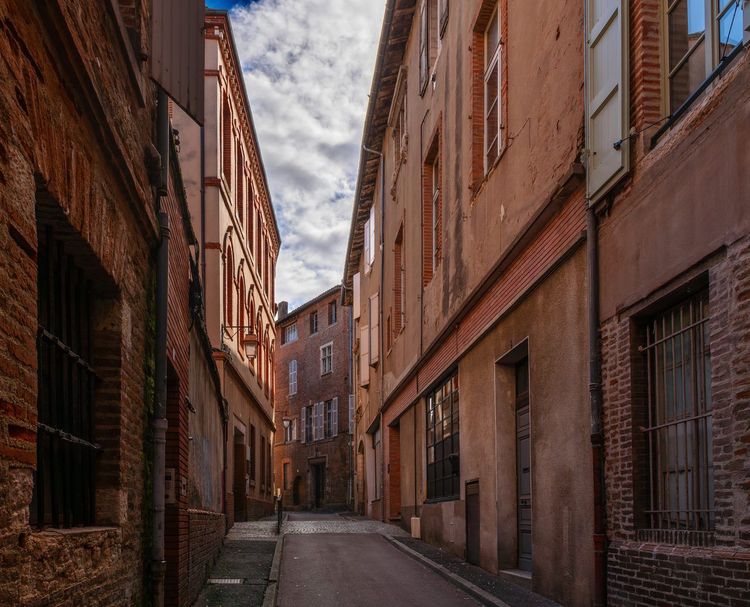
The afternoon is perfect for a leisurely wander through Albi's old town, a maze of cobbled lanes where medieval half-timbered houses stand alongside Renaissance townhouses built by wealthy woad merchants. Two neighborhoods concentrate most of the architectural interest: Castelviel and Castelnau.
The Castelviel Quarter and Its Half-Timbered Houses
The Castelviel quarter, one of Albi's oldest urban cores, has preserved its medieval street plan almost intact: narrow lanes, wooden jettied upper floors, and tiny squares that look more like private courtyards. This was where textile craftsmen set up in the Middle Ages, before the boom in the woad trade brought the city its fortune in the 15th and 16th centuries. The historic Castelnau quarter, right next door, extends this atmosphere with some remarkably well-preserved half-timbered facades, particularly around the Place du Vigan.
If you prefer a less strenuous approach, Albi's tourist train covers both neighborhoods in about 45 minutes with an audio commentary. It is a good option during summer heat or as an initial orientation before exploring on foot the next day: departures are from in front of the cathedral, with no booking required, and children benefit from a reduced fare.
The Collegiate Church of Saint-Salvi, Its Cloister, and the Hôtel Reynès
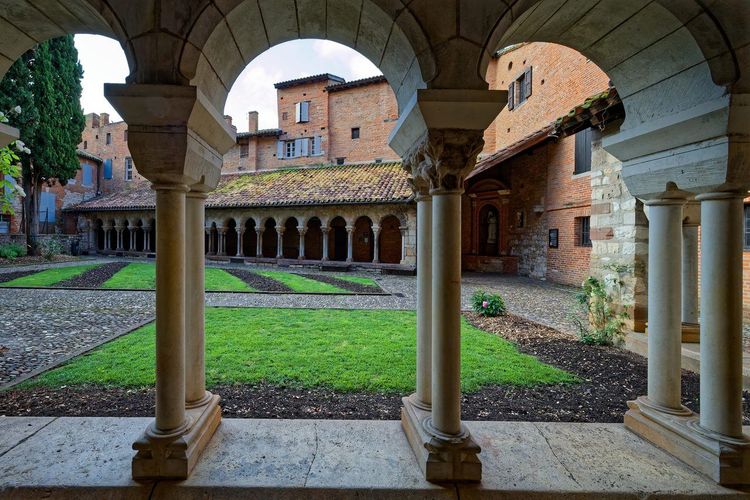
The Collegiate Church of Saint-Salvi surprises with its eclectic layout: a Romanesque nave, Gothic sections, and a fortified bell tower have been layered over nearly eight centuries of successive building campaigns. Its cloister, smaller and more intimate than those of the great cathedrals, opens onto a planted garden where one gladly sits for five minutes in the shade. Just behind it, the Hôtel particulier Reynès (Rue Timbal, 81000 Albi, rated 4.7/5 on Google from 81 reviews), a Renaissance mansion built by a wealthy woad merchant, displays an Italianate loggia facade that is rare in the Southwest.
End this walk at the Maison du Vieil Alby, a half-timbered building converted into a small free exhibition space dedicated to the history of Albi's built heritage. The volunteers of the association that runs it are happy to explain the half-timbered construction techniques used throughout the neighborhood — a great way to make sense of what you have just walked through.
To vary the itinerary, our Ryo walking tour through Albi offers an alternative route of an hour and a half, useful if you are staying outside the center and want to walk to the train station through the historic neighborhoods.
Day 2: In the Footsteps of Toulouse-Lautrec, Museums, and Street Art
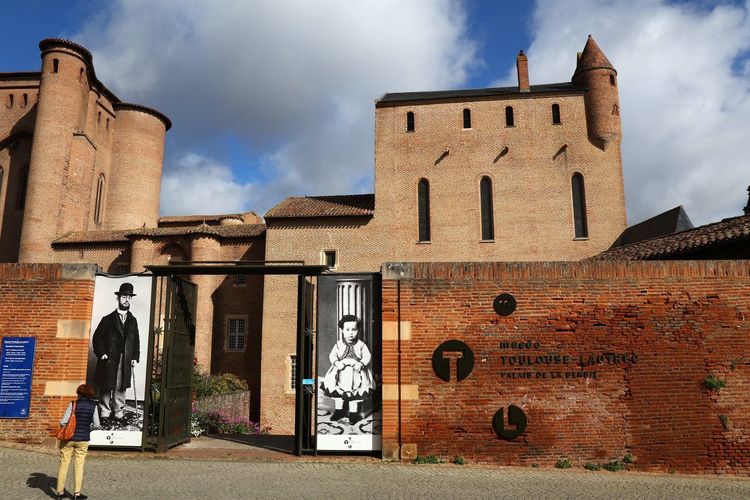
Albi was the birthplace of Henri de Toulouse-Lautrec in 1864, and the city has made this native son one of its finest cultural ambassadors. This second day alternates between two major museums and a more contemporary interlude in the Saint-Julien quarter, where street art has made its home.
The Toulouse-Lautrec Museum and His Birthplace
Installed in the rooms of the Palais de la Berbie visited the day before, the Toulouse-Lautrec Museum holds the world's largest collection dedicated to the painter, with over 1,000 works largely donated by his own family: posters for the Moulin Rouge, portraits of dancers, preparatory sketches, and lithographs rarely shown elsewhere. The chronological layout allows you to trace the evolution of his style, from his academic beginnings in Paris to the graphic freedom that made his name. Allow 1.5 to 2 hours for an attentive visit, particularly if you linger over the original Moulin Rouge posters, often the most visited room. The ticket also gives access to the palace's older collections, and a combined ticket exists for other Albi sites: ask at the desk rather than afterwards.
The birthplace of Toulouse-Lautrec, a townhouse situated a few hundred meters from the cathedral, remains private property that opens to the public only on rare occasions, but its facade and commemorative plaque are worth a detour. The painter was born here in 1864 before his family divided their time between several ancestral homes, including the Château du Bosc in the neighboring Aveyron, where he spent part of a childhood marked by successive fractures. A brief pause in front of the facade is enough before heading back toward the historic center.
The Lapérouse Museum and the Maison du Vieil Alby
Dedicated to the Albi-born navigator Jean-François de Galaup, Comte de Lapérouse, the Lapérouse Museum traces a scientific expedition around the world that ended tragically in 1788 in the Pacific. The first traces of the shipwreck were not identified until 1826 at Vanikoro, and the wreck of the Boussole not until 1964 — nearly two centuries of maritime mystery. The rooms reconstruct the voyage through period maps, navigation instruments, scale models, and objects recovered from the wrecks. The museum occupies the former Albi mills on the right bank of the Tarn, a few minutes' walk from the Maison du Vieil Alby visited the previous day.
Allow 45 minutes to an hour for the visit, a short format that fits easily between the morning at the Toulouse-Lautrec Museum and lunch in the Saint-Julien quarter.
Street Art and a Gourmet Break in the Saint-Julien Quarter
Walking back down toward the Saint-Julien quarter, the industrial facades of the former Albi mills are covered with monumental murals. The Le Lait art center (41 Rue Porta, 81000 Albi, rated 4.4/5 on Google from 71 reviews), housed in these same converted mills, exhibits contemporary artists in a raw setting of concrete and metal — a deliberate contrast with the ubiquitous brick of the rest of the city. Entry is generally free for temporary exhibitions, with a program that changes several times a year: check the dates, as the venue closes between shows.
This is also the neighborhood where the best addresses for discovering Albi cuisine are concentrated in the Saint-Julien quarter: small chalkboard bistros whose menus change with the market, wine merchants offering Gaillac wines by the glass, and bakeries still selling fouace, a traditional brioche from the Southwest. To dig deeper into this day of street art and food, check out our Ryo top 5 things to do in Albi, which details other addresses tried and tested on the ground, just steps from the Birthplace of Toulouse-Lautrec and the Lapérouse Museum, both featured on the audio-guided tour.
Day 2 (Continued): A Walk Along the Banks of the Tarn and Unusual Ways to Discover Albi
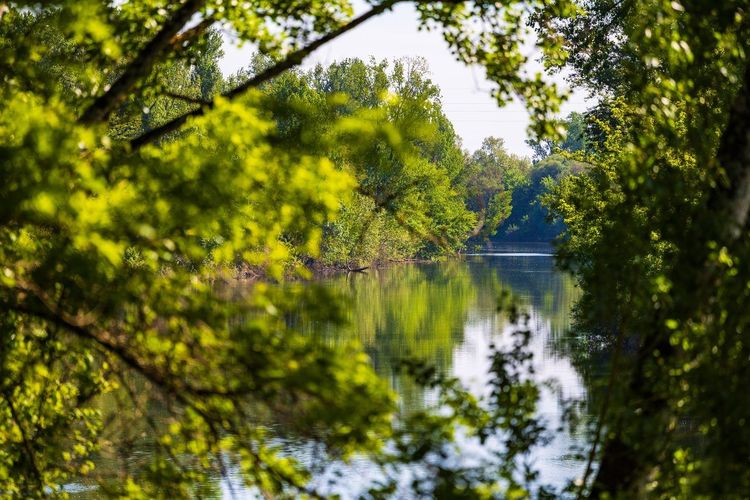
Wind down this second day by changing pace: a relaxed stroll by the water, then a choice from three more unusual experiences, best booked the day before to secure a spot.
The Pont Vieux and a Walk Along the Tarn
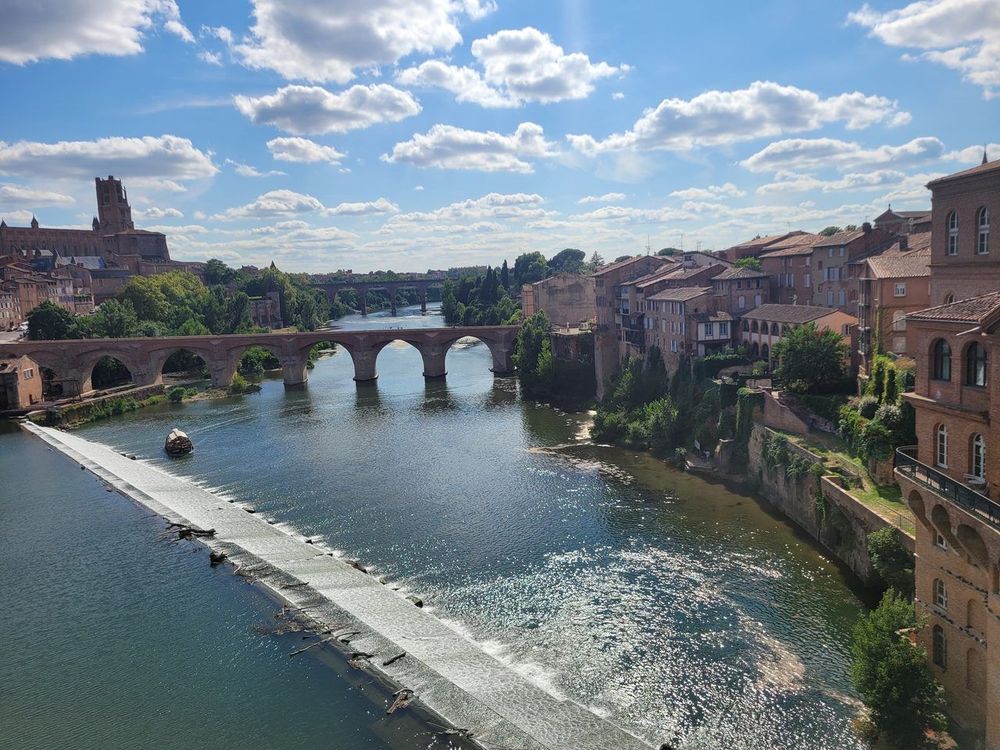
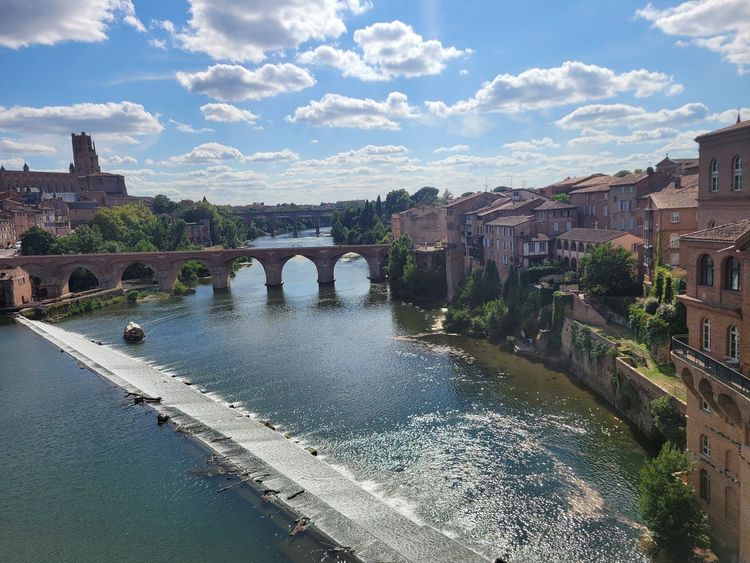
The Pont Vieux, whose foundations date back to the 11th century, remains one of the oldest bridges in France still open to traffic, even though the houses that once lined it have long since disappeared. From its deck it offers the most photographed view in Albi, with the cathedral and the Palais de la Berbie reflected in the Tarn at sunset. The walk along the Tarn continues along the developed riverbanks, all the way to the restored Albi mills. Allow 30 to 45 minutes for a relaxed round trip from the historic center.
Gabarre Cruise, 2CV, or Hot-Air Balloon
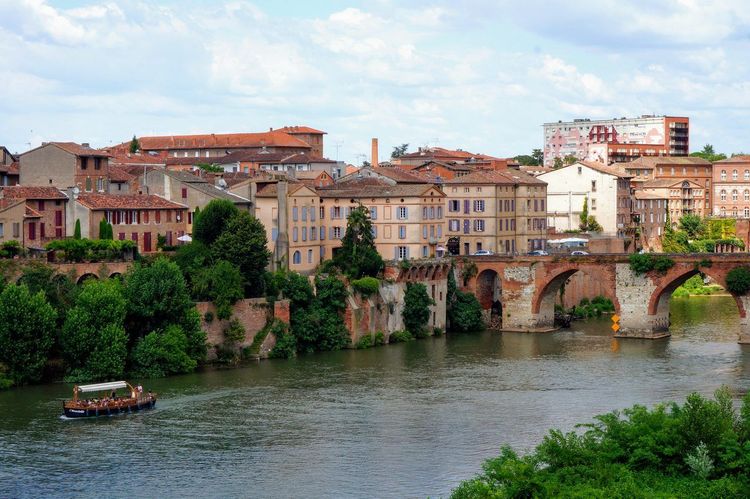
For a change of perspective, a gabarre cruise on the Tarn recreates the view of the old boatmen who once carried cargoes of woad and grain downstream. A Tarn gabarre cruise lasts about thirty minutes of commentary-accompanied navigation from the banks at the foot of the episcopal city, around 10 euros per adult with a reduced rate for children. Booking is not always required, but it is strongly recommended in July and August, when midday departures fill up quickly.
Another option for a fresh angle: a vintage 2CV tour offers commentary-led routes of around an hour through the old town and up to the first hillsides, bookable directly with local operators. For early risers, a hot-air balloon flight with Atmosph'Air provides a sweeping panorama over the episcopal city and the Tarn valley at daybreak — a memorable experience, though weather-dependent, with takeoffs frequently rescheduled at the last minute. These experiences generally need to be booked 24 to 48 hours in advance; our Ryo guide to unusual experiences in Albi details prices and meeting points.
Day 3: Day Trip to Cordes-sur-Ciel, the Hilltop Village
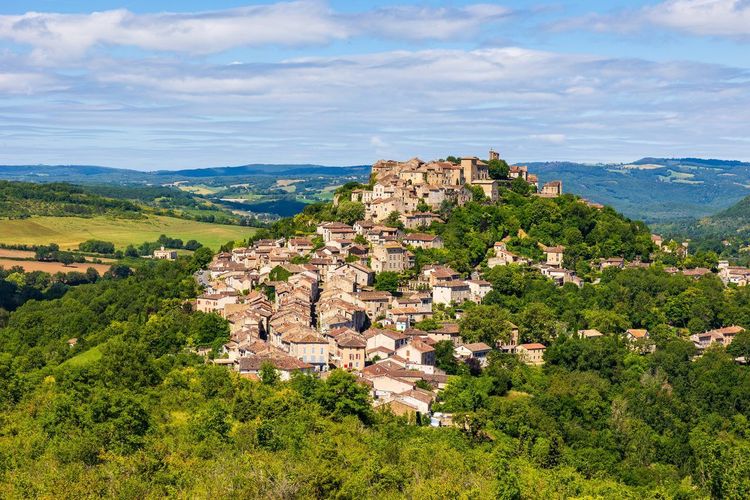
Spend the morning of this third day at Cordes-sur-Ciel (81170 Cordes-sur-Ciel, rated 4.7/5 on Google from 5,400 reviews), voted France's Favorite Village in 2014 and perched about thirty minutes northwest of Albi by road. The name comes from a local observation: seen from the valley in misty weather, the village appears to float above the clouds, as if suspended in the sky.
The Medieval Village and Its Gothic Houses
Founded in 1222 by Count Raymond VII of Toulouse in the context of the Crusade against the Cathars, Cordes-sur-Ciel has preserved a remarkably legible defensive urban plan: successive rings of walls, fortified gateways, and sloping lanes climbing to the top of the hill. The 13th-century Gothic houses, built by wealthy merchants, display ornate facades with paired windows and sculptures that rival those of the greatest medieval cities. The Grand-Rue, paved and lined with artisan workshops, is pedestrian year-round.
Climb to the highest point of the village for a sweeping panorama over the Cérou valley: on a clear day, you can make out the first ridges of the Rouergue on the horizon. The village is explored entirely on foot, but the gradient is steep in places; wear suitable shoes, especially if it has been raining on the smooth paving stones.
Cordes-sur-Ciel lives year-round to the rhythm of its art workshops: glassmakers, calligraphers, blacksmiths, and ceramicists occupy the ground floors of the Gothic houses, a tradition recognized by the Villes et Métiers d'Art label. In summer, the hilltop village also hosts medieval festivals and evening events, a good reason to extend the visit until sunset, when the day's visitors have already headed home.
Organizing the Day Trip from Albi
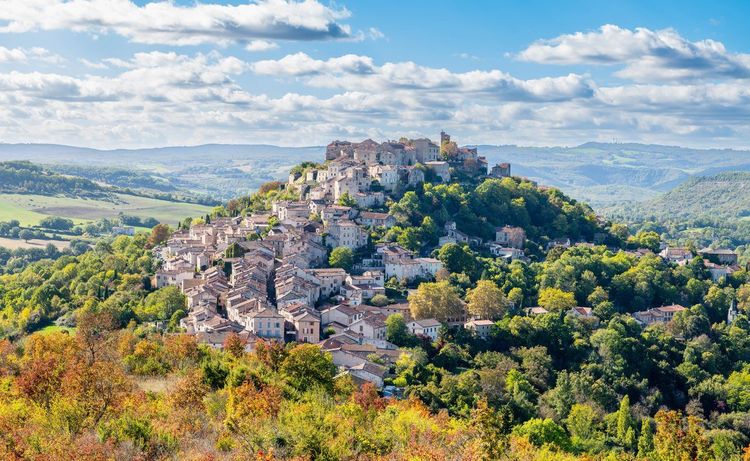
Allow about 30 minutes by road from Albi via the D600, or take the regional liO coach line, which serves the village on weekdays (reduced frequency at weekends — check before you go). On-site, car parks are located below the historic village, from where a tourist shuttle runs in season up to the rampart entrance for those who prefer to save their legs. To avoid the coach crowds, aim to arrive before 10:30am or after 4pm: the low evening light also beautifully enhances the pale stone facades. Plan for a full half-day including lunch at one of the restaurants installed in the old buildings, before driving on toward Gaillac in the early afternoon.
Day 3 (Continued): The Gaillac Vineyard and Villages of the Tarn
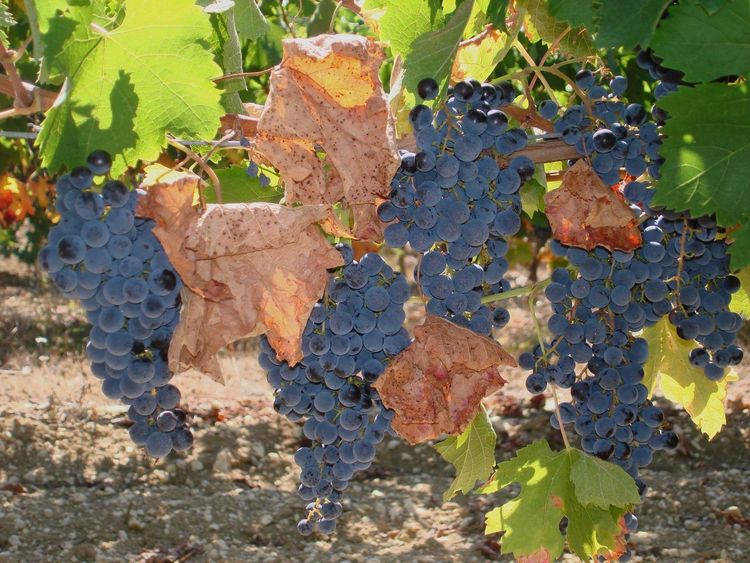
The afternoon of the third day lends itself to a final tour of the Tarn, between vines, meanders, and listed villages. Two possible routes depending on the time you have left: either focus on the Gaillac vineyard, or take a broader loop toward Ambialet and Lautrec.
Gaillac and One of France's Oldest Vineyards
25 minutes west of Albi by road, Gaillac has been cultivating vines since Gallo-Roman times, making it one of France's oldest vineyards. The appellation today produces dry and sweet whites, reds made from local grape varieties such as braucol and duras, and a little-known specialty, the perlé — a lightly sparkling white achieved naturally, without added gas. Exploring the Gaillac vineyard is easy by car, with numerous estates open for tastings along the wine route, often accompanied by an explanation of the clay-limestone and gravelly terroirs that make up the appellation.
Gaillac's historic center also deserves a stop, notably the Abbaye Saint-Michel and its park on the banks of the Tarn, where the Maison des Vins lets you sample several cuvées before buying direct from the producer. Allow 1.5 to 2 hours to combine a town center visit and a tasting at an estate, longer if you plan to have lunch there. A practical reminder for drivers: a short tasting and a case in the boot is a better plan than touring the wine route glass in hand.
Lautrec, Ambialet, and the Dovecotes of the Tarn
If you prefer the loop to the east, a morning at Ambialet to see the Tarn meander is a must: the river there describes a loop of several kilometers that doubles back on itself, leaving an isthmus of barely a few dozen meters wide on which the road and the village sit. Climb to the Romanesque priory perched on the rocky spur to appreciate the full sweep of the meander, or take the footpath that crosses the peninsula on foot in about forty minutes.
Lautrec, listed among France's most beautiful villages, stands out for its ancient market halls, its restored windmill overlooking the village, and its pink garlic, protected by a Red Label and a PGI designation, celebrated each year at a festival in early August. On the road back to Albi, a quick stop at Réalmont (81120 Réalmont) allows you to admire a covered-arcade square typical of the Southwest's bastide towns, inherited from the town's foundation in 1272 and still animated by the Wednesday weekly market. The surrounding countryside is also well suited to the search for dovecotes — those pillar-mounted structures topped with tiles that dot the fields: relics of a feudal right abolished at the Revolution, they remain the most recognizable visual landmark of the Tarn landscape.
It is hard to choose between these two itineraries in a single afternoon: to explore the area around Albi more broadly, our Ryo article on the surroundings of Albi details possible combinations for a full day, useful if you extend your stay beyond 3 days.
Where to Stay in Albi for a 3-Day Trip
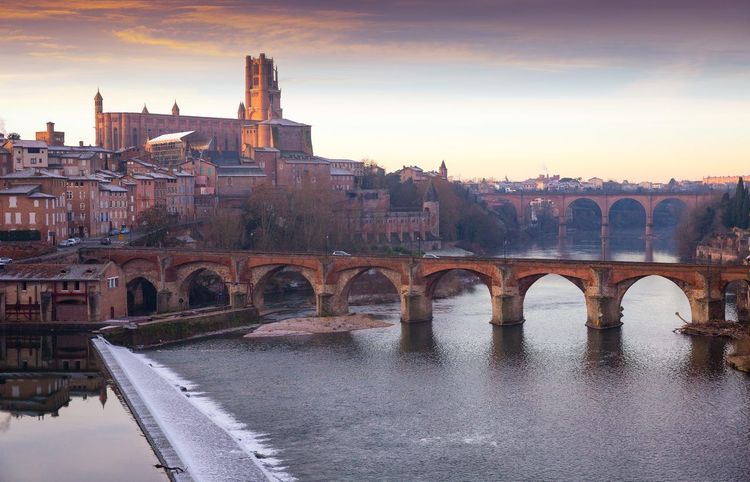
Where to stay in Albi depends mainly on your pace: sleeping in the episcopal city puts everything within walking distance, while a base in rural Tarn is better suited if you plan to head out to Gaillac or Cordes-sur-Ciel first thing in the morning.
Hotels and Charming Addresses in the Episcopal City
What are the best accommodation options in Albi for a 3-day stay? The historic center has several properties in former townhouses, with views of the cathedral or the gardens of the Palais de la Berbie for the best-positioned rooms. Three names come up repeatedly: the Hostellerie Saint-Antoine, one of the oldest family-run hotels in France still in operation; the Hôtel Alchimy and its hugely popular bistro steps from the Place Sainte-Cécile; and La Réserve, set slightly apart on the banks of the Tarn in a more resort-like setting. Expect between 90 and 180 euros per night for a double room in high season in the center, with prices rising noticeably during the summer festivals.
For a more budget-friendly stay without straying far from the center, several bed and breakfasts in the Castelviel offer a personal welcome from around 70 to 80 euros per night, often run by locals who are happy to share their favorite restaurant tips or shortcuts to avoid the crowds on the Pont Vieux. One practical detail to plan for: in the pedestrianized area, most of these properties have no private parking and will direct you to a public car park five minutes' walk away.
Options Around Albi and in the Tarn
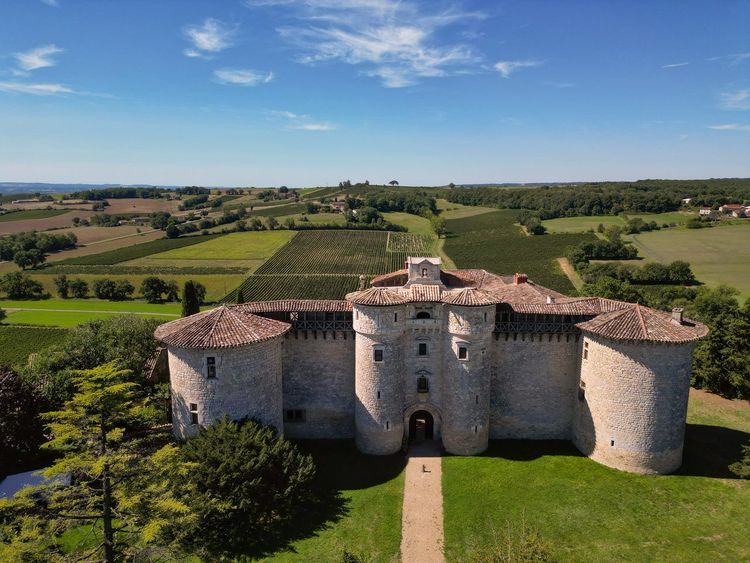
About fifteen minutes from the center, the Domaine de la Monestarié offers rooms in a former country house surrounded by greenery — an appealing option for combining rural peace with easy access to Albi. Further afield, in the heart of the Gaillac vineyard, the Château de Salettes (81140 Cahuzac-sur-Vère, rated 4.5/5 on Google from 166 reviews) leans into a more château-than-farmhouse atmosphere, with vines, a gastronomic restaurant, and contemporary rooms, suited to a stay more focused on relaxation than intensive sightseeing.
These rural options work particularly well if your itinerary includes a day trip to Gaillac or Cordes-sur-Ciel on the third day. To find the details of the audio-guided tour of the episcopal city to pair with your accommodation, head to Albi's audio-guided tour, which covers the commented stops of the historic center in just over an hour's walk.
Eating Well in Albi: Local Specialties and Good Addresses
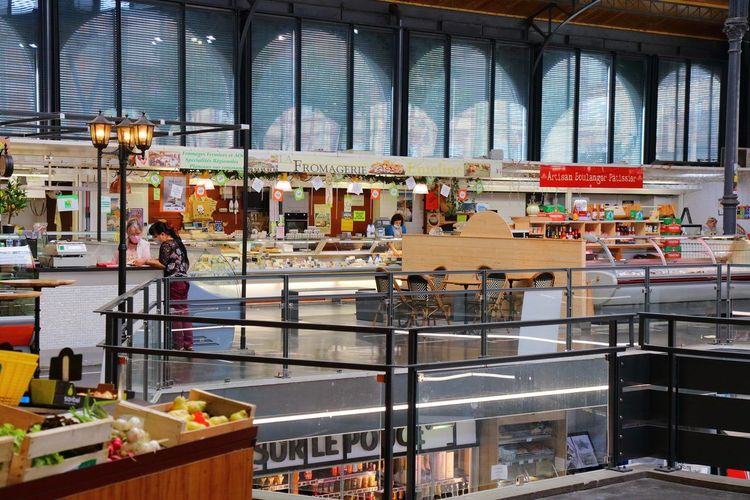
Albi's cuisine draws on two traditions: that of rural Tarn, with its farm produce, and the more refined tradition of the neighboring Gaillac vineyard, which naturally accompanies the local table.
Local Specialties to Try
The local specialties revolve around a few must-tries. First, pastis albigeois: an orange-blossom-scented brioche — not an anise aperitif, despite the name — found at most bakeries in the center. Then there is fouace, a simpler brioche traditionally associated with Easter celebrations. On the savory side, melsat, a kind of Tarn-style white pudding made with bread, eggs, and pork, is served pan-fried with a salad and often surprises visitors. Lautrec pink garlic and ewe's-milk cheeses from the Monts de Lacaune complete the picture, best accompanied by a glass of Gaillac perlé or a braucol red, available in most restaurants in the historic center. The covered market, open almost every morning, remains the best place to sample all of this without sitting down to a full restaurant meal.
Where to Eat: From Local Bistro to Starred Chef
To discover local cuisine without breaking the bank, the Saint-Julien quarter has several chalkboard bistros with market-driven menus, with set lunches around 18 to 25 euros. The best restaurants for a more gastronomic meal are often found a few streets from the cathedral, in former woad merchants' shops converted into elegant dining rooms. Book the evening before at weekends: Albi's center has plenty of covers, but the best tables fill up fast from spring onwards.
For a special occasion, dining at a Tarn starred chef remains possible without leaving the region: several establishments in the department are listed in the Michelin Guide, some within 30 minutes' drive. Our Ryo restaurant selection in Albi details tried-and-tested addresses, from the neighborhood bistro to the gastronomic table.
How to Get to Albi and Get Around
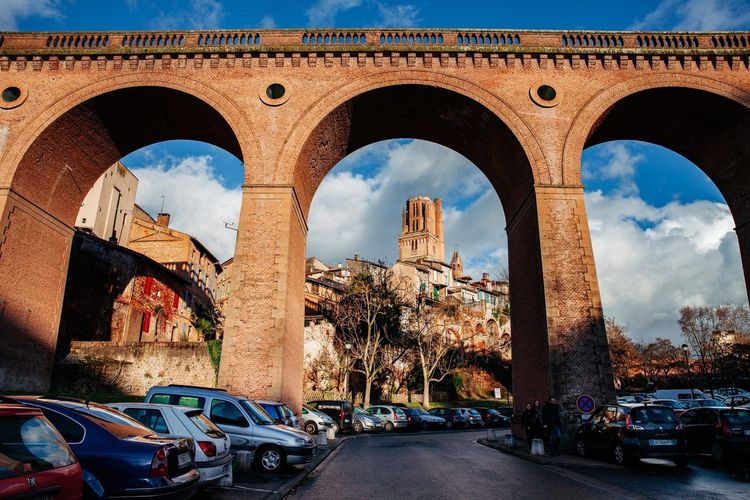
Albi is easy to reach from the major cities of the Southwest, and once there, the city can be explored almost entirely on foot.
By Train, Car, or Plane from Major Cities
How to get to Albi depends on your starting point. By train, allow around 1 hour from Toulouse-Matabiau with regular services throughout the day, and around 5.5 to 6 hours from Paris, taking a TGV to Toulouse then a TER to Albi-Ville. By car, the A68 motorway links Toulouse directly to Albi in about an hour. The nearest airport is Toulouse-Blagnac, just over an hour's drive away. For multi-day stays, the Occitanie Rail Tour pass allows travel across the liO regional TER network at a flat rate — an interesting option if your itinerary also includes Gaillac or Carmaux by train rather than by car.
Parking and Getting Around the City Center
Where to park in Albi is the number-one practical question: the historic center is largely pedestrianized or has restricted traffic, so it is best to aim for car parks on the immediate outskirts — near the train station, the banks of the Tarn, or the Lapérouse neighborhood — and then walk to the episcopal city in about ten minutes. Albi is entirely walkable once you are there: all distances between the cathedral, the old town, and the riverbanks can be covered in under 20 minutes on foot. The urban bus network is a useful supplement if you are staying on the outskirts, and a few local hire companies offer bikes for venturing further into the suburbs or along the Tarn.
How Long to Stay and What Budget to Plan for a Trip to Albi
Two questions come up consistently before booking: the ideal length of stay and the budget to plan for. Here is what you need to decide quickly.
Are 3 Days Enough in Albi?
How many days should you plan? Three days allow you to cover the episcopal city, the old town, the museums, and at least one day trip into the Tarn without rushing. Visiting Albi in 1 day is possible for a concentrated overview focused on the cathedral and the Toulouse-Lautrec Museum, but leaves out Cordes-sur-Ciel and the vineyard. Visiting Albi in 2 days works well if you skip the day trip and focus on the city itself. Is the city worth the detour? The density of heritage per square meter — remarkable for a town of 50,000 — answers the question clearly: the must-see sights in Albi fill 3 busy days easily, and there is always something left for a return visit.
Indicative Budget for a Stay in the Tarn
What budget should you plan for a weekend or 3-day stay in the Tarn? Allow around 100 to 150 euros per day per person, including mid-range accommodation, two meals, and entry to the main sites (cathedral choir and treasury, Toulouse-Lautrec Museum, Lapérouse Museum). Day trips add a variable cost: a gabarre cruise around 10 euros, a 2CV tour from 50 euros, a hot-air balloon flight from 200 euros per person. By staying in a bed and breakfast and picnicking at lunchtime with market produce, the same trip can easily come in under 80 euros per day.
FAQ
How Many Days Do You Need to Visit Albi?
Three days offer the best balance between the episcopal city, the old town, and a day trip into the Tarn. Two days are enough for the city's highlights, while a single day limits the visit to the cathedral and the Toulouse-Lautrec Museum.
Is Albi Worth Visiting?
Yes: Albi boasts a UNESCO-listed heritage, a brick cathedral unique in Europe, and one of France's oldest vineyards less than 30 minutes away — a remarkable concentration for a city of this size.
How Do You Visit Sainte-Cécile Cathedral?
Entry into the nave is free and open during visiting hours, outside of services. A supplementary ticket is required for the choir and treasury rooms. Allow 1 to 1.5 hours for a complete visit, avoiding if possible the 11am–3pm slot.
Where Can You Park to Visit Albi?
As the historic center is mostly pedestrianized, it is best to park in the immediate outskirts — near the train station, the banks of the Tarn, or the Lapérouse neighborhood — and then walk to the episcopal city in about ten minutes.
What Are the Best Accommodation Options in Albi?
The historic center has charming hotels in former townhouses, ranging from around 90 to 180 euros per night. The surrounding area, such as the Domaine de la Monestarié or the Château de Salettes in the heart of the vineyard, is better suited for a stay more focused on the countryside.
What Are the Best Restaurants to Discover Local Cuisine?
The Saint-Julien neighborhood has several chalkboard bistros for lunch around 20 euros. For a more gastronomic table, several Tarn establishments are listed in the Michelin Guide within 30 minutes of Albi.
Three days in Albi leave time to understand why this pink-brick city, long overshadowed by neighboring Toulouse, ultimately earned its UNESCO listing and its reputation as the best surprise of the Southwest. From the Gothic nave of Sainte-Cécile Cathedral to the dovecotes lost in the Tarn countryside, via the Moulin Rouge posters signed by Toulouse-Lautrec, the itinerary covers a wide range without ever feeling rushed.
If time is short to organize each step alone, the audio-guided tour of Albi covers the episcopal city step by step, aligned with the pace of the first day described here. And for those extending their stay beyond 3 days, our Ryo article on things to do in Castres ideally completes this itinerary with a half-day excursion to the Sidobre and its granite chaos.
À lire également