© Shutterstock
 Votre guide Ryo
Unusual Visit to Albi: 12 Secret Experiences in 2026
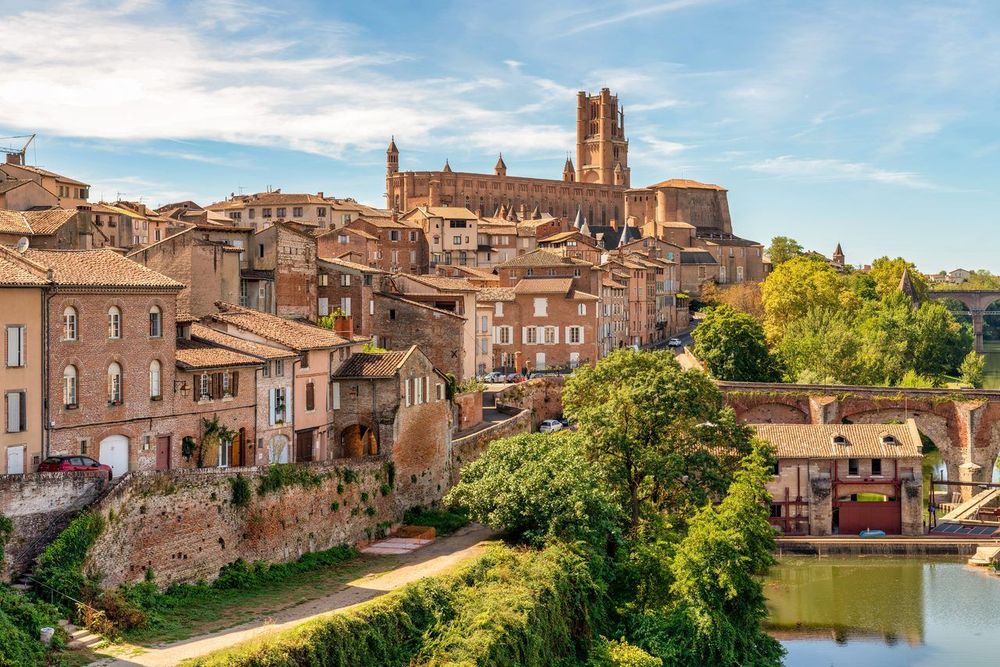
In Albi, the red brick tells a story that few visitors take the time to hear in full. Search "unusual visit Albi" in a search engine and you will mostly find Sainte-Cécile Cathedral, listed as a UNESCO World Heritage Site since 2010: yet behind this postcard image lie paintings hidden high up in the vaults, one of the largest classical organs in France still played during services, and an entire city built to intimidate rather than to seduce. The best of Albi begins where the brochures stop, and the Ryo audio-guided tour of Albi takes you exactly along those trails, headphones on, with no need to book a guide slot.
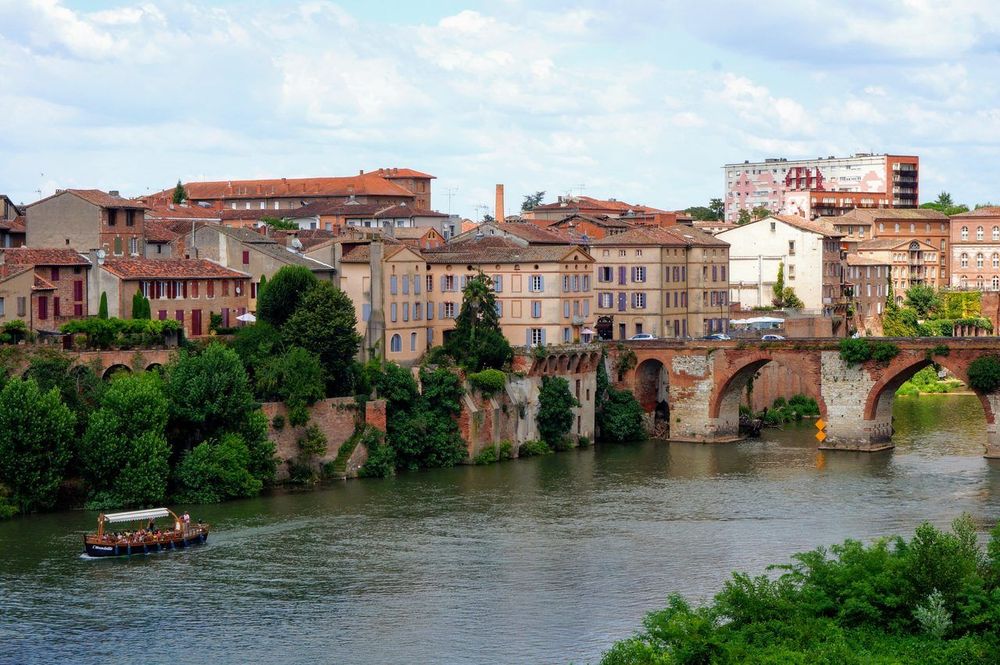
From the Pont Vieux, 150 metres of masonry laid across the Tarn between 1035 and 1042, to the terraced gardens of the Palais de la Berbie, and the gabares that sail upriver in the warmer months, these twelve stops take Albi beyond its image as a simple open-air museum. You will also find enough to extend your trip to the Sidobre and its granite boulders, or to Cordes-sur-Ciel, half an hour's drive away.
Sainte-Cécile Cathedral: the Hidden Side of the Red Brick
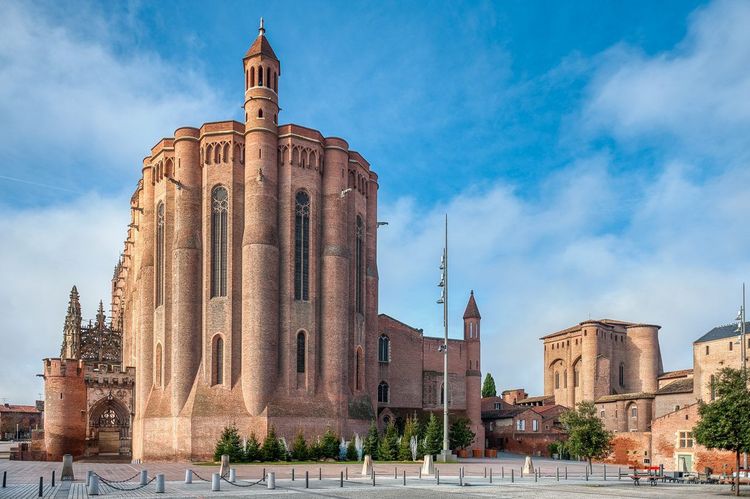
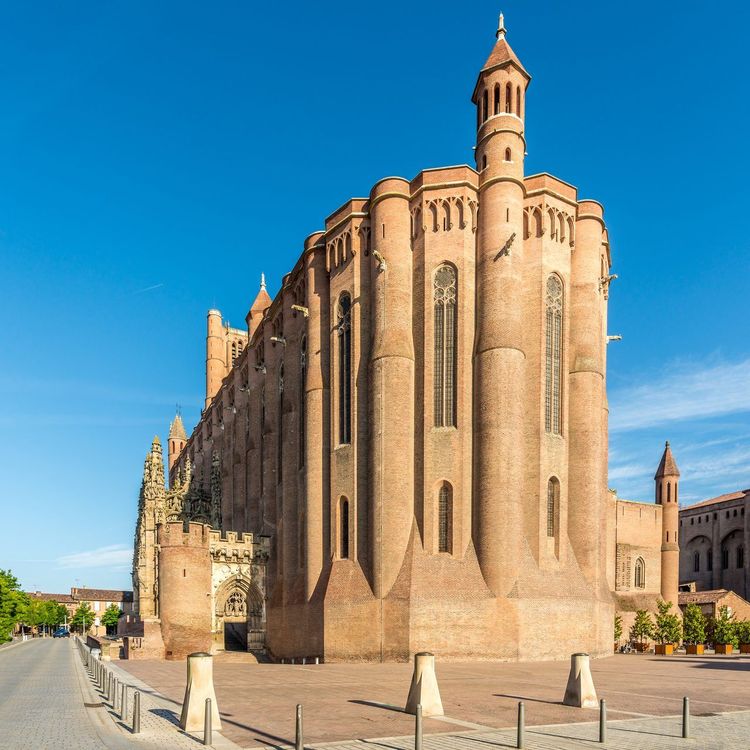
The Sainte-Cécile Cathedral (Place Sainte-Cécile, 81000 Albi, rated 4.8/5 on Google based on 15,257 reviews) was not built to reassure. In the aftermath of the crusade against the Albigensians, Bishop Bernard de Castanet wanted a building capable of crushing any hint of heresy: the first brick was laid on 15 August 1282, with battered walls at the base, semi-cylindrical buttresses and the silhouette of a fortress rather than a church. Around 25 million bricks were required to build it, making it the largest brick cathedral in the world — a detail that most hurried visitors overlook as they photograph only the façade.
The interior delivers the opposite shock. The vaults were painted between 1509 and 1512 by workshops from northern Italy, summoned to Albi by Bishop Louis II d'Amboise: Sainte-Cécile is today the largest painted cathedral in Europe. Nine workshop master signatures have been identified in corners of the building, invisible to anyone who does not look up at the right spot. On the west wall, the Last Judgement originally covered 270 square metres: its central section was sacrificed in the eighteenth century to open access to a chapel built beneath the bell tower, which in turn made it possible to save the stone rood screen — destroyed in many other cathedrals during the same period.
The least-told curiosity lies in the southern triforium. Trompe-l'œil paintings there imitate lozenges of veined marble and conceal a remarkable set of anamorphoses, completely invisible from the nave. No postcard will ever show them to you. The great organ, built between 1734 and 1736 by organ builder Christophe Moucherel, occupies the gallery directly above the Last Judgement: ask at the welcome desk for recitals scheduled in season — it is one of the rare moments when the instrument can be heard in its original acoustic setting.
Entry to the nave is free, but the choir and its intricate stone rood screen require a separate ticket. A guided tour of the choir remains the best way to grasp the logic of this church-within-a-church, with its polychrome statues lined up like a frozen audience. The bell-tower keep rises to 78 metres and can be admired from ground level: its staircase is not open to visitors, contrary to what some blogs suggest. The Ryo audio guide points out these details along the route, including the anecdote about the hidden signatures tucked into the corners of the painted décor.
The Palais de la Berbie: Between Secret Gardens and Museum Backstage
Right next door, the Palais de la Berbie long served as a fortified residence for the bishops of Albi before becoming home to the Toulouse-Lautrec Museum, which holds the world's largest collection dedicated to the painter — over a thousand works bequeathed by his own family. The standard visit covers the exhibition rooms at €10 full price, free for under-18s. The rest unfolds outside, in the French-style terraced gardens that overlook the Tarn and offer one of the least-photographed angles on the bridge and cathedral together.
These gardens and their terrace are freely accessible, and they open much earlier than the museum: from 8:30 am, until 8 pm from June to September and 6 pm for the rest of the year. In other words, you can be there alone with the view before the ticket desk even opens at 10 am. The benches on the lower terrace are often empty, even though the panorama there rivals any of the spots endlessly photographed on social media.
Local lore has it that a passage once connected the palace to the cathedral, allowing the bishop to move about without ever crossing the crowd. Nothing formally proves it, but the legend is enough to make you look up at the walls as you walk through the rooms. The ramparts themselves, so often passed without a glance, deserve a pause: it is from here that the defensive logic of the entire episcopal complex is most clearly read. The best time for photography remains late afternoon, when the low sun colours the brick an almost copper hue.
The Vieux Albi: a Maze of Lanes and Half-Timbered Houses
A short walk from Place Sainte-Cécile, the Vieux Albi unfolds a labyrinth of cobbled lanes where half-timbered houses sometimes lean dramatically over passers-by. The Maison du Vieil Alby, a half-timbered building dating from the fifteenth and sixteenth centuries, hosts exhibitions devoted to local crafts and traditions in a setting of exposed beams that is worth the visit in its own right.
Less visited than the cathedral, the Collégiale Saint-Salvi (Rue Sainte-Claire, 81000 Albi, rated 4.6/5 on Google based on 410 reviews) conceals a Romanesque cloister where the silence stands in sharp contrast to the bustle of the city centre. The building alone tells the story of the city's architectural transition: a Romanesque stone colonnade at the bottom, the upper section built in red brick — exactly the shift that paved the way for the construction of Sainte-Cécile. Groups rarely linger there for more than five minutes, making it one of the best spots to catch your breath between two visits.
The Tarn Another Way: Gabares, a Mill and River Legends
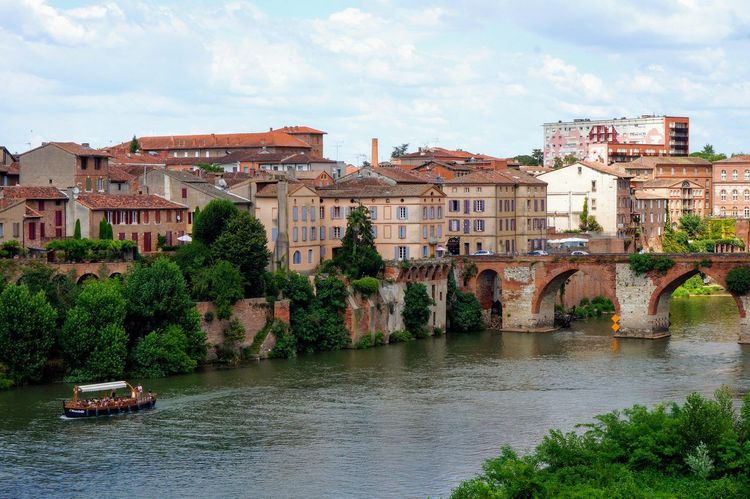
Albi built part of its fortune on woad, the blue dye plant that was transported by gabares — flat-bottomed boats designed for the shallow waters of the Tarn. Today, reconstructed vessels offer commentary-led cruises departing from Quai Choiseul, below the cathedral, generally from May to October. Expect around ten euros per adult for a loop under the Pont Vieux, and a perspective on the city you can never get from the riverbanks.
The bridge itself deserves a closer look: 150 metres long, built between 1035 and 1042 and rebuilt in the thirteenth century, it remains the oldest road bridge in France still in use. In the fifteenth century, houses had been built on its piers, much like the Ponte Vecchio in Florence, before being swept away by a flood in 1766. Closed for a major restoration project from March 2023 to May 2025, it reopened to traffic on 19 June 2025.
A little further along the bank, the Moulin Albigeois (33 Rue de Lamothe, 81000 Albi, rated 4.8/5 on Google based on 8 reviews) occupies a converted former flour mill with a direct view of the weir. You can stop simply to watch the water fall, without necessarily dining there: it is one of those stops that printed guides barely mention.
Woad: the Blue Gold That Shaped the City

Before the red of the brick became Albi's signature, it was the blue of woad that made its fortune. This dye plant, cultivated abundantly in the region between the fifteenth and sixteenth centuries, produced a pigment so sought after across Europe that local merchants built grand townhouses still visible today in the Vieux Albi. The region was then known as the pays de cocagne — named after the dried balls of pigment that were exported as far as England and Italy.
The arrival of imported indigo from the Americas, cheaper to produce, ruined this trade within a few decades. What remains of this golden age are sculpted façades and a handful of workshops that have revived woad cultivation, offering public dyeing demonstrations on request. Watching a piece of white fabric turn deep blue in just a few minutes of oxidation remains one of the most surprising experiences the city has to offer — and yet one of the least known to passing visitors.
Executioners, Heretics and Other Spine-Tingling Tales
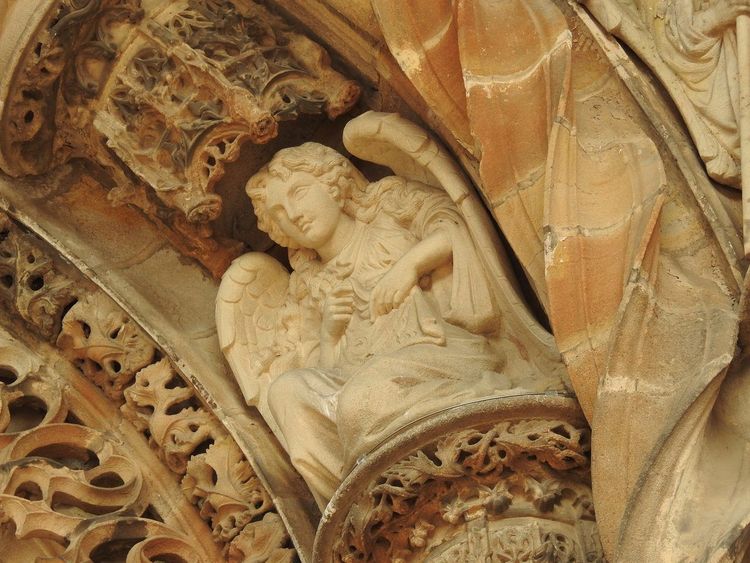
Albi owes part of its reputation to the crusade against the Albigensians, the Cathars who were hunted down in the thirteenth century for heresy. The last Cathar was burned at the stake in 1321, and the city long carried this troubled past as a burden before turning it into a visitor attraction. Local guides are fond of recounting the legend of the city's executioner, whose house was said to stand apart from the other dwellings out of superstition — a detail that supposedly explains certain irregularities in the building fabric of the neighbourhood even today.
The Place Sainte-Cécile, peaceful today, long concentrated the great gatherings of the episcopal city, under the bishop's watchful eye. This balance of power partly explains why the cathedral was built as a fortress rather than a simple place of worship: it was necessary to remind everyone, in brick and stone, who held power. On summer nights, when the square empties, some locals still tell these stories to curious visitors who take the time to talk with them.
Themed night tours, organised periodically by the tourist office, revisit these tales while walking through the Vieux Albi by lamplight. A guided tour of this kind sells out fairly quickly in summer: it is better to check upon arriving in town rather than waiting until the last day of your stay.
Workshops and Market: Meeting Albi's Artisans
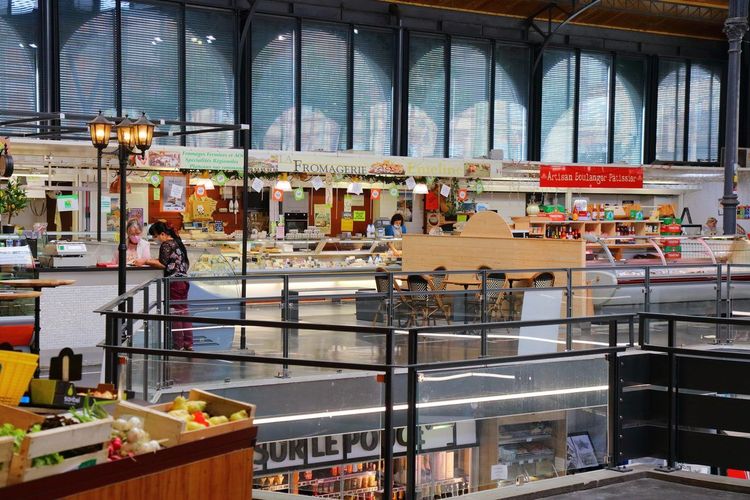
The Marché Couvert d'Albi (Place Lapérouse, 81000 Albi, rated 4.3/5 on Google based on 513 reviews), a nineteenth-century iron structure, brings together producers and craftspeople from the Tarn around specialities rarely found outside the département, including certain locally matured ewe's milk cheeses. Saturday morning remains the liveliest slot, with stalls spilling onto the surrounding squares and a largely local clientele.
Beyond the market, several ceramics and glassblowing workshops set up in the historic centre open their doors for short demonstrations. Our dedicated article on the best things to do in Albi details several of these experiences along with opening times and prices. Several of these workshops sit right along the route of Albi's audio-guided tour, so it's easy to fold one into the walk.
Albi at Night: a Different Face of the Red City
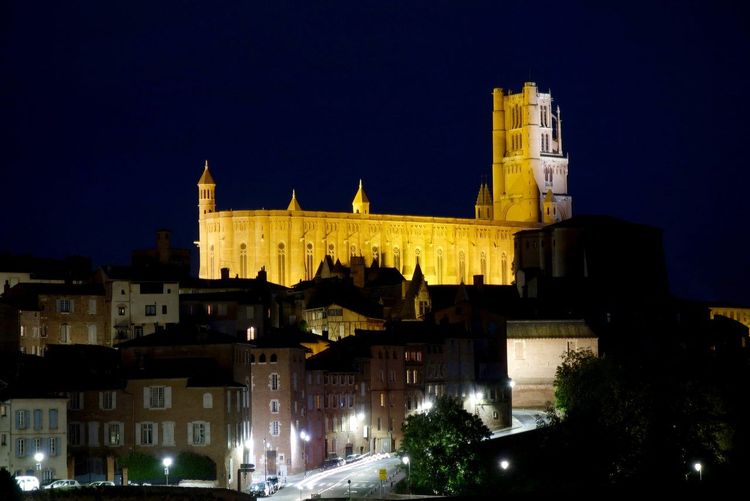
When the tourist coaches leave, Albi changes pace. The illuminated cathedral takes on an almost orange hue, and the lanes of the Vieux Albi empty to the point of seeming abandoned. In summer, large-scale projections regularly dress the façades of the episcopal complex, turning the brick into a canvas for moving images.
Even without a planned event, a simple evening walk between Place du Vigan and the Pont Vieux is enough to see the city in a light rarely captured in photographs. Amateur photographers gather there at dusk, when the low-angle light accentuates the texture of the brick and highlights the reflections on the river.
Off-the-Beaten-Track Escapes around Albi
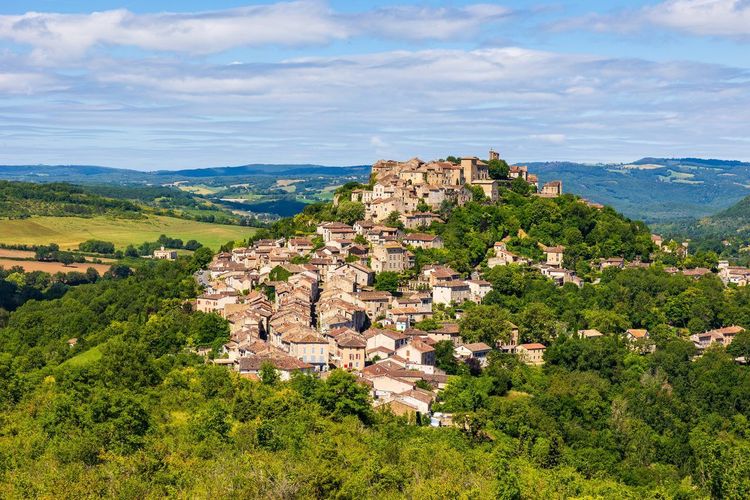
Anyone looking for unusual places in the Tarn does not need to venture far. Half an hour's drive away, Cordes-sur-Ciel fully lives up to its nickname of the city in the sky: on some misty mornings, the bastide founded in 1222 by Count Raymond VII of Toulouse seems to literally float above the Cérou valley. Listed among Les Plus Beaux Villages de France, voted the French people's favourite village in 2014 and awarded the Grand Site Occitanie label, it welcomes around 600,000 visitors a year: come early in the morning if you want its steep lanes to yourself.
About an hour away, the Sidobre offers a completely different change of scenery: a granite plateau scattered with improbably shaped boulders, such as the Peyro Clabado, a balancing rock that looks ready to topple at any moment. The river of rocks, a natural chaos of stacked boulders stretching several hundred metres, can be explored on foot in about an hour and remains largely unknown outside the inhabitants of the Tarn.
On the wine side, the Gaillac vineyard, one of the oldest in France, can be discovered through tastings at independent wine producers, about forty minutes from Albi. The ruins of the château de Combefa (81640 Combefa, rated 4.6/5 on Google based on 7 reviews), built around 1270 for Bishop Bernard de Combret and later used as a summer residence by the bishops of Albi, complete this rural interlude. Abandoned from 1761 and dismantled for its stones, only its razed towers remain on a rocky spur; its polychrome entombment scene is preserved in the nearby village of Monestiés. Our article on what to see around Albi details complete itineraries for organising these day trips.
Sleeping Differently around Albi
Extending the experience also comes down to your choice of accommodation. Several treehouses and caravans set up in the hills around the Gaillac vineyard allow you to sleep among the vines, often with an open view over the valley when you wake up. For a romantic getaway, a few barges moored on the Tarn can be rented by the night and offer a far more intimate atmosphere than a city-centre hotel. These places book up quickly in high season, generally several weeks in advance between June and August.
Planning Your Unusual Visit to Albi: Duration, Budget and Insider Tips
Half a day is enough for the cathedral and the Palais de la Berbie, but allowing a full day lets you add the Vieux Albi and a gabare cruise without rushing. To make the most of the surrounding area, visiting Albi over 2 days remains the most comfortable format: one day in the city, one day for Cordes-sur-Ciel or the Sidobre (81260 Le Bez, rated 4.6/5 on Google based on 2.8K reviews). Road trip enthusiasts sometimes push it to 3 days in Albi, adding Gaillac and its vineyards to the programme.
On the budget side, allow €10 for the Toulouse-Lautrec Museum, around ten euros for the Tarn cruise, and bear in mind that the rest is largely free: the cathedral nave, the lanes of the Vieux Albi and the gardens of the Palais de la Berbie can all be explored without charge. To plan what to do in Albi and its surroundings without endless searching, the Ryo app offers a structured route activatable directly from the historic centre, with geolocated audio commentary that triggers automatically in front of each site.
The historic centre can be covered entirely on foot, with distances between the cathedral, the Vieux Albi and the Pont Vieux never exceeding ten minutes' walk. It is best to leave the car in one of the car parks on the outskirts of the old town: traffic and parking are tricky in the immediate vicinity of Place Sainte-Cécile, especially on market days. Spring and early autumn remain the most pleasant periods, with less oppressive heat than in midsummer and noticeably fewer crowds than during the major July weekends.



FAQ
How much time should I allow for an unusual visit to Albi?
Allow a full day to cover the cathedral, the Palais de la Berbie, the Vieux Albi and a cruise on the Tarn. Two days let you add a trip to Cordes-sur-Ciel or the Sidobre without rushing.
What are the must-see hidden gems in Albi?
The southern triforium of Sainte-Cécile Cathedral with its trompe-l'œil paintings, the terraced gardens of the Palais de la Berbie open from 8:30 am, the Romanesque cloister of the Collégiale Saint-Salvi and the banks of the Tarn near the Moulin Albigeois are among the least-visited sites despite their genuine appeal.
Albi with kids: what activities should you choose?
The gabare cruise on the Tarn and the Maison du Vieil Alby are well suited to children, especially since the Toulouse-Lautrec Museum is free for under-18s. The Sidobre, with its balancing rocks, also works very well for a family outing about an hour's drive away.
Should I book my unusual visit to Albi in advance?
The cathedral nave and the Berbie gardens can be visited freely without booking. Craft workshops, themed night tours and unusual accommodation, however, fill up several weeks in advance in summer.
What is there to see around Albi to extend your stay?
Cordes-sur-Ciel, the Sidobre and the Gaillac vineyard form a complementary trio, each less than an hour from the centre of Albi, for those who want to vary the atmosphere between medieval heritage, nature and gastronomy.
What is the best time for an unusual visit to Albi?
Spring and September offer the best balance between pleasant weather and moderate crowds. Summer is still a good option for cruises on the Tarn and night-time projections, as long as you accept busier daytime conditions.
Is an unusual visit to Albi accessible for people with reduced mobility?
The historic centre is generally manageable on the surface and the cathedral nave can be entered without major difficulty. Some passages, such as the cloister of the Collégiale Saint-Salvi or the steps leading down to the banks of the Tarn, do involve narrow stairs. It is best to check with the Albi tourist office for up-to-date adapted access information.
Albi: a City That Rewards the Effort
Albi is not defined by its cathedral alone, impressive as it is. It is a city that rewards curiosity: those who look up at the painted vaults rather than glancing over them, who make it to the gardens of the Palais de la Berbie before the ticket desk opens, who take the time to listen to the legends told by locals rather than following a tightly timed itinerary.
To explore these hidden corners at your own pace, without depending on a guide's schedule, the Ryo audio-guided tour of Albi remains the simplest way to turn a classic visit into an unusual exploration — headphones on, itinerary adjustable to suit your mood at any moment.
À lire également