© Shutterstock
 Votre guide Ryo
Visiting Arles with Family in 2026: Roman Monuments, LUMA, and Camargue
In Arles, gladiators gave way to bulls at the feria, but the arena still comes alive every summer and its Roman ruins are there to be climbed. Here, ancient stones are less admired than actively explored. This city with 2,000 years of history demands no dusty guided tour: cloisters become treasure hunts, a tower designed by a world-renowned architect conceals steel slides, and a phosphorescent skate park doubles as a work of art. To visit Arles with family, allow a morning to walk the UNESCO-listed historic centre, punctuated by playful stops that the Ryo audio-guided tour of Arles turns into a treasure hunt for children aged 6–12.
Between an arena where you can still search for traces of 2nd-century big cats, a Romanesque cloister where you count the gargoyles, a contemporary art foundation with its own skate track, flamingos twenty minutes away by road, and a pass that opens several monuments for around twenty euros per adult, the stay can be built entirely to your own liking. Two full days are enough to miss nothing between ancient heritage, contemporary art, and the fresh air of the Camargue — just one day if time is tight. This guide details every step, from the Roman baths to the pink salt pans, with addresses and a day-by-day itinerary that saves time on the ground.
Arles' Roman Monuments at the Right Height for Young Visitors
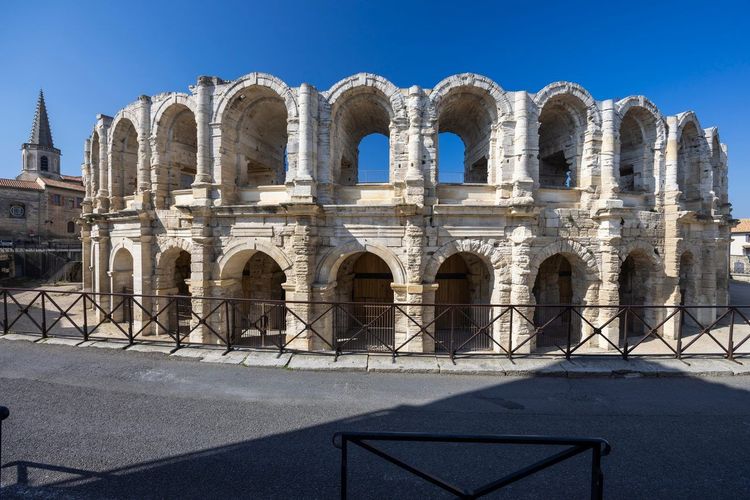
Three ancient monuments are clustered within a radius of four hundred metres in the heart of the city, making it possible to visit them all in a single two-hour loop, pushchair included.
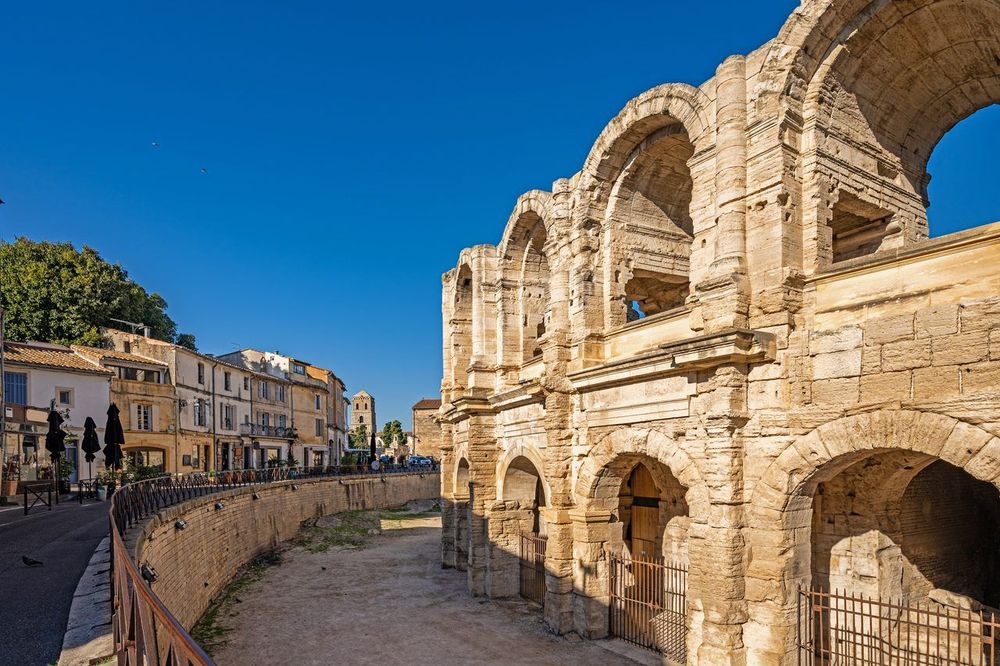
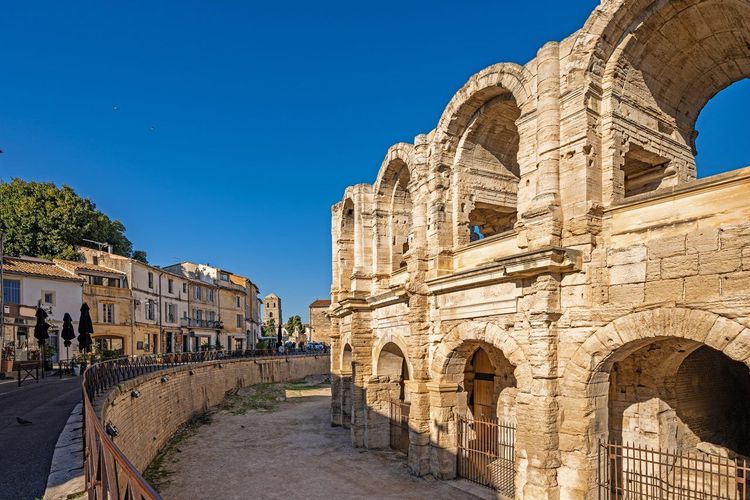
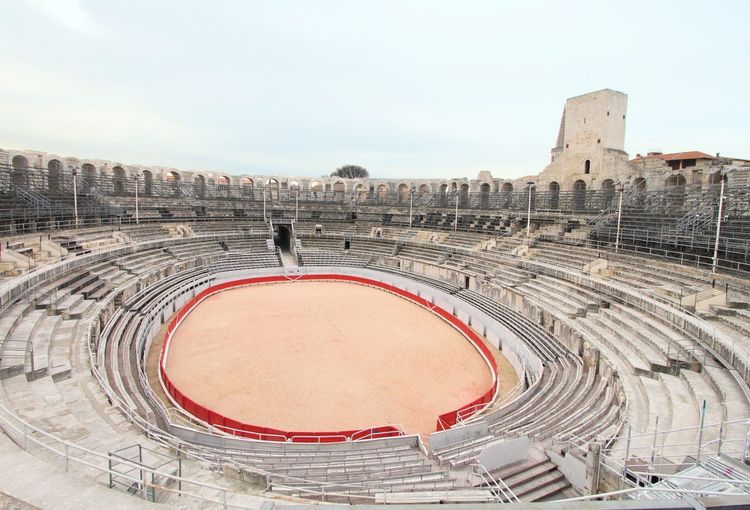
The Arènes d'Arles kick things off. Built at the end of the 1st century, this amphitheatre could hold up to 20,000 spectators in Roman times — almost as many as the current population of the city centre. Listed as a UNESCO World Heritage Site since 1981 along with the rest of the city's Roman and Romanesque monuments, the arena still hosts ferias and shows in summer: a fun thread to follow, imagining the gladiators of yesterday alongside today's bulls.
The north tower can be climbed freely (narrow stairs, best avoided with a pushchair) and offers a panoramic view over the pink-tiled rooftops and the Rhône below. A good portion of the arena floor is still visible, which helps younger visitors picture the space as it was once used. Admission is around ten euros for an adult; under-18s enter free.
Five minutes' walk away, the ancient theatre of Arles tells a different story. Built under Augustus at the end of the 1st century BC, it predates the arena by nearly a century and retains only two marble columns from its original stage wall, known locally as "les deux veuves" (the two widows). The tiered seating still serves as a stage for summer festivals, and lends itself to a fun acoustics game: post one member of the group at the top of the tiers, another on the orchestra floor, and whisper to test the echo.
Heading back down towards the riverbanks, the Thermes de Constantin complete the loop. These 4th-century Roman baths, built beside the Rhône to make use of the river's water, can be visited in fifteen minutes — more than enough to hold the attention of a child under 6. The underfloor heating system, the hypocaust, whose brick pillars are still clearly visible, lends itself to a simple explanation: hot air circulated beneath the floor like a giant radiator, centuries before the concept existed.
Start at the arena early in the morning, before the sun beats down on the pale stone: in summer, the heat rises quickly in this largely shadeless space. A drinking fountain is located near the site entrance, handy for filling water bottles before moving on to the other two stops.
Cathédrale Saint-Trophime and the Musée de l'Arles Antique
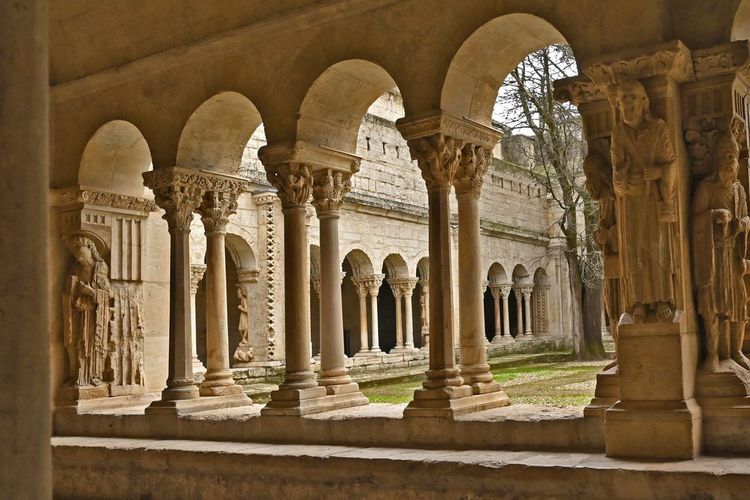
The sculpted portal of the cathédrale Saint-Trophime ranks among the masterpieces of Provençal Romanesque art, listed by UNESCO alongside the arena. Its tympanum depicts the Last Judgement with a level of detail that lends itself to a simple game: set the group a hunt for the lion, the angel, and the apostles carved into the stone. Ten minutes is enough for this little inventory — plenty to capture attention before stepping inside, where admission is free.
The adjoining cloister, however, requires a ticket to visit and blends Romanesque and Gothic styles across its galleries, with carved capitals depicting biblical scenes and plant motifs. It is a calm space, partly open to the sky, where younger visitors can stretch their legs between rooms without disturbing anyone. Visitors in a hurry can limit their stop to the cloister alone, which takes about twenty minutes to walk around, and climb to its terrace for a bird's-eye view of the city.
A little further along, on the peninsula that borders the ancient Roman circus, the musée départemental Arles antique (Presqu'île du Cirque Romain, 13200 Arles, rated 4.6/5 on Google from 3,905 reviews) impresses first with its architecture by Henri Ciriani: a long blue triangle that stands out sharply against the ochre facades of the city centre. Inside, the star exhibit is the Roman barge Arles-Rhône 3, a 31-metre vessel spotted on the bed of the Rhône in 2004, raised in 2011, and on display since 2013 in a wing built especially for it. The giant boat holds attention far longer than the mosaic cases, which are nonetheless impressive in their own right.
The museum is fully accessible by pushchair throughout, and under-18s enter free. Allow 45 minutes to an hour with young visitors, or twice as long if you linger over the explanations around the mosaics, sarcophagi, and the scale model of the ancient city. Two hands-on activity rooms provide a breather midway through.
LUMA Arles: Contemporary Art, Slides, and Workshops
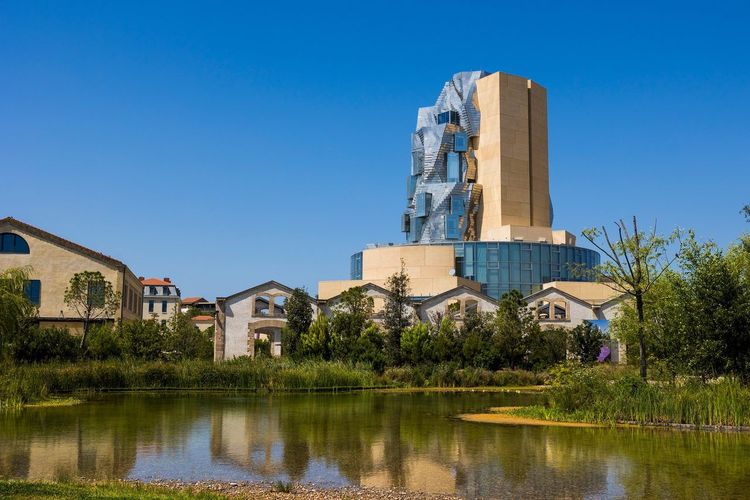
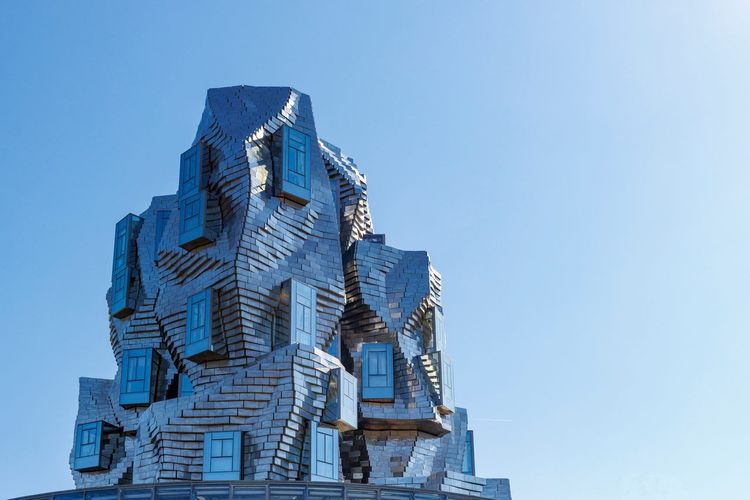
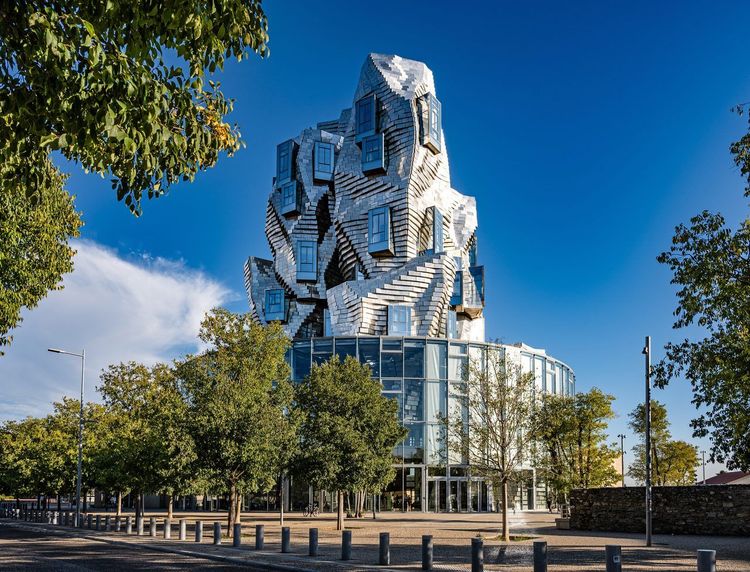
Since its opening in 2021, the Frank Gehry-designed tower that dominates the former Parc des Ateliers of the SNCF has become as recognisable as the arena in holiday photos. The LUMA Foundation, backed by patron Maja Hoffmann, has transformed these former railway yards into a vast contemporary art site where works are not merely looked at but actively experienced. The site covers around ten hectares, a quarter of an hour's walk from the SNCF station and ten minutes from the arena, making it easy to slot into a day already packed with Roman monuments.
Several former industrial sheds have been preserved and repurposed, giving the place an atmosphere quite unlike the rest of the city: rawer, more contemporary, almost disorienting after a morning spent among ancient stones. It is often the most unexpected half-day of the trip — neither a classic museum nor an amusement park, but something of both.
Children's Sessions and Workshops
LUMA Arles (33 Avenue Victor Hugo, 13200 Arles, rated 4.4/5 on Google from 4,543 reviews) runs a recurring "children's session", led by cultural mediators who invite younger visitors to observe, handle, and create in connection with the current exhibitions. During school holidays, a dedicated programme takes over: thematic workshops linked to the Tower, the garden, or works currently on show, designed for learning through making rather than listening to an adult standing in front of an artwork.
These guided visits often combine architecture, industrial heritage, and contemporary creation — a blend that speaks equally to curious adults and children in need of movement. Several time slots are offered each week during school holidays, on a reservation basis with limited capacity: check the current programme before you visit, as footfall varies greatly depending on the exhibitions showing.
The Tower, the Garden, and the Works to Explore
The Tower can be visited all the way to the upper floors, where the view opens out over the Camargue plain and the rooftops of Arles. But what visitors under 12 tend to remember most are the steel slides by artist Carsten Höller that wind down the lower levels, and the large colourful skate park installed at the foot of the building — a work by Koo Jeong A that turns phosphorescent at nightfall. Here, art is something you experience by sliding or skating rather than simply by looking.
At the foot of the Tower, the garden designed by landscape architect Bas Smets spreads its Mediterranean groves, ornamental grasses, and a pool across a fully reclaimed former industrial site. This outdoor space, freely accessible year-round, is perfect for a picnic break or an impromptu run while parents catch their breath on a shaded bench among the pine trees.
Practical Information: Tickets, Pushchairs, and Nursing Room
LUMA offers a family exhibition ticket at a reduced rate from the second accompanying adult, as well as a fun exploration booklet handed out at the entrance to turn the paid exhibition visit into a puzzle trail. Some areas of the site remain freely accessible (garden, skate park, the children's corner of the bookshop-boutique), while others require a ticket for the Tower's temporary exhibitions. Prices vary according to the current programme; budget more during the major summer exhibitions.
The site is broadly accessible by pushchair, with toilets and a nursing area provided for visitors with babies. Allow time for a stop at the bookshop-boutique, which has a corner stocked with books and small objects at children's height, or at the site café for a rest before heading back to the historic centre.
Farm Visits, Wildlife Parks, and Free Activities in Arles

Spreading the budget over several days often comes down to these lesser-known addresses. On the outskirts of the city, several educational farms in the Arlesian countryside welcome visitors to feed goats, donkeys, and chickens — generally by reservation in the morning, outside the hottest hours of the day.
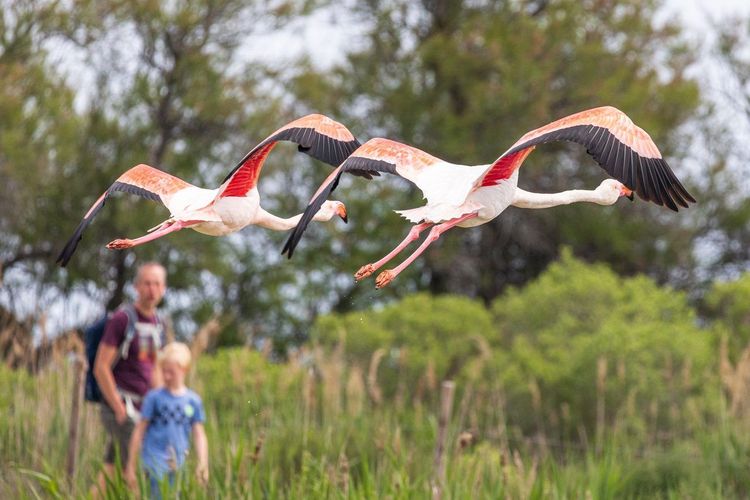
For a wilder encounter with Camargue wildlife, the Marais du Vigueirat nature reserve (Mas Thibert, 13104 Arles, rated 4.4/5 on Google from 1,076 reviews), about twenty minutes from the centre near Mas-Thibert, offers waymarked boardwalk trails, carriage rides, and guided outings in search of herons, semi-wild Camargue horses, and occasional passing flamingos. The walks are short and flat, suitable for all-terrain pushchairs and first-time walkers alike.
A question that comes up frequently: is there a theme park in Arles? The answer is no, and you will need a car to find one nearby. The zoo at La Barben, about three-quarters of an hour away, is the most accessible option with its open-air enclosures; Parc Spirou in Monteux is a good hour's drive but delivers the rides and roller coasters that thrill-seekers demand. Over the course of a two-day stay, these outings are best kept in reserve as an alternative for days of persistent mistral.
On the free side, the banks of the Rhône provide a long promenade where children can run without worry, and the Jardin d'Été, just behind the ancient theatre, offers shaded paths, a pool, and a playground — the most convenient break in the historic centre. The Saturday morning market on the boulevard des Lices easily becomes a game of smells and colours, and the Wednesday version on the boulevard Émile Combes is quieter. Finally, the garden of the Parc des Ateliers next to LUMA is freely open year-round: a welcome alternative when the budget has already taken a hit from the paid monuments in the centre.
The Camargue from Arles
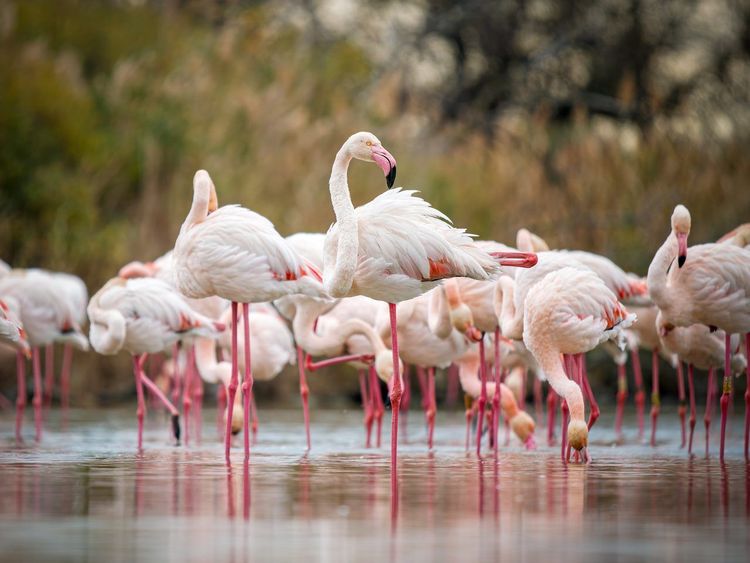
Twenty minutes by road is all it takes to leave the Roman stones behind and enter an entirely different landscape: the Rhône delta, a regional natural park where flamingos roam alongside white horses and black bulls raised in manade herds. To explore this stage further, the Ryo article on the Camargue's must-sees details the best observation spots by season.
4x4 Safari and the Parc Ornithologique de Pont de Gau
Several operators offer Camargue safaris by 4x4, usually in small groups, driving close to the marshes without disturbing the wildlife. Allow one to two hours depending on the package: enough to spot herds of bulls and Camargue horses, though flamingos — more unpredictable in their movements — are never guaranteed. Departures are often from a mas and bookings are recommended the day before in high season.
For a more reliable sighting, head to the parc ornithologique de Pont de Gau, about 40 minutes from Arles towards Les Saintes-Maries-de-la-Mer. This site of around sixty hectares lets birds roam semi-freely along trails that are partly on boardwalks and largely pushchair-friendly. Flamingos can be seen here almost year-round, with the most vivid colours in spring and summer, and observation platforms allow you to watch them take flight just a few metres away.
If direct contact with the animals is more your preference, the Ryo guide to horse riding in the Camargue lists equestrian centres that offer outings for beginners, on horses known for their calm temperament. Most accept riders from age 6 or 8 depending on the centre.
Salt Pans, Beaches, and Camargue Landscapes
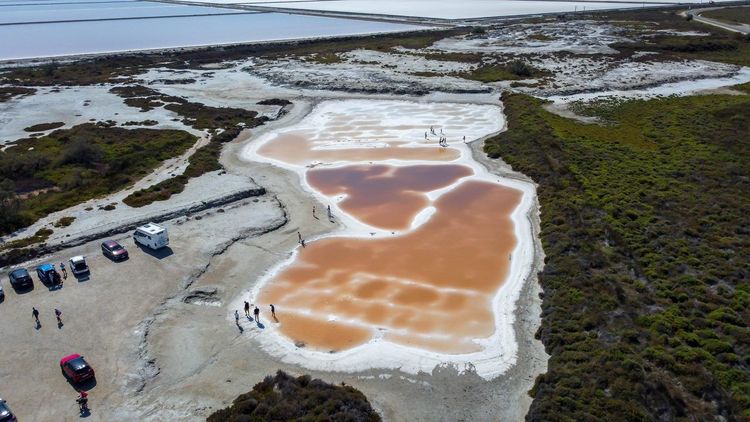
Further south, the Salin de Giraud (Salin de Giraud, 13129 Arles) reveals an almost lunar landscape: pink and white evaporation pools, salt mountains known locally as "camelles", and a briny smell strong enough to leave a lasting holiday memory. The visit is mostly done by car, with a viewpoint overlooking the salt tables and a few photo stops along the road; allow a good half-day if you push on to the wild nearby beaches at Piémanson.
As for swimming, the Camargue beaches are unspoilt, without lifeguards or extensive facilities: bring sun cream, water, and a parasol, as shade is non-existent. For an aquarium as such, there is nothing in Arles itself: the Seaquarium du Grau-du-Roi (Avenue du Palais de la Mer, 30240 Le Grau-du-Roi, rated 4.3/5 on Google from 21,084 reviews), about an hour's drive away, is the closest option, with its touch pools, shark tank, and seals that are a hit with children aged 5–12.
Day Trips to the Alpilles and Nearby Towns
Arles lends itself as well to full days on-site as to half-day escapes into the surrounding countryside or nearby towns. Enough to plan a getaway without ever driving more than three-quarters of an hour.
Abbaye de Montmajour and the Alpilles Regional Park
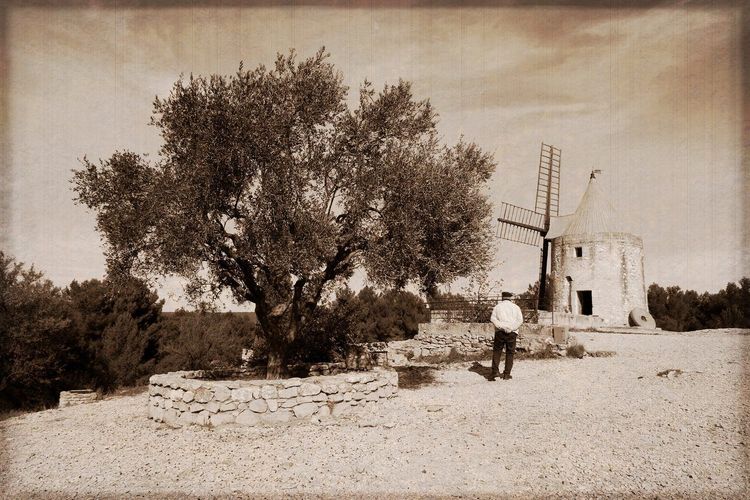
About ten minutes by road, the abbaye de Montmajour (Route de Fontvieille, 13200 Arles, rated 4.6/5 on Google from 2,015 reviews) sits on a rocky outcrop that once dominated the surrounding marshes before they were drained. Founded in the 10th century by Benedictine monks, it combines a massive keep, the troglodytic Sainte-Croix chapel, and a Romanesque cloister — enough to fill a pleasant hour, with an unobstructed view of the plain from the top of the tower that is often the favourite moment for young climbers. Van Gogh set up his easel here several times during his stay in Arles.
A little further on, the parc naturel régional des Alpilles unfolds its limestone hills and olive groves. Several operators offer 4x4 safaris here too, this time to explore holm oak woodland, limestone quarries, and the remains of old mills rather than spotting flamingos. The Ryo guide to the most beautiful villages of the Alpilles details three stops not to be missed if you extend the outing.
Nîmes and Aigues-Mortes
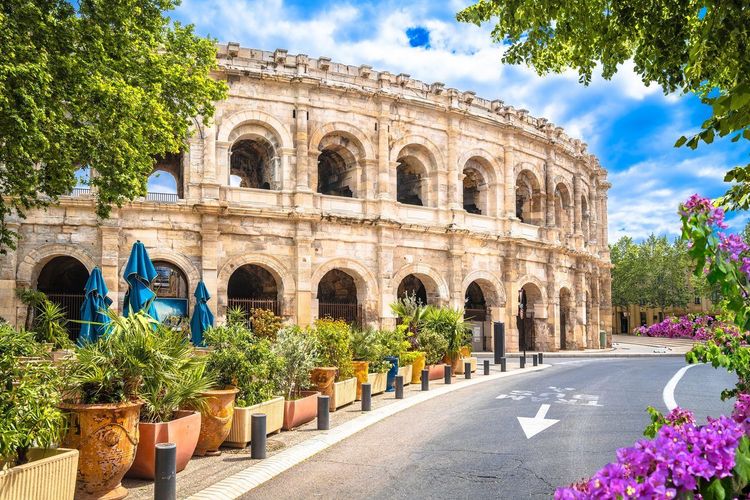
Thirty-five minutes by road, Nîmes plays the game of friendly rivalry with Arles: its amphitheatre, one of the best-preserved in the Roman world, can be visited with an audio guide, and the Jardins de la Fontaine offer a large shaded park with pools and steps to explore after the visit.
In quite a different direction, Aigues-Mortes offers a very different experience. This fortified medieval town, set amid the salt marshes of the Gard three-quarters of an hour from Arles, is best explored by walking along the top of its ramparts, with views that change at every tower. The "full-scale castle" feel, so different from the Roman ruins seen that morning, works at every age, and the Salins du Midi petit train rounds off the visit with a loop through the pink salt tables. Back in Arles, the audio-guided tour of the city covers that same Roman morning at your own pace.
What to Do in Arles by Season
Summer Activities in Arles
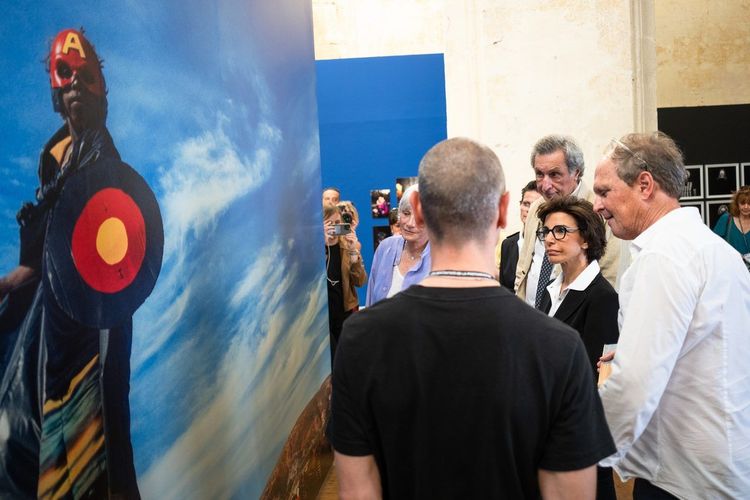
Summer concentrates most of the action: the Rencontres d'Arles, an international photography festival that takes over warehouses and private mansions from July to late September; the Suds à Arles world music concerts in July; the ferias and their street processions; and the LUMA tower lit up in the evenings. The long days allow you to slot in a Camargue outing in the morning before the heat builds, then a stroll through the historic centre in the late afternoon in the shade of the narrow streets. Hats and sun cream become essential from June onwards, as temperatures rise quickly above the pale stone monuments.
Winter Activities in Arles
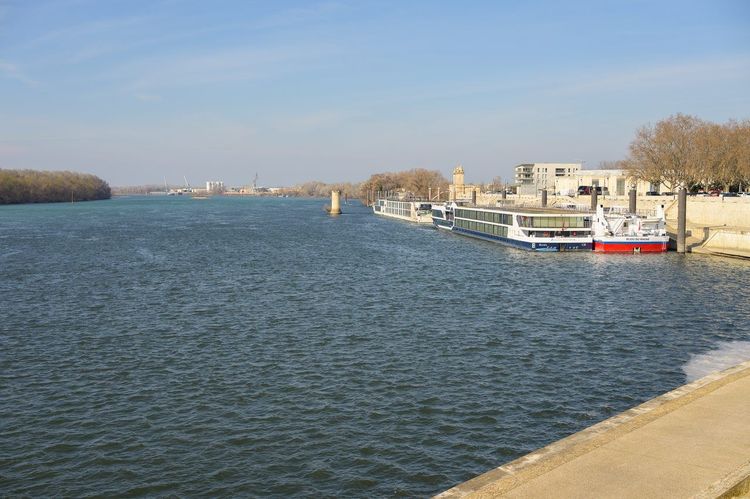
Out of season, the city can be explored with far fewer people around the monuments — which makes all the difference when nobody can stand queuing. The museums, particularly the musée départemental Arles antique and LUMA, become comfortable refuges on mistral days. The Christmas market along the central allées, the Provençal crèches and santons figures complete the atmosphere in December, with accommodation prices noticeably kinder than at the height of summer. The Easter feria, meanwhile, marks the true start of the season in spring.
Where to Stay in Arles: Hotels, Apartments, and Campsites
Three criteria simplify the search: proximity to the historic centre to limit car journeys, a pool to decompress after a day of sightseeing, and interconnecting rooms or extra beds to avoid booking twice.
The Sowell hotels in Arles tick a good number of these boxes, with a positioning that is often slightly out of the centre but easily accessible by car — practical if you are heading out to the Camargue or the Alpilles from the hotel rather than from the city centre. To do everything on foot, it is better to aim for an establishment within the old town, even if that means giving up the pool: the centre can be crossed in fifteen minutes on foot from end to end.
Travellers with a tent or a motorhome will find several shaded sites on the outskirts, often with a pool and a playground: the most economical option for a multi-night stay between monuments and the Camargue. Mas farmhouses and gîtes in the Arlesian countryside are more peaceful but require taking the car for every visit.
Book early if your stay falls during the Rencontres d'Arles or a feria: the city's hotel capacity, rather limited for such a popular destination, fills up fast in July and August. The audio-guided tour of Arles remains useful once you are on the ground for organising your days without depending on the hotel's wifi.
Visiting Arles in 2 Days: Our Itinerary
There remains the most practical question when planning a short trip: in what order to tackle it all? Here is a tried-and-tested framework, designed to alternate walking, breaks, and discovery without exhausting the youngest members of the group.
Day 1: Historic Centre and Roman Monuments
Start early at the arena, before the heat builds on the pale stone, then continue on foot to the ancient theatre five minutes away. Take a drinks break around 10:30, giving everyone time to recharge before the cathédrale Saint-Trophime and its cloister, where hunting for carved details keeps children occupied right up to lunchtime.
Plan lunch on or near the place du Forum, lively and shaded, before gently resuming with the Thermes de Constantin, a quick visit. In the early afternoon, head to the musée départemental Arles antique for the giant Roman barge: a good way to sit down in an air-conditioned space during the hottest hours of the day.
End the day by strolling along the banks of the Rhône until sunset — a flat, open promenade where children can finally run freely after a day spent walking at adult pace. To follow this loop without pulling out a paper map at every junction, the Ryo audio guide, with its 18 audio tracks covering approximately 1h30 of listening over 3.7 km, guides you step by step through the monuments of the historic centre.
Day 2: Camargue and Fresh Air
Switch scenery completely from the morning with a 4x4 safari or a visit to the parc ornithologique de Pont de Gau, depending on whether your group prefers off-road adventure or peaceful birdwatching. Allow the whole morning for this nature segment, including travel time.
Have lunch with a Camargue speciality — bull or Camargue rice depending on the restaurant — before choosing between two afternoon options: pushing on to the Salin de Giraud for its pink landscapes, or heading back to Arles to spend two to three hours at LUMA, between the garden, the Tower slides, and a workshop if the schedule allows. With very young children, LUMA often wins out: it is closer and less tiring than an additional round trip to the delta.
Finish with a last spin around the market or a stop at an ice cream shop in the centre before heading home, keeping in mind that most monuments close around 6–7 pm in season and from 5 pm in winter.
Practical Guide for Planning Your Stay in Arles
Parking and Getting Around in Arles
The historic centre is entirely walkable, which simplifies logistics but complicates parking: it is far better to park once and for all rather than search for a spot at each stop. The Parking des Lices, on the edge of the centre, is the most practical option for a day of sightseeing; from there, everything can be done on foot, with distances between monuments rarely exceeding ten minutes' walk.
Beyond the Parking des Lices, several peripheral car parks allow you to reach the centre in a few minutes, and the urban bus network serves the outer districts if your accommodation is far from the old town walls. For the Camargue, the Alpilles, or Aigues-Mortes, a car is essential: none of these sites is effectively served by public transport from Arles.
Arles Pass, Tickets, and Budget
A monuments pass bundles access to the main ancient sites (arena, theatre, baths, cloître Saint-Trophime, musée départemental) at a price considerably lower than the sum of individual tickets, at around twenty euros per adult depending on the option chosen. It is free for under-18s, as are most of the monuments when purchased separately. Compare it against what you actually plan to visit, however: for just two or three sites, individual tickets can sometimes work out cheaper.
Bear in mind that several activities are free (the banks of the Rhône, the Jardin d'Été, the market, the LUMA garden), which helps offset a budget quickly inflated by city-centre admissions and excursions to the Camargue or the Alpilles. A 4x4 safari or entry to the Seaquarium weighs far heavier on the budget than a day of ancient monuments.
Travelling with a Baby or a Pushchair
The cobbled streets of the city centre, photogenic but uneven, make progress difficult with a standard pushchair: an all-terrain model or a baby carrier will make getting around considerably easier, especially around the arena and the ancient theatre. LUMA and the musée départemental Arles antique, on the other hand, are perfectly accessible with a standard pushchair, with flat floors throughout.
Pack a change of clothes and some snacks: toilets with changing tables are mainly found at the larger sites (LUMA, musée départemental) rather than in the streets of the historic centre. A reusable water bottle, filled at the public fountains dotted around the centre, avoids buying water at every stop, and shade should be sought consistently between 1 pm and 4 pm from June to September.

FAQ
How much time should I plan for a family stay in Arles?
Allow a full day for the historic centre and LUMA, two days if you add a trip into the Camargue. Three days allow you to also fit in an excursion to the Alpilles or to Nîmes and Aigues-Mortes at a leisurely pace.
Which guided tours are best for visiting Arles with young travellers?
The Ryo audio-guided tour of Arles covers the ancient monuments in the centre in about 1h30, complementing the occasional guided visits offered at LUMA and the musée départemental Arles antique, which are often tailored to children aged 6–12.
Which Roman monuments can be discovered in the historic centre of Arles?
The arena, the ancient theatre, and the Thermes de Constantin form the essential trio, all clustered within ten minutes' walk of each other, with the cathédrale Saint-Trophime and its cloister right next door. The remains of the Roman circus can be made out near the musée départemental.
What role does the Camargue play in a stay in Arles?
The Camargue deserves at least half a day, ideally a full day combining a 4x4 safari, the parc ornithologique de Pont de Gau, and the landscapes of the Salin de Giraud, located twenty to forty minutes by road depending on the sites.
Is it easy to organise a day trip to the towns near Arles?
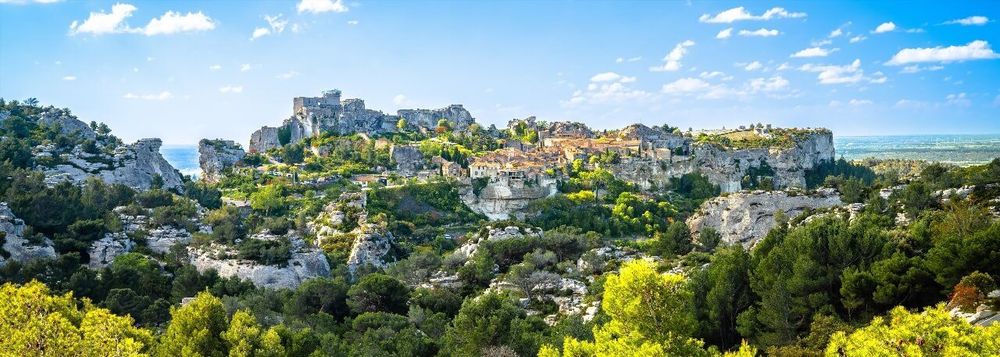
Yes: the abbaye de Montmajour is ten minutes away, Nîmes is thirty-five minutes, and Aigues-Mortes and Les Baux-de-Provence are about three-quarters of an hour. All these excursions fit into half a day.
Are there free activities to do in Arles with young children?
Yes: the banks of the Rhône, the Jardin d'Été with its playground, the Saturday market on the boulevard des Lices, and the garden of the Parc des Ateliers near LUMA are all freely accessible year-round — a great way to keep the cost of paid admissions in check.
Where can I park easily in Arles when travelling with a pushchair?
The Parking des Lices, on the edge of the historic centre, is the simplest solution for parking once and exploring on foot, supplemented by several cheaper peripheral car parks for full-day stays.
Between Roman stones, a contemporary garden, and the wide-open spaces of the Camargue, Arles lends itself to a surprisingly flexible visiting pace for a city so rich in heritage. Whether you stay for a day or spread the trip over a long weekend, the essentials fit within a few square kilometres around the historic centre, rounded out by a handful of easy excursions to improvise.
Before you leave, download the Ryo audio-guided tour of Arles to turn your morning in the historic centre into a treasure hunt rather than a simple checklist of monuments to tick off — a straightforward way to keep everyone engaged, pushchair or not, from the first tier of the arena to the last pink salt pan of the Camargue.
À lire également