© Shutterstock
 Votre guide Ryo
Visiting Arles in 2 Days: Complete 2026 Itinerary Between Ancient Rome, Van Gogh, and the Camargue
In Arles, you walk on Antiquity without even realizing it: the tiers of the Arènes still serve as stands for Camargue races, and the underground floor of the Roman forum hides galleries open to the public. Visiting Arles in 2 days means making choices, as the city alone concentrates some of the best-preserved ancient heritage in France, the imprint of Van Gogh's stay, and the gateway to the Camargue. The Ryo audio guide for Arles is designed precisely for this kind of compact stay, where every hour of sightseeing needs to count.
In a well-paced forty-eight hours, you explore a Roman amphitheater nearly 2,000 years old that still welcomes more than 12,000 spectators today for the feria, you follow Van Gogh's footsteps from a drawbridge painted in 1888 to a hospital garden restored to its original state, you come across flamingos less than 40 minutes away by road, and you cover the main highlights of the city center on foot or by tourist train. This day-by-day itinerary covers the Arènes, the Théâtre antique, the cryptoportiques, the Alyscamps, the Fondation Van Gogh, the museums, the Camargue, and the best addresses for eating and sleeping, with all the practical information needed to organize your stay without surprises.
Day 1: the Arènes, the Théâtre antique, and the Roman Historic Heart
Dedicate the morning of your first day to the ancient triangle of Arles: three Roman monuments that can be visited on foot in half a day, with no need for a car. The Ryo audio guide for Arles covers exactly this area across 19 audio tracks spread over about 1h30 of walking, a useful reference if you prefer to follow a thread rather than improvise between monuments.
The Arènes and the Théâtre antique of Arles
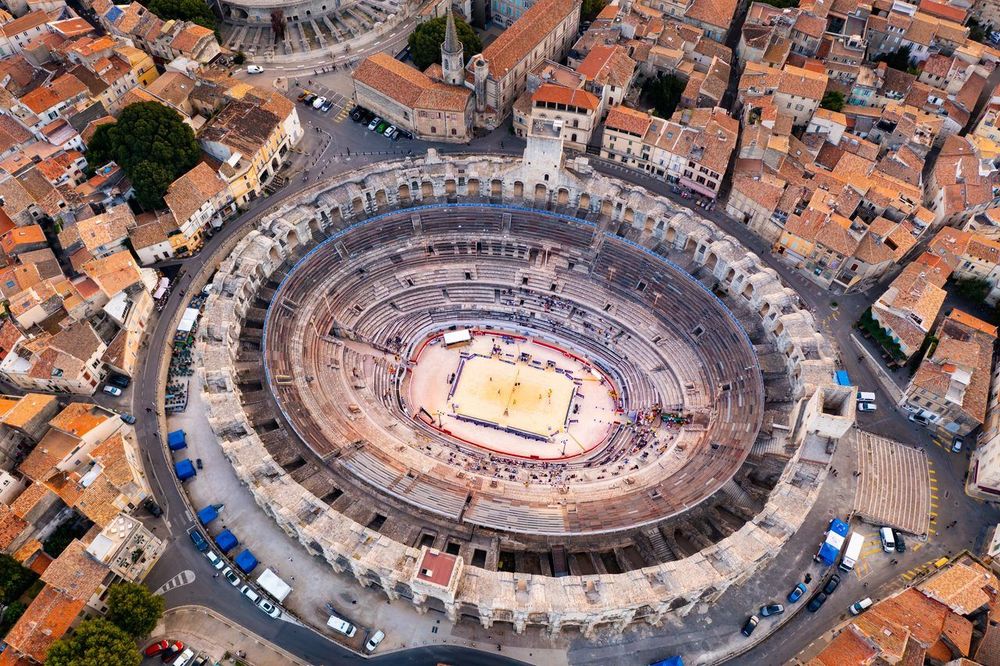
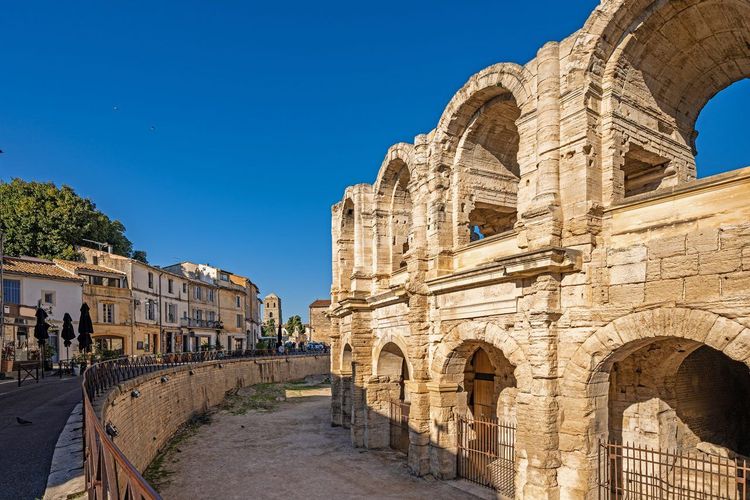
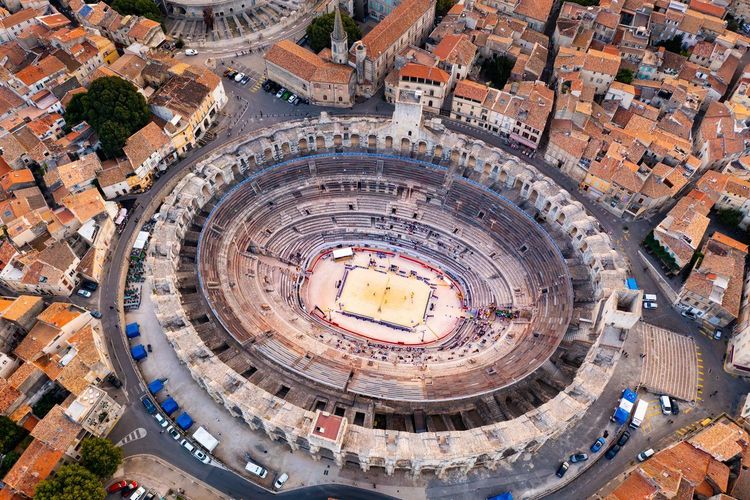
The Arènes d'Arles, a Roman amphitheater built between 80 and 90 AD under Domitian, rank among the best preserved in Europe, with their two levels of arcades still intact around almost the entire perimeter. Its ancient capacity is estimated at between 20,000 and 25,000 spectators; today, with safety regulations in force, the stone tiers accommodate around 12,500 people during the Easter feria or the rice feria in September, when the monument reclaims its original purpose.
Climb up to the north tower if access is open on the day of your visit: the view sweeps across the pink-tiled rooftops, the Rhône, and, on a clear day, the first ridges of the Alpilles. It is a good moment to grasp the scale of the ancient city, which was far larger than the present-day center. The amphitheater, the theater, and all the Roman monuments of the city have been listed as UNESCO World Heritage Sites since 1981, as part of the Roman and Romanesque Monuments of Arles.
Buy a monuments pass rather than individual tickets: sold at the Arènes ticket office and at the tourist office, it grants access to the ancient and medieval sites of the city as well as to the municipal museums, at a price well below the sum of individual admissions. Two options exist, one covering all the sites and the other limited to a smaller selection: ask at the counter for details based on how many monuments you actually plan to visit over two days. Aim to arrive early in the morning during high season, as the white stone radiates intense heat from 11am onwards in summer.
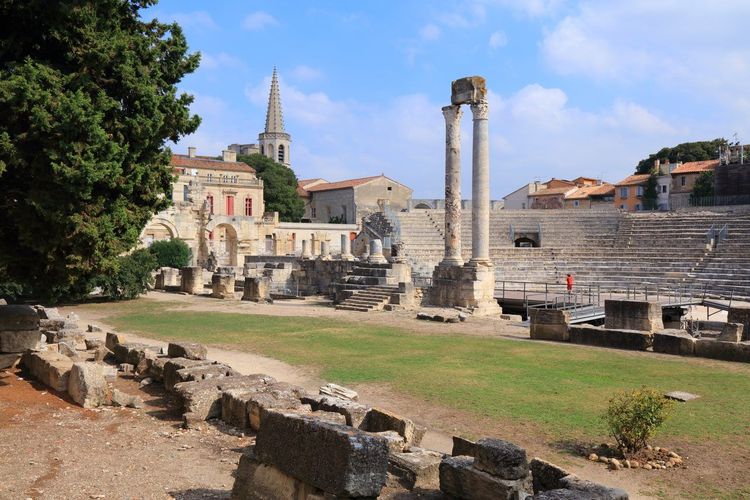
Two minutes' walk away, the Théâtre antique of Arles dates from the reign of Augustus, a century before the Arènes. Only two marble columns remain standing, locally nicknamed "les Deux Veuves" (the Two Widows), but the restored tiers are enough to conjure up the 8,000-seat original.
The site continues to live: every summer it hosts open-air concerts and part of the city's cultural programming. If you visit outside the performance season, the place is surprisingly quiet, almost deserted by late morning, making it a pleasant break between two more intense visits. A detail few visitors notice: the Venus of Arles, discovered here in 1651 in the rubble of the stage, is now on display at the Louvre, and only a copy recalls her presence on site.
The Cathedral and Cloister of Saint-Trophime
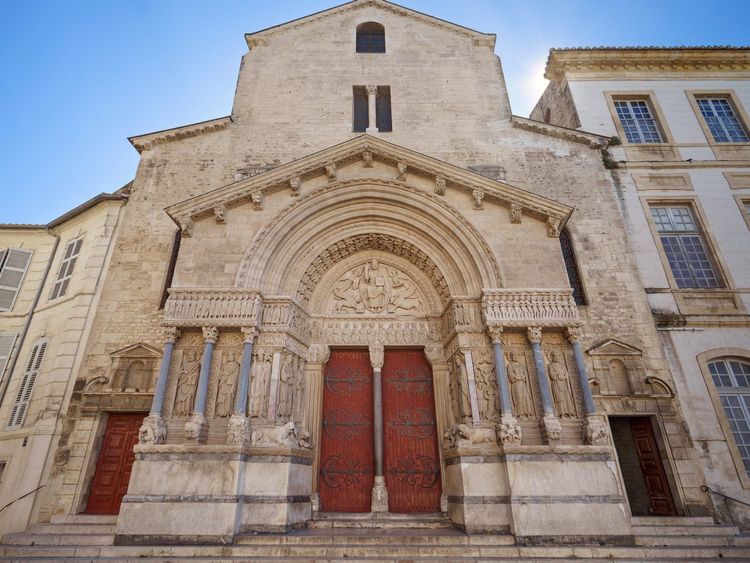
The cathédrale Saint-Trophime, on the place de la République, displays a Romanesque portal carved in the 12th century considered one of the masterpieces of Provençal Romanesque art. The Last Judgment scenes carved above the entrance are worth a ten-minute pause before going inside.
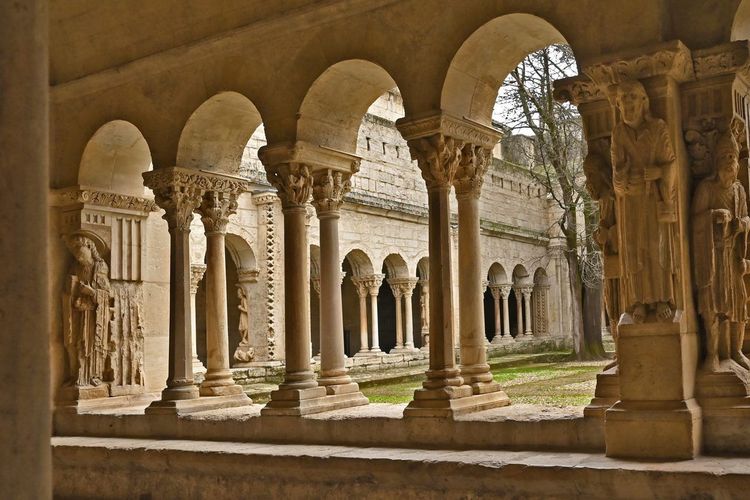
Adjoining the building, the cloître Saint-Trophime blends Romanesque and Gothic galleries around a square garden. The sculpted capitals tell the lives of Provençal saints, a level of detail that few visitors take the time to appreciate, even though it constitutes one of the best-preserved ensembles of its kind in France. Climb to the terrace overlooking the galleries: it offers a commanding view of the place de la République and the bell tower, and remains surprisingly uncrowded.
The whole site takes about half an hour to explore; entry to the cathedral is free, the cloister is paid and included in the pass. If you only have a short slot in your morning, prioritize this site early: tour groups generally arrive around noon.
The Thermes de Constantin
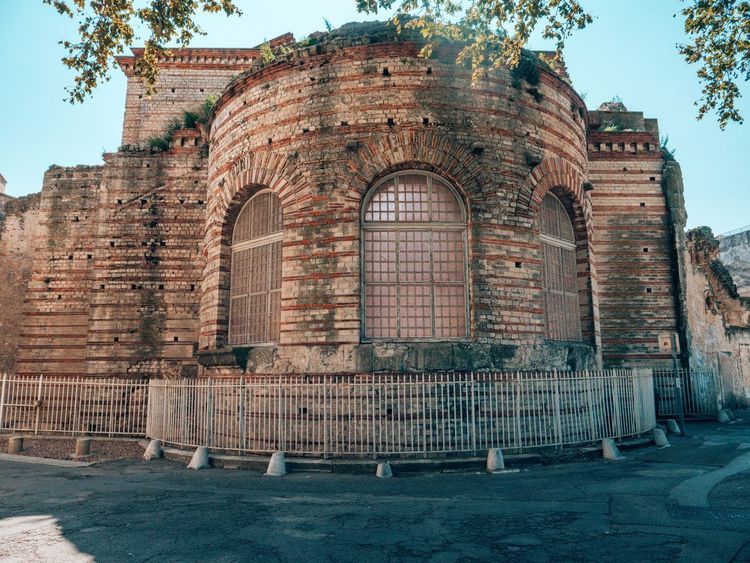
The Thermes de Constantin, built in the 4th century under the reign of the emperor of the same name, sit slightly below street level, almost on the banks of the Rhône. Only the hot section, the caldarium, survives, with its underfloor heating system still legible in the brick structure.
The site is modest compared to the Arènes — ten minutes is enough to walk around it — but it usefully completes the reading of the Roman city: Arles was for a time an imperial capital, residence of Constantine and then seat of the Prefecture of the Gauls, and these baths are one of the rare surviving visible witnesses to that era. The entire ancient triangle — Arènes, Théâtre, and Thermes — can be covered on foot in less than two kilometers, meaning you can visit Arles on foot for this first half-day without ever needing a vehicle.
Strolling Through the Historic Center and the Alyscamps
After the lunch break, change pace: the afternoon lends itself to a relaxed walk without a strict itinerary, between the city center and the ancient necropolis of the Alyscamps, about fifteen minutes to the south.
The Cobbled Streets and Squares of the City Center
The historic center of Arles is best discovered without a precise map, wandering through cobbled lanes that wind between ochre facades and blue shutters. The place du Forum, shaded by plane trees, brings together several café terraces, the statue of Frédéric Mistral inaugurated in his lifetime in 1909, and the yellow facade of the café made famous by Van Gogh. Two ancient columns embedded in a hotel facade signal that you are standing on the site of the old Roman forum.
Beneath your feet lies one of the most surprising sites in the city: the cryptoportiques, a U-shaped double underground gallery dug in the 1st century BC to support the forum's platform. You descend into them from the former Jesuit college on rue Balze, and walk through nearly 90 meters of dark, cool vaults — even in August — where the silence cuts sharply against the buzz of the terraces just above. Allow twenty minutes, bring a light layer and shoes that can handle the damp: it is the stop that leaves the strongest impression on visitors, and rarely the one they had planned for.
Continuing south, the place de la République opens wide in front of the town hall, the cathedral, and a granite obelisk from the ancient circus, erected here in the 17th century. The boulevard des Lices, a few streets away, hosts the large Saturday morning market, one of the most renowned in Provence for local produce and Provençal fabrics.
You do not need to look for a precise route in this neighborhood: the lanes all converge toward one of the three main squares, and getting deliberately lost for an hour remains one of the best ways to absorb the Provençal atmosphere of the city, amid fruit stalls, craftsmen's workshops, and facades that have barely changed since Van Gogh passed through.
The Alyscamps Necropolis
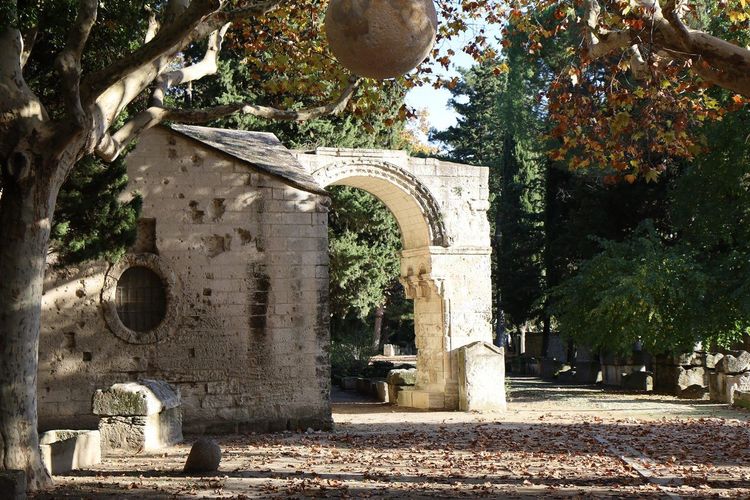
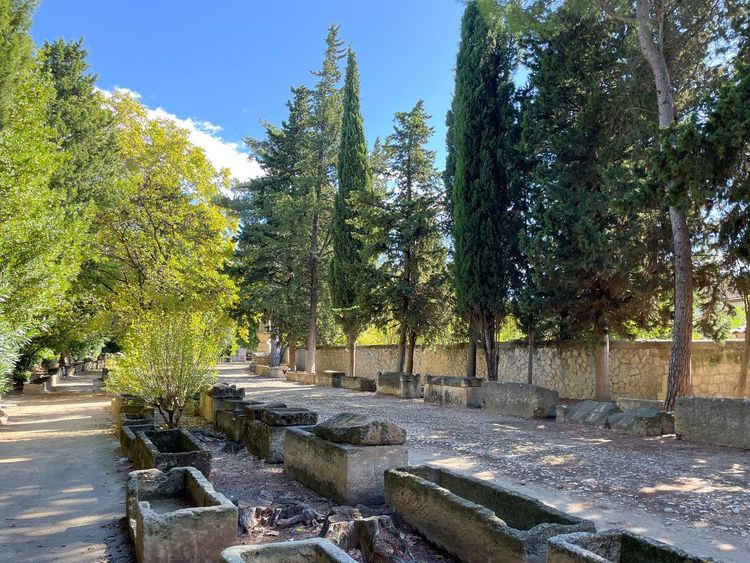
The Alyscamps take their name from "Elysii Campi", the Elysian Fields, a Gallo-Roman and early Christian necropolis that was for centuries one of the most prestigious burial sites in the Western world. A long avenue lined with stone sarcophagi, some still bearing carved motifs, leads to the ruined church of Saint-Honorat at its far end.
The site inspired several famous paintings, made by Van Gogh and Gauguin just a few meters apart during their shared stay in the autumn of 1888. The late-afternoon light, when the sun filters through the row of plane trees, almost exactly reproduces the atmosphere of those canvases. Some of the finest sarcophagi have left the site over the centuries, gifted to notable visitors or transferred to the departmental museum: what you see today is only a remnant of a necropolis that once held several thousand tombs.
Allow 30 to 40 minutes for the visit, longer if you walk to the church. Entry is included in the monuments pass, and the site remains far less crowded than the Arènes, making it a restful stop at the end of the day before heading back into the center for dinner.
In the Footsteps of Vincent van Gogh in Arles
Vincent van Gogh lived in Arles for only fifteen months, from February 1888 to May 1889, yet he produced more than 300 works there, including several among the most famous in the world. A curious fact: no original painting from this period is permanently on display in the city — all have gone to international museums — so the experience of Arles is about rediscovering the places rather than the canvases themselves.
The Fondation Vincent Van Gogh
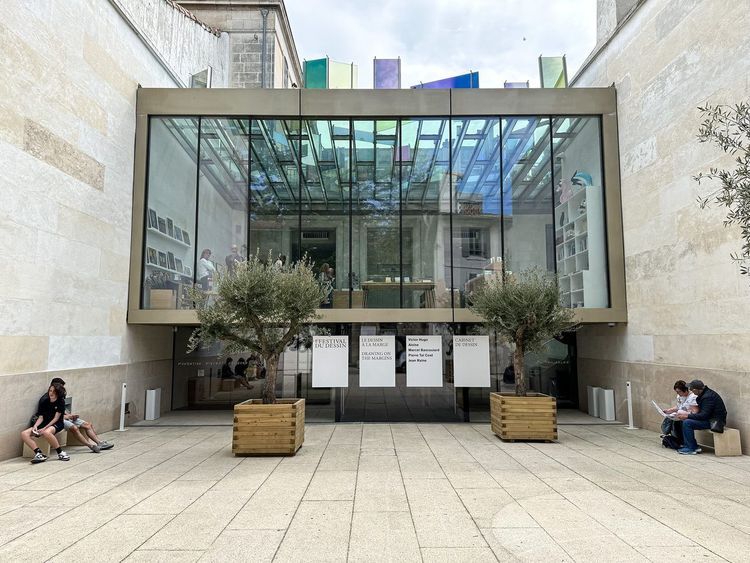
Located in the Hôtel Léautaud de Donines, in the heart of the historic center, the Fondation Vincent Van Gogh does not hold a permanent collection of the painter's work, but organizes temporary exhibitions combining works on loan from major institutions with creations by contemporary artists inspired by his time in Arles.
The program changes every year, making it worth a visit even for those who have already been to Arles before. Allow an hour, go up to the rooftop terrace on fine days, and check opening times online before you go: the foundation closes on certain Mondays outside the peak season.
The Van Gogh Trail and the Espace Van Gogh
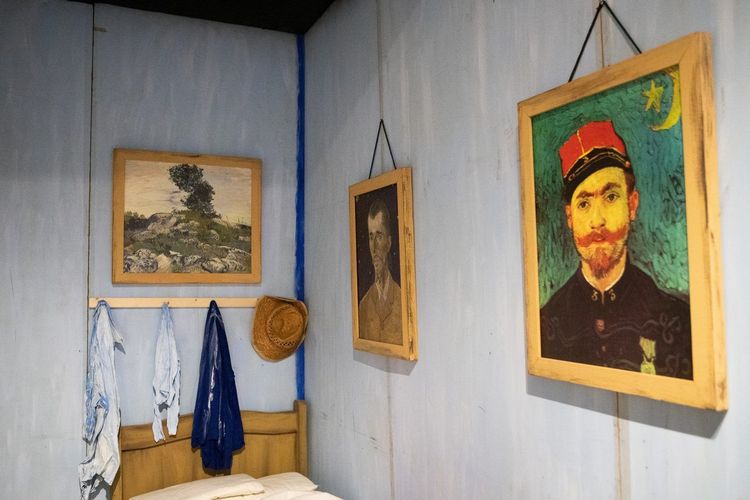
A trail of panels scattered throughout the city reproduces about a dozen paintings made by the artist at the exact spot where he set up his easel. The best known is on the place du Forum, where the café he immortalized under a brilliant yellow light still exists, virtually unchanged. Others dot the banks of the Rhône, where he painted the Starry Night Over the Rhône, and the place Lamartine, where the yellow house destroyed in the 1944 bombings once stood.
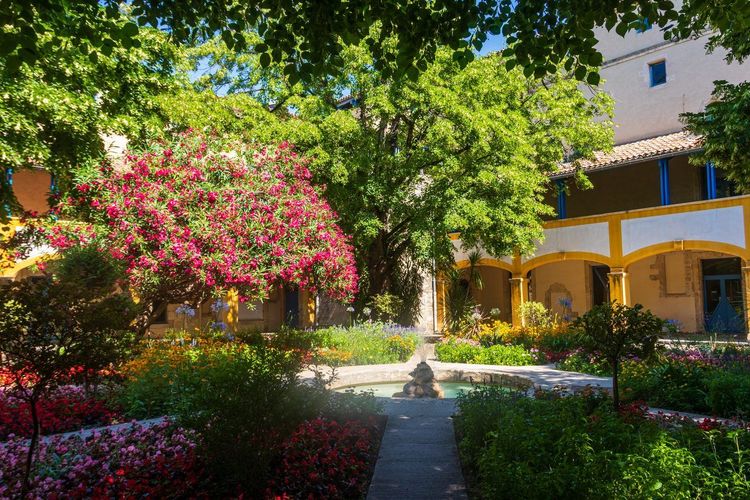
Follow the trail on to the drawbridge, rebuilt in the 1960s a few kilometers from the center after the original was destroyed — the subject of the famous "Pont de Langlois". By contrast, the Espace Van Gogh, the former Hôtel-Dieu where the painter was treated after the incident of his severed ear, can be visited free of charge in its inner courtyard.
The garden has been replanted according to the colors of his painting "The Garden of the Hospital in Arles", a rare exercise in faithfulness worth noting. The site now houses a media library and a few shops under the arcades, providing a shady rest stop while enjoying the surroundings. Allow a good hour for the full trail on foot from the historic center, two if you extend the walk to the bridge. The Ryo audio-guided tour also passes through the Espace Van Gogh, not far from Place du Forum.
The Essential Museums: Arles antique and the Musée Réattu
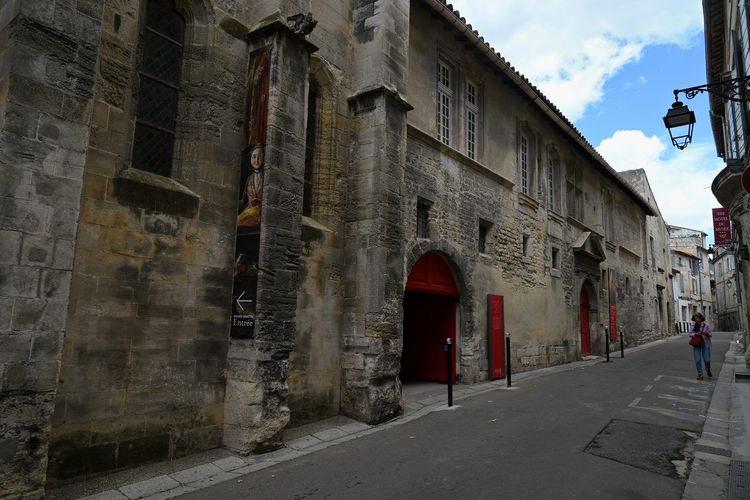
Two museums usefully complement the visit to the Roman monuments and the Van Gogh trail, often overlooked by visitors in a hurry yet genuinely deepening one's understanding of the city.
The Musée Départemental Arles antique
Recognizable by its navy blue triangular silhouette on the edge of the Rhône, away from the city center, the musée départemental Arles antique holds one of France's richest archaeological collections on Roman Provence. The centerpiece is the Arles-Rhône 3, a 31-meter Roman river barge raised from the bed of the river in 2011, restored, and displayed in a wing built specifically for it.
The museum also displays an impressive scale model of ancient Arles at its peak, useful for getting your bearings before or after visiting the Arènes and the Théâtre, as well as mosaics and sarcophagi among the best preserved in the south of France. Do not miss the marble bust also fished from the Rhône, long presented as a portrait of Julius Caesar and now the emblem of the museum. Access by car or bicycle is more practical than on foot, as the site is about 20 minutes' walk from the center along the riverbanks; a free car park adjoins the entrance, making it a good first stop if you arrive in Arles by car in the morning.
The Musée Réattu
Housed in a former priory of the Knights of Malta on the banks of the Rhône, the musée Réattu (10 Rue du Grand Prieuré, 13200 Arles, rated 4.2/5 on Google with 701 reviews) owes its renown to an unexpected holding: 57 drawings given by Pablo Picasso himself in 1971, in thanks for the warm welcome the city had extended to him during the bullfights.
The museum also houses a collection of contemporary photography, consistent with Arles's role as the summer capital of photography since the creation of the Rencontres d'Arles in 1970. Allow 45 minutes to an hour, longer if a temporary exhibition draws you in. The building itself, with its vaulted rooms overlooking the river, is worth taking the time to linger in.
Day 2: Exploring the Camargue from Arles
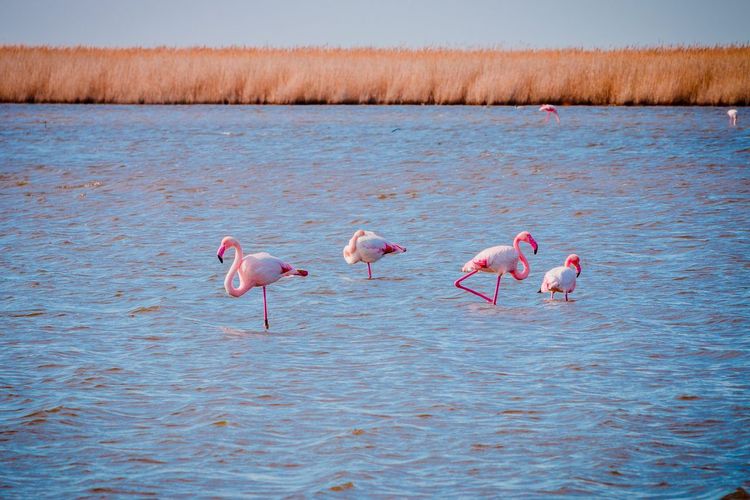
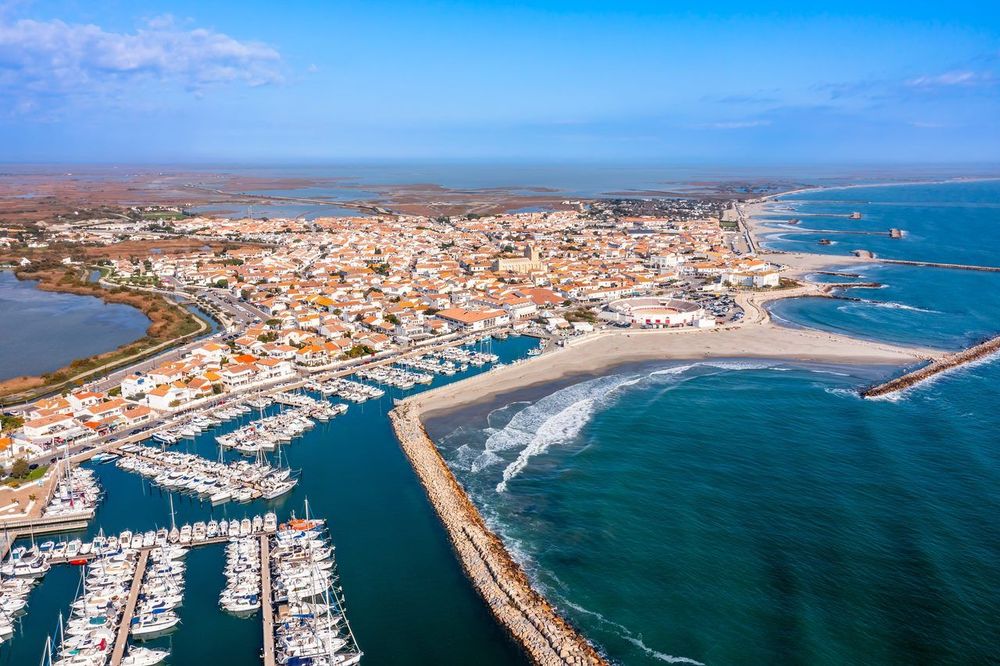
The second day shifts pace entirely. Head out to the Camargue, the Rhône delta where rice, salt, and white horses share a territory whose heart, the étang de Vaccarès, is protected by a nature reserve created in 1927. The Ryo article Visiting the Camargue: Must-See Highlights and Things to Do covers this excursion in greater depth if you plan to dedicate more than half a day to it.
Saintes-Maries-de-la-Mer
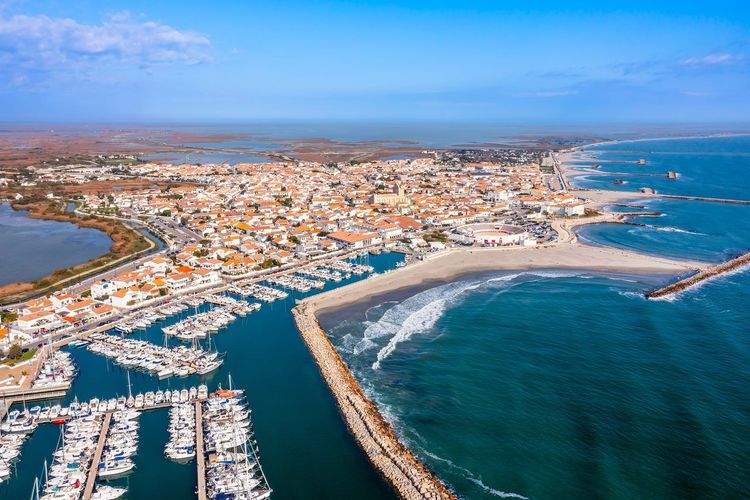
About 40 minutes' drive from Arles via the D570, Saintes-Maries-de-la-Mer is both a seaside resort and a major pilgrimage site for the Romani community, which gathers here each year on 24 and 25 May to honor Sainte Sara, whose statue is kept in the crypt. The fortified church of the village, built to withstand raids from the sea, conceals a terrace accessible via a narrow staircase from which the view stretches over the entire flat expanse of the delta.
Fine sandy beaches stretch for several kilometers on either side of the village, far less crowded than those of the Côte d'Azur even at the height of summer. It is also the classic starting point for a ride on a Camargue horse along the shoreline; the Ryo article on horseback rides in the Camargue lists several local providers if you fancy this activity for the morning.
If time is short, an hour is enough to visit the church and stroll along the seafront. With more flexibility, plan for a full half-day: the village lends itself well to a seafood lunch on a terrace before heading back. On the return journey, several manades — those Camargue farms that raise bulls and horses — open their gates in the afternoon for a bull-sorting demonstration or a cart ride through the pastures. Book the day before: these are working farms, not leisure parks, and time slots are limited.
The Pont de Gau Ornithological Park and the Salt Marshes
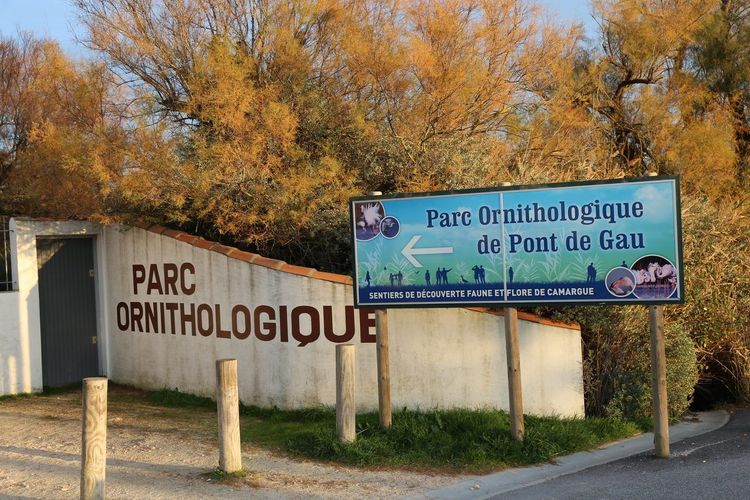
Halfway between Arles and Saintes-Maries-de-la-Mer, the Pont de Gau ornithological park (RD570, 13460 Saintes-Maries-de-la-Mer, rated 4.6/5 on Google with 12,678 reviews) extends across some sixty hectares of reedbeds and ponds crossed by stilted walkways. Unlike a conventional zoo, the majority of the birds, including the emblematic flamingos, move freely through the park, drawn by the natural environment rather than confined in enclosures.
Park admission is paid: €8.50 for adults and €5 for children aged 4 to 12. If your budget is tight, note that the pond bordering the road just before the entrance already offers, free of charge, flamingo sightings just a few dozen meters away, often in the early morning. Allow 1h30 to 2 hours for a relaxed visit of the park itself, more if you have binoculars: grey herons, little egrets, and marsh harriers are regularly spotted along the route.
A little further on, the Camargue salt marshes present a striking landscape of pink and white basins depending on salt concentration, exploited since Antiquity for the production of salt and fleur de sel. Some producers offer guided tours by small train or horse-drawn carriage, an option worth booking if you are traveling with children who will enjoy the experience. The rice paddies bordering the road complete the picture: the Camargue supplies the bulk of the rice produced in France, cultivated here since the mid-20th century to desalinate the land.
What to Do Around Arles: the Alpilles and Provençal Villages
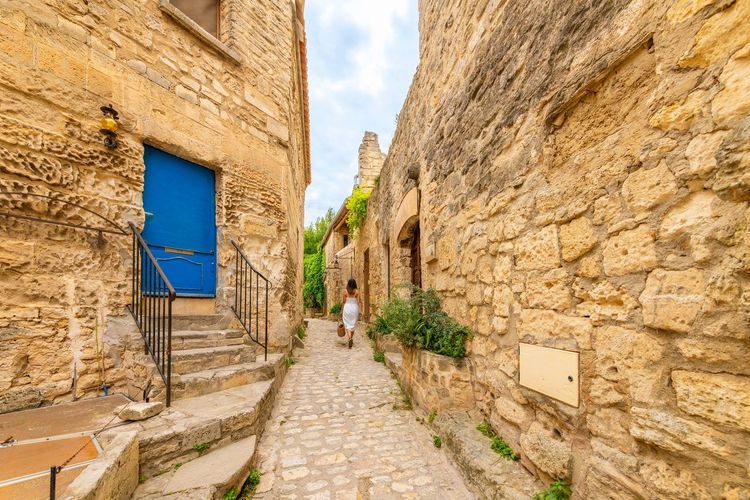
If your stay extends beyond 48 hours, or if you prefer to replace the Camargue with a more Provençal afternoon, the Alpilles offer an equally compelling alternative less than 30 minutes away by road.
The Alpilles and the Provençal Roads
The Alpilles, a small limestone range that barely reaches 500 meters, shape a landscape of garrigue, olive trees, and hilltop villages very different from the flat Camargue. The departmental road that winds through the massif threads between dry-stone terraces and lavender fields depending on the season.
The hilltop village of Les Baux-de-Provence, its ruined citadel dominating the plain, and the Carrières des Lumières installed in former limestone quarries are among the most visited stops in the area: arrive before 10am or after 5pm in summer to avoid the coach crowds. Several wine estates in the Alpilles, such as those with the Les Baux-de-Provence appellation, also offer a vineyard picnic at the end of the day, including wine and local olive oil tastings, a pleasant way to close out the day without driving straight back to Arles. The Ryo article on the villages of the massif, 3 Beautiful Villages Not to Miss During Your Stay in the Alpilles, details three complementary stops if you extend your exploration of the region.
Saint-Rémy-de-Provence in Van Gogh's Footsteps
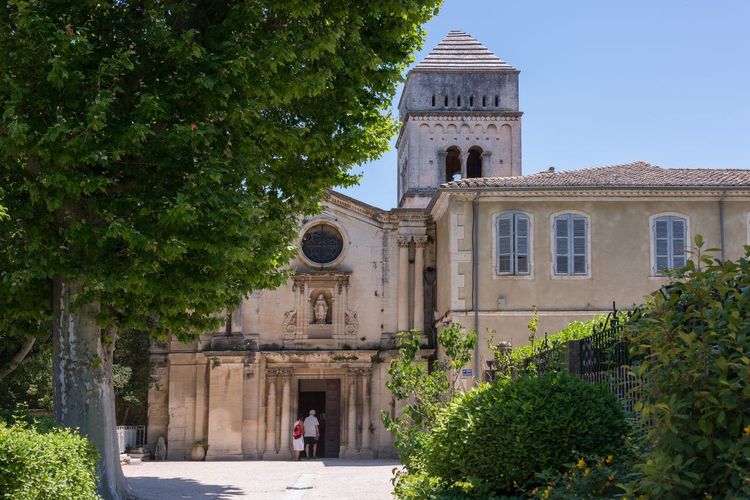
Saint-Rémy-de-Provence, about twenty minutes from Arles, naturally completes the Van Gogh trail begun the previous day. It is here, at the monastère Saint-Paul-de-Mausole (Avenue Edgar Leroy, 13210 Saint-Rémy-de-Provence, rated 4.5/5 on Google with 1,755 reviews), that the painter voluntarily had himself admitted in May 1889, a year before his death, and where he painted The Starry Night from the window of his room.
The site takes about an hour to explore, including the Romanesque cloister, and offers a reconstruction of the cell he occupied. Just steps away, the archaeological site of Glanum displays the remains of a Greco-Roman town that is surprisingly complete for a place so little known to the general public, with its triumphal arch and mausoleum visible for free from the road. The town center of Saint-Rémy, with its fountains and Wednesday morning market, also deserves an hour of leisurely wandering before heading back.
Nearby Towns Rich in Heritage
Arles occupies an ideal position for day trips: Nîmes is 30 minutes away by road, with its twin amphitheater and its Maison Carrée listed as a UNESCO World Heritage Site in 2023. Avignon and its Palais des Papes can be reached in 45 minutes, by train or by car. Even closer, Tarascon and its medieval castle of King René perched above the Rhône, as well as Fontvieille and its mills dear to Alphonse Daudet, can be visited in half a day. To the west, the ramparts of Aigues-Mortes close the horizon of the Petite Camargue about forty minutes away. None of these detours fits into a 48-hour stay without sacrificing something else: keep them in reserve for a third day or a future visit.
Where to Eat in Arles: Local Specialties and Good Addresses
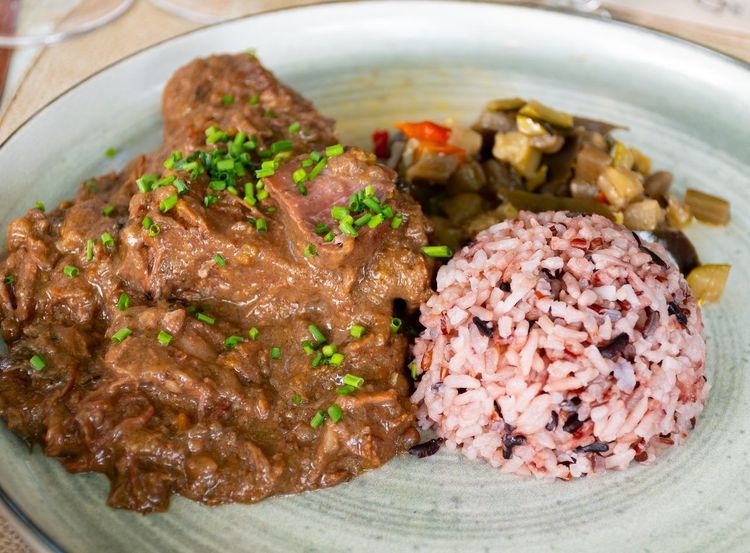
Arlesian cuisine draws from two neighboring terroirs, the Camargue and Provence, resulting in a menu that is fairly recognizable from one restaurant to the next. Gardiane de taureau, a stew of Camargue bull meat slow-cooked in red wine and served with local rice, appears on almost every menu in the city center. Tellines, small sandy clams pan-fried with garlic and parsley, are another must-try specialty, generally served as a starter on the Camargue coast as well as in Arles restaurants.
The saucisson d'Arles, invented in the 18th century and long made with donkey meat before switching to beef and pork, makes an easy souvenir: charcuteries in the center sell it by the piece, vacuum-packed on request. On the sweet side, fougasse with almonds and Provençal nougat often round off the meal, accompanied by a chilled rosé from the Costières or Les Baux appellations, almost standard on any terrace from the first warm days. Camargue rice, protected by a geographical indication, and salt harvested at Salin-de-Giraud make the best edible souvenirs to slip into a bag.
For meals, three areas concentrate most of the good addresses: the shaded terraces of the place du Forum, more touristy but pleasant in the evening; the lanes around the rue du Docteur Fanton, where several bistros serve market-driven cuisine at reasonable prices; and the surroundings of the boulevard des Lices. The Saturday morning market, which stretches its stalls for nearly two kilometers along the Lices, and the Wednesday morning market on the boulevard Émile Combes also allow you to put together a picnic of tapenade, goat's cheese, and fruit for considerably less than a sit-down lunch. Book your table for dinner in high season, particularly on feria evenings when the best addresses fill up by 7pm.
Where to Stay in Arles
The historic center remains the most practical choice for a 48-hour stay: you are within walking distance of virtually all the monuments, which reduces the need for car journeys between visits. Prices there are, however, higher in high season, particularly around the Easter feria, when rates can double and everything may be fully booked months in advance.
The Roquette neighborhood, a former fishing and boatmen's district of narrow lanes, and the area around the place Lamartine, where Van Gogh's famous yellow house once stood before it disappeared, offer slightly more affordable options while remaining just a few minutes' walk from the center. Across the Rhône, the Trinquetaille neighborhood appeals to travelers seeking a more residential, less touristy atmosphere, with prices generally 15 to 20% lower for equivalent comfort, just five minutes' walk from the Arènes across the bridge.
One point to check before booking: most hotels in the center have no private parking, and on-street parking is regulated. Ask whether a partner rate exists at one of the covered car parks — it avoids unpleasant surprises at checkout. Finally, for visitors wishing to combine Arles and the Camargue during this short stay, several farmhouses and rural gîtes tucked among rice paddies and marshes offer a different experience, provided you have a car to reach the city center each morning. If you are organizing your visits with the Ryo audio guide for Arles, choosing a central accommodation makes following the walking route considerably easier.
How to Get to Arles and Get Around
How to Get to Arles
By train, Arles station is served in about one hour from Marseille-Saint-Charles, in around thirty minutes from Nîmes, and in about twenty minutes from Avignon-Centre, two cities well connected to the rest of France. From Paris, expect a connection in Avignon or Nîmes for a total journey of 4 to 5 hours. The station is ten minutes' walk from the Arènes, making arrival by train particularly comfortable for a short stay.
By car, Arles lies on the A54 motorway axis, about thirty minutes from both Nîmes and Salon-de-Provence, a convenient route if you plan to combine your visit with a trip to the Alpilles or the Camargue. The two nearest airports are Marseille-Provence, just under an hour away, and Nîmes-Garons, about 45 minutes away, both served by shuttle or car rental.
Getting Around and Parking in the City Center
The historic heart of Arles is largely pedestrianized and can be covered on foot in half a day without difficulty, making a car unnecessary and even cumbersome on the first day. The main car parks are on the immediate outskirts of the center, notably along the boulevard des Lices and near the train station, with reasonable daily rates; a few free pockets remain beyond the ring boulevards, ten minutes' walk from the Arènes. The urban bus network complements this with shuttles linking the peripheral car parks to the center.
For visitors with reduced mobility or those who simply want to rest their legs, a small tourist train departs from the Arènes and circulates between the main ancient monuments in 35 to 40 minutes, commentary included: a good compromise when the heat makes walking uncomfortable. Cycling also works well for reaching the departmental museum or the banks of the Rhône. For the second day toward the Camargue or the Alpilles, however, a car remains the most flexible option, as intercity coaches serve Saintes-Maries at limited frequency outside the summer season.
How Many Days to Plan and When to Visit Arles
Two days are generally enough to cover the essentials: Roman heritage and Van Gogh on the first day, the Camargue or the Alpilles on the second. Visiting Arles in one day remains possible if you focus solely on the ancient triangle and the Van Gogh trail, accepting to forgo the museums and the surroundings. Conversely, a third day comfortably allows you to add Saint-Rémy-de-Provence, Nîmes, or a more thorough exploration of the delta without rushing.
The best period runs from April to June and from September to October, when temperatures remain pleasant without reaching the summer heat peaks that make visiting open-air sites exhausting. July and August also bring heavy tourist footfall and numerous mosquitoes on the Camargue side by the end of the day, a detail many visitors discover too late. Feria periods, at Easter and in September, offer a uniquely festive atmosphere but drive accommodation rates up significantly. The mistral can blow at any time of year: it clears the sky and produces that raw light that so fascinated Van Gogh, but it makes terraces uncomfortable and Camargue walks considerably less enjoyable.
To discover Arles for free, several options exist: strolling through the historic center, walking along the banks of the Rhône, admiring the exterior of the Alyscamps and the Théâtre antique without going in, watching flamingos from the ponds alongside the Camargue road, or exploring the courtyard of the Espace Van Gogh and the nave of the cathédrale Saint-Trophime, both freely accessible. Municipal museums also offer free admission on certain Sundays — an detail worth checking directly on the official websites before planning your visit.
FAQ
How many days do you need to visit Arles?
Two days comfortably cover the must-sees: Roman monuments, the Van Gogh trail, and a day trip to the Camargue or the Alpilles. Three days allow you to add Saint-Rémy-de-Provence and slow down the pace of your visits.
Can you discover Arles in a single day?
Yes, provided you focus on the ancient triangle (Arènes, Théâtre, Thermes) and the Van Gogh trail in the city center. You will, however, have to forgo the museums and any excursion to the Camargue, which requires half a day on its own.
What is the best time of year to visit Arles?
April through June and September through October offer the best balance between pleasant weather and moderate crowds. Summer brings intense heat and mosquitoes in the Camargue, while feria periods drive accommodation prices up significantly.
Where should you park when visiting Arles?
Since the historic center is largely pedestrianized, it is better to park on its immediate outskirts, along the boulevard des Lices or near the train station, where several car parks offer reasonable daily rates. A few free spaces remain beyond the ring boulevards.
Do you need to book the Arènes and the Théâtre antique in advance?
It is generally not necessary outside feria days or major summer events. The monuments pass, available online or on site, is nevertheless useful for reducing queuing time at the ticket offices during high season.
What can you do in Arles for free?
The historic center, the banks of the Rhône, the courtyard of the Espace Van Gogh, the nave of the cathédrale Saint-Trophime, and the exterior of the Alyscamps and the Théâtre antique can all be explored at no cost. The ponds along the Camargue road also allow you to observe flamingos without paying an entrance fee.
How do you get from Arles to Saintes-Maries-de-la-Mer without a car?
Intercity coaches connect Arles to Saintes-Maries-de-la-Mer, with a more frequent service in summer and a much more limited one during the rest of the year. Without a car, check the timetables in advance or consider an organized day trip for this Camargue stop.
Two days in Arles ultimately leave a strange impression of density: you feel as though you have crossed two thousand years of history in forty-eight hours, moving between Roman stones, underground galleries, Van Gogh canvases, and Camargue marshes. If you want to plan your movements without having to think about it, the Ryo audio guide for Arles is the simplest way to move through the ancient triangle and the places painted by the master without losing time between monuments. All that remains is to choose the date and book accommodation early enough if your visit coincides with a feria.
À lire également